Category: Reviews

  • Britten & Mozart @ The NY Phil

    Inon barnatan

    Above: pianist Inon Barnatan

    Friday October 30th, 2015 matinee – Still recovering from the flu that forced me to miss some scheduled events, I went to The Philharmonic this afternoon knowing I might not make it thru the entire program. But I was very keen to hear Britten’s Sinfonia da Requiema work that is rarely doneand to hear pianist Inon Barnatan – the Philharmonic’s artist-in-association this season – playing Mozart’s Piano Concerto No. 23. At intermission I would decide about staying on for the Beethoven 5th.

    Last season conductor Jaap van Zweden impressed in a pair of NY Philharmonic concerts that included a magnificent Shostakovich 8th. This afternoon’s performance resoundingly re-affirmed all the positive elements in the conductor’s realm of thought and expression. He is business-like and devoid of theatricality, favoring instead a deeply probing approach to the music. Yet this is not detached, by-the-book music-making, for his interpretations seem flooded with emotion.

    The Britten Sinfonia da Requiem was written in 1940 while the composer and his partner Peter Pears were living in Brooklyn. Having left England as a conscientious objector, Britten accepted a commission (from the Japanese, ironically) and set about creating a work – drawing on Latin texts from the Mass for the Dead – that would commemorate the deaths of his parents and also serve as a pacifist’s response to the horrors of war.

    The Sinfonia is a magnificent piece, and I wish it would be performed more often so that music-lovers could become better acquainted with it. The work calls for a huge orchestra, including massed phalanxes of violins, violas, cellos, and double basses as well as a large brass contingent and doubled winds, with alto sax, bass clarinet, two harps, and piano adding unexpected hues to the sonic palette. 

    For the opening Lacrymosa, an initial boom! gives way to brooding; the violas lament and there is an unsettling heartbeat motif. Rampant horns herald a series of ominous chords and doom-ladened drumstrokes. In the Dies Irae which follows, the flutes and horns stutter; the strings take up a brisk, galloping figuration. The heraldic trumpets and the magnificent horns ring forth, and the saxophone brings in an unusual colour. The music becomes almost zany before dwindling to nothing as the work evolves into the final Requiem Aeternum. Harp and winds intone a gentle hymn, taken up by the pensive horns. Bassoon and bass clarinet lead us to an uplifting violin theme, tinged with sadness. The music builds to a huge hymn-like passage and then suddenly reverts to softness: plucked strings over sustained clarinet tones that simply fade into thin air. 

    The performance was utterly mesmerizing: absolutely gorgeous playing from everyone and all crafted into a splendid whole by Maestro van Zweden. For a passing moment I wondered how it might have been had Britten used a chorus in his Sinfonia, but then I realized he was right in keeping the words unspoken and letting the instruments sing.

    The Hall’s wonderfully efficient stagehands then reconfigured the seating and rolled the Steinway into place. Watching and waiting, I felt the contentment of being connected to great music played by great musicians: a feeling that deepened in the ensuing Mozart. 

    For Mr. Barnatan is nothing less than a wizard of the keyboard, and in this performance of the Piano Concerto No. 23, allied with Maestro van Zweden and cushioned by the genial Philharmonic strings and winds, was indeed magical. The pianist’s control over a vast dynamic range and the sheer fluency of his technique made an excellent impression from the moment he began to play. Mr. Barnatan chose to play the cadenza as Mozart set it in the score; it’s rather brief – as cadenzas go – but very appealing.

    The pianist now drew us deeper and deeper into the music with the poetic delicacy of his playing of the Adagio. His solo passages were luminous, and there was lovely support from the wind soloists. A spellbinding sense of dolorous quietude was summoned forth, and a passage of very simple piano statements over plucked strings was most effective.

    Then Inon launched a barrage of coloratura to introduce the Allegro assai. Here his playing became ever more magical as he wove a spell of soft enchantment: the finesse of swirl after swirl of delicate notes played at high speed. Called back twice to warm applause, the pianist had clearly cast a spell over the Hall, and I cannot wait to hear him again…could we have the Schumann perhaps?? 

    By now there was no question of leaving – sore throat be damned! and I hadn’t coughed once – and so I was treated to a Beethoven 5th far more beneficial than any medicine. 

    The Beethoven symphonies don’t always send me, but the 5th truly did today, for Maestro van Zweden and the Philharmonic artists simply soared thru it, with a real sense of the music blooming. I gave up taking notes;  aside from the scrawl “…deep resonance of sound!!…” my program page is simply covered with names and exclamation point: “Liang Wang!”…”Langevin!”…”LeClair!”…”McGill”…”the trumpets!”…”Carter Brey!”…and “Philip Myers!!!” 

    As the plush and regal themes of the third movement sailed forth, I felt yet again the thrill of being connected to music on such an elemental and immediate level. A quote from Robert Schumann in the Playbill so well captured what I experienced today listening to the Beethoven (well, to the entire program, really!) today: “This symphony invariably wields its power over people of every age like those great phenomena of nature that fill us with fear and admiration at all times, no matter how frequently we may experience them.”  

    Jaap-van-Zweden-c-Marco-Borggreve-XL

    Above: Jaap van Zweden in a Marco Borrgreve portrait

    A final word about Jaap van Zweden: in the three concerts he’s conducted here that I have experienced, he has shown a mastery of a variety of musical styles and a real affinity for making the familiar seem fresh. After the Beethoven 5th today, the audience gave him an especially appreciative ovation, laced with bravos. Coming out for a second curtain call, the Maestro signaled for the players to stand, but they all shook their heads and left him with a solo bow…and then they joined in the applause, tapping their bows and stamping their feet. It was a lovely moment. In their search for a new Music Director, The Philharmonic may have found their man.   

  • Britten & Mozart @ The NY Phil

    Inon barnatan

    Above: pianist Inon Barnatan

    Friday October 30th, 2015 matinee – Still recovering from the flu that forced me to miss some scheduled events, I went to The Philharmonic this afternoon knowing I might not make it thru the entire program. But I was very keen to hear Britten’s Sinfonia da Requiema work that is rarely doneand to hear pianist Inon Barnatan – the Philharmonic’s artist-in-association this season – playing Mozart’s Piano Concerto No. 23. At intermission I would decide about staying on for the Beethoven 5th.

    Last season conductor Jaap van Zweden impressed in a pair of NY Philharmonic concerts that included a magnificent Shostakovich 8th. This afternoon’s performance resoundingly re-affirmed all the positive elements in the conductor’s realm of thought and expression. He is business-like and devoid of theatricality, favoring instead a deeply probing approach to the music. Yet this is not detached, by-the-book music-making, for his interpretations seem flooded with emotion.

    The Britten Sinfonia da Requiem was written in 1940 while the composer and his partner Peter Pears were living in Brooklyn. Having left England as a conscientious objector, Britten accepted a commission (from the Japanese, ironically) and set about creating a work – drawing on Latin texts from the Mass for the Dead – that would commemorate the deaths of his parents and also serve as a pacifist’s response to the horrors of war.

    The Sinfonia is a magnificent piece, and I wish it would be performed more often so that music-lovers could become better acquainted with it. The work calls for a huge orchestra, including massed phalanxes of violins, violas, cellos, and double basses as well as a large brass contingent and doubled winds, with alto sax, bass clarinet, two harps, and piano adding unexpected hues to the sonic palette. 

    For the opening Lacrymosa, an initial boom! gives way to brooding; the violas lament and there is an unsettling heartbeat motif. Rampant horns herald a series of ominous chords and doom-ladened drumstrokes. In the Dies Irae which follows, the flutes and horns stutter; the strings take up a brisk, galloping figuration. The heraldic trumpets and the magnificent horns ring forth, and the saxophone brings in an unusual colour. The music becomes almost zany before dwindling to nothing as the work evolves into the final Requiem Aeternum. Harp and winds intone a gentle hymn, taken up by the pensive horns. Bassoon and bass clarinet lead us to an uplifting violin theme, tinged with sadness. The music builds to a huge hymn-like passage and then suddenly reverts to softness: plucked strings over sustained clarinet tones that simply fade into thin air. 

    The performance was utterly mesmerizing: absolutely gorgeous playing from everyone and all crafted into a splendid whole by Maestro van Zweden. For a passing moment I wondered how it might have been had Britten used a chorus in his Sinfonia, but then I realized he was right in keeping the words unspoken and letting the instruments sing.

    The Hall’s wonderfully efficient stagehands then reconfigured the seating and rolled the Steinway into place. Watching and waiting, I felt the contentment of being connected to great music played by great musicians: a feeling that deepened in the ensuing Mozart. 

    For Mr. Barnatan is nothing less than a wizard of the keyboard, and in this performance of the Piano Concerto No. 23, allied with Maestro van Zweden and cushioned by the genial Philharmonic strings and winds, was indeed magical. The pianist’s control over a vast dynamic range and the sheer fluency of his technique made an excellent impression from the moment he began to play. Mr. Barnatan chose to play the cadenza as Mozart set it in the score; it’s rather brief – as cadenzas go – but very appealing.

    The pianist now drew us deeper and deeper into the music with the poetic delicacy of his playing of the Adagio. His solo passages were luminous, and there was lovely support from the wind soloists. A spellbinding sense of dolorous quietude was summoned forth, and a passage of very simple piano statements over plucked strings was most effective.

    Then Inon launched a barrage of coloratura to introduce the Allegro assai. Here his playing became ever more magical as he wove a spell of soft enchantment: the finesse of swirl after swirl of delicate notes played at high speed. Called back twice to warm applause, the pianist had clearly cast a spell over the Hall, and I cannot wait to hear him again…could we have the Schumann perhaps?? 

    By now there was no question of leaving – sore throat be damned! and I hadn’t coughed once – and so I was treated to a Beethoven 5th far more beneficial than any medicine. 

    The Beethoven symphonies don’t always send me, but the 5th truly did today, for Maestro van Zweden and the Philharmonic artists simply soared thru it, with a real sense of the music blooming. I gave up taking notes;  aside from the scrawl “…deep resonance of sound!!…” my program page is simply covered with names and exclamation point: “Liang Wang!”…”Langevin!”…”LeClair!”…”McGill”…”the trumpets!”…”Carter Brey!”…and “Philip Myers!!!” 

    As the plush and regal themes of the third movement sailed forth, I felt yet again the thrill of being connected to music on such an elemental and immediate level. A quote from Robert Schumann in the Playbill so well captured what I experienced today listening to the Beethoven (well, to the entire program, really!) today: “This symphony invariably wields its power over people of every age like those great phenomena of nature that fill us with fear and admiration at all times, no matter how frequently we may experience them.”  

    Jaap-van-Zweden-c-Marco-Borggreve-XL

    Above: Jaap van Zweden in a Marco Borrgreve portrait

    A final word about Jaap van Zweden: in the three concerts he’s conducted here that I have experienced, he has shown a mastery of a variety of musical styles and a real affinity for making the familiar seem fresh. After the Beethoven 5th today, the audience gave him an especially appreciative ovation, laced with bravos. Coming out for a second curtain call, the Maestro signaled for the players to stand, but they all shook their heads and left him with a solo bow…and then they joined in the applause, tapping their bows and stamping their feet. It was a lovely moment. In their search for a new Music Director, The Philharmonic may have found their man.   

  • TROVATORE @ The Met

    D H

    Above: Dmitri Hvorostovsky

    Tuesday September 29th, 2015 – Having cancelled most of his Summer engagements to commence treatment following the diagnosis of a brain tumor, the great Russian baritone Dmitri Hvorostovsky valiantly came to New York City to sing for us at The Metropolitan Opera. The necessity of returning to London to continue his treatment regimen meant that the baritone would only sing the first three of his scheduled Met performances as Count di Luna in IL TROVATORE, but to me it spoke highly of his dedication that he made the effort to come in for these high-profile performances which also feature the first Met Leonoras of Anna Netrebko.

    At the season prima, on September 25th, the audience greeted Hvorostovsky’s entrance with a show-stopping ovation. The evening ended with a tumult of cheers and applause as he took his bows, and the members of The Met orchestra flung flowers up onto the stage, signalling their affectionate regard for the great singer.

    And a great singer he is…truly. Tonight – the second of the three performances in which he’ll appear – Hvorostovsky was again given a prolonged round of applause at his entrance. To me, his voice sounded, amazingly, more beautiful than ever. “Il balen” was the vocal high-point of the evening: superbly phrased and deeply felt, sustaining the poetic musings of a character often described as “evil” but who is, essentially, a real romantic. 

    Hvorostovsky’s Count di Luna in fact manages to engage our empathy when he is cruelly beaten by Manrico’s men in the convent scene; Manrico slashes his rival’s face, and Hvorostovsky’s acting here was wonderfully committed. All evening, the baritone kept the character very much in the forefront of both the music and the drama, from with his snarling “Io fremo!” as he listens to Manrico serenading Leonora in Act I right to the end where – if my ears didn’t deceive me – Dima chimed in on Azucena’s final high B-flat with one of his own. 

    Dolora Zajick’s Azucena was thrilling from start to finish; the esteemed mezzo-soprano flung her fiery high notes and cavernous chest tones into the house with resplendent authority, her monologue  “Condotta ell’era in ceppi” a veritable whirlwind of emotion as she displayed an uncanny dynamic range from haunting near-whispers to thunderous outbursts. This evening she didn’t take the high-C in  “Perigliarti ancor languente” that had been one of her trademarks in this role, but instead swept onward like an force of nature. Her expressive singing of “Giorni poveri vivea…” was counter-balanced moments later with the sweeping anguish of “Deh! rallentate, o barbari!” which commenced on a lightning-bolt top note and plunged into vivid chest notes. In the opera’s final scene, Zajick displayed marvelous control in “Ai nostri monti” and in the trio where she seems to be singing in her sleep, only to awaken to the horror of Manrico’s execution. Her triumphant B-flat was a glorious cry of revenge achieved. 

    The Korean tenor Yonghoon Lee made a positive impression as Manrico, despite the fact that his voice is rather lighter than we are accustomed to in this music. In fact, Lee’s entire repertoire seems geared to roles which call for more vocal heft than he seems capable of: I wonder if he might not be better employed – at least for now – as Alfredo, the Duke of Mantua, and Tamino.

    But there’s no going back, and Lee’s impassioned commitment to both the music and the character of Manrico had the audience well engaged. Lee’s slender figure and intense acting gave the rebel leader a romantic, swashbuckling appeal; and his mixture of unbridled vocal passion with moments of hushed piano reflectiveness kept the music aurally stimulating. Oddly, he sometimes reminded me of Franco Corelli – not in terms of the voice itself, but with the smouldering ardor of his delivery. 

    Lee sang a beautifully modulated, emotional “Ah si, ben mio” and – if I am not mistaken – took “Di quella pira” in C with an endlessly sustained final note which was ever-so-slightly below pitch. The audience took the tenor to heart, and Mr. Lee was very warmly applauded at the curtain calls.

    Anna Netrebko seemed to be forcing her voice in some of Leonora’s music; in pushing for a larger, darker sound, some of the inherent lyric beauty of her tone is drained away. Her over-leaning into the chest register was a detriment: this isn’t Santuzza. There were many fine passages along the way, but also some errant pitch and some glare on the louder high notes (she skipped the D-flat at the end of the Act I trio). The audience, needless to say, adored her.

    Stefan Kocan was a powerfully-sung and dramatically commanding Ferrando, with Maria Zifchak a big-voiced Inez and my friend Edward Albert in the brief role of A Gypsy. Marco Armiliato’s conducting was ‘good routine’ – and better than that after the interval – and the orchestra played very well.   

    A program note explained that Ms. Netrebko’s costumes had been specially created for her. Her breasts were amply on display in the opening scene’s burgundy outfit, then at the convent she was all buttoned up, a prim and proper young ‘widow’ in black. She went in for a gypsy look for the scene prior to her (thwarted) marriage, with a nifty head-wrap.

    For all the passing “ifs, ands, or buts”, this was overall a pretty exciting night at the opera: there was involvement, passion, and some very impressive vocalism along the way.

    Metropolitan Opera House
    September 29th, 2015

    IL TROVATORE
    Giuseppe Verdi

    Manrico.................Yonghoon Lee
    Leonora.................Anna Netrebko
    Count Di Luna...........Dmitri Hvorostovsky
    Azucena.................Dolora Zajick
    Ferrando................Stefan Kocán
    Ines....................Maria Zifchak
    Ruiz....................Raúl Melo
    Messenger...............David Lowe
    Gypsy...................Edward Albert

    Conductor...............Marco Armiliato

  • TURANDOT at The Met – 1st of 4

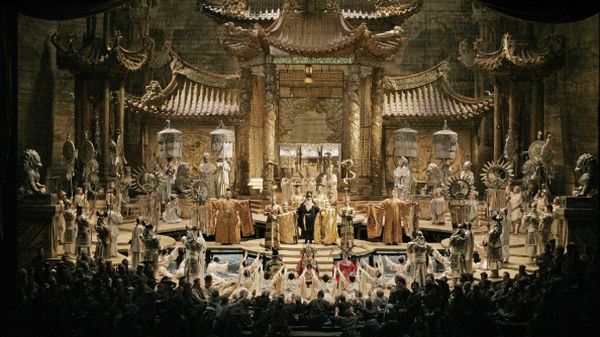
    Turandot-Met

    Wednesday September 23rd, 2015 – At a score desk this evening for the prima of TURANDOT at The Met; I’ll be attending a performance by each of this season’s four Turandots.

    The first act of tonight’s performance was stunning; the conductor, Paolo Carignani, molded the huge choral and orchestral forces into a vibrant sound tapestry and his reading of the score was dynamic, whilst also allowing the necessary moments of poetry to shine thru.

    Patrick Carfizzi got the evening off to an excellent start with his authoritative declamation of the Mandarin’s decree. Hibla Gerzmava’s full-bodied lyric soprano sounded luxuriant in Liu’s music; although she did not go in for the many piano/pianissimo effects that some singers have brought to this music – Gerzmava ended “Signore ascolta” with a crescendo on the final B-flat rather than a tapering of the tone – her gleaming sound was a welcome element to the performance. Marcelo Alvarez as the Unknown Prince sang with appealing lyricism, pacing himself wisely for the vocal rigors which lay ahead. James Morris was an affecting Timur, drawing upon his long operatic experience to create a touching vocal characterization of the old king. Dwayne Croft, Tony Stevenson, and Eduardo Valdes were a first-rate trio of court ministers.

    As the first act ended, I felt the old elation of being at the opera. But the ‘Gelb-intermission’ which followed totally destroyed the impetus of the evening. As is so often the case at The Met these days, the interval stretched to 40 minutes, the last ten of which found the entire audience back in their seats and raring to go while the musicians sat in the pit doodling idly.

    At last the conductor re-appeared and we had a delightful rendering of the Ping-Pang-Pong scene with Mr. Croft and his two tenor sidekicks successfully mining both the wit and the nostalgia of the music, one of Puccini’s most delectable creations – and superbly orchestrated into the bargain.

    I was looking forward to hearing Ronald Naldi – a long-time favorite of mine – as the Emperor Altoum but he was replaced by Mark Schowalter, who projected well from his distant throne. The exchange between the aged monarch and the Unknown Prince was interesting in that Mr. Alvarez eschewed the usual stentorian delivery of “Figlio del cielo…” (three times) for a more pensive vocal quality.

    Christine Goerke’s Turandot did not make the vocal impression I was hoping for; the uppermost notes in the princess’s treacherous music seemed slightly out of Goerke’s comfort zone. She managed well enough, and used a darkish middle and lower range to good effect. But the trumpeting brilliance of the tones above A, which we have come to expect from our Turandots, was not really forthcoming. I am not sure why she wished to sing this role, since Wagner and Strauss are now her natural habitat. 

    Faced with yet another stupor-inducing intermission, I left during the Act II curtain calls. 

    Metropolitan Opera House
    September 23rd, 2015

    TURANDOT
    Giacomo Puccini

    Turandot................Christine Goerke
    Calàf...................Marcelo Álvarez
    Liù.....................Hibla Gerzmava
    Timur...................James Morris
    Ping....................Dwayne Croft
    Pang....................Tony Stevenson
    Pong....................Eduardo Valdes
    Emperor Altoum..........Ronald Naldi
    Mandarin................Patrick Carfizzi
    Maid....................Anne Nonnemacher
    Maid....................Mary Hughes
    Prince of Persia........Sasha Semin
    Executioner.............Arthur Lazalde
    Three Masks: Elliott Reiland [Debut], Andrew Robinson, Amir Levy
    Temptresses: Jennifer Cadden, Oriada Islami Prifti, Rachel Schuette, Sarah Weber-Gallo

    Conductor...............Paolo Carignani

  • TURANDOT at The Met – 1st of 4

    Turandot-Met

    Wednesday September 23rd, 2015 – At a score desk this evening for the prima of TURANDOT at The Met; I’ll be attending a performance by each of this season’s four Turandots.

    The first act of tonight’s performance was stunning; the conductor, Paolo Carignani, molded the huge choral and orchestral forces into a vibrant sound tapestry and his reading of the score was dynamic, whilst also allowing the necessary moments of poetry to shine thru.

    Patrick Carfizzi got the evening off to an excellent start with his authoritative declamation of the Mandarin’s decree. Hibla Gerzmava’s full-bodied lyric soprano sounded luxuriant in Liu’s music; although she did not go in for the many piano/pianissimo effects that some singers have brought to this music – Gerzmava ended “Signore ascolta” with a crescendo on the final B-flat rather than a tapering of the tone – her gleaming sound was a welcome element to the performance. Marcelo Alvarez as the Unknown Prince sang with appealing lyricism, pacing himself wisely for the vocal rigors which lay ahead. James Morris was an affecting Timur, drawing upon his long operatic experience to create a touching vocal characterization of the old king. Dwayne Croft, Tony Stevenson, and Eduardo Valdes were a first-rate trio of court ministers.

    As the first act ended, I felt the old elation of being at the opera. But the ‘Gelb-intermission’ which followed totally destroyed the impetus of the evening. As is so often the case at The Met these days, the interval stretched to 40 minutes, the last ten of which found the entire audience back in their seats and raring to go while the musicians sat in the pit doodling idly.

    At last the conductor re-appeared and we had a delightful rendering of the Ping-Pang-Pong scene with Mr. Croft and his two tenor sidekicks successfully mining both the wit and the nostalgia of the music, one of Puccini’s most delectable creations – and superbly orchestrated into the bargain.

    I was looking forward to hearing Ronald Naldi – a long-time favorite of mine – as the Emperor Altoum but he was replaced by Mark Schowalter, who projected well from his distant throne. The exchange between the aged monarch and the Unknown Prince was interesting in that Mr. Alvarez eschewed the usual stentorian delivery of “Figlio del cielo…” (three times) for a more pensive vocal quality.

    Christine Goerke’s Turandot did not make the vocal impression I was hoping for; the uppermost notes in the princess’s treacherous music seemed slightly out of Goerke’s comfort zone. She managed well enough, and used a darkish middle and lower range to good effect. But the trumpeting brilliance of the tones above A, which we have come to expect from our Turandots, was not really forthcoming. I am not sure why she wished to sing this role, since Wagner and Strauss are now her natural habitat. 

    Faced with yet another stupor-inducing intermission, I left during the Act II curtain calls. 

    Metropolitan Opera House
    September 23rd, 2015

    TURANDOT
    Giacomo Puccini

    Turandot................Christine Goerke
    Calàf...................Marcelo Álvarez
    Liù.....................Hibla Gerzmava
    Timur...................James Morris
    Ping....................Dwayne Croft
    Pang....................Tony Stevenson
    Pong....................Eduardo Valdes
    Emperor Altoum..........Ronald Naldi
    Mandarin................Patrick Carfizzi
    Maid....................Anne Nonnemacher
    Maid....................Mary Hughes
    Prince of Persia........Sasha Semin
    Executioner.............Arthur Lazalde
    Three Masks: Elliott Reiland [Debut], Andrew Robinson, Amir Levy
    Temptresses: Jennifer Cadden, Oriada Islami Prifti, Rachel Schuette, Sarah Weber-Gallo

    Conductor...............Paolo Carignani

  • The Turandots

    Turandot

    During the coming season at the Metropolitan Opera, I’ll be hearing four different sopranos in the role of Turandot. Of these, three will be new to me in the role: Christine Goerke, Jennifer Wilson, and Nina Stemme. The fourth will be Lise Lindstrom, who made a very fine vocal impression as Turandot here during the 2009-2010 season and who has the added appeal of being wonderfully suited to the role in terms of physique and stage savvy.

    For opera lovers of my generation, the silver-trumpet voice of the great Swedish soprano Birgit Nilsson is unforgettably linked to the music of Turandot; I had the good fortune of seeing Nilsson’s Turandot five times – each performance with a different soprano portraying Liu: Teresa Stratas, Anna Moffo, Mirella Freni, Montserrat Caballe, and Gabriella Tucci. Once you experienced the Nilsson sound in this role in the theatre, you felt you’d never find her equal. 

    And yet, Nilsson was not my first Turandot: it was instead Mary Curtis-Verna who made a very strong impression on this young opera-lover in a performance at the Old Met with Jess Thomas (Calaf) and Lucine Amara (Liu) also in the cast. Curtis-Verna had the Italian style down pat, and she had no problems whatsoever leaping over the many vocal hurdles Puccini set in her path; her final high B-flat had a theatre-filling glow.

    Nilsson (who we referred to as “The Big B” or “The Great White Goddess”) was at her vocal apex in 1966 when she sang a series of Turandots starting in the first week of the first season at the New Met. It’s impossible to describe the exhilarating build-up of anticipation as we waited for her to commence: “In questa reggia”. No recording of Nilsson in this opera, whether studio-made or live, has quite captured the frisson of her brilliant attack and the sheer thrust of the voice being deployed into the big space. Her partnership with Franco Corelli in this opera is legendary; and I was also there on a single night when the stars aligned and we had a Birgit Nilsson-James King-Montserrat Caballe TURANDOT which ended with one of the longest ovations I every experienced. 

    Nilsson sang her last Met Turandot in 1970. When the opera returned to the Met repertory in 1974, Nilsson’s good friend, the Norwegian soprano Ingrid Bjoner was one of three sopranos cast in the title-role. Bjoner for me was the ‘next best thing’ to Nilsson, and to my mind it seemed that Bjoner’s characterization was more detailed and thoughtful than Birgit’s.

    Since Bjoner, I have seen more than two dozen sopranos in the fearsome role of the Chinese princess, at The Met, New York City Opera, and Opera Company of Boston (where we saw Eva Marton take on the role for the first time with great success). Linda Kelm at New York City Opera and Dame Gwyneth Jones at The Met stand out in my memory as particularly thrilling, though I must admit in all honesty I never heard anyone give a less-than-respectable performance in the role – which is saying something, really, given the rigors of the composer’s demands and with the spirit of Nilsson hovering over the popolo di Pekino.

    I have my notions as to how this season’s Turandots will fare, based on their recent performances; I look forward to being proved right…or wrong.

  • Leo Goeke

    Leo-Goeke

    During the 1970s, the American lyric tenor Leo Goeke (above) was a popular artist at both the New York City Opera and The Met. A finalist in the 1967 Met Auditions, Goeke sang more than 200 performances at The Met and on tour, including such roles as Tamino, Count Almaviva, and the Italian Singer in ROSENKAVALIER. He sang (beautifully) the Voice of the Young Sailor in the Met’s 1971 August Everding production of TRISTAN UND ISOLDE, and in 1973 he was Hylas in the Metropolitan Opera premiere of Berlioz LES TROYENS.

    Several of Leo Goeke’s numerous European successes are available on DVD: from England’s Glyndebourne Festival where he sang three Mozart roles and – in 1975 – Stravinsky’s Tom Rakewell in an interpretation that was hailed as ideal; and his performance as Gandhi in Achim Freyer’s Stuttgart Opera production of Glass’s SATYAGRAHA.

    Goeke passed away in 2012.

    Leo Goeke – Il mio tesoro – DON GIOVANNI – NYCO 10~29~72

  • “Questo lido è a lei funesto!”

    L D

    As Laura Adorno and La Gioconda respectively, mezzo-soprano Luciana D’Intino (above) and soprano Eva Urbanová duke it out aboard Enzo’s ship, the Hecate, in this famous scene from Act II of Ponchielli’s LA GIOCONDA. From one of my favorite Italian operas, this excerpt begins with Laura’s prayer “Stella del marinar” and goes on to the fiery duet of the two rivals, “L’amo come il fulgor del creato!”

    GIOCONDA Act II exc Urbanova D’Intino Scala 1996

    Eva U

    Above: Eva Urbanová…the Czech soprano has had a substantial operatic career, and also has a following as a pop and rock singer. She sang at The Met from 1998-2004 where I saw her striking debut performance as Ortrud and also had the good fortune to experience her only Met Tosca, a portrayal that was enhanced by her detailed characterization as well as some surprisingly nuanced singing.

    Luciana D’Intino’s Met career to date has consisted of two appearances each in the “big three” Verdi mezzo roles: Eboli, Amneris, and Azucena. I saw her in all three operas and her performances were astounding in their vocal richness and as marvelous examples of what is now the fast-fading authentic Verdi style.

  • Mario Sereni Has Passed Away

    MI0002863986

    Above: Mario Sereni as Giorgio Germont in Verdi’s LA TRAVIATA

    Mario Sereni, the Italian baritone who sang over 550 performances with The Metropolitan Opera between 1957 and 1984, has reportedly died at the age of 87.

    Sereni had a warm, rich sound with an easy top, and an instinctive feel for phrasing off the words of his native language. I first saw him at the Old Met as Belcore in L’ELISIR D’AMORE (with Freni, Gedda, and Corena, no less!); once the new House opened and I was going to the opera frequently, Sereni was a singer I saw often. He was popular with the fans, and always very cordial when we greeted him after a performance.

    Although he sang many of the great Verdi roles – Germont in TRAVIATA being particularly well-suited to his voice, and he also appeared as Amonasro, Count di Luna, Posa, Ford in FALSTAFF and Don Carlo in LA FORZA DEL DESTINO – it was in the more verismo-oriented operas that Sereni made his best impression, at least for me. His Tonio in PAGLIACCI was outstanding, and he was often cast in the sympathetic roles of Sharpless (MADAMA BUTTERFLY) and Marcello (LA BOHEME). One performance that I recall with special affection was his Carlo Gerard in ANDREA CHENIER, where he appeared opposite Raina Kabaivanska in her only Met performance as Maddalena. In the French repertoire, Sereni sang Valentin in FAUST and Escamillo in CARMEN; he even made a foray into Wagner, as the Herald in LOHENGRIN. Among other Sereni roles were Rossini’s Figaro, Donizetti’s Malatesta (DON PASQUALE) and Enrico (LUCIA), and Lescaut in the Puccini opera. Near the end of his Met career, he sang several performances of Schaunard in BOHEME, and that was the role of his final Met performance in 1984.

    Mario Sereni appears on several complete opera recordings; my personal favorite is (again) his Carlo Gerard in CHENIER on EMI, opposite Antonietta Stella and Franco Corelli. Also on EMI, he sings with Victoria de los Angeles on her classic recordings of BUTTERFLY and TRAVIATA. And he is in fine fettle on the RCA recording of LUCIA DI LAMMERMOOR, with Anna Moffo and Carlo Bergonzi. Here is the Wolfscrag Scene from that recording, in which Bergonzi and Sereni make such a vivid impression, both vocally and dramatically.

  • CMS: Summer Evenings I

    54f4d4450aeee1.82526134

    Above: violinist Erin Keefe, photographed by Lisa-Marie Mazzucco

    Wednesday July 15th, 2015 – Chamber Music Society of Lincoln Center are presenting their inaugural Summer Series: three concerts at Alice Tully Hall. The scheduled programs feature works by the greatest composers played by some of the finest musicians of our time: a surefire recipe for success.

    Tonight’s opening concert was sold out, with music lovers outside Tully Hall pleading with anyone who might have a spare ticket. Onstage, as the house lights dimmed, the Society’s co-artistic director Wu Han welcomed us with her usual warmth and enthusiasm, ending her speech by wishing us all “…happy summer fishing…I hope you catch some trout!” – a reference to the program’s closing work, Schubert’s beloved “Trout” quintet.

    Erin Keefe and Juho Pohjonen then appeared for Mozart’s B-flat major violin sonata, K. 378. Ms. Keefe’s gown, in rich shades of tourquoise and purple, evoked Klimt: it appeared someone had thrown handfuls of gold dust onto the frock, giving it a shimmering sheen. Ms. Keefe plays as handsomely as she looks and – joined by Mr. Pohjonen, who was at the keyboard for all three works tonight – they set the evening on its way with their gracious rendering of the Mozart. 

    In the opening movement, Allegro moderato, the two players trade off cascading motifs. The heart of the sonata, the Andante sostenuto e cantabile, has a touching song-like quality which the violin introduces almost hesitatingly, the pianist seemingly completing each ‘sentence’. Later, the violin takes up a more sustained theme, the opening bars of which seem to have been drawn from the old Jesuit hymn ‘Schönster Herr Jesu’; we used to sing this tune in church under the title ‘Fairest Lord Jesus’, and hearing it again this evening gave the sonata a personal appeal.

    The concluding Rondo: Allegro had a joyous lilt and the players showed especial affinity for the sprightly, deftly driven final section. They linger momentarily as if thinking of going off on a different tangent, but instead they resume the original trajectory and there’s a charming rush to the finish line.

    Tonight’s performance of Beethoven’s piano trio in E-flat major (Op. 70, #2) kept me enthralled, both by the intrinsic beauty of the music itself and by the exquisite details brought forth by the three players: Mr. Pohjonen (piano), Paul Huang (violin) and Jakob Koranyi (cello).

    Juho Pohjonen is a poet of the keyboard; he seems both a wonderfully attentive colleague and a player whose musicality reaches us from his own personal dreamworld. Treading this line between keen awareness and a deep spirituality, this enigmatic pianist is always fascinating to encounter. Violinist Paul Huang, the youthful-looking but already superbly accomplished current holder of a prestigious Lincoln Center Career Grant, proved his capacity for keeping an audience of serious music aficionados under his spell at his Morgan Library recital earlier this year. Depth of expressiveness and poignant lustre of tone have set cellist Jakob Koranyi among the most admirable musicians of the day; his mastery of dynamic control, so often encountered in the Beethoven trio tonight, is a particular joy.

    Dressed in white dinner jackets, the three young men reveled in the slow melodic unfolding of the Poco sostenuto in the opening movement of the trio which had begun with an almost melancholy phrase from the solo cello which is taken up by the violin then the piano in turn. Beethoven’s heritage, as successor to Mozart and Haydn, illuminates the second movement; then the third seems to herald Mendelssohn with its lyricism and grace. In the Finale: Allegro, the three players produced a wealth of nuanced detail which was wonderfully fresh and luminous, and never for a moment seemed fussy or merely ornate. 

    In their revelatory performance, Messrs. Pohjonen, Huang, and Koranyi were truly inspiring; their generous playing and impressive artistry set this Beethoven firmly in the top echelon of memorable musical experiences of recent seasons.

    Schubert’s “Trout” quintet was sumptuously played by Ms. Keefe with Roberto Diaz (viola), Mr. Koranyi (cello), Timothy Cobb (double bass) and the luxuriant pianism of Mr. Pohjonen. Making their mark in the ensemble, Mr. Diaz’s caramel richness of tone and Mr. Cobb’s genial tread (and his amiable seizing of every melodic moment) meshed with Mr. Keefe’s arching lyricism, Mr. Koranyi’s striking opulence of expression, and the combination of delicacy and power in Mr. Pohjonen’s playing, to hold the audience in a state of receptive eagerness.

    The inclusion of a variations movement, where Schubert’s popular song “Die forelle” is heard in a variety of rhythms and textures, was part of the composer’s agreement with Herr Paumgartner, the wealthy amateur cellist who commissioned the quintet. Schubert then has the last word; after a false ending which – as usual – fooled the audience into premature applause, the composer tacks on an Allegro giusto which is both short and deliciously sweet.

    The Society’s remaining two Summer Series performances (July 19th and 22nd) are reportedly nearly sold out, but it’s worth a try by going on-line here, or by calling the Alice Tully box office (212-875-5788), or by going there in person. 

    The Repertory:

    The Participating Artists: