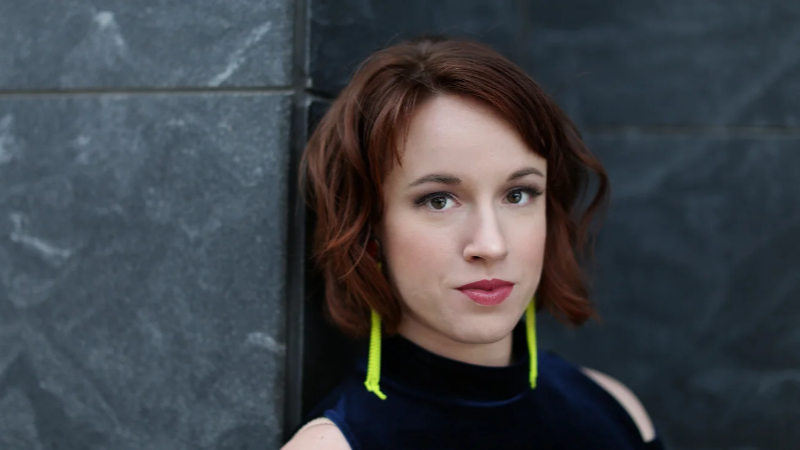
The untimely death of Tampa-born coloratura soprano Rainelle Krause has been announced; she passed away after a short illness.
As a young singer, Ms. Krause won prizes at numerous voice competitions. Following her début with Nashville Opera as Lucia di Lammermoor, she was hailed in the press as “a dream”.
In her signature role, the Queen of the Night in Die Zauberflöte, Rainelle delighted audiences in Atlanta, at the English National Opera, the Royal Danish Opera, Dutch National Opera, Staatsoper Berlin Unter den Linden, Nashville Opera, València, the Deutsche Oper Berlin, Theater Basel, Oper Köln, and Opera Orchestre Montpellier Occitanie.
Earlier this season, the soprano made her Metropolitan Opera debut as the Queen of the Night in Julie Taymor’s English-language production. I attended one of these performances, and later had this to say about her:
“Rainelle Krause, a recent Met debutante, has sung the Queen of Night frequently in her career to date. This afternoon, she excelled in her opening aria wherein she was right at home: her high notes brilliant, and her top-F spot on. Later, in her vengeance aria, the soprano touched brightly and skillfully on the high-F’s and then scored a knockout with a sustained, titanic high B-flat on “Swear!” Her solo bow at the opera’s end drew massive applause and loud cheers.”
I came home from her performance and immediately befriended her on Facebook. She’d already been re-engaged for more Met performances of the Queen in the 2026-2027 season, and I had already put one of her matinees on my calendar. I imagined her becoming a Met regular, singing roles like Zerbinetta, Lucia, and Olympia.
It seems unfair that Rainelle should be taken from us just as she was attaining a career pinnacle. She leaves behind several souvenirs of her singing, among them this “Vengeance Aria”: watch and listen here.
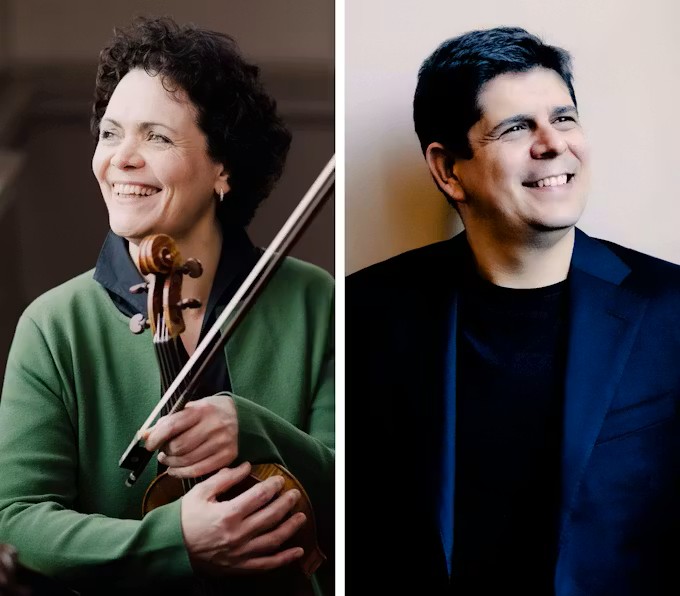
Above: Tabea Zimmermann and Javier Perianes; photos by Marco Borggreve
~ Author: Oberon
Sunday March 15th, 2026 – This was my first-ever viola recital. An appealing program drew me to Zankel Hall for an afternoon of inspired music-making by the German violist Tabea Zimmermann and her excellent colleague, pianist Javier Perianes.
Robert Schumann’s Fantasiestücke, Op. 73, were written in Dresden 1849; originally imagined for clarinet, the composer noted that they might also be played by violin or cello. The three-movement piece later became popular with violists for the possibilities for lyrical expressiveness they afford.
From a restless but dreamy start, Ms. Zimmermann displayed velvety tone; Mr. Perianes gave us gorgeous piano playing. A rise in passion gives way to melancholy. Continuing to the second song, we heard rippling piano motifs and a stream of melody from the viola; things get playful for a bit with Ms. Zimmermann offering some slithering scalework. The music gets rather wild, and there is a long build-up to a brisk finish.
Johannes Brahms’ Viola Sonata in E-flat Major, Op. 120, No. 2, like the opening Schumann, was originally written for clarinet. A glowing warmth pervades the first movement, described as amabile. The central movement is a scherzo; its mood swings to a hymn-like feeling before the initial theme returns. The finale andante/allegro begins warmly; it develops the air of a promenade, before reaching an exuberant finish. Superbly played, the Brahms felt very long to me this evening…but this composer’s music often seems over-extended to me as I move into old age.
Benjamin Britten’s Lachrymae is the composer’s only work for viola, accompanied by piano. Britten had played the viola in his youth, and he had dabbled in writing music for it though none of those sketches survived. In the 1970s, when I had fallen in love with ballet – having been introduced to it by my first lover, TJ – I heard the Britten piece and thought it cried out to be choreographed. I imaged it as a work for seven male dancers, and I even cast it – in my mind – from among the corps de ballet men of the New York City Ballet. Like many other creative ideas I had during those years, this one fell by the wayside.
Britten’s Lachrymae is a series of variations with the theme delivered at the end, rather than being heard first. As such, the variations hint at the work’s source of inspiration – an air by John Dowland – before it emerges in full. The first variation is somber and haunting; the viola goes high before taking up some chilling vibrations…the music calls for great control, in which Ms. Zimmermann revels. Variation two hesitant, with some whimsical plucking as Mr. Perianes offers a series of eerie chords. The third variation is languid and hushed, the fourth quite grand, with the viola digging in; a tune played over rambling keyboard motifs ends with a superbly sustained final note from the viola. In the fifth variation, the piano sounds sneaky whilst some drifting viola lines suddenly turn squeaky. Ghostly piano sounds and fragmented passages for the viola make up the sixth variation, and then we hear dirge-like music from the keyboard while the viola line feels frantic. Things settle in for a hopeful finale. The Zimmermann/Perianes duo were exceptional throughout this demanding and cherishable work.
Ms. Zimmermann and Mr. Perianes ended their program with the Shostakovich Viola Sonata. This was the composer’s final completed composition, completed literally as death awaited him. It’s awesome music, filled with so many distinctive ideas. Today’s performance of it was engrossing…and thrilling.
The opening moderato commences with plucked viola notes, and the piano evoking raindrops. A pensive descending viola theme gives the feeling of a wandering spirit. There is a sudden outburst, a revolt against death, with Ms. Zimmermann slashing her strings insistently. A chill settles over us; the music seems to be coming from another universe; it tapers down to a whisper before a gently plucked ending.
In contrast to the serious mood of the opening movement, the second feels very much like a scherzo. It opens with an insistent dance, tripping along before turning a bit glum. The viola is plucked over deep piano tones before the two play in unison. There is a viola cadenza leading to a fresh, irresistible dance. Following another unison passage, the viola gets restless. A fade-out leaves us with the viola alone.
With the adagio, we arrive at one of the most poignant movements in all the realm of music. From the eerie quoting of the iconic Moonlight Sonata motif, a gorgeous, blooming passage wells up. With periodic interjections of the moonlight beat, the music turns grand: viola and piano join in a theme best described as epic. The music is dense and disturbing, with the moonlight signature etched in. Then the very fabric of life seems to unravel; the music fades to nothingness.
The sold-out house erupted in cheers for Ms. Zimmermann and Mr. Perianes, and a massive standing ovation ensued. The duo returned for a simply sublime encore: Clara Schumann’s Andantemolto from Three Romances, Op. 22.
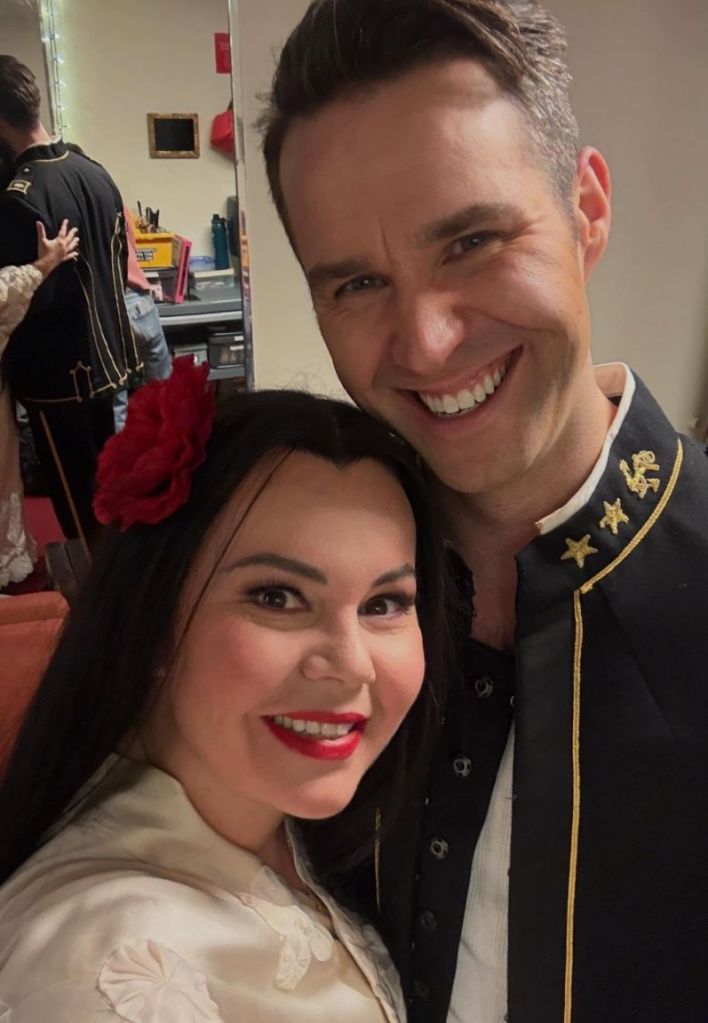
Above: This afternoon’s Butterfly and Pinkerton, Aleksandra Kurzak and Adam Smith; photo borrowed from Ms. Kurzak’s Facebook page.
~ Author: Oberon
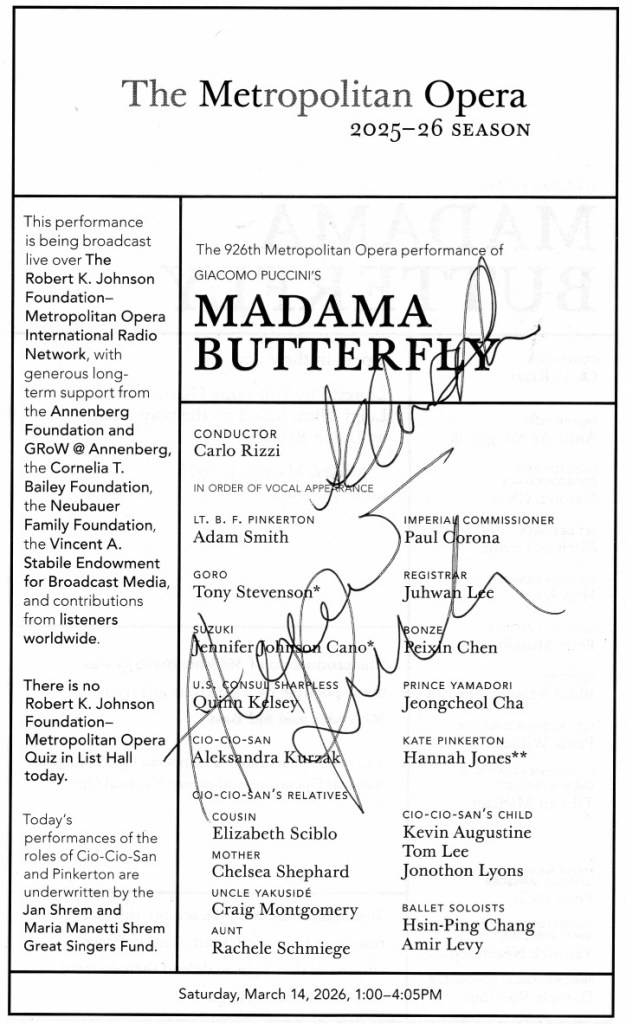
Saturday March 14th, 2026 matinee – Being in a highly emotional state (which is not unusual, really), everything about today’s matinee of MADAMA BUTTERFLY at The Met felt extraordinarily immediate and deeply moving. Tears welled up in me time after time; the first act in particular really got to me…and this is the (mostly) “happy” act. When the tragedy began to build in the remaining acts, I was thoroughly immersed in the individual characters and the music they were singing.
My original choice for Butterfly this season was Elena Stikhina; when she withdrew due to pregnancy, Sonia Yoncheva was my second choice. Then she withdrew, and Aleksandra Kurzak came to the rescue, flying in from Miami, where she had just sung her first Turandot. I’d seen and enjoyed Ms. Kurzak’s Puccini heroines – Mimi, Butterfly, and Tosca – previously; today, she surpassed those memories with her marvelous vocalism, and deep involvement in the drama.
Carlo Rizzi was on the podium; he often comes across as being of the loud-and-fast school of opera conducting. Today he was more cordial to the singers, though at times in the third act the voices were covered.
The opera’s lively prelude was expertly played. Tony Stevenson was today’s perfect Goro; Mr. Stevenson is a character tenor who sings, making every word and note important. English tenor Adam Smith as Pinkerton has a lyrically masculine voice, and Jennifer Johnson Cano as Suzuki commenced her afternoon with her clear, warm mezzo introducing herself with the character’s chattering phrases as she meets her new boss. Quinn Kelsey, even from offstage, gave notice of his major baritone voice as Sharpless, one of opera’s most sympathetic characters.
Mr. Smith’s “Dovunque il mondo” was clearly and sturdily sung, with Mr. Kelsey’s interjections superbly voiced. From the pit, Rizzi was mostly supportive. Tenor and baritone joined enthusiastically in their toast to “America Forever!”, then Mr. Smith’s nimble, finely articulated “Amore o grillo” gave Sharpless the first warning signs of what would come to pass. “I must possess her!” boasts Pinkerton, with a capital B-flat. The voices stay on top as the music gets brassier. Mr. Smith rounds off the scene with a sustained “…sposa Amerciana!”.
The offstage chorus of Butterfly’s bridal attendants is heard approaching; Ms. Kurzak’s singing is lovely as she floats her lines so engagingly, finishing off with a clear high D-flat. The chattering of Butterfly’s family members resolves with Mr. Kelsey’s beautiful “O amico fortunata…”. The ‘one night of love’ theme is heard as soprano and tenor converse, with Mr. Smith’s tenderness towards his bride sweetly evident. Both singers are excellent colorists. Ms. Kurzak’s “Ieri son salita...” is fantastic, her dynamics luring the ear as she builds her declaration: “Amore mio!” The sturdy voice of Paul Corona as the Commissioner pronounces the wedding vows; Sharpless departs, with a fateful warning to Pinkerton: “Giudizio!”.
The powerful voice of Peixin Chen as the Bonze shatters the celebration; he denounces Butterfly for abandoning her faith. Her family and friends turn from her and flee. Pinkerton soothes his bride with the consoling “Bimba, non piangere” and the two embark on a love duet filled with dynamic shifts and touching shadings of the words. The music becomes unbearably gorgeous as the two sing of their passion. The orchestra is pushing, but the voces soar overall. Kurzak’s “Dolce notte” and “...quanti occhi fisi atenti…” are rapturous. The act ends with the soprano’s radiant high-C, with the tenor harmonizing.
Act II commences in a very different mood; a sense of desolation has settled over the once-happy house on the hill. Ms. Johnson Cano sings Suzuki’s prayer with deep feeling. Ms. Kurzak’s “Un bel di” is awash with pensive colourings, her singing expressive and truly moving. From the pit, Rizzi pushes her at the aria’s climax. Sharpless arrives, bringing bad news; but before he can share it, Jeongcheol Cha as Prince Yamadori arrives to make a final attempt to persuade Butterfly to marry him. Ms. Kurzak is hilarious as she describes the American laws on marriage. The Prince departs, still hopeful despite Butterfly’s rejection.
Now Mr. Kelsey begins to read Pinkerton’s letter. He and Ms. Kurzak are so compelling here. Butterfly does not comprehend the letter’s final line. When Sharpless suggests that she accept the Prince’s proposal, the tension gets unbearable. Kurzak’s gasp of “Ah! M’ha scordato…” is bleakly shattering. She brings forth her child. She sings the heartbreaking “Che tua madre“, her voice doom-ladened and desperate, the soprano tearing her heart out. The helpless consul departs.
Butterfly berates the faithless Goro, screaming at him. Alone with Suzuki, Butterfly seems at her wits’ end when the cannon from the harbor announces an arriving ship. Ms. Johnson Cano’s “Il canone del porto!” is followed by a profound silence: everything is about to change. The theme of “Un bel di” plays hauntingly as hope rises, climaxing with Ms. Kurzak’s thrilling “Ei torna, e m’ama”. In Italy, this would have stopped the show.
The Flower Duet is lovingly detailed, the voices of soprano and mezzo-soprano sublimely blended, reaching a sweet finish. The quietude of Butterfly’s reflective phrases finds Ms. Kurzak at her most hauntingly expressive. Night falls; the poignant music of “the wait” creeps in. The Humming Chorus commences, only to be interrupted by a jangling cellphone.
There is a long pause now, the house-lights on a quarter; this shatters the mood, with the audience chatting away. At last, Puccini’s atmospheric prelude commences, superbly played by the Met musicians.
Mistress and maid awaken; Ms. Kurzak’s dreamy “Dormi, amor mio” ends on a shimmering top-B. Pinkerton and Sharpless arrive. Ms. Johnson Cano is marvelous here – so anxious, and then terrified as she learns the truth; knowing what will happen, her low notes sound from her soul. The ensuing trio, one of my favorite parts of the opera, found Mr. Rizzi and his orchestra too aggressive. Sharpless turns on Pinkerton, reminding him of his prediction in Act I. Mr. Smith’s anguish is poured out in his aria, which includes a stunning diminuendo. He flees.
Hannah Jones as Kate Pinketon makes a fine impression as she and Ms. Johnson Cano – her despair palpable – discuss what is to come for Butterfly’s child. Butterfly rushes in; she slowly grasps the situation. Ms. Kurzak’s “Triste madre…” is shattering; her “Sotto il gran ponte del cielo…” to Kate is steeped in inconsolable grief. Kate and Sharpless leave.
Ms. Kurzak’s monumental dismissal of Suzuki is so powerful. The soprano’s tragic farewell to her son is thrilling: the powerful thrust of her voice laced with moments of great delicacy.
Following a warm ovation for all the singers, I went to the stage door where I met Ms. Kurzak and Mr. Smith. The soprano – so charmingly ‘real’ – regaled us with stories of what it is like to be a diva in this day and age: it’s not all champagne and roses. Her warmth and sense of humor made us feel like we were her long-time friends.
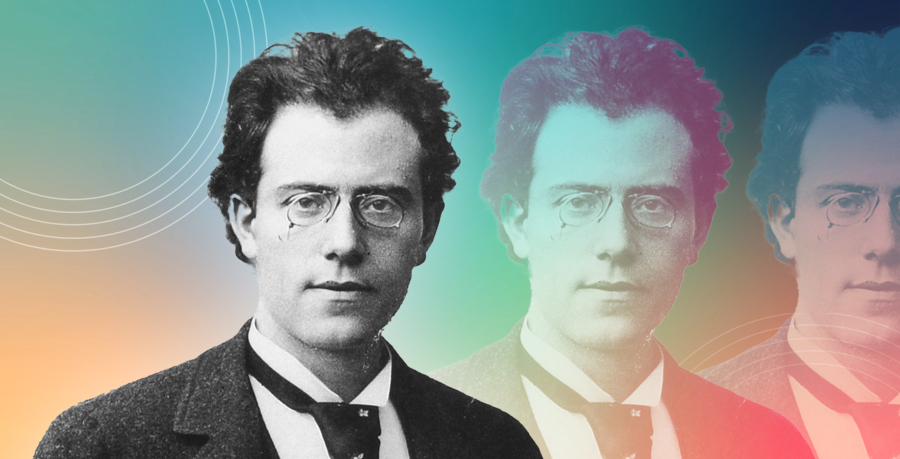
Tuesday March 10th, 2026 – Gustav Mahler’s Symphony No. 2 in C minor, Resurrection,” has been a concert hall staple for more than 130 years. Its emotional power was noted from the night of its premiere in Berlin in 1895, conducted by the composer. The work was so transformative for many of its listeners, including fellow composers like Arnold Schoenberg and Alban Berg, that Berg said he felt compelled to confess his infidelity to his fiancée. One always hopes for something resembling such a catharsis when hearing a work of this stature, as I did on Tuesday, March 10, when Yannick Nézet-Séguin brought his Philadelphia forces to Carnegie Hall.
I often – perhaps unwisely – predict how things will progress within just a few minutes of this particular symphony. It’s violent opening, with stabbing cellos and double-basses, can set the tone for what’s to follow. On this evening, alas, maestro Nézet-Séguin did not bring out the desperation of the music in the opening bars, and what followed was a largely restrained Mahler. Some conductors pride their reserved approaches to the music of Mahler and, say, Tchaikovsky, but this has always truck me as bizarre. Would you re-stage the movies of Federico Fellini or Douglas Sirk through Stanley Kubrick’s lens?
Mahler’s works are almost always works of extreme contrasts: deepest sorrow quickly transforms into a mocking jingle followed by a violent march and a mournful sigh after that. The difficult part is always connecting these contrasts into one tapestry. Seems that Nézet-Séguin’s approach, instead, was to bring the contrasts closer together, lowering the temperature on the highs so they did not feel so out of place. The result was an underwhelming whole, with no surprises; everything was just fine and beautifully played by the magnificent Philadelphia Orchestra. The opening Allegro maestoso, as I noted, was low on voltage. It’s just as well that Mahler’s requested 5 minute pause after the first movement was not observed. (It rarely is.)
The following Andante moderato – which is Ländler dance – didn’t have much charm. It rather surprised me because Nézet-Séguin conducted the Vienna Philharmonic’s New Year’s Eve concert just a couple of month’s ago. I hoped he would have transferred that experience here. The darker second section of the movement had a bit more fire that was missing in the first movement, but the lackluster returning dance again disappointed.
The restless Scherzo was nicely done and the woodwinds of the Philadelphia Orchestra were on magnificent form here and throughout the evening. Mahler based the movement on the melody of his popular song “Des Antonius von Padua Fischpredigt” from Des Knaben Wunderhorn, which hecomposed concurrently.
The magnificent song “Urlicht,” one of Mahler’s most glorious compositions, also from Des Knaben Wunderhorn, serves as an introduction to the grand final movement. Mezzo-soprano Joyce DiDonato sang it beautifully, with a rich tone and carefully articulated words. The warm tones from the singer and chorales from the trumpets were chilling. Here and in the closing movement Nézet-Séguin finally found his footing. Mahler’s demands were beautifully handled, the hushed entry of the fine Philadelphia Symphonic Choir was magical. Mahler would have composed a magnificent Mass or Requiem if he ever chose to do it. (Shame he did not!)
Soprano Ying Fang joined Joyce DiDonato in the solo sections of the movement. Fang projected into the hall very nicely, her voice larger than some sopranos in this role. Sadly this revealed that while Ms. DiDonato sang wonderfully, perhaps an alto is a better choice for this work. Or a lighter soprano for a mezzo. The two voices on this night were just a tad too close together to create a full contrast.
This also brings me to Nézet-Séguin’s insistence that this soloists stand in the middle of the orchestra, not in front. He has done this now in performances of several works, including Brahms’ Ein Deutsches Requiem and Mahler’s 4th Symphony. I can’t imagine why he thinks his singers should be hidden, their voices minimized, their contributions lessened. This is certainly not what Mahler (or Brahms, or basically any composer of vocal concert works) wanted. Does he not want to share the spotlight? I can not tell, but it’s a rather obnoxious habit he has developed and nobody benefits from it.
Soprano Floriana Cavalli and tenor Giuseppe Campora are joined by basso Paolo Montarsolo in a selection of opera highlights. The orchestra and chorus of the Rome Opera are conducted by Gabriele Santini (photo above).
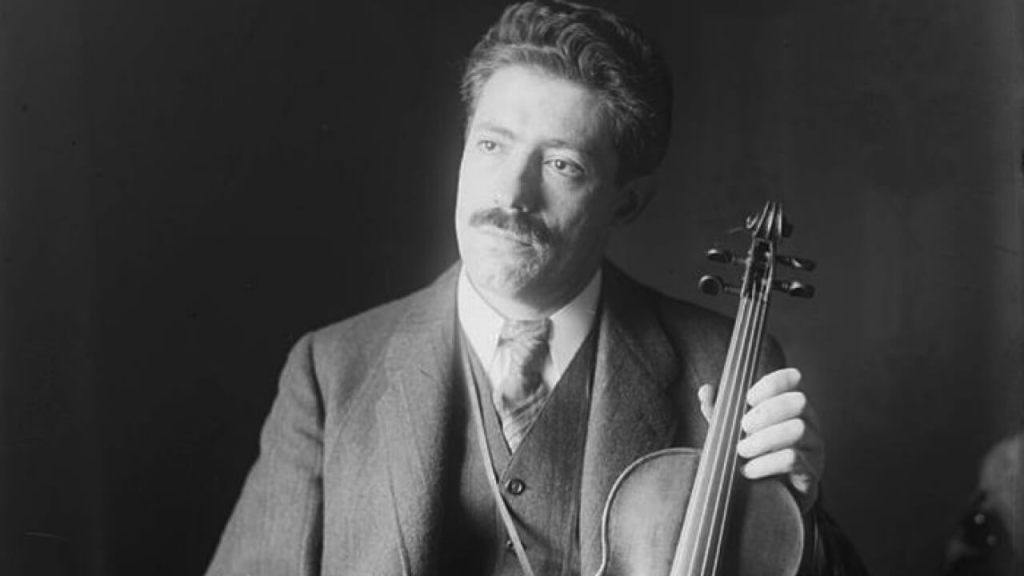
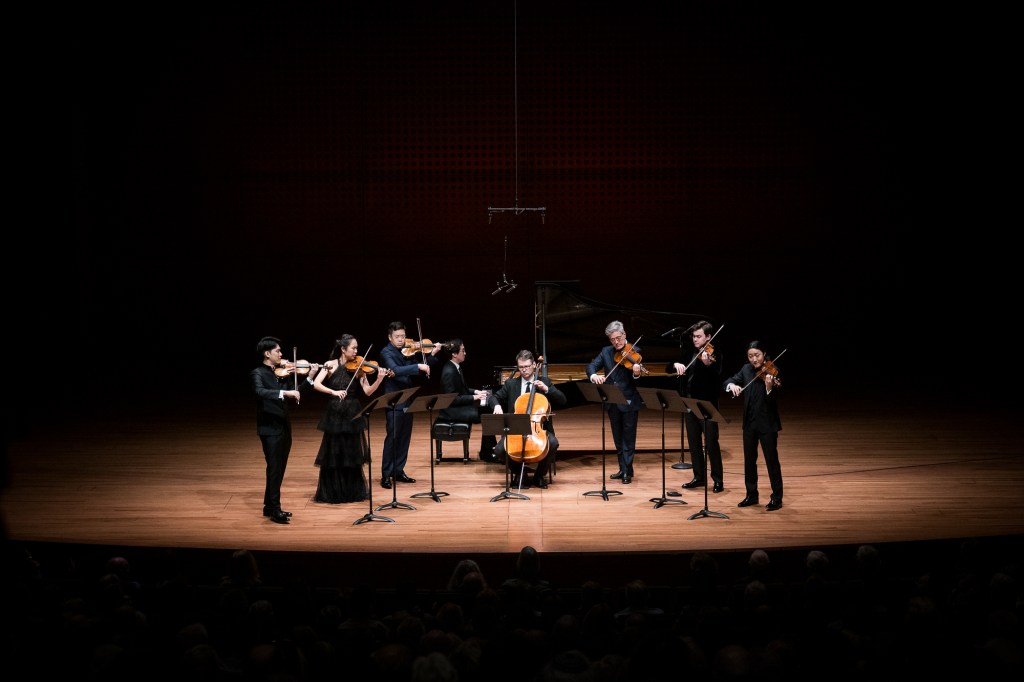
Sunday March 8th, 2026 – Six prominent violinists – Benjamin Beilman, Paul Huang, Sean Lee, Richard Lin, Danbi Um, and Aaron Boyd (the last-named doubling on viola) – joined cellist Mihai Marica and pianists Sahun Sam Hong and Orion Weiss for an evening of music-making honoring the memory of the great Fritz Kreisler.
I remember listening – as a small child – with my grandmother to her 78s of Kreisler on her phonograph. I would often dance around her parlour, enjoying the melodies and rhythms in all their scratchy splendour. When LPs came out, my mom – who favoured Dean Martin and the Andrews Sisters – did have one ‘classical collection’ that had a Kreisler track on it (along with my first taste of opera arias from Lily Pons and Kirsten Flagstad…the earliest symptoms of my addiction to Verdi and Wagner).
But enough nostalgia for now…
Today’s concert opened with Eugène Ysaÿe’s Rêve d’enfant for Violin and Piano, Op. 14. From its dreamy start, Benjamin Beilman and Orion Weiss savoured the music’s gorgeous flow. A lullaby-like atmosphere was finely sustained, though a bout of coughing in the hall (one of several audience distractions today) nearly spoiled things.
A selection from Henryk Wieniawski’s Etudes-Caprices for Two Violins, Op. 18, brought together the lovely Danbi Um (in a striking, ruffled black frock) and Paul Huang. The first of these short duets veered from pensive to animated; the second was a lively feast of notes.
Richard Strauss’s Sonata in E-flat major for Violin and Piano, Op. 18 was the most substantial work performed today. It was composed in 1887, the year the composer met the soprano Pauline de Ahna, who would become his wife. She may have inspired the romantic lyricism of the sonata.
The tall, elegant violinist Richard Lin was ideally partnered here by Mr. Weiss. The opening Allegro ma non troppo, has a passionate feel; it opens with a song-like theme introduced by the piano and finishes in a state of epic virtuosity. The ensuing Andante cantabile has an improvisational air about it; it is poignant…with traces of irony. The concluding Andante/Allegro has a darkish start, with a burst of passion that gives way to tenderness. Rolling arpeggios from the keyboard underscore Mr. Lin’s sublime playing. The piece rises to a soaring finish, eliciting a heartfelt ovation from the crowd.
After the interval, a pianist new to me – Sahun Sam Hong – took over the Steinway for a marathon of thirteen shorter works, composed by – or arranged by – Fritz Kreisler. What on paper looked like a case of “too much of a good thing” turned out instead to be an engrossing festival of music, ranging from the poetic to the thrillingly virtuosic, with an abundance of priceless moments along the way. Mr. Hong’s playing throughout was so persuasive; I’ll look forward to hearing him again.
Mr. Hong remained at piano as the violinists came and went, sometimes saluting one another as they crossed paths. Ben Beilman’s Caprice viennois set a high standard, which was maintained throughout the program. Paul Huang’s minuetto in the style of Pugnani, Danbi Um’s Midnight Bells, Richard Lin’s Tambourin chinois, and Aaron Boyd’s polished Variations on a Theme of Corelli offered subtle contrasts of timbre and technique. Danbi Um’s Slavonic fantasie drew murmurs of appreciation from the audience, recognizing Dvorak’s immortal Songs My Mother Taught Me; this was followed immediately by Mendelssohn’s “Song without Words”, serenely played by Mr. Lin.
Paul Huang brought gypsy flair to La gitana, and Sean Lee’s Sicilienne and Rigaudon brought his suavely polished playing to the fore. Mr. Beilman offered a rarity: the Hymn To The Sun from Rimsky-Korsakov’s COQ D’OR…a special treat for my opera-loving ears.
The three concluding works – perhaps Kreisler’s best-loved and most frequently-heard pieces – carried me back to my grandmother’s house, where I first heard them decades ago. Mr. Boyd’s Schön Rosmarin was especially meaningful to me…and so perfectly played. Mr. Boyd then took up his viola to join the ensemble of all the evening’s artists (and the wonderful cellist, Mihai Marica) for two beloved Kreisler souvenirs: Liebeslied and Liebesfreud. These works, laced with traces of rubato, made my trip down memory lane this evening especially touching.
Performance photo by Cherylynn Tsushima, courtesy of Chamber Music Society of Lincoln Center
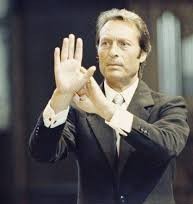
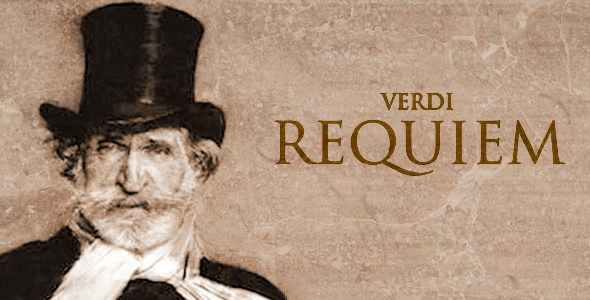
Lorin Maazel conducts a performance of Verdi’s REQUIEM, given at Munich in 2001. The soloists are Angela Gheorghiu, Anna Larsson, Roberto Alagna, and Matti Salminen, with the Bavarian Radio Symphony Orchestra & Chorus.
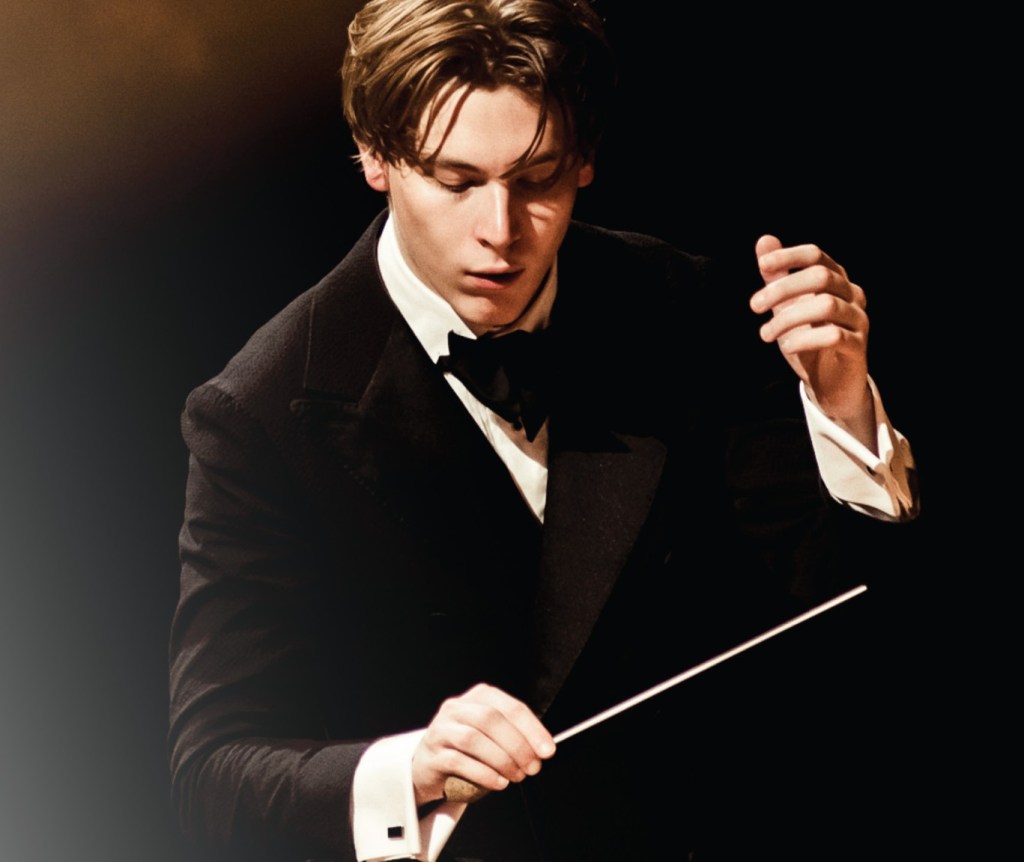
Wednesday February 25th, 2026 – The Chicago SymphonyOrchestra at Carnegie Hall under the baton of Maestro Klaus Mäkelä (photo above), performing two less-frequently heard tone poems.
The hall was abuzz, and something I noticed was that the orchestra was already seated on stage instead of coming on with the conductor. As the lights dimmed and the young Maestro Mäkelä cued the first notes, the piece started with a loud brass bass. I was unfamiliar with both pieces on the program, but I noted that, for a Sibelius piece, the music sounded particularly Straussian. At the time, I was thinking, “Wow, Sibelius really did learn a lot from Strauss.” After several more minutes of thinking the same, I realized that the program order had been flipped and that instead of starting with Sibelius’ Lemminkäinen, they were in fact playing Strauss’ Ein Heldenleben!
I was so glad that I eventually realized my mistake, but thought it was funny that it took me so long to do so.
Mäkelä was fun to watch, as he was one of the more animated conductors I had seen in a while. As he conducted the piece joyously, with his hair flying with each gesticulation, it added another element to the show beyond just the music.
The Chicago Symphony Orchestra did a magnificent job playing the difficult piece, which ranged from tone poem to violin concerto at some points. The piece itself is, funnily enough, conceptualized around Strauss’ own life instead of pulling from the more traditional Grecian, Roman, or mythical source material. Knowing the source material makes certain sections more entertaining, like the wind solo portion, which sounded more like a cacophony than music, representing Strauss’ critics in life.
There was an ascending leitmotif that persisted throughout the piece, passed adeptly among the different instruments. The leitmotif represented Strauss himself (or the Hero).
The structure of the tone poem had eight distinct sections, though they weren’t marked as such in the program. The most interesting section to me was when the concertmaster, Robert Chen, essentially took the role of a violin soloist in a concerto-like movement. Strauss’ wife, Pauline, was a soprano, and Chen’s violin took on the emblematic role of portraying her throughout Strauss’ life.
One interesting moment was an extended trumpet solo that appeared to come from offstage. I was trying to pinpoint where it might be coming from, but I saw that the stage-right door was open, and once the fanfare had ended, the door closed again. I love the use of these spatial elements in music, because it really expands everything so it’s not just “on stage,” but all around.
The orchestra charged through the difficult piece, and figures from earlier sections, like the hero’s leitmotif and Pauline’s violin, returned as the piece ended in a blaze.
After the intermission, the orchestra reduced in size and was now set to play Sibelius’ Lemminkäinen. The piece is actually a set of tone poems that Sibelius wrote with similar thematic material. One interesting historical note is that the Chicago Symphony Orchestra was the first American orchestra to perform Sibelius’ music, so it was fitting that they are still continuing that tradition.
The pieces are inspired by the Finnish epic poem The Kalevala. This poem follows the titular character along his adventures. What is interesting is that these pieces weren’t originally conceptualized as one set, but came together over time. As they were composed, the first two in today’s set were performed as a unit, and as Sibelius wrote more, they were added to the larger work.
As a pairing, the Strauss fit very well with the Sibelius. The two works heavily feature brass and have a mystical aura to them. The first movement, Lemminkäinen and the Maidens of Saari, was a gorgeous and restrained piece evocative of nature and spring. The cellists in particular had a lovely solo section that continued for much of the movement.
Sibelius seemed to have a soft spot for the cello, because the second movement started with a plaintive cello solo, with an oboe eventually soaring above it. The second piece, The Swan of Tuonela, is interesting in that it started its life as an opera. Sibelius abandoned writing the opera after visiting Bayreuth and realizing that the competition as an opera composer was extremely fierce, but selfishly I wish that Sibelius had taken that dramatic leap and finished it. The movement felt in many ways like an overture, with memorable tunes and lush atmospheric music seeming to rise out of the earth.
The fourth movement, Lemminkäinen’s Return, was a standout for the orchestra. The piece starts with string tremolos, but has a melody built into them in a way that I haven’t really seen before. This movement felt the most Finnish in nature, as the main motif was passed from the strings to the brass, then to the woodwinds.
Toward the middle of the piece, there was a dramatic col legno section where the celli played with the wood of their bows instead of the hair, as the final movement came to a dramatic close.
My friend, who I was seeing the piece with, noticed that we were “jamming” out to classical music at the end, and I found it so funny that a non-modern art form can have the same physical effect as something played on the streets of Manhattan. Truly a testament to the Chicago Symphony Orchestra’s playing.
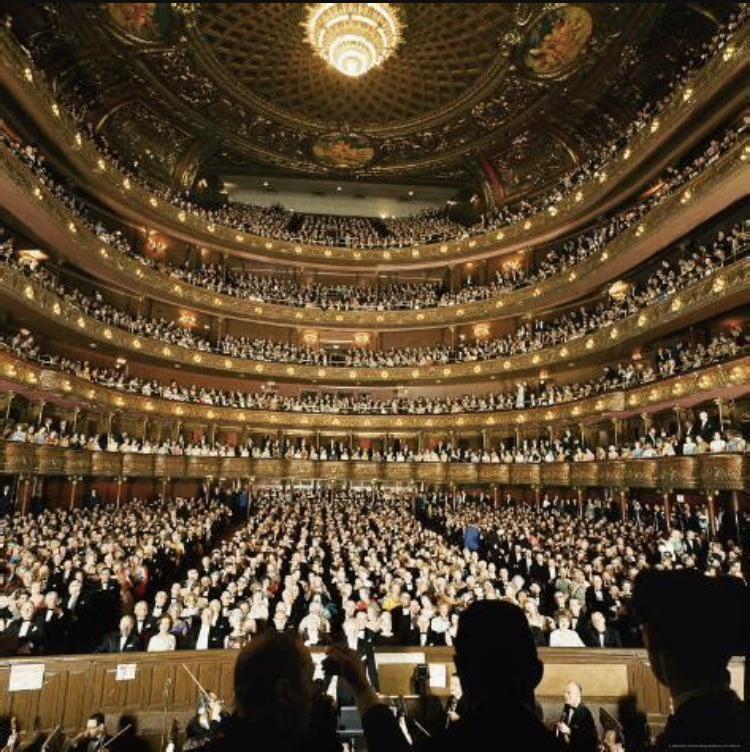
I was already in the 13th year of my opera obsession when Sir Rudolf Bing stepped down as General Manager of the Metropolitan Opera. To honor him, a gala concert at the opera house took place on April 22nd, 1972. The singers who appeared were among my idols at the time….and they still are.
I’ve seen parts of this concert on video before, but the sound quality here is the best I’ve encountered. Unfortunately, the same cannot be said for the video quality.
The program was a veritable parade of stars. Among the most notable moments, Franco Corelli was singing the only portion of Verdi’s OTELLO he ever sang on the Met stage: the Act I love duet. His Desdemona is the luscious Polish spinto, Teresa Zylis-Gara. And the luminous Spanish soprano Pilar Lorengar brought Marietta’s Lied from Korngold’s DIE TOTE STADT to new generations of opera lovers. The aria became a cult favorite, prompting the New York City Opera to mount the opera in 1975.
Monday February 26th, 2026 – Lisa Bielawa’s “thing” that I know her for (other than being a performer in the Philip Glass ensemble) is large-scale choral work, and pieces she puts together remotely. During summer 2020, she was doing these broadcasts where she would take people’s voice recordings and musical snippets and weave them all together into a new piece every week. I was involved with one or two through the festival that I was running – it was a really meaningful moment of togetherness during isolation. She also has done a lot of other large-scale works bringing large groups of people together to perform.
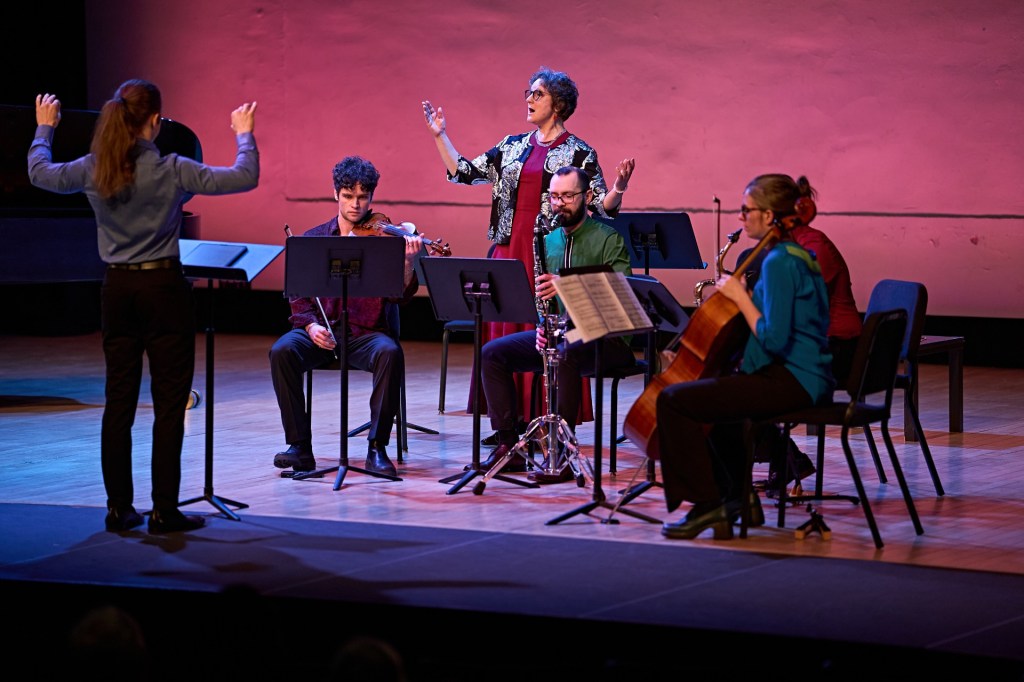
This was the first time I’d seen her chamber works live and also heard her perform her own music. The first piece, “Incessabili Voce” started with only Lisa on stage – a small group of instrumentalists played off stage and slowly entered, and left as the piece ended. She’s a really powerful singer – I guess that’s not surprising since she’s been in the Philip Glass ensemble since 1992, but hearing her in a different context showed off more of her skills and range vocally.
Her bio talks about growing up with new music and early music and not much in between, which felt particularly exemplified in the first piece, which went back and forth between early choral music and newer techniques.
The second piece on the program was called Balloon Variations, which was a premiere and a “study” for an opera she is writing. The opera is based on a true story of the first woman who went up in a hot air balloon, who happened to be an opera singer – she sang an Aria from the balloon. In this piece, some of the instrumentalists played guitars as well as their other instruments – in some cases, holding them at the same time which seemed extremely precarious but didn’t result in any disasters. The whole thing was definitely whimsical (there was also a power drill involved) and at one point the ensemble got the audience to participate by singing the word “balloon” in a simple phrase (so maybe it really is a mass choral piece like those I remember hearing about).
The structure of these composer portraits is that they have a little Q&A with the composer after intermission. It was a particularly good one, in which Lisa talked about how she likes to bring the audience in with a moment of joy and how it opens everyone up. Just the simple act of getting people to sing “balloon” on two notes – which did bring a smile to my face. In the last piece, Graffiti dell’amante – we voted on the order of the movements. The piece was arranged in a way that the movements were not in any particular order and we got to decide how they were performed. It was a love story, and the movements had names like absence, desire, forgiveness, and ravishing. It was an interesting and delightful process and I thought that the audience didn’t put it in a very interesting order. That said, it was a good piece and I really like the mechanism that the story is different each time. The texts drew from a wide range of sources.
I was surprised that there weren’t more people at the concert, since Lisa has brought so many different people into her work and has such a name for herself in so many different spaces. I expected lots of old collaborators to be there. That said, there were a couple of prominent people in the music world that I spotted and I’m sure I didn’t recognize them all. The concert was a good reminder of how much I like Lisa and her music – I’m glad I remembered enough to go uptown on a Thursday!
 Oberon's Glade