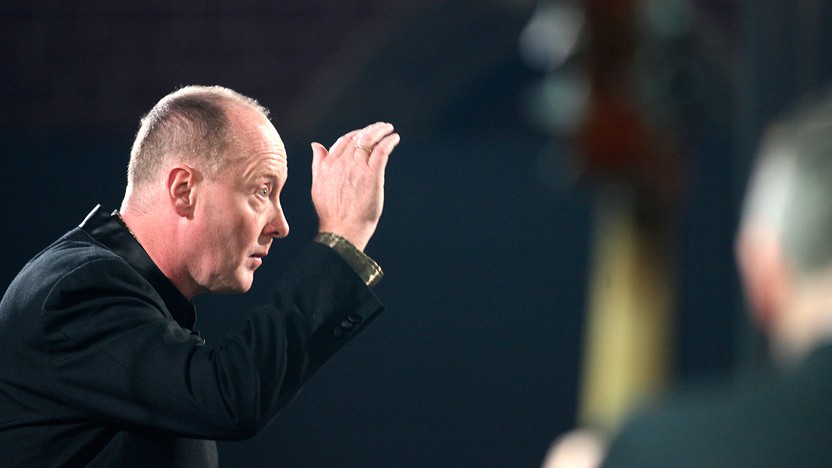
Tuesday June 2nd, 2026 – The Orchestra of St. Luke’s opened their annual Bach Festival at Zankel Hall with Maestro Paul McCreesh (above) making his OSL debut with a Bach/Mozart program. Countertenor Reginald Mobley joined the orchestra for Bach’s beloved “Vergnügte Ruh“.
A glance at Maestro McCreesh’s extraordinary resumé assured us of an impressive evening of music-making.
The concert began with the Sinfonia from Bach’s Cantata No. 42; from its breezy, charming opening measures, this brief piece made a perfect start to the evening. The OSL players were in fine fettle, lovely passages from bassoon and oboe were especially delightful.
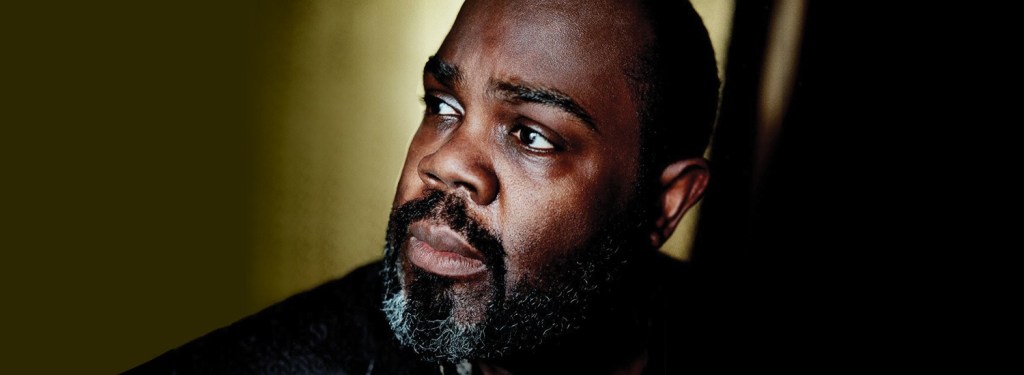
Mr. Mobley (above) then took the stage for Bach’s Vergnügte Ruh’, beliebte Seelenlust (‘Delightful repose, cherished pleasure of the soul’) which was first performed on July 28, 1726. The orchestra’s deft playing of the familiar opening measures had a reassuring grace about it, and then the sweet, lyrical flow of the Mobley voice emerged. Mingling his intriguing sound with that of the oboe, the singer drew us in, whilst the organ creates a church-like atmosphere.
A wordy, dramatic recitative precedes the second aria, wherein a bare-bones instrumentation highlights Mr. Mobley’s coloratura passages; his straight-tone notes create a feeling of time standing still. Another recitative, cushioned by the strings, leads to the final aria, its bravura passages interwoven with organist Robert Wolinsky’s attentive playing.
The audience’s warm response to Mr. Mobley’s entrancing singing led to a rather long encore, giving us more time to savour this charismatic singer’s artistry.
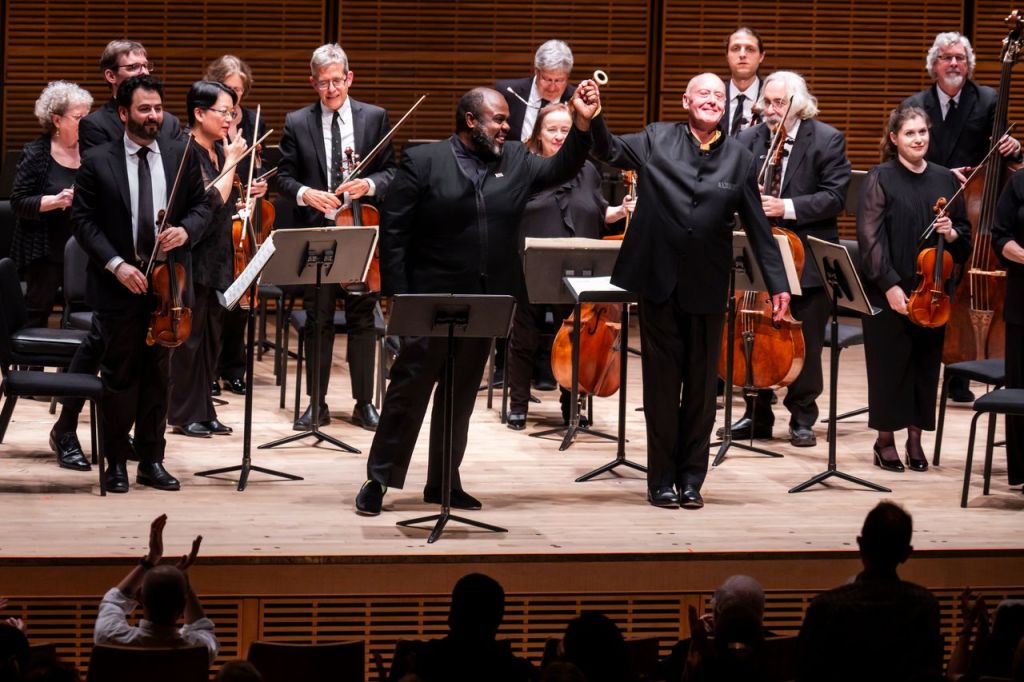
Above: Mssrs. Mobley and McCreesh greeted with an ovation; photo by Chris Lee
Following a long interval, Mozart’s Adagio and Fugue in C-minor, K 546 provided a chance to savor the orchestra’s remarkable bass player, John Feeney. The music, rather dolorous and dramatic, shifts gears for the fugue, wherein Mr. Feeney and cellist Myron Lutzke have much to do…and they did it with aplomb.
The concert concluded with Mozart’s Symphony #25 in G-Minor, K. 183. This music features unison themes that are richly played, insistent rhythms, and ample opportunities for oboe, bassoon, and horn. This was Mozart’s first tragic symphony, composed when he was only 17. It is a prime example of the Sturm und Drang (Storm and Stress) style, famous for its unusual rhythms, emotional extremes, and gloomy shadows. Under Mr. McCreesh’s inspired leadership, the OSL players brought the evening to a pleasingly powerful end.
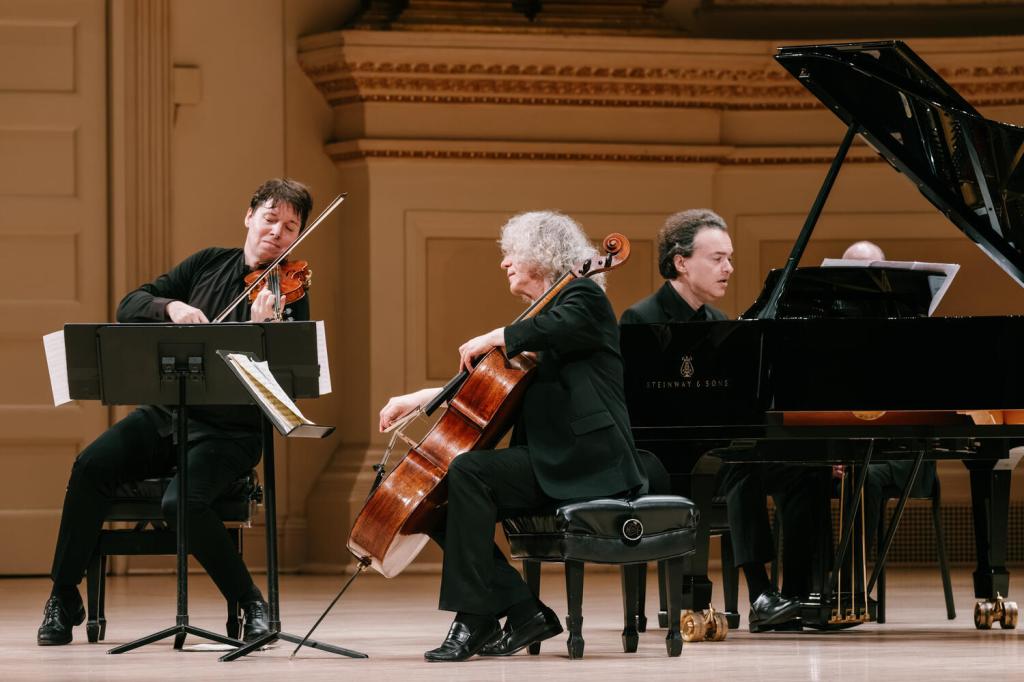
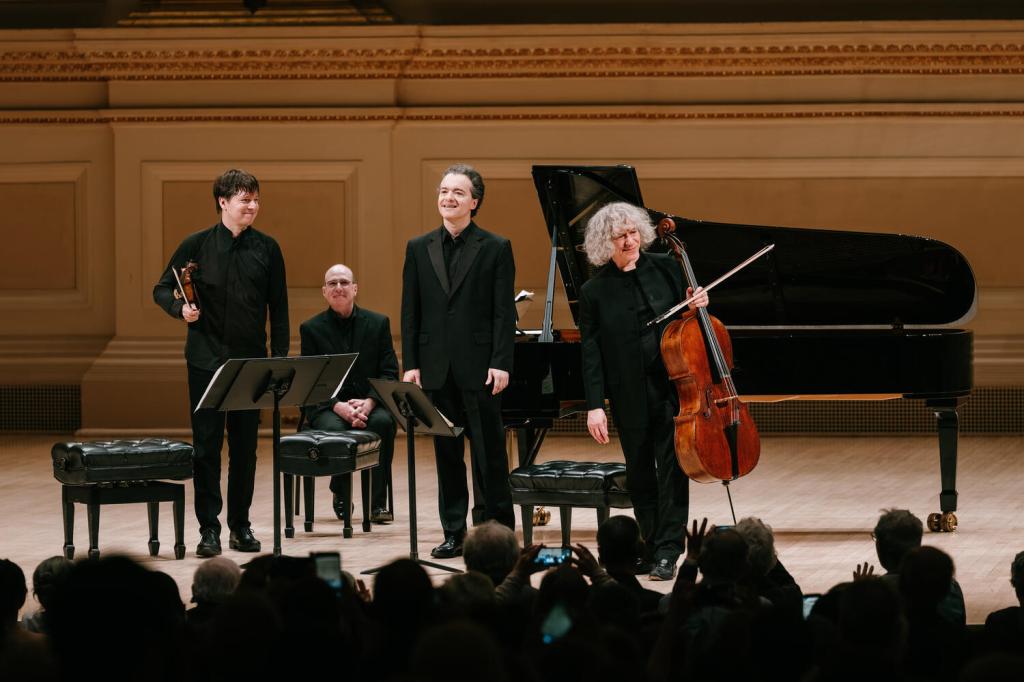
Above: Joshua Bell, Steven Isserlis, and Evgeny Kissin; photo by Fadi Kheir
Sunday May 31st, 2026 matinee – A terrific trio of musicians – Evgeny Kissin, Joshua Bell, and Steven Isserlis – took the stage at Carnegie Hall this afternoon for a concert that featured a rarely-heard work by Solomon Rosowsky and masterpieces by Shostakovich and Tchaikovsky.
Rosowsky’s Fantastic Dance on a Hebrew Theme premiered in 1919. A darkish opening passage from the piano is joined by the deep cello and then by some ‘subdued virtuosity’ from the violin. There is a buildup to the dance, which has a strutting feel. The mood swings between animated and languorous, with a variety of instrumental blends and rhythms. The music gets fast and furious before reaching a tranquil end.
Shostakovich’s Piano Trio No. 2 was then given a spell-binding performance by the three gentlemen. Having just heard Maxim Vengerov and Polina Osetinskaya give a stunning performance of the composer’s violin sonata, I was definitely in the mood for more.
The Andante begins subtly, with the Isserlis cello whispering some high harmonics. Mr. Bell’s golden-toned violin takes up a lyrical theme. Mr. Kissin introduces the piano, playing in the lower register; a feeling of loneliness emerges. To a pulsing rhythm from the strings, the piano remains shadowy. The darkness lifts when Mr. Bell’s violin goes soft and high. There is a rise in drama, and an off-kilter dance breaks out. There is a pluck-fest from the strings as the piano dances on.
The second movement, marked Allegro con brio, is sometimes referred to as a “black scherzo”; here the insistent rhythms, cascading scales, and deft pizzicati are always threatening to veer out of control. The music gets demented, dizzying, brilliant…
The Largo begins with grand piano chords; Mr. Bell takes up a simple melody, soon joined by Mr. Isserlis. This music is simply fantastic, with an extraordinary blending of the three timbres. A hushed ending reaches the depths of my soul. But without lingering, the final Allegretto strikes up. With the strings plucking and the piano in a dotty mood, a folkish beat takes over. Mr. Kissin brings in a familiar piano theme, laced with amazing subtleties. Mr. Bell offers an ironic tune whilst the Isserlis cello swirls and sways. The music gets huge, with cascading passages and high melismas from the Steinway. Plucked strings over deep piano passages seem to bring us back where we started.
The sublimely staggering playing of Mssrs. Kissin, Bell, and Isserlis produced the same audience reaction as the Vengerov/Osetinskaya duo had ignited with their sonata: people rose to their feet in admiration for the players…and the composer.
Following the interval, we heard Tchaikovsky’s Piano Trio, composed 1881-1882. The opening movement commences with a lamenting dialogue between the cello and violin over a somber stream of arpeggios from the keyboard. After the theme’s initial statement, the piano takes command: Mr. Kissin here is simply fabulous: epic playing of music which briefly calms only to become more passionate. We then transition to a new feeling, with Mssrs. Bell and Isserlis exchanging themes. The music becomes cinematic, then thoughtful and brooding; then Mr. Bell steps on the accelerator and the composer dazzles us yet again, before the duetting strings are heard over a calming piano.
The Theme and Variations section, introduced by Mr. Kissin, begins with a folksong-like melody; it will take us on a succession of adventures and mood swings. There are dances – a waltz, a fugue, a mazurka – and modes of exoticism, frivolity, and nods to the composer’s ballet scores. There are even sleigh bells. Though at times the variations felt like too much of a good thing, they were deliciously played.
Above, the artists take a bow.
Performance photos by Fadi Kheir, courtesy of Carnegie Hall
Friday May 29th, 2026 – A joy of musical life in New York is the repeated hearings of top orchestras. Several international orchestras come annually to Carnegie Hall, and many domestic ones, such as Philadelphia, visit even more frequently. With repeated hearings, we get to know their signature sound and eagerly anticipate their interpretations of familiar repertoire.
However, biting into the big apple brings both the knowledge of good and the knowledge of less-than-good. At their best, the Philadelphia Orchestra plays with a stronger telepathy than any of the Big Five, with tight handoffs between sections and a general cohesive unity. Unfortunately, their recent stop at Carnegie struggled to reach the standards set by previous visits.
The concert began with Beethoven’s Symphony No. 7, by any interpretation one of the composer’s most festive and dancelike works. Yet Friday’s rendering was weighty and sluggish. The fault was not necessarily with the tempos, but in spirit: articulations were soggy, entrances and exits were haphazard, and Philadelphia’s typically refined approach gave way to a loudness which was physically unpleasant, like an express train passing through the Lincoln Center station.
Inexplicably, the only movement of Beethoven 7th which might benefit from such a lugubrious approach—the funerary Allegretto—took off with a jolt of caffeine. Its gossamer texture and heartbreaking pathos gave way to the air of a sea shanty. By the third movement, out of four, the patron next to me was reading the list of donors in the playbill. When the bequest of Mrs. John Smith IV commands more attention than Ludwig, something has gone off the rails.
In fairness, the symphony places substantial demands on the musicians, with three fast and long movements, and little chance to rest in the slow movement. Beethoven rushes the instrumentalists up and down scales, and pushes them to a rare triple-fortissimo in the finale. The result is, ideally, tremendously exciting for the audience; but certainly exhausting for the musicians, who were only halfway through the evening’s demanding repertoire.
Strange performances are sometimes attributable to the relationship (or lack thereof) between ensemble and conductor. But Marin Alsop is principal guest conductor at Philadelphia, to the extent of holding a named chair, so there is little chance of miscommunication between her and the musicians. She conducted from memory, and with no shortage of vigorous physical gestures; yet the resulting clamor sounded neither like Philadelphia nor like Beethoven.
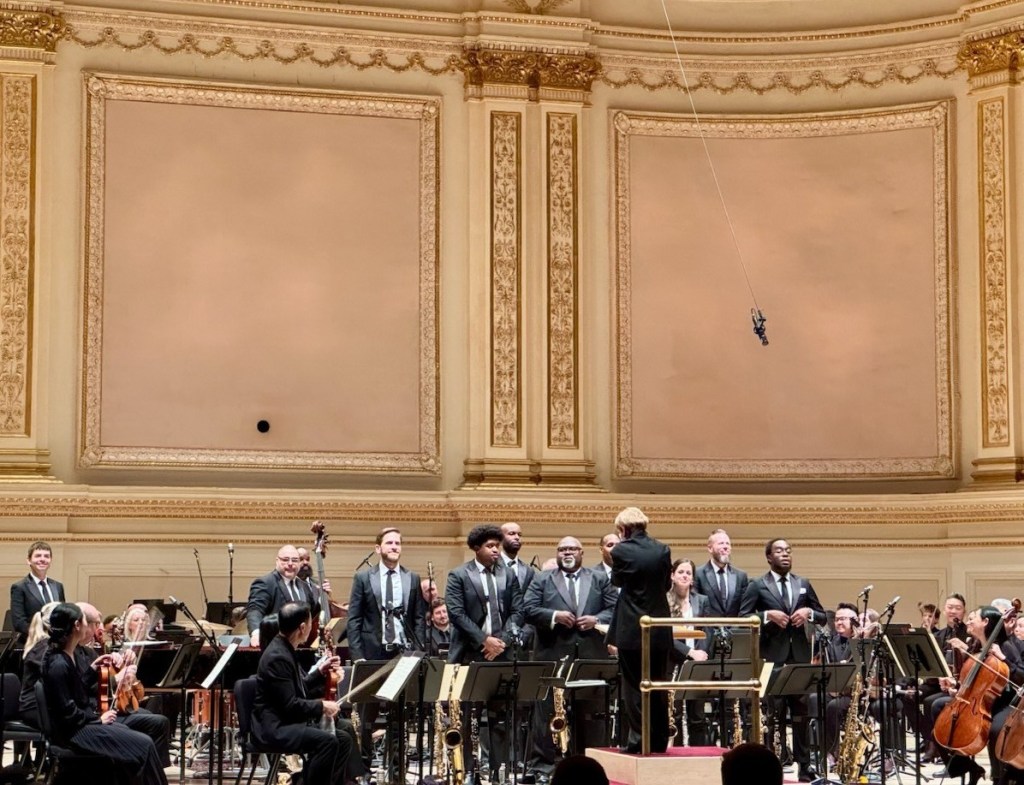
Perhaps the musicians were already thinking ahead to the second half, which featured Wynton Marsalis’s sonorous “Jungle” Symphony No. 4, joined by the composer and his jazz ensemble. (The original program was to premiere his Symphony No. 5, but evidently the work was not completed by May 19th, when the substitution was announced.) The work, an homage to New York City, takes sonic inspiration from its eponym; and this aspect may have inadvertently influenced the interpretation of Beethoven earlier in the program.
Although nominally jazzy, Marsalis’s symphony came across as an academic work of new music. The harmonies were more atonal than blue, and elements of minimalism and recurring motifs gave the work a formal structure. Marsalis is fluent in both classical and jazz idioms, and this score primarily explored the former, concluding with an extended cadenza over the tonic by the composer.
Yet there were brief moments of jazz: references to Dixie, blues, and other paradigms. This helped place the evening in alignment with Carnegie’s “United in Sound” festival, celebrating 250 years of American music, a genre in which Marsalis has played a very significant part. Those who came for jazz, however, may find more of what they are looking for at the Rose Theater, where Marsalis performs with his Jazz at Lincoln Center Orchestra.
In a week, Philadelphia concludes their season at home, and the musicians will summer before returning to Carnegie in October. Their frequent visits are certainly welcome and benefit a city which, by any statistical reasoning, ought to have more than one major orchestra. But as anybody traveling the Northeast Corridor knows, the gods of Acela and I-95 are capricious, and often charge a heavy toll. With hope, Philadelphia’s autumn appearance, which opens Carnegie’s Mahler cycle, will bring a return to form.
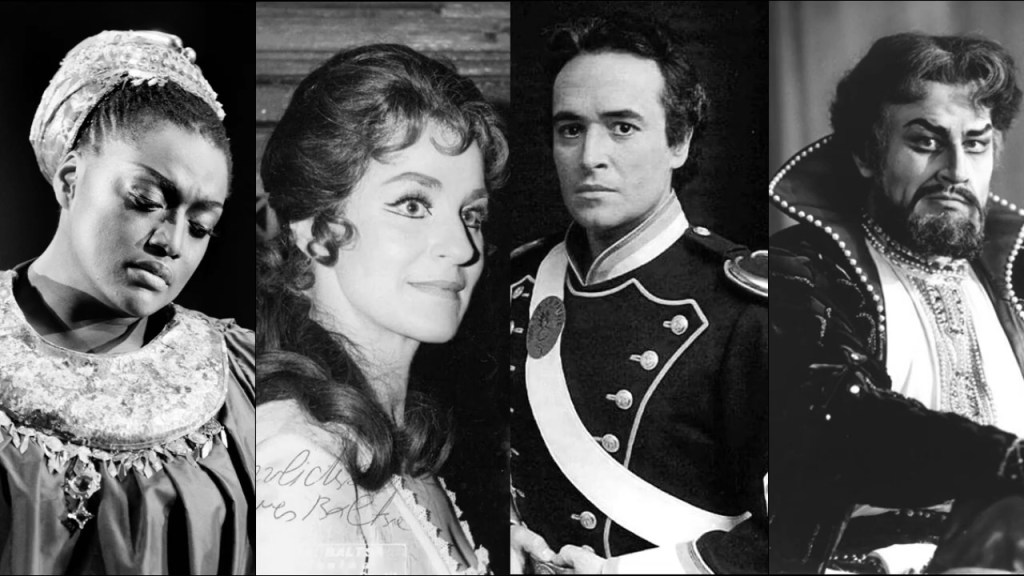
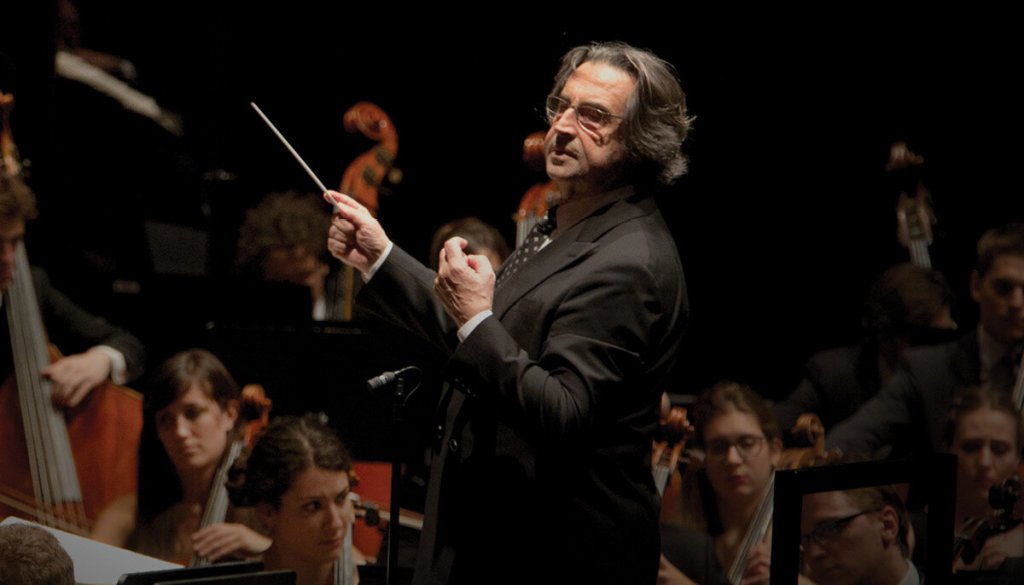
I picked up a recording of the Verdi REQUIEM at the Library at Lincoln Center; I’d never even heard of this particular performance which was recorded “live” in Munich in 1981. Riccardo Muti conducts, and the soloists are Jessye Norman, Agnes Baltsa, Jose Carreras, and Evgeny Nesterenko. It immediately became my favorite recording of the work. I checked in with my friend Dima, who knows lots more about what’s been recorded than I do, but he was unfamiliar with it also.
What I love most about the performance is that, in addition to Muti bringing epic grandeur to the music, the performance is rich in nuanced passages and a beautiful blending of the solo voices.
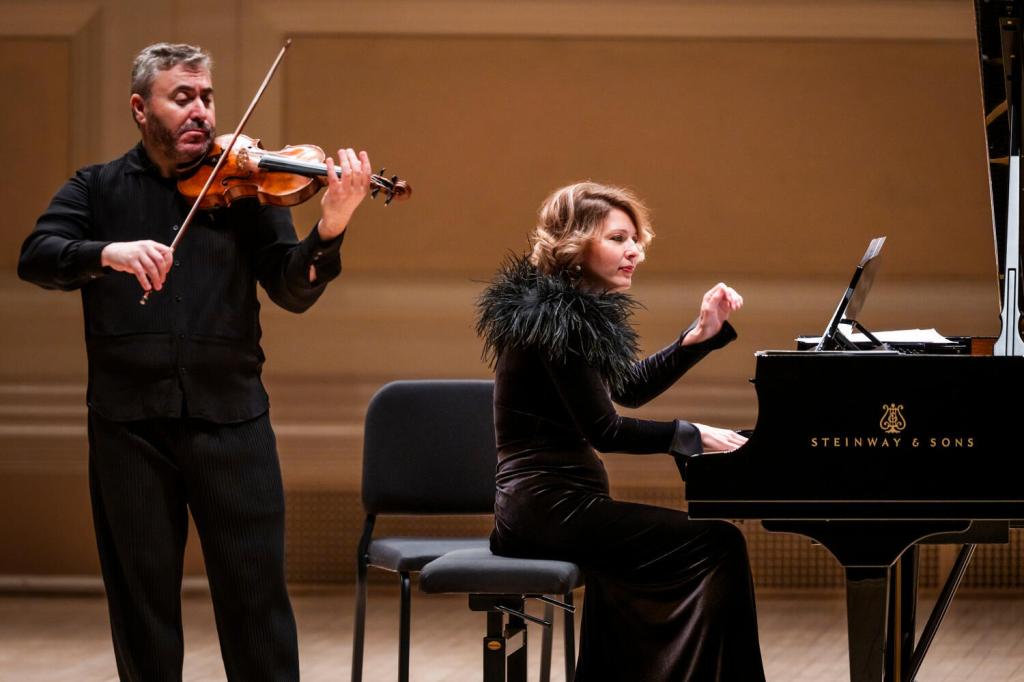
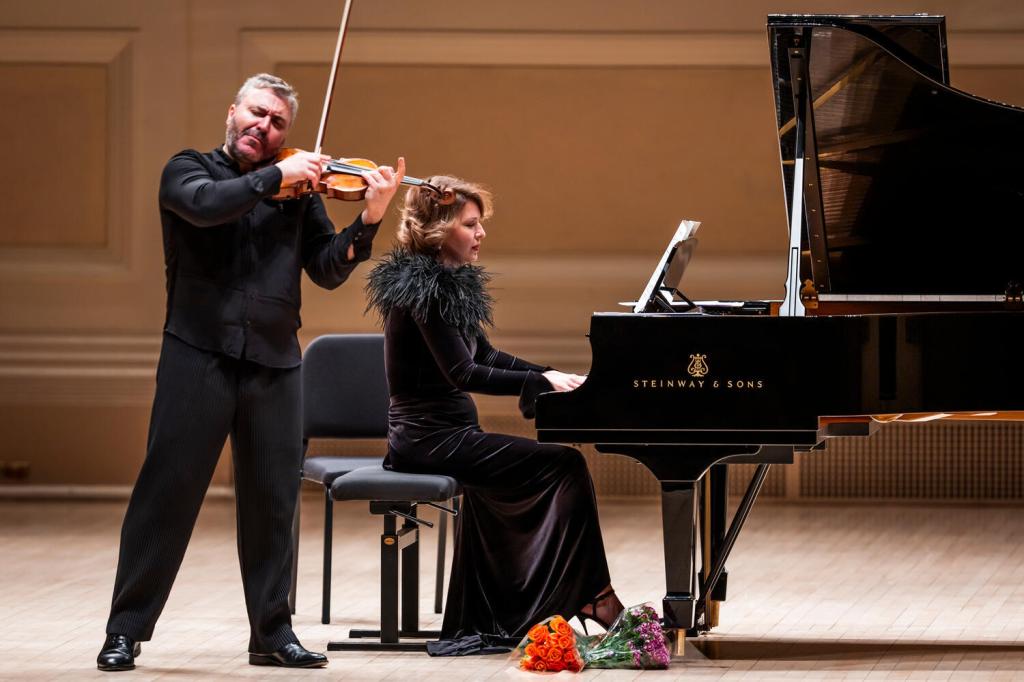
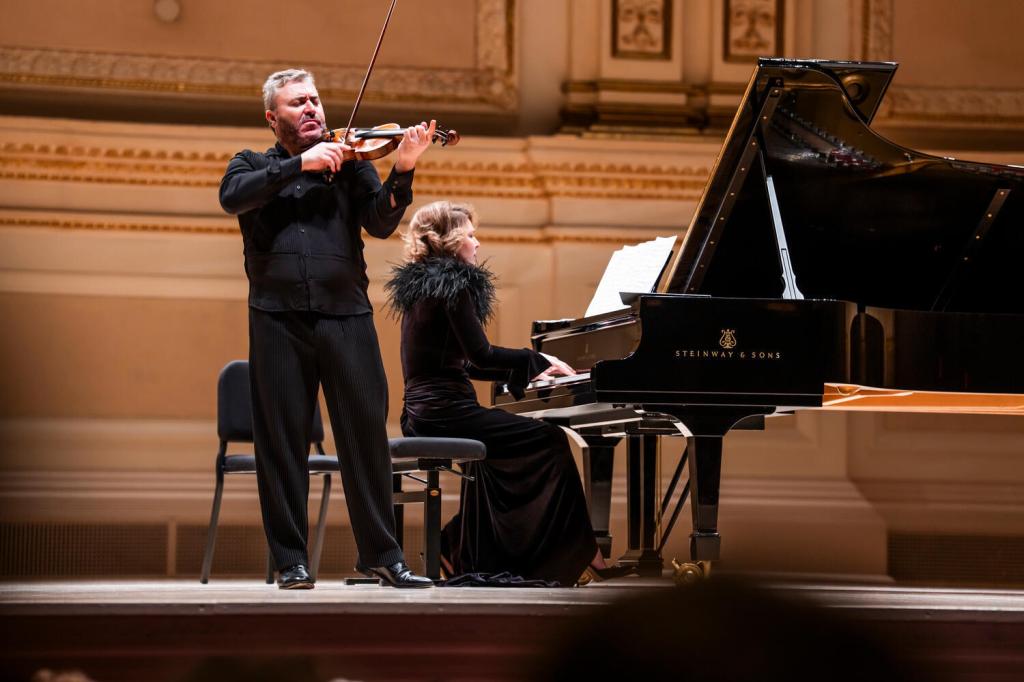
Maxim Vengerov, Violin and Polina Osetinskaya, Piano
Above: Maxim Vengerov and Polina Osetinskaya onstage at Carnegie Hall; photo by Chris Lee
~ Author: Oberon
Wednesday May 27th, 2026 – So wonderful to be at Maxim Vengerov’s recital tonight, and so glad for the opportunity to hear pianist Polina Osetinskaya once again. The program was straight-forward and – as expected – superbly played. The artists took the stage to a very warm welcome, Ms. Osetinskaya looking stunning in an elegant black gown with a fluffy collar embellishment.
Schubert’s Violin Sonata in G-Minor dates from 1816-1817. The opening Allegro giusto commences with a unison passage, the piano in a pensive mood. Mr. Vengerov immediately has some brisk and buoyant phrases from which a sweet melody emerges. There is a da capo wherein we can enjoy these melodious moments for a second time. Then on to a passage in a minor mode, insistent repeated notes from the keyboard supporting virtuoso playing from the violin. The movement’s themes are repeated with subtle alterations.
The Andante has a melancholy feel. Here the congenial partnership between the two players can be savoured as the music unfolds. Cellphone intrusions nearly ruined the mood; the players carried on, but one could sense their irritation. The Menuetto, marked allegro vivace, has a wry start; the music is at once regal and charming. The concluding Allegro moderato flows onward with alternating major and minor modes; a sad theme is heard in which Ms. Osetinskaya’s subtle playing is an intriguing element. The sonata reaches a sudden end.
Next up is the Shostakovich Violin Sonata, composed in 1968 especially for the virtuoso violinist David Oistrakh. For this amazing, monumental work, Mr. Vengerov brought forth a score, and his reading glasses. Eerie music from the Steinway is soon matched with a sense of foreboding from the violin. Fabulous dynamics from both players create a somber, disquieting atmosphere, but then a dance breaks out: awkward, but endearing. A soulful lament from Mr. Vengerov is heard whilst Ms. Osetinskaya’s playing goes high and haunting. The violin phrases sound like they are coming from outer space. The pianist bangs on the keyboard while the violinist’s strings shiver. The movement comes to a deep, somber finish.
The ensuing Allegretto is darkish, with a sense of madness. There is a rush of notes, intensely played at a brisk pace. Amazing playing here from both artists. A glorious assault from Ms. Osetinskaya carries her up to some glittering notes in the highest range. The music gets grand, then suddenly stops.
The concluding Largo opens with an 11-measure passage wherein the violin plays alone; about to continue, Mr. Vengerov is paused by a round of applause! The piano then takes up the theme, triggering an extended conversation between the two instruments. Their playing is spell-binding, with an intense, virtuosic cadenza for both the piano and the violin. Rather than ending in triumph, the music fades away into an ethereal, haunting whisper of resignation. The ensuing ovation rocked the Hall.
Following the interval, the Vengerov/Osetinskaya duo gave us Johannes Brahms’s Violin Sonata No. 3. One might have thought that nothing could follow the unique spell cast by their playing of the Shostakovich, but the great Vengerov/Osetinskaya partnership turned the Brahms into a truly magical half-hour of music-making that totally captivated the pack Hall.
In the opening Allegro, a sense of drama develops with an irresistible piano theme under-pinning soaring violin phrases. There is a passage of quiet intensity leading to a sublime ending. The familiar melody of the Adagio has a hymn-like quality. What music! So poignant in its rich lyricism laced with enchanting subtleties, and so moving in the gorgeous, reassuring tranquility of its ending.
The third movement is restless, and sometimes wild. There are lovely, lulling passages, and minor-key, fairy-like music that evokes Mendelssohn, whilst the middle section is lyrically expressive. The sonata ends with a Presto agitato in which a galloping rhythm is periodically interrupted with more contemplative passages. Such entrancing music-making from these illustrious musicians.
Above: the first encore; photo by Chris Lee
The soulful Hungarian Dance #7 by Brahms was the first encore, after which we ducked out so my companion could catch his train. I’m sure more encores followed. What a treat to hear Vengerov again, and on such fantastic form…and to hear (and see!) the marvelous Ms. Osetinskaya.
Performance photos by Chris Lee, courtesy of Carnegie Hall.
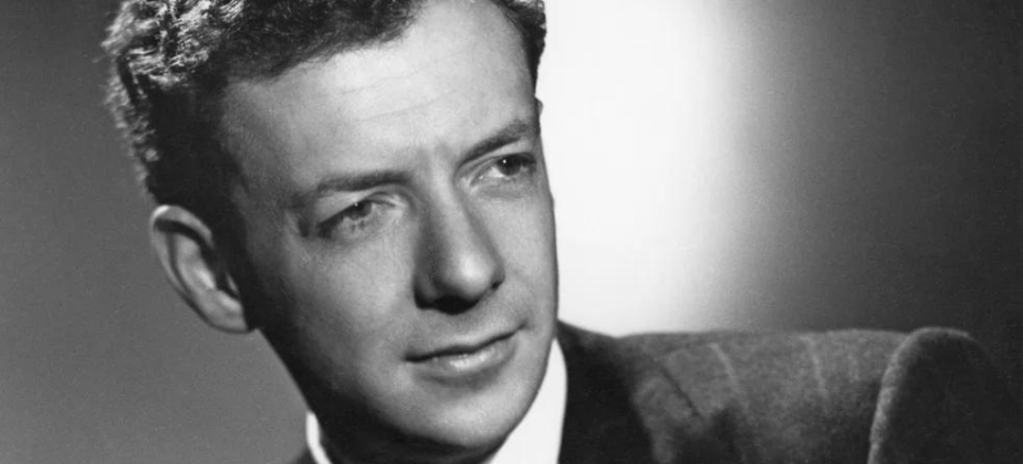
The Tanglewood Music Center Orchestra plays Benjamin Britten’s Four Sea Interludes from PETER GRIMES with Armand Birk conducting. Recorded on August 14, 2023 in Seiji Ozawa Hall.
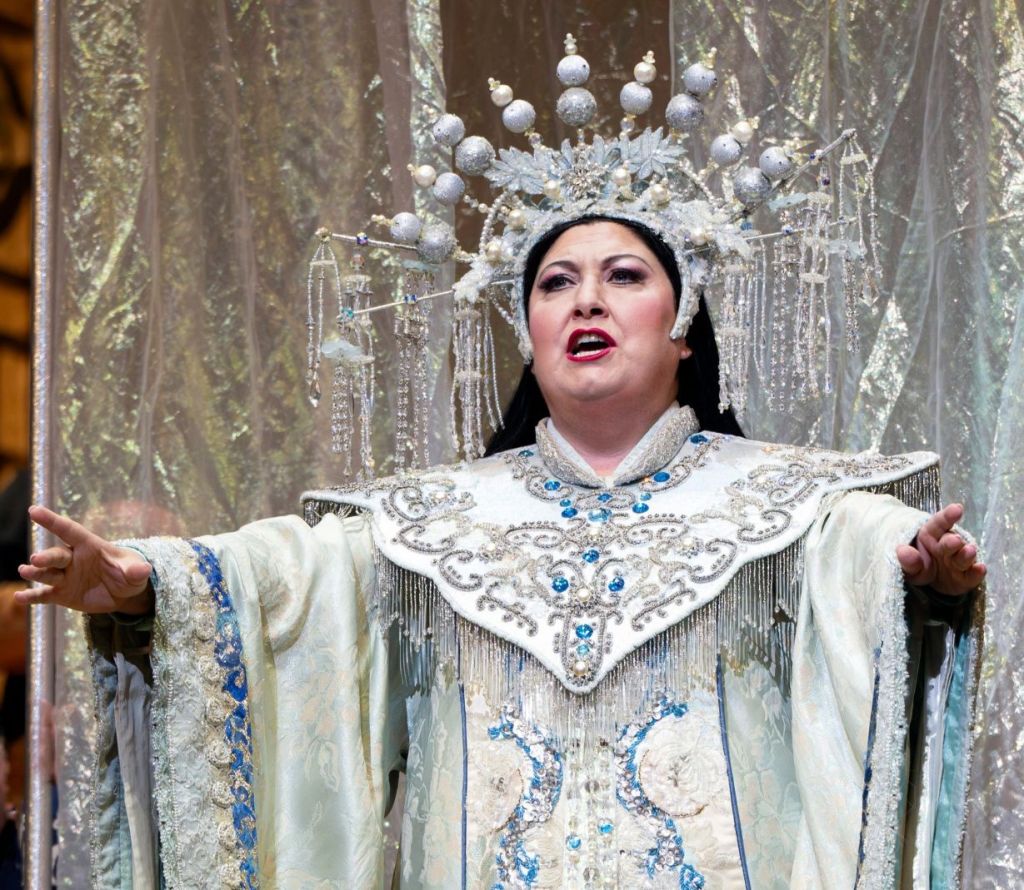
Saturday May 23rd 2026 matinee – The ever-popular Zeffirelli TURANDOT drew another packed house this afternoon as the Met’s 2025-2026 winds down.
The performance, overall, was one of the most exciting of the current season. The drawback, as is so often the case at The Met now, was the excessive orchestral volume that – while lending a surface excitement – covered the voices too frequently. This particular conductor seems to be a frequent exponent of decibel overload. By the end, a couple of the brass players were cracking from exhausted embouchures. In spite of this, it should be noted that the Met musicians have been playing beautifully all season, and that the chorus has been sounding exceptionally fine.
As has happened at some of my recent Met matinees this season, there were annoying noises coming from the lighting bay lodged in the hall’s ceiling; bits of conversation and – seemingly – of a radio being played filtered down into the seating space along the Family Circle boxes. Ironically, when the important task of flipping on the bow lights so the singers can take their curtain calls is almost always delayed. Today, the applause after Acts II and II had died out completely before the lights came on and the singers came out – almost apologetically – to bow. This would never have happened back in the days when Joe Volpe ran a tight ship.
The first voice to be heard, that of Ben Brady as the Mandarin, made a strong impression. Both here and in his ‘encore’ presentation of “Popolo di Pekino!” in Act II, the bass-baritone made a vivid effect. The unexpected reunion of Calaf and his father, the blind king Timur, brought powerhouse singing from tenor Brian Jagde and basso John Relyea. Angel Blue finished Liu’s “Perche un di...” on a sweet piano B-flat, but the note turned edgy as she increased her volume. The orchestra sounded like a noise machine when the conductor gave them full rein; in softer passages – such as at “O taciturna…”, the magical blend of strings and winds cushioned the choral voices to fine effect. The children’s chorus sounded wonderful, though noises from the lighting bay above us were a distraction.
Brian Jagde’s wonderment at seeing Turandot for the first time commenced dreamily, but the orchestra then swamped him; he pulled thru for a tantalizing “O meraviglia…“. Mr. Relyea’s deep tones resonated thru the hall at “Figlio, che fai?“. The tenor’s massive B-flat as he called out Turandot’s name was nearly covered by the sounds from the pit, though he persevered.
The ministers – Ping, Pang, and Pong – now appear: the outstanding voices of baritone Joo Won Kang and tenors Tony Stevenson and Andrew Stenson made the trio’s singing throughout the afternoon a true pleasure. When their urgings to Calaf that he abandon his quest get too lively, they are silenced by Turandot’s maids – Anne Nonnemacher and Mary K. Hughes – reminding them that this is the hour of their mistress’s repose.
The finale of Act I is at hand; Mr. Relyea pleads memorably with his son, making every note and word count. The ghostly voices of Turandot’s victims gives Calaf pause, but father and son continue their debate powerfully. Angel Blue’s “Signore ascolta…” is voiced with rich, creamy phrases: the emotional pull is palpable, but her voice turned edgy on the final B-flat. Mr. Jadge pours out the passionate phrases of “Non piangere, Liu” with stunning clarity. Mr. Relyea’s deep “Noi morem…” cannot dissuade his reckless son; Relyea’s final plea -“Ah, per l’ultimo volta…” is magnificent, though unheeded. Striking the gong, the tenor’s powerful final B-flat is held forever.
The folks in the lighting bay must have fallen asleep because it took them forever to get the bow lights on so that the singers could step before the iconic gold curtain; the applause had completely stopped before the lights went on and the singers were greeted by a hurricane of applause and cheers. The interminable (45-minute) intermission now commences.
Back in the days of Nilsson, we (then) young fans always resented the Ping-Pang-Pong scene which – to us – held up the much-anticipated appearance of the Great White Goddess (aka The Big B) to nail us to the wall with her laser -beam top notes. Over time, I have come to love this comic/sentimental scene for the three ministers. Though the orchestra kept needlessly threatening to swamp the singers, the three featured subtle dynamic shifts and expert word-play to bring the scene to life. Joo Won Kang’s Ping was outstanding (his character turns cruel in Act III). The ministers rush off to the throne room, and harp glissandi underscore the excitement of the impending riddle scene.
The inimitable Carlo Bosi as Altoum urges Calaf/Jagde to abandon his quest, to no avail. Both singers are verbally acute in their exchange. The harpist continues to enchant. Ben Brady is heard again as the Mandarin…a voice I’ll want to hear more of in the coming seasons, and then – at last – Anna Pirozzi as Turandot stands before us. The soprano, whose fame has preceded her, commences the treacherous “In questa reggia“, quickly establishing herself as a singer of power who is also able to apply intriguing moments of dynamic shading to the great aria. The orchestra builds up until La Pirozzi lets fly a titanic top-B. In the ensuing passages, the orchestra does sometimes cover her in mid- and low- range phrases, but her flaming top notes are always her winning response. She and Mr. Jagde match wits on a top-C of great dramatic thrust. The riddles are now set forth, Ms. Pirozzi tossing down the gauntlet with a thrilling “Straniero…ascolta!“.
The orchestra supplies anxious tension. The soprano’s word-colourings and dynamic demi-tints make the scene even more fascinating than usual. The orchestra tries to cover Jagde’s replies, but he isn’t letting them. When the crowd gets rowdy after the second riddle, the soprano blasts them with the threat: “Percuotete quei villi!” The third riddle is cunningly put forth, the soprano’s beauty of tone is engaged to make Calaf’s anguish even more agonizing. When the correct answer is ringingly given, Turandot turns to her father, singing with intriguing legato, and begging for a reprieve; the Emperor reminds her “E sacra il giuramento...” The orchestra unleashes massive volume, which the soprano over-rides with two glistening top-Cs. Mr. Jagde replies with a ringing top-C of his own, and then – with persuasive lyricism – he offers Turandot a way out.
The orchestra plays gorgeously the dreamlike prelude to Act III, laced with choral interjections. Mr. Jagde’s “Nessun dorma” is super: such a generous outpouring of tone, his poetic phrasing and verbal nuances etched in to make it all the more alluring. The ovation he received was thunderous, and so well-deserved.
Joo Won Kang’s Ping has many opportunities to shine now; his “Ebbene, prendi!“, “Straniero tu non sai..” and “Principessa divina...” are all spot-on. Liu and Timur are brought in, and Ping presides over the drawing out of the Unknown Prince’s name thru torture. The orchestra here is needlessly loud much of the time. Ms. Blue’s steadfastness at first holds true, but her scream draws a poignant “Perche gridi?” from the confused Timur. The exchange between Mmes. Blue and Pirozzi is finely sung, though the former is a bit wiry in spots. Ping powerfully calls for the executioner, Pu-Tin-Pao. Angel Blue’s “Tu che di gel…” is superbly phrased, despite her highest notes being a bit shaky.
Liu’s death evokes a tormented “…tu sei morta!” from Calaf. John Relyea’s plea for his “little dove” to awaken is interrupted by the cruelty of Jon Wong Kang’s bitter “Àlzati, vecchio! È morta!” Mr. Relyea’s singing here is stupendous. ending with a crushing “Vendicherò! ” The old king then bids a heart-rending farewell to the slave girl who had devoted herself to his care because, one day, Calaf had smiled at her.
In the ensuing duet for Turandot and Calaf, the orchestra too often covers the voices. Both sing gloriously, Ms. Pirozzi’s ethereal “E l’alba…” and her singing throughout “…del primo pianto” (amazing that this passage was sometimes cut back in the day) was radiant, her haunting “…il tuo mister!” lingering on the air. Calaf reveals his name. Soprano and tenor duel vocally with competitive, high-lying passages. Before the emperor, Turandot reveals the name of her prince: “It is love!“. The orchestra and chorus pour out a massive finale, while I am thinking of an alternate ending that I’ve always wished to see.
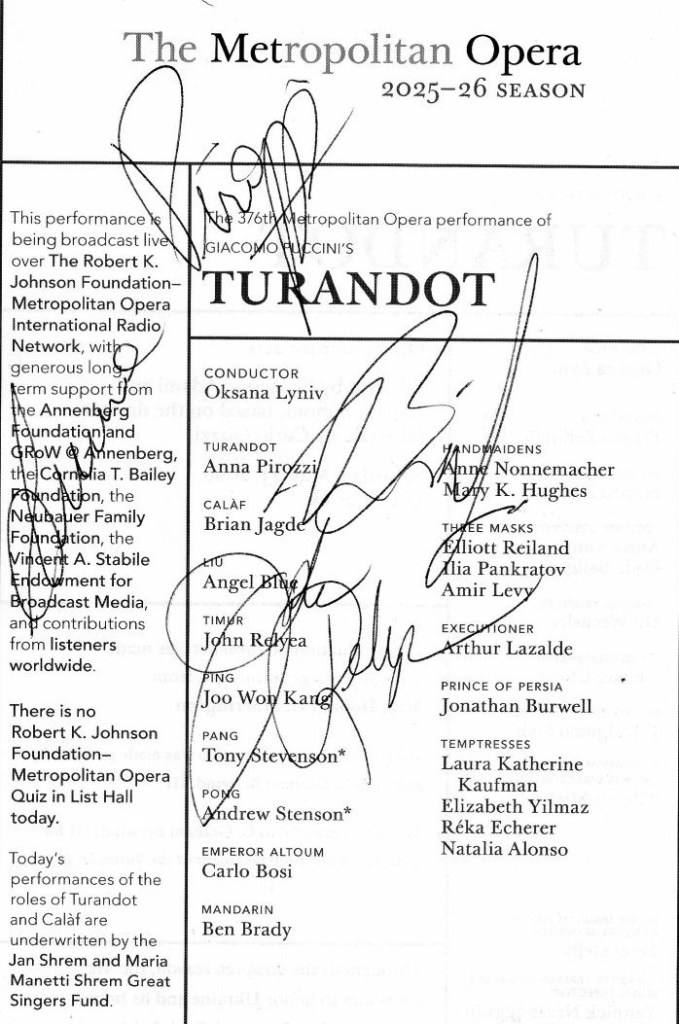
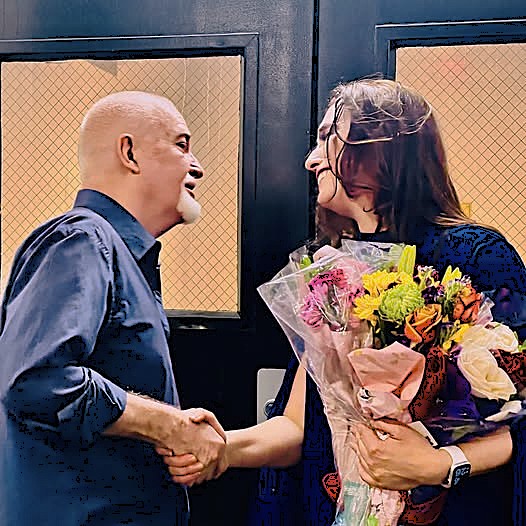
Tumultuous ovation: great enthusiasm – thoroughly deserved – for the singers. I went to the stage door, where I met Mssrs. Jagde and Relyea – each of who have a handshake to match their powerful voice – and the lovely Ms. Pirozzi, who let me give her a hug. Such a great end to a great season for me.
Above, signed by Ms. Pirozzi and Mssrs. Jagde and Relyea
(Angel Blue’s passing troubles with notes in her highest range were not disastrous by any stretch, but her seeming insecurity at those moments prompted me to think that a change of fach might be a good idea. With her warm, plush sound, she could easily move into the great mezzo-soprano roles like Carmen, Dalila, Laura Adorno, Santuzza, Dido (Berlioz and/or Gluck), Brangaene, Charlotte…)
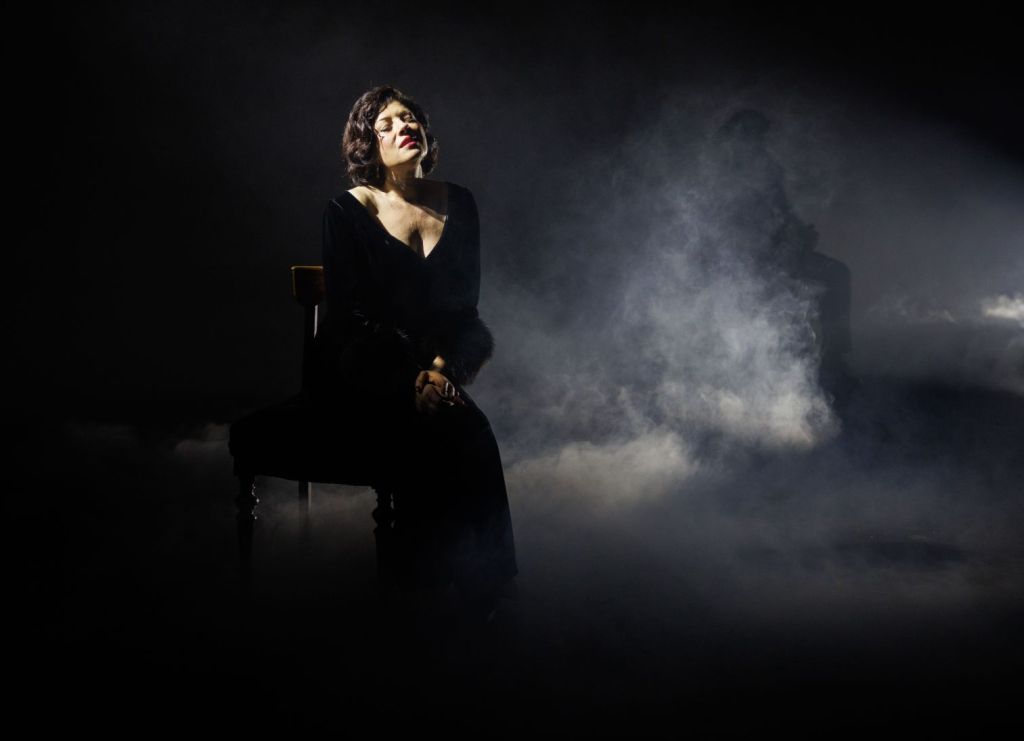
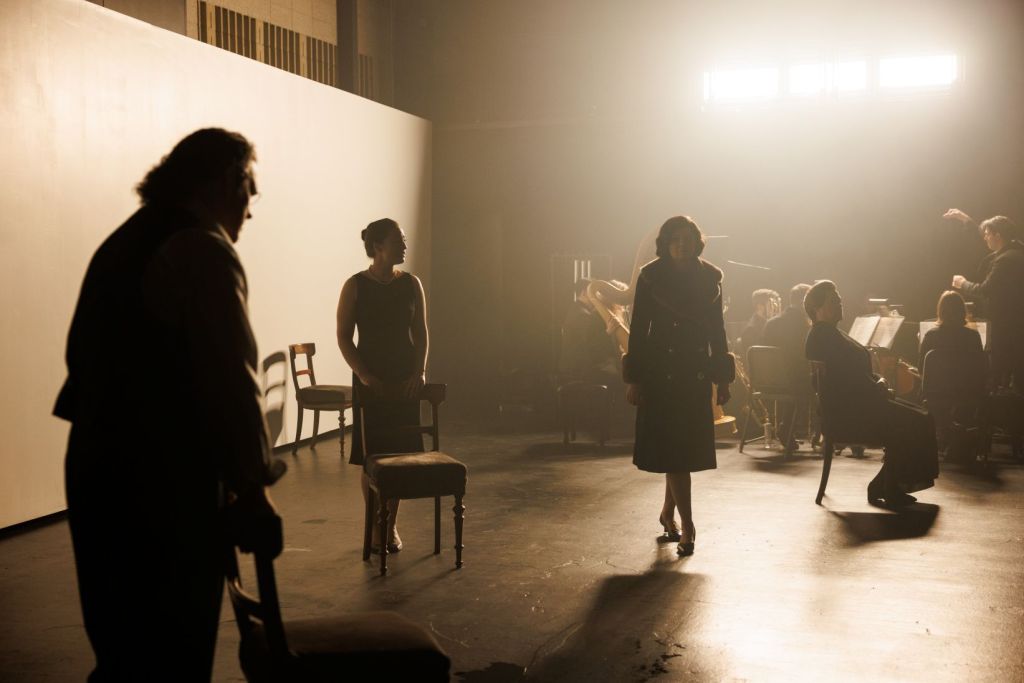
Above: Inna Dukach as Vanessa; photo by Maria Baranova
Saturday May 16th, 2026 – Heartbeat Opera’s VANESSA fantastically threads the line between beauty of music and captivating staging, while introducing audiences to a much lesser-known piece by Samuel Barber.
I last saw Heartbeat Opera’s production of MANON, and at times I still think of how entertaining and originally staged that French opera classic was to watch and experience.
Vanessa, adapted by Jacob Ashworth and newly arranged by Dan Schlosberg, is a much more stripped-down show. Directed by R.B. Schlather, with music direction by Jacob Ashworth, the production utilizes less of a vast set, but emphasizes the looming blankness in the plot itself with the very austere staging at the Baruch Performing Arts Center.
There was hardly any physical set aside from several chairs used throughout the show, but the intelligent use of spotlights made the shadows of the actors cast along the pure white wall act as a backdrop of sorts. In many ways, it reminded me of Alfred Hitchcock’s use of shadows to further tell the true story behind what characters are actually saying.
The story is a bit of a bizarre one, without much real backstory. I had assumed that it was based on some stage play popular at the time it was written, but after doing some research I found that there is no real source material for the libretto, written by Menotti. I did find it cute that Menotti, who was Barber’s long-term lover, wrote the libretto for his partner’s music, a musical factoid unknown to me until this point.
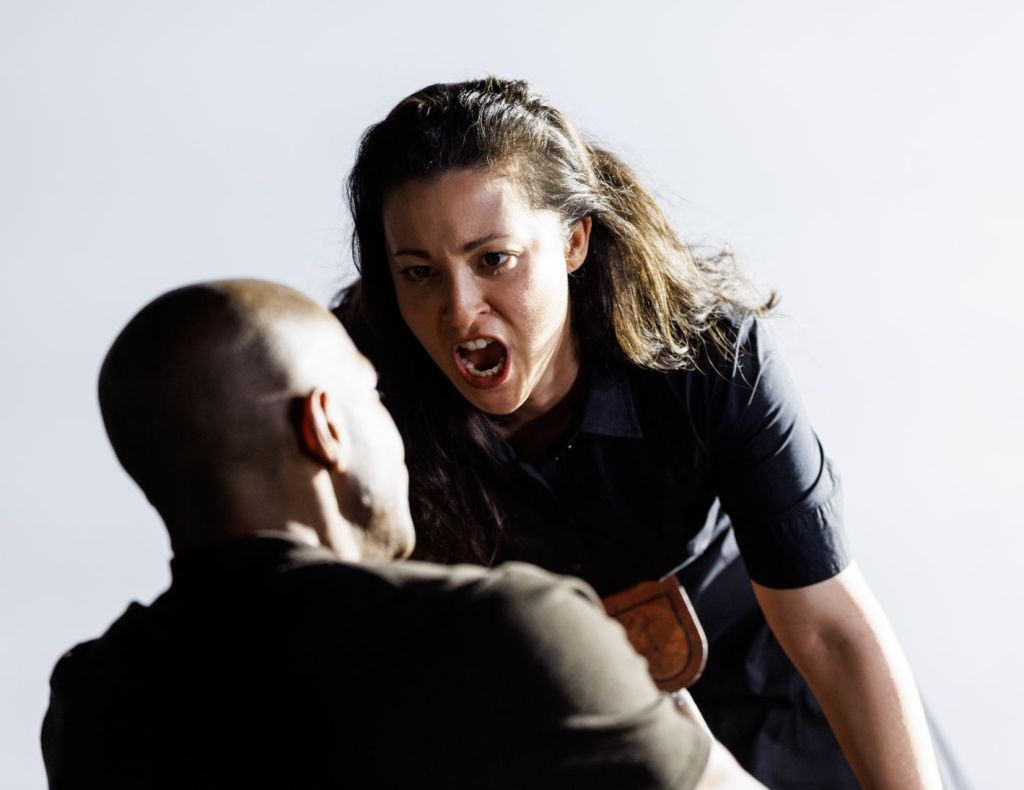
Above: Freddie Ballentine as Anatol and Kelsey Lauritano as Erika; photo by Maria Baranova
The plot of the show essentially follows a small family: Vanessa, played by Inna Dukach; her niece Erika, played by Kelsey Lauritano; and Vanessa’s frigid mother, who refuses to speak to her daughter, played by Mary Phillips. When the son of Vanessa’s old lover, Anatol, played by Freddie Ballentine, arrives, he comes to destroy the fragile fabric holding this hermetic family together. Eventually, the family doctor, played by Joshua Jeremiah, arrives and does nothing but add more drama and unresolved tension to an already uncomfortable family.
Vanessa has been waiting in her manor for 20 years for her long-lost lover, and forces the rest of the family to be in purgatory with her. The plot kicks off when Anatol, her now-deceased lover’s son, seduces both Vanessa and Erika on the first night that he arrives, sowing the problems that plague the characters until the very end of the show.
In many ways, the opera should be named Erika, because although the plot revolves around the titular character of Vanessa, the real protagonist of the show is Erika. Erika, played by Kelsey Lauritano, was the first person to enter the stage, carrying on a chair that she would later sit down on. Her acting from the beginning was wonderful, capturing the essence of a bored teenager who has nothing better to do than wait around for her kooky aunt.
Not only was Lauritano’s acting superb, but she also had such a beautiful mezzo-soprano voice with elegant control. Her diction was perfect, and could be understood even without the need for supertitles. The real musical highlight of the show for me was her aria, “Must the Winter Come So Soon?,” which came near the top of the show.
Vanessa, played by Inna Dukach, was a wonderful performer for the crazed title role. Dukach had the right voice to capture the manic tendencies of a woman who has shut herself out of the world for a lover who doesn’t even exist anymore. For the entire show, you can see the progression of Vanessa as a character, from truly a storm of a personality to someone who, by the end, has more control of herself, but still possesses that tempestuous craze underneath.
Ballentine, Phillips, and Jeremiah all played their respective parts wonderfully. Ballentine played the suave but snaky lover deftly, flipping from charming to menacing on a dime. Phillips, as the grandmother, played the dowager character extremely believably and, even when not the center of the scene, maintained her dour and at times concerned persona. Jeremiah was a great actor who played up the purely comic moments, like his solo with a very phallic champagne bottle, but also many moments of seemingly covert deviousness that were never fully explained.
Some of my favorite moments actually came from probably unintentional choices. Vanessa asks Erika early on in the show, “Why didn’t you join us?,” referring to her and Anatol, and Erika responds with, “Because you forgot to ask me.”
The reading of the lines felt almost absurdist in the best ways, sort of like a moment from a cult camp movie like Heathers.
I went to see the show with a friend of mine who is also an opera singer, but she was a lot more familiar with Barber’s vocal repertoire than I was. It was fascinating to hear her take on how different this operatic work by Barber was from his art songs after the show. The only piece that I’m quite familiar with is his Adagio for Strings, and in some ways this opera was a lot more similar to his sonically tonal art songs. There was a lot of unresolved tension in the music that mirrored the dramatic work underneath.
The only true moments of traditional tonality came with the final quintet at the end of the show, but even then, instead of ending at a place where it felt “at ease” when it seemed like it would, it continued and unraveled into the tense sound world of the previous 90 minutes.
Above, production photo by Maria Baranova
Heartbeat Opera’s VANESSA is another standout in the New York opera scene, and a must go for people who want to see remarkable handling of an American operatic gem.
Friday May 15th, 2026 – One of the joys of chamber music is the intimate bonds that form between musicians who play together for years or decades. For the best chamber ensembles, these bonds translate into nimble motion, interpretive consensus, and a family dynamic.
But chamber music also gives individual players the chance to assemble for just a short time and make “music among friends” for a special occasion or simply for love of a particular piece.
That’s what we heard on Friday at Carnegie Hall: an esteemed group of five soloists forming a one-night-only ensemble to present quintets of Beethoven and Schubert. The results were predictably mixed for exactly the reasons you’d expect from a collection of professional soloists accustomed to the spotlight, but did, predictably as well, produce moments of transcendent music-making.
Carnegie’s marketing billed violinist Leonidas Kavakos’s name first, followed by violinist Gil Shaham, violist Antoine Tamestit, cellist Pablo Ferrández, and cellist Alisa Weilerstein. What stood out throughout the performance was the varying degree to which these musicians molded their playing to the collective.
The first half of the program featured Beethoven’s “Kreutzer” Sonata for violin and piano in an arrangement made for string quintet. The authorship of this arrangement is unknown and has even been attributed to Beethoven himself, an unlikely claim considering the muddy, noisy string texture compared to the vocal clarity of the original.
Throughout the first movement the group struggled to agree on articulation as they passed melodic lines back and forth. They found a groove by the coda, however, which was rendered with sublimely brooding lows and ecstatic highs.
Shaham (who took the first violin part) tends toward the congenial, refined, and Mozartean, which ideally suited the florid figurations of the second movement but was starkly different from Kavakos’s unvarnished, idiosyncratic playing. Tamestit and Ferrández tended to recede into the texture (or, rather, were responsible for the texture), while Weilerstein wended in and out of the foreground. She hammed up the arpeggiated flourishes originally found in the sonata’s piano part and was prone to exaggerated slides. But she brought gorgeous, rocking drive to a passage of triplets transitioning out of one of the slower-tempo variations of the second movement.
The violinists and cellists swapped parts for Schubert’s Quintet in C-Major and offered concentrated substance and unity to its opening statements. The rest of the first movement (and most of the fourth movement) suffered from Kavakos’s mannered articulations and weird push-and-pull on the tempo, which came across as a bit self-indulgent in the context of the quintet, a piece that carries a devotional aura and was clearly the raison d’être for the formation of the night’s bespoke ensemble. This music wasn’t meant for Kavakos, it was meant for all five of them.
All was forgiven in the second movement, which I can only describe as resembling a bolt of exquisite fabric held up to the sunlight, fluttering lightly in a breeze. Kavakos and friends sustained glacially long lines with radiance and imbued prayerlike passages with mysterious, hollow flautando.
Weilerstein, who lucked out with both of the “interesting” cello parts in Beethoven and Schubert, delivered perfectly sturm und drang character to the thundering low triplets of the stormy minor-key middle section of the movement. All five musicians brought emotional intensity and care to every detail, melodic curve, and harmonic turn.
The audience, confusingly, applauded between each section of the Scherzo and gave an ovation at the end of the movement. As a result, the fourth movement had the feeling of an encore. After the piercing final chords, the five musicians took turns hugging before lining up to bow in unison. It may have been a rehearsed gesture, but it was a sweet reminder of the friendship and camaraderie that make great chamber music possible.
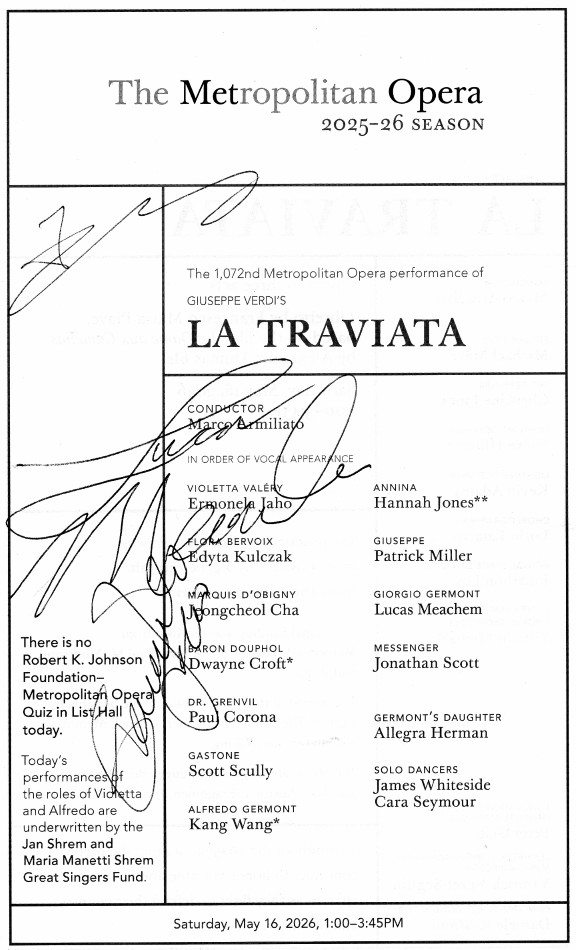
Saturday May 16th, 2026 matinee – I spent the afternoon at my Met score desk for my third TRAVIATA of the season. Earlier this Spring, Lisette Oropesa and Rosa Feola gave impressive performances as Violetta; this afternoon was my second time to hear Ermonela Jaho in the role. Ms. Jaho is a unique singer, one who seems to live each role she takes on. Today, her cast-mates were Kang Wang as Alfredo and Lucas Meachem as Germont. Marco Armiliato, who had conducted Ms. Feola’s performance so beautifully, was back on the podium.
TRAVIATA and I go way back…to 1962, when I saw it for the first time at the Cincinnati Zoo Opera. The legendary Licia Albanese was my first Violetta; on that day, she was singing the role for the 100th time. About 40 years later, I met Mme. Albanese while I was working at Tower Records. I reminded her of her Cincinnati Violetta; she spoke of singing at The Zoo, and made some charming animal noises.
On November 12th, 1966, I saw TRAVIATA twice on the same day. In the afternoon, Patricia Brooks sang Violetta (opposite Placido Domingo) at the New York City Opera, and in the evening, Virginia Zeani made her belated Met debut in the role.
Patricia Brooks has always been the ideal Violetta for me. Many sopranos have had the vocal and histrionic gifts to make a memorable impression, but Patty lived the role. That she etched in a high-C trill in “Sempre libera” and capped the aria off with a delirious high E-flat gave the Brooks Violetta added vocal distinction, but it was her fragility of both body and voice that took her to the soul of Alphonsine Plessis, the courtesan on whom the character of Violetta is based. Mlle. Plessis died of tuberculosis at the tender age of 23; her grave, in the Cimetière de Montmartre, has long been a place of pilgrimage for romantics from around the globe.
This afternoon, the Albanian soprano Ermonela Jaho gave us a Violetta that had the same uncanny ‘reality’ about it that Ms. Brooks always found in the role. Their voices are very different, but at the end, both left us with a feeling of a very personal bereavement.
Today’s was one of the smallest Met audiences I’ve ever seen. It was sad that more people were not there to experience this compelling performance, which commenced with the haunting prelude – the opening hushed bars of which evoke mortality, and the melody of Violetta’s poignant declaration of love, “Amami,Alfredo…” reminds us of the story behind the parting of Violetta and Alfredo. Marco Armiliato, who can sometimes get carried away with volume and speed, this afternoon favored a cushioning sound for the unusual Jaho timbre.
As is her wont, it took the soprano a few bars to clear the voice of a flutter, but by the Brindisi she was going full-tilt, joining tenor Kang Wang – his voice melodious and with a nice mix of power and nuance – on a bright top B-flat. Ms. Jaho’s coughing fit, the first sign of Violetta’s eventual fate, was so realistic…the phrases as she sent her guests into the ballroom were breathless and agonizing. Alfredo comes to comfort her, revealing – in one of my favorite lines in the opera – that he has been in love with her for a year before now meeting her at last. His ardent “Un di felice” is met with hints of rubato as the soprano responds…their final harmonizing is sweet indeed, as is their tender parting.
In her hushed musings on the effect Alfredo has had on her, Ms. Jaho draws us in. Her “Ah! fors e lui...” is ravishing, sung with such poetic delicacy. The aria’s ending is awesomely sustained by the soprano’s uncanny breath control. The Jaho “Sempre libera...” is not a showpiece but a reflection – voiced with a sense of quiet desperation – of Violetta’s need to be free. The florid passages are nimbly tossed-off, and her top-Cs rang clear and true. Kang Wang’s persuasive offstage serenade could melt any heart. Ms. Jaho resumes her hymn to freedom, singing even more subtly than before.
Kang Wang opened the second act with his aria describing his bliss in leading a domestic life with the woman of his dreams. The tenor’s sustained vocal line, and his pensive musings of how heavenly it is to be in love, are lyrically compelling. After a polished ending, and learning of Violetta’s financial troubles, Kang Wang tops off the fiery cabaletta “O mio rimorso...” with élan, concluding with a ringing top-C.
Now, in the great scene between Violetta and Alfredo’s father, we are at the heart of the opera. Lucas Meachem, a towering stage presence with a voice to match, at first bluntly treats Violetta like the whore he thinks she is. Ms. Jaho replies with exquisite grace in such beautiful lines as “Era felice troppo...”, and then Germont explains his need for Violetta’s compliance in order to save his daughter’s impending marriage. Jaho’s horrified “…giammai!” and desperate “…preferiro morire…” are followed by her hushed “Gran dio!” as the facts of the situation are revealed. Mr. Meachem’s magnificent timbre makes a feast out of Verdi’s music, his extended top note at “…dio che inspira, o giovine…” is marvelous.
We are now at the turning point of the opera: Violetta’s capitulation with Jaho’s extraordinarily touching “Dite allagiovine…” is a surrender that cannot be undone. The two voices continue to magically engross us with their mixture of subtlety and power. Their final note is remarkably sustained, their parting heralding the tragedy to come.
Maestro Armiliato somehow bungled the “Amami, Alfredo!“, but order is restored and Mr. Meachem delivers a sustained voicing of the recit that leads to his “Di Provenza...”, glorious Verdi baritone singing that puts him in a class with his “great American” predecessors: Merrill, MacNeil, and Milnes. Power and finesse are perfectly balanced in the Meachem take on this aria, and his near weeping in the aria’s second verse was a thrilling touch. Gorgeous rubato at “…voce del onor...” and then a thunderous, remarkably sustained “Ma!!!…”&n bsp;before the lyrically-held final note: all this elicited a big response from the audience. Mr. Meachem was superb in the ensuing cabaletta, but the conductor blotted out his final “Ferma…” with a blast of brass.
At Flora’s party. Violetta’s friends exchange gossip about a rumored break-up between Violetta and Alfredo. Edyta Kulczak (Flora) and Jeongcheol Cha (D’Obigny) are a vocally fine match as the gypsy women tell their fortunes. Scott Scully as Gastone – the man who had introduced Violetta to his friend Alfredo – and Paul Corona (the faithful Dr. Grenvil) express disbelief that the couple have parted. Alfredo enters, alone, but moments later Violetta arrives on the arm of her former lover, Baron Douphol (Dwayne Croft). The tension is palpable as the Baron and Alfredo gamble, the latter enjoying a winning streak. Just as a fight is about to break out between the two rivals, dinner is served. For a moment the stage is empty, then Violetta comes back, having sent a message to Alfredo to meet her. Violetta refuses to break her promise to Alfredo’s father, so when Alfredo asks if the Baron is the cause of Violetta leaving him, she says “Yes…”
Alfredo’s temper, now at the boiling point, leads him to summon the guests. You can feel the anguish in Kang Wang’s voice as he prepares to disgrace his beloved by flinging money at her. Germont arrives, Mr. Meachem ringingly upbraiding his son for insulting a woman. Now Ms. Jaho begins to sing…”Alfredo, Alfredo…” as she attempts to explain to Alfredo something that she cannot openly reveal – that it was Germont, not Douphol, who caused her to leave her beloved. This moment is among opera’s most touching: “Someday you will learn the truth; may heaven then spare you from the pain of remorse.” Ms. Jaho sang this in a state of almost whispered despair. Kang Wang’s voice, already awash with heartbreak, dominated the closing of the act.
The audience was slow to quieten during the haunting prelude to the final scene; chatter from men working in the ceiling lighting bay was a further distraction. Hannah Jones, wonderfully expressive as the faithful maid Annina, and Mr. Corona’s tenderly-voiced Dr. Grenvil spoke quietly of Violetta’s impending death. Left alone, Ms. Jaho reads the letter Germont has sent her, promising Alfredo’s return. “E tardi!” she cries. The soprano now commences a fascinating display of piano/pianissimo vocalizing in “Addio del passato...”; only at a few key moments did she let the voice bloom. This quietude drew the audience in, with the oboe’s plaintive sound underscoring Violetta’s torment. Ms. Jaho’s final note hung magically on the air. The applause was deeply-felt for this: some of the most moving singing I have ever heard.
Alfredo and Germont rush in; with them is Alfredo’s sister (a silent portrayal by dancer/actress Allegra Herman). Kang Wang’s gently-voiced reassurance in “Parigi, o cara…” is met by Violetta’s hushed reply, and some marvelous harmonizing. Ms. Jaho’s wrenching line, “But if your return cannot save me, then nothing on Earth nor in heaven can!”, was a facing of the inevitable.
The opera’s final moments have arrived. In a passage which always tears me to shreds, Violetta gives Alfredo a pocket miniature from her younger days and tells him to marry a pure young maiden and then tell her of his love for Violetta, who will watch over them from heaven. Ms. Jaho’s whispered belief that she feels life returning to her ends with a final exclamation “O gioia…!” which the soprano let fade away slowly as life drains out of her.
The audience treated the singers to a well-deserved ovation. The bows were lovely to watch; Mr. Meachem was hailed like the star he is; Kang Wang, a handsome fellow with a boyish sincerity, drew screams of delight, and Ms. Jaho, moving with the grace of a prima ballerina, was deluged with bravas. She had truly lived this iconic role to perfection.
Above photo by Sophia Cerovsek
A huge crowd had gathered at the stage door. I had met Ms. Jaho a couple of years ago, after her Butterfly, and all I could think of to say then was “I love you!” Meeting her at the stage door today, I couldn’t stop myself from kissing her and pounding my heart to express my admiration. She was extremely kind and gracious to this tongue-tied senior citizen. Nice chat with Mr. Meachem…so happy to see him getting the recognition he so richly deserves. I told him he belongs in an echelon of great American baritones alongside Merrill, MacNeil, and Milnes. Kang Wang, who looks like a college sophomore with his youthful build and kindly smile, was engulfed by a number of avid female fans; he had to pose for countless photos.
Autographs from Kang Wang, Lucas Meachem, and Ermonela Jaho
Once home, I spent a long time thinking about this performance. It’s so wonderful to find that – after 65+ years of being an opera-lover – I can still find so much to enjoy in these thrice-familiar works, and in the people who sing them now. Some of my friends from my original opera group stopped going after the Last Golden Age ended in the mid-1990s, believing that all the great voices are gone. I can still get excited by today’s singers; and one thing I have learned is, it’s not how loud you can sing, but rather how softly, that makes the magic. For that, Ms. Jaho is a shining beacon.
 Oberon's Glade