Category: Uncategorized

  • Ballet Next @ The Joyce/Program A

    BalletNext_1617

    Above: A Paul B Goode photo from Ballet Next‘s presentation of Alison Cook Beatty’s TINTINNABULI. Click on the image to enlarge.

    Sunday October 28, 2012 matinee – While the governor and The City and the MTA stoked fears of an apocalypse with the impending arrival of Hurricane Sandy, Ballet Next went calmly about their business today, presenting their scheduled matinee at The Joyce. The Company weathered their own small storm when one of their dancers sustained an injury, necessitating changes in Alison Cook Beatty’s TINTINNABUILI, the afternoon’s opening work. But if you hadn’t seen this piece in a rehearsal you’d never have known anything was amiss.

    I have had the pleasure of knowing Alison Cook Beatty as a dancer for the past couple of years, and was happy to learn that she’d been chosen to create a piece for Ballet Next. Alison started off on the right foor by choosing excellent music (Arvo Part) and then went on to create a very pleasing contemporary-style ballet. Inspired by the excellence of the dancers at her disposal (can a young choreographer ask for a finer leading lady than Michele Wiles?) Alison’s TINTINNABULI has a spiriitual quality stemming from the celestial music which was played live by an ensemble of violinists, with piano and cello.

    Opening in a striking diagonal of light, Michele Wiles dances an angular but still lyrical solo observed by Tiffany Mangulabnan and Stuttgart Ballet principal Jason Reilly. Tiffany and her two ‘sisters’ Kristie Latham and Lily Nicole Balogh seem like the three Fates, willing Michele and Jason into a union. In this hair-down ballet, the girls look gorgeous. Tiffany has two very fine solo passages, one spacious and other-worldly, the second a more intense and fiery ritual dance; in the latter, her hair took on a life of its own. The culminating pas de deux for Michele and Jason   features some heavenward lifts, while the trio of girls circle and bind the couple.

    As a choreographer, Alison has things well-in-hand, drawing on the music for inspiration at every turn. And the dancers did her proud wth their committed and passionate dancing. My only slight concern about the piece was that the second half stretched out a bit; this is music that can readily be compressed and I think I would have tightened it a little to make a more succinct statement. As Balanchine once said “…that I too could eliminate”.

    Margo Sappington’s ENTWINED began life as a sensuous Satie pas de deux. In the ensuing months, Sappington enlarged the work with a duet (Georgina Pazcoguin and Kristie Latham), a pas de trois for those two girls plus Charles Askegard, and a solo for Michele Wiles. The initial duet now conclude the ballet, danced tonight by the lovely Katrina Gonzalez with Charles Askegard giving another demonstration of the art of ballet partnering. With Ben Laude’s limpid Satie from the keyboard, the ballet sustained its atmosphere; in the end it is the original pas de deux that still seems to make the most striking effect.

    Mauro Bigonzetti’s LA FOLLIA has become Ballet Next‘s signature work, and rightly so. In this dynamic and demanding work, two ballerinas – Michele Wiles and Georgna Pazcoguin – sweep thru a series of angular combinations with super-sharp pointe work, meanwhile communicating with one another in an elaborate sign-language. It’s breathtaking, and was excitingly danced today by the two women, sending the crowd out to face the storm on an inspired and positive wave of Vivaldi.

    I truly enjoyed both programmes of Ballet Next this week, though I did rather miss having a more classical pas de deux in the repertory. When Michele and Charles dance WHITE SWAN together, it is really something. I hope they will bring that back, or work up another duet from the standard rep: it gives us the chance to savour their partnership, as well as providing a contrast to the new works they are creating.

  • Ballet Next @ The Joyce/Program B

    548378_10151181026112034_44545427_n

    Above: Charles Askegard and Michele Wiles of BALLET NEXT, photo by Paul B Goode.

    Wednesday October 24, 2012 – On this, the second evening of Ballet Next‘s current season at The Joyce, an exciting new ballet entitled BACHGROUND by Mauro Bigonzetti seemed to fascinate the audience, evoking a sustained ovation at the end. An excellent Stravinsky pas de deux choreographed by Charles Askegard and Brian Reeder’s dreamlike and evocative PICNIC were also performed – all to live music, and all danced by top-notch dancers.

    Charles Askegard’s setting of some of the fantastical music from Stravinsky’s BAISER DE LA FEE creates a fast-paced duet for the tall danseur and his partner, New York City Ballet‘s truly incredible Georgina Pazcoguin. As choreographer, Charles, who could write a textbook on the art of ballet partnering, devises a full range of of sizzling partnering motifs, some quite unique to his own language. He then proceeds to show us how it’s done. In combinations witty and fresh, Charles sets the Stravinsky score aglow, and both dancers have the agility and musicality to make it shine. In a brisk series of supported pirouettes, Gina made me dizzy. The duet sails brightly forward, propelled by the playing of violinist Hajnal Pivnik and pianist Ben Laude. A refreshing way to open an evening of dance.

    Brian Reeder’s PICNIC is set to the Shostakovich Cello Sonata in D, played by Elad Kabilio and Ben Laude. Finely lit by Alex Fogel and Brandon Sterling Baker, the ballet was inspired by the 1975 film PICNIC AT HANGING ROCK. Set in 1900, the story revolves around a group of Australian schoolgirls who go on an excursion to Hanging Rock; some of them never return, and the mystery of their disappearance was never solved.

    The ballet has been expanded since my first encounter with it earlier this year. Michele Wiles, Erin Arbuckle, Lily Nicole Balogh, Kristie Latham and Tifffany Mangulabnan are the white-frocked young ladies and Charles Askegard the mysterious observer who leads them astray. The girls seem quite innocent, though a kiss shared by Erin and Lily momentarily threatens to cross the line from chaste to impassioned. The narrative is gently applied, and the girls have many opportunities for expressive dancing: there are even fouettes for Kristie and Tffany. Musically and visually, PICNIC is all of a piece.

    Seated on folding chairs in geometric patterns of light and shadow, the six dancers in Mauro Bigonzetti’s BACHGROUND stare at us provocatively before erupting in a series of solos and duets in which the choreographer seems to ask the impossible in terms of elasticity, stretch and sheer nerve…and they all deliver brilliantly. Pianist Ben Laude plays Bach; the individual dancers come forward to dance as their colleagues watch or – in some cases – briskly turn their chairs to face upstage.

    Clifford Williams in a solo of mind-boggling contortions launches the ballet on its jaggedly thrilling way; his torso, gleaming with sweat, glows under the lights as he shapes his limbs into unbelievable poses. His performance drew sustained applause. Georgina Pazcoguin steps ravishingly forward; at first she seems like the Novice in THE CAGE about to have her way with Mr. Williams’ spent body, but he’s magically replaced by Jesus Pastor. In their pas de deux, Gina and Jesus embrace and unfold in torrid stylizations, Gina’s extension remarkably deployed. Kristie Latham and Lily Balogh dance in sync, speaking a complex gestural language; there is a pas de quatre danced in silence by the two girls, Clifford and Jesus. Jesus, wonderfully handsome and enticingly scruffy, has a solo that is passionately physical, and Michele Wiles and Clifford Williams perform another stunningly shaped pas de deux.

    Some of the partnering elements are lifted directly from Mr. Bigonzetti’s New York City Ballet hit OLTREMARE, but choreographers and composers have self-borrowed for centuries and when it works this well, why worry? The cumulative effect of music, movement, lighting and strikingly physical performances by the dancers in BACHGROUND evoked a prolonged ovation from the sold-out house.

  • Year of The Rabbit @ The Guggenheim

    J.

    Above: New York City Ballet principal dancer Joaquin de Luz is among the artists to be featured in Justn Peck’s new creation for NYCB. Photo by Henry Leutwyler.

    Monday September 24, 2012 – The Guggenheim’s Works & Process series continued tonight with a preview of a new ballet choreographed for New York City Ballet by Company corpsman Justin Peck. The work, entitled YEAR OF THE RABBIT, will premiere at Lincoln Center on October 5th.

    Ellen Bar, former NYCB soloist and now the Company’s Director of Media Projects, led the discussion. Composer Sufjan Stevens and musical arranger Michael Atkinson joined Justin on the panel. Much of the evening was given over to outlining the evolution of the score which began life as a 2001 electronic recording. Mr. Atkinson had the task of distilling the music for string quartet, and now that the ballet is to be presented in the large venue at Lincoln Center it’s been decided that a full orchestration of the music will best compliment both the space and Justin’s vision of using a large enemble of dancers.

    6a00d8341c4e3853ef013489072ee6970c-800wi

    In 2010, Justin showed the pas de deux ENJOY YOUR RABBIT as part of a Columbia Ballet Collaborative evening. Read about it here; Kokyat’s photo above with Teresa Reichlen and Justin dancing the duet for CBC. On receiving the commission from Peter Martins for a new work for NYCB, Justin decided to expand on the original pas de deux. The full work, now titled YEAR OF THE RABBIT, features six principal dancers and a corps de ballet.

    Mr. Atkinson – who will conduct the NYCB performances – stepped into the pit at The Guggenheim to lead the quartet’s performances of excerpts this evening. Kurt Nikkanen, Lydia Hong, Maureen Gallagher and Eugene Moye were the players and everything was in good hands from a musical stand-point.

    Introducing the first danced except, Justin spoke of the speedy and evasive movements of a rabbit when it is being pursued: the wily changes of direction that help him evade capture. Joaquin de Luz brought these very elements to play in the solo. This peerless danseur is on my A-list of favorite dancers to watch just for the sheer pleasure of watching. His mercurial performance made me wish the solo was twice as long.

    Tiler Peck is a latecomer to this work; she replaces the injured Ashley Bouder. Justin talked about creating a piece on one dancer and then having it danced by another; and that while Tiler and Ashley are both super-technicians, each gives the solo a particluar resonance. Hopefully at future performances Ashley will have the opportunity to dance, but tonight Tiler’s radiant qualities and her subtle sense of the solo’s wit were very engaging. Justin gave her a few notes and she danced it again. Every time I see Tiler onstage I am happy that her career and my ballet-going have coincided.

    Two duets were shown: an expansive and vibrant one for Teresa Reichlen and Robert Fairchild and a more dreamy and evocative one for Janie Taylor and Craig Hall. The Reichlen/Fairchild partnership really shines; there’s a rich chemistry there and I hope we’ll see them paired in other ballets. When two charismatic dancers like Janie and Craig take the stage together, things become engrossingly wonderful; their duet reminded me of their breathtaking performance in AFTERNOON OF A FAUN

    (And speaking of Tess Reichlen, her upcoming debut in the adagio of SYMPHONY IN C on October 2nd is a red-letter date on my calendar.)

    You can watch a film of this evening’s Works & Process presentation here.

    So now we can look forward to seeing YEAR OF THE RABBIT onstage, costumed and lit and with the corps dancing. It has been a long creative process and I feel sure the result will be rewarding.

    Loved running into Tom Gold after the performance; I need to touch base with him before he takes his Company to Cuba!

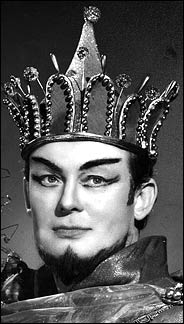
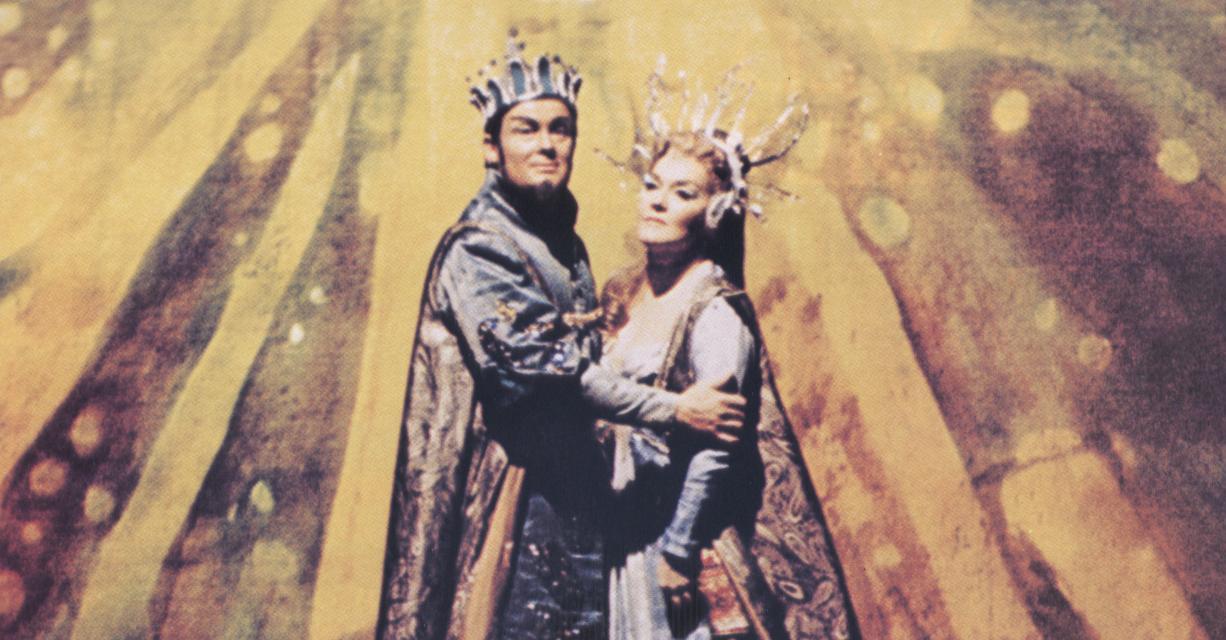
  • Maralin Niska’s “In Questa Reggia”

    6a00d8341c4e3853ef010534a50443970c-800wi

    Soprano Maralin Niska sings Turandot’s “In questa reggia” in a live performance by the New York City Opera in Los Angeles, 1976. Ermanno Mauro is Calaf.

    Maralin Niska’s performances are among the most vivid memories of my own golden age of opera. I wrote about her here.

    Other Niska rarities gave surfaced: a very early sample, singing Liu’s aria from TURANDOT, and  Yaroslavna’s aria from PRINCE IGOR (in English), one of the first operas I heard Maralin sing.  

  • Nejla Yatkin’s OASIS

    422774_3059424438624_1225252462_n

    Sunday August 19, 2012 – As part of the 2012 New York International Fringe Festival, Nejla Yatkin presented OASIS: Everything You Ever Wanted to Know About the Middle East But Were Afraid to Dance at Theater 80, St Mark’s Place. I’d been to a couple of rehearsals of this work so I had a good idea of what to expect; the dancers – sexy and beautiful – outdid themselves, and the piece held the audience in rapt silence and was very warmly applauded.

    OASIS resonates with issues that are not always pleasant to contemplate, and while one could simply observe the movement and inhale the fragrant music, there’s much to ponder: torture, suppression of women, rape, strict adherence to now-meaningless customs, lack of personal freedom of expression.

    The work opens as two dancers appear in silhouette behind gauzy white curtains: the step forth, blindfolded, and commence a duet that is both sensuous and mystical. Clad only in the briefest of flesh-toned costumes, Nejla Yatkin and Fadi Khoury seem utterly self-possessed as they bend and sway to the enticing rhythms. Removing their bilndfolds, the duet takes a turn for the more passionate.

    After a solo for Fadi – a sinuous mover – three men (Ahmaud Culver, Shay Bares and Jean-Rene Homehr) appear ominously with flashlights and rope whips. Fadi is tortured, almost too realistically; his gasps and screams are truly upsetting. But as an ironic counterweight, the detached voice of a TV newscaster talks about waterboarding with all the emotion of reading a weather forecast. Nejla, Sevin Ceviker and Rachel Holmes appear and perform ritual minitrations to Fadi’s corpse, wrapping him in a black shroud.

    Sevin and Rachel commence a gently swaying dance, joined by the boyishly beautiful Shay Bares. The three are then abducted and raped; the women will eventually be imprisoned (rape being the woman’s fault, of course) while Shay is further degraded by his captor. Taking up finger cymbals, Shay performs a subtly erotic solo until his master throws a veil over him and whisks him away.

    In a witty interlude, there is a fashion show. All the dancers – male and female – appear in the heavy veils and all-covering robes. Someone once remarked that it’s no fun being a drag queen in a Muslim country: no one can tell anyway.

    As OASIS moves to its conclusion, a cache of books is discovered and the dancers devour them with eager curiosity. “Women, do you know your rights?” a detached voice asks. “How can I know my rights when I don’t have any?” comes the reply.

  • In Their New Home: Martha Graham Dance Co

    Westbeth

    It was so wonderful to read (earlier this year) that the Martha Graham Dance Company were going to move into the marvelous and dance-mythic Cunningham Studios down at Westbeth. I’d only been in the Cunningham space a couple of times and I simply fell in love with the place; for a while it seemed like the studios might be lost to the dance world, and thus the announcement of the Graham plan made me so happy.

    6a00d8341c4e3853ef016767341761970b-800wi

    Little did I know that I’d so soon be having an opportunity to visit the Graham dancers in their new home, but thanks to the kindness of Lloyd Knight (above, photo by Kokyat) who I’d met earler this year when he was working with Emery LeCrone, I had the unbelievable good fortune to spend the better part of an afternoon watching the Graham Company preparing for their upcoming performances in Akron, Ohio and at the Vail International Dance Festival. Lloyd was a perfect host, sending me in advance a list of the works they’d be rehearsing, introducing me to everyone and periodically checking in with me when he wasn’t busy dancing. Janet Eilber, the artistic director, gave me a gracious welcome.

    The last time I was in the ‘Cunningham space’ all the windows were covered with cardboard; today the windows were bare and despite the overcast sky, a gentle light filled the spacious studio. Views of the Manhattan skyline and of the Hudson River enhance the setting. In the eleventh floor elevator lobby, a friendly painter was sprucing things up with shades of rose and violet; an open door led out onto the roof.

    I was sorry to have just missed Katherine Crockett’s run-thru of Lamentation, but I did have a lovely conversation with her – she’s one of my dance idols – before she slipped out of the studio. Mariya Dashkina Maddux swirled thru the solo Serenata Morisca, a dance that is fiery and provocative and performed in a gypsy skirt. This solo, dating back to around 1916, was based by Graham on a Ted Shawn piece. Andrea Murillo performed the iconic Lamentation (1930) and a bit later she also danced the Serenata Morisca. A passionate duet, Conversation of Lovers from the 1981 ballet Acts of Light, was given a breath-taking interpretation by Xiaochuan Xie and Tadej Brdnik. With each of these works I was drawn deeper and deeper into the power and mystery of the Graham style. I was so grateful to talk with Denise Vale, the former Graham principal artist who is now the Company’s senior artistic associate; taking time from her coaching of the dancers, she helped me to actually see what I was watching. In a few sentences she illuminated my perception in ways that reading a dozen books about Graham most likely could not.

    To see a new work before its premiere has been an exciting dividend of being a blogger; Doug Varone has made an unusual and evocative work for four men and a bench which is set to the darkly haunting Ravel Gaspard de la Nuit. Lloyd Knight, Tadej Brdnik, Maurizio Nardi and Abdiel Jacobsen are the dancers in this work which has the feel of contemporary ritual; it is sensuous without being sexual and the bench tends to become a fifth dancer. The work will debut at Vail in August.

    Mariya Dashkina Maddux, Tadej Brdnik and Lloyd Knight took on the familiar roles of the married couple and the preacher man in Appalachian Suite, and then they were joined by Ms. Murillo for Embattled Garden.

    It was after 5:00 PM when Embattled Garden began, and the dancers had been working since noon. Where they found the energy shall remain a mystery, but I’ll never forget the experience of watching what amounted to a private performance of this vivid ballet, replete with the Noguchi set pieces. Only the dancers, Ms. Vale and myself were in the studio; Mariya (Masha) and Tadej were Eve and Adam, Andrea was Lilith and Lloyd the sinister Stranger. They gave a full-out rendering of this dramatic work, thrilling in intensity and so wonderful to contemplate in this space.

    Of all the days not to have a photographer available! My regular photographers were all out-of-town or otherwise occupied and so I planned to take some pictures myself. But my Leica seems to have developed a serious problem and so I have no documentation of this wonder-filled afternoon.

    The dancers were all so kind and generous; Tadej, who seemed to dance all afternoon, is a delightful guy, upbeat and amusing. I simply had a great time.

  • Amanda Selwyn’s DETOUR

    Copy of 3

    Above: Justin Lynch in Amanda Selwyn’s DETOUR, photo by Kokyat.

    Friday June 22, 2012 – Last season my first encounter with Amanda Selwyn Dance Theatre was a very satisfying experience, so I was looking forward to tonight’s performance of DETOUR at New York Live Arts. I had met Amanda at her studio earlier this year and was taken with her as a personality and with her creative style.

    DETOUR proved just as engaging as Amanda’s FIVE MINUTES had been last year. Several factors gave the evening a special place among recent dance events: an evocative collage of music was effectively blended with varied sonic colours and tempos, excellent lighting and projections, changes of costuming which gave each section of the work its own flavour, very fine and committed dancing, and a nearly-full house that seemed keenly attentive. At 50 minutes, DETOUR held our focus wthout over-staying its welcome. Overall, an ideal evening of dance.  

    DETOUR is set in three sections, each with sub-sections, which flow into one another. The dancing takes place in a dreamscape (design: John McDermott) in which floating translucent columns, lit from within, shift quietly to create new pespectives for each movement of the work. The back-panel is drenched in ever-changing rich colours; projections and shadowy films of the dancers complete the visual aspect of DETOUR which seems to shift from illusion to illusion as the dancers come and go. 

    Copy of 10

    Though essentially an ensemble piece, solo opportunities for the individual dancers abound (Alexander Dones, above); they move thru various encounters – romantic, ritualistic or antagonistic – without taking on specific relationships. The ever-shifting patterns of movement and partnering suggest a dream in which perceptions vary from moment to moment. The dancers are sexy and strong, with unique personalities which Selwyn allows them to manifest while maintaining the spirit of a mysterious tribe. Other-worldly aspects of the piece meld into a communal finale in which an awakening is implied. 

    Kokyat photographed the dress rehearsal of DETOUR and here is a series of his images from the work:

    Copy of 4

    The opening ensemble: Illusions

    Copy of 14

    Catherine Coury, Justin Lynch

    Copy of 30

    Robert Vail, Justin Lynch, Fracisco Silvino

    Copy of 36

    Copy of 40

    Jenny Gillan

    Copy of 44

    Ensemble

    Copy of 55

    Robert Vail

    Copy of 49

    Joori Jung

    Copy of 77

    Robert Vail

    Copy of 82

    Mackenzie Tyler

    Copy of 100

    Joori Jung, Justin Lynch

    An additional gallery of photos from DETOUR appears here.

    All photography by Kokyat.

  • New Chamber Ballet: Gallery II

    Copy of D1

    More photographs from New Chamber Ballet‘s Spring 2012 repertory evenings; above: Elizabeth Brown and Sarah Atkins in Miro Magloire’s EMILIA, set to Karlheinz Stockhausen’s Klavierstück VII and VIII.

    Also from EMILIA:

    Copy of D2

    Holly Curran

    Copy of D5

    Sarah Atkins

    Copy of D7

    Holly & Sarah

    Copy of D11

    Elizabeth Brown

    Copy of D9

    Elizabeth & Sarah

    The following series of pictures are from Miro Magloire’s ALLEGRETTO, INNOCENTE, a light-hearted trio to music of Haydn:

    Copy of C3

    Victoria North

    Copy of C31

    Madeline Deavenport

    Copy of C19

    Sarah Atkins

    Copy of C38

    Victoria

    Copy of C36

    Victoria, Maddie & Sarah in ALLEGRETTO, INNOCENTE.

    All photography by Kokyat.

  • In the Studio with Ian Spencer Bell

    Copy of 23

    UPDATE: I happened to be at City Center last night and took a peek in at Studio 4 during Ian’s performance. It’s the first time I’ve seen lighting used in the Studio there and it was really intriguing. Gives the space an other-worldly quality. Now I can’t wait for tonight’s performance – the second and last.

    The Studio Experience: I met Ian Spencer Bell earlier this year at a studio showing by the Martha Graham Dance Company. He recently contacted me regarding his upcoming performances at City Center Studio and – later this summer – at Jacob’s Pillow. Information here. In the top photo, Mara Driscoll and Nathaniel Darst.

    At the DANY studios on May 5, 2012, Kokyat and I had a look at the work Ian has created, set to Olivier Messaien’s mind-bending Quartet for the End of Time.

    Copy of 41

    Joshua Tuason, Jenna Liberati

    Copy of 17

    Joshua and Jenna

    Copy of 13

    Joshua & Jenna

    Copy of 6

    Mara Driscoll, Joshua Tuason and Nathaniel Darst

    Also to be shown is Ian’s solo work, SOCKET,of which he writes:

    “I named the solo for the electrical socket in the small room where I made the dance this past winter. Socket also refers a hollow piece of something—for holding and receiving. Dancers are sockets. I’ve started to incorporate the solo into the other material I’ve been making with the dancers. That movement came from video I took of the dancers on my phone, warming up and preparing for rehearsal—as well as some more formal compositions I’ve been making with them.”

    Here’s the information for the upcoming performances at City Center Studio:

    Ian Spencer Bell dances Socket
    and other new work with 
    Jenna Liberati
    Nathaniel Darst
    Joshua Tuason
    Mara Driscoll 

    Wednesday, May 30, 8 p.m.
    Thursday, May 31, 8 p.m.

    New York City Center Studios
    130 West 56th Street, Studio 4

    $20 suggested donation
  • …And Still More Theyre Lee Elliott

    DSC00899

    Another work by British artist Theyre Lee Elliott has come my way, thanks to a reader who shares the above painting from her collection.

    The connection between the artist and Oberon’s Grove began back in 2009 with this discovery, and I have really enjoyed the ever-expanding tale of Theyre Lee Elliott and his work here on my blog which has continued here, here and here as readers have sent personal recollections of the artist and samples of his work.

    If a search has brought you to this page and you have a recollection of Theyre Lee Elliott or any of his work in your collection, please help keep the story evolving. E-mail me at:

    [email protected]