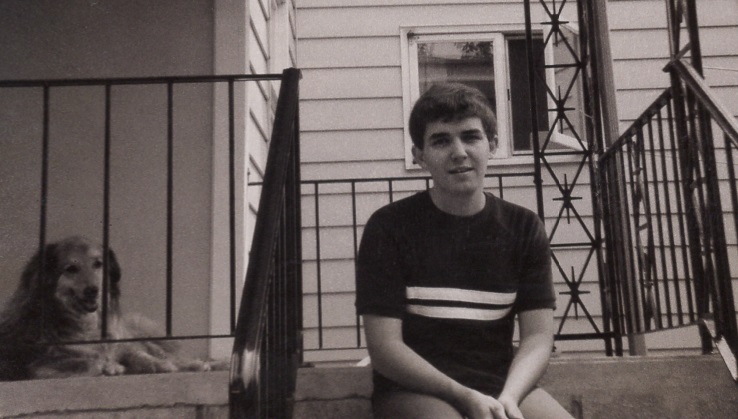
(Sometimes in the Summer, when there’s not a lot going on in the classical music world here in Gotham, I write about personal stuff. One episode from my unhappy high school years in the little town has been running thru my mind recently: the day I won the 40-yard dash. This story originated on Oberon’s Grove in July 2025.)
I can’t remember now whether I was in my sophomore or junior year in school…those years were sort of a blur, full of sotto voce name-calling, gay slurs written on my locker and even on my music stand in the band room. A slam book was circulated, in which various students would anonymously write what they thought of their classmates…even my own girlfriend couldn’t think of something nice to say about me. The guys who were my immediate classmates could sometimes be very nice to me in a one-to-one conversation but when their buddies or sports teammates were around, they turned against me. I was never physically attacked; my older siblings were very popular…and my brother would have beat the crap out of anyone who laid a hand on me.
Anyway, as the school year was winding down, we had some days of phys ed skills tests: there was tumbling, parallel bars, trampoline skills, rope climbing, taking basketball shots, and more…these were done indoors. I didn’t make a fool of myself, but compared to the jocks in my class I felt ridiculous. I actually was doing really well in the rope climb until I got halfway to the ceiling and realized I did not know how to get back down…so I gave up and dropped to the floor, which seemed better than possibly falling from the ceiling to my death. Of course, everyone expected me to fail in all these tests, so I was just affirming my status as a loser.
On the last day of these trials, we went outdoors. The last ‘event’ was the 40-yard dash. I was standing amidst my classmates, some of who were on the track team; I watched them rush to the finish, knowing that anything under 5 seconds was considered excellent; even my nearest rival for class klutz ran it in just over 6 seconds. I didn’t expect to surpass him, but then I had this idea: what if I could imagine my bullies were chasing me, planning to tackle me and rub my face in the dirt?
I stepped up, and the pop gun sounded. I remember how exhilarating it felt to be moving so fast. It was over so quickly, I could not believe it. The guy with the stopwatch called out my time, but I never heard what he’d said; but apparently I was the fastest of the lot. All I knew was that my classmates surrounded me, patting me on the back. “You gotta join the track team!” said Mark Scriber, captain of the team and my secret idol; he’d never, ever said anything against me, despite the peer pressure (he had no peers, actually)…
Anyway, in the cafeteria the word went around and for a couple of hours, I was a hero. It didn’t last very long, and of course one of my meanest detractors came to the conclusion I had not been running, but flying…like a fairy.
For a while, people were nice to me…but it only lasted a day or two and then things were back to normal. I continued to be verbally abused and laughed-at for months to come. Even onstage at my graduation, as I was returning to my seat with my diploma, someone said “Queer!” under his breath as I passed by.
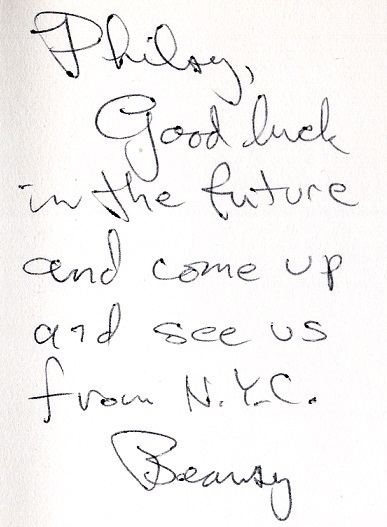
My unhappiness continued after I’d graduated. It took me another seven years to come to grips with my reality, which I’d known since I was nine. Interestingly, I found something prophetic in my Yearbook while thumbing thru it a few months ago: one classmate knew my destiny even then:
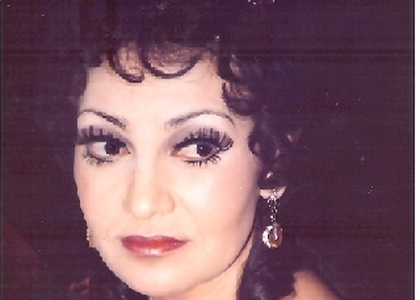
Maria Slătinaru (above) & Ludovic Spiess sing the Riddle Scene from Puccini’s TURANDOT at a 1970 concert given by the orchestra and chorus of Romanian Television. George Mircea sings the Emperor Altoum, and Teodora Lucaciu is Liu; Carol Litvin conducts.
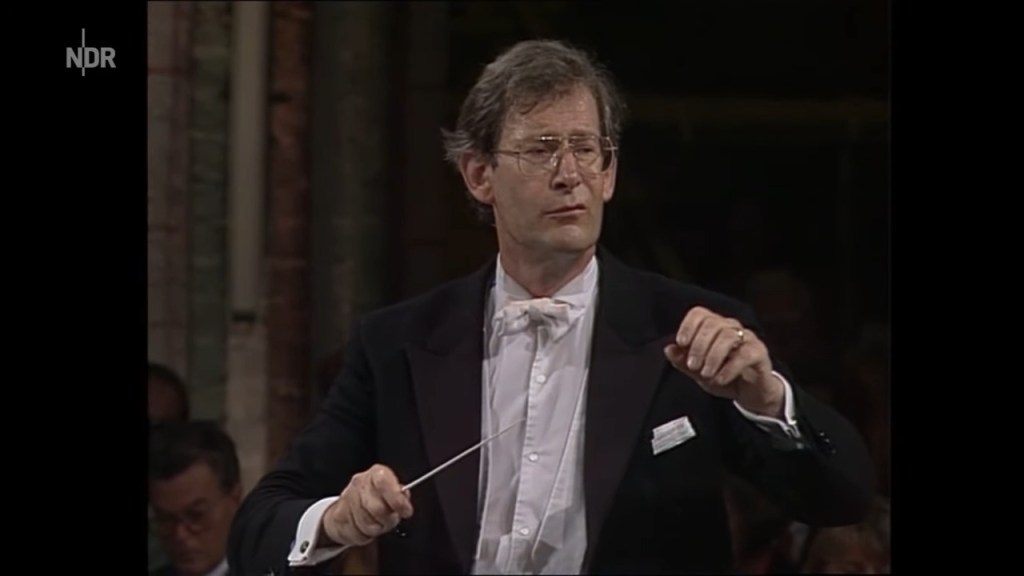
A performance of Benjamin Britten’s WAR REQUIEM given by the NDR Elbphilharmonie Orchestra, conducted by Sir John Eliot Gardiner (photo above), in 1992. The concert took place at St. Marienkirche in Lübeck.
The soloists are Luba Orgonasova, soprano; Anthony Rolfe Johnson, tenor; and Boje Skovhus.
Audio-only of Verdi’s RIGOLETTO as performed at Orange in 2001. The cast is led by Norah Amsellem (above), the late Béatrice Uria-Monzon, Marcelo Alvarez, Carlo Guelfi, and Paata Burchuladze; the conductor is Marco Guidari.
(This article first appeared on Oberon’s Grove back in 2007.)
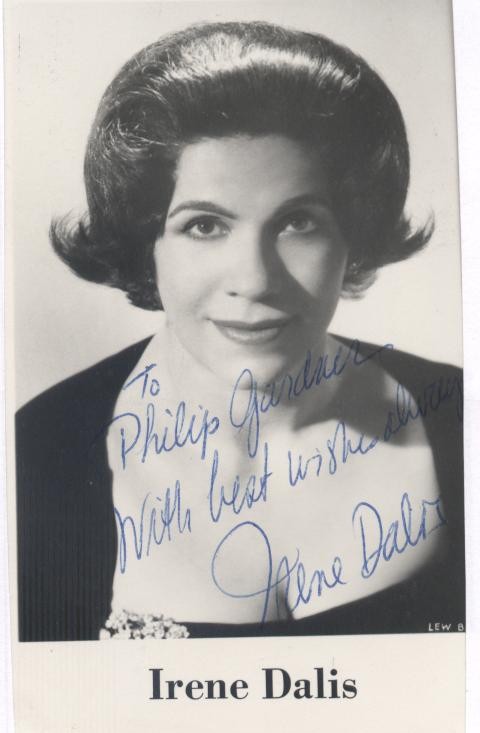
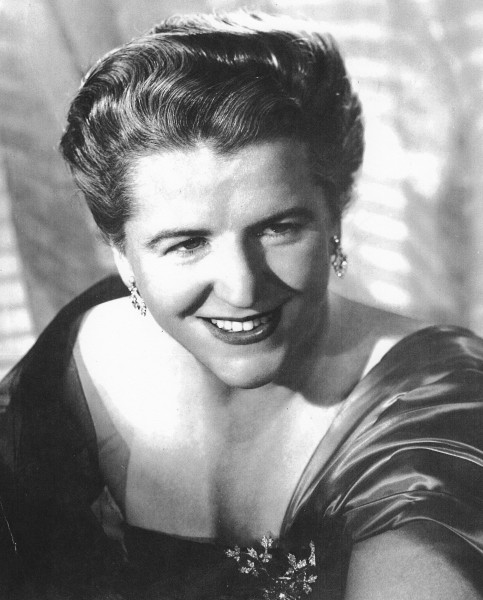
Irene Dalis was one of those opera singers who could drive audiences crazy with her intense vocal and dramatic portrayals. During the late 1960s and early 1970s I was a huge fan of hers and saw her in many roles. Her voice was certainly not conventionally beautiful; if you wanted sumptuous Italianate sound you went for Simionato and later for Cossotto. Christa Ludwig, Shirley Verrett and Grace Bumbry had more attractive voices and easier tops than Dalis. But there was something so passionate and incisive about the way Irene Dalis sang everything from Lady Macbeth to Fricka, from Santuzza to Herodias in SALOME, that caused me to plan trips from Syracuse specifically to see her onstage at the Met.
I heard her on many Met broadcasts before I actually encountered her in the theatre. In broadcasts of AIDA, MACBETH, the RING Cycle, DON CARLO, SAMSON ET DALILA and TRISTAN UND ISOLDE, Irene kept up an unsettling assault on the emotions of a young opera fan with her powerful vocal portrayals; I didn’t need to see her to imagine her stalking about the stage as the relentlessly needling Fricka or turning her scathing disdain on Samson in a fury at the end of Act II when her seductive endeavors have failed. She did not have a long, seamless vocal line nor was her top totally secure, but she had this way of delving into the colours of her instrument and of putting just the right stress on a word that would make an unforgettable impression.
I first saw Irene Dalis perform at the Cincinnati Zoo Opera as Azucena in TROVATORE. Her singing was powerful and her acting so passionate; my parents, who really knew nothing about opera, were excited by her performance. Backstage I timidly asked for her autograph and she was very kind as I recall, remarking that it was nice to see young people at the opera. I was 13. Her Leonora was the fledgling spinto Martina Arroyo; my father managed a conversation with the conductor Ottavio Ziino despite the latter’s total incomprehension of English.
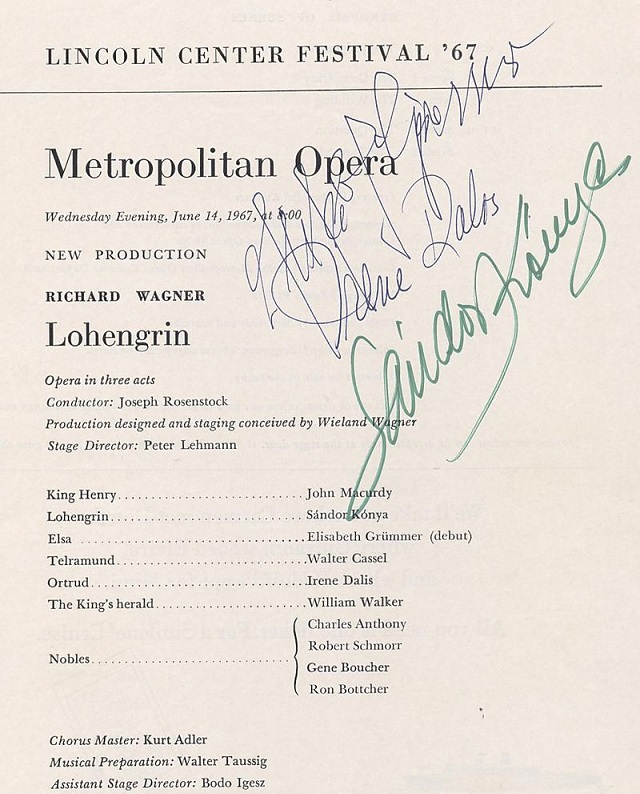
My first experience of seeing Irene Dalis on the Met stage was during the 1967 June Festival in a performance of the Wieland Wagner production of LOHENGRIN. When the new house opened, the demand for tickets was so high that the Met extended its season into June with added performances and some of its biggest stars. Irene’s cold-blooded and subtly inflected interpretation of one of opera’s great bad ladies held its own onstage with Sandor Konya, the top interpreter of Lohengrin of the day, and the legendary Elisabeth Grummer (who rarely signed autographs!)making a wildly successful and greatly belated Met debut at the age of 57. Irene wore a deep green gown, if memory serves, and seemed like some insidious reptile as she cravenly ingratiated herself to the hapless Elsa and then heartlessly turned against the naive maiden. The ovations that night were huge though nothing out of the ordinary during that golden era.
During the next few seasons Irene Dalis was a major reason for me to take the long train trip to Manhattan. I sent her fan letters to which she graciously replied. I saw her in unforgettable performances of AIDA, FRAU OHNE SCHATTEN, DON CARLO, CAVALLERIA RUSTICANA, TROVATORE, BALLO IN MASCHERA, SALOME and a particularly memorable ADRIANA LECOUVREUR at which the young rising-star tenor from NYC Opera, Placido Domingo, substituted for Franco Corelli at the last minute in an exciting Met debut opposite the beloved Renata Tebaldi in her favorite role. Irene’s venom-voiced Princesse and Anselmo Colzani’s poignantly human Michonnet turned the evening into a true classic. I can vividly recall both Tebaldi & Dalis graciously encouraging their young tenor colleague and turning their backs on the audience during duets with him so he could send his tones into the big hall and watch Maestro Cleva. Such generosity.
Irene’s first UIrica in BALLO at the Met was a five star affair. Her colleagues were Montserrat Caballe, Reri Grist, Placido Domingo and Robert Merrill. These singers gave us a rich evening of vocalism and Irene’s gripping delivery of the fortune-teller’s prophecies was enhanced by eerie contact lenses which gave the illusion of empty sockets. From the depths of her “Silenzio!” to the sailing harmonies in the trio with Caballe & Domingo, Dalis was on fascinating form.
At the June Festival in 1971, Irene had one of her great personal triumphs at the Met with a grand-scaled portrayal of Azucena in TROVATORE which evoked frantic ovations. The Dalis voice was totally ‘on’ throughout the range while she portrayed the demented gypsy with her accustomed fervor. Backstage afterwards, she was mobbed and they opened the greenroom to accommodate all the fans who wanted to meet her.
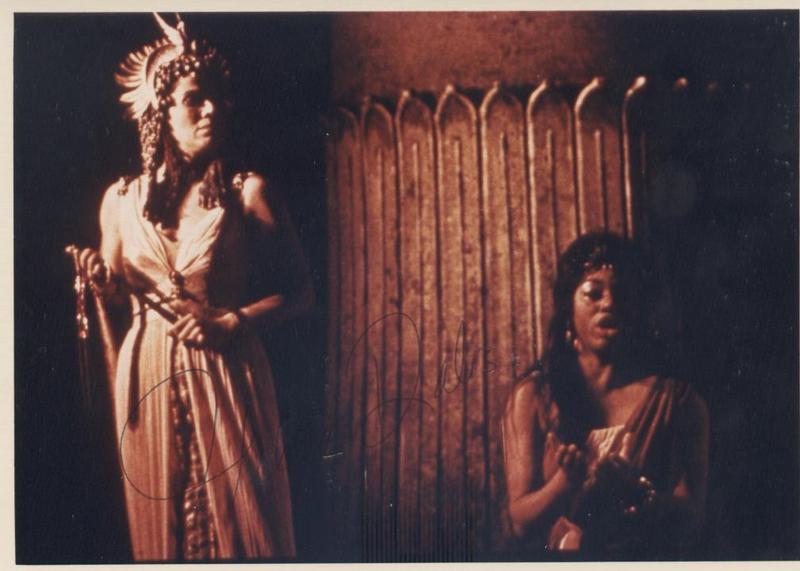
There were two roles in which Irene Dalis left particularly powerful memories. The first was Amneris in AIDA. In the photo above, Irene is lording it over Leontyne Price in their Act II confrontation. Irene signed the picture for me, though her signature has faded over time.
The Dalis voice, with its potent chest register, left such an indelible impression on so many phrases of this opera that to this day when I think about the music of Amneris, it is her voice I hear.
The Judgment Scene of Act IV of the Verdi opera, in which Amneris seeks to save her beloved Radames from a sentence of death for treason, was the high point of Irene’s interpretation. Here the character of Amneris who has been so proud and manipulative in the earlier acts is brought into acute human focus when her power as Princess of Egypt carries no weight with the condemning priests; she is reduced to begging only to have the implacable judges walk off chanting “Traditor!” In the final moments, Amneris turns on the priests and delivers a fiery curse on them before collapsing in despair.
On June 28, 1969 Irene Dalis sang Amneris with the Met in a concert performance in Central Park. She was in extraordinary voice and had the audience in the palm of her hand from her opening phrase. The massive crowd was so keyed-up by the time Irene came to the Judgment Scene that the excitement was palpable. I don’t think she ever topped this performance and aside from all her incisive dramatic phrases and startlingly vivid declamation of the words, she found the most shattering colours of remorse midway thru the scene when Radames has rejected her help. After the trial, in which Radames utters no word of self-defense, Amneris attempts to bargain with the priests but they will have none of it. Flinging out her scalding “Anatema su voi!” Irene brought the scene to a heart-pounding climax. The very instant she let go of her final top note the audience at Sheep Meadow erupted in a delirious ovation which went on for several minutes. Irene has to bow again and again.
Having lost everything, the once-proud Amneris appears at the very end of the opera to pray over the tomb where Radames has been buried alive. She does not know that her rival Aida has secretly entered the tomb and is dying in Radames’ arms. The quiet ending of the opera with Amneris intoning “Pace…pace” was the memorable end of one of Irene’s most exciting performances.
You wouldn’t think there could be anything to top her Amneris, but in 1966 at the Met premiere of DIE FRAU OHNE SCHATTEN Irene Dalis found the role of a lifetime. In one of the richest casts ever assembled – Leonie Rysanek, Christa Ludwig, James King and Walter Berry, conducted by the immortal Karl Bohm – Irene came close to stealing the show. As the Nurse, in whose care the Empress has been placed by her father {the enigmatic Keikobad}, Irene’s singing caught the myriad complexities of her character: maternal, scheming, ironic, tender and brutal by turns. The vocal writing races up and down thru the registers, cascading through demanding turns of phrase into the deepest chest tones and ending the second act on a searing top B. Irene took it all in stride, her acting as colorful as her singing and burning the words into the listener’s memory where I can still hear them today as if she were singing them directly to me. Leonie Rysanek was THE Empress of her time – of all time, I suggest – and she sang it here and in Europe with every interpreter of the Nurse who was willing to attempt the impossible role. She once said she rated the Irene Dalis interpretation as ideal.
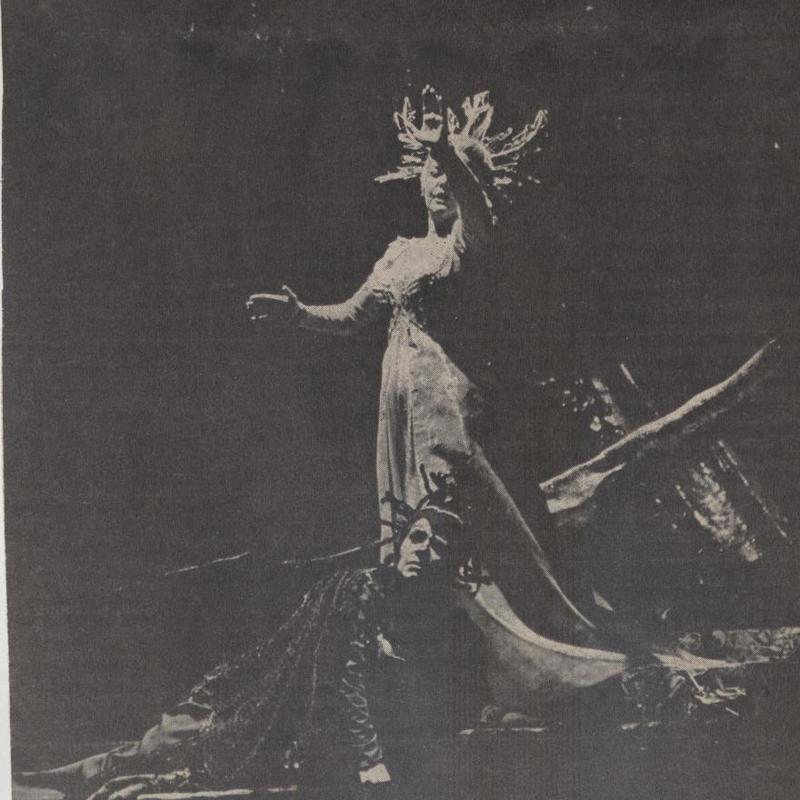
Above, an immortal moment: anyone who ever saw the Met’s FRAU with Rysanek and Dalis as Empress and Nurse will never forget this scene in the third act where the Empress rejects the Nurse and goes to her trial in Keikobad’s temple. The scene, starting with their arrival by boat at the tower gates, contains some of the most brilliant and taxing vocal writing Strauss ever conceived. The Rysanek Kaiserin was stupefying in its vocal power and intensity and Irene Dalis kept pace with her every step of the way. I once experienced FRAU from the front row of the orchestra, right behind Maestro Bohm’s left shoulder. An unforgettable evening.
It was always a great experience to visit Irene Dalis her backstage; she was so kind and she always remembered me. It was an unfortunate happenstance when she was scheduled to sing Klytamnestra in ELEKTRA at the Met – surely a perfect role for her – and on the day the scheduled Elektra took ill and they were unable to find a replacement. They were forced to change the opera to FIDELIO and New York never got to experience Irene’s interpretation of opera’s most maniaical mother.
There is only one commercial recording of Dalis to my knowledge: a 1962 PARSIFAL from Bayreuth conducted by Hans Knappertsbusch. But there are pirates of her many Met broadcasts; her 1961 RING roles (Fricka and Waltraute…she was superb!), the 1970 AIDA, and both her FRAUs from the airwaves are among my favorites.
After retiring from the operatic stage, Irene Dalis returned to San Jose to teach, and there she eventually founded Opera San Jose.
We simply have so few of these larger-than-life operatic performers today and I am thankful to have experienced so many of Irene’s performances…and to have known her.
Dame Joan Hammond (above) and Heddle Nash sing the Garden Scene duet from Gounod’s FAUST; Owen Brannigan is Mephistopheles, and the The Philharmonia Orchestra is conducted by Walter Susskind. The recording dates from 1948.
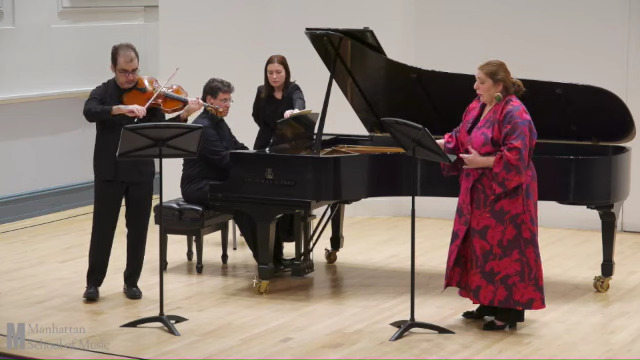
Eve Gigliotti sings “La Cloche fêlée” from4 Poèmes, Op. 5, by Charles Loeffler. Eve is joined by violist Shmuel Katz and pianist Thomas Lausmann at a concert given at the Manhattan School of Music on January 15th, 2025.
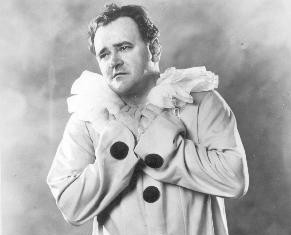
A 1954 performance of Leoncavallo’s opera PAGLIACCI, as sung in French at the Opéra-Comique in Paris. The principals are Raoul Jobin (Canio); Geori Boué (Nedda); Jean Borthayre (Tonio); Robert Massard (Silvio); and Serge Rallier (Beppe). Albert Wolff is the conductor.


 Oberon's Glade
