Category: Uncategorized

  • The Miró String Quartet’s 30th Anniversary Concert @ Alice Tully Hall

    Above, the artists of the Miró String Quartet: Joshua Gindele, Daniel Ching, John Largess, and William Fedkenheuer. Photo from the Quartet’s website.

     Tuesday October 28th, 2025 – The Miró String Quartet, celebrating their 30th-anniversary, gave a terrific program at Chamber Music Society of Lincoln Center tonight. 

    The evening opened with Haydn: his Quartet for Strings in D-major, Hob. III:70, Op. 71, No. 2, penned in 1793. Like many Haydn quartets, this one starts off with a slow introduction, lovingly harmonized; then the Allegro comes alive. This very inventive music seemed so fresh and clear, and was played with youthful joy. The movement ends with a jolly dance.  

    The ensuing Adagio commences with a poignant violin melody from Daniel Ching, his colleagues joining with gorgeous harmonies underpinned by Joshua Gindele’s rich cello tones. Violinist William Fedkenheuer and violist are well-represented by Haydn here. After a silent pause, the theme resumes.  

    In the Minuet that follows, Haydn favors a more lively feeling than the usual genteel elegance of the dance. It is music lovingly played by the Mirós; there is a rather pensive interlude before the minuet resumes…and reaches a sudden end. 

    The finale begins gently; it is laced with rhythmic and dynamic variety, then going into minor mode before moving on to a vigorous finish. 

    Music of Alberto Ginastera came next. The composer’s Quartet No. 2 for Strings, Op. 26, dates from 1958. Its 5-movement form covers a vast range of tempi, and of colour. The agitated bowing and emphatic rhythm of the opening Allegro rustico turns thoughtful, and then insistent, with a dazzling urgency. Things simmer down for a bit before a concluding burst of energy. 

    Mr. Largess’s viola launches the Adagio angoscioso; his wandering melody draws comments from the other voices, with drowsy sighs from the Gindele cello. Mssrs Ching and Fedkenheuer offer ethereal duetting, and complex harmonies emerge. A sudden agitato springs up before calm is restored by the cello. Bizarre chords are heard. 

    The Presto magico is worthy of its name: from an insectuous start, pings, slurs, purring effects, and shimmering sounds constantly lure the ear. The fourth movement, Libero e rapsodico, brings skittering motifs in a violin solo, which is passed on to the cello. Slashing strokes of violin and viola, a restless cello passage, Mr. Fedkenheuer shines, and a wide-ranging theme from the Largess viola: all these carry the movement to its somber ending.

    Buzzing sounds announce the final Furioso: a fast and fun movement, brilliantly played. Throughout the Ginastera, I often found myself on the edge of my seat, bedazzled by the music…and by the musicians’ playing of it. Ending the concert’s first half, this work drew a big response from the audience. 

    A delicious treat came after the interval in the form of César Franck’s “Scherzo: Vivace” from his 1889 Quartet in D-major for Strings, a work which seems to have inspired the evening’s final work: Claude Debussy’s Quartet in G minor for Strings, Op. 10, which was composed five years after the Franck. The Franck “Sherzo: Vivace” lasts less than six minutes. Its start honors Mendelssohn, king of the scherzo. A more reflective interlude brings lovely playing from Mr. Gendele’s cello. 

    The gentlemen of the Miró then commenced the Debussy. The quartet has a restless start, then a range of harmonies offer a perfect Miró sonic blend. The music turns urgent, but is then becalmed, offering some truly beautiful passages.

    Plucking from the violins – and later from all four players – is an ear-teasing motif of the second movement. Later, some trills embellish the effect. Mr. Fedkenheuer opens the Andantino, with Mr. Largess picking up the theme, which draws a slow rise of tenderness. As the music moves expressively onward, the violist returns for a lonely melody. The Gindele cello sounds velvety and Mr. Ching’s violin soars. A feeling of peace settles over the hall.

    The cello opens the finale, then the violin takes up the theme. A rhythmic pattern springs up; mood swings and witty instrumental comments lead to an increase of speed…and a fine finish.

    Above performance photo by Cherylynn Tsushima.

    A full-house standing ovation greeted the players, honoring the quartet’s thirty-year anniversary. I’m so happy I was there to join in the celebration.

    ~ Oberon 

  • A Celebration of Arvo Pärt at Carnegie Hall

    ~ Author: Lane Raffaldini Rubin​

    Thursday and Friday October23rd and 24th, 2025 – Why is the music of Arvo Pärt (above) so beloved around the world? Perhaps it has to do with our penchant for metaphor. Pärt’s music, through the richness it creates out of modest ingredients, conjures other—higher—things. Its representational power makes it mystical to some, mysterious to others, and glorious to others still.

    Carnegie Hall is celebrating Arvo Pärt’s 90th birthday this season by giving him its annual Debs Composer’s Chair and holding a series of performances featuring his works. It all kicked off on Thursday and Friday with back-to-back all-Pärt programs. In Thursday’s mainstage performance the Estonian Festival Orchestra (led by its founder Paavo Järvi) presented a survey of Pärt’s greatest hits. Friday’s performance, in Zankel Hall, featured the Estonian Philharmonic Chamber Choir and Tallinn Chamber Orchestra in an array of lesser-known works.

    The program on Thursday night was comprised of pieces written between 1963 and 2013—a full fifty years—representing the many modes of Pärt’s output, from early twelve-tone writing to the fully formed tintinnabuli style that he invented and became famous for.

    The 1977 Cantus in memoriam Benjamin Britten opened the concert with the singular toll of a bell. From silence, the strings slowly grow into a glimmering churn that layers into a thick slab of sound before eventually sifting into pure unison.

    Perpetuum Mobile, written in 1963, has an similarly imperceptible start that settles into a patter of staccato syncopated notes in the winds. A ceaseless repetitive rhythm lends this piece perpetual time, if not perpetual motion per se. Rumbling drums undergird a glacial crescendo toward a monumental peak. From there, the music follows its long arc back to nothing, finishing where it began, in silence.

    In contrast, La Sindone (The Shroud) of 2005, which opens with aching diminished chords in the strings, seemed melodramatic and overly figured. The texture does thin itself out in later passages and weaves together brief linear threads of notes, but the piece never sheds the unusual quasi-cinematic sound that makes it uncharacteristic of Pärt’s work.

    The Estonian Philharmonic Chamber Choir joined the orchestra for the 2009 Adam’s Lament, a setting of a prose text about the desolation and abject grief of Adam. Chantlike introductory statements in the choir grow into glorious major chords, which Pärt—and audiences—savor in inhabiting. Much of this piece is derived from simple stepwise motion built around these tectonic triads.

    In works like this, Pärt achieves textures and colors reminiscent of the sacred music of Tallis, Josquin, and other renaissance composers of music for the Church. Pärt permits himself the use of a narrow set of compositional tools, which he deploys with precise control. The result is a varied bounty that belies the severe economy of means of its component parts.

    In this way, Pärt offers musical instantiation to Giorgio Agamben’s concept of altissima povertà (“highest poverty”), the ascetic notion often associated with St. Francis of renouncing earthly excess in favor of rule-based forms of life comprising only the most basic elements.

    Above: Hans Christian Aavik and Midori playing the Tabula Rasa; photo by Fadi Kheir

    The second half of Thursday’s program featured two of Pärt’s best works, Tabula Rasa and Fratres, both written in 1977. The young Estonian violinist Hans Christian Aavik and the veteran star Midori joined the Orchestra as soloists in Tabula Rasa. (Nico Muhly also joined on the prepared piano, seated unceremoniously near the back of the stage)

    Midori and Aavik were perfect partners in the intricate interplay of the first movement (Ludus).The kaleidoscopic, fractal sound of the two violins wended between moments of Vivaldian rationality, cosmic splendor, and demonic fiddling.

    The second movement is entitled Silentium, the word inscribed on monastic refectory walls to instruct brothers to eat in silence and listen mindfully to the recitation of prayer. Here the music in the orchestra provides a slow temporal fabric above which the violins float in cloudlike, vaporous suspension, passing simple figures between them that act like ribbons of smoke steadily rising from votive tapers.

    In Fratres, presented here in its version for strings and percussion—a slightly disappointing fact given that two able violinists were on hand to play the version for violin and orchestra—the music takes as much time and space as it needs to, unfurling its series of changing pitches like necessary steps in a penitential ritual. The piece opens with gossamer high strings shining over a sustained bass ground like the first rays of light in a sunrise.

    Compare that to Swansong (2013), a fully leavened, meaty pastorale that Sibelius might have written. Pärt uses the orchestra to paint traditional colors in this piece (including the facile association of the oboe’s sound with the swan), which even swells into a Romantic, cymbal-crashing climax. The result could not be more different from the austere sublimity of Fratres.

    Muhly and the Choir returned to the stage for Credo (1968), one of Pärt’s most impressively strange works. Credo features passages of J.S. Bach’s Prelude in C Major from the Well-Tempered Clavier, which are meant to represent elemental “good” in the face of darker forces. They come off, however, as almost juvenile when pitted against Pärt’s mammoth depictions of evil, including passages that evoke Haydn’s “representation of chaos” with ululating screams from the choir.

    Järvi acted as a humble, devoted shepherd of the evening’s music, treating his role on the podium not only as timekeeper, but also as manager of coherent timbres across the orchestra and guide through the creeping pace of the broad arcs that span each piece.

    Photo above by Jennifer Taylor

    On Friday the singers of the Estonian Philharmonic Chamber Choir joined the Tallinn Chamber Orchestra in Zankel Hall for a more intimate set of Pärt’s works. While the orchestral and choral forces were reduced, the evening featured lengthy settings of liturgical texts including Stabat Mater, Magnificat, and Te Deum, as well as L’Abbé Agathon, a French setting of part of the fifth century Sayings of the Desert Fathers.

    Pärt’s Magnificat (1989) and Te Deum (1985), which were played together and made up the second half of Friday’s program, were the evening’s highlights. Magnificat begins with women’s voices high up in the metaphorical rafters. This is Pärt’s take on stile antico homophonic writing, in which all the a cappella vocal parts move with the same rhythm.

    Te Deum constructs a towering cathedral of sound around this core. Pärt lays out a complex dramatic topography that navigates between sober moments of plainchant, impressively grand crests (as at “Tu Rex gloriae, Christe”), and the rumbling piling-up of tension in between (as at “Fiat misericordia tua”).

    The listener enters a kind of trance in Pärt’s music—one that demands patience and rewards it with the glory and richness of simple things. But it is a fragile hypnosis and its precarity was tested time and again on Thursday and Friday nights with the overactive mundanity of squeaky chairs, cellphone chimes, and coughing. In Zankel Hall, the N, Q, R, and W trains run mere feet away from the subterranean stage. Their periodic rumblings were quite distracting at first, but as the Te Deum faded away (“Amen. Sanctus, Sanctus, Sanctus”), the sounds of the subway tethered the ethereal to the terrestrial, the lofty to the earthly, and these rumblings became part of the music too.

    ~ Lane Raffaldini Rubin

  • NY Pops @ Carnegie Hall

    ~ Author: Mark Anthony Martinez II 

    Above: conductor Steven Reineke

    Friday October 24th, 2025 – The NY Pops opened their 43rd season at Carnegie Hall on October 24th with a phenomenal concert of music rooted in Broadway and cinema classics. The theme itself was explained more clearly by the conductor, Steven Reineke: the music from the program was picked from shows that either became movies or movies that became musicals. Normally, this distinction doesn’t make too much of a difference, but in some instances, the movie score for, say, The Sound of Music was played instead of the music composed for the Broadway performance.

    It was my first time going to a Pops concert, and I was very excited but also curious as to what it would be like. It was quite a mix of ages in the audience, which was nice to see. The stage wall was awash in subtle changing colors when the conductor walked out.

    Maestro Reineke cut a charismatic figure as the orchestra jumped into the Overture from Bernstein’s classic West Side Story. The music was fantastic and reminded me that this show really is an American classic. The orchestra also played deftly and enthusiastically. I remembered reading that orchestras had a very difficult time playing the swing rhythms when Bernstein first composed the piece, but the Pops orchestra was certainly at home and had none of those issues.

    As the overture progressed through the different numbers from the show, the lights projected onto the stage changed, seemingly to match the mood of the numbers. When the overture got to the famous “Mambo!” number, the musicians all shouted “Mambo!” at the appropriate time when the dancers would have in the show, a very rousing way to start the concert.

    After the first number closed, Reineke took to a microphone and explained the concept of the show and introduced the first guest performer of the night. Elizabeth Stanley, a veteran performer, walked onto the stage to what turned out to be the opening music of “Diamonds Are a Girl’s Best Friend” from Gentlemen Prefer Blondes.

    I originally thought it was walk-on music, but her perfectly accentuated hip pops to the music and the vocals that ensued afterward proved otherwise. The song was a perfect number to start the vocal portion of the show. The song had three verses, each one making it seem as if the song had ended. What was so wonderful about this, though, is that it got the audience excited from the get-go, with applause after each verse ended. When the song itself actually ended, the audience was ecstatic and energized.

    Stanley’s first number was one of my favorites of the night. She had a perfect combination of vocal prowess and performance ability that really made a song from 1949 stand out. I actually found that her voice shone best in older numbers like the aforementioned and later ones in the show, like the classic “The Sound of Music” by Rodgers and Hammerstein, popularized by the legendary Julie Andrews.

    After Ms. Stanley’s exciting number, Broadway legend Hugh Panaro walked out onto the stage and introduced his first song. Mr. Panaro originated the role of Marius in Les Misérables on Broadway and also played the Phantom in the Broadway run of the show over 2,500 times.

    Panaro started off by singing “The Impossible Dream” from Man of La Mancha, and much of the audience fell in love with his tone and delivery. I heard murmurs of approval from behind me. His big number in the first half of the performance was when he sang “Bring Him Home” from Les Misérables, where his emotional pianos enraptured the audience, which bolted into a standing ovation afterward.

    Panaro and Stanley peppered almost all of their numbers with anecdotes, like how Panaro lost out on playing the Hunchback in the Broadway version of The Hunchback of Notre Dame to the performer Meat Loaf, or Stanley’s parents’ church congregation coming to her performance of The Bridges of Madison County while she performed as an adulterous Italian woman. It was these anecdotes that made each number come alive and not just be another song in a concert.

    The excitement from the crowd was one of the more noticeable aspects of the show. Classical music audiences tend to know the decorum of when to clap or stand, but that can cause performances to seem stuffy at times. What I loved was the general enthusiasm the audience had for the performers and the music. Two young concertgoers in front of me were having the best time cheering after numbers they loved (and sometimes in between). And that really is what makes music so wonderful—when people can’t help themselves and simply enjoy the performance.

    The second half of the show was stacked with crowd favorites and showstoppers. It started with the Overture and the song “Oh, What a Beautiful Mornin’,” sung by Panaro from the classic show Oklahoma! The overture actually came from the movie version instead of the stage show.

    Stanley sang huge numbers like the previously mentioned “The Sound of Music,” followed right after by the dauntingly difficult “Don’t Rain on My Parade” from the musical Funny Girl. Panaro sang favorites like “Johanna” from Sondheim’s classic Sweeney Todd, and for his final solo number, the breathlessly anticipated “The Music of the Night” from The Phantom of the Opera, which he had performed so many times before on Broadway. The Phantom number received the most raucous applause and standing ovations from the audience.

    The concert closed with a duet of the classic show tune “Suddenly Seymour” from Little Shop of Horrors. I had a hunch, though, that this wouldn’t be the last number, and as I expected, the duo performed a beautiful rendition of “Somewhere” from West Side Story, providing a perfect Berstein bookend to close the concert.

    ~ Mark Anthony Martinez II

  • Angelin Preljocaj’s GRAVITY @ The Joyce

    Author: Oberon

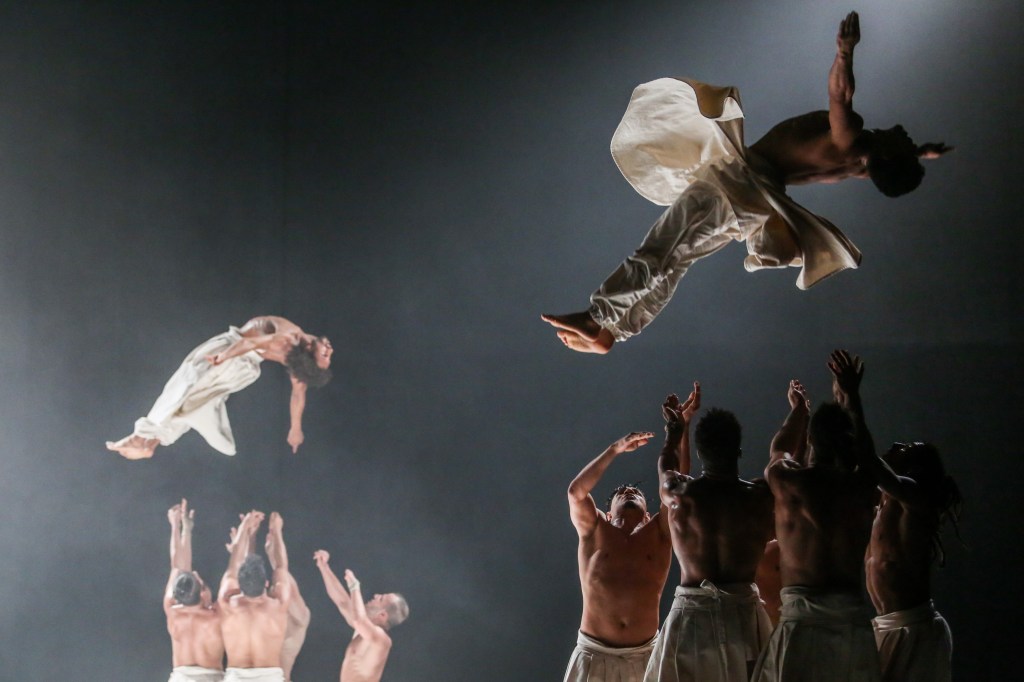
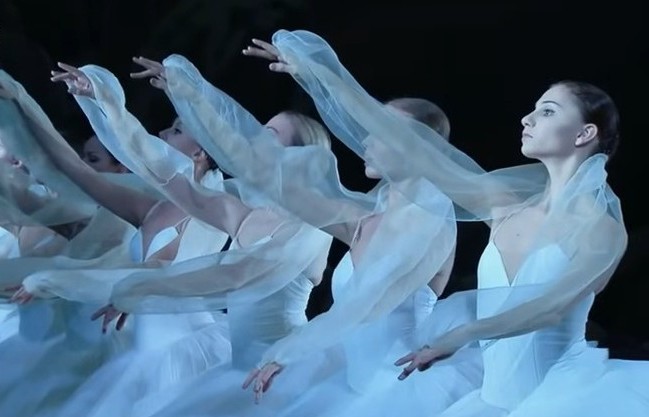
    Photo by Jean-Claude Carbonne

    Sunday October 26th, 2022 matinee – GRAVITY is the fourth work choreographed by Angelin Preljocaj that I’ve had the pleasure to see. His LA STAVAGANZA and SPECTRAL EVIDENCE for New York City Ballet were unusual and engrossing, and ANNOCIATION – a duet for two women drawing on the bible story and danced by the late, lamented Cedar Lake Contemporary Ballet – remains vividly in my mind to this day. 

    This afternoon, I was able to secure tickets for what has been essentially a sold out run of the choreographer’s GRAVITY at The Joyce. Thank you, Mr. Z! 

    Described as “a poetic meditation on the force that binds us all…”, GRAVITY is a treasure trove of dance and music. The last time a ballet kept me awake all night was after the 2006 premiere of Jorma Elo’s SLICE TO SHARP for the Diamond Project at New York City Ballet. The music Elo chose, by Biber and Vivaldi, gave a stellar group of dancers – Maria Kowroski, Ana Sophia Scheller, Sofiane Sylve, Wendy Whelan, Joaquin de Luz, Craig Hall, Edwaard Liang, and Amar Ramasar – wings on which to fly. Brilliance everywhere! The opening night drew a six-minute ovation.

    M. Preljocaj’s GRAVITY was danced by twelve dancers, and though their names are not familiar to me, their physical prowess and compelling artistry gave me the same thrill as that lineup of NYCB gods and goddesses in the Elo.

    The afternoon commenced with an announcement that, due to Visa red-tape, the lighting crew of Ballet Preljocaj had been denied entry to the USA. Racing against time, tech people from The Joyce were able to devise – via phone calls with their French counterparts – a lighting scheme that saved the show.

    GRAVITY opens in near darkness; to ominous sounds, the slumbering dancers slowly awaken. A feeling of wonderment develops as they rise and commence a dance in slow motion. As the individuals draw closer to one another, a sense of community flourishes. They form a circle in a pool of light. One woman (whose name I wish I knew) has a remarkable solo: staying on her mark, she poses in arabesque, arms gently caressing the air, turning ever so slowly as she hypnotically alters her pose with amazing steadiness and poise.

    The men, clad in skirts, perform a ritual dance in unison; to the sound of the harpsichord, the women join. Suddenly, explosive drumming bursts forth, and an octet is danced slowly to shifting percussion rhythms. The stage clears; two couples approach from opposing wings, the men prone on the floor, dragging themselves along. A pas de quatre is danced to a gorgeous violin theme; the partnering is sublime, laced with touches of wit as the piano joins in the music. A feeling of intimacy evolves, the partnering becoming quirky; the music turns poignant, the dancing increasingly poetic. This segment was an outstanding part of an outstanding ballet: endless fascination.

    A sudden burst of animantion to pulsing music feels urgent, and a bit threatening. Some floor work from the dancers as the lighting responds to the marvelous, cinematic music. Three couples appear, the men abandoning the women, who lie on the backs like corpses. Soft eerie sounds accompany the women in a unison passage…incredible. 

    The music then goes for Baroque, with a stylized sextette by be-skirted couples. In silence, two men carry what appear to be corpses of two women wearing helmets. Piano music sounds, the helmets are removed and the men leave the women to dance a duet to metallic sounds. 

    An insistent beat brings all twelve dancers onstage for a ritualistic passage; a male duo beomes a trio. A machine-gun rhythm leads to a sonic swoosh. Two women in white have an amazing duet in which their hands develop a propeller motif of mind-boggling speed.

    All the dancers, clad in white, now form a circle as the familiar music of Ravel’s Bolero commences. They dance about, creating shapes with their arms, the group expanding and contracting as the music expands its relentless beat. If filmed from above, these patterns would have a kaleidoscopic effect.

    An ending seems to have been reached, but there is a coda. As the dancers are gently lain down to rest, the lone mystery woman from the ballet’s opening resumes her slow, expressive solo: her steadiness and control are fascinating to behold; her dance becomes a benediction. 

    The moment darkness fell, the entire packed house stood up as one and gave the dancers a tumultuous ovation. They had to come forward to bow repeatedly as waves of applause surged and shouts of acclamation filled the hall. At last, M. Preljocaj dashed onto the stage, greeted by whoops of delight.

    ~ It was a special day for me as my guest was Elaine Aronson; in 1974, Elaine and I danced together in a production of COPPELIA given on Cape Cod. Over the ensuing years, I often wondered where she was and what she was doing. By chance, I recenty found her on Facebook, e-messaged her, and we met up. Miraculously, she now lives in Manhattan after having spent 40 years in Los Angeles. This afternoon’s Preljocaj masterpiece was a perfect way to celebrate our reunion.

    Curtain call photo by Elaine.

    ~ Oberon

  • Benita Valente Has Passed Away

    Soprano Benita Valente has passed away at the age of 91. A native of Delano, California, she studied singing with two renowned prima donnas: Lotte Lehmann and Margaret Harshaw.

    A winner of the Met Auditions in 1960, she debuted at the Met as Pamina in 1973 and went on to give 75 performances with the Company, in NYC and on tour; I saw both her Pamina and her Nannetta in FALSTAFF in the great house. She also sang Gilda in RIGOLETTO, Susanna in NOZZE DI FIGARO (and she later took on the Contessa in the same opera), and Ilia in IDOMENEO at The Met. In 1984, she sang the role of Almirena in the Met’s premiere of Handel’s RINALDO. Her interpretation of that character’s great aria, “Lascia ch’io pianga” is much admired: listen here. Ms. Valente gave her last Met performance in 1992.

    In addition to her opera performances, Benita Valente was a beloved singer of lieder and oratorio. Such composers as William Bolcom, Albeto Ginastera, John Harbison, and Libby Larsen wrote music specially for her. Her recital and concert appearances took her to music centers around the world, and she made several recordings, among them Vaughan Williams’ Sea Symphony and Schubert’s Shepherd on the Rock. One of my favorites in her discography is a collection of arias and duets with Tatiana Troyanos.

    Retiring from singing in 2000, Benita Valente taught and gave master classes at Marlboro, Ravinia, Ottowa, and Temple University. She also worked with singers from the Met’s Young Artists Program; I met her in that capacity in 2007, when Lisette Oropesa was in the program:

    As a parting song, listen to Benita Valente singing Schubert’s “Nacht und Träume“, with Richard Goode at the piano, here.

  • Mara Zampieri in Catalani’s LA WALLY

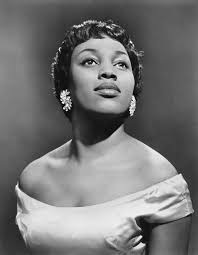
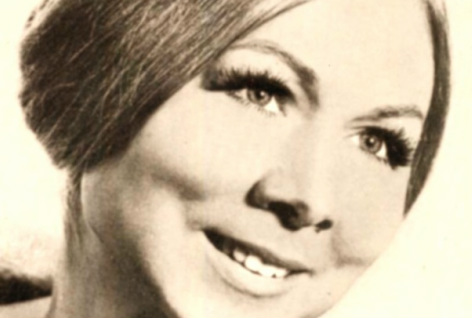
    Mara Zampieri (above) stars in a production of Alfredo Catalani’s rarely staged LA WALLY, given at Bregenz in 1990.

    Watch and Listen here.

    Cast: Wally – Mara Zampieri; Hagenbach – Michael Sylvester; Gellner – David Malis; Walter – Ildiko Raimondi; Stromminger – Norman Bailey; Afra – Liliana Nikiteanu; Il Pedone – Kolos Kováts

    Conductor: Pinchas Steinberg

  • Meier/Carreras/Justus TOSCA @ New York City Opera ~ 1975

    I was glad to discover this New York City Opera performance of Puccini’s TOSCA from 1975 has been posted on YouTube.

    Johanna Meier (above) – a great favorite of mine – sang with both The NYC Opera and The Met; I had the great pleasure of seeing her as Musetta, Contessa Almaviva, Strauss’s Ariadne, Marguerite in FAUST, Chrysothemis, the Marschallin, Donna Anna, Elisabeth in TANNHAUSER, the Empress in FRAU OHNE SCHATTEN, and – outstandingly – as Sieglinde.

    Listen here.

    (Two outstanding passages in this TOSCA are Meier’s introspective and sustained singing of the “Vissi d’arte“, with its gorgeous pianissimo final note, and her blazing top-C in Act III as she tells her lover how she murdered Scarpia. These moments are at 1:09:45 and 1:36:30 respectively. )

  • Sejong Soloists ~ 2025: From Bach to Dorman

    (This is one of several articles that did not make the transfer from Oberon’s Grove to Oberon’s Glade. Although it’s out of chronological order, I am very glad to have it – even belatedly – on the new blog.)

    Above, tonight’s soloists Gil Shaham and Adele Anthony; photos by Chris Lee.

    Author: Oberon | Tuesday April 8th, 2025 — Having greatly enjoyed the Sejong Soloists’ concert at Zankel Hall in May 2024, I was keen to hear them again this evening at the same venue. The program offered three beloved Baroque masterpieces along with a 1944 piece by David Diamond and a world premiere by Avner Dorman.

    Antonio Vivaldi’s Trio Sonata in D-Minor, Op. 1, No. 12 (Variations on “La Follia”) has been set by choreographers who value it for its mood swings and rhythmic variety. The theme was gorgeously set forth by the lustrous playing of the Sejong artists, the ensuing variations veering from extreme delicacy to near madness.

    J. S. Bach’s Concerto for Two Violins in D Minor, BWV 1043, has great meaning for ballet-goers who know it as George Balanchine’s immortal Concerto Barocco. It was wonderful to hear Gil Shaham again — the accustomed allure of his timbre is ever-welcome — joined by Adele Anthony, gowned in scarlet. The concerto’s outer movements, Vivace and Allegro, were brilliantly played with marvelous ensemble support, but it’s the sublime Largo that always gets to me. The soloist duo were ideally showcased, and the Sejong players sounded so pleasingly poetic — I especially loved watching their two double bassists, Satoshi Okamoto and Nina Bernat, whose resonance and congenial sense of tempo-setting were abounding.

    David Diamond’s Rounds premiered in 1944 after conductor Dimitri Mitropoulos had complained to the composer that the melancholy of so many 12-tone works was weighing on his spirit. Rounds is a delight, reminding me at times of Aaron Copland’s Appalachian Spring and Hershy Kay’s treatment of American folk tunes for Balanchine’s Western Symphony. The violins sizzle at the start, the music playful and full of animated staccati from the celli and melodic variety from the violins. Again, the double basses were fascinating to hear and to watch. After a brief “spacey” passage, the composer’s salutes to Americana tease the ear. A fugue-like passage chugs along, then turns lyrical with subtly humorous interjections. The piece was enthusiastically applauded by the audience, many of whom—like myself—had never heard it before.

    J. S. Bach’s Air on the G-String from Orchestral Suite No. 3 in D Major, BWV 1068 offered consolation for the bleakness of the times we live in. Its familiarity has the reassuring feel of being among beloved friends. The players achieved a magical blend, and again the basses—with their measured, gentle tread like a heartbeat of humanity—were mesmerizing.

    The world premiere of Avner Dorman’s A Time to Mourn and a Time to Dance, Concerto for Two Violins and Strings was introduced by the composer. This compact (18-minute) work is in four movements played without pause. The first and third movements are solemn, even funereal; the second and fourth are reassuring—joyous celebrations of dance. Ms. Anthony opens the meditative first movement with an ultra-soft, lonesome melody; Mr. Shaham joins as the orchestra harmonizes gently, the soloists’ lines interwoven. The music grows brighter and more animated before returning to pianissimo. In the spirited Upbeat, there are hints of jazz and a pulsing rhythm that rushes onward as the violins buzz furtively, like a swarm of insects. Mr. Shaham’s high and sweetly sad melody opens Lamentful; he is joined by Ms. Anthony while the celli bring a sense of mourning. Hints of darkness and despair emerge along with sighs of sadness. Some plucked measures lead to the Exuberant finale, a danse à la Russe in which the violin duo play vibrantly over an emphatic beat. The ensemble take up a unison theme over accented accompaniment. Mr. Shaham truly shines here. The composer took a bow to warm applause.

    Above: composer Avner Dorman with soloists Adele Anthony and Gil Shaham following the world premiere of A Time to Mourn and a Time to Dance. Photo by Emilio Herce. The Sejong Soloists are an orchestra well worth hearing; I look forward to our next encounter.

    ~ Oberon

  • Masterpieces by Mendelssohn and Shostakovich @ Zankel Hall

    Above: Lahav Shani, Pinchas Zukerman, and Amanda Forsyth

    Friday October 17th, 2025 – Guest artists (and married duo) Pinchas Zukerman and Amanda Forsyth joined musicians from the Israeli Philharmonic Chamber Ensemble at Zankel Hall tonight for a concert which featured two of my favorite chamber works – the Mendelssohn Piano Trio #1 and the Shostakovich Piano Quintet. Each half of the program commenced with music by Paul Ben-Haim

    Lahav Shani, director of the Israeli Philharmonic, was the pianist of the evening…and what a pianist! His playing throughout the evening was nothing short of spectacular.

    The concert commenced with Ben-Haim’s Berceuse Sfaradite. As he walked out onto the Zankel Hall stage, Mr. Zukerman was greeted with prolonged, affectionate applause. This beloved artist, now 77 (my age exactly!) played the Ben-Haim Berceuse (a transcription of a vocal song) so sweetly and tenderly, gorgeously accompanied by Mr. Shani. As the music faded sublimely into its ethereal finish, the audience burst into vibrant, sustained applause – and wouldn’t stop until Mr. Z came out for a bow. 

    Mendelssohn’s Piano Trio No. 1 was the work that first drew me into the world of chamber music. Decades ago, whilst living in Hartford, I’d tuned in early for a Metropolitan Opera Saturday radio broadcast. The local station played the Mendelssohn as a ‘prelude’ to the Met performance. For some reason, I flipped on my cassette recorder and taped the trio. I was captivated by the music; I hadn’t even jotted down the names of the musicians, but I played the tape often in the ensuing years; I still have it…though it no longer plays. 

    Tonight was only my second hearing of the 1st trio played live: nowadays it seems that it’s the 2nd piano trio of Mendelsohn that is most often heard in concerts. For me, the first trio far outshines the second with its flow of melody, enticing harmonies, and persuasive mood swings; it is music so familiar and so evocative for me.  

    The opening movement introduces us to Ms. Forsyth’s rich cello tone; she sets forth the signature main theme of the Molto allegro agitato, a melody I find heart-rendingly beautiful: it strikes right to the soul. Harmonies develop, and there’s a brief, pensive interlude with piano passages. This is followed by a rising passion, as swirling piano motifs lead to the movement’s end.

    Mr. Shani’s playing of the introduction to the Andante con moto was so appealing; the strings join but the piano continues to be prominent, sometimes veering into minor mode. A sense of urgency rises…and falls. Mr. Zukeman plays a lovely theme, underpinned by cello staccati. Then, a gently rocking cello rhythm carries us to a quiet end. 

    Mendelssohn, master of the scherzo, gives us a sprightly one here. Mr. Shani’s playing dazzles, and Mr. Zukerman’s timbre and technique are is irresistible. The trio’s final allegro is full of swings from major to minor and back again. Plucked notes from the cello develop into a plush duet for the two string voices. The piano urges things along, and there’s a slight lull before the build-up to the final passages. The three artists were enthusiastically cheered for their beautiful rendering of this musical treasure. Part of me wanted to leave then, and carry this sweet memory with me. But another piece I love, by Shostakovich, loomed before us. 

    But first, another Ben-Haim work: clarinetist de luxe  Ron Selka (above) and Maestro Shani offered a truly engaging performance of Ben-Haim’s Songs without Words for Clarinet and Piano. Like the opening Ben-Haim piece, these songs were first vocalises. The opening Arioso found Mr. Selka taking the long phrases in stride with his amazing breath control and spine-tingling tone. The ensuing Ballad mimics the insistent babbling of a story-teller, whilst the concluding Sephardic Melody is drawn from a traditional folk song. Mssrs. Selka and Shani served up this music to perfection. 

    Mr. Shani then displayed his abundant technique and deep-felt artistry when he joined the Toscanini Quartet (violinists Yevgenia Pikovsky and Asaf Maoz, violist Dmitri Ratush, and cellist Felix Nemirovsky) for the evening’s closing work: a magnificent rendering of the Shostakovich Piano Quintet.

    Composed in 1940 – between the Sixth and Seventh Symphonies – the quintet was an immediate success. It won the then-controversial composer the Stalin Prize in the same year, and was thereafter played frequently by Soviet quartets, often with Shostakovich himself at the piano.

    The basic structure of this truly amazing work is as follows:

     I. Prelude: Lento: A piano-led prelude that previews the work’s highly emotional tone.

    II. Fugue: Adagio: A grand, complex fugue, which builds in tension before fading out.

    III. Scherzo: Allegretto: A somewhat frantic movement that contrasts with the more formal opening movements.

    IV. Intermezzo: Lento: A lyrical movement that provides a feeling of calm before the finale.

    V. Finale: Allegretto: The final movement is upbeat and features various distinctive themes; the ending is whimsical, with the piano having the final say. 

    As the musicians took their places, I had to decide whether to continue taking notes or to sit back and savour this monumental work without the distraction of trying to find words to describe what is essentially beyond description. So I put my pen away…

    A momentary string issue with Ms. Pikovsky’s violin caused a slight disruption, but even this could not deter me from my concentration. How fascinating is every note of this score (and most especially its monumental Adagio) and how marvelous was the Toscanini Quartet’s playing of it. Of course, Mr. Shani at the Steinway was at the epicenter of this musical masterpiece: truly an artist of the finest quality. Slight audience distractions could not detract from my deep enjoyment on this glorious music, so perfectly played by this impeccable quintet.

    A hearty ovation broke out the moment the last note of the Shostakovich sounded. An encore was demanded, but I couldn’t catch Mr. Shani’s announcement of what the piece was. Appropriately, it brought together the Toscaninis, the pianist, and Mr. Selka’s mellow-toned clarinet for a breezy, romantic piece into which lovely melodies were woven

    Thus, an evening which could make us feel – if only for a couple of hours – that all’s well with the world.

    ~ Oberon

  • The NY Philharmonic’s Detour to Bologne and Mozart

    Above: Jeannette Sorrell on the podium, with the evening’s soloists Sonya Headlam and Anthony McGill. Photo by Fadi Kheir.

    ~ Author: Lane Raffaldini Rubin

    Thursday October 16th, 2025 – This week the New York Philharmonic took a detour from its regular programming of large-scale Romantic and Modernist works to present a selection of eighteenth-century music.

    Jeannette Sorrell led the Philharmonic in works of Wolfgang Amadeus Mozart and the perennially under-programmed Joseph Bologne, Chevalier de Saint-Georges. Bologne has often been referred to as “the Black Mozart”, a term now thankfully retired. In fact, given the historical circumstances, one must wonder whether Mozart was really the “white Bologne”.

    Bologne, eleven years Mozart’s senior, was brought as a boy from the French colony of Guadeloupe to Paris, where he dazzled the élite and became a sort of living legend. None other than the would-be American president John Adams reported hearing King Louis XVI describe Bologne as “the most accomplished Man in Europe in Riding, Shooting, Fencing, dancing, [and] Music.” As a musician Bologne was specifically known as a virtuoso violinist, an innovative composer of concertos for that instrument, and a skilled director of instrumental ensembles and opera companies across Paris.

    But entrenched racism kept Bologne from accomplishing all that he was capable of. When Marie Antoinette advocated for Bologne’s appointment as director of the Paris Opéra, leading ladies in the company claimed that they could not take direction from a man such as Bologne.

    In certain ways, Mozart followed the path laid by Bologne to become a European musical sensation, favorite of royals and socialites alike. Sorrell, leader of the Cleveland-based baroque ensemble Apollo’s Fire, assembled a program that featured examples of Bologne’s writing for violin and opera and was bookended by one of Mozart’s earliest works and one of his most mature late works.

    The program opened with the three-part overture to Mozart’s opera La finta semplice, written in 1768 at the encouragement of Emperor Joseph II when Mozart was all of twelve years old. One can’t help but wonder how much help Wolfgang received from his father Leopold in the composition of his earliest works, but Wolfgang’s nascent style does shine through. This is particularly true in the rhythmic motor and curved figuration of phrases passed between high and low strings. The Italianate third section of the overture features a snappy language that breaks from the conservatism of the first two sections. Sorrell and the Philharmonic, with an appropriately sized string ensemble, played this music with elasticity, transparency, and continuous directionality of phrasing.

    Soprano Sonya Headlam, a frequent collaborator of Sorrell’s, joined the Philharmonic in the recitative Enfin une foule importune and aria Amour, devient moi propice from Bologne’s 1780 opera L’Amant anonyme. After hearing the youthful Mozart, Bologne’s music was striking in its stormy palette of timbres. The accompanied recitative was actively orchestrated and full of alluring minor-key rumblings, bringing to mind the seria style of Gluck. The orchestra had much more interesting music than the soprano, unfortunately, whose material unfolded unremarkably above this accompaniment.

    Anthony McGill, the Philharmonic’s principal clarinet, joined the orchestra as the soloist in Bologne’s Violin Concerto No. 2 in an arrangement for clarinet by Derek Bermel. McGill approached the concerto’s lyrical solo passages with characteristically sweet, placid tone. He assuredly tossed off many of the fast movements’ bravura passages that feature what were string crossings in the original version for violin. A cadenza that comes relatively early in the movement was hushed and pastoral, presaging the beautiful long melodic lines of the second movement. Sorrell kept the Philharmonic very well balanced through brilliant and lyrical passages alike. By the end of the third movement, McGill’s playing and Bermel’s arrangement convinced me that this concerto was perfectly suited for the clarinet.

    (A point of personal privilege: on the same evening that McGill played Bermel’s version of Bologne’s concerto, the South Dakota Symphony Orchestra, my old ensemble, and the Lakota group The Creekside Singers were performing a piece it had commissioned from Bermel and Emmanuel Black Bear.)

    McGill and Headlam joined forces in the scena Parto, parto, ma tu ben mio from Mozart’s opera La clemenza di Tito. Headlam’s full-throated instrument came in striking contrast to McGill’s vibrato-less clear voice. In moments of musical dialogue between the soprano and clarinet Headlam noticeably sweetened up her sound, which was most beautiful in the lower tessitura of the vast pitch range required of her in this music.

    Mozart’s Symphony No. 40, which rounded out the program, served as an ideal avatar for some of the evening’s big questions: Why bring a baroque bandleader—an outsider to the symphony circuit—to conduct the Philharmonic? Can an ensemble like the Philharmonic engage in the traditions of historically informed performance?

    Above: Jeannette Sorrell; photo by Fadi Kheir

    Sorrell’s reading of the first movement infused electricity into each melodic figure, with perfectly tapered phrases and an abundance of character in the bass lines. Elegant appoggiaturas are tossed between the violins and winds in the second movement, taken tonight with a lovely quick tempo. And the fourth movement, played with restraint, continues this dedication to the shapes of phrases, even as they speed quickly by.

    Sorrell may be more of a bandleader than a symphonic conductor, but there wasn’t a moment all evening that she did not have firm control of the ensemble’s tempo, shape, or timbre. She shepherded the group in what could only be considered sensible techniques of historical performance (minimal vibrato, decaying long bow strokes, transparency of sound, fleet tempos), without veering either into a mannered, academic treatment in one direction or an over-styled, exaggerated spiciness in the other.

    This is what the New York Philharmonic should sound like playing Mozart, or Bologne, or any music from before 1800.

    ~ Lane Raffaldini Rubin

    Performance photos by Fadi Kheir, courtesy of the New York Philharmonic.