Category: Uncategorized

  • Roberta Alexander Has Passed Away

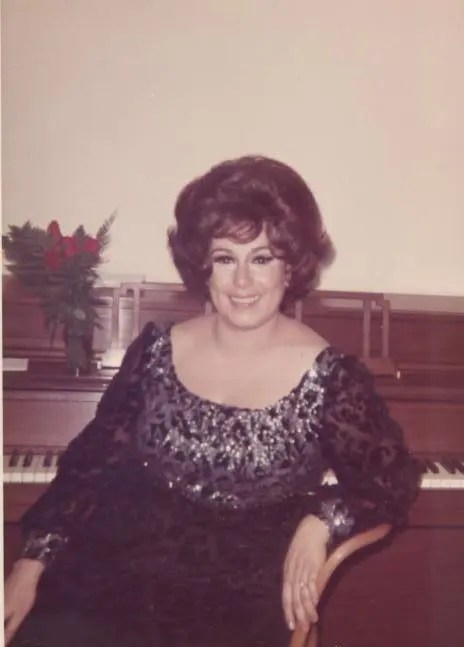
    Roberta Alexander, whose voice and personality might best be described as endearing, has passed away. A native of Virginia, she studied at the University of Michigan. At the age of 23, she moved to The Netherlands and began developing her career in such European centers as Berlin, London, Vienna, Glyndebourne, and Paris.

    Parallel to her opera performances, she sang concert repertoire with such notable conductors as Carlo Maria Giulini, Seiji Ozawa, Zubin Mehta, Bernard Haitink, James Levine, and Sir Simon Rattle. Her recital appearances took her all over the world, and she made several recordings, including a delightful series on the Etcetera label.

    Ms. Alexander made her Metropolitan Opera debut in 1983 as Zerlina. Her Met career continued with Jenufa, Gershwin’s Bess, Mimi, Mozart’s Vitellia, Contessa Almaviva (a lovely interpretation, which I saw), and Donna Elvira; and Offenbach’s Antonia.

    In 2013, the soprano had a shining late-career success when Patrice Chéreau cast her as the 5th Maid in what was to be his final opera production: Strauss’s ELEKTRA at the Aix-en-Provence Festival. In 2016, this production came to The Met, and Ms. Alexander was greeted with loving applause when she stepped forward for a solo bow at the end.

    Among her Etcetera label recordings, I am extremely fond of her disc of arias and songs by Samuel Barber, conducted by Edo de Waart (who had been Roberta’s first husband). Listen to an excerpt from this collection here.

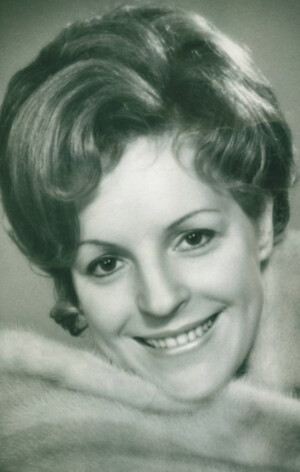
  • Maralin Niska ~ “Vissi d’arte”

    Maralin Niska sings the “Vissi d’arte” from Puccini’s TOSCA in a New York City Opera performance, date not given. Listen here.

    Read about Ms. Niska here.

  • Clarice Carson and Dominic Cossa: Scene from LA PRISE DE TROIE ~ 1972

    Clarice Carson is Cassandra and Dominic Cossa is Chorebus in a scene from Berlioz’s LA PRISE DE TROIE. This concert presentation took place in 1972 at Carnegie Hall; John Nelson conducts the Pro Arte Orchestra.

  • Discovering PRINCE IGOR

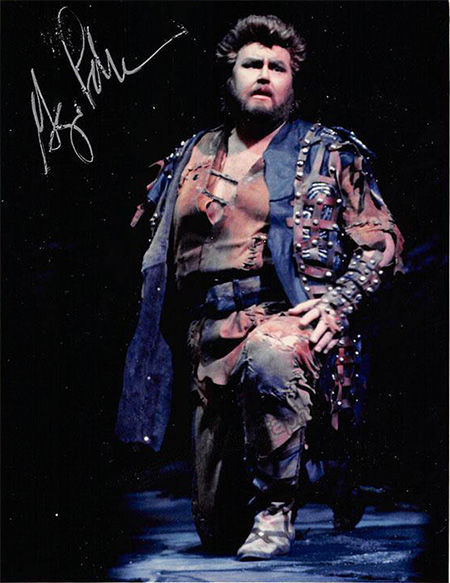
    Above: Maralin Niska

    In the Autumn of 1969, I spent almost ten weeks in New York City. I had taken a room at the Henry Hudson Hotel, and was supposed to be job-hunting. But instead, I spent all my time (and limited money) going to the opera. The Met was closed due to a strike, but the New York City Opera was going strong. I think I went to every single performance they gave during those weeks, always in the 4th Ring standing room.

    One opera the NYCO were offering that Fall was Borodin’s PRINCE IGOR, in English; this Russian masterpiece was brand new to me. I saw it five times, the last performance bringing together three singers I especially admired: Maralin Niska (Yaroslavna), Edward Pierson (Igor), and William Chapman (Khan Konchak). Gustav Meier was the conductor.

    With my money running low, I recorded only about 20 minutes from the performance in order to save cassette space:

    First, as Prince Igor is about to lead his troops out to meet the attacking Polovtsians, a solar eclipse develops. His wife, Yaroslavna, sees this as a bad omen and begs her husband not to leave, but he is adamant. Maralin Niska, as Yaroslavna, bids him farewell on a sustained top note. (In this ensemble, you briefly hear tenor James McCray as Igor’s son, Vladimir.)

    Later, awaiting her spouse’s return, Yaroslavna sings a wistful lament. Ms. Niska’s soft singing was always so affecting.

    When her city is attacked by the hoards of Polovtsians, Princess Yaroslavna and the boyars barricade themselves in the great hall as the palace is set aflame. Ms. Niska took an exciting high option to cap the ensemble.

    Captured by Khan Konchak, Prince Igor sings of his despair over his defeat, and of his beloved wife far away. Edward Pierson had such an expressive voice, and excellent diction.

    Khan Kochak wants to befriend his prisoner; he suggests that he and Igor should join forces. William Chapman wowed the audience with his vivid singing here.

    How does the story end, you may ask: Prince Igor at last returns home, broken by defeat…and by the loss of his son Vladimir in battle.

    And how did my plan to work and live in the Big Apple work out? Not well, though not as sadly as the defeated Prince Igor’s. Broke, I went back to the little town, where I lived until moving to Hartford, Connecticut, in 1975. I finally made it to my Dream City in 1998, shortly before turning 50.

    ~ Oberon

  • Salonen/Aimard @ The NY Philharmonic

    ~ Author: Mark Anthony Martinez II; performance photos by Chris Lee

    Saturday October 4th, 2025 – The New York Philharmonic had a fascinating program of Boulez and Debussy pieces for this all-French concert. It was a beautiful early Fall night, and I was coming with two friends to see the show. I looked at the program before the concert and realized that I had only heard La Mer, and all of the other pieces were totally new to me.

    I love French music for its unique tonal world. The impressionists like Debussy, in particular, encapsulate that flowy, ethereal quality that is the sonic equivalent of paintings by Monet and the other visual impressionists.

    It was an almost perfect early Autumn evening, still warm but not hot. When entering David Geffen Hall, there was a buzz from all of the people already there. We came close to the start of the concert, so we quickly went to our seats.

    Esa-Pekka Salonen was guest conducting the New York Philharmonic, and I was excited to see his handling of the orchestra. He had just recently finished a tenure as the principal conductor of the San Francisco Symphony.

    The lights dimmed, and then a single spotlight shone on the piano in the back of the orchestra. I thought this was odd and was a bit perplexed as to what was going to happen. I was also confused by the placement of the piano. I thought, if the piano was so important as to warrant a spotlight, then it should surely be placed closer to center stage. The lit-up piano played the first Boulez piece, Notation IV, Rhythmique (for solo piano). It was certainly a more modern-sounding piece (even though it was written in 1945). Boulez was a composer in the twelve-tone school of composition. The most famous of those composers was Schoenberg, and you could definitely hear some echoes of Schoenberg in Boulez.

    Above: Maestro Salonen with Pierre-Laurent Aimard at the piano; photo by Chris Lee

    After the piano had finished, the spotlight disappeared, and the orchestra erupted into the full orchestral version of the same piece. It was a fascinating treat to see truly a fragment, or dare I say, a notation, become fully realized as an orchestral piece. Boulez wrote the orchestral version of his Notations starting in 1978, with revisions going up until 1987. The orchestral version definitely sounded more complete and somehow more full of menace. The orchestral version, in particular, sounded like something that would be in an early black-and-white film or perhaps a modern horror movie.

    And full of more surprises, the orchestra seamlessly moved into Debussy’s Gigues from Images for Orchestra. There was no applause break; the musicians simply charged on into a completely different tonal world. What was so interesting was how traditional the Debussy felt in comparison to the Boulez, which is particularly funny because Debussy truly was very avant-garde when his music first came out.

    Gigue (which is a type of dance) had a lovely lilting quality, very reminiscent of Rimsky-Korsakov’s Scheherazade in parts. I loved the orchestra’s handling of the piece as it swayed and danced its way to completion.

    Even though Boulez and Debussy’s pieces were written decades apart, in some ways, I could hear the connection between the two pieces back to back. The Debussy had some moments that came out of nowhere, that sounded almost jarring. It was almost as if Boulez took those jarring moments and made an entire piece out of them.

    The orchestra masterfully played the pieces, even though they were so different in nature. Salonen was certainly a very dramatic conductor, with big swooping gestures and cutoffs. As a musician, I think I might have a difficult time following, but the Phil were perfect in how they executed the music.

    The next set of pieces was once again kicked off by solo piano, with the spotlight shining on it. The piece Notation VII, Hiératique was far more contemplative and minimal than the first piece. When it got to the orchestral version, instead of a wall of sound, the music was much more subtle at first. The strings jumped in at times with violent fervor, then went back to the calmer nature. As the piece progressed, the more maniacal-sounding sforzandos took over, and the piece became more and more sinister. This one, in particular, reminded me a great deal of The Rite of Spring by Stravinsky in some ways.

    The piece ended and directly led into Rondes de printemps by Debussy. What was striking was how similar the beginning of the Debussy sounded to the just-finished Boulez. The pieces were exquisitely paired, sort of like wine and chocolate (though the Boulez felt more like taking a shot than drinking wine). The Debussy reminded me a bit of his Afternoon of a Faun. It had a pastoral sense to it as the music romped around.

    After the springtime ushered in by Debussy faded away, the final piece of the first half of the concert commenced stridently. The piece, Notation II, Très vif (which means “very lively”), really went all out with the entire orchestra. Everyone was playing in what sounded sort of like a train almost coming off its tracks. Then the piece ended as abruptly as it started.

    Everyone took well-deserved bows, and when Salonen came back, he made a cute gesture to the percussion section, as if he were playing percussion himself, and they stood up and took bows.

    The intermission felt short, perhaps because the weather outside was so nice as I went onto the balcony with my friends. When we came back, a piano was set center stage for another piece I had never heard before. The latter half of the concert was Debussy only. The piece that started the second half was Fantaisie for Piano and Orchestra.

    The pianist, Pierre-Laurent Aimard, wore a full black outfit and walked up to the piano, shook Salonen’s hand, then sat down at his instrument.

    This piece was the closest thing to a concerto that Debussy wrote. It was very much a showpiece, in line with a lot of similar concertos written in that era. It sounded a lot like Rachmaninoff’s piano concertos in some regards, but the entire piece sounded very much like Debussy.

    It was interesting to hear Debussy writing for a virtuoso performer because I feel like his music (though difficult to play) was normally never intended to be showy like that of some of his other contemporaries.

    The music was truly some of the most sublime I’d heard in a while. I used to be a pianist myself, so it is always great to hear some fantastic piano playing. The Fantaisie was very playful and again reminded me of his other orchestral pieces like his Faun. The first movement had the piano gliding up and down the keyboard, fluttering along almost. The piano’s light touch actually reminded me a lot of Saint-Saëns’s piano concertos, the effortless scales and arpeggios that made the piano almost sound like a harp. The two composers were said to have hated each other in real life, so I’m not sure if Debussy willingly took influence or if it was something just in the French musical world at the time.

    The music was gorgeous but did have one downside. Debussy really lives in his own soundscape in a sense, and he never really leaves it. Unlike more traditional concertos where there is a stark contrast between movements, or even within movements, the Debussy all sounded like the same world, in a sense.

    The piece ended in a flurry of notes from the piano and a rounding fanfare of brass rather beautifully. Aimard took three curtain calls, and some people in the audience expected to hear an encore, but he just left the stage afterward.

    Above: conductor and pianist take a bow; photo by Chris Lee

    The concert’s selling point was now ready to unfold, and the orchestra readied itself to play La Mer. The symphonic suite, for being so beloved now, was not well received when it first premiered. The piece was broken down into three movements: From Dawn till Noon on the Sea, The Play of the Waves, and Dialogue of the Wind and the Sea.

    The piece opened with what sounded like a rising sun over a gently moving sea. Debussy really is a master of tone painting because every second of the piece conveyed how the sea moves and evolves throughout the day.

    Part of the reason why people attribute La Mer’s initial lukewarm reception was because it was not played well. As such, one reason why it was possible to hear all the rippling of the waves is because the New York Philharmonic and Salonen brought out the beauty Debussy dreamed up.

    The second movement picked up the pace, not so much in tempo, but in terms of what was happening in the music. There was a lot going on, and Salonen conducted the different complex changes in rhythm with great fervor. I was trying to figure out what the time signature was, but it looked complicated nonetheless.

    The last movement of the piece settled down a bit compared to the second movement. The music had a more conversational tone as it slowly built up to the climax. Toward the end of the piece, you could hear the cascading water crashing as the orchestra finished with its final grand eruption.

    ~ Mark Anthony Martinez II

    (Performance photos by Chris Lee, courtesy of the NY Philharmonic)

  • Scintillating ‘Sempre libera’

    Lisette Oropesa sings ‘Sempre libera‘ from Verdi’s LA TRAVIATA at the annual Deutsche Oper AIDS Gala in Berlin in 2017.

    Peruvian tenor Iván Ayón-Rivas sings Alfredo’s lines.

    The ‘wink’ at the start is pure Lisette.

  • Recognition Scene

    Christa Ludwig and Walter Berry in the Recognition Scene from Richard Strauss’ ELEKTRA. Heinrich Hollreiser conducts.

  • Florence Quivar sings Mahler’s ‘Kindertotenlieder’

    A renowned interpreter of Mahler, Florence Quivar, sings the composer’s Kindertotenlieder from a 1986 concert by the San Francisco Symphony, conducted by Erich Leinsdorf.

  • Lovely Music You’ve Probably Never Heard Before

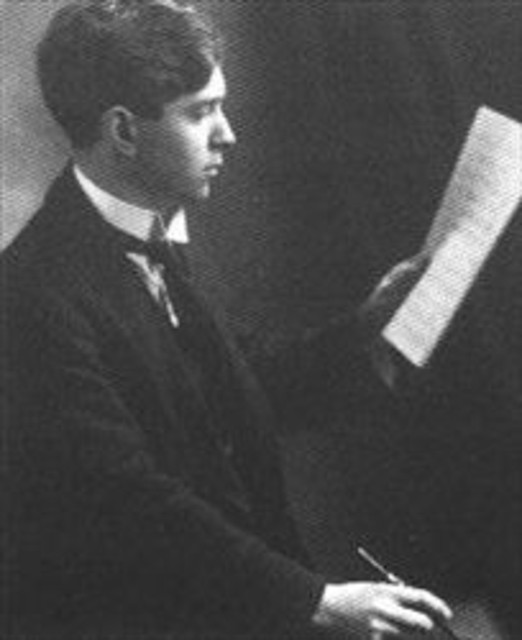
    I came upon this song cycle, entitled “Mère” completely by chance. The composer, Lily Bienvenu (photo above), was totally unknown to me, but I soon fell under the spell of the music.

    The songs are set to nine poems by the Belgian poet Maurice Carême (1899-1978). The singers are mezzo-soprano Jeaninne Collard and baritone Jacques Herbillon, with the Orchestre de Chambre de l’ORTF under the direction of André Girard.

    The songs are:

    I. Tu t’es levée de grand matin ;II. Ainsi, j’étais au fond de toi; III. Il ne faut qu’un peu de printemps; IV. Te remercierai je jamais assez; V. L’alouette après l’alouette;VI. Depuis le jour où tu es morte; VII. Je ne suis pas dans cette tombe ;VIII. Je te retrouve encore IX. Plus près de moi

  • Robertson Steps in for an Idiosyncratic Program at the Philharmonic

    ~ Author: Lane Raffaldini Rubin

    Above: Maestro David Robertson, photo by Chris Lee

    Tuesday October 30th, 2025 – For two nights only, the New York Philharmonic offered a program of music by Mason Bates, Karol Szymanowski, and Witold Lutosławski to be led by the young conductor Marta Gardolińska in her Philharmonic debut. It was a program clearly meant to showcase music of Gardolińska’s native Poland. Despite the fact that it was sandwiched between pairs of appearances by Gustavo Dudamel and Esa-Pekka Salonen, Gardolińska’s debut had garnered enough hype to appear in New York magazine’s biweekly Approval Matrix (in the highbrow / brilliant quadrant, of course). So I was naturally disappointed to learn that Gardolińska had withdrawn from these performances due to illness and that David Robertson would take her place.

    The program opened with Mason Bates’s 2014 Devil’s Radio, a short piece whose title refers to the moralizing maxim that “gossip is the devil’s radio: don’t be a broadcaster”. As far as I could tell, the nine minutes of music that followed had little to do with any of that. They did, however, offer strong rhythmic drive and a varied palette of tone colors.

    The piece, which at times brought to mind John Adams’s 1986 Short Ride in a Fast Machine, had no hint of the sinister or the malevolent. Overall the piece had a wholesome character, thanks to the use of celeste and repetitive fast figures in the strings, and only occasionally slunk into a more sly mood brought on by sounds of the drum kit. In a notable passage near the end of the piece, a series of radiant waves of sound crest in the brass and high woodwinds at the culmination of a long-building arc.

    Bates, whose expansive The Amazing Adventures of Kavalier and Clay is currently onstage next door at the Metropolitan Opera, managed in the much smaller-scale Devil’s Radio to craft a highly detailed musical statement.

    The Philharmonic was then joined by Leila Josefowicz (photo above by Chris Lee) for Szymanowski’s second violin concerto, first performed in 1933. The first movement begins not with grand statements from the soloist or the orchestra but with an alluring and almost conversational episode of music that Josefowicz led with smoky (almost crooning), glamorous sound.

    The urbanity of the first movement eventually gives way to the demonic fiddling of an extended cadenza at the center of the concerto. Josefowicz was undaunted by the pyrotechnic demands of the cadenza, executing each new fingering or bowing challenge flawlessly and giving herself over to the unhinged character of the piece. When sweet melodies return in the third movement, we sense lunacy lurking beneath them.

    Robertson was a humble and sensitive partner, but there were numerous instances of the soloist’s finer passagework being buried by the orchestra. Josefowicz, despite not producing the most powerful sound to cut through this texture, seemed otherwise almost perfectly matched for this concerto. Her assured technique, tautly concentrated tone, and emanating (perverse?) pleasure are all necessary ingredients to pull off this fiery piece of music—a piece that would more aptly bear the title Devil’s Radio.

    David Robertson did not bring the same animating spark to the final piece on the program, Witold Lutosławski’s menacing Concerto for Orchestra of 1954. Robertson—former music director of the St. Louis Symphony Orchestra, former chief conductor of the Sydney Symphony Orchestra, and currently the director of conducting studies at the Juilliard School—commendably took on this quite idiosyncratic program at the very last minute. But his rather refined approach (which suited Bates’s piece and allowed Josefowicz to shine through in the concerto) did not serve the rough expressionism of Lutosławski.

    The first movement begins with intricate counterpoint between the various sections of the strings, which Robertson admirably shepherded. In full orchestra passages, the strings and brass did not always cohere, with the strings adopting a darker tone and stronger attacks while the brass were brighter and more rounded. Robertson gave ample breathing room to transitions within each movement, which at times let the momentum drift away.

    The highlight was the third movement, featuring strong contrast between the repetitive passacaglia in the basses, flitting perpetual-motion figures in the winds and strings, and the uncanny strangeness of harmonic oddities embedded within ravishing string chords.

    It’s a shame that we missed our chance to hear Gardolińska’s take. Lutosławski’s piece is nervous—paranoid—maybe even a bit shabby, hanging as it does under the specter of Soviet repression. In Szymanowski, under Robertson’s baton and with Josefowicz’s impetus, we heard music on edge, pushing its own limits. I would happily have traded some of Robertson’s tameness and refinement in Lutosławski for that kind of bold statement. 

    ~ Lane Raffaldini Rubin

    Performance photos by Chris Lee, courtesy of the NY Philharmonic.