Blog

  • Joshua Bell @ Mostly Mozart

    Joshua-Bell

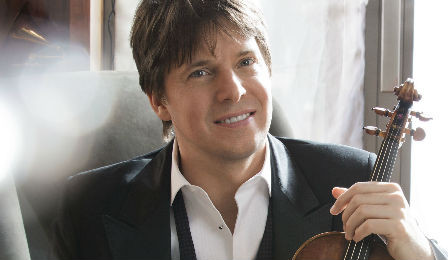
    Above: violinist Joshua Bell

    Wednesday August 17th, 2016 – Geffen Hall was packed to the rafters for Mostly Mozart tonight: all the stage seats were taken, and there was a line for ticket returns: could it have had something to do with Joshua Bell being the scheduled soloist?  Mr. Bell certainly impressed in his performance of Mozart’s 4th violin concerto, and the program overall was highly enjoyable.

    Any hearing of Felix Mendelssohn’s overture to A Midsummer Night’s Dream is bound to summon up visions of Balanchine’s enchanted forest – it’s quite amazing, in fact, when you think of the amount of narrative and dancing Mr. B was able to fit into this 12-minute overture, without ever for a moment seeming over-busy. The Mostly Mozart Orchestra coped well with the brisk tempi set by the youthful-looking conductor, Matthew Halls, and it was so much sheer fun to hear these familiar themes played live again. I must mention Jon Manasse’s lovingly-phrased clarinet solo.

    Joshua Bell then appeared to a warm greeting from the crowd. In this rendering of the Mozart violin concerto #4 in D-major, the violinist and the conductor formed a steady rapport. Unobtrusively using a score, Mr. Bell launched the solo line in the stratosphere and went on to play the Allegro vivace‘s capricious music with easy aplomb. There’s a lot of high-velocity coloratura in play here, and it culminates with a florid, witty cadenza of Mr. Bell’s own design.

    On a high, sweetly sustained note, Mr. Bell lures us into the Andante cantabile; the melody eventually dips into a lower range where his playing a balm to the ear. An elegant ‘interlude’ has a different sort of appeal; then the main theme recurs, before the violinist ascends to another high-lying cadenza. 

    After an elegant start, the Rondeau turns sprightly – a delicate mini-cadenza teases us and then there’s another more extended cadenza. The soloist joins the massed violins in a sort of chorale, and Mr. Bell continues to seize opportunities for yet two more cadenzas, the first having an ironic buzzing quality.

    As ever, Mr. Bell’s physically engaged playing is as enjoyable to watch as to hear. The random smudged note here or there was nothing to deter from the ongoing sweep of his music-making, and though I agreed with my companion that the cadenzas sometimes seemed rather too ‘modern’, they gave the performance an individuality that was refreshing in its own right.

    Beethoven’s overture to Coriolan, Op. 62, was the composer’s first opportunity to write for the stage, and his success has kept the overture in the repertory. Originally conceived as a prelude to the play of the same title by the composer’s friend Heinrich Joseph von Collin – a theatrical success in Vienna in 1802 – the overture didn’t appear until 1807, when the play’s popularity had waned. It seems that only one performance of the play with Beethoven’s overture took place: on April 17th, 1807. After that, the eight-minute overture went on to thrive as a concert number.

    This evening’s performance was finely-wrought by Maestro Halls, and most attractively played. The contrasting themes of anger and tenderness express the theme of the play: the betrayal of his duty as a Roman general by Coriolanus, and his mother’s entreaties to abandon his plan to lead the enemy forces in an attack on Rome. Her pleading is effective: Coriolanus abandons his scheme and faces his punishment.

    A warm and appealing performance of Beethoven’s “little” symphony – the 8th – concluded the evening on an optimistic note. The last time I heard this symphony performed live was in December 2013 when the Spanish conductor Rafael Frühbeck de Burgos, then in his 80th year, led the New York Philharmonic in the work and left my friend Dmitry and I with wonderful memories of the highly-respected Maestro, who passed away in June 2014. We still speak of that Philharmonic concert with special affection. 

    Timed at around twenty-five minutes, this four-movement symphony flies by: there’s no adagio to make us stop and ponder, but rather a charming and often witty flow of themes with the congeniality of dance rhythms ever-ready to buoy the spirit.

    A lively podium presence, Maestro Halls was well in his element here, and the musicians seemed fully engaged in this music which successfully blends elegance with folkish gaiety. The horns sounded plush, and again Mr. Manasse made his mark: an outstanding musician.

  • Aase Nordmo Løvberg

    Lovberdebut

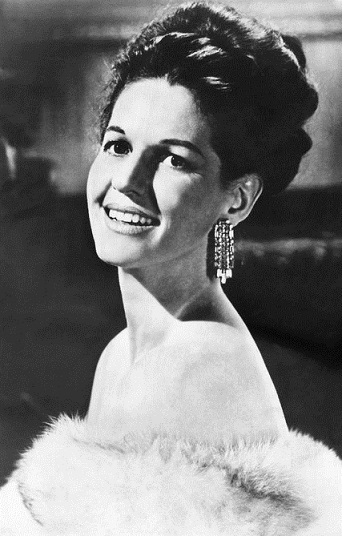
    Aase Nordmo Løvberg sings “Dich, teure halle” from Wagner’s TANNHAUSER.

  • Maralin as Marguerite

    M niska

    Maralin Niska (above), the American soprano who passed away on July 9th, 2016, was one of a handful of singers whose performances could induce me to travel – first from Syracuse, NY, to see her in several roles at New York City Opera, and later from Hartford, CT – where TJ and I had settled in the mid-1970s – to Lincoln Center, where she was singing at both the State Theatre and The Met.

    Once, she even came to Hartford to sing Violetta, replacing another soprano on short notice. We were so excited when we arrived at The Bushnell and saw the announcement of the cast change; we rushed to the stage door to leave her a message, and en route we found her, just thirty minutes before curtain time, banging desperately on what she thought was the stage door. She was so happy to see us, not least because we were able to lead her to the proper entrance.

    Violetta, Mimi, Tosca, Butterfly, Nedda, Countess Almaviva…these were some of the roles from the standard repertoire in which Niska thrilled me. Her triumphs in such great dramatic vehicles as Cherubini’s Medea, Strauss’s Salome, and Janacek’s Emilia Marty were the stuff of operatic legend. In roles as diverse as Yaroslavna in PRINCE IGOR, the Composer in ARIADNE AUF NAXOS, Rosalinda in FLEDERMAUS, and Elisabetta I in MARIA STUARDA, she achieved miracles of characterization and of voice.

    Yet for all that, is was – curiously enough – as Marguerite in FAUST that Maralin gave a (somewhat unexpectedly) sensational performance that has lingered so clearly in my mind over the ensuing years. In the unforgettable Frank Corsaro production – in which the devil wins – Maralin left the notion of Marguerite as a shrinking violet in the dust. Faust’s love for the girl signaled not only her romantic but also her sexual awakening.

    In the Garden Scene, on the brink of having her, Faust backs off, causing Maralin/Marguerite to burst into frantic sobs of frustration; when he reappears after Marguerite’s ecstatic invocation, there’s no going back. 

    As the opera draws to its end, Faust comes to rescue Marguerite from prison, where she awaits execution for murdering her child. The demented girl imagines they are back in the garden; she ignores Faust’s pleas to come away. When Mephistopheles appears to urge theme to hurry, Marguerite sees him for what he is and turns to fervent prayer. Faust tries one last time to persuade her to flee, but she turns on him, crying: “Pourquoi ces mains rouge de sang? Va! … tu me fais horreur!”  (“Why are your hands red with blood? Go!…you fill me with horror!”) No soprano has done that last line quite like Maralin.

    Heavenly voices declare Marguerite’s salvation; she begins to climb a steep staircase, but at the top of it, double doors fly open, and instead of an angelic host she is greeted by a towering executioner, masked and carrying an monstrous axe. Faust rushes up the steps to try to save her, but the doors are slammed shut in his face. Mephistopheles steps out of the shadows, calling Faust’s name quietly, and waving the contract with which Faust had sold away his soul to the devil in Act I.

    I’ve been able to preserve some excerpts from one of Maralin’s performances in this role at NYC Opera; the date was March 15, 1970, and her colleagues were Nicholas di Virgilio (Faust) and Norman Treigle (Mephistopheles). The original tapes are in a fragile state – I was lucky they played well enough to save them to MP3. The sound quality leaves much to be desired, but hearing these scenes brings back wonderful memories for me:

    Niska – FAUST aria – NYCO 3

    FAUST – Garden Scene exc – Niska – di Virgilio – Treigle – NYCO 3

    Maralin Niska & Norman Treigle – scene from FAUST – NYCO 3~15~70

    FAUST – finale – Niska – di Virgilio – Treigle – NYCO 3

    Photographer Beth Bergman has created a beautiful memorial in photos to Maralin Niska on her website: visit the page here.

  • Sleepwalking Scene

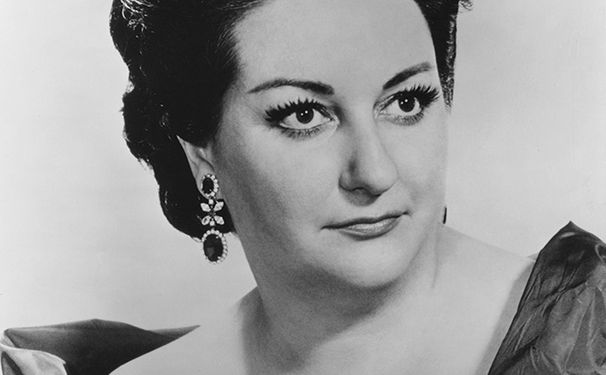
    Montserrat-Caball

    I’ve re-discovered Montserrat Caballe’s atmospheric recording of the Sleepwalking Scene from Verdi’s MACBETH. Elizabeth Bainbridge and Sir Thomas Allen provide world-class support as the Gentlewoman and Doctor.

    Montserrat Caballe – Sleepwalking Scene ~ MACBETH – w Elizabeth Bainbridge and Sir Thomas Allen

    LADY MACBETH
    A spot…still here.
    Out, damned spot! I curse you!
    One, two, it is time!
    You are trembling? You do not dare to go in?
    A soldier, and a’feard?
    For shame! Come…hurry!
    Who’d have thought that old man
    could have so much blood in him?

    DOCTOR
    What did she say?

    LADY MACBETH
    The Thane of Fife,
    was he not a husband and father?
    What happened?

    GENTLEWOMAN and DOCTOR
    Oh, horror!

    LADY MACBETH
    Shall I never be able
    to clean these hands?
    There’s blood here still.
    All the perfumes of Arabia
    could not cleanse this little hand.
    Alas!

    DOCTOR
    She sighs…?

    LADY MACBETH
    Put on your nightgown. Come, wash yourself!
    Banquo is dead, and the dead
    cannot come back from the grave.

    DOCTOR
    This too?

    LADY MACBETH
    To bed, to bed …
    What’s done cannot be undone.
    Someone is knocking! Come, Macbeth…
    let not your pallor accuse you.

    GENTLEWOMAN and DOCTOR
    What terror…!
    Lord, have mercy on her…

  • L.A. Dance Project @ The Joyce

    Helix2a

    Above: Stephanie Amurao and Aaron Carr of L.A. Dance Project in Justin Peck’s HELIX; photo by Rose Eichenbaum

    Wednesday July 27th, 2016 – First off, I must heap praise on the dancers of L.A. Dance Project: throughout this long, uneven program at The Joyce, their energy, commitment, sexiness, and spirit kept us engaged, even when the choreography lapsed. Some of these dancers are familiar to me: Stephanie Amurao (she danced briefly with TAKE Dance), Morgan Lugo (he danced in Luca Veggetti’s BACCHAE for Morphoses in 2011); and Aaron Carr (formerly of Keigwin & Co); then there’s Anthony Bryant, a lovely guy I’ve known via Facebook and who I have now met as both a dancer and friend.

    The Joyce was packed – so nice to run into Denise Vale of the Martha Graham Dance Company! – as works by Sidi Labri Cherkaoui, Martha Graham, Justin Peck, and The Project’s director Benjamin Millepied were offered up.

    Mr. Cherkaoui – whose ORBO NOVO for Cedar Lake Contemporary Ballet in 2009, and SUTRA, seen at the White Lights Festival in 2010, linger in the memory – gives us HARBOR ME, a darkish piece set to music by Park Woojae. This work may be danced by three men or three women: tonight, it was the female trio: Stephanie Amurao, Julia Eichten, and Lilja Rúriksdóttir. The music features poignant cello passages; each of the three women has a solo, then trios develop in which they form languid structures. The music pulses up, with a mid-Eastern feel. The women dance a trio in a pool of light, conversing in gestures. The ballet starts to feel overly drawn-out: the alternation of solos and trios becomes repetitive, and there’s a bit too much floorwork. In the end, it’s the compelling dancing that saves it. 

    After the first interval, MARTHA GRAHAM DUETS proved a welcome change of pace. The three pas de deux were culled from a 1957 Graham documentary, A Dancer’s World, and are performed to piano music by Cameron McCosh from the film’s soundtrack. White Duet is now familiar to Graham devotees in its incarnation as part of Diversion of Angels; Star Duet and Moon Duet have not been seen since the 1960s.

    Developing the Graham style takes years for a dancer, and so one could not expect tonight’s sextet of dancers to look like the members of the current Graham company – people who are deeply invested in the Graham technique. Instead, a beautiful fusion has been achieved, and it’s simply wonderful to be seeing these duets performed with such lustre: Rachelle Rafailedes and Nathan Makolandra looked divine in the stylized White Duet, here danced in Janie Taylor’s sleek costumes, recalling the Balanchine black-and-whites.

    The delights of Star Duet were served up by Stephanie Amurao and Anthony Bryant. There are kick-lifts and arabesque balances, and then things get playful: Stephanie stands on Anthony’s thighs as he revolves in a gentle plié. In Moon Duet, Morgan Lugo looks like a young god. He and Julia Eichten gorgeously conveyed a sense of wonderment and quiet ecstasy as their duet unfolds.

    Justin Peck’s HELIX was far and away the most impressive of the program’s three new works. In her costume designs for this ballet, Janie Taylor puts the dancers in grey but playfully adds powder-blue socks. Esa-Pekka Salonen’s score is eminently dance-worthy and Justin’s choreography evolves naturally from the music. But for the lack of toe shoes, this piece is brilliantly balletic…with a contemporary twinge.

    At curtain-rise, three couples stand back-to-back. Then movement bursts forth: tricky footwork and complex partnering mark the three duets that Justin has created, and the dancers dive right in, vibrant and assured. When the music gets big, the dancers go still and then strike poses. A series of exuberant solos follows. Urgent comings and goings engage the eye, and then: everyone collapses. The crowd went wild, showering the dancers with applause. Kudos to all: Laura Bachman, Anthony Bryant, Nathan Makolandra, Robbie Moore, Rachelle Rafailedes, and Lilja Rúriksdóttir.

    Following a second intermission, Benjamin Millepied’s ON THE OTHER SIDE brought the full Company on in a colour-filled dancework set to piano music by Philip Glass. The ballet was premiered about a month ago at Sadler’s Wells, and perhaps it was scheduled for its Joyce performances without sufficient thought as to how it would fit in the program. Basically, it’s fatally over-extended.  

    ON THE OTHER SIDE starts more than promisingly – and it’s danced superbly from start to finish – but it simply goes on and on. Each segment, and the music that supports it, is more than pleasing to watch and hear, but after a while one could sense the audience’s impatience and desire for an ending. The dancers labored valiantly and never for a moment let the choreographer down; eventually my companion and I were feeling numb. 

    When the curtain finally fell, the dancers were warmly applauded but the rabble-rousing ovation they so deserved was dampened by the fatigue that had set in watching this last ballet. With judicious cutting, ON THE OTHER SIDE could still be a viable work; as it stands now, it’s as exhausting to watch as some of Twyla Tharp’s over-extended creations.

  • The Illuminated Heart @ Mostly Mozart

    1980x1012_MMFO-11802_copyright Jennifer Taylor

    Above: Maestro Louis Langrée, surrounded by members of the Mostly Mozart Festival Orchestra; photo © Jennifer Taylor

    Tuesday July 26th, 2016 – Opera director and video artist Netia Jones has created The Illuminated Heart, a program of arias and ensembles from Mozart’s operas performed live in a multi-media installation with video projections: this was the opening offering of the 2016 Mostly Mozart Festival. The Festival’s well-loved music director, Louis Langrée, presided over the 90-minute evening (presented without intermission) marking the 50th anniversary of Mostly Mozart.

    The Mostly Mozart musicians were in the pit and the Geffen Hall stage was taken up by a large, white, simple room. Imaginative projections – including fanciful flights of birds during Papageno’s aria – filled the space, and English translations of the pieces being sung moved unobtrusively across the rear wall. As Maestro Langrée led a lively NOZZE DI FIGARO overture, “Susanna” appeared, removing dust-covers from stage furnishings and polishing up. Fortuntely, no attempt was made to turn the random operatic selections into a narrative, as the Met did so tediously with THE ENCHANTED ISLAND. Each solo, duet, or ensemble was done as a free-standing set piece, the singers costumed in a ‘timeless’ style.

    Following the overture, things got off to a rather raw start: the voices seemed very harsh (I almost thought they were being miked) and there was a feeling of relentlessness to the singing, with little elegance or refinement to be heard. Nadine Sierra, singing Susanna to Peter Mattei’s Almaviva in the Act I NOZZE duet, wore a dress that made her look pregnant. Christopher Maltman, in Papageno’s Act I aria, seemed to be auditioning for Wotan: more than ample sound, to be sure, but lacking in charm. The Act I finale of COSI FAN TUTTE doesn’t play well out of context. 

    Ms. Sierra sang the ‘rarest’ work of the evening: “Ruhe sanft, mein holdes Leben” from ZAIDE. She has the right feeling for the music, and did some attractive soft singing, but to me she often seems to hover just a bit sharp of the pitch.

    Ana Maria Martinez’s performance of “Mi tradi” from DON GIOVANNI signaled the start of a progression of four arias that formed the vocal centerpiece of the evening. Ms. Martinez’s voice has a nice weight for this music, and she was able to carry off the more florid passages with assurance whilst bringing dramatic urgency to her singing.

    Une-pleiade-de-concerts-gratuits-pour-tous_282178_510x255

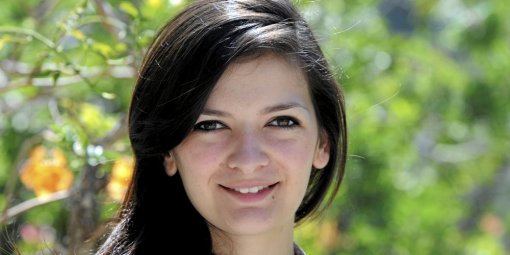
    New to me was the distinctive voice of Marianne Crebassa (above); this comely French-born mezzo-soprano gave a performance of “Parto, parto” from LA CLEMENZA DI TITO that could stand comfortably beside such wonderful versions of this aria as those of Teresa Berganza, Tatiana Troyanos, Anne Sofie von Otter, and Elina Garanca. Ms. Crebassa’s timbre is unique, with a nice duskiness in the lower range, and she sailed thru the coloratura passages with deft surety. Matching the mezzo in expression and poised musical embroidery was the excellent clarinetist Jon Manasse.

    2a4fcf0f033be538df20736eca38e9c6

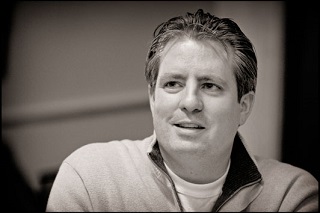
    Simply superb: Peter Mattei (above) sang Count Almaviva’s “Hai gia vinto la causa…” from NOZZE with plush, commanding sound and vivid dramatic inflections, handling the speedy passage-work as the aria rushes to its close with aplomb. A masterful performance!

    MatthewPolenzani

    Matthew Polenzani (above) gave the evening’s most moving singing with his heartfelt “Dalla sua pace” from DON GIOVANNI. Kneeling at the back of the performing space, Polenzani sang with great tenderness and refinement; his touching command of piano nuances, and his wonderfully sincere rendering of the words made for a spell-binding performance. His Idomeneo at The Met cannot get here soon enough. Bravo, bravo, bravo…

    Ms. Martinez and mezzo-soprano Daniela Mack sounded fine in the COSI trio, “Soave sia il vento”, but it was Mr. Mattei’s singing as Don Alfonso that dominated: so rich, firm, and lovingly phrased. An ensemble from CLEMENZA – nicely sung by Christine Goerke, Mlles. Sierra and Crebassa, and Mr. Polenzani – seemed a bit aimless out of context. Moving immediately into Elettra’s aria might have made things seem more cohesive, but instead Ms. Goerke remained onstage, pondering, whilst Mr. Maltman popped out – wine bottle in hand – to sing Don Giovanni’s vigorous “Finch’an del vino”. 

    Ms. Goerke then came forward for Elettra’s “O smania, O furie!” Her vivid declamation was spot on, and   she brilliantly conveyed the character’s dementia in “‘Oreste, D’Ajace”. But the voice tightens as she goes higher up, and so the effect of this mad scene’s climax was somewhat compromised.

    Everyone joined in for the NOZZE DI FIGARO finale,including soprano Kiera Duffy, who had had no real opportunity to shine vocally in the course of the evening.

    Overall, The Illuminated Heart worked quite well. I would have chosen some slightly different pieces, and maybe slightly different singers, and would have included a basso to sing one of Sarastro’s arias. The 90-minute time-span, without intermission, was ideal. Mr. Maestro Langrée’s propulsive pacing and the swift staging transformations from one number to the next made the concert fly by.

  • The Readers

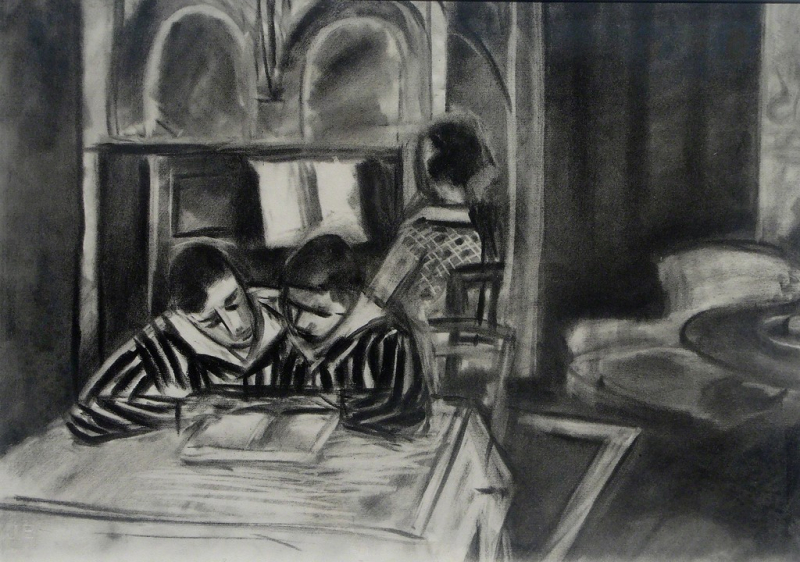
    Matisse The Readers  1933

    The Readers ~ Henri Matisse, 1933

  • Fantastic Finckel

    1200x1200-75

    It’s during the months of High Summer that I find time to listen to music at home. The rest of the year is taken up with live music, and with writing (and reading!) about it. But on these long, hot August afternoons, I am in my cool cavern of a room with CDs playing.

    I have a huge stack of music yet to be listened to – and even larger stacks of un-read books – but one disc that I’d been really looking to hearing was my focus yesterday: a recording by cellist David Finckel of Antonín Dvořák’s cello concerto, paired with Augusta Read Thomas’s 1999 work, Ritual Incantations, and featuring the Taipei Symphony Orchestra conducted by Felix Chiu-Sen Chen. The disc – on the Artist Led label – may be purchased here.

    The familiar Dvořák is – needless to say – beautifully played, and the concerto sounded wonderfully fresh to me. It’s the Thomas that I am savouring now, being of a type of music that is particularly appealing to me. David Finckel premiered Ritual Incantations at Aspen in 1999.

    In March 2015, Augusta Read Thomas was the subject of one of The Miller Theatre’s Composer Portraits. My friend Monica and I were drawn into Ms. Thomas’s musical world, as well as much taken with her as a personality.

    Ritual Incantations opens with solo cello in a fanfare-like summons, followed by a mystical, plaintive passage which Mr. Finckel plays gorgeously. Bells of varying textures are heard in an animated section before the cello takes up a soulful solo; incantatory chimes summon us as to prayer, and the harp lends a feeling of enchantment. Wind voices and cello converse, taking Mr. Finckel’s voice to the depths.

    The music turns lively, urgent and emphatic. There are jabs and sudden bursts from various instruments, and then again the cello sings longingly, rising upwards. A glassy shimmer ends the work abruptly. The other-worldly aspects of the music evoke uncharted distances whilst the passionate beauty of the cello writing wraps itself around the soul. I can’t stop listening to it.

  • Young Dancers from Syria

    12865119_1468299850.7734

    UPDATE: The fund-raising was successful!

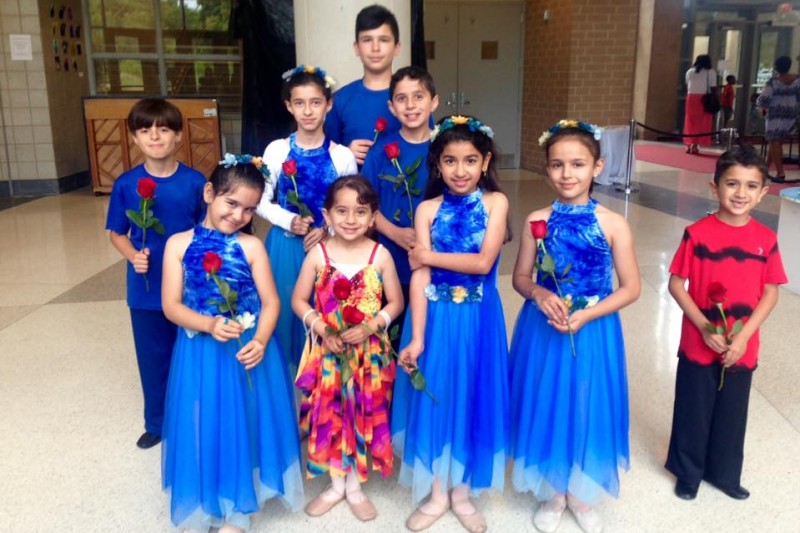
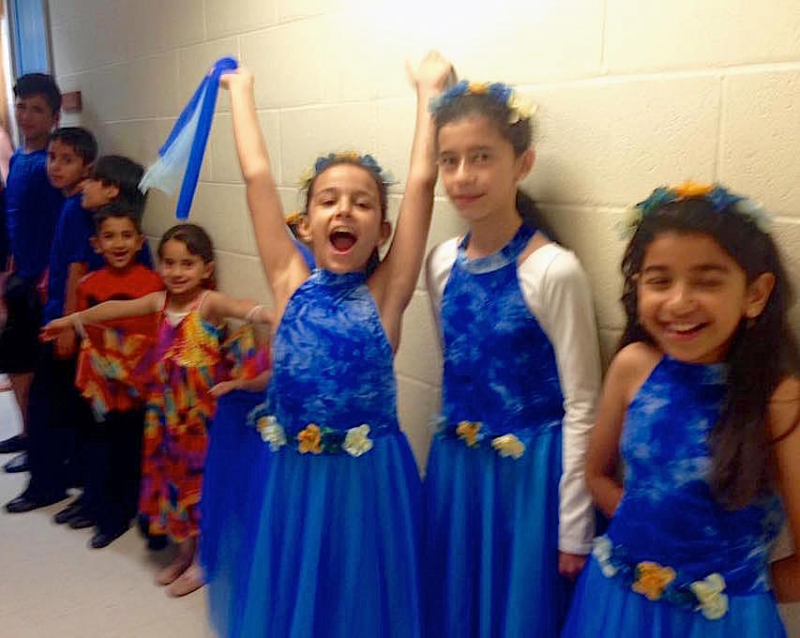
    My dancer/friend Joanna Priwieziencew has created a GoFundMe campaign to help nine youngsters who have been re-settled in Chicago from their native Syria. Over the past couple months, these lovely kids have had dance workshops generously donated by Shawn Lent and other volunteers at Performing Arts Limited; now Joanna’s mission is to enroll them for regular classes in the coming school year.

    Choreographer Brian Carey Chung shared these words in greeting these students: “Good luck, young ones! All of life is within the dance. If you practice, pay attention, and take to heart the music inside you, all of life’s lessons (how to be courageous, generous, disciplined, creative, graceful, a leader who also knows how to follow, etc.) can be learned.”

    12865119_1469399417.4922_updates

    UPDATE: The goal was reached…and the kids are happy. Thanks everyone!

  • Britten’s Endgame

    9007000059671_1

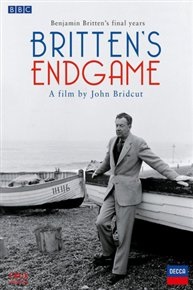
    Tuesday July 19th, 2016 – I pulled this John Bridcut/BBC film off the shelf at the Performing Arts Library at Lincoln Center today, played it immediately on getting home, and found it thoroughly engrossing. The documentary focuses of the final years of the great composer’s life when – despite failing health – he churned out such masterworks as DEATH IN VENICE, the cantata PHAEDRA, and the 3rd String Quartet.

    Archival footage of Britten – conducting, playing the piano, chatting and performing with his life-companion Peter Pears, and greeting Queen Elizabeth II at the Aldeburgh Festival – is interspersed with interviews with both music-world luminaries (Dame Janet Baker, Steuart Bedford, Sir Charles Mackerras, Mark-Anthony Turnage) and people who knew the composer personally or were care-givers (David Hemmings, Sue Phipps, Rosamund Strode, his surgeon Dr. Michael Petch, and the tirelessly dedicated Rita Thomson). Thru their words and the reading of intimate letters, the film gives us a vividly personal portrait of Britten in the last three years of his life. 

    Then there are the superb musical excerpts, seemingly staged in the studio specially for this DVD. Absolutely splendid choral work from the Schola Cantorum of Oxford, including parts of Hymn to the Virgin, written when Britten was 16 years old. Tenor John Graham-Hall is most impressive as Aschenbach in scenes from DEATH IN VENICE; another tenor, Allan Clayton, joins horn player Michael Thompson in some gorgeous passages from the Serenade for Tenor, Horn, and Strings; the Fitzwilliam String Quartet’s ravishing playing of portions of the String Quartet #3 makes us doubly regretful that it was Britten’s last substantial work.

    In a magnificent performance, mezzo-soprano Sarah Connolly is a thrilling Phaedra; her singing is juxtaposed with Dame Janet Baker’s spoken recollections of collaborating with Britten on the cantata’s creation.

    Uk1.31.4

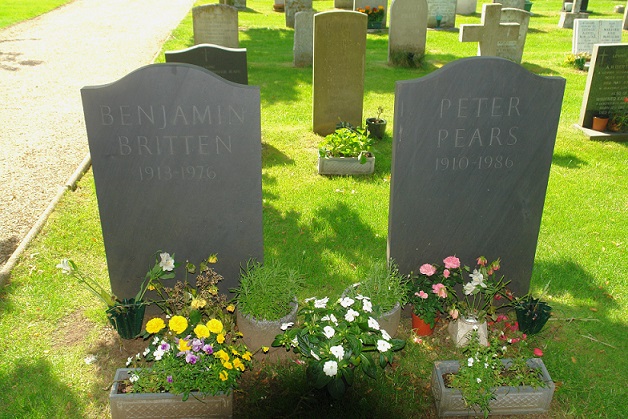
    Britten died of heart disease in 1976 at the age of 63, five years younger than I am now. He is buried next to Peter Pears in the Parish Churchyard, Aldeburgh.