Blog

  • A Quartet of Female Choreographers

    13407164_3092102065116_6567679795283993630_n

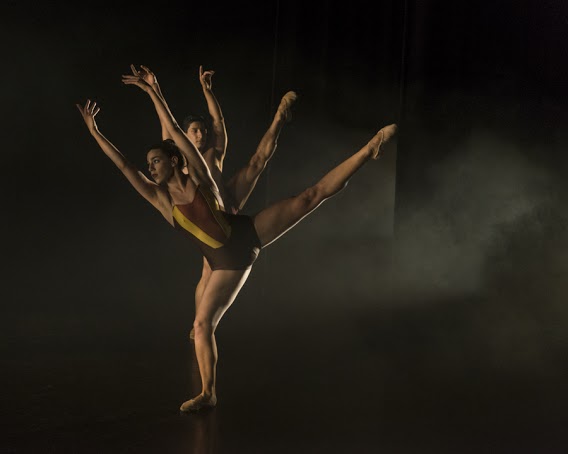
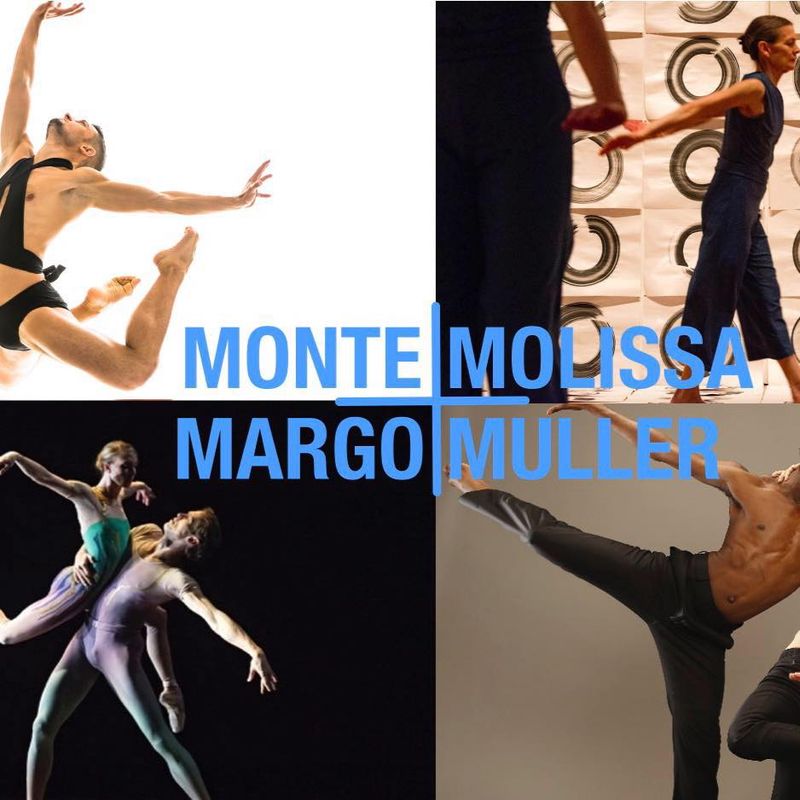
    Wednesday June 15th, 2016 – Works by four prominent contemporary female choreographers were on offer this evening at New York Live Arts. In a well-contrasted program, distinctive dancing and excellent lighting made each piece glow in its own unique way.

    One couldn’t ask for a more engrossing start to an evening of dance than that offered by Molissa Fenley and Company: a duet entitled THE THIRD COAST (Premiere), and MALI, a solo danced by Ms. Fenley. Evocative music by Ryuichi Sakamoto (duet) and Laetitia Sonami (solo), and splendid lighting by David Moodey, were attractive assets to these two works.

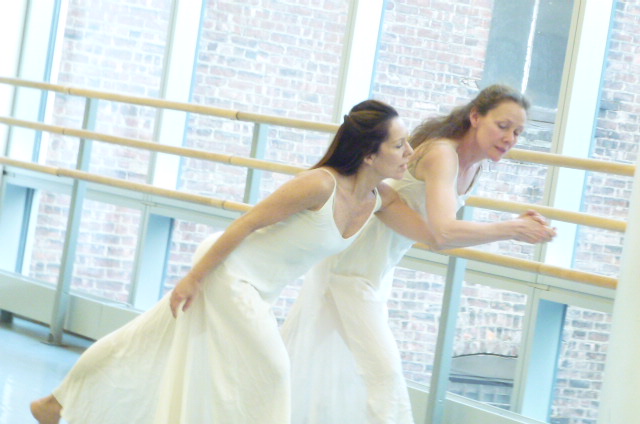
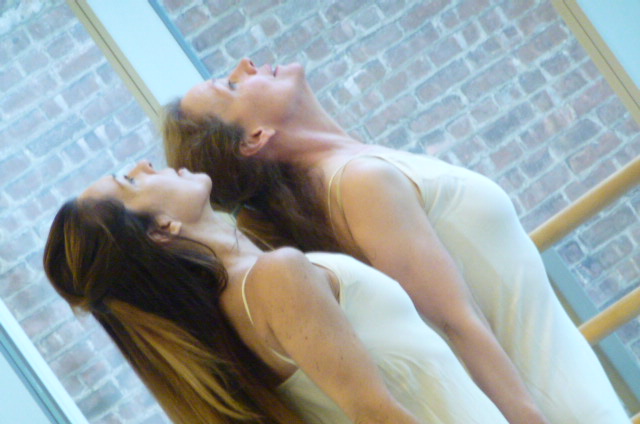
    In a violet world, dancers Christiana Axelsen and Rebecca Chaleff dance a stylized duet in-sync. Their moves and gestures imply a secret language. Dawn-light glows as the two continue to mirror one another. In a second, more animated section – to piano music – the lighting goes sea-green. The two dancers bring a compelling grace to the angular movement.

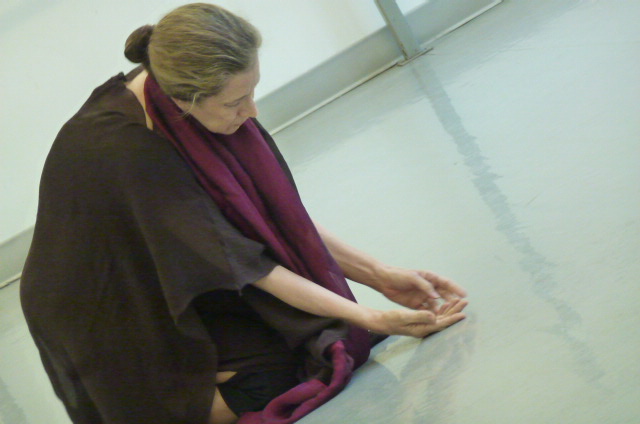
    This mysterious duet leads directly into the solo danced by Ms. Fenley: a captivating experience in every regard as the fusion of the soundscape – clattering, crunching, sloshing – the lighting, and the dancer’s mesmerizing movement held the theatre under a spell. Ms. Fenley’s arms and hands were so expressive, and her sense of commitment gave the work a gorgeous resonance.

    Elisa Monte’s DEXTRA DEI was originally set as men’s quartet: the choreographer’s 1989 response to the devastation of the AIDS epidemic. Ms. Monte has now expanded the work, adding four women to the cast.

    It is a work that is both somber and sexy, full of chiaroscuro effects created by the David Moodey lighting. To atmospheric music by Tibor Szemzo, four men roll onto the stage and form patterns of moving sculpture. The delectable Clymene Baugher rolls on from the opposite corner where she encounters Thomas Varvaro. Their intimate, floor-oriented duet ends in surrender and repose.

    Lithe and supremely feminine, Maria Ambrose appears and is manipulated aloft by the three remaining men; the music is ominous, with deep vocals and bird cries. JoVanna Parks and Shay Bland enter, jungle drums sound softly, reverberating in the rain forest mist. The men withdraw, the woman dance a quartet with fleeting solo passages: an exotic tribal rite of a restless sisterhood.

    The men reappear, repeating the movement motifs that initiated the ballet. Over a sustained note, partnerships form: stylized lifts and turns abound as pulsing music underscores the communal rituals. The work, perhaps just a trifle too long, showed off Monte’s dancers to perfection.

    Margo Sappington’s ENTWINED depicts the melding of bodies and spirits. At once sensual and magical, this on-pointe ballet is set to Erik Satie’s Gnossiennes. I was familiar with this work from having seen Jennie Somogyi and Charles Askegard perform the signature duet from it with Ballet Next in 2011.

    This evening I was particularly delighted to find Lily Di Piazza dancing in the ballet’s opening pas de trois; I remember Lily’s dancing from her SAB days. Ms. Sappington and I had a lovely chat before tonight’s show, and she told me she had originally made this role on Lily. 

    As mists roll by, Lily, Marjorie Fiering, and  Marlon Taylor-Wiles danced with effortless beauty, accenting the classicism of the vocabulary. Marlon’s impressive physique and his powerful charisma were a counterpoise to the elegant feminine allure of the two girls.

    Silken Kelly appears for a solo, danced in pools of light; the lyrical choreography was sublimely articulated by this radiant dancer. The exquisite Chrystyn Mariah Fentroy then joined Mr. Taylor-Wiles for the tender, languid pas de deux; performing with an intimacy which we are permitted to savor, the two dancers fused into a single spirit. The duet’s ensuing, more animated passage gave the dancers space-filling combinations and complex partnering elements.

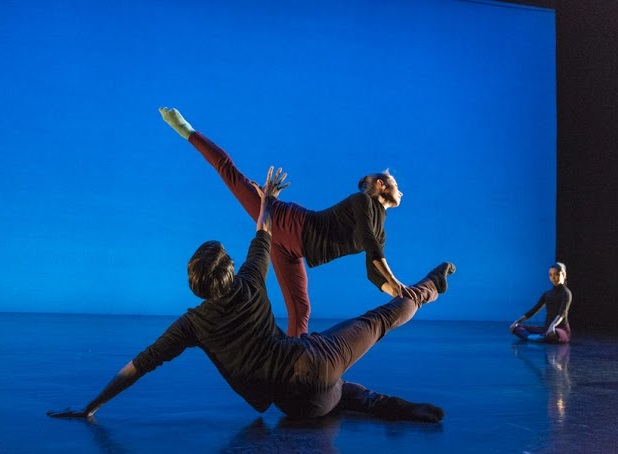
    Earlier this week, I caught a studio run-thru of Jennifer Muller‘s newest creation, WORKING TITLE.  Consisting of four duets – into which interjections by other dancers sometimes occur – the dancing is accompanied live by Yut Chia and Shayne Lebron Acevedo, of Yut and the Hot Four. Ms. Muller told me that she heard Yut playing in the subway station, approached him, and asked if he’d be up for a collaboration. The result is WORKING TITLE, a dancework about relationships that mixes passionate music and dynamic dance. A row of chairs is the setting for the characters, who come and go throughout the ballet, sometimes observing those who are dancing, sometimes isolated, withdrawn, deep in thought.

    In the opening vignette, Alexandre Balmain pursues Michelle Tara Lynch, setting up a duet of passionate turmoil, superbly performed by this alluring pair of dancers. Ms. Lynch’s hair becomes an active participant in the dance as she sought to steer clear of the young Frenchman’s advances. Alexandre’s line, and his lavish extension, continually lure the eye. Elijah Laurant, Ms. Muller’s newest dancer, turns this duet into a trio: his place in the romantic triangle is a bit ambiguous: we can’t tell if he’s just a troublemaker or if there’s some attraction between him and Alexandre…or him and Michelle. This added dramatic aspect keeps things lively.

    Gen Hashimoto then tries to interest Shiho Tanaka. Who could say “no” to Gen? But Shiho does. Their duet becomes tempestuous: Shiho’s solo marks her desire to be left alone, while Gen covers the space with his trademark sexy, bad-boy bravura. As Shiho continues to resist, the music pounds out a big beat.

    Sonja Chung, Elise King, and Seiko Fujita takes seats to observe the denouement of Gen’s attempted seduction: he and Shiho carry on – to no avail – as the music turns bluesy. 

    Index

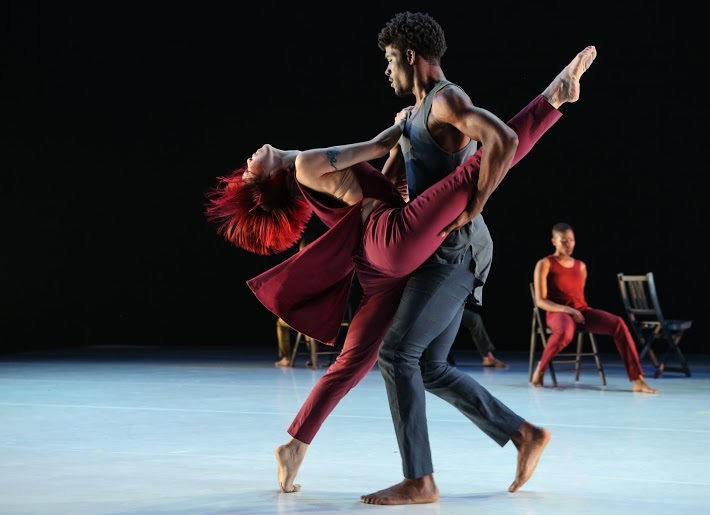
    Sonja Chung (above, in a Julie Lemberger photo), a phenomenal dancer and presence, meets her match in height and allure in Elise King. As the two tall women veer between attraction and avoidance, emotions well up and feelings are hurt. Seiko Fujita tries to intervene – again, we don’t know her motive – but Sonja and Elise leave things unsorted.
    Index2

    Suddenly, Elijah Laurant sweeps Seiko Fujita off her feet (Julie Lemberger photo above) as they go wild in a high-energy duet, ripe with power and passion. 

    All the dancers then take seats, to ponder their solitary desires. Gen has another vivid solo, as does Sonja, and then a bit more brilliance from Seiko. All seek resolution. Sonja and Elise move off together; Gen finally persuades Shiho of his sincerity. We can’t be quite sure of the Michelle-Alexandre-Elijah situation. Seiko walks forward alone as the lights dim.
  • The Lovers

    Couple-orlando_2

    “With drooping wings, ye cupids come
    and scatter roses on their tomb.
    Sweet and loving were their hearts…
    Keep here your watch, and never part.”

  • The Lovers

    Couple-orlando_2

    “With drooping wings, ye cupids come
    and scatter roses on their tomb.
    Sweet and loving were their hearts…
    Keep here your watch, and never part.”

  • At Catherine Gallant’s Rehearsal

    L1730590

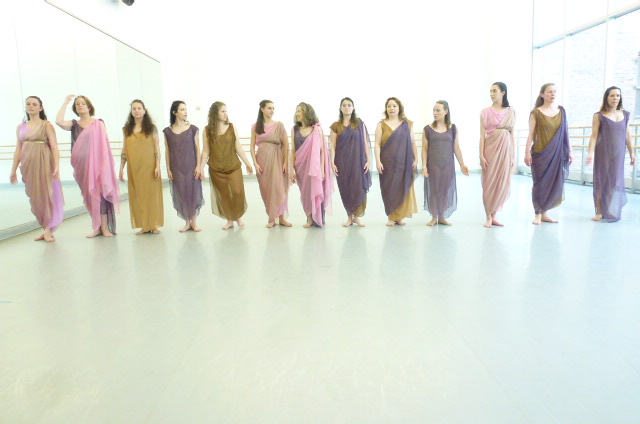
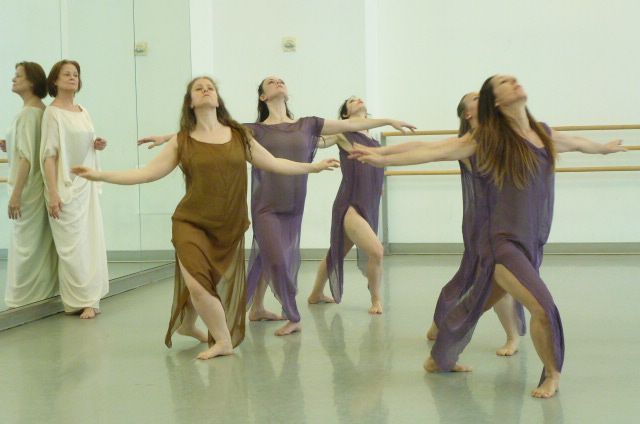
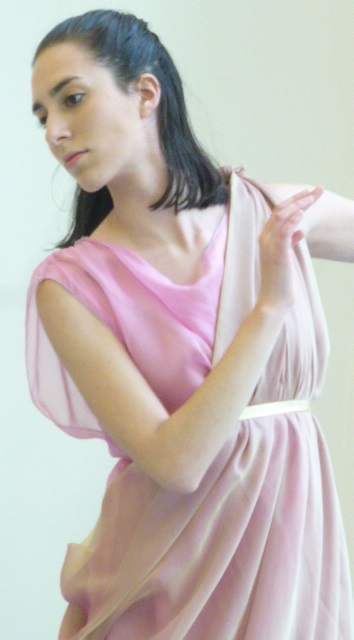
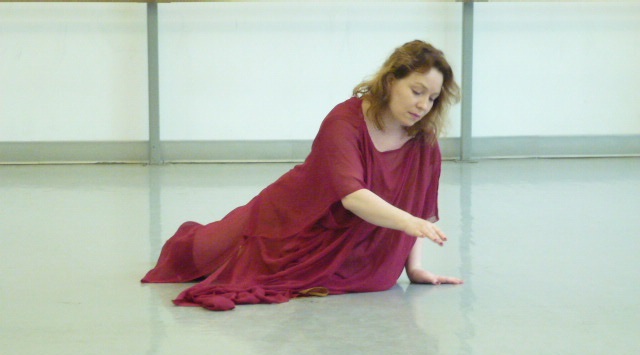
    Saturday June 11th, 2016 – I stopped in at the Ailey Studios this afternoon where Catherine Gallant and her very attractive troupe of dancers were in rehearsal, preparing for their upcoming performances at Danspace (St. Mark’s Church, 131 East 10th Street. New York, NY). Performance dates are June 23rd – June 25th, 2016, and you can purchase tickets here.

    Retrograde Universe is the title of this world-premiere production presented by Catherine Gallant/DANCE and Dances by Isadora, led by Artistic Director and Choreographer Catherine Gallant. Retrograde Universe includes four pieces by Gallant and three Isadora Duncan works. From Isadora, we will have an historical re-animation of Duncan’s Beethoven No. 7, which has not been performed since 1979; Three Scriabin Etudes, danced by Kristen Foote of the Limón Company on opening night; and Valse Brillante. Gallant’s Retrograde UniverseFinally, The Secret and Meeting #12 will show the contemporary aspects of the Company. The performance will feature musicians Christina Courtin and Yegor Shevtsov, and a visual creation from Nadia Lesy.

    In observing these lovely women today – going about their work with such dedication and such beauty of movement and expression – one feels a direct connection both with the well-spring of modern dance and with the indomitable feminine spirit. Gallant’s company is a collective of generational diversity and highly individual personalities molded into a community by their shared devotion to dance. 

    Today’s rehearsal included detailed work on some of the pieces to be shown at Danspace as well as a run-thru of the program. The woman swiftly changed costumes between works, while speaking quietly to one another and sharing a feminine bond: the atmosphere serious, but also light of heart and spirit.
    Here are some images that I was able to capture in the studio; much of the dancing was simply too fast-paced for me to capture, but I think the distinctive personalities of this bountiful band of women show thru.

    L1730455

    L1730489

    L1730541

    Ella Lang

    L1730657

    Francesca Todesco in Isadora Duncan’s Mother

    L1730671

    L1730687

    Janete Gondim and Eleanor Bunker in Catherine Gallant’s The Secret

    L1730697

    Janete and Eleanor in The Secret

    L1730706

    Eleanor Bunker

    L1730721

    Janete and Eleanor in The Secret. I was particularly moved by this dancework, and look forward to writing more about it after seeing it in performance.

    L1730737

    Michelle Cohen in Retrograde Universe

    L1730746

    The ensemble in Retrograde Universe

    L1730753

    Michelle Cohen

    L1730775

    Loretta Thomas

    L1730766

    Loretta Thomas

    L1730801

    Catherine Gallant

    L1730825

    Loretta Thomas

    L1730834

    Loretta Thomas

    L1730886

    Michele Cohen, Janete Gondim, and Margherita Tisato

    L1730889

    Catherine Gallant

    L1730913

    L1730925

    L1730931

    L1730946

    Michelle Cohen

    L1730952

    Catherine Gallant, Michelle Cohen

    L1730956

  • Recordare

    Angel

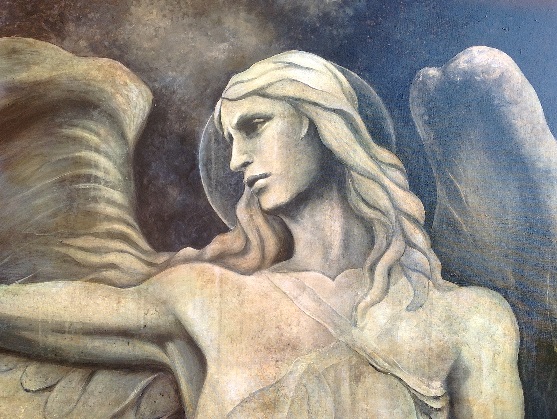
    Recordare, Jesu pie,
    quod sum causa tuae viae:
    ne me perdas illa die.

    Quaerens me, sedisti lassus;
    redemisti crucem pacem:
    tantus labor non sit causas.

    Juste judex ultionis:
    donum fac remissionis
    ante diem rationis.

    Recordare – Verdi~Messa da Requiem – Luba Organasova & Anne Sofie von Otter


  • NY Phil: THE PLANETS + Williams’ Tuba Concerto

    PJ-BW140_FIXBAG_DV_20140723162140

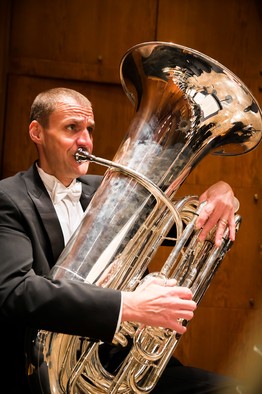
    Above: Alan Baer of The New York Philharmonic in a Chris Lee photo

    Saturday May 28th, 2016 – Aside from Mars, I am not really a fan of the famous Gustav Holst work The Planets (composed in 1914-1916). I remember many years ago tuning in to a radio broadcast of the piece and finding my interest diminishing steadily once the spaceship left Mars for Venus; I never made it back to Earth.

    Tonight, a chance to hear The Planets in concert at Geffen Hall provided an opportunity to test my earlier reaction. Under the baton of David Robertson, The New York Philharmonic‘s performance of this sprawling epic was nothing short of marvelous. But the music itself just doesn’t reach me, beyond a surface appeal – and despite the composer’s obvious skill in orchestration. And so – yet again – upon departing Mars, I felt lost in space. 

    The remaining six movements do have their very appealing passages, of course, but also their longueurs. The only time I truly connected with any of the music was when the theme of the hymn ‘I Vow To Thee My Country strikes up as Jupiter looms in the sonic heaven. The stay on Uranus seemed endless: not much going on there. I simply couldn’t wait for this trip thru the solar system to end. Maestro Robertson had the huge forces doing his bidding to fine effect, and making a splendid sound; featured violin solos from Sheryl Staples were saving graces on this journey to nowhere. 

    But enough grumbling, lest I be mistaken for Bernie Sanders; the first half of the program was indeed thoroughly enjoyable.  

    Edward Elgar’s Introduction and Allegro (composed in 1905) opened the evening; it’s a beautiful piece and would make a great ballet score (maybe it’s been done?). The composer gives a prominent role to a string quartet, setting them before the full string contingent of the orchestra. As this quartet consisted of Sheryl Staples, Lisa Kim, Cynthia Phelps, and Carter Brey, the playing was remarkable – I especially was entranced by a solo from the viola of Ms. Phelps. When the Philharmonic strings played en masse, the richness of sound was truly savorable.

    The tall and slender Alan Baer then appeared with his silver tuba for John Williams’ Tuba Concerto. This rather brief work (just over 15 minutes in length) was very pleasing from start to finish, for Mr. Baer’s sound has a warm glow and a toothsome dark-chocolate richness in the lower range.

    The opening passages made me think of a sea shanty: good-natured, a bit brusque, with fog-horn low notes along the way. Later the tuba converses with the French horn, and in the concerto’s second movement, the tuba sounds deep phrases over a horn chorale before embarking on a polished cadenza.

    The violins strike up. The oboe has a theme that is passed to the flute, and then the flute and tuba talk to one another. After another – briefer – tuba cadenza, fanfares sound and there is a cabaletta of sorts, with trumpets giving propulsion and the tuba singing some skittish coloratura. Harp and timpani have a part to play: another inventive mix on the composer’s part. Swift-rising scales for the tuba herald a jovial conclusion.

    Philharmonic audiences love it when artists from the orchestra step forward in featured roles; there was lovely enthusiasm for the string quartet after the Elgar, and Mr. Baer received hearty cheers from the crowd, as well as the admiring applause of his colleagues.

  • NY Phil: THE PLANETS + Williams’ Tuba Concerto

    PJ-BW140_FIXBAG_DV_20140723162140

    Above: Alan Baer of The New York Philharmonic in a Chris Lee photo

    Saturday May 28th, 2016 – Aside from Mars, I am not really a fan of the famous Gustav Holst work The Planets (composed in 1914-1916). I remember many years ago tuning in to a radio broadcast of the piece and finding my interest diminishing steadily once the spaceship left Mars for Venus; I never made it back to Earth.

    Tonight, a chance to hear The Planets in concert at Geffen Hall provided an opportunity to test my earlier reaction. Under the baton of David Robertson, The New York Philharmonic‘s performance of this sprawling epic was nothing short of marvelous. But the music itself just doesn’t reach me, beyond a surface appeal – and despite the composer’s obvious skill in orchestration. And so – yet again – upon departing Mars, I felt lost in space. 

    The remaining six movements do have their very appealing passages, of course, but also their longueurs. The only time I truly connected with any of the music was when the theme of the hymn ‘I Vow To Thee My Country strikes up as Jupiter looms in the sonic heaven. The stay on Uranus seemed endless: not much going on there. I simply couldn’t wait for this trip thru the solar system to end. Maestro Robertson had the huge forces doing his bidding to fine effect, and making a splendid sound; featured violin solos from Sheryl Staples were saving graces on this journey to nowhere. 

    But enough grumbling, lest I be mistaken for Bernie Sanders; the first half of the program was indeed thoroughly enjoyable.  

    Edward Elgar’s Introduction and Allegro (composed in 1905) opened the evening; it’s a beautiful piece and would make a great ballet score (maybe it’s been done?). The composer gives a prominent role to a string quartet, setting them before the full string contingent of the orchestra. As this quartet consisted of Sheryl Staples, Lisa Kim, Cynthia Phelps, and Carter Brey, the playing was remarkable – I especially was entranced by a solo from the viola of Ms. Phelps. When the Philharmonic strings played en masse, the richness of sound was truly savorable.

    The tall and slender Alan Baer then appeared with his silver tuba for John Williams’ Tuba Concerto. This rather brief work (just over 15 minutes in length) was very pleasing from start to finish, for Mr. Baer’s sound has a warm glow and a toothsome dark-chocolate richness in the lower range.

    The opening passages made me think of a sea shanty: good-natured, a bit brusque, with fog-horn low notes along the way. Later the tuba converses with the French horn, and in the concerto’s second movement, the tuba sounds deep phrases over a horn chorale before embarking on a polished cadenza.

    The violins strike up. The oboe has a theme that is passed to the flute, and then the flute and tuba talk to one another. After another – briefer – tuba cadenza, fanfares sound and there is a cabaletta of sorts, with trumpets giving propulsion and the tuba singing some skittish coloratura. Harp and timpani have a part to play: another inventive mix on the composer’s part. Swift-rising scales for the tuba herald a jovial conclusion.

    Philharmonic audiences love it when artists from the orchestra step forward in featured roles; there was lovely enthusiasm for the string quartet after the Elgar, and Mr. Baer received hearty cheers from the crowd, as well as the admiring applause of his colleagues.

  • Joffrey Ballet Concert Group @ NYLA

    2016 St. Saens 4th mvmt. fouette jump Lindsey Felix, Daniel White, Genaro Freire JBS_CONCERT GROUP_5-25-2016_by Lucas Chilczuk-1277

    Above: Lindsey Felix, Daniel White, and Genaro Friere of the Joffrey Ballet Concert Group in Gerald Arpino’s Suite St. Saens; photo by Lucas Chilczuk

    Friday May 27th, 2016 – The JOFFREY BALLET CONCERT GROUP, under the Artistic Direction of Davis Robertson, performing a mixed program of classics (Gerald Arpino’s Suite St. Saens, and Balanchine’s Valse Fantaisie) along with newly-created pieces by Gabrielle Lamb, Robert Jeffrey, and Dwight Rhoden plus an Asaf Messerer pas de deux à la Russe to music by Rachmaninoff which brought down the house. A very attractive company of dancers held the audience in an attentive, appreciative state; excellent lighting (David Moodey) enhanced each ballet as this highly enjoyable program of dance unfolded before us. 

    Valse Fantaisie - Shaina Wire & Sergio Arranz saute de chat

    Above: Shaina Wire and Sergio Arranz in Valse Fantasie; photo by Lucas Chilczuk

    To start a ballet evening with Balanchine is always a good thing, and Valse Fantaisie – to the intoxicating Glinka score – engaged us immediately. Stacey Caddell has staged the ballet on the young Joffrey dancers, and they did very nicely by it. Four lovely ballerinas sailed thru the lyrical (and sometimes tricky) Balanchine choreography with a sense of joy; in the principal roles, Shaina Wire and Sergio Arranz were appealing in both appearance and technique, displaying a fine mixture of nobility and charm.

    Mr. Arranz was back onstage moments later, in silhouette, for the opening of Robert Jeffrey’s Confianza. This intimate, moody pas de deux is set to a collage of music by Benjamin Brown, Steven Stern, Eric Satie, and Max Richter. The choreographer gives the dancers – Victoria Santaguida and Mr. Arranz – complex and demanding partnering motifs which the couple handled with persuasive aplomb, bringing tenderness tinged with sensuousness to their dancing.

    And So It Goes - Sierra French & Genaro Freire in ecarte pull

    Above: Sierra French and Genaro Friere in And So It Was…photo by Lucas Chilczuk

    Dwight Rhoden’s And So It Was… is danced to Bach’s Partita #2 in D-minor. As smoke wafts across the dramatically-lit stage, a sexy atmosphere is developed with the seven boys in silky briefs and the girls sleekly costumed. The choreographer’s sense of musicality serves up a succession of duets – sometimes with all seven couples duetting at the same time – with an endless flow of dancers coming and going. As is so often the case in using Bach’s music, the ballet eventually began to feel repetitive; the dancers were able to sustain this longish work thru their personal attractiveness and commitment.

    Tessellations - Shayla Hutton & Sergio Arranz arabesque

    Above: Shayla Hutton and Sergio Arranz in Tesselations; photo by Lucas Chilczuk

    Gabrielle Lamb’s Tessellations provided a wonderful change of pace; using a brilliant mix of music by The Amestoy Trio and Cat Power, Gabrielle’s ballet at first seems to be just another ‘loner vs community” narrative, but it is far more quirky – ironic, moving, and witty by turns – and was expressively danced by the Joffrey troupe. 

    The dancers wear dark clothing and socks. The Amestoy Trio’s fresh meshing of gypsy, Parisian, and Latino influences is a kick to hear, and Cat Power’s vocals for a pas de deux has its own slightly gritty appeal. Periods of silence allow us a bit of reverie before the dancing moves on. The dancers alternately dance and observe, forming fleeting cliques and chains, standing in ordered designs, communicating in gestures, and creating a world in which alternating currents of sentiment and low-key street savvy hold us under a spell. It’s been a while since I’ve seen any of Gabrielle’s work, and this was really refreshing to experience.

    Spring Waters - Mariana Perez and Jon-Paul Hills ecarteJBS_CONCERT GROUP_5-25-2016_by Lucas Chilczuk-813

    Above: Mariana Perez and Jon-Paul Hills in Spring Waters; photo by Lucas Chilczuk

    Asaf Messerer’s Spring Waters, the boyish and muscular Jon-Paul Hills wowed the audience with the fearless strength of his partnering, placing his ballerina – Mariana Perez – in improbable lifts with the assurance of an Olympic athlete, catching her as she rushes to his arms and sweeping her overhead. The duet ends with a spectacularly high lift as Mr. Hills rushes across the stage and into the wings, bearing Ms. Perez aloft like an exulted icon: the audience simply went nuts as they sped away.  

    Gerald Arpino’s Suite Saint-Saëns was the closing number this evening, a large-scale work filled with movement and alert to the music’s many fragrances. The dancers enter one by one, with brisk jetés and meeting up in fleeting partnerings. Lindsey Felix, a featured soloist in the first two movements (Caprice Valse and Serenade) was agile and lovely to watch.

    The Serenade has a dreamier quality; four couples to start, with other dancers joining. The simple act of walking takes on its own resonance. An intimate pas de trois for Ms. Felix, Maria Sol Maratin, and William Hall evolves beautifully as other dancers come and go.

    A march-like theme jolts us, but soon settles in to a Minuet with a ‘classic’ pas de deux – and another big lift – before hastening on to the concluding Pas Redoublé which features leaping boys and even a set of fouetté turns. The music is bouncy, the dancing exuberant.

    Amid all the bustle and swirl of this wonderful ballet, a dancer who had not appeared earlier in the evening – Haojun Xie – made a very fine impression with his lithe jump and sincere presence.