Blog

  • Sumptuous Strings @ Chamber Music Society

    Photo

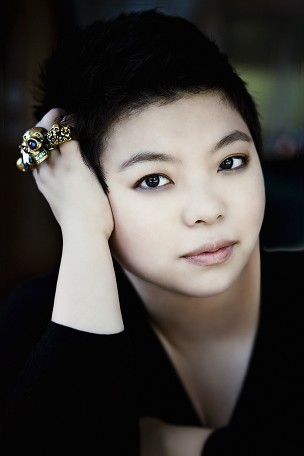
    Above: violist Yura Lee

    Sunday May 22nd, 2016 – Bringing together a sextet of first-class string players, Chamber Music Society of Lincoln Center presented the final program of their Alice Tully Hall season (a program which will be repeated on Tuesday, May 24th); music by Richard Strauss, Brahms, and Dvořák was on offer.

    In Richard Strauss’s intimate opera CAPRICCIO, a rehearsal of Flamand’s newly-composed string sextet is in progress as the curtain rises on the salon of the Countess Madeleine’s château. As the opera evolves, the Countess will be called upon by her rival suitors – the composer Flamand and the poet Olivier – to answer the eternal question, “Which is the greater art, poetry or music?”, and thus to determine which of the two gentleman she favors. The opera, which includes the beloved Moonlight Music and ends with the Countess’s ravishing final aria, has been a vehicle for such beloved sopranos as Lisa Della Casa, Dame Kiri Te Kanawa, and Renee Fleming.

    It was a real treat to hear the string sextet this evening in a concert setting, and especially as it was given such a radiant performance by today’s ensemble…an ensemble of stars. Erin Keefe, wearing a striking pleated gown of gunmetal grey which set off her auburn hair, displayed (all evening, really) her ability to spin out magical phrases over a vast dynamic spectrum: she can taper her tone down to a shimmering piano/pianissimo only to soar in full-bodied melody moments later. Across from Ms. Keefe, Yura Lee, in a deep persimmon shawl and be-jeweled stilettos, summoned heartfelt sounds from her viola. A delicious “trembling” motif heralded Nicholas Canellakis’ solo, with his lustrous depth of tone.

    As Wu Han remarked in a program note, one of the things players love most about performing string sextets is: you have a mate playing the same instrument sitting next to you. And when – as in today’s Strauss – these are musicians of the calibre of Ani Kavafian (violin), Matthew Lipman (viola), and David Finckel (cello), the level of music-making is off the charts. Such gorgeous and immaculate blendings of sound, and such congenial lyricism.

    From the Strauss, so deeply engaging both musically and emotionally, the players turned to Johannes Brahms’ String Quintet No. 1. This piece was a particular favorite of the composer himself, or at least that is the impression he gave in writing this to his publisher: “You have never before had such a beautiful work from me.”

    Ms. Kavafian took the lead here, playing with her signature grace and expressiveness; she and Ms. Keefe formed a de luxe violin duo, their voices mingling with engaging clarity and savoring their many pinpoint dynamic nuances. In the melodically abounding first movement of this work, Yura Lee’s viola sings – three times – a melody that brings to mind some of the composer’s most beloved lieder. At one point, Yura and Ani ‘converse’ with one another. Nick Canellakis’s cello gives the music its resonant grounding, whilst Mr. Lipman’s evident enjoyment of the music he is playing makes him a musician as pleasing to watch as to hear. 

    In the quintet’s second movement, the instrumental voices created a lovely chorale-like atmosphere; a more animated interlude soon gives way to a return to wistfulness, and then fades mysteriously away. For the concluding Allegro energico, the five players could cavort amiably thru the rhythmic shifts with zestful playing and much mutual eye-contact as the piece sailed on to its merry conclusion.

    Following the interval, Antonin  Dvořák’s Sextet in A-major, with its goodly portion of folkish elements, found all six players on optimum form. Right from the start, with Erin Keefe’s shining tone in the opening theme, one could sense we were in for a special treat. Nick Canellakis took up the melodic thread as the Allegro moderato proceeded thru some very imaginative harmonies.

    [A cellphone went off, but at least it was between movements…and it was a ‘classical-music’ ringtone.]

    In the second movement, Dumka: Elegie; Poco allegretto, a dance which is at once both droll and dolorous is heard. The music has a sad gypsy lilt. David Finckel’s cello sets up a treading motif, over which a lament from his fellow players suggests a walk to the graveyard. In a swift change of mood, the Furiant: Presto is lively as fleeting snatches of melody pass from voice to voice. A swaying feeling pervades the music.

    The resonantly poetic sound of Matthew Lipman’s viola sets forth the theme of the final movement; variations follow where we could again savour the silver-lit sheen of Ms. Keefe’s playing and delight once more in her ability to colour phrases with her dynamic gradations.

    A sprightly dance gives way to a thoughtful cello theme from Mr. Canellakis; things intensify before subtle turns of phrase draw us to a lingering fade-out. Ms. Keefe weaves a new variation on the melody as Mr. Finckel and the violas offer plucking support. And then a high-energy dance bursts forth, only to accelerate to double-time before an urgent rising motif sends us on to a grand finish.

    The players were called out twice by the delighted audience; both the players and their admirers seemed reluctant for the concert – and the season – to end.

    Now we will have a hiatus from CMS concerts, though the musicians we’ve come to love will stay busy playing here, there, and everywhere worldwide. For the second year, the Society will offer a Summer festival at Alice Tully Hall – details here – which will help to sustain us til the Autumn.

    The Repertory:

    The Participating Artists:

  • Ballet Academy East ~ Spring Performance 2016

    Facebook_logo1

    Friday May 20th, 2016 – Students from Ballet Academy East’s Pre-Professional Division took the stage at the Gerald W. Lynch Theater tonight to dance a mixed program marking the end of term.

    Alan Hineline’s ravvishing ballet Sans Nuages opened the evening, and as soon as it ended my companion Claudia Schreier and I agreed that we wanted to see it again…right away. It’s that wonderful. The ballet is set to the Serenade for Strings in E, Opus 22 by Antonín Dvořák and is danced by an ensemble of fifteen, including a principal couple and female soloist; we had seen a preview of it in March.

    With the girls in sumptuous creamy tutus, the ballet has a romantic swirl to it. The structure and musicality of Mr. Hineline’s choreography – and the way it showed the dancers always to best advantage – make it a ballet that companies everywhere should want to acquire. Excellent dancing from Petra Love in the soloist role and Yuki Takahashi and Alejandro Andrade in the central pas de deux; the entire cast in fact danced beautifully, clearly inspired by the lovely Dvořák score.

    Darla Hoover created two brief ballets for the youngest dancers from BAE; in setting the works to Salieri (Une Petite Introduction) and Bach (Un Petit Menuet), Darla wisely sets a standard of musical choices that will hopefully inspire these youngsters both in their dancing and in their lives. (The Bach melody, incidentally, was borrowed for a 1960s pop hit, Lover’s Concerto, by The Toys; it was later taken up by The Supremes.)

    Slightly older dancers took the stage for Jenna Lavin’s Gossec’s Gavotte, to music composed by François-Joseph Gossec. Central to this piece was a a solo turn for the petit danseur Tristan Massa; his charming performance won the hearts of the audience. 

    Following an intermission, TO BE CONTINUED…, Jenna Lavin’s second work on the program, found five of the advanced dancers backed by a younger corps de ballet. Ms. Lavin gets an extra  bouquet of roses for choosing music of Henry Purcell, a composer whose work simply cries: “Dance!”

    In this “blue” ballet, Alejandro Andrade gave a truly impressive display of male bravura dancing; he also partnered each of the four main girls in well-constructed duet passages. Mr. Andrade’s performance brought down the house.

    Alan Hineline’s de l’innocence brought forth pianist Steven Mitchell to perform Franz Schubert’s 16 German Dances. This very pretty ballet featured spacious dancing from Tallison Costa, four soloists, and a corps de ballet of ten. Mr. Hineline’s choreography flows nicely on the music here, as dancers in varying combinations sweep on and rush away in a succession of finely-shaped vignettes. Once again, the choice of music contributed greatly to the overall enjoyment of the program.

    To close this evening, the third act of Coppélia, choreographed ‘after Petipa’ by Roger Van Fleteren (Alabama Ballet’s Associate Artistic Director) was performed by the BAE dancers with handsome sets and costumes on loan from Alabama Ballet.

    Every time I hear music from Coppélia, I recall my own very brief ballet career. Watching this evening’s re-creation was actually quite a nostalgic experience for me: I found myself wondering where my dancing mates from so long ago are now, especially TJ.

    The large cast, skillfully deployed by Mr. Van Feteren in the limited stage space, all entered into the spirit of this naive, musically brilliant ballet. Mary Watters built a real character as Swanhilda, her bridal bouquet trembling in her hands until Franz said “I do.” The ballerina showed lovely musicality in her solo, with its musical hesitations mirrored by subtle pauses in her dancing. Mr. Andrade, in addition to his commanding virtuosity, showed himself to be a real stage creature with his easy, affable stage demeanor. Petra Love’s lyrical dancing as Dawn and the poetic reverie of Yuki Takahashi’s Prayer both reflected lovingly on the music, and Joseph Marlborough was the authoritative Burgermeister.

    As the unstoppable joy of the Delibes finale propelled the dancers on to the finish line, Ms. Watters reeled off an attractive set of fouettés whilst Mr. Andrade leapt and swirled about the stage with unabashed vitality.

  • Silberne Rose

    Crespin Marschallin

    Regine Crespin in the closing moments of Act I of DER ROSENKAVALIER.

    Regine Crespin as The Marschallin ~ end of Act I – Buenos Aires 1961


  • The Last Song of Richard Strauss

    Jeritza strauss

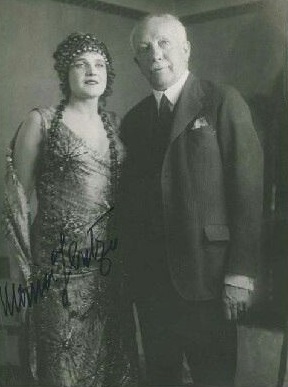
    Above: Maria Jeritza, in costume for The Egyptian Helen, with Richard Strauss

    Richard Strauss’s Vier letze lieder were for many years thought to have been the composer’s last completed work. But in November of 1948, the composer wrote a song entitled Malven (“Mallows”); he dedicated it to soprano Maria Jeritza and sent her the only known copy.

    The manuscript turned up Mme. Jeritza’s papers following her death in 1982. Read an article about the discovery of the Malven here

    The world premiere of Malven was given at a New York Philharmonic concert (that I attended) in 1985. Dame Kiri Te Kanawa was the first to sing the song in public; as Malven had never been orchestrated, Dame Kiri was accompanied by pianist Martin Katz. The program further included the soprano’s sterling performance of the Vier letze lieder, conducted by Zubin Mehta.

  • Encore: ELEKTRA @ The Met

    Mask-of-agamemnon

    Above: The Mask of Agamemnon

    Saturday April 30th, 2016 matinee – Since ELEKTRA is one of my favorite operas – sometimes I think it is my favorite opera – I planned to see The Met’s new production of it once, and then to hear it again from a score desk.

    Some people had issues with the voices of Nina Stemme and Adrianne Pieczonka at the production’s Met premiere on April 14th: squally, shrill, and flat were among descriptive words I heard being tossed about. There were also complaints that Waltraud Meier, as Klytemnestra, was “inaudible” or at least seriously under-powered vocally. So when my friend Dmitry and I attended the second performance on April 18th, we were pleased to find that both Stemme and Pieczonka sounded much better than we’d been expecting, and that Meier, though vocally restrained when compared to such past exponents of the role as Resnik, Rysanek, Fassbaender, Christa Ludwig, or Mignon Dunn, was able to make something of the music thru diction and vocal colour.

    This afternoon, the three principal women all seemed rather out of sorts vocally. Stemme sounded frayed and effortful, the highest notes sometimes just a shade flat and her vibrato more intrusive than at the earlier performance. Ms. Pieczonka was likewise on lesser form, tending to sound shrill under pressure, and the voices of both sopranos seemed smaller and less free that I remembered. Ms. Meier was – honestly (and I am a big fan of hers) – nearly inaudible much of the time; a lot of her verbal detail didn’t penetrate the orchestra. (Since the performance was being broadcast, undoubtedly Ms. Meier made a much more vivid impression over the airwaves).

    Stemme and Pieczonka did achieve a higher level as the afternoon wore on; their most exciting singing came after the murder of Aegisth and on thru to the end of the opera. But compared to their earlier performance, they were both a bit disappointing. Of course, we have to take into account that these are two of the most fearsome and challenging roles in the soprano repertoire, and are being sung over a huge orchestra in a vast space. The wear and tear on their instruments must be incredible.

    The audience at large were undeterred by concerns over vocal matters, and they lustily cheered the three women at the curtain calls; the ovation for Ms. Stemme – well-merited for her generosity and courage – was enormous, and the house lights were turned on so she could see everyone standing and screaming for her.

    For me, it was the opera itself – and Esa-Pekka Salonen’s conducting of it – that made the performance memorable. The orchestra played spectacularly, and if Maestro Salonen sped thru some of the music (the Recognition Scene seemed really fast) it sort of added to the sense of exhilaration I was experiencing just from hearing the opera live again. 

    Eric Owens made an outstanding impression as Orestes today; his first lines established a powerful and rather creepy vocal presence, and at “Lass den Orest…” he was truly splendid. He has the right amplitude for this music in this house, and was deservedly hailed at his solo bow. 

    Special mention to Bonita Hyman for her rich, deep contralto singing as the First Maid, and to the remarkable Roberta Alexander, who again made such a moving impression as the Fifth Maid, a Chéreau ‘invention’ that paid off handsomely.

    Metropolitan Opera House
    April 30th, 2016 Matinee

    ELEKTRA
    Richard Strauss

    Elektra....................Nina Stemme
    Chrysothemis...............Adrianne Pieczonka
    Klytämnestra...............Waltraud Meier
    Orest......................Eric Owens
    Aegisth....................Burkhard Ulrich
    Overseer...................Susan Neves
    Serving Woman..............Bonita Hyman
    Serving Woman..............Maya Lahyani
    Serving Woman..............Andrea Hill
    Serving Woman..............Claudia Waite
    Serving Woman..............Roberta Alexander
    Confidant..................Susan Neves
    Trainbearer................Andrea Hill
    Young Servant..............Mark Schowalter
    Old Servant................James Courtney
    Guardian...................Kevin Short

    Conductor..................Esa-Pekka Salonen

  • Carter Brey: Schumann @ The NY Phil

    Tumblr_m2ozpelCxd1qa028to1_1280

    Above: NY Philharmonic principal cellist Carter Brey, with his colleague Eileen Moon

    Thursday April 28th, 2016 – Performances of Robert Schumann’s cello concerto seem to be something of a rarity, so I was glad of an opportunity to hear it at The New York Philharmonic tonight. I always love to see the orchestra’s principal players stepping out for a soloist turn. Carter Brey’s playing was most enjoyable, as was watching him play; his colleagues swamped him with affectionate applause as he took his bows.

    A new work by Franck Krawczyk opened the concert. I’m fairly open to new music; when new works are programmed, I am always hoping for two things: that the composer might go beyond good craftsmanship and somehow touch the soul, and that there would be something to remember in the music. I found both tonight in Mr. Krawczyk’s Après, having its world premiere in these performances.

    Both my companion and I felt a sense of narrative in Après: she envisioned a scene in nature with large trees and roaming beasts while I imagined the final days of a war and its immediate aftermath. The program notes imply no story of any kind, but the composer does pay homage to Beethoven, Kurtag, and Dutilleux. 

    Après commences with a poignant, intense theme, the lower voices glowering. A big passage for strings, with the violins soaring upward and the violas then exuding calm follows; a single sustained note from the clarinet introduces somber winds, and things turn ominous. For a few seconds the music ambles restlessly, with percussive effects introduced quietly: chimes, cymbals, snare drum. 

    Suddenly, a clattering arises: all the musicians begin to drum on their stands or tap their instruments. The horns herald an odd dance. An unsettled feeling – almost of being trapped – develops and there’s a huge build-up which evaporates to a single note from the piano.

    The crack of a whip sparks a march-like section, with loud chimes. The lower winds darken, only to give way to the work’s most fantastical passage: the mingling of solo harp and piano creates an eerie tranquility. So atmospheric! The winds re-enter, the violins lament, the harp and piano sound together again. Brass and percussion swell to a great loudness, the violas are plucked, and then, in a wisp, the harp gives us a mysterious ending.

    The youthful-looking composer appeared for a bow; having heard Après – with that bewitching harp and piano motif – and having read of Mssr. Krawczyk’s musical roots (he was an accordionist), I’ll be finding more of his music to explore in the less hectic days of Summer. Of the new works presented in recent months by the Philharmonic, I rate Après very highly indeed.

    Mr. Brey then appeared for the Schumann concerto. Both the work and his playing of it were thoroughly pleasing, as was the feeling he conveyed of truly enjoying the music and of listening to his colleagues attentively in those moments when the soloist is silent. 

    Three movements are listed for this concerto, but they are played without pauses in between so that it becomes an arc, a sort of cello tone-poem. It opens with a heartfelt, rather sad theme. Even when things become more animated, there is a sense of longing. Mr. Brey’s playing is subtle and refined in the more sustained passages: there’s a constant stream of melody for the cello over commenting strings. Rising scales recur, and the French horn has some lovely moments.

    There’s an ironic waltz, with the pensive cello playing deep and lulling as the violins and violas are gently plucked. A tender cello theme leads to what ‘should be’ a cadenza, but the orchestra continues to play a part.

    Suddenly a dance erupts, and Mr. Brey’s animated fiorature cover a wide range at high speed. The virtuosity continues, with the orchestra stately or turbulent by turns, to the end; the audience couldn’t restrain their applause, breaking in before the final note had faded away. The tall cellist was warmly hailed, embraced by the conductor, and lionized by his colleagues.

    The program concluded with the Brahms 2nd symphony; it was (needless to say) gorgeously played, and Alan Gilbert’s vision of it is most congenial. I very much enjoyed watching the Maestro’s podium choreography tonight.

    In a letter on his second symphony, written around the time of its premiere, Brahms apparently referred to the state of melancholy as a signature of this work. There is, to be sure, a tinge of sad regret that runs thru the music, but also passages of hope, romance, affirmation. Overall, it is a warmly wonderful infusion for the spirit.

    The Brahms Second is rather front-loaded; the first two movements together last about 30 minutes while the final two together take less that half that time. The third and fourth movements – for all their  appeal and zest – seem somewhat light-weight after the riches of the first two. Of course, everyone is listening for the famous “lullaby” – which my grandmother actually sang to us when we were small: “Go to sleep, go to sleep, it is night-time for baby.” I also remember Christa Ludwig singing the ‘Brahms Lullaby’ as an encore at a recital she gave in this very hall many moons ago. The theme recurs in various guises throughout the opening movement of the 2nd symphony.

    Horns and winds welcome us, and a unison violin theme develops grandly and spreads thru the orchestra; the playing is resplendent. A horn solo lingers in the memory. The cellos play a lovely theme at the start of the second movement; horns and winds again mingle voices and the adagio moves opulently forward. Winds play over plucked celli, dancing thru the third movement towards a presto finish, and in the fourth movement a gentle start soon goes grand…and oddly Russian. The broad flow of melodies is simply delightful to bask in as the symphony sails to a spirited finale. Maestro Gilbert and his players were at their very finest here (all evening, actually) and the applause was still echoing as I walked up the aisle. 

    Tonight’s concert honored The Philharmonic’s retirees – four who are currently playing their final season, and several former members who were in the audience tonight and who stood for a bow. Retiring violist Irene Breslaw and violinist Carol Webb each made heartfelt speeches, recalling the high points of their years with the orchestra and speaking fondly of their colleagues. Their words were very moving.

    Flautist Sandra Church and violinist Newton Mansfield (a 55-year Philharmonic veteran!) are also in their final season; and violist Katherine Greene was honored tonight as she is celebrating her 25th anniversary with the orchestra.

  • Mafalda Salvatini

    Mafalda Salvatini

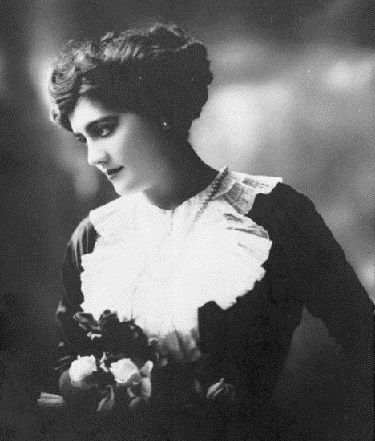
    Above: soprano Mafalda Salvatini

    Having been a devoted opera-lover for over half a century, it’s quite unusual for me to encounter a singer I never heard – and rarer still to find one I’ve never heard of.

    The lovely photo of Mafalda Salvatini (above) sent me on a research quest. Italian-born (in 1886), Salvatini studied with Pauline Viardot and Jean de Reszke. Her career was centered in Berlin, where she made her operatic debut in 1908 as Aida, opposite Enrico Caruso. Among the roles she sang were Tosca, Santuzza, Carmen, Senta, and Turandot. She later appeared at Paris, Vienna, Riga, Dresden, and at La Monnaie, Brussels. She retired from the stage in 1932. 

    Salvatini made a few recordings of arias, sung in German. She was the mother of famed set and costume designer Rolf Gérard. At the outbreak of World War II, she took refuge in Switzerland, where she died in 1971.

    Mafalda Salvatini – Lieblicher Mond~from Dvorak’s RUSALKA