Blog

  • At Year’s End

    6a00d8341c4e3853ef00e54f201b938834-800wi

    Above: Me and my friend Richard outside the Perry Street condo, shortly after I moved to New York City in 1998.

    Odd-numbered years are often unpleasant ones for me. Just after Thanksgiving, one of my oldest friends – Richard – was found dead in his apartment in Southington, CT. The news did not shock me, since he had been in declining health for months, and he had seemed unwilling to pursue medical treatment.

    Our friendship stretched back to 1976 when we were both working at the old Covenant Insurance Company in Hartford CT. We shared many adventures over the years, and we had a few fallings-out, though never anything that lasted more than a day or two.

    Up until the time of his death, we spoke twice a week by phone (he had never shown an interest in owning a computer) and when he failed to call me on the Saturday after Thanksgiving I knew something was wrong. I tried to call him but his voicemail was full. Then Suzanne contacted me with the news of his death.

    The fact that he’s no longer with us and that we’ll never again meet in New Haven for lunch or spend a day together here in the City has sunk in slowly. I continue to miss his slightly raspy voice on the phone, and the other day when the phone rang (it seldom does) I momentarily thought: “Ah…Richard’s calling… finally…” and then I remembered.

    During 2015, three people I am very close to lost people dear to them, all in sudden and unexpected circumstances. To Dmitry, Brix, and Ta-Wei go my sympathies…life will never be quite the same for us now, even though the deep initial sorrow will fade over the years to come.

    ~~~~~~~~~~~~~~~~~~~~~~~~~~~~~~~~~~~~~~~~~~~~~~~~~~~~~~~~~~~~~~~~~~~~~~~~~~~~~~~~~~~~~~~~~~~~~~~

    2015 also saw a major change in my blog which – as a retired person – occupies a great deal of my time. During their Winter season, I finally gave up on New York City Ballet. They had become increasingly random with their press tickets and since my calendar is so full and events planned weeks in advance, it became very frustrating to be told on a Monday that they couldn’t accommodate you that week, after you’d set aside the date just for them. 

    I withdrew from their press list and have only been back once since: for Jennie Somogyi’s farewell. I miss the dancers and the Balanchine rep terribly, but it became clear to me that the powers that be didn’t care if I came and wrote about their Company or not.  

    My plan now is to go to NYCB from time to time; I don’t mind in the least buying tickets though by the time casting is announced, affordable seats in parts of the house where I like to sit are usually unavailable.

    Of course, New York City Ballet was one of the main attractions for me in making the move to New York City. That I will now see them rarely is sad in a way, yet – like the Countess Olenska in THE AGE OF INNOCENCE – I must go where I’m invited. 

    Curiously, losing NYCB started to make me think about my blog’s dance coverage in general. I realized my interest had been flagging, in part because I simply saw too much dance and in a way a lot of it was starting to look (and sound) the same. Meanwhile I was finding The New York Philharmonic, Chamber Music Society of Lincoln Center, Young Concert Artists, and the American Symphony Orchestra were all offering truly exciting concerts, and were wonderfully welcoming and very appreciative of having their performances written about.

    Since these major classical music organizations – along with The Met (yes, I still go…often…but that’s a whole ‘nother story) – announce their programming months in advance, it makes it easy to fill up my calendar for the entire season…but leaves far less time for dance. 

    So…voilà…my dance blog has become a classical music blog. Dance will certainly not be written off entirely though: a handful of Companies whose work I have enjoyed over the last several seasons will continue to have their rehearsals and performances covered here.

    There is so much more I could say about this transition, but in fact I am simply following the natural flow of things and am finding myself deriving enormous pleasure and meaning in the eternal realm of great music.

    I cannot wait to flip my calendar to 2016, and I wish everyone a year full of music, hope, and love.   

  • Sir Thomas Allen Sings Grieg

    Thomas allen

    Sir Thomas Allen (above) sings two songs by Edvard Grieg.

    Sir Thomas Allen – 2 Grieg Songs – BBC 1993

    Sir Tom has always been a particular favorite of mine; I had the great pleasure of meeting him in 2001 when he was in New York City for performances of MEISTERSINGER in which he was a splendid Beckmesser. I’ve also greatly enjoyed him as Count Almaviva in NOZZE DI FIGARO and as the Music Master in ARIADNE AUF NAXOS; he also played an exceptionally moving and beautifully-sung Sharpless in MADAMA BUTTERFLY. In January 2015, he was at The Met as Baron Zeta in THE MERRY WIDOW.

  • Fall, Leaves, Fall

    L1660745
     
    “Fall, leaves, fall; die, flowers, away;
    Lengthen night and shorten day;
    Every leaf speaks bliss to me
    Fluttering from the autumn tree.
    I shall smile when wreaths of snow
    Blossom where the rose should grow;
    I shall sing when night’s decay
    Ushers in a drearier day.”
     
    ~ Emily Brontë

  • DIVA

    Whilheminia-Fernandez

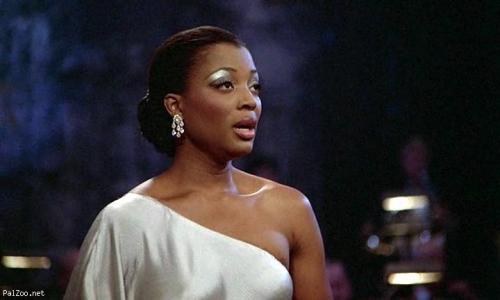
    Wilhelminia Fernandez sings the aria “Ebben? Ne andrò lontana” from Catalani’s LA WALLY in the 1981 film DIVA.

    What? You’ve never watched the film? Tsk, tsk.

    Wilhelminia Fernandez – WALLY aria – from the film DIVA


  • DIVA

    Whilheminia-Fernandez

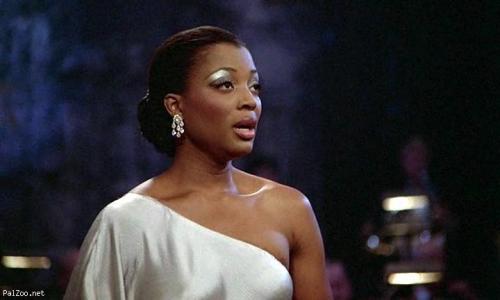
    Wilhelminia Fernandez sings the aria “Ebben? Ne andrò lontana” from Catalani’s LA WALLY in the 1981 film DIVA.

    What? You’ve never watched the film? Tsk, tsk.

    Wilhelminia Fernandez – WALLY aria – from the film DIVA


  • Christmas 2015

    Peace
     
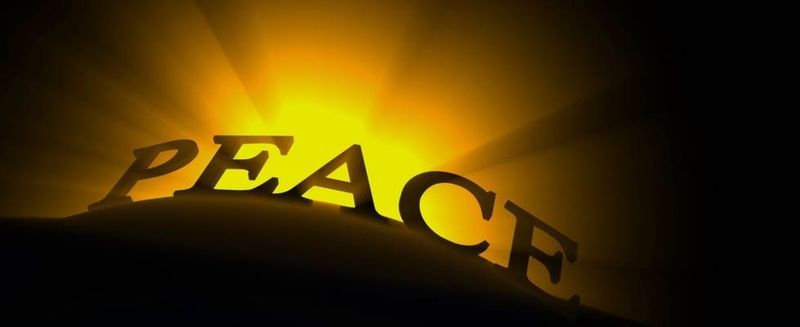
    For centuries, millions of people worldwide have been praying for peace. Like so many prayers, these have gone unanswered.
     
    If we are to achieve peace, it has to be worked at rather than prayed for: worked at in small, seemingly insignificant ways on a daily basis. A single act of compassion achieves more than a thousand well-intentioned prayers.

  • Chausson & Debussy

    9b0488c8

    Above: Ernest Chausson turning pages for Claude Debussy, at Luzancy in 1893

    The composers Ernest Chausson and Claude Debussy were great friends, and their admiration for one another’s music continued even after Chausson took Debussy to task for his debauched lifestyle.

    In the Summer of 1893, Chausson has rented a house in Luzancy and invited Debussy to come for a long stay. Knowing of Debussy’s keen interest on the music of Modest Moussorgsky, Chausson had sent off for a score of the Russian composer’s BORIS GODUNOV and Debussy spent many hours at the piano, playing thru the opera, with Chausson seated to his left, turning the pages. 

    Chausson’s catalog of compositions is relatively brief, for his life was cut short by a bicycling accident in 1899. he was killed instantly, at the age of 44.

    Chausson left us one great symphony, one opera (LE ROI ARTHUS), the gorgeous Poème de l’amour et de la Mer; the haunting Poème for violin and orchestra (used by Anthony Tudor for his ballet JARDIN AUX LILAS); chamber works, and songs.

    Here is one of Chausson’s best-known works:

    Chausson~Chanson perpetuelle – Sandra Porter – BBC 1996


  • Chausson & Debussy

    9b0488c8

    Above: Ernest Chausson turning pages for Claude Debussy, at Luzancy in 1893

    The composers Ernest Chausson and Claude Debussy were great friends, and their admiration for one another’s music continued even after Chausson took Debussy to task for his debauched lifestyle.

    In the Summer of 1893, Chausson has rented a house in Luzancy and invited Debussy to come for a long stay. Knowing of Debussy’s keen interest on the music of Modest Moussorgsky, Chausson had sent off for a score of the Russian composer’s BORIS GODUNOV and Debussy spent many hours at the piano, playing thru the opera, with Chausson seated to his left, turning the pages. 

    Chausson’s catalog of compositions is relatively brief, for his life was cut short by a bicycling accident in 1899. he was killed instantly, at the age of 44.

    Chausson left us one great symphony, one opera (LE ROI ARTHUS), the gorgeous Poème de l’amour et de la Mer; the haunting Poème for violin and orchestra (used by Anthony Tudor for his ballet JARDIN AUX LILAS); chamber works, and songs.

    Here is one of Chausson’s best-known works:

    Chausson~Chanson perpetuelle – Sandra Porter – BBC 1996


  • Russian Jewish Composers @ ASO

    Leon-Botstein

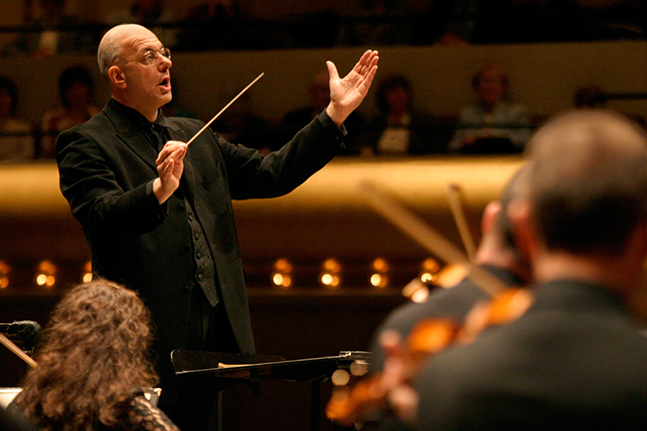
    Thursday December 17th, 2015 – Tonight at Carnegie Hall, Leon Botstein (above) was on the podium for a program of music written by Russian Jewish composers between 1874 and 1921. Performed by the American Symphony Orchestra, the concert featured two U.S. premieres and one New York premiere, as well as Anton Rubinstein’s 2nd cello concerto with soloist István Várdai.

    Aleksandr Krein’s The Rose and The Cross (‘Symphonic Fragments after Aleksandr Blok’) was composed between 1917-1920, making it the newest work on tonight’s program. Blok was a great Symbolist poet and his mystical drama The Rose and The Cross went thru more than 200 rehearsals at the Moscow Art Theater but was never performed in public. The composer Krein was inspired by Blok’s writing and composed this suite to honor the poet. Tonight’s performance marked the suite’s New York premiere.

    The music, which shows traces of harmonic advancement over the other three – older – works played this evening, opens with a somber, rather creepy atmosphere. Later it will take on an almost cinematic feeling, with effects such as trumpet fanfares and shades of exotica from the harp. A songful melody becomes a recurring theme, and the suite rises to a triumphant conclusion depicting the “boundless energy of the heart that sings.” 

    Várdai István nagyfelbontású fotó

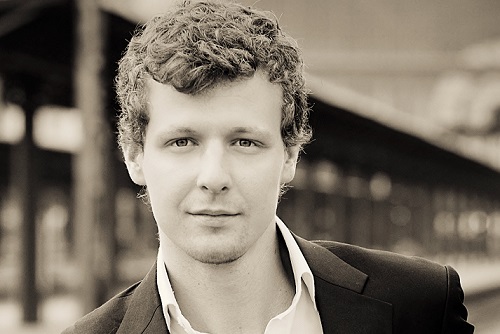
    The Hungarian cellist István Várdai (above) then took the stage for the evening’s one (somewhat) familiar work: the second cello concerto of Anton Rubinstein. The oldest and most conservative piece on tonight’s bill, it marks the pianist-composer as a pioneer, since he was the first major Russian composer to work in the concerto genre (Tchaikovsky’s violin concerto still lay four years in the future). Rubinstein draws upon a very ‘Russian’ sense of melody; the concerto is a vastly pleasing work, and one which places great demands on the soloist.

    Mr. Várdai, tall and youthful-looking, is an extraordinarily gifted musician and seemed to win the hearts of the Carnegie Hall audience this evening within moments of starting to play. His timbre has a lovely, deep-violet colour and his technique is refined in both agility and dynamic control. From his opening soulful song, the cellist moved thru a scampering passage and on to a strikingly brisk downhill scale that ended on a delicious trill. A second theme plumbs the most pungent depths before turning into a rapid dance.

    The concerto’s movements flow into one another, with a wind chorale signaling the start of the Andante; Mr. Várdai embarks on an optimistic melody but the composer cannot resist a desire to let the music dance. After a mini-cadenza, a jogging Allegro carries us along. The orchestral texture lightens, with cello filigree, then lapses into an interlude and grows quiet. Things slow down beautifully for another injection of melody and the cellist then serves up a more sustained cadenza before a final surge to the end.

    Mr. Várdai’s superb performance elicited a very enthusiastic response from the audience; I very much hope to have further opportunities to experience his artistry.

    Following the interval, Mikhail Gnesin’s From Shelley (‘Symphonic Fragment after Percy Bysshe Shelley’s Prometheus Unbound‘) had its U.S. premiere. Written between 1906 and 1908 this short (8 minutes) work was composed while Gnesin was studying with Rimsky-Korsakov. Its brevity precludes any real development of ideas, yet there is a fine sense of the theme blossoming, and some very nice writing for the horns and harp. The ending is, in a word, beautiful. 

    The U.S. premiere of Maximilian Steinberg’s first symphony raised the question: why did it take nearly one hundred and ten years for this symphony to reach us? It’s as exciting and finely-crafted as many other well-known symphonies; the composer appears to have drawn inspiration from such symphonists as Beethoven and Schumann, eschewing the Russian-nationalist influence of his teacher Rimsky-Korsakov. 

    Steinberg’s 1st has an animated, congenial opening with the immediate establishing of a rich theme that that put me in mind of – of all things – Humperdinck’s HANSEL UND GRETEL (“Der Wind! Der Wind!”); this theme will re-sound throughout the symphony. This is big, pleasing music with a variety of rhythmic patterns. The timpani lend a stately quality.

    In an exuberant Allegro vivace, the composer lightens things to a scherzo quality, later taking on a waltzy air. This second movement ends with Mendelssohnian charm.

    After a darkish start, the Andante features a clarinet theme which develops into a tutti passage. In a gentle acceleration, horns and oboe play a part, and then in a richer build-up the horns grow passionate. Horn and clarinet voices entwine; oboe and flute pipe up. The music becomes cinematic in sweep before receding to solo clarinet.

    “Der Wind! Der Wind!” is again evoked by horns and trumpets as the finale commences. The oboe speaks out, then the horns launch a fugue. As the Allegro moderato continues on, the music meanders somewhat, as though Steinberg was unsure how best to end the piece: but end it does – strongly. 

    Kudos to Maestro Botstein for assembling a rewarding program of relative rarities, for including the Rubinstein cello concerto (and Mr. Várdai’s excellent playing of it), and for bringing the Steinberg symphony to these shores.

    This evening’s repertory – click on each composer’s name for biographical information:

    Aleksandr Krein – The Rose and the Cross (N.Y. Premiere)
    Anton Rubinstein– Cello Concerto No. 2
    Mikhail GnesinFrom Shelley (U.S. Premiere)
    Maximilian Steinberg– Symphony No. 1 (U.S. Premiere)