Blog
-
Kavakos Plays Sibelius @ The NY Phil

Above: violinist Leonidas Kavakos
Saturday March 19th, 2016 – Feeling under the weather today, I was nevertheless determined to hear Leonidas Kavakos play the Sibelius violin concerto with The New York Philharmonic. I’d looked forward to this red-letter evening since the season was announced, and even though I feel strongly that people who are sick are better off staying home, I was determined to go.
In an unusual programming move, the concerto was the opening work tonight.
Mr. Kavakos, very tall and with the air of a mythic sorcerer, launched his inspired rendering of the concerto with a magical glow: the spine-tingling opening passage – coolly sensual – immediately drew us in. Maestro Alan Gilbert and Mr. Kavakos have formed a rich rapport over time, and the conductor and his players were at their shining best as the violinist shaped the opening movement with alternating currents of broad-toned lyricism and spiky bravura. Few violinists today can match Kavakos for power – both sonic and emotional – and his playing as the concerto unfolded continually sent chills up and down my spine.
In the central Adagio, with its heart-fillingly gorgeous main theme, violinist and orchestra were in a particular state of grace. One of the most winning aspects of Mr. Kavakos’ playing is his marvelously sustained phrasing; Maestro Gilbert and the orchestra provided the soloist with perfect support as passage after passage fell gratifyingly in the ear, everything lovingly dove-tailed and with an acute awareness of dynamic nuance. This performance of the Adagio was a high point in a season that has been rich in musical magic.
Mr. Kavakos then dug into the opening dance of the concluding Allegro with gusto, and the orchestra sounded simply magnificent in the big tutti passages. Give and take between soloist and ensemble produced some dazzling effects, and the lovely ‘wandering’ passage for violin when the music briefly slows down was particularly appealing. Following an energetic rush to the finish, Mr. Kavakos enjoyed a prolonged ovation, filled with shouts of joy from his listeners. The Philharmonic players seem clearly to revel in performing with this violin-magician, and his warm greeting of concert-master Frank Huang and a lovely embrace for Sheryl Staples indicated a deeper personal connection with his colleagues than we sometimes see between soloist and orchestra.
After several bows, Mr. Kavakos granted us a rather long solo encore which showed a more intimate side of his artistry. And now, here’s some excellent news: Mr. Kavakos will be with us more frequently next season as he has been designated the Philharmonic’s 2016-2017 Mary and James G Wallach Artist-in-Residence. In addition to programs featuring him as soloist, he will make his NY Phil conducting debut. Find out more about this residency here.
Much as I wanted to hear the Shostakovich’s The Age of Gold Suite, I knew it was time to go home, take Advil, and rest. I now have some rare downtime: an opportunity to re-charge before this busy season continues. I have lots of wonderful music to listen to, including Mr. Kavakos’s Sony double-disc of Mendelssohn’s concerto and the piano trios, which I highly recommend; find it here.
-
Ian Spencer Bell: Poet and Dancer
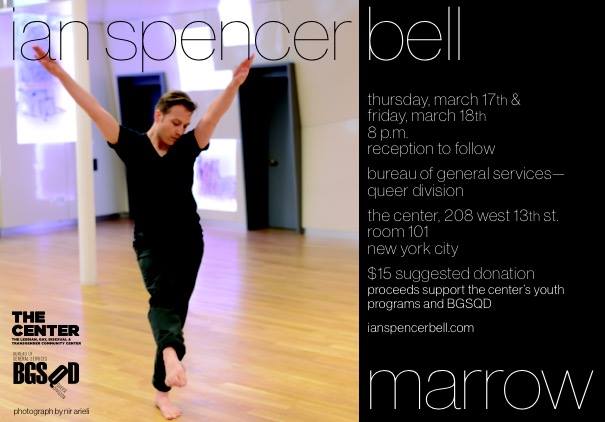
Friday March 18th, 2016 – There are only a handful of true originals on the Gotham dance scene these days, and Ian Spencer Bell is one of them. In the past, his very sophisticated choreography of small ensemble pieces has always intrigued me; more recently, Ian has been exploring his two passions – dance and poetry – simultaneously in unique solo presentations.
Tonight at the Lesbian, Gay, Bisexual & Transgender Community Center on 13th Street, Ian performed his newest work, MARROW, in the intimate yet airy space of the recently-renovated Room 210. It was in the same setting, last June, that Ian’s double bill of GEOGRAPHY SOLOS and HOLLER made such a distinctive impression.
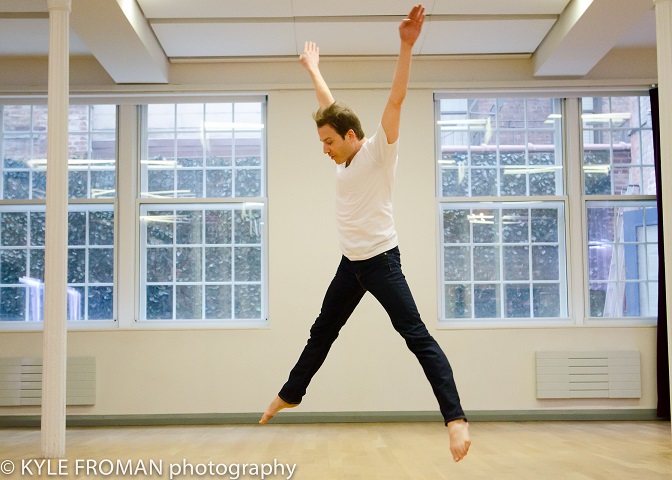
An attentive and wonderfully silent audience seemed mesmerized this evening by Ian’s every word and move. Lithe and beautiful to behold, Ian dances with a rather gentle physicality; but the choreography can also take on a sharper aspect when the narrative gets more intense.
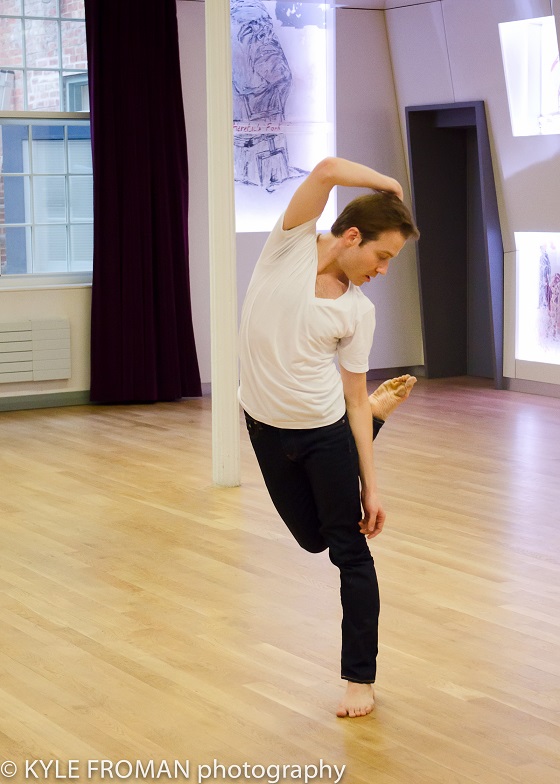
His poem tonight drew on his experiences as a Southern boy, a youth who was different from everyone else. How many times has this story been told??…and yet, rarely with the same poignancy as in Ian’s words and dancing.
Waiting for the performance to start, we were listening to Ode to Billie Joe; thus was the setting for what we were about to witness already evoked. Beginning with a story about swarms of bees which attacked his home (“I’m allergic, and alone.”), Ian went on to describe a dream of men climbing out of manholes. (Yes, physical laborers have always created fantasies for gay boys…) As Ian spoke, his body spoke also – in rapid turns, or simple walking, with expansive port de bras; the sweeping motion of a foot; plunges to the floor where he cowered or lazed.
Confidences and local gossip become part of the story, as does an incident of Ian’s mother falling into a hole on their property while tending horses. This left her with a permanent injury. Meanwhile, his siblings and step-father play out their expected roles: “Boys don’t act like that!” his step-dad yelled, uncomprehendingly. “I wanted my step-father to die,” was young Ian’s thought in response.
From repose to restlessness, the dancing moves on: a harrowing episode where his step-father attempts to strangle him is the work’s most dramatic moment; but even the more mundane aspects of daily life – as of waiting in the checkout line at a local store to buy supplies for “making a funeral wreath” – take on an unusual resonance in Ian’s words.

In the end, our stories of growing up gay are mostly all the same – a theme-and-variations setting of what it’s like to be different. What’s sad is that, apparently, so little progress was made in the years separating my experience from Ian’s.
Waiting in the Center’s lobby for the performance to begin, I watched the hordes of young people coming and going. They have found a community and a haven here: such lovely kids, unbounded diversity. And while I am certain they are dealing with many of the same problems that have beset us all, they have resources now that we did not have…and they have each other.
I had no one to turn to, and nothing to reassure me; I was alone, thinking – as I so often did in those first harrowing years of self-discovery – that I was the only one.
Thus it is deeply moving to have Ian telling our story, and in such an imaginative and compelling way.
(Note: this article is now updated with new photos by Kyle Froman)
-
New Ravel @ New Chamber Ballet
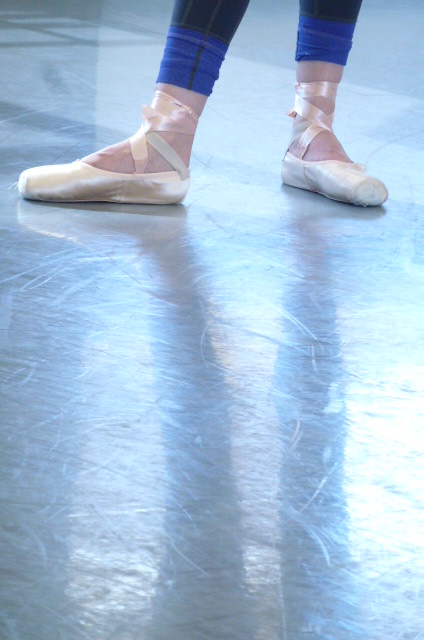
Saturday February 27th, 2016 – Miro Magloire’s New Chamber Ballet presenting five Magloire ballets, including a premiere, at City Center Studios. Exceptional music, played live, is always on offer at NCB; then there’s the bevy of ballerinas: five distinctive dancers who bring Miro’s classically-based but sometimes quirky – and always demanding – choreography to life.
Tonight, the house was packed; extra chairs had to be set out, and some people were standing. The program was one of Miro’s finest to date – and he’s had an awful lot of fine evenings. Two classic French violin sonatas – Debussy’s and (part of) Ravel’s – were in the mix, along with some Schoenberg (the more Schoenberg I hear, the more I like), and works by Beat Furrer and Friedrich Cerha (who just celebrated his 90th birthday).
The opening (premiere) work, RAVEL’D, is still “in-progress”; tonight we saw the first movement, with Miro promising the rest of it for his April performances. Doori Na and Melody Fader played beautifully, and Sarah Thea’s fringed tunics added an unusual flair to the movement. Stylized motifs – eating, praying, biting – are woven into the dance. One girl’s toe-shoed foot rests upon another girl’s head: this is one of several unexpected balancing devices. A space-filling unison trio stands out, and the closing section finds Sarah Atkins in a reverential pose as Amber Neff and Shoshana Rosenfield ‘converse’ in a series of mutually dependent balances.
The space was again well-utilized in GRAVITY; we were seeing the finished version of this work that Miro had started on last year. Doori Na’s expert playing of the Cerha score was something to marvel at: great subtlety and control are called for, and Doori delivered. The three dancers – Elizabeth Brown, Traci Finch, and Amber Neff – are engaged in extended paragraphs of the partnering vocabulary Miro has been exploring of late. Extremely challenging and movingly intimate, the intense physicality of these passages push the boundaries of what we expect from women dancing together. Miro’s dancers have taken to these new demands with great commitment: watching some of their improbable feats of balance and elastic strength gives us a fresh awareness of possibility. Adding yet another dimension to the work: when not actively dancing, each ballerina curls up on the floor to sleep.
Pianist Melody Fader evoked an air of mystery with her superb playing of Arnold Schoenberg’s Six Little Piano Pieces for the ballet QUARTET. Here Mlles. Atkins, Brown, Finch, and Neff appear in elegant, backless black gowns. They take seats at the four corners of the playing area, facing outward. With her hair down, a waif-like Shoshana Rosenfield dances in the center with a feeling of halting insecurity; her character seems dazed, perhaps drugged. Periodically, the four seated women move their chairs towards the center, slowing encroaching on Shoshana’s space. The four become aware of the lone ballerina as a potential victim: they turn and observe her intently. In the end, the four women have Shoshana trapped; as she sinks down in surrender, they caress her and run their fingers thru her hair. Eerie, and leaving us full of questions, QUARTET is as intriguing to watch as to hear.
In VOICELESSNESS, Beat Furrer’s mystical score was performed by Melody Fader; her playing had a fine air of somber quietude. Dancers Amber Neff and Shoshana Rosenfield, in Sarah Thea’s sleek body tights, become fervently entwined and mutually dependent in a duet that develops further elements of Miro’s intense and engrossing partnering technique.
For a revival of TWO FRIENDS, Doori Na and Melody Fader had the lovely experience of playing Claude Debussy’s violin sonata, the composer’s last completed work. Wearing black gauzy tunics and black toe shoes, Elizabeth Brown and Sarah Atkins are the eponymous duo; they partner lyrically, and all seems right with the world. Then Traci Finch appears out of nowhere and the ballet’s dynamic shifts and splinters, with fleeting pair-ups as alliances form and vanish in a trice. The subtexts of attraction and jealousy are very subtly threaded into the movement; an in-sync duet for Elizabeth and Traci is one outstanding moment, and the sonata’s final movement calls for large-scale virtuosic dancing from all three. But then Sarah impetuously rushes off.
True to life, TWO FRIENDS often finds multiple narratives developing at the same time, and over-lapping. There is so much to watch and to savor: I especially relished a brief passage where Elizabeth Brown, suddenly finding herself standing alone, quietly runs her hands up and down her arms in a caressive gesture. Elizabeth, a dancer who always lures the eye with her confident technique and personal mystique, turned this fleeting moment into something of deeper resonance.
Having followed Miro’s New Chamber Ballet for several seasons now, what I’ve come to appreciate most about him is his musical integrity. His tastes are eclectic, but always sophisticated, and he’s able to win us over to some very unusual and not always ‘easy’ music thru his own personal enthusiasm for the works he presents. The benefits of having the music played live are numerous, and greatly enhance the atmosphere at NCB‘s performances. And Miro’s excellent dancers take up each new musical and choreographic challenge that he sets for them with a wonderful mixture of strength, musicality, willingness, and grace.
The dancers tonight were Sarah Atkins, Elizabeth Brown, Traci Finch, Amber Neff, and Shoshana Rosenfield, with the music played by Doori Na (violin) and Melody Fader (piano) and costuming by Sarah Thea. Kudos to all, and to Miro for yet another fascinating evening of dance.
During the intermission, I really enjoyed re-connecting with Melissa Barak, the former New York City Ballet ballerina who now runs her own Los Angeles-based company Barak Ballet. Melissa is currently here in New York City as the inaugural Virginia B. Toulmin Fellow for Women Choreographers at the Center for Ballet and the Arts at NYU. We shared an awful lots of news and ideas in our 15-minute chat. I love her energy!
-
New Chamber Ballet ~ Gallery
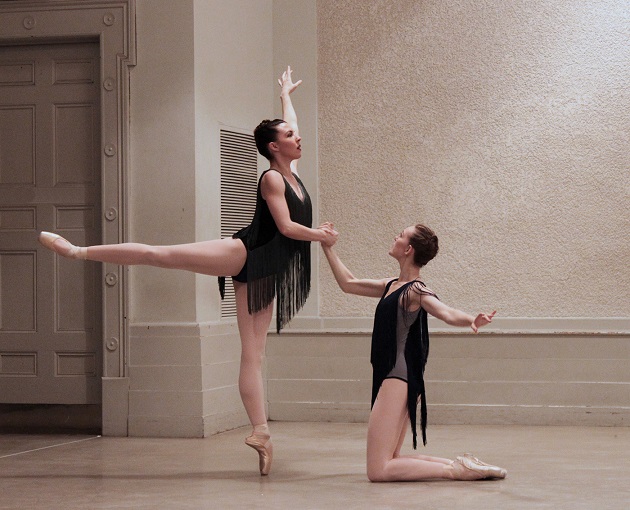
Above: dancers Sarah Atkins and Amber Neff in Miro Magloire’s RAVEL’D
Photographs from New Chamber Ballet‘s February 2016 performances at New York City Center Studios. Read about the program here, and about a rehearsal I attended here.
All the choreography depicted is by Miro Magloire, and all the images are courtesy of New Chamber Ballet:

Amber Neff and Traci Finch in GRAVITY
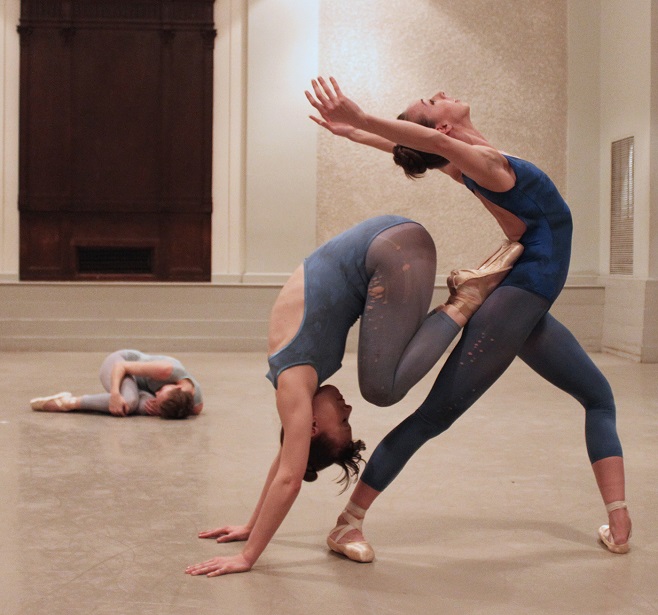
Amber Neff, Elizabeth Brown, and Traci Finch in GRAVITY
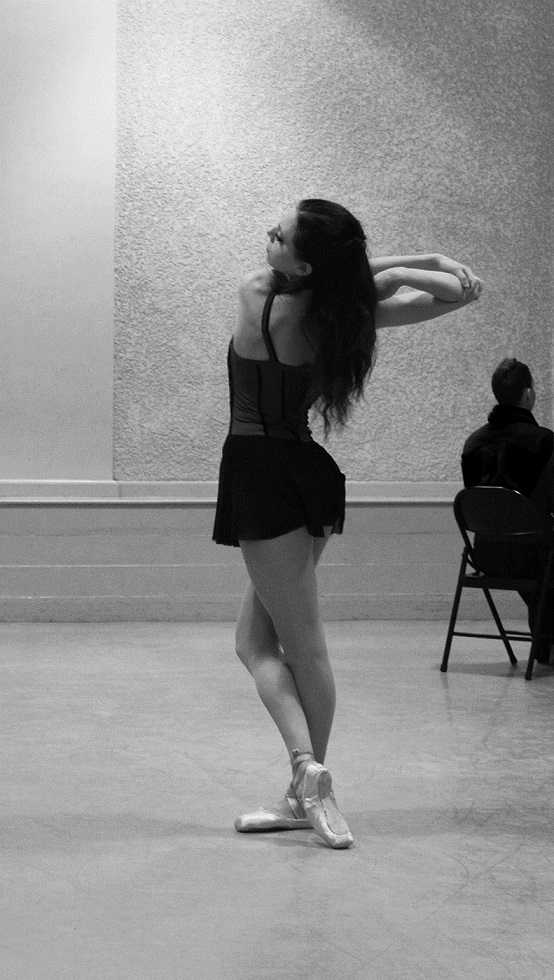
Shoshana Rosenfield in QUARTET

Shoshana Rosenfield in QUARTET

Shoshana Rosenfield with Sarah Atkins and Traci Finch in QUARTET

Elizabeth Brown, Amber Neff, Traci Finch and Sarah Atkins surround Shoshana Rosenfield in QUARTET

Amber Neff and Shoshana Rosenfield in VOICELESSNESS
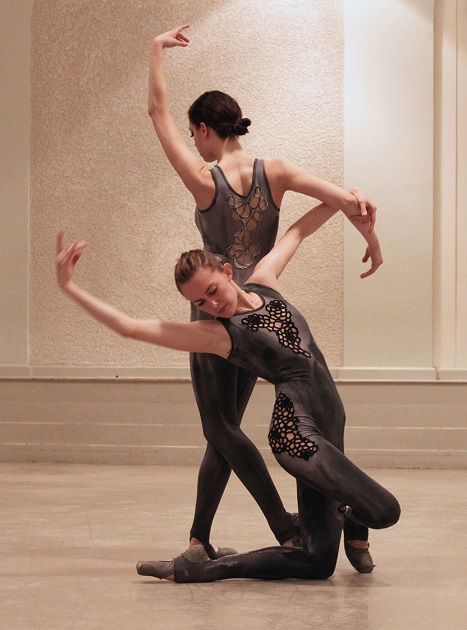
Shoshana Rosenfield and Amber Neff in VOICELESSNESS

Shoshana Rosenfield and Amber Neff in VOICELESSNESS
-
Freiburg Baroque @ Alice Tully Hall

Thursday February 25th, 2016 – This all-Mozart concert, performed by Freiburg Baroque at Alice Tully Hall tonight, was part of our Great Performers at Lincoln Center subscription series. Arias from the da Ponte/Mozart operas, the clarinet concerto, and the “Linz” symphony were scheduled. We were of course expecting the usual program order: the arias first, then the clarinet concerto, an intermission, and the symphony coming last.
Instead, in an attempt to re-create a type of concert popular in Mozart’s time, the movements of the symphony were played on the first half of the program, interspersed with arias. This may have seemed intriguing on paper, but in the event it lessened the effect of the symphony – which now seemed more like incidental music (great incidental music!) – while the arias seemed rather randomly chosen, two of them in fact being simply passages from ensembles.
Given all this, and despite some very fine playing, the first half of the evening seemed a bit of a jumble. Gottfried von der Goltz, the ensemble’s principal violinist and director, had an ideally light touch, and he set propulsive tempi for the symphonic movements. He and the singer, Christian Gerhaher, formed a very simpatico bond: Mr. Gerhaher’s very confident stage-presence, wide-ranging voice, and winningly characterful interpretations were finely supported by conductor and ensemble.
Prior to playing the concerto, soloist Lorenzo Coppola introduced us to the clarinet d’amour – an unusual instrument that is longer than a standard clarinet and with a flared bell at the end. Once the concerto was underway, Mr. Coppola played with sure technique, exploring the instrument’s wide range with plenty of body language and almost comic accentuation of the lowest notes. His performance took on a more serious tone for the haunting Adagio, one of Mozart’s most sublime creations. For all Mr. Coppola’s skill and artistry, there were times when the instrument itself seemed in control.
Mr. Gerharer then re-appeared for three of Mozart’s greatest arias for male voice: Leporello’s Catalogo, and one showpiece each from the opposing protagonists of NOZZE DI FIGARO: the valet’s “Non piu andrai” and Count Almaviva’s blazing “Hai gia vinto la causa!” In these three solos, Mr. Gerharer further displayed his impressive grasp of vocal characterization: in the Almaviva aria especially, he seemed to bring the drama most vividly to life.
Between the two NOZZE arias, the orchestra chimed in with a brief Contredanse (K. 610) subtitled “Les filles malicieuses“, a brief charmer of a piece. Who were these “malicious girls” and what did Mozart want with them? We’ll never know, any more than we’ll know whose cellphone went off at just the wrong moment tonight.
The Participating Artists:Freiburg Baroque/Gottfried von der Goltz, violin and director
Christian Gerhaher, baritone
Lorenzo Coppola, clarinet d’amour
The Repertory:
Arias from Mozart’s Don Giovanni, Così fan tutte, and Le Nozze di Figaro
Mozart: Clarinet Concerto
Mozart: Symphony # 36 (“Linz”)
-
CAV Without PAG @ The Met

Above: composer Pietro Mascagni
Tuesday February 23rd, 2016 – Having looked at photos and video clips of the Met’s current productions of CAV and PAG, I had no desire to see a performance of the famed double bill in such settings. But I do love both operas, and so I opted for a score desk this evening. I knew in advance I would be leaving after CAV. The combination of Barbara Frittoli and Marco Berti in PAG didn’t appeal to me much, and though I would have liked to have heard George Gagnidze’s Prologo, that would have meant enduring a Gelb-intermission. So it was CAV and then a casa, a casa, amici.
The Met has never felt emptier than it did tonight; I’ve seen some very sparse audiences in the last two or three seasons, but this was really depressing. To be sure, it was a star-less night; and ticket prices are high. But even on middling nights, the ‘affordable’ upper tiers of the House used to be reasonably full. Tonight, only a handful of people were sitting in the Balcony box and Family Circle box sections which are normally fully occupied by hard-core opera lovers. At the end of CAV, there was just barely sufficient applause to get the curtain back up for the bows.
The reasons for the decline in attendance have been discussed at length on other sites; suffice it to say that The Met seems to be committing a slow suicide, and that no one seems to be doing an intervention.
Liudmyla Monastyrska sang a good Tosca earlier this season, and it was to hear her Santuzza that I chose to go tonight. Tosca suits her better, or so it seems to me. In Santuzza’s music we are accustomed to an earthier, more chest-resonant sound than Ms. Monastyrska brought to the music of the hapless outcast. But she sang tonight with a fine sense of dynamic variety, and did some really nice lyrical singing in passages like “No, no Turiddu…” in her duet with the tenor and – even more expressively – at “Turiddu mi tolsi…” in the duet with Alfio. Her top notes are bright and house-filling, but with hints of a widening vibrato. In the curse, Ms. Monastyrska was convincing though without the deadly declamatory venom of a Simionato or a Cossotto.
Brazilian tenor Ricardo Tamura, much maligned last season when he stepped in as Don Carlo for an ailing colleague while himself being under-the-weather, did a reasonable job as Turiddu tonight. He sounded throaty and a bit quavery in the offstage serenade, but once onstage he fared better. The singing is idiomatic, and he kept pace with the soprano in their big duet. Later, as he pleaded with Alfio to consider Santuzza’s fate if he, Turiddu, is killed, Tamura was very persuasive.
The most idiomatic and vocally satisfying performance tonight came from baritone Ambrogio Maestri; his Alfio has the right vocal swagger and his top notes were full, ripe, and thrilling. My score refers Lola’s little entrance song as “Lola’s Ditty”; Ginger Costa-Jackson did a good job with it, throwing in some nice chesty insinuations along the way as she chided Santuzza. It’s always good to have Jane Bunnell in a cast. I’ve always liked her, and I still do.
Fabio Luisi’s conducting was the evening’s biggest asset: his pacing was excellent, with an effective build-up to the Easter Hymn, and he refused to over-cook the famous Intermezzo, instead making it a touching musical statement. Throughout the evening, Luisi brought out little nuances in the score that hadn’t previously registered with me, and he maintained an alert balance between voices and orchestra, never swamping his singers.
Kudos to the Met chorus, who made the Easter Hymn the musical focus of the evening. This great chorale always moves me in its expression of the simple and direct faith of the common folk. Tonight it reminded me yet again of how the great religions have been hi-jacked and politicized in recent years. These days, my own mother’s piety and kind-heartedness would be thought too mushy and weak. I often wonder what she would think of the current situation.
Metropolitan Opera House
February 23rd, 2016
CAVALLERIA RUSTICANA
Pietro MascagniSantuzza................Liudmyla Monastryska
Turiddu.................Ricardo Tamura
Lola....................Ginger Costa-Jackson
Alfio...................Ambrogio Maestri
Mamma Lucia.............Jane Bunnell
Peasant.................Andrea ColemanConductor...............Fabio Luisi
-
Rehearsal: New Chamber Ballet

Above: New Chamber Ballet dancers Amber Neff and Sarah Atkins
Monday February 22nd, 2016 – I dropped in at Ballet Hispanico’s studios today where Miro Magloire, just back from choreographing the ballet sequences for Sarasota Opera’s production of Verdi’s AIDA, is preparing his New Chamber Ballet dancers for their upcoming performances: February 26th and 27th, 2016, at City Center Studios. Ticket information here.
Marina Harss wrote a wonderful article for DanceTabs about Miro’s Sarasota experience: read it here.
At today’s rehearsal, Miro was fine-tuning the ballets we’ll be seeing on the coming weekend at City Center Studios. Here are some photos of the dancers I took at the studio today:

Amber Neff
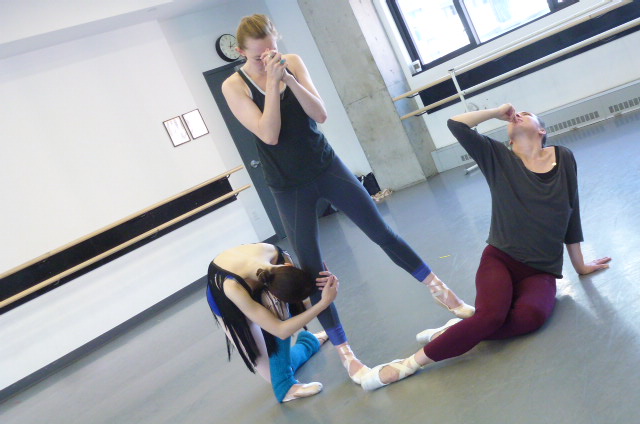
Shoshana Rosenfield, Amber Neff, Sarah Atkins

Shoshana Rosenfield, Sarah Atkins

Sarah Atkins, Amber Neff

Shoshana Rosenfield
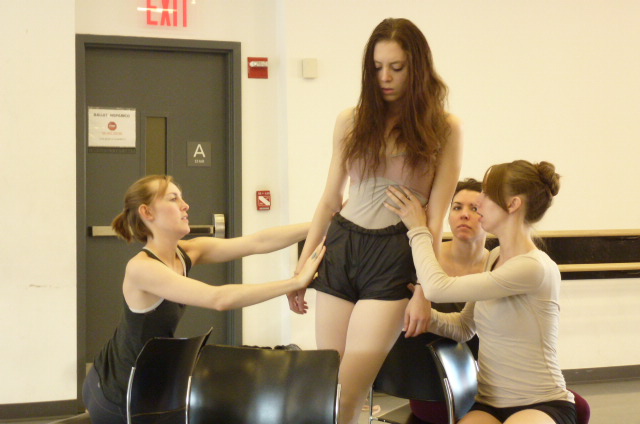

Traci Finch
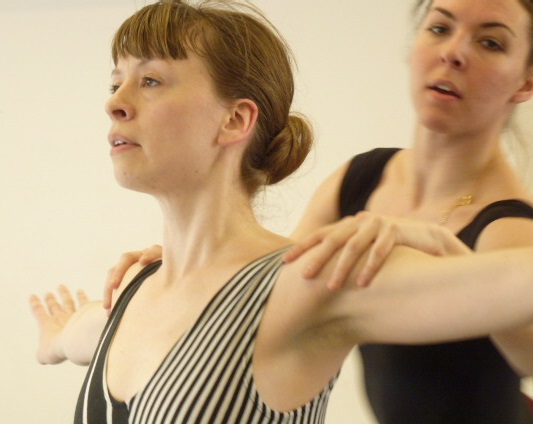
Elizabeth Brown, Sarah Atkins

Traci Finch, Elizabeth Brown

Elizabeth Brown, Traci Finch
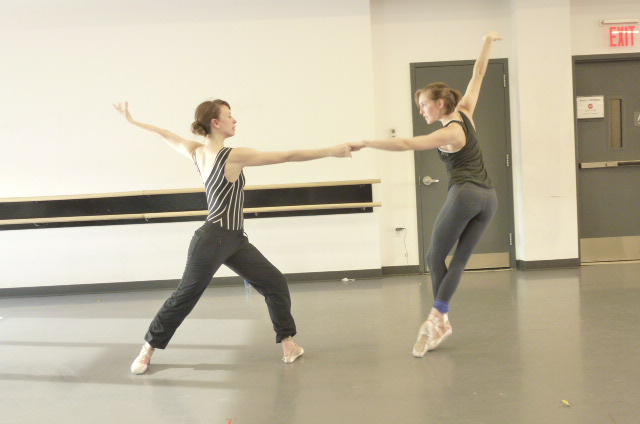
Elizabeth Brown, Amber Neff

Elizabeth Brown, Amber Neff
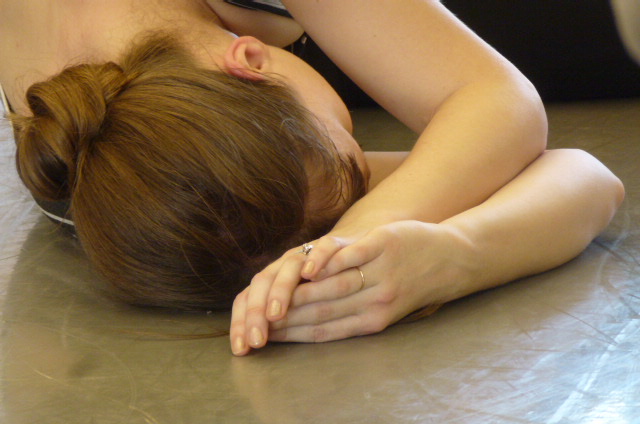
Elizabeth Brown
The works to be presented at the upcoming City Center Studio performances are: the premiere of the full version of Gravity to music by Austrian composer Friedrich Cerha, who turns 90 this month; the premiere of a new ballet to Maurice Ravel’s 2nd violin sonata; a revival of Quartet, a dramatic solo set to Arnold Schoenberg’s Six Little Piano Pieces; a revival of Two Friends, a trio danced to Claude Debussy’s violin sonata; and Miro’s recent success Voicelessness, a duet set to music by Beat Furrer.
The dancers are Sarah Atkins, Elizabeth Brown, Traci Finch, Amber Neff, and Shoshana Rosenfield, and the music will be played live by Doori Na (violin) and Melody Fader (piano).
-
CMS Beethoven Cycle: The Danish!

Above: the Danish String Quartet, photo by Caroline Bitten
Sunday February 21st, 2016 – Chamber Music Society of Lincoln Center‘s festival performances of the Beethoven string quartets drew to its close today with the Danish String Quartet playing the last music Beethoven ever wrote.
This was my first encounter with The Danish. Their story is probably unique among music-making ensembles, for three of them met as kids and fellow foot-ballers: so they literally grew up together. This may account for their wonderfully integrated sound. Along the way, a Norwegian cellist joined the family, fitting in perfectly.
This evening, as each voice was introduced to us at the start of the C-sharp minor quartet, I felt transfixed. I suddenly didn’t want to take notes, but rather to immerse myself in the music that was casting a spell over the wonderfully hushed, packed-to-the rafters Tully Hall.
The C-sharp minor quartet evidently seemed incomprehensible when it was first heard publicly in 1835, after the composer had already passed away. Certainly a first glance at the Playbill listing strikes one as very odd: seven movements? But Beethoven had been experimenting with structure over the years, and so she set this Opus 131 in seven sections, to be played without pause.
Richard Wagner, reflecting on the first of these seven movements, said that it “reveals the most melancholy sentiment expressed in music”. Today it perhaps seems more pensive than sorrowful. The second movement, marked Allegro molto vivace, is lively and extroverted. Following a brief ensemble recitative, we come to the slow movement, so expressive of yearning and tenderness.
In the Presto that follows – a whirlwind scherzo really – wit prevails in a lively, scurrying mode: here the Danes were at their most charming, and as this merry movement raced to its conclusion, the audience, thinking an end had been reached, were on the verge of unleashing a gust of applause. Then, with tongue-in-cheek irony, the players go on to a brooding Adagio and then a brilliant finale.
Upon finishing, the members of the Danish String Quartet were engulfed in a flood of applause and cheers. They were called out three times, a rather unprecedented happening.
During the intermission, I sat thinking about how – from my eleventh year until rather recently – so much of my musical focus has been on opera. Beethoven’s FIDELIO has never really attracted me – aside from Leonore’s glorious “Abscheulicher!” – and so the composer’s other works, iconic as they might be, have never really lured me. In fact, it’s only in the past three or four years – since I started attending Chamber Music Society and The New York Philharmonic regularly – that Beethoven’s music has begun to attract me. Better late than never!
Earlier in this CMS Beethoven cycle, the Miró Quartet’s playing of the “Razumovsky” quartets was a revelation. Of the symphonies, I’m most enamored of the 4th at present…something other music-lovers will find odd, I’m sure. But: enough rambling. Back to the matter at hand!
Of his final completed full work – the F-major quartet, Opus 135 – Beethoven reportedly stated that it was short because the commissioning fee was ‘short’; the sponsor would get what he paid for. And it was here, in the third movement marked Lento assai, cantante and tranquillo, that I found the Beethoven I’ve been searching for all these years – without knowing it. This music, which The Danish played so lovingly, really spoke to me. The entire piece, more traditional in both its structure and style than Opus 131, held the Tully audience in a state of rapt attentiveness: and the playing was marvelous throughout.
The concert concluded with the last music Beethoven ever completed: a ‘Finale: Allegro‘ which would serve as an alternate ending for the B-flat major quartet Opus 130. Here the players of The Danish were at full sail, clearly savouring both the music and the audience’s delight in listening to them.
The triple curtain call after Opus 131 was not a fluke, for the four blonde members of the Danish String Quartet reaped a full-house standing ovation at the close of this grand evening.
As so often happens nowadays, this great music – and the Quartet’s playing of it – turned gloomy thoughts of a world full of strife and woe into an optimistic notion that there’s still hope for humanity.
Meet The Danish String Quartet here.
The Artists:
Violin: Frederik Øland and Rune Tonsgaard Sørensen
Viola: Asbjørn Nørgaard
Cello: Fredrik Schøyen Sjölin
The Repertory:
- Beethoven Quartet in C-sharp minor for Strings, Op. 131 (1825-26)
- Beethoven Quartet in F major for Strings, Op. 135 (1826)
- Beethoven “Finale: Allegro” from Quartet in B-flat major for Strings, Op. 130 (1826)


 Oberon's Glade