Blog

  • TURANDOT at The Met – 2nd of 4

    385682_332777790113678_298965728_n

    Above: Lise Lindstrom in the Metropolitan Opera’s production of TURANDOT

    Monday October 26th, 2015 – It’s always fun to bring someone to the opera who hasn’t been in a while or who is unfamiliar with a particular work. When my choreographer/friend Lydia Johnson and I decided to spend an evening at The Met, I quickly settled on Franco Zeffirelli’s classic production of TURANDOT. In an age where less is supposedly more when it comes to opera stagings, this TURANDOT clings to the forbidden notion that grand opera should still be grand. Is this the sort of thing the public really wants to see? A virtually full house, including tons of young people, seemed to be saying “Yes!”

    It was a good performance, but in the end it was the opera itself that was the star of the evening. Beyond the Chinoiserie which decorates the score, we have Puccini – the master-orchestrator – creating harmonies and textures that are so atmospheric. Lydia was fascinated by what she was hearing; I told her she must try FANCIULLA DEL WEST next.

    The Met Orchestra were on optimum form – and the chorus, too. Both forces were capable of lusty vigor one moment and subtle delicacy the next. Conductor Paolo Carignani paced the opera superbly and brought forth much detail from the musicians; a tendency to cover the singers at times should have been resolved by this point in the run, but instead the conductor went blithely on, seemingly unable to comprehend that a forte for Marcelo Alvarez is not the same as a forte for Mario del Monaco.

    For all that, the singing for the most part was pleasing and well-tuned to the drama of the work. David Crawford was an excellent Mandarin, ample-toned and investing the words with proper authority. Ronald Naldi as the Emperor Altoum projected successfully from his throne on Amsterdam Avenue, and Eduardo Valdes, Tony Stevenson, and – especially – Dwayne Croft made the most of the Ping-Pang-Pong scene.

    James Morris’ aged timbre made a touching effect in the music of the blind king Timur. Leah Crocetto’s soprano sounded a bit fluttery at the start, but she moved the audience with her lovingly-shaped “Signore ascolta” and was excellent in her third act scene, winning the evening’s loudest cheers at curtain call. While Marcelo Alvarez is clearly over-parted by Calaf’s music, a more thoughtful conductor could have aided the tenor in turning his lyrical approach to the role into something perfectly viable. But that didn’t happen, and while there were many handsome moments in Alvarez’s singing, at the climax of “Nessun dorma” the conductor was of no help. There was no applause after this beloved aria, even though it was actually quite beautifully sung.

    Lise Lindstrom is undoubtedly the most physically appealing Turandot I have ever beheld, and she also manages to make the character something more than a cardboard ice queen. Lindstrom’s lithe, attractive figure and her natural grace of movement were great assets in her portrayal; she looked particularly fetching in those scenes where she’s divested of the heavy robes and headpieces and seems like a young princess, almost vulnerable in her sky-blue gown and long black hair.

    After a couple of warm-up phrases in which there was a trace of cloudiness in her upper-middle voice, Lindstrom’s singing took on its characteristic high-flying power as she pulled the treacherous high notes out of thin air with assured attacks. The narrative “In questa reggia” was presented as both a vocal and verbal auto-biography, her upper range zinging over the orchestra. Lindstrom’s Riddle Scene was vividly dramatic; having experienced defeat, her plea to Altoum was urgent and moving, and the she advanced downstage to deliver the two shining top-Cs over the massed chorus. Her acting as Calaf offered her a way out was detailed and thoughtful. 

    In Act III Lindstrom was totally assured vocally, with a persuasive melting at Calaf’s kiss and a nuanced rendering of “Del primo pianto”; in the high phrases following the prince’s revelation of his name, the soprano was very much at home. She ended the opera on a high B-flat attacked softly and then expanded to a glistening brilliance.

    Lydia was very moved by the opera – and especially taken with the gestural language of Chiang Ching’s choreography – and we stayed to cheer the singers. She agreed with me, though, that dramatically the “happy ending” is incomprehensible. That Calaf should want to marry a woman who has sent dozens of men to their deaths, threatened to torture his own father, and caused the suicide of the faithful Liu just doesn’t make sense. But then, fairy tales seldom do.

    Metropolitan Opera House
    October 26th, 2015

    TURANDOT

    Giacomo Puccini

    Turandot................Lise Lindstrom
    Calàf...................Marcelo Álvarez
    Liù.....................Leah Crocetto
    Timur...................James Morris
    Ping....................Dwayne Croft
    Pang....................Tony Stevenson
    Pong....................Eduardo Valdes
    Emperor Altoum..........Ronald Naldi
    Mandarin................David Crawford
    Maid....................Anne Nonnemacher
    Maid....................Mary Hughes
    Prince of Persia........Sasha Semin
    Executioner.............Arthur Lazalde
    Three Masks: Elliott Reiland, Andrew Robinson, Amir Levy
    Temptresses: Jennifer Cadden, Oriada Islami Prifti, Rachel Schuette, Sarah Weber-Gallo

    Conductor...............Paolo Carignani

  • Prevailing Winds @ Chamber Music Society

    Romie

    Above: clarinetist Romie de Guise-Langlois 

    Sunday October 25th, 2015 – Kudos, yet again, to the folks at Chamber Music Society of Lincoln Center for putting together this imaginative program for which some of the outstanding wind players of the day gathered together to form a first-rate ensemble. The genial pianist Jean-Efflam Bavouzet brought his own magic to three of the four works presented.

    During the week leading up to this concert, some wonderful news came from the Society – I am sharing this directly from their press release: “Chamber Music Society of Lincoln Center has announced a $4 million unrestricted gift, the largest in its history, from long-time patron and devoted chamber music lover Jane Kitselman, who passed away on March 18, 2015, at the age of 87.  The formal announcement was made at a reception following the October 20th Chamber Music Society concert at Alice Tully Hall, which was performed in her memory.  Ms. Kitselman, a cellist, was especially fond of string quartet literature, and CMS is dedicating its forthcoming performances of the Beethoven String Quartet Cycle to her.  In addition, there will be an annual concert dedicated to Jane Kitselman, to be performed in perpetuity.”

    I couldn’t help but feel that this news, which people around us were discussing prior to the start of this evening’s concert, set the atmosphere in Tully Hall at an even higher degree of anticipation that usual.

    Ligeti’s Six Bagatelles, as performed this evening, are transcriptions by the composer from twelve piano bagatelles; these pieces are very short, lasting two to three minutes each. In the first bagatelle, Allegro con spirito, a playful, percolating rhythm charmingly peters out. The second bagatelle commences with a sad chorale which evolves with a variety textures and harmonies and ends on an ironic “beep”. In the third, Allegro grazioso, the flute sings over bubbling clarinet and bassoon and there’s a gorgeous horn passage. Bagatelle number four is an exuberant Presto ruvidi, vividly dance-like. The following Adagio, dedicated to the memory of Bela Bartok, begins as a somber dirge but is then enlivened when the flute speaks up; a repeated two note theme underlines an exchange of trills between flute and clarinet, and the piece ends on a benedictive chord. The last bagatelle, marked Allegro vivace, has a quirky start and then pulses along as the horn goes high and the piccolo pipes up. Things turn rather frenetic but in the end, a muted horn solo provides an unexpected finish. In these six Ligeti gems, we have met our five wind soloists and they have displayed their outstanding gifts of technique and artistry; they were called back for a bow.

    The least-known composer on the program today was surely Albéric Magnard; his life story ended tragically in 1914 when he stood his ground against the invading Germans and perished when they set fire to his house in Baron, France.

    In a program note, pianist Jean-Efflam Bavouzet spoke lovingly of the evening’s Magnard work: “I hope you will leave the concert with lasting memories of having discovered the captivating music of a hitherto lesser-known composer.” My hope, having heard this revelatory quintet, is that the Society will pursue and present other works from the Magnard catalog, which is sadly limited – by his tragic death – to only thirty compositions.

    Bavouzet

    Above: Jean-Efflam Bavouzet

    Knowing nought of Magnard’s music, I was thoroughly captivated this evening by his D-minor quintet for which the terrific pianist Jean-Efflam Bavouzet joined Mlles. O’Connor and de Guise-Langlois, Stephen Taylor, and Peter Kolkay. The music is intrinsically “French”, loaded with marvelous melodies, and Mr. Bavouzet proved the ideal maître of the keyboard to lead us on this magical journey.

    After an opening piano solo, the wind instruments trade themes over a rippling keyboard motif. Individual voices tantalize, such as in a plaintive passage for Mr. Taylor’s oboe and some delicious trills from Ms. O’Connor’s flute. An unexpected fugue is an intriguing highlight.

    In the ensuing slow movement, marked Tendre, Romie de Guise-Langlois stole my heart yet again with her deeply expressive playing of a poignant melody entwined in M. Bavouzet’s poetic piano sounds. This theme becomes passionate and then pensive; I found myself with tears running down my face from the sheer beauty of Romie’s playing. M. Bavouzet draws us on, though, with a solo passage which continues to ripple under a serene chorale from the winds. 

    Ms. O’Connor’s flute takes on a waltz-like air as she opens the third movement in tandem with M. Bavouzet; the pianist has another vivacious solo before the wind voices enter, evoking Springtime cheer. Mr. Taylor’s oboe seized upon an oddly Mid-Eastern-sounding theme, playing with great control. 

    By now I was thoroughly engrossed in this Magnard work, only to discover fresh vistas in the final movement, charmingly marked Joyeux. A jaunty oboe solo leads off, the other voices passing the idea around. Peter Kolkay’s amiable sustaining of single tones had an ironic quality, and Ms. O’Connor’s flute wafts over us. A mini-fugue is a fleeting delight, and a two-note theme somehow develops into a march. In a mellowing out, Mr. Kolkay’s bassoon glows in a superb passage with M. Bavouzet. The pianist then takes a dynamic lead thru a few small detours before all join in a final tutti melody. 

    Have I rambled on too long, sometimes shifting from past to present tense? It’s because, in remembering, I am still there. Does that make any sense? 

    Following the interval, the only work on the program somewhat familiar to me: the Rimsky-Korsakov B-flat major quintet. This piece was composed in 1876 for a chamber music competition held by the Russian Music Society, but its premiere was spoilt by some indifferent playing. Fortunately, the piece survived this fiasco, for it is – like the Magnard – a thorough delight.

    Following a speedy start, the bassoon draws us in. All the wind voices have their say, including a lovely dialogue between flute and bassoon. There’s a rush to the finish, and then the astoundingly plush sound of Radovan Vlatković’s horn intones a serene theme over M. Bavouzet’s piano.

    (I must pause here to say, as a frustrated high-school horn player, that Mr. Vlatković’s tone quality has the ideal Autumnal richness that always eluded me; his gorgeous playing here – all evening, in fact – made me envious. I even scrawled “I am jealous!” next to his name in my playbill.)

    But – moving on with the Rimsky-Korsakov – clarinet and flute trade dreamy phrases before the piano introduces a new theme, echoed by the ensemble. And then Mr.Vlatković chimed in again – spectacular sound – before the bassoon and clarinet meshed voices leading to a mellow end.

    The final Rondo: allegretto starts with a joy-filled skipping rhythm; there is bassoon irony as the voices swirl about before returning to the theme. Romie de Guise-Langlois brought forth a redolent, deeply ‘Russian’ theme which was passed to the horn. A sparkling flute cadenza and another clarinet passage carry the players to a final sprint. 

    Poulenc’s Sextet for Piano and Winds is a different kind of treasure: including elements of jazz, ragtime, pop songs of the interbellum era, high wit, and gentle sarcasm, there are also stretches of pure lyricism (a bassoon theme, for one) along the way. The players had a grand time of it, and the final Prestissimo felt like a transfusion, an antidote to the world-weariness that’s been creeping up on me of late. Great music, played as it was tonight, does one a world of good.  

    The Repertory:

    The Participating Artists:

  • Bychkov-Batiashvili-Capuçon @ The NY Phil

    Bychkov-semyon-batiashvili-lisa-capucon-

    Thursday October 22nd, 2015 – A Brahms-centric program at The New York Philharmonic this evening, with two of the Master’s most beloved works and an impressive contemporary work inspired by his music.

    Detlev Glanert’s Brahms-Fantasie is one of the most appealing pieces of ‘new’ music I have experienced in the current century. So much ‘classical’ music being written today is expertly crafted and impressive in a cerebral way, but little of it reaches the heart or soul. In this 12-minute, overtly Brahmsian homage, Mr. Detlev eschews the current trend for over-reliance on percussion for achieving effects, and he is unafraid of melody.

    After a dynamic opening statement, the music simmers down to a misterioso passage followed by a delicate section of single notes, quietly played. A dolorous theme develops, with a slow buildup to an episode of rhythmic grandeur. Following some rather gnarly phrases, a minor-key dance eventually gives way to a big turmoil of voices before settling back into simmering mystery. Near the end, a brass chorale takes on a gloomy aspect. Glanert shows his skill at creating varying moods, and the Philharmonic players made the most of the melodic opportunities afforded them, with Maestro Bychkov in sure and steady command.

    Next up was the Brahms “Double” concerto. “I have had the amusing idea of writing a concerto for violin and cello …If it is at all successful, it might give us some fun,” wrote Johannes Brahms to Clara Schumann in the summer of 1887.

    The two soloists – particular favorites of mine: violinist Lisa Batiashvili and cellist Gautier Capuçon – were warmly welcomed when they appeared onstage. As these two artists are as attractive to the eye as to the ear, we were in for a thoroughly absorbing experience. Mr. Capuçon’s soulful playing blends ideally with the silken style of Ms. Batiashvili, and as theme after theme was summoned up by these remarkable players – their voices echoing or entwining – the audience was drawn deeply into the music.

    The central andante was especially congenial this evening, with its beautiful opening melody which is played by the soloists and the strings, enhanced by the orchestra’s solo flute, bassoon, and clarinet. In the concluding movement, Batiashvili and Capuçon were at their most alluring as they introduced the familiar mellifluous second theme. The concerto then sailed on to its inspired finale; the audience erupted in hearty applause the moment the final note had sounded, and an enthusiastic ovation called the soloists and Maestro back twice. 

    Following the interval, we had the Brahms 1st symphony. The composer declared that this symphony, from sketches to finishing touches, took 21 years – from 1855 to 1876 – to complete.

    Here we could bask in Maestro Bychkov’s ideal pacing and his obvious affection for the music; he is a conductor who favors depth over theatricality. And so for 40 minutes we were immersed in this symphony with its wealth of themes and its somewhat Beethovian air. The inner movements were particularly impressive today: the wistful Andante sostenuto with its lovely duet for solo violin and horn, and the charming Allegretto. In the finale (and all evening, actually), Philip Myers and the Philharmonic horns produced wonderfully plush, resonant sound. And it is here that Brahms makes his most obvious salute to Beethoven with a majestic theme, first heard in the strings, that evokes the “Ode to Joy” from Beethoven’s 9th.

    Tonight’s Program:

    DETLEV GLANERT: Brahms-Fantasie
    BRAHMS: Concerto for Violin and Cello A minor op. 102 (Double Concerto)
    BRAHMS: Symphony No. 1 in C minor, Op.68

  • BSO: ELEKTRA @ Carnegie Hall

    Andris-Nelsons-Conductor-007

    Wednesday October 21st, 2015 – Conductor Andris Nelsons (above) leading a powerful concert performance of Richard Strauss’s ELEKTRA given by the Boston Symphony Orchestra at Carnegie Hall. The evening was a great personal triumph for soprano Christine Goerke, who gave a vocally and physically super-charged rendering of one of opera’s most demanding roles.

    Strauss calls for a massive orchestra for this, his most demented work; the Boston players were sprawled across the entire space of the Carnegie stage, with the chorus at the end singing from an upper tier of the hall. The musicians played their hearts out and, under Nelsons’ authoritative baton, they delivered the music with tremendous flair in all its glistening glory. There were also superbly refined stretches, notably in the Klytaemnestra scene where the maestro and musicians painted a neurotic sound setting for an amazingly nuanced performance of the role by Jane Henschel.

    The large cast included some names to reckon with in the smaller roles: Nadine Secunde (Overseer), Elizabeth Byrne (Confidante), the Met’s Mark Schowalter (Young Servant) and stalwart basso Kevin Langan (Old Servant/Orestes’ Guardian).

    In the opening scene, the psychopathic maids were a raucous lot; as they carried on their vile gossip session about Elektra – the royal princess reduced to the status of a caged animal in her own home – Ms. Goerke, in a striking blood-red gown, strode among the violins in a state of fevered anxiousness. At last the maids hauled off the fifth of their number to be beaten for defending Elektra, and Ms. Goerke took center stage.

    She began the great monolog with sounds of deep, guttural anguish. As in her recent Met Turandot, Goerke’s voice narrowed as she ventured higher and some of the upper notes were covered by the orchestra. This necessitated an adjustment for those of us inured to the likes of Nilsson, Behrens, and Dame Gwyneth Jones in this music. Yet Goerke knew what she was doing and she went about the music on her own terms; by the scene with Klytaemnestra, the Goerke voice was firing on all cylinders and she delivered a performance on a par with her career-defining portrayal of the Dyer’s Wife at The Met in 2013.

    Cg

    Above: Christine Goerke

    The soprano’s portrayal of Elektra was so committed and intense: she entered into the physicality of the role as if in a staged performance, interacting brilliantly with her colleagues and even including a frantic, manic dance at the end. Vocally she sailed forth undaunted by the orchestra’s volume and hurling out the character’s dramatic punch lines (“Triff noch einmal!”) with force. Summoning up a colossal effort for the last sprint, Goerke packed a final punch with her ecstatic “Schweig, und tanze!” before collapsing into her chair. The ensuing ovation for the intrepid soprano was epic, and very much well-deserved.

    As the hapless Chrysothemis, Gun-Brit Barkmin made a far better impression than she had as Salome in this same hall in 2014. Slender of frame and of voice, she nevertheless finds a way of projecting over the orchestra and her shining top notes made me think she might be a good SIEGFRIED Brunnhilde. Errant pitch was sometimes evident, but overall Ms. Barkmin did well and was a good foil for Ms. Goerke. 

    Henschel

    Jane Henschel (above), though the top of her voice must now be handled with care, gave such a illuminatingly subtle and detailed performance as the demented Klytaemnestra – playing off the words and using a kozmic array of vocal colours – that a few random strained notes were only of passing worry. She and Goerke made their encounter crackle with verbal vibrancy: the most dramatically engrossing passage of the evening.

    James Rutherford was a sturdy-voiced but not especially imaginative Orestes. The great Recognition Scene was not persuasively staged, though Goerke’s singing after the revelation was wonderful….and deeply felt; and here the orchestra playing was sublime. Gerhard Siegel was a capital Aegisth, vividly neurotic and strongly sung: his final “Weh mir!”, voiced onstage, was a lightning bolt rather than a last gasp.

    Auth.aspx

  • Young Concert Artists: Seiya Ueno/Wendy Chen

    Ueno

    Tuesday October 20th, 2015 – The Japanese flautist Seiya Ueno (above, in a Matt Dine photo) with guest artist Wendy Chen at the keyboard for the opening event of the Young Concert Artists season. Tonight at Zankel Hall, these two exceptional artists presented a programme that spanned the centuries from Bach to Boulez.

    Susan Wadsworth, the founder and director of Young Concert Artists, greeted us at this inaugural concert of her 55th season concert series; what this woman has done for music and for young musicians deserves our deepest gratitude.

    The artists then appeared, Mr. Ueno elegant in tail-coat tuxedo, and Ms. Chen simply luminous in a soft sea-green frock. They commenced at once on the Bach Sonata in B minor, BWV 1030, and immediately established a lyrical rapport both with one another and with the audience. Mr. Ueno’s playing is stylish and deft, and his assured technique makes him capable of anything, including some captivating soft attacks. Watching Ms. Chen’s extraordinarily graceful hands move up and down the keyboard became a prime visual aspect of the evening. 

    Sinking into the dreamy world of Debussy’s Prélude à l’aprés-midi d’un faune, the two artists painted in sensuous Monet hues. Mr. Ueno’s soft attacks and hushed taperings of line were ideally seconded from Ms. Chen’s piano, evoking images from the ballet which caused such a scandal at its premiere.

    Wendy_chen_01_category

    Above: pianist Wendy Chen

    The duo scored a huge success with Pierre Boulez’s Sonatine, a work filled with challenges for both players. Mr. Ueno is called upon to create rasping, burbling effects; the music whirrs and shrills and pauses on long trills; Ms. Chen meanwhile is weaving her own spell from the Steinway, maintaining an attentive connection to the sounds of the flute. Their superb playing of this complex and demanding work drew enthusiastic bravos from the crowd.

    Much as I love the operas of Richard Strauss, his Sonata in E-flat major, Op. 18 for flute and piano was actually new to me. Ms. Chen’s somber opening phrases soon give way to a burst of energy and the duo are off in an infectious allegro. The score is chock full of lovely themes, many of them whispering of ROSENKAVALIER and ARIADNE AUF NAXOS. Mr. Ueno seized on these melodies and lavished them with plush, full-toned ‘singing’, and in the final movement he warbled deliciously as Ms. Chen maintained the varying rhythmic patterns with élan.

    There have been many fantasies created on themes from Bizet’s opera CARMEN; tonight Mr. Ueno brought forth François Borne’s Carmen Fantasie whichde rigueurincludes such chestnuts as the ‘fate’ motif, the Habanera, the Toreador Song and the Chanson Boheme but also seeks out less obvious passages from the opera, such as Micaela’s tune from her Act I duet with Don Jose, and the latter’s pleading “Ne me quittez pas” which was deliciously embroidered upon by the flautist. As the fantasy progresses, the demands for bravura embellishments increase: cascading scales at break-neck speed and whirlwind flourishes of notes were delivered with remarkable clarity and vivacity by Mr. Ueno, with Ms. Chen yet again a flawless partner.

    Responding to the audience’s warm applause, Mr. Ueno appeared alone and in a charming, rather halting speech thanked us for sharing the evening with him and ended with the heartfelt declaration: “I love music..and I love you!” He then offered a ravishing Debussy encore, Syrinx.

    I realized as the evening drew to its close that this was – incredibly – my first-ever flute recital So, even in our senior years, there are still new experiences to be enjoyed in classical music!

  • 2015-2016 Season Opens at CMS

    N C

    Above: cellist Nicholas Canellakis

    Sunday October 18th, 2015 – Chamber Music Society of Lincoln Center opening their new season at Alice Tully Hall with a sold-out concert that played to a crowd of music lovers as attentive as they were appreciative.

    As is their wont, Chamber Music Society put together an impressive ensemble of musicians this evening; it was especially gratifying to hear cellist Nicholas Canellakis again after he had bowled me over with his playing of Leon Kirchner’s Music for Cello and Orchestra with the American Symphony Orchestra this past April. Mr. Canellakis played in all three works this evening – a triple treat.

    Over the course of the evening, three pianists took turns at the Steinway. After greeting the audience  tonight in her capacity as co-artistic director of the Society, Wu Han took her place at the keyboard and dazzled us yet again with her subtle, evocative artistry. She was joined for the opening Haydn trio by Ani Kavafian – in her 44th year (!) of participating in the Society’s concerts and playing with her characteristic super-fine style – and Mr. Canellakis, whose deep-burgundy cello resonance was amply pleasing.

    The blended timbres of these three ‘voices’ and the gracious communicative rapport they established immediately drew the audience into the music, setting the tone for the whole evening. Their deeply-felt playing of the central Andante gave way to the foot-tapping dance rhythm of the final Allegro, which they set forth with joyous vigor.

    The Mendelssohn D-major sextet sounded remarkably fresh this evening in a glowing performance of such dazzling clarity that the audience could barely suppress their delight, erupting in a gale of applause the moment the final chord was released. The players basked in a lively ovation, deservedly called out for a second bow.

    And what players! The velvety bass of Joseph Conyers set the groundwork for the piece, with Mr. Canellakis and violists Paul Neubauer and Matthew Lipman summoning up some exceptionally tender harmonies in the Adagio, where Chad Hoopes interjected some sweet violin solo moments. In his first concert with CMS, pianist Michael Brown’s rippling enticements and poised lyricism in the earlier movements gave way to thrilling virtuosity in the concluding Allegro vivace.

    This final movement, taken at an exhilaratingly speedy pace, found all the players reveling in the dancing spirit of the work. A sudden change of pace and mood brought out some of Mr. Brown’s most fabulous playing, and then the work sailed on to its invigorating end. The audience’s spontaneous reaction and their embrace of the players during the ensuing applause was both joyous and heartfelt.

    A tough act to follow, indeed; yet as pianist Anne-Marie McDermott led her colleagues out for the concluding Schumann, I felt certain we were in for yet another revelatory experience. And I was right.

    Here we could more extensively savour Mr. Lipman’s viola skills: this young musician, who made an impromptu CMS debut last season when he stepped in for another artist, displayed handsome tone and a smile that seemed to signal his delight in playing such great music for such an engaged audience. Ms. Kavafian, unspooling silken melodies, was amiably seconded by Mr. Hoopes, whilst Nicholas Canellakis polished off his evening with engaging, expressive playing. Ms. McDermott’s luxuriantly dexterous playing fell ever-so-pleasingly on the ear.

    In the first movement, cellist and violist participate in rise-and-fall scale motif, Mr. Lipman seeming to finish Mr. Canellakis’s sentences.The second movement begins hesitantly; the viola becomes prominent, and Ms. Kavafian plays high and sweet. A rising scale theme is passed from voice to voice. In the concluding movement, we are dancing again; but there’s a sudden volte-face, a slowdown where Ms. McDermott’s piano rumbles in some lower range scalework before the engines are revved up again and the piece dances on to the end.

    Another warm ovation, another double curtain call; and then out into the first chill of early Autumn.

    The Repertory:

    The Participating Artists:


  • ASO Season Opens @ Carnegie Hall

    Strauss

    Above: Richard Strauss, the composer of Also sprach Zarathustra

    Friday October 16th, 2015 – The American Symphony Orchestra opened their 2015-2016 season at Carnegie Hall with a program entitled Mimesis: Musical Representations.

    Gunther Schuller’s 7 Studies on Themes of Paul Klee opened the program, and what a brilliant and highly imaginative piece it is. The seven songs are vividly differentiated in instrumentation and rhythm, becoming aural counterparts for seven paintings by the Swiss modernist Paul Klee (1879-1940). “Each of the seven pieces bears a slightly different relationship to the original Klee picture from which it stems,” Schuller wrote. “Some relate to the actual design, shape, or color scheme of the painting, while others take the general mode of the picture or its title as a point of departure.”

    In “Antique Harmonies” Schuller’s music is sombre and dense. An immediate contract comes in “Abstract Trio” with whimsical winds and a single pluck of the strings. “Little Blue Devil” is captivatingly jazzy, with thrumming bass, muted trumpet, xylophone. Insectuous sounds pervade “The Twittering Machine” with edgy woodwinds and a wood-on-wood tone block marking time. “Arab Village” is an absolute delight, with a flautist playing from offstage; her ‘voice’ inspires a magical dance for harp, viola and, as the full orchestra plays very softly. They play even softer for the opening of “An Eerie Moment” which eventually rumbles grandly before fading away. For the final “Pastorale”, the violins play a repetitive two-note figure while the winds sigh, rather mournfully.

    The Schuller really is a great piece; I’ve only encountered his music rarely over the years…I need to seek it out.

    1869781

    Henri Dutilleux’s Correspondances brought forth the beauteous soprano Sophia Burgos (above). In this cycle of five songs, the composer draws on a variety of texts: poems by Rilke and Mukherjee, and letters written by Solzhenitsyn to the Rostropovichs and by Vincent van Gogh to his brother Theo.

    The singer’s agile, silvery timbre is shot thru with gem-like flecks of colour; she has an extensive range and her voice was beautifully set off by the marvelous instrumental combinations Dutilleux has employed. Countless entrancing passages for various instrumental combinations keep the ear pricked up: an especially appealing tuba outing in the Interlude, and the cunning use of accordion.

    Ms. Burgos moved with thorough vocal command from urgency to passion to evocation; the audience, very taken with her, broke in with applause during the cycle, and Maestro Botstein took it in stride, nodding approvingly. In the final song, the soprano was at her most poignantly expressive: an affecting descending vocalise is heard over the shimmering strings before things take a dramatic turn and she soars to an ecstatic concluding high note. Brava! And bravi to the players as well. 

    Following the interval, Nico Muhly’s Seeing is Believing seemed to me – and to my pianist-companion – the least interesting work on the program. A sort of tone poem for electric violin (played by virtuoso Tracy Silverman) and orchestra, the work stretched out over 25 minutes of rather ‘same-y’ sounds and repetitive motifs.

    According to the program notes, Muhly’s inspiration for the work was the practice of mapping the stars in the sky; yet I could detect no sense of the wonderment one would expect to experience is questing the heavens. Instead the music seemed earth-bound and tended to wallow in its own density. Mr. Silverman was in total command of his electrified instrument, producing some striking effects in the layered, echoing passages. Having been impressed by Muhly’s orchestrational skills in his opera. The Dark Sisters, I was disappointed with tonight’s offering. The composer was present and took a bow from his box. To me, the audience seemed to embrace the violinist without embracing the music he had just played.

    Richard Strauss’s Also Sprach Zarathustra closed the evening on an epic note. Beyond its super-familiar but always impressive opening statement, the work is a rich and royal sonic tapestry into which Strauss has woven one appealing thread after another. Abounding in solo opportunities for individual instruments, this thrilling work further features a gorgeous tutti theme for celli and violins, and some interjections for organ to Westernize its spiritual aspects; an entrancing Viennese waltz looks forward to ROSENKAVALIER in no uncertain terms.

    Overall, a grand finale for an impressively-played concert. And the American Symphony Orchestra‘s next concert, on December 17th, looks fascinating to me.  

  • Preview: Mats Ek’s AXE @ Martha Graham

    AXE

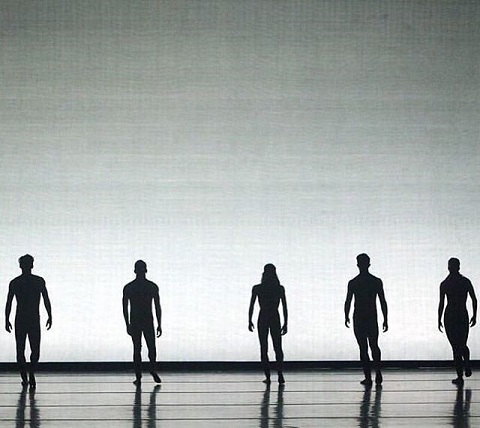
    Wednesday October 14th, 2015 – The Martha Graham Dance Company premiered Mats Ek’s AXE at the Jacob’s Pillow Dance Festival in August 2015, and will give the work’s New York premiere at NY City Center in April 2016 as part of the Company’s 90th Anniversary celebration. This evening, friends and fans of the Graham Company gathered for a studio preview of the Ek duet, which was danced by Company principals Ben Schultz (above) and PeiJu Chien-Pott (below).

    6a00d8341c4e3853ef01b7c716ffe8970b

    These studio events at the Graham homespace at Westbeth on Bethune Street are a great bonus for the Company’s many avid followers: whether introducing us to a new work or delving into explorations of the established classics of the Graham repertoire, we are given an opportunity to experience the works in an intimate setting and have an insider’s look at the creative or re-creative process. And of course there is also the genuine thrill of encountering the phenomenal  Graham dancers at close range.

    The staged version of AXE is based on a work Ek originally created on film. It is an intense domestic-drama duet which revolves around a man splitting wood, observed by his long-time mate. Layered in subtle sheets of emotion, the work takes on a profound quality that transcends the physical action. In a stroke of genius, Ek sets the duet to music of Tomaso Albinoni, giving it a timeless quality.

    Janet Eilber, the Graham Company’s artistic director, spoke of her long-held desire to have an Ek work in the Company’s repertoire, and of how it came to pass, thru chance and persistence. In brief, four Graham dancers – PeiJu Chien-Pott, Anne O’Donnell, Ben Schultz, and Lloyd Knight – traveled to Sweden where the choreographer worked with them to transform his film into a live dancework. The result is nothing less than extraordinary.

    Prior to showing us a full run-thru of the work, Ms. Eilber queried the four dancers about their experience of working with the choreographer who, it seems, was both detail-oriented and enigmatic. PeiJu and Ben then demonstrated key phrases from the ballet before presenting an absolutely stunning ‘performance’ of AXE that literally gave me goosebumps.

    AXE will be a must-see ballet when the Company celebrate their 90th anniversary at City Center in April 2016. It fits superbly into the Graham repertoire, and dance-lovers owe a debt of gratitude to Ms. Eilber for having secured it for us.

    Season-Announce-header

    PeiJu Chien-Pott (above) heralds the coming season…I cannot wait!    

  • La Mia Gilda!

    6a00d8341c4e3853ef00e553c65d718833-800wi

    A lovely lady with a lovely voice, Gilda Cruz-Romo became my friend in 1969 around the time of her New York City Opera debut. We have stayed in touch ever since, and today I want to share this brief sample of her singing:

    Gilda Cruz-Romo – In quelle trine morbide – MANON LESCAUT -Met dress rehearsal 1973


  • TROVATORE @ The Met

    D H

    Above: Dmitri Hvorostovsky

    Tuesday September 29th, 2015 – Having cancelled most of his Summer engagements to commence treatment following the diagnosis of a brain tumor, the great Russian baritone Dmitri Hvorostovsky valiantly came to New York City to sing for us at The Metropolitan Opera. The necessity of returning to London to continue his treatment regimen meant that the baritone would only sing the first three of his scheduled Met performances as Count di Luna in IL TROVATORE, but to me it spoke highly of his dedication that he made the effort to come in for these high-profile performances which also feature the first Met Leonoras of Anna Netrebko.

    At the season prima, on September 25th, the audience greeted Hvorostovsky’s entrance with a show-stopping ovation. The evening ended with a tumult of cheers and applause as he took his bows, and the members of The Met orchestra flung flowers up onto the stage, signalling their affectionate regard for the great singer.

    And a great singer he is…truly. Tonight – the second of the three performances in which he’ll appear – Hvorostovsky was again given a prolonged round of applause at his entrance. To me, his voice sounded, amazingly, more beautiful than ever. “Il balen” was the vocal high-point of the evening: superbly phrased and deeply felt, sustaining the poetic musings of a character often described as “evil” but who is, essentially, a real romantic. 

    Hvorostovsky’s Count di Luna in fact manages to engage our empathy when he is cruelly beaten by Manrico’s men in the convent scene; Manrico slashes his rival’s face, and Hvorostovsky’s acting here was wonderfully committed. All evening, the baritone kept the character very much in the forefront of both the music and the drama, from with his snarling “Io fremo!” as he listens to Manrico serenading Leonora in Act I right to the end where – if my ears didn’t deceive me – Dima chimed in on Azucena’s final high B-flat with one of his own. 

    Dolora Zajick’s Azucena was thrilling from start to finish; the esteemed mezzo-soprano flung her fiery high notes and cavernous chest tones into the house with resplendent authority, her monologue  “Condotta ell’era in ceppi” a veritable whirlwind of emotion as she displayed an uncanny dynamic range from haunting near-whispers to thunderous outbursts. This evening she didn’t take the high-C in  “Perigliarti ancor languente” that had been one of her trademarks in this role, but instead swept onward like an force of nature. Her expressive singing of “Giorni poveri vivea…” was counter-balanced moments later with the sweeping anguish of “Deh! rallentate, o barbari!” which commenced on a lightning-bolt top note and plunged into vivid chest notes. In the opera’s final scene, Zajick displayed marvelous control in “Ai nostri monti” and in the trio where she seems to be singing in her sleep, only to awaken to the horror of Manrico’s execution. Her triumphant B-flat was a glorious cry of revenge achieved. 

    The Korean tenor Yonghoon Lee made a positive impression as Manrico, despite the fact that his voice is rather lighter than we are accustomed to in this music. In fact, Lee’s entire repertoire seems geared to roles which call for more vocal heft than he seems capable of: I wonder if he might not be better employed – at least for now – as Alfredo, the Duke of Mantua, and Tamino.

    But there’s no going back, and Lee’s impassioned commitment to both the music and the character of Manrico had the audience well engaged. Lee’s slender figure and intense acting gave the rebel leader a romantic, swashbuckling appeal; and his mixture of unbridled vocal passion with moments of hushed piano reflectiveness kept the music aurally stimulating. Oddly, he sometimes reminded me of Franco Corelli – not in terms of the voice itself, but with the smouldering ardor of his delivery. 

    Lee sang a beautifully modulated, emotional “Ah si, ben mio” and – if I am not mistaken – took “Di quella pira” in C with an endlessly sustained final note which was ever-so-slightly below pitch. The audience took the tenor to heart, and Mr. Lee was very warmly applauded at the curtain calls.

    Anna Netrebko seemed to be forcing her voice in some of Leonora’s music; in pushing for a larger, darker sound, some of the inherent lyric beauty of her tone is drained away. Her over-leaning into the chest register was a detriment: this isn’t Santuzza. There were many fine passages along the way, but also some errant pitch and some glare on the louder high notes (she skipped the D-flat at the end of the Act I trio). The audience, needless to say, adored her.

    Stefan Kocan was a powerfully-sung and dramatically commanding Ferrando, with Maria Zifchak a big-voiced Inez and my friend Edward Albert in the brief role of A Gypsy. Marco Armiliato’s conducting was ‘good routine’ – and better than that after the interval – and the orchestra played very well.   

    A program note explained that Ms. Netrebko’s costumes had been specially created for her. Her breasts were amply on display in the opening scene’s burgundy outfit, then at the convent she was all buttoned up, a prim and proper young ‘widow’ in black. She went in for a gypsy look for the scene prior to her (thwarted) marriage, with a nifty head-wrap.

    For all the passing “ifs, ands, or buts”, this was overall a pretty exciting night at the opera: there was involvement, passion, and some very impressive vocalism along the way.

    Metropolitan Opera House
    September 29th, 2015

    IL TROVATORE
    Giuseppe Verdi

    Manrico.................Yonghoon Lee
    Leonora.................Anna Netrebko
    Count Di Luna...........Dmitri Hvorostovsky
    Azucena.................Dolora Zajick
    Ferrando................Stefan Kocán
    Ines....................Maria Zifchak
    Ruiz....................Raúl Melo
    Messenger...............David Lowe
    Gypsy...................Edward Albert

    Conductor...............Marco Armiliato