Blog

  • New York String Orchestra @ Carnegie Hall

    Augustin-hadelich-1

    Above: violinist Augustin Hadelich

    Sunday December 28th, 2014 matinee – An matinee concert by the New York String Orchestra at Carnegie Hall brought us the scores of two favorite ballets: Tchaikovsky’s Serenade for Strings (the setting of Balanchine’s beloved classic) and the Barber violin concerto (one of Peter Martins’ finest creations). In addition, Beethoven’s Pastoral symphony (#6) rounded out the afternoon.

    A huge crowd filled the venerable hall, perhaps drawn as much by attractive ticket pricing as by the inviting programming. Although betraying a lack of sophistication by applauding between movements – and even during one movement of the Serenade – they were on the whole very attentive and appreciative, and there were lots of young people present, a hopeful sign that live classical music still has the power to inspire in an age of I-phones and ‘clouds’. We could have done without the baby, though.

    Jaime Laredo took the podium, mustering a lush and soul-lifting sound from his young musicians in the Tchaikovsky. I sometimes wonder if people who’ve never seen Balanchine’s ballet get the same spine-tingling raptures on hearing this score played in a concert hall. For ballet-goers, this is music indelibly linked to movement: to toe shoes and ice-blue tulle; so much so that, even though we know full well the order of the last two movements will be reversed, it’s still a bit of a jolt when it happens. The musicians (so many Asian players – always a treat!) simply reveled in the rich textures and broad melodies with which the composer both seduces and inspires us. It was a – indeed, an inspiring – performance, loaded with sonic ravishments.

    Augustin Hadelich then appeared, slender and dapper, and together with Maestro Laredo and the orchestra (enhanced by winds, piano, and timpani) gave a marvelous reading of the Barber concerto. Mr. Hadelich has an extraordinary gift for lyricism, his tone remaining blessedly sweet in the highest register whilst meanwhile showing an almost viola-like resonance in the lower range. Sweeping thru the poignant themes that the composer has lavished on the work, the violinist seemed to be reaching the hearts of the listeners; and in the insanely swift and dancing coloratura of the final presto, he was indeed impressive. 

    Barber gives shining moments to some of the orchestral voices as well, most notably the oboe solo heard early in the second movement, played lovingly today by Emily Beare. Horn, flutes, clarinet and bassoon each have their say, and I love the way the piano is woven into the tapestry, Amalia Rinehart making a fine impression at the keyboard. I also greatly enjoyed the female timpanist, Yibing Wang.

    Mr. Hadelich was rightly given a warm ovation and he very much deserved the Paganini encore which was granted, though I think I would have preferred to carry my deep enjoyment of the Barber right into the interval.

    Beethoven’s Pastoral is a very nice symphony: the music is overwhelmingly lovely and cordial, and even the momentary storm (which passes as swiftly as Rossini’s witty thunderbolts in Barbiere di Siviglia) can’t detract from the sheer serenity of the music. Well-played by the young musicians, I found the symphony too lulling and too long to sustain interest over its 40-minute duration. But the first half of the concert was entirely satsfying.
  • Score Desk for TRAVIATA

    Rebeka

    Above: soprano Marina Rebeka

    Saturday December 27th, 2014 matinee – The Met’s lame production of La Traviata – yet another attempt to make opera ‘relevant’ – isn’t worth seeing, but I thought this particular cast might be worth hearing, so I bought a score desk for today’s matinee. In the event, Marina Rebeka (Violetta) and Quinn Kelsey (Germont) made for a particularly exciting afternoon: their singing of the great Act II duet – the heart of the opera – was indeed memorable. And both of them were in fact excellent throughout. It’s good to experience this kind of singing in a standard-rep work at The Met, for there’s no guarantee of it in this day and age. 

    On the podium, Marco Armiliato seemed more intent than usual on molding a convincing rendering of the score: sometimes he is too hasty, too loud, too provincial. But today he showed great attention to details of tempo and dynamic, and allowed his singers plenty of leeway to linger on favorite notes and pamper beloved phrases. The orchestra played very well.

    Aside from Maria Zifchak (Annina) and James Courtney (Dr. Grenvil), the singers in the smaller roles were more serviceable than memorable.

    In a role which has been sung in living memory at The Met by such luminaries as Richard Tucker, Alfredo Kraus, Carlo Bergonzi, Nicolai Gedda, Neil Shicoff, Placido Domingo, and Jonas Kaufmann, Stephen Costello – today’s Alfredo – seemed like a case of sending a boy to do a man’s job. A feeling of uncertain pitch pervaded quite a bit of Costello’s singing, and despite a lovely passage here and there, he seemed unsure as the music ventured higher, and his breath-line sometimes didn’t sustain. His offstage serenade in Act I was flat, and he struggled with the cabaletta “O mio rimorso”, sounding tentative and uneasy. It’s sad to hear a young and promising voice in this state; it might be a good idea for him to take a break and address the problems that seem to have cropped up in his singing.

    But Marina Rebeka and Quinn Kelsey swept Verdi’s immortal score to triumph with their outstanding vocalism all afternoon. Ms. Rebeka, who has proven vastly pleasing in Rossini’s Moïse et Pharaon at Carnegie Hall and in Don Giovanni at The Met, moved into the upper echelons of the many Violettas I have encountered in-house – more than 60 of them to date – in my many years of opera-going. Her voice has a pearly sheen; she displays impressive dynamic control, appealing turns of phrase, vibrant top notes, agile coloratura; and it’s a voice with a personality behind it. Her singing of the Act I scena was some of the most aurally stimulating I have heard in recent seasons, with plenty of verve in “Sempre libera” and a nicely placed E-flat to polish it off.

    In Act II, the soprano met her vocal equal in Quinn Kelsey, who had sung an excellent Marcello in Boheme earlier this season. This vocal duo of Met-sized voices brought to this scene the kind of tonal allure, dramatic nuance, passion, and sheer vocal glamour that made the theatre seem to pulsate with emotion. Trading phrases, each seemed to produce one magical effect after another: the sopranos pppp “Di due figli?”, the baritone’s twinge of heartache at “Deh, non mutate in triboli…” and later his deeply felt “…tai detti a un genitor!” led us to Ms. Rebeka’s superbly delicate “Dite alla giovine…”: the absolute turning point of the opera. Throughout this duet, the two singers gave the kind of involved, emotionally engaging singing that seems often to be missing in performances today. I scrawled the word “Wow!” in my Playbill. 

    Q Kelsey

    Mr. Kelsey (above) returned for a big-toned, finely-modulated and tender “Di Provenza”, winning a burst of sincere applause from the crowd (who were rather stingy with aria-applause today but went nuts at the end of the opera). I kind of wish they’d left off the baritone’s cabaletta – which Kelsey sang very well but which seems musically trite to me and de-rails the impetus of the drama.

    In the scene at Flora’s, Mr. Costello sounded flattish and seemed to lack reserves of power for the denunciation scene, but Mr. Kelsey upbraided his son with some grand singing to which Costello’s response was perhaps his best moment of the evening. Ms. Rebeka sailed over the ensemble with gleaming tone, having sung the opera’s most moving passage – “Alfredo, Alfredo…di questo core…” (where she prays that God will spare her beloved from remorse for his callous behavior) – beautifully.

    Moving directly from the country-house to Flora’s party scene to the final scene in succession, without pause, makes for a very long sing for the soprano, but Ms. Rebeka took it all in stride and did some of her most ravishing singing in “Addio del passato” where she worked some piano magic along the way and for once made the second verse seem necessary. Despite Mr. Costello being again off-pitch in “Parigi, o cara” the soprano managed to carry it off, moving on to a pensive “Ma se tornando…” as the reality that Alfredo’s love cannot save her sinks in; she bursts out thrillingly in “Gran dio, morir si giovine”, though the tenor’s response is effortful…and later in an ensemble passage he seems quite taxed by a couple of B-double-flats.

    Her chance for happiness has come too late; but with a big build-up of hope, Violetta speaks of her pain having vanished. Rising to a stunning top-A on “O gioia!”, Ms. Rebeka draws the opera to a heart-rending close.

    Big ovations for the soprano and baritone at their curtain calls; the House was still resounding with cheers as I left. If my upcoming two performances of Aïda come close to the level of today’s Traviata, I’ll be more than pleased. 

    Metropolitan Opera House
    December 27, 2014 matinee

    LA TRAVIATA
    Giuseppe Verdi

    Violetta.....................Marina Rebeka
    Alfredo......................Stephen Costello
    Germont......................Quinn Kelsey
    Flora........................Maya Lahyani
    Gastone......................Eduardo Valdes
    Baron Douphol................Jason Stearns
    Marquis D'Obigny.............Kyle Pfortmiller
    Dr. Grenvil..................James Courtney
    Annina.......................Maria Zifchak
    Giuseppe.....................Juhwan Lee
    Messenger....................Joseph Turi
    Guest........................Athol Farmer
    Gentleman....................Paul Corona

    Conductor....................Marco Armiliato

  • There Is An Inn

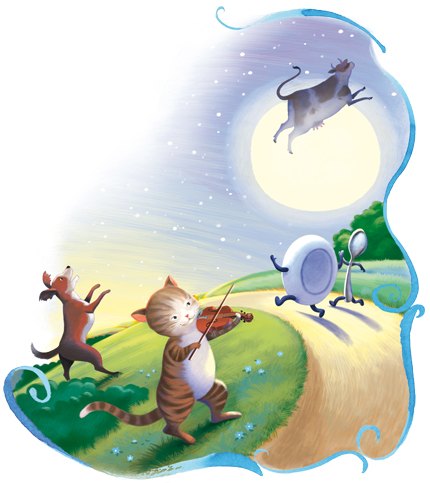
    Cat-and-fiddle

    There is an inn, a merry old inn
    beneath an old grey hill,
    And there they brew a beer so brown
    That the Man in the Moon himself came down
    one night to drink his fill.

    The ostler has a tipsy cat
    that plays a five-stringed fiddle;
    And up and down he runs his bow,
    Now squeaking high, now purring low,
    now sawing in the middle.

    The landlord keeps a little dog
    that is mighty fond of jokes;
    When there’s good cheer among the guests,
    He cocks an ear at all the jests
    and laughs until he chokes.

    They also keep a hornéd cow
    as proud as any queen;
    But music turns her head like ale,
    And makes her wave her tufted tail
    and dance upon the green.

    And O! the rows of silver dishes
    and the store of silver spoons!
    For Sunday there’s a special pair,
    And these they polish up with care
    on Saturday afternoons.

    The Man in the Moon was drinking deep,
    and the cat began to wail;
    A dish and a spoon on the table danced,
    The cow in the garden madly pranced,
    and the little dog chased his tail.

    The Man in the Moon took another mug,
    and rolled beneath his chair;
    And there he dozed and dreamed of ale,
    Till in the sky the stars were pale,
    and dawn was in the air.

    Then the ostler said to his tipsy cat:
    “The white horses of the Moon,
    They neigh and champ their silver bits;
    But their master’s been and drowned his wits,
    and the Sun’ll be rising soon!”

    So the cat on his fiddle played hey-diddle-diddle,
    a jig that would wake the dead:
    He squeaked and sawed and quickened the tune,
    While the landlord shook the Man in the Moon:
    “It’s after three!” he said.

    They rolled the Man slowly up the hill
    and bundled him into the Moon,
    While his horses galloped up in rear,
    And the cow came capering like a deer,
    and a dish ran up with the spoon.

    Now quicker the fiddle went deedle-dum-diddle;
    the dog began to roar,
    The cow and the horses stood on their heads;
    The guests all bounded from their beds
    and danced upon the floor.

    With a ping and a pang the fiddle-strings broke!
    the cow jumped over the Moon,
    And the little dog laughed to see such fun,
    And the Saturday dish went off at a run
    with the silver Sunday spoon.

    The round Moon rolled behind the hill,
    as the Sun raised up her head.
    She hardly believed her fiery eyes;
    For though it was day, to her surprise
    they all went back to bed.”

    ~ JRR Tolkien

  • New Music Director at NYC Ballet

    Litton_lg_7

    New York City Ballet have announced the appointment of Andrew Litton (above) as music director. Litton, a native New Yorker, is the sixth conductor to hold the coveted post.

    Visit Maestro Litton’s website and learn all about him here.

    And while we’re on the subject of New York City Ballet, ballerina Faye Arthurs has posted a charming story about the Company’s annual NUTCRACKER season here.

  • Joy To The World: BRANDENBURGS @ CMS

    2000px-Johann_Sebastian_Bach_signature.svg_

    Tuesday December 16th, 2014 – New York City Ballet have Balanchine’s NUTCRACKER; The Philharmonic offers the MESSIAH; and The Met’s giving holiday performances of HANSEL & GRETEL. But it’s Chamber Music Society of Lincoln Center who give us an extra-special gift every year in the run up to Christmas Eve: the complete Brandenburg concertos of Johann Sebastian Bach.

    Last year the Society scheduled two performances of this programme, both of which were sold out. This year they have added a third performance, which is the one Dmitry and I attended tonight. And on Thursday they’ll take the Brandenburgs on the road, to the Harris Theater in Chicago.

    A large crowd this evenng, with additional rows of seating near the stage. A pair of fidgety neighbors were a bit of a distraction, but at least they were silent. The concertos, played in a different order each year, unfolded magically; each has its own complement of players and the Society assembled a roster of excellent musicians who traded off ‘seatings’ from one concerto to the next. So nice to see principal artists from The New York Philharmonic (Robert Langevin, flute, and Timothy Cobb, double-bass) and The Metropolitan Opera (Julia Pilant, horn) joining CMS from their neighboring home theatres. Mr. Cobb and John Gibbons (immaculate playing at the harpsichord) performed in all six concertos. The programme looks long on paper, but actually the evening flew by with a savourable mixture of virtuosity and expressive poetry.

    The performance opened with the #1 concerto in F-major, which sounds so Handelian to me. This is the concerto with two horns and a trio of oboes. Ms. Pilant and Julie Landsman sounded the brightly-harmonized horn calls with assurance, whilst Stephen Taylor, Randall Ellis, and James Austin Smith piped up delightfully with their oboes, joined by Marc Goldberg on bassoon. Oboe, violin, bassoon and bass sound the poignant adagio, then the high horns ring out briskly in the allegro. You think it’s over, but there’s a surprise fourth movement – it veers from minuet to polonaise – in which separate choirs of winds and strings summon up the rhythms of the dance.

    In concerto #6 (B-flat major) which follows, a trio of cellos (Pauk Watkins, Eileen Moon, Timothy Eddy) bring a particular resonance to the score. The adagio – one of Bach’s most movingly melodious inventions – opens with the solo viola (Lily Francis) who passes the theme to violinist Lawrence Dutton. This is a passage that one wants to go on and on. But the closing allegro sweeps us inexorably forward.

    Violinist Benjamin Beilman took the lead in the 4th concerto (in G-major); the satiny sheen of his sustained tones and his very deft management of the coloratura passages were indeed impressive, and he is an animated, deeply involved musician. The duo flautists Sooyun Kim and Robert Langevin warbled with silvery sweetness in the fleet phrases of the outer movements and blendied serenely in the central andante.  Ben Beilman’s striking virtuosity and his elegant lyricism marked a high point in an evening loaded with superb playing.

    After the interval, in the 5th concerto (D-major), John Gibbons’ harpsichord artistry was to the fore, giving great pleasure in a long, complex and brilliantly etched ‘mega-cadenza’ at close of the first movement. The central affetuoso movement brings the sterling flute of Mr. Langevin and the poised violin phrasing of Sean Lee, mingling their ‘voices’  with the keyboard textures Mr. Gibbons so impressively evoked. Yet again, we feel Bach’s genius being transmitted to us in all its poignant clarity. The mood and pace then bounce back emphatically with a brisk final allegro.

    The 3rd concerto, in G-major, is unique in that the expected central slow movement is replaced by a mere couple of chords before going immediately into allegro overdrive. Thus the entire piece simply rushes forward in a whirlwind of animated playing. The all-strings setting (plus harpsichord, of course) features a large ensemble and much rhythmic and melodic variety whilst always sailing onward.

    The evening’s final work, the 2nd concerto (in F-major), arrived far to soon. In flourishing flights to the upper range, David Washburn’s Baroque trumpet gave the arcangel Gabriel a run for his money. Equally scintllating to the ear was Sooyun Kim’s limpid flute playing: both in agility and in sustained, luminous tone, she made a wonderful impression. In the andante, a particularly fine blend of timbres from Ms. Kim, Stephen Taylor (oboe), Lawrence Dutton (violin) and Paul Watkins (cello) made me again want to linger; but the trumpeter’s silvery calls in the final allegro assai swept us on to the evening’s celebratory conclusion.

    The young violinist Sean Lee, playing the concertos with CMS for the first time, wrote movingly of the experience in a Playbill note: “I cannot think of a more joyous, warm, celebratory set of pieces to revel to, as if gathering around a fire during these winter months.” Amen to that!   

    The participating artists:

  • Janis Martin Has Passed Away

    6a00d8341c4e3853ef01bb079c2285970d

    Above: Claudio Abbado and soprano Janis Martin prior to a performance of Schoenberg’s ERWARTUNG at La Scala, 1980

    Following yesterday’s news of the death of Irene Dalis, more sad tidings in the opera world today with the passing of Janis Martin, the American mezzo-turned-soprano, a singer who loomed large in my opera-going career. A Met Auditions winner in 1962 (she sang Dalila’s “Mon coeur s’ouvre a ta voix” at the Winners’ Concert), Martin sang nearly 150 performances at the Metropolitan Opera, commencing in 1962 as Flora Bervoix in TRAVIATA. As a young opera-lover, I heard her many times on the Texaco broadcasts. She eventually progressed to “medium-sized” roles: Siebel, Nicklausse, Lola in CAVALLERIA RUSTICANA. Martin left The Met in 1965 and built a career abroad, moving into soprano territory. She returned to The Met and from 1974 thru 1977; during these seasons, she was my first in-house Kundry, Marie in WOZZECK, and Sieglinde. Another hiatus, and then she was back at Lincoln Center from 1988-1992, singing the Witch in HANSEL & GRETEL, the Dyer’s Wife in FRAU OHNE SCHATTEN, Senta, the Foreign Princess in RUSALKA, and two performances of TOSCA.

    In the past couple of months, I’ve taken a renewed interest in Janis Martin’s singing, after first hearing her as Gutrune in a recording of a tremendous GOTTERDAMMERUNG from Bayreuth 1975. This prompted me to pursue her further, acquiring her Senta in a 1972 Vienna HOLLANDER. Waiting in my pile of “to-listen-to” CDs is her WALKURE Fricka, from Bayreuth 1968. I also searched out my old cassettes of her Met broadcast as the Dyer’s Wife (she sings tirelessly, and with great vocal thrust and considerable beauty of tone) and I purchased her commercial recording of ERWARTUNG with Pierre Boulez conducting, which is very impressive.

    Janis Martin sings two songs from Hindemith’s Drei Gesänge op.9 here. The songs are “Meine Nächte sind heiser zerschrien” (text by Ernst Wilhelm Lotz), and “Weltende” (text by Else Lasker-Schüler).

  • Cherylyn Lavagnino’s Salon

    L1520411

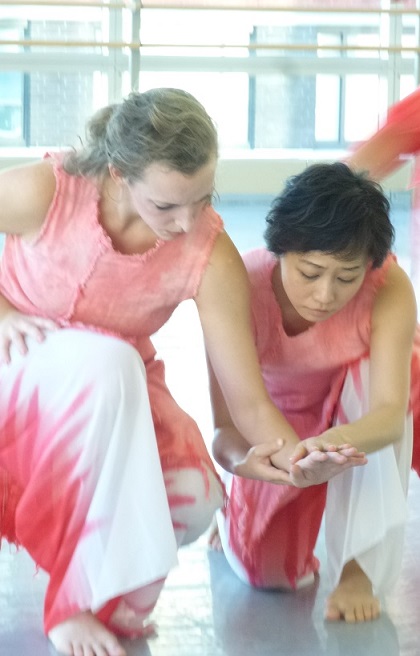
    Above: dancers are Claire Westby, Adrian Silver, and Selina Chau of Cherylyn Lavagnino Dance in a salon-showing of Naděje, a work-in-progress by Ms. Lavagnino

    Sunday December 14th, 2014 – On this cold, clear afternoon, friends of Cherylyn Lavagnino Dance gathered for a studio showing of works (and works-in-progress) by Cherylyn and by Christine McMillan, a dancer/choreographer with enduring ties to Cherylyn’s company.

    The programme opened with Naděje (‘Hope’) a piece Cheylyn is in the midst of creating. Drawing inspiration from the life of Václav Havel, the great Czech writer, philosopher, dissident, and statesman, Cherylyn turns to music of Havel’s fellow countryman Leoš Janáček: the composer’s violin sonata, composed in 1914 (and later revised). The ballet calls for a large cast and the choreography displays Cherylyn’s characteristic flow of movement and her spot-on sense of structure. I look forward to following the development of this new work.

    Here are a few more images from Naděje:

    L1520394

    Giovanna Gamna, Travis Magee

    L1520425

    Selina Chau

    L1520403

    Justin Faircloth

    L1520391

    Giovanna Gamna, Travis Magee in Naděje

    L1520434

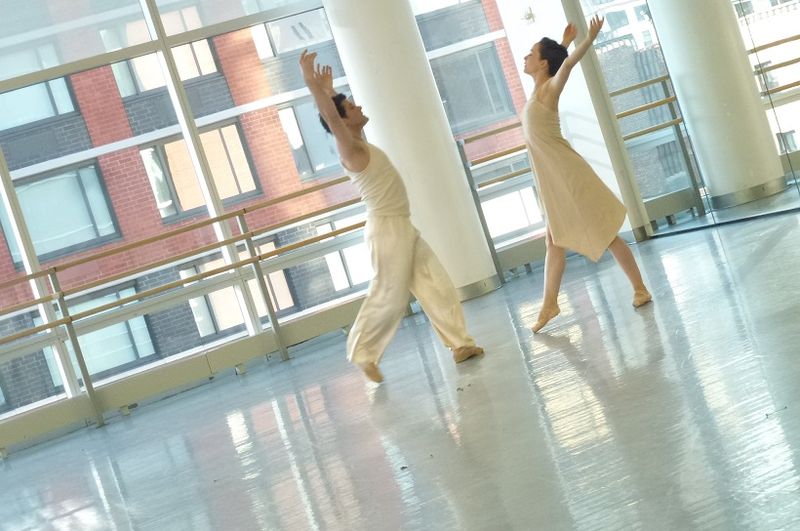
    Above: Assaf Benchetrit and Laura Mead, dancing to Rachmaninoff

    A portion of an as-yet-untitled duet which Cherylyn is creating for Indianapolis City Ballet is set to piano music of Sergei Rachmaninoff. Clad in creamy white, dancers Laura Mead and Assaf Benchetrit move with impetuous lyricism thru combinations drawn from the classic ballet vocabulary but with a fresh accent.

    L1520430

    Above: Assaf Benchetrit and Laura Mead

    Cherylyn’s 2010 dancework Snap Shots is an ensemble work danced to an original score by Kyle Olson. Set in four movements, the work features a double pas de deux, a male soloist with a quartet of ballerinas, a duet for two men, and a full-cast finale. The work is spacious and animated, including a passage where two men race about the space as if pursued.

    Images from Snap Shots:

    L1520444

    Adrian Silver, Selina Chau

    L1520463

    Adrian and Selina

    L1520485

    Christine Luciano, Lila Simmons, Giorgia Bovo, Claire Westby

    L1520566

    Above: Christine McMillan in her solo Woman in Dress

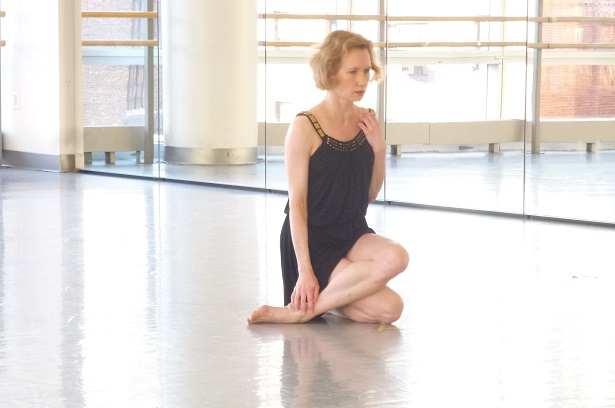
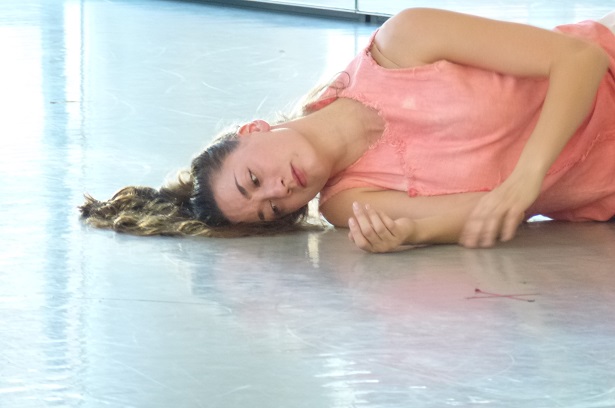
    Christine McMillan’s self-choreographed solo, Woman in Dress, unfolds to music by Hildur Gudnadóttir and Ólafur Arnalds. The dancer, who presents an interesting mixture of feminine strength and delicacy, uses her expressive arms and hands to poetic effect. In the course of the dance she moves from ecstatic heavenward reach to elements of self-examination, a self-portrait with an intrinsic emotional quality.

    Images of Christine McMillan in Woman in Dress:

    L1520529

    L1520532

    L1520554

    L1520547

    Christine McMillan: Woman in Dress

    The presentation ended with a performance of Cherylyn’s Ru, which premiered last season and is set to a score by Scott Killian. Inspired by the Saigon-born writer Kim Thúy’s novel of the same title, Ru, which means ‘lullabye’ in Vietnamese, depicts the flight of a young girl’s family from the Communists who have seized their home, first to Malaysia and eventually to Canada. Furtive and desperate, the women in this dancework bond together in quiet rituals; the men – in sexy costumes – alternately seem like oppressors and protectors. Scott Killian’s music provides the atmospheric setting for some of Ms. Lavagnino’s most expressive choreography.

    Some of the dancers in Ru are:

    L1520601

    Giovanna Gamna

    L1520613

    Travis Magee, Selina Chau

    L1520622

    Justin Faircloth

    L1520659

    Christine Luciano

    L1520637

    Adrian Silver

    L1520656

    Lila Simmons and Selina Chau in Ru

  • Irene Dalis Has Passed Away

    6a00d8341c4e3853ef010534d06fca970b

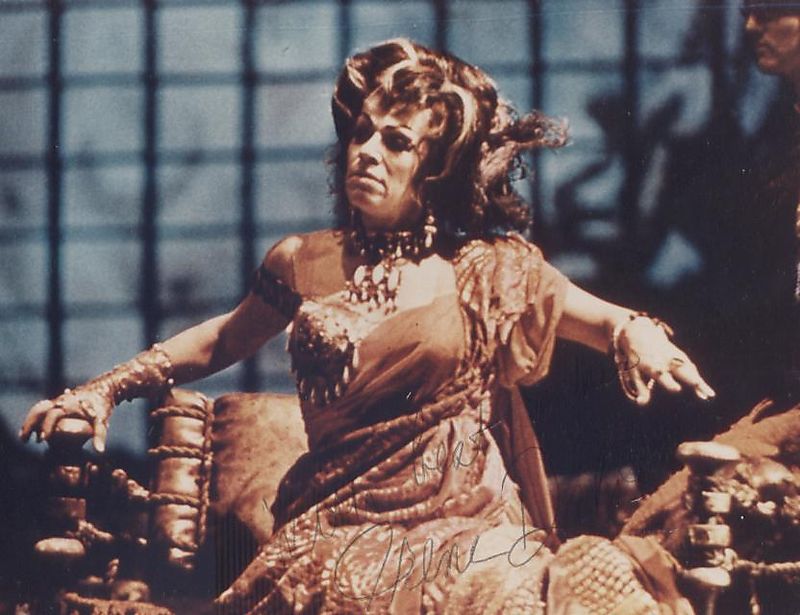
    Above: Irene Dalis as Herodias in SALOME

    Another of my great idols from my early years of opera-going has passed away: Irene Dalis – who, after a long singing career went on to run Opera San Jose – has died at the age of 89.

    In 2007, I wrote an appreciation of Dalis for my blog and a few months afterward she either found it or it was pointed out to her, and she sent me a lovely note of thanks. I still have the Christmas cards she used to send me back in the ’60s and ’70s when she was singing at The Met.

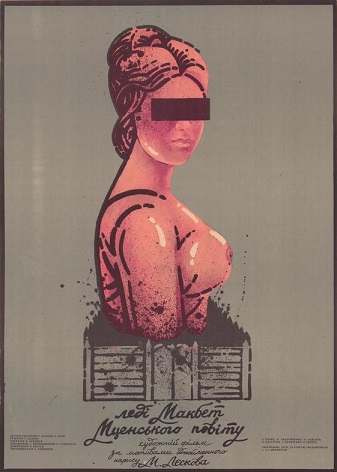
  • LADY MACBETH OF MTSENSK @ The Met

    Lady-macbeth-of-mtsensk-district-movie-poster-1989-1020340180

    Saturday November 29th, 2014 matinee –  My friend Dmitry and I both really like Shostakovich’s LADY MACBETH OF MTSENSK; I remember being bowled over by Catherine Malfitano’s portrayal of Katerina Ismailova back in 2000. The chance to see this season’s revival caused us to weigh the pros and cons: basically we were not sure of what to expect from Eva-Maria Westbroek – who plays Katerina this season – having not been especially thrilled with what we’d seen her do to date: a solid but un-illuminating Sieglinde and a seriously miscast Francesca da Rimini. But in the end Shostakovich won out, and we were rewarded with one of the greatest Met experiences in the past decade.

    As Katerina this afternoon, Ms. Westbroek sounded rather wobbly and edgy at first, but as the performance progressed the voice became steadier (though never truly steady) and her control of it was increasingly impressive. It’s a generous voice, and in addition to some rich spinto outpourings she was able to hone the voice down to a whisper at times. As an actress, she surely threw herself unsparingly into the role, winning a roar from the crowd as she took her curtain calls.

    Brandon Jovanovich was the passionate, randy, and ultimately heartless Sergei. His voice is Met-sized, warm and vigorous. Tall and handsome of physique, he tackled the physical requirements of the production with gusto, including being hoisted aloft whilst humping the cook (Holli Harrison is a spirited yet hapless portrayal). Mr. Jovanovich sings the Verdi REQUIEM with the New York Philharmonic in January: something to look forward to even more eagerly after his big success today.

    As the cuckolded Zinovy, tenor Raymomd Very gave a strong vocal performance; dramatically he seemed to be thoroughly under his father’s thumb and unable to comprehend the needs and desires of his slowly-smouldering wife.

    In LADY MACBETH Shostakovich provides a number of finely-crafted roles which today were seized upon by a wonderful coterie of singing actors/actresses. In particular, we had a veritable parade of bassos who plumbed the vocal depths so beloved in Russian music whilst constructing their characters with juicy, scene-grabbing theatrics. In a pair of towering characterizations, Anatoli Kotscherga as Boris and Vladimir Ognovenko (the Police Sergeant) gave object lessons in the art of operatic performing. Mr. Kortsherga was the oily, lazy, hypocritical father figure to a T; his singing had delightful tinges of liquor and sleaze, his tone ample and with a dark vibrance. Mr. Ognovenko, who for over two decades has given us great portrayals at The Met, was in thunderous voice and threw himself into the staging with great gusto. His was a major triumph today. More basso brilliance from Mikhail Kolelishvili (the ample-voiced, dancing priest), Dmitry Belosselskiy (with his deep lamenting sound in the final ‘hymn’ of the doomed prisoners); and Ricardo Lugo (making his mark as a Prison Guard).

    Back in August 1982 I saw a breathtaking Beni Montresor-designed production of Cavalli’s L’ORMINDO given by Chamber Opera Theatre of New York. The two male leads were tenor Ronald Naldi and (then-) baritone Allan Glassman. Both went on to appear in many Met productions. Mr. Glassman made the transition to tenor and has sung both character and leading roles at The Met, including Herod in SALOME and Bégearss in GHOSTS OF VERSAILLES. Today he was cast as the Shabby Peasant, the man who discovers the dead body of Zinovy, setting up the arrest of Katerina and Sergei. Mr. Glassman’s singing was stentorian and superbly characterized, his stage portrayal at once manic and furtive. His scene was a highlight of the afternoon.

    Oksana Volkova, an outstanding Olga in ONEGIN last season, was rich-toned as Sonyetka – how gross that she and Katerina drowned in a vat of dumped human waste! – and Kelly Cae Hogan’s clear, pointed soprano rang out nicely in her few phrases as a Convict. Tyler Duncan (Millhand) and John McVeigh (Teacher) stood out among the supporting cast.

    Safe_image.php

    The hero of the afternoon was conductor James Conlon (above). With both the Met orchestra and chorus on absolute peak form, Conlon shaped the spectacular Shostakovch score with extraordinary commitment, summoning forth the vast colour-range of the music and evoking stellar playing in the featured instrumental solo passages that crop up quite frequently. Conlon gave his singers ideal support, and it was his musical vision that made the performance the thrilling event that it was. After the final chord, the Maestro remained in the pit, shaking hands with many of the players.  

    The Graham Vick production is one of The Met’s finest, making very inventive use of the stage area (especially the trap doors!) and with countless touches to lure the eye: the disco ball in particular casts brilliant shards of light into the auditorium. Elements of the Orthodox faith are incorporated (the over-the-top grieving widows clambering up a towering pile of garbage to plant crosses whilst flagellating themselves or beating their breasts); then there are the comic-opera police force, the roistering peasants, the shirtess hunks who work for Boris. It’s a vulgar, boozy, ironic and  – in the end – moving production. This afternoon’s large audience seemed mesmerized throughout, and there were very few defections at intermission. The ovation at the end was hearty (though more was really deserved) and the orchestra players remained in the pit to be hailed lustily along with James Conlon during the bows. After the final curtain fell, there were loud sounds of celebration from the stage as the cast, chorus, and crew shared in the mutual admiration of their work at the end of a successful run.

    Note: The performance started about 15 minutes late due to some lighting malfunction in the pit.

    Metropolitan Opera House
    November 29, 2014 (matinee)

    LADY MACBETH OF MTSENSK
    Dmitri Shostakovich

    Katerina Ismailova......Eva-Maria Westbroek
    Sergei..................Brandon Jovanovich
    Zinovy..................Raymond Very
    Boris...................Anatoli Kotscherga
    Aksinya.................Holli Harrison
    Millhand................Tyler Duncan
    Coachman................Dustin Lucas
    Peasant.................Allan Glassman
    Steward.................Rod Nelman
    Porter..................Brandon Cedel
    First Foreman...........Kurt Phinney
    Second Foreman..........Daniel Clark Smith
    Third Foreman...........David Lowe
    Priest..................Mikhail Kolelishvili
    Chief of Police.........Vladimir Ognovenko
    Policeman...............Earle Patriarco
    Teacher.................John McVeigh
    Old Convict.............Dmitry Belosselskiy
    Sentry..................Ricardo Lugo
    Sonyetka................Oksana Volkova
    Convict.................Kelly Cae Hogan
    Prison Officer..........Paul Corona

    Conductor...............James Conlon

  • Hilary Hahn/Jaap van Zweden @ The NY Phil

    E0022344_23154243

    Above: violinist Hilary Hahn

    Wednesday November 26th, 2014 – After experiencing conductor Jaap van Zweden’s performance of the Shostakovich 8th with The New York Philharmonic last week, I was very glad of the chance to attend a second concert under his baton. In addition, the evening provided my first opportunity to hear Hilary Hahn live.

    The evening opened with a genuine rarity: Johan Wagenaar’s Cyrano de Bergerac Overture which was inspired by Edmund Rostand’s play of the same name. The play premiered in 1897, the concert overture dates from 1905. The overture commences with a bold statement, then waxes poetical, romantic or swashbuckling by turns. It’s a melody-rich piece; though sometimes compared to the works of Richard Strauss, there’s no hint in the Wagenaar of the absonance that tends to crop up in some of Strauss’s works.

    Ms. Hahn then appeared for the Korngold violin concerto. Most widely known as a composer of film scores, Erich Wolfgang Korngold arrived in Hollywood in the 1930s, already an established classical composer. Themes from his movie scores found their way into his concert works; for the violin concerto, Korngold drew upon his music for the films Another Dawn, Juárez, Anthony Adverse, and The Prince and the Pauper. Jascha Heifetz premiered the concerto in 1947.

    Ms. Hahn looked fetching in a silvery-steely strapless gown; slender and elegant, she is as lovely to watch as to hear. In the concerto’s opening movement, much of it set in the violin’s high register, Ms. Hahn displayed a truly shimmering quality of timbre. In the second movement, Romance, she caught the quality of sehnsucht that the rapturous themes evoke; and in the quirky, devilish technical demands of the final Allegro assia vivace, she really went to town, dazzling us with her virtuosity.

    Ms. Hahn and Maestro van Zweden were greeted with sustained applause after the concerto; coming out for a second solo bow, the comely violinist took up her bow for a Bach encore. Tonight’s Playbill states that Hilary Hahn has not appeared with the NY Phil for a decade; she should immediately be signed for future appearances: she’s a treasurable player and we should have every possible opportunity to experience her artistry.

    Following the interval, Jaap van Zweden unfurled the Beethoven 7th for us. This symphony is just about perfect: neither too short nor too long, and especially appealing in its rhythmic variety. The symphony’s first movement opens slowly (marked ‘sostenuto‘…’sustained’) and then turns animated. The famiiar allegretto that follows – one of Beethoven’s most widely-appreciated passages – has a stately sway to it. The lively dance of the ensuing Presto propels us irresistibly to the finale with its exhilarating feeling of joyous abandon. The music sailed on with Maestro van Zweden, the  musicians, and Beethoven carrying the audience along on buoyant waves of sound. Richard Wagner called this symphony “the apotheosis of the dance itself…” and the audience responded with vigorous enthusiasm to the almost breathless pace which the conductor imposed in this uninhibited finale.