Blog

  • NY Philharmonic Ensembles: Concert @ Merkin Hall

    Penderecki

    Above: the composer Krzysztof Penderecki

    Sunday February 15th, 2015 matinee – This series of chamber music concerts by musicians from The New York Philharmonic looked so appealing when I saw the initial announcement. Due to my crowded calendar, this was my first opportunity to attend one of the concerts this season, and I’m most grateful to Lanore Carr of the Philharmonic for arranging it for me. Aside from the very interesting repertoire, the concert gave us an opportunity to ‘meet’ many of the Philharmonic’s artists in a more intimate setting. 

    Merkin Hall is a fine venue for chamber music – with a very clear acoustic – and the audience, who braved frigid temperatures to attend, were held in a sustained state of attentive delight by both the music and the playing.

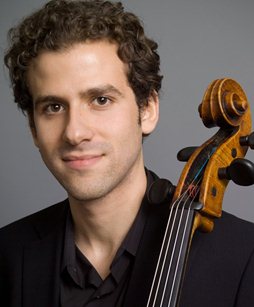
    The outstanding contemporary Polish composer Krzysztof Penderecki’s String Trio was premiered in 1990 at Krakow. Today, cellist Nathan Vickery introduced the piece, citing the fact that Penderecki set out early in his career to write music that would antagonize his listeners, but that, over time, his approach mellowed.

    The String Trio is a vivid and very pleasing miniature – about 12 minutes long – and was played to perfection by Mr. Vickery with Quan Ge (violin) and Dawn Hannay (viola). After a slashing, jagged introductory phrase, the viola, then the cello, and then the violin make opening statements. The work takes on a conversational feel, as the instruments seem to murmur or chatter to one another with buzzing intimacy. The second movement is dance-like. All three players excelled in both tonal appeal and rhythmic surety. It was a bracing, lively performance, with intriguing touches of wit subtly expressed..

    Jean Sibelius’s String Quartet in D minor, Voces intimae, Op. 56 was the only familiar work on the programme. This is music rich in expressions of melancholy and tenderness – even the more animated passages have a rather forlorn undercurrent – and in introducing it, violist Irene Breslaw quoted Sibelius as saying it was “…music that brings a smile to your lips at the time of death.”

    The musicians – Anna Rabinova and Hyunju Lee (violins), Ms. Breslaw, and cellist Qiang Tu (superb depth of tone!) – vied with one another in poignancy of expression and beauty of line. Combined, their voices mingled in heartfelt harmonies, most especially in the quartet’s autumnal Adagio where their evocations of longing and regret spoke so deeply to me. In the scurrying finale, the players’ technical deftness was truly impressive.

    The chance to hear music by Vittorio Giannini was an important factor in wanting to attend this concert. This now-nearly-forgotten composer was so prolific, writing operas, symphonies, sacred works, chamber music, and songs. His sister, Dusolina Giannini, was an operatic soprano who sang two dozen performances at The Met from 1938-1941. Vittorio Giannini was well-regarded in his lifetime – he taught at Juilliard, The Manhattan School of Music, and the Curtis Institute, and he founded the North Carolina School of the Arts – and his music won favor with audiences. Yet he and his music seem to have lapsed into obscurity following his premature death in 1966 at age 63.

    Today we heard Vittorio Giannini’s Piano Quintet, and a gorgeous work it is! Melodically rich in the spirit of Puccini and Rachmaninoff, this quintet presents a rhapsodic blend of piano and strings in which theme follows theme in a steady flow of passionate lyricism. Giannini is so adept in his art that the music is able to speak directly to the heart without ever becoming cloying. Violinist Yulia Ziskel, commenting on the composer and his forgotten works, spoke of the ‘silver screen’ quality of certain passages of the quintet, and how right she was. But the music does more than just bathe the senses in a sea of opulent melodies, for the composer also shows a keen talent for rhythmic nuance. 

    Guest artist Keun A Lee – who I had heard previously playing for an Alek Shrader recital – was simply a luminous central force for the quintet. Her playing is elegant and generous, and she is also a delight to watch. Ms. Ziskel was joined by Shanshan Yao (violin), Rémi Pelletier (viola) and Mr. Vickery (cello). They played with warm resonance, most especially in the second movement where the cello takes the melodic lead (with the piano) which is then picked up by the viola. This adagio featured some of the evening’s most passionate playing. The third movement gets dance-y, developing a swaying effect at one point before swirling onwards to the fast and furious finale.

    Chamber music must be so rewarding to play; and imagine how delightful it must have been for these musicians to discover the Giannini anew. The caliber of playing was stellar, and this was a really engaging programme.

  • Gallery: Graham @ The Joyce 2015

    001_MG_6565

    Above: Blakeley White-McGuire in Martha Graham’s CHRONICLE; photo by Brigid Pierce

    Here are some images from the Martha Graham Dance Company‘s 2015 season at The Joyce. Read about the first of three programmes the Company are presenting here.

    Click on each production photo to enlarge:

    002_MG_6695 (1)

    Above: the women’s ensemble in CHRONICLE, photo by Brigid Pierce

    001_MG_4839 (1)

    Above: Abdiel Jacobsen as Adam and Carrie Ellmore-Tallitsch as Lilith in Graham’s EMBATTLED GARDEN; photo by Brigid Pierce

    003_MG_2240

    Above: Tadej Brdnik (at the right) in Nacho Duato’s RUST; photo by Brigid Pierce

    There are new additions to the Graham company’s on-going LAMENTATION VARIATIONS project this season: 

    006_Christopher.Jones_003 (2)

    Above: from Sonya Tayeh’s LAMENTATION VARIATION, an ensemble work; photo by Christopher Jones.

    002_MG_3010

    Above: from Kyle Abraham’s LAMENTATION VARIATION, as danced by XiaoChuan Xie and Ying Xin, photographed by Brigid Pierce 

    004_MG_3037

    005_MG_3075

    Kyle’s Variation is being performed by alternating casts of two women (Ying Xin and XiaoChuanXie, above, in two more Brigid Pierce images)…

    150107_MGDC_KyleAbraham_LamenatationSeries_LLoydKnight_LloydMayor_SunyPurchase_Christopher.Jones_001

    …and two men: Lloyd Knight and Lloyd Mayor, photographed by Christopher Jones. [Note: the Lloyds are wearing shirts in this photo; in performance they danced bare-chested.]

    Peter Arnell’s marvelous photo-montage of the Graham dancers, which is being shown at every performance during the current Joyce season, may now be viewed here, at VOGUE. A couple of stills, below, will give you an idea of what this ‘moving picture’ is like:

    Image001

    Image004

    Catch these fabulous dancers thru February 22nd at The Joyce. Details here.

  • New Chamber Ballet: Gallery

    Entangled ncb

    Images from New Chamber Ballet‘s February 2015 performances at City Center Studios have come my way. Read about the evening here. Above, from Miro Magloire’s ballet ENTANGLED; the dancers are Sarah Atkins and Traci Finch. The above photo and the following images from Miro’s ballet RAW are provided by courtesy of New Chamber Ballet:

    IMG_6772_edited

    From RAW: the dancers are Traci Finch and Amber Neff

    IMG_6804_edited

    RAW: Traci Finch, Amber Neff

    IMG_6819_edited

    RAW: Amber Neff, Traci Finch

    IMG_6836_edited

    RAW: Amber Neff, Traci Finch

    IMG_6983_edited

    From Miro Magloire’s RAW: Amber Neff, Traci Finch

    The costume designs for both RAW and ENTANGLED are by Sarah Thea. She provided the following photos from ENTANGLED, used with permission:

    DSC_0571_edited

    Traci Finch, Sarah Atkins

    DSC_0926_edited

    Traci Finch, Sarah Atkins

    10987575_821115211937_7307417082433706898_n

    Above: pianist Melody Fader; photo by Cherie B

    Live music is a key element at all New Chamber Ballet performances. Pianist Melody Fader has been Miro’s collaborator for several seasons and, along with violinist Doori Na, she makes the music an integral factor in the audience’s enjoyment of NCB evenings. Melody is currently in the midst of a Kickstarter campaign to develop funding for her chamber music project, something that’s dear to her heart. You can find out all about it – and help make it happen – here.

    New Chamber Ballet‘s next performances will be April 17th and 18th, 2015. Information about repertory and tickets will be forthcoming.

  • First Breath: Photography by Travis Magee

    Image1

    On January 31st, 2015, photographer Travis Magee opens a solo show entitled First Breath, at the Film Society of Lincoln Center’s Frieda and Roy Furman Gallery. The gallery is adjacent to the Walter Reade Theater, on the upper tier of the north side of the Lincoln Center campus.

    “Travis Magee’s photographs are like compelling choreography. There seems always to be an implied narrative, but it is up to the viewer to decipher and to decide for themselves what the hell is going on!” says acclaimed dancer and choreographer Sean Curran.

    I first met Travis thru his work as a dancer with Cherylyn Lavagnino Dance. He recently produced a vivid portfolio of images from a rehearsal of Parsons Dance for Oberon’s Grove, and I’m looking forward to working with him again in the near future.

    Check out Travis’s striking photographs at the Frieda and Roy Furman Gallery where the show – in conjunction with the Dance on Camera Festival – runs thru February 11th, 2015.

  • Ax/Robertson @ The New York Philharmonic

    Emanuel Ax

    Above: Emanuel Ax

    Thursday January 29th, 2015 – The esteemed pianist Emanuel Ax, enormously popular with New York Philharmonic audiences, was warmly cheered tonight after his performance of the Chopin piano concerto #2. David Robertson was on the podium for a programme that proved highly enjoyable and that allowed several of the individual players of the orchestra to shine.

    5377c09f319dd.preview-620

    Above: David Robertson

    As a brief and savorable prelude, the Vocalise of Sergei Rachmaninoff was rendered in full romantic bloom by Mr. Robertson and the orchestra. Originally a wordless composition for soprano, the Vocalise was written in 1915; the composer went on to orchestrate the work which is perhaps his best-known melody, whether performed in the arrangement for soprano and orchestra or for orchestra alone. So many of Rachmaninoff’s best-loved works are in a minor key, giving the music a mood of melancholy and gentle regret. The orchestra played it with distinction; the melodic familiarity of the piece has the poignant effect of encountering an old friend one has not seen for many years.

    Mr. Ax then appeared for the Piano Concerto No. 2 of Frédéric Chopin. In the summer of 1829, the 19-year-old Chopin, recovering from the breaking of an unhappy romantic attachment, sketched out the F-minor concerto and when he returned to Warsaw for the winter season, he performed this new concerto at the National Theatre the following March. The concerto gained Chopin the public exposure and audience acclaim that his numerous private salon performances could not have achieved.

    As the years passed, musicologists began to denigrate the Chopin concertos as being inferior to much of his writing for solo piano. Tonight’s superb performance made an emphatic stand in the concerto’s favor: it’s simply a beautiful piece of music.

    A contemporary account from the concerto’s premiere in 1830 records: “How beautifully (Chopin) plays. What fluency! What evenness!” And the same could be said of Mr. Ax’s performance tonight. In a refined partnership with Maestro Robertson, the pianist let the music flow with grace and charm, allowing us to savour the thematic generosity of Chopin in an illuminating performance. The unfortunate ringing of a phone just as the concerto’s first movement ended prompted a witty exchange between pianist and conductor. But order was immediately restored as Mr. Ax commenced the Larghetto, a movement full of lyricism in which the pianist’s glowing tone captivated the audience. With flourishing agility, the pianist then took wing in the final Allegro vivace. Near the end, trumpet calls herald the concerto’s final rippling cadences; it all ends with Mr. Ax striking a single low note as the orchestra takes the final chord. The audience’s warm expressions of admiration drew Mr. Ax to offer us a Chopin encore, summoning up visions of the Jerome Robbins ballet DANCES AT A GATHERING.

    The Firebird (Suite/1919) – Igor Stravinsky arranged three suites from the full score of The Firebird, in 1911, 1919 and 1945. It is the second of these which is most frequently played today, containing as it does approximately half the music of the complete score. This suite follows the narrative of the original ballet scenario, so familiar to admirers of the Balanchine/Chagall incarnation often seen across the Plaza at New York City Ballet. The atmospheric score – Stravinsky at his most colorful  and melodious – casts a spell of enchantment. It includes themes from two Russian folk songs: one a lyrical melody danced by the captive princesses, and the second the regal anthem which closes the ballet.

    Maestro Robertson and the Philharmonic players reveled in this extraordinary music, with oboist Sherry Skylar particularly impressive in her plaintive theme. The conductor drew forth some ravishing, shimmering piani as well as the lulling tenderness of the Berceuse; and the nightmarish Infernal Dance of  Kastcheï’s ghoulish slaves was given the full, brilliant treatment.

    The Miraculous Mandarin (Suite) is drawn from Bela Bartók’s pantomime-ballet of the same title. The original theatrical setting of the piece (written 1918-1919) was considered too vulgar in its portrayal of lurid sex, violence, and the macabre. After its 1929 premiere at Cologne, it was banned after a single performance. But Bartók, perhaps foreseeing that the ballet would not survive as a stage work, had already arranged the Suite, which we heard tonight in a thoroughly engrossing performance.

    Opening with a big, noisy clatter of sound, the score employs a wide range of instrumentation to ear-tingling effect: piano, flute, harp, xylophone, and celeste all play a part in this sonically intriguing piece. Ms. Skylar’s oboe artistry and Anthony McGill’s remarkable clarinet playing were especially clear and colourful. And a broad, dancing passage with drums near the end served as a reminder of the Suite’s balletic beginnings.

    I at first wondered how the Stravinsky and Bartok would play back-to-back, but the cumulative effect was indeed rewarding: both works have a similarity of texture at certain points, and there’s even some over-lapping of effects – trombone glissandi and frequent interjections of solo winds – which made second half of tonight’s concert every bit as satisfying as the first half.

  • Balanchine Classics @ NYC Ballet

    4852307_orig

    Above: Ashley Bouder and Andrew Veyette in DONIZETTI VARIATIONS; photo by Paul Kolnik

    Wednesday January 28th, 2015 – So pleasing to savour another all-Balanchine programme at New York City Ballet. Tonight’s line-up featured some prominent debuts, and there was excellent work from the soloists and corps. The audience, perhaps affected by the winter chill, didn’t seem to display the enthusiasm that the performance merited, and it wasn’t til the end of the evening that they finally roused themselves from their lethargy to give Teresa Reichlen and Adrian Danchig-Waring a well-deserved round of cheers for their joint debut in CHACONNE.

    DONIZETTI VARIATIONS is always a joy to experience, especially when it is danced with such flair and fabulousness as it was tonight by Ashley Bouder and Andrew Veyette. Ashley was beyond awesome and amazing (those two over-used words, but here thoroughly apt). Her dancing has reached a pinnacle of technique, artistry, and grace; but since she seems to take herself to ever-higher levels from season to season, it won’t surprise me if she continues to ascend. Tonight she was thrilling in her fluent rendering of the steps, her innate sense of stagecraft, and her sheer joy at being able to dance like this.

    Few danseurs could hold their own onstage with such a paragon, but Andrew Veyette managed to do just that, filling the space with his virtuoso feats yet also displaying a cordial lyricism in his partnering as well as a wry bit of humour when inter-acting with the corps. Team Bouder-Veyette simply danced up a storm.

    Outstanding corps dancing in DONIZETTI tonight: Mr. B gives them a lot to do and they went at it with élan. Caught without my opera glasses, I was left to admire their dancing from a distance: Mllles. Adams, Dronova, Gerrity, Johnson, Kretzschmar, and Segin along with those three genial virtuosos: Alberda, Applebaum, and Schumacher.

    LA VALSE looks gorgeous with its recently-freshened costumes. It opens with a delectable trio of “Fates” – Marika Anderson, Gretchen Smith, and Lydia Wellington; they immediately drew us into the ballet’s atmosphere with their glamorous mystique. 

    Three pairs of soloists then engage us with some marvelous dancing: Lauren King and Antonio Carmena are suave and lyrical whilst the vibrant partnership of Georgina Pazcoguin and Sean Suozzi generated a very special electricity. Ashley Laracey (surely a candidate for the leading role in this ballet) was so lovely in her solo, and she and Zachary Catazaro were another marvelous match-up. Zachary, with the poetic appearance of a 19th century romance-novel heart-throb, really commanded the stage in his extended scene with Marika, Gretchen, and Lydia.

    Sara Mearns brought a voluptuous quality to the role of the doomed girl; any ballerina taking on this iconic part must contend with memories of Rachel Rutherford and Janie Taylor, each of whom owned it during their NYCB careers. Sara, ever-lovely to watch, already draws a convincing portrait of the girl’s mixture of vanity, vulnerability, and palpitating curiosity. More nuances will doubtless develop as she goes deeper into the role (this was her debut). Tyler Angle was pale and distraught as her lover – what a courtly presence he can create – and Justin Peck, livid of visage, portrayed Death in a tour de force performance of frightening stillness and surety of domination.

    In CHACONNE we could welcome the debuts of Teresa Reichlen and Adrian Danchig-Waring, those gorgeous creatures. As a counter-poise to SERENADE, the ballerina in CHACONNE first appears with her hair down, a Grecian goddess wandering through Elysium; later she reappears in full ballerina mode: hair up, and wearing a bejeweled wisp of a frock. Tess was radiant throughout: so expressive, and with her revelatory extension. Adrian looks like Apollo re-incarnated.

    The two dancers experienced a minor partnering glitch late in their first duet, a spot where others have glitched before. They covered it beautifully, but it left me wondering what is happening here choreographically that causes the problem (my fourth time to see it happen, in exactly that same spot) and whether it might be altered slightly to assure a smooth transition.

    Thereafter Tess and Adrian were truly splendid: wonderful mutual rapport, with their dancing elegant and so musically inspired. They built their duet – where they exchange solo passages while the other observes – with dazzling assurance and together they shook the audience out of its collective winter dream into a well-deserved round of cheers.

    In the pas de trois, Aaron Sanz re-affirmed his nobility and long-limbed grace, dancing with the queenly Gwyneth Muller and – a rising favorite of mine – Claire Kretzschmar: all three so appealing to behold. Lauren King and Antonio Carmena sustained the excellent impression they’d made in LA VALSE with a polished performance of their CHACONNE pas de deux which features fast-paced, rather tricky partnering elements. In the pas de cinq, Indiana Woodward brought a light freshness to her supple dancing. And in the finale, some expert demi-soliste dancing from Ashley Hod, Unity Phelan, Devin Aberda, and David Prottas. 

    So nice to run into Jessica (Sand) and Casey Blonde, and Carol Weil tonight!

    DONIZETTI VARIATIONS: Bouder, Veyette

    LA VALSE: *Mearns, *T. Angle, *J.Peck, Kayali, King, Carmena, Pazcoguin, Suozzi, Laracey, Catazaro, Smith, Wellington, Anderson

    CHACONNE: *Reichlen, *Danchig-Waring, King, Carmena, Muller, Kretzschmar, Sanz,*Woodward, Hod, Phelan, Alberda, Prottas

  • Gallery: Intermezzo Dance Company

    _G1A1695

    Above: Amber Neff, Abi Stafford (NYC Ballet principal), and Shoshana Rosenfield in Craig Salstein’s THE MYTH OF SISYPHUS; photo by Sarah Sterner

    On January 17th and 18th, 2015, Intermezzo Dance Company, founded and directed by ABT soloist Craig Salstein, offered a programme of works by five choreographers at Columbia University’s Miller Theatre. The theme of the evening, From Myth to Philosophy, was echoed in a gallery of artwork by four New York City-based artists in the theatre lobby.

    Since I was involved in the planning stages of the programme, I feel I cannot write a review per se, beyond saying that the five ballets were well-contrasted in style and music, and that there was some very fine dancing to be seen.

    Photographer Sarah Sterner has provided some images from the Myth to Philosophy programme, and I am sharing them here as a representation of the works performed and the dancers who took part:

    _G1A1565

    Mauro Villanueva in Craig Salstein’s THE MYTH OF SISYPHUS

    _G1A1640

    Amber Neff in Craig Salstein’s THE MYTH OF SISYPHUS

    _G1A1376

    ABT’s Nicole Graniero with the Intermezzo ensemble in Gemma Bond’s MYTHOLOGY

    _G1A1343

    Tanner Schwartz in Gemma Bond’s MYTHOLOGY

    _G1A1800

    Rina Barrantes, Alfredo Solivan, and Temple Kemezis in Cherylyn Lavagnino’s HERA’S WRATH

    _G1A1850

    Temple Kemezis and Rina Barrantes in Cherylyn Lavagnino’s HERA’S WRATH

    _G1A1953

    Kaitlyn Gilliland in Adam Hendrickson’s BLACK IS THE COLOUR OF MY TRUE LOVE’S HAIR 

    _G1A1147

    Kaitlyn Gilliland in Adam Hendrickson’s BLACK IS THE COLOUR OF MY TRUE LOVE’S HAIR

    _G1A2021

    Nicole Graniero (ABT) in Ja’ Malik’s JOURNEY TO PANDORA

    _G1A2102

    Oliver Swan-Jackson in Ja’ Malik’s JOURNEY TO PANDORA

    _G1A2300

    Rina Barrantes, Nancy Richer, and Giselle Alvarez in Ja’ Malik’s JOURNEY TO PANDORA 

    _G1A0781

    Nicole Graniero in Ja’ Malik’s JOURNEY TO PANDORA

    All photos by Sarah Sterner.

  • Winter Heavens

    422971_2844873634988_1570027611_n

    Winter Heavens

     gif
    George Meredith (1888)
     
    “Sharp is the night, but stars with frost alive
    Leap off the rim of earth across the dome.
    It is a night to make the heavens our home
    More than the nest whereto apace we strive.
    Lengths down our road each fir-tree seems a hive,
    In swarms outrushing from the golden comb.
    They waken waves of thoughts that burst to foam:
    The living throb in me, the dead revive.
    Yon mantle clothes us: there, past mortal breath,
    Life glistens on the river of the death.
    It folds us, flesh and dust; and have we knelt,
    Or never knelt, or eyed as kine the springs
    Of radiance, the radiance enrings:
    And this is the soul’s haven to have felt.”

  • Afternoon Salon @ Lydia Johnson Dance

    LJD37

    Above: Lydia Johnson Dance‘s Brynt Beitman, Laura DiOrio, Blake Hennessy-York, and Sarah Pon; photo by Dmitry Beryozkin

    Sunday January 25th, 2015 – Lydia Johnson Dance offering another event in their Salon Series this afternoon at the Gelsey Kirkland studios; arriving guests got to watch part of a Company class led by the Australian dancer/actor Reed Luplau; excerpts from Lydia Johnson’s danceworks (including a work-in-progress) were performed by the Company, followed by a discussion of the influence of classical ballet on the performing of contemporary dance.

    LJD02

    Reed Luplau (above) performed with Lydia Johnson Dance in 2012, dancing in Lydia’s SUMMER HOUSE and CHANGE OF HEART, and he continues to work with LJD in a teaching role. In 2013, Reed had a principal role in the award-winning film FIVE DANCES. He is currently in rehearsal to reprise the role of Bosie (which he created) in Theodore Morrison’s opera OSCAR with Opera Philadelphia

    Images from Reed’s Company class: 

    LJD006

    LJD009

    Above: Chazz McBride and Oliver Swan-Jackson take a flying leap; Oliver has just signed on with Lydia Johnson Dance 

    LJD004

    Above: appearing for the first time with Lydia Johnson Dance, Katie Keith Dettling and Grant Dettling have had only a couple of LJD rehearsals to date but they very kindly agreed to be part of today’s Salon presentation

    LJD01

    Above: Reed Luplau

    The first of the afternoon’s danced excerpts were then presented: from WHAT COUNTS, set to jazz-based music by The Bad Plus. Here are some moments from this work, which is set for five dancers:

    LJD13-2

    Above: Girl’s trio – Sarah Pon, Laura DiOrio, Katie Lohiya

    LJD13-1

    LJD07

    Lift: Chazz Mcbride, Sarah Pon, Blake Hennessy-York

    LJD09

    All that jazz…Katie…

    LJD12

    …Chazz…

    LJD11

    …Sarah…

    LJD10

    …Laura.

    LJD15

    Central to WHAT COUNTS is a pas de deux danced by Blake Hennessy-York and Sarah Pon (above).

    LJD16

    Blake and Sarah were married in September 2013; there’s a gorgeous portfolio of their wedding photos – some of which I’d never see before! – here.

    BARRETTS MILL ROAD: A REMEMBRANCE is Lydia’s lyrically nostalgic 2013 dancework set to piano works by Wolfgang Amadeus Mozart. Katie Keith Dettling and Grant Dettling – another married couple! – performed an excerpt from this work today, having only just begun working on it a few days earlier. They showed the serene confidence of beautifully-trained dancers, accustomed to dancing together:

    LJD19

    LJD23

    LJD25

    The afternoon’s final dance offering was of excerpts from a new work-in-progress which uses music by  Mark Mellits and Osvaldo Golijov. Calling fora  large ensemble, the piece features a lot of partnered sequences. Here are some images from this new creation:

    LJD27

    Brynt Beitman, Laura DiOrio, Blake Hennessy-York, Sarah Pon, Chazz Mcbride, Min Kim

    LJD28

    Chazz Mcbride, Min Kim

    LJD32

    Brynt Beitman, Blake Hennessy-York

    LJD35-1

    Chazz and Min

    LJD35-2

    Chazz and Min

    LJD35-3

    Chazz and Min

    LJD36

    Brynt, Laura, Blake, Sara

    LJD38

    Laura, Brynt, Sarah, Blake

    LJD39

    Sarah and Blake

    LJD46

    Above: At the end of the presentation, the dancers posed for a photo with Lydia Johnson Dance founding Board member Rayna Pomper who, with her husband Marc, held the first party in support of LJD 15 years ago. Left to right: Min Kim, Chazz Mcbride, Laura DiOrio, Katie Keith Dettling, Grant Dettling, Ms. Pomper, Oliver Swan-Jackson, Katie Lohiya, Blake Hennessy-York, Sarah Pon, Brynt Beitman, and Reed Luplau. 

    All photography by Dmitry Beryozkin.

    The works performed today will be seen on February 28th, 2015, when Lydia Johnson Dance appear at the South Orange Performing Arts Center in New Jersey. Details here.  

  • Vengerov/Long Yu @ The NY Philharmonic

    Vengerov-5

    Above: violinist Maxim Vengerov

    Friday January 23rd, 2015 – A “Russian Night” at The New York Philharmomic, with Maxim Vengerov as soloist for the Tchaikovsky violin concerto, followed by the Shostakovich 5th symphony. Long Yu was on the podium for what proved to be one of the outstanding concerts in an already-outstanding NY Phil season.

    The Tchaikovsky violin concerto makes extreme demands on the soloist. Tchaikovsky wrote it for (and originally dedicated it to) Leopold Auer, who declared it unplayable; though eventually Auer mastered it, the premiere went to Adolf Brodsky. Since then, it has become a repertory staple, in part because players want to show their mastery of it and in part because it is such a melodically entrancing piece.

    Of the concerto’s 1881 premiere in Vienna, the critic Eduard Hanslick wrote that “…the violin was not played but beaten black and blue”. Mr. Vengerov’s playing was not violent, but in the intense passages where the notes fly off the strings at the speed of light one could imagine how the piece must have both astounded and baffled both musicians and audiences as the concerto began making its way into the international repertoire.

    Vengerov, in the violin’s first statements, showed an Old World warmth of timbre and a seductive sense of legato, while the orchestra brought a rich density of sound to their familar themes. As the technical fireworks loom up, the violinist dazzled with his accuracy and speed; in the cadenza there were a couple of wiry notes at the top of the register but these were swept aside by a masterful, uncannily sustained trill. Sailing forward, Vengerov continued to move us with his poignant expressiveness in the lyrical passages whilst evoking our smiling admiration for his brilliant dexterity in the blazes of fiorature.  As he finished in a blaze of glory, the audience erupted in shouts of rejoicing and a full standing ovation ensued. After bowing repeatedly, Vengerov gave us an encore: a Bach adagio that showed his heartfelt artistry to perfection.

    Longyu

    Following the interval, Long Yu (above) led a grand and deeply satisfying of the Shostakovich 5th. This symphony marked the composer’s efforts to mollify the Soviet government following Joseph Stalin’s scathing denunciation his opera Lady Macbeth of Mtsensk District in 1936. Overnight Shostakovich had  become a persona non grata. He knew that his next symphony, the 5th, would be crucial if he was to continue his career. Although the 5th did indeed win a resounding success and salvage his reputation with the Soviet, he continued to fall in and out of favor with the government for years to come.

    This is a symphony overflowing with marvelous thematic material. Conductor Long Yu painted a magificent sound canvas, drawing all the rich and varied voices of this incredible orchestra into a cohesive and beautifully-shaped whole. Shostakovich’s orchestration is highly imaginative and constantly allures the ear with such vivid interjections as piano, harps, and xylophone. As the vast array of string players sail thru some really marvelous passages, whether plucked (in the witty Scherzo) or richly bowed, the composer provides the horns and trumpets with triumphal opportunities – resoundingly seized tonight – and there are splendid gems for solo winds: flute (Robert Langevin), clarinet (Anthony McGill), Liang Wang (oboe) and Kim Laskowski (bassoon). The outstanding playing of our acting concertmaster Sheryl Staples was rightly recognized by Long Yu as he presented her in a solo bow, greeted with ‘bravas‘ from the crowd. Everyone in the hall had swept to their feet after the final chord echoed, hailing the orchestra, the conductor, and the resounding genius of Shostakovich.

    A splendid night of music-making then, with the promise of much more to come in this Philharmonic season.