Blog

  • Dvořák/Schubert/Chausson @ CMS

    Ani-kavafian.jpg.pagespeed.ce.EDRXV6ZGFP

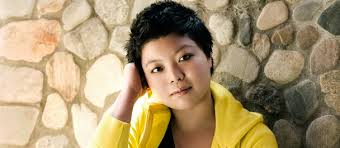
    Above: violinist Ani Kavafian, celebrating an important anniversary at CMS this season

    Sunday November 16th, 2014 – A concert both musically and emotionally rewarding at Alice Tully Hall today as Chamber Music Society of Lincoln Center presented works by three composers. In her welcoming speech, the Society’s co-Artistic Director Wu Han announced that the scheduled violist, Lawrence Power, would be unable to appear due to illness; in his stead, Matthew Lipman – slated to join CMS 2 next season – stepped in, making an immediate and very favourable impression in the concert’s opening work.

    The old letter in my book“, the first of four songs from Antonin Dvořák’s Cypresses which commenced the programme, gives the melody to the viola, and Mr. Lipman’s playing showed both winningly mellow tone and warmth of expression. In the company of seasoned chamber artists, he seemed entirely at home. The prominent violin passages in “Death reigns in many a human breast” and “You ask why my songs”  were played suavely by Ani Kavafian, celebrating her 35th season with Chamber Music Society. In “When your sweet glances on me fall“, Areta Zhulla (violin 2) and Gary Hoffman (cello) added their luxuriant voices to those of Ms. Kavafian and Mr. Lipman in a resonant meshing of timbres.

    172982_750

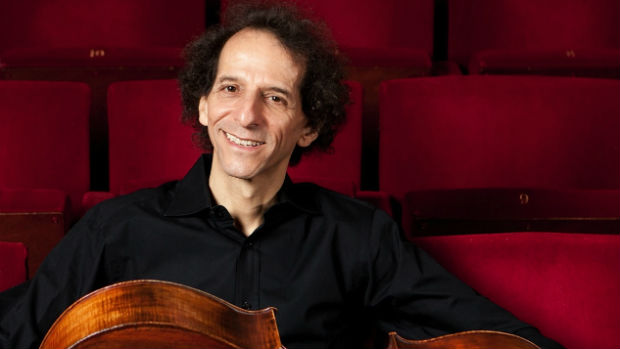
    Mr. Lipman (above) returned with Mlles. Zhulla and Kavafian, cellist Nicholas Canellakis, and double-bassist David Grossman for a poetic rendering of Dvořák’s Nocturne in B-major. Here Ms. Zhulla spun out a silken thread of lullabye whilst Mr. Grossman’s double-bass gently indicated the music’s heartbeat. In a rich blend of inner voices, Ms. Kavafian and Mssrs. Lipman and Canellakis sustained the atmosphere of reverie with their dreamy lyricism.
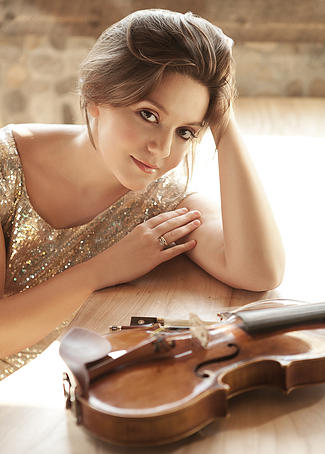
    F3f9ab_fad926d58fd0409da7bbd12fbd6428ab.jpg_srz_p_325_454_75_22_0.50_1.20_0.00_jpg_srz

    Above: Areta Zhulla

    While Schubert’s ‘Trout‘ quintet was undoubtedly a major draw for music-lovers today, it was a soul-stirring performance of Ernest Chausson’s Trio in G-minor that most truly moved me. Chausson’s music with its deep-lilac perfume always gets under my skin, and this trio is particularly affecting in its melodic allure and its build-up to rhapsodic climaxes.
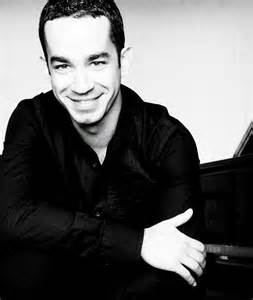
    Th

    Keyboard magician Inon Barnatan (above) cast a spell over the hall right from the start, with the misterioso opening of the trio elegantly intoned. As the work progresses, Ms. Zhulla and Mr. Canellakis sustained the feeling of rapture, their impassioned playing expanding the impression of yearning and melancholy in the third movement. Together they crafted an intensely rich sound, giving the illusion of a larger ensemble. Their heartfelt playing, and Mr. Barnatan’s evocatively nuanced piano line, really drew me in.

    8917fb601b89466fecca47f46bfa9edc.wix_mp_1024

    Above: Nicholas Canellakis

    As the Chausson surges forward in the waltz-like final movement, romantic tides rise up and we feel an expectation that things may end on an upbeat note; yet instead the composer takes a plunging chromatic descent into the darkish realm of the trio’s somber opening. The audience, having been held in the thrall of the three superb musicians, erupted in a gale of applause, recalling the players for an extra bow.

    For the programme’s finale, the Schubert “Trout“, Ms. Kavafian took the lead; Mr. Barnatan really went to town here, showing sparkling virtuosity. Matthew Lipman, Gary Hoffman, and David Grossman defined the music’s inspiring textures with a genial sense of community. The Theme and Variations section, based on that enduringly popular Schubert song “Die forelle” was especially gratifying, and the sold-out house seemed thoroughly engaged by this famiiar and ever-welcome masterpiece.

    The Repertory:

    The Artists:

  • Eryc Taylor Dance: New Choreography

    10488074_10152831497854666_2393990510578167467_n

    Saturday November 15th, 2014 – Eryc Taylor Dance, Inc. presented an evening of danceworks by the three recipients of the 2014 ETD New Choreography Grants: Daniel Holt, Ana C. Sosa, and Eryn Renee Young. The performance took place at the Martha Graham Dance Center on Bethune Street.

    Glancing out the window of the big Graham studio/theater while waiting for the performance to begin – the Empire State Building looking all silvery and shining – I was thinking of all the wonderful hours I have spent there in the past few years. In his opening remarks, Eryc Taylor expressed a similar affinity for the space where he worked with Merce Cunningham for five years.

    And then the dancing began.

    Eryn Renee Young’s Symphonie Miroir opened this concert of three well-contrasted works. To percolating music by Bela Bartok, the work commences with the girls (on pointe) in a diagonal; the music – plucked and skittery – sets off the dancers in contemporary stylings of classic ballet vocabulary. Isaac Owens, the group’s lone male, dances a dynamic pas de trois with Jasmine Chiu and Jacline Henrichs. A musical ‘explosion’ ignites the finale, a pas de sept which features pose-striking and breaking down the group into sub-units, with brief solo passages assuring that all the dancers have their chance to shine. Building a pulsing finale, there’s a sudden unexpected lull as the music turns a bit spacey; then a push onward to the finish. Ms. Young’s choreography showed a fine sense of exploring space and a knack for visual polyphony. And she gets extra roses and champagne for choosing Bartok.

    Ana Sosa danced in her own work, The Logical Road to Insanity, with a quartet of fellow dancers who  all seemed so young. Ms. Sosa chose some interesting vocal music, from Fleet Foxes and Cocorosie, which included ear-tweaking harmonies. The quintet of dancers work in-sync, with occassional passages of solo work, notably a somewhat B-boyish moment for Cesar Brodermann. Ms. Sosa’s accomplished use of floor work and of a gently ironic tip-toeing motif underscored the signs of impending mental collapse among the dancers; at one point the music goes totally looney, and the choreographer’s fleeting self-solo showed her on the brink of madness. It was all done well, and performed with commitment by the youthful cast, right down to the silent ending.

    Daniel Holt, that charismatic Dirty dancer, brought out a trio of girls to dance with him in Bermuda. They all wore black shorts, bright-coloured cartoonish tank tops, and black socks. Things start casually, almost slow-mo, and then a grinding beat develops. Spastic synchronized movement with breakout solos and detached walkabouts underscore the complex approach-avoidance relationships of the foursome, all laid out with raw physicality. They collapse, but rise again for the work’s most haunting passage – an entangled quartet set to Owain Phyfe’s recording of ‘La prima vez: a highlight of the evening.

    Pressing onward to a dark, dense beat, there are stylized clusters, escapes, and outright antagonism. Then the music suddenly takes on a celestial quality, with a deep bass underglow, as the dancers – in spastic gestures – attempt to communicate. But this dissolves in the end, and one of the girls gives Daniel the finger…which he kisses.

    ‘La prima vez’ translation:

    “The first time I saw your eyes
    I fell in love with you.
    I loved you from that moment
    And until the grave, I will love you.
    Come close to me, my dear one,
    You have saved me.
    Discover me and tell me/open yourself and tell me
    Your life’s secrets.”

  • Joshua Bell & The NY Philharmonic

    Joshua-bell_s345x230

    Thursday November 13, 2014 – Violinist Joshua Bell (above) plays the Glazunov violin concerto in a series of five concerts with The New York Philharmonic. Case Scaglione takes the podium for these performances, which also features Debussy’s Afternnoon of a Faun and Prokofiev’s symphony #5.

    My friend Monica and I attended the second evening of the programme; since we are both passionate ballet enthusiasts, we very much enjoyed experiencing the Debussy in a concert setting; we have often seen the Jerome Robbins setting of the work at New York City Ballet, and recently Boston Ballet brought their ‘original’ version to Lincoln Center.

    One of the composer’s most famous works, Claude Debussy’s Prélude à l’après-midi d’un faune referred to in this evening’s Playbill by its English title – premiered in 1894. The work is considered a turning point in the history of music: Pierre Boulez once said he considers the score to be ‘the beginning of modern music’. Tonight the Philharmonic gave a beautifully shaped rendering of this sensuous piece, which commences with the languid flute theme. Individual voices emerged dreamily from the overall soundscape and Debussy’s alluring colour scheme was indeed seductive. Neither Monica nor I could recall having previously heard the gentle chime of a triangle near the end of the piece; it seemed very prominent tonight. Case Scaglione rightly summoned the Philharmonic’s principal flautist, Robert Langevin, for a solo bow during the warm applause that greeted this opening work.

    Composer Alexander Glazunov (1865-1936) managed to endure ten years in Russia following the Bolshevik Revolution; he fled to Paris in 1928. His compositions from that point on are considered less impressive than his earlier works which include the richly melodic score for the ballet RAYMONDA, a suite from which was recently featured in ABT’s Autumn season at Lincoln Center.

    The violin concerto, Glazunov’s most frequently-performed work, was composed it in 1904. It is dedicated to, and was premiered by, the great Hungarian violinist Leopold Auer, the teacher of Heifetz, Milstein, and Elman, among others. Glazunov casts this concerto in an unbroken arc, with the three vari-paced movements subtly linked. A virtuosic cadenza carries us to the exuberant finale in which the soloist dazzles against a tapestry of orchestrated fireworks.

    Joshua Bell, taller than I had imagined and retaining a youthful energy of demeanor in his mid-40s, displayed the warmth of tone and the clear shimmer of upper-range diminuendo that are hallmarks of his playing. I was a bit surprised to note that he was using a score, but he handled it with casual assurance. Creating a fine rapport with conductor and musicians, Joshua drew the succession of themes in the opening movement into long, impeccably turned phrases; in the almost frantic pacing of the final allegro, he seized upon the sparkling coloratura passagework with thrilling dexterity. The crowd called him out for a well-deserved solo bow.

    After the interval, the Prokofiev: he wrote his fifth symphony during the summer of 1944, while staying at a dacha in the countryside outside Moscow. Having stored up his musical ideas over time, he wrote with speed and surety. The symphony was first performed in Moscow in January 1945 with the composer conducting.

    The first movement is dense of texture and thick with themes: there are five distinct tunes to be discerned, and the composer integrates them with skill. The movement closes on a grandiose note; I must say I wasn’t totally enamoured of this opening andante; it seemed a bit turgid and over-extended. But thereafter, the Prokofiev I have come to love was very much in evidence. The second movement in particular is a great delight with its relentless forward motion decorated by interjections of wit and melodic irony. The tempo gradually accelerates, almost to the point of veering out of control.

    The adagio conjures up the blend of unhappy romance and wistful tenderness we associate with the composer’s ROMEO AND JULIET, with a turbulent central passage. Then on to the final Allegro giocoso, where we again find Prokofiev at his most inventive, opening with an echo of the first theme of the first movement, and then a passage for the clarinet – Prokofiev at his most magical – superbly voiced by principal Anthony McGill. The symphony plunges forward to its conclusion, re-affirming the composer’s fixed positon in my constellation of favorite composers.

  • Celebrating 70 Years of APPALACHIAN SPRING

    Masha lloyd hibbard nash photo

    Above: Mariya Dashkina Maddux and Lloyd Mayor in Martha Graham’s APPALACHIAN SPRING; photo by Hibbard Nash

    Thursday October 30th, 2014 – Friends of the Martha Graham Dance Company gathered this evening at the Company’s home space on Bethune Street to celebrate the 70th birthday of the great American dance classic, APPALACHIAN SPRING. The event, Appalachian Spring Up Close and Personal – a complete performance of APPALACHIAN SPRING in costume and with the classic Noguchi set pieces – came on the exact 70th anniversary of its premiere, October 30, 1944.

    This once-in-a-lifetime event also featured film clips and projected photographs from the premiere, and a spoken introduction with quotes from Martha Graham’s correspondence with Aaron Copland at the time of the ballet’s creation. Mariya Dashkina Maddux headed the cast in Graham’s role of The Bride. She was joined by Lloyd Mayor, Natasha Diamond-Walker, Lloyd Knight, Xiaochuan Xie, Ying Xin, Charlotte Landreau, and Lauren Newman. This was my first opportunity to see Masha, Natasha, and Lloyd Mayor in these roles; Lloyd Knight repeated the role of the Preacher in which he was wonderfully cast during the Company’s City Center season earlier this year.

    This brief film features some of the dancers who have performed the principal roles in this ballet over the years.

    Janet Eilber, the artistic director of the Martha Graham Dance Company, is always such a wonderful hostess at Company events. Her speaking voice falls pleasingly on the ear and the information she imparts is always meaningful and illuminating to the dance we are about to see. This evening, Janet’s voice faltered tearfully as she spoke the names of the immortal dancers who first performed APPALACHIAN SPRING seventy years ago: Martha Graham, Erick Hawkins, May O’Donnell, and Merce Cunningham. 

    And then APPALACHIAN SPRING unfolded before us in all its heartfelt glory, the dancing taking place just a few feet away from us. The timeless simplicity of the Noguchi setting tells us immediately where we are; and for tonight we seemed in fact to be very much a part of the action, like observant guests at the wedding.

    Mariya Dashkina Maddux gave a powerfully poetic interpretation of the role of The Bride, her eyes shining and filled with hope, her body fluently expressive. Lloyd Mayor’s Husbandman danced with a spacious energy that could fill the Great Plains. In both the expansive and the intimate moments of this role, Lloyd’s handsome presence was captivating. Together Masha and Lloyd brought all the hopes of youth and forward-looking courage to their portrayals of this iconic couple.

    Natasha Diamond-Walker, lithe and elegant of posture and surpassingly fair of face, danced vividly as the Pioneering Woman. The strength of her dancing matches the character’s strength of virtue, yet Natasha was also deeply feminine in her portrayal and in her womanly rapport with Masha’s young Bride. Lloyd Knight’s Preacher was a powerful force in his stillness and a dynamic force when he danced. His vivid delineation of the steps underscored the great demands Graham puts on her dancers: technique and theatrical nuance must mesh in perfect balance. These demands extend to the quartet of Followers –   Xiaochuan Xie, Ying Xin, Charlotte Landreau, and Lauren Newman – who have a great deal of tricky dancing to do, though we tend to view them more for their decorative loveliness.

    The performance overall marked one of the most engrossing and meaningful dance experiences in my long ‘career’, in part because of the intimacy of the setting, and also because of the sense of dance as a resonating continuum that draws us ever back into the past whilst time and the universe sail inevitably forward. Evenings like this serve as illuminated markers on our journey.

    In a beautiful gesture at the end of the performance, the Lloyds (Mayor and Knight) presented bouquets to Janet Eilber and to Denise Vale, the Company’s senior artistic associate. Both Janet and Denise have danced the Pioneering Woman in APPALACHIAN SPRING, and thus the sense of lineage in the realm of Graham was graciously underscored.

  • BalletCollective @ The Skirball

    Troy Schumacher, by Matthew Murphy

    Above: Troy Schumacher, photo by Matthew Murphy

    Wednesday October 29th, 2014 – The dancing tonight as Troy Schumacher’s BalletCollective opened at The Skirball was fantastic. Drawing from the roster of his resident Company, New York City Ballet, Troy presented an ensemble of dancers with spectacular technical and communicative gifts.

    The program opened with the impulse wants company (premiered in 2013), set to a score by Ellis Ludwig-Leone, and drawing inspiration from a poem by Cynthia Zarin. The music was played live (as in fact was the entire programme) the contemporary ensemble Hotel Elefant

    BALLET_COLLECTIVE, Claire Kretzschmar, by Matthew Murphy

    Above: Claire Kretzschmar, photo by Matt Murphy

    Long-limbed and with an innate sense of the dramatic, Claire Kretzschmar launched the evening in a solo passage. This distinctive NYCB ballerina really made her mark tonight, Troy’s choreography showing her off to fine effect in both the opening and closing works. (Meet Claire in this video, in which the Collective’s Taylor Stanley also appears.) She is soon joined by Ashley Laracey, Lauren King, Meagan Mann, David Prottas, Taylor Stanley, and Troy Schumacher. This dynamic group  highlighted Troy’s inventive choreography with propulsive energy mixed in with moments of pensive repose. A spectacular solo by Taylor Stanley left me feeling awestruck. 

    BC, Blackbirds, Ashley Laracey, Troy Schumacher, by Matthew Murphy

    Above: Ashley Laracey and Troy Schumacher, photo by Matt Murphy

    Following the interval, the premiere of a new duet, dear and blackbirds, was danced by Ashley Laracey and Troy Schumacher to music by Ellis Ludwig-Leone; again, a poem by Cynthia Zarin was the frame of reference. Troy had not originally planned to dance in the performance this evening, but he stepped in on short notce after a colleague sustained an injury. This pas de deux had a Jerome Robbins flavour, the couple exploring the possibilities of mutual interest, alternately hesitant and impetuous. Romantic partnering with touches of playfulness give way to the two dancers trading short phrases. Ashley Laracey displayed the lovely qualities of lyricism that have kept her shining in my dance firmament since I first saw her onstage.

    BC, ATWS, Taylor Stanley, by Matthew Murphy

    Above: Taylor Stanley, photo by Matt Murphy

    In all that we see, the addition of wind players to the strings and piano gave the sonic landscape a fresh vista. Meagan Mann, Lauren King, Claire Kretzschmar, David Prottas and Taylor Stanley all danced exceptionally well. Claire again made superb use of the space and she has a restless angularity that draws the eye. There’s a very nice duet for Lauren and Taylor, and Meagan at one point enters in a tip-toeing motif, adding a sense of mystery. David and Taylor came face to face in a dramatic moment: I thought they might punch each other…or kiss. 

    In an evening so well-danced and featuring choreography which reaches for new combinations in a familiar vocabulary, a lack of contrast in the musical settings was a minor drawback. The composer of all three works has definite skill and his music is appealing, yet a whole evening of it doesn’t quite hold up. The musicians of Hotel Elefant were excellent and warmly acknowledged by the audience.

    The Skirball stage was stripped back to the bare back wall and wings, giving the ballets an industrial look. The lighting design produced some striking moments, but at times the dancers were too heavily shadowed. The costuming had an every-day feeling in the first two works; a credit to artist David Salle for painting the clothes for all that we see piqued my curiosity but from where I was sitting I couldn’t get a feel for his work. The big projections that were a key element in the Collective’s inaugural presentations weren’t part of the current presentation, but the dancers and the dance successfully held the stage in this rather stripped-down setting. The evening drew a real New York dance crowd, laced with celebrities and keen in their attentive focus.

    All photography by the marvelous Matthew Murphy.

  • Rudolf Schock

    Rudolf schock

    Rudolf Schock sings “In fernem land” from Wagner’s LOHENGRIN, conducted by Horst Stein.

  • Fauré & Ysaÿe at Chamber Music Society

    AnneMarie-McDermott-Jan-2013-468x310

    Above: pianist Anne-Marie McDermott

    Sunday October 26th, 2014 – Works by the Belgian violinist/composer Eugène Ysaÿe and his better-known French contemporary Gabriel Fauré were on the bill at Alice Tully Hall as Chamber Music Society of Lincoln Center presented this dusk-hour concert on a cool Autumn day. My friend Monica Wellington and I are both very much admirers of the Fauré works used by George Balanchine in his poetic ballet EMERALDS, but neither of us were much familiar with the music of Ysaÿe.

    The opening work: why is it called the Dolly Suite? Excellent question, and one I’d never thought to delve into until now, when I’m hearing it played live for the first time. ‘Dolly’ was the affectionate nickname of Helene Bardac, the young daughter of Fauré’s long-time mistress, Emma Bardac. Fauré composed the brief works that comprise the suite between 1893 and 1896, to mark birthdays and other events in Helene’s life.

    The suite’s movements are:

    Berceuse (a lullabye), honoring Helene’s first birthday (Allegretto moderato).
    Mi-a-ou, which gently mocks Helene’s attempts to pronounce the name of her elder brother Raoul, who later became a pupil of Fauré’s.
    Le Jardin de Dolly (Andantino); this was composed as a present for New Year’s Day, 1895. It contains a quotation from Fauré’s first violin sonata, composed 20 years earlier.
    Kitty-valse: this is not about a cat, but rather about the Bardacs’ pet dog, named Ketty.
    Tendresse, an andante, was written in 1896 and presages the composer’s beloved Nocturnes.
    Le pas espagnol (Allegro) denotes a lively Spanish dance tune which brings the suite to its close.

    Cms_01

    The suite is set for piano four-hands, and as I watched Wu Han (above) and Anne-Marie McDermott together at the keyboard, I couldn’t help but think of them as the Dolly Sisters. In her opening remarks, Wu Han spoke of the intimate nature of chamber music and the fact that there’s nothing quite so intimate as playing piano four-hands. She and Ms. McDermott seemed to be having a grand time with this music. Their immaculate playing illuminated the six contrasted movements, which veer from boisterous to delicate, sometimes in the twinkling of an eye. The audience were as charmed by the work as by the players.

    Index

    Yura Lee (above) is a favorite with CMS audiences; she seems most often to be heard here as a violist, but tonight she had a lovely opportunity to bring forth her violin for a subtle and ravishing performance of Ysaÿe’s Rêve d’enfant (a CMS premiere) in which she played with clear lyricism and great control. Ms. McDermott at the Steinway underscored her colleague’s transportive musicianship with playing of calming refinement.

    Dautricourt

    In a rare performance of Ysaÿe’s Sonata in A minor for Two Violins (tonight marked the work’s CMS premiere), a duet sometimes deemed unplayable, Yura Lee and Nicholas Dautricourt (above) remained undaunted by the composer’s overwhelming technical demands, and they formed a spirited team, spurring one another on in a friendly atmosphere of “Anything you can play, I can play sweeter…softer…faster…” Mr. Dautricourt appeared for this piece in his shirtsleeves, tieless and untucked: clearly he meant business. The two virtuosos sailed on and on through the intricacies of this long duet, the audience with them every step of the way and saluting them sincerely at the end for having triumphed against improbable odds.

    Carr cellist

    After the interval, cellist Colin Carr (above) indeed charmed Monica and me with his gorgeous playing of Fauré’s Sicilienne; originally set for cello and piano, as we heard it performed tonight, this melodious gem was later re-worked by the composer into his score of incidental music for a production of Maeterlinck’s Pelléas et Mélisande; and from that incarnation, Balanchine plucked it to be part of his elegant ballet EMERALDS. Mr. Carr, with Wu Han’s polished support, brought his warm tone and a particularly nice, merlot-flavoured lower register to this evocative performance. As a contrast, cellist and pianist gave us another Fauré miniature: Papillon (‘Butterfly’) in which the cellist’s fingers flutter up and down the strings, twice pausing in more sustained passages.

    In Fauré’s Quartet No. 1 in C minor for Piano, Violin, Viola, and Cello, Op. 15 – the concluding work tonight – Ms. McDermott summoned up the rhapsodic qualites of the opening movement, then turned vividly playful in the scherzo which follows. Ms. Lee  – her viola really singing – along with Mssrs. Dautricourt and Carr treated us to some genuinely poetic playing, especially in the adagio where the three voices passed the melodies between themselves with playing of a satiny eloquence. Indeed, the level of playing throughout the evening left me yet again in awe of the Society’s unique roster of artists.

    The Program:

    Fauré Dolly Suite for Piano, Four Hands, Op. 56 (1894-96)

    Ysaÿe Rêve d’enfant for Violin and Piano, Op. 14 (1895-1900)

    Ysaÿe Sonata in A minor for Two Violins (1915)

    Fauré Sicilienne for Cello and Piano, Op. 78 (1898) 

    Fauré Papillon for Cello and Piano, Op. 77 (before 1885)

    Fauré Quartet No. 1 in C minor for Piano, Violin, Viola, and Cello, Op. 15 (1876-79)

    The Participating Artists


  • Bartok & Bruckner @ The NY Philharmonic

    Medium_071220_bronfman

    Above: Yefim Bronfman

    Friday October 24th, 2014 – After experiencing Yefim Bronfman’s magnificent renderings of all the Beethoven piano concertos (and the triple concerto!) in a series of New York Philharmonic concerts last season, my friend Dmitry and I were keen to hear the pianist live again. Tonight, Mr. Bronfman’s playing of the Bartok 3rd marked the first of two concerts we’ll be attending this season which feature the pianist, the second being his performance of the Brahms 2nd concerto with the Chicago Symphony under Riccardo Muti at Carnegie Hall on January 31st, 2015.

    Bela Bartok, who had fled Europe for America in 1940 to escape the rise of National Socialism, composed his third piano concerto as a birthday gift for his pianist-wife Ditta Pasztory-Bartok, working on it during the summer of 1945 at Saranac Lake, New York. Already in the final stages of lukemia, the composer returned to New York City where he died on September 26th, 1945, leaving the concerto unfinished. The task of orchestrating the final 17-measures, drawing from Bartók’s notes, eventually fell to the composer’s friend Tibor Serly.

    Tonight’s performance found Mr. Bronfman at his finest, his fleetness of technique to the fore as his hands rippled up and down the keyboard, summoning forth one Bartokian marvel after another. He and Maestro Alan Gilbert formed a very simpatico union over this music, and the orchestra were at their best also: their many colourful eddies of sound swirling around the solo piano line. Mr. Bronfman’s dynamic range, his delightful dexterity, and his wonderfully genial personality combined to make this a truly enjoyable half-hour of music-making. The pianist, basking in enthusiastic applause at the end, bowed graciously to his fellow musicians, celebrating their mutual admiration.

    Following the intermission, a genuinely thrilling experience for me: hearing the Bruckner 8th live for the first time. Everyone who follows my blog knows that, after decades of devoting myself to opera and dance, I’m now exploring the symphonic and chamber repertories; works that are thrice-familiar to most  classical music lovers are new discoveries for me. Of course, having worked at Tower Records for almost a decade before they closed up shop, I did hear a lot of symphonic music day in and day out, some of it subconsciously absorbed; but there was no opportunity to stop and savor anything. So despite the familiarity of many thematic passages in the Bruckner tonight, it was all fresh and fantastic to me.

    At a time when performances of Wagner’s music here in New York seem increasingly rare (The Met has only MEISTERSINGER to offer us this season, following on their ‘No Wagner’ season of 2013-2014) tonight’s Bruckner, with its Wagnerian sonorities, was a welcome treat.

    Bruckner’s 8th opens murmuringly, but soon the composer begins to expand into marvelous arches of sound. The huge orchestra, resonating in the dense textures of intermingling voices of strings and winds, maintained clarity under Alan Gilbert’s steady baton. The 8th’s opening movement has been described as “simply shattering, destroying every attempt at criticism.” And Bruckner himself referred to the passage where the brass ring out the main theme repeatedly as “the announcement of Death…” This is followed by a surprising silence and the gentle, faltering heartbeat of the timpani.

    In the scherzo, a big familiar theme dances forth; and then its in the adagio where I finally lost my heart to this symphony. This incredibe movement, marked in the score as  “Solemn and slow, but not dragging”, opens up great vistas of panoramic sonic-painting. The harps are evocative indeed, and the massive waves of sound wash over us, suddenly to evaporate in a delicate waltz-like theme. The horns then blaze forth majestically; the overall sensation is life-encompassing.

    Throughout this cinematic symphony, the ear and the soul are equally gratified. In the culminating fourth movement Bruckner’s architecture evokes a great cathedral wherein the listener is alternately overwhelmed by epic grandeur or sinks into a state of reverent contemplation.

    In the end, this performance of this massive symphony – surely Wagnerian in its looming grandeur but also at times making me think of Tchaikovsky – gave so much pure satisfaction. I found myself wishing that Bruckner had written operas: what a thrill it would be to hear huge, dramatic voices soaring over his glorious orchestral soundscapes.

  • Glazounov & Chausson at ABT

    Jalteuscher1gs

    Above: Devon Teuscher as Caroline in JARDIN AUX LILAS, in a Gene Schiavone photo

    Thursday October 23rd, 2014 – Music, as much as dance, can draw us to the ballet. Tonight’s ABT programme featured works by Alexander Glazounov and Ernest Chausson. You’re unlikely to hear any of the enchanting score of RAYMONDA in the concert hall, and Chausson’s poignant Poème for violin and orchestra seems rarely to get programmed (the composer’s grander and even more gorgeous Poème de l’amour et de la Mer is equally neglected these days.) The opportunity to hear these works, as much as to see the ballets set to them, drew me to Lincoln Center tonight.

    RAYMONDA DIVERTISSEMENTS, billed as a world premiere, seems to be a re-mix of excerpts from the ballet previously given by the Company. The Petipa choreography has been staged by Irina Kolpakova and Kevin McKenzie; they took a bow together at the end. The costumes, all white with black fur trim, were oddly bland. Hee Seo, that elegant ballerina, was a bit too reticent in the principal ballerina role. A touch more grandeur of delivery or a dash of spice would have cast her very fine dancing into higher relief. James Whiteside seemed somewhat miscast in this classically-styled work; his dancing was a little stiff, his plié needing a deeper cushion at times. Nonetheless, the steps were clearly executed and his partnering was fine. He’s a handsome guy, and I look forward to seeing him in other ballets.

    Misty Copeland and Sarah Lane danced well in a duo variation which did not allow them to display their finest aspects; a pas de quatre for four boys failed to have any sense of unity. Delightful varations from Skylar Brandt and Christine Shevchenko were highlights of the performance. The fussy bows, with the girls striking poses as they curtsied, were pointless.

    In JARDIN AUX LILAS, violinist Benjamin Bowman played Chausson’s romantically steeped score with silky tone. Devon Teuscher danced lyrically as the unhappy Caroline, doomed to be parted from her beloved; Devon’s performance had the right feeling of grace under social pressure and was danced with a nicely nuanced sense of controlled urgency. Cory Stearns was superb as her beloved, so touching as fate intervenes in his hopes and desires: a poignant, noble youth in the throes of romantic despair. Veronika Part held the stage magnificently as the mysterious mistress, a character equally pitiable in her own right. Roman Zhurbin’s cool, controlled performance as The Man She Must Marry left us wondering just exactly how much he knew.

  • Wheeldon’s LITURGY @ Pennsylvania Ballet

    10153943_10203599386119332_4916660980318399099_n

    So proud of my beautiful young friend, Elizabeth Mateer, who has just performed Christopher Wheeldon’s LITURGY at Pennsylvania Ballet. Watch an excerpt here. The duet was coached by Jock Soto, on whom it was made.

    The programme marked the opening of the debut season of Angel Corella as the Company’s artistic director.

    Rehearsal photo of Elizabeth and her partner Lorin Mathis by Alexander Iziliaev