Blog

  • CMS: Brahms the Master

    Shifrin_david04RGB

    Above: clarinetist David Shifrin

    Tuesday October 21st, 2014 – The music of Johannes Brahms is well-represented at the great classical music venues of New York City this season. At the Philharmonic, Lisa Batiashvili just finished a series of concerts where she gave a resplendant reading of the composer’s violin concerto. Upcoming Brahms events on my calendar include Yefim Bronfman playing the piano concerto #2 with Riccardo Muti and the Chicago Symphony at Carnegie Hall (January 31st, 2015); a performance of the GERMAN REQUIEM at Carnegie with Daniele Gatti leading the Vienna Philharmonic (March 1st, 2015); an All-Brahms evening at Chamber Music Society on April 24th, 2015; and Jonathan Biss playing the piano concerto #1 with the New York Phiharmonic (May 21st – 23rd, 2015).

    Tonight at Alice Tully Hall, the artists of Chamber Music Society of Lincoln Center carried the Brahms banner high in an evening devoted to some of the composer’s most endearing, intimate works, all of which were composed during the final decade of his life. 

    My ability to concentrate was somewhat taxed this evening by small but pesky audience distractions, and an unfortunate late seating after the first movement of the opening work really broke the mood. But eventually the excellent music-making prevailed.

    Timothy Eddy launched the Trio in A minor for Clarinet, Cello and Piano, Op. 114, with the warmth and richness of his tone immediately evoking the sensations of tenderness and regret that will colour the entire evening. David Shifrin, in his 26th year of performing with the Society, called forth the plum-coloured resonance of his clarinet, and Shai Wosner – a pianist new to me – played with elegance and impressive dynamic control. The blending of the three instruments in the adagio was particularly heartfelt.

    Mr. Wosner returned for the Sonata in D minor for Violin and Piano, Op. 108, with violinist Erin Keefe who looked lovely in a midnight-hued pleated chiffon gown. The two musicians immediately established a fine rapport and together they poured forth the melodic themes in an unending stream of poignant lyricism. Ms. Keefe, in the sonata’s gently romantic adagio, moved compellingly from the delicacies of the initial passages to the more passionate expressions as the music flows forward. In the sentimental intermezzo that follows, both players ideally sustained the mood, carrying us into the finale where the two musicians spurred one another on with playing that managed to be both eloquent and lively.

    Shai_wosner

    After the interval, pianist Shai Wosner (above) took the stage alone for two brief solo keyboard works: the Intermezzo in E-flat major, Op. 117, No. 1, and the Rhapsody in E-flat major, Op. 119, No. 4. The Intermezzo’s melody is drawn from a lullabye associated with Lady Anne Bothwell, a young 16th century Scotswoman who was classically seduced and abandoned, singing to her infant son. Mr. Wosner’s refined playing here held the hall in a rapt silence before giving way to the grand flow of the Rhapsody. The two pieces, so contrasted yet linked by a common key, made for an intimate interlude before the concert’s closing work: the Quintet in B-minor for Clarinet, two Violins, Viola and Cello, Op. 115.

    Alexander Sitkovetsky (violin 1) and Mark Holloway (viola) joined Ms. Keefe, and Mssrs. Wosner and Shifrin for this richly melodic musical feast, the voices trading themes in this quintet with its somewhat unusual structure: it closes not with a vivid presto but with a set of variations – Mr. Shifrin’s clarinet in high relief – which end in an unexpectedly thoughtful state. Earlier, it was in the quintet’s adagio that the five players created some of the most luminous resonances of the entire evening. I wanted it to go on and on.

    Tonight’s Repertory:

    Participating Artists:

  • Sunhwa Chung|Ko-Ryo Dance Theater Rehearsal

    Wave Rising Series -1

    Monday October 20th, 2014 – I stopped in at the DANY studios this evening where Sunhwa Chung’s Ko-Ryo Dance Theater were rehearsing for their upcoming performances at the John Ryan Theater in Brooklyn. They will present BACK TO AND AWAY FROM: LIFE IS EVERY DAY IV as part of the 9th annual Wave Rising Series.

    Sunhwa was polishing up the piece when I arrived; then the dancers did a complete run-thru, in costume. The dancing is fast-paced, eluding my photography skills. Here are some pictures that survived the cut:

    L1500163

    Tommy Seibold, Marie Vestermark

    L1500060

    L1500179

    Alexandre Balmain, Kumiko Hara

    L1500010

    L1500038

  • Promotion at New York City Ballet

    307993_2245998383481_1924770756_n

    Please join me in congratulating Russell Janzen on his promotion to the rank of soloist at New York City Ballet.

  • Claudia Schreier’s HARMONIC

    Harmonic 1

    Above: from Claudia Schreier’s ballet HARMONIC; photo by Lindsay Perry

    Claudia Schreier’s award-winning ballet HARMONIC is now on YouTube. Watch it here.

    Originally created for Columbia Ballet Collaborative and later staged for Craig Salstein’s Intermezzo Dance Company’s performances at Vassar, HARMONIC comes to us in this video from the 2014 Breaking Glass competition for female choreographers. Nicole Graniero (ABT), Edward Spots, Nadia Vostrikov and Amber Neff are seen dancing to a magical score: “Motion” by Douwe Eisenga.

    HARMONIC won the 2014 Breaking Glass award which provides Claudia with an opportunity to create/present a full evening of dance, to take place in Summer 2015; details of that performance will be forthcoming.

    More of Lindsay Perry’s images from HARMONIC as performed at the 2014 Breaking Glass Project:

    Harmonic 2

    Nicole Graniero in the ballet’s opening moments

    Harmonic 3

    Nadia Vostrikov

    Harmonic 5

    Edward Spots and Nicole Graniero

  • Unsuk Chin/Mahler @ The NY Phil

    Kari Kriikku

    Above: clarinet soloist Kari Kriikku

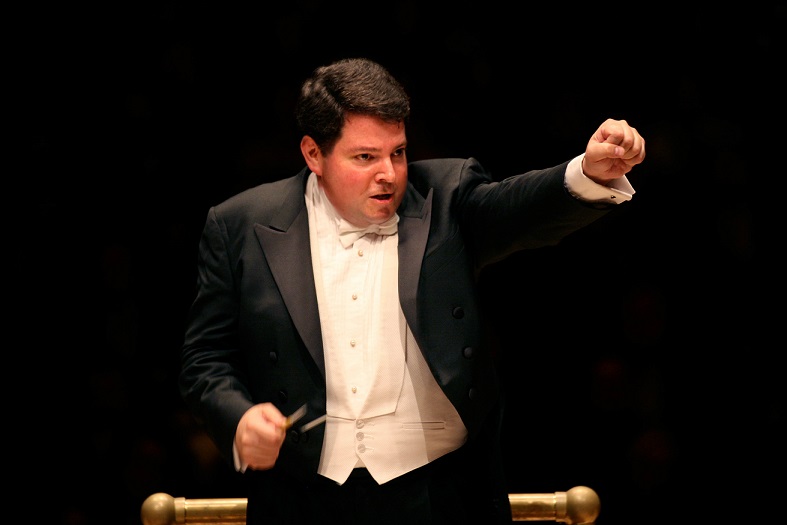
    Saturday September 27th, 2014 – The first subscription concert of the New York Philharmonic‘s 2014-2015 season featured a new clarinet concerto by the Korean composer Unsuk Chin and Mahler’s symphony #1. The Mahler evoked one of the most vociferous audience responses I’ve experienced since I started going to the Philharmonic frequently.

    A pre-concert mini-lecture-demo by Maestro Gilbert – with Mr. Kriikku giving some examples of the techniques called for by Unsuk Chin in the clarinet concerto – was somewhat spoilt by the distraction of late seating. Once the concerto proper started, all was well and the audience showed great attentiveness as this new sonic experience unfolded.

    Mr. Kriikku’s mastery of his instrument was beyond impressive; the clarinet truly became an extension of the artist. He showed an ability to sustain two tones at the same time, to make the ebony resonate at the faintest of volume levels, to wheeze and to squwak, and even to sustain long phrases seemingly without drawing breath.

    Ms. Chin draws from aspects of Asian folk music, overlain by textures of sound that are beyond contemporary. These layers are dense but drawn out by the Philharmonic musicians with sterling clarity. A vast array of percussion instruments are called into play, including a wine glass, a washboard, and two fishing reels. The soundscape veers from eerie near-silence to outbursts of intense shreiking from Mr. Kriikku.

    Overall, I felt the work (which seemed a bit too long at times) was more impressive than actually pleasing or meaningful. Surely it affords the player an opportunity to extend his range far beyond what might be considered to be in the realm of possibility. But, like much new music these days, neither the heart nor the soul were engaged. 

    The Mahler 1st, which premiered in Budapest in 1889, is classically referred to as “the Titan”; and while a programme note admonishes the listener from attaching that label to it, surely the final movement is a titanic experience.

    Back in 1889, the symphony had five movements instead of the four which we experience today. The composer deleted the original second movement – Blumine (‘Bouquet of Flowers’) – after the premiere, leaving us with the first movement in which Mahler represents “the waking of Nature after a long Winter” followed by a Scherzo (“The wind in my sails”). In the slow movement that comes next, solo double-bass sets forth the theme based on the French nursery song ‘Frère Jacques‘ (hearing it caused a rustle of appreciation among the audience): the movement depicts “The Hunter’s Funeral” with its vision of a hunter’s last cortege, the coffin drawn by animals. And at last we reach the epic graudeur of the finale which Mahler called “Dall’Inferno” – From Hell”: an outpouring of despair coming from a deeply wounded heart.

    These programmatic references in the end seem only to reflect Mahler’s desire to connect with the more conservative elements of his audience. The symphony is pure music, from start to finish, whatever allusions one might draw on hearing it. The orchestra gave a huge, glistening performance of the work, with the final movement being particularly magnificent. As the final chord resounded, the audience rose their feet in unison and commenced a long, loud ovation which Maestro Gilbert and the players truly deserved.

  • Pontus Lidberg Dance: Recent & Upcoming

    Pnts1515

    Above: from Pontus Lidberg’s FAUNE; photo by Nir Arieli

    Photographer Nir Arieli has sent me some images from Pontus Lidberg Dance‘s recent performance at Kykuit, the Rockefeller Estate at Pocantico, NY. The Company danced there on August 8th, 2014, in beautiful outdoor setting.

    Pnts1534
    Above: Adrian Danchig-Waring and Georgina Pazcoguin in an excerpt from WITHIN (Labyrinth Within)
     
    Pnts1551
    Above: Isabella Boylston and James Whiteside in a work-in-progress: a new duet scheduled to premiere at Fall For Dance on October 18th, 2014.
     
    Pnts1576
    Above: Adrian Danchig-Waring and Nadja Sellrup in TACTILE
     
    Pnts1594
    Above: Pontus Lidberg Dance in TACTILE
     
    Pnts1596
     
    Above: Pontus Lidberg Dance in TACTILE
     
    UPCOMING: Pontus Lidberg Dance will perform Pontus’s atmospheric Debussy ballet FAUNE on Saturday October 11th at the Hudson Valley Dance Festival. And on October 18th and 19th, Pontus’s duet for  Isabella Boylston and James Whiteside will premiere at the annual Fall For Dance Festival at New York’s City Center.

  • Tchaikovsky/Balanchine @ New York City Ballet

    10708211_10152712762704814_256726488_n

    Above: at a New York City Ballet rehearsal; photo by Craig Hall

    Wednesday September 24th, 2014 – An impressive line-up of favorite dancers in familiar roles, the music of Tchaikovsky, the choreography of Balanchine: what better way for me to start a new season at New York City Ballet?

    Under Clothilde Otranto’s baton, the four Tchaikovsky scores were nicely served up by the NYC Ballet‘s intrepid musicians. Tonight was probably considered an ‘easy’ night for these players: scores they have played dozens of times. They always deserve their spot-lighted ‘curtain call’ at the end of the evening, and it was good to hear a warm swelling of applause for them tonight.

    Ms. Otranto seemed to be favoring fast tempi in SERENADE tonight; the musicians assured that the emotional colours of the music came thru, and the dancers took it all in glorious stride. From curtain-rise, the corps provided an endless panorama of beautiful faces, forms, and personalities. It’s funny that I still find myself looking for people like Amanda Edge and Pauline Golbin among these ice-blue-gowned angels: and where’s Amanda Hankes tonight? Ah, well, they have danced into other phases of their lives – gone from this stage but never forgotten. 

    For present loveliness, we have a delectable quartet of demi-solistes: Faye Arthurs, Alina Dronova, Meagan Mann, and Mary Elizabeth Sell. And Gwyneth Muller always moves me as the consoling maternal figure at the end of the ballet.

    This was a blonde SERENADE: Sara Mearns, Sterling Hyltin, and Teresa Reichlen all looked sumptuous, especially when their hair came down for the final movement. Sara’s luxuriant dancing was given noble grounding by Jared Angle, ever the ideal cavalier. Sterling – her lingering balances spot-on – found just the right mixture of elegance and vivacity, catching the many musical moods in which her ‘character’ finds herself. Tess was divine lyricism personified, and Adrian Danchig-Waring seemed to have come down from Mount Olympus. The sight of Adrian and Tess crossing the stage together, raising Sara from her dream, and Tess’s marvelous slow-turning supported arabesque summed up everything that is SERENADE. The audience responded with a deeply resonant ovation; I am sure there were people in the audience seeing SERENADE for the first time, and I’m sure they will want to see it again.

    The quiet radiance of Maria Kowroski’s Preghiera in MOZARTIANA showed the great ballerina at her most communicative: the lovely passage with her hands in prayerful attitude was especially evocative tonight, as was the gentle silence of her pin-point bourrées. Later, as the ballet’s mood becomes more expansive, Maria’s swirling turns and trademark extension were woven into the music with queenly assurance. I couldn’t take my eyes off her. Tyler Angle was on fine form, his dancing marking the first of three displays of male virtuosity which had the audience cheering this evening. Maria and Tyler have formed an impressive partnership and I look forward to their future endeavors. The ever-excellent Daniel Ulbricht maintained the elegance of the ballet with his stylish dancing – his Gigue has become a signature role – and the Menuet was graciously performed by Marika Anderson, Megan Johnson, Emily Kikta, and Gwyneth Muller.

    A rousing rendition of the TCHAIKOVSKY PAS DE DEUX caused the audience to shed any trace of decorum and yell lustily as Ashley Bouder and Gonzalo Garcia traded technical fireworks in a vivid and smile-inducing performance. After a graciously musical adagio, Gonzalo gave an astonishing performance of his solo – some of the best dancing he’s ever done – nailing the myriad turns at the end before a final brilliant combination to the knee, expertly timed. The crowd went wild. Ashley then swept thru her own dazzling display of danced coloratura, tossing in spicy little pauses and teasing us with her technical savoir faire. Another roar went up as her solo’s final fantastical turns stopped on the proverbial dime. Now with the audience squarely in the palms of their hands, these two magicians of dance swept thru a blazing coda – Ashley’s deluxe fouettés yet another savorable moment – and brought down the house. 

    In the haunted ballroom setting for the Élégie of TCHAIKOVSKY SUITE #3, Rebecca Krohn and Ask LaCour brought tears to my eyes with their poetic evocation of an ideal found…and lost. Rebecca’s restless, almost feral allure was captivating to behold. And Ask is so perfect here: covering the space with questing leaps in pursuit of his elusive muse. Their performance moved me deeply, their parting and Ask’s sinking back into a reverie of heartache drawing up so many emotions.

    Abi Stafford and Justin Peck sustained a mood of mystery in the Valse Mélancolique, Justin’s innate sense of drama nearly drawing the coolly captivating Abi into his world. Yet it is she who prevails: at the end he backs away from her, completely under her spell. Abi and Justin are among my favorite dancers to watch; having them cast together here was a very nice gift.

    In the Valse, a particularly appealing trio of diverse beauties – Olivia Boisson, Lara Tong, and Claire Kretzschmar – looked fetching in one of the ballet’s many featured corps passages.

    In a bewitching performance, Erica Pereira spun marvelously thru the plentitude of pirouettes Balanchine demands of her in the Scherzo; her lustrous black hair and shimmering silver-white tulle flowing as she traced a comet-like trajectory around the stage. Antonio Carmena matched Erica’s spinning flourishes with his airy leaps; they fly off in opposite directions at the end. 

    And now we come to the grand finale: Theme and Variations. The recently refurbished costumes for this ballet seem to glow as Tiler Peck and Joaquin de Luz set forth the elegant opening Theme. Moments later, in her first solo variation, Tiler displayed her epic perfection as a classical ballerina with some truly glorious dancing. The audience showered her with a torrent of applause. The ballet progressed – with excellent suppport from the corps – as Tiler and Joaquin moved continually from one peak of perfection to another. Joaquin’s marziale variation was thrillingly executed, the devilishly handsome dancer basking in another avalanche of cheers, the iconic de Luz smile justifiably lighting up. The ballet swept forward, buoyed not only by the two spectacular principals but by a very impressive quartet of demi-solistes: Lauren King, Brittany Pollack, Mary Elizabeth Sell, and Lydia Wellington. Their cavaliers in the finale were Daniel Applebaum, Allen Peiffer, David Prottas and Andrew Scordato.

    As Ms. Otranto guided the evening to its triumphant close, the audience burst yet again into a passionate ovation: Tiler and Joaquin – and indeed the entire Company – were saluted at the end of a great evening…a great evening for dance, for Tchaikovsky, and for the enduring magnificence of Mr. B.

  • Score Desk for LA BOHEME

    Boheme

    Tuesday September 23rd, 2014 – After a touch-and-go Summer of contract negotiations where – at one point – it seemed inevitable that there would be a lock-out at the Metropolitan Opera, the shut-down was miraculously averted and The Met opened last night with a new production of LE NOZZE DI FIGARO. The casting of the three major female roles in the Mozart opera didn’t appeal to me, so I skipped it and started my season on the second night.

    The house seemed fuller than on most evenings last season, perhaps an indication that New York City opera-goers prefer traditional productions. And yes, curtain-rise on Franco Zeffirelli’s Cafe Momus still evokes a big round of applause.

    Admittedly tonight’s cast, on paper, didn’t have much allure. The Met seem to be putting all their eggs in one basket this first week: the singers aligned for MACBETH (Netrebko, Lucic, Calleja, Pape) are about the closest you can come to an all-star cast in this day and age. Friends asked me why I bothered with this BOHEME and as the curtain fell on the Cafe Momus scene I in fact asked myself why I was there. 

    Bryan Hymel in the role of Rodolfo was the main attraction for me tonight; his impressive performances in LES TROYENS and MADAMA BUTTERFLY drew me back to hear him in this, his second Puccini role at The Met. He did not seem at his best tonight though there were many appealing moments in his singing of the role. He was not much helped by conductor Riccardo Frizza who tended to unleash too much orchestral volume at key moments. Hymel’s account of the famous aria “Che gelida manina” was nice, and he sustained the high-C to fine effect despite the conductor’s overdrive of volume. At the end of the big Cafe Momus ensemble, the two sopranos were perched none-too-sweetly on their high-B when Hymel chimed in on the same note and gave the climax the necessary zest.

    Neither of the women were very pleasing to the ear. Ekaterina Scherbachenko (Mimi) lacked a persuasive feeling for the Italian style and didn’t bring a lot of nuance or colour to Mimi’s Act I narrative. When she ventured to the upper register, an uncomfortable feeling set in. Oddly, she did not attempt the written high-C at the end of the love duet; instead she sang an E-natural whilst Mr. Hymel sustained a high-C. This put me in mind of the 1968 Met broadcast of BUTTERFLY where Teresa Stratas ducked the final high-C of Act I, leaving her tenor Barry Morell to finish on his own.

    Myrto Papatanasiu revealed a dime-a-dozen overly-vibrant lyric soprano as Musetta, snatching at her interjectory phrases until she got to the Waltz which was reasonably well-sung despite rather shallow tone. I don’t suppose we’ll ever again experience a Musetta the likes of Carol Neblett or Johanna Meier: big voices and big personalities. 

    NextWaveKelseylg812

    The evening’s most impressive singing came from baritone Quinn Kelsey (above, in a Ken Howard headshot) as Marcello. This is a Met-sized voice for sure and I got a vast amount of pleasure listening to him nail Marcello’s music, phrase after phrase. I would have liked to have heard him in the third and fourth acts where the character has so much great music to sing, but the overall lack of magic in the evening sent me home after Momus. I hope The Met will give Quinn Kelsey more opportunities.

    Of the remaining members of the cast, no one managed to make a special impression. The children’s chorus deserve a note of praise.

    There’s nothing wrong with taking curtain calls after each act provided the audience is displaying sufficient enthusiasm to summon the singers out before the gold curtain. After both of the first two acts tonight, the applause had completely stopped but the bow lights came on and the singers came out, forcing people to clap for them out of a sense of obligation. I understand that the bows are ‘scripted’ into the performance but someone needs to determine whether there is any applause happening before sending the singers out.

    Metropolitan Opera House
    September 23, 2014

    LA BOHÈME
    Giacomo Puccini

    Mimì....................Ekaterina Scherbachenko
    Rodolfo.................Bryan Hymel
    Musetta.................Myrtò Papatananasiu [Debut]
    Marcello................Quinn Kelsey
    Schaunard...............Alexey Lavrov
    Colline.................David Soar
    Benoit..................Donald Maxwell
    Alcindoro...............Donald Maxwell
    Parpignol...............Daniel Clark Smith
    Sergeant................Jason Hendrix
    Officer.................Joseph Turi

    Conductor...............Riccardo Frizza

  • Yin Yue/Jiangxi Zhongshan Dance School

    10557287_10152602223041926_5101198420257482650_n

    Sunday September 21st, 2014 – Yin Yue Dance Company and students from China’s Jiangxi Zhongshan Dance School shared the stage at Peridance this afternoon in a programme that combined the contemporary with the classical in an East-Meets-West cultural dialogue.

    Yin Yue is an award-winning Shanghai-born choreographer who graduated from Tisch, New York University. For this event, she summoned a contingent of dancers from the Jiangxi Zhongshan Dance School, a private professional dance school located in Nanchang, Jiangxi Province, China, who have arrived in New York City, bringing  traditional Chinese classical/contemporary and folk dance as they meet the New York audience for the first time.

    The programme was well-devised to contrast the two styles: the young women from Nanchang performed in colourful, elaborate costumes while Yin Yue’s dancers appeared in stark settings and casual contemporary streetwear. The two companies alternated throughout the afternoon.

    The student company opened the show with a brilliant and festive piece Gan Yun You You in which elements of Chinese opera were featured. Later – in Spring Ballet – the girls danced on pointe in long pink tutus to the voice of a pop-oriented coloratura soprano. A quartet of solos – each dancer in red-highlighted costumes – went on a bit too long. Then Qinghua Rhyme was danced on pointe to a pop beat, while an Arabian Nights atmosphere pervaded Blossom: the girls all wearing red harem-style costumes and each carrying a red rose. Nuo Dance, the afternoon’s concluding work, featured the dancers wearing masks. At the end, a baby was delivered and he started to cry. Throughout their peformance, the dancers from the Jiangxi Zhongshan School showed surprising maturity of presentation and seemed thoroughly at home on the stage.

    Yin Yue and her fellow dancers – Liane Aung, Grace Whitworth, and Luke Bermingham – performed five works, ranging from quartets to a solo by Mr. Bermingham. Yin Yue’s choreography is strong and sure; she makes excellent use of space and lighting and she persuasively employs partnering and passages of dancing in-sync. Her strongest work was the solo for Mr. Bermingham – One Step Before The Exit – which seemed to express the loneliness of contemporary life and a (thwarted) desire to connect.

    Yin Yue’s undoubted gift for impressive dramatic movement is somewhat compromised by a lack of variety in her choice of music. Everything seems to be danced to a beat overlain in darkly throbbing industrial noise and/or static. The vaguely ominous atmosphere created by this type of music – so favored by many of today’s younger choreographers – becomes a cliché after a while. A bit of Chopin, alluded to in the playbill, never materialized. In taking a wider view of musical possibilities, I believe the choreographer will find ever-expanding avenues of expression.

  • 10th Anniversary @ New Chamber Ballet

    Miro ncb rehearsal

    Above: New Chamber Ballet company class; photo by Amber Neff

    Friday September 19th, 2014 – Miro Magloire’s New Chamber Ballet have inaugurated their tenth anniversary season with a programme featuring three Miro Magloire premieres and a work by NCB resident choreographer Constantine Baecher’s “Happy Dance Of The Wild Skeletons” (to music of John Cage), as well as Miro’s intriguing “Tilting and Leaning“, set to piano music by Pierre Boulez.

    Over the past decade, New Chamber Ballet have carved out a special niche for themselves in the Gotham dance world. Their “up-close-and-personal” concerts – always danced to live music – have drawn ever-expanding audiences, and tonight they played to a standing-room-only crowd.

    Much praise is due pianist Melody Fader and violinist Doori Na who perform the often complex scores that Miro likes to use with a high level of musicality. Exceptional tonight was their performance of Mauricio Kagel’s ‘Klangwölfe’ for the ballet RAW.

    In recent seasons Miro has presented narrative works: domestic dramas about ghosts, sibling rivalries, or mysterious letters. This evening’s three new works are more abstract though of course certain themes might be implied. The first ballet is aptly titled FAST FORWARD; danced to Beethoven’s ‘Rondo for Violin and Piano’, the work has three ballerinas – Sarah Atkins, Holly Curran, and Traci Finch – rushing about the space in speedy (even risky) combinations. The breathless quality of the movement is a fine response to the zesty drive of the Beethoven as played by Doori and Melody.

    Miro020-3289003989-O

    Above: Sarah Artkins in Miro’s TILTING/LEANING; photo by Adam Jason

    Melody Fader took in stride the demands of Pierre Boulez’s ‘Notations’ which accompanies last season’s intriguing duet TILTING/LEANING. Dressed in Sarah Thea Swafford’s sleek wine-coloured body tights, dancers Sarah Atkins, Traci Finch, and Amber Neff go from intense to playful and back again in choreography where they balance against one another in unique and quirky shapes.

    Miro052-3289006317-O

    Supported arabesques are a signature motif in TILTING/LEANING (Sarah and Amber above, in an Adam Jason photo). At the end Sarah and Amber appear to ‘fold’ Traci into an improbable little bundle. This ballet rewards repeated viewings with its resonant nuances.

    L1480519

    For Holly Curran (rehearsal image, above), Miro has created an unusual tour de force solo entitled IN THE COLD. While Melody Fader spins out some Satie at the piano, Holly appears alternately shell-shocked, frantic, or trembling with the chills. Repetitive, compulsive moves give way to a spacious manège of leaps; the dancer periodically assumes a potent arabesque or pauses to rearrange herself before contemplating her next move. The solo, which choreographically rather plays against the expected responses to the Satie melodies, was excellently mastered by dancer and pianist.

    10486513_10152694171488571_8874687051716580051_n

    Above: rehearsal images from Miro’s new duet RAW

    Miro’s meshing of music and movement created yet another fresh vision with RAW. Introducing the work, Miro spoke affectionately of the German-Argentine composer Mauricio Kagel who was Miro’s composition teacher. The choreographer pays homage to his musical mentor with one of his most inspired works to date: RAW is such a fascinating piece that when it ended I immediately wanted to see (and hear) it again.

    Doori Na – his strings muted – and Melody Fader evoked a misterioso atmosphere: Doori showed great control as he spun out a thread of sound, and Melody later drew forth a shimmering, high-lying theme from the keyboard. Dancers Traci Finch and Amber Neff are literally entwined much of the time in this duet; their handling of the strenuous partnering motifs, including lifts and intimate bondings, gave the ballet a captivating intensity. An aggressive passage eventually leads to serene, almost worshipful images as Amber leans against the piano and Traci kneels at her feet. RAW seems to veer from sensuous to sterile to pensive, and it is perhaps Miro’s most intimate creation to date.

    To end the evening, Miro invited the viewers to circle the dancefloor, the better to watch Constantine Baecher’s impetuous romp of a duet, HAPPY DANCE OF THE WILD SKELETONS. Melody Fader plays John Cage’s ‘Bacchanale’ on a prepared piano as dancers Traci Finch and Amber Neff – in girlish playsuits and bobbi-sox – indulge in playful, slap-happy hijinx. Their hair comes down at the end, as they revel in the sheer joy of being silly.

    Happy anniversary, Miro!

    The Company’s next performances will be on November 21st and 22nd. 2014. Visit their website here.