Blog

  • At Home With Wagner IV

    Richard+Wagner+02

    Note: this article has been written over the course of several months

    Four recordings of live performances of Wagner’s LOHENGRIN have come my way, courtesy of my friend Dmitry. Despite being rather busier during this Summer of 2013 than I’d anticipated, I found time on these hot afternoons to start listening to these performances, an act at a time. Invariably I’ll listen to the same act two or three times, so as not to miss anything.

    LOHENGRIN might be considered Wagner’s most beautiful opera; from the ethereal opening bars of the prelude, it weaves a spell of mystery, romance, and deceit all under-scored by the Dark Arts. Marvelous stretches of melodic splendor – Elsa’s Song to the Breezes (“Euch luften“), the bridal procession to the cathedral, Lohengrin’s tragically tender “In fernam land” – mix with ‘greatest hits’  like the über-familiar Wedding March and the thrilling Act III prelude. Three prolonged duets are the setting for major dramatic developments in the narrative: Ortrud and the banished Telramund outside the city walls; Elsa meeting with and being beguiled by Ortrud; and Elsa and Lohengrin on their bridal night where the hapless girl asks the fatal question. King Henry has his orotund prayer “Mein Herr und Gott!” whilst Ortrud calls upon the forsaken pagan gods in her great invocation “Entweihte Götter!” The conflict between darkness and light is manifested in the great confrontation between Ortrud and Elsa on the cathedral steps, the violins churning away feverishly as the two voices vie for the upper hand; Ortrud has the last word.

    So it’s an opera that is easy to listen to repeatedly; and the more you listen, the more you hear…yes, even after 50+ years of getting drunk on Wagner, I still discover new things in his operas.  

    Jess+Thomas

    Jess Thomas (above) is the Lohengrin on two of these recordings, the first from Munich 1964 and the second from Vienna 1965. I listened to the Munich first, conducted by Joseph Keilberth, and found it a strong, extroverted performance. None of the principal singers go in for much subtlety, instead flexing their Wagnerian vocal muscles in generous style.

    Keilberth’s conducting has sweep and intensity, though perhaps lacking a bit of the dreamlike quality that can illuminate the more spiritual passages of the opera. This accords well with the singing, since neither Jess Thomas nor his Elsa, Ingrid Bjoner, use much dynamic contrast (though when they do it works wonders). Both have big, generous voices and they are on fine form for this performance.

    Jess Thomas was my first Calaf (at the Old Met), Siegfried, Tristan and Parsifal. He was a mainstay at The Met in the helden roles from 1962 to 1982, returning in 1983 to sing part of Act I of WALKURE with Jessye Norman for the Met’s 100th birthday gala. His is not the most gorgeous sound imaginable but his power and security are amply in evidence in this Munich performance.

    Cox Bjoner

    Above photo: Ingrid Bjoner in GOTTERDAMMERUNG, with tenor Jean Cox

    I’ve always liked Ingrid Bjoner; her rather metallic sound and steely top served her well in a long Wagnerian career. I only saw her onstage onceas Turandot, a memorable performance both from a vocal and dramatic standpoint. In this Munich LOHENGRIN, Bjoner sails thru the music with exciting vocal security. If only rarely does she engage in the floating piani that many sopranos like to display in this music (the end of Bjoner’s ‘Euch luften’ is ravishing!), hers is an impressive reading of the music.

    In a thrilling performance, Hans Günther Nöcker turns the sometimes-overshadowed role of Telramund into a star part. His narration of the shame and degradation he feels at having been bested in the duel and then exiled is a powerful opening for the opera’s second act.
    0099925413729_600

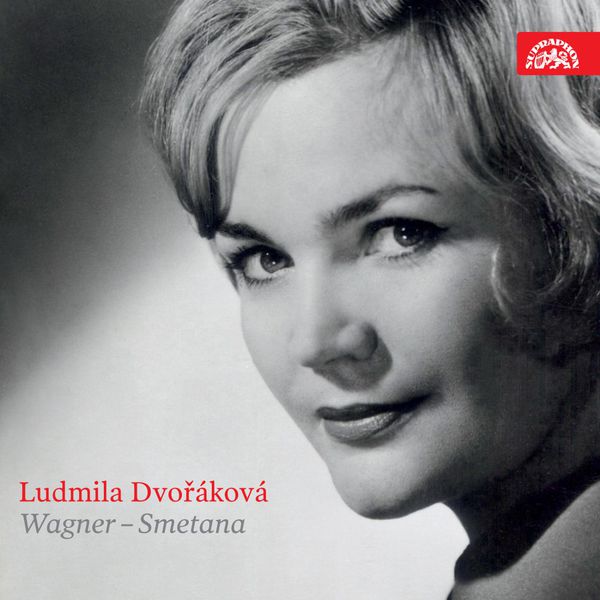
    Ludmila Dvorakova’s large, somewhat unwieldy voice has ample thrusting power for Ortrud’s great invocation in Act II, though she tends to leave off clear enunciation of the text in favor of simply pouring out the sound. Dvorakova (above) – who sang Isolde, Leonore and Ortrud at the Met in the 1960s – was known for her magnetic stage presence.

    Gottlob Frick is a powerful Henry, but there’s a question as to whether it’s Josef Metternich or Gerd Neinstedt as the Herald in this performance – whoever it is, he is not having his happiest night vocally.

    ~~~~~~~~~~~~~~~~~~~~~~~~~~~~~~~~~~~~~~~~~~~~~~~~~~~~~~~~~~~~~~~~~~~~~~~~~~~~~~~~~~~~~~~~~~~~~~~~

    Geddanc

    When in 1966 tenor Nicolai Gedda was announced for performances of Lohengrin in Stockholm, there was some hand-wringing among the fans. Gedda was known for his stylish lyricism and easy top in the bel canto and French repertoire; he had tackled such high-flying roles as Arturo in PURITANI and Raoul in HUGUENOTS with striking command. By venturing into Wagner, Gedda was thought to be putting his instrument at risk. But he sang Lohengrin on his own terms, with true-tenor (rather than baritonal) timbre, producing one beautiful phrase after another. The recording, which I owned on reel-to-reel at the time it was first available, is a valuable document since Gedda never again sang the role, nor any other Wagnerian role, onstage.

    Gedda in fact is one of the most pleasing Lohengrins to hear; as in another mythic/heroic role he tackled only once – Aeneas in TROYENS – the tenor’s clarity of both tone and diction – and his complete ease when the vocal line goes upward – mark his performances in these operas as ideal, even though they both quickly fell out of his active repertory.

    Gedda was my first Nemorino (at the Old Met) and I saw him many times over the ensuing years (as Don Jose, Don Ottavio, Elvino, Edgardo, Faust and  Lensky), always impressive in his artistry and vocal security. Far from ruining his voice, the Lohengrin simply served as a vocal adventure for the tenor; he went on singing for another 20 years after portraying the mysterious knight. His Met career spanned 25 years and nearly 375 performances, including singing the final trio from FAUST at the very last performance at the Old Met.

    Aside from Gedda, this Stockholm LOHENGRIN is very enjoyable in many ways though not quite reaching the mystical heights that some performances of this opera have attained. Conductor Silvio Varviso has a fine sense of pacing and if the orchestral playing is not world-class, a lyrical atmosphere develops nicely right from the start.

    Aase N-L

    I’m particularly taken with the performances by the two female leads: the Norwegian soprano Aase Nordmo Løvberg (above) makes a distinctive impression as Elsa; her voice, rather Mozartean in heft and feeling, has clear lyrical power and expresses the character’s vulnerability well. The soprano appeared at The Met 1959-60 as Elsa, Eva, Sieglinde and Leonore; she passed away earlier this year, one of those ‘forgotten’ voices still held dear by a diminishing group of aficianados who listen to older recordings.
    Ericson

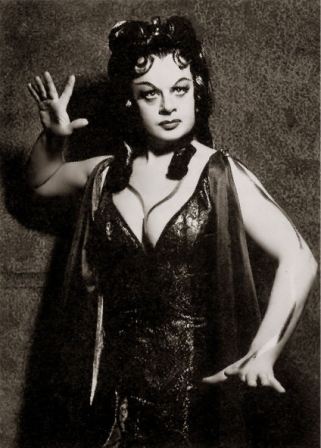
    As Ortrud, Barbro Ericson (above) gives a blazing performance. Like Nordmo Løvberg, Ericson did sing at The Met (1967-68): she was Siegrune in the ‘Karajan’ WALKURE performances, and stepped in once as Fricka; she returned a decade later to sing Herodias in SALOME with Grace Bumbry as her daughter. Ericson was a fearless singer with a rich chest voice and some stunningly easy top notes.

    As King Henry, Aage Haugland’s sturdy and humane bass sound is a big asset in the Stockholm LOHENGRIN; Rolf Jupither is a solid Telramund and Ingvar Wixell – who went on to be a major Verdi baritone (he was a wonderful Boccanegra at the Met in 1973-74) – already shows vocal distinction as the Herald.

    in the third act, this performance is particularly gratifying, for Ms. Nordmo Løvberg and Mr. Gedda sing one of the most lyrical and polished versions of the Bridal Chamber duet that I’ve ever heard. And the tenor is absolutely splendid in the long narrative “In fernem land” and his tender farewell address to his wife; with poetic expression tinged in sadness, he presents Elsa with the horn, sword and ring that are meant for her lost brother, Gottfried. Gedda’s anguished “Leb wohl!” to his distraught bride is like an arrow to the heart. This document of Gedda’s performance, capped by his magnificent vocalism in the opera’s final twenty minutes, can be considered a treasured rarity in the annals of great Wagner singing.

    ~~~~~~~~~~~~~~~~~~~~~~~~~~~~~~~~~~~~~~~~~~~~~~~~~~~~~~~~~~~~~~~~~~~~~~~~~~~~~~~~~~~~~~~~~~~~~~~~

    Rene-maison

    Above: tenor René Maison

    As Summer 2013 ended and the performance season started up, I had less time to devote to listening at home; and so it wasn’t until the dark, chilled days of February 2014 that I took up a rarity:  1936 LOHENGRIN from Buenos Aires which features René Maison, Germaine Hoerner, Marjorie Lawrence, Fred Destal, Alexander Kipnis, and Fritz Krenn, with Fritz Busch on the podium. Of the singers, Hoerner, Destal, and Krenn were names I’d never even heard of prior to settling down with this recording.
    Gorrhoernersenta

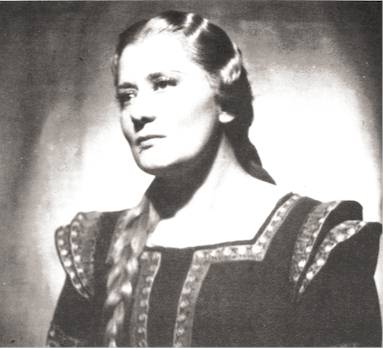
    Germaine Hoerner was born in Strasbourg in 1905, made her debut at L’Opera de Paris in 1929 and sang such roles as Elsa, Gutrune, Senta (photo above), Aida, Desdemona, the Marschallin, and Beethoven’s Leonore during her career which lasted thirty years. How strange that I’d never encountered her voice before.

    Fred Destal began his career as a choirboy in Liegnitz and sang professionally at the Deutsches Theater in Brünn, before joining the Deutsches Opernhaus (later the Städtisches Oper) in Berlin. In 1933 he left Germany for the Zurich Opera. He sang at the Vienna State Opera from 1936–1938, and emigrated to the United States in 1938. He made many guest appearances in Europe and frequently performed at the Colón in Buenos Aires where he essayed several Wagnerian roles as well as singing in operas by Mozart and Strauss, and in operetta.

    Fritz Krenn debuted in 1917, singing with the Vienna State Opera from 1920-1925 and the State Opera, Berlin, from 1927 til 1943. He became celebrated for his Baron Ochs, singing the role over 400 times including seven performances at The Met in 1950. He died in 1963.

    The three other leading artists in this 1936 Buenos Aires LOHENGRIN all had major careers – Marjorie Lawrence’s unfortunately much altered by the onset of polio in 1941. Though her legs were paralyzed, she returned to the stage in 1943, singing performances of Venus and Isolde at The Met from a seated position; but the wife of a Metropolitan Opera board member was put off by the sight of the disabled soprano onstage and her Met career ended. Lawrence’s life was the subject of a 1955 film, Interrupted Melody.

    The sound quality on this 1936 performance – needless to say – is very uneven; yet not enough so to deter the adventuruous listener. Passages where the volume fades come and go, and these sometimes occur at exactly the “wrong” moment. But there’s enough acceptable sonic accessability to have a pretty good idea of what the performance was like.

    Fritz Busch conducts and, though the orchestra playing (and the recording of it) leave something to be desired, the conductor establishes the dramatic atmosphere right from the start of the celestial prelude – a prelude which draws unexpected and sustained applause from the audience.

    Alexander Kipnis sounds somewhat unsettled in this performance as King Henry: his career had already lasted 20 years and The Met was still in his future. He may have suffered from the recording techniques employed or simply have been having an off-night. Here are no serious flaws in his singing, but surely he’s not as his best. Germaine Hoerner has a brightish voice with a slight flutter that gives her singing an almost girlish attractiveness and a vulnerable appeal – quite nice for this role. There are some vague pitch issues but she does make an impression right from her opening line. René Maison sings expressively as Lohengrin, with a good feel for the other-worldly yet heroic quality the music calls for; he shows impressive dynamic control from the start. Fritz Krenn begins rather anonymously as the Herald but gains ground as Act I progresses. Fred Destal’s Telramund is dramatically vivid in the opening act – his greatest moments lie ahead – and Ms. Lawrence makes only the briefest vocal appearance in Act I. 

    Despite the lack of immediacy in the sound quality, Busch opens Act II with a good sense of impending doom; in the duet for Ortrud and Telramund, Lawrence and Destal are appropriately gloomy. Later Ms. Lawrence is ever-so-slighly taxed by some of Ortrud’s highest notes but she’s very exciting at “Zurück, Elsa!” and the whole of their confrontation is well done. Destal’s attempt to incite the knights is another good passage, and Fritz Krenn’s singing as the Herald is more vivid than in Act I. Busch takes the wedding procession music rather faster than we often hear it, and the chorus sound a bit daunted at this point. What sets this second act on a higher plane is the singing of Hoerner and Maison: the soprano’s voice, now at full sail, is full of lyrical grace; her pitch is now steady and the voice takes on a silvery gleam in the upper range. Maison’s tenderness towards Elsa is lovingly expressed, and Ms. Hoerner responds to his reassurance with a finely-turned rendering of the marvelous passage “Mein Retter, der mir Heil gebracht! Mein Held, in dem ich muss vergehn, hoch über alles Zweifels Macht soll meine Liebe stehn.” (“My deliverer, who brought me salvation! My knight, in whom I must melt away! High above the force of all doubt shall my love stand.”)

    After a brisk prelude, Act III begins with the chorus of the bridal party approaching; the antique sound quality gives the voices a ghostly air, and as they recede I was struck by the fact that it’s unlikely anyone who was at this performance is still alive today, and struck yet again that it has come to us from across a three-quarter-century span of time.

    Ms. Hoerner and Mr. Maison achieve poetic vocal distinction in the Bridal Chamber duet; the tenor’s gentle ardor is movingly expressed with some lovely soft nuances and the soprano sounds girlishly enraptured; of course, their joy is short-lived as Elsa’s gnawing curiosity overwhelms her. As the opera moves to its inexorable end, Mr. Maison sings ‘In fernem land’ so movingly. Ms. Hoerner reacts to the imminent departure of her knight with frantic despair; but Ms. Lawrence is not comfortable in Ortrud’s final vengeful utterances: she sounds taxed and rather desperate. Mr. Maison then delivers the most extraordinary singing of the entire performance: at ‘Mein lieber schwan’ he pares down the voice to a mystic thread of tone, coloured with an amazing sense of weeping. I’ve never heard anything like it; it literally gave me the chills.

    ~~~~~~~~~~~~~~~~~~~~~~~~~~~~~~~~~~~~~~~~~~~~~~~~~~~~~~~~~~~~~~~~~~~~~~~~~~~~~~~~~~~~~~~~~~~~~~~

    0

    Then back to Jess Thomas for the Vienna 1965 performance. The tenor is perhaps a shade less commanding vocally than in the Munich/Keilberth performance, but impressive nevertheless.

    For the Vienna ’65, Karl Bohm is on the podium, giving a refined delicacy to the prelude and showing a near-ideal sense of pacing and of the architecture of the work. Bohm underscores a sense of impending doom when – initially – no champion answers the calls to defend Elsa’s honor.

    C Watson

    Claire Watson, the American soprano who never sang at The Met but was a beloved star at Munich for several years, sings Elsa with a nice aristocratic feel. The voice is clear and steady, with just a slight touch of remoteness that suits the character.

    Walter Berry (Telramund) and Eberhard Waechter (the Herald), two of Vienna’s most beloved baritones at this point in time, are very fine in Act I; Martti Talvela’s sing as King Henry is at once powerful and humane. Talvela’s voice has a trace of a sob, and there are passing moments of off-pitch singing here and there but overall he is impressive.

     And then we come to Act II…

    Christa

    Above: Christa Ludwig

    From the moment of curtain-rise, the second act of this LOHENGRIN is simply thrilling. Not only is the singing of the principals at a very high level throughout, but the dramatic atmosphere that is generated raises the temperature to the boiling point very early on in the act and sustains it til the final omnious re-sounding of the Ortrud motif as Elsa and Lohengrin enter the cathedral.

    It’s the divine Christa Ludwig and her then-husband Walter Berry who set this act on its magnificent trajectory. Outside the city walls, Mr. Berry, as Telramund, having been defeated in single combat by Elsa’s mysterious knight in shining armor, prepares to face his fate in exile: “Arise, companion of my shame!” he tells his wife. But Ortrud, as if in a trance, cannot comprehend their banishment. In his monolog of defeat, Telramund blames his wife for his predicament, ending his tirade with “Mein Ehr hab ich verloren!” (“I have lost my honor!”) Having sung this whole passage thrillingly, Mr. Berry dissolves in anguished sobbing. I’ve never heard this passage so powerfully delivered.

    In the ensuing dialogue, as Ortrud tells Telramund how his fate can be reversed, both singers are incredibly alive to ever nuance of the music and text. In a searing moment, Telramund/Berry states that his defeat was an act of God; to this, Ortrud/Ludwig replies with a blistering, sustained “Gott????!!!!!” and then emits a ghastly laugh. Mr. Berry’s rejoinder marks another high point for the baritone; indeed both he and Ms. Ludwig continue throughout this scene to match one another in intensity and vocal splendour. Singing in doom-ladened unison, they conjure up a vision of revenge in “Der Rache Werk…”

    Then Elsa appears on the high castle balcony: Miss Watson in fine lyric form for the Song to the Breezes. But Ortrud calls to her from out of the darkness and after a bit of servile groveling on Ortrud’s part, Elsa agrees to come down and speak with her wounded nemesis. Ms. Ludwig then lauches her hair-raising invocation of the ancient gods:

    “Ye gods profaned! Help me now in my endeavor!
    Punish the ignominy that you have suffered here!
    Strengthen me in the service of your holy cause!
    Destroy the vile delusions of those who deny you!
    Wotan! I call on you, O god of strength!
    Freia! Hear me, O exalted one!
    Bless my deceit and hypocrisy,
    that I may be successful in my revenge!”

    This brilliant passage, delivered with stunning amplitude and soaring top notes by the inimitable Christa Ludwig, literally stops the show. The audience bursts into frantic appplause, a mid-act rarity in Wagner performances, and Maestro Bohm must wait several seconds to continue. 

    In their ensuing duet, Christa Ludwig uses the subtle finesse of a great lieder singer to worm her way into Elsa’s trust. Both Ludwig and Ms. Watson sing superbly here, with a perfect blend as their voices entwine. Elsa’s overwhelming goodness seems to have converted Ortrud: the orchestral melody of forgiveness and sisterhood – my favorite moment in the opera – signals false hope. In a devastating passage as Elsa draws Ortrud into the castle, Telramund emerges from the shadows and again Mr. Berry is pure magnificence in his closing statement: 

    “Thus misfortune enters that house!
    Fulfil, O wife, what your cunning mind has devised;
    I feel powerless to stop your work!
    The misfortune began with my defeat,
    now shall she fall who brought me to it!
    Only one thing do I see before me, urging me on:
    that he who robbed me of my honour shall die!”

    As the scene ended I was literally stunned. It took me a couple of days before I could go on with the recording; I just wanted to savour what I’d heard. It’s such a great feeling to experience the pure exaltation of a genuinely exciting operatic performance – a feeling that is quite rare in this day and age – and know that the emotions are still there, waiting to rise to the surface.

    But when I did take up the recording again, there were still more thrills in the second act: for one thing, Mr. Wachter as the Herald is on top form, and Mr. Berry continues his exciting performance as he tries to shore up support from some disgruntled comrades. The bridal procession commences, and Dr. Bohm begins the steady build-up to the fiery confrontation beween Elsa and Ortrud. As their vocal duel is engaged, the steadfast and true Ms. Watson sails confidently thru her phrases, bolstered by the populace. Cresting to a splendidly sustained top note, Elsa seems to be the victor but it’s Ortrud who has the final word: Christa Ludwig delivering a vocal knockout punch with dazzling self-assurance.

    So: what a lot I have written about this second act! It’s truly one of the most fascinating listening experiences in my long operatic career. The opera goes on, of course, and the final act is perfectly pleasing in every regard. Claire Watson and Jess Thomas manifest their lyrical selves in the Bridal Chamber duet while the slow rise of panic is well under-lined by Dr. Bohm. Martti Talvela sings superbly in the opera’s final scene by the river bank, and Mr. Thomas has plenty in reserve for ‘In fernem land’, showing expert vocal control. Christa Ludwig is at her full and imperious best in Ortrud’s final vocal victory lap…but then she’s undone when Lohengrin magically produces Gottfried: Ms. Ludwig emits a devastating moan.

    So, nearly nine months after I started writing this article, I’ve run out of LOHENGRINs to write about…at least for the moment.

  • Ballet Hispanico @ The Joyce 2014

    Umbral 1 (c) Paula Lobo

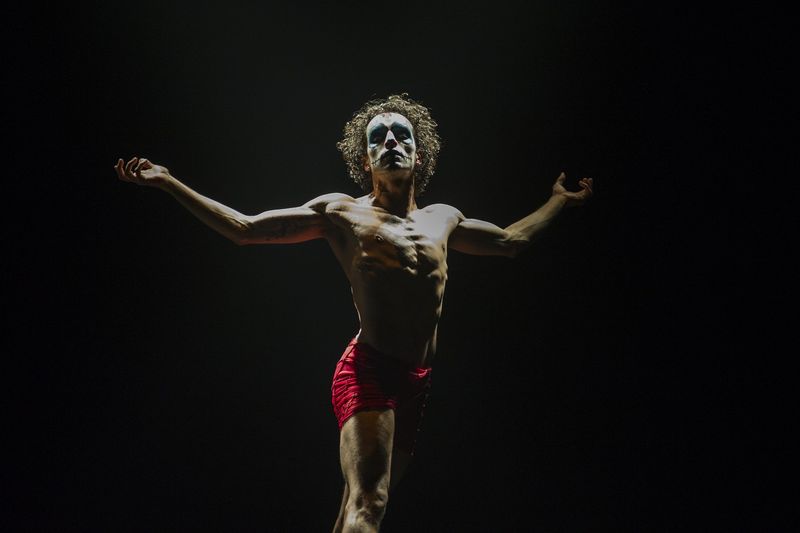
    Above: from Ballet Hispanico‘s production of UMBRAL, photo by Paula Lobo

    Tuesday April 15th, 2014 – Opening night of Ballet Hispanico‘s two-week season at The Joyce. This fantastic Company have quickly made their way to my top echelon of Gotham dance-world favorites: the dancers are sexy and spectacular, the choreography is invariably exciting, the musical range is broad and seductive…what more could one ask?

    Tonight’s program opened with UMBRAL, choreographed by Edgar Zendajes to an original score by Owen Belton. This ballet honors the traditional Mexican celebration of the Dia de los Muertos (‘Day of the Dead’). Dark and evocative, UMBRAL benefits greatly from Joshua Preston’s lighting and the sleek costuming by Diana Ruettiger which displays the dancers’  lithe figures to maximum effect.

    Umbral 7 (c) Paula Lobo

    Light smoke drifts across the landscape as Mario Ismael Espinoza (above, in a Paula Lobo photo) appears in a sleek blood-red leotard, with his face painted deathly white, lips sewn shut: a living corpse. Mario, one of New York’s most alluring dance personalities, moves thru the community – an unseen spectre. His dancing has a remote beauty and mystique so perfectly suited to this role.

    There is a pas de trois for Mario, Vanessa Valecillos, and Jamal Rashann Callender and then a solo for Mario danced in silence. This is interrupted by the ringing of a telephone – a message from the other side? – which the boys attempt to shush. In a passionate duet, Min-Tzu Li and Christopher Bloom display lyrical physicality. Then the six women appear, topless but discreet, as Mario moves subtly among them. The ballet ends with a stylied ensemble for the entire Company; as the dancers withdraw, Mario stands in a pool of shining light as if ascending to heaven. A brilliant piece, and a real tour de force for Mr. Espinoza.

    Sombrerisimo 7 (c) Paula Lobo-1

    Above, from SOMBRERISIMO, photo by Paula Lobo

    Last season’s hit, SOMBRERISIMO, returned in triumph to The Joyce stage. Choreographer Anabelle Lopez Ochoa, using a collage of music that veers from propulsive to sensuous, evokes Magritte’s bowler-hatted men in this vastly pleasing ballet; and again the costumes (Ms. Ruettiger) and lighting (Mr. Preston) show off both the dancers and the dance to perfection.

    Six men – Christopher Bloom, Jamal Rashann Callender, Alexander Duval, Mario Ismael Espinoza, Johan Rivera Mendez, and Marcos Rodriguez – move with vibrant authority thru the sexy, witty ensembles which include some sleight-of-hand passing of the hat and a bit of bowler-Frisbee. The men are jaunty, playful and ironic. Last year Christopher Bloom looked like a rising star, and now he’s shining brightly in the Big Apple’s firmament of dance: a man who moves with a particular energy that keeps our eye on him whenever he’s onstage. Both here and in EL BESO which followed, Chris served notice that he has arrived.

    Ballet Hispanico in fact have a particularly strong contingent of male dancers and in SOMBRERISIMO each man has a chance to shine; the ballet drew a whooping ovation from the packed house as the boys stepped foward for several bows. And now someone needs to make a new and special piece for Hispanico‘s gorgeous women

    Paula_Lobo_BH_EL_Beso-9370

    Above: Ballet Hispanico‘s Kimberly Van Woesik in EL BESO, photo by Paula Lobo

    After watching a studio rehearsal of Gustavo Ramiriez Sansano’s new ballet EL BESO (‘The Kiss’) I was very curious to see how it would look onstage. In contrast to the dazzling colours and stately rhythms of the music (drawn from the enchanting scores of the zarzuela), the setting was much darker than I expected. I had imagined costumes of scarlet and canary yellow, with black lace and golden filagree, but instead designer Angel Sanchez has put the dancers in rather utilitarian outfits of black and dark blue. The stage lighting could be just a notch brighter so that the subtle interplay of the dancers and their many kisses becomes clearer. Some of the intimacy of the work has been lost in the move from studio to stage.

    Once I adjusted to the unexpected black-and-blue setting, there was much to enjoy in this piece, for the choreography has wit and sparkle. EL BESO opens with Johan Rivera Mendez alone onstage, looking a bit shy. He is soon the object of Kimberly Van Woesik’s flirtatious affection. The ballet goes on to explore many variations of relationships and many varieties of kissing, including a passionate smooch for two men (Mssers. Bloom and Callender). A big unison ensemble heralds the finale, but at the last moment everyone rushes away leaving Mr. Mendez alone onstage as at the start.

  • At Nai-Ni Chen’s Rehearsal

    L1370928

    Above: Justin Dominic and Ekaterina Chernikhova of Nai-Ni Chen Dance Company

    Monday April 14th, 2014 – In preparation for her Company’s upcoming performances at Peridance, Nai-Ni Chen invited me to watch a rehearsal today at Jacques D’Amboise’s National Dance Institute on West 147th Street. I’d never been to this venue before, and it’s really nice; Nai-Ni had a big, spacious studio to work in and her dancers – some of them new to me – look super.

    Nai-Ni Chen Dance are celebrating their 25th anniversary with these Peridance performances on April 26th and 27th, 2014: tickets and more information here.

    The Prism Saxophone Quartet will be performing a score by Chen Yi, a contemporary composer from Guangzhou, China, for Na-Ni’s newest work Not Alone, inspired by a poem by Li Bai entitled Drinking Under the Moon.

    Joan La Barbara will appear for Incense, a quartet in which her voice is heard over a tape, commissioned by the Company in 2011. Incense has been performed on Company tours since then across the U.S. and to Asia and Europe.

    The lovely young ladies of the Ahn Trio will perform original music by Kenji Bunch for Grooveboxes, an excerpt from the trio’s full-evening collaboration with Nai-Ni called Temptation of the Muses. And Glen Velez, a four-time Grammy Award winner and one of the world’s leading drum masters and an expert in Central Asian music, composed the score for Nai-Ni  Chen’s Whirlwind. Mr. Velez will appear in an excerpt from this work with the Company.

    Nai-Ni Chen is a detail-oriented choreographer and today’s rehearsal was largely spent in refining works the dancers already know quite well. Here are a few photos I took today: most of the time the dancers were moving too fast for me to capture.

    L1370651

    Kristen Lau, Daniel Johnson

    L1370675

    Justin Dominic

    L1370816

    Yoosik Kim, Greta Campo

    L1370841

    Kristen Lau

    L1370808

    Yoosik Kim

    L1370940

    Justin Dominic

  • At Cherylyn Lavagnino’s Rehearsal

    5941803_orig

    Sunday April 13th, 2014 – This afternoon I stopped in at the NYU/Tisch studios where Cherylyn Lavagnino Dance are preparing for their upcoming performances (details above) at St. Marks Church near the end of June. 

    Cherylyn’s musical sensibilities, her keen sense of structure, and the way she draws nuances of personal  expression from her dancers have put her on my A-list of current choreographers. Having watched her work for the past few seasons, I haven’t sensed a single false step either in her choreography or her choice of music…or of dancers. 

    L1370241

    Above: dancers Lila Simmons and Michael Gonzalez

    For the upcoming St. Marks season, Cherylyn will present movements from two earlier works: her Bach/Couperin ballet Triptych and last season’s beautifully crafted Treize en Jeu, set to Franz Schubert’s Trio in E Flat Major for piano, violin and cello. A new work, Ru, is inspired by Kim Thúy’s novel of the same name and centers on a young woman’s life as a post-Vietnam War political refugee. Drawing upon the passive resistance of T’ai Chi and to be styled in costumes reminiscent of the traditional Vietnamese áo dài dress, Cherylyn’s new work – so evocative even now in a studio setting with the dancers in practice clothes – is set to a score by Scott Killian.

    Here are a few photos I took of Cherylyn’s dancers at today’s rehearsal:

    L1370313

    Michael Gonzalez and Giovanna Gamna

    L1370221

    Christine Luciano

    L1370260

    Eliza Sherlock-Lewis

    L1370555

    Travis Magee and Elliot Hammans

    L1370387

    Giovanna Gamna

    L1370487

    Claire Westby

    L1370559

    Adrian Silver and Selina Chau

    L1370477

    Lila Simmons and Giovanna Gamna

    L1370228

    Michael Gonzalez

    L1370522

    Claire Westby discussing the fine points with Christine McMillan

    L1370583

    Adrian Silver and Selina Chau

    L1370256

    Travis Magee

    L1370416

    Selina Chau

    L1370433

    Selina and Travis

    Visit the Cherylyn Lavagnino Dance website here.

  • Andonis Foniadakis’ GLORY @ The Joyce

    20133155045

    Sunday March 30th, 2014 – I like to think of myself as the first person in Gotham to have ‘discovered’ Andonis Foniadakis. The Greek choreographer brought his solo setting of THE RITE OF SPRING to Joyce SoHo in 2008; I was invited to the dress rehearsal and I went, not knowing what to expect. It was a thrilling experience, made even more memorable by the incredible dancing of Joanna Toumpakari. I was so blown away by this RITE that I immediately arranged to see it again the following evening.

    In May 2013 Andonis created HORIZONS for Cedar Lake Contemporary Ballet, and earlier this month his simply gorgeous ECHO was by premiered by The Martha Graham Dance Company.  And now Ballet du Grand Théâtre de Genève have brought Andonis’ GLORY, created on them in 2012, to The Joyce. I was only able to attend today’s final performance of the run; I wished now that I’d planned to see it more than once.

    Take a look at GLORY here.

    The first thing I love about GLORY is the music: Andonis starts with a selection of vocal and instrumental works by George Frideric Handel which Julian Tarride has woven into a tapestry of sound incorporating strains of contemporary vocalism, fleeting rhythmic gestures, and the occasional sonic thunderclap. The only slight miscalculation is the use of the Hallelujah Chorus which – in my view – is too familiar to be included; there are dozens of celebratory choral works in the Handel catalog and I would have chosen something rarer. Nonetheless, between Handel and Tarride, the dancers can take wing in this hour-long work which flows on endless waves of lyrical, expansive movement.

    The lighting (Mikki Kunttu) plays a major role in the visual appeal of GLORY: shafts of light radate thru the dancing area in ever-shifting patterns, creating chiaroscuro effects, variously illuminating the dancers from all sides and evoking the sunlight pouring into the dark caverns of antique cathedrals. Costume designer Tassos Sofroniou has clad the dancers like dark angels at first; later brilliant ruby red gowns will bring a satanic touch to the proceedings. The dancers change costumes often, some taking on pale yellow and lighter hues, and at one point the men appear in dance-belts like living statuary as they manipulate a single woman in complex lifts. 

    Andonis has structured GLORY in such a way that there seems to be more than the twenty listed dancers onstage. They come and go in various movement units and from time to time simply march forward, having descended the two steps a the back of the stage, like oncoming armies. At times they arrange themselves in mirror-image Rorschach-patterns. The Geneva dancers are remarkably flexible and strong, their energy level seeming to soar as this physically demanding work progressed: the ballet is a non-stop panorama of movement.

    Graham-like rituals alternate with knotted clusters of bodies, and visual polyphony plays a key role: there are usually several things happening at once. Along the way, solos or pas de deux bring individual dancers into focus. In the ballet’s most striking passage, a woman appears in a long cape of black parachute silk which is manipulated by the black-clad men using metal rods (photo at the top).

    Although at times there was a sense of repetitiveness in the choreography and a feeling that the work was perhaps a bit too long for optimum effect, the overall beauty and the combined theatrical power of the dancers, the choreography, the music and visual representation made for a very pleasing afternoon.

  • Vivier & Bruckner @ The NY Philharmonic

    L1016697_(2)

    Above: conductor Manfred Honeck, photographed by Felix Broede

    Saturday March 29, 2014 – Tonight at The New York Philharmonic, Claude Vivier‘s ORION and Anton Bruckner’s Symphony #9 were played without intermission.  Manfred Honeck, music director of the Pittsburgh Symphony Orchestra, was on the podium; Maestro Honeck was replacing the originally-announced Gustavo Dudamel, who withdrew from these concerts due to illness.

    Claude Vivier, the Canadian composer of ORION, was murdered in 1983, having had a macabre premonition of his own death. This from the program notes:

    “When Claude Vivier was fatally stabbed in his apartment on the night of March 8, 1983, an unfinished manuscript for a choral work lay on his worktable: Crois-tu en l’immortalité de l’âme? (Do You Believe in the Immortality of the Soul?), which, according to The Guardian, is a dramatized monologue in which the composer describes a journey on the Metro during which he becomes attracted to a young man. The music breaks off abruptly after the line: ‘Then he removed a dagger from his jacket and stabbed me through the heart.’ “

    ORION, dating from 1979, drew inspiration from the composer’s journey from Asia to the Middle East in 1976, where he absorbed the sounds of the cultures thru which he passed. This dense and fantastical work, so sumptuously played by the Philharmonic, ranges from thunderous proclamations to arching melodic forays; gongs evoke distant temples and – truly unique – there are two vocal interjections (performed by a percussionist) which might be the cries of a muezzin or the calls of the starry hunter for whom the piece was named. As Vivier concluded his original program note for ORION: “Go and find out for yourself!”

    Vivier’s untimely and violent death finds a link – and a counter-poise – in the Bruckner 9th, the unfinished symphony on which Bruckner was at work on the day he died. He is said to have spent the morning at his Bösendorfer, going over sketches for the symphony’s finale. After taking a walk, he had a cup of tea and then took a nap from which he never awoke. What a nice, peaceful way to take leave…the very opposite of Vivier’s violent fate.

    “It will be my last symphony,” Bruckner had told a guest earlier in the creative process. At the time of his death, three movements were complete, and Bruckner had been working on the finale for months, leaving a large accumulation of sketches and thematic fragments. It’s a grand and glorious work, even without a ‘proper’ ending.

    The fervor of Bruckner’s religiosity is apparent from the start of the 9th symphony: both solemn and uplifting, the music ranges from broad statements to intimate vignettes – especially from the wind instruments; a passage of pizzicato strings one moment will give way to burnished, expansive themes the next. Climaxes build and evaporate, and chorale-like passages take on a spiritual glow.

    Over the course of the three movements, we will sometimes be reminded of such disparate composers as Wagner and Mendelssohn. The symphony as it stands ends on a note of serenity, leaving us to wonder what might have been if Bruckner had lived to complete a fourth movement.

    It goes without saying that the Philharmonic artists gave a performance of remarkably mellow beauty and rhythmic clarity; Maestro Honeck – tall and somewhat formal in demeanor – became wonderfully involved in the music; his conducting style is both passionate and animated, and devoid of melodrama. The audience saluted him with great warmth as he was called out for extra bows to a standing ovation. Let’s hope he’ll be back on the Avery Fisher podium soon.

  • Matthew Westerby’s SWAN LAKE FANTASY

    Photo

    Above: Gierre Godley and Kristin Licata in SWAN LAKE FANTASY; photo by Dylan Baker

    Friday March 28, 2014 – Matthew Westerby’s SWAN LAKE FANTASY was premiered tonight at the Hudson Guild Theater. In addition, two recent works choreographed by Matthew Westerby were performed.

    LIFELINE is an ensemble work danced to music of Lusine ICL and Jonsi & Alex. An air of mystery pervades the space: moveable spotlights surround the dance floor and are variously pushed about by the dancers to illuminate their colleagues. A solo commencing in silence is danced by Kayla Farrish; as the music seeps into our consciousness, she is joined by Dylan Baker and Gierre Godley. This evolves to a duet for Kayla and Gierre; Gierre’s fluent movement and emotional investment made a hypnotic impression all evening. The other women – Dina-Verley Christophe, Nicole Kadar, Alessandra Larson and Kristin Licata – appear in quiet rites: their blue frocks have a somewhat Isadora Duncan/Grecian tunic look. There’s a lyrical duet passage for Alessandra and Gierre – two dancers I particularly admire – and the community join together as a hymn-like theme rises up. The piece ends as it began, with Kayla alone in the fading light.

    DUET X, with music by Ben Frost and Daniel Bjarnason, is handsomely danced by Dylan Baker and Matthew Westerby. These two slender boys are onstage as the spotlights – now focused on high – begin to glow and a gentle fog fills the air. To a misterioso opening theme, they advance towards us, moving in sync with stylized, winged gestures but without physical contact. They dance in tandem or echo one another’s moves. Repeating the opening synchronized phrase, they again advance but now Matthew places his hand on Dylan’s shoulder. A sense of intimacy and trust develops as they fall back onto one another, but this becomes something of a conflict as Matthew tends to manipulate Dylan. They back off in a state of seeming rejection, but the duet ends tenderly with Matthew cradling Dylan in his arms.

    During the intermission, pianist Matei Vargas warmed up onstage for the SWAN LAKE FANTASY. Composer Matt Van Brink had this to say about his vision of the Tchaikovsky score:  “Making an arrangement of a great piece of music means breaking it apart, inspecting the pieces and from them creating something new again…in the piano world, there is already a unique genre of “arrangement”: the transcription, a flexible term ranging from faithful adaptations to fantastic interpolations. I enjoy solving musical puzzles, so when Matei Varga approached me to create this work for him, I liked the idea of not only making the arrangement, but doing it in such a way that it fits into the canon of piano transcriptions…by presenting the themes and dances in a new, perhaps surprising order, an entirely new story emerges out of the old one.”

    Matthew Westerby’s SWAN LAKE FANTASY is just that: a fantasy. There’s no literal re-telling of the story, nor are the roles specifically assigned to individual dancers. In his opening solo – beautifully expressed to the music of the White Swan adagio – the black-clad Matthew might be Odette or he might be the Prince. Dina-Verley Christophe, dancing in a pre-maternal state of grace, assumes the classic floor pose of the Swan Queen as Dylan Baker hovers about her, re-arranging her limbs, shoulders and neck into variations on an iconic theme. The four cygnets – all in black – appear but contrary to expectations they do not dance in linked formations but rather they move freely about the space. We hear themes from the Russian and Hungarian dances as Gierre Godley gives us some expansive moves. The swans and the would-be-brides meet in a confuson of music and movement; a male pas de trois celebrates while the swans kneel en reverence to the pianist.

    Suddenly a jazz-inflected passage interferes; the dancers then pair off for a promenade as the music turns grandiose. Alessandra and Gierre dance together and then the Rothbart theme is heard for a pas de six transporting us at last to the final lakeside setting where Alessandra Larson evokes Odette’s despair in a lyrical solo. The ensemble rush in and go thru a series of big lifts before turning upstage to greet the dawn with a final ecstatic salute.

    This rush of music and movement may sound a bit random as I’ve described it, but thanks to the persuasive dancing and to Mr. Varga’s effortless dexterity at the keyboard, this fantasy took on a dreamlike quality. And in dreams, anything can happen.

  • Max Bruch’s MOSES @ Carnegie Hall

    Moses

    Thursday March 27th, 2014 – The American Symphony Orchestra and The Collegiate Chorale joined forces for a presentation of Max Bruch’s 1895 oratorio MOSES at Carnegie Hall tonight.

    Oratorios – basically operas without sets, costumes and with little or no dramatic inter-action between participants – became extremely popular in early 17th-century Italy; opera-lovers embraced the genre because of the Catholic Church’s prohibition of spectacles during Lent. Oratorio reached its apex during the time of Handel. In the late 19th century, Bruch was one of a handful of composers to continue working in this field and though it now seems a bit passé, oratorio remained viable throughout the 20th century, with works by such diverse composers as Stravinsky, Honegger, Penderecki, Golijov, and Sir Paul McCartney coming to fruition. In the 21st century, to date, Einhorn and Satoh have written oratorios.

    Bruch’s MOSES seems in part to have been written – with the encouragement of Johannes Brahms – as a rallying cry against the flood-tide of Wagnerism. Although Wagner had been dead for twelve years (and thus the music of the future was already in the past) when MOSES had its premiere (in 1895), music was already veering off in exciting new directions. To put Bruch’s work in a bit of context, Mahler’s 2nd symphony also premiered in 1895, and Claude Debussy had already written L‘après-midi dun faune (1894) and was at work on PELLEAS ET MELISANDE.

    That oratorio still appeals to audiences today was testified by the large, attentive and enthusiastic crowd at Carnegie Hall tonight. Bruch’s ‘conservative’ music shone beautifully in a finely-paced performance led by Leon Botstein. The American Symphony Orchestra and Collegiate Chorale lovingly embraced the work, and the three vocal soloists seized on the many opportunities for expressive singing which Bruch provided for them.

    Bruch draws upon four chronological events from the life of Moses to form the four parts of the oratorio. In the first, Moses is seen as the spiritual leader of his people receiving the Ten Commandments (which are nowadays considered the Ten Suggestions) on Mount Sinai. The second part revolves around the worship of the golden calf by Aaron, with the angry Moses lashing out at his brother and his renegade people.

    Following an intermission, we have the particularly impressive ‘Return of the Scouts from Canaan’ where the chorus and the male soloists did some truly impressive work. In the final part, commencing with a long funereal address by the Angel of the Lord, we witness the death of Moses who, having brought his people to the Promised Land, gives a final blessing to his followers; the oratorio ends with a choral lament.

    There are three soloists: Moses (bass-baritone), Aaron (tenor), and the Angel of the Lord (soprano). The libretto (in German, natürlich) is a mixture of paraphrase from the Old Testament and quotations from the Psalms. The chorus, in the role of the people of Israel, hold forth in much the same style developed in Mendelssohn’s great oratorio ELIJAH. The organ plays a prominent role, both as a solo instrument for recitatives or woven into the orchestral tapestry. The overall effect is rich, soul-stirring, and falls ever-so-pleasantly on the ear.

    Sidney Outlaw as Moses sang with dignity and increasing emotional power as the evening progressed; his baritone voice was able to successfully encompass the music which spans a wide range, including some resonant low notes. As the Angel of the Lord, soprano Tamara Wilson’s strong, vibrant soprano proved also capable of some shining piano notes in the upper range. She was especially moving in the solo which opens the oratorio’s final movement where she tells Moses of his impending death. Ms. Wilson’s performance made me think she might be a wonderful Ariadne in the Strauss opera.

    Tenor Kirk Dougherty made a particularly appealing vocal impression as Aaron; his voice is clear, warm and steady, filling the hall with expressive lyricism. He is able to generate considerable power without forcing and to develop a nice ping to the tone as the music rises higher. His big aria (“I go to the gates of Hell”) in the oratorio’s third part was the vocal highlight of the evening; as the text turns to pleading with Moses for forgiveness, Mr. Dougherty found a wonderful melancholy colour in his tonal palette, making me think what a very fine Lenski he might be. The aria even has a little ‘cabaletta‘ which the tenor dispatched with élan.

    Overall this was a very impressive evening: an opportunity to experience a rare work from out of the pages of musical history and to find its heart still beating and its drama still meaningful. In one ironic touch, despite the alleged ‘antidote-to-Wagner’ intent of the composer, I unmistakably heard a glimmer of a theme from – of all things – the Venusberg music from TANNHAUSERtwice. This little ambiguity somehow gave me a secret smile.

  • Paul Taylor Dance Company/Lincoln Center 2014 #3

    ImageProxy.mvcptdc

    Wednesday March 26, 2014 – With America going to pot, Paul Taylor’s A FIELD OF GRASS was a particularly timely opening work on tonight’s programme as the venerable choreographer’s troupe of outstanding dancers neared the end of their three-week season at Lincoln Center. To the gently joyous and sometimes ironic songs of Harry Nilsson, the dancers evoked the joys of getting high.

    Robert Kleinendorst’s opening solo has an innocent air, a toke or two getting him there as he savors a summer afternoon. He’s joined by others from the commune, everyone relaxed and ever-so-slightly paranoid. There’s a blissful, light-stepping duet for Robert and the sensational Michelle Fleet, and Aileen Roehl is simply groovy in a featured role. Eran Bugge, Christina Lynch Markham, Sean Mahoney and Francisco Graciano bend, sway and celebrate under the influence; all that’s missing is the obligatory trip to the grocery store.

    In a violent mood swing, the second work tonight was Taylor’s 2005 ballet BANQUET OF VULTURES set to Morton Feldman’s eerie Oboe and Orchestra. A quote from 19th-cenutry Scottish poet John Davidson’s ‘War Poem‘ heralds the encompassing darkness of this work:  “And blood in torrents pour In vain–Always in vain, For war breeds war again!”

    The curtain opens on a shadowy stage, with an ensemble of camouflage-clad dancers writhing in candlelight. The dancers’ moves suggest the hopeless stupor of those long held in tortured captivity; awakened to another day of terrorized despair, they begin to rush about in furtive panic, seeking routes of escape.

    Michael Trusnovec, a malevolent power-figure in a dark suit and red tie, emerges from the gloom; with a reptilian slither in his walk and an emphatic stamping of his heels, this sadistic jailer strikes fear in the huddled captives. Seizing upon his prey, Jamie Rae Walker, Michael systematically breaks her down, with a brutal act of rape before he stabs her and drags her body away to be discarded.

    The narrative is destined to be endlessly repeated: a new master of war, Robert Kleinendorst, now appears and dances a spastic solo, flinging himself to the floor in paroxyms of rage before he approaches the prisoners, instilling them with visions of a fresh hell. 

    The communicative powers of Ms. Walker and Mssers. Trusnovec and Kleinendorst were at full sail in this powerful work which evokes the now largely-forgotten bastions of cruelty – Guantanamo and Abu Ghraib – and the unfettered vanity of George W Bush and his war-mongering administration.

    I first experienced CLOVEN KINGDOM at Jacob’s Pillow not long after its creation; Paul Taylor’s works were my first exposure to modern dance and CLOVEN KINGDOM struck me an an especial favorite and it remains so to this day, after many viewings. 

    Meshing music by Arcangelo Corelli, Henry Cowell and Malloy Miller, Paul Taylor develops this visually stunning ballet against a sound collage that combines the elegant formality of the Baroque with sensuous back-beats and jungular vibrations. Treading along the fault lines between the civilized and the savage, the quartet of men in tuxedos – Michael Trusnovec, Michael Apuzzo, Michael Novak and George Smallwood – move with a kind of predatory elegance. The women wear sweeping gowns in attractive hues and later some of them add mirrored heardresses, casting jewel-like refractions of light about the stage and into the theatre. Urgently lyrical swirls, stylized gestures, and witty pairings decorate the evolving choreography for the female ensemble: Michelle Fleet, Eran Bugge, Laura Halzack, Jamie Rae Walker, Aileen Roehl, Heather McGinley, Christina Lynch Markham and Kristi Tornga. In one of those inimitable Taylor touches, Ms. Roehl – in lime green – periodically crosses the stage in a leaping diagonal: a woman with a mission…though we have no idea what impels her quest. Brilliant!

    As this was my last Taylor performance of the current season, I want to express my sincere appreciation to the marvelous Taylor dancers – with roses for the newcomers Ms. Markham and Ms. Tornga for their excellent work – and a note of thanks to the Company’s Lisa Labrado, who is always so helpful. And then, of course, there’s the Great Man himself.