Blog

  • ANDREA CHENIER @ The Met

    Andre-chenier

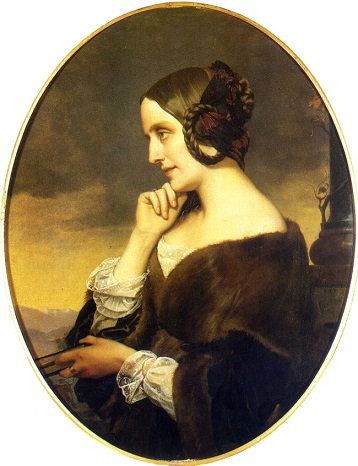
    Above: the poet André Chénier

    Monday March 24th, 2014 – Seeing the vast numbers of empty seats at The Met’s season premiere of ANDREA CHENIER tonight was disheartening. In my view, The Met has been in saturation mode since Gelb took over; there is just too much Met opera available in movie theaters and via Sirius, costing little or nothing to experience.

    Add to this the incredible operatic treasures to be found on YouTube these days – hundreds of complete operas from all over the globe and thousands of samples of great singers from all eras since the dawn of recording – to say nothing of CDs and DVDs, and it’s no wonder people are content to avoid paying Met prices and making an effort to get to the opera house.

    But of course getting your opera via a cinema or the Internet or other reproduction removes the key element of what makes live opera so thrilling: the sound of unamplified voices being projected into the vast, darkened space of the opera house. Once you compromise that, opera’s magic is diluted. Yes, it’s lovely for people who live in East Nowhere to be able to go to an HD performance, but it’s nothing like being in the opera house. 

    And the once-sacred twenty Saturday matinee radio broadcasts per season have been expanded to three or four times that many performances available thru Sirius all week, every season, many of them available free via live-stream. The old Texaco broadcasts – back in the heyday of Sutherland, Nilsson, Corelli and Tucker – would make people want to go to The Met; those broadcasts hooked thousands of people on opera for life. By their very rarity they were an enticement. Now, with so many broadcasts,  often featuring less-than-fabulous singing, the lure to actually go to The Met is less powerful.

    But, to the matter at hand: tonight’s CHENIER featured basically lyric voices – those of Patricia Racette and Marcelo Alvarez – in the main roles. Thus one would need a very considerate conductor to assure a successful performance; Gianandrea Noseda seemed to heedlessly swamp the two singers at the climaxes, forcing them to force. Mr. Alvarez emerged from this more successfully than his soprano colleague.

    In fact it was because of Ms. Racette that I nearly wrote off seeing CHENIER this season. She used to be one of my favorite sopranos: her Emmeline, Ellen Orford, Mimi and Violetta were all spectacular, and I liked her first foray into heavier territory – Elisabetta in DON CARLO – very much. Then she just seemed to go off, singing everything everywhere. The voice took on a wobbly quality, the vibrato becoming over-prominent and flatness creeping in. But when I heard her in a concert performance of Dallapiccola’s IL PRIGIONIERO in June 2013, I was quite taken with her way of handling verismo-style parlando so I thought she might be good in much of Maddalena’s music. And she was, up to a point.

    Racette’s first act tonight was lovely, she sounded youthful and vibrant. But then as the role progresses, spinto power is needed and when Racette turns to pressuring her voice, things go sour. Her ‘Eravate Possente!’ in Act II was finely rendered, and Mr. Alvarez replied with a honeyed ‘Ora soave’; but as the duet surged to its climax, Racette sounded strident above F and the duet’s final note was painful. Striving for vocal drama in Act III, Racette tried to beef up her chest voice. In the opening narrative of ‘La mamma morta’ she was really pushing things; as the line went higher, she sounded stressed and the climactic high-note was pretty painful. In the opera’s great concluding duet, both Racette and Alvarez were tested by the orchestra’s enthusiastic volume (where is Joseph Colaneri when we need him?). Racette’s tone was spreading as she pushed on, ending the opera on a desperate, flattish top B. Why she wanted to sing this role at this point in her career is a puzzlement; she simply put more wear and tear on an already weary voice.

    No one expected ringing top notes a la Corelli or Tucker from Mr. Alvarez, but the Argentine tenor would surely have had a better time of it with a more simpatico conductor. Alvarez’s voice is clear and warm, and he introduced many poetic effects into the music, magically at ‘O giovinetta bella’ in the Improviso,  at ‘Tu sarai poeta’ and ‘Io non ho amato ancor’ and throughout the ‘Ora soave’ duet in Act II. His farewell to life, ‘Come un bel di di maggio’ in the final scene, was the tenor’s finest work of the evening. Overall, it was a thoughtful, passionate traversal of the role, un-aided by his conductor.

    Zeljko Lucic as Gerard had nothing to fear from the waves of sound rising from the pit: the louder the orchestra played, the louder Lucic sang. It’s such a big, bold, authentic sound and I always want to love him, but enjoyment of his singing is compromised by his tendency to go flat. Thus it was an uneven and often maddening experience to hear him in this role that basically suits him very well. After some pitch straying in ‘Nemico della patria’, Lucic rose to a marvelous climax to the aria, and his narrative which follows where he tells Maddalena of his secret passion for her was superb. He won the evening’s loudest cheers at curtain call. If only…

    Of the many smaller roles in this opera, Margaret Lattimore stood out for her strong and melodious vocalism as the Countess de Coigny: expressive singing and a juicy chest voice. Tony Stevenson really sang L’Incredibile, and John Moore (Fleville), Dennis Petersen (Abbe), Jennifer Johnson Cano (Bersi), Robert Pomakov (Mathieu) and Dwayne Croft (Roucher) all fared well. Veterans James Courtney and Jeffrey Wells presided at the Tribunal wth chilling effect. In her Met debut, Olesya Petrova opened her Act III scene – so touching – with a sustained and beautifully tapered final note of the line ‘Son la vecchia Madelon’ and later she took a very fine soft top-G, as marked dolce in the score, at ‘Puo combattere e morire’. She deserved a round of applause – and bravas – but didn’t get it.
    CHENIER is a short opera, dragged long by two extended intermissions that drained the life out of it. In an odd moment, the applause after Act III had totally stopped and people were heading out when the bow lights came on and the singers trooped out for obligatory bows. It was just a little embarrassing. 

    Metropolitan Opera House
    March 24, 2014

    ANDREA CHÉNIER
    Umberto Giordano

    Andrea Chénier..........Marcelo Álvarez
    Maddalena...............Patricia Racette
    Carlo Gérard............Zeljko Lucic
    Bersi...................Jennifer Johnson Cano
    Countess di Coigny......Margaret Lattimore
    Abbé....................Dennis Petersen
    Fléville................John Moore
    L'Incredibile...........Tony Stevenson
    Roucher.................Dwayne Croft
    Mathieu.................Robert Pomakov
    Madelon.................Olesya Petrova [Debut]
    Dumas...................James Courtney
    Fouquier Tinville.......Jeffrey Wells
    Schmidt.................David Crawford
    Major-domo..............Kyle Pfortmiller

    Conductor...............Gianandrea Noseda

    375px-Plaque_André_Chénier,_Cimetière_de_Picpus,_Paris_12

    Above: a plaque at the Cimetière de Picpus honors the poet André Chénier

  • Deborah Wingert/Lydia Johnson Dance Salon

    L1340657

    Above: Deborah Wingert

    Sunday March 23, 2014 – Friends – long-time and new – of Lydia Johnson Dance gathered at Manhattan Movement and Arts Center this afternoon for a salon/studio presentation of Lydia’s latest work-in-progress, set to the Mozart Fantasy in C-minor, K. 475. Wearing one of her many hats, the extraordinary Deborah Wingert – teacher, choreographer, stager for the Balanchine Trust, and ballet mistress for Lydia Johnson Dance – gave a pre-salon class, demonstrated her inspirational coaching abilities, and spoke of her life as a dancer whose career took wing with Balanchine’s blessing.

    L1340608

    First, a class. The dancers of Lydia’s company come from varied backgrounds. Deborah, who teaches Company class weekly for LJD, has been imbuing a feeling of stylistic unity in the dancers. Lydia’s choreographic vision is an unusual fusion of ballet and contemporary; Deborah’s class work places an emphasis on ballet while at the same time encouraging the individuality of expression of each dancer. It seems like a paradox, but it’s happening.

    The Mozart-in-progress opens with a lyrical solo danced by Katie Martin; throughout this work, Lydia provides each of her dancers with prominent passages allowing their singular qualities to shine thru.

    L1340648

    One extended segment is a duet for Sarah Pon and Anthony Bocconi (above), dancing in a realm of tenderness and trust.

    L1340633

    A duet for Blake Hennessy-York and Chazz Fenner-McBride (above), which the boys have just started working on, was coached by Deborah and in the span of a few moments took on a more vivid quality, having made slight adjustments in placement and support. Chazz, the newest dancer in Lydia’s company, brings the same sincerity to his dancing here that made his performances in Robin Becker’s INTO SUNLIGHT so meaningful.

    Kerry Shea, Laura DiOrio, Lisa Borres and Min Kim along with Katie and Sarah create beautiful shapes and a sense of quiet urgency as they come and go with dream-like unpredictability – all of this to Mozart’s peerless melodies.

    L1340686 - Copy

    LJD‘s Steve Cramer interviewed Deborah (above); she spoke of the affinity that has developed between Lydia Johnson and herself, and of their shared belief in the communicative power of music. Deborah further regaled us with stories of working for Mr. B, sharing anecdotes which were moving and witty by turns.

    L1340692

    As a savory ‘dessert’, Kerry Shea and Eric Williams (above) performed a duet from Lydia’s ballet NIGHT OF THE FLYING HORSES, to a score by Osvaldo Golijov. My friend Lisette Oropesa and I shared a secret smile as the haunting melody of “Je crois entendre encore” from Bizet’s PECHEURS DES PERLES suddenly materializes in a Golijovian incarnation. I was so glad to have my friends Lisette, Steven and Joe at the studio today; this was Lisette’s first opportunity to witness dance at close range, and I think it really moved her, especially since her beloved Mozart was an integral element of the afternoon.

    The new Mozart, along with the Golijov and Lydia’s ravishing Schubert ballet NIGHT AND DREAMS, will all be part of her upcoming season at Ailey Citigroup in June; details will be forthcoming.

  • Martha Graham @ City Center 2014 #2

    6a00d8341c4e3853ef017d416357b9970c-800wi

    Above: Katherine Crockett, photo by Matthew Murphy

    Friday March 21st, 2014 – Gods and goddesses never leave us, but they do sometimes move from one sphere to another, the better to bring light to the entire universe. Tonight at City Center I watched two of the great Graham dancers of our day – Katherine Crockett and Maurizio Nardi – in their final performances as members of the Martha Graham Dance Company. (Maurizio actually bids farewell on Saturday evening, but I am unable to be there). Both of them – I hope – will come back as guests in future Graham seasons; or perhaps we will see them in different contexts in the months ahead.

    This evening’s performance was brilliant in every regard: the Company danced to perfection and the two contrasting Graham works framed an Andonis Foniadakis creation to which the word ‘gorgeous’ can be most aptly applied.

    Ms. Crockett, as Clytemnestra in a one-act distillation of the 1958 Graham classic, was beyond the beyond. To be tall, shapely of limb, and fair of face is all well and good, and to put these gifts at the service of art and music with such total conviction is Katherine Crockett’s great achievement. Her performance was so clear of focus and so striking in every step and gesture and expression that it seemed impossible that we might be seeing her in this role for the last time. Katherine has always seemed to me to be the incarnation of an ancient goddess, alive and speaking to us today of the luminous vitality of the feminine spirit. As the audience and her fellow dancers hailed her with flowers and waves of applause at her curtain calls, she seemed to have attained iconic status. And yet, we were to see her again in a subtle encore, wafting across the stage in an angelic white gown in MAPLE LEAF RAG, the evening’s closing work.

    CLYTEMNESTRA, to a musical score by Halim El Dahm with sets by Isamu Noguchi and costumes by Ms. Graham and Helen McGehee, affords many solo-character opportunities for the Graham dancers and so we are able to bask in the power and poetry of the individual personalities in this fascinating Company.  Starting at curtain-rise, Lloyd Knight as the Messenger of Death set the tone for the whole work with his natural armor of musculature set off in a flowing royal-purple skirt. Martha Graham unabashedly admired the male form, and a veritable parade of masculine marvels strode before us: Ben Schultz as the towering King Hades – armed and epically dangerous – and Abdiel Jacobsen with a handsome mixture of vulnerability and resolve as Orestes (Abdiel is having quite a season!); Maurizio Nardi’s drunken lout of an Agisthes was personified by his slender strength and Hollywood cheekbones, and Lorenzo Pagano – already a valuable asset to the Company – gave a powerful rendering of the Night Watchman’s solo. As the hapless Agamemnon, Tadej Brdnik was perfect – and, after his character’s death, Tadej reappears in high platform shoes and the ballet becomes a ghost story.

    The women are equally superb, with the calculating urgency of Electra brought vividly to life by that impeccable Graham priestess, Blakeley White-McGuire. Natasha Diamond Walker (Helen of Troy), Mariya Dashkina Maddux (Iphigenia), PeiJu Chien-Pott (Cassandra) and Xiaochuan Xie (Athena) were distinctive as these mythic females, and the blessed assurance of their dancing and of their commitment augur well for the future of the Company.

    Andonis echo for graham fotochristopher jones

    Above: rehearsal image from Andonis Foniadakis’ ECHO, photo by Christopher Jones

    In their quest to bring new choreography into the Graham repertoire, the Company have struck gold with Andonis Foniadakis’ ECHO. Drawing inspiration from the ancient tale of Narcissus and Echo, this work fits like a glove into the Company’s scheme of things, where myth, magic and mystery are their daily bread.

    Andonis, who in 2008 brought his mind-blowing solo version of RITE OF SPRING – danced by the divine Joanna Toumpakari – to Joyce SoHo, is now becoming more widely known here in Gotham (his ballet GLORY will be seen the The Joyce this coming week, performed by Ballet du Grand Theatre Geneve…details here). 

    ECHO opens in silence in a foggy landscape with a shallow circular pool. It is here that the beautiful Narcissus is held captive by his own reflection. Andonis uses two of the Graham company’s handsomest men to personify the self-obsessed youth: Lloyd Mayor and Lorenzo Pagano. They are clad in long sheer skirts and the theme of self-infatuation is embodied in their constant embracing and intimate partnering. They are all but inseparable.

    As the rapture of Julien Tarride’s musical score takes wing, we meet the lovely and lonely Echo, danced with flowing grace by PeiJu Chien-Pott – a dancer who this season has emerged at a stellar level. The dance swirls forward on waves of lyricism, with a time-evoking gamelan theme of particular appeal. Angelic voices from another cosmos permeate the atmosphere as the ensemble of dancers, hair down and skirts drifting as they fly swiftly about the space, come and go from the dark recesses of the stage. Tadej Brdnik, Mariya Dashkina Maddux, Lloyd Knight, Xiaochuan Xie and Ying Xin are all to be savored, and a duet passage for Natasha Diamond Walker and Ben Schultz suggested a partnership to be cultivated.

    ECHO rightfully received a sustained ovation, both for the dancers and the choreographer. 

    News_27721_2

    Above: Maurizio Nardi

    Having my last look – for now – at Maurizio Nardi in the evening’s closing work, MAPLE LEAF RAG; Maurizio was one of the first Graham male dancers to seize my imagination when I began following the Company a few years ago. One of my regrets is never having seen him in the Graham solo LUCIFER which he has danced at galas. Perhaps an opportunity may still come. His immediate future I believe is wrapped up with Key West Modern Dance. I like to imagine him under a palm tree, sipping a cool drink after teaching class. Bon voyage, Maurizio!!

    I’d never seen MAPLE LEAF RAG and it is, in a word, adorable. Adorable in two ways really: first for its wit and sparkle and second for its gentle pandering to admirers of the male physique: all the Graham hunks spend the whole ballet shirtless, in tights.

    The stage is dominated by what appears to be a fusion between a ballet barre and a balance beam. The dancers will use this in myriad ways during the ballet. All wearing pastels, the eighteen dancers romp about the space to Scott Joplin tunes. Ying Xin and Lloyd Knight, in canary-yellow, are birds of a feather in their quirky, animated pas de deux. Periodically Katherine Crockett wafts across the stage, a tongue-in-cheek representation of Graham spoofing herself. Stylized Graham movement takes on a charming vibrancy here and the piece, just long enough to dazzle us without wearing out its welcome, is a great way to end the evening.

    During the curtain calls, Tadej Brdnik came striding out in his Agamemnon platforms and stopped the applause to ask that we donate to Dancers Responding to AIDS on our way out. I would do anything Tadej asked of me, and so I gave them – literally – my last dollar.

    So, a vastly pleasing evening in every regard with my lovely companion Roberto Villanueva, and so nice to run into Ian Spencer Bell. My thanks to Janet Eilber, Denise Vale, Andonis Foniadakis, Janet Stapleton, and all of the Graham dancers, and a champagne toast to Katherine and Maurizio. And a million roses for Martha.

  • Martha Graham @ City Center 2014

    6a00d8341c4e3853ef019104b3b731970c-800wi

    Above: Xiaochuan Xie and Ben Schultz rehearsing Martha Graham’s RITE OF SPRING; photo by Nir Arieli.

    Thursday March 20th, 2014 – Spring was in the air as Martha Graham Dance Company took the City Center stage tonight in a grand performance; Graham’s two (very different) Springtime classics – APPALACHIAN SPRING and RITE OF SPRING – framed the premiere of Nacho Duato’s darkly primeval DEPAK INE. The dancing was on such a phenomenal level, with the Company’s established and rising stars joining forces to create a vivid ensemble of boundless energy and commitment. And I was so happy to run into my fellow Graham-fan, the incomparable Wendy Whelan.

    Whenever Janet Eilber, the Company’s Artistic Director, steps forward to welcome us to a Graham event, I always wish that she was dancing. After her brief opening remarks, the curtain rose on a performance of the 70-year-old Graham masterpiece APPALACHIAN SPRING that had all the freshness and vigor of youth. The iconic Noguchi setting – so bare-boned yet so evocative – and the Americana-essence of Aaron Copland’s score were inhabited by a stellar cast and the ballet soared yet again.

    As the Pioneering Woman, Katherine Crockett’s goddess-like stature imparted a strength of heart and soul drawn from the land and an indomitable feminine spirit. Katherine’s power of gesture and her royal extension, as well as her resonant stillness as she observes the wedding rituals, create an unforgettable character. Lloyd Knight was likewise on spectacular form as the Preacher; whether standing stock still upon the Rock of Ages or marshalling his joy-filled followers, Lloyd’s strength of personality and technical mastery made for a vivid portrayal.

    Blakeley White-McGuire as the bride illuminated the character of this young and hopeful woman with a perfect mixture of vulnerability and joy. Dancing with pure clarity, Blakeley’s nuanced portrayal – both in action and reaction – was so inspiring. She was joined by the long-limbed Abdiel Jacobsen as the Husbandman in what I believe was a role-debut. Abdiel’s beautiful line and fluency of technique were aligned with a far-gazing handsomeness, making for a compleat performance. Towering over his bride, it was clear Abdiel would be Blakeley’s pillar of strength thru all the changing years that the couple would face. The poetry of their portrayals brought tears to my eyes.

    The world premiere of DEPAK INE, created by Nacho Duato to a score by Arsenije Jovanovic and John Talabot, drew a fervent ovation from the audience. Darkness reigns as the curtain rises, with the prone body of PeiJu Chien-Pott face down on the stage-left floor. She will remain totally still throughout the ballet’s opening movement.

    Emerging from the shadowed recesses at the rear of the stage, other dancers approach PeiJu. They soon fall into a kozmic dance with many comings-and-goings, and laced with spectacular feats of partnering. Absolutely amazing dancing from Natasha Diamond-Walker, Blakeley White-McGuire, Ying Xin, Abdiel Jacobsen (in a striking long-skirted costume), Lloyd Knight, and Lorenzo Pagano. To deep chant and exotic jungle sounds, these thrilling dancers do inhuman things with their bodies: unstinting power and commitment propel them through physical feats of uncanny speed and dexterity. 

    Then PeiJu begins to stir; she rises out of a drugged slumber as three dark-clad men – Tadej Brdnik, Ben Schultz and Lloyd Mayor – loom up out of her nightmare. A staggeringly ominous Rave beat fills the hall with a relentless loudness that threatens to bring the house down, literally. PeiJu, in a fantastical performance, is assulted by the men…ravaged, thrown down, lifted and passed from one to another. At last she returns to her silent sleep; in a repetition of the ballet’s opening passage, the other dancers approach her as at the start. At last she is borne away by Abdiel as the curtain falls.

    Giving herself over fully to the choreographer’s demands, PeiJu Chien-Pott scored a definitive triumph. All of the dancers as well as the choreographer were hailed with a mammouth standing ovation. The work, while impressive and sonically overwhelming, is a bit too long and somewhat predictable: that the woman will rise from her stupor and return to it, and that the ballet will ‘start again’, and that she’ll be carried off…all of this happened as if on cue. For me, it was the mastery of the ballet’s ultra-demanding choreography by the dancers that made DEPAK INE worthwhile.

    Sadly, the evening’s closing RITE OF SPRING was seriously compromised for those sitting around me by the incessant chattering of a small child a few seats away. How inconsiderate of the mother not to take the child out; thus those spell-binding moments of piano/pianissimo which Stravinsky created to offset the forceful sonic assaults of his music were simply ruined.

    Nevertheless, this is a Graham masterpiece that thrills us to the core. Graham’s marvelous use of stylized movement for the male and female corps, their ritualistic gestures and worshipful kneelings, fill the stage with a sense of structure and the relentless process of a rite from which the victim cannot possibly hope to escape.

    Snatched by the Shaman almost at random from the back of one of the acolytes, Xiaochuan Xie is suddenly transformed from a nameless girl to the center of the community’s sacrificial dances. Her performance is at once ravishing and disturbing. The lovely and vulnerable Xiaochuan’s terror is ignored by the implacable Shaman intent on shedding her blood to appease the unseen gods and guarantee a bountiful harvest. Ben Schultz is simply ideal as the Shaman, his physique symbolic of his god-like stature in the tribe, and his focus on his duty to the gods intense and unwavering. Maurizio Nardi and Tadej Brdnik are the ministers of death, and the entire ensemble dance with tremendous power and inspiration.

    In the end, the two great Graham works were what made the evening resonate. The dancing all night was simply thrilling and Martha’s double tribute to Spring showed us why her divine gifts still keep giving, some hundred-and-twenty years after her birth. Choreographers come and go, geniuses stay with us forever.

  • Ariel Rivka/CaitlinTrainor/Texture

    1383334044_80fb

    Above: Kaitlyn Gilliland and Caitlin Trainor is a rehearsal photo by Paul B Goode

    Thursday February 27th, 2014 – An evening of dance at Ailey Citigroup featuring three companies: Ariel Rivka Dance, Trainor Dance, and Texture Contemporary Ballet.

    Caitlin Trainor presented two works: KaitlynCaitlin (2013) a duet showcasing Ms. Trainor and former New York City ballet dancer Kaitlyn Gilliland.  This is a danced conversation between the choreographer, Caitlin, dancing barefooted, and guest artist Kaitlyn, dancing on pointe.  To music by Major Scurlock, using piano and electronics, the two girls dressed in ruby-red frocks dance in-sync and then move off on separate trajectories to explore their own vocabularies in combinations that makes great use of the space. The work reaches a peak as they come face-to-face, literally, and the movement stops for a moment.

    In the second Trainor piece, The Air Turned White, Ms. Trainor appears both in person and as a projected image, in filmwork crafted by Maria Niro. The dancer enters from the audience, wearing jeans and a halter top. To a pulsing electronic beat (the musical setting also by Ms. Niro) Caitlin begins to dance while on the huge screen above we see her folding and crawling slowly across the surface. In a miraculous ending, the filmed image shrinks to nothing.                                                                                              

    Take… Taken… Taking (world premiere) was performed by Texture Contemporary Ballet; choreographed by Alan Obuzor to music by Philip Glass. This is a pas de cinq in three movements with the girls on pointe; simple blue costumes and fine lighting set off the dancers in this well-structured ballet in which Mr. Obuzor’s choreography shows imagination and musicality throughout. In the restless opening segment, the flow of movement and stylized port de bras keep us engaged; the vivid dark-haired dancer Alexandra Tiso seems something of an outsider, and the others seek to entice or console her with lovely gestures. Then a chill descends and Mr. Obuzor commences a long solo to the adagio section; seemingly a lost soul, the dancer uses his long limbs to express isolation and fear. The solo takes on a more agitated aspect but there seems to be no escape. Three girls return for the turbulent finale, their hair down. Ms. Tiso is seen again both in solo and duet phrases with Mr. Obuzor. The ending of the work is visually pleasing but slightly inconclusive dramatically…though that in itself adds to the ballet’s mystique. Dancers:  Kelsey Bartman, Jennifer Grahnquist, Alan Obuzor, Alexandra Tiso and Brynn Vogel.

    From Ariel Rivka Dance, The Book of Esther begins with Vashti an homage to Vashti, wife of the ruler of Persia – which the Company performed last year. Set to a melodic score by David Homan for violin, cello, guitar and piano, Vashti features five women – four handmaidens and Queen Vashti – and tells the story of Vashti’s stuggle to choose between obeying her husband’s command that she dance naked before his guests or to maintain her dignity by refusing.

    Hana Ginsburg Tirosh is a poetic Vashti with an expressive face; the dancing of the five women recalls both Isadora Duncan’s works and Jerome Robbins’ Antique Epigraphs.

    Last year, Vashti stood alone; now the choreographer has extended the narrative continues with Esther. As the successor to the displaced Vashti,  Esther is in the difficult position of having to inform the King that she is Jewish. The King’s advisor, Haman, works to undermine Esther.

    Esther begins with the entry of a solo clarinetist (Moran Katz) who crosses the stage playing a wistful melody. The story the unfolds, with Claire Cholak as Esther advised by Mordechai (Kristen Licata) and by a vision of Vashti (Ms. Ginsburg Tirosh) as to how she should deal with her dilemma. Danita Shaheen dressed in red as the Good/Evil Haman brings a welcome vibrancy to the proceedings.

    By extending the dancework to incorporate the stories of both queens, the piece now seems a bit long; it might be well to pare it down just a little to maintain the dramatic flow of the narrative. But that is up to the choreographer; as it stands now The Book of Esther is both musically and visually rewarding.

    A note of praise for the excellent musicians who played the David Homan score live: Ms. Katz (clarinet), Mario Gotoh (violin), Nadav Lev (guitar), Elad Kabilio (cello) and Ben Laude (piano).

  • Preljocaj & Martins @ NYC Ballet

    Stravaganza-key

    Above: from LA STRAVAGANZA

    February 25th, 2014 – Angelin Preljocaj’s unusual 1997 ballet LA STRAVAGANZA and Peter Martins’ tango extravaganza TODO BUENOS AIRES (dating from 2000) were on the bill at New York City Ballet tonight, along with a Wheeldon pas de deux A PLACE FOR US.

    To date I’ve admired everything I’ve seen by Mr. Preljocaj, most especially his L’ANNONCIATION which has been perfomed in New York City by Cedar Lake Contemporary Ballet. I was at the NYCB premiere of LA STRAVAGANZA over a decade ago and was very taken with this dancework which revolves around a warp in the time continuum.

    In LA STRAVAGANZA, a sextet of young people in contemporary dress are dancing quietly in the twilight to the music of Vivaldi. At the intrusion of mechanical sounds, a black panel at the rear of the stage rises to review another sextet: three men in Puritan garb and three colourfully-dressed peasant girls. The contemporary group warily explore these aliens from another era who dance in stiff patterns with a stylized gestural language. A pas de deux ensues for one of the contemporary girls and one of he Puritans; in the end the girl is abducted and taken off to the other world. The contemporary dancers return to their original formation and the lost girl magically reappears: the story seems poised to repeat itself, endlessly. 

    In this rather odd ballet, which as I recall tended to baffle people at its premiere, Mr. Preljocaj has successfully merged the heavenly Baroque music with works of 20th century composers Evelyn Ficarra, Robert Normandeau, Serge Morand, and Ake Parmerud. Dance highlights are a duet for two of the Puritan men – Sean Suozzi and Craig Hall – moving in-sync with fast-paced gestures, and the time-spanning pas de deux danced by the ever-intriguing Gretchen Smith and Sean Suozzi.

    The contemporary boys – Devin Alberda, Joseph Gordon and Allen Peiffer – have some demanding combinations and later they stand stock still in a field of light as the girls – Ms. Smith, Brittany Pollack and Sara Adams – tentatively examine their bodies. Daniel Applebaum was the third Puritan, and a very attractive female trio – Emilie Gerrity, Claire Kretzschmar and Lydia Wellington – worked beautifully together and seemed to have stepped out of a Vermeer painting. 

    The title A PLACE FOR US made me think we were in for that cloyingly sentimental song from WEST SIDE STORY; but mercifully Chris Wheeldon turned to far more interesting – and rare – works from Andre Previn and Leonard Bernstein for this duet, the music being performed live onstage by Steven Hartman (clarinet) and Nancy McDill (piano).

    The duet, danced by NYCB‘s beloved couple Tiler Peck and Robert Fairchild, is performed in squares of light gleaming onstage. The piece has a dedication: ‘For Jerome Robbins. A thank you.’ and that choreographer’s work is indeed recalled while watching this pas de deux with its combination of romance and wit. Oddly enough, though – perhaps because of Robbie’s white tights and soft tunic – this pas de deux made me think of Balanchine’s APOLLO more than once. Needless to say, the dancers and musicians did very well by it.

    TODO BUENOS AIRES premiered in 2000 with Darci Kistler and Wendy Whelan in the principal female roles. In 2005, Peter Martins re-worked the ballet to incorporate a featured role for Julio Bocca. It’s the 2005 version we saw tonight, with our own primo bailarín Joaquin de Luz in a virtuoso performance.

    The musicians, led by concertmaster Kurt Nikkanen and featuring JP Jofre on bandoneon, are seated onstage, and two large soft drapes mark out the dance floor of a spacious after-hours club. Five Piazzolla tangos, arranged by Ron Wasserman, provide the setting for a series of duets and ensembles. Maria Kowroski – could her extension be any more heavenly? – danced with cool allure surrounded by a quartet of sexy boys: Jared Angle, Robert Fairchild, Adrian Danchig-Waring and Amar Ramasar. In a performance marked by radiant star-power, Ashley Laracey took on the role created on Wendy Whelan and made it her own. Right from her first duet with the sensuous Amar Ramasar, Ashley was thoroughly captivating; it seems to me that she is a dancer who could take on a huge variety of roles and make them all shine.

    Joaquin had the audience in the palm of his hand from the start: his speed-of-light pirouettes and spacious leaps caused the people around me to gasp in disbelief. The character’s moods range from aloof to seductive, and Joaquin seemed to be having a blast as he covered the stage with his daredevil feats, in the end basking in the adulation of the crowd and flashing his award-winning smile.

  • PRINCE IGOR @ The Met

    PrinceIgor-copy-2

    Above: Ildar Abdrazakov as Prince Igor at The Met

    Monday February 24th, 2014 – I fell in love with Borodin’s PRINCE IGOR back in the late 1960s when I saw several performances of it in an English-language production at New York City Opera. The staging was traditional and featured unforgettable performances by my beloved Maralin Niska (Yaroslavna) and that great singing-actor William Chapman (doubling as Khan Konchak and Prince Galitsky); much of the music became imbedded in my operatic memory, and the famed Polovtsian Dances were staged as a warriors-and-maidens extravaganza, led by the great Edward Villella who was on-loan from New York City Ballet.

    The City Opera’s production used painted drops and built set-pieces to evoke the locales, with era-appropriate costumes. It spoke to us directly of the time and place that Borodin’s music conveys. The Metropolitan Opera’s new production of PRINCE IGOR is more generalized; the women of Putivi are seen in 1940-ish dresses and coats even though the action supposedly takes place in the year 1185. 

    The evening overall was a rather mixed affair: musically sound and with some interesting visual elements (the field of poppies) it does not really end up making a strong dramatic statement; this may be due in part to the episodic character of the opera itself. In this updated setting we don’t get much of a feel for exoticism. Khan Konchak for example is not seen as an Asiatic warlord with a scimitar but rather as a rather anonymous military type in a toxic-yellow uniform.

    The opening scene takes place not in a public square in Igor’s capital but rather in a great hall where the Prince’s troops assemble in preparation for going to war. This is fine, but it rather short-circuits the effect of the solar eclipse that is taken as a bad omen by the populace. Despite this warning, Prince Igor leads his troops out to fight the Khan; he is defeated and captured.

    Black-and-white films of the Prince and of his soldiers are shown during interludes; these are rather superfluous though it’s nice to see two men in a gentle embrace as they await the coming battle. The field of poppies is really very attractive and the ballet – with the dancers is gauzy cream-coloured costumes – is sensuous and flowing rather than militant and grand. I loved spotting several of my dancer-friends: Loni Landon, Michael Wright, Anthony Bocconi, Kentaro Kikuchi, Matt Van, and Bradley Shelver.

    In this production, the three scenes of Act II all take place in the same spacious great hall as the prologue; nevertheless, there are longish pauses between scenes.

    The first intermission stretched out unduly and the far-from-full house seemed bored waiting for the opera to resume. There were very short rounds of applause after the arias, which were for the most part attractively sung. A huge double explosion as the Act II curtain fell with Putivi under attack almost made me jump out of my seat.

    Gianandrea Noseda conducted with the right sense of grandeur, but also with a nice feeling for the more reflective moments. Perhaps what was missing was a Scheherazade/mystique in the Polovtsian scene. Noseda sometimes tended to overwhelm his singers; and the very open sets did not help to project the voices into the hall. The orchestra and chorus were on optimum form.

    In the title-role, Ildar Abdrazakov sang beautifully, especially in his great aria of anguish over his defeat and of his longing for his beloved Yaroslavna far away. The role, often sung by baritones, seemed to work well for Abdrazakov even though his voice is more basso-oriented. Read about Mr. Abdrazakov’s recently-issued CD of Russian arias Power Players, here. Igor’s lament is a highlight of this excellent disc.

    Stefan Kocan and Mikhail Petrenko appeared as Khan Konchak and Prince Galitsky respectively and both sang well though neither seemed as prolific of volume as I have sometimes heard them. Sergei Semishkur’s handsome tenor voice and long-floated head-tone at the end of his serenade made his Vladimir a great asset to the evening musically, though he was rather wooden onstage. The veteran basso Vladimir Ognovenko was a characterful Skula, with Andrey Popov as his sidekick Yeroshka.

    Oksana Dyka’s stunning high-C as she bade farewell to Igor in the prologue sailed impressively into the house; but later, in her Act I aria, the voice seemed unsteady and lacking in the dynamic control that made Maralin Niska’s rendering so memorable. Niska always took a flaming, sustained top note at the end of the great scene with the boyars where the palace is attacked. Dyka wisely didn’t try for it. The sultry timbre of Anita Rachvelishvili made a lush impression in the contralto-based music of Konchakovna, and it was very nice to see Barbara Dever onstage again in the brief role of Yaroslavna’s nurse: I still recall her vivid Amneris and Ulrica from several seasons ago.

    Deonarine_Kiri_046_ret4 2

    A particularly pleasing interlude came in the aria with female chorus of the Polovtsian Maiden which opens the scene at Khan Konchak’s camp. Singing from the pit, the soprano Kiri Deonarine (above) showed a voice of limpid clarity which fell so sweetly on the ear that one could have gone on listening to many more verses than Borodin provided. It was a definite vocal highlight of the evening, and also showed Mr. Noseda – and the Met’s harpist – at their senstive best.

    Metropolitan Opera House
    February 24, 2014

    PRINCE IGOR
    Alexander Borodin

    Prince Igor.............Ildar Abdrazakov
    Yaroslavna..............Oksana Dyka
    Vladimir................Sergey Semishkur
    Prince Galitzky.........Mikhail Petrenko
    Khan Konchak............Stefan Kocán
    Konchakovna.............Anita Rachvelishvili
    Skula...................Vladimir Ognovenko
    Yeroshka................Andrey Popov
    Ovlur...................Mikhail Vekua
    Nurse...................Barbara Dever
    Maiden..................Kiri Deonarine

    Conductor...............GIanandrea Noseda

  • Schubert’s Octet @ CMS

    Schubert

    Above: Franz Schubert

    Sunday February 23, 2014 – A sold-out house at Alice Tully Hall as Chamber Music Society of Lincoln Center continued their series The Incredible Decade, featuring works composed between 1820 and 1830, with octets by Schubert and Mendelssohn.

    The evening didn’t quite turn out as I’d hoped; I’ve been fighting off a cold and I thought I had medicated myself sufficiently to get thru the concert. But about half-way thru the Schubert all the symptoms suddenly activated and – since I am always kvetching about people who come to performances when they are coughing – I thought the polite thing would be to leave at intermission. This choice was seconded by the presence of a fidgety woman next to me who kept poking me in the ribs with her elbow. I hated to miss the Mendelssohn – one of my favorite works – but in the end I think I made the right choice because by the time I got home I was really sick.

    At any rate, the performance of the Schubert octet in F-major was certainly worth my effort to attend; as is their wont, Chamber Music Society assembled a group of players of the highest calibre and their work – both as individuals and in ensemble – was dazzling. The vociferous ovation at the end was fully merited, the musicians called out twice as the audience’s cheering waves of applause swept over them.

    Schubert’s octet in F major, D. 803, was an ambitious project for the young composer. Sometimes viewed as a preparatory ‘outline’ for what would eventually become the Symphony No. 9 in C major, The Great, the octet in itself is a rewarding and innovative work. Performance timing of one hour makes this one of the longer chamber works in the active repertory; its six movements literally brim over with melodic and harmonic riches. The mood runs from sunshine to shadow and the work conveys Schubert’s musical and emotional ebb and flow; it’s a piece that calls for both vrtuosity and spiritual intention, and our stellar band of players tonight gave a performance that was nothing short of spectacular.

    D288FC0D-DBDE-8E54-239713E258DAC4D4

    I was particularly excited to encounter one of my favorite musicians, Alexander Fiterstein (above), whose prodigious talents as a clarinetist were very much an illuminating factor in this evening’s performance. In the Menuetto, Alexander and violinist Erin Keefe engaged in a courtly dialogue, and earlier in the Adagio it is the clarinet which first ‘sings’ the lovely melody. Ms. O’Keefe’s silken timbre was a joy to hear throughout, and her fellow string players – Sean Lee (violin), David Aaron Carpenter (viola), Jakob Koranyi (cello) and the Society’s formidable double-bass player Kurt Muroki – blended stylishly while the wind trio – along with Mr. Fiterstein – had Bram Van Sambeek (bassoon) and the matchless velvet of Radovan Vlatkovic’s horn playing. Having played the horn in high school, every time I hear Mr. Vlatkovic I develop a case of ‘timbre envy’. How does he do it? My timbre was always too trumpet-like. Special kudos to Mr. Koranyi as well: his ‘variation’ in the Andante was one of the outstanding passages of the evening.

    In her pre-curtain speech, co-Artistic Director of CMS Wu Han gave us the exciting news that subscription/ticket sales were already well ahead of projection for the 2014-2015 season.  Bravo CMS!

  • Jessica Lang Dance @ The Joyce

    Jessicalang1

    Above: from Jessica Lang’s The Calling, photo by Takao Kamaru

    Thursday February 20, 2014 – Jessica Lang Dance are at The Joyce this week, presenting an exciting programme of danceworks in varied musical styles, all of it choreographed with Lang’s innate sense of sophistication and grace. And it’s all beautifully danced as well.

    Lines Cubed is a Lang work new to me and I loved every moment of it. Set to a score by composers John Metcalfe and Thomas Metcalf, the ballet takes on the aspects of a danced symphony: there’s a prelude, an andante, a scherzo, an adagio, and a finale – and each movement is colour-coded for the costuming and set decor. Throbbing mechanical rhythms and passages of lyricism allow the choreographer to explore various movement motifs: much of the ballet has a stylized, ritualistic quality with questing port de bras. The lighting (Nicole Pearce) and the use of accordian-like set pieces which the dancers open and close in passing create a shifting visual framework.

    Following a ritualistic opening movement, Black, the space glows in ruby-rich light for Red with an evocative solo danced by Kana Kimura backed by four men. Bright sun and infectious joy are expressed by a trio of women – Julie Fiorenza, Sarah Haarmann and Laura Mead – in Yellow. This gives way to a rather sombre Blue adagio, danced by Claudia MacPherson and Milan Misko. The colours are mixed and matched for the full-cast finale. Such was the cumulative effect of the setting, music and dancing that I could have immediately watched this ballet again.

    For Mendelssohn/Incomplete, Jessica Lang has turned to my favorite chamber work – the Mendelssohn piano trio #1and created an ensemble work of longing and gentle melancholy in a dusk-like setting. The women in purple dresses and the men in soft shades of grey cross the stage in a clustered formation, a community seeking something in the impending darkness. They pause to dance: here the choreographer shows us tenderness and consolation in choreography that quietly illuminates the music. In the end, the group seem to be moving on – one woman lingers in the space, but she is not left behind. This poignant ballet, so touching in its sincerity and humanity, made a fine impression and was superbly danced by Mlles. Fiorenza, MacPherson and Haarman with Clifton Brown, Milan Misko and Kirk Henning.

    In Aria, a quartet set to Zenobia’s restless-fury aria “Son contenta di morire” from Handel’s RADAMISTO, three boys (Todd Burnsed, Kirk Henning and Milan Misko) in grey tights and bright red shirts sail thru strongly musical combinations while Laura Mead – in a flame-red frock and dancing on pointe – comes and goes in a breathlessly-paced virtuoso performance. Mr. Burnsed is her primary partner; there are lifts, escapes, and swirling entrances and exits in this portrait of a woman on the brink.

    The Calling, a mind-bendingly gorgeous solo, is culled from a Lang signature work Splendid Isolation II. It was performed tonight by the radiant Kana Kimura. The dancer – in a long white gown – basically remains stationary, using port de bras and gentle shiftings of the upper body, neck and head to enthrall the viewer while music by Trio Mediaeval lends a timeless sense of rapture. This work, and Ms. Kimura’s sheer expressive elegance, enthralled the packed house tonight.

    White, a dance-on-film made in 2011 and having its New York premiere at these performances, shows six white-clad dancers against a jet-black background. The perspective makes them appear large or small as they dance across the screen, sometimes with witty inflection. Their comings and goings have a silent-movie flair, and the music of Edward Grieg makes White an especially pleasing interlude.

    i.n.k. is a Jessica Lang work that I have experienced from its earliest formative stages. Visually engrossing, the ballet features black-clad dancers moving before a snow-white back-panel, sometimes dancing with their shadows. Meanwhile drops or waves of dark ink splash across the screen. The other-worldly score by Jakub Ciupinski, the costuming of Elena Comendador, Nicole Pearce’s lighting, and the intriguing film elements (KUSHO by Shinichi Maruyama) all combine to draw the viewer into this dream-like world.

    Clifton Brown – truly one of the great dancers of our time – and the celestial Kana Kimura have a remarkable adagio in i.n.k. which ends with a mesmerizing slow backbend from Kana, supported on high in Clifton’s arms. This passage is so compelling and I felt this evening that i.n.k. should actually end here; and my companion felt the same way.

    On my dance wish-list is Jessica Lang’s production of Pergolesi’s STABAT MATER which premiered at Glimmerglass in the Summer of 2013; I’m hoping it could be brought to New York City.

  • Violin Concertos @ NYC Ballet

    318356_2232197878477_977158597_n

    Above: Russell Janzen of New York City Ballet

    Wednesday February 19th, 2014 – Ballets by Jerome Robbins, Peter Martins, and George Balanchine – each set to a great 20th century violin concerto – were on the bill at New York City Ballet this evening. To an already-great line-up of dancers there was a late addition: Russell Janzen made his debut in BARBER VIOLIN CONCERTO; Tiler Peck and Amar Ramasar were also making role debuts tonight.

    Three conductors passed the baton one to another as the evening progressed; the Company’s two concertmasters – Kurt Nikkanen and Arturo Delmoni – shared the soloist spotlight, Kurt playing the Prokofiev and Arturo playing Barber and Stravinsky. It was a programme during which really missed my beautiful seat in Fourth Ring AA where I used to watch the orchestra from on high.

    The evening opened on a high note: the curtain rose on Robert Fairchild, all in white, as the restless dreamer of Jerome Robbins’ OPUS 19/THE DREAMER – my favorite Robbins ballet. Robert danced the ballet’s opening solo with deep musicality and supple fluidity of movement. Out of the blue, his muse materializes: Tiler Peck, in this role for the first time, found a perfect balance between the classical vocabulary and the sometimes jagged expressionism the ballet requires. In the more lyrical passages, her lush pirouettes had remarkable clarity; to a role that has been gorgeously danced in recent seasons by Wendy Whelan, Jenifer Ringer, and Janie Taylor, Tiler brought her own distinctive touches. Robbins gives the corps some dreamy moves – and also some athletic ones – in OPUS 19; I very much enjoyed tonight’s collective which was made up of some of my favorite dancers.

    It took me a few hearings to figure out exactly what it is about the opening measures of the Barber violin concerto that sings to me so clearly: it’s the use of the piano, especially the opening chord. It gave me a little frisson again tonight; while I love so many violin concertos I think sometimes the Barber is my actual favorite. I remember one summer driving very fast out Route 6 with Kenny to the end of the world – Provincetown – with the Barber blasting on the car stereo. Music and memory are so often indelibly linked.

    In tonight’s performance of the Barber, Teresa Reichlen and Russell Janzen looked great together – not just because they are long-limbed and attractive, but because they share a sense of elegance that manifests itself in their bearing and the grace of their line. A chill passed thru me as Amar Ramasar entered, a fallen angel with a dangerous ‘loner’ appeal who will eventually draw Tess to the dark side. Megan Fairchild excels in the barefooted role created by Kate Johnson: it’s a far cry from the charming, pristine pointe-work that is Megan’s specialty, but she jumps right in and makes it happen.

    After their classical parterning passages in the first movement, Tess and Russell will each experience a transformation. At first seeming to console Amar, Tess falls under his spell and is borne away to an unknown fate; their duet is a psychological conflict which reaches its turning point when the subjugated woman lets her hair down. Amar’s character is not so much seductive as simply a force that cannot be withstood; Tess in her vulnerability looks ravshingly ravished. Random thought: I’d love to see Amar in the Martha Graham rep.

    In the final allegro, Russell strives to withstand the endless torment of Megan’s advances: she’s playing one of the most annoying characters in all dance. She ends up writhing on the floor as Russell backs away, covering his eyes to blot out the vision of her over-sexed frenzy. In a final attempt to get what she wants, Megan literally climbs up Russell’s back to perch on shoulder; in a last defense, he flips her over and sends her crashing to the floor. The two dancers handled this tricky finale with aplomb and in fact danced the whole third movement to perfection.

    6a00d8341c4e3853ef014e887730ac970d-800wi

    Above: Janie Taylor, in a Henry Leutwyler portrait

    Tonight’s Stravinsky had a special energy; it was in fact one of the finest performances of this ballet I’ve seen. Part of the singular excitement in the atmosphere tonight may have stemmed from the presence of Janie Taylor, the Company’s enigmatic/charismatic principal ballerina who is soon to retire. I’ve been crazy about Janie since she first stepped out, a mere slip of a girl just over from SAB, to dance the lead in LA VALSE. After building a reputation as a dancer at once fragile and fearless, a long hiatus due to a complicated injury took her away from the stage for months…years, even. Her ‘second career’ has been a real source of joy for me and so tonight it was bittersweet to think that in a few days she will be vanishing from this stage, leaving only perfumed memories. But what memories they are!

    Tonight’s performance showed off of Janie’s balletic split personality: a palpable vulnerability alinged to a steely technical resiliance: she’s simply extraordinary…and irreplacable. Ask LaCour’s partnering of this blonde enigma developed a wonderful simpatico, a sense of tenderness in what is after all an abstract and ’emotionless’ ballet. In that marvelous moment where the ballerina stands against her partner as he shows her a view of the world with a sweeping gesture of the arm, I thought I’d never seen anything so beautiful.

    Janie and Ask seemed poised to walk off with the gold tonight, but the other Stravinsky couple – Rebecca Krohn and Adrian Danchig-Waring – were so potent technically and so vivid in their presentation that the entire ballet took on a grand dynamic, abetted by the excellent corps (the quartet of leaping boys won a ‘bravo’ all their own). Rebecca Krohn has really done wonders in the leotard ballets; she looks phenomenally confident and polished, and for me she’s the equal of any ballerina I’ve seen in this rep, going way back to Suzanne and Karin. Her generous dancing found a fine match in Adrian Danchig-Waring’s vibrant physicality; together these two dancers crafted amazing shapes as they moved thru the ballet’s demanding partnering motifs, ending their pas de deux with Adrian in a finely-timed fall to the floor and Rebecca in a sweeping back-bend.

    Extra delight: Faye Arthurs in a brief partnered segment with Adrian; she danced in both the Prokofiev and the Stravinsky tonight. So nice to run into Erica Pereira and Caitlin Dieck…and Tess, after the show.

    OPUS 19/THE DREAMER: *T. Peck, R. Fairchild [Conductor: Sill, Solo Violin: Nikkanen]

    BARBER VIOLIN CONCERTO: Reichlen, *Ramasar, M. Fairchild, *Janzen [Conductor: Otranto, Solo Violin: Delmoni]

    STRAVINSKY VIOLIN CONCERTO: Taylor, la Cour, Krohn, Danchig-Waring [Conductor: Capps, Solo Violin: Delmoni]