Blog

  • Parsons Dance at The Joyce

    Parsons-dance

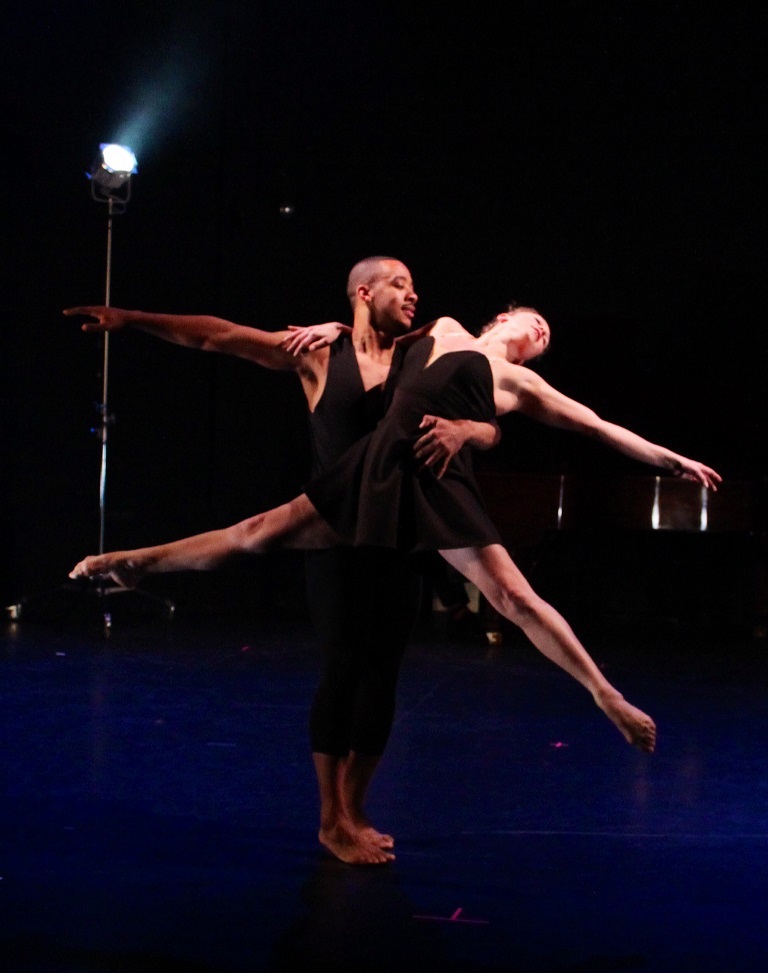
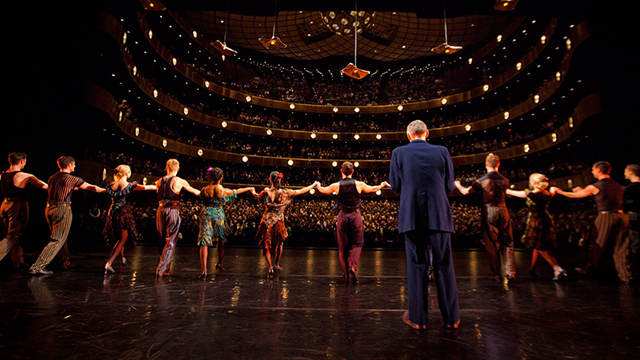
    Sunday January 19th, 2014 (evening performance) – Parsons Dance are holding forth at The Joyce for a two-week season. Due to my ever-crowded calendar, this was my only chance to see them this time around. It was a typically top-flight Parsons programme, danced with the artistry and boundless verve I’ve come to expect from the Company over my long years of following them. The Company are celebrating 30 years of dancing…and I feel I’ve been with them almost from day one. 

    Introduction is a Parsons premiere and it is just what the title says: the audience is introduced to each member of the Company. David’s longtime lighting designer Howell Binkley has done the dancers proud yet again – Binkley lit all but one of the danceworks seen today. Rubin Kodheli‘s colorful score sets the stage as the Company’s luscious Italian firecracker Elena D’Amario steps forth first in a vibrant solo passage; and then we meet in turn the rest of the dancers: welcome to newcomers Geena Pacareu and Omar Roman De Jesus, and a warm welcome-back to Parsons favorites Sarah Braverman and Miguel Quinones. The lively and lyrical Christina Ilisije and those two handsome devils – Steve Vaughn and Ian Spring – are essential members of the Parsons family.

    Brothers is next: typically, Steve and Ian bounced back immediately from the opening work and were back onstage seconds later to give classic Parsons-style energy to this two boyz duet: an athletic and witty piece (co-choreographed by Parsons and Daniel Ezralow). To a quirky Stravinsky score (Concertino for 12 Instruments) the two boys nudge, flip, twist and turn their way thru this comradely duet. 

    Parsons Dance commissioned The Hunt from choreographer Robert Battle in 2001. Set to a savage, compulsive percussion score by Les Tambours du Bronx, this amazing piece is being alternately danced by the men and the women of Parsons Dance during this Joyce season. Today we had the men – Miguel Quinones, Steve Vaughn, Ian Spring, and Omar Roman de Jesus – and what a sensational performance they gave! Clad in long black skirts lined in blood red, the dancers move with fercious attack through this almost violent choreography. The audience seemed held in a state of amazement by the sheer dynamic passion of both the music and the movement and gave the guys a massive ovation at the end, so thoroughly deserved.

    Miles Davis’ “So What?” sets the stage for a jazzy quartet, Kind of Blue, danced with tenderness and a touch of seduction by Mlles. Ilisije and D’Amario along with Ian Spring and Omar Roman De Jesus. This was an interlude of near-calm in an otherwise power-packed programme, and Mr. De Jesus seems already to be developing a fan club among Parsons aficianados.   

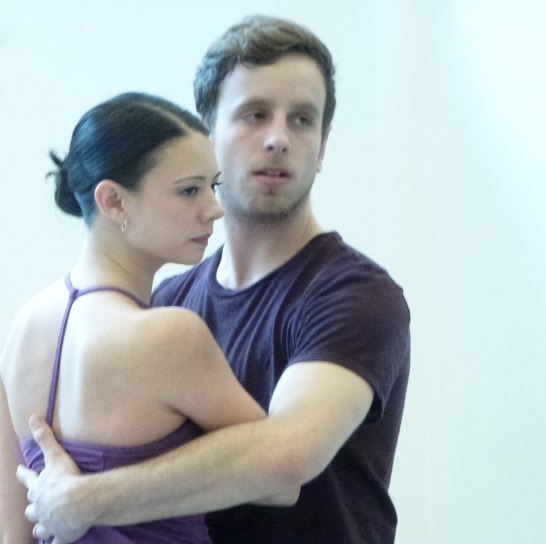
    Steve Vaughn enjoyed a rock-star triumph in the famed Parsons solo Caught; last year I had the good fortune of watching Steve in one of his rehearsals for this challenging dancework: an iconic piece in which the dancer – caught by strobe flashes – seems to literally be walking on air. Timing and stamina are the keys to success here: the solo contains more that 100 jumps which must be perfectly coordinated with the lighting. Steve, with his boyishly beautiful torso, simply thrilled the crowd, and at the end he basked in wave after wave of applause and cheers, bowing gallantly to the adoring throng.

    Nascimento Novo is a superb Parsons closing work: the music of the Brazilian composer Milton Nascimento seems tailor-made for the Parsons style and in this (yet again) marvelously lit ensemble piece the dancers celebrate, sway, and seduce with effortless charismatic appeal. Two duets – one for Sarah and Christina, the second for Elena and Steve – are highlights in this evocative tapestry of dance which evoked sultry sunlight on a freezing Winter’s evening.

    The frosting on this delicious 30th-birthday cake was running into Abby Silva Gavezzoli, a beloved Parsons star who has taken some time off to raise her adorable son. So nice to see her, it really made my evening complete.

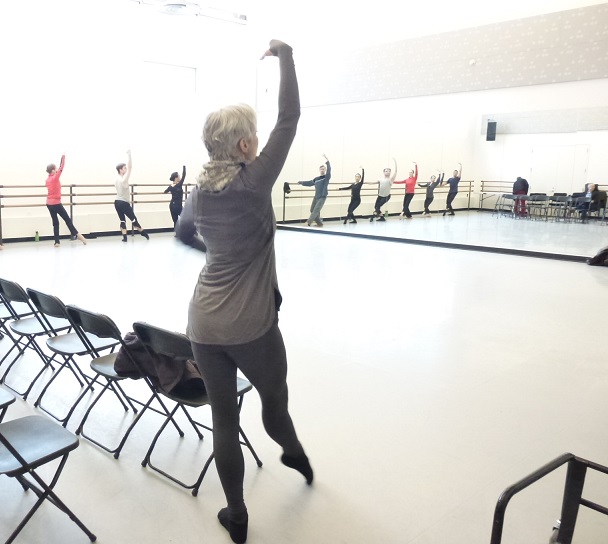
    I missed my usual rehearsal invite to David’s studio this year where I might have had the opportunity to bring a photographer to capture the new configuration of dancers; but perhaps there’ll be another chance at some point.

    What has maintained over the years of watching Parsons Dance is the sensation of dance at its most satisfying: no filler, no marking time or standing about; just perpetual motion and – always – remarkable dancing.

  • Franziska Martienssen-Lohmann

    C8b84d7be6

    In an on-line quest for something totally unrelated, I came upon this photo of Franziska Martienssen-Lohmann; something about her face intrigued me and I began to search for information about her.  

    Watch a brief video about this lieder singer who became a notable – though now largely forgotten – voice teacher; as prelude, another video links Mme. Martienssen-Lohmann to the great soprano Elisabeth Grummer.

    Mme. Martienssen-Lohmann wrote five books on various aspects of singing; aside from Elisabeth Grummer, other singers who worked with Martiessen-Lohmann included Maria Stader, Ingrid Bjoner, Jutta Vulpius and Judith Beckmann.

  • Wotan’s Farewell: John Wegner

    Wegner

    After listening to John Wegner’s very impressive performance as Alberich in the State Opera of South Australia’s recording of DAS RHEINGOLD, I was thinking he’d probably be an equally good Wotan. And sure enough, I found this highly enjoyable version of the final scene of DIE WALKURE with Mr. Wegner (photo above) as the king of the gods and conducted by Gunther Neubold.

  • RHEINGOLD from Australia

    Das Rheingold

    The State Opera of South Australia mounted Australia’s first home-grown production of Wagner’s RING Cycle in 2004; conducted by Asher Fisch and directed by Elke Neidhardt (who recently passed away), the production – which made international operatic headlines – was recorded live and issued on CD in excellent sound.

    I’d already heard and enjoyed Act I of the production’s WALKURE and was equally impressed by the RHEINGOLD. Mr. Fisch, leading the Adelaide Symphony, has an sense of pacing the work that seems at once propulsive and spacious, and he revels in revealing layers of the orchestration that make the opera seem fresh. The playing is rich and there’s a fine sense of grandeur and sonic depth.

    The cast for the most part is very fine, and the Alberich – John Wegner – is simply superb. This bass-baritone, with a 25-year career in the opera world, knows the ins-and-outs of this treacherous role and sings it with power and passion.

    John Bröcheler – who I heard as Don Giovanni and Nabucco at New York City Opera in the 1980s – is a somewhat blustery Wotan; his singing is not always beautiful but it’s surely characterful…a god drunk on his own power. Excellent giants (Andrew Collis and David Hibbard) and Mime (Richard Greager), and a vocally alluring Erda (Liane Keegan). Christopher Doig (who passed away in 2011) steers a middle ground between lyric and dramatic-character tenor as Loge. The Rhinemaidens are well-blended and along with Mr. Wegner they make the opera’s opening scene vivid, finely abetted by the conductor.  

    WAGNER Das Rheingold Asher Fisch, conductor; John Bröcheler (Wotan); John Wegner (Alberich); Christopher Doig (Loge); Richard Greager (Mime); Andrew Collis (Fasolt); David Hibbard (Fafner); Elizabeth Campbell (Fricka); Kate Ladner (Freia); Liane Keegan (Erda); Timothy DuFore (Donner); Andrew Brunsdon (Froh); Natalie Jones (Woglinde); Donna-Maree Dunlop (Wellgunde); Zan McKendree-Wright (Flosshilde)

  • In The Beginning

    Guarrera mural

    Above: a huge mural in Philadelphia honors that city’s native son, baritone Frank Guarrera, who sang Rigoletto in the first opera performance I ever attended.

    People have often asked me about my earliest operatic experiences and how I became engrossed in this ‘exotic and irrational’ art form. Although it all began for me in 1959 when I chanced to see Renata Tebaldi performing excerpts from MADAMA BUTTERFLY on The Bell Telephone Hour, it was actually attending a performance in the theater three years later that got me hooked. And to this day nothing – not recordings, radio broadcasts, televised performances, HD theatercasts – can compare with being in an opera house and experiencing opera in its natural habitat.

    I was a very unhappy boy, growing up in that small town and feeling totally out-of-sync with the people who lived there, and especially alienated from my peers. I had been stricken with rheumatic fever at age five, and was in a hospital bed (at home) for several weeks; I actually had to learn to walk again, and I sometimes think this had a profound effect on my development. On re-entering school, I was thououghly lacking in self-confidence, lonely and reclusive; and by the time I was ten I began to realize just how different I was from the other boys my age. 

    Watching that Tebaldi telecast was such a revelation. From the brief narration I had only the vaguest grasp of what BUTTERFLY was about; but the effect of this large, handsome woman wearing a kimono and singing in a foreign language bowled me over. I knew instinctively that life changed for me during that half-hour. But once smitten, where could I turn?

    My poor parents, how difficult it must have been for them having this weird child on their hands! My brother was a handful in his own way, though a typical late-1950s teenger: a James Dean-type who smoked, carried a switchblade, and sometimes brushed up against the local sheriff. My sister was popular, very involved in school activities, an all-American girl. But there was no instruction manual – especially in that neck of the woods – for raising an eccentric, introverted, feminine boy like me.

    Going with the flow as best they could, my parents gave me a two-LP album of Verdi and Puccini arias sung by great RCA recording artists like Milanov, Albanese, Peerce, Bjoerling, Merrill, Warren and Tozzi. I wore it out in no time. Then I discovered the Texaco Metropolitan Opera Saturday radio broadcasts (Sutherland’s 1961 LUCIA was my first) and things moved to another level. No one was allowed to disturb me during those afternoons, and I had a big old reel-to-reel deck and used a microphone to tape the operas off the air. I played the tapes over and over: that’s how I learned the repertory. I subscribed to OPERA NEWS and sent fan mail to singers I heard on the airwaves. I still have the letters and signed photos they sent me.

    So it only remained to actually attend an opera performance. Every summer at the end of June, my father would close the drug store he owned for two weeks and take us on a car trip. We went to Maine, Boston, Washington DC, Niagara Falls. My mother hated those trips: she loved sleeping in her own bed and usually found fault with the motels where we stayed. But it was my dad’s annual opportunity to get away from it all, and so – being a good wife – she obliged.

    I had found out about the Cincinnati Summer Opera festival, held at the local zoo. As my father was casting about for a place to go in July 1962, I put forth the idea of attending an opera. He thought the venue might be interesting, and that we could combine the trip with an excursion to the horse farms of Kentucky. Opera tickets were ordered by mail, and at last we were off: on July 7th, 1962, in a production of painted flats and very traditional costumes and staging, RIGOLETTO unfolded before me.

    The names and voices of the announced principals were familiar to me from hearing them on the Met broadcasts: Laurel Hurley, Barry Morell, and Frank Guarrera. A news item in the local paper had momentarily burst my bubble: Ms. Hurley was ill and would be replaced as Gilda by Nadja Witkowska. But by the time the conductor, Carlo Moresco, struck up the prelude, nothing else mattered: I was at the opera!

    I remember that Ms. Witkowska produced exciting high notes, that Mr. Morell’s voice was clear and warm, with a trace of a sob here and there; and that Mr. Guarrera sang strongly and really moved me with his “Pieta, signori!” sung prone on the stage, his face an inch or two off the floor. Irwin Densen, a basso who had a very long career and who I would see many times in years to come, was Sparafucile. And a devilish-looking tenor in a black beard and wearing black tights and tunic gave me – sub-consciously – a sexual frisson when he apeared as Borsa. That was Andrea Velis, a prominent Met comprimario. Another Met stalwart, Gene Boucher, was Count Ceprano.

    B morell

    Barry Morell (above) sang the Duke of Mantua

    After the performance I went backstage to meet the singers; oddly, I did not ask for autographs. I’ll never forget when Frank Guarrera came out to greet the fans: he had received a negative review for his prima performance, two nights earlier, from a woman named Eleanor Bell writing for the local newspaper. The crowd burst into applause and bravos when he emerged from the dressing room and as he began to sign autographs, he shouted triumphantly: “To hell with Eleanor Bell!”

    I think my parents actually had a good time: they took me back to the Zoo Opera for the next two summer vacations. We saw Licia Albanese singing her 100th Violetta (with Morell and Guarrera) and we saw Adriana Maliponte as Massenet’s Manon (with Morell and Guarrera) along with a TROVATORE starring Martina Arroyo and Irene Dalis. And my parents also took me to the Old Met, where I saw the Eugene Berman DON GIOVANNI – the first of eight performances I saw at the Old House – just days after John F. Kennedy had been assassinated.

    Finally, in late summer 1966, I was allowed to make my first solo trip to New York City to be on the first ticket line for the New Met. After that, there was no stopping me.

  • Love Doesn’t End

    Sarah & maurice

    Sarah: Love doesn’t end, just because we don’t see each other.
    Maurice Bendrix: Doesn’t it?
    Sarah: People go on loving God, don’t they? All their lives. Without seeing him.
    Maurice Bendrix: That’s not my kind of love.
    Sarah: Maybe there is no other kind.

  • Grace at Christmas

    557938_10151566968317034_1076314972_n

    Dancer Grace Song, rehearsing for Jacqulyn Buglisi’s Table of Silence. Photo by Paul B Goode. 

  • The Opera Lenz

    MefistoA14EM

    Above: the great basso Norman Treigle as Mefistofele in the Boito opera at New York City Opera 1969; photo copyright Beth Bergman.

    I have just discovered Ms. Bergman’s blog, The Opera Lenz, which features images from her years working at New York City Opera, the Metropolitan Opera, and music venues in our City.

    The photos bring back so many memories: I even found pictures of Nadja Witkowska – the soprano who sang in the very first opera performance I ever saw (RIGOLETTO at the Cincinnati Zoo in 1962!) – when she attended a NYCO reunion in 2012. And there’s a lovely tribute to Claramae Turner (Toscanini’s Ulrica) who passed away in 2013. And so much more…both photos and recollections.

    Beth Bergman’s other site, The Beth Lenz, features many incredible images from nature.

  • Irma Kolassi

    Kolassi

    Above: Irma Kolassi

    Listening to Irma Kolassi’s definitive recording of Chausson’s Poème de l’amour et de la mer set me in a nostalgic mood today, remembering my lovers of yesteryear and the ways in which so many of them have slipped out of my life. For not only is this music full of poignant regret but the voice is steeped in some forgotten perfume, so evocative and personal is her timbre.

    This marvelous singer is now largely forgotten, but only to listen to a few measures of her in the Chausson draws us away from the bleakness that permeates so many aspects of life today and back to a time when romance – and its alter-ego, remorse – filled the heart and permeated the dreams of a restless spirit. 

    You can read about Irma Kolassi here and listen to her voice in “Crépuscule” (‘Twilight’) from Fauré’s La Chanson d’Eve here.

  • Score Desk for TOSCA @ The Met

    Tosca_(1899)

    Friday December 20, 2013 – Having greatly enjoyed the Portuguese soprano Elisabete Matos in her two previous roles at The Met (Minnie in FANCIULLA DEL WEST and Abigaille in NABUCCO) I was very much looking forward to her single scheduled Met performance of the current season. But since the Bondy production of TOSCA is such an eyesore, I opted for a score desk tonight as Matos sang her second Puccini role at The Met. {Rumor has it the Bondy production will soon be seen for the last time here in New York City; however, we cannot be sure of getting something better in their place.}

    A great many empty seats in the House was not a good sign; and the audience tended to laugh freely at the MetTitles making me think there were a lot of newbies present. But Marco Armiliato, on the podium for an opera that suits him to a T, gave an extroverted, blood-and-thunder reading of the score. The first act especially was genuinely exciting in every regard.

    Two bassos with enormous voices set the tone for the performance: Richard Bernstein was a capital Angelotti and John Del Carlo a stentorian Sacristan. Marcello Giordani, that most unpredictable of tenors, served notice in “Recondita armonia” that he was really in voice tonight. The aria was generously sung, with clear and expressive phrasing, a thrillingly sustained foray to the climactic B-flat, and a fine diminuendo to a very long piano on the last note.

    Ms. Matos and her tenor then gave a vididly declaimed version of the lovers’ banter and they were really exciting in the sustained passages of the ensuing love duet. George Gagnidze’s Scarpia added more decibels to the evening, and his dramatic inflections were spot on. Ms. Matos lost points with me only on the phrase “Tu non l’avrai stasera…giuro!” where she shrilled on the final word: I like to hear this done in chest voice (or sung ‘from the crotch’ as we used to say of Tebaldi). Mr. Gagnidze and the Met chorus brought the act to a thunderous conclusion with the Te Deum.

    Then, as so often happens at The Met these days, a long intermission seemed to drain the energy from the evening; and I have never heard such banging, thudding and shouting from behind the curtain as the stagehands struck the set.

    Act II found the principals and conductor doing their utmost to restore the dramatic tension siphoned away by the long interval. Mr. Giordani produced an amazingly sustained “Vittoria!” and Mr. Gagnidze was thoroughly impressive in every regard. Ms. Matos struck off steely but not always stable high notes and made a strong dramatic impact with Tosca’s iconic lines: “Assassino! Voglio vederlo!”, “Quanto?…il prezzo?”, “Ah…piuttosto giu m’avento!” and “E morto…or gli perdono!”: these were all delivered with the intensity of a seasoned verismo diva. Her rendering of the great aria “Vissi d’arte” was persuasive in its vulnerability and the prolonged top B-flat at the climax was exciting though she could not sustain the following descending phrase of A-flat and G…and the conductor did nothing to aid her.

    Faced with another extended intermission, I left after the Act II curtain. I would like to have heard Giordani’s “E lucevan…” and the big duet and the opera’s flaming finale, but the thought of another lull diminished my enthusiasm.

    Metropolitan Opera House
    December 20, 2013

    TOSCA
    Giacomo Puccini

    Tosca...................Elisabete Matos
    Cavaradossi.............Marcello Giordani
    Scarpia.................George Gagnidze
    Sacristan...............John Del Carlo
    Spoletta................Eduardo Valdes
    Angelotti...............Richard Bernstein
    Sciarrone...............Jeffrey Wells
    Shepherd................Thatcher Pitkoff
    Jailer..................David Crawford

    Conductor...............Marco Armiliato