
Mirella Freni sings the aria ‘Son pochi fiori‘ from Mascagni’s L’AMICO FRITZ.
Mirella Freni sings the aria ‘Son pochi fiori‘ from Mascagni’s L’AMICO FRITZ.
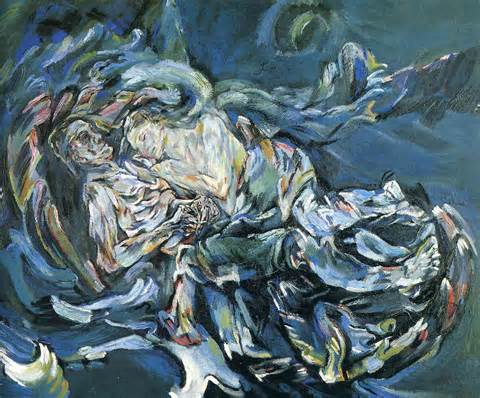
Above: Oskar Kokoschka’s painting Bride of the Wind
BRIDE OF THE WIND is a 2001 film by Academy Award-nominated director Bruce Beresford which brings to the screen the story of Alma (Schindler) Mahler-Werfel. Alma (played by Sarah Wynter) was one of the most renowned young beauties in turn-of-the-century Vienna, pursued by some of the most famous men in the city, including the artist Gustav Klimt (played by August Schmolzer). She finds herself drawn to the enigmatic composer/conductor Gustav Mahler (Jonathan Pryce) and they marry after she has agreed to his demand that she give up her own aspirations as a composer. Alma hid her compositions away and devoted herself to the self-centered genius Mahler; their’s was a loveless marriage, producing two children but leaving Alma bereft of affection.
When their oldest daughter dies, Alma’s health breaks down. She goes to a sanitarium in the countryside to recover, and there she meets another patient, the young architect Walter Gropius (Simon Verhoeven). He is kind and attentive, and they begin an affair. Alma’s marriage to Mahler survives the composer’s discovery of her infidelity. When Mahler succumbs to heart disease, Alma marries Gropius, but their marriage lasts only a few years. Alma has been drawn to another man, the artist Oskar Kokoschka (Vincent Perez). Kokoschka is a bold, impetuous lover; his affair with Alma yields a renowned painting of her, nestled next to Kokoschka’s in repose, called Bride of the Wind. Alma becomes pregnant with Oskar’s child, but decides not to carry the baby to term.
Alma returns to Gropius for a time, and Kokoschka sells the painting for enough money to buy a commission in the army. He is reported killed in action during World War I. Finally, after leaving Gropius – who has become prudish and possessive – Alma meets the author Franz Werfel (played by Gregor Seberg) whom she marries. In an odd twist, Kokoschka returns, having miraculously recovered from his wounds; despite finding Alma now married to Werfel, Oskar still loves her and he creates a life-sized doll of her which takes everywhere with him.
Meanwhile, Alma has at last found peace and fulfillment with Werfel; he discovers her long-hidden musical manuscripts and encourages her to to resume composing. The film ends with a scene from a 1925 recital at which soprano Frances Alda (played by Renee Fleming) performed Alma Mahler-Werfel’s songs for the first time in public.
I’d quite forgotten how beautiful this film is: the cinematography seems to perfectly capture the architectural detail, art works and fashion of the era, and there are some evocative lighting effects: the simple motif of the sun shining thru a sheer window curtain moved me in a curious way. The opening scene, as Alma enters the shadowy foyer of a great mansion where a party is in progress, is stunning: what seems like a black-and-white shot suddenly delights the eye as she removes her black cloak to reveal a ruby-red gown; moving on to the ballroom, colour seeps into the entire scene.
One scene after another – Klimt’s studio, the tiny cabin by a lake where Mahler composed, the idyllic sanitarium – lures us into this rich, luminous world; and of course the soundtrack, drawing upon works of both Gustav and Alma Mahler, is a major factor in the film’s romantic allure.
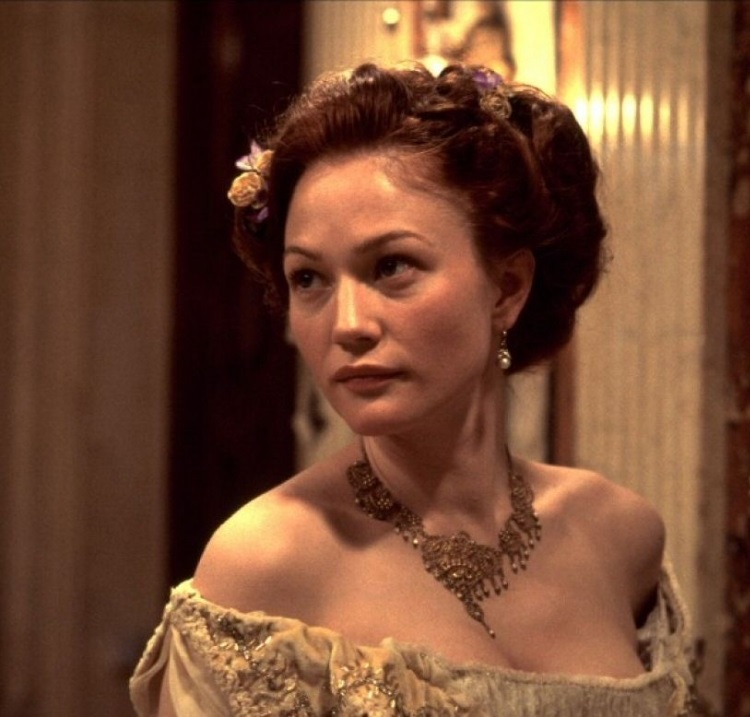
Sarah Wynter as Alma (above) displays the character’s intelligence, grace and attractiveness which inspired masculine fervor and tenderness; her rather aristocratic exterior conceals a deep passion and a desire for intimacy. Wynter shines in every scene, a symbol of an elegant age. At certain angles, Jonathan Pryce looks uncannily like Mahler; a polished actor, Pryce seems to simply become the great composer. Mssers. Verhoeven and Perez are heart-throbs, each in his own way. All the character roles are finely played, and the whole film carries us back in time – to an era when I think I might previously have lived, such is my sense of déjà vu.
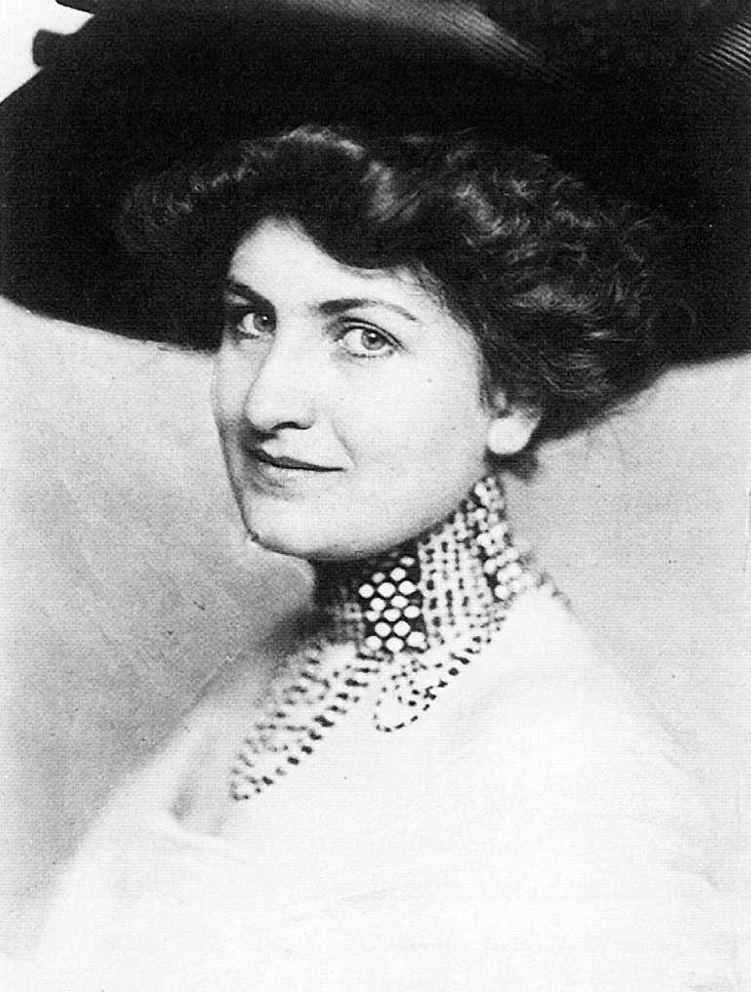
Above: Alma Mahler-Werfel.

Above: dancers Kaitlyn Gilliland and Stephen Hanna
Thursday January 30th, 2014 – Intermezzo Dance Company are in rehearsal, preparing for their January 31st appearance at the 92nd Street Y as part of the series “Movement Talks” presented by Edward Henkel. The program, which will explore the theme of beauty in dance and choreography, is sold out. Newly created works by Gemma Bond, Claudia Schreier, and Craig Salstein will be danced by Intermezzo‘s Kaitlyn Gilliland, Amber Neff, Nadezhda Vostrikov, and Stephen Hanna. I was able to see a run-thru of all three ballets this evening at DANY Studios.

Above: Kaitlyn Gilliland rehearsing Claudia Schreier’s ballet Harmonic which originally premiered at Columbia Ballet Collaborative‘s November 2013 performances; a great score for dancing by Douwe Eisenga propels a quartet of dancers thru this fast-paced work.
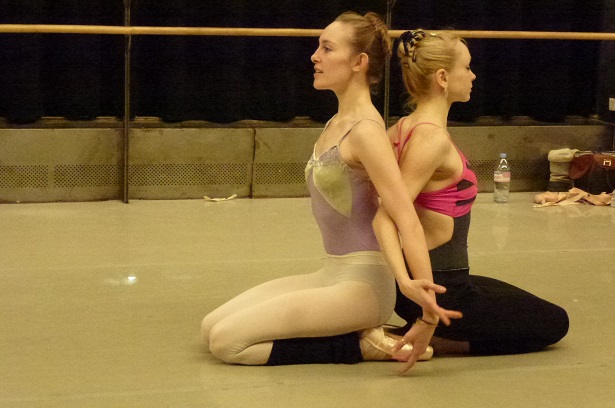
Gemma Bond, a member of ABT‘s corps de ballet, has created a sisterly duet to Schubert, danced by Amber Neff and Nadia Vostrikov (above). And Craig Salstein has choreographed an arrangement of Beethoven’s Ode to Joy as a pas de trois for Kaitlyn Gilliland, Amber Neff, and Stephen Hanna.

Nadia

Amber

Stephen

Kaitlyn
Following the evening at the Y, Intermezzo Dance Company will begin preparations for their upcoming performances at Vassar College.
Performance dates are March 29th (evening) and 30th (matinee), 2014. Tickets are free. Send an e-mail to [email protected] write “Intermezzo” in the subject line and the number of tickets and which performance date you wish to attend in the body of the e-mail.
Details of repertory and participating dancers for the Vassar performances will be forthcoming.
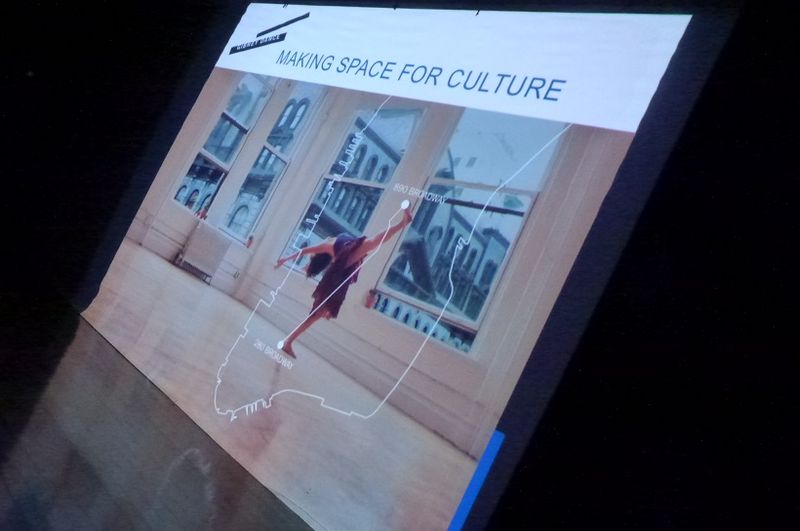
January 29th, 2014 – The recent announcement by Gina Gibney that Gibney Dance would be expanding their activities to 280 Broadway, known for years as Dance New Amsterdam, is cause for celebration: the Gibney Dance Center at 890 Broadway now has a sister site further downtown where classes, rehearsals, performances and community events will bring this space back to vibrant life.
Tonight at a gathering at 280 Broadway, a standing-room-only crowd assembled in the venue’s theater as Ms. Gibney outlined plans for the re-opening of this space which has stood forlornly empty for the past several weeks. I frankly never thought I’d see the inside of 280 Broadway again – a place where I have spent many happy hours watching classes, rehearsals, performances and other dance-related activities over the past few seasons – so I was particularly pleased to be back in the columned hall this evening as Gina set forth her extraordinary vision of a Renaissance in these studios, so redolent with the essence of dance.
Gina Gibney’s plans for 280 Broadway include creating a digital media center, a high-tech performance lab, and a black box theater. And the latest good news – a $3-million gift from the Agnes Varis Trust – will help bring these plans to fruition sooner rather than later.
Among the many exciting aspects of the revival of 280 Broadway is the news that The Playground, the vibrant series of affordable dance labs founded by Loni Landon and Gregory Dolbashian, will be partnered by Gibney Dance in their mission to bring choreographers and dancers together in an open, dynamically creative setting.
This evening’s announcement/kick-off event, liberally laced with applause as each new facet of Gina Gibney’s grand design for 280 Broadway was revealed, seemed to herald a bright new day for dance in New York City.
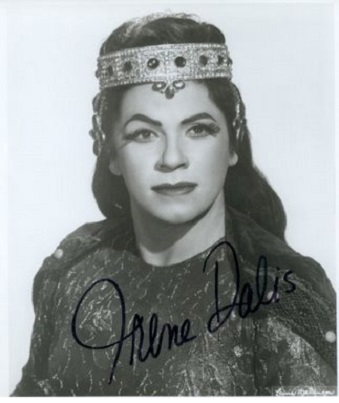
Irene Dalis, a particular favorite of mine in my formative first decade of opera-going, made only one commercially-released recording during her distinguished career – and even this derived from a live performance: PARSIFAL from the 1962 Bayreuth Festival. She seems never to have found her way into a recording studio (though there is supposedly a set of CARMEN highlights recorded by her in German…which I can’t seem to locate); some of her Met broadcasts have now been issued on the Sony label.
The Philips-label release of the Bayreuth ’62 PARSIFAL is a highly-regarded recording; the ‘Bayreuth Sound’ has been well-captured and the performance under Hans Knappertsbusch is overall very impressive. However, I’ve never felt that this particular performance of Kundry was representative of Irene Dalis’s finest work. So I was happy to receive from Dmitry a copy of Act II from the following year’s (1963) Bayreuth Festival which is now available at Opera Depot.
To my ears, Irene seems far more herself vocally in this ’63 Kundry than she did the previous Summer. She sings a great deal of the role piano, beautifully supported by Knappertsbusch. This gives her interpretation a mysterious sense of intimacy; after the kiss (marvelously underscored by Kna and the orchestra) the tide begins to turn against Kundry. Irene’s colorful voicing of the character’s desperation and – later – fury makes for an exciting dramatic build-up in the final minutes of the Act. Traces of tension in some of her upper notes are evident, but her intense focus on Kundry’s psychological conflict propels the singer thru any thorny moments with success. Throughout, Knappertsbusch’s pacing is spot-on: ever forward-moving but not shirking either the sensual or spiritual aspects of the music. Wolfgang Windgassen is on fine form here, bringing firm lyricism and then steely power to the music of Parsifal’s emotional evolution. Gustav Neidlinger, Solti’s Alberich in the famous London/Decca RING, is a commandingly malevolent Klingsor.

Above: the composer Louis Spohr
Sunday January 26th, 2014 – The recent snowstorm and its resulting impact on the MTA made me miss the Orion String Quartet’s program of Haydn and Mozart at Chamber Music Society of Lincoln Center on January 21st – a program that drew such a rush on the box office that it was repeated the following evening at the Rose Studio. Tonight, still in an Arctic deep-freeze, I made it to Alice Tully Hall for Classical Flowering, a performance which brought together ten superb players in the following program:
The three works, all written within a twenty-year span, made for a genuinely pleasing experience in the peaceful ambiance of Alice Tully Hall: a refuge not only from the Winter weather but also from increasingly dark and upsetting world events.
Schubert’s Trio in B-flat major is an incomplete composition; only the first movement (and some thirty-nine bars of a second, slower one) has come down to us. Perhaps the 19-year-old composer intended to return to the work at some point but – with his active musical imagination – countless other projects took up his time. So we are left with this very appealing single movement, a beautiful prelude to the two larger works on tonight’s program. Elmar Oliveira, Cynthia Phelps and Nicholas Canellakis played superbly and the piece was over almost before it began. But Ms. Phelps and Mr. Canellakis were with us all evening – playing in all three offerings tonight – and Mr. Oliveira returned for the closing Beethoven.
Louis Spohr, the least-well-known of today’s three composers, received a commission in 1813 from Johann Tost, a wealthy merchant and amateur musician, for a chamber work featuring both winds and strings. Spohr thus penned his Grand Nonetto, one of the few of his compositions to remain in active repertory over the ensuing two centuries.
The Nonetto‘s opening Allegro draws upon a lyrical main theme first heard as a four-note motif at the work’s very beginning. The second movement is an Allegro Scherzo comprising two trios: the first with the violin prominent in a dance-rhythm called the landler, and the other featuring the wind voices. This is followed by an Adagio with song-like themes played alternately by strings and winds; then the Nonetto reaches its finale in a sonata-form movement with tuneful episodes calling forth the solo voices from the ensemble.
A remarkable ensemble of musicians took the Tully Hall stage for the Spohr: the strings arranged on our left and the woodwinds on our right. And in the center, Radovan Vlatkovic with his horn; for it is the horn that gives this work its special, burnished glow. Mr. Vlatkovic’s mellow playing was a delight here, and then later – in the Beethoven – he surpassed himself. Marvelous inter-action among the string players: the excellent violinist Arnaud Sussman taking the lead with Cynthia Phelps, Nicholas Canellakis and Kurt Muroki giving clarity to the inner voices; across the way, the regal flautist Tara Helen O’Connor piped beautifully in her melodic flights. Romie De Guise-Langlois displayed impressive breath-control in the flowing clarinet passages; Stephen Taylor (oboe) and Peter Kolkay (bassoon) played with fluent expression.
Beethoven’s Septet in E-flat Major, written in 1799, was the oldest work on the program today. In six movements, this work was one of Beethoven’s most popular during his lifetime, though he is said to have wished it had been burned. Luckily, he didn’t get his wish and the Septet comes down to us today as an outstanding musical delight.
The six-movement structure has the flavour of a classic divertimento. The third movement, the most popular section of the work, is an adaptation of the minuet from the composer’s Piano Sonata in G major; the fourth movement is a series of variations in which each player has the opportunity to shine. The Septet‘s final movement features a violin cadenza, delivered today with silken virtuosity by Elmar Olveira.
The audience – a full house held in rapt attentiveness throughout the program – gave the collective of magical music-makers a rousing ovation at the end of the concert, calling the players out for an extra bow. The Beethoven was outstanding in every regard and special kudos to cellist Nicholas Canellakis for his finely-wrought solo passage in the fifth movement and to Mr. Vlatkovic’s wonderfully plush horn-playing, especially in the last three movements. Ms. De Guise-Langlois and Mr. Kolkay were the polished woodwind voices, and along with Messrs. Oliveira and Canellakis, Cynthia Phelps and Kurt Muroki made a string quartet of the highest calibre. A brilliant performance overall.
The evening’s participating artists:
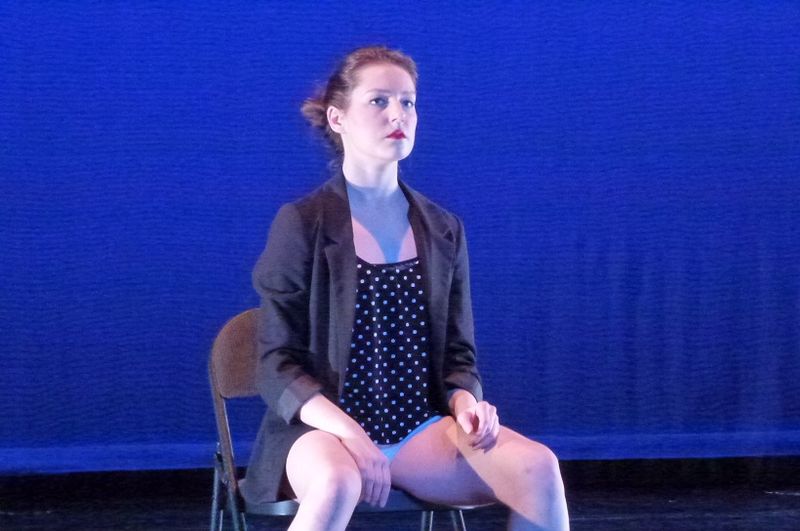
Above: dancer Marion Helfenstein
Saturday January 25th, 2014 – BalaSole Dance Company presenting IDIOMS at the Ailey Citigroup Theatre. A sold-out house, including many people who were experiencing BalaSole for the first time, reacted enthusiastically to each solo work performed, covering a wide stylistic and musical range. The Company’s artistic director Roberto Villanueva selected and mentored nine solo artists for this program which also featured Emerging/Re-Emerging artists Hailey Bates, Lea Clay, and Nicole Roberts. And no BalaSole performance would be complete without Roberto himself dancing.
True to the customary BalaSole formula, all of the evening’s participating dancers appear together in the opening and closing pieces on the program; these danceworks are created during the week-long run up to the performance dates, and for IDIOMS they were danced to a delicious musical fusion of Richter and Vivaldi.
Marion Helfenstein commenced her solo Who Are Those Ugly Ladies In The Mirror? seated in a chair. A spoken passage gives way to a pulsing mandolin rhythm as the dancer’s gestures tell her story. When the music (by Rene Aubry) develops a deeper resonance and more intense beat, she rises to dance swiftly about the space; yet in the end she cannot escape her chair.
Trashina Conner first enters in a state of calm wonderment to the sound of a piano; as the cello takes over, a ritual of mourning takes place. The dancer then veers between hope and despair as the music becomes more intense; she runs around the space – either pursuing something or being pursued. At last she speaks: a date – March 26, 2006 – “A nightmare…with eyes wide open…” This recollection of a traumatic event gives this solo its title 3.26.06. This intensely personal work was expressively danced, evoking real emotion from both dancer and viewer.
Jonathan Breton’s solo Memories was performed to a beautiful score by Ezio Basso; the dancer’s slender form moved with supple grace and lyrical port de bras thru combinations from the classic ballet vocabulary persuasively meshed into a contemporary statement. Jonathan’s lithe torso and handsome line created a lyrical atmosphere, whether he was standing in a pool of light or moving freely about the space. A self-embrace near the end was a fine expressive touch.
Ashley Peters appeared as an Emerging Artist in BalaSole‘s Autumn 2013 concert: VISAGES. I thought then that she showed real potential, and tonight she was back in a solo work: Past and Pending. To music by Outside – violin over a heavy metallic beat – Ashley covered the space in restless, dynamic moves, her body talking to us directly.
Paulina Bracone’s solo It’s Possible developed well in the unusual juxtaposition of spoken word and ballet-based movement. This restless solo showed the dancer’s vulnerable femininity; as the music swells under the spoken narrative, her movement becomes more expansive. This improbable combination of masculine (the voice) and feminine (the dancer) elements ended up working well thanks to Paulina’s sense of commitment.
Hunter Frederick Houde’s Afro-Cuban solo Changó emerges from Santeria folk legend: Changó is the owner of fire, lightening, thunder, and war, but he is also the patron of music, drumming, and dancing. He represents male beauty and virility, passion and power. Dressed in red and carrying a small hatchet, the dancer’s moves were vibrant and instinctive; rolling thunder, folklike chant/vocals and intense drumming push this fiery solo to its conclusion: a huge thunderclap as the lights go out.
Christen Quattlebaum’s solo Fireflies opens to a piano tune and is later taken up with the whimsical lyrics of the title-song. Christen shows off an expansive developpé and zooming extension, but her quirky choreography also includes gentle hops and an arcane gestural language. This off-kilter solo drew our focus in its movement, while making us wonder what the song was really about.
Tracy Singer enters rather dejectedly for her solo What I Did With What You Left Me. This is a proud woman who’s been shot down by love, but she’s going to bounce back. Sultry jazz marks her sense of post-breakup lethargy, but agitation emerges in supple nuances. She hits the floor – literally – but then takes off in a space-filling self-absorbed danced passage to a big blues anthem.
Caroline Brethenoux’s solo Message Send Failure opens in silence, the dancer having difficulty breathing. At last she is able to enunciate: “There was something that I wanted to tell you.” Since she finds difficulty in speaking, she hesitantly begins to express herself in dance, though remaining on the floor; her frustration leads to a silent scream. In the end she rises, suggesting she is ready to pull herself together. But then…she can’t.
Roberto Villanueva’s solo Incomplete – performed to solo guitar – found the dancer clad in abbreviated black briefs and a dinner jacket. He alternately reveals and conceals his torso; the dance however is not provocative but instead reflects an inner dilemma: it’s sexy but not at all sexual. On the surface we can savor Roberto’s handsome physique, but there’s more going on beneath the exterior attraction. The apex of expression is reached in a long, slow-developing arabesque. As the solo ends, delicate tremors in the hands indicate the dancer has a lot on his mind. This dance is personal: while it exposes the dancer physically, in the end Roberto retains his mystique.
I didn’t have very good luck taking pictures at the dress rehearsal, but here are a few of the individual dancers (sorry that I didn’t get everyone!):
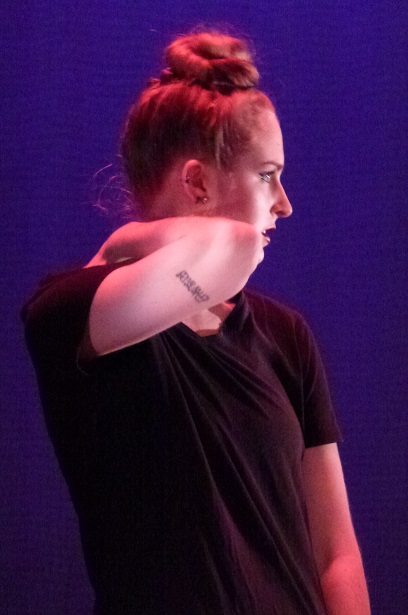
Christen Quattlebaum

Trashina Conner
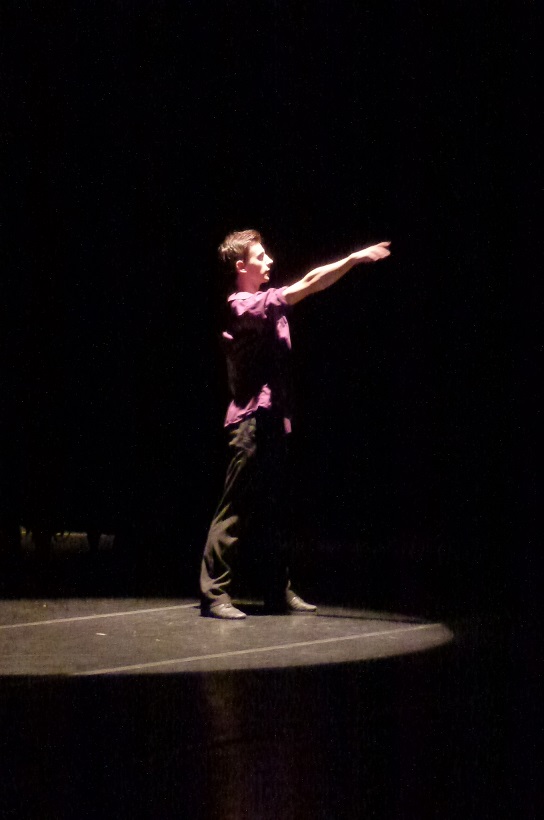
Jonathan Breton
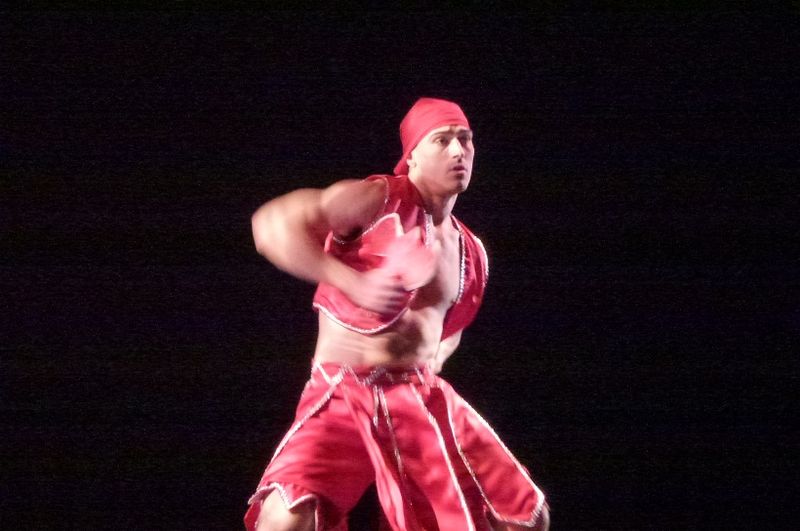
Hunter Frederick Houde
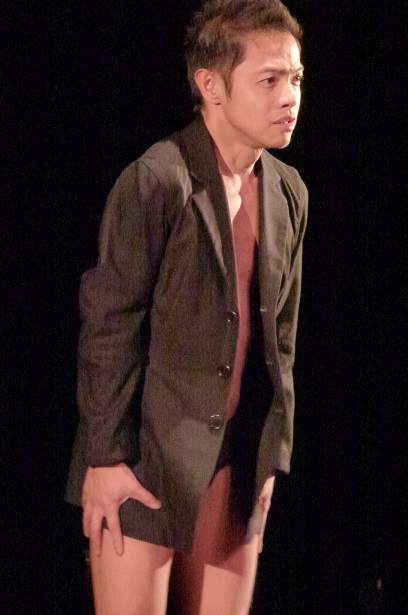
Roberto Villanueva
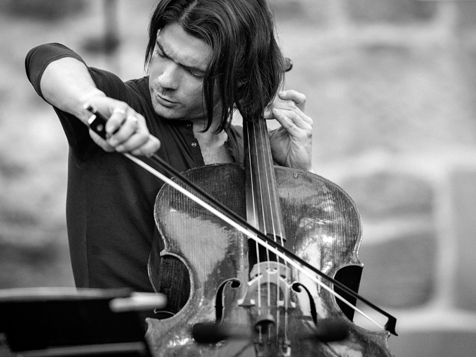
Friday January 24th, 2014 matinee – Cellist Gautier Capuçon (above) gave an inspired rendering of the Shostakovich cello concerto #1 at this afternoon’s New York Philharmonic concert. Conducted by Andrey Boreyko, the programme was book-ended by works of two Russian composers with close ties to the world of classical ballet.
The name Nikolai Tcherepnin immediately conjures visions of the Ballets Russes, for it was he who not only conducted the first performance of Diaghilev’s troupe in the West (on May 19th, 1909, at the Chatelet) but also composed the score of that evening’s opening ballet – Le Pavillon d’Armide – which swept the Parisians into a fever as they beheld Karsavina and Nijinsky onstage.
Today the Philharmonic opened their concert with Tcherepnin’s tone poem The Enchanted Kingdom which dates from 1909-1910. The “kingdom” referred to in the work’s title is that of Katschei the Immortal – yes, the same sorcerer who was soon to appear in the Fokine/Stravinsky Firebird. In seems fact, Tchrepnin’s score may have been under consideration by Diaghilev as a setting for Fokine’s ballet. That didn’t transpire, but the score Tchrepnin left us is quite magical in its own right.
The huge orchestra under Maestro Boreyko gave a richly-coloured performance: right from its sombre opening, this music reveals a vibrant sound-palette: celesta, piano and harp produce magical effects while solo wind voices add characterful touches. The cinematic central melody is simply gorgeous.
Gautier Capuçon then took the stage for the Shostakovich; this charismatic artist took all the demands that the composer sets before the cellist in his stride. M. Capuçon’s playing of the central theme of the moderato literally gave me the chills, such was the spell he was able to cast; and as he played he sometimes seemed to be gazing off into some distant horizon: truly poetic. In the very long and technically demanding cadenza, the cellist’s clarity and his mastery of dynamics was most impressive – and a great smile illuminated his face when this sustained solo passage came to an end and the orchestra began to play again. Capuçon’s playing won the audience’s unstinting praise, and after the customary bows with the conductor the soloist was called out yet again for a solo bow, evoking a standing ovation.
The Shostakovich was excellently played by the artists of the Philharmonic, with the prominent horn solos finding Philip Myers at his finest: amazingly plush sound, a real treat for the ear.

Above: conductor Andrey Boreyko
The Philharmonic’s final offering today was the Tchaikovsky Suite #3, immortalized for dance lovers in Balanchine’s marvelous ballet of the same name. Of course throughout this performance the Balanchine choreography unfolded in the mind’s eye. Is there any music so romantically overpowering as the Élégie, especially when played as sumptuously as it was today? Throughout the forty-minute piece (it seems much shorter when there’s dancing to be watched), Maestro Boreyko kept a precise pulse: he was especially adept in the subtle rhythmic shifts of the Valse, and the final polonaise was regally done. The playing was stellar.

Thursday January 23rd, 2014 – Tonight Martha Graham’s CAVE OF THE HEART was danced in a studio setting at the Martha Graham Dance Company‘s home space on Bethune Street. Although described as an open rehearsal – the dancers wore practice clothes and the ballet’s Noguchi set pieces had already been shipped out West for the Company’s upcoming tour performances – the work’s power and immediacy provided a vibrant theatrical experience.
In both her opening remarks and in a Q & A at the end of the evening, the Company’s artistic director Janet Eilber gave us valuable insights into CAVE OF THE HEART. It was interesting to learn, for example, that Graham first approached Aaron Copland to write the music for this work which she was conceiving: Copland demurred. She then turned to the Mexican composer Carlos Chavez who delivered a score that the choreographer found unsuited to her needs (she eventually set another work, DARK MEADOW, to the Chavez music…and now my curiosity is piqued indeed: I want to see it!). And so it was Samuel Barber who crafted the music that became CAVE OF THE HEART; later Barber excerpted his famed piece Medea’s Dance of Vengeance from the score.
Before showing us the work, Janet asked each of the participating dancers to demonstrate a key movement motif from their role; these provide keys to the individual characters. Once the ballet began, the communicative powers of the four dancers – Graham has stripped the Medea story down to the bare essentials – took things beyond the context of a rehearsal: they danced with an expressive clarity that revealed yet again the depth of Graham’s genius.
Miki Orihara’s Medea moved from the torment of jealousy to final triumph in a performance rich in intimate detail, and Tadej Brdnik’s compelling athleticism as Jason perfectly embodied the character’s masculine vanity. At once majestic and lyrical, Carrie Ellmore-Tallitsch’s appeared as The Chorus with her elegant wingspan and the face of a goddess. Jacquelyn Elder’s princess was lovely in her bridal innocence and terrifying as Medea’s wedding gift – a poisoned crown – began to work its insidious power. Together these generous artists gave us a richly rewarding evening, so inspiring to watch at close range.
The Martha Graham Dance Company will be at New York’s City Center in March. Details here.

Above: dancer Hsin-Ping Chang in the Met’s production of MADAMA BUTTERFLY; photo by Ken Howard
Monday January 20th, 2014 – Three sopranos are slated to sing Butterfly at The Met this season and I’ll be in the House for one performance by each; although I like the current BUTTERFLY production very much, as a matter of practicality I’ll be at a score desk for all three performances.
Pierre Vallet, an assistant conductor at The Met, took over the baton tonight as the scheduled Philippe Auguin seems still to be indisposed. Vallet has worked at The Met for several seasons; tonight was only his second appearance on the podium (in 2011 he led a FAUST during which mezzo-soprano Wendy White suffered a serious onstage injury). He got BUTTERFLY off to a brisk start tonight with a nimble prelude, and although there were some moments when pit and singers were not precisely coordinated, overall he shaped a very appealing performance.
Vocal honors tonight went to Bryan Hymel, the tenor who was a Met Auditions winner in 2000 and who returned to the House in triumph last season, replacing Marcelo Giordani in the arduous role of Aeneas in Berlioz LES TROYENS. Considering the difficulty, complexity and duration of many of the roles in Bryan’s current repertory, Pinkerton must seem like something of a ‘vacation role’ (that’s how Birgit Nilsson referred to Turandot). He sang with clear lyric thrust, with easy and sustained top notes zooming out into the House. The voice is fragrant and passionate; I had looked forward very much to hearing him in the aria and trio of the opera’s final act but in the event I didn’t end up staying that long.
Tonight’s Butterfly, the South African soprano Amanda Echalaz, revealed a vibrant and somewhat metallic timbre; her voice – which I would describe as ‘big lyric’ – projects well, but tonight much of the time she tended to sing sharp. This offset any pleasure I might have derived from her singing. By the end of the first act I’d decided that I’d heard enough, and I headed home after the love duet. The soprano’s bio indicates that BALLO and SALOME are in her rep; I’m wondering if she’ll wear herself out prematurely.
Tony Stevenson was an outstanding Goro: clear and musical in his presentation, he sang the role more as a lyric than a ‘character’ tenor. The pleasing singing of Elizabeth DeShong as Suzuki was another possible reason to stay beyond the first intermission but there was no guarantee that Ms. Echalaz would overcome her sharpness, and the rest of the opera is a long haul if the Cio-Cio-San is off the mark. Scott Hendricks’ Sharpless was reasonable enough and Ryan Speedo Green was a strong Bonze.
All the elements were here for a good BUTTERFLY except the essential one: a vocally inspiring heroine. In the coming weeks Kristine Opolais and Hui He will be taking on Butterfly at The Met and hopefully one or both of them will sustain my interest to the end of the opera.
Metropolitan Opera House
January 20, 2014
MADAMA BUTTERFLY
Giacomo Puccini
Cio-Cio-San.............Amanda Echalaz
Pinkerton...............Bryan Hymel
Suzuki..................Elizabeth DeShong
Sharpless...............Scott Hendricks
Goro....................Tony Stevenson
Bonze...................Ryan Speedo Green
Yamadori................Alexey Lavrov
Kate Pinkerton..........Maya Lahyani
Commissioner............Paul Corona
Yakuside................Craig Montgomery
Mother..................Belinda Oswald
Aunt....................Jean Braham
Cousin..................Patricia Steiner
Registrar...............Juhwan Lee
Dancer..................Hsin Ping Chang
Dancer..................James Graber
Conductor...............Pierre Vallet
 Oberon's Glade