


Above: Jared Angle, in a Henry Leutwyler portrait.
Friday September 28, 2012 – In a unique mingling of dance and song, New York City Ballet principal dancer Jared Angle and countertenor Anthony Roth Costanzo met up in the salon at the Players Club for a Baroque feast. Jared’s NYCB colleague Troy Schumacher (who is also the founder of Satellite Ballet) choreographed the Vivaldi piece in which Jared danced. At the harpsichord, the remarkable Bradley Brookshire made marvelous music all evening. The programme was presented as part of the Salon/Sanctuary Concerts series.
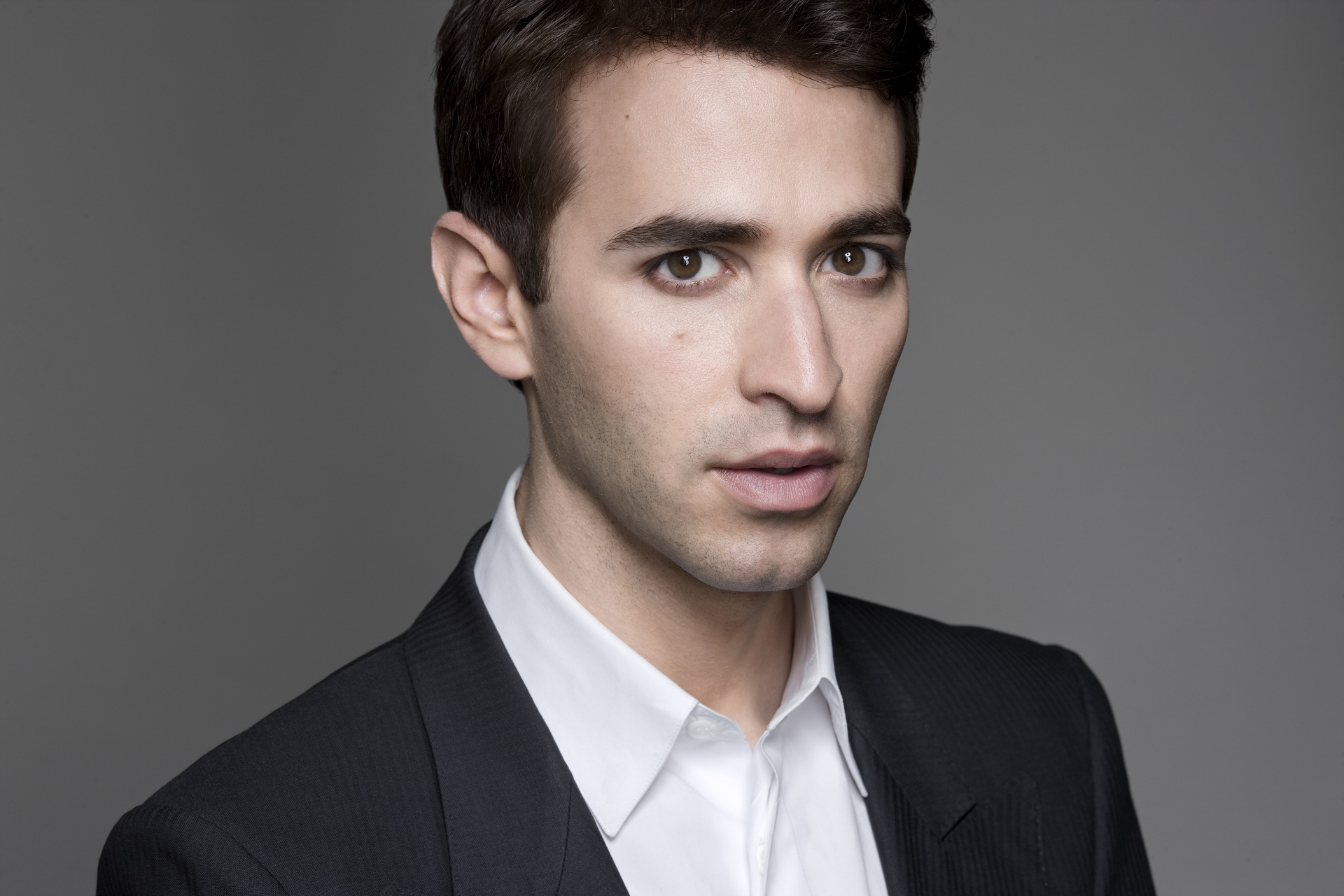
Above: Anthony Roth Costanzo, whose singing of Handel, Purcell and Vivaldi showed a delicious timbre, breath control of enviable security, and coloratura that left the listener astounded. For all the magic of his virtuoso vocalism, it was in the sustained poetry of the slow passages that the slender and agile young singer was at his most ingratiating. Tapering the phrases with staggering dynamic command, the voice spoke to us of a time when the great castrati brought audiences to the point of madness. If one or two highest notes seemed slightly strained, it hardly mattered. This was fabulous vocalism, and all the more fascinating for the engaging use of eyes and hands with which Anthony mesmerized his listeners.

Bradley Brookshire (above) played solo works by Bach and Scarlatti, his scale passages rippling off the keyboard with fantastical velocity and precision. A master of timing and of coaxing colours out of his instrument, Bradley even made the silences speak. His musical rapport with the countertenor was a complete delight to experience.
It was in the Vivaldi cantata Qual per ignoto calle that the artistry of the evening’s three participants converged. Clad in black tights and a simple grey shirt, Jared Angle stepped into the space where he encountered the bare-footed counter-tenor. Troy Schumacher’s choreography drew the singer into the dance, his lithe frame very much at ease with the movement. Jared circled Anthony like an unseen spirit, a guardian angel. Using his wonderfully expressive hands to poetic effect, Jared moved with consummate grace, sometimes lifting the singer and cradling him with consoling tenderness. There were passages where Jared displayed hs vituosity in leaps and turns, but he always returned to keeping watch over his charge. Bathed in the golden light of this antique salon, Jared’s face took on an other-worldly beauty. The duet hovered on the brink of unspoken romance – inevitable when two handsome men meet in an intimate setting – but the purity of the spell was never broken.

A gallery of photographs by Rachel Neville from the recent performances of CONTRASTS at Riverside Church. Read about the programme here. Above: dancers Leonel Linares, Jerome Stigler and Alison Cook Beatty in Tony Morales’ SCENES.
Click on each image to enlarge.
From Yesid Lopez’s STRINGS

Eric Williams, Lauren Perry and Reed Luplau in Lydia Johnson’s CHANGE OF HEART
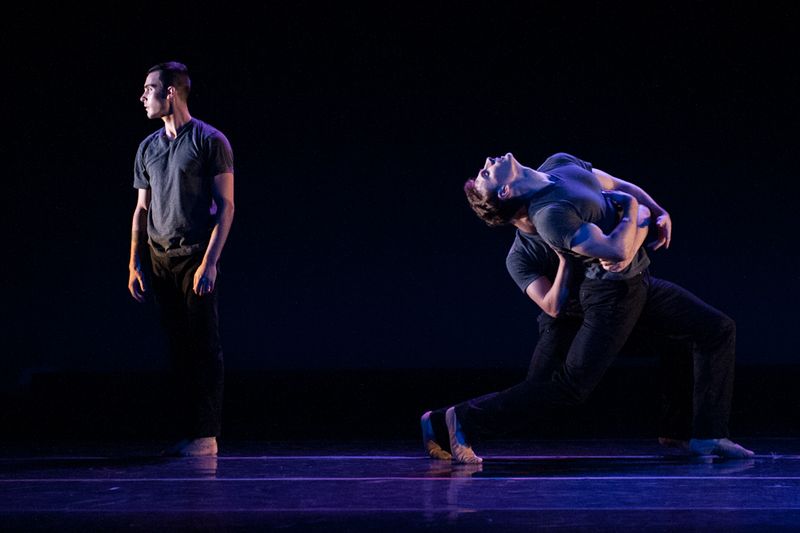
Reed Luplau, Chris Bloom and Eric Williams in Lydia Johnson’s CHANGE OF HEART
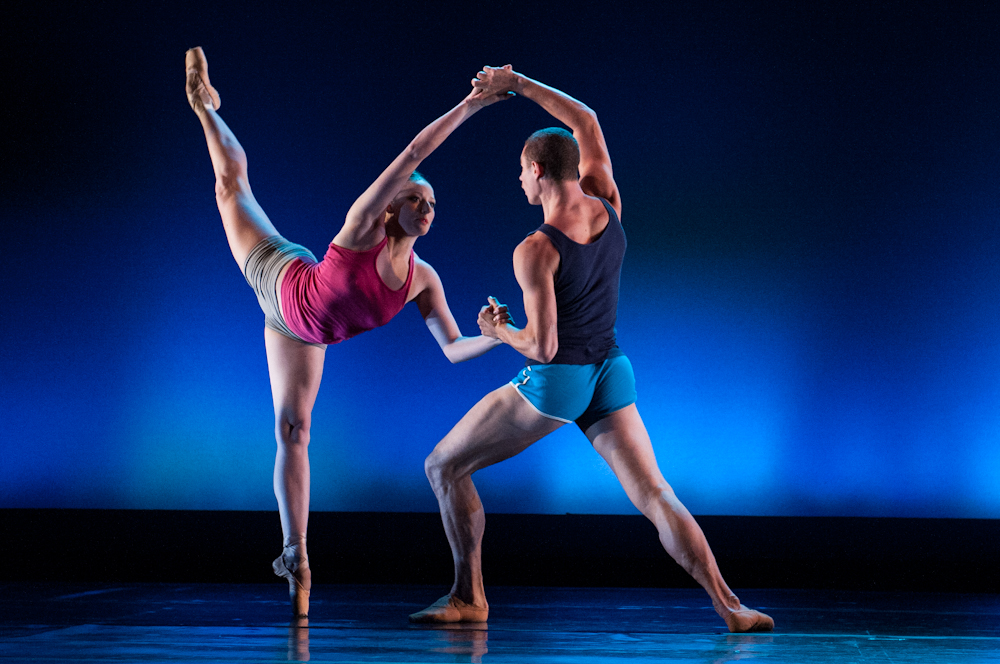
Temple Kemezis and Max van der Sterre in Henning Rubsam’s HALF-LIFE

Max van der Sterre and Oisin Monaghan in Henning Rubsam’s HALF-LIFE
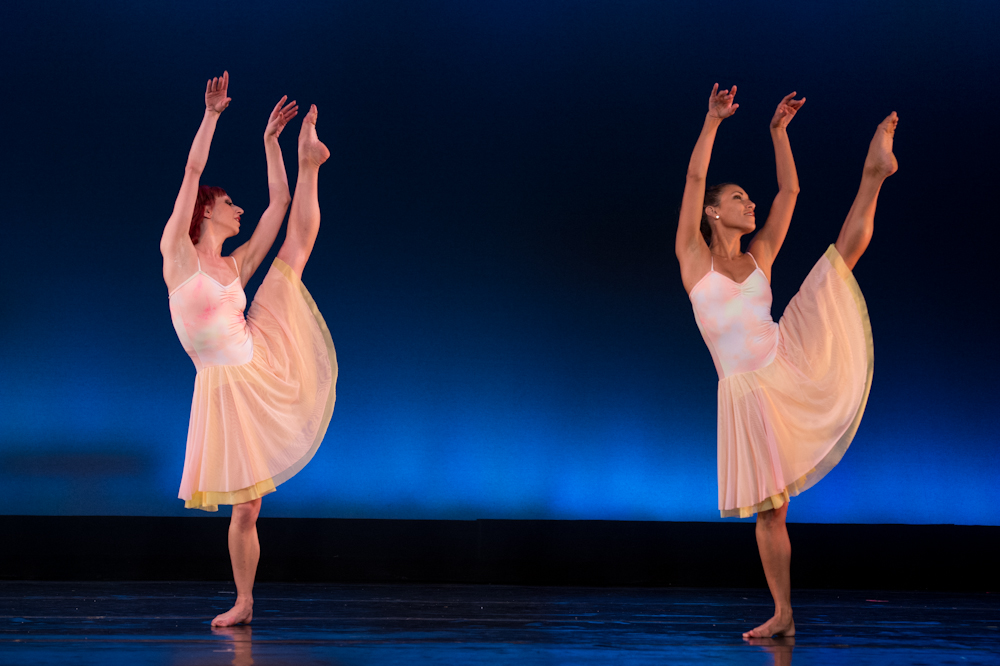
MarieLorene Fichaux and Nicole Corea in Tony Morales’ SCENES
Alison Cook Beatty in Tony Morales’ SCENES

Nicole Corea and Leonel Linares in Tony Morales’ AMOR BRUTAL

Leonel Linares in Tony Morales’ AMOR BRUTAL
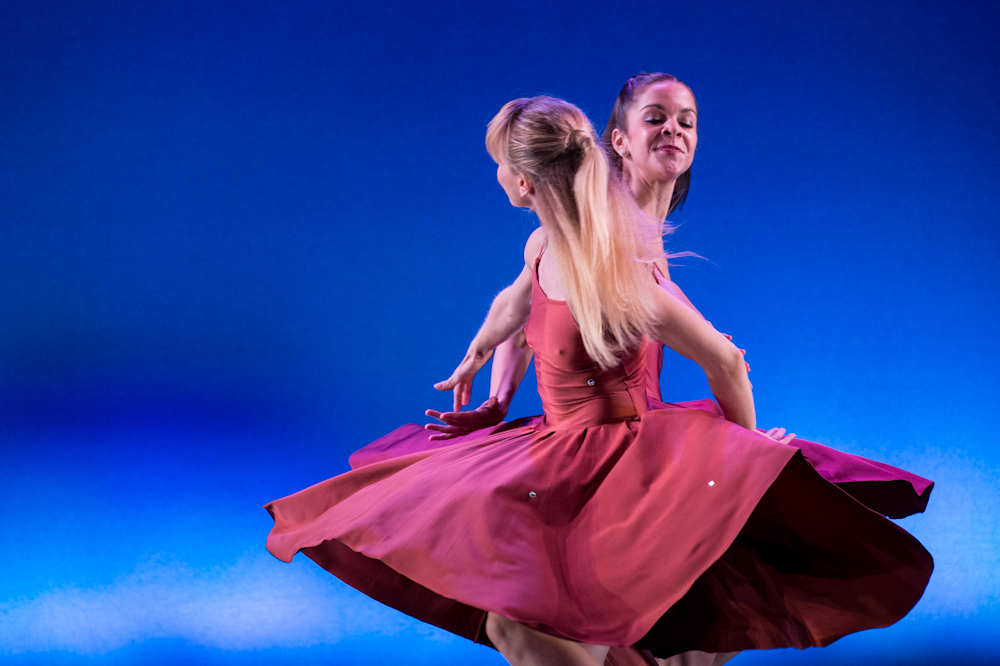
Alison Cook Beatty and Kate Loh in Tony Morales’ PIANO PIECES

MarieLorene Fichaux and Jerome Stigler in Tony Morales’ PIANO PIECES
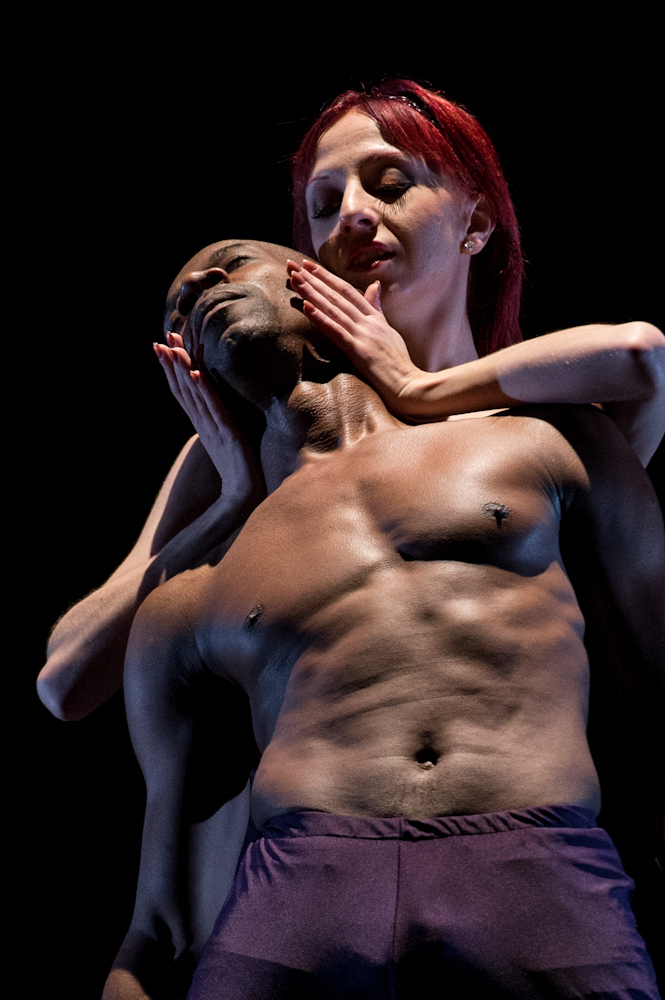
MarieLorene Fichaux and Jerome Stigler in Tony Morales’ PIANO PIECES
Nicole Corea and Leonel Linares in Tony Morales’ PIANO PIECES
My thanks to Rachel Neville for sharing her images with me.

Thursday September 27, 2012 – The third programme in the New York City Ballet‘s 2012 Stravinsky festival included the first ballet that I ever saw the Company perform: BAISER DE LA FEE. This work of pure enchantment holds a special place in my heart and while the memory of Patricia McBride and Helgi Tomasson dancing the ballet’s principal roles on that first night roles stays strong in the memory, I was particulary keen to see tonight’s pairing of Tiler Peck and Gonzalo Garcia making their BAISER debuts.
But first a zesty appetizer: SCHERZO A LA RUSSE was performed by students from SAB. It’s always fun to see, with it’s unfinished sentence at the end.
BAISER with its intoxicating score (conducted by Jayce Ogren, who at the end of the evening gave us a delicious reading of FIREBIRD) always weaves its dreamy spell. And under that spell, Tiler Peck and Gonzalo Garcia danced superbly: Tiler’s pirouettes so swift, soft and fair, and Gonzalo brushing the floor with his fingertiips in his mysterious solo. Their artistry, individually and in unison, is thoroughly satisfying to experience. As the melody of ‘None but the lonely heart’ pulses in the orchestra, the dream ends – or does it go on? – as the lovers back away from one another, eyes heavenward. Alina Dronova and Faye Arthurs were very agile and lovely in their demi-soliste roles.
DANSES CONCERTANTES with its fussy Eugene Berman costumes, old fashioned ‘flats’ setting and entr’acte curtain, has a music hall flavour. It seems a bit dated, and the score – perfectly pleasant – is unmemorable in the long run. Brilliant dancing from Megan Fairchild, Andrew Veyette and a dozen premiere corps dancers (forming four colour-coded pas de trois) showed the ballet to its best advantage, but tonight it seemed longish and very much of a theatrical era that has vanished.

But FIREBIRD seemed like solid gold tonight, with its glowing score – Stravinsky’s most marvelous, in my view – and its ever-entrancing Chagall designs. For me this is a ballet that never ages. Teresa Reichlen is an elegant vision in her fiery tutu, and with her fluttering gestures, her lovely stretched-out leaps and the gentle hush of her Berceuse, she was perfect. Ask LaCour and Savannah Lowery as the prince and princess were likewise impressive. And to the gorgeous melodies of their ensemble, a dozen fetching ballerinas in their Chagall peasant-gowns wove a particularly enchanting spell: Anderson, Arthurs, Brown, Hankes, King, Laracey, LeCrone, Mann, Pazcoguin, Pollack, Smith and Wellington – a fine corps-watchers opportunity. If the girls take the whole thing a bit tongue-in-cheek, that actually makes it all the more fun. Thank you, my beauties.
SCHERZO À LA RUSSE: Students from the School of American Ballet
DIVERTIMENTO FROM ‘LE BAISER DE LA FÉE’: *T. Peck, *Garcia, Arthurs, Dronova
DANSES CONCERTANTES: M. Fairchild, Veyette
FIREBIRD: Reichlen, la Cour, Lowery, Scordato

Wednesday September 26th, 2012 – When we’re feeling down, music, dance, art and nature become sources of solace and ways of leaving our troubles behind, at least for a span of time. Tonight an all-Stravinsky programme at New York City Ballet served as a surprising means of escape. While the ballets are all thrice-familiar Balanchine-Stravinsky masterpieces, the dancing as well as the unusual sensation of freshness being found in the scores drew me out of myself for a while.
There were several cast changes this evening, with dancers scheduled for one ballet shifting to a different one to replace injured colleagues. It all turned out well in the end, though I was sorry not to see Abi Stafford dancing.
The ballets look sleek and vital, and Kurt Nikkanen’s playing of the STRAVINSKY VIOLIN CONCERTO is always a pleasing experience. Curtain up, and there is Janie Taylor with the four boys. She does all the steps and port de bras that every woman who has ever danced this role have done, but her personal mystique is so intriguing you feel you’ve never seen the ballet before. Then each of the other three principals make their entree, and we’re off. I loved Sebastien Marcovici’s large-scale movement and his steady partnering. Robert Fairchild moves with incredible vitality; he and Janie are a great match-up in their pas de deux. Rebecca Krohn has one of her most congenial roles here; she was superb and she put me in mind of some of my earliest experiences with the leotard ballets, when the great ballerinas who knew Balanchine personally danced these roles. So good to see Faye Arthurs in a brief featured role, and the corps de ballet were looking spiffy with several appeasing faces and forms among their number.
I’ll always remember my first encounter with MONUMENTUM/MOVEMENTS; it was at a Sunday matinee in the 1980s. I was going to a 4:00 PM Kathleen Battle recital at Alice Tully but I took a standing room spot for the NYCB matinee and just watched the opening ballet. Helene Alexopoulos danced the leading role; I adored her, and I was so fascinated by the way the dancers broke ranks and re-arranged themselves between movements.
Tonight, the magnificent Maria Kowroski took the stage with her two cavaliers – Ask LaCour and Sebastien Marcovici – and it was a really impressive performance. Maria sculpted her long limbs gloriously into improbable shapes, ideally punctuating her phrasing on the music. The men gave her perfect support, and the audience gave the three a warm reception as they stepped out to bow. The Gesualdo score in particular stood out with burnished radiance in an evening of fine playing from the pit; Daniel Capps was the conductor here.
Although Autumn is approaching, it felt like Spring as Megan Fairchild and Chase Finlay took the stage for DUO CONCERTANT. This partnership, so thoroughly captivating in LIEBESLIEDER last season, gave this Balanchine classic a youthful glow. Chase is becoming – or maybe we should say ‘has become’ – quite the dashing cavalier, and when Megan ignited a manège of swift pirouettes, all seemed right with the world. Their joint allegro dancing was perfect, and in the slower and more tender passages of the ballet, the two dancers had just the right feeling of intimacy. Arturo Delmoni and Susan Walters were the musical duo.
Is there a more iconic image in all the Balanchine canon that the curtain-rise diagonal that opens SYMPHONY IN THREE MOVEMENTS? But we only have seconds to savour it before Daniel Ulbricht comes sailing onstage and bursts into a series of fantastical leaps. Tiler Peck joins him in this rousing passage of tucked-up bounces. (And it’s time yet again to commend Tiler’s vast range and her contagious joy of dance). Savannah Lowery and Adrian Danchig-Waring danced vividly as is their wont, and the pas de deux with its oddly appealng melody was very well-danced by the delectable Sterling Hyltin and Amar Ramasar. Amar received a screaming bursts of applause at his curtain calls, and he deserved every bit of it.
That opening diagonal and the ‘melting’ of it at the end of the ballet’s first movement showed us some of our current corps beauties. A very strong group of demi-solistes kept the opera glasses darting madly whenever they were onstage: mesdamoiselles Brown, King, Laracey, Pazcoguin and Smith and their cavaliers Alberda, Dieck, Laurent, Peiffer (long time, no see) and Schumacher.
The house was far from full though there was considerable enthusiasm all evening. But it is so sad to see the 4th Ring gallery empty and gaping forlorn: that is the place where I and (I am sure) thousands of others first experienced the Balanchine/Stravinsky ballets. And if new generations are to be lured in, these seats at realistic prices are the place to do it.
STRAVINSKY VIOLIN CONCERTO: Taylor [replacing Hyltin], R. Fairchild, Krohn, Marcovici [replacing Ramasar]
MONUMENTUM PRO GESUALDO: Kowroski, la Cour
pause
MOVEMENTS FOR PIANO & ORCHESTRA: Kowroski, Marcovici
pause
DUO CONCERTANT: M. Fairchild, Finlay
SYMPHONY IN THREE MOVEMENTS: Hyltin [replacing A. Stafford], T. Peck, Lowery, Ramasar [replacing J. Angle], Ulbricht, Danchig-Waring

Beverly Sills sings the Willow Song from Douglas Moore’s BALLAD OF BABY DOE. The lyrics are so meaningful to me at this point in time.
“Willow, where we met together…Willow, when our love was new…Willow, if he once should be returning pray tell him I am weeping too.
So far from each other as the days pass in their emptiness away…O my love, must it be forever…never once again to meet as on that day…and never rediscover a way of telling all our hearts could say.
Gone are the days of pleasure….gone are the friends I had of yore…only the recollection fatal of a word that was spoken: Nevermore…
Willow, where we met together…Willow, when our love was new…Willow, if he once should be returning pray tell him I am weeping too…”
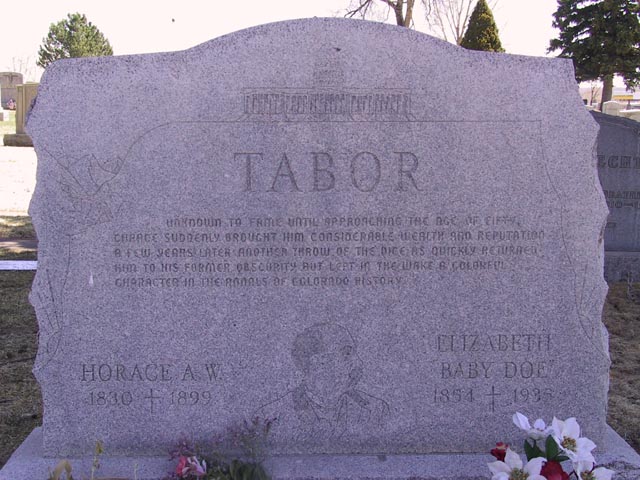
The grave of Baby Doe and Horace Tabor, Mount Olivet Cemetery, Wheat Ridge, Colorado.

Above: New York City Ballet principal dancer Joaquin de Luz is among the artists to be featured in Justn Peck’s new creation for NYCB. Photo by Henry Leutwyler.
Monday September 24, 2012 – The Guggenheim’s Works & Process series continued tonight with a preview of a new ballet choreographed for New York City Ballet by Company corpsman Justin Peck. The work, entitled YEAR OF THE RABBIT, will premiere at Lincoln Center on October 5th.
Ellen Bar, former NYCB soloist and now the Company’s Director of Media Projects, led the discussion. Composer Sufjan Stevens and musical arranger Michael Atkinson joined Justin on the panel. Much of the evening was given over to outlining the evolution of the score which began life as a 2001 electronic recording. Mr. Atkinson had the task of distilling the music for string quartet, and now that the ballet is to be presented in the large venue at Lincoln Center it’s been decided that a full orchestration of the music will best compliment both the space and Justin’s vision of using a large enemble of dancers.

In 2010, Justin showed the pas de deux ENJOY YOUR RABBIT as part of a Columbia Ballet Collaborative evening. Read about it here; Kokyat’s photo above with Teresa Reichlen and Justin dancing the duet for CBC. On receiving the commission from Peter Martins for a new work for NYCB, Justin decided to expand on the original pas de deux. The full work, now titled YEAR OF THE RABBIT, features six principal dancers and a corps de ballet.
Mr. Atkinson – who will conduct the NYCB performances – stepped into the pit at The Guggenheim to lead the quartet’s performances of excerpts this evening. Kurt Nikkanen, Lydia Hong, Maureen Gallagher and Eugene Moye were the players and everything was in good hands from a musical stand-point.
Introducing the first danced except, Justin spoke of the speedy and evasive movements of a rabbit when it is being pursued: the wily changes of direction that help him evade capture. Joaquin de Luz brought these very elements to play in the solo. This peerless danseur is on my A-list of favorite dancers to watch just for the sheer pleasure of watching. His mercurial performance made me wish the solo was twice as long.
Tiler Peck is a latecomer to this work; she replaces the injured Ashley Bouder. Justin talked about creating a piece on one dancer and then having it danced by another; and that while Tiler and Ashley are both super-technicians, each gives the solo a particluar resonance. Hopefully at future performances Ashley will have the opportunity to dance, but tonight Tiler’s radiant qualities and her subtle sense of the solo’s wit were very engaging. Justin gave her a few notes and she danced it again. Every time I see Tiler onstage I am happy that her career and my ballet-going have coincided.
Two duets were shown: an expansive and vibrant one for Teresa Reichlen and Robert Fairchild and a more dreamy and evocative one for Janie Taylor and Craig Hall. The Reichlen/Fairchild partnership really shines; there’s a rich chemistry there and I hope we’ll see them paired in other ballets. When two charismatic dancers like Janie and Craig take the stage together, things become engrossingly wonderful; their duet reminded me of their breathtaking performance in AFTERNOON OF A FAUN.
(And speaking of Tess Reichlen, her upcoming debut in the adagio of SYMPHONY IN C on October 2nd is a red-letter date on my calendar.)
You can watch a film of this evening’s Works & Process presentation here.
So now we can look forward to seeing YEAR OF THE RABBIT onstage, costumed and lit and with the corps dancing. It has been a long creative process and I feel sure the result will be rewarding.
Loved running into Tom Gold after the performance; I need to touch base with him before he takes his Company to Cuba!
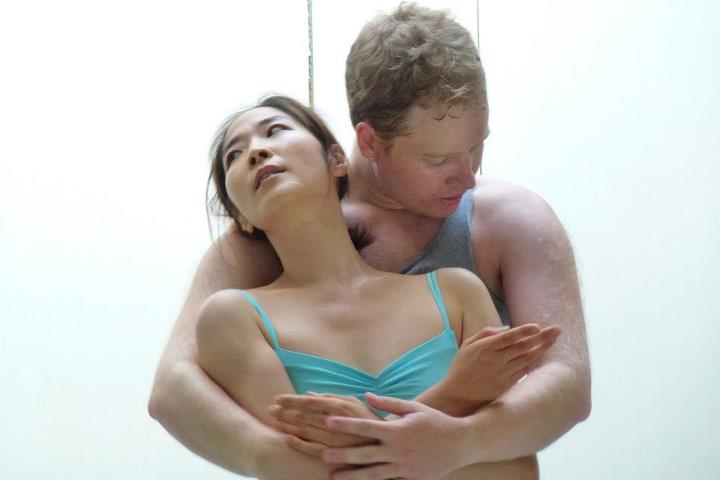
Above: Eun Jung Jung and Eric Vlach in rehearsal for Nomad Contemporary Ballet.
Sunday September 23, 2012 matinee – Nomad Contemporary Ballet, under the artistic direction of Kristen McGrew, gave their debut performances in New York City this weekend at the Alvin Ailey Studios. I attended the second of two performances; there was a full and attentive house, an unbroken progression of successful and pleasingly contrasted danceworks, a troupe of very accomplished and appealing dancers, a fine array of music, nice costume designs, effective and uncomplicated lighting. In short, it was a very satisfying afternoon of dance.
Ursula Verduzco’s wonderfully animated THE GAME opened the performance with the dancers running in place. They wear colourful flannel tights embellished with constellations and galaxies, reminding me of a kid’s pajamas. To music by Dead Can Dance, the dancers swoop and leap about the space, forming mini-cliques and then going off on other tangents. A very good way to kick off the programme.
It was the duet ADRIFT, choreographed by Ms. McGrew, that introduced me to Nomad when it was performed recently as part of the Latin Choreographers Festival 2012. I loved it then and loved it even more today as it took on a new resonance by virtue of this brief program note: “Two people who love one another but are not lovers, bound together to a single person who they both loved and lost: his wife, her sister.” That single sentence threw a poignant light on the duet and it became a very moving piece to watch today…and just a bit harrowing in my current fragile state of mind. Dancing beautifully to Bach, Erin Ginn and Eric Vlach were so expressive that they left me with a lump in my throat.
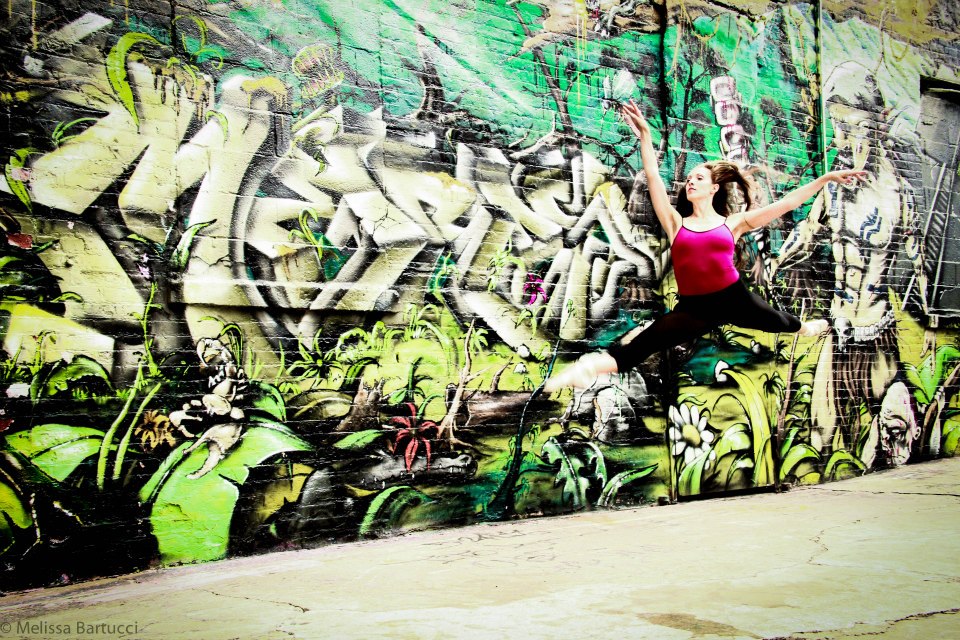
Above: dancer Shannon Maynor photographed by Melissa Bartucci.
If ADRIFT was touching, the next work MIDNIGHT ABYSS made me feel suicidal…oh, it was very well-choreographed (by Adrienne Hurd) and danced, but that song – Jacques Brel’s ‘Ne me quitte pas’ – what a stab in the heart that is! Luckily there was no revolver or razor blade to hand. So I made myself focus on the two dancers who opened the piece: Shannon Maynor and J’Michea Walker. Excellent, both of them. The piece develops into a large work with some ritualistic unison phrases; on my playbill I scrawled ‘gorgeous ensemble’. Shannon is a really impressive dancer to watch; her dancing has both strength and beauty. It was a piece that matched my mood and thus took on a particular dark lustre of its own. I’d love to see it again.
Choreographer Janet Atallah turned to music of Philip Glass for her work SYNAPSE; some people think Glass has been over-used for dance but I say: the more Glass the better. I’ve yet to see a work set to his music that I actively disliked. Ms. Atallah’s piece unfolded pleasingly, on pointe and with lots of classic ballet vocabulary woven into fresh sentences and paragraphs. A solo for Shannon Maynor and her duet with J’Michea Waker were among the finest passages, as was an adagio for four women.
In a triple tour de force, Alexei Agoudine (of ABT) not only choreographed his ballet RUSTY ROMANCE but also wrote the music for it and designed the costumes. Witty and wistful, this story of the love of a spark plug for a fuel filter was a real charmer from start to finish. Joel Levy as the mechanic sets things in motion (later his own pirouettes drew a round of applause); there’s a quartet of on-pointe sparkplugs and then there’s the hapless fuel filter, played by Eric Vlach. The winsome and pretty Erin Ginn loses her heart to Eric and they have a love duet after which Erin’s energy has drained away. She pines for him as her sister-sparks make fun of her; but love conquers all and the ballet ends with a triumphant apotheosis.

Above: dancer Erin Ginn, photo by Melissa Bartucci.
Kristen McGrew’s RUA (‘Red’) ended the afternoon in fine fashion, the dancers in red and black moving fluently to music of Antonio Vivaldi. The piece is very astutely structured and the combinations are woven together with a sure hand, giving the dancers ample oppportunity to shine both as individuals and as an ensemble. A particularly lovely adagio for Eun Jung Jung and Eric Vlach gave the ballet its center. Kristen’s musical choices – Bach and Vivaldi in this programme – put her in alignment with me as to setting the creative energy on music that is worthy to be danced, especially when a work is on pointe. Music for dance needn’t be classical, but it does need to be classy.
In addition to the dancers named in the above paragraphs, Nomad Contemporary Ballet also gave us Khiara M Bridges, Alessandra Giambelli, Bethany Lange, Rebecca Ross, and Malik Warlick each of whom I was able to focus on in the course of the afternoon.
I’m hoping these calling-card performances will be the start of a prospering time for this Company which can offer performing opportunities for dancers steeped in classical ballet, and the possibility for choreographers to create new works in that genre. I congratulate Kristen and eveyone involved for this new beginning.
Here are some images from the actual performance; the photographer is Melissa Bartucci:
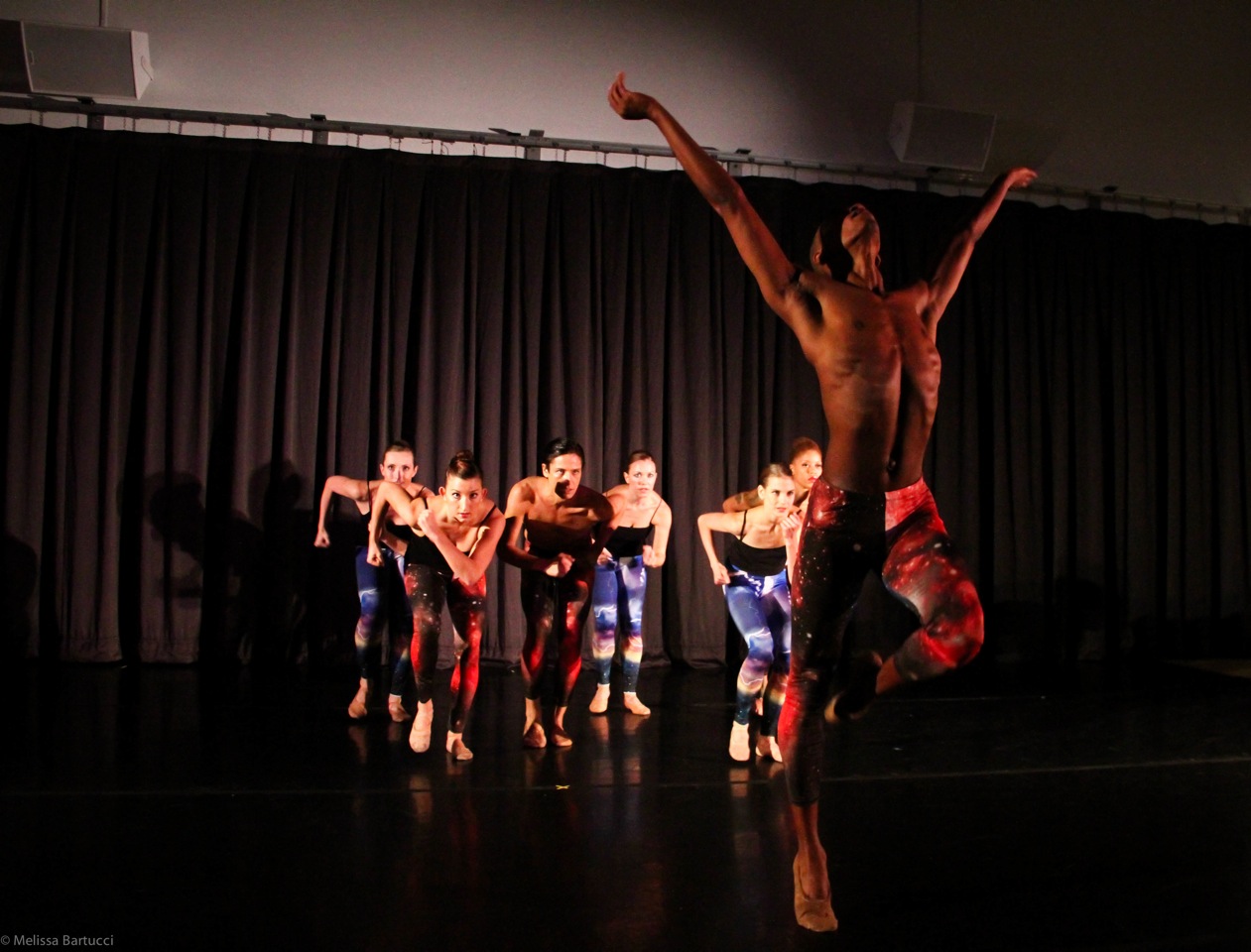
From THE GAME with dancer J’Michea Walker in the foreground

From ADRIFT; the dancers are Erin Ginn and Eric Vlach
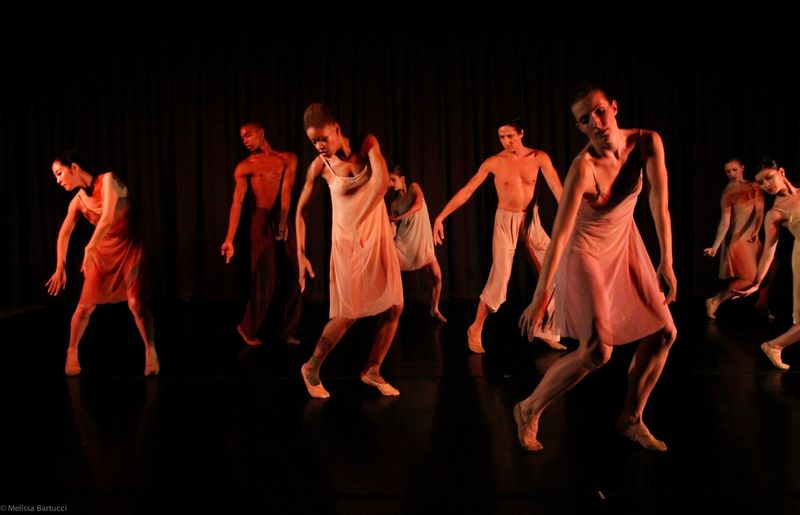
The ensemble in MIDNIGHT ABYSS
Shannon Maynor and J’Michea Walker in SYNAPSE

Above: dancer Eun Jung Jung
Click on each of these images to enlarge.
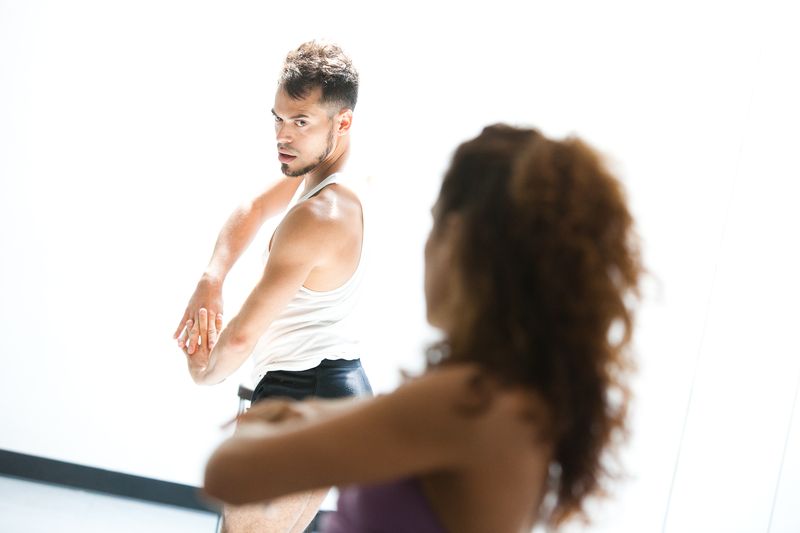
Above: Morales Dance rehearsal photo by Matt Murphy. The dancers are Leonel Linares and Nicole Corea.
Saturday September 22, 2012 – Tony Morales of Morales Dance is the driving force behind CONTRASTS, a programme of works by four choreographers presented at The Theater at Riverside Church. Tony’s guest choreographers are Lydia Johnson (Artistic
Director of Lydia Johnson Dance), Yesid Lopez (Director of DeMa Dance
Co) and Henning Rübsam (Artistic Director of SENSEDANCE).
I’d been looking forward to this alignment of dance and dancers for some time, and the evening came off very well indeed, with major kudos to Mike Riggs for his lighting designs that produced some striking images in the varied works.
Morales Dance presented three works on the programme, opening with the Spring-like freshness of SCENES. To music of Benedetto Marcello, the dancers are first seen kneeling in a circle in a pool of light. The opening sequence has a ritualistic feel which envolves into an airy and pleasing series of dances: an allegro duet for Nicole Corea (a guest dancer from Lar Lubovitch Dance Company) and MarieLorene Fichaux, a pas de trois for Alison Cook Beatty, Jerome Stigler and Leonel Linares. Kate Loh makes a lovely impression in her dancing here (and later, in AMOR BRUTAL), A solo for Alison Cook Beatty, danced in silence, forms a bridge to the concluding passages danced to Chopin. As the work moves to its finale, the dancers return to their opening circle of light.
Later in the evening we saw Tony Morales’ AMOR BRUTAL, a narrative work that I’ve watched being developed in the studio over time. In August, Matt Murphy produced some beautiful images at a rehearsal of the piece. Soft billows of smoke waft across the stage as singer Mary Ann Stewart and pianist Sandro Russo (performing live onstage) embark on the Manuel de Falla songs which provide the setting for this domestic drama. Nicole Corea and Leonel Linares have reached the point of no return in their marital conflict and now it’s a question of where the couple’s three daughters will set their allegiance. Nicole, dancing with her ever-radiant personal commitment, naturally assumes that her girls will be in her camp. But it’s the n’er-do-well father, danced with easy charm by Leonel, who has his daughters in the palm of his hand. The work ends with Nicole completely marginalized; the sisters (Kate Loh, Alison Cook Beatty, MarieLorene Fichaux) turn their backs on her and her husband slips out of the picture entirely. Adding a last personal touch to this work, the concluding song Amor Brutal is performed on a recording by Tony Morales’ father, who passed away earlier this year.
Three duets comprise the final Morales work on the programme: PIANO PIECES: the first danced by Kate Loh and Alison Cook Beatty to a waltz tune, the second performed by MarieLorene Fichaux and Jerome Stigler to Scriabin, and the third danced by Nicole Corea and Leonel Linares to Scarlatti.
The opening image of Lydia Johnson’s CHANGE OF HEART, enhanced by Mike Riggs’ lighting, caused me to gasp for breath momentarily: this work- which I have watched being created over the past several months – and these dancers have a special significance to me. Some people close to me know of my unhappy Summer and of the rift between me and my cherished friend who should have been with me tonight watching Lydia’s work. However, sometimes the very things that remind us of past happiness also reassure us as we try to move on. Between the Bach music and the sheer expressive beauty of Lydia’s troupe of dancers, the experience was uplifting.
For musicality and fine structuring, few people currently choreographing in the New York dance scene can compare with Lydia Johnson. There is thought, passion and tenderness in her work, and a depth of musical resonance that is very satisfying to behold. Yet for all that, in the end it’s the dancers whose ‘speaking’ of a choreographer’s unique dialect will make a dancework meaningful or not.
This evening Lydia’s ensemble was led by two of her core dancers: Jessica Sand and Laura DiOrio. Having watched these two young women countless times in the studio or in performance, it is still and always a moving experience to see them rendering Lydia’s choreography with such clarity and grace. Reed Luplau (guest dancer from Lar Lubovitch Dance Company) created a remarkable impression in Lydia’s SUMMER HOUSE earlier this year; he wears Lydia’s style like a second skin. Katie Martin, Natalia Wodnicka and Min Seon Kim have been dancing for Lydia for the past few months and are blending well into the ensemble, each with her own distinctive signature. The newest comers to Lydia’s work – Lauren Perry, Christopher Bloom and Eric Williams – already look more than at home here, and Ms. Perry with her fresh face and feel put me in mind of a favorite dancer from the past: Kate Johnson of the Paul Taylor Dance Company.

Rehearsal image: Laura DiOrio, Eric Williams, Jessica Sand.
And so this particular collective of dancers worked beautifully together to develop the flowing patterns of CHANGE OF HEART: solo moments, duets and ensembles sweep graciously by on the Bach score. A pas de trois for Laura, Reed and Eric, a duet for Jessica and Reed, a men’s trio…these are some of the moments that stood out. But it’s not really a work of highlights but rather a tapestry in which each thread seems richly colourful and alive.
The evening was entitled CONTRASTS, and so something really dark and wild was bound to crop up along the way. Henning Rubsam’s HALF-LIFE is set to a thunderously propulsive score by Laibach. With the ever-vibrant Temple Kemezis and Jacqueline Stewart on pointe, this non-stop dark revel of contemporary ballet style came lke a jolt. Paul Oisin Monaghan, one of Gotham’s most intriguing dancers, always captures the eye. And the astounding power and presence of Max van der Sterre was electrifying. Musically disturbing and on-the-edge in its movement, HALF-LIFE has a life of its own. Mike Riggs’ lighting made a big impression here.
The one choreographer with whose work I was unfamiliar, Yesid Lopez, offered a really appealing work for four girls entitled STRINGS. The costumes – corset-like bodices and gauzy soft-hued pantalooons – were especially lovely and the music (Chopin, Nyman, Dvorak) was matched by the atmospheric glow of Mike Riggs’ lighting. Jessica Black was featured in a solo passage, and the work made me want to see more of Mr. Lopez’s choreography.

Dancer Josh Christopher (above) takes a central role in John-Mark Owen’s REQUIEM.
Wednesday August 29, 2012 – Today I went over to the 92nd Street Y where choreographer John-Mark Owen was rehearsing for his upcoming presentation of REQUIEM. The performances are scheduled for September 13th thru 15th at Manhattan Movement and Arts Center. Ticket information here.
Taking on the Mozart REQUIEM from a choreographic standpoint is a major project, and John-Mark has risen to the task in this ensemble work which avoids a literal interpretation of the sacred texts and favours instead a painterly approach. Each ‘frame’ of the ballet becomes part of a living gallery; John-Mark applies a dramatic subtext but he isn’t a slave to it. The sculptural feeling of certain passages, as well as the unison ‘choral’ phrases of walking or marching, respond to the architecture of the music with its sense of ritual.
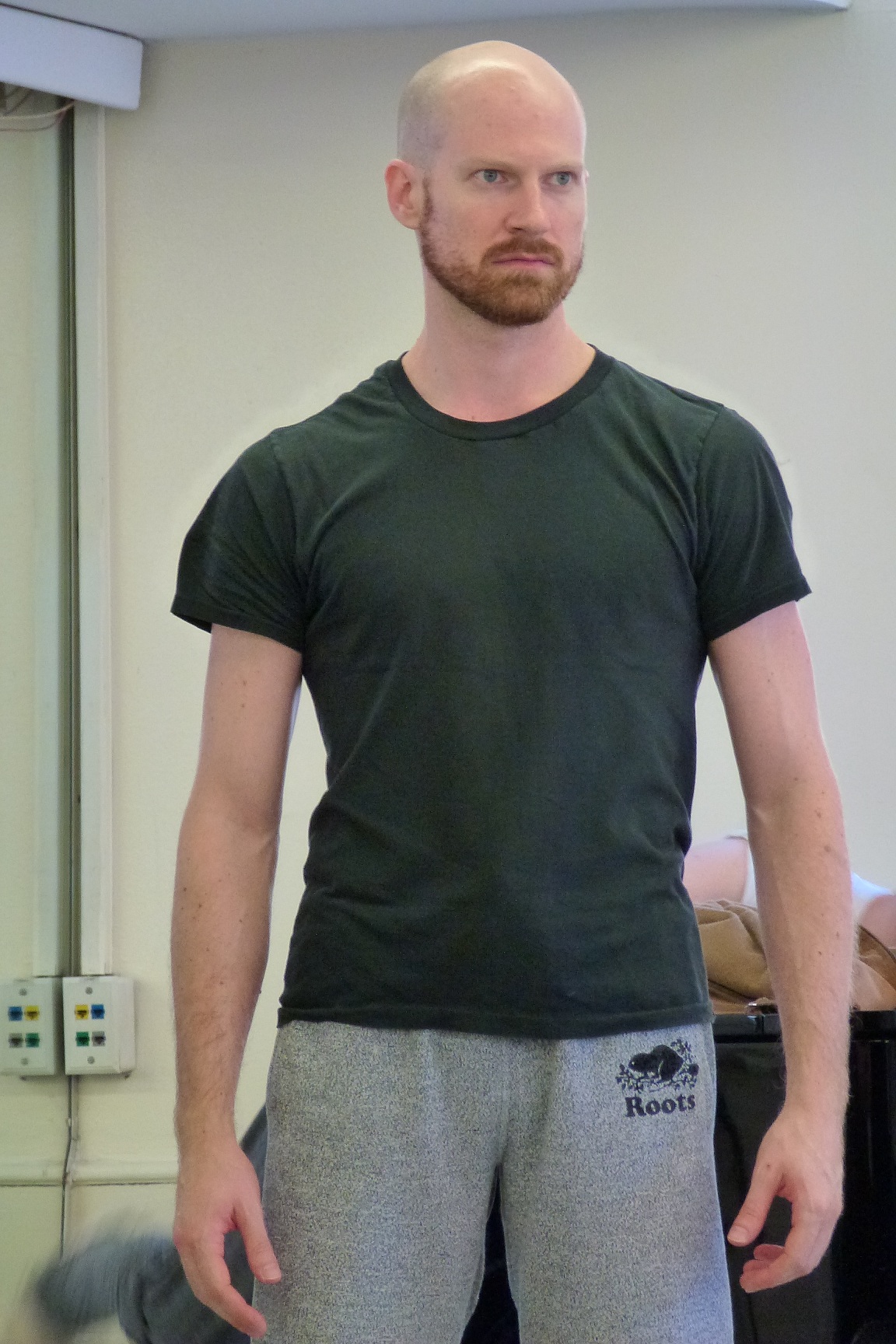
John-Mark has assembled a strong cast, with particularly vivid performances by Aaron Mattocks (above) as a sinister and even brutal dark angel…
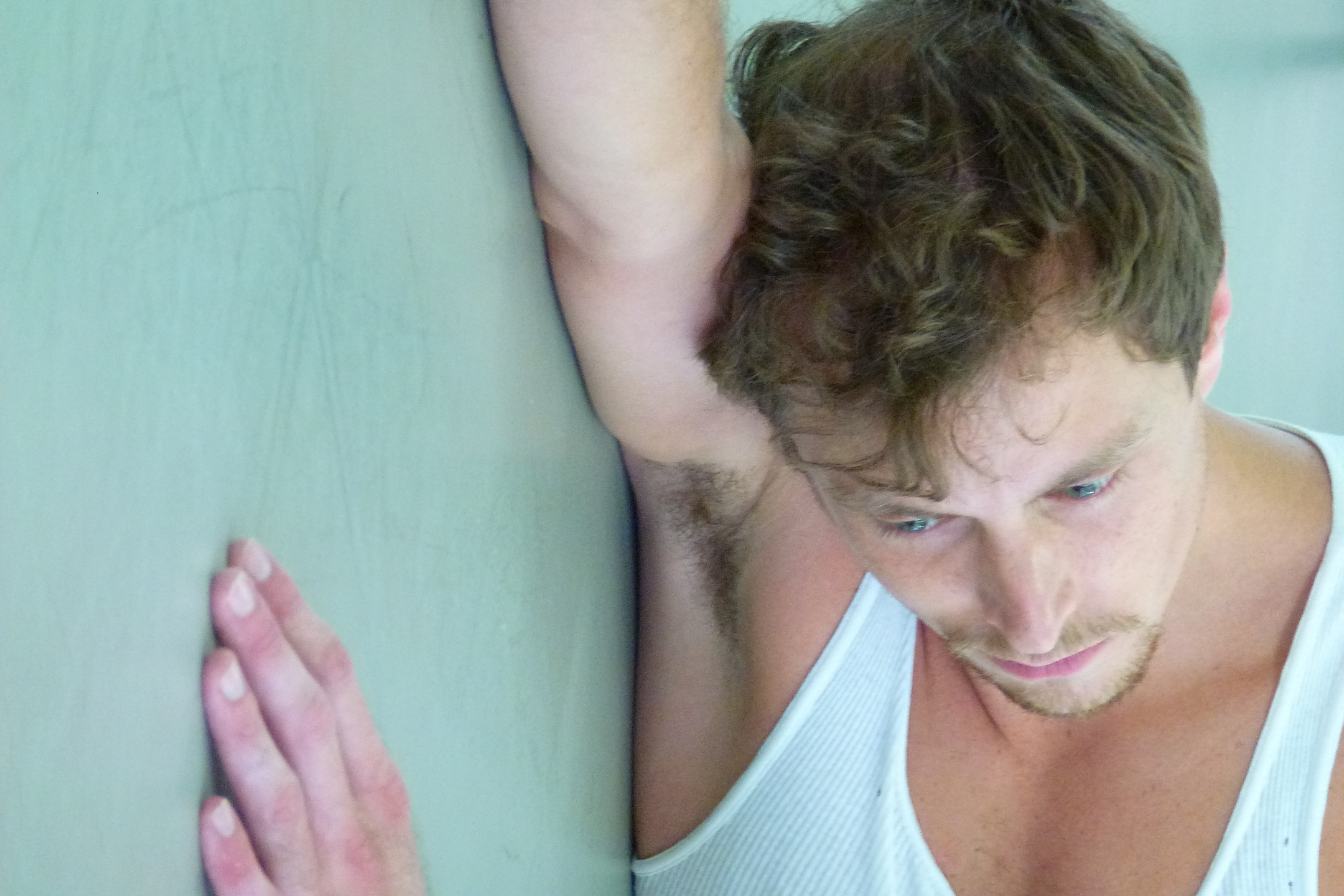
…and the intense lyricism of John Christopher (above). Kerry Shea and Amy Brandt have the principal female roles.
Here are some images from the rehearsal and of the individual dancers involved:

The ensemble
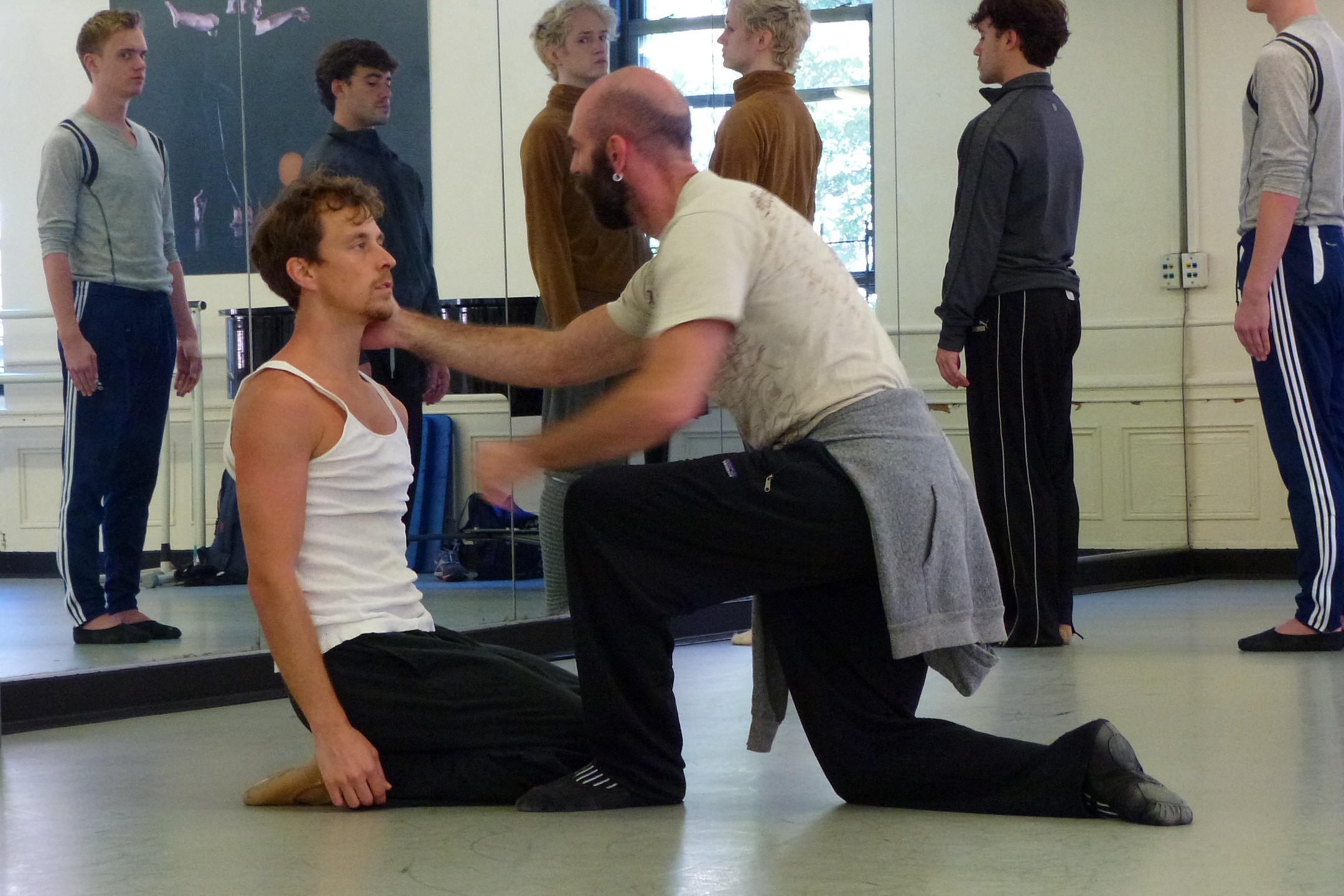
Josh Christopher and John-Mark Owen

Aaron Mattocks, Amy Brandt

Ensemble
Josh Christopher, Aaron Mattocks

Jason Stotz, Nadezhna Vostrikov
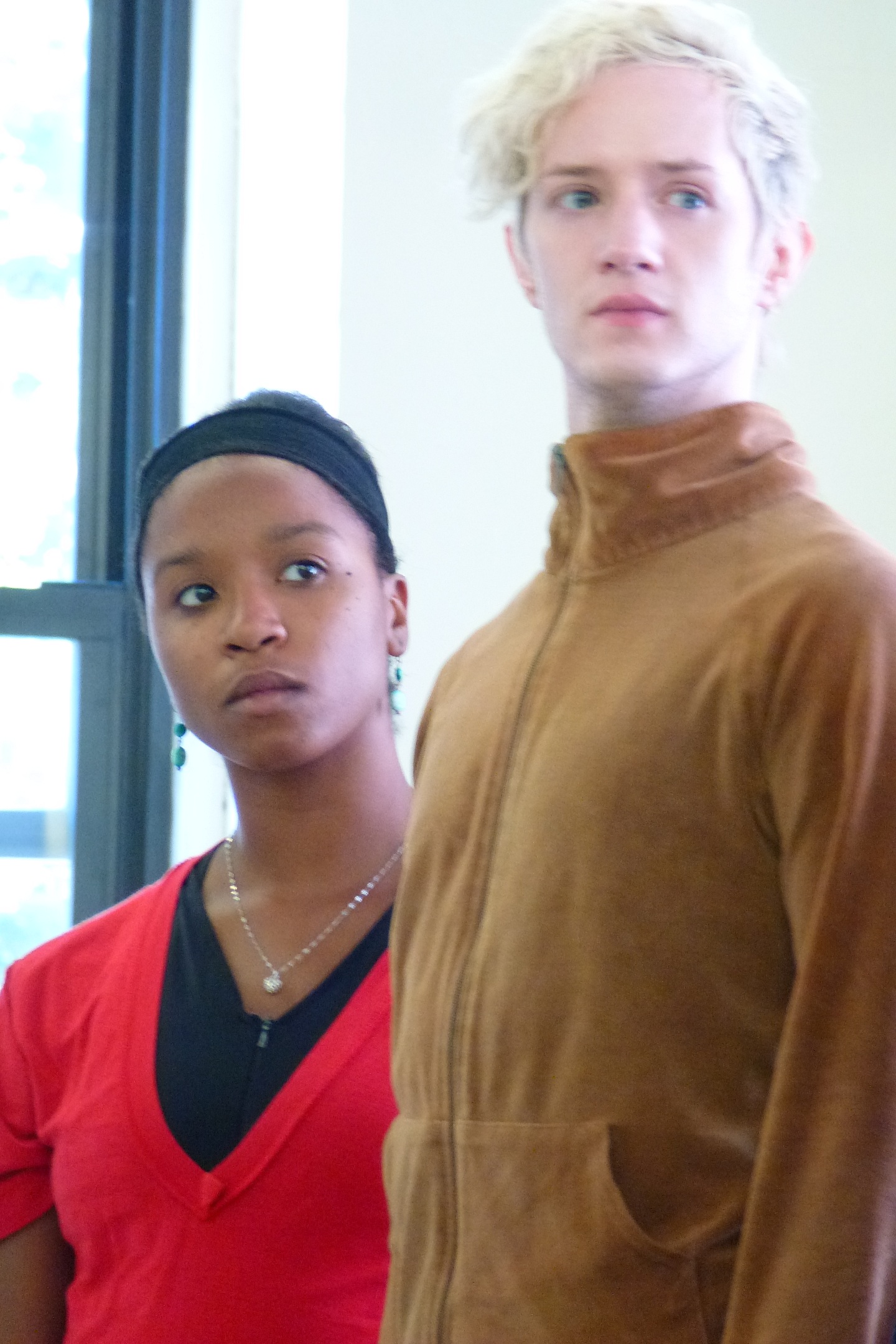
JoVonna Parks, Oisin Monaghan
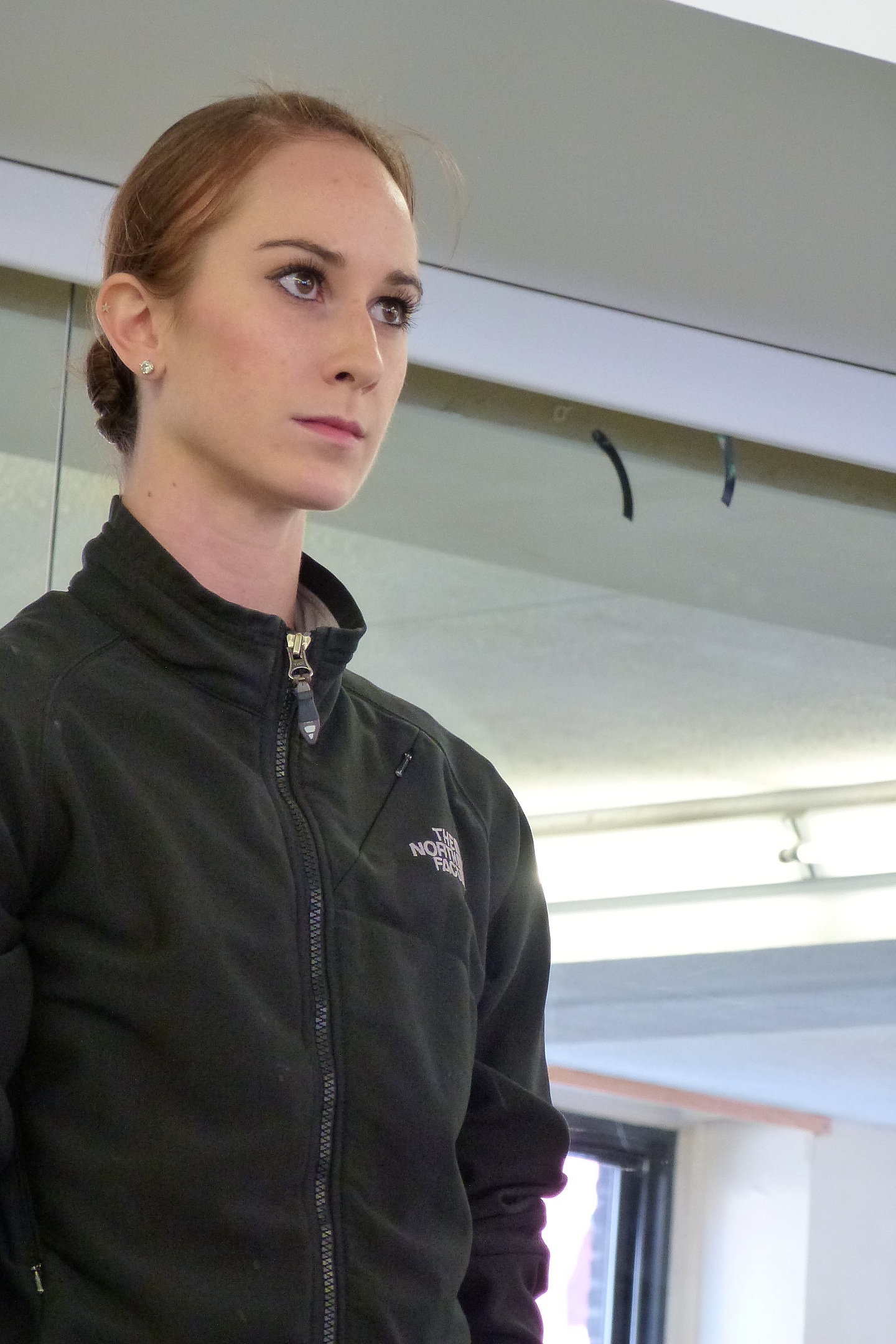
Kelsey Coventry
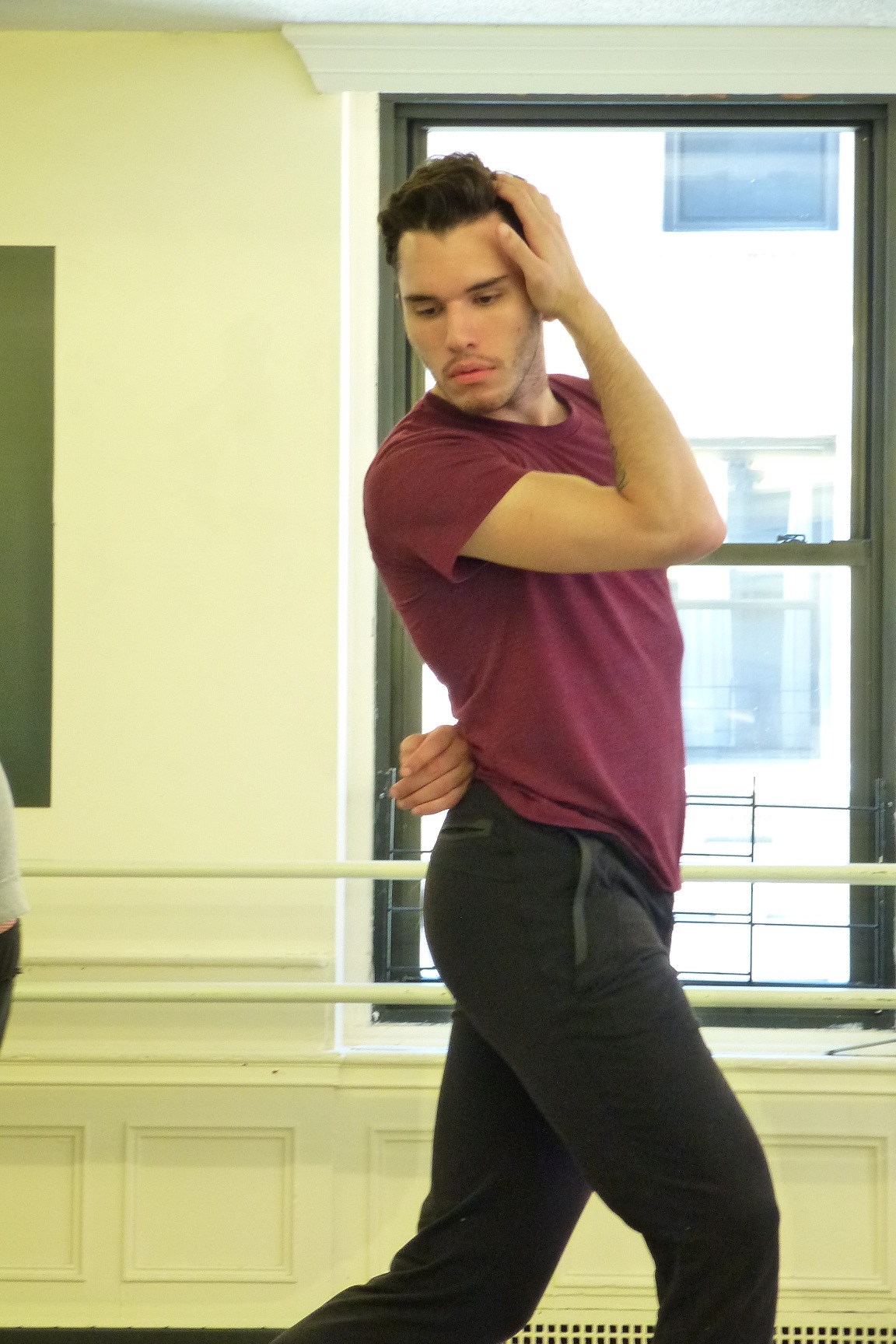
Alfredo Solivan

Kristen Deiss, Kelsey Coventry

Kerry Shea

Josh Christopher

Nadezhna Vostrikov
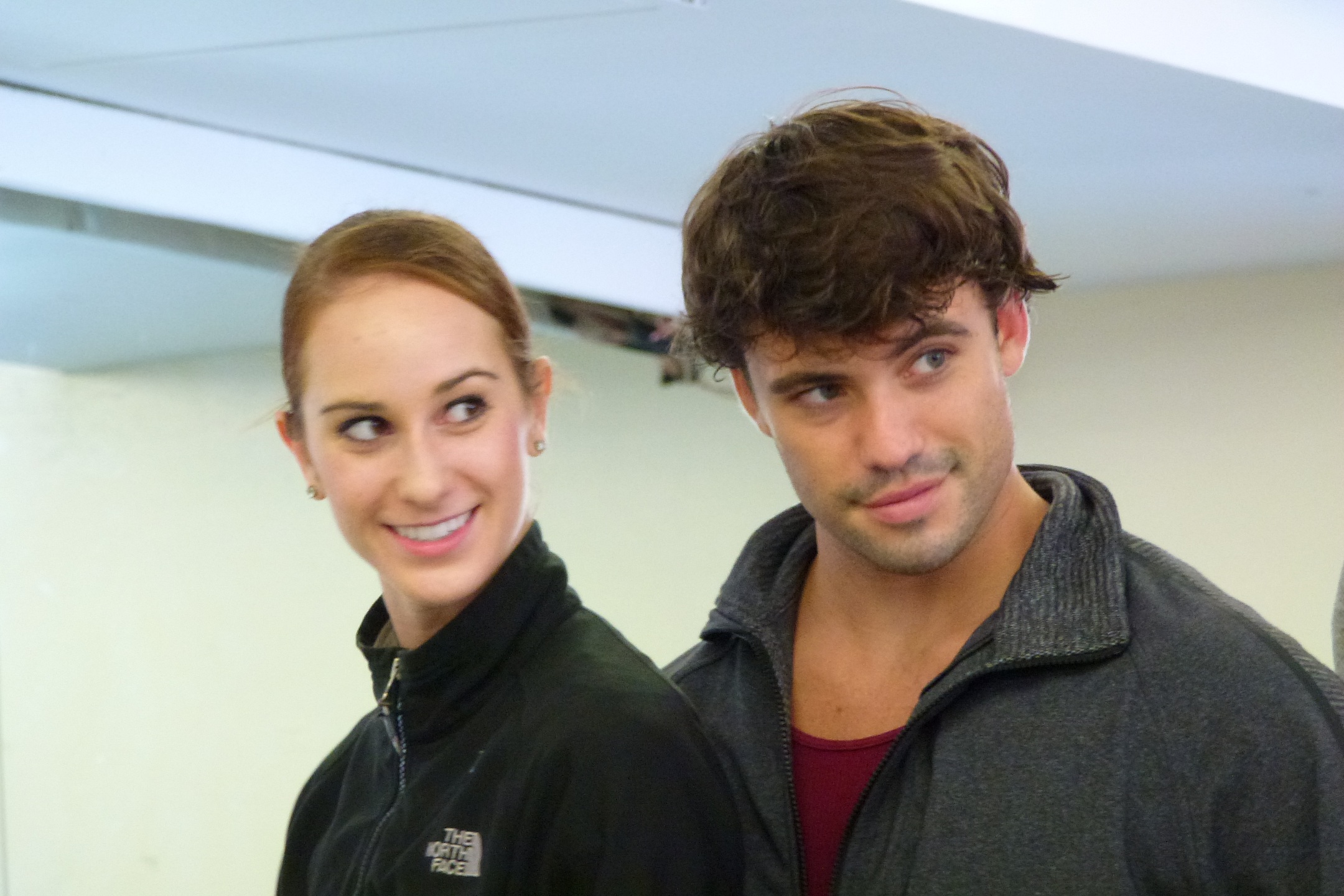
Kelsey Coventry, Jason Stotz

Oisin Monaghan, Matt Van

John-Mark Owen




 Oberon's Glade