Blog

  • Steps Repertory Ensemble Rehearse Vignoulle

    L1050278

    Wednesday November 28, 2012 – I stopped by at Steps on Broadway today where the Steps Repertory Ensemble were rehearsing a new work by Manuel Vignoulle. I got to know Manuel as a dancer through his performances with Cedar Lake Contemporary Ballet. This was my first time meeting him, and his infectious energy and devilishly sexy accent made the studio hour fly by. It’s always fun when a choreographer leaps in to demonstate during rehearsals, and Manuel was continually showing the dancers what he wanted. His choreography is athletic and risky; a passage of repose contrasts to the edgy, restless atmosphere that the work has built up.
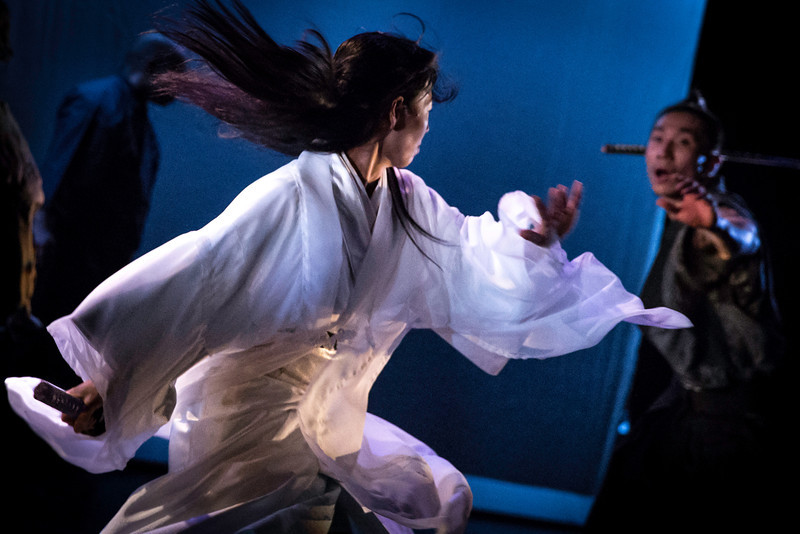
    Manuel’s piece for the Steps Repertory Ensemble is entitled “Le Moi Sauvage” and it will be part of the Company’s Celebrate Dance performances at Ailey Citigroup scheduled for April 19-21, 2013. Chances are it will be shown sooner than that in a studio setting.

    L1050403

    Britney Tokumoto, Lane Halperin, Marielis Garcia and Katherine Spradzs

    L1050383

    Victor Larue

    L1050308

    Discussing the mechanics of a lift

    L1050254

    David Scarantino, Gabriel Malo

    L1050256

    Landes Dixon

    L1050384

    Marielis Garcia

    L1050273

    Manuel Vignoulle

    Now that I’ve had my introduction to the Steps Repertory Ensemble (thanks to Mindy Upin), I’m hoping to cover more of their work in the coming months, leading up to their April performances.

  • Ira Malaniuk

    Image-Kammersangerin

    The contralto Ira Malaniuk (above) was an Austrian singer of Ukranian descent who had a major career in Europe from 1939 to 1976 yet is rarely mentioned today in discussions of great voices from the past. Yet surely she is one of their number.

    Malaniuk appears on several commercial recordings, some of which I have heard, yet it is a 1953 live recording of GOTTERDAMMERUNG from the 1953 Bayreuth Festival in which she sings Waltraute that made me sit up and take notice of this wonderful singer.

    Malaniuk came to international attention at the 1951 Bayreuth Festival when she stepped in at the last minute for an ailing colleague; here is the story:

    “It was 1951. The Wagnerian Festival at Bayreuth, Germany was taking place for the first time since the end of World War II.

    Herbert von Karajan was the conductor. The opera was Das Rheingold (The Rhine Gold), the first of the four operas that comprise Wagner’s Der Ring Des Nibelungen. A complete Ring Cycle peformance was planned for this innaugural post-war season.

    Elisabeth Höngen, a mezzo-soprano, was scheduled to sing. She had
    performed only a few days earlier. Suddenly on August 11, 1951, Höngen
    came down with an acute case of appendicitis and was hospitalized.

    That fateful day, Ira Malaniuk, a young mezzo-soprano, came into the
    theatre not suspecting that she would be required to sing the part of
    Fricka that night. According to her own autobiography, not only had
    Malaniuk never sung the part, she hadn’t even heard it before.

    And yet, with the assistance of the Bayreuth Festival staff,
    colleagues, prompters and conductor Karajan, Ira Malaniuk went on stage
    that night and sang. The critics raved. Bavarian Radio broadcast the
    production.

    And, Ira Malaniuk went on to become a famous opera singer – a Kammersängerin – in both Germany and Austria.”

    Malaniuk had studied with the great basso Adamo Didur, and opera was always in her heart, as she relates in this charming story:

    “I cannot say, where the beginnings of my love of opera were. Already in
    childhood, they shone for me like a guiding star. Although, in all
    truth, there was a female opera singer in our family, that reached world
    wide fame – Salomea Kruszelnicka. She was the daughter of my paternal
    grandmother’s brother, in short my father’s cousin. Our paths never
    crossed – I never met Kruszelnicka, never saw her peform on stage, but
    perhaps some drop of her artistic blood courses through my veins.”

    Image-Ira-Malaniuk-Lisa-Della-Casa

    Above, Ira Malaniuk with her soprano colleague, the radiant Lisa Della Casa.

    Listen to Ira Malaniuk singing the Second Norn in this document from the Bayreuth Festival’s 1953 GOTTERDAMMERUNG. Her sister-Norns are Maria von Ilosvay and Regina Resnik (in her soprano days); Clemens Krauss conducts.

  • Lauren Alpert for CBC

    C06

    Lauren Alpert created a new ballet for Columbia Ballet Collaborative‘s recent performances at MMAC. Above: dancer Gabriela Minden, photo by Jade Young.

    I was unable to attend the CBC performances this Autumn, but I did stop by at one of Lauren’s rehearsals of her new creation. Entitled signal:noise and set to a collage of contemporary music, this is probably one of the few danceworks ever to be inspired by working in a neuroscience lab. But it was there that Lauren developed the concept for her ballet.

    C04

    Lauren Alpert and dancer Rebecca Walden

    C02

    Audrey Crabtree-Hannigan and Rachel Silvern

    signal:noise is an ensemble work for seven women; although there are unison passages, much of the work is devoted to indivdual expression, some of it with an improvisational quality. I hope there’ll be a chance to see it again sometime.

    Photos: Jade Young.

  • CLEMENZA DI TITO @ The Met

    Clemenza.0405.01

    Tuesday November 20, 2012 – The Metropolitan Opera’s current revival of their classic Jean-Pierre Ponnelle production of Mozart’s LA CLEMENZA DI TITO is a joy both to the ear and the eye. Marty Sohl’s production photo (above) illustrates the fantasy mixture of ancient Roman and baroque stylistic elements that give the sets and costumes their timeless visual appeal.

    Tonight, Harry Bicket led a sterling performance, with excellent continuo playing from Bradley Brookshire (harpsichord) and David Heiss (cello) as well as spectacular woodwind solos in two of the opera’s iconic arias: Andrew McGill (clarinet, in “Parto, parto”) and James Ognibene (basset horn, in “Non piu di fiori”). Mr. Bicket’s vivid pacing and his sense of the music’s flow put the singers in high relief; there were three outstanding vocal performances and overall it was one of the most satisfying evenings at The Met in recent seasons.

    Kate lindsey

    To think that I almost skipped this revival! But a chance to hear Kate Lindsey as Annio was not to be missed, and the beauteous young mezzo (above) gave an immaculate performance, her lithe figure and ease of movement onstage enhancing her interpretation at every turn. Like many of her predecessors in this fach, Kate spends a lot of her onstage time in trousers (she’ll debut at Glyndebourne as the Composer in ARIADNE AUF NAXOS in the coming year). Her singing tonight was pristine, with a particularly ravishing piano passage in “Tu fosti tradito” that would melt the coldest heart.  

    Gf

    With his noble and expressive face, Giuseppe Filianoti (above) made a splendid impression as Tito. His singing was clear and mellifluous, the words poetically delivered. The tenor finely delineated the emperor’s dilemma in dealing with his betrayal by his friend Sesto: should friendship trump justice? When I last heard Mr. Filianoti in the house, he was dealing with health issues, so it was really very pleasing to hear him on such beautiful vocal form tonight.

    Garanca

    Somehow I’ve managed not to encounter a live performance by the Latvian mezzo-soprano Elina Garanca (bove) up til now. I first heard her voice on a recording my friend Mollie sent me from the 2001 Cardiff Competition. Garanca has since developed into a world-class artist and after hearing her as Sesto tonight, she’s on my A-list of singers. Both in terms of vocal appeal and technical accomplishment, this was a stunning performance: Garanca’s voice is all of a piece, and she moves it thru the registers seamlessly. After a profoundly expressive rendering of the openng passages of the great aria “Parto, parto” Ms. Garanca sailed through the whirlwind coloratura flourishes of the aria’s later pages with nimble assurance. Later, as she knelt to invoke the strength to carry out her assassination of Tito, she summoned an amazing degree of projection, the voice sailing into the hall with startling force. In her second spectacular aria “Deh per questo istante solo”, the mezzo soprano coloured the voice movingly, reflecting the character’s anguish and also his stalwart refusal to implicate Vitellia in the crime. Ms. Garanca’s entire performance was a revelation.

    Barbara Frittoli, an unforgettable Desdemona at the Met in 1999, has more recently found considerable success in singing Mozart since she did her voice some damage during the first decade of the 21st century by singing music that was too heavy for her. Her canny manipulation of dynamics usually prevents her widening vibrato from becoming too prevelant. But for all her attractive qualities, Vitellia’s great aria “Non piu di fiori” simply lies too low for Ms. Frittoli to make her finest effect in the music. Vitellia in fact can be sung by a mezzo, except for that thorny top-D that Mozart threw into the act I trio, a note that eluded Ms. Frittoli tonight. Nevertheless, the soprano kept up her side of things all evening and the audience enjoyed her sometimes over-the-top dramatic portrayal.

    Lucy Crowe as Servilia is a pretty girl with luminous eyes and a pleasing lyric timbre. In his search for a wife, Tito’s first choice – Servilia – might have made him quite happy, especially with Ms. Crowe’s buxom grace and girlish smile.

    A wonderful Met evening, then, and there was every reason to stay to the end and shout’ bravi’ as the singers took their bows to sustained applause.

    Metropolitan Opera House
    November 20, 2012
    LA CLEMENZA DI TITO
    Mozart

    Tito.......................Giuseppe Filianoti
    Vitellia...................Barbara Frittoli
    Sesto......................Elina Garanca
    Servilia...................Lucy Crowe
    Annio......................Kate Lindsey
    Publio.....................Oren Gradus
    Berenice...................Toni Rubio

    Bradley Brookshire, Harpsichord Continuo
    Anthony McGill, Clarinet Soloist
    James Ognibene, Basset Horn Soloist
    David Heiss, Cello Continuo

    Conductor..................Harry Bicket

  • Salonen Conducts WOZZECK

    Salonen

    Monday November 19, 2012 – The Philharmonia Orchestra under the baton of Esa-Pekka Salonen (above) offered a concert performance of Alban Beg’s WOZZECK at Avery Fisher Hall. Incredibly, it was the first time I have experienced this opera in a live performance that was conducted by someone other than James Levine.

    The particpating artists:

    Philharmonia Orchestra
    Westminster Choir 
- Joe Miller, director
    The American Boychoir – Fernando Malvar-Ruiz, music director

    Conductor: Esa-Pekka Salonen

    Simon Keenlyside Wozzeck
    Angela Denoke Marie
    Hubert Francis Drum Major
    Joshua Ellicott Andres
    Peter Hoare Captain
    Tijl Faveyts Doctor
    Henry Waddington First Apprentice
    Eddie Wade: Second Apprentice
    Harry Nicoll Idiot
    Anna Burford Margret

    The performance was compelling both in the awe-inspiring magnificence of the orchestral playing and in the powerful simplicity of the semi-staging: the singers, clad in contemporary everyday chic, moved thru the drama in a narrow space at the lip of the stage. Direct and uncomplicated in its presentation. the drama was expressed with stripped-down clarity. Thanks to a cast of singing-actors each vividly inhabiting his or her character, this tale of madness, despair, bullying and betrayal cast its extraordinary spell.

    The score unfolded under Maestro Salonen’s baton like a vast dark tapestry; individual orchestral voices shoot thru the fabric of sound like shimmering threads. As in SALOME, the musical imagery often evokes moonlight seen thru sooty, scudding clouds…but here the moon is blood-red. The conductor struck an ideal balance of unleashing the insane power of the orchestra yet never overwhelming his singers. The cumulative effect was electrifying..

    In the early scenes of the opera, dark comedy runs rampant: the Captain and the Doctor who hold Wozzeck their mental hostage are so deranged and their words so far-fetched as to evoke laughter. Brilliant characterzations from Peter Hoare and Tijl Faveyts respectively set their vignettes in high relief. Hubert Francis was the swaggering bully of a Drum Major and Joshua Ellicott as Andres – one of Wozzeck’s few links to normalcy – sang with clarity. Anna Burford as Margret delivered her Swabia-lied with drunken blowsiness; Harry Nicoll was an eerily happy Idiot. I took special pleasure in the robustly earthy singing of Henry Waddlington and Eddie Ware as the two apprentices. Their scene simply crackled with verbal and vocal power and they steered clear of the comic cliches of acting out drunkiness, making their performances all the more impressive.

    Angela Denoke, a soprano still talked-about in Gotham for her only Met performances (a series of Marschallins in 2005) was a wonderfully feminine and vunerable Marie. For all her toughness (“better a knife in my heart than lay a hand on me”), Marie is a marvelously human woman torn between desire and guilt, and Ms. Denoke’s portrayal struck an ideal balance while providing vocalism of gleaming lyricism and intriguing colours. She now proudly joins my gallery of memorable portrayals of this character over the years: Janis Martin, Anja Silja, Hildegard Behrens, Katarina Dalayman and Waltraud Meier.

    As Wozzeck, Simon Keenlyside enjoyed a great personal triumph. Hurling himself into the drama with a dazzling affiinity for the expressive physical manifestations of madness and with tortured facial responses to Wozzeck’s downward spiral, the baritone sang with unfettered power and a full palette of vocal colours which he drew upon to project the character’s ravaged humanity. Keenlyside’s performance was nothing short of perfection.

    And so, one of the most thrilling nights of opera in recent seasons…and the proof of it was in the utter silence of the audience in those unexpected stillnesses that Berg applies from time to time. They are as key to the dark glory of WOZZECK as the shocking power of the great post-murder crescendos. Salonen and his mighty forces gave us an exciting evening, reaffirming the still-powerful desire of the New York public for meaningful operatic experiences.

  • Miro Magloire Goes Classical: New Chamber Ballet

    6a00d8341c4e3853ef017615b0efb6970c

    Above: Elizabeth Brown of New Chamber Ballet, photo by Kokyat. Click to enlarge.

    Saturday November 17, 2012 – Performances at New Chamber Ballet always feature live music, and quite often it is music that has been written in the 20th or even the 21st century. Tonight’s programme varied a bit from the New Chamber Ballet norm as three of the four works choreographed by the Company’s director Miro Magloire were set to works of Old Masters: Bach, Handel and Tchaikovsky.  In such company, the fourth work – by Karlheinz Stockhausen – gave the evening a nice tangy jolt.

    Super-familiar melodies from THE NUTCRACKER were transcribed for solo violin and played with alternating currents of delicacy and gusto by Clara Lyon. There were no candy canes or snowflakes to be seen, however: instead, three women (Elizabeth Brown, Nora Brown and Holly Curran) became obsessed with a gift-wrapped silvery pendant that changed hands several times in the course of the ballet. Technically demanding solos were spun thru the musical fabric, and elements of chase and deceit played out as each girl tried to claim the bauble for her own.

    Melody Fader attacked the hammering motif that opens Karlheinz Stockhausen’s Klavierstuck IX with flair; Elizabeth Brown and Holly Curran sit on either side of the pianist as Miro’s KLAVIERSTUCK commences: a ballet that became a memorial to the composer who passed away in 2007, shortly after having given Miro his blessing to choreograph the piece. The piano itself becomes the central element of the ballet, functioning as a barre and as an altar. Miro’s affectionate gesture to the composer he so admired has become New Chamber Ballet’s signature work.

    After a short break, Melody Fader switched modes and played a transcription of a Handel violin sonata (arranged by Miro) as the Company’s newest member Nora Brown gave lyric sweep to the pure classic vocabulary of the solo SPIEGELEIN. Wearing Candice Thompson’s fetching pale rose and white tunic, Nora’s graceful dancing had a lovely fresh quality.

    Its premiere having been delayed a couple of months, Miro’s new ballet THE OTHER WOMAN proved one of his finest works to date. Set to Bach’s B-minor sonata (played by Clara Lyon and Melody Fader) this ballet about duplicity and its resulting emotional impact on the personalities involved struck close to home. Elizabeth Brown and Holly Curran are the two women – and who could choose between them? – while Sarah Atkins en travesti gives a wonderful performance as the object of their affections. Sarah, in a black suit and bowler hat, danced her jaunty solo with  élan while the two girls vied for his attention in a situation where someone is bound to lose.

    New Chamber Ballet‘s audience continues to grow, with new faces among the crowd of familiar long-time supporters. In their mixture of classic, on-pointe dancing and live music in an intimate setting, Miro’s evenings hold a unique place in the Gotham dance scene. Their next performances are slated for February 15th and 16th, 2013.

  • Pivotal Works at Joyce SoHo

    Fanny ara

    Above: Fanny Ara

    Friday November 16, 2012 – The Vilcek Prize for Creative Promise this year honors foreign-born dance professionals working in the USA. The current winner is Michel Kouakou from the Ivory Coast; he will have his own evening at Joyce SoHo on November 17th, which unfortunately I cannot attend. Tonight the four “runners-up” presented their work at the Mercer Street venue.

    Any day that we fall in love is a good day; it doesn’t matter whether the object of our adoration is a boy from far away whose face we saw on a website or a dancer or singer who moves and touches us with their beauty and talent. My newest love is Fanny Ara, a gorgeous Flamenco artist who opened the evening with a pair of resplendant solos that literally made my heart race. Her first solo Romance was a slow and very personal contemporary ‘echo’ of the Flamenco style: I immediately fell under her spell – so alluring, so poised and self-confident, even in the dance’s most reflective nuances. Then a vivid pure Flamenco solo, Soler, in which the captivating expressive qualities of Fanny’s upper body, arms and hands – even her neck – mesmerized us while her footwork dazzled both the eye and the ear. Guitarist Jason MacGuire provided fabulously colorful playing in both works, joined in Soler by the vocalist Jose Cortes, whose slightly raspy quality had its own sexual edge. In the course of her 15-minute performance, Fanny Ara soared into the upper-most echelon of dance artists I have witnessed over the years.

    My friend Tom and I enthused over Fanny’s dancing while the stagehands took up the special flooring. Tom was just as thrilled by what we’d seen as I was.

    Two works by the Vietnamese-born choreographer Thang Dao followed: a large ensemble piece called S.O.S. is danced to a dynamic pop/rock song (Life Is A Pigsty by Morrissey) and a more refined, narrative work LENORE inspired by Edgar Allen Poe. In both pieces, Thang Dao showed fine craftsmanship and musicality. In S.O.S. there was a restless energy and much fast-paced partnering, with solo passages woven in. The dancers – and I am always happy to find dancers I know on any stage (Chris Bloom, Aaron Atkins and Virgina Horne were among Thang Dao’s ensemble) – kept the eye darting about the space, trying to take it all in. In the more aptly poetic LENORE, a mirage-like tracery of Bartok underpinned Basil Rathbone’s reading of The Raven, the poet in his white nightshirt is haunted by a trio of ravens and the endless intoning of ‘the word that was spoken’: Nevermore.

    DSC_0300

    From Scandanavia, the cool beauty of Pontus Lidberg (above, Nir Arieli photo) seemed the external masque of a man with a secret passion. From his WITHIN (Laybrinth Within) Pontus danced the opening solo which we’d just seen a few days ago when MORPHOSES premiered the dance/film masterpiece at the bigger Joyce. This visual poem evolves into a filmed passage of Pontus in a forest or standing on a lonely beach. The solo works well as a free-standing evocation of the longer work. And it’s a tremendous pleasure to watch Pontus Lidberg dance.

    Of the evening’s final work, a deadly dull and painfully protracted food fight, I’m not naming names. It simply reminded me of a conversation that Woody Allen has with his wife in the film CRIMES AND MISDEMEANORS. Urged to abandon his pathetic aspirations as a documentary film-maker, Woody reminds his wife: “Hey, I won Honorable Mention at that film competition last year!” to which she coolly replies: “Everyone who entered won Honorable Mention!”

  • Lar Lubovitch Dance Company @ Florence Gould Hall

    Saltimbanques-pierre-reverdy-L-1

    Above: Les Saltimbanques, the painting by Picasso that inspred Lar Lubovitch’s newest creation, TRANSPARENT THINGS.

    Thursday November 15, 2012 – Three recent works by Lar Lubovitch comprised the programme tonight at Florence Gould Hall where Lar’s superb troupe of dancers held the stage to fine effect, abetted in the final work by excellent playing of the Debussy G-minor quartet by the Bryant Park Quartet.

    Opening with the ravishingly dark and lyrical LEGEND OF TEN, set to the Brahms F-minor quintet, the Lubovitch dancers showed from the first moment both their collective technical expertise and their individuality as poets of movement. In this dance of swirling and evocative patterns, the heartfelt music buoys the dancers throughout; from time to time a dancer will step forward and briefly pay reverence to the audience before melding back into the flow of the dance. The gorgeous and distinctive Lubovitch women – Nicole Corea, Laura Rutledge and Kate Skarpetowska – are partnered in ever-shifting match-ups by the beautiful men of the Company: Attila Joey Csiki, Reed Luplau, Brian McGinns, George Smallwood and Anthony Bocconi. A central pair – Elisa Clark and Clifton Brown – weave their ongoing pas de deux into the ensemble; tall and radiant, the couple bring an unusual sense of dignity to what might otherwise simply be a romantic duet. Clifton’s imperial wingspan and the hypnotic styling of his arms and hands are a blessing to behold, and Elisa matches him in expressive nuance. Compelling dance from all, and the work is surely one of Lar’s greatest masterpieces.

    377924_2509974742725_1469896582_n

    Darkness of a more jagged and comtemporary feel marks CRISIS VARIATIONS, in which a smaller ensemble of dancers – Nicole Corea, Laura Rutledge, Attila Joey Csiki, Reed Luplau and Anthony Bocconi – writhe and struggle against unseen demons whilst yet another of Lar’s imaginative duets – danced by the enigmatic Kate Skarpetowska and the dynamic Brian McGinnis – ebbs and flows among the struggling community. Kokyat’s image of Kate and Brian, above, captures one of the pas de deux’s most spine-tingling moments.

    What gives CRISIS VARIATIONS its unique flavour in the Yevgeniy Sharlat score; in this turbulent and entrancingly crafted music, individual instruments – harpsichord, saxophone, organ – lend a nightmarish gleam to the tapestry of movement. The ballet, though steeped in deep despair, is not without subtle hints of tongue-in-cheek self-pity.  

    The newest of Lar’s works, entitled TRANSPARENT THINGS, is a pure joy. Reid Bartelme’s costumes translate from the Picasso painting with remarkable faithfulness, and the dancers take to the mirthful and sometimes self-mocking characters of this vagabond troupe of entertainers with flair.

    Schreiber IMG_5214

    Attila Joey Csiki (above, Steven Schreiber photo) is perfect as the mercurial Harlequin, his solo dancing marked by the pure grace of his pliant style. Kate Skarpetowska and Laura Rutledge seem literally to have stepped out of the painting; Brian McGinnis is a tower of strength in his billowy red suit and Clifton Brown in simply marvelous to watch. Boysihly beautiful Reed Luplau brings a touch of innocence and a creamy, chiseled chest to his velvet-clad Blue Boy.

    Playing from memory, the musicans of the Bryant Park Quartet give a rendering of the Debussy score which ranges from sentimental to ebullient. Violinist Anna Elashvili seemed ready to spring from her chair and join the dance. At the close of the ballet’s third section, the dancers invade the musician’s space and are momentarily stilled; Attila lovingly rests his head against the cello. In this charming moment the marriage of music and dance are quietly celebrated. Brilliant!

  • Martha Graham Dance Company/Rehearsal

     Mg011

    Above: Katherine Crockett and Ben Schultz of the Martha Graham Dance Company rehearsing Graham’s PHAEDRA. Photo by Jade Young.

    Click on the images to enlarge.

    Monday October 15, 2012 – The large and history-rich space at Westbeth which is now the home of the Martha Graham Dance Company has become one of my favorite and most meaningful dance destinations. On this late afternoon in mid-October, photographer Jade Young and I were invited to the studio where the Company were rehearsing two Graham works: RITE OF SPRING and PHAEDRA. RITE OF SPRING has not been performed for about twenty years, and PHAEDRA was last danced about a decade ago. Denise Vale supervises the revivals of the Graham repertoire, and watching her work is one of the main pleasures of spending time at Westbeth.

    In 2013 we honor the 100th anniversary of the the scandalous premiere of the Nijinsky/Stravinsky RITE OF SPRING which took place in Paris on May 29th, 1913. The ballet reached American shores in 1930 when Martha Graham danced the Chosen One in Massine’s 1920 realization of the piece. In 1984, Martha Graham’s own vision of RITE was given its world premiere at the New York State Theater. 

    Mg015

    At today’s rehearsal, which was run by Ken Topping, ensemble passages (above) were being worked on with attention to spacing and to the musicality of certain phrases. The score is of course notoriously difficult to count but dancers over the years have become accustomed to it.

    Mg02

    The ballet in Graham’s rendering is both a ritual and an intense dramatic narrative. From what I was able to observe today, it is a richly structured and detailed work which I cannot wait to see fully staged, costumed and lit. We’ll have the opportunity when the Graham Company appear at The Joyce February 20th thru March 3rd, 2013. They will also perform the work in North Carolina as part of a festival celebating one hundred years of RITE:  

    “Carolina
    Performing Arts
    at The University of North Carolina at Chapel
    Hill have announced an exceptional
    two-night program as part of their The Rite of Spring at 100 season. On April 26th and April 27th, 2013, Myth & Transformation
    by the renowned Martha Graham Dance Company will bring to a conclusion
    the performance season of this unprecedented nine-month festival
    celebrating the centennial of the premiere of the Stravinsky-Nijinsky-Roerich masterpiece.

    Myth & Transformation will feature performances of Graham’s powerful The Rite of Spring, which has not been seen by audiences in twenty years, and the much-beloved Graham classic Appalachian Spring;
    the world premiere of a work choreographed by Nacho Duato to music of Arvo Pärt, and performances by guest artist Wendy Whelan, principal
    dancer from the New York City Ballet.”

    That is exciting news indeed!!

    But: back to today’s rehearsal…after a break, a long scene from PHAEDRA was rehearsed. This Graham ballet was once deemed so shocking by two members of Congress that
    they protested the use of State Department funds for its performance on a
    Graham company tour in Europe. The two worthy Congressmen’s reaction was wrong-headed, since things do not end well for Phaedra; the gods punish her immoral longings. But apparently the two legislators did not stay at the performance long enough to find out.

    Mg09

    But that seems like foolish political history now. Today we watched a quartet of Graham dancers bring the piece vividly to life, led by the remarkable Katherine Crockett (above) in the title-role. The ballet, set to a dramatic score by Robert Starer, tells of Phaedra’s obsession with her stepson Hippolytus. the dancers in the run-thru we watched were Katherine Crockett, Ben Schultz, Andrea Murillo and Mariya Dashkina-Maddux. They performed with the intensity one might expect in a staged performance.

    Mg018

    Katherine and Andrea, above.

    It was regrettable that Jade had to leave at this point, for a second cast of dancers for PHAEDRA led by Blakeley White-McGuire and Tadej Brdnik took over the space. We shall have to wait for another opportunity to photograph them. With their powerful and wonderfully indivdual personalities, the dancers of each cast brought out different aspects of the drama. I could have watched and watched and gone on watching…

    For that is the thing about these works and these dancers: an endless fascination both with the actual movement as we watch it, but also with the sense of dance history that one feels in the experience: a history in which Martha Graham wrote a bold and epic chapter.

    You can read more about Graham’s PHAEDRA here, with a very impressive album of production photos from the 2003 performances of the ballet at The Joyce.

    More of Jade’s images from this rehearsal will appear here soon.