Blog

  • At the Noguchi Museum

    P1240267

    Sunday May 29, 2011 – Kokyat and I have been talking about going to the Noguchi Museum for months and today we finally made it there. 

    Noguchi’s Water Stone (1986) at the Met Museum is one of Kokyat’s favorite works of art. Every time we go to The Met we make a pilgrimage to sit and observe the stone. The best times are when there are no other museum visitors around. We usually fall silent when sitting there; it creates a peaceful atmosphere. There is a very similar work at the Noguchi Museum (top photo) but it’s outdoors, and the surface of the pool refects the sky and trees in every-changing patterns.

    P1240170

    The Noguchi Museum is not all that easy to get to from Manhattan. It’s a long walk from the nearest subway stop (though there is shuttlebus service from Manhattan) and so it is blessedly free of baby strollers, cellphones and tourist traffic. The atmosphere is wonderfully tranquil and there’s a deep connection with nature both in the wood and stone which Noguchi fashioned into masterpieces…

    P1240269

    …and in the garden’s trees and plants, some of them native to Japan and rarely seen in the States. The blending of art and nature is so calming.

    The museum is housed in what was once a run-of-the-mill industrial building. Noguchi saw something in the space and its ‘courtyard’ (then a run-down parking lot and storage area), transforming the mundane property into a spectacular sculpture garden while creating ten galleries within the building to house a large collection of his works. He also bought a small building across the street where he lived.

    P1240180

    Noguchi did not always sign and date his work, but his signature runes (above) can be found on many pieces. Most of the works are simply presented without the title cards and descriptive information one usually sees in a museum. Noguchi wanted the viewers to draw their own inferences from his work without being steered by his own concepts in creating them.

    P1240239

    Noguchi at Versailles in the 1950s.

    We spent a long time wandering the galleries…

    P1240361

    …then Kokyat fell asleep in the garden beneath a wall of bamboo. It is such a serene and restful place.

    Isamu Noguchi’s work with Martha Graham was recently celebrated in an evening of works on which they collaborated, performed at the Rose Theater. In another connection with dance, Noguchi designed ORPHEUS for George Balanchine and his stylized lyre from that production was for years the iconic logo of the New York City Ballet.

    I’ve posted some of my photos from our day at the museum on Facebook.

  • Aboard the USS Intrepid: HOMECOMING

    8

    On Saturday May 28 at 11:30 AM, Roman Baca’s HOMECOMING will be performed aboard the USS Intrepid. This brief but extraordinarily moving work is performed to a haunting John Corigliano score (from the film THE RED VIOLIN) over-laid by the reading of letters sent from home to US servicemen on duty in Iraq and Afghanistan. Earlier in the week, Kokyat and I stopped by the DANY Studios where Roman and his dancers were brushing up the work for its Intrepid premiere. They will dance HOMECOMING twice in succession aboard the ship. Kokyat’s photo at the top: dancers Taylor Gordon, Michael Wright and Lisa Fitzgerald.

    Copy of 19

    Waiting at home: Adrienne Cousineau clings to the shirt of her husband. Mundane items like articles of clothing…

    Copy of 25

    …or photographs of the servicemen keep a connection for spouses, mothers and girlfriends.

    10

    Above: dancers Aaron Atkins and Adrienne Cousineau. The joy of reunited couples is offset by the emptiness of those whose loved ones do not return from the war, or return with life-shattering injuries.

    9

    Taylor Gordon searches among the returning troops for her missing soldier.

    Roman Baca enlisted in the US Marine Corps in 2000 and served in Fallujah, Iraq. Returning home, he picked up his dance career where it had left off. The resonances of his wartime experience prompted him to start work on HOMECOMING; he formed Exit 12 Dance Company to pursue his choreographic vision.

    250415_10150261269431223_700811222_9311786_5067841_n

    Sgt Baca has a deep personal interest in and commitment to US servicemen and -women returning from the mid-East wars who suffer from the psychological effects of their experience. His primary focus is on homelessness and suicidal tendencies among the veterans, stemming from  frustration with the government’s increasing unwillingness to fittingly honor their service with care and compassion. Sadly, our troops are still abroad and at risk every day while being largely forgotten here at home.

    A recent development in the situation shows some promise.    

    The USS Intrepid is docked at 150 12th Avenue, near West 23rd Street. A ticket to the Intrepid museum gets you aboard for the performance and you can stay on all day for Fleet Week activities.

    These images are from the rehearsal; Kokyat also plans to shoot on the Intrepid where we spent a memorable evening last Autumn.

    The dancers in HOMECOMING are: Taylor Gordon, Adrienne Cousineau, Lisa Fitzgerald, Jackie Koehler, Joanna Priwieziencew, Michael Wright, Aaron Atkins and Preston Bradley. More of Kokyat’s images from this rehearsal will follow shortly.

    No matter what your stance on the war and the USA’s involvement in these far away lands, HOMECOMING is something everyone should experience.

  • HOMECOMING Aboard the USS Intrepid: Gallery

    Copy of 6

    Here are some of Kokyat’s images from the May 28th, 2011 performances of Roman Baca’s HOMECOMING on board the USS Intrepid. The dancework was presented as part of the ship’s Fleet Week activities over the Memorial Day weekend. Read about the event here. Above: Preston Bradley.

    Copy of 4

    Taylor Gordon

    Copy of 10

    Taylor Gordon, Michael Wright, Lisa Fitzgerald

    Copy of 13

    Adrienne Cousineau

    Copy of 5

    Joanna Priwieziencew

    Copy of 15

    Adrienne Cousineau

    Copy of 16

    Lisa Fitzgerald

    Copy of 17

    Michael Wright

    Copy of 21

    Adrienne Cousineau, Aaron Atkins

    Copy of 23

    Lisa Fitzgerald

    Copy of 28

    Taylor Gordon

    Copy of 12

    Sgt Roman Baca, choreographer and artistic director of Exit 12 Dance Company.

    All photos by Kokyat.

  • 2280 Pints!

    Buckets lift

    Friday May 27, 2011 – From the many invitations that I receive each week to dance events, this one from The Neta Dance Company caught my eye because of the title of the work they are presenting: 2280 Pints! Described as a dancework for seventeen dancers and 57 5-gallon plastic buckets, it just sounded so quirky that I had to give it a go.

    P1230913

    On entering the space at Dance Theater Workshop, we find the dancers posed like living statues as the music of Chopin’s second piano concerto fills the air. Each dancer has a white plactic bucket. Coins are distributed to the incoming audience members who then wander among the dancers, pressing pennies into the dancers’ open palms or dropping them into the buckets. A bell rings; suddenly the dancers break their poses and rush into the audience, grabbing people at random. Each dancer takes a guest onto the stage and arranges him/her in a statuesque pose. Thus did my friend Kokyat make his New York stage debut.

    From there, a roller-coaster ride of movement and music commences. Neta Pulvermacher deploys her squad of dancers and their fifty-seven buckets in a richly imaginative series of danced and mimed tableaux, set to a musical smorgasbord that runs the gamut from Mozart to Sonny & Cher. 

    The buckets are arranged, stacked, knocked over, sent skidding across the floor; they become hats, shoes, podiums, spotlights, drums, sinks, stepping-stones; they are hoisted and lowered over the playing area.  The dancers come and go as each musical number unfolds; sometimes there are big ensembles with everyone moving in unison and playing the buckets like percussionists kits. Other moments are more intimate: a girl sings the old Charlie Chaplin tune “Smile” (sings it really well, too) while four dancers simply raise and lower buckets over their faces, revealing their features as droll masks.

    Does it sound like a mish-mash? To an extent, it is. What saves it and makes it brilliant is the musicality of Neta’s choreographic style and the sheer energy and commitment of her dancers. One or two segments seem to stretch out a bit long but at those times one can focus on the individual personalities of the very attractive young performers. A giant plus to the production comes from the lighting by B. Lussier.

    I loved running into Taylor Gordon (either I go for months without seeing Taylor or I see her every day for a week) and to see Deborah Wingert and Matthew Westerby again. Many thanks to Alessandra Larson for inviting us to this really enjoyable evening.

    2280 Pints! continues at Dance Theater Workshop (on West 19th off 8th Avenue) thru Saturday evening. Kids over 5 will get a kick out of it at a Saturday matinee. Details here, with a video trailer.

  • HOMECOMING Aboard the USS Intrepid

    8

    On Saturday May 28 at 11:30 AM, Roman Baca’s HOMECOMING will be performed aboard the USS Intrepid. This brief but extraordinarily moving work is performed to a haunting John Corigliano score (from the film THE RED VIOLIN) over-laid by the reading of letters sent from home to US servicemen on duty in Iraq and Afghanistan. Earlier in the week, Kokyat and I stopped by the DANY Studios where Roman and his dancers were brushing up the work for its Intrepid premiere. They will dance HOMECOMING twice in succession aboard the ship. Kokyat’s photo at the top: dancers Taylor Gordon, Michael Wright and Lisa Fitzgerald.

    Copy of 19

    Waiting at home: Adrienne Cousineau clings to the shirt of her husband. Mundane items like articles of clothing…

    Copy of 25

    …or photographs of the servicemen keep a connection for spouses, mothers and girlfriends.

    10

    Above: dancers Aaron Atkins and Adrienne Cousineau. The joy of reunited couples is offset by the emptiness of those whose loved ones do not return from the war, or return with life-shattering injuries.

    9

    Taylor Gordon searches among the returning troops for her missing soldier.

    Roman Baca enlisted in the US Marine Corps in 2000 and served in Fallujah, Iraq. Returning home, he picked up his dance career where it had left off. The resonances of his wartime experience prompted him to start work on HOMECOMING; he formed Exit 12 Dance Company to pursue his choreographic vision.

    250415_10150261269431223_700811222_9311786_5067841_n

    Sgt Baca has a deep personal interest in and commitment to US servicemen and -women returning from the mid-East wars who suffer from the psychological effects of their experience. His primary focus is on homelessness and suicidal tendencies among the veterans, stemming from  frustration with the government’s increasing unwillingness to fittingly honor their service with care and compassion. Sadly, our troops are still abroad and at risk every day while being largely forgotten here at home.

    A recent development in the situation shows some promise.    

    The USS Intrepid is docked at 150 12th Avenue, near West 23rd Street. A ticket to the Intrepid museum gets you aboard for the performance and you can stay on all day for Fleet Week activities.

    These images are from the rehearsal; Kokyat also plans to shoot on the Intrepid where we spent a memorable evening last Autumn.

    The dancers in HOMECOMING are: Taylor Gordon, Adrienne Cousineau, Lisa Fitzgerald, Jackie Koehler, Joanna Priwieziencew, Michael Wright, Aaron Atkins and Preston Bradley. More of Kokyat’s images from this rehearsal will follow shortly.

    No matter what your stance on the war and the USA’s involvement in these far away lands, HOMECOMING is something everyone should experience.

  • Roman Baca’s HOMECOMING: Gallery

    6

    A gallery of Kokyat’s images from a studio rehearsal of HOMECOMING, a timely and evocative dancework created by Roman Baca. HOMECOMING is to be performed aboard the USS Intrepid on Saturday May 28th at 11:30 AM. Read about this work here. In the photo above: Michael Wright and Lisa Fitzgerald.

    7

    Preston Bradley with Adrienne Cousineau and Taylor Gordon

    12

    Michael Wright

    Copy of 21

    Adrienne Cousineau

    Copy of 18

    Jackie Koehler

    Copy of 26

    Taylor Gordon

    Copy of 27

    Joanna Priwieziencew

    Copy of 2

    Aaron Atkins, Adrienne Cousineau

    Copy of 22

    Adrienne and Lisa

    13

    All images by Kokyat. My thanks to him, and to Roman Baca and his dedicated troupe of dancers for sharing this experience with us.

  • Checking In with John-Mark Owen

    P1220291

    Friday April 29, 2011 – Down to SoHo this morning to watch choreographer John-Mark Owen putting the finishing touches on a new solo performed by Jesse Marks, a soloist with Colorado Ballet. Kokyat and I met Jesse last year when he appeared with Lydia Johnson Dance here in New York City.

    P1220300

    The solo, entitled Sonatae, is set to music of Heinrich Ingaz Franz Biber. It begins with the dancer in a contemplative Narcissus-like pose and then flows into space-covering movement. John-Mark, a choreographer after my own heart for our shared love of Baroque music, shows Jesse off to beaufitul advantage. I really enjoyed seeing Jesse again.

    P1220359

    P1220362

    P1220319

    P1220297

    Sonatae will premiere at Manhattan Movement and Arts Center in performances on May 6th and 7th when John-Mark’s work shares a triple bill with Island Moving Co (from Newport, RI) and Cherylyn Lavagnino. Details here.

    Both Jesse Marks and John-Mark Owen will be appearing in Dances Patrelle‘s GILBERT & SULLIVAN: A Ballet! at Dicapo Opera Theatre May 12th – 15th. Information here. Read about it here.

  • John J Zullo’s HOW BRIEF ETERNITY

    John J Zullo Dance photo

    Thursday April 28, 2011 – A fresh choreographic voice and a new (to me) venue as John J Zullo Dance presented two works at the Theater for The New City over on 1st Avenue. Kokyat and I met John and his dancers at a rehearsal earlier this year and we liked what we saw and heard there.

    John’s HOW BRIEF ETERNITY is an eight-movement dramatic dancework set to music by Mio Morales, Maya Beiser and others. Although not a narrative, each vignette revolves around elements of prejudice and hatred that continue to thrive in modern societies thanks to the pernicious influence of racism and religion. These themes are presented in a gritty movement style with much physical contact by the dancers. There is no artifice in John’s choreographic style; his seven dancers move naturally and powerfully thru the changing partnerships and ensemble segments. Each member of the troupe makes a unique contribution to the whole and their distinctive personalities are given full range.

    There is no setting per se, though overhead on a screen homophobic slogans and anti-gay buzzwords are projected. As the dance progresses there are moments of violence, tenderness, torture, brotherhood and frustration – the last depicted by silent screams. In a gender-bending duet, the tall, beautiful and rather androgynous Brigitte Mitchell and the slender, boyish Or Sagi don matching corsets and flouncy skirts (Or wearing bright red lipstick) and dance a seductive duet to a stunning rendition of Roy Orbison’s Cryin’, sung in Spanish by Rebekah del Rio (for the film MULHOLLAND DRIVE). There is a dance for four comrades – Or, John Zullo, Ashley Linsey and Mike Hodge – where the boys slip out of their trousers and into short skirts. Jenna Liberati – a lyrical dancer with a surprising edginess – and Christina Chelette – a petite woman with an intense personal style – complete the cast. 

    HOW BRIEF ETERNITY is tightly packed with movement; John’s style isn’t like anyone else’s that I’ve seen and he plays to his dancers’ individual strengths: Or Sagi’s ballet training for example lets him show off a flourishing extension. The Theater for The New City‘s atmosphere – redolent of the dark, shabby backstage perfume of old costume trunks and forgotten shows of yesteryear – was an ideal place to present this work: we are close enough to the dancers to see individual beads of sweat.

    HOW BRIEF ETERNITY might well have stood on its own but – after a break – a second piece, a more generalized dancework about fleeting relationships entitled INSIGNIFICANT OTHERS, proved a pleasant contrast. The dreamlike echoing voice of Patsy Cline gives way to music of Peteris Vasks and Tractor’s Revenge as the dancers pair off variously in various hetero- and homosexual combinations, looking for love or someone to help them make it thru the night. The seven dancers from ETERNITY were joined by Kate Vincek.

    The second work was less engrossing than the first but it provided an additional opportunity to focus on the individual dancers.

  • DIE WALKURE at The Met

    P1210469

    Monday April 25, 2011 – I went to The Met box office the day after tickets for the 2010-2011 season went on sale and tried to get seats for the new productions of RHEINGOLD and WALKURE. The man at the ticket window informed me that all the RHEINGOLDs were already sold-out; I was lucky to get tickets for a WALKURE, and by the time I got back home and went on line The Met website showed all the WALKUREs had sold out also. Fortunately my friend Lisette was able to get me a ticket for the RHEINGOLD dress rehearsal (in which she was singing Woglinde); actually I was really lucky because right after she’d picked up her pair of seats for the dress The Met decided to close the rehearsal because the production was experiencing technical difficulties. So only a very limited number of people were in the House. 

    The chance to see a new production of the RING Cycle here in New York City comes but rarely and ticket demand was high; despite not liking the RHEINGOLD much and wishing some of the roles in WALKURE could be re-cast, I was really excited about seeing this second RING installment: WALKURE is one of my top-five operatic scores and it’s the Wagner opera I’ve seen most often.

    Reports from the premiere of WALKURE indicated that the stage machine was functioning far more smoothly than it had for the Autumn RHEINGOLDs. Musically, the news that James Levine was able to conduct after health concerns forced him to renounce several recent engagements was a major plus. A mid-opera cast change – Margaret Jane Wray stepping in for debuting Eva-Maria Westbroek as Sieglinde after Act I – and a slip-and-fall from the Brunnhilde (Deborah Voigt) were among the first night news items.   

    Metropolitan Opera House
    April 25, 2011
    New production

    DIE WALKÜRE
    Wagner

    Brünnhilde..............Deborah Voigt
    Siegmund................Jonas Kaufmann
    Sieglinde...............Eva-Maria Westbroek
    Wotan...................Bryn Terfel
    Fricka..................Stephanie Blythe
    Hunding.................Hans-Peter König
    Gerhilde................Kelly Cae Hogan
    Grimgerde...............Mary Ann McCormick
    Helmwige................Molly Fillmore
    Ortlinde................Wendy Bryn Harmer
    Rossweisse..............Lindsay Ammann
    Schwertleite............Mary Phillips
    Siegrune................Eve Gigliotti
    Waltraute...............Marjorie Elinor Dix

    Conductor...............James Levine

    I must say right off I was glad that James Levine was on the podium tonight, especially in view of the likely alternative. Maestro Levine has been dealing with major health issues in recent weeks, forcing him to miss some Met performances and to give up his position at the Boston Symphony. He was back at The Met for a tremendous WOZZECK earlier this month and he and his orchestra seemed in fine fettle tonight. The great score was laid out with grandeur, passion and tenderness and the individual players shone whenever solo moments cropped up. Levine unleashed voluminous waves of sound at times and let the singers fend for themselves; elsewhere, as in the opening minutes of the Todesverkundigung, the maestro had everything under solemn, finger-tip control.

    Now that we’re half-way thru this RING I must say, the enterprise seems a colossal waste of money. The reported outlay of $20 million for the production plus the small-change invoice of another half-mil to reinforce the stage floor to bear the weight of The Machine seems the height of theatrical vanity. The RING is basically a series of dialogues; there’s very little ‘action’ really. As a setting, you basically need to create something that is pleasing to the eye without intruding on the drama and hopefully come up with a bit of excitement in those well-spaced-out moments when a visual coup is desired.

    Flywires, mechanicals and the occasional stagehand are visible from time to time in the Lepage setting, preventing an illusion of magic. The planks rise and fall and fan out to modestly interesting effect, but placing the action on a bare Wieland Wagner disc would have been equally convincing and cost a hell of a lot less.

    The basic setting of grey planks is both innocuous and dull. Absolutely nothing happens on the back panel in terms of lighting, film or other effects: it’s deep blue throughout most of Act I of WALKURE (with snowflakes falling) until the moment when Siegmund annouces the arrival of Springtime when it turns…green! How thrilling! I could have provided that idea for a coup de theatre for 99 cents.  

    The singers are left to their own devices (M. Lepage ‘doesn’t do character work’ reportedly) and so we have Siegmund collapsing on the dinner table when he first barges in, and Sieglinde producing various dishes and utensils from her kitchen cabinets conveniently installed under the lower of the two panels. When she fixes the sleeping-potion for her husband, she decides an extra dose of herbs will do the trick. (Why didn’t she simply poison him? That would have spared her and Siegmund a world of troubles.)  The pulling of Nothung from the tree is a non-event though one can imagine Sieglinde thinking “My, what a big weapon you have!” as she fondles her brother’s blade. 

    RingIdealmetwalkhdl29110

    Act II has lava flowing just under the surface of the rocky terrain as Wotan greets Brunnhilde. Fricka appears in a ram-drawn sedan chair and seems tethered to it. During Wotan’s monolog, a plastic ‘eye’ appears on which are projected dim shadows that have no relationship to anything. Brunnhilde is intrigued by this but it disappears as inexplicably as it appeared. It looks really cheap, by the way.
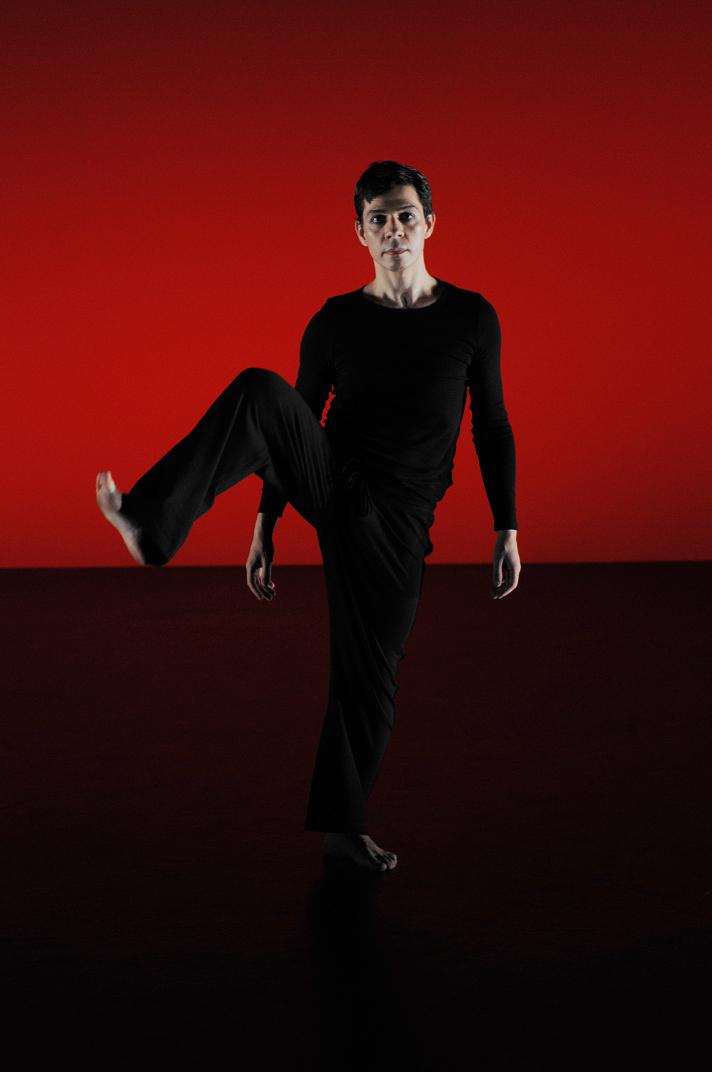
    The appearance of Brunnhilde to summon Siegmund to Valhalla should seem like a dream, with the Valkyrie hovering in the mist above the ill-fated lovers. Instead Brunnhilde simply walks on from stage right and gives out her unhappy tidings. The fight scene is badly botched: Brunnhilde and Wotan appear too ‘humanly’ on the scene, and Hunding’s spear-thrust is so lame and contrived that I laughed aloud. Hunding’s death-fall is replaced by his swoon into the arms of his henchmen (who have watched the fight with their decorative lanterns: a not unpleasing effect). The sudden fall of a black curtain negates Wotan’s rage. 

    The Ride of the Valkyries has been staged elsewhere on flight-wires, on a carousel, as a bungee-cord and trampoline fest, or with Earth-bound warrior maidens dragging the naked bodies of fallen warriors hither and yon around the set. Mssr. Lepage places each of the eight sisters on a separate plank of The Machine and they ride ’em like bucking broncos. This ludicrous idea trivialized the scene and was simply one of the stupidest things I’ve ever seen on any stage. Luckily the girls sang lustily. Then they slid down to the surface where they picked among the bones and skulls of a few dead men strewn on the abandoned battlefield.

    As Brunnhilde told Sieglinde to escape into the forest with her unborn child, I signaled to Dmitry that it was time for us to escape also. I suppose it would have been amusing to see Brunnhilde roasting upside- down during the Magic Fire Music, but I’d had enough.

    Bryn-Terfel-2

    Of the singers, Bryn Terfel’s Wotan took top honors. After years of having a basso-oriented Wotan (James Morris) it was a pleasing change to have a higher-lying sound in this music (no disrespect to Morris, he was superb in the role in his prime years). Bryn was in fine voice and made the monolog an absorbing stretch of singing, with beautfully modulated phrasing and a dynamic range from whsper to thunderbolt. He did what he could physically on the silly set. I would love to have heard him sing the final scene but I didn’t think I could endure any more of Deborah Voigt’s unpleasant vocalism.

    The other capital singing of the evening came from Hans-Peter Konig as Hunding; with his authentic Wagner-basso sound, Konig scored every single vocal moment to rich effect. If he looked more like a genial Santa Claus than a mean-spirited thug, that was not his fault.

    Eva-Marie Westbroek was neither here nor there as Sieglinde; the voice has a vibrato – a not altogether unpleasant one – and there were many attractive phrases. But there’s no individuality of timbre and the top does not bloom and billow in a way to make the character’s music as thrilling as it should be. The soprano seemed vocally tired in Act III but since she has apparently been ill, we should give her the benefit of the doubt.

    Good looks and convincing movement were plusses for Jonas Kaufmann who sang well as Siegmund (where did he get that Mithril shirt though?) but his vocalism for the most part was all of one colour. It’s a lyrical sound – though darkish – and he has enough volume to be heard at all times but the memories of Vickers, King and Domingo – and even of the younger Peter Hoffmann – in this music set a high standard to which Kaufmann seemed only a handsome but overall merely serviceable contender.

    As Fricka, Stephanie Blythe, generous of voice and of derriere, tried to do more with text and shading than she had in the same role in RHEINGOLD but her mostly loud complaints and her frumpy figure made Wotan’s wanderings understandable. He must have wondered if she was worth losing an eye over, perhaps thinking Freia with her tasty apples might have been a better choice for a wife.

    Deborah Voigt’s Ho-Jo-To-Ho was some of the worst singing I’ve ever heard at The Met. Terfel goosed her with his spear, perhaps to create an excuse for her screechy top notes, some of which were flatter than pancakes. Through most of the evening Voigt wore a smug little smile on her face; she’s never been much of an actress but now she just coasts along – do the job, collect paycheck, repeat. 

    However, at the start of the Todesverkundigung – singing in mid-register at medium volume – Voigt reminded us of the beauty and warmth her voice once possessed and of the promise that she once held of being a top-flight Isolde and Brunnhilde, a promise dashed by her absurd genuflecting at the altar of The Black Dress. As the scene progressed, she had to start applying more volume and venturing high, and the annoying metallic shrillness reappeared.  But in those few minutes Voigt and Jonas Kaufmann made some beautiful music together, wonderfully abetted by Levine and the orchestra.

    The Valkyries sang so well – notably Molly Fillmore and Wendy Bryn Harmer – that one regretted the foolish staging of their Ride all the more.

    Although the performance was sold out, an increasing number of empty seats appeared with each intermission. It’s usual for a few people to drift away during Wagner nights but if the production was all it’s cracked up to be, you’d think people would be riveted to the stage. I suppose we will be stuck with this RING for the rest of my lifetime and probably beyond. How amazing that they can find this kind of money to throw away.

    View a page of production photos here.

  • Dance Against Cancer: Tech Rehearsal

    P1220220

    Monday April 25, 2011 – Since I was unable to attend the Dance Against Cancer benefit performance at Manhattan Movement and Arts Center this evening, I had the good fortune to be invited to watch the technical rehearsal which started at noon today. Above: a snapshot I took of Matthew Rushing of the Alvin Ailey Company. Matthew was the first artist to tech today. 

    A lot goes into staging a dance production and while the major companies have lighting and sound crews and stage directors and stagehands all on staff, for a one-time gala like DANCE AGAINST CANCER, all these elements need to be brought together at the venue in a short span of time on the day of the performance. Having performers from several companies on the programme, the gala coordinators need to mesh schedules with classes and other rehearsals that the dancers might be involved in. Since several of the gala participants are member of NYC Ballet, they were having their traditional Monday off in the midst of preaparing for their opening week of Spring Season which starts on May 3rd. Stars from Ailey, Lar Lubovitch, Keigwin & Co and Carolina Ballet along with special guests Martin Harvey, Alex Wong and Tara Jean Popowich all had to be scheduled for tech sessions for the individual numbers in which they are involved. 

    What happens at a tech rehearsal? Musical and lighting cues are coordinated; spacing, timings, entrances and exits, even the bows are all worked out in minute detail so that the dancers will know their way around the performance space and the wings. Musicians who are playing ‘live’ for the individual numbers also get a feel for the space, find out where to enter from (invariably in the dark!) and how they will maintain visual contact with the dancers during the showing.   

    Dance Against Cancer is presented by MMAC‘s Erin Fogarty and New York City Ballet’s Daniel Ulbricht.

    Here is the announced programme:

    On The Other Side; Choreography: Benjamin Millepied; Dancers: Janie Taylor and Tyler Angle
    Love Songs; Choreography: Larry Keigwin; Dancers: Kristina Hanna and Aaron Carr
    Mozartiana (excerpt); Choreography: George Balanchine; Dancer: Maria Kowroski
    Untitled World Premiere; Choreography: Robert Fairchild; Dancers: Tara Jean Popowich and Alex Wong
    Little Rhapsodies; Choreography: Lar Lubovitch; Dancer: Attila Joey Csiki; Piano: Kathy Tagg
    Tatum Pole Boogie; Choreography: Daniel Ulbricht; Dancer: Daniel Ulbricht
    Untitled World Premiere; Choreography: Earl Mosley; Dancer: Matthew Rushing
    Who Cares (excerpt); Choreography: George Balanchine; Dancers: Sterling Hyltin and Amar Ramasar
    Untitled World Premiere; Choreography: Attila Bongar (Principal at Carolina Ballet) Dancers: Lara O’Brien and Attila Bongar
    Carmen (excerpt); Choreography: Christopher Wheeldon; Dancers: Maria Kowroski and Martin Harvey
    After the Rain; Choreography: Christopher Wheeldon; Dancers: Wendy Whelan and Craig Hall; Piano: Cameron Grant; Violin: Arturo Delmoni   

    I’ve arranged with photographer Erin Baiano, who is shooting the actual performance, to have some of her images for my blog. They will be posted here soon.