Blog

  • Dance from the Heart 2012

    P1260210

    Tuesday January 24, 2012 – “The best-laid plans…” I was planning to attend both nights of the annual Dance from the Heart programmes at Cedar Lake Theater but the ominous message “…due to a police investigation” came over the loudspeaker as the train I was on sat in the tunnel just south of 181st Street. Twenty minutes later we pulled into 168th; I should have switched to the #1 there but we quickly proceeded…into the tunnel where we sat for another ten minutes. By the time we reached 145th it was clear I’d never get down to Chelsea by curtain time. Trying to get home then was equally frustrating, due to a “sick passenger”.  Not a good night for the MTA.

    But I did get to Cedar Lake for the second night. Mixed-bag dance evenings are not really my cup of tea; there was exciting dancing all evening but from a musical and choreographic standpoint only about half the works on offer were of interest to me.

    The opening VIDA from Cecilia Marta Dance Company was jazzy, nicely lit and danced with a suggestive sway. In the duet Falling, of course Misty Copeland and Matthew Prescott looked great dancing together, but the schlocky arrangement of an Elvis Presley classic was not very inspiring. Why not use The King’s own version?

    6a00d8341c4e3853ef01539173f808970b-800wi

    It wasn’t til Clifton Brown and Kana Kimura stepped onstage to dance a duet from Jessica Lang’s i.n.k. that the evening really perked up for me: Clifton and Kana (Kokyat’s studio photo above) look wonderful together and their dancing is compelling and poetic. The Jakub Ciupinski score and the Shinichi Maruyama filmed projection enhanced the choreography and the dancing, making this all of a piece.

    Sustaining the high level set by the Lang, four dancers from Paul Taylor Dance Company performed an excerpt from Paul Taylor’s PIAZZOLLA CALDERA: a pair of torridly expressive duets, the first for two men (Jeffrey Smith and Michael Apuzzo) and the second for Michelle Fleet and Michael Trusnovec. This quartet of dance royalty whetted the appetite for the upcoming Taylor season at Lincoln Center, as if further whetting was needed. Bravi!

    The evening ended on a festive note with Jeremy McQueen’s CONCERTO NUOVO, a setting of Bach’s music most familiar in its Balanchine incarnation as CONCERTO BAROCCO. The all-women ensemble seemed like vivacious contemporary cygnets in their short ruffled white frocks, and each brought a distinctive personality to Jeremy’s visual polyphony. As this lively finale drew to an end, champagne was served.

    Lovely to see Arlene Cooper, Rachel Berman, Jessica Lane, Kanji Segawa, Jeremy McQueen, Lynda Senisi and Caleb Custer among the crowd. How fine it is that Cedar Lake Contemporary Ballet put their superb venue and their staff at the disposal of the Dancers Responding to AIDS team for this annual event. One more reason to love Cedar Lake!

  • Rita Gorr Has Passed Away

    DSC03642

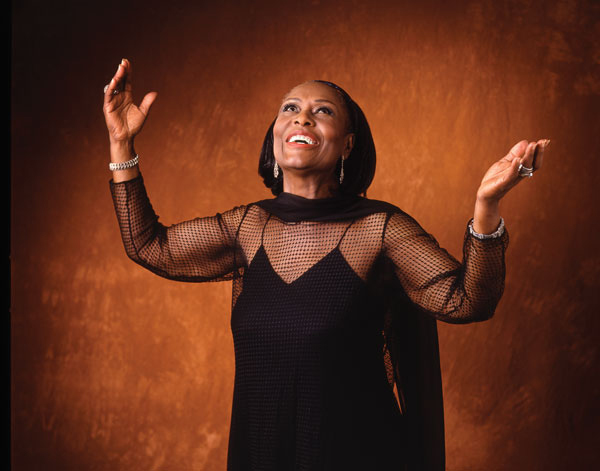
    Another colossal figure from my early days as an opera lover has passed away: the Belgian mezzo-soprano Rita Gorr died on January 22, 2012 at the age of 85. The great singer had a relatively brief but busy career at the Metropolitan Opera; from 1962 thru 1966 she sang 42 performances in New York City and on tour, including Amneris, Eboli, Dalila, Santuzza, Waltraute in GOTTERDAMMERUNG and Azucena. It was in the last-named role that I heard her live for the only time, at the Old Met:

    Metropolitan Opera House
    November 25, 1965

    IL TROVATORE {350}
    Giuseppe Verdi

    Manrico.................Bruno Prevedi
    Leonora.................Gabriella Tucci
    Count Di Luna...........Robert Merrill
    Azucena.................Rita Gorr
    Ferrando................Bonaldo Giaiotti
    Ines....................Lynn Owen
    Ruiz....................Charles Anthony
    Messenger...............Hal Roberts
    Gypsy...................Luis Forero

    Conductor...............Georges Pretre

    Her singing was powerful and intense, and all evening long she and her colleagues received vociferous applause and bravos. What a great evening for a young opera buff!

    Rita Gorr extended her career into the 21st century; her final stage performances were in 2007 as the Old Countess in Tchaikovsky’s QUEEN OF SPADES at Ghent and Antwerp.

    Only recently I acquired a copy of the Leinsdorf recording of Wagner’s LOHENGRIN and have been listening to it over the past few days. It now takes on greater significance since Ms. Gorr is the majestic Ortrud, singing in the grand manner. In the great duet for husband and wife which open Act II, William Dooley as Telramund expresses his fear that his defeat by Lohengrin in Act I was a sign from God. “Gott????!!” Gorr/Ortrud responds ironically, then lets out a daemonic laugh. Brilliant!
    Rita Gorr’s classic EMI solo disc of arias seems to be unavailable now; I owned it on LP as a young man and literally wore out the grooves. But several tracks can be found on YouTube. Here is her Liebestod from TRISTAN UND ISOLDE, sung with an Old World grandeur that seems to have vanished as opera moves away from its voice-centric uniqueness into a more generalized feeling of being mere entertainment.

  • NYCB NUTCRACKER 2011 #4

    6a00d8341c4e3853ef013487e41fdc970c-800wi

    Tuesday December 27, 2011 – Above, today’s Sugar Plum Fairy at New York City Ballet: Abi Stafford in a Henry Leutwyler photo. Thanks to the Company’s new pricing policy, I only got to see four NUTCRACKERs this season as opposed to my usual seven or eight. I simply can’t afford to go as often as I would have liked, and the notion of bringing a guest is pretty much a thing of the past.

    I’m sure by this point in the holiday season that the dancers and musicians are thoroughly sick of this ballet but they never gave any indication of their NUTZ-fatigue tonight. The house was substantially full despite some gaps of empty seats in the orchestra. To see Abi’s Sugar Plum, with Amar Ramasar as her Cavalier, was a big draw for me this evening. And I hadn’t see Janie Taylor’s Dewdrop in recent seasons so the lineup tonight was especially appealing.

    Vincent Paradiso’s Drosselmeyer is vigorous, and he looks dapper as a prematurely grey and still youthful ‘uncle’. Excellent rapport with the children and guests; Vincent brings some real dancing into his interpretation and animates the entire scene with his lively gestures. Marika Anderson’s Frau Stahlbaum has an interestingly high-strung quality; Christian Tworzyanski is her genial spouse. Conductor Ryan McAdams took the soldier’s solo at an unusually fast pace but Troy Schumacher nailed it with some virtuoso dancing; Sarah Villwock and Kristen Segin were charming in the commedia dell’arte kissing duet. In the Snow Scene I was smitten with Lauren Lovette’s radiant dancing.

    Abi Stafford’s Sugar Plum Fairy opened the second act with her finely-danced solo; she then greeted the procession of divertissement dancers, led off by Mary Elizabeth Sell and Zachary Catazaro who looked authentically Spanish and danced brightly, with Mary holding one balance to striking effect. She’s a dancer deserving of more and more opportunities. Georgina Pazcoguin’s sultry glamour as Arabian held the audience in the palm of her hand: “I like her best!” the little boy sitting behind me said aloud as Gina finished her solo; her fantastic combinations in the finale were the frosting on a delicious Pazcoguin cake. Giovanni Villalobos, another dancer we should see more of, was a sprighty Tea and Sean Suozzi’s space-filling, theatrically vivid Candy Cane energized the crowd. Ashley Laracey danced the tricky Marzipan solo with total command, polishing off her triple pirouettes to perfection. In the ensuing Waltz of the Flowers, Amanda Hankes and Brittany Pollack danced beautifully, leaving me to ponder which of them has the loveliest smile.

    Janie

    Janie Taylor (Leutwyler image, above) is the most ethereal Dewdrop I’ve seen; all different ballerina-types have been cast in this role over the years, from majestic goddesses to petite princesses. I love the variety of interpretations, and Janie’s stands out. With her high-flying extension and elegant jetes, the ballerina brings a touch of impetuosity to everything she does. The audience seemed very taken with her performance, showering her with applause as she flashed thru the brilliant fouette combination; later, in the finale her swift pirouette-to-arabesque sequence was beautifully timed, then she went flying off in a big, stretched-out leap.

    Abi and Amar kept the audience, full of youngsters, in a keenly attentive state with their dancing of the adagio, the grand climax of the Balanchine NUTCRACKER. Here the choreographer shows us the art of classical ballet partnering, echoing the lyric grandeur of the Tchaikovsky score. In this pas de deux, Abi and Amar combined youthful freshness and a sense of courtly manners. Building from one passage to the next, the dancers capitalized on the inherent drama of the duet with its final suspenseful promenade and Abi’s sustained balance; Amar then daringly tossed the ballerina into the air before sweeping her into the final dive. The audience ate it up. 

    TUESDAY EVENING, DECEMBER 27, 6 PM (Conductor: McAdams)

    SUGARPLUM: A. Stafford; CAVALIER: Ramasar; DEWDROP: Taylor; HERR DROSSELMEIER: Paradiso; MARZIPAN: Laracey; HOT CHOCOLATE: Sell, Catazaro; COFFEE: Pazcoguin; TEA: Villalobos; CANDY CANE: Suozzi; MOTHER GINGER: Thew; FLOWERS: Hankes, Pollack; DOLLS: Villwock, Segin; SOLDIER: Schumacher; MOUSE KING: Dieck; DR & FRAU STAHLBAUM: Anderson, Tworzyanski

    As we now head into the Winter season at New York City Ballet, many long-time fans of the Company are finding their loyalty tested as they remain fully supportive of the dancers but find the marketing practices of the current regime off-putting. How it will play out remains to be seen.

  • Ailey Dances Taylor’s ARDEN COURT

    2171b376-36df-4999-97fa-2e282f56ccfd

    Saturday December 24, 2011 matinee – Paul Taylor’s ARDEN COURT is one of the 20th century’s great dance masterpieces; this season it is being danced by Alvin Ailey American Dance Theater (photo above by Mark Lennihan) during their season at City Center, the first Taylor work to be performed by the Ailey Company. Looking at my packed December calendar a couple of weeks ago, I realized that today was going to be my one Ailey opportunity of the year, and how fortunate that ARDEN COURT was part of an extremely attractive programme:

    Arden Court 
    Cry
    The Hunt
    Revelations

    Copy of 8(3)

    One of the finest dancers on the current scene, Kanji Segawa, joined Ailey earlier this year and Kokyat and I were especially happy to find Kanji dancing a lot this afternoon. Kokyat photographed Kanji (above) dancing with MORPHOSES at the Guggenheim in the Autumn of 2010. His brilliant, buoyant leaps in the men’s diagonal entree passage of ARDEN COURT were outstanding, and he flung himself into the non-stop demands of Robert Battle’s dark and sexy THE HUNT with characteristic flair. 

    Taylor danced by Ailey looks phenomenal. The dancers, in their sleek costumes, are propelled with effortless grace and power thru the demanding combinations, swept along on the vivid and superby danceable music of William Boyce. ARDEN COURT was set on the Ailey Company by one of the all-time great Taylor dancers, Cathy McCann.

    AAADT_s_Briana_Reed_in_Alvin_Ailey_s_Cry._Photo_by_Paul_Kolnik.-prv

    Briana Reed (above, photographed by Paul Kolnik) danced the extended three-part Alvin Ailey solo CRY; with her unfettered extension and combination of strength and tenderness, Ms. Reed scored a huge hit with the crowd and was greeted with rockstar ovations, thoroughly deserved.

    Ailey2-dance2_1834269b

    Robert Battle’s powerful all-male ensemble work THE HUNT (above, Eduardo Patino photo) is set to a driven, percussive score by Les Tambours du Bronx. With six men (it seems like more) in long black skirts swirling and sailing thru the air, this work is sexy, ritualistic and mysterious all at once. There are few moments of repose in this martial-arts inspired, combative dance. 

    6a00d8341c4e3853ef0162fe656fbf970d-800wi
    Revelation
    : Clifton Brown, above, photographed by Kokyat earlier this year in rehearsal with Lar Lubovitch. We’ve been so fortunate to have been in the studio with Clifton several times in 2011 while he’s been working with Lubovitch and with Jessica Lang Dance. Today, in Ailey’s classic REVELATIONS Clifton burst onto the stage in Sinner Man and treated us to some simply magnificent dancing. In the finale he was a god-like cavalier, radiating both majesty and warmth. 

    Each section of REVELATIONS is set to traditional spirituals and gospel hymns, celebrating congregation and community while sometimes investigating individual journeys of the spirit. One memorable segment is I Wanna Be Ready, superbly danced today by Michael Francis McBride. In the finale, the women appear in marigold-yellow gowns with fans on a sweltering summer afternoon for a jubilant cotillion with their handsome beaus.

    I hardly ever have a chance to see the Ailey Company; their season always falls at the busiest time of the year. This afternoon’s performance showed them to be on peak form as the Robert Battle era commences with a bang! Such splendid dancers: I need to get to know them better.

  • Picasso @ The Frick

    17_Two_Women_with_Hats_1921_PrivateCollection_600-e1324079915260

    Above: Pablo Picasso’s Two Women With Hats (1921)

    Friday December 23, 2011 – Last week my friend Debbie and I spent a delightful hour at The Frick looking at the exhibit of Picasso’s drawings. I couldn’t help thinking how much Kokyat would enjoy this collection, which is so beautifully displayed in the small galleries of The Frick‘s lower level. So this afternoon, after a delicious holiday lunch at LeSteak Bistro on 3rd Avenue, my photographer-friend and I headed to the museum with its restful atrium. I was hoping we would hit a time slot when the galleries were not too crowded, and we were indeed lucky in that regard. One advantage of The Frick is that children under ten years old are not admitted; this eliminates the annoying baby strollers and wailing infants who so often spoil our treks to The Met.

    Photography is not allowed at The Frick so we simply devoted our attention to the incredible drawings which provide a lovely panorama of Picasso’s works from the period 1890 to 1921. The earliest examples come from the nine-year-old prodigy; by the time he was 15, Picasso created a drawing of his father that is uncanny in its depth and style.

    Picasso-met-2010-18

    One of my favorite drawings on display was Three Bathers by the Shore (above) which has an exact dating of August 20, 1920. Of course you can find images of many of Picasso’s works on the Internet, but nothing compares to standing before these masterworks live and imagining the artist’s hands at work in their creation, and to ponder the thousands of other eyes that have beheld them over the span of the century of their existence. 

    Self6

    Above: self-portrait of the artist as a young man. I’ve always loved reading about the period of time when Pablo Picasso was part of Gerald and Sara Murphy’s circle on the French Riviera…the long afternoons on the plage where everyone was a bit in love with Sara. Ah, to have been alive then.

    1033741

    The Picasso exhibit is only at The Frick til January 8th; it is very much worth seeing. If you go – and you should – be sure to watch a showing of two brief films, one about the Frick Collection and the second about the Picasso exhibit, in the museum’s music room. Very informative.

    Sometime between the day Debbie and I were at The Frick and today, a new space has been opened in the museum: the Portico Gallery. This long, narrow hallway is lined with glass-fronted display cabinets full of delicate porcelains. The far end of the passageway opens onto a small windowed temple-like chamber…

    Diana-the-Huntress

    …where Jean-Antoine Houdon’s Diana the Huntress (above) presides magnificently. I will return to this small shrine, immediately a favorite Gotham place for reverie, often.

    A perfect day with my perfect companion.

  • The Angel

    Myrrha01
    December 23, 2011 – Today is the birthday of Mathilde Wesendonck (above) who wrote five poems which Richard Wagner set to music in 1857-1858; the cycle became known as the Wesendonck Lieder. At the time, Wagner and his wife Minna lived together in the Asyl, a small cottage on the estate of Otto Wesendonck, Mathilde’s husband. It is unclear whether Wagner and Mathilde actually had an intimate physical relationship but the composer certainly was infatuated with her, causing his mentally unstable wife to erupt in jealous fits.

    The poems themselves are wistful and dreamlike; their language reflects the emotional intensity of the Romantic style which by that time was highly developed. Wagner called two of the songs in the cycle “studies” for TRISTAN UND ISOLDE: in Träume we hear the roots of the love duet from the opera’s second act, and Im Treibhaus uses themes later developed in the prelude to Act 3. The chromatic-harmonic style of TRISTAN suffuses all five songs and creates the musical unity of the cycle.

    Wagner initially wrote the songs for female voice and piano alone, but later produced a fully orchestrated version of Träume, which was performed by a chamber orchestra under Mathilde’s window on the occasion of her birthday in 1857. The orchestration of the whole cycle was later completed by Felix Mottl, the famed Wagnerian conductor.

    Tiana Lemnitz sings the cycle’s opening song, Der Engel here.

    “An angel came down to me   
    on shining wings  
    and bore my spirit  heavenward.”

  • HANSEL & GRETEL at The Met

    KLsideshot

    Wednesday December 21, 2011 – The presence of a number of intriguing names in the cast (led by Kate Lindsey, above, as Hansel) drew me back to the Met’s dark and not very pleasing production of HANSEL & GRETEL which is playing during the holiday season. It’s a far cry from the Met’s older production with its fanciful gingerbread house and jolly, green-tongued witch, Rosina Daintymouth. In the current incarnation the characterizations of both the witch and the parents are based on infamous British serial killers. There’s little magic to be found visually…

    Met_Opera_Hansel_Gretel_31_medium

    …though a couple of nice images crop up here and there, like the phalanx of chefs (above) who serve a feast to the starving children. But for the most part the production is earthbound and lacking in fantasy.

    What drew us to see it again – in addition to the singers – was the music itself (Humperdinck greatly admired Wagner), as well as a conductor new to the Met podium: Robin Tacciati . He provided appealing orchestral textures all evening and his interpretation brimmed over with emotionally satisfying colours. Unfortunately, his first act seemed rushed and he often let the large orchestra overwhelm the voices.

    HanselGretel1112.06

    As the two children, Alexandra Kurzak and Kate Lindsey (above) entered fully into the demanding staging of the work which calls for lots of physicality, dancing and mime…and getting plastered from head to toe with foodstuffs from the witch’s kitchen. Kate was virtually slathered in pudding and jam, then plentifully dusted with cocoa and powdered sugar. Alexandra staggered around the set with a huge platter of melting chocolate cookies and a bowl of custard. She continues to sing while stuffing various sweets into her mouth. Sticky fingers? Who needs Mick Jagger? 

    Despite all the things they are called on to do and eat, both Alexandra and Kate managed to sing very well into the bargain. Alexandra’s voice has girlish, lyrical appeal and even though the orchestral volume forced her to push the voice in a couple of spots, her Gretel was very prettily sung, especially in her exquisite vocalizing of the famous prayer. Kate has one of the truly distinctive voices in the opera business these days and her singing is impeccably tailored, warm and clear. As hansel, she is a truly convincing boy onstage, expanding her repertory of trouser roles: her Cherubino and Nicklausse were perfect, her Siebel’s coming up, and I’m longing for her Octavian. But she shouldn’t spend her whole life in pants, she’s far too pretty: so I hope we will have her Rosina and Dorabella soon, and I’d love to see her as Berlioz’s Beatrice.

    HanselGretel1112.09

    Robert Brubaker, a teriffic Mime in SIEGFRIED at the Met a couple of seasons back, was a huge-voiced and creepy Witch. It’s so eerie to hear his voluminous character-tenor sound emanating from the frumpy old biddy in a fat-suit. Robert was superb and, like Kate and Alexandra, simply threw himself into the production’s food fantasy. Photo above: Robert Brubaker and Alexandra Kurzak.

    HanselGretel1112.02

    As the parents Peter and Gertrude, Dwayne Croft and Michaela Martens (above) excelled. They have authentic Met-size voices and took the waves of sound coming up from the pit in their stride. I’ve always loved Dwayne Croft’s voice since I first heard him as Puccini’s Marcello at Glimmerglass many moons ago. He sounded fabulous tonight. Dmitry and I are very fond of Ms. Martens and she sang with power and attractive tone as the desperate mother. If the Met management had any imagination, Michaela would be doing roles like Fricka, Venus, Brangaene and the Berlioz Cassandra here. I could even imagine her as a very fine Sieglinde.

    HanselGretel1112.07

    Ashley Emerson (above) was a delicious Dew Fairy, a petite elfin maiden with tiny Sylphide wings. Her singing was bright and light-filled, a perfect wake-up call. She carries on a tradition – both in-house and on recordings – of casting wonderful singers in the opera’s two cameo solo roles. Her evening counter-part was the Sandman of Jennifer Johnson Cano who sang very nicely indeed.

    The musical pleasures of the evening were offset by the overall drabness of the production. There were lots of empty seats throughout The Met so word must have gotten out that this is not a festive holiday treat with an underlying moral message but rather a grotesque take on a story and score which should be heart-warming but instead leaves us slightly nauseous.

    A major failure of stagecraft comes hear the end when the many children who had been under the witch’s spell are set free. The director apparently couldn’t think of any better way to handle this than to lower the curtain on an empty set and then bring it up again 30 seconds later on a stage filled with two dozen urchins. Then the uplifting melodic benediction launched by Peter as the work comes to an end failed to resonate because there was no context of religiosity anywhere else in the production.

    Act I takes place in a desolate kitchen where Hansel and Gretel seem like manic-depressives and where Gertrude is on the verge of committing suicide. The scene in the forest is instead set in a large empty hall with green-leaf wallpaper. It’s too dim, and nothing seems to be happening til the old Sandman and  – later – the chefs arrive. The witch’s kitchen is drably industrial and she is played like an over-the-top drag version of Julia Child, flingling flour and powdered chocolate all over the place. Candy, pudding and strawberry preserves are smeared on Hansel and Gretel, and Hansel is trussed up for roasting. The scene is vulgar and not funny in the least though it is broadly played. 

    The English translation is very Brit-oriented and, thanks largely to the over-enthusiastic conducting, much of it didn’t register. I’d like to see the Met dump this production and give us a more attractive, kid-friendly look at this opera. It should cast a Christmastime spell of hope and familial love; instead it only reminds us of the American knack for wasting food while children right here in Gotham don’t have enough to eat.

    Production photos: Mary Sohl/Metropolitan Opera.

    Metropolitan Opera House
    December 21, 2011
    In English

    HANSEL UND GRETEL
    Humperdinck

    Hansel..................Kate Lindsey
    Gretel..................Aleksandra Kurzak
    Gertrud.................Michaela Martens
    Peter...................Dwayne Croft
    Witch...................Robert Brubaker
    Sandman.................Jennifer Johnson Cano
    Dew Fairy...............Ashley Emerson

    Conductor...............Robin Ticciati

    The evening ended on a sweet note when I went backstage to see Kate and Ashley; I met both of them when they were in the Lindemann Young Artists Development Program at the Met and I’m very pleased to be following their successful careers. It was also nice to wish happy holidays to Michaela Martens and Dwayne Croft.

  • Alto Rhapsody: Mildred Miller

    MillerNozze

    Above: Mezzo-soprano Mildred Miller as Cherubino in LE NOZZE DI FIGARO. Photo: Sedge LeBlanc.

    Every year ar Christmas approaches I find myself wanting to hear the Alto Rhapsody of Johannes Brahms. I am not quite sure what it is about this unusual and unique vocal/choral work that suggests Christmas to me because the text has nothing to do with Christ’s birth. But it is about a Winter journey, and about hope and spiritual refreshment; maybe those are thoughts that should come to mind this time of year.

    Brahms wrote this work – I suppose we could call it a cantata – in 1869 as a wedding gift for Julie Schumann, daughter of Robert and Clara Schumann. Brahms is thought to have been in love with Julie. It was first performed privately but in 1870 it was heard by the public for the first time in a concert at Jena where the soloist was Pauline Viardot. (Viardot looms large in my musical imagination; hers is the one voice from out of the past that I most dearly wish I could hear; and how I would love to have met her…her, and Lillian Nordica!).

    The Alto Rhapsody begins with a sort of narrative for solo voice in a minor key; it seems a bit bleak, well-suiting the poetic image of a lost soul wandering in the desolation of a lonely landscape. The mood lifts as the chorus joins in, hymnlike and now in major-key mode. The music is tranquil, luminous, joyful in a calm way. The solo voice intones the melody against the choral harmonies – gorgeous – and the piece ends with a sort of benediction that has the effect of an amen.

    The Alto Rhapsody is not often performed in concerts these days. For symphony orchestras it means hiring a chorus in addition to the soloist, and for choral societies it’s a little difficult to program as it is a bit too short to be half of the bill, and you need to think of something else for your guest soloist to sing during the evening. I’ve only experienced it once in a concert hall.

    Many great singers have recorded the Alto Rhapsody: Kathleen Ferrier, Marian Anderson, Dame Janet Baker, Christa Ludwig, Marilyn Horne. I have Ludwig’s lovely rendition, and up til a couple years ago I would often break out Sigrid Onegin’s recording. But that magisterial performance is somewhat dampened by the singer’s tendency to be ever-so-slighly off-pitch at times. This year I decided I wanted a different recording and so I went to Amazon to peruse the listings and very quickly settled on the SONY recording with mezzo-soprano Mildred Miller, conducted by Bruno Walter. I got it for a bargain price, paired with the same composer’s Deutches Requiem.

    When I had a bit of free time the other day, I slipped the disc in and found the recording to be just perfect in every regard. The sound is warm, full and plush, Maestro Walter is perfectly in his element, the chorus sounds heavenly and Mildred Miller is a complete delight. She doesn’t falsely weight her lower range; her timbre is feminine and not overly-maternal, and she avoids overdoing the angst of the opening passages. 

    Mildred Miller sang at The Met for 23 years, making more than 300 appearances. She made her debut as Cherubino in 1951 and went on to sing Suzuki, Nicklausse, Octavian, and the Composer in ARIADNE AUF NAXOS. By the time I encountered her in the 1960s she had settled into a repertoire of ‘major-secondary’ roles; I loved her as Annina in ROSENKAVALIER and the Second Lady in the Chagall ZAUBERFLOETE. She was my first ‘Lene in MEISTERSINGER in 1968, when she signed the cast page of my program:

    6a00d8341c4e3853ef014e88cbff12970d-800wi

  • 12 Solos by Andrea Gise

    1905126_300

    Tuesday November 29, 2012 – For the past year, choreographer Andrea Gise (above) has been creating a series of dance solos at a rate of one per month. Tonight at the Red Bean Studios, she unveiled the results of this project. In addition to new choreography, each solo was performed to new music.

    Scanning the list of participating dancers and composers I was surprised to see only two familiar names: Christina Ilisije (of Parsons Dance) and composer/performer Marlon Cherry, so there were lots of new movers and music makers to meet. Waiting for the performance to begin, the atmosphere was casual: dancers warmed up or mingled with the composers and audience members, removing the boundary between performer and viewer. A couple of the dancers ran thru their solos. Then everyone settled down to watch.

    Two of the solos were presented on film, the rest performed live. The dancers wore simple practice clothes and the lighting was uncomplicated; all focus was on the dance and the music. Certain movement elements ran threadlike thru the various solos; the dancers utilized the space in varying capacities from work to work. One solo flowed into the next as each dancer stepped into the space. This was dance in its most immediate and pure form.

    The variety of music was impressive; Andrea spoke later of having made a lot of the choreography without reference to the completed scores. That surprised me since so much of the evening seemed like a happy marriage of movement and sound.

    It’s maybe a bit unfair to single out individual performances since everyone participating – both dancers and composers – made fine individual impressions. But I don’t think anyone would begrudge mention of Pat Catterson’s performance of fight v. flight, the longest of the solos. Pat was the only dancer “over 30” among the cast and her solo was both physically demanding and emotionally varied.

    In Christina Ilisije’s solo bad cog, the dancer showed her trademark fluency of movement to a percussive/industrial score (with electrc guitar coming in later) by Philip Knowlton. Marlon Cherry’s opening piano theme evolved into moody, jazzy music while the lovely Remi Harris made her moves dovetail to the rhythmic patterns: this was image control. Two solos for men found Andrea Gise’s choreography at its most inventive: a sleep-study called non-disclosure act danced by Joshua Tuason, and a brilliant theatrical vignette entitled slick, performed by Felix Hess. From among the colorful palette of music we were hearing, Kristen Kairos’ work for two flutes was especially evocative as danced by Jennifer Eisenberg in quell

    The other dancers on the programme were Joanie Johnson and Joey Kipp (both on film), Ryan McNally (who opened the live show with a strong performance), and three distinctively beautiful women: Morgelyn Tarbeth-Ward, Ali Skye Bennett and Zoe Blake.

    In a Q & A at the end of the presentation, Andrea spoke of first being influenced by her reactions to the Gulf oil spill when undertaking this project: not just the spill itself but the resulting media coverage and efforts by government agencies to downplay the situation. We who had watched the dancing mentally began to filter back thru the evening to make connections between the dance and the theme. The seemingly abstract danceworks then took on other layers of meaning. She was wise, though, not to reveal too much until we’d seen the performance, thus allowing everyone to find their own reference points among the movement and the music.

  • The Current Sessions

    IMG_0312

    Monday November 28, 2011 – Down to the Wild Project in the East Village (or would we say NoHo?) for The Current Sessions, a programme featuring works – both live and on film – by nine choreographers. The Wild Project venue is a very neat space for dance, seating about 90 people in raked rows. The lobby is small, immaculate, welcoming – with a ‘garage door’ that I imagine would be open on Summer evenings. Earlier in the day, photographer Nir Arieli and I had watched the dress rehersal where he recorded the images you see here. 

    Photo at the top from Allison Jones’ Listen to Me.

    The evening gave me an odd sensation: I was by far the oldest person in the audience. Aside from Kokyat and I, it was a twenty-something crowd: swigging form beer bottles, they were attentive and enthusiastic. The danceworks were created and performed by people of their generation with music that suits their frame of reference. All the works presented – even the witty ones – showed seriousness of creative intent as well as committed and always enjoyable dancing. The sold-out crowd were keenly receptive to it all.

    IMG_0062

    In her solo a room, home Jenna Otter used the space beautifully and set a standard for the works to come. At close range, the dancer’s breathing became part of the texture of her performance as she veered from restless to subdued. Her excellent choice of Bach was the only nod to anything remotely classical in terms of music this evening, however I would like to express a hope that dance artists will stop using Glenn Gould’s versions of Bach with the pianist’s vocal ‘commentary’ always a distraction. There are a million recordings of all things Bach. Choose a different pianist.

    IMG_0202

    In a duet by choreographer Allison Jones, dancers Hayley Jones and Amir Rappaport put their intimate and intense relationship on public view. Entitled Listen to Me, this duet on the surface is about two friends each trying to make a point. But there’s a sexual undercurrent as well, of control and of unspoken passion. The two dancers were beautifully expressive of the work’s wide-ranging emotional setting. The music was pleasant, innocuous, forgettable – a drawback shared by by most of the rest of the works we saw all evening.

    Here are more of Nir’s images from Listen to Me:

    IMG_0240

    IMG_0367

    IMG_0380

    Above: from Allison Jones’ Listen to Me.

    IMG_0396

    In the solo Ragerian’s Vignettes, Genna Baroni showed an interesting mixture of technical strength and personal modesty. This dichotomy made her quite fascinating to watch, with the dancer immersed in herself though also warily aware of the audience. Again the music was simply there, neither enhancing nor distracting from the dance.

    IMG_0525

    Above: Genna Baroni

    IMG_0685

    Bennyroyce Royon’s duet Wander seems to portray a couple in an on-going relationship who have lost their focal point. As they vocalize their thoughts, which shift from the mundane to the profound, they move around one another, close but not connecting. Clad in casual summer-wear, Benny and his partner Marie Zvosec look great together. Benny’s choice of a sentimental waltzy song from Pale White Moon suits him and Marie very well here.

    IMG_0753

    In the end, they find a new beginning.

    A brief film 4PLAY from Yarden Raz concluded the first half of the evening. It had a Chaplinesque feel to it.

    At the dress rehearsal, dancers Christopher Ralph and Gregory Dolbashian had simply marked thru Jonathan Royse Windham’s Oh! Darlin’ so that I really couldn’t get a feeling for what it would be like. But at the actual performance, Jonathan delivered a truly droll performance of this little vignette about a boy’s livelong love for his teddy bear. As Chris and Greg removed layers of Jonathan’s clothes, starting with his jammies, the dancer aged perceptibly. By the end, he was a bent old man…but still steadfastly attached to his bear. The familiar Beatle tune gave the piece an ironic twist.

    IMG_0970

    In Alexis Convento’s raucously charming duet la baggare, rival French femme fatales (dancers Allison Sale and Lynda Senisi, above) each attempt to get the upper hand in this fast-paced romp with a Moulin Rouge feeling.

    IMG_0795

    Allison and Lynda gave their on-going competitive spat a distinctive flair.

    Jordan Isadore’s two-part film SARA began with a blonde-wigged dancer striking balletic poses, perfectly in sync to an antique music box. This truly funny flick gave way to a four-panel display of two dancers shot from four different angles; this was amusing for a minute, then went on too long. Brevity is still the soul of wit.

    IMG_1399

    In the end, it was Yin Yue’s mysterious and well-crafted we have been here before that stood out among the evening’s offerings in its use of more than two dancers and its darkish, dreamy atmosphere. An abstract work, we have been here before shows Yin Yue’s fine sense of structure and – in addition to her own dancing, which has a specific perfume – her choice of persuasive individual fellow dancers to shape her work: Sarah F Parker, Jacqueline Stewart, Grace Whitworth and Daniel Holt.

    IMG_1454

    Daniel Holt in Yin Yue’s we have been here before.

    All photography by Nir Arieli.