Blog

  • …And Still More Theyre Lee Elliott

    DSC00899

    Another work by British artist Theyre Lee Elliott has come my way, thanks to a reader who shares the above painting from her collection.

    The connection between the artist and Oberon’s Grove began back in 2009 with this discovery, and I have really enjoyed the ever-expanding tale of Theyre Lee Elliott and his work here on my blog which has continued here, here and here as readers have sent personal recollections of the artist and samples of his work.

    If a search has brought you to this page and you have a recollection of Theyre Lee Elliott or any of his work in your collection, please help keep the story evolving. E-mail me at:

    [email protected]

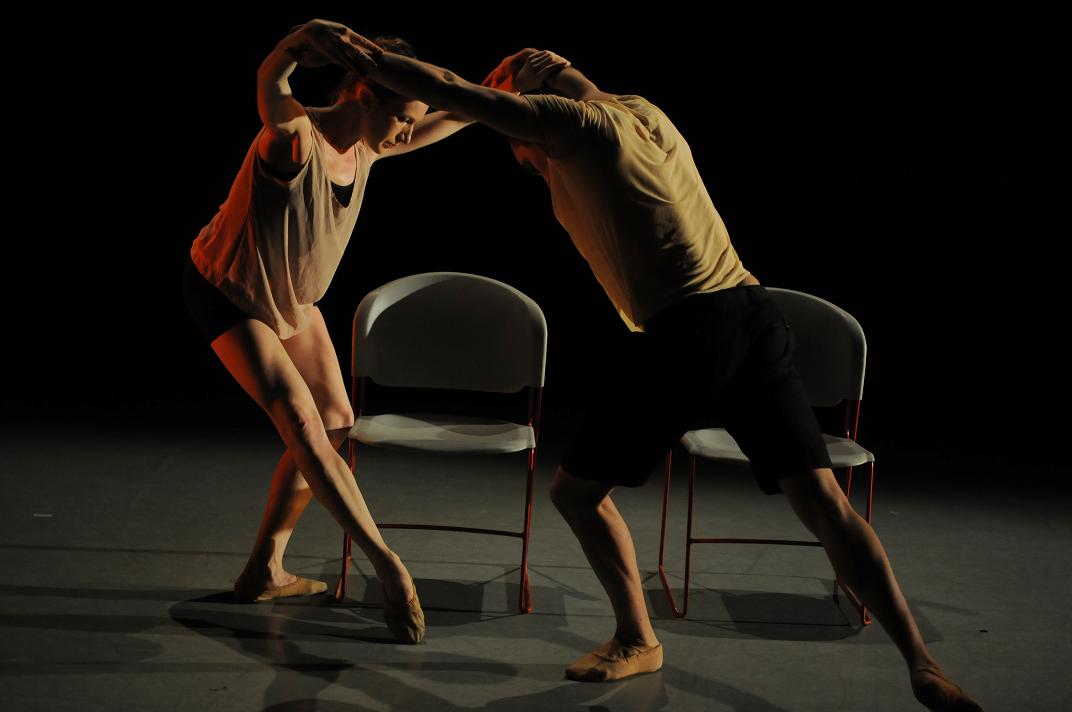
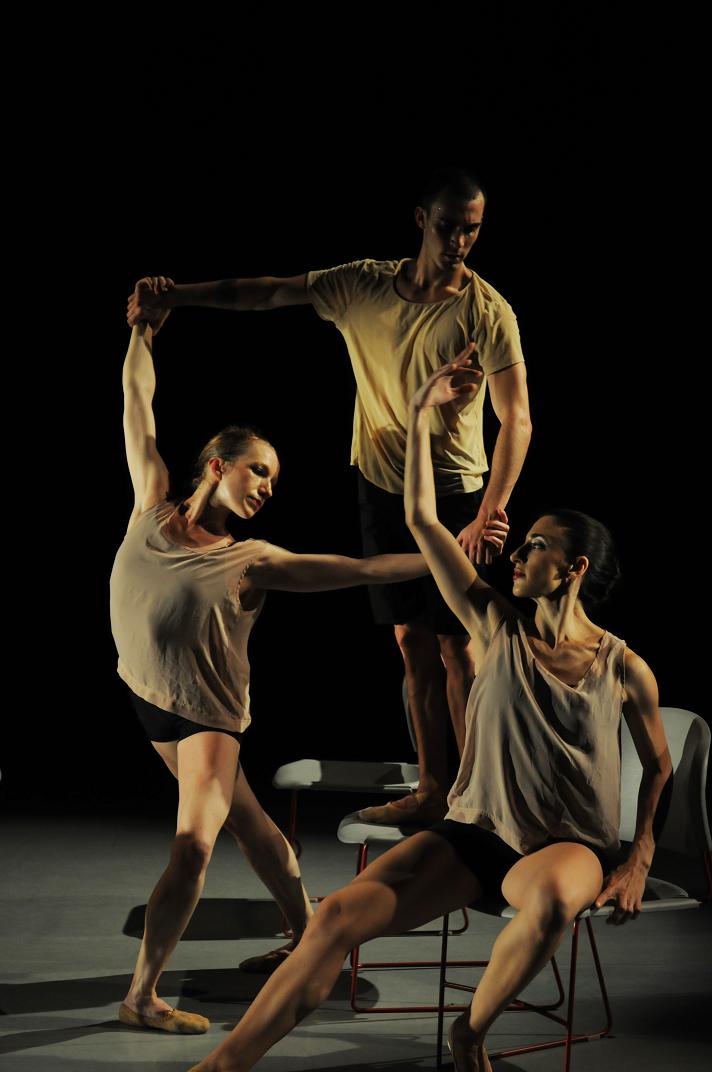
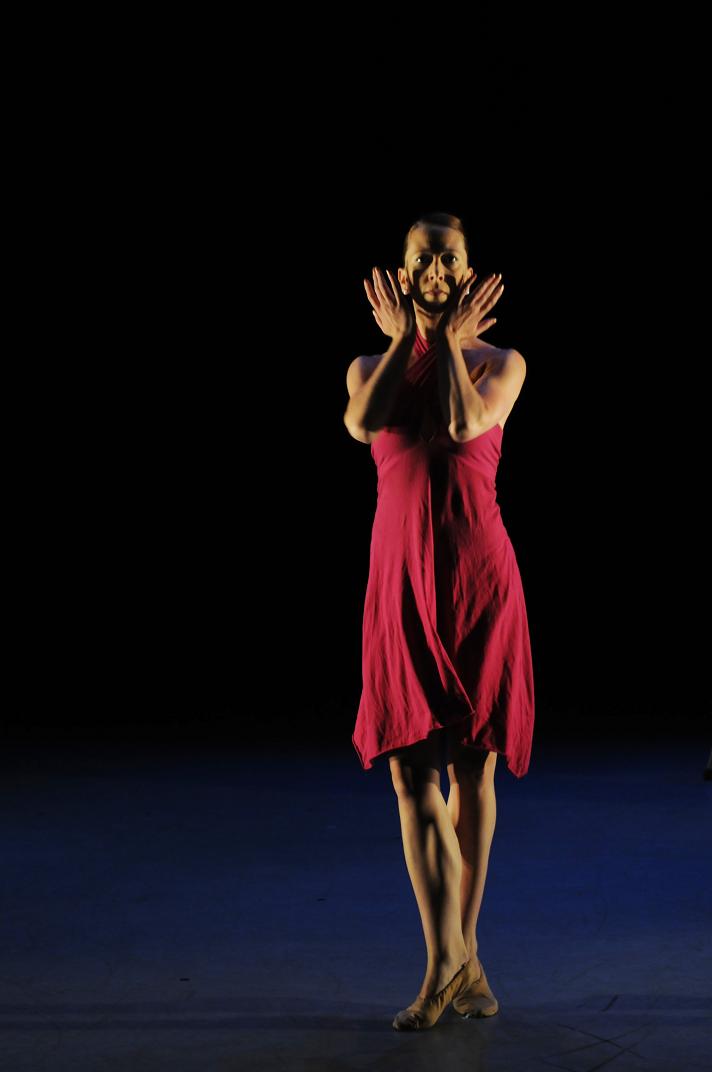
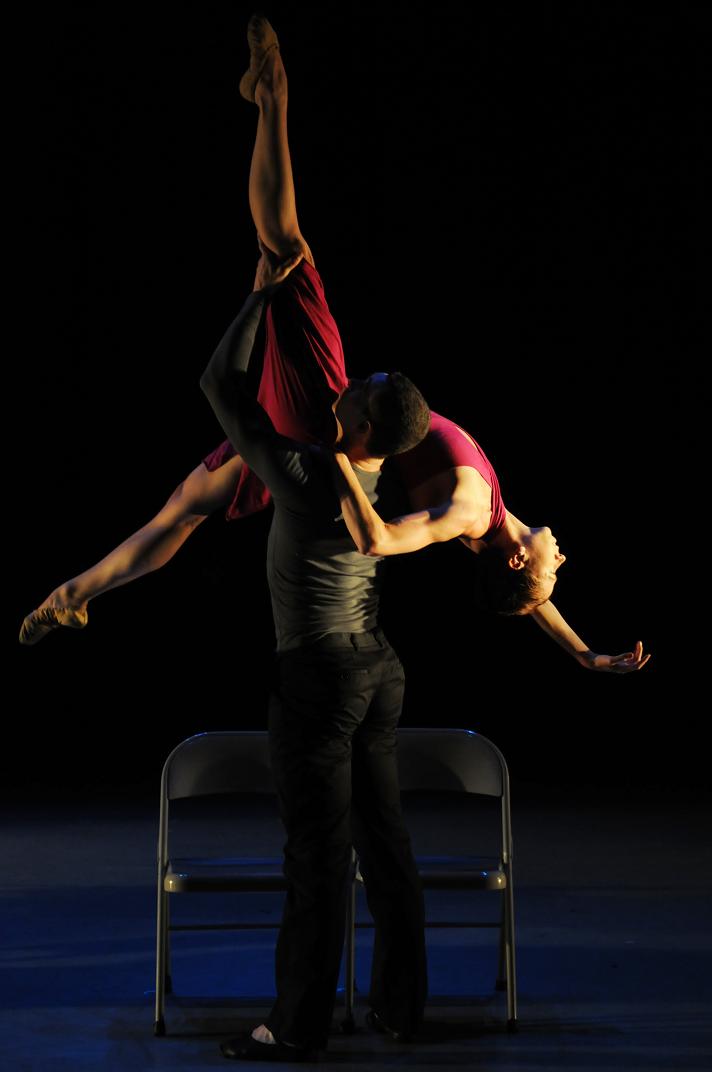
  • Collaborators: Luca Veggetti & Paolo Aralla

    6a00d8341c4e3853ef01543670619d970c

    Choreographer Luca Veggetti and composer Paolo Aralla have developed a new website dedicated to their collaborative work. Visit the site here. Above: Kokyat’s image of Gabrielle Lamb in the Veggetti/Aralla BACCHAE, created for MORPHOSES in 2011.

    I’m particularly grateful for the souvenirs of MEMORY/MEASURE, a mesmerizing piece created for Cedar Lake Contemporary Ballet in 2009; I would very much like to see this dancework again.

  • Another Great Paul Taylor Evening

    MTAYMT

    Above: Michael Trusnovec and Amy Young in Paul Taylor’s MERCURIC TIDINGS, photo by Paul B Goode. Click on the image to enlarge.

    Wednesday March 21, 2012 – My beloved friend Kokyat is back from his trip to Europe and we met up tonight at Lincoln Center for a super evening of dance by the Paul Taylor Dance Company. In the past couple of years we have met – and Kokyat had photographed – some of the great dancers of the Taylor troupe and so there’s an extra feeling of excitement seeing them onstage. We also loved running into Taylor icons Rachel Berman and Richard Chen-See.

    For their Lincoln Center season, PTDC are showing a vast range of works from their repertoire (as well as two new creations). Tonight I got to see a pair of older works that I’d never encountered before, as well as the darkly amusing 3 EPITAPHS and the to-die-for MERCURIC TIDINGS. The dancers were on peak form from curtain-rise to the final ovation where the legendary chroeographer took a bow as the audience collectively went wild.

    In JUNCTION (of tranquility and fervor) eight dancers is brightly-coloured body tights dance to music from Bach’s cello suites. Some of the time the dancers are merely walking, but the variety of the pacing and the constant shifts of mini-groupings keep our interest keenly in focus. The work has an oddly appealing mix of gestural formality with off-kilter partnerings. The excellence of the dancers signalled yet again the personal appeal and technical prowess of the Company’s current roster: Amy Young, Robert Kleinendorst, Michelle Fleet, Parisa Khobdeh, Sean Mahoney, Jamie Rae Walker, Aileen Roehl and Michael Novak each found ways to shine as individuals even though the costuming gave them a uniform look.

    Danced (or rather shuffled, scuffed and bumped along) to old New Orleans jazz/funeral music, the 1956 3 EPITAPHS made me laugh aloud when I first saw it at The Pillow years ago. The five dancers are in overall grey tights with metallic fragments attached to the skullcaps which refract beams of light into the theater. The movement is klutzy, ape-like, droll. Removing their facemasks for the curtain calls we see a collection of beatiful visages: Eran Bugge, James Samson, Laura Halzack, Heather McGinley and Francisco Graciano.

    I’m not quite sure what to make of the 1981 HOUSE OF CARDS, but I know I liked it and I adored the Darius Milhaud score (La Creation du Monde) which reminded me of a jazz concert played in a Gothic cathedral. I can’t say for sure what this ballet is about, but does it matter?  It’s quirky and makes for good viewing. Most of the dancers are clad in the red and black colours of a deck of cards, but then there’s a couple cavorting in pink (Laura Halzack and Michael Trusnovec) and a woman (Heather McGinley) who seems wrapped in aluminun foil. In one segment I particularly liked, three couples stand face-to-face as in a folk-dance. Francisco Graciano looked like a handsome young gypsy, and – although her distinctive red hair was covered here – I can only hope Ms. McGinley’s roles with the Company extend exponentially: she’s got a lot of star power.

    LHRKliftMercuricTidings

    Above: Tom Caravaglia’s photo of Laura Halzack and Robert Kleinendorst in MERCURIC TIDINGS.

    The uplifting music of Franz Schubert (from his first and second symphonies) sets all these phenomenal dancers in motion for the concluding MERCURIC TIDINGS, a grandly lyrical and ritualistic work with thrilling structural elements and an achingly beautiful adagio (three featured couples in turn). The striking deep blue costumes (Santo Loquasto) accentuate the individual attractiveness of each dancer; the men are bare-chested, the women with their hair up like classical ballerinas.

    Pacing motifs and stylized port de bras decorate the enemble passages, all underlined by a quiet sense of pure joy. Bodies beautiful: Michael Apuzzo, Michael Novak and Jeffrey Smith wear their costumes like a second skin while the girls (Eran Bugge, Jamie Rae Walker and Elizabeth Bragg) seem at times like nymphs who have strayed here from the Faun’s antique refuge.

    FleetMichelle

    In a star-turn featured role, Michelle Fleet (above) sails airily about, her gorgeousness captivating my opera glasses whenever she appears. 

    The triptych adagio opens with heavenly dancing from Amy Young and Michael Trusnovec, two of Gotham’s most treasurable dance artists. After a while they are subtly replaced by the distinctive blonde Aileen Roehl partnered by Sean Mahoney, he of the magnificent physique. These two bring a nice intensity to their duet, which eventually gives way to the ravishing Laura Halzack dancing with another Taylor deity, Robert Kleinendorst. 

    The cumulative effect of all these beautiful bodies, this soul-stirring music and Mr. Taylor’s perfect choreographic response to it evoked a sustained ovation from the House. The audience, so attentive throughout, couldn’t contain their delight in showering the dancers with applause, and when Paul Taylor himself walked onstage at the end, he was hailed as the dance hero he is.

  • Bewitched? We Bitched! Met MACBETH

    Witch-brew-66170

    Tuesday March 20, 2012 – I have no one to blame but myself, really. When the Met calendar for the current season came out, I skipped easily over MACBETH even though it is an opera I love: “Not with that cast!” But then a few weeks ago I was listening to the Leinsdorf recording and decided it would be good to experience MACBETH in the opera house. Despite the currrent Met trend for unmemorable productions and often brainless casting, I decided to give it a try. 

    I’d seen this production before; I love the huge moon with the black, scudding clouds that fills the proscenium as we wait for curtain-rise. But then the opera starts with the trivialized witches in 30s housedresses, coats and purses (each purse contains lightbulbs, how clever!). They are not sinister or even mildly interesting dramatically. And thus the production is off to a ho-hum start, and proceeds on its dreary way with injections of blood and vomit meant to shock us. It doesn’t work.

    Gianandrea Noseda is often a fine helmsman at the opera, but tonight his MACBETH was workaday, and the chorus seemed uninspired. I very much liked the firm and dark-hued basso of Gunther Groissbock as Banquo; to hear his aria would have been the only reason to stay longer than we did. But not reason enough.

    Over the years I have greatly enjoyed Thomas Hampson’s performances at The Met, but although he’s been fine in the more lyrical Verdi roles of Posa and Germont he simply doesn’t have what it takes for the big-guns parts like Boccanegra or Macbeth. It’s a bit like the borderline between a Merrill and a Warren: the former never trespassed into the Nabucco/Boccanegra/Macbeth region which suited (or would have) the latter so well. It’s a matter of amplitude. The sound of the Hampson voice is still fine, steady and more resonant than I expected. But it’s not Italianate in the least, it doesn’t billow and bloom with the turns of phrase or sail grandly on the words. Verbal over-emphasis, a common gimmick for over-parted singers, was a distration in a few places, as was a tendency to be ever-so-slightly sharp pitchwise. Yet still there was a lot to admire in his vocalism.

    I’d heard Nadja Michael about ten years ago singing the mezzo part in the Verdi REQUIEM at Avery Fisher Hall. She sounded awful. Of late her name has cropped up as Salome in a European production that has made it to DVD (so many productions do these days, god knoweth why). I was expecting nothing from her vocally as Lady Macbeth, and that’s what I got. I’ve heard lots of bad, unattractive or hopeless singing in my day but usually it either has to do with a ‘beloved’ singer being past his/her prime, or a perfectly respectable singer attempting a role beyond his/her capabilities, or being indisposed but giving it a go to ‘save’ the evening. In these instances, you can usually still perceive that there is a real instrument at work but just not suited – for whatever reason – to the task at hand. There’s no such excuse to be made for Ms. Michael: this is how she sounds.

    Obviously no one at The Met these days knows or cares enough about singing to have sorted this out in advance.  Would this woman have passed an audition for the East Buttfcuk, Idaho community choir?  I dunno, but somehow she’s entrusted with a great Verdi role at The Met. Her first aria was a mess and wtf is up with giving her a repeat of the cabaletta? Once was more than enough: the voice is shallow, desperate, breathy, wobbly, harsh and grossly unpleasant. Some people have said: “At least she has the high notes!” Yeah, if ill-pitched, desperate screeching counts. Following “Vieni, t’affretta” there was one prominent ‘brava’ (husband? manager? paid goon?) and one boo from a neighboring box, plus tepid applause for an aria that should bring down the house. There was also an oddly rustling sound to be heard which I soon determined to be the joint spinning in their graves of Callas, Rysanek, Nilsson, Dimitrova and Verrett.

    The booer got up and left; I eyed my friend Alan to see if he was ready to leave but the opera was going forward and I didn’t want to cause even a slight disruption for those around us, so we stayed on thru the end of the great ensemble that marks King Duncan’s murder. Luckily no one attempted the traditional top note to crown the choral finale. I would like to have heard Mr. Groissbock’s aria but that meant listening to “La luce langue” first. No way.

    Despite the mess she made, Michael won’t be bought out. The Met can’t afford to do that anymore. So if she shows up, ready to sing, she sings and gets paid leaving the audience with the stick end of the lollipop. One might wish for her to vanish from the scene, but apparently they have her down for BLUEBEARD’S CASTLE two seasons hence. I won’t go to that, regardless of who sings the Duke.

    Alan and I staggered down to the Plaza in disbelief at what we’d just heard. There’s no excuse for it, really. A sad commentary on the state of things at The Met. And then there were all those empty seats…

  • Lydia Johnson’s Workshop @ Peridance

    Copy of 8

    Tuesday, February 28, 2012 – Thie past weekend, dancer Jessica Sand (above, photographed by Kokyat) performed a solo in Lydia Johnson’s newest work, an untitled piece set to music by Osvaldo Golijov. Today, Jessica was teaching this solo to a roomful of young dancers as part of a week-long Lydia Johnson Dance workshop at Peridance.

    L1030466

    Jessica is a thoughtful and patient teacher; she, along with her LJD colleagues Kaitlin Accetta, Laura DiOrio and Lisa Iannacito McBride, demonstrated and coached the participating students in the phrasing on an individual basis. Lydia’s silky fluidity of style suits Jessica so well; imparting this feeling goes beyond just the execution of the steps. The dancers were soon settling into the flow and responding to the spirituality of the Golijov score.

    L1030522

    Above: Kaitlin Accetta of Lydia Johnson Dance.

    The studio was so crowded that it quickly became necessary to break the dancers into three groups so they had sufficient room to dance full-out. There were a lot of very appealing movers in the studio, including three dancers I’ve had my eye on over the recent months:

    L1030626
    Bethany Lange…

    L1030667

    Lauren Jaeger…

    L1030685

    …and Yuki Ishiguro.

    L1030631

    Kaitlin, Jessica and Lisa observing the dancers; moving on from the solo passage, the students tried a partnered trio motif which produced considerable mirth as they worked on being in the right place and the right time to catch a swooning fellow dancer. As the clock ticked down to the final minutes of studio time, it seemed that the dancers really wanted to continue.

    L1030600

    I’ll never know how dancers manage to look like a million bucks (Kaitlin Accetta, above) before noon! 

    The workshop follows on Lydia’s highly successful presentation of the Golijov work along with her 2006 piece FALLING OUT, set to music of Philip Glass. Mary Cargill writes about the February 26th matinee performance here.

  • Tom Gold Dance @ Florence Gould Hall

    PHILIP_GOLD-4

    Monday February 27, 2012 – Tom Gold (above in a Matt Murphys photo), formerly a brilliant and popular soloist at New York City Ballet, has been touring with his own chamber ensemble of dancers for the past four years, performing in Israel and Europe. Tonight he brought his stellar group of City Ballet colleagues (and a luscious ABT guest) to Florence Gould Hall in a full evening of his own choreography.

    On the program were four works, three of which were danced to live music. This added to the immediacy of the evening, which was marked by top-notch dancing (a given, considering Tom’s roster) and genuine enthusiasm on the part of the audience. Tom’s choreography is rooted in the classical ballet vocabulary; even when the ballets take on aspects of Chinoiserie or of Argentine tango, the combinations stay true to the essence of classic technique. The dancing is non-stop – there’s no standing about or promenading in Tom’s ballets: if you are onstage, you are dancing…unless you are sitting out one of the tangos. To me it seemed the choreography was really demanding, calling for absolute technique which, of course, these dancers have.

    The opening work, ELEMENTAL, immediately set the dance in motion. Alexandre Desplat’s Far Eastern-coloured score (the only recorded music of the evening) along with the delicate gestures of the girls in their silky, short tunics gave the feeling of Orientalia with a contemporary touch. While the dancers played with the subtle wit of their characterizations, there was no stinting on the steps. Duets for Abi Stafford and Robert Fairchild, and for Sara Mearns and Jared Angle, gave us a chance to savour the star quality of four of NYCB’s finest dancers. Meanwhile a sprightly trio for Amanda Hankes, Lauren King and Kristen Segin was particularly appealing. The stage at Florence Gould seemed barely able to contain the energy of these dancers, with Russell Janzen towering over his colleagues and dancing handsomely.

    NYCB concertmaster Kurt Nikkanen and pianist Susan Walters gave luminous life to music of Satie, Poulenc and Faure for Tom’s SUITE FRANCAISE, an extended pas de deux in three movements, each with a different mood: lyric, dramatic, romantic. ABT soloist Simone Messmer was partnered by NYCB’s danseur noble de luxe Tyler Angle, a duo I’d love to see more of.

    13846_228670781857_15817871857_4711979_3734678_n

    Simone Messmer was simply ravishing; only a handful of ballerinas in my experience have the perfumed radiance of this enigmatic and sublime dancer: total gorgeousness from the moment she stepped onstage. I was thoroughly bewitched.

    Tom Gold’s MOZART VARIATIONS is an elegant tutu ballet, and a complete delight. This is the perfect point to commend Tom for his excellent musical choices, and send a signal to other choreographers that great music invariably makes your choreography all the finer. Here my lovely Abi Stafford reveled in her technical refinement with Jared Angle ever the prince of cavaliers. Russell Janzen again made his mark, as did one of NYCB‘s emerging bright lights: Kristen Segin – rather a late addition to Tom’s group – who danced charmingly. In recent seasons, my opera glasses have often been trained on Amanda Hankes, a particular favorite among my beloved NYCBers; she’s simply so fetching and I really enjoyed having the opportunity to see her dancing in this more intimate setting. Rounding out the cast of this Mozart jewel was Devin Alberda, a perfectly polished young dancer whose work always has a distinctive quality. Duo pianists Ms. Walters and Jeffery Moore gave the dancers perfect support.

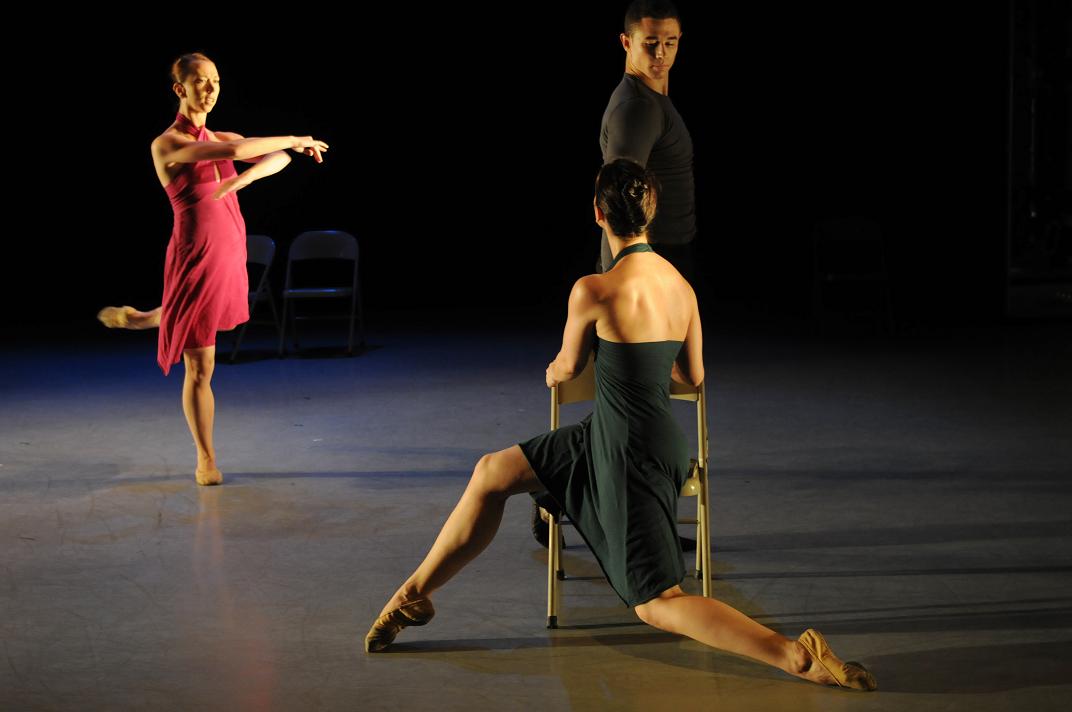
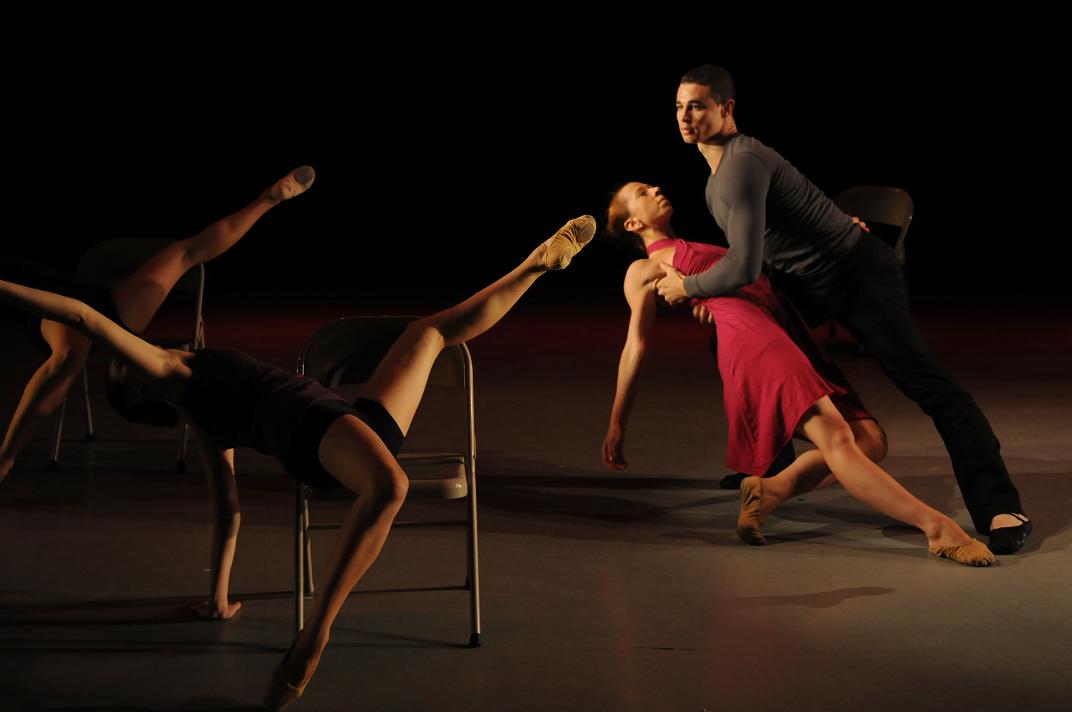
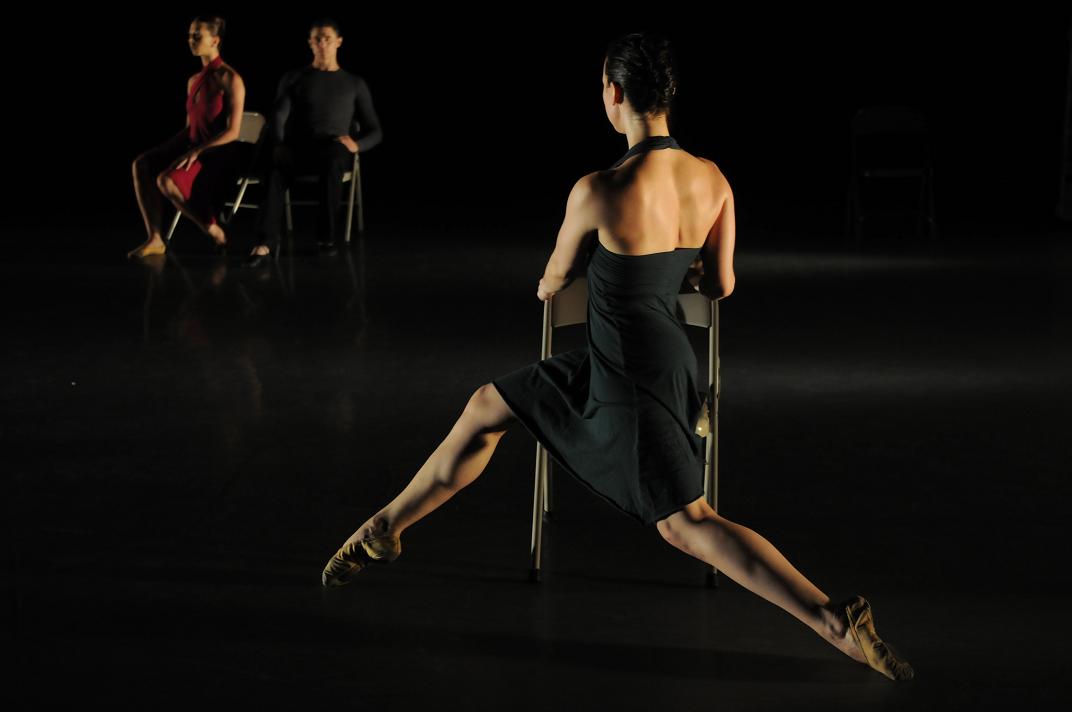
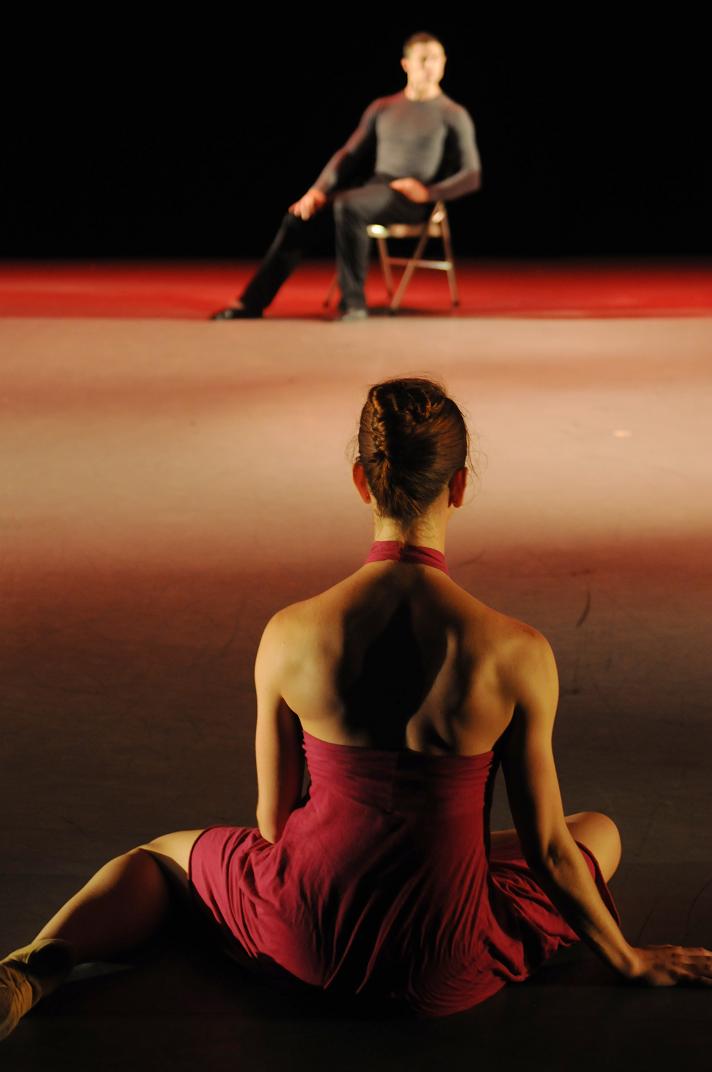
    I have a thing for tango ballets…yes, really. Tom Gold’s TANGO FANTASIE provided a flourishing finale for the evening, keeping things on the up-and-up musically (tango king Astor Piazzolla and other works in the genre) while allowing the dancers to let their hair down a bit, yet with no slouching in the choreographic demands. Hot red frocks for the girls and red billowy shirts for the boys gave everything a sultry feel; when not dancing, the dancers observed their colleagues from chairs placed along the sidelines. Abi Stafford and Jared Angle danced an enticing duet, and Sara Mearns and Tyler Angle crossed paths in this nightclub more than once. Outstanding dancing from Robert Fairchild, exuding star quality even when standing still. As the dancers dipped and swayed thru the dangerous rhythms of the tango, one moment captivated: swirling out of a sexy solo passage, Sara Mearns sank into a chair where she magically arranged herself with the provocative languor of a silver screen goddess. You couldn’t take your eyes off her.

    Kurt Nikkanen and Susan Walters gave the tangos all the sinuous allure they deserve; Kurt’s silky style also stood out in an interlude before the final work began.

    Maria Kowroski, Wendy Whelan, Stephen Hanna, Suki Schorer, and Anne Bass were among the crowd, along with Stacy Caddell and Willy Burmann, both of whom are working with Tom Gold and his dancers. This was a most enjoyable evening of dance and I hope it heralds more opportunites to see Tom’s work in the future.

  • Lydia Johnson Dance @ Peridance: Golijov

    Copy of 19

    Sunday February 26, 2012 matinee – Lydia Johnson Dance presented two works at Peridance this afternoon. The performance marked the first full presentation of Lydia’s new, as-yet-untitled work to music of Osvaldo Golijov as well as a revival of her 2006 piece to music of Philip Glass: FALLING OUT.

    Kokyat and I have been following the creation of the Golijov work from its earliest days, visiting the studio periodically to view the work’s progress. Lydia is so generous in sharing her creative process, giving us an extraordinary insight into how ideas become danceworks.

    Click on each image to enlarge:

    Copy of 2

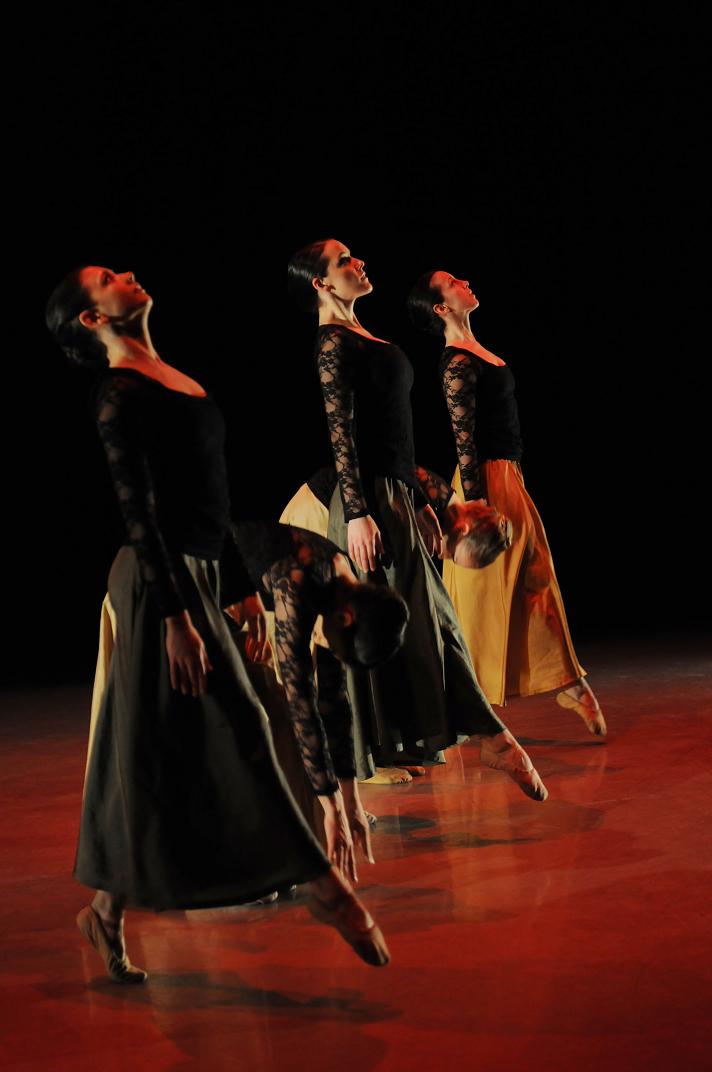
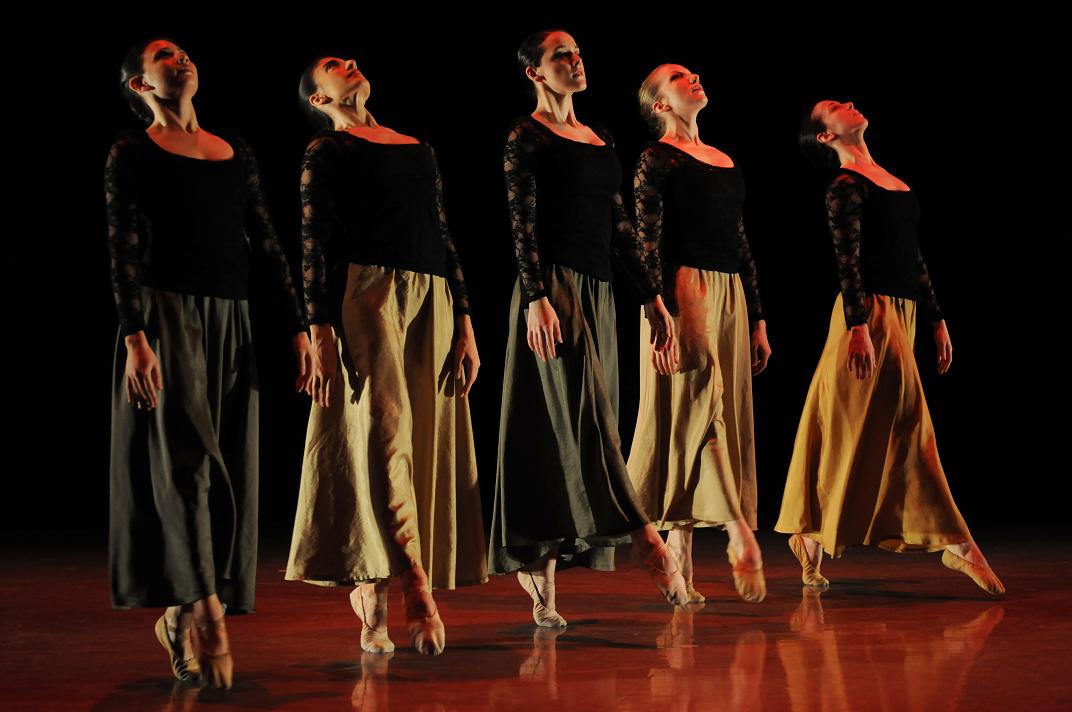
    In the Golijov, a trio of women first appear in soft golden gowns; their black-lace bodices provide a Spanish feel. Remaining in place, they perform a gestural ritual implying both spirituality and cleansing.

    Copy of 6

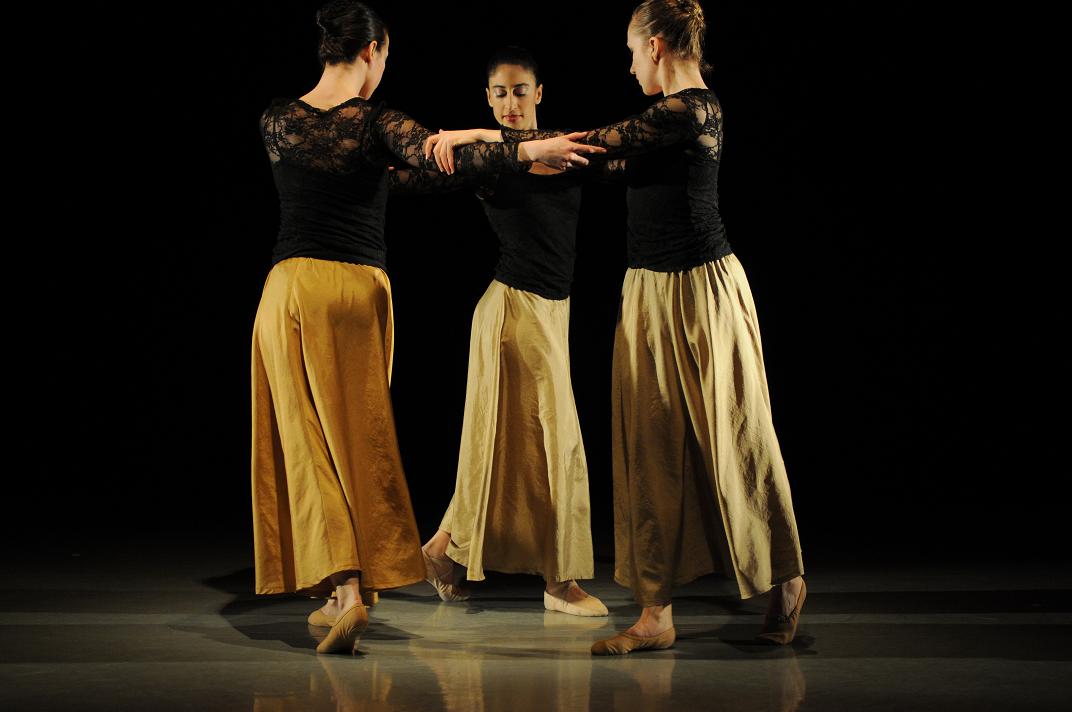
    Quietly they move in a circular pattern…

    Copy of 16

    …which is expanded by the entry of two more women.

    Copy of 21

    With an unexpected juxtaposition of calm and urgency, the women continue their mysterious rites as the music takes on a soulful expression. 

    Copy of 35

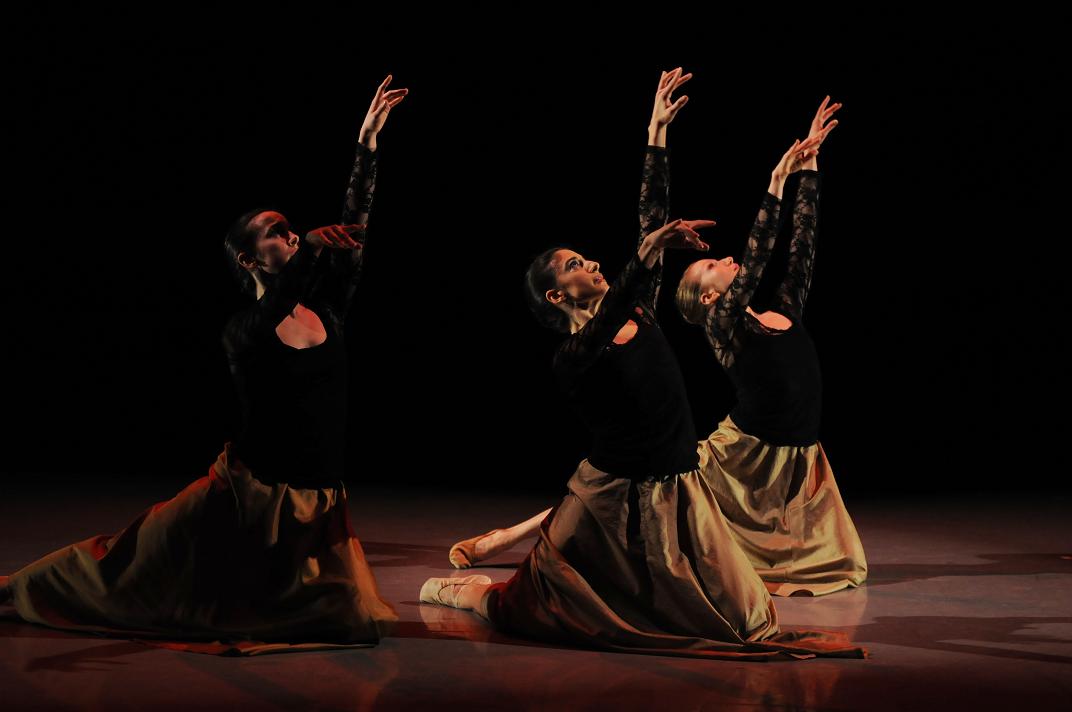
    Images of silent despair and of consolation are evoked…

    Copy of 39

    …blended with uplifting gestures of unity and hope.

    Copy of 40

    The final movement of the Golijov is marked by themes of rocking as each girl in turn swoons into the arms of her sisters to be gently lulled.

    Copy of 45

    In this work, choreographer Lydia Johnson seems to be telling a story yet the mystique of the five women – who they are and what their rituals mean to them – is left to the imagination of each viewer. One of the things about Lydia’s work that I most appreciate is her unerring taste in music: she always seeks out the best, whatever genre she might decide to work in. Here, the religious themes of the Golijov pieces she uses offer a wide range of interpretative images, from the earthy to the sublime. Darkly handsome in atmosphere, this dancework resonates with the bonds of sisterly unity and affection; it steers clear of sentimentality, thus striking a deeper chord.

    Copy of 26

    Always a choreographer’s greatest good fortune: to have dancers who understand and communicate the imagined nuances of a given work. The lyricism and grace of the five women dancing in the Golijov maintained the spirit of the music and movement from first note to last. They are (above): Sarah Pon, Lisa Iannacito McBride, Kaitlin Accetta, Laura DiOrio, and Jessica Sand.

    Details of the afternoon’s second work, set to music of Philip Glass, will appear here shortly.

    All photographs by Kokyat.

  • Lydia Johnson Dance @ Peridance: Glass

    Copy of 2

    The second work on the program at Lydia Johnson Dance‘s February 26th, 2012 matinee at Peridance was FALLING OUT, a 2006 dancework set to the 3rd Symphony of Philip Glass. Above: dancer Jessica Sand photographed by Kokyat.

    Copy of 28

    FALLING OUT is a dramatic dancework revolving around the tempestuous relationship of a man and a woman (Max van der Sterre and Kerry Shea); their moody encounters range from tender to combative over the course of the piece.

    Copy of 57

    A second woman (Jessica Sand, seated right above) creates the third corner of a romantic triangle. She remains an alluring object of desire for the man, though they never touch.

    Copy of 51

    Meanwhile, a chorus of women remain on the sidelines; their synchronized movements rarely infringe oin the central drama yet they appear as additional enticements for the man…or possibly as lovers from his past.

    Copy of 70

    The tension rises as the women observe each other warily; at last the central couple actually come to blows.

    Copy of 74

    Things seem to resolve, and harmony is restored.

    Copy of 76

    Yet in the work’s final moment, Max’s gaze is again captured by an elusive vision.

    Read about the other work on this program here.

    All photography by Kokyat.

  • Lydia Johnson Dance @ Peridance: Gallery

    Copy of 14

    A gallery of Kokyat’s images from the two works presented by Lydia Johnson Dance at Peridance on the afternoon of February 26th, 2012. Above: Lisa Iannacito McBride in the untitled Golijov.

    Copy of 4

    Laura DiOrio

    Copy of 9

    Jessica Sand

    Copy of 11

    Jessica Sand, Lisa Iannacito McBride, Kaitlin Accetta

    Copy of 12

    Laura DiOrio

    Copy of 16

    Ensemble

    Copy of 24

    Copy of 28

    From Lydia Johnson’s untitled Golijov.

    Copy of 62

    The second work on the program was FALLING OUT, set to the third symphony pf Philip Glass. Above, Kerry Shea.

    Copy of 7

    Ensemble

    Copy of 23

    Kerry Shea & Max van der Sterre

    Copy of 27

    Max and Kerry

    Copy of 61

    Kerry Shea

    Copy of 29

    Max van der Sterre & Kerry Shea in Lydia Johnson’s FALLING OUT.

    All photos by Kokyat.

  • Stravinsky & Desyatnikov @ New York City Ballet

    February 23, 2012 – New York City Ballet has been my home away from home since I moved to New York City in 1998. In fact, NYCB was a major factor in my desire to move here in the first place. This season has seen the effects of changes in ticket pricing and seating availability, along with the marginalizing of the 4th Ring Society and the way long-time friends and supporters of the Company feel they have been treated by the powers that be. The official stance seems to be that the changes are working and that everything’s hunky-dory, but the gaping emptiness of the 4th Ring (ten people sitting up there tonight) is a sad commentary on the real situation.

    Increases in ticket prices are a necessary evil from time to time, but it’s the way it was done and the lack of sync between the website and the box office in terms of availability and pricing that is off-putting to say the least. The level of dancing is very high and the lure of Balanchine is as strong as ever, but the sheer joy of attending often and feeling you are part of a happy family of ballet-goers is greatly diminished these days. In this Winter season where I’d ear-marked 14 performances on my calendar, I ended up only going six times.

    At any rate, when the curtain rose on STRAVINSKY VIOLIN CONCERTO tonight and Janie Taylor was standing there with four handsome boys, I forgot my misgivings. On the podium, George Manahan brought out individual voices in the orchestra – as we might expect a seasoned opera conductor to do – and violinist Lydia Hong conveyed the angular beauty of the concerto in an overall very pleasing performance.

    Janie and her partner Ask LaCour gave an especially fine rendering of their duet; in the course of it I noticed things in the choreography that I’d somehow never picked up on before. The allure of the two dancers, and the Taylor mystique, seemed in a way to create a narrative where there isn’t one. I really enjoyed watching them.

    Maria Kowroski and Amar Ramasar are developing into a powerful and vastly appealing partnership. Their pas de deux was marvelous in its sense of nuanced dramatic detail and in the dancers’ technical strength and clarity which both underscored the complex choreography and made it seem inevitable.

    The corps danced beautifully, and it is wonderful to see Faye Arthurs onstage again after a hiatus. It was a performance of this classic work that re-affirmed its iconic standing in the Balanchine pantheon.

    Ratmansky’s RUSSIAN SEASONS is an unique ballet in many ways; drawing on aspects of Russian peasant life, the choreographer presents characters who are anonymous yet differentiated by finely detailed aspects of gesture and movement. The music, with it’s prominent violin (Arturo Delmoni) and soulful singing (Irina Rindzuner) all came back to me from the moment of Manahan’s downbeat. The score, and the rich colours of the dancers’ costumes, weaves a particular spell. I was very glad to see this piece again after a few seasons’ absence from the repertoire.
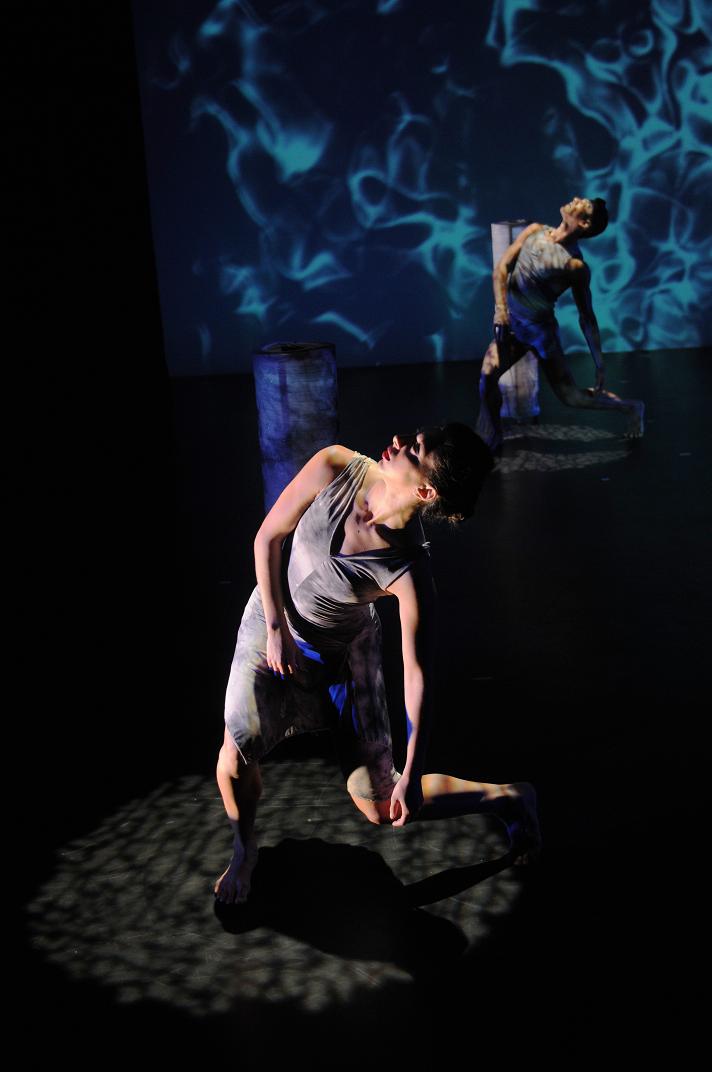
    The Playbill now denotes role debuts at NYCB, and only Georgina Pazcoguin had previously appeared in her role as the Woman in Red. Abi Stafford danced in the premiere of RUSSIAN SEASONS but has now switched to the role originally created by Jenifer Ringer. Beyond that, the cast drew together some of the Company’s most attractive personalities.

    Amanda Hankes, Marika Anderson and Lauren Lovette were each lovely and distinctive to watch, while the presence of Taylor Stanley, David Prottas, Andrew Veyette, Adrian Danchig-Waring and Christian Tworzyanski showed off the strengths of the Company’s male contingent.
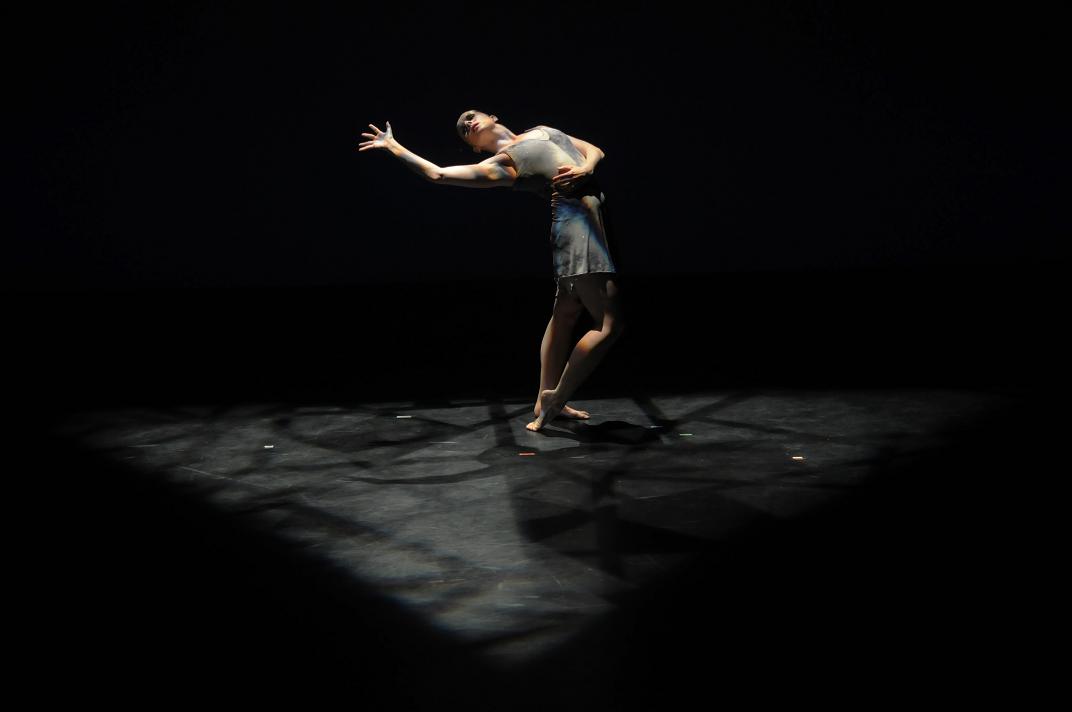
    Abi Stafford’s performance had a nice sense of freshness to compliment her clarity of movement. As the central couple, Rebecca Krohn and Robert Fairchild used their personal magnetism to full advantage. Rebecca’s dancing was serene – and poignant in the passage where she seems to have been abandoned. Rob Fairchild seized the opportunity to make yet another ballet ‘sing’ to his charismatic approach. His dancing was technically impressive and dramatically vivid.
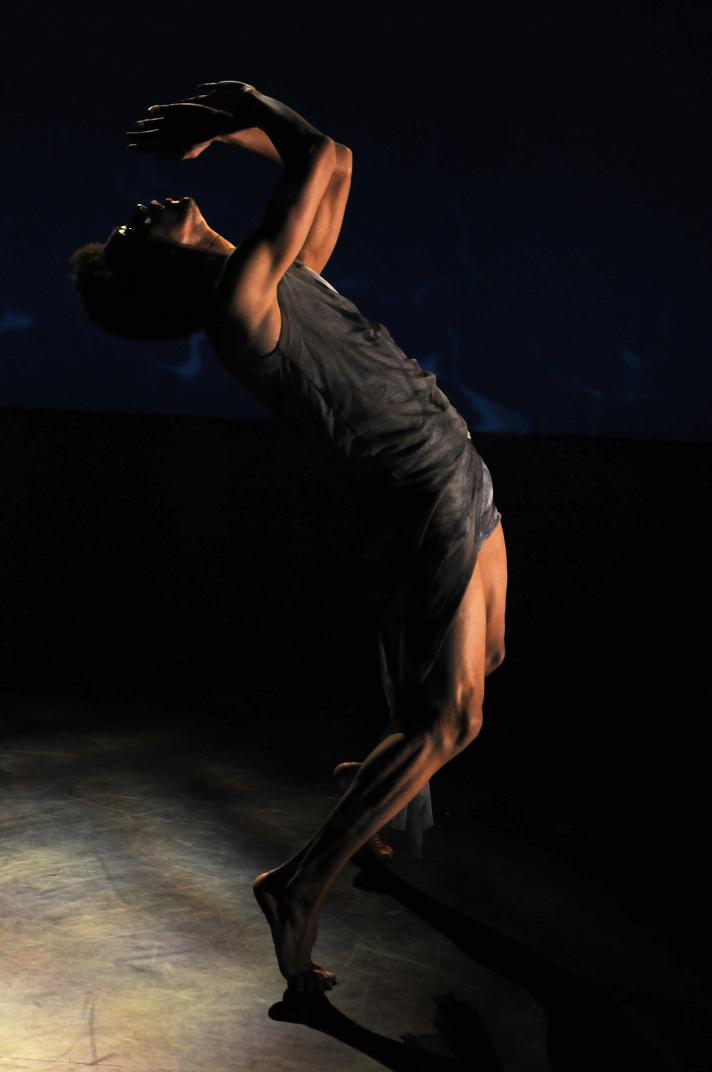
    In a glorious performance, Georgina Pazcoguin’s Woman in Red was suffused with her highly individual beauty and intensity; as she swirled with a restless spirit through the many swift pirouettes and space-filling combinations of this demanding role, Gina seemed like a woman possessed. Truly breath-taking at every moment.

    STRAVINSKY VIOLIN CONCERTO: Taylor, la Cour, Kowroski, Ramasar

    RUSSIAN SEASONS: Pazcoguin, *Krohn, *A. Stafford, *Lovette, *Hankes, *Anderson, *R. Fairchild, *Prottas, *Stanley, *Tworzyanski, *Danchig-Waring, *Veyette