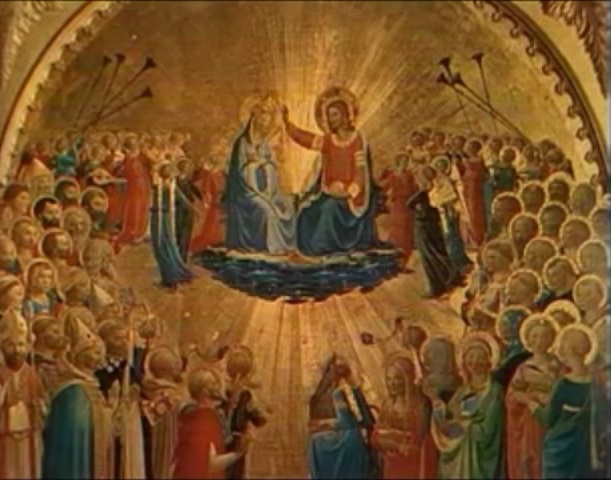
Tatiana Troyanos sings Mahler’s Rückert Lieder, recorded “live”; date unknown.
Listen here: https://www.youtube.com/watch?v=k1rpkuBZuU0
Tatiana Troyanos sings Mahler’s Rückert Lieder, recorded “live”; date unknown.
Listen here: https://www.youtube.com/watch?v=k1rpkuBZuU0
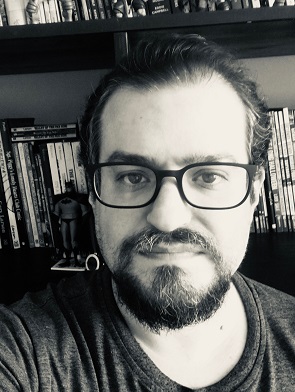
Above: composer Matthijs van Dijk
Matthijs van Dijk’s MOMENTS IN A LIFE as performed at Endler Hall at the Stellenbosch International Chamber Music Festival on July 6, 2016.
Watch and listen here.
The narrator is Denis Goldberg, author of the text.
The performance is conducted by Xandi van Dijk with the following musicians: Ferdinand Steiner (clarinet), Rob Knopper (percussion), Gareth Lubbe (overtone singer), Farida Bacharova (violin 1), Suzanne Martens (violin 2), Juan-Miguel Hernandez (viola), Anzél Gerber (cello), Uxia Martinez Botana (bass), and Megan-Geoffrey Prins (piano).
When I saw this work performed the Met Orchestra Chamber Group at Weill Hall in October of 2024, I ended my review with these prophetic words:
“The work is so timely right now, when our democracy stands on a precipice. If we falter, our country – and indeed the world – will be forever changed.”

George Szell (above) conducts the Cleveland Orchestra in a live performance of the Messa di Requiem by Giuseppe Verdi given in 1968. Gabriella Tucci, Dame Janet Baker, Pierre Duval, and Martti Talvela are the soloists.
Listen here.

Above: Arnaud Sussmann, Wu Han, Sterling Elliott, and Paul Neubauer playing Mozart this evening at Chamber Music Society’s concert at Alice Tully Hall; photo by Da Ping Luo
~ Author: Oberon
Sunday March 30th, 2025 – Six master musicians from Chamber Music Society of Lincoln Center’s remarkable roster joined together this evening on the Alice Tully Hall stage to bring us music of W.F. Bach, Mozart, and Schubert – the last named being represented by his beloved “Trout” quintet. Wu Han, the Society’s co-Artistic Director, welcomed us with a speech that was a bit longer than her customary opening remarks, but everything she says is worth hearing.

Above: Arnaud Sussmann, Sterling Elliott, and Paul Neubauer playing W.F. Bach; photo by Da Ping Luo
Wilhelm Friedemann Bach’s Fugue in F-minor for violin, viola, and cello – in Mozart’s arrangement – opened the evening. W.F. was J.S. Bach’s eldest son. This four-minute musical mini-masterpiece was played to perfection by Arnaud Sussmann (violin), Paul Neubauer (viola), and Sterling Elliott (an excellent cellist who is a rather recent addition to the CMS family). This is music of constant animation, short and sweet.
Mozart himself was represented next by his Adagio and Fugue in C-minor for Strings, K. 546, dating from 1788. The phenomenal double bassist Anthony Manzo – often a most welcome presence at the Society’s annual Brandenburgs evenings – underscored sumptuous playing from Mr. Sussmann, Julian Rhee, and Mr. Neubauer.

Above: Arnaud Sussmann, Julian Rhee, Anthony Manzo, and Paul Neubauer playing Mozart; photo by Da Ping Luo
The C-minor Fugue was first composed in December of 1783 for two pianos (K. 426) then re-arranged for strings, with an introductory Adagio, in June 1788 – the summer of wonders wherein the Maestro penned his last three symphonies. Today, our four players achieved a gorgeous blend in the lyrical opening passages, and then took on a more dramatic edge. After a pause, alternating currents of sweet and sorrowful harmonies emerged, the players’ individual timbres mixing to delightful effect in the expressive music. Mr. Manzo’s remarkably nimble playing is astonishing; it is he who kicks off the fugue, picked up in order by Neubauer, Rhee, and Sussmann…each technically dazzling, and playing from their hearts.

Above: Arnaud Sussmann, Wu Han, Sterling Elliott, and Paul Neubauer playing the Mozart quartet; photo by Da Ping Luo
Staying in Mozart mode, his 1786 Quartet in E-flat major for Piano, Violin, Viola, and Cello, K. 493 brought Wu Han to the Steinway, joining Mssrs. Sussmann, Neubauer, and Elliott. Here – and, in fact, all evening – the communication among the four artists was so uplifting to observe. The opening Allegro has a very familiar start, with piano and string trio conversing. Mr. Sussmann and Wu Han are truly simpatico in their music-making. Wu Han’s touch is so magical as her rippling figurations mesh with the string voices, Mssrs. Neubauer and Elliott bringing darker shadings to the palette. Ah, the joys of a Mozart melody!
Wu Han draws us into the Larghetto with pensive, subtle playing; the strings join, caressing the ear. The harmonies are achingly lovely, with Mr. Elliott’s playing at once elegant and soulful. Piano solo passages are injected into the flow of string themes, as the movement reaches a charming finish. Then, onward to the Allegretto: commencing with a sprightly piano introduction, the music dances along, laced with touches of wit. A mini-tempest erupts, and then a Mozartean sonic feast carries us to the finish line: a spectacular, prolonged trill from Wu Han must be mentioned here.
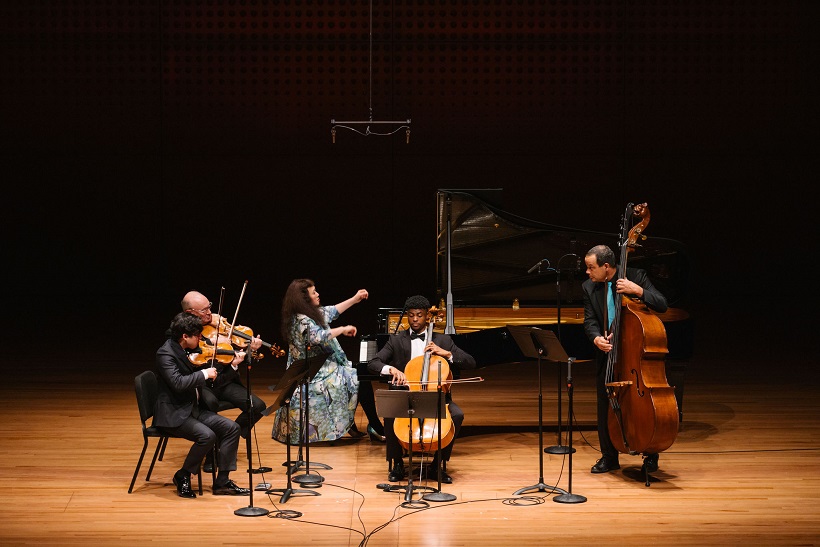
Above: Julian Rhee, Paul Neubauer, Wu Han, Sterling Elliott, and Anthony Manzo playing the Schubert ‘Trout’ quintet; photo by Chris Lee
Following the interval, the youthful looking Julian Rhee took the lead for the immortal “Trout” quintet of Franz Schubert. From its sudden start to its finish – a ‘false’ ending drawing a chuckle from the crowd – this was so exhilarating to experience. Schubert’s adding of the double bass was a stroke of genius, and Mr. Manzo’s vividly attentive playing was as enjoyable to watch as to hear.
In the first of the work’s five movements, Mr. Rhee veered from passionate to poetic as the mood demanded; he and Wu Han showed their virtuosity in a blended passage, later waxing lyrical together as Mssrs. Neubauer and Elliott provide a rhythmic foundation. Throughout, Mr. Manzo continued to cast his spell like a benevolent wizard. There was so much to savor here, including some fast and fine phrases from Mr. Rhee.
In the ensuing Andante, Mr. Rhee’s timbre, a unique mix of silver and satin, continued to allure the ear. From his fellow players, harmonic bliss was a main attraction here. A slow beat signaled a change of mood, Rhee’s tone continuing to cast a spell, and Manzo simply amazing at every moment. Heavenly harmonies prevail, and then the slow beat resumes, leading to a lovely finish.
The brisk and ebullient Scherzo lets us bask in the colours that the blended voices evoke. Mr. Rhee – harmonizing first with Mr. Neubauer and then with Mr. Elliott – continues to impress, as does Wu Han’s deft and enticing playing.
Now comes the tune that inspired the quintet’s code name: “Die forelle“ aka the “Trout”. The melody is heard in various guises during this ‘theme and variations’ movement. Impeccable playing from all here, with Mr. Manzo a steadfast guiding light, whilst various rhythmic and harmonic combinations amuse us. Of special delight was a cello & bass rendering of the song, with the fabulous Wu Han chiming in. There is a grand variation, and a cello variation, and all the while Mr. Neubauer reminds us that the viola is also in on this fishing expedition. Mssrs. Rhee and Elliott again match wits as we move on to the finale. For all the fun to be had here, it’s such a demanding score to play; our quintet of artists this evening seemed to revel in every bar of music Schubert gave them.
The finale, Allegro giusto, might have felt like an afterthought, but astonishing playing from Wu Han and her colleagues made it feel essential.
~ Oberon
Performance photos by Da Ping Luo, courtesy of Chamber Music Society of Lincoln Center

~ Author: Lane Raffaldini Rubin
Saturday March 29th, 2025 – Not one but two composers were present at David Geffen Hall tonight to receive enthusiastic ovations for their music performed by Leonard Slatkin and the New York Philharmonic. It was, in a sense, a family affair. The composer John Corigliano has been a friend of Slatkin’s and the Philharmonic for half a century, while the other composer, Cindy McTee, is Slatkin’s wife. While the third composer of the evening—Dmitri Shostakovich—was not on hand, this evening’s concert was a testament to the vitality of music of the present era.
Cindy McTee’s 2010 piece Double Play is a two-movement fantasia on Charles Ives’s 1908 composition The Unanswered Question. More than just an exercise in Ivesian orchestral writing, the piece is a sonic lava lamp of shifting ambiguities and cinematic episodes. A low drone in the double basses unifies the fragmentary material in the woodwinds while hushed string chords oscillate between gorgeous dissonance and consonance.
The second movement, entitled “Tempus Fugit”, begins with the ingenious tick-tocking of an ensemble of mallets, sounding like a cupboardful of disagreeing clocks and metronomes. The Ivesian writing of the first movement returns under this misaligned timekeeping, establishing an fascinating non-relationship between the disparate concepts of the two movements.
This juxtaposition is muddied in the second movement by the inclusion of passages of chase-scene-style music and Gershwin-like big-band flourishes (although played brilliantly crisply by the Philharmonic brass). McTee’s piece was intricately orchestrated and finely crafted but went on a bit longer than it needed to and wouldn’t have suffered from cuts in the second movement.

Above: Cindy McTee and Leonard Slatkin take a bow; photo by Chris Lee.
For John Corigliano’s 2020 piece Triathlon the soloist Timothy McAllister brought three saxophones to the stage. In writing the piece, Corigliano asked himself “what would happen if I wrote a concerto for saxophonist and orchestra, not saxophone and orchestra.” McAllister, the preeminent classical saxophonist for whom the concerto was written, is, after all, a skilled player of the soprano, alto, and baritone saxophones. Corigliano exploits the unique qualities of all three in Triathlon.
The first movement, “Leaps” for soprano saxophone, bursts right out of the gate with slinking high and low figures, bustling orchestral sounds, and swaggering bravura material for the soloist. McAllister’s playing is assured and confident while maintaining a chamber music sensibility, which suits well the elaborate dialogues that Corigliano writes between the soloist and various voices in the woodwinds and brass. One notable section of this movement appears to quote Ravel’s children’s opera L’enfant et les sortilèges with ravishingly mysterious textures in the woodwinds, providing a fluttering backdrop for lyrical solos in the soprano saxophone.
The second movement, entitled “Lines”, hews close to its name by eschewing rhythmic figuration in favor of “linear” melodic material. This movement for alto saxophone occupies a hybrid sound-world somewhere between the hazy atmosphere of Coltrane and the broad horizons of Copland’s A Lincoln Portrait.
Things get wilder in the third movement, which begins with a baritone saxophone cadenza of key clicks, slap tonguing, and other extended techniques up and down the range of the instrument. “Licks”, the title of this movement, has multiple meanings as the soloist seems to riff and improvise and produce very physical sounds from the tongue itself. The entire movement is a rollicking pseudo-improvisatory accompanied recitative. In a fun plot twist at the very end of the piece, McAllister picks up the soprano sax for one last picaresque lick.

Above: Timothy McAllster and Maestro Slatkin playing the Corigliano; photo by Chris Lee
In the second half of the program, Slatkin led the Philharmonic in Shostakovich’s Symphony No. 5 of 1937. It’s a piece that is, as Slatkin writes, “a bit more familiar for both musicians and audience”. Indeed, it was an admirable if conventional performance, with thrilling—booming—climaxes, flawless details across the woodwinds, and propulsive treatment of dramatic transitions.

Throughout the concert, Slatkin (above, photo by Chris Lee) frequently put down his baton to conduct with his hands, only to pick the baton back up within the same movement. Slatkin holds the baton from the end of its long handle, rather than gripping it, which means that he relies on his left hand to communicate finer-grain detail to the players. His conducting was at its best when he put down the baton (as in the first movement of McTee’s piece and the sublime Largo of Shostakovich), allowing him to be expressively geometric—an impressively effective semaphore for the musicians. During the Shostakovich Largo, which he conducted from memory, I wondered where his baton had gone, since there was no music stand on the podium for him to rest it on. When the movement was over, he reached behind the folder on the first desk of the violas to retrieve his baton from where he had stashed it. Meant to be invisible, it was just one of the many clever details that added up to this superbly crafted concert.
~ Lane Raffaldini Rubin
Performance photos by Chris Lee, courtesy of the New York Philharmonic
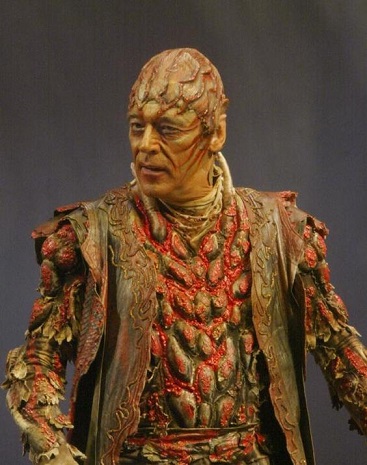
Reading thru some of my hand-written diaries from a quarter-century ago, this entry about a tremendous performance of DAS RHEINGOLD brought back vivid memories.
“Wonderful to see this opera again, and the cast of (mainly) RING veterans gave a superbly confident and nuanced performance. Levine had the huge orchestra under finger-tip control…there were passages of great beauty and lyricism, along with the unleashing of massive sound at times. Although the lighting seems less evocative now, the production is still quite effective, though the first scene could use some freshening: the Rhinemaidens don’t always remember that they are underwater, and the rock pinnacle holding the gold wavered as Alberich clambered up.
To start from the beginning: lovely lyricism from the Rhnemaidens: Joyce Guyer, Kristine Jepson, and Jane Bunnell each sang well in their solo lines, and their voices blended beautifully.
Ekkehard Wlaschiha remains a powerful, vivid Alberich…his voice is now sketched indelibly on this music: magnificent in defeat, and in his vibrant, chilling curse. Hanna Schwarz brought her personal allure and great vocal authority to her interpretation of Fricka. She spun out some lovely soft phrases, creating a sensuous appeal that is not always heard in this music. James Morris shows some vocal wear and tear as Wotan, but he is still able to hurl out vocal thunderbolts (especially at the end) as well as many pages of wonderfully musing soft singing. Very much a god to be reckoned with…bravo!
Hei-Kyung Hong’s vocal radiance and sheer physical beauty made Freia a major role. She’s at her peak now, and I’m so lucky to be living here in NYC to witness it! Mark Baker brought wafting lyricism as well as power to Froh’s music, and Alan Held’s darkish baritone produced a steady stream of well-inflected singing as Donner – his “Heda! Hedo!!“was a vocal high-point.
Splendid giants: the flowing depths of tone from Eric Halvarson perfectly complimented the more gritty, malevolent sound of Sergei Koptchak…bravissimi, gentlemen!! Graham Clark has a perfect role in Mime, where he is able to bring some “real” singing to a part that doesn’t always get it. His incisive diction was crystal clear. Brigitta Svendén sounded simply gorgeous, and she makes Erda the alluring, mysterious icon she must be.
Dominating the stage and the music, Philip Langridge as Loge (photo at the top) used his multi-coloured “big lyric” voice with the finesse of a poet. Langridge created the enigmatic character in purely musical terms whilst the added physical dimension of his portrayal (the grace of a ballet dancer, the gestures of a skilled magician) simply clinched the evening for this great singing-actor. He was greeted with a massive ovation at his bows.
The entire cast was deservedly hailed by the Houseful of avid Wagnerites, and Levine and his orchestra were given a rousing ovation. A very stimulating evening!

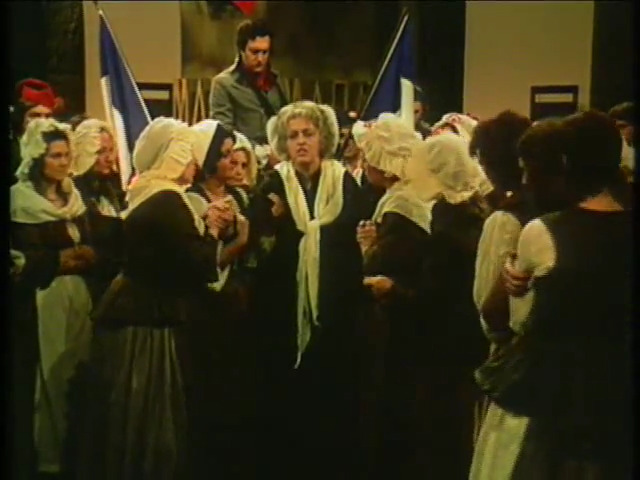
Christina Anghelakova sings the aria of La Vecchia Madelon from a film of Giordano’s opera, ANDREA CHENIER.
Watch and listen here.

Teresa Berganza sings the Habanera from Bizet’s CARMEN here, in a live performance from L’Opera de Paris on May 14th, 1980. It’s just about the most perfect rendering of this super-familiar aria I ever heard.
Watch a video clip of Jerry Hadley and Judith Haddon singing the love duet from a 1982 New York City Opera performance of Puccini’s MADAMA BUTTERFLY here.

Katia Ricciarelli and Lucia Valentini-Terrani are the soloists in this performance of Pergolesi’s STABAT MATER conducted by Claudio Abbado.
Watch and listen here.
 Oberon's Glade