Blog

  • Sejong Soloists @ Zankel Hall

    240522 Sejong Here & Now Festival-5

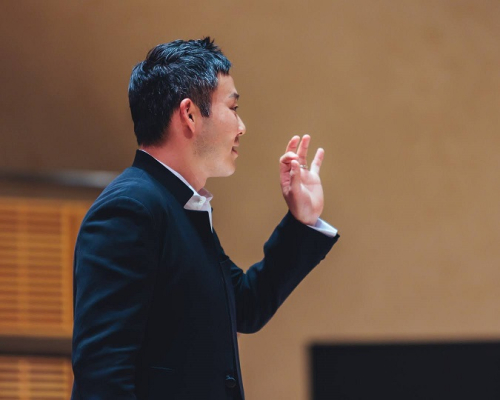
    Above: Maestro Earl Lee, photo by Emilio Herce

    Author: Oberon

    Wednesday May 22nd, 2024 – Celebrating their 30th anniversary this evening at Zankel Hall, Sejong Soloists presented the US premiere of Unsuk Chin’s “Puzzles and Games” from Alice in Wonderland, and the world premiere of Texu Kim’s With/out book-ending a spectacular performance of Felix Mendelssohn’s Octet. It was one of most enjoyable concerts of the season, joining such Springtime delights as violinist Lun Li’s Young Concert Artists recital at the Morgan Library, the Orchestra of St. Luke’s splendid Brahms REQUIEM at Carnegie Hall, and Chamber Music Society of Lincoln Center’s thrilling program, Songs and Snow, on my list of musical events that have kept my spirits up in these chaotic times.
    240522 Sejong Here & Now Festival-13

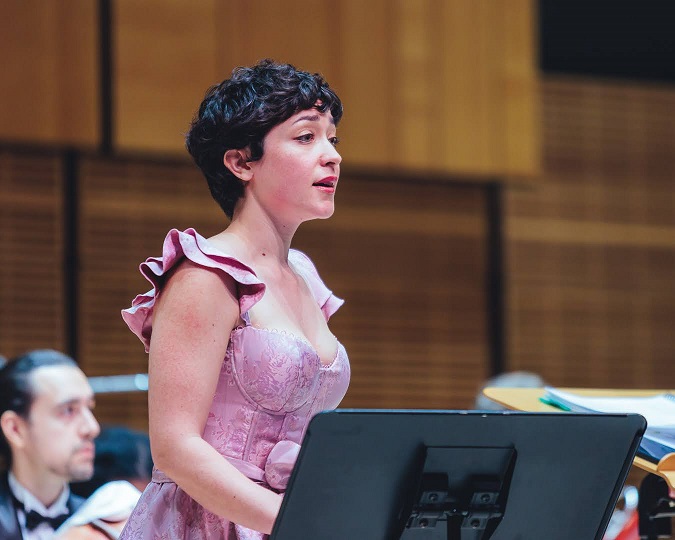
    Making her Carnegie debut tonight, soprano Juliana Zara (above, photo by Emilio Herce) was the soloist in the Unsuk Chin work, a daunting 20-minutes of singing which at times carries the singer into the highest range of the soprano voice. Ms. Zara never seemed daunted by the vocal writing: in fact, she seemed to revel in it. Conductor Earl Lee and his musicians gave the singer perfect support, whilst also seeming to savor the composers’ quirky and colorful writing for the ensemble.

    One by one, oboe, clarinet, flute, and bassoon join in the introductory phrases to Alice – Acrostic before Ms. Zara’s clear, lyrical voice is heard. This brief song ends with deep chords. Pizzicati are passed about in the introduction to If I Never Reach the Gardens, with gentle (slightly eerie) passages for the strings (and did I hear a harmonica?) before the music turns woozy; the soprano speaks much of the poem. The third and fourth songs, on the Curiouser and Curiouser theme, seem to run together. The music stays groggy, the words largely spoken, until a crashing chord is struck. Dotty rhythms and semi-singing in Who In The World Am I? are underscored by by insectuous strings and burbling winds before the flute has a final say.

    The piano introduces The Tale-Tail of the Mouse, with melodramatic sprechstimme from the soprano. Spaced-out harmonies and scurrying flutes lead to the final words: “Condemned to Death”. I thought I detected a musette in the atmospheric lullaby Sleep Tight My Ugly Baby, though my ears may have deceived me. The music is filled with droopy sighs; a sense of quietude settles in, and night chimes are heard. In Cat’s Aria, Ms. Zara ventured impressively into the upper extremes of the soprano range, lingering there is a series of amazing (and intentionally annoying) meows-in-alt.

    Twinkle, Twinkle Little Star has a delightful delicacy about it; then the music turned livelier and a catchy xylophone ‘cadenza’ established a playful mood. The music fades away at the end. The final song is Speak Roughly To Your Little Boy, introduced by a drum roll. A pulsing beat accompanies this mean mother’s lecture, with tambourine and bassoon interjecting. Now the vocal line goes completely bonkers – Ms. Zara didn’t simply manage it, she triumphed over it – as cymbal crashes bring this dazzling, quirky piece to a close. The soprano basked in a shouting ovation from the crowd, so truly deserved; she graciously signaled her thanks to the musicians and the Maestro.

    240522 Sejong Here & Now Festival-31

    Above: Ms. Zara, Maestro Lee, and the ensemble; photo by Emilio Herce

    The first time I heard the Mendelssohn Octet played live was at the New York City Ballet, where, in 2004, Peter Martins created a lovely ballet to this score, written by the composer at the ripe young age of 16. It is a veritable treasure chest of melodic and rhythmic felicities, and tonight it elevated my mood – constantly dragged down of late by the darkness that is spreading throughout the world – to one of great joy. 

    240522 Sejong Here & Now Festival-57

    An octet of prestigious string players (above photo by Emilio Herce) was led this evening by the Metropolitan Opera’s concertmaster David Chan, and the NY Philharmonic’s concertmaster, Frank Huang. From the Sejong Soloists’ roster, violinists Daniel Cho and Andrew Wan, violists Brian Chen and Paul Laraia, and cellists Ole Akahoshi and Jesús Castro-Balbi joined to create an ensemble alive with multi-hued timbres which created a very cordial blend.

    The Mendelssohn Octet is a four movements, with the opening Allegro moderato con fuocoin my opinion, one of the greatest movements in all the string quartet repertoire – being the longest by far. It opens with joyous arpeggios and vibrant accompaniments. A more lyrical second theme has an elegant feel. The Andante brings restfulness, but with a rather intense middle section that offers contrast. Mendelssohn is the King of Scherzi, and here we are offered a feast of trills and an ethereal lightness of textures. The concluding Presto is both deliciously agitated and cunningly witty. There were times when the piece seemed almost like a concerto, thanks to David Chan’s virtuosity. 

    240522 Sejong Here & Now Festival-69

    Above, taking a bow after the Octet; photo by Emilio Herce
    240522 Sejong Here & Now Festival-82

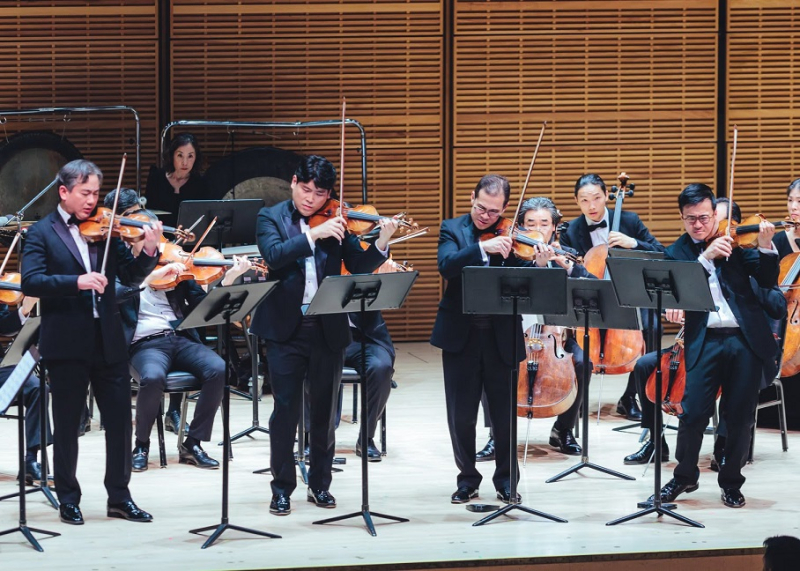
    Above, the soloists for the Texu Kim premiere: David Chan, Daniel Cho, Andrew Won, and Franck Huang; photo by Emilio Herce

    Violins remained in the spotlight for the world premiere of Texu Kim‘s With/out, which was positively brilliant. This is a concerto for four violinists, with string orchestra and a single percussionist. Frank Huang now took the lead, with Mssrs. Chan, Cho, and Wen again creating a stellar quartet. 

    The opening movement, lonesome and fluorescent, starts with a hesitant pulse; the musicians interject melodic fragments and quirky sighs. There are touches of humor, and a fresh bass beat is taken up. A short downward motif is passed among the four soloists (it will recur in the final movement), and the music becomes briefly grand, with repetitive pulsings. Then there’s a whirlwind…until a whip cracks, restoring order. A brief da capo leads to an other-worldly conclusion.

    The second movement, subdued and imploding, is darker and a bit eerie. The four violins play in unison, and then a shivering misterioso mood sets in. The basses strike up, again the whip cracks, and the beating timpani feels like a slow, swaying dance. The sound-textures are varied, holding our keen interest; each soloist shines in turn. After briefly turning epic, there is a passage of harmonizing for the orchestra’s violins. A sustained trill from Frank Huang leads to a sudden stop.

    The final movement, festive!!, has an oddly familiar start: an homage to Stravinsky with a brief quote from his Violin Concerto. This gave my companion and I a jolt, as we are both Balanchine fans. The timpani plays a role, setting up a forward impetus. There is an intermezzo, with the descending motif from the first movement popping up again. The music becomes cinematic and, after a lull, rebounds to a finale.

    240522 Sejong Here & Now Festival-90

    Above: composer Texu Kim joins the musicians for a bow following his with/out, photo by Emilio Herce

    The hall erupted in a lively ovation which doubled in intensity when the charming, youthful-looking composer (he’s 34) hoisted himself onto the stage as cries of bravo! rang out. A perfect end to a perfect evening. 

    ~ Oberon

    Performance photos by Emilio Herce, courtesy of Beverly Greenfield/Kirshbaum Associates
     

  • AIDA ~ Vienna 1973

    Aida jpg

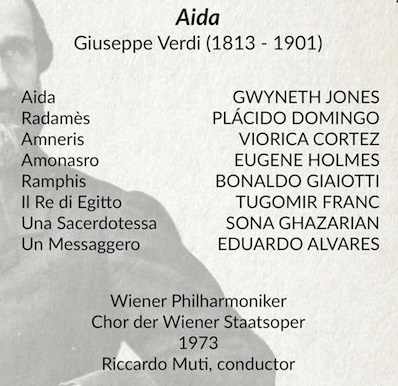
    Audio-only: a performance of Verdi’s AIDA given at Vienna in 1973.

    Listen here.

  • DON CARLO ~ Caracas 1979

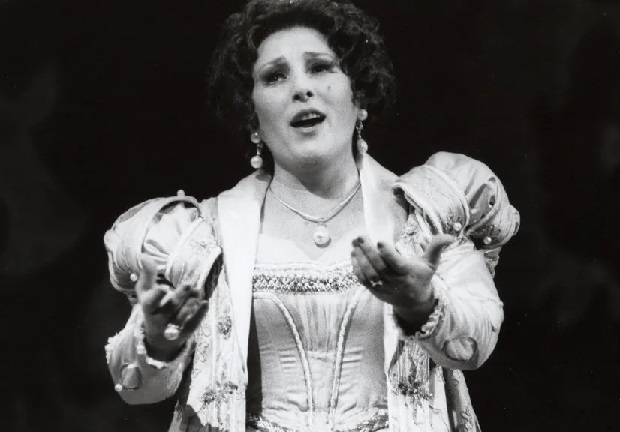
    Dimitrova

    Above: Ghena Dimitrova

    Verdi’s DON CARLO in a performance from Caracas, 1979. Edward Downes conducts.

    Listen here.

    CAST:

    Don Carlo – Rubén Domínguez; Elisabetta – Ghena Dimitrova; Felipe II – Nicola Ghiuselev; Rodrigo – Lorenzo Saccomani; Eboli – María Luisa Nave; Grand Inquisitor – Giovanni Foiani; A Monk – Pedro Liendo

  • Verdi Gala ~ Parma 2001

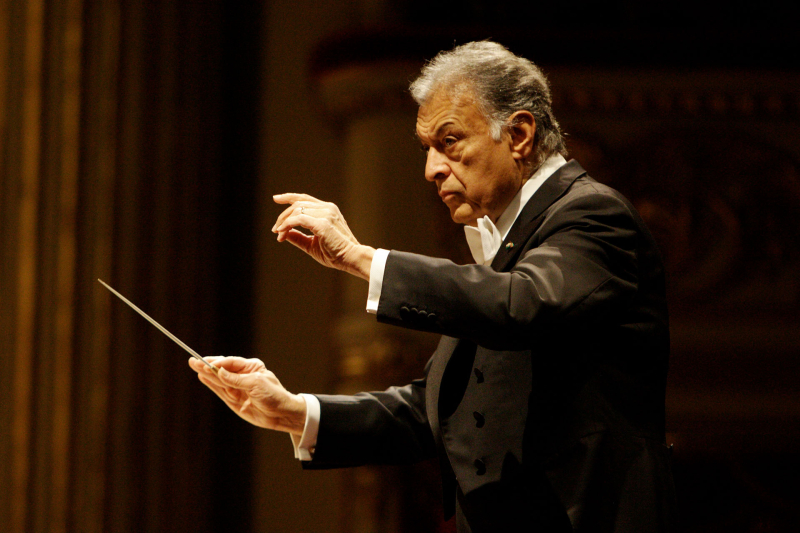
    Zubin-Mehta

    Maestro Zubin Mehta (above) leads a gala concert of music by Giuseppe Verdi featuring an impressive lineup of stars.

    Watch and listen here.

  • Violinist Lun Li @ The Morgan Library

    Lun Li

    ~ Author: Oberon

    Wednesday April 24th, 2024 matinee – This was my third time hearing the Chinese violinist Lun Li. My first encounter was at Merkin Hall when he gave his NY debut as a Young Concert Artist. Soon after, he played the Prokofiev second violin concerto – most impressively – with the Riverside Symphony at Alice Tully Hall.

    This afternoon, Lun Li offered a distinctive program at The Morgan Library, and he played thrillingly from start to finish. I very much liked his idea of having the house lights completely darkened throughout the concert; the only drawback to this was: it was impossible to take anything more than the most rudimentary notes. In the long run, though, notes became superfluous because this was some of the greatest violin playing I have ever heard. After a while, I stopped trying to write anything down and just let the music transfix me.

    Lun Li’s presentation was simple: clad all in black, he stood in a pool of light on the stage, casting a quadruple shadow. The darkness in hall seemed to make the audience more attentive and more focused on the music; there was a resolute stillness in the air, making the charismatic violinist’s extraordinary playing even more compelling.

    The program was devised in three segments followed by a sort of built-in encore. Each segment consisted of a short ‘prelude’, followed by a longer work.

    Music by Henry Eccles – his brief Prelude in A-minor – opened the concert, followed immediately by Nicola Matteis’ Alia Fantasia. The two pieces were written about fifteen years apart and are similar in feeling. Lun Li’s playing was elegant, and technically immaculate.

    Continuing in a Baroque mode, music by Giovanni Bononcini, came next: his Prelude in D-minor led on to the celebrated Chaconne from Partita No. 2 in D-minor, BWV 1004, by Johann Sebastian Bach. This long work offers endless opportunities for brilliant playing, and Lun Li gave as astounding, passionate performance, holding the audience under a spell with his virtuosity. The ensuing ovation was inevitable after such a glorious rendition.

    Following Philip Glass’s Book of Longing, which has a Baroque flavor, but with a tinge of timelessness, Lun Li gave a monumental performance of Béla Bartók’s Sonata for Solo Violin. The sonata was composed in 1944 on a commission from the American violinist Yehudi Menuhin; it was one of the composer’s last works. This solo sonata is in three – or maybe four – movements: Tempo di ciaccona, Fuga, Melodia, and Adagio – the last two being inseparable.

    The sonata places extraordinary demands on the violinist as the music veers from searing, to luminous, to poignant. The sheer number of notes is uncanny, and they were all sewn together in an intense, unforgettable musical experience by our remarkable soloist. If the reaction to the Bach seemed massive, the ovation after the Bartók was simply off the charts.

    Lun Li polished off his program with Tessa Lark’s Jig and Pop, a lively piece with a mile-a-minute swirls of notes. The violinist was called back for numerous bows.

    The near-total darkness in hall today certainly worked in this particular instance, but if it becomes a trend – it’s been that way for years at The Joyce – people like me will be out of a job.

    ~ Oberon

  • Tomowa-Sintow/Pavarotti: BALLO ~ Geneva 1984

    Pav t-s

    Riccardo Chailly conducts Verdi’s BALLO IN MASCHERA at Geneva, 1984, starring Anna Tomowa-Sintow, Luciano Pavarotti, Piero Cappuccilli, Mignon Dunn, and Danielle Borst. Poor video quality, but musically exciting.

    Watch and listen here.

  • String Resonance @ Chamber Music Society

    Bella 2

    Above: Bella Hristova

    ~ Author: Oberon

    Sunday April 21st, 2024 – A quintet of exceptional string players gathered this evening at Alice Tully Hall where Chamber Music Society of Lincoln Center was presenting works by Beethoven, Françaix, Bridge, and Mendelssohn.

    Beethoven’s Trio in E-flat major, Op 3, was superbly played by Bella Hristova (violin), Timothy Ridout (viola), and Sihao He (cello). In this early work, the composer gives us six movements instead of the usual four. Each movement seemed a bit drawn out, and – beautiful as the music is – various motifs recur until their originality wears thin.

    String

    Above: Bella Hristova, Sinhao He, and Timothy Ridout at the end of the Beethoven

    The opening Allegro con brio has a witty start; along the way, pauses will charmingly crop up. The violin part is quite florid, and Ms. Hristova played it vividly, The music veers from agitated to lyrical until – In a mood swing –  Mr. He’s cello suddenly digs in dramatically. The music fades, then rebounds with some lively bowing from all. After another lull, we move on to a brisk finale.

    The Andante has gentle start, with violin trills set over a graceful dance rhythm. Lovely subtleties emerge from the ideal blend of the three voices, and how lovely to observe the communication between the musicians. The movement ends with a brief plucked motif.

    The opening bars of the first Minuet have a hesitant quality; then a sense of irony develops. Sweet melodies entwine, laced with touches of humor. Mr. Ridout’s velvety viola opens the Adagio in a gently swaying mode. Mr. Hristova brings perfect clarity to a solo violin passage, then joins in the swaying feeling  as viola and cello take up the melodic line. The roles of melodist and accompanist shift graciously. A cadenza from Ms. Hristova is heard. Violin and viola echo one another, then the viola and cello commune. Near the end, a strange droning sound emerges.

    The second Minuet, marked Moderato, is light and lively at first, then the sound grow denser. A high, fanciful violin passage again shows off the Hristova magic. The Finale/Allegro begins with bright, virtuosic passages before sailing thru a variety of moods and rhythms. After some false endings, the final cadence is reached.

    String 2

    Above: Chad Hoopes, Sinhao He, and Matt Lipman playing the Françaix

    Nothing could have provided a more vibrant contrast to the Beethoven than Jean Françaix’s Trio for violin, viola, and cello, which was composed in 1933. Chad Hoopes (violin), Matthew Lipman (viola) and Mr. He (cello) took the stage for this delightful fifteen-minute piece which is alive with contrasts and gleaming tone colours. The opening Allegretto vivo is sprightly, with a jazzy feel; the Scherzo is a fast, waltzy dance.

    In the Andante, the individual timbres of the three players can be delightfully savored. Mr. Hoopes opens the movement with a sweet/sad violin theme; then Mr. He’s cello sets a slow rhythm before taking up the melody with his deep-violet sound. The theme then passes to Mr. Lipman’s distinctive viola. The zestful final Rondo is rapid and rhythmical, with the violin sailing to airy heights before the mood turns whimsical with the viola interjecting some cunning trills. Then, out of the blue, the music turns into a march. The three musicians seemed to be having so much fun with this refreshing piece.

    String 3

    Above: violists Timothy Ridout and Matthew Lipman after the Bridge

    Following the interval, I experienced Frank Bridge’s Lament for two violas for the first time. Composed in 1912, this eight-minute work is a real treasure for folks like me who love the viola sound. The two dapper young players, Timothy Ridout and Matthew Lipman, immediately drew us into the mood of the music. Mr. Lipman starts with a sorrowful theme, richly intoned. Mr. Ridout joins, playing poignantly in a higher range. In passages of close harmony, the music gets more passionate. A dialogue emerges: Matt in a lyrical mode as Tim plucks a rhythm: then they switch roles. In a passage of double-stops, we sense the aural illusion of a quartet. They two then play in unison, and Tim then sustains a long tone over Matt’s gentle plucking beat. The final chord fades. There was a big audience reaction to this rarely-heard work, and the players were enthusiastically applauded.

    Mendelssohn

    At last we come to Mendelssohn (above), who composed his Quintet #2, Op. 87, in 1845. The composer’s Piano Trio #1 is the piece that turned me on to chamber music…and his MIDSUMMER NIGHT’S DREAM is the perfect ballet score.

    In this evening’s Quintet performance, Mr. Hoopes was 1st violin, and Ms. Hristova 2nd, while Mr. Lipman was 1st viola and Mr. Ridout 2nd; anchoring the work with his opulent cello tones was Mr. He. The lively start of the Allegro vivace heralded a thrilling performance, the rich blend these players achieved had the effect of an orchestra playing. Tremolos spring up, adding to the vivacious atmosphere. A big theme sounds, Mr. Hoopes’ violin shines in high-lying passages…it’s all very grand. Suddenly things soften, only to surge up again to a glorious finish.

    The Andante scherzando has a sly start, later developing into a courtly waltz with cello pizzicati setting the pace. Minor-key harmonies emerge, and Mr. Ridout plays descending tremolos, opening an exchange of melodies between Mr. Lipman and Mr. Hoopes. The movement flows on to a wispy conclusion.

    A somber – almost tragic – atmosphere pervades the Adagio e lento, with achingly beautiful harmonies evolving over the tones of the cello rising step by step. A proud rhythm is taken up, almost like a noble Spanish dance, and the music grows more lyrical, with a reassuring violin solo. The doleful atmosphere returns, with Mr. Hoopes, and then Mr. Lipman, taking the melodic lead. Mr. Hoopes has a cadenza, and then shines in a high passage over shimmering tremolos. Passion rises to a sense of grandeur, with the violin soaring over all. The music calms to a wisftul end. 

    The final Allegro molto vivace is a bustling affair, with each player having a chance to shine. The violas, and then the violins, harmonize. After a lull, there is a final dash, further lifting the audience’s spirits and igniting a standing ovation wherein the players were recalled for a second bow while shouts of bravo! rang thru the hall.

    (Performance photos from the Chamber Music Society’s Facebook page)

    ~ Oberon

  • Zampieri & Taddei ~ TOSCA scene

    Zampieri tosca

    Mara Zampieri (above) and Giuseppe Taddei in a scene from Puccini’s TOSCA, from a 1989 telecast from the Wiener Staatsoper, with Fabio Luisi conducting.

    Watch and listen here.

  • 50 Years Ago Today: My First PARSIFAL

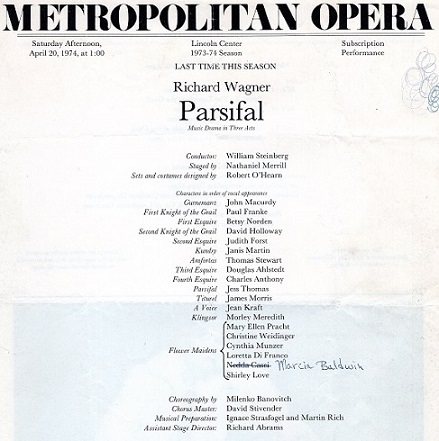
    Parsifal - 1st time-1 jpg

    Fifty years ago today, on April 20th, 1974, I saw my first performance of Wagner’s PARSIFAL  I was in my twelfth year of being an opera-lover, and I understood the importance of seeing this opera for the first time. I’d heard it twice already on Met Texaco Saturday broadcasts: the first in 1966 with Régine Crespin, Sándor Kónya, Walter Cassel, and Jerome Hines, conducted by Georges Prêtre, and the second in 1971, with Irene Dalis, Mr. Kónya, Thomas Stewart, and Cesare Siepi, conducted by Leopold Ludwig. The music seemed way beyond me at the first hearing, though – having been raised in a devout Christian household – I found a lot of it very moving; in fact, I was sometimes moved to tears, though I was not sure why. By 1971, the music seemed much more immediate and the characters – and their stories – began to seem more meaningful. 

    A lot had happened to me between that 1971 broadcast and the afternoon in 1974 that I walked into The Met for my first live performance of this mythic opera. I was, in fact, pretty down at the time. I’d had my first gay sexual experience in October 1973, only to be dumped by the object of my affection soon after. We’d been friends up until our night together, and it wasn’t until a few weeks after that I found out he already had a serious relationship going.

    Uncharacteristically, I stayed away from Gotham for a while, but I kept in touch with another boy in our group, TJ. I had turned to him for solace, and we grew very close, though our ‘first night’ was a disaster. But we really liked each other, so we eventually got on the same groove. As I recall, it was the day after the PARSIFAL that we went to The Frick and it was there, in the Atrium, that we revealed our feelings and decided to make a go of it. A few weeks later, I went up to The Cape to spend the Summer with him. At the end of the Summer, we tried to resume our lives apart, but we missed each other so much that I moved down to live with him in his dorm room at Sarah Lawrence College.

    Anyway, my diary entry about my first PARSIFAL is much briefer than my usual performance notes. As a rule, my diary was hand-written; I am not sure why I typed this entry: Parsifal 2-1 jpg

    I should perhaps clarify that Ms. Martin soon found the ‘staircase’ to her upper register and went on to be a very fine Sieglinde, Ortrud, Dyer’s Wife, and Tosca. Mr. Thomas, who had been my first Calaf and Tristan, went on singing for another eight seasons, with mixed results. Mr. Macurdy continued to develop and refine his Gurnemanz, and it became one of his greatest roles. 

    15747816_10209586751519649_7050039478046055439_n

    The next opera I saw came five months later; by then, I was happily living on campus at Sarah Lawrence with my bookish boyfriend, and posing as a student. Photo by TJ.

    ~ Oberon

  • Graham @ City Center 2024 ~ RITE OF SPRING

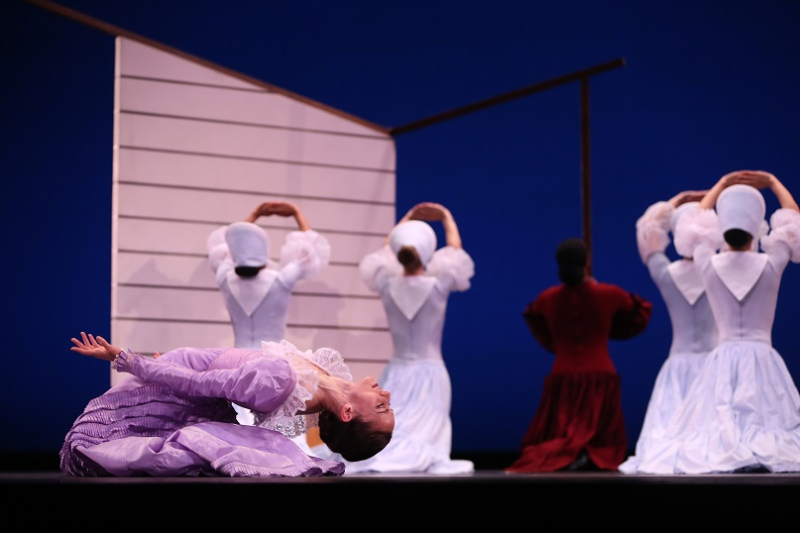
    SCREEN~1

    Above:  Marzia Memoli and Lloyd Knight ~ THE RITE OF SPRING ~ photo by Hibbard Nash

    ~ Author: Oberon

    Friday April 19th, 2024 – Two of Martha Graham’s masterworks book-ended a repeat of Jamar Roberts’ newest work as the Martha Graham Dance Company continued their stint at City Center.

    The Aaron Copland score for APPALACHIAN SPRING was performed by the Mannes Orchestra under the baton of David Hayes. From my 5th row seat on house left, I had a great perspective of the Isamu Noguchi set, and a close-up view of the dancers’ expressive faces. The cast was perfection: the preacher’s followers were a delightful quartet of Graham girls: So Young An, Meagan King, Devin Loh, and Marzia Memoli; their worshipful interest in the pastor was charming.

    MGDC_Appalachian-Spring_MSherwood-74

    Above: Leslie Andrea Williams and Alessio Crognale-Roberts as the Pioneering Woman and The Preacher; photo by Melissa Sherwood

    As the object of his followers attentions, Alessio Corgnale-Roberts made a vivid impression, both in his dancing and his acting. The Preacher is framed as a good guy, but he has a dark side; in a solo danced while the young marrieds pray, Alessio showed a sinister undercurrent in the holy man’s personality. Brilliant!  And Leslie Andrea Williams as the Pioneering Woman was captivating in her quiet strength, her face reflecting the character’s innate nobility. Leslie is the epitome of personal magnetism; even when she is sitting stock still while others dance, you are drawn to her. 

    MGDC_Appalachian-Spring_MSherwood-15

    Above: Jacob Larsen and Anne Souder in APPALACHIAN SPRING; photo by Melissa Sherwood

    Over the years, I have seen many wonderful partnerships in the roles of the Husbandman and his Bride, back to those incredible Graham artists, Miki Orihara and Tadej Brdnik: my first Graham experience – many years ago – at Jacob’s Pillow. Each couple since then have seemed ideal in their own way, and this evening I felt an intrinsic perfection in Jacob Larsen and Anne Souder. Their sheer personal attractiveness would be enough to make them engrossing to watch, but they made so much of their roles, both in their dancing and their acting, that the time-honored ballet took on a new freshness.

    MGDC_Appalachian-Spring_MSherwood-10

    Jacob (above, in Melissa Sherwood’s photo) brings all the facets of his character to life: the energy of a young man, but also his far-searching gaze as he looks out over the land, and the pensive qualities of a new husband who now has a bride to care for and – undoubtedly – a family to raise in his future. Jacob’s athleticism was evidenced in the jumps and barrel turns that Graham weaves into the choreography. His partnering has lyricism and grace.

    MGDC_Appalachian-Spring_MSherwood-103

    Anne Souder as The Bride (above, in Melissa Sherwood’s photo) is a dancer who captures the nuance of every expression, step, and gesture; in doing so, she is never fussy or theatrical…rather, she dances from the heart. Her smile speaks of tenderness, and of hope for the future. There is a solo passage, though, when a shadow of worry passes over this young woman’s lovely face: can she do – and become – everything that is expected of her? Her husband’s embrace reassures her; the dark cloud vanishes.

    MGDC_Appalachian-Spring_MSherwood-91

    Ms. Souder’s technique has a silken, seamless quality; she has the extension of a prima ballerina as well as the combination of power and poetry that is the requisite of a great Graham dancer. I expected so much from her in this role, and was thrilled by her perfection.

    MGDC_Appalachian-Spring_MSherwood-96

    In the end, the newlyweds are left alone, and life begins.

    (APPALACHIAN SPRING photos by Melissa Sherwood)

    WE THE PEOPLE seemed even more powerful than on opening night, which is really saying something. The choreographer described the piece as “Part lament, part protest” which is manifested in the alternating passages of silent solos and vibrant, big-rhythm dance passages for the ensemble. 

    On opening night, I was far back from the stage and, in the prevailing darkness of the piece, I could not always tell who was dancing at any given moment. Tonight, sitting close, I could savour the individual energy and personality of each person onstage. Two of the company’s newer dancers – Devin Loh and Ane Arrieta – seemed super-charged by the music. The spotlit solos for Leslie Andrea Williams, Alessio Crognale-Roberts, and Lloyd Knight were riveting, and the duet for Meagan King and Jacob Larsen provides a contrasting touch of lightness and subtle humor. Laurel Dalley Smith, still on a RODEO high, was fantastic. There were times when it felt like someone (or maybe two) was missing, and that certain phrases had changed hands. A sextet for six women seemed like an octet on opening night, or am I hallucinating?  

    At any rate, WE THE PEOPLE should become a repertory staple of the Graham Company: it’s that good

    The evening closed with my favorite Graham work: RITE OF SPRING. The Mannes Orchestra were back in the pit, playing very impressively indeed under David Hayes’ vibrant command. The Stravinsky score, which – along with Nijinsky’s controversial choreography – caused a near riot at the ballet’s 1913 premiere, no longer seems radical, but instead is a powerful musical document of an unforgettable date in dance history. The wind players of the Mannes ensemble reveled in the score’s quirky demands. The setting where the ritual sacrifice takes place, conceived by the Company’s Artistic Director, Janet Eilber, is under an ominous sky; the feeling is both vast and curiously claustrophobic.

    The choreography is some of the most demanding imaginable, calling for extreme athleticism, intricate steps and gestural motifs, and pinpoint timing. The full Company participates in this grand-scale work, and so we get to know the apprentices – Zachary Jeppsen, Matthew Spangler, Justin Valentine, and Jai Perez – as well as the newest dancers (already making a mark for themselves) – Ane Arrieta, Meagan King, and Antonio Leone. 

    Alessio Crognale-Roberts and Jacob Larsen have a prominent place in the ritual; as the Shaman’s acolytes, they have a lot of work to do, and they do it handsomely, and with stoic resolve.

    It is The Shaman whose solo opens the piece with a ceremonial dance to sanctify the space for the dire ritual to come. The charismatic Lloyd Knight gave a magnificent portrayal as the man ordained by the gods to perform the sacrificial ritual; nothing will deter or distract him from his cold-hearted purpose. Lloyd’s command of the role’s uncanny partnering demands was something to behold. 

    In her debut performance as The Chosen One, Marzia Memoli gave a thrilling performance as she moved from being just another village girl to being the central figure in the gruesome ritual that will keep the community in the good graces of the gods for another year.

    Marzia has always been a truly vivid dancer, fearless and committed, and she now has a role that suits her to perfection. It is a role in which the dancer cannot simply portray the ill-fated character, but must become her. With a font of strength and energy that belies her slender frame, Marzia, with her mane of golden hair, gave a consummate performance, wherein the cross-currents of vulnerability and resolute courage ebb and flow as the girl’s fate closes in on her.

    The dancers were hit by a tidal wave of applause as they filled the stage for a bow. Lloyd Knight was hailed as the king of the Gotham dance world, and then Marzia took her solo bow to rapturous applause while Lloyd handed her a bouquet and they embraced. 

    I was sorry to hear that this memorable RITE had not been photographed for posterity, aside from the studio photo at the top of this article. But I have indelible images from the evening in my mind.

    ~ Oberon