Blog
-
An Evening of Trios @ Carnegie Hall

Performance photo by Chris Lee, courtesy of Carnegie Hall
~ Author: Oberon
Tuesday October 24th, 2023 – Three beloved luminaries of the classical music world joined forces on the Carnegie Hall stage tonight, playing trios by Haydn, Ravel, and Mendelssohn. Pianist Jean-Yves Thibaudet, violinist Lisa Batiashvili, and cellist Gautier Capuçon took the stage to a warm welcome from the crowd.
I’m sure the two gentlemen will forgive me if I mention my particular affection for Ms. Batiashvili; I became familiar with her artistry thru her appearances with the New York Philharmonic during Alan Gilbert’s tenure. Violinist and maestro formed a particularly cordial musical relationship; their rapport was as lovely to watch as to hear. Tonight, it was wonderful to see Lisa on the Carnegie Hall stage, looking elegant in a black trouser number with black stilettos.
The opening Allegro moderato of the Haydn E-major Trio commences with a plucked motif, which will recur at times as the movement goes forward. In the cantabile passages, the sweetness of Ms. Batashvili’s tone was finely meshed with the mellow lyricism of the Capuçon cello, whilst M. Thibaudet at the Steinway produces silvery cascades of notes.
The Allegretto opens with a rather somber unison passages, and then M. Thibaudet begins a long piano solo, with appealing commenting phrases from the violin and cello. Some vivid flourishes near the movement’s end carry us on to the final cadence.
The trio’s final Allegro has a gently bustling feeling, with the players bringing lovely subtleties to the music. A darkish, minor-key interlude develops into a tempest, and the movement then takes a da capo before reaching a coda with retards and pauses etched in. Beautiful blends of timbres, and a sense of camaraderie among the artists that was lovely to observe.
The players rose for a bow, and then immediately sat down to play Maurice Ravel’s Piano Trio.
M. Thibaudet’s delicate piano introduction to the opening Modéré creates a sense of mystery. The strings join, and the music develops a gentle sway. Cello and violin exchange brief melodic sentences, and the music grows passionate. Then Ms. Batiashvili spins out exquisite phrases in the violin’s highest range; following an agitato interruption. The music turns dreamy.
Ravel titles the second movement Pantoum, which refers to a Malaysian form of poetry. It is sprightly and dancelike, with the strings conversing. There are some stormy bits, and then an acceleration. M. Thibaudet opens the third movement, Passacaille, with a low, simple theme. M. Capuçon joins, with a hauntingly deep, rather mournful melody, and Ms. Batiashvili brings her magic to a ravishing solo. Passion waxes and wanes, with the music becoming dense and darkish; things quieten for a sustained cello solo, richly played. The piano brings the movement to a close.
The last movement of the Ravel is an Allegro appassionato. It has a high, airy start, luminously played from our trio. The music gets grand. Ms. Batiashvili executes a sustained trill, to which M. Capuçon replies with a trill of his own. At the Steinway, M. Thibaudet’s technical wizardry is on display. The music rushes on, restless…and dazzling.
The Mendelssohn piano trios are the first chamber works I fell in love with, and while the first of the two is my favorite, I am always very pleased to hear either of them played live. Tonight, it was the second that was on offer, played to perfection.
The C-minor Piano Trio finds Mendelssohn at his passionate, rhapsodic finest. The pianist immediately sets the tone with an unsettled opening theme; a second theme – song-like and fervent – takes over, played first by the violin and cello with the piano accompanying. M. Thibaudet is simply marvelous here, and the ebb and flow of the familiar melodies gave a feeling of reassurance.
The piano opens the ensuing Andante, lending a feeling of peace. Violin and cello harmonize with extraordinary beauty of tone, creating a wistful mood. Next comes a true Mendelssohnian delight: a jittery, scrambling Scherzo, to which the players brought pristine technique and spine-tingling nuances. The trio’s finale veers from between minor and major modes, with mood swings shifting from agitated to tranquil. Here the perfect blending of the three voices was at its most savourable.
The audience, one of the most attentive and alert in recent seasons, cheered heartily as the musicians took their bows. An encore was demanded: the Vivace from Dvořák’s Piano Trio in E-minor, Opus 90. The music has a gypsy lilt and featured a long solo for Ms. Batiashvili, a remarkably sustained tremelo from M. Capuçon, and an array of delights from M. Thibaudet.
After a couple of weeks of my feeling out-of-sorts, this concert provided a miracle cure. Thank you, Lisa, Jean-Yves, and Gautier!!

Heading out for a bow; photo by Chris Lee

Photo by Chris Lee, courtesy of Carnegie Hall
~ Oberon
-
John Cage’s Ryoanji at the Japan Society
Above: John Cage in Japan; photo by Yasuhiro Yoshioka, Courtesy of Sogetsu Foundation
Author: Shoshana Klein
Sunday October 22nd, 2023 – The Japan Society is doing a John Cage’s Japan series, of which this was the second installment. It was directed by Tomomi Adachi and played by members of the International Contemporary Ensemble.
The premise is very interesting – the performers play John Cage’s Ryoanji, and there is a video with reactive elements. After intermission, the video is played back and the performers use it as a score to perform again. I was left with many questions – though I read most of the program, I think it could have benefited from explanations of some sort.
First of all, some musicians were here, and some were in Japan, supposedly. There was a vocalist and a Hichiriki (according to the program) coming from speakers, but we never saw these performers or were introduced to them. It was also 300 AM in Japan, so I’m not sure how likely it was that they were performing live in this performance. They were not present for the second half. Instead, Adachi (I think) performed with the original trio.
It was unclear to me how the video was reactive to the musicians – it was a sort of constellation visual with points of light moving around, and brightly colored lines and shapes would appear, connecting these star-like dots. If the lines and shapes were related to the audio being played, I couldn’t figure out how – my best guess for the video reactivity had to do with the perspective and the amount of movement. For instance, for a while it seemed like the perspective, zoom, and amount of movement of the start may be affected by the musicians, but if so, it seemed to change throughout the performance. It was interesting to try to figure out and they were cool visuals, but relatively static throughout the 20 or 30 minute performance.
The piece, musically, was pretty sparse and I had trouble finding structure or latching on to anything, but the musicians obviously played well together and there were moments of responsiveness that were nice. Reading about the score is helpful – it’s not really notated and the performers are basically playing graphic scores of drawings of rocks. It should be noted that I do like John Cage, at least theoretically – I think his ideas and philosophical concepts are very interesting, but sometimes I find it hard to translate that to an enjoyable auditory experience.
The second half had significantly more musical movement, though it wasn’t clear how they were using the video as a score, and it appeared that they were also reading music (maybe the original score in combination?). It seemed shorter than the first half but I’m not sure that it was, it could have been my perception since there was so much more to listen for. All in all, an interesting experience that I would have liked to know more about.
~ Shoshana Klein
-
John Cage’s Ryoanji at the Japan Society
Above: John Cage in Japan; photo by Yasuhiro Yoshioka, Courtesy of Sogetsu Foundation
Author: Shoshana Klein
Sunday October 22nd, 2023 – The Japan Society is doing a John Cage’s Japan series, of which this was the second installment. It was directed by Tomomi Adachi and played by members of the International Contemporary Ensemble.
The premise is very interesting – the performers play John Cage’s Ryoanji, and there is a video with reactive elements. After intermission, the video is played back and the performers use it as a score to perform again. I was left with many questions – though I read most of the program, I think it could have benefited from explanations of some sort.
First of all, some musicians were here, and some were in Japan, supposedly. There was a vocalist and a Hichiriki (according to the program) coming from speakers, but we never saw these performers or were introduced to them. It was also 300 AM in Japan, so I’m not sure how likely it was that they were performing live in this performance. They were not present for the second half. Instead, Adachi (I think) performed with the original trio.
It was unclear to me how the video was reactive to the musicians – it was a sort of constellation visual with points of light moving around, and brightly colored lines and shapes would appear, connecting these star-like dots. If the lines and shapes were related to the audio being played, I couldn’t figure out how – my best guess for the video reactivity had to do with the perspective and the amount of movement. For instance, for a while it seemed like the perspective, zoom, and amount of movement of the start may be affected by the musicians, but if so, it seemed to change throughout the performance. It was interesting to try to figure out and they were cool visuals, but relatively static throughout the 20 or 30 minute performance.
The piece, musically, was pretty sparse and I had trouble finding structure or latching on to anything, but the musicians obviously played well together and there were moments of responsiveness that were nice. Reading about the score is helpful – it’s not really notated and the performers are basically playing graphic scores of drawings of rocks. It should be noted that I do like John Cage, at least theoretically – I think his ideas and philosophical concepts are very interesting, but sometimes I find it hard to translate that to an enjoyable auditory experience.
The second half had significantly more musical movement, though it wasn’t clear how they were using the video as a score, and it appeared that they were also reading music (maybe the original score in combination?). It seemed shorter than the first half but I’m not sure that it was, it could have been my perception since there was so much more to listen for. All in all, an interesting experience that I would have liked to know more about.
~ Shoshana Klein
-
Tucker Gala ~ 1988
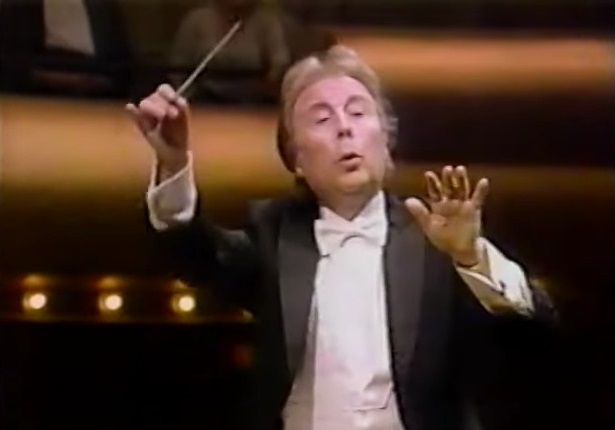
Above: Maestro Anton Guadagno
The usual stellar line-up for the 1988 Richard Tucker Gala.
Watch and listen here.
-
Le Concours des Castrats ~ 2021

Music from the golden age of the castrati, performed by Filippo Mineccia, Samuel Mariño, and Valer Sabadus, with the Orchestre de l’Opéra Royal conducted by Stefan Plewniak.
Watch and listen here.
-
Philadelphia Orchestra ~ Rachmaninov/Higdon

Above: Sergei Rachmaninov
~ Author: Ben Weaver
Tuesday October 17th, 2023 – The Philadelphia Orchestra was Sergei Rachmaninov’s favorite orchestra. He not only composed multiple works which they premiered, but it was the orchestra he chose to record his symphonies and piano concertos with. And, through the decades, the Philadelphians have played Rachmaninov as well as anyone and better than most.
The orchestra’s current artistic director, Yannick Nézet-Séguin, has already recorded Rachmaninov’s complete symphonies and piano concertos (with Daniil Trifonov as soloist) and is continuing his presentation of the works at Carnegie Hall. (In a one-time-only mega event, pianist Yuja Wang and the combination of maestro Nézet-Séguin and Philadelphia Orchestra performed all the piano iano Concertos and the Rhapsody on the Theme of Paganini at Carnegie Hall in a single memorable concert last season.) On October 17th Nézet-Séguin presented a marvelous evening of two of Rachmaninov’s audience favorite works: the Symphonic Dances and Symphony No. 2.
Rachmaninov composed the Symphonic Dances in 1940 and the Philadelphia Orchestra and Eugene Ormandy premiered it in January of 1941. Apparently Ormandy was not very fond of the work, though he did perform it frequently and record it more than once.
The first dance opens with a three-note staccato motif, dark – even sinister – in tone, and it remains the driving rhythmic force throughout the movement. An alto saxophone plays a memorable role during the quieter moments (alas the wonderful player is not specified in the Playbill.) Rachmaninov ends the movement with a modified quote from his First Symphony, a work that had been lost 40 years earlier, so he knew nobody would have any idea what they were hearing. (The score was fortunately discovered again, but after Rachmaninov died, so he did not get an opportunity to hear it again after it’s catastrophic premiere led to his composers’ block.) Maestro Nézet-Séguin took a hard-driven, very steady, and deliberate pacing in the beginning of the work, speeding up considerably when the opening theme returned later in the movement.
The second dance is a stilted Waltz that I always thought of a cousin to Ravel’s La Valse. The compositions share an odd limping rhythm, the wistful minor key melodies swirling like aged ballerinas remembering happier days. Perhaps Nézet-Séguin lingered a little too much occasionally here, but always recovered the pulse of the work. The final dance, with its heavy reliance on the Dies Irae (a theme Rachmaninov used in many of his works) fights against a quotation from Rachmaninov’s own All-night Vigil Vespers, as light tries to conquer darkness. It seems the heavens win (Rachmaninov even scribbled “Hallelujah” in the score.) The Philadelphia Orchestra and Nézet-Séguin dazzled all the way through.
The Symphony No. 2 in E minor, Op. 27 is, along with his Piano Concerto No. 2, Rachmaninov’s most beloved work and oft-performed work. A gigantic, lush, deeply Romantic and melodic work was a hit from its premiere (conducted by Rachmaninov himself in St. Petersburg in 1908; the US premiere took place just one year later in – where else – Philadelphia under the composer’s baton.) Maestro Nézet-Séguin’s interpretation was magnificent, sometimes even revelatory. The tumultuous climax of the first movement, with its howling brass, for the first time reminded me of Tchaikovsky’s Pathétique Symphony. The magnificent Adagio movement – with a ravishing melody everyone recognizes – contains a tremendous extensive solo for the clarinet, played by principal clarinetist Ricardo Morales with incredible beauty and tenderness that made you lean forward. The final Allegro vivace movement was a high voltage thrill ride which the orchestra dispatched with effortless aplomb.
I must acknowledge that the concert opened with a performance of Jennifer Higdon’s Fanfare Ritmico, a brief 1999 piece I occasionally thought may have resembled John Adams’ “Short Ride in a Fast Machine.” But the resemblances were fleeting even if they existed. My red flags went up when I looked at the list of instruments used in this 6 minute piece and it contains, as so many contemporary works do, every imaginable percussion instrument there is. Perhaps 2/3 of the instruments listed were percussive. I suppose to Higdon’s credit she does not use them all at once (something others do and never to anybody’s benefit). But she does fall into the same trap countless contemporary composers do where being unable to transition from one theme to another, the easiest path is to have somebody hit something. And so things kept getting hit. When it ended I said to my companion: “Well, whatever that was, they played it very well.”
~ Ben Weaver
-
Thomas Schippers Conducts DON CARLO
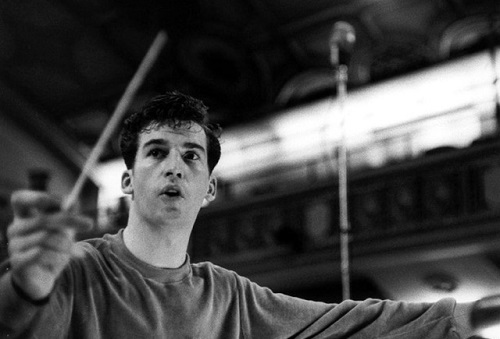
Thomas Schippers (above) conducts a performance of Verdi’s DON CARLO given by RAI Rome in 1969.
Listen here.
CAST:
Don Carlo: Bruno Prevedi
Elisabetta: Teresa Zylis-Gara
Philip II: Nicolai Ghiaurov
Princess Eboli: Fiorenza Cossotto
Rodrigo: Piero Cappuccilli
Grand Inquisitor: Dimiter Petkov
A Monk: Ubaldo Caroli
-
Virginia Zeani & Agostino Lazzari: BUTTERFLY duet
Virginia Zeani and Agostino Lazzari sing the Act I love duet from Puccini”s MADAMA BUTTERFLY from a concert given at Hamburg in 1956. Listen here.
-
Virginia Zeani & Agostino Lazzari: BUTTERFLY duet
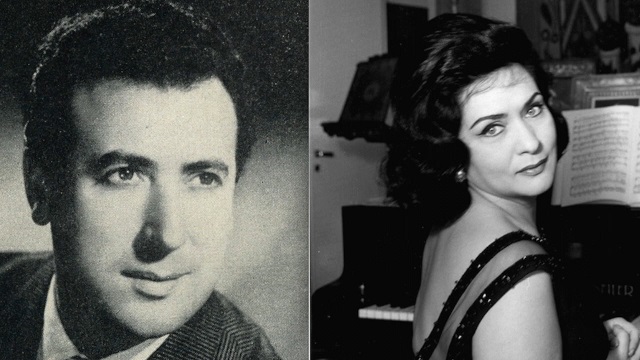
Virginia Zeani and Agostino Lazzari sing the Act I love duet from Puccini”s MADAMA BUTTERFLY from a concert given at Hamburg in 1956. Listen here.


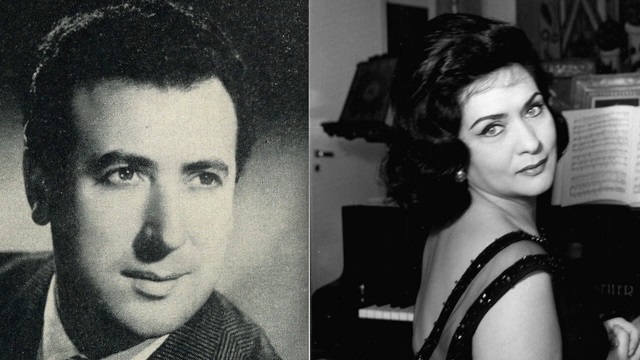
 Oberon's Glade
