Blog

  • Aldo Protti’s Prologo…and Credo

    5a98e51316e41

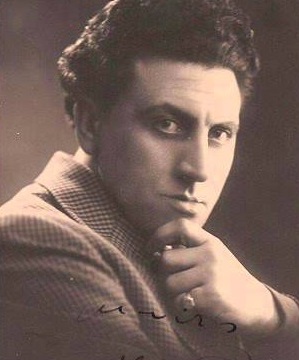
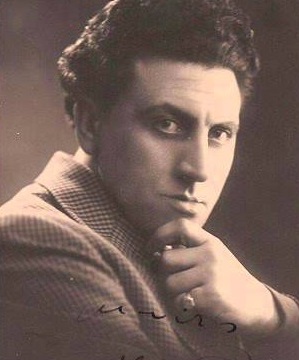
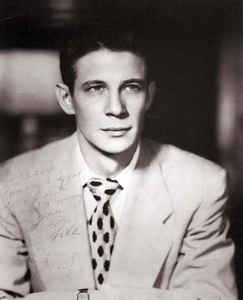
    The Italian baritone Aldo Protti (1920-1995) was a native of Cremona. He studied at Parma, and made his operatic debut in 1948, at the Teatro Pergolesi in Jesi, as Rossini’s Figaro. Within two years, he was at La Scala, singing Amonasro in AIDA. From that point forward, Protti sang in Italy’s leading theaters as well as making guest appearances in Vienna; he participated in several broadcasts for the RAI, and in 1957 sang at Lyric Opera of Chicago as Barnaba (GIOCONDA) and Marcello (BOHEME).

    Protti made important recordings for Decca, including a 1954 OTELLO with del Monaco and Tebaldi, Alberto Erede conducting. When Herbert von Karajan planned his stereo-remake of that Verdi opera for Decca in 1961, Ettore Bastianini was chosen to sing Iago. But Bastianini had failed to learn the part, so Karajan called upon Protti to repeat the role; the baritone surpassed his earlier recorded portrayal both vocally and in terms of characterization.

    In 1985, at the age of 65, Protti sang a single performance as Rigoletto at The Met. He then joined the Company on tour, singing the role in six cities (including in Boston, where his Gilda was Roberta Peters in her final performance with The Met). He sang Rigoletto twice more, in concert form, with The Met in the Parks.

    Rigoletto was Protti’s most frequent role, which he performed 425 times in all; Scarpia, Count di Luna, and and Iago each figured prominently in his repertoire, with 100 performances of each role in his résumé.

    Also Protti passed away at Cremona in 1995.

    Aldo Protti – Prologo ~ PAGLIACCI

    Aldo Protti – OTELLO ~ Credo – Karajan cond

    ~ Oberon

  • Aldo Protti’s Prologo…and Credo

    5a98e51316e41

    The Italian baritone Aldo Protti (1920-1995) was a native of Cremona. He studied at Parma, and made his operatic debut in 1948, at the Teatro Pergolesi in Jesi, as Rossini’s Figaro. Within two years, he was at La Scala, singing Amonasro in AIDA. From that point forward, Protti sang in Italy’s leading theaters as well as making guest appearances in Vienna; he participated in several broadcasts for the RAI, and in 1957 sang at Lyric Opera of Chicago as Barnaba (GIOCONDA) and Marcello (BOHEME).

    Protti made important recordings for Decca, including a 1954 OTELLO with del Monaco and Tebaldi, Alberto Erede conducting. When Herbert von Karajan planned his stereo-remake of that Verdi opera for Decca in 1961, Ettore Bastianini was chosen to sing Iago. But Bastianini had failed to learn the part, so Karajan called upon Protti to repeat the role; the baritone surpassed his earlier recorded portrayal both vocally and in terms of characterization.

    In 1985, at the age of 65, Protti sang a single performance as Rigoletto at The Met. He then joined the Company on tour, singing the role in six cities (including in Boston, where his Gilda was Roberta Peters in her final performance with The Met). He sang Rigoletto twice more, in concert form, with The Met in the Parks.

    Rigoletto was Protti’s most frequent role, which he performed 425 times in all; Scarpia, Count di Luna, and and Iago each figured prominently in his repertoire, with 100 performances of each role in his résumé.

    Also Protti passed away at Cremona in 1995.

    Aldo Protti – Prologo ~ PAGLIACCI

    Aldo Protti – OTELLO ~ Credo – Karajan cond

    ~ Oberon

  • CMS Summer Evenings 2023 ~ Concert 4

    Juho_Lisa-Marie Mazzucco jpg

    Above: pianist Juho Pohjonen, photo by Lisa-Marie Mazzucco

    Author: Oberon

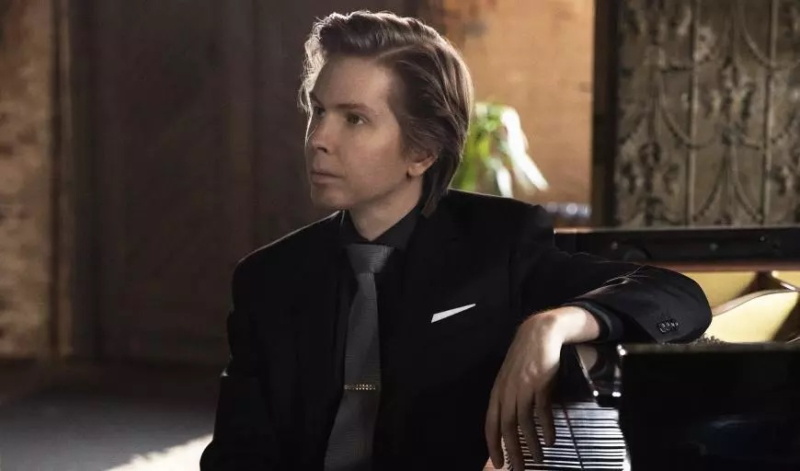
    Tuesday July 18th, 2023 – The final concert in Chamber Music Society of Lincoln Center‘s 2023 Summer Evenings series presented a quintet of distinctive artists in music of Haydn, Mozart, and Fauré. The remarkable Finnish pianist Juhi Pohjonen was at the center of this engrossing program, playing in all three works with the combination of passion and subtlety that is his trademark.

    Haydn’s Trio in E-flat major for Violin, Cello and Piano, Hob. XV:29, dating from 1797, made for an elegant start to the evening. The opening Poco allegretto commences with a sustained note from the three artists: violinist Stella Chen, cellist Sihao He, and Mr. Pohjonen. The music then progresses in a ‘theme and variations’ setting, briefly entering the minor mode. The pianist’s rippling florid passages delighted the ear, whilst violin and cello duetted lyrically.

    The pianist opens the Andante with the most delicate of pianissimi, taking up a simple melody in which the three voices blend sweetly. The ebb and flow of passion and restraint leads to a mini-cadenza from the pianist before the Allemande finale kicks off with a burst of energy.  Mr. Pohjonen spins off immaculate fiorature laced with trills, whilst Sihao He offers rapid cello scalework. After pausing for a playful piano passage, the music dances on: winding down, only to re-boot to a zesty finish.

    Mozart’s Concerto No. 12 in A -major for Piano and String Quintet, K. 414, was written in 1782 for the composer himself to perform, with a small ensemble; the string quartet setting was created later. This piece offers a perfect showcase for Mr. Pohjonen’s artistry.

    The opening Allegro features genial strings: violist Beth Guterman Chu has joined violinists Stella Chen and Danbi Um, with Sihao He’s mellow sound enriching the harmonies. Mr. Pohjonen’s marvelous tone and sparkling agility are pure magic. Ms. Guterman Chu, with a gleam in her eye, is a wonderful addition to the ensemble, whilst Sihao He’s rich-toned descending motifs are truly appealing. At last comes a fabulous Pohjonen piano cadenza, so gracefully played.

    The Andante suffered from the intrusion of two dropped objects and a jangling cellphone, but the artists kept their focus, opening with a string quartet. Mr. Pohjonen’s nuanced playing was just sublime, and I must again praise Sihao He’s plush sound. A minor-key piano passage underlined by sighing strings achieves a marvelous blend, and Mr. Pohjonen’s cadenza was offered in a hushed pianissimo, with trills etched in.

    The final Rondeau: Allegretto is lively indeed, with nimble, utterly clear piano phrases and unison string passages, which eventually develop into a fugue. Full stop…and then the pianist’s virtuosity was in full   flourish, pausing only for some enticing delicate measures along the way. Bravo Juho!

    Following a rather longish the interval, Gabriel Fauré’s Quartet in C-minor for Piano, Violin, Viola, and Cello No. 1, Op. 15, was given a luminous performance by Mr. Pohjonen, Danbi Um, Beth Guterman Chu, and Sihao He.

    The opening Allegro molto moderato momentarily has an à la Russe feeling, later becoming quietly rapturous. A piano theme is soon taken up by Danbi Um’s silken violin, then passed on to Ms. Chen and Ms. Guterman Chu. The music becomes overwhelmingly beautiful and passionate, before turning more lyrical. Mr. Pohjonen’s sorcery is again evidenced in the movement’s sustained conclusion.

    Delicate plucking opens the Scherzo, with sprightly motifs from the Steinway: all is lightness and air. Rhythms compete, the music covering a broad dynamic range with shifts of energy. After a false finish, the piano gently resumes. The unison strings then part company, taking up slithering scales. The music dances on, full of fun.

    Sihao He introduces the Adagio with an achingly gorgeous theme; the strings unite, and the pianist is at his most pensive. Danbi Um’s violin sounds radiantly, whilst the violist and cellist, playing in unison, introduce darker hues. These lower voices join Danbi in poignant harmonies. The music is lush and passionate until a sudden mood swing comes from the piano, playing pianissimo.  The the opening cello solo returns, and a feeling of time standing still gave me the chills…so haunting. Then Mr. Pohjonen offers a final benediction.

    In the final Allegro molto, we can simply sit there and savour the vibrant playing that’s on offer. Juho is beyond splendid, and bits of melody are passed about among the string players. After a brief interlude, the music seems to be summoning energy for a big finish, but instead there’s a full stop. From the silence, Danbi Um’s exquisite sound emerges, opening a pathway to a grand and sweeping finish.

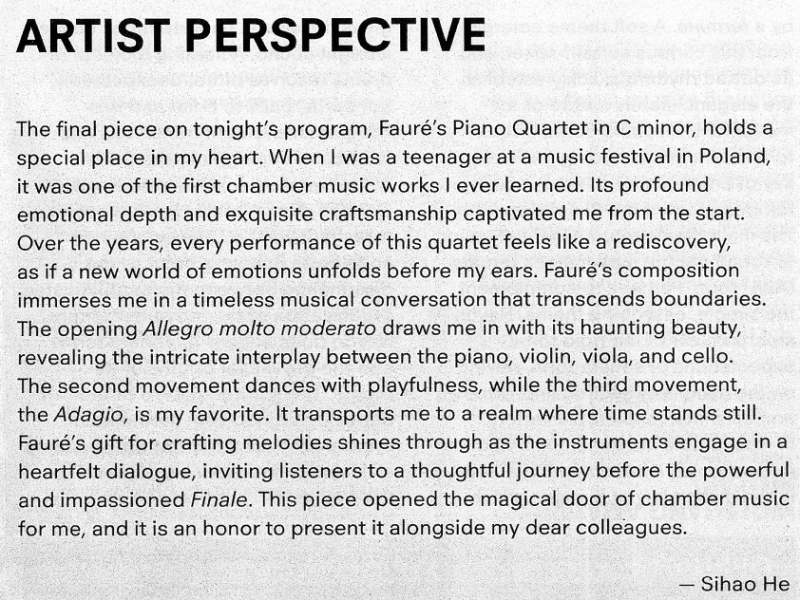
    Cellist Sihao He wrote of his experience learning the Fauré C-minor quartet as a teenager; I wanted to include his thoughts about the work here, as they align perfectly with my own:
    Faure-1 jpg

    ~ Oberon

  • Anna Moffo Sings Verdi

    Moffo autograph

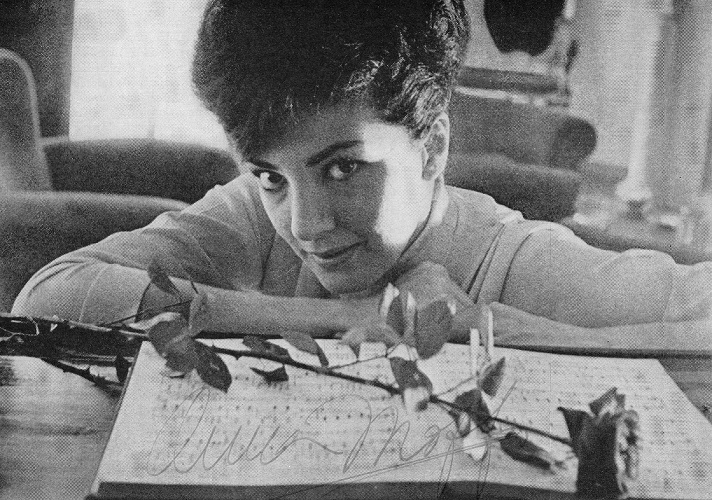
    Anna Moffo, a beloved star at The Met in the 1960s and 1970s, made an album of Verdi arias from roles she never sang onstage. Entitled A Verdi Collaboration, the program was conducted by Franco Ferrera.

    (The photo above is autographed, though the signature has faded.)

    Here are some tracks from this wonderful and largely forgotten recording.

    Anna Moffo – ERNANI – aria

    Anna Moffo – SIMON BOCCANEGRA – aria

    Anna Moffo – VESPRI SICILIANI – aria

    Anna Moffo ~ Morró ma prima in grazia – BALLO IN MASCHERA

  • TRISTAN UND ISOLDE ~ Chicago 1979

    Knie vickers

    Above: Roberta Knie as Isolde & Jon Vickers as Tristan; photo by Tony Romano

    A performance of Wagner’s TRISTAN UND ISOLDE given by Lyric Opera of Chicago in 1979. Franz-Paul Decker conducts, with the following cast:

    Tristan – Jon Vickers
    Isolde – Roberta Knie
    Brangaene – Mignon Dunn
    Marke – Hans Sotin
    Kurwenal – Siegmund Nimsgern
    Melot – Richard Versalle
    Shepherd – Gregory Kunde
    Steersman – Daniel McConnell
    Voice of a Young Sailor – William Mitchell

    Listen here.

  • Franco Corelli as Radames

    6a00d8341c4e3853ef0224e037634e200d-800wi

    Franco Corelli sings Radames’ great arias Celeste Aida from a 1962 Met broadcast; Giorgio Tozzi sings Ramfis.

    Franco Corelli – Celeste Aida – AIDA – with Giorgio Tozzi – Met b’cast 1962


  • Norman Treigle Sings Carlisle Floyd

    N t

    The great American basso Norman Treigle (above) sings songs from Carlisle Floyd’s Pilgrimage. Listen here.

    Pilgrimage is described as a “solo cantata on Biblical texts, for low voice and piano or orchestra”; it was premiered by Mr. Treigle at Syracuse, New York, in 1960. Further information on this work may be found here.

  • Soňa Červená

    Cervena

    Soňa Červená (above) sings the aria “Connais-tu le pays ?” from Ambrose Thomas’ MIGNON, recorded under the baton of Heinz Fricke. Listen here.

    Ms. Červená, a Czech mezzo-soprano who recently passed away at the age of 97, was a mainstay at the Frankfurt Opera, and was on the roster of singers at the National Theatre in Prague. She also appeared with the San Francisco Opera.

    After reading of her passing, I listened to more of her recordings and was quite taken with her rather unusual rendering of Mahler’s Kindertotenlieder. Listen here.

    Sona cervena

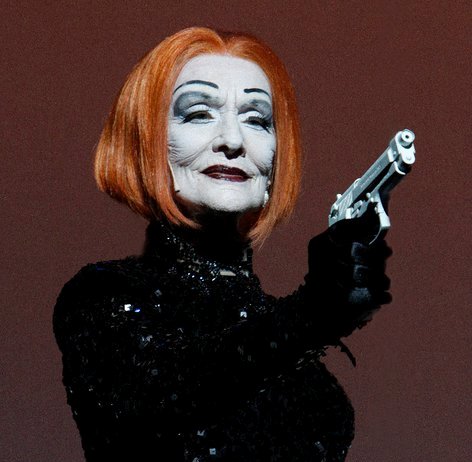
    Following her retirement from singing, Ms. Cervena continued her stage career, appearing as Emilia Marty (above) in a Robert Wilson production of Karel Čapek’s drama The Makropulos Case at the National Theatre in Prague. She debuted in this staging in November 2010, and returned to the role many times, performing well into her 80s.

  • Samuel Barber ~ Symphony #1

    Samue barber

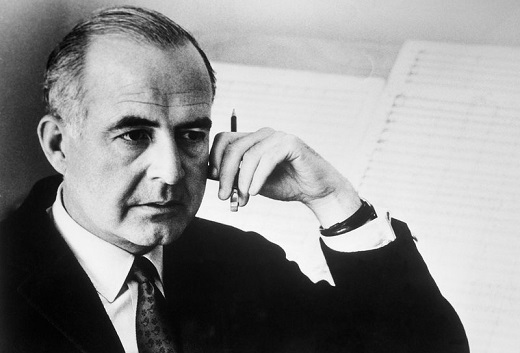
    Above: Samuel Barber (1910-1981)

    The Chicago Youth Symphony Orchestra, conducted by Allen Tinkham, in a 2018 performance of Samuel Barber’s Symphony #1, Opus 9.

    Watch and listen here.