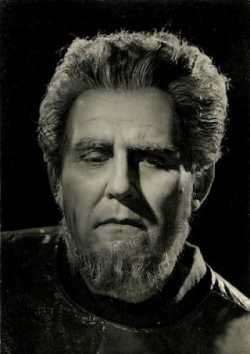
Above: basso Otto von Rohr
From 1952 comes this performance of Act I of Wagner’s DIE WALKURE with Gunther Treptow, Hilde Konetzni, and Otto von Rohr, with the RAI-Rome Orchestra conducted by Wilhelm Furtwängler.
Listen here.
Above: basso Otto von Rohr
From 1952 comes this performance of Act I of Wagner’s DIE WALKURE with Gunther Treptow, Hilde Konetzni, and Otto von Rohr, with the RAI-Rome Orchestra conducted by Wilhelm Furtwängler.
Listen here.

Friday June 24th, 2022 – Richard Lin (above), Gold Medalist at the 2018 International Violin Competition of Indianapolis, in recital at Carnegie Hall, with Thomas Hoppe at the Steinway.
Earlier this season I heard Mr. Lin in his debut performance with Chamber Music Society of Lincoln Center and was very impressed with his playing. I met Thomas Hoppe many years ago while he was at Juilliard; he has since developed a stellar reputation as a collaborative pianist and teacher.
The concert fell on a day when a life-altering ruling by the Supreme Court cast a pall over everything…a ruling that bodes ill for my humble desire to live out my remaining days in peace. How did it come to this? My companion for the evening and I were extremely depressed and angry, and we debated skipping the concert; but in the end we found peace – at least for a couple of hours – in the sanctuary of Carnegie Hall and in the timeless beauty of the music, so marvelously played by Mssrs. Lin and Hoppe.
T.A. Vitali’s Chaconne in G-Minor opened the program; this captivating piece opens with ghostly music from the piano; the violinist then takes up a yearning melody. As the music become more animated, the combined artistry of the two players makes for a very pleasing sonic experience; they share a gift for dynamic variety and for great clarity, especially in some delicate fiorature. And there is a gorgeous sheen on Mr. Lin’s timbre.
Richard Strauss’ Violin Sonata in E-flat Major, Op. 18, a chamber work by the composer of my two favorite operas, was an engrossing experience as played by Mssrs. Lin and Hoppe tonight. From its joyous start, the opening Allegro, ma non troppo, was filled with wonderful and subtle passages: with rippling keyboard figurations, exquisite themes in the violin’s high range, moments of dreamy softness…and the occasional touch of drama.
The central movement brings us a Viennese-style cantabile, possibly a bow to the composer’s ardent love for the soprano Pauline de Ahna, who he had met in the year of the sonata’s composition (1888) and who he would later marry. In fact, Strauss eventually allowed this movement to be published separately. Mr. Hoppe’s perfect playing here entwined with the sweet song of the violin, creating an enchantment of piano/pianissimo music-making of great poetic appeal. A flurry of agitato may presage the storminess that sometimes developed in the Strauss/de Ahna marriage. The extreme delicacy achieved by the players as the music moved on was a display of their amazing control.
The sonata’s finale begins with a hushed, almost sombre prelude for the piano; then the music bursts forth in the energetic main theme, which is audibly related to the opening (and closing) passages of the first movement. The music is both emotionally and technically demanding; a sort of downhill piano cadenza leads to the sonata’s thrilling finish. The audience, wonderfully attentive throughout the evening’s first half, called the players back for a bow with persistent applause.
Above: pianist Thomas Hoppe
The second half of the program was less interesting musically, though impeccably played. Pairing Corigliano with a Igor Frolov’s arrangement of tunes from Gershwin’s Porgy and Bess had the feeling of a pops concert. Both of these pieces place high demands on the players, but the music – while entertaining – is not engaging on a deeper level.
John Corigliano’s Violin Sonata, written during 1962-63, is a long piece in four movements. Originally entitled Duo, it treats the two instruments as co-partners. Virtuosity is called for, but it seems lacquered on rather than an integral part of the piece. There’s some quirky technical stuff to be dealt with, and traces of blues influence. The third movement, Lento, feels overly long, despite being superbly played, and with a remarkable final sustained note from the violinist. The sonata’s final Allegro is exuberant, full of light and dazzle, but it later calms and overstays its welcome.
To end his recital, Mr. Lin gave us Igor Frolov’s “Concert Fantasy on Themes from Gershwin’s Porgy and Bess”; here, one by one, the celebrated Gershwin tunes are rolled out in sterling renditions by Mssrs. Lin and Hoppe: “Bess, You Is My Woman Now”; “My Man’s Gone Now”; “I Got Plenty of Nuthin’”; “Summertime”, and “It Ain’t Necessarily So”. Mr. Lin’s violin soared with distinction it it highest range, and the two players seemed to urge one another on to feats of virtuosity.
To eager applause, the players returned for two encores: Debussy’s “Beau soir” was luminously played, and they followed this with the demanding Kreisler showpiece, “Tambourin Chinois“. It seemed a third encore was in the offing as we left the Hall.
Mr. Lin will be back with Chamber Music Society of Lincoln Center next season, and I look forward to hearing him again.
~ Oberon

Yvonne Minton (above) sings Edward Elgar’s Sea Pictures with the London Philharmonic Orchestra, conducted by Daniel Barenboim.
Listen here.
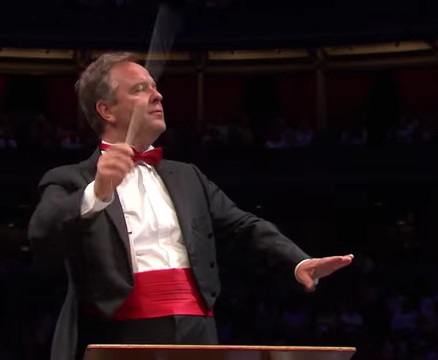
The BBC Symphony Orchestra conducted by Sakari Oramo (above) play Carl Nielsen’s MASKARADE overture at the First Night of the Proms, 2015.
Watch and listen here.
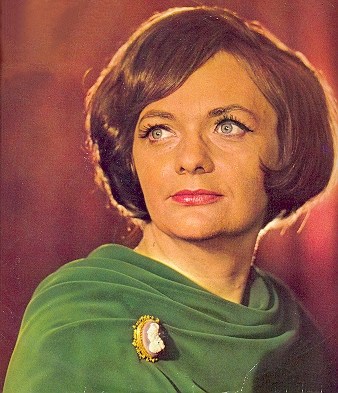
Annelies Burmeister (above) sings Johannes Brahms’ Alto Rhapsody with the Leipzig Radio Symphony and Choir, conducted by Heinz Bongartz.
Listen here.

Above: Eva Randová as Kundry
Horst Stein conducts Wagner’s PARSIFAL at the Bayreuth Festival 1981. Watch and listen here.
Cast:
Amfortas: Bernd Weikl ~ Titurel: Matti Salminen ~ Gurnemanz: Hans Sotin ~ Parsifal: Siegfried Jerusalem ~ Klingsor: Leif Roar ~ Kundry: Eva Randová ~ 1st Knight of the Grail: Toni Krämer ~ 2nd Knight of the Grail: Heinz Klaus Ecker ~ 1st Squire: Marga Schiml ~ 2nd Squire: Hanna Schwarz ~ 3rd Squire: Helmut Pampuch ~ 4th Squire: Martin Egel ~ Flower Maidens: Norma Sharp, Carol Richardson, Hanna Schwarz, Mari-Anne Häggender, Marga Schiml, and Margit Neubauer ~ Alto Solo: Hanna Schwarz

Mary Curtis-Verna sings the “Vissi d’arte” from Puccini’s TOSCA on the Ed Sullivan Show in 1950.
Watch and listen here.
She sent me the above photograph after I sent her a fan letter. Ms. Currtis-Verna has a special place in my heart: she was my first-ever Turandot, at The Met in 1965, making a vivid impression.

Above: Kristin Draucker in Paul Taylor’s Images and Reflections
Some images from Paul Taylor Dance Company‘s June 2022 season at The Joyce; the photos are by Ron Thiele. Read about the Company’s opening night performance here.
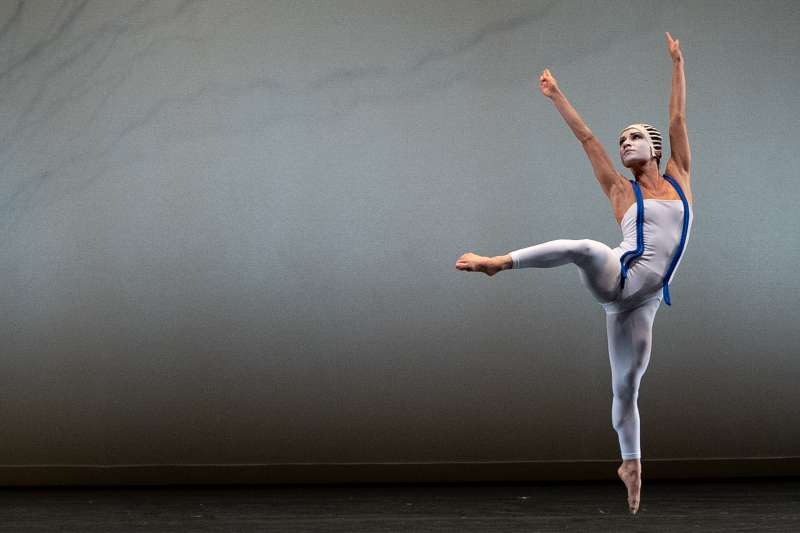
Lisa Borres in Paul Taylor’s FIBERS
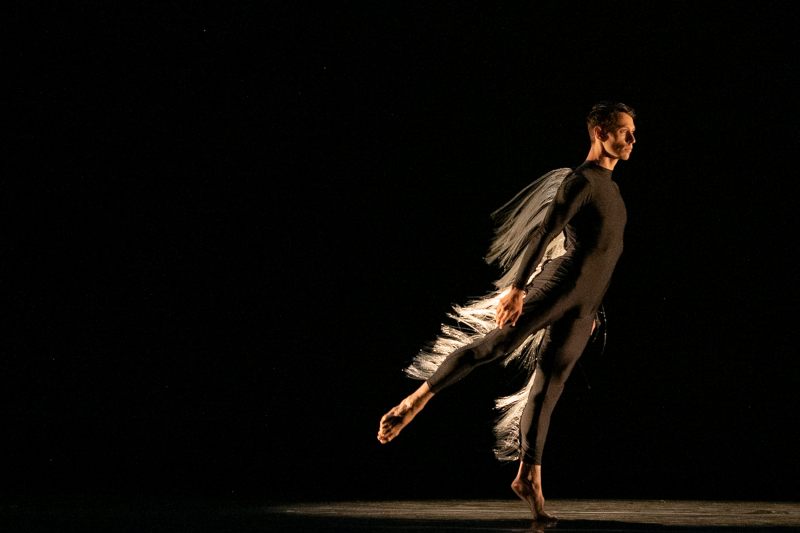
John Harnage in Paul Taylor’s Images and Reflections

From Michelle Manzanales’ HOPE IS THE THING WITH FEATHERS

Lisa Borres and Devon Louis in Paul Taylor’s FIBERS

Eran Bugge, Madelyn Ho, Alex Clayton, and John Harnage in Paul Taylor’s PROFILES

Shawn Lesniak and the Company in Michelle Manzanales’ HOPE IS THE THING WITH FEATHERS
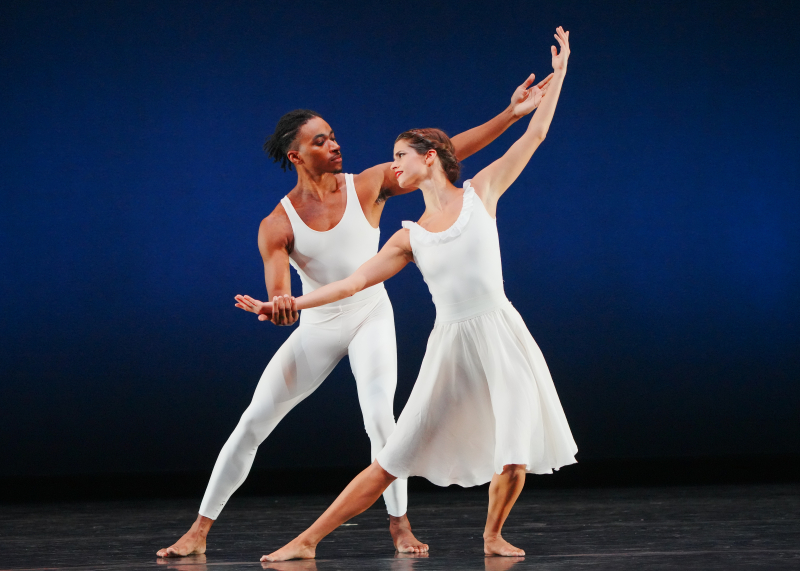
Devon Louis and Maria Ambrose in Paul Taylor’s AUREOLE

Madelyn Ho, John Harnage, and Eran Bugge in Paul Taylor’s PROFILES
All photos by Ron Thiele, courtesy of the Paul Taylor Dance Company
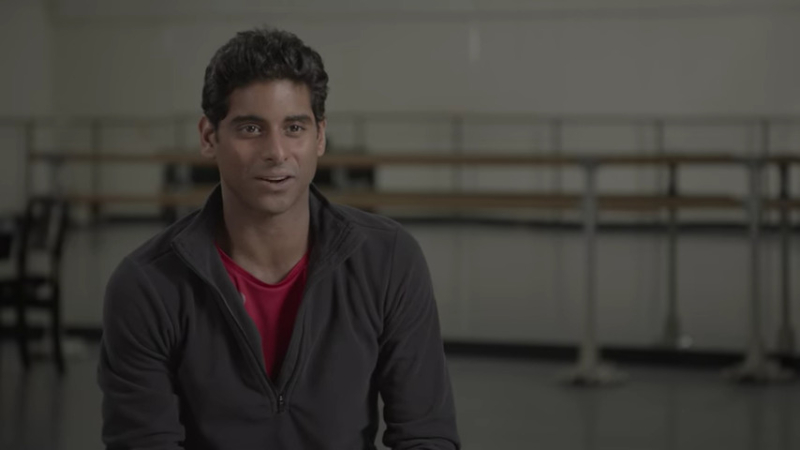
Above: New York City Ballet principal Amar Ramasar
Author: Oberon
Sunday May 29th, 2022 matinee – This afternoon, we bade farewell to one of New York City Ballet‘s most popular stars: Amar Ramasar. I remember so clearly seeing the handsome young man with the engaging smile for the first time on Mr. B’s stage during the 2000-2001 season. His ascent thru the ranks came quite soon and seemed inevitable: a soloist by 2006 and a principal in 2009.
Thru the ensuing seasons, I enjoyed seeing Amar countless times. Among the ballets in which he made a vibrant impression were Balanchine’s AGON, BRAHMS-SCHOENBERG QUARTET, FOUR TEMPERAMENTS, LIEBESLIEDER WALTZES, STRAVINSKY VIOLIN CONCERTO, SYMPHONY IN C, SYMPHONY IN THREE MOVEMENTS, UNION JACK, and WHO CARES?; Jerome Robbins’ DANCES AT A GATHERING, FANCY FREE, FOUR SEASONS, GLASS PIECES, IN THE NIGHT, and WEST SIDE STORY; Bigonzetti’s OLTREMARE, LUCE NASCOSTA, and AMARIA; Peter Martins’ CHICHESTER PSALMS and FEARFUL SYMMETRIERS; Jorma Elo’s SLICE TO SHARP; and Ratmansky’s RUSSIAN SEASONS and PICTURES AT AN EXHIBITION.
Amar has also appeared on Broadway in CAROUSEL and WEST SIDE STORY.
Amar discusses Ratmansky’s PICTURES AT AN EXHIBITION here.
Here’s some photos of Amar with his renowned partners:

With Rebecca Krohn in RUSSIAN SEASONS; photo by John Ross

With Sterling Hyltin in SYMPHONY IN THREE MOVEMENTS; photo by Paul Kolnik
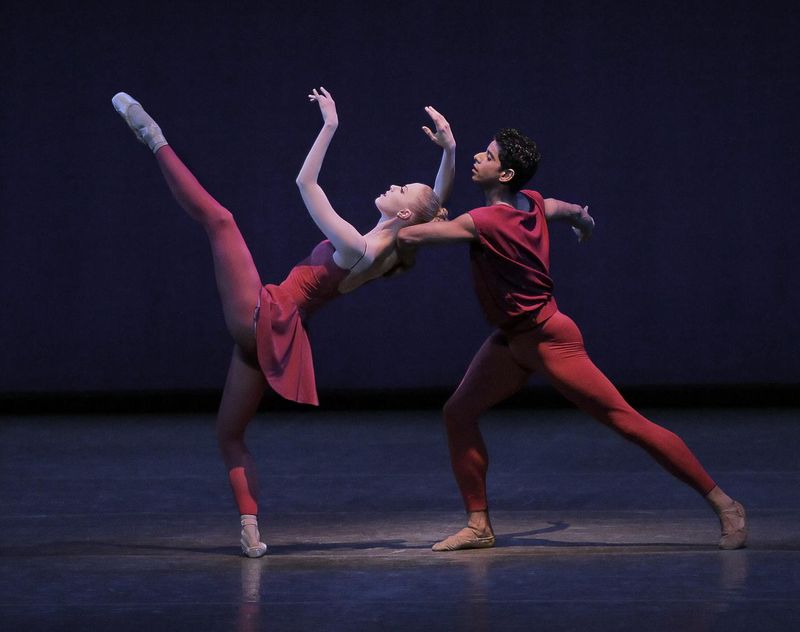
With Teresa Reichlen in FEARFUL SYMMETRIES; photo by Paul Kolnik

Again with Tess, in POLYPHONIA; photo by Paul Kolnik

With Tiler Peck in DIVERTIMENTO #15; photo by Paul Kolnik
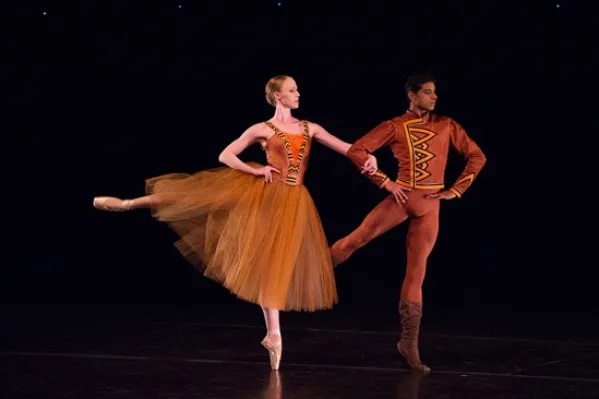
With Teresa Reichlen in IN THE NIGHT; photo by Christopher Duggan

With Maria Kowroski in Mauro Bigonzetti’s AMARIA, danced at Maria’s farewell performance
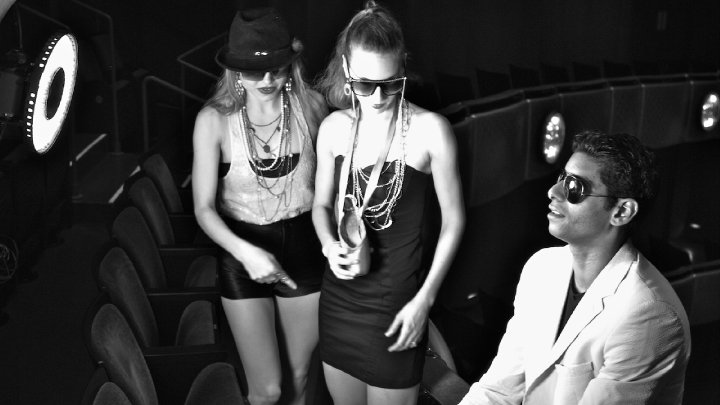
Above: in 2010. Amar appeared with Sara Mearns and Amanda Hankes in Kristin Sloan’s brief film, TWIRL; I was planning to post a link to the film here, but it’s no longer available. Sara was to have danced Titania in Amar’s farewell performance this afternoon, but she was out with an injury.
I met Amar in passing several times, and once at one of Emery LeCrone’s rehearsals. He was always extremely friendly and upbeat, and always ready with an infectious laugh.
~~~~~~~~~~~~~~~~~~~~~~~~~~~~~~~~~~~~~~~~~~~~~~~~~~~~~~~~~~~~~~~~~~~~~~~~~~~~~~~~~~~~~~~~~~~~
I’ve loved Mr. B’s MIDSUMMER NIGHT’S DREAM ever since I first saw it in May of 1977 with a fantastic cast headed by Karin von Aroldingen and Robert Weiss as the fairy queen and king, Patricia McBride and Helgi Tomasson in the second act pas de deux,and Jean-Pierre Frohlich (no less!) as Puck. You can see how I became spoiled rotten from my early days of ballet-going.

For his farewell, unfortunately, Amar did not have an evening of ballets of his own choosing, but rather he was scheduled to dance the divertissement pas de deux in Act II of MIDSUMMER NIGHT’S DREAM with Sterling Hyltin (photo above by Paul Kolnik). In the days running up to the farewell matinee, there were numerous cast changes due to illness and injury; then Amar himself sustained an injury, and it was arranged that he would dance only the adagio in today’s performance; sportingly, Andrew Veyette took over the allegro sections, squiring Sterling handsomely. When Amar finally appeared, the crowd went absolutely berserk, with a roaring flood of applause that obliterated several bars of music.
Amar looked very serious throughout the adagio, partnering Sterling with tender loving care. They won a tumultuous, extended ovation, embracing frequently as the applause rolled on. In the ballet’s grand finale, Amar finally began to smile – that dazzling smile that has won the hearts of so many ballet fans over the years.
The entire performance had a special glow. The orchestra, under Clothilde Otranto’s genial baton, sounded wonderful in this magical score to which Balanchine tells the tale so very clearly, without a wasted note or gesture. Unity Phelan, my first dark-haired Titania since Karin, was lovely, and Daniel Ulbricht’s Oberon was simply delightful both in his virtuosity and his acting. Harrison Ball was a spectacular Puck, his characterization tinged with just a hint of darkness.
As the mortals Helena and Hermia, Isabella LaFreniere and Ashley Laracey were finely-contrasted: Isabella the more lyrical and wistful, Ashley the more dramatic. Ashley’s solo, alone in the woods at night, was a masterpiece all its own. Their suitors, Aaron Sanz and Peter Walker, were lively and played their parts engagingly. Gil Bolden was a terrific Bottom, the recently-promoted Chun Wai Chan looked dashing as Titania’s Cavalier, and Alexa Maxwell was a brilliant Butterfly, having her own personal triumph. Dazzling me – and the entire House – with her vivid beauty, spacious dancing, and fabulous fouettés, Emily Kikta displayed full-fledged star-power as Hippolyta, causing the noble Preston Chamblee, as the Duke of Athens, to fall to his knees and ask her to marry him.
With Puck drifting skyward in the ballet’s final moments, the audience burst into applause; after some bows before the curtain, Amar finally stood alone on the big stage and the audience unleashed a deafening hurricane of cheers. Amar leapt off the stage to embrace Peter Martins, then resumed his place center-stage as a procession of well-wishers came forward to greet him. How wonderful to see the gorgeous Lourdes Lopez and her husband carrying bouquets to Amar; and moments later, Gonzalo Garcia surprised Amar by bringing forth the beloved Joaquin de Luz. The ovation went on and on and on, Amar clearly moved by the outpouring of love. He pounded his heart and seemed on the verge of tears.
Outside the stage door, a huge crowd gathered to wish Amar well. But after an hour, he still had not emerged, and people began drifting away. If he’d come out sooner, he would have been there til nightfall, signing autographs and being photographed.

Above: Amar Ramastar, photo by Igor Burlak
Hail and farewell, Amar! Thank you for brightening our lives. I hope I’ll see you around town from time to time in the years ahead.
~ Oberon
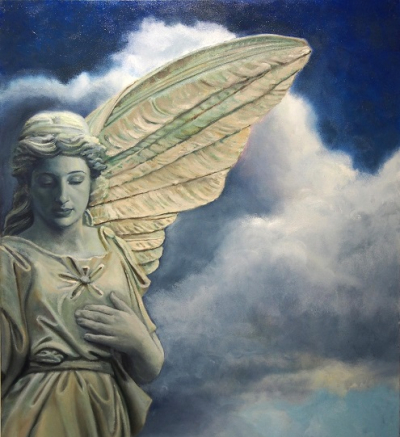
Lili Chookasian, Richard Verreau, and Ezio Flagello sing the Lux Aeterna from the Verdi REQUIEM; the performance was given at Los Angeles in 1965.
Lux Aeterna ~ Verdi REQUIEM – Lili Chookasian – Richard Verreau – Ezio Flagello- Los Angeles 1965
“Let eternal light shine upon them, O Lord,
with Thy saints forever,
for Thou art merciful.
Eternal rest grant them, O Lord,
and let perpetual light shine upon them.”
 Oberon's Glade