Tag: Ben Weaver

  • Danish String Quartet ~ CMS Beethoven Cycle – Part 2

    Beethoven 250

    Author: Ben Weaver

    February 2020 – The Danish String Quartet continuing their Beethoven marathon at Chamber Music Society of Lincoln Center. Ben Weaver wrote about earlier concerts here, and he completes the story below:

    I suspect that the Danish String Quartet’s cycle of all 16 Beethoven String Quartets for Chamber Music Society of Lincoln Center in 2020 will long be remembered as one of this great organization’s finest moments. The raggedy long-time friends who make up the quartet (its two violinists and violist have been friends since childhood), with their casual wear, messy hair and reserved physical presence, may not at first glance strike one as deeply probing and philosophical musicians. But they are that, and more. The clean, beautiful lines they produce as part of the ensemble, with a full grasp of structure and context, could hardly be improved upon by another quartet. They truly are one of the finest chamber ensembles performing today.

    The cycle’s final concert featured Beethoven’s final two quartets: String Quartets Nos. 15 & 16. No. 16 being notable for being the very last piece of music Beethoven ever composed. (The only other thing he is known to have written is the alternative final movement to Quartet No. 13, replacing the Große Fugue.)


    With Quartet No. 15, Op. 131, composed in 1825-26, Beethoven created something unique in the canon: an extended, played-without-pause composition that is still divided into multiple (seven!) movements that are all connected to one another. The opening fugue morphs into a set of variations leading into a demented scherzo – so on and so forth. Almost as if recapping his life’s achievements and all the musical forms he has perfected, this may well be Beethoven’s version of “This is my life.” The Danish Quartet’s performance of this was ravishing, with stunningly sustained slow tempi over long periods, without ever losing focus or tension or structure. Violinists Frederik Øland and Rune Tonsgaard Sørensen, violist Asbjørn Nørgaard, and cellist Fredrik Schøyen Sjölin made time stop.


    The last Quartet No. 16, Op. 135, composed in 1826, would become Beethoven’s last completed composition. How does a musical giant, who has shaken the world, say goodbye? With another outburst, a challenge to the world? Hardly. Like the final Piano Sonata No. 32 – and so unlike the last Symphony No. 9 – Beethoven’s last will and testament is actually a thing of lyricism and beauty, not defiance (ok, with an occasional outburst of crankiness, like the opening pages of the last movement where anger quickly dissipates.) In all, perhaps knowing that is health was failing and that he may not have the strength to complete another piece of music, Beethoven seems to reminisce about his younger self and the music that he composed as a student of Haydn and when Mozart had only just died.


    The first movement opens with Viola leading a playful tune, like something Beethoven rescued from an early sketchbook: but with an old man’s wisdom tempering the enthusiasm. It’s like an echo of youth, playful but with a denser sound than a younger Beethoven would have employed, the viola and especially the cello better integrated into the ensemble instead of accompanying the violins. 


    The slow movement, Lento assai, tantalite e tranquillo, is one of those works of art shared with us by the gods. Rune Tonsgaard Sørensen on first violin in this performance (the two violinists alternated), as the more lyrical player, was the perfect musician to lead this magical piece. (I’d watched a performance of this movement on YouTube that was recorded in an airplane hangar. Someone wisely commented that even an airplane hangar could not contain everything this movement has to say.)


    And then the final movement – Allegro – pulls in ideas from the previous ones and then turns them into dance. It is the perfect ending, like Verdi’s “Falstaff” (still to come) or Shakespeare’s “The Tempest” (long past): to finish laughing and free would be the greatest gift of all.


    ~ Ben Weaver
  • All-Beethoven @ Lincoln Center’s Great Performers

    66153624_23843479431240714_7828252017846910976_n.png

    ~ Author: Ben Weaver

    Wednesday November 20th, 2019 – Violinist Isabelle Faust and pianist Alexander Melnikov – long time musical partners – joined the celebrations of Beethoven’s 250th birthday as part of the Lincoln Center’s Great Performers series with an all-Beethoven recital at Alice Tully Hall. The 70-minute, no-intermission, program featured Beethoven’s last three violin sonatas.

    Composed in 1801-02 and dedicated to Tsar Alexander I of Russia, the three sonatas of his Op. 30 were Beethoven’s final word on the genre, even though he was only 31 years old. (In total, he composed 8 violin sonatas.) At this stage Beethoven had not yet written his Eroica Symphony (that would come 2 years later), changing the trajectory of the symphony and his own musical development

    Beethoven’s violin sonatas, like so much of his “early” music, look back on Mozart’s contributions to the genre, while at the same time developing new languages. Whereas Mozart’s violin sonatas were focused on the violin – with the piano as an accompaniment – Beethoven forced the piano into the spotlight, with a more prominent voice and bigger, more “symphonic” writing. In the sonata No. 6’s opening movement the violin seems to be playing catch-up with the piano in introducing the melodies. In the final movement, a theme and set of variations, the piano again dominates.

    While the following two sonatas give the violin a much bigger role, as performed by Isabelle Faust and Alexander Melnikov, the piano’s dominance was clear throughout the evening. Ms. Faust’s playing, quiet and brittle at times, with an edge to the tone, required the listener to lean in. She rarely demanded attention for her instrument or her playing; she is certainly not a “showboat” performer. Mr. Melnikov, a more aggressive player by nature, was the dominant force on the stage almost by default. The relaxed tempos set by the duo made clear this was not heaven-storming Beethoven.

    Sadly, as the evening progressed, the quiet playing by Faust, which I initially attributed to a “lean-in” personality, started to grow flat and dull. Whether drama or joy, one could hardly tell the difference. I almost got the sense that Faust was sight-reading the music, as if she’d hardly ever seen these notes before. (That’s clearly not the case: she and Melnikov recorded the complete sonatas for Harmonia Mundi some years ago and did so very well.) How unfortunate then that on this evening she was unable to gather enough spirit to help launch New York’s Beethoven year celebration.

    ~ Ben Weaver

  • All-Beethoven @ Lincoln Center’s Great Performers

    66153624_23843479431240714_7828252017846910976_n.png

    ~ Author: Ben Weaver

    Wednesday November 20th, 2019 – Violinist Isabelle Faust and pianist Alexander Melnikov – long time musical partners – joined the celebrations of Beethoven’s 250th birthday as part of the Lincoln Center’s Great Performers series with an all-Beethoven recital at Alice Tully Hall. The 70-minute, no-intermission, program featured Beethoven’s last three violin sonatas.

    Composed in 1801-02 and dedicated to Tsar Alexander I of Russia, the three sonatas of his Op. 30 were Beethoven’s final word on the genre, even though he was only 31 years old. (In total, he composed 8 violin sonatas.) At this stage Beethoven had not yet written his Eroica Symphony (that would come 2 years later), changing the trajectory of the symphony and his own musical development

    Beethoven’s violin sonatas, like so much of his “early” music, look back on Mozart’s contributions to the genre, while at the same time developing new languages. Whereas Mozart’s violin sonatas were focused on the violin – with the piano as an accompaniment – Beethoven forced the piano into the spotlight, with a more prominent voice and bigger, more “symphonic” writing. In the sonata No. 6’s opening movement the violin seems to be playing catch-up with the piano in introducing the melodies. In the final movement, a theme and set of variations, the piano again dominates.

    While the following two sonatas give the violin a much bigger role, as performed by Isabelle Faust and Alexander Melnikov, the piano’s dominance was clear throughout the evening. Ms. Faust’s playing, quiet and brittle at times, with an edge to the tone, required the listener to lean in. She rarely demanded attention for her instrument or her playing; she is certainly not a “showboat” performer. Mr. Melnikov, a more aggressive player by nature, was the dominant force on the stage almost by default. The relaxed tempos set by the duo made clear this was not heaven-storming Beethoven.

    Sadly, as the evening progressed, the quiet playing by Faust, which I initially attributed to a “lean-in” personality, started to grow flat and dull. Whether drama or joy, one could hardly tell the difference. I almost got the sense that Faust was sight-reading the music, as if she’d hardly ever seen these notes before. (That’s clearly not the case: she and Melnikov recorded the complete sonatas for Harmonia Mundi some years ago and did so very well.) How unfortunate then that on this evening she was unable to gather enough spirit to help launch New York’s Beethoven year celebration.

    ~ Ben Weaver

  • Grimaud|Philadelphia Orchestra @ Carnegie Hall

    Default_4310-081

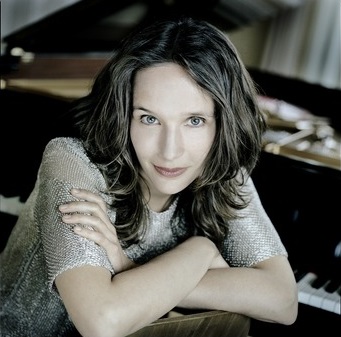
    Above: pianist Hélène Grimaud

    ~ Author: Ben Weaver

    Tuesday October 15th, 2019 – When The Philadelphia Orchestra premiered Valerie Coleman’s orchestral version of Umoja, Anthem for Unity last month, it was the first time the orchestra had played music by a living female African -American composer. Yes, there are still such firsts to be had in 2019. 

    Ms. Coleman’s work was originally written in 1997 for a female chorus, then arranged for a woodwind quintet (Coleman’s own acclaimed chamber ensemble, Imani Winds.) And now the full orchestral arrangement makes something clear: Ms. Coleman, born in Louisville, Kentucky, is a major voice in contemporary classical music and is a magnificent orchestrator.


    One thing I always note upon entering the concert hall where a contemporary piece is to be played is how big the percussion section is. Typically. it is large: everything and the kitchen sink. The problem, though, isn’t so much that there is more percussion than Mahler ever used, but that it is used as a crutch by so many contemporary composers; a crutch to transition from point A to point B to point C of the music. Unable to develop their material, too often composers rely on a few bangs and smashes from percussion to reset and change the subject. It’s lazy, it’s transparent and it’s bad music. And it is something Valerie Coleman notably does not do in her extraordinary orchestral version of Umoja, Anthem for Unity, a roughly 14 minute cinematic tone poem of shifting moods, sweeping melodies, surprising orchestral effects (the bowed vibraphone that opens the piece, for example) and undeniable joy.


    Thumbnail_6a00d8341c4e3853ef022ad378896b200c


    Ms. Coleman (above) explains in the Playbill that the work grew out of a simple, short melody. “Here the melody is sung sweetly in its simplest form and is reminiscent of Appalachian-style music. From there, the melody dances and weaves throughout the instrument families, interrupted by dissonant viewpoints led by the brass and percussion sections…” Someone described the work almost as a concerto grosso, where the music passes around, evolving and shifting from section to section. This gives many artists on stage to shine, notably the wind and the brass sections. Maestro Yannick Nézet-Séguin shaped the work expertly and the thunderous ovation that greeted Ms. Coleman on stage at the end, one hopes, sends a message to leaders of orchestras and opera houses. Tonight, the Metropolitan Opera’s  general manager Peter Gelb sat directly in front of me; did he realize that before us was an extraordinary composer, worthy of more commissions. Why not an opera, Mr. Gelb?


    Béla Bartók’s Piano Concerto No. 3 received a spectacular performance from Hélène Grimaud. The playful, spiky, percussive writing of the outer movements presented no challenges to Grimaud, her crystal clear playing etching each note as if out of marble. Yet the percussiveness was never mere banging on the keyboard either; Grimaud is too good of an artist for cheap tricks. But it is in the concerto’s slow movement, Adagio religioso, that Bartók’s soul and Grimaud’s musicality and artistry truly shone. Conductor and orchestra provided first rate support. 


    After intermission Richard Strauss’ last tone poem, Eine Alpensinfonie, received a thrilling, no holds-barred performance. Strauss began composing the work after years of putting it off after the death of Gustav Mahler in 1911. “Mahler’s death has affected me greatly,” Strauss wrote and set out to complete Eine Alpensinfonie, an unacknowledged tribute to Mahler. Certainly Mahler’s love of nature – which he attempted to capture in his music throughout his entire career – is here in spades as one travels through the Alps.


    Strauss divides the symphony into sections representing different parts of the region. Between the growling, dark Night that opens and closes the symphony, the wanderer observes a glorious Sunrise, a magnificent Waterfall, a treacherous Glacier, a horrifying Thunderstorm and chilling winds disappear with Sunset as Night returns. Strauss, of his many gifts, was an exceptional orchestrator. His command of large orchestral forces, of sound-painting has no betters. (Equals, maybe, but no betters.) The Philadelphians threw themselves into the music as if possessed, with Nézet-Séguin once again demonstrating that his grasp of the great Romantics is something of a specialty.


    ~ Ben Weaver


  • Kuusisto/Sundquist ~ A Little Night Music

    Hp-little-night-music

    Above: the Stanley H. Kaplan Penthouse at Lincoln Center

    Author: Ben Weaver

    Saturday July 27th, 2019 – Finnish violinist Pekka Kuusisto and Swedish double-bassist Knut Erik Sundquist had a long evening at the Mostly Mozart Festival: first they performed a full concert of Bartok and Vivaldi with the Mostly Mozart Festival Orchestra, conducted by Andrew Manze, followed by a special appearance at the Stanley H. Kaplan Penthouse for a series called A Little Night Music, an intimate one-hour program of music and wine.

    Pekka Kuusisto is not your traditional classical violinist. Although classically trained and a winner (first place) of the Jean Sibelius Violin Competition (Kuusisto was the first Finn to win there, in 1995), he spends as much time performing non-classical music as classical. “Crossover” would not be the right word; he’s not necessarily playing arrangements from Cats. But his dedication to playing many different types of music and his improvisational skills place him in a somewhat different category from most other concert violinists. When he does venture into the strictly classical repertoire – as he did last year with a recording of J.S. Bach’s complete Sonatas and Partitas for Solo Violin – the results are unpredictable and often electrifying. 


    Kuusisto is a dynamic stage personality; encountering him in a small space like the Kaplan Penthouse is a singular experience. With the night-time NYC skyline shining behind the stage, Kuusisto and his frequent stage partner, the great double-bassist Knut Erik Sundquist, easily filled the hour with a wide range of music, hilarious banter (like a vaudeville act, the ease of their interactions can only be perfected over many years of friendship) and sound life advice (after a night of drinking, make sure you go home before you go to bed.)


    The duo broke up the musical selections into aptly titled Minuet Section, Sad Section, and Happy Section. The Minuets were courtesy of Bach and traditional Finnish folk dance, played and improvised seamlessly. The middle Sad Section was launched by a mysterious Austrian tune Kuusisto once heard on TV while watching a weather report at the Ischgl ski resort and transcribed for posterity. (Since Kuusisto has never been able to figure out the source of the tune, he simply calls it Memories from Ischgl.) Occasionally he hummed while playing this lovely, orphaned tune. And the final Happy Section of cheerful traditional melodies from Finland and Sweden, and – of all things – a Spanish tango from Poland that’s especially beloved in Finland. (Here I was reminded of a famous line from Edith Wharton’s The Age of Innocence about the opening night of the (Old) Met: “She sang, of course, ‘M’ama!‘ and not ‘he loves me,’ since an unalterable and unquestioned law of the musical world required that the German text of French operas sung by Swedish artists should be translated into Italian for the clearer understanding of English-speaking audiences.”)


    The beauty of all this music and the intimacy of the presentation made for a fascinating evening. Kuusisto’s command of his instrument, the ease of the playing, his ability to transform the sound from a “serious violin” to a “dancing fiddle” were extraordinary. The dreamy expression on his face when playing Bach and a Finnish folk tune reveal a deep love and appreciation for music, the source is secondary.


    Sometimes classical music lovers can get too hung up on purity. Truth is that music from any source can trigger the deepest feelings and memories: from Traditional to Bach to Cole Porter to Madonna. As the only truly universal language on Earth, music of all kind can bring out every imaginable emotion. This ability to communicate in different musical languages – and helping the audience embrace the differences – may be Kuusisto’s greatest gift to his audience.


    ~ Ben Weaver


    Note: Oberon has written about the July 26th performance of the Suusisto/Lundquist/Manze Four Seasons here.

  • Vilda Frang @ Mostly Mozart

    Thumbnail_vilde-frang-2012

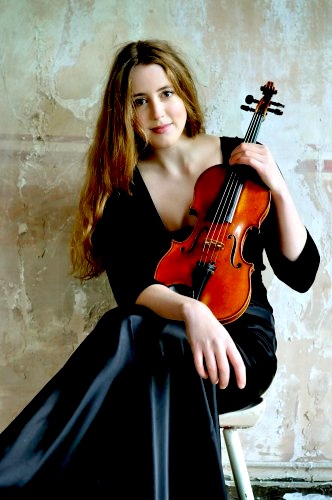
    Above: violinist Vilda Frang/photo from EMI Classics

    ~ Author: Ben Weaver

    Wednesday July 24th, 2019 – Beethoven’s two warhorses were on the program of the Mostly Mozart Festival tonight: the Violin Concerto and the Eroica Symphony, with Andrew Manze presiding over the proceedings.

    For the Mostly Mozart Festival, the main auditorium of David Geffen Hall has been transformed into a night-club-like atmosphere (for a couple of years now), with the stage moved up and seating created on the sides and behind the orchestra. Amphitheater-like concert halls have been all the rage in Europe (and to a lesser extent in the US) since the Berlin Philharmonie was built; seemingly every new concert hall replicates that structure. (In the US, Walt Disney Hall, home of the LA Philharmonic, is built the same way). I’ve never been to one of these concert halls, so maybe the acoustics really are ideal 360° around the orchestra in these halls.


    I am, however, not convinced that the arrangement being used for the Mostly Mozart concerts improves the sound for anyone inside David Geffen, where the acoustics have been notoriously bad since the theater’s construction in the 1960s and no amount of fiddling has changed that. (It seems that plans to gut the theater and rebuild with a superior interior are permanently shelved again. Apparently NYC and NY Philharmonic do not deserve a world-class concert hall…) Generally, when a large orchestra plays in David Geffen Hall, the sound in the orchestra section is fine, if a bit dense. However, the further up you go, the more the sound disappears. In the highest sections I find that the sound seems to be coming from across the plaza.


    I bring up my issues with the acoustics of David Geffen Hall because in these Mostly Mozart Festival performances the size of the orchestra is cut drastically; Andrew Manze, a famed violinist and conductor specializing in early music and period instrument practices, has a unique take on the sound of the orchestra. Even tough the chamber-sized ensemble plays on modern instruments, Maestro Manze’s orchestral balance brought to mind a small period-instrument ensemble. This would have been wonderful if the hall’s acoustics were not mediocre to begin with and as I mentioned above, I’m not convinced the rearrangement of seating in the hall enhances the sound in any way.


    It so happens that for Beethoven’s Violin Concerto the light sound of the orchestra was mostly very effective: that’s because Norwegian violinist Vilde Frang, making her MMF debut, delivered a truly unique performance. Beethoven’s demands on the violinist are intense; the concerto shocked the public upon its 1806 premiere. They were not prepared for a long and serious concerto like this: the revolutionary side of Beethoven was definitely part of this work. Ms. Frang, however, did the almost unthinkable: she played one of the most popular works of music in a way I’ve never heard anyone attempt: while abdicating nothing of Beethoven’s power, she delivered a gentle, dreamy performance. If most violinists compete with the orchestra for volume and heft, Frang and Manze joined forces to make the audience lean in: Frang’s frequent pianissimi – quieter than this concerto is used to – floated through the hall like gentle breezes. She never forced the instrument to fight or compete for attention, and Manze never forced the MMF Orchestra either. This was a perfect union of minds and musicians delivering a deeply felt and carefully thought out and fascinating performance. I hope Ms. Frang returns to NYC soon; she is a violinist to watch.


    Andrew-Manze-1920x1280


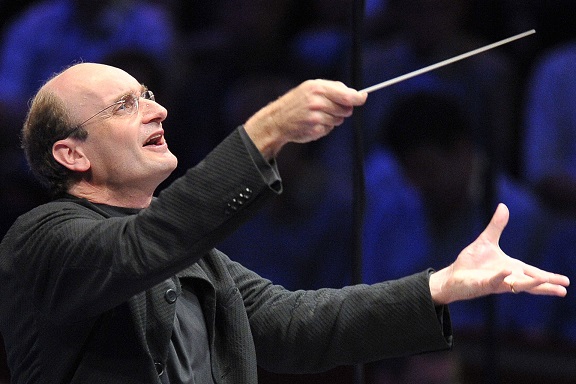
    Above: conductor Andrew Manze


    Things felt more familiar with the performance of Beethoven’s 3rd Symphony, the famed Eroica. The 1803 work changed the course of music and what a symphony was thought to be; there are now only 2 steps from Beethoven to, say, Mahler (No. 3 to No. 9 to everything that followed.) The opening chords of the Allegro con brio were bright and forceful. The movement unfolded with energy and verve. Marcia funebre was dark and brooding, but seemed closer in spirit to the earlier Violin Concerto than “Beethoven the revolutionary.”  To me, the Scherzo is always the most difficult movement to pull off: it seems to not belong to this symphony. Its jollity and energy are closer to Beethoven’s previous two symphonies, not the granitic Eroica. I’m afraid tonight that feeling remained, though the movement was played well. And the final Allegro molto was a perfectly executed march from darkness to triumph. 


    Except…back to the cursed acoustics of the hall. What was missing was the sound surrounding you, going behind you and coming back to hit the back of your head. The fact that Maestro Manze was using greatly reduced forces isn’t the reason for that; I’ve heard soloists and chamber ensembles at Carnegie Hall deliver ear-shattering sounds. At David Geffen Hall and in MMF’s seating configuration, no matter how much they tried, the sound simply gets lost.


    An orchestra like the NY Philharmonic can make the rafters shake through sheer will and size of the ensemble. It truly is a disgrace that a city like New York is incapable of building a hall for its home band and Festival. Maybe MMF should consider moving some of their performances to Carnegie Hall, which seems to be vacant during the summer. Tonight’s wonderful concert by Andrew Manze, Vilde Frang, and Mostly Mozart Festival Orchestra deserved to be heard.


    ~ Ben Weaver

  • Beatrice Rana|Philadelphia Orchestra @ Carnegie Hall

    Thumbnail_rana_beatrice_1920

    Above: pianist Beatrice Rana

    ~ Author: Ben Weaver

    Friday June 7th, 2019 – Yannick Nézet-Séguin – music director of the Metropolitan Opera – led his other ensemble, The Philadelphia Orchestra – in an exciting Carnegie Hall concert tonight. The all-Russian program opened with a recently discovered curiosity: Stravinsky’s Funeral Song, Op. 5, written for the memorial of his teacher, Nikolai Rimsky-Korsakov, in 1908. The 12 minute work, in which Stravinsky has different sections of the orchestra take turns “laying down its own melody as its wreath against a deep background of tremolo murmurings,” was lost until 2015 when a St. Petersburg Conservatory’s librarian discovered the complete orchestral parts in the mess of the Conservatory’s renovations. Musicologists long lamented the lost manuscript as the link between Stravinsky’s early works and The Firebird. Its discovery revealed not only the links in Stravinsky’s own development, but his links to Rimsky-Korsakov’s late compositional style, which Stravinsky, late in life, tried to downplay.

    Sergei Prokofiev’s popular Piano Concerto No. 3 came next on the program with the exciting pianist Beatrice Rana at the piano. This was my first time hearing Ms. Rana in a live performance, but I have admired several of her recordings for some time. What struck me about her recorded performances – and what was confirmed live – is her deeply felt, yet honest and unaffected musicality. Prokofiev’s “devilishly difficult” (Prokofiev’s own words) writing presented no technical challenge to Rana’s nimble finger work. The often spiky writing can easily become a “pound on the keyboard” type of evening. That is not Rana: her light – but never weak – touch made the pounding Prokofiev requires sound effortless and graceful. Both of those words were also true about the encore: Chopin’s Etude in A-flat major, Op. 25, No. 1 showed off the more lyrical side of Rana’s artistry.

    Thumbnail_young_rachmaninoff2

    Above: the young Sergei Rachmaninoff

    The premiere of Sergei Rachmaninoff’s Symphony No. 1, Op. 13 in 1897 is one of the most famous musical disasters in Western art music. Composer and conductor Alexander Glazunov appears to have been drunk on the podium and unprepared to conduct the difficult score. The reaction from the public and the critics was savage: composer and critic César Cui wrote that the symphony “would have delighted the inhabitants of Hell” and that the “music leaves an evil impression.” The young composer was so devastated by the reception that he quit composing and needed a therapist (and hypnosis) to recover from the trauma. When he fled Russia during the 1917 Revolution, the score of the symphony was lost in the chaos. Interestingly, although the symphony caused him a lot of pain, it appears to have been on Rachmaninoff’s mind for the rest of his life: he quoted its dark opening theme in the first movement of his last work, the Symphonic Dances, in 1940. Since the score of the symphony was lost and no one had heard it in more than 40 years, Rachmaninoff knew the quote would be unknown to anyone but himself. He died in 1943 and two years later orchestral parts of the symphony were discovered after all, in the St. Petersburg Conservatory (again), presumably as everyone returned home after the War. A performance was quickly arranged in Moscow (US premiere was given by The Philadelphia Orchestra and Eugene Ormandy) and finally the public was able to judge this extraordinary composition. We can safely say that César Cui’s deranged opinion was garbage; indeed, history itself has given its verdict on Cui vs. Rachmaninoff’s Symphony No. 1. Cui is nothing but footnote.

    One thing that may have confused so many listeners in 1897 was the dark and violent tone of the work; Rachmaninoff’s vivid quotations of the Dies irae may have upset some sensitive constitutions. But the Dies irae would become a common motif in all of Rachmaninoff’s major orchestral works. In the 1st Symphony, even the haunting slow movement is more sinister than calming. Cui may have been correct that the work “would have delighted the inhabitants of Hell,” except any person of taste would have seen that as a positive. Rachmaninoff’s most famous works, Piano Concerto No. 2 and Symphony No. 2, are steeped in romanticism, their flowing, endless melodies unrolling with shameless abandon. The very different tone of the 1st Symphony, however, reveals fascinating depths.

    There are few orchestras with a stronger personal and professional connection to a major composer than Philadelphia Orchestra’s is to Rachmaninoff. For a few decades Rachmaninoff played with and conducted them regularly, and he chose them when he recorded his own orchestral works. His last composition, the Symphonic Dances, were dedicated to the Philadelphia Orchestra and Eugene Ormandy led the world premiere performance. This is music they have in their blood the way Bayreuth Orchestra has Wagner and the NY Philharmonic has Mahler. With Maestro Nézet-Séguin on the podium, this Carnegie Hall performance of Rachmaninoff’s 1st Symphony was perhaps the most thrilling and hair-raising I’ve ever heard. Nézet-Séguin’s unflagging energy perhaps a taste for the macabre was the perfect approach to this dark and sprawling work. The Philadelphians responded with a fearlessness that shook the concert hall to the rafters. Is César Cui heard this performance, he might have had a heart-attack. 

    Thumbnail_yannick-hans-van-der-woerd

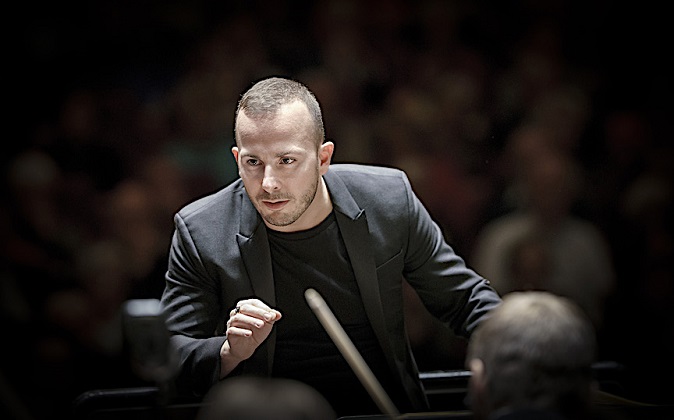
    Maestro Nézet-Séguin (above, in a Hans Van Der Woerd photo) is currently recording Rachmaninoff’s complete piano concertos with Daniil Trifonov and the Philadelphia Orchestra. Based on this coruscating performance of the 1st Symphony, it may be time for this group to record Rachmaninoff’s complete orchestral works. The Concertgebouw seems to do a complete Mahler traversal every few years (though the last one, with Daniele Gatti, was abandoned part-way for stupid reasons). Surely the Philadelphians and Rachmaninoff have earned a similar right? Deutsche Grammophon, are you paying attention?

    ~ Ben Weaver

  • Pittsburg Symphony Orchestra @ Lincoln Center

    Thumbnail_till_felner

    Above: pianist Till Fellner, photo by Jean-Baptiste Millot

    ~ Author: Ben Weaver

    Sunday May 19th, 2019 matinee – Great Performers at Lincoln Center presenting Maestro Manfred Honeck and his Pittsburg Symphony Orchestra in a super-sized concert at Lincoln Center this afternoon: Mahler’s Symphony No. 5 was preceded by Beethoven’s Piano Concerto No. 5 – two substantial works that rarely share the stage.

    Austrian pianist Till Fellner was the soloist for Beethoven’s 1809 magnum opus, the imposing “Emperor” Piano Concerto. By 1809 Beethoven’s hearing was already deteriorated enough that he stopped playing the piano in public. It is the only one of is concertos that he did not premiere himself. After a single chord from the orchestra, the piano enters majestically with an extended solo. This is followed by another single chord from the orchestra and a cadenza-like solo from the piano; and then again – for the third time – before the orchestra finally launches a traditional introduction.

    The lovely Adagio is scored sparingly for the piano, muted strings and winds and it leads without a pause into the raucous final Rondo. Mr. Fellner is a magician behind the keyboard. There is an extraordinary sense of simplicity and ease in his playing; even in the most arduous passages, he makes the music sound like it is being played by the gods themselves. But there is nothing simple about his interpretations, which are filled with shadows and light. He makes the music come alive in a way no other living pianist does. Fellner seems to breathe the music into existence. Each live performance I have attended by this extraordinary musician leaves me in awe. Maestro Honeck and the Pittsburg Symphony musicians seemed to be breathing the same music as Mr. Fellner. They were the perfect partners for this exceptional performance.

    Thumbnail_Manfred_Honeck

    Above: Maestro Honeck, photographed by Reinhold Möller

    Gustav Mahler’s mighty Symphony No. 5 received a somewhat mixed performance after the intermission. The star-turn trumpet introduction to the symphony was beautifully done, and Honeck’s tightly-controlled and dark funeral march signaled a great start. And for the Pittsburg Symphony, even at maximum volume, the sound remained wonderfully transparent. What was missing from the 3rd and 4th movements as the symphony shifts from darkness to light with its swirling waltzes, gallops and love songs (the Adagietto was nicely paced, but the climax never materialized) was a sense of fun; everyone still seemed to be stuck in the death-haunted first two movements of the symphony. Fortunately the final Rondo came whizzing in like a Mendelssohnian fairy. Honeck’s lightening of textures was a striking effect here and it brought the work to an appropriately affirming conclusion.

    ~ Ben Weaver

  • MET Orchestra/Gergiev/Trifonov @ Carnegie Hall

    Trifonov

    Above: pianist Daniil Trifonov

    ~ Author: Ben Weaver

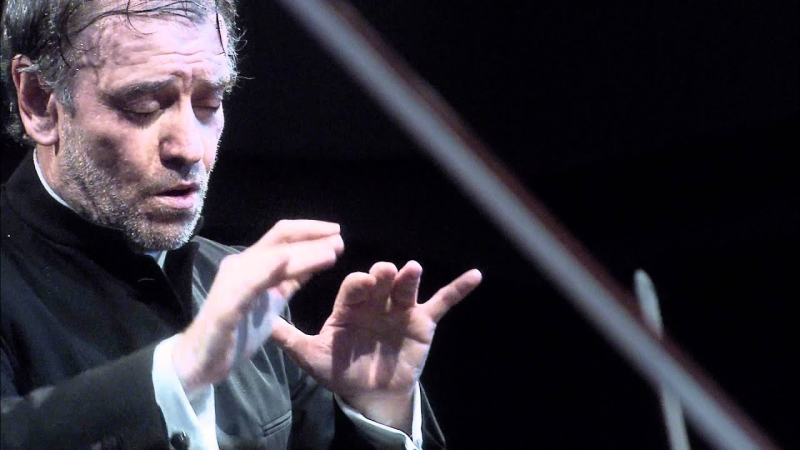
    Saturday May 18th, 2019 – The MET Orchestra made its way over to Carnegie Hall for one of its popular annual orchestral concerts. Former principal guest conductor Valery Gergiev – director of the Mariinsky Theater of St. Petersburg, and a regular presence on the Met podium – led the performances (without a podium, which seems to be his preferred method; one of his many eccentricities that also include conducting with what appears to be a toothpick.)

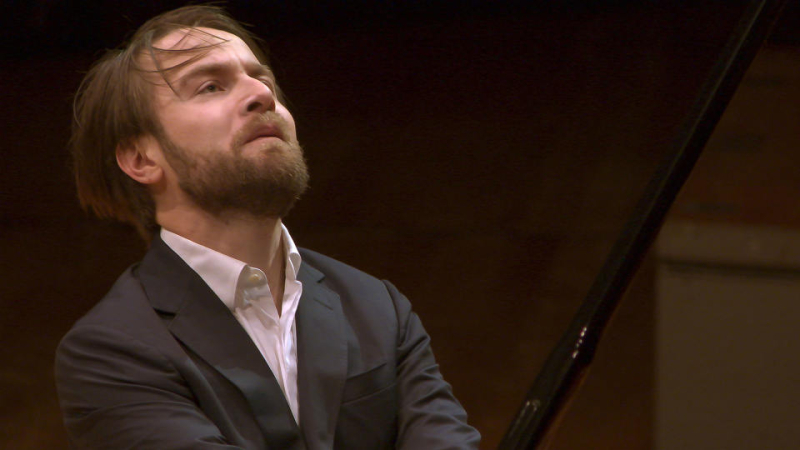
    For the the first half of the concert Maestro Gergiev was joined by the star pianist Daniil Trifonov for Robert Schumann’s ever-green Piano Concerto in A minor. Mr. Trifonov is an excellent pianist, perhaps even a great one, even at his relatively young age. But as demonstrated by this particular performance (and not for the first time) he often displays his own eccentricities with music-making. He played the introduction to the concerto extremely slow (remarkably, one could hear some early echoes of Rachmaninoff in the piano and orchestra) – and then at the first sign of a something faster, Trifonov sped up like a runaway train. These extremes in the tempos – dragging slow and demonic fast – dominated the entire performance, but felt like an affectation, not organic music-making. This is not a new thing for Mr. Trifonov; his Carnegie Hall debut in 2011 (with Tchaikovsky’s 1st Piano Concerto, conducted by Gergiev) was criticized by the New York Times for similar behavior: “…he tended to offset extremely fast playing with extremely slow, more maundering than meditative: a manic-depressive approach…”

    Needless to say, the fast playing was dazzlingly note-perfect. Trifonov does not attempt more than he can actually accomplish. And in the slow sections he frequently displayed extraordinary sensitivity and beauty. But on the whole the performance was, alas, mostly frustrating and even boring. I have little doubt that maestro Gergiev supported all of Trifonov’s choices: Gergiev himself frequently takes similar liberties with the tempo, especially in non-Russian repertoire. Sometimes it works (his Wagner is often thrilling for it), but only sometimes.

    The audience greeted Trifonov’s performance warmly (to say the least) and he played a lovely, beautifully articulated and, dare I say, perfectly-paced encore – Schumann’s “Nicht schnell, mit Innigkeit” from Bunte Blätter, Op. 99, No. 1.

    Maxresdefault

    For the second half of the concert the MET Orchestra and Maestro Gergiev (above) took center stage for Franz Schubert’s last symphony, Symphony No. 9 in C major, completed in 1828, the year of his death. The manuscript collected dust in Schubert’s brother’s possession until 1837 when Robert Schumann, passing through Vienna, paid a visit to Ferdinand’s home and was rewarded with a “hoard of riches” of Schubert’s never-before seen manuscripts, including the final symphony. Schumann and his friend Felix Mendelssohn finally arranged the work’s premiere in 1839 under Mendelssohn’s baton. The premiere was not a success with the audiences and it took many years for the symphony to finally gain acceptance for the masterpiece it is. The work’s length, which Schumann called “heavenly,” was a big stumbling block. In due time composers like Anton Bruckner and Gustav Mahler out-composed Schubert’s 9th for time and the work finally did ascend to warhorse status.

    The symphony opens with a call from a horn, played beautifully by (probably) MET’s principal hornist John Anderer. The orchestra, under Gergiev’s toothpick, sounded superb. Gergiev has been burnishing his German music credential as the new principal conductor of the Munich Philharmonic. The nicely articulated rhythm were clean and sharp. This work was far more consistently paced than the opening Schumann concerto. Gergiev kept the symphony moving at a clip that never felt rushed. Many solo instruments were given a chance to shine, particularly the woodwinds in the second movement. The Scherzo was graceful and the once controversial final movement – where in the 1830s Mendelssohn found London musicians laughing at the second theme of the movement and refusing to play it – was thrillingly played. But something was missing from the whole: perhaps a little variety of rhythm and dynamics. Gergiev conducting was extremely consistent, but in a work faulted by some for being too repetitive, consistency turned out to be something of a negative.

    An extended ovation followed; the audience wanted an encore, but with an imperial wave Maestro Gergiev gave the orchestra permission to disband.

    ~ Ben Weaver

  • James Ehnes ~ The London Philharmonic

    Thumbnail_16373_1

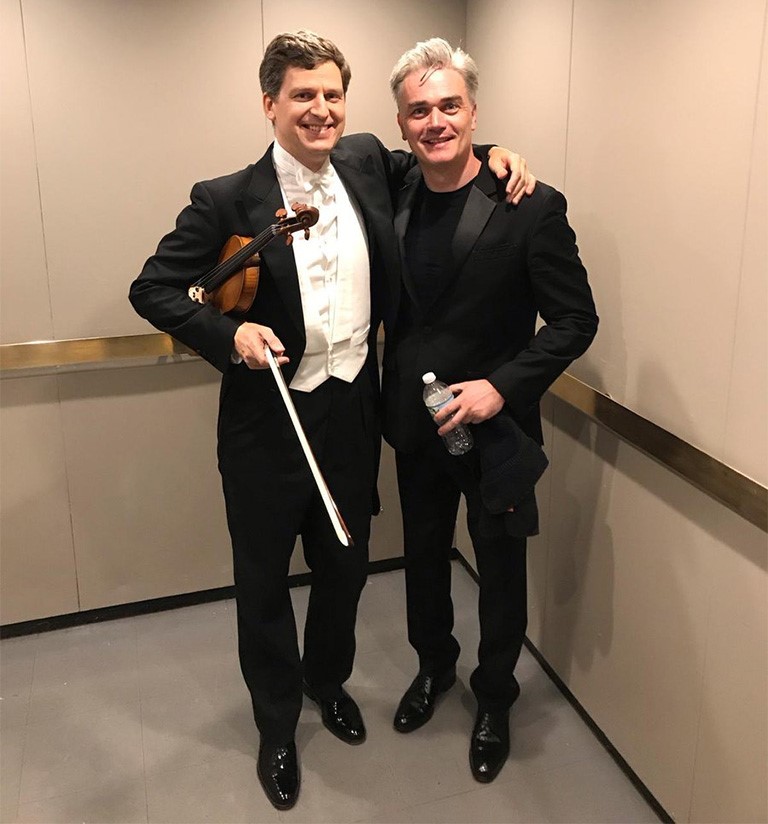
    Above: violinist James Ehnes and conductor Edward Gardner, photo from Twitter @ IntermusicaLtd

    ~ Author: Ben Weaver

    Monday April 15th, 2018 – The London Philharmonic’s second New York City concert, a part of Lincoln Center’s Great Performers series, featured some old favorites on the program. Opening with Beethoven’s great and brooding Egmont Overture (why the complete incidental music is so rarely performed is a mystery to me; the work is full of great music!) Today we have gotten quite used to Beethoven performances by reduced ensembles, even when performed by major orchestras the number of players is typically reduced to be closer to an orchestra size Beethoven would have recognized. Not so with this performance of Egmont. Maestro Edward Gardner chose the full London Philharmonic ensemble – and why not, since they all crossed an ocean? The result was a big-boned, massive sound and Gardner’s driven, dramatic reading made for on thrilling start to the concert.

    Violinist James Ehnes then joined the orchestra for Sibelius’ magnificent and never tired Violin Concerto. There is no real introduction to the work: out of the shimmering violins rises the soloist. Ehnes’ beautiful tone, perfect pitch, and deeply-felt playing kept the audience in thrall. Ehnes doesn’t make a huge sound, but the musicality and dedication he brings to every note are second to none among his generation of violinists. Here Edward Gardner was a superb accompanist: he kept the orchestra in the background, letting his soloist shine. The audience’s reaction was predictably ecstatic, allowing Ehnes to play two contrasting encores: Ysaë’s blazing Sonata No. 3 and Bach’s wistful, gentle Largo from Violin Sonata No. 3.

    Mahler’s Symphony No. 1 received a thrilling performance after the intermission. In the first movement, the slow build from hushed strings that open the work to the “full blast of Mahler” was nicely shaped and paced by Gardner. The sudden return of the opening drone had a sinister glow to it, but horns chased away the clouds and the lovely second theme, a pastorale, returned. The rustic swing of the second movement was taken quite fast, though Gardner knew to slow down for the waltz, played lovingly by the orchestra.

    Here some mannerisms from Gardner began to make themselves obvious. Draggy slow parts and extra fast faster sections became the signature of the rest of the performance. Gardner softened the edges of the third movement with its halting funeral march and the child-like melody mocking it. The final movement reinforced Maestro Gardner’s extreme tempos and I don’t think his choices worked. The slow sections began to drag and the Symphony began to lose shape. The hyper-emphasized big moments (already big in Mahler) at the expense of everything else felt contrived. But the London Philharmonic was superb (special praise for the outstanding brass section in the Mahler). It is a great ensemble, I’d go so far as to say LPO is a better orchestra, with its warmer and more versatile sound, than their big cousin, the London Symphony. 

    One curiosity about the concert is there were an awful lot of things being dropped by audience members throughout the evening. At least it wasn’t constant cell-phones, I suppose.

    ~ Ben Weaver