Tag: Chamber Music Society

  • Esteemed Ensemble @ Chamber Music Society

    51295376_23843411079570734_7199686573439320064_n.png

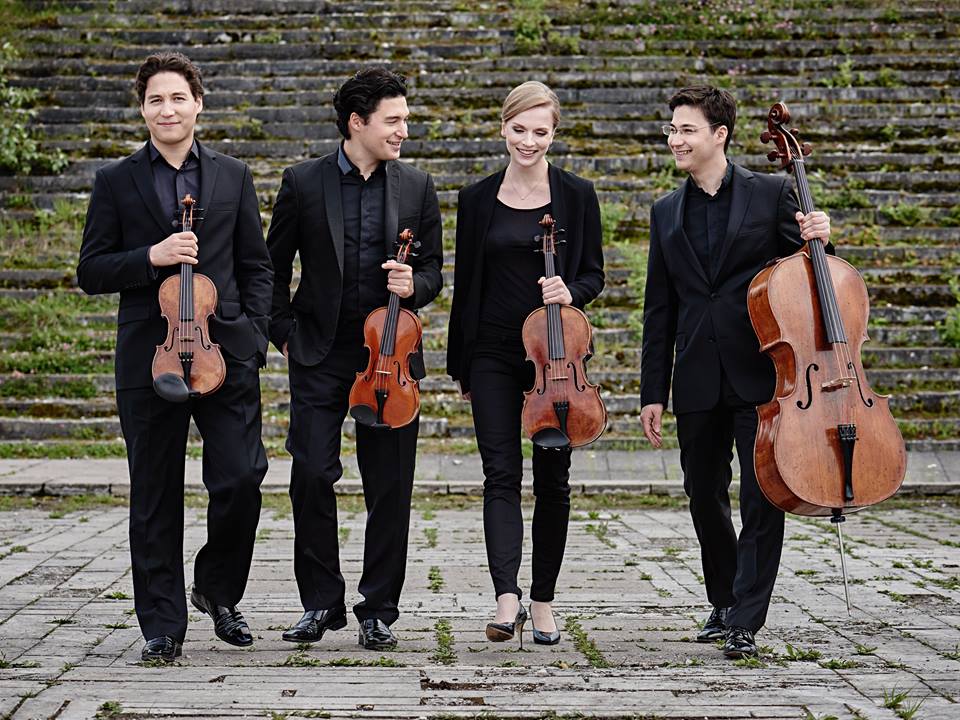
    Above: the artists of today’s esteemed ensemble – Wu Han, Daniel Hope, Paul Neubauer, and David Finckel – at Chamber Music Society of Lincoln Center

    ~ Author: Oberon

    Sunday January 27th, 2019 – Four great musicians joined forces this evening at Alice Tully Hall as Chamber Music Society of Lincoln Center continued their season with a program of works by Josef Suk, Johannes Brahms, and Antonín Dvořák.
    A-1120029-1275043084.jpeg

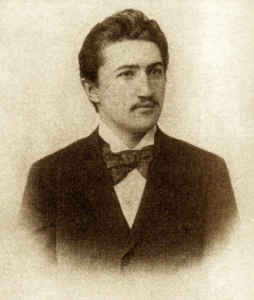
    Josef Suk (above), the least-known of the three composers, was a prominent violinist and Dvořák’s son-in-law. Suk’s Quartet in A minor, Op. 1, dates from 1891; it was his first published work.

    From its passionate start, with the strings playing a unison theme from which David Finckel’s cello and Daniel Hope’s violin emerge in prominent solo lines, this vivid music abounds in gorgeousness . Wu Han at the Steinway brings the tempo down a bit and a flow of melodies commences. Paul Neubauer’s viola heralds a brief drama – a tempest that soon subsides, though a subtle agitation lingers. Cellist David Finckel’s darkish timbre contrasts with the high silkiness of Mr. Hope’s violin. The strings united provide a rich texture that gives the impression of a full string orchestra in play, whilst Wu Han relishes Suk’s appealing writing for the piano. A passage of soul-filling passion brings the first movement to a glorious end.

    The extraordinary softness of Wu Han’s touch at the Steinway lures us into the central Adagio. Then a cello theme of great richness is brought forth by Mr. Finckel, taken up by Mr. Hope’s violin singing sweetly on high, echoed by the Neubauer viola. The strings have a beautifully blended passage: luminous playing from all. With the rippling piano and gleaming violin, a feeling of rapture rises up. The music stops, then the cello and piano lead us into a new dream. Violin and viola harmonize as the cello offers a plucked accompaniment. The Adagio – in which the magical essence of chamber music seems to be sublimely enshrined – reaches its heavenly end, fading into bliss.

    But there’s no time for reverie: Wu Han launches the concluding Allegro con fuoco at once, the strings offering sharp accents along the way. Later the pianist produces a high shimmer – a sparkling delicacy over which the strings harmonize. Things turn folkish, with a gypsy dance getting quite expansive before a lull of calm; then on to a grand finish. 

    This was my second hearing of Josef Suk’s Opus 1 and the second time it has had the same magical effect on my. Why is this composer’s music not heard more often?  

    Next on the program was Johannes Brahms’ Quartet No. 3, Op. 60 which was written in 1855-56 and revised in 1874. The period in which Brahms began sketching this work was a very difficult time, for his friend Robert Schumann had been confined in a mental hospital; Brahms was in a highly emotional state.

    The dramatic, sorrowing phrases that open the Allegro con fuoco attest to Brahms’s troubled spirit. But the music swirls forward on the wings of a piano theme; it becomes almost celebratory but then retreats to a doleful conclusion.

    The piano is the motivating force of the ensuing Scherzo; the music is agitated, almost angry. The Andante commences with a long cello solo, expressively played by Mr. Finckel. Mr. Hope then duets with the cello; Mr. Neubauer joins in an entwining string trio; the piano has a lovely part to play. A sense of longing builds.

    The concluding Allegro, which begins with a restless motif played by Wu han and Mr. Hope. Far from the traditional upbeat finale, this one by Brahms lingers in a serious, rather pensive mood, ending with an abrupt chord.

    After the interval, Dvořák’s Quartet in E-flat major, Op. 87 (1889) was splendidly played. This quartet has its folksong aspects, especially in the outer movements. The opening Allegro con fuoco is thematically abundant, with trade-offs among the string voices and lovely piano passages. After a big, thrilling buildup, the music simmers down; there’s a very effective tremolo motif exchanged by the violin and viola before the first movement comes to its finish.

    David Finckel opened the Lento with a poetic cello melody, which is carried onward by Mr. Hope’s violin. The piano has a lyrical part to play here – charmingly rendered by Wu Han – as the themes pass thru sublime modulations. A slow dance commences, with plucked strings, and the movement finds its resolution.

    The third movement, Allegro moderato, has the feel of a waltz. From its exciting start, the music presses forward with rustic elements: the piano takes on the aspect of a hammer dulcimer. Mssrs. Hope and Neubauer match subtleties, and the violist has a final say as the movement concludes.

    The zesty Finale is a real crowd-pleaser, and, when played as it was tonight, assures itself of a vociferous reaction from an appreciative audience.

    For all the excellence of the Brahms and Dvořák, it was the opening Suk that lingered in my mind.

    ~ Oberon

  • CMS Summer Evenings ~ 2018 – Concert 3

    Se_news

    ~ Author: Oberon

    Sunday July 15th, 2018 – The last of Chamber Music Society of Lincoln Center‘s Summer Evening concerts for 2018: perfect playing from a quintet of wonderful artists in music of Mozart, Weber, and Schubert.

    Nothing sets an evening of chamber music on its way to finer effect than Mozart: his Quartet in C-major for Flute, Violin, Viola, and Cello, K. 285b dates from the 1780s and was the last of three quartets Mozart wrote for the amateur flautist Ferdinand De Jean.

    The quartet is in two movements: the opening Allegro finds the sound of Sooyun Kim’s flute floating on the air over an elegant string accompaniment; her tone is delicious, her ruby-red gown a delight. Her colleagues – Erin Keefe (violin), Paul Neubauer (viola), and David Requiro (cello) – have a lovely feel for the pacing of the music, which occasionally veers into the minor…and back.

    The first movement comes to a pretty end, then the Andantino begins with the players harmonizing to fine effect. The music has a gentle pulse, and we can savour the velvety texture of Mr. Requiro’s cello sound. Ms. Keefe commences a theme, echoed by Mr. Neubauer’s viola and then the cello launches a fresh idea. Following a cadenza for Ms. Kim, the strings pulse gently as the flautist sends forth a sweet song which she repeats before the quartet reaches a light and charming finish.

    Carl Maria von Weber’s Trio in G-minor for Flute, Cello, and Piano, Op. 63 (composed 1818-19) – a gem of a piece – was superbly played by Ms. Kim, Mr. Requiro, and pianist Orion Weiss. von Weber is best-remembered today for the overture to his opera OBERON and for the irresistible Invitation to the Dance which inspired Fokine’s romantic ballet Le Spectre de la Rose. Weber’s music abounds in melody, and his music often seems like German bel canto.

    The opening Allegro moderato begins with a somewhat mysterious piano passage, then Mr. Requiro’s gorgeous-toned cello enters, followed by Ms. Kim’s flute, weaving together in a lovely mix. The three voices dovetail perfectly in a da capo, and the movement ends on a sustained flute tone.

    After a dramatic start, the Scherzo turns Spring-like, with the flute spinning out a tune accompanied by waltz figurations. In the Andante, entitled ‘Schäfers Klage’ (‘Shepherd’s Lament’), piano and cello seem to imitate a guitar; then each voice takes the melody in turn. Shifts from major to minor are intriguing, and – after a brief flute cadenza – comes a calm finish. Mr. Weiss commences the Finale quietly. As the pace builds, the flute takes up a tune: Ms. Kim and the pianist really sparkle here, and the music is fast and fun. After a lull, the three musicians take a da capo and sail on to a lively ending. The audience lavished them with enthusiastic applause, and deservedly so.

    Franz Schubert’s 1827 Trio No. 1 in B-flat major for Piano, Violin, and Cello, D. 898, Op. 99, filled the program’s second half. As chamber works go, it is quite long; the composer makes numerous repeats of themes throughout the four movements, and to me it seems his best ideas come in the first two. But, played as it was tonight, this trio became quite engrossing.

    The first movement, Allegro moderato, has an almost triumphant start; as the music calms, lovely nuances are brought forth by Ms. Keefe, Mssrs. Requiro and Weiss. The pianist, who was truly marvelous throughout the evening, plays a fresh melody over plucked strings. Another winning theme passes from cello to violin. In alternating passages of delicacy and melodrama, the three musicians display the agility and passion of their impeccable playing.

    The Andante has a peaceful opening, and Mr. Requiro shines yet again in a radiant melody that is then taken up by Ms. Keefe to ravishing effect. The gently animated Scherzo has a Mendelssohnian grace, but as it neared its end, a cellphone went off to disastrous effect. Yet the players were able to re-establish the mood in the charming, light, and brilliant Allegro vivace finale, much to the delight of the crowd.

    ~ Oberon

  • CMS Summer Evenings ~ 2018 – Concert 3

    Se_news

    ~ Author: Oberon

    Sunday July 15th, 2018 – The last of Chamber Music Society of Lincoln Center‘s Summer Evening concerts for 2018: perfect playing from a quintet of wonderful artists in music of Mozart, Weber, and Schubert.

    Nothing sets an evening of chamber music on its way to finer effect than Mozart: his Quartet in C-major for Flute, Violin, Viola, and Cello, K. 285b dates from the 1780s and was the last of three quartets Mozart wrote for the amateur flautist Ferdinand De Jean.

    The quartet is in two movements: the opening Allegro finds the sound of Sooyun Kim’s flute floating on the air over an elegant string accompaniment; her tone is delicious, her ruby-red gown a delight. Her colleagues – Erin Keefe (violin), Paul Neubauer (viola), and David Requiro (cello) – have a lovely feel for the pacing of the music, which occasionally veers into the minor…and back.

    The first movement comes to a pretty end, then the Andantino begins with the players harmonizing to fine effect. The music has a gentle pulse, and we can savour the velvety texture of Mr. Requiro’s cello sound. Ms. Keefe commences a theme, echoed by Mr. Neubauer’s viola and then the cello launches a fresh idea. Following a cadenza for Ms. Kim, the strings pulse gently as the flautist sends forth a sweet song which she repeats before the quartet reaches a light and charming finish.

    Carl Maria von Weber’s Trio in G-minor for Flute, Cello, and Piano, Op. 63 (composed 1818-19) – a gem of a piece – was superbly played by Ms. Kim, Mr. Requiro, and pianist Orion Weiss. von Weber is best-remembered today for the overture to his opera OBERON and for the irresistible Invitation to the Dance which inspired Fokine’s romantic ballet Le Spectre de la Rose. Weber’s music abounds in melody, and his music often seems like German bel canto.

    The opening Allegro moderato begins with a somewhat mysterious piano passage, then Mr. Requiro’s gorgeous-toned cello enters, followed by Ms. Kim’s flute, weaving together in a lovely mix. The three voices dovetail perfectly in a da capo, and the movement ends on a sustained flute tone.

    After a dramatic start, the Scherzo turns Spring-like, with the flute spinning out a tune accompanied by waltz figurations. In the Andante, entitled ‘Schäfers Klage’ (‘Shepherd’s Lament’), piano and cello seem to imitate a guitar; then each voice takes the melody in turn. Shifts from major to minor are intriguing, and – after a brief flute cadenza – comes a calm finish. Mr. Weiss commences the Finale quietly. As the pace builds, the flute takes up a tune: Ms. Kim and the pianist really sparkle here, and the music is fast and fun. After a lull, the three musicians take a da capo and sail on to a lively ending. The audience lavished them with enthusiastic applause, and deservedly so.

    Franz Schubert’s 1827 Trio No. 1 in B-flat major for Piano, Violin, and Cello, D. 898, Op. 99, filled the program’s second half. As chamber works go, it is quite long; the composer makes numerous repeats of themes throughout the four movements, and to me it seems his best ideas come in the first two. But, played as it was tonight, this trio became quite engrossing.

    The first movement, Allegro moderato, has an almost triumphant start; as the music calms, lovely nuances are brought forth by Ms. Keefe, Mssrs. Requiro and Weiss. The pianist, who was truly marvelous throughout the evening, plays a fresh melody over plucked strings. Another winning theme passes from cello to violin. In alternating passages of delicacy and melodrama, the three musicians display the agility and passion of their impeccable playing.

    The Andante has a peaceful opening, and Mr. Requiro shines yet again in a radiant melody that is then taken up by Ms. Keefe to ravishing effect. The gently animated Scherzo has a Mendelssohnian grace, but as it neared its end, a cellphone went off to disastrous effect. Yet the players were able to re-establish the mood in the charming, light, and brilliant Allegro vivace finale, much to the delight of the crowd.

    ~ Oberon

  • The Schumann Quartet @ Chamber Music Society

    30738946_10155657104388666_6425725551075393536_n

    Above: The Schumann Quartet

    ~ Author: Oberon

    Sunday April 29th, 2018 – The Schumann Quartet‘s finely-contrasted program at Chamber Music Society this evening brought us works composed in four different centuries, including the US premiere of a piece composed in 2006 by Aribert Reimann.

    One of the (many) nice things about attending Chamber Music Society frequently: your opinions on various composers change. Over the past few seasons, being exposed often to the music of Haydn has altered my feelings towards his music, which had always seemed to me attractive and well-crafted but lacking in the emotional qualities that make Mozart, Beethoven, and Brahms so satisfying. 

    So this evening’s opening Haydn – the Quartet in B-flat major for Strings, Hob. III:78, Op. 76, No. 4, “Sunrise” (1797) – didn’t give me the old reaction: “If only they’d programmed _____________ instead,” but rather a feeling of appreciation, especially as it was so finely played. Each member of the Schumann Quartet has a beautiful ‘voice’, and as they blended in this music the effect was heavenly.

    The “Sunrise” Quartet is indeed worthy of its name: seconds into the piece, an ascending phrase from the violin depicts the moment of dawning day. Soon afterward, the music turns lively, and the players show off their expert sense of timing. When the music turns darkish, the layering of the four musical lines is truly atmospheric.

    In the Adagio which follows, a lovely sense of calm pervades. The high violin sings serenely over the warmth of the lower mix; modulations are graciously set forth, the cello with glowing tone. The Menuetto has an oddly ‘Scottish’ feeling, and in a da capo, subtly charming hesitations are felt. The quartet then dove immediately into the final Allegro, ma non troppo – ‘non troppo‘ being the key, for the pacing had a gentle lilt. As things turn more lively, the harmonizing violins bring a witty touch. A sudden gear shift sets up a super-fast conclusion.

    The Schumann Quartet then moved on to Bartók: his Quartet No. 2 for Strings, BB 75, Op. 17 (1914-17), a wartime work which was given a remarkable interpretation by the young musicians: thoroughly engrossing.

    The Bartók 2nd’s three movements each seem to represent an emotional state: solitary life, joy, sorrow. An eerie sense of restlessness sets the mood of the opening Moderato; contrasting passages of intensity and somber beauty find the Schumanns at their most expressive, the probing cello making a special impression. Tonal richness wells up, angst and poignant longings are finely delineated. A rocking motif, plucked cello, duetting violins, and dusky viola drift thru our consciousness before the music takes on a searing quality. This subsides to movement’s sudden, near-silent finish.

    The Allegro is scrambling, animated, constantly pulsing. The Schumanns relish the passages of plucking with brief bits of melody tucked in. The music becomes driven, then suddenly stalls. Following more hesitations, staccati, and snatched commentary, energy is restored. Trilling, the music plunges on. But we are not there yet: another pause, and some agitato scurrying before a big finish. The rhythmic vitality of the Schumanns gave this Allegro just the perfect sense of dancing. 

    An alien sense of gloom descends over the concluding Lento as a bleak melodic motif is passed violin to violin to viola to cello. From muted, pensive blendings, the violin rises to the heights. Intense harmonies bring a density of sound that is suddenly stilled. From quietude, another unsettling passage builds. Plucked notes bring us to a whispered ending.

    Throughout the Bartók, I was deeply engaged by the Schumanns’ playing, sitting forward to catch every nuance. My focus was so intense that the hall and everyone around me seemed to vanish; it was just me and the music – a rare, profound feeling.

    I confess to never having listened to much of Aribert Reimann’s music; I took a recording of his opera LEAR from the library a few years ago and found it off-putting in the extreme. I cannot say that the composer’s Adagio zum Gedenken an Robert Schumann for String Quartet – in its US premiere performance this evening – did anything to make me want to explore more of the composer’s work, despite the excellence of the playing.

    Dark viola and cello and powerful staccati from the violins open the piece. The music becomes woozy; at times it sounds seasick. Moments of beauty in the richness of the lower voices, and high-lying phrases from the second violin are welcome. The cellist taps his cello. 

    From nowhere, a hymn-like melody appears, then goes askew; these motifs alternate for a bit before the music turns metallic. High violin notes and strange harmonies carry the 8-minute work forward. As an imagining of what music Robert Schumann in his madness might have heard in his head, Reimann’s Adagio is touching; this alone might make it worth hearing again in future.

    To round out the evening, Robert Schumann’s Quartet in F major for Strings, Op. 41, No. 2 (1842). This was Schumann’s first effort in the quartet genre, and both my companion and I had a sense that the composer was rather feeling his way into it: sometimes the flow of musical ideas seems a bit disjointed. However, there are plenty of passages to savour – and a wonderfully deft Scherzo – which the players brought forth in their polished, melodious performance.

    ~ Oberon

  • New Music @ Rose Studio

    ~Author: Scoresby

    Thursday April 26 2018 – At the Chamber Music Society of Lincoln Center’s last New Music concert of the season, the Schumann Quartet and pianist Gloria Chien gave a wide-ranging performance. The first piece on the program was the last movement of Swiss composer Helena Winkelman‘s Quadriga Quartet for Strings titled “Sleipnir the eight-legged” based on the eponymous horse in Norse mythology. While only the last movement of the quartet, Ms. Winkleman is open to it being played alone. It is a rollicking piece that includes references to Bartok, jazz, metal, and Swiss folk music all in a contemporary idiom.

    The Schumann Quartet played through the virtuosic material with enthusiasm, indulging in all the fun timbres Ms. Winkleman imbeds in the score and still able to bring out the lyricism that punctuates the more cacophonous moments. In fact, violist Liisa Randalu and cellist Mark Schumann seemed to blend incredibly well as duo – matching each other to create a delicious backdrop for first violinist Erik Schumann and second violinist Ken Schumann’s lyrical melodies. Through the work, the rhythmic pulse sounds like a frenetic horse stomping through – it is a shame we only got to hear one movement of this quartet. I look forward to hearing more of Ms. Winkleman’s music soon.

    Screen Shot 2018-05-01 at 5.25.18 PM

    Above: Schumann Quartet; Photo Credit: Kaupo Kikkas

    The second work on the program was Timo Andres’s five continuous movement work Quintet for Piano, Two Violins, Viola, and Cello. The aptly named first movement Cannons and Fables, sounds like an upbeat riff on minimalist Schumann. The most interesting was the second movement, which is based on large dusty tremolos in all of the instruments. The quartet’s tight and structured sound contrasted the more rustic sounding piano part. While interesting to listen to – this doesn’t seem to Mr. Andres’s most interesting work.

    Henze’s brief “Sonatina for Violin and Piano” seemed highly structured and a completely different sound world than the earlier Andres. Second violinist Ken Schumann and Ms. Chien presented the work based off of themes from one of his operas. The Allegretto has an active piano work full of counterpoint and dissonance, with what seem to be quotes from Messiaen’s Quartet for the End of Time. Mr. K Schumann captured the almost romantic nostalgia in the second movement, his mute letting him produce a supple ghostly sound and his phrasing emphasizing the lyrical quality of the music. Ms. Chien in the last movement embraced the drama in the piano part and gave heft to the huge chords that end the piece below Mr. K Schumann’s highpitched violin.  

    After the rigidly structured world of Henze, the program moved into two selections from “Piano Etudes” by Augusta Read Thomas. The first (etude 3), titled Cathedral Waterfall – Homage to Messiaen, is a spacious work that uses the extreme reaches of the piano and heavy use of pedal to evoke a large cathedral. Ms. Chien let the piano boom in these chords, making the small space seem like an echo chamber. She managed to let the color of each chord be clear without blending into the next – thus producing a chiming sound. This effect sounded at once like Feldman’s sparse tone mixed with the large spaciousness that Crumb’s Makrosomos evoke. The second work (etude 2) called “Fire Waltz – Homage to Bartók” is a thrillingly fun Ligeti-esque work. Ms. Chien seemed to stick to its incisive rhythm and sound like a machine that kept getting interrupted. It was a fun reading that seemed to relish in Ms. Thomas’s jazzy composition style.

    Screen Shot 2018-05-01 at 5.22.19 PM

    Pianist: Gloria Chien

    The most well-known piece on the program was Arvo Pärt’s Fratres. Mr. Pärt originally composed the work in 1977 and has rearranged it over 15 times for different instrument combinations. While all share a structural chord sequence and something percussive, each one has a slightly different sound. In her speech beforehand, Ms. Randalu shared that Mr. Pärt thought of his music as existing not for a particular timbre or instrument, but in absolute forms – structural music. All four members of the quartet gave a dedicated performance. 

    Mr. K Schumann held the same note for all 10 minutes of the performance, letting everyone blend around and atop his drone. This version of Fratres is more spiritual and less earthy than other versions of the piece. They took the chords slowly, the instruments started in the high harmonics and over the course of the piece moved to the lowest notes through the chord sequence – Mr. M Schumann’s warm cello pizzicato breaking up the sequence. The lack of contrast in this version of the work, makes it much more sparse – perhaps intentional to evoke a choir. While certainly a beautiful work and given a detailed rendering here, it seemed like an odd way to end such an exciting program – perhaps it would have been better served an opener? Nonetheless, it capped another great performance in the CMS New Music Series.

  • Classical Evolution @ Chamber Music Society

    2aaf32_c2a51dd8031d4d7cab51a39159e29b1e~mv2_d_4048_3215_s_4_2

    Above: Tommaso Lonquich, photographed by Anna Grudinina

    ~ Author: Oberon

    Friday April 27th, 2018 – Chamber Music Society of Lincoln Center brought together clarinet phenomenon Tommaso Lonquich, the outstanding pianist Gilles Vonsattel, and a quartet of sterling string players for an evening of music-making that was by turns stimulating and soothing. Audience distractions were annoying, but the music prevailed.  

    According to one of his students at the time, Mozart wrote his Trio in E-flat major for Clarinet, Viola, and Piano, K. 498, “…on 10 sheets (19 pages)…” in Vienna, dating it August 5, 1786. It’s not clear how the nickname “Kegelstatt” came to be applied to this trio; the word refers to ‘a place where skittles are played’ – skittles in those days referring not to the colorful candies but rather to a nine-pins bowling game which Mozart sometimes enjoyed. At any rate, the name stuck, and thus has the trio come down to us today.

    Home music-making being all the rage in Vienna at the time, the trio was first played at a ‘house concert’ in the von Jacquin family’s residence: Anton Stadler played clarinet, Mozart the viola, and Franziska von Jacquin – a pupil of Mozart’s to whom the piece is dedicated – the piano. The clarinet at that time was only just coming into its own, so an alternate version of the trio with the clarinet part transcribed for violin was also published.

    This evening, clarinetist Tommaso Lonquich joined violist Yura Lee and pianist Gilles Vonsattel for an first-rate performance of this delightful trio. Mr. Lonquich, whose playing made a truly memorable impression when I first heard him in 2015, displayed all the same fascinating qualities of his artistry tonight: prodigious breath-control, a wonderful sense of melodic flow, and a magical finesse of the dynamic range. He and his two colleagues here were very nicely matched, for Mr. Vonsattel’s playing readily displays both verve and nuance – his tapered phrases so elegant – whilst Ms. Lee, ever a joy to encounter, aligned her tonal quality to the clarinetist’s, making their harmonizing especially attractive.

    The Menuetto was particularly enjoyable tonight; after a big start, the music simmers down and the three musicians seemed to vie with one another to see who could play the softest. Then the viola sets up an animated figuration, keeping things lively. Detail-oriented playing from all three – and their keen awareness of one another – put a smile on my face.

    In the concluding Rondeaux: Allegretto, a rolling song sets forth; clarinet and piano sing to one another. Mr. Vonsattel’s summons up sparkling sounds from the Steinway before turning more lyrical. Ms. Lee introduces a viola theme which is passed about and harmonized. Throughout, the dynamic arc keeps the ear on the alert: some glowing pianissimo motifs from the keyboard captured my imagination.

    Mr. Lonquich then took the lead in Carl Maria von Weber’s Quintet in B-flat major, Op. 34 (1811-15), with a stylish string quartet: Erin Keefe, Ida Kavafian, Yura Lee, and Nicholas Cannellakis. Like Adolphe Adam’s score for GISELLE, von Weber’s music is very operatic: one continually imagines a baritone launching a cavatina, or a soprano doling out elaborate roulades in some kind of auf Deutsch mad scene. It is perhaps this operatic connection that makes Weber’s music so appealing to me.

    After a hesitant opening of string chords, the clarinet enters very softly and takes an impressive crescendo on a single note. From here, Mr. Lonquich embarked on his astonishing performance, his tone dulcet in every register, his swift coloratura and dizzyingly accurate scales full of life and light. Cellist Nick Canellakis takes up a theme of ‘vocal’ quality; later, his gorgeous tone will be a steadying element as Mr. Lonquich continues to revel in mad bravura.

    Mr. Canellakis’s somber-sounding cello opens the Fantasia: Adagio ma non troppo, with Mr. Lonquich taking up a poignant melody; there’s heartfelt beauty in his thoughtful measuring out of the tone. Meanwhile, Mr. Canellakis continues to savour each cello passage. Clarinet scales and long, soft phrases develop, and then things come to a halt. The strings play a lament; the clarinet’s re-entry will bring us more delicate scales and whispered pianissimi before the elegant melody is resumed.

    The lively Menuetto features delightful warbling effects from Mr. Lonquich’s clarinet, along with madcap zips up to his high range; in contrast, some ultra-soft playing a bit later hung gorgeously on the air. Erin Keefe’s violin introduces a cordial interlude, followed by the clarinet resuming his fanciful warbling.

    As the concluding Rondo: Allegro giocoso commenced with the rhythm of a gentle galop, I scrawled “A treat!” across my Playbill. Mr. Lonquich sounded forth brightly, the clarinet melody drawing us forward to his spectacular scale-forays to the top before reeling off fantastic passages of fiorature in a marvelous bravura display.

    As the players sailed on their merry way thru this vastly enjoyable music, one sensed a build-up of excitement in the hall: Mr. Lonquich’s virtuosity dazzled, and the crowd’s reaction was a vociferous standing ovation, with the players called out twice as a feeling of sheer joy filled the hall.

    Main

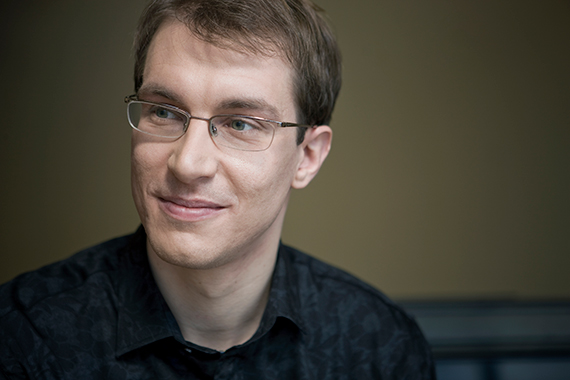
    Following the interval, Mr.Vonsattel (above) returned to the Steinway for a perfectly polished rendering of the Brahms Quintet in F minor for Piano, Two Violins, Viola, and Cello, Op. 34 (1862), with Ms. Kavafian now in the first chair.

    At first we are lulled by a melodious start, but suddenly: drama – a big theme takes over. The string voices come alive: silky violin, mellow viola, rich cello. Mr. Vonsattel, Ms. Kavafian, and Mr. Canellakis play in unison; the piano gets rapturous before a lull, whereupon a hush sets.  Softly Mr. Vonsattel lures in a thread of sound from the violin and a warmer depth from the cello. The music builds to a mysterious dance, with glimmering piano. Intoxicated by the music and the detailed playing, I recalled a state we sometimes achieved back in the Flower-Power era: of being blissed out.

    The gentle start of the Adagio, hampered by thoughtless audience activity, nevertheless made its mark. Lovely harmonies rose, Ms. Lee and Mr. Canellakis mellifluous, with Mlles. Kavafian and Keefe duetting sweetly. The movement concludes with a tender fade-away.

    The Scherzo begins with a low cello pulse, and suddenly a big theme explodes that is both mysterious and passionate. A marziale motif takes over, a paean – to music? to life? – which subsides into a calm interlude. When things re-bound, Mr. Vonsattel at the keyboard turns sprightly as a rise in propulsion takes us to an emphatic end.

    Mr. Canellakis – shall we say here what a simply terrific cellist he is? – commences the concluding movement in a surprisingly sorrowful mood, and Mr. Vonsattel at the piano sounds richly. Now the dancing Rondo commences, veering from impetuous quietness to nervy turbulence. Themes are rewoven, and we are being borne along towards the finish when, at the worst possible moment – and with only a minute of music left to go – someone noisily began unwrapping a snack.

    ~ Oberon

  • CMS Winter Festival 2018 – #3

    Shanghai-Quartet-Header

    Above: the Shanghai Quartet

    ~ Author: Oberon

    Tuesday March 27th, 2018 – The last concert of Chamber Music Society of Lincoln Center‘s Winter festival, entitled Chamber Music Vienna.

    Ignaz Schuppenzigh (1776-1830) is credited with pioneering the ‘chamber music series’. Schuppenzigh was a violinist and a friend of Beethoven who presented over a hundred chamber music concerts in Vienna between 1823 and 1828. Works of Haydn, Mozart, and Beethoven were prominently featured in the programming, and it is precisely those three composers whose music we heard this evening.

    But tonight’s concert had a deeper significance, for it duplicated exactly the program Schuppenzigh offered in Vienna on March 26th, 1827 – the very day that Beethoven passed away. In fact, it has been determined that the moving Largo con espressione from Beethoven’s Trio in G major, Op. 1, No, 2, was being played the exact time of the great man’s passing. 

    The Shanghai Quartet opened this evening’s concert with Haydn’s Quartet in G major for Strings, Hob. III:81, Op. 77, No. 1 (1799). The Shanghai have their own distinctive sound, cool and concise, suited well to both their Haydn and Mozart offerings on this program.

    The opening movement of the G major quartet, marked Allegro moderato, has a feeling of perpetual motion, somewhere between a march and a dance. There are ingratiating modulations and the writing is quite florid. By contrast, the Adagio, with its unison opening, has an almost operatic feeling. Courtly, and with gracious harmonies, the first violin sings forth and then engages in a duet with the deepening cello. Rising modulations – with the cello ever-prominent – bring a da capo which, with varying harmonics, reaches an emotional level I don’t often feel in Haydn’s music. The Shanghai made much of this movement’s sheer beauty.

    The Minuet has the genuine air of a scherzo; it’s fun, with swirls of notes carrying the violin on high. The swift, unison start of the Finale: Presto brings some very nimble playing from the Shanghai’s 1st violinist, Weigang Li; the music becomes genuinely exhilarating.

    Next came Mozart: his Quartet in D-major for Strings, K. 575, is one of the “Prussian” quartets (dating from 1789) and as such features the cello as a nod to the cello-playing king, Friedrick Wilhelm II. In the opening Allegretto, it is the cello that presents the second theme; here, and throughout the piece, the Shanghai’s Nicholas Tzavaras shone.

    While the Andante clearly showcases the cello, Mozart doesn’t shirk on opportunities for the violist – Honggang Li – or the violins, Weigang Li and Yi-Wen Jiang. Mr. Tzavaras is really in his element with the melodies, and at one point a matched phrase is passed from voice to voice. Quite inventive.

    Following the light, jesting feeling of the Menuetto (Allegretto), the concluding Allegretto‘s theme takes the cello to its high register. A decorative canon pops up before we reach the finale. 

    785535479-ludwig-van-beethoven-central-cemetery-tomb-vienna-austria

    Above: Beethoven’s tomb in Vienna’s Central Cemetary

    The evening ended with Beethoven’s Trio in G major for Piano, Violin, and Cello, Op. 1, No. 2. Pianist Gilbert Kalish, violinist Arnaud Sussmann, and cellist Paul Watkins took the stage for a first-rate performance of this work from a still-young composer.

    Following a slow introduction, in which the lovely blend of the strings and the stylish Steinway work of Mr. Kalish heralded delights to come, the first movement goes Allegro in quite a lively, sometimes folkish manner. The writing has its witty aspects, but the two women in front of us decided they’d never heard anything so hilarious, and they struck up a running conversation, laced with chuckles. Shushing was to no avail.

    Arnaud Sussmann’s absolutely gorgeous tone made a glowing impact in the Largo con espressione, inter-weaving with the bounteous beauty of Mr. Watkins’s cello to irresistible effect as refined romance bloomed from the keyboard. This Largo is considered to be Beethoven’s first great slow movement.

    Following the Scherzo, which bounces from major to minor and back, light-weight agitation marks the Finale: Presto. One violin motif seems like a pre-echo from Rossini’s GUILLAUME TELL overture. With its rhythmic vitality and breezy, devil-may-care lilt, the Presto comes to a vivacious end.

    ~ Oberon

  • CMS Winter Festival 2018 – #3

    Shanghai-Quartet-Header

    Above: the Shanghai Quartet

    ~ Author: Oberon

    Tuesday March 27th, 2018 – The last concert of Chamber Music Society of Lincoln Center‘s Winter festival, entitled Chamber Music Vienna.

    Ignaz Schuppenzigh (1776-1830) is credited with pioneering the ‘chamber music series’. Schuppenzigh was a violinist and a friend of Beethoven who presented over a hundred chamber music concerts in Vienna between 1823 and 1828. Works of Haydn, Mozart, and Beethoven were prominently featured in the programming, and it is precisely those three composers whose music we heard this evening.

    But tonight’s concert had a deeper significance, for it duplicated exactly the program Schuppenzigh offered in Vienna on March 26th, 1827 – the very day that Beethoven passed away. In fact, it has been determined that the moving Largo con espressione from Beethoven’s Trio in G major, Op. 1, No, 2, was being played the exact time of the great man’s passing. 

    The Shanghai Quartet opened this evening’s concert with Haydn’s Quartet in G major for Strings, Hob. III:81, Op. 77, No. 1 (1799). The Shanghai have their own distinctive sound, cool and concise, suited well to both their Haydn and Mozart offerings on this program.

    The opening movement of the G major quartet, marked Allegro moderato, has a feeling of perpetual motion, somewhere between a march and a dance. There are ingratiating modulations and the writing is quite florid. By contrast, the Adagio, with its unison opening, has an almost operatic feeling. Courtly, and with gracious harmonies, the first violin sings forth and then engages in a duet with the deepening cello. Rising modulations – with the cello ever-prominent – bring a da capo which, with varying harmonics, reaches an emotional level I don’t often feel in Haydn’s music. The Shanghai made much of this movement’s sheer beauty.

    The Minuet has the genuine air of a scherzo; it’s fun, with swirls of notes carrying the violin on high. The swift, unison start of the Finale: Presto brings some very nimble playing from the Shanghai’s 1st violinist, Weigang Li; the music becomes genuinely exhilarating.

    Next came Mozart: his Quartet in D-major for Strings, K. 575, is one of the “Prussian” quartets (dating from 1789) and as such features the cello as a nod to the cello-playing king, Friedrick Wilhelm II. In the opening Allegretto, it is the cello that presents the second theme; here, and throughout the piece, the Shanghai’s Nicholas Tzavaras shone.

    While the Andante clearly showcases the cello, Mozart doesn’t shirk on opportunities for the violist – Honggang Li – or the violins, Weigang Li and Yi-Wen Jiang. Mr. Tzavaras is really in his element with the melodies, and at one point a matched phrase is passed from voice to voice. Quite inventive.

    Following the light, jesting feeling of the Menuetto (Allegretto), the concluding Allegretto‘s theme takes the cello to its high register. A decorative canon pops up before we reach the finale. 

    785535479-ludwig-van-beethoven-central-cemetery-tomb-vienna-austria

    Above: Beethoven’s tomb in Vienna’s Central Cemetary

    The evening ended with Beethoven’s Trio in G major for Piano, Violin, and Cello, Op. 1, No. 2. Pianist Gilbert Kalish, violinist Arnaud Sussmann, and cellist Paul Watkins took the stage for a first-rate performance of this work from a still-young composer.

    Following a slow introduction, in which the lovely blend of the strings and the stylish Steinway work of Mr. Kalish heralded delights to come, the first movement goes Allegro in quite a lively, sometimes folkish manner. The writing has its witty aspects, but the two women in front of us decided they’d never heard anything so hilarious, and they struck up a running conversation, laced with chuckles. Shushing was to no avail.

    Arnaud Sussmann’s absolutely gorgeous tone made a glowing impact in the Largo con espressione, inter-weaving with the bounteous beauty of Mr. Watkins’s cello to irresistible effect as refined romance bloomed from the keyboard. This Largo is considered to be Beethoven’s first great slow movement.

    Following the Scherzo, which bounces from major to minor and back, light-weight agitation marks the Finale: Presto. One violin motif seems like a pre-echo from Rossini’s GUILLAUME TELL overture. With its rhythmic vitality and breezy, devil-may-care lilt, the Presto comes to a vivacious end.

    ~ Oberon

  • Brahms & Dvořák @ Chamber Music Society

    BrahmsDvorak400px

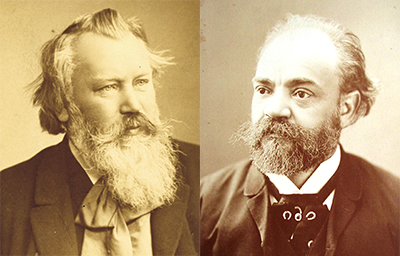
    Above: Johannes Brahms and Antonín Dvořák

    ~ Author: Oberon

    Tuesday January 30, 2018 – This evening’s highly enjoyable program offered by Chamber Music Society of Lincoln Center brought us works by Johannes Brahms and Antonín Dvořák: music for piano 4-hands by each composer, with a piano trio from Brahms and a piano quintet from Dvořák. Six excellent musicians were on hand to delight an audience who had chosen great music over the SOTU. 

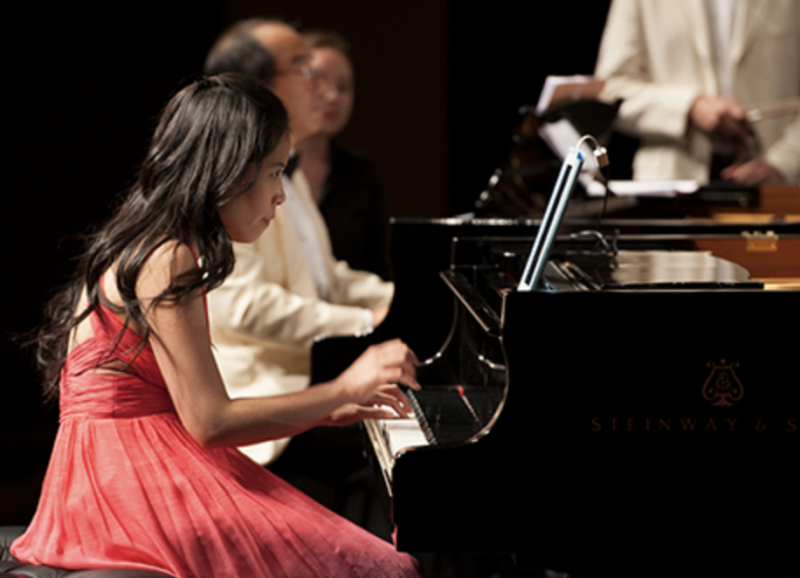
    Pianists Wu Han and Michael Brown shared the Steinway for the opening work: selections from Dvořák’s Slavonic Dances. Wu Han – clad is brilliant red – presided over the lower octaves and Mr. Brown the higher. The chosen Dances, two from opus 46 and two from opus 72, formed a perfect set.

    With the joyous opening of opus 46, #1, the cares and concerns of daily life were swept away; this Presto in C-major moves from exuberance to subtlety and back again. The players clearly enjoyed sharing the keyboard: in his program note, Mr. Brown compared playing 4-hands with playing doubles in tennis. And he further remarked that “…sharing one pedal is as strange as someone else brushing your teeth!” This duo got on like a house afire, vying in technical brilliance and relishing the more thoughtful passages. Opus 46, #2 has a darker, E-minor start, but then turns sprightly; Dvořák alternately accelerates and then pumps the brakes throughout this Allegretto scherzando.

    The dances of opus 72 are in general less extroverted and rambunctious than those of the 46. The pianists kept to E-minor with #2 which has a lyrical sadness and an emotional pull at first but later becomes sparkly and charming. They rounded off this opening Dvořák set with opus 72, #1, Molto vivace in B-major. This commences with a rocking rhythm and shows fresh vitality before it quietens with some lovely upper-range shimmers only to re-ignite as it hastens to its finish.

    For the Piano Trio in C-minor, Op. 101 of Johannes Brahms, Mr. Brown was joined by violinist Paul Huang and cellist Dmitri Atapine. This trio was composed in 1886 while the composer was summering at Hofstetten, Switzerland, and it was premiered in December of that year, with the composer at the piano, Jeno Hubay playing violin, and David Popper as cellist.

    The opening Allegro energico begins passionately, and the strings play often in unison. Following an animated passage, there comes a deep melody; the movement ends almost abruptly. 

    The trio’s second movement starts very quietly, almost hesitantly, the strings are muted and given over to almost sneaky plucking as the piano holds forth. Then violin and cello have a dialogue. The pizzicati recur, and the sotto voce atmosphere of the music is sustained.

    The Andante develops yet another conversation: this time between the duetting strings and the piano. All three musicians showed lovely dynamic gradations throughout. Mr. Brown’s dreamy and evocative playing drew sighing motifs from the violin and cello. A sudden burst of passion ends the Andante

    The rhythmic vitality of the concluding Allegro molto undergoes a mood change in an interlude where Mr. Huang’s polished tone could be savoured. Melodious exchanges lead on to a fervent finish. The three players’ sense of fraternity was evinced as they bowed to the audience’s sincere applause.

    Following the interval, our two pianists played three of Brahms’ Hungarian Dances. Wu Han and Mr. Brown had switched places on the piano bench, giving Mr. Brown the deeper registers whilst Wu Han shone in the soprano range.

    The Poco sostenuto in F-minor commences with a brooding quality, but then speeds up. A witty, almost ‘toy piano’ feeling charms in the central section before a return to the starting point. The music dances on to a fun finale. The Allegretto in A-major has a droll start and some playful hesitations: the two pianists seemed like co-conspirators here. Mr. Brown relished the low melody of the Allegro molto in G-minor whilst Wu Han’s sweetly struck higher notes felt like raindrops. The music then grows lively, with a gypsy lilt.

    A sterling performance of Dvořák’s Piano Quintet in A-major, Op. 81 (dating from 1887) made for the evening’s perfect finale, with violinists Chad Hoopes and Paul Huang, violist Matthew Lipman, and cellist Dmitri Atapine joining Wu Han.  

    Mr. Atapine sets the opening Allegro ma non tanto in motion with a nobly-played cello theme; there follows a warm tutti passage where we’re assured of a beautifully blended performance. Wu Han’s gorgeous playing (throughout) underscores the silken high range of Mr. Hoopes’ violin; then Mr. Lipman takes up a viola theme which is passed to Mr. Hoopes. Pulsing strings lead to an expansive passage; the Hoopes violin sings deliciously. We can revel in the intertwined voices for a few moments before the movement dashes to an ending.  

    The second movement, Andante con moto, was a source of true magic tonight, with Wu Han again displaying her gifts for creating atmosphere. Mr. Lipman has the melody; a tempo increase brings us duetting violins. Then comes an engrossing passage: Mr. Atapine’s cello sings deep as the violinists pluck; then Mssrs. Hoopes and Atapine sound a gentle, rolling motif in support of Wu Han’s luminous playing. Mr. Lipman takes up the main theme with rich lyricism. A sudden animation is calmed by the limpid piano, and then the ‘engrossing passage’ is repeated, with unbelievable subtlety.

    Chad Hoopes sends the Scherzo off with a light touch; Wu Han’s dazzling playing has me under a spell. The viola and cello engage us, Mr. Atapine’s attentiveness and sense of joy in his playing is inspiring to behold. Following a luminous interlude, the cellist propels the Scherzo to a lively finish.

    The Finale: Allegro starts with a petite into, and then embarks on a flowing dance. I absolutely loved watching Wu Han here, ever-alert and eyeing her colleagues with affection, she was clearly having a marvelous time of it. The mood shifts unexpectedly as Mr. Hoopes plays what seems like a hymn…or a prayer. Then the music goes on its lilting way to a jubilant close. 

    ~ Oberon

  • CMS Brandenburgs ~ 2017

    Bach

    Above: the Master of Music, Johann Sebastian Bach

    ~ Author: Oberon

    Tuesday December 19th, 2017 – Chamber Music Society of Lincoln Center‘s annual holiday-season performances of Bach’s immortal Brandenburg Concertos offer an antidote to NUTCRACKER and MESSIAH – not that there’s anything wrong with Tchaikovsky or Handel, to be sure. But the Brandenburgs speak to us without sentimentality or piety: pure music, pure joy.  

    This year marked my fifth CMS Brandenburgs, and as usual the Society have assembled a brilliant ensemble – from beloved Bach specialists to rising stars – to make the season merry and bright:

    Kenneth Weiss, HARPSICHORD • Kristin Lee, Cho-Liang Lin, Daniel Phillips, Danbi Um, VIOLIN • Mark Holloway, Yura Lee, Richard O’Neill, VIOLA • Efe Baltacigil, Nicholas Canellakis, Colin Carr, CELLO • Joseph Conyers, DOUBLE BASS • Robert Langevin, Carol Wincenc, FLUTE • Randall Ellis, James Austin Smith, Stephen Taylor, OBOE • Peter Kolkay, BASSOON • Julie Landsman, Jennifer Montone, HORN • Brandon Ridenour, TRUMPET

    Wu Han, co-Artistic Director of Chamber Music Society, welcomed the packed house with her customary enthusiasm and wit. Does any other Artistic Director on the Gotham scene evince such pride in the organization she heads, in the ‘product’ she dispenses (great music), and in the people – these super-musicians – who make each program so meaningful and enjoyable? The overflow crowd, filling the extra rows of seats installed specially for this program, attest to the fact that she and David Finckel are doing everything right.

    I’ve never before been in a theater when the classic yet ominous line “Is there a doctor in the house?”  comes over the loudspeakers. A gentleman quickly rose and went to see what he could do to help an individual in distress; hopefully it was all resolved to the good.

    Each year at the CMS Brandenburgs, the six concertos are played in a different order: tonight it was the fifth which opened the evening. From the New York Philharmonic, Robert Langevin brought his magic flute to the festivities. In music entwining flute and violin, Mr. Langevin and Cho-Liang Lin were exquisite in matters of subtle dynamics and pristine trills. Cordial playing from the string ‘choir’ – Daniel Phillips (violin), Yura Lee (viola), Colin Carr (cello), and Joseph Conyers (bass) – gave the concerto an appealing, warm resonance. In a dazzling cadenza near the end of this concerto’s opening Allegro, harpsichordist Kenneth Weiss thrilled me with his sparkling dexterity, made all the more alluring with hints of rubato. Although applause between movements is normally unwelcome, I couldn’t blame the audience for breaking in here to salute Mr. Weiss and his colleagues.

    The fifth concerto’s wistful Affetuoso was dreamily played by Mssers. Lin, Langevin, and Weiss. The deeper voices inaugurate the final Allegro, and here is the perfect opportunity to heap praise on the phenomenal Joseph Conyers, whose grand and glorious bass sound was a constant source of pleasure throughout the evening.

    Josephconyers

    Above: Joseph Conyers

    In concerto #6 (B-flat major), violins are absent. Instead, a formidable pair of violists – Yura Lee and Richard O’Neill – face a deluxe trio of cellists (Colin Carr, Efe Baltacigil, and Nicholas Canelakkis) across the music stands. The pulsing Allegro is highlighted by some high-speed coloratura from Mr. Carr; when his fellow cellists join in, watching their swift unison bow-work gave me a smile.

    In the sixth concerto’s Adagio – one of Bach’s most moving creations – commences with Richard O’Neill and Colin Carr (under-pinned by the Conyers bass) poignantly drawing us in. Yura Lee then takes up the theme, and for a few blessed moments, the music gives us a transfusion of hope. Colin Carr’s plush sound here gave a soul-reaching expressiveness. Sublime! But, without a pause, the closing Allegro sweeps us inexorably forward: Mr. Carr and the two violists make music that is fast and fun.

    Carol+Wincec+%281%29

    Above: Carol Wincenc

    The fourth Brandenburg commenced. Flautist Carol Wincenc’s name looms legendary in my pantheon; how wonderful to hear her playing live tonight for only the second time in my experience. Svelte and serene, Ms. Wincenc looked fetching in a ruffled black frock which drew admiring comments from the people sitting around us as she took her bows. Her flute sounds pure and sweet, and in Mr. Langevin she found a duetting partner of equal prestige. Their harmonizing was so elegant, abetted by Mr. Conyers’ amiable bass. Yet another voice is heard: violinist Kristin Lee’s tone mingled with the two flutes in a luminous blend, wondrous and subtle. A petite cadenza from Ms. Wincenc had a shimmering quality.

    For the 4th’s finale, I jotted “Speed Demon” next to Ms. Lee’s name: I vastly enjoyed watching her rapid bowing here: fabulous! The flautists were warbling divinely, and cellist Nick Canellakis contributed his customary polished playing: it felt like these musicians were setting the world to rights. A series of modulations carries the fourth concerto to its finish.

    Following the interval, the second Brandenburg found Danbi Um in the lead, with superb wind playing from Ms. Wincenc, James Austin Smith (oboe), Peter Kolkay (bassoon), and with trumpet virtuoso Brandon Ridenour soaring on high. Cellist Efe Baltacigil’s pacing motif set the stage for a delectable playing of the Andante in which Mlles. Um and Wincenc and Mr. Smith vied to see who could play the sweeter: a ravishing mix of timbres from these great artists. In the concluding Presto, trumpet and oboe matched wits to delight us even further.

    The third concerto, a particular favorite of mine, calls for three violins (Mr. Phillips, Ms. Um, and Kristin Lee), three violas (Richard O’Neill, Mark Holloway, and Yura Lee) and three cellos (Mssrs. Canellakis, Carr, and Baltacigil) whilst the intrepid Kenneth Weiss and Joseph Conyers continued to keep everything vivid. This concerto is unusual in that its Adagio movement consists only of a brief passage from Mr. Phillips’ violin: Bach immediately sends the players back into a swirling Allegro. This evening’s performance of the third showed yet again why the Brandenburgs are so cherished.

    First came last tonight, as the program concluded with the first Brandenburg (in F-major): the one that always reminds me of Handel. The ensemble here features two horns and a trio of oboes. With violinist  Daniel Phillips in charge, Jennifer Montone and Julie Landsman sounded velvety in their harmonized horn calls whilst Stephen Taylor, Randall Ellis, and James Austin Smith piped up to gratifying effect with their oboes, joined by Peter Kolkay on bassoon. Oboe, violin, bassoon, and bass sound the poignant Adagio, then the high horns ring out briskly in the Allegro. You think this concerto is over, but there’s a surprise fourth movement – it veers between Minuet and Polonaise – in which separate choirs of winds and strings summon up rhythms of the dance. This self-fulfilling ‘encore’ gave us a fine opportunity to enjoy Peter Kolkay’s lively bassoon playing.

    ~ Oberon