Tag: Friday April

  • Graham @ City Center 2024 ~ RITE OF SPRING

    SCREEN~1

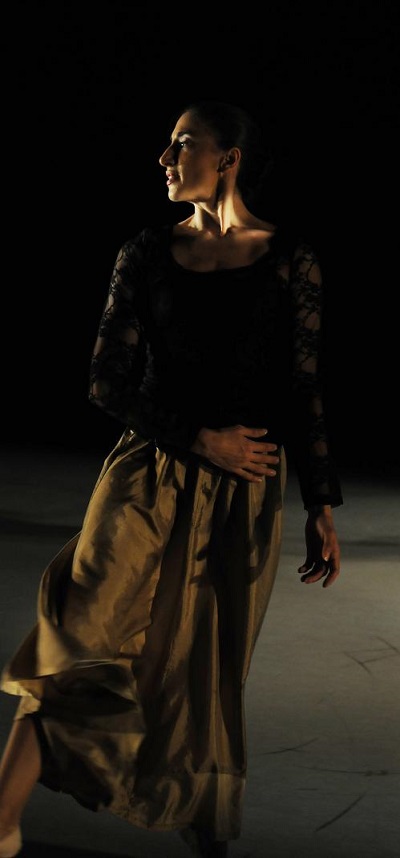
    Above:  Marzia Memoli and Lloyd Knight ~ THE RITE OF SPRING ~ photo by Hibbard Nash

    ~ Author: Oberon

    Friday April 19th, 2024 – Two of Martha Graham’s masterworks book-ended a repeat of Jamar Roberts’ newest work as the Martha Graham Dance Company continued their stint at City Center.

    The Aaron Copland score for APPALACHIAN SPRING was performed by the Mannes Orchestra under the baton of David Hayes. From my 5th row seat on house left, I had a great perspective of the Isamu Noguchi set, and a close-up view of the dancers’ expressive faces. The cast was perfection: the preacher’s followers were a delightful quartet of Graham girls: So Young An, Meagan King, Devin Loh, and Marzia Memoli; their worshipful interest in the pastor was charming.

    MGDC_Appalachian-Spring_MSherwood-74

    Above: Leslie Andrea Williams and Alessio Crognale-Roberts as the Pioneering Woman and The Preacher; photo by Melissa Sherwood

    As the object of his followers attentions, Alessio Corgnale-Roberts made a vivid impression, both in his dancing and his acting. The Preacher is framed as a good guy, but he has a dark side; in a solo danced while the young marrieds pray, Alessio showed a sinister undercurrent in the holy man’s personality. Brilliant!  And Leslie Andrea Williams as the Pioneering Woman was captivating in her quiet strength, her face reflecting the character’s innate nobility. Leslie is the epitome of personal magnetism; even when she is sitting stock still while others dance, you are drawn to her. 

    MGDC_Appalachian-Spring_MSherwood-15

    Above: Jacob Larsen and Anne Souder in APPALACHIAN SPRING; photo by Melissa Sherwood

    Over the years, I have seen many wonderful partnerships in the roles of the Husbandman and his Bride, back to those incredible Graham artists, Miki Orihara and Tadej Brdnik: my first Graham experience – many years ago – at Jacob’s Pillow. Each couple since then have seemed ideal in their own way, and this evening I felt an intrinsic perfection in Jacob Larsen and Anne Souder. Their sheer personal attractiveness would be enough to make them engrossing to watch, but they made so much of their roles, both in their dancing and their acting, that the time-honored ballet took on a new freshness.

    MGDC_Appalachian-Spring_MSherwood-10

    Jacob (above, in Melissa Sherwood’s photo) brings all the facets of his character to life: the energy of a young man, but also his far-searching gaze as he looks out over the land, and the pensive qualities of a new husband who now has a bride to care for and – undoubtedly – a family to raise in his future. Jacob’s athleticism was evidenced in the jumps and barrel turns that Graham weaves into the choreography. His partnering has lyricism and grace.
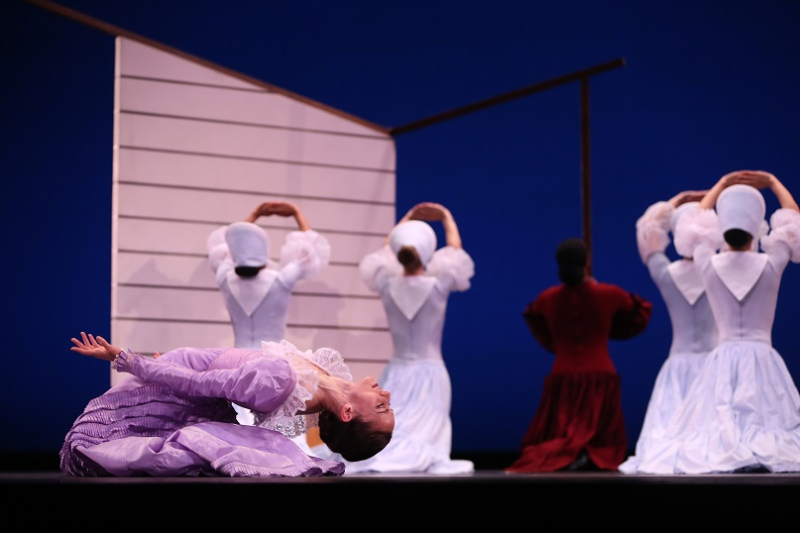
    MGDC_Appalachian-Spring_MSherwood-103

    Anne Souder as The Bride (above, in Melissa Sherwood’s photo) is a dancer who captures the nuance of every expression, step, and gesture; in doing so, she is never fussy or theatrical…rather, she dances from the heart. Her smile speaks of tenderness, and of hope for the future. There is a solo passage, though, when a shadow of worry passes over this young woman’s lovely face: can she do – and become – everything that is expected of her? Her husband’s embrace reassures her; the dark cloud vanishes.

    MGDC_Appalachian-Spring_MSherwood-91

    Ms. Souder’s technique has a silken, seamless quality; she has the extension of a prima ballerina as well as the combination of power and poetry that is the requisite of a great Graham dancer. I expected so much from her in this role, and was thrilled by her perfection.

    MGDC_Appalachian-Spring_MSherwood-96

    In the end, the newlyweds are left alone, and life begins.

    (APPALACHIAN SPRING photos by Melissa Sherwood)

    WE THE PEOPLE seemed even more powerful than on opening night, which is really saying something. The choreographer described the piece as “Part lament, part protest” which is manifested in the alternating passages of silent solos and vibrant, big-rhythm dance passages for the ensemble. 

    On opening night, I was far back from the stage and, in the prevailing darkness of the piece, I could not always tell who was dancing at any given moment. Tonight, sitting close, I could savour the individual energy and personality of each person onstage. Two of the company’s newer dancers – Devin Loh and Ane Arrieta – seemed super-charged by the music. The spotlit solos for Leslie Andrea Williams, Alessio Crognale-Roberts, and Lloyd Knight were riveting, and the duet for Meagan King and Jacob Larsen provides a contrasting touch of lightness and subtle humor. Laurel Dalley Smith, still on a RODEO high, was fantastic. There were times when it felt like someone (or maybe two) was missing, and that certain phrases had changed hands. A sextet for six women seemed like an octet on opening night, or am I hallucinating?  

    At any rate, WE THE PEOPLE should become a repertory staple of the Graham Company: it’s that good

    The evening closed with my favorite Graham work: RITE OF SPRING. The Mannes Orchestra were back in the pit, playing very impressively indeed under David Hayes’ vibrant command. The Stravinsky score, which – along with Nijinsky’s controversial choreography – caused a near riot at the ballet’s 1913 premiere, no longer seems radical, but instead is a powerful musical document of an unforgettable date in dance history. The wind players of the Mannes ensemble reveled in the score’s quirky demands. The setting where the ritual sacrifice takes place, conceived by the Company’s Artistic Director, Janet Eilber, is under an ominous sky; the feeling is both vast and curiously claustrophobic.

    The choreography is some of the most demanding imaginable, calling for extreme athleticism, intricate steps and gestural motifs, and pinpoint timing. The full Company participates in this grand-scale work, and so we get to know the apprentices – Zachary Jeppsen, Matthew Spangler, Justin Valentine, and Jai Perez – as well as the newest dancers (already making a mark for themselves) – Ane Arrieta, Meagan King, and Antonio Leone. 

    Alessio Crognale-Roberts and Jacob Larsen have a prominent place in the ritual; as the Shaman’s acolytes, they have a lot of work to do, and they do it handsomely, and with stoic resolve.

    It is The Shaman whose solo opens the piece with a ceremonial dance to sanctify the space for the dire ritual to come. The charismatic Lloyd Knight gave a magnificent portrayal as the man ordained by the gods to perform the sacrificial ritual; nothing will deter or distract him from his cold-hearted purpose. Lloyd’s command of the role’s uncanny partnering demands was something to behold. 

    In her debut performance as The Chosen One, Marzia Memoli gave a thrilling performance as she moved from being just another village girl to being the central figure in the gruesome ritual that will keep the community in the good graces of the gods for another year.

    Marzia has always been a truly vivid dancer, fearless and committed, and she now has a role that suits her to perfection. It is a role in which the dancer cannot simply portray the ill-fated character, but must become her. With a font of strength and energy that belies her slender frame, Marzia, with her mane of golden hair, gave a consummate performance, wherein the cross-currents of vulnerability and resolute courage ebb and flow as the girl’s fate closes in on her.

    The dancers were hit by a tidal wave of applause as they filled the stage for a bow. Lloyd Knight was hailed as the king of the Gotham dance world, and then Marzia took her solo bow to rapturous applause while Lloyd handed her a bouquet and they embraced. 

    I was sorry to hear that this memorable RITE had not been photographed for posterity, aside from the studio photo at the top of this article. But I have indelible images from the evening in my mind.

    ~ Oberon

  • Ralph Vaughan Williams ~ A SEA SYMPHONY

    Vaughan-Williams

    Above: Ralph Vaughan Williams

    Author: Oberon

    Friday April 21st, 2023 – The Choral Society and Orchestra of Grace Church presenting a performance of Ralph Vaughan Williams’s A SEA SYMPHONY, conducted by John Maclay, with soloists Tami Petty (soprano) and Hadleigh Adams (baritone).

    Vaughan Williams selected for the first three movements of A SEA SYMPHONY three poems from Walt Whitman’s Leaves of Grass. The symphony’s first two movements are entitled “A Song for All Seas, All Men” and “On the Beach at Night Alone.” The third movement, called in the symphony “The Waves“, is Whitman’s poem in the same series entitled “After the Sea Ship.” For the fourth and longest movement, entitled The Explorers“, the composer chose lines from widely scattered excerpts of another lengthy sub-section of Leaves of Grass entitled “Passage to India.”

    In all four movements, the composer tightened up the poetry to best serve his musical vision of the boundless sea. From the first brass fanfare proclaiming the words “Behold the Sea!” to the mystical choral invocation of a  “…vast rondure, swimming in space“, words and music align to depict both the epic grandeur and the meditative power of the planet’s oceans.

    This evening was very frustrating for me, as I have waited years to hear this work performed live. The audience included many people who brought small children, and of course, two such youngsters were seated directly in front of us. After being reasonably well behaved during the first movement, they became fidgety and restless. The parents basically ignored their antics, especially during the long final movement. My companion and I were exasperated by the situation: yet another case of the  triumph of people who don’t care over people who do. 

    Musically, the evening got off to an uneven start. The balance between the orchestra, the huge chorus, and the soloists was off; the blend became mushy and most of the words were incomprehensible. The symphony’s great opening movement therefore went for nought. Things improved greatly during the second and most haunting movement, “On the Beach at Night Alone” and the ensuing scherzo, “The Waves“, was well done. In the over-long final movement, the composer seems to have been unable to decide how to end the piece: he would periodically venture into a cul de sac, delaying the inevitable.

    The evening’s soloists are both possessed of fine voices. Baritone Hadleigh Adams was sometimes overwhelmed by the orchestra in the opening movement, but that is the conductor’s fault. Mr. Adams came into his own with a wonderful rendering of “On the Beach at Night Alone” where his expressive singing and fine timbre could be deeply enjoyed. An eloquent passage for solo cello enhanced the singing, making this the highlight of the evening.

    Soprano Tami Petty has a clear, sweet voice that blooms as it ascends; in this regard, she reminded me of Helena Dix, the Australian soprano who sang Norma at The Met earlier this year. Ms. Petty sounded truly lovely in the big Hall, making me hope she’ll have a go at the Verdi REQUIEM here someday soon.

    Sea symphony

    Above, bowing during the massive standing ovation at the concert’s end, are Ms. Petty, Maestro Maclay, and Mr. Adams; photo by Brian Hatton.

    I don’t anticipate another opportunity to hear A SEA SYMPHONY here in New York City again in my lifetime, but I have the marvelous Grammy Award-winning Telarc CD of it with the Atlanta Symphony Orchestra and Chorus, conducted by Robert Spano, and wonderful soloists Christine Goerke and Brett Polegato that I can turn to.

    ~ Oberon
  • Classical Evolution @ Chamber Music Society

    2aaf32_c2a51dd8031d4d7cab51a39159e29b1e~mv2_d_4048_3215_s_4_2

    Above: Tommaso Lonquich, photographed by Anna Grudinina

    ~ Author: Oberon

    Friday April 27th, 2018 – Chamber Music Society of Lincoln Center brought together clarinet phenomenon Tommaso Lonquich, the outstanding pianist Gilles Vonsattel, and a quartet of sterling string players for an evening of music-making that was by turns stimulating and soothing. Audience distractions were annoying, but the music prevailed.  

    According to one of his students at the time, Mozart wrote his Trio in E-flat major for Clarinet, Viola, and Piano, K. 498, “…on 10 sheets (19 pages)…” in Vienna, dating it August 5, 1786. It’s not clear how the nickname “Kegelstatt” came to be applied to this trio; the word refers to ‘a place where skittles are played’ – skittles in those days referring not to the colorful candies but rather to a nine-pins bowling game which Mozart sometimes enjoyed. At any rate, the name stuck, and thus has the trio come down to us today.

    Home music-making being all the rage in Vienna at the time, the trio was first played at a ‘house concert’ in the von Jacquin family’s residence: Anton Stadler played clarinet, Mozart the viola, and Franziska von Jacquin – a pupil of Mozart’s to whom the piece is dedicated – the piano. The clarinet at that time was only just coming into its own, so an alternate version of the trio with the clarinet part transcribed for violin was also published.

    This evening, clarinetist Tommaso Lonquich joined violist Yura Lee and pianist Gilles Vonsattel for an first-rate performance of this delightful trio. Mr. Lonquich, whose playing made a truly memorable impression when I first heard him in 2015, displayed all the same fascinating qualities of his artistry tonight: prodigious breath-control, a wonderful sense of melodic flow, and a magical finesse of the dynamic range. He and his two colleagues here were very nicely matched, for Mr. Vonsattel’s playing readily displays both verve and nuance – his tapered phrases so elegant – whilst Ms. Lee, ever a joy to encounter, aligned her tonal quality to the clarinetist’s, making their harmonizing especially attractive.

    The Menuetto was particularly enjoyable tonight; after a big start, the music simmers down and the three musicians seemed to vie with one another to see who could play the softest. Then the viola sets up an animated figuration, keeping things lively. Detail-oriented playing from all three – and their keen awareness of one another – put a smile on my face.

    In the concluding Rondeaux: Allegretto, a rolling song sets forth; clarinet and piano sing to one another. Mr. Vonsattel’s summons up sparkling sounds from the Steinway before turning more lyrical. Ms. Lee introduces a viola theme which is passed about and harmonized. Throughout, the dynamic arc keeps the ear on the alert: some glowing pianissimo motifs from the keyboard captured my imagination.

    Mr. Lonquich then took the lead in Carl Maria von Weber’s Quintet in B-flat major, Op. 34 (1811-15), with a stylish string quartet: Erin Keefe, Ida Kavafian, Yura Lee, and Nicholas Cannellakis. Like Adolphe Adam’s score for GISELLE, von Weber’s music is very operatic: one continually imagines a baritone launching a cavatina, or a soprano doling out elaborate roulades in some kind of auf Deutsch mad scene. It is perhaps this operatic connection that makes Weber’s music so appealing to me.

    After a hesitant opening of string chords, the clarinet enters very softly and takes an impressive crescendo on a single note. From here, Mr. Lonquich embarked on his astonishing performance, his tone dulcet in every register, his swift coloratura and dizzyingly accurate scales full of life and light. Cellist Nick Canellakis takes up a theme of ‘vocal’ quality; later, his gorgeous tone will be a steadying element as Mr. Lonquich continues to revel in mad bravura.

    Mr. Canellakis’s somber-sounding cello opens the Fantasia: Adagio ma non troppo, with Mr. Lonquich taking up a poignant melody; there’s heartfelt beauty in his thoughtful measuring out of the tone. Meanwhile, Mr. Canellakis continues to savour each cello passage. Clarinet scales and long, soft phrases develop, and then things come to a halt. The strings play a lament; the clarinet’s re-entry will bring us more delicate scales and whispered pianissimi before the elegant melody is resumed.

    The lively Menuetto features delightful warbling effects from Mr. Lonquich’s clarinet, along with madcap zips up to his high range; in contrast, some ultra-soft playing a bit later hung gorgeously on the air. Erin Keefe’s violin introduces a cordial interlude, followed by the clarinet resuming his fanciful warbling.

    As the concluding Rondo: Allegro giocoso commenced with the rhythm of a gentle galop, I scrawled “A treat!” across my Playbill. Mr. Lonquich sounded forth brightly, the clarinet melody drawing us forward to his spectacular scale-forays to the top before reeling off fantastic passages of fiorature in a marvelous bravura display.

    As the players sailed on their merry way thru this vastly enjoyable music, one sensed a build-up of excitement in the hall: Mr. Lonquich’s virtuosity dazzled, and the crowd’s reaction was a vociferous standing ovation, with the players called out twice as a feeling of sheer joy filled the hall.

    Main

    Following the interval, Mr.Vonsattel (above) returned to the Steinway for a perfectly polished rendering of the Brahms Quintet in F minor for Piano, Two Violins, Viola, and Cello, Op. 34 (1862), with Ms. Kavafian now in the first chair.

    At first we are lulled by a melodious start, but suddenly: drama – a big theme takes over. The string voices come alive: silky violin, mellow viola, rich cello. Mr. Vonsattel, Ms. Kavafian, and Mr. Canellakis play in unison; the piano gets rapturous before a lull, whereupon a hush sets.  Softly Mr. Vonsattel lures in a thread of sound from the violin and a warmer depth from the cello. The music builds to a mysterious dance, with glimmering piano. Intoxicated by the music and the detailed playing, I recalled a state we sometimes achieved back in the Flower-Power era: of being blissed out.

    The gentle start of the Adagio, hampered by thoughtless audience activity, nevertheless made its mark. Lovely harmonies rose, Ms. Lee and Mr. Canellakis mellifluous, with Mlles. Kavafian and Keefe duetting sweetly. The movement concludes with a tender fade-away.

    The Scherzo begins with a low cello pulse, and suddenly a big theme explodes that is both mysterious and passionate. A marziale motif takes over, a paean – to music? to life? – which subsides into a calm interlude. When things re-bound, Mr. Vonsattel at the keyboard turns sprightly as a rise in propulsion takes us to an emphatic end.

    Mr. Canellakis – shall we say here what a simply terrific cellist he is? – commences the concluding movement in a surprisingly sorrowful mood, and Mr. Vonsattel at the piano sounds richly. Now the dancing Rondo commences, veering from impetuous quietness to nervy turbulence. Themes are rewoven, and we are being borne along towards the finish when, at the worst possible moment – and with only a minute of music left to go – someone noisily began unwrapping a snack.

    ~ Oberon

  • Sibelius & Mahler @ The NY Philharmonic

    Hampson

    Above: baritone Thomas Hampson

    Friday April 22nd, 2016 matinee – A matinee performance by The New York Philharmonic pairing the Sibelius seventh symphony with Mahler’s Das Lied von der Erde. Alan Gilbert was on the podium, with soloists Stefan Vinke and Thomas Hampson singing the solo parts in the Mahler.

    The two works made an ideal pairing; the Sibelius 7th (first performed in 1925 under the title Fantasia Sinfonica) lasts only about 20 minutes and is written as a single-movement. From its opening rising scale which blooms into regal theme, the symphony compensates for its relative brevity with music of almost cinematic breadth. Abundant in melody, the piece has an Autumnal quality; though Sibelius would live until 1957, he wrote very little music after 1926. This last symphony is both serene and passionate; it leaves us wondering ‘what might have been’ if he had continued writing.

    The Sibelius was played with savourable richness by the Philharmonic artists today, and Maestro Alan Gilbert was very much in his element here; following the interval, players and conductor were joined by the two vocal soloists and a thrilling performance of Mahler’s Das Lied von der Erde commenced. 

    Still recovering from the sorrow of his daughter’s death, Mahler learned in 1907 that he was suffering from a heart condition that would, within four years, prove fatal. In The Song of the Earth, the composer’s awareness of the possibility of an approaching end prompted the composition of a great hymn to Nature and to the sheer ecstasy of living. Drawn from The Chinese Flute, a collection of ancient Chinese poems translated by Hans Bethge, the six ‘songs of the Earth’ speak of drunken defiance of impending death, of the solitary life, of the transience of youth and beauty, and of a friendship which endures beyond parting and into eternity.

    The tenor is allotted the more extroverted songs; the first, third, and fifth. Stefan Vinke’s formidable power and stamina proved equal to the fierce demands Mahler’s vocal writing places on the singer: high in tessitura and including exposed, sustained notes in the topmost range, the tenor’s muscular singing was just what’s needed. An occasional trace of pitchiness didn’t detract from Mr. Vinke’s generous singing. And I must note the lovely violin theme from Frank Huang in the fifth song, “The Drunkard in Spring“.

    (Note: it’s just been announced that Stefan Vinke will be replacing Johan Botha when James Levine and The Met Orchestra perform excerpts from Wagner’s RING Cycle at Carnegie Hall on May 26th. Christine Goerke is the soprano soloist.)

    Both mezzo-sopranos and baritones have performed the ‘other’ solo role in Das Lied von der Erde the formidable Margarete Matzenauer sang it at the NY Philharmonic premiere in 1929. Today, it was baritone Thomas Hampson whose strikingly expressive singing moved me and my companion to a tearful state as the work came to an end.

    I have admired Thomas Hampson since his Met Auditions win in 1981; among his many Met roles that have particularly impressed me have been: Count Almaviva, Billy Budd, Posa in DON CARLO, Werther, Eugene Onegin, Wolfram in TANNHAUSER, Amfortas, Iago, and – most surprisingly and most recently – Wozzeck. He walked onstage today – tall, handsome, and elegant in a tux – with an amiable self-assurance that made me think we were in for something special; Hampson delivered an intensely satisfying performance. 

    Liang Wang’s oboe solo at the start of “The Solitary One in Autumn” signaled a turn of mood from the boisterous drinking song with which Mr. Vinke had launched the cycle. As Mr. Hampson began to sing of his loneliness and weariness of spirit, his marvelous gift for poetic expression as well as the inherent beauty of his vocal timbre drew me into the music; the external world faded, and the music became the reality.

    Midway thru the fourth song, “Of Beauty“, a big dance-like theme erupts, and the baritone seemed ready to dance himself. His singing was characterful and, as the music simmers down, he did some lovely heady effects as well an plunging into basso territory briefly.

    It was in the final song, “Farewell”, that Mr. Hampson’s performance put me over the edge. Liang Wang’s oboe and Robert Langevin’s flute establish a wistful mood. The baritone’s thoughtful and sustained singing is beautifully enmeshed in some wonderful playing from the winds; oboe and harp unite; horn, cello, bassoon, and bass clarinet add poignant colours to the canvas. “All longing has become a dream,” sings the poet.

    In a spine-tingling moment, Mr. Hampson’s tone adopts a ‘dead’ emptiness, matched by plaintive flute. “I wanted to bid my friend a last farewell!” – how many of us have sadly been deprived of just such an opportunity! Mandolin and celeste are heard, as if from out of a dream of past happiness. “Where are you going, and why must it be?” asks the forlorn friend as the parting draws nigh, and they share the stirrup cup. The song ends with an affirmation of faith in life’s renewal, but even here there’s an illusive feeling. Nature holds sway with the “…luminous blue of distant space…everywhere, forever… forever and ever….”

    Alan Gilbert’s baton was suspended in air as the music faded to silence. An ovation of particular warmth ensued, with the maestro, the singers, and the musicians basking in the joy of having shared in a magnificent collaboration.

  • All-Brahms @ Chamber Music Society

    Cho-liang lin

    Above: violinist Cho-Liang Lin

    Friday April 24th, 2015 – With their customary flair for matching great music with great musicians, Chamber Music Society of Lincoln Center put together an inviting all-Brahms programme and gathered a world-class ensemble to perform it. It would be fair to say this concert was a highlight of the season to date, but then that seems to be true of each of the Society’s offerings.

    Cho-Liang Lin has always been a particular favorite of mine; he boasts a wonderful discography, with his Stravinsky/Prokofiev disc one I especially like. Tonight he joined pianist Wu Qian for the opening Brahms work: the Violin Sonata in A major Op. 100.  The piece opens with brief, hesitant violin interjections before sailing forth into melody. The second movement – an unusual setting in which Brahms seems to combine an andante and a scherzo (and it works!) – opens with a theme of tenderness and longing, so expressively played by Lin and Qian. Later, when more animated passages arise, their clarity of articulation was most welcome. The serene melody recurs, with major/minor shifts giving an affecting quality. A plucky little dance makes for a sprightly interlude before returning to the andante where the violin now lingers on high. An unexpected little coda gives the movement a brisk finish.

    The sonata’s final movement opens with a poignant theme, lovingly ‘voiced’ by Mr. Lin while Ms. Qian’s piano ripples gently. The music becomes more animated – each player alternately carries the melody by turns – but retains its lyrical heart and eschews virtuosity in favor of something more heartfelt. A friend of the composer said: “The whole sonata is one caress,” and that’s how it seemed this evening in such a beautifully dovetailed rendering from our two artists.

    The Trio in C minor for Piano, Violin, and Cello dates from the same year as the sonata, and follows it immediately in the composer’s catalog of works. Both pieces were written while Brahms was on vacation (a ‘working vacation’, obviously) at Lake Thun, Switzerland; he is thought to have been inspired by the scenery, which is understandable: 

    Lake thun
    The Piano Trio No. 3 was a favorite of Brahms’ dear friend Clara Schumann; she is said to have turned pages for Brahms when he played the work with his two friends – the cellist Robert Hausmann and violinist Joseph Joachim.
     
    This evening’s performance marked the Chamber Music Society debut of the Sitkovetsky Trio. Although  violinist Alexander Sitkovetsky has appeared with the Society before, tonight marked his first performance there with his established chamber music colleagues Richard Harwood (cello) and Wu Qian (piano). Their playing of the C-minor trio drew a well-deserved, vociferous reception from the Tully crowd.
    Concert_pic
     
    Above: The Sitkovetsky Trio
     
    In the Trio’s opening Allegro energico the three musicians got off to a grand start, the melodies pouring generously from the Brahmsian font. The blend of violin and cello was particularly enriching whilst at the Steinway, Wu Qian brought the same lyrical glow to the music that had made her performance in the sonata so impressive. A unison passage for violin and cello had a richly burnished quality, and all three players displayed both technical precision and real passion for the music.
     
    The charming and subtle second movement – Presto non assai finds the violin and cello plucking delicately; but beneath the lightness of touch there’s an inescapable quality of sadness. Then a feeling of gentle nostalgia develops in the Andante grazioso that follows, and the strings and piano trade expressive passages. This leads directly into the dynamic opening of the Allegro molto in which reflective phrases mingle with more extroverted ones; the trio concludes with in a rockingly positive mood.
     
    After the interval, we jumped back 20+ years in Brahms’ compositional career for the Sextet #2 in G Major (Opus 36); Mssrs Sitkovetsky and Harwood were joined by Cho-Liang Lin, violists Paul Neubauer and Richard O’Neill, and – fresh from his marvelous Carnegie Hall concerto debut – cellist Nicholas Canellakis. As the musicians settled in and did a bit of tuning, my level of anticipation shot up: we were in for something special.  

    When Brahms started work on his second sextet, it seems he was in a highly emotional state, having been secretly engaged to a young singer named Agathe von Siebold. Realizing that marriage was not for him, the composer sent her a brusque message terminating the engagement. But he managed to preserve the memory of his brief love in this second Sextet: the letters of Agathe’s name ‘spell’ a theme in the work’s first movement; he later wrote: “Here is where I tore myself free from my last love.”

    Paul Neubauer launched the performance with a gently rocking two-note motif in continuous repetition; this motif is later passed from one player to another, giving a continuity to the music. Outstanding beauty of tone from Nicholas Canellakis and plenty of viola magic from both Mr. Neubauer and the passionate Richard O’Neill as the melodies make the rounds of the ensemble, passing from artist to artist.

    The scherzo (rather restrained and thoughtful, actually) opens on high and features delicate plucking and curling drifts of melody. Halfway thru there’s a joyous dance which subsides into into rolling waves before its boisterous conclusion.

    Cho-Liang Lin’s playing had a searching quality in the opening of the Andante which wends its way at a stately pace thru rather doleful minor-key passages until there’s an unexpected lively outburst. Calm is restored, and now major and minor phrases alternate to lovely effect; Mr. Lin’s melodic arcs sailed sublimely over the finely-blended lower voices; the music becomes almost unbearably beautiful, leading to a peaceful coda. 

    In the final movement, a brief agitato introduction settles into a lilting flow with some lively interjections. The music cascades on: bold and sunny, its energy carries us forward with inescapable optimism. A perfect finale, and the Tully audience could scarcely wait til the bows were off the strings give the six superb players the standing ovation they so surely merited.

    The Repertory:

    The Participating Artists:

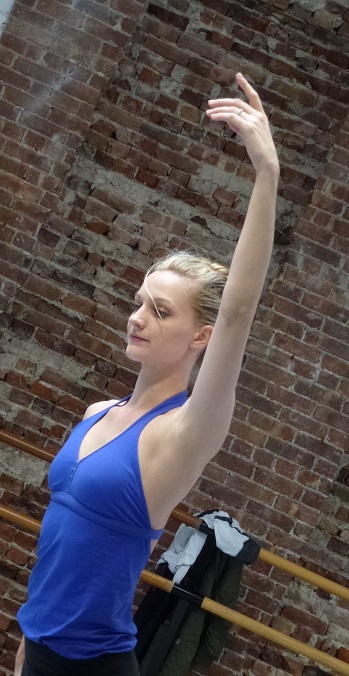
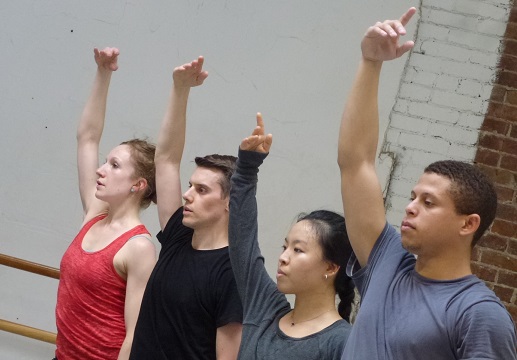
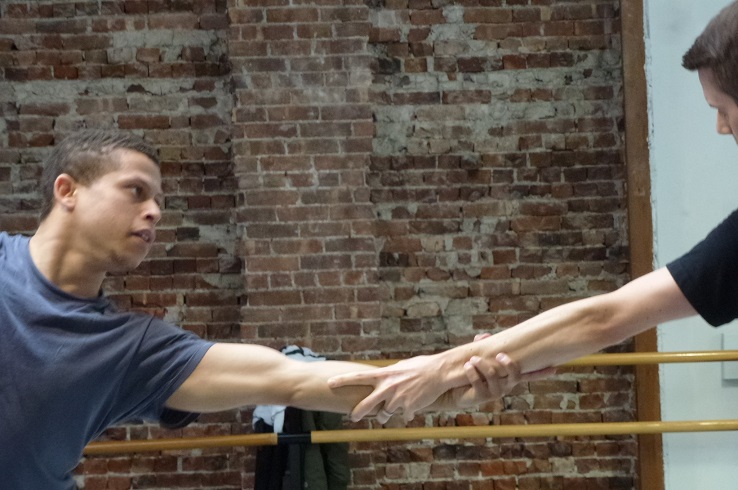
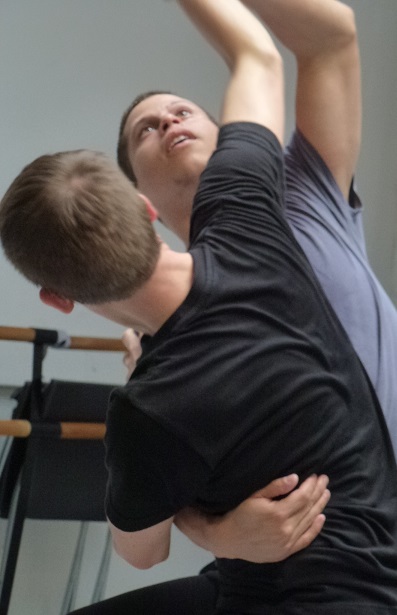
  • Lydia Johnson Dance: Rehearsal Gallery

    L1550552

    Above: Katie Lohiya and Oliver Swan-Jackson of Lydia Johnson Dance

    Friday April 17th, 2015 – Lydia Johnson Dance are in rehearsal for their upcoming New York season; the performance dates are June 11th thru 13th, 2015 at Ailey Citigroup Theater. Tickets here. The programme will feature two world premieres: “What Counts” set to music by The Bad Plus, and an as-yet-untitled piece to music by Osvaldo Golijov and Marc Mellits. Last season’s “Barretts Mill Road: A Remembrance”, danced to Mozart, will return; and the evening includes a revival of “Untitled Bach” (2010) for ten dancers which is set to selections from Bach’s violin sonatas and partitas.

    Lydia’s choreography continues to impress as a unique fusion of ballet and contemporary dance; her intense focus on musicality has set her creations in high profile among the vast number of danceworks being made here in Gotham year after year. Her dancers seem constantly to find new depths of eloquence in performing these ballets which are essentially abstract but rooted in matters of the heart. Thus the dancing is never dryly technical but instead reverberates with evocations of the human spirit. 

    The Company’s ballet mistress Deborah Wingert had given company class prior to my arrival at the studio today; Deborah has also been engaged in coaching for the Company and is working closely with Lydia in molding a unity of stylistic expression for these dancers who come from diverse training backgrounds.

    Here are some images of the LJD dancers at work:

    L1550562

    Chazz McBride and Min-Seon Kim

    L1550572

    Grant Dettling and Sarah Pon

    L1550626

    Katie Lohiya

    L1550634

    Laura DiOrio, Blake Hennessy-York, Min Kim, Chazz McBride

    L1550641

    Chazz McBride, Blake Hennessy-York

    L1550649

    Chazz and Blake

    L1550933

    Laura DiOrio

    L1550847

    Blake Hennessy-York

    L1550896

    Oliver Swan-Jackson, Katie Lohiya

    L1550909

    Sarah Pon, Blake Hennessy-York

    So lovely to run into Lisa Iannicito McBride at Lydia’s studio today; Lisa has been a key member of LJD and several important works were created on her. She took time off to have a wonderful son; it was just great seeing her again!

    6a00d8341c4e3853ef016767d40943970b-800wi

    Here’s Lisa in Lydia’s CROSSINGS BY RIVER, a gorgeous female-ensemble work set to Golijov that I am dying to see again…photo by Kokyat.

  • Morales Dance @ Ailey Citigroup

    _DSC6850

    Above: Karina Lesko and Christopher Rudd of Morales Dance; photo by Rachel Neville

    Friday April 18th, 2014 – In one of those perfect-timing happenstances, photographer Rachel Neville sent me her photos from Morales Dance‘ production entitled FOR YOU just as I was sitting down to write about the performance. Rachel’s beautiful images so perfectly captured many of the individual moments which lingered in the mind and are now made tangible thru her artistry. The only problem was in deciding which of the pictures to post since they are all so fine.

    Tonight at Ailey Citigroup Theater, Tony Morales put together a programme of new and older works which he’s choreographed, as well as bringing forth a Leni Wylliams ballet QUIET CITY (re-staged by Tony) to open the evening. 

    DSC_8896

    Above: the ensemble in QUIET CITY, photo by Rachel Neville

    Aaron Copland composed QUIET CITY from 1939 to 1941 as incidental music for a play by Irwin Shaw. Shaw’s play of the same name was a flop, never making it out of previews, and Copland’s original score went unpublished for years until it was restored to currency by sax player Christopher Brellochs. And thank goodness, because it’s really evocative music.
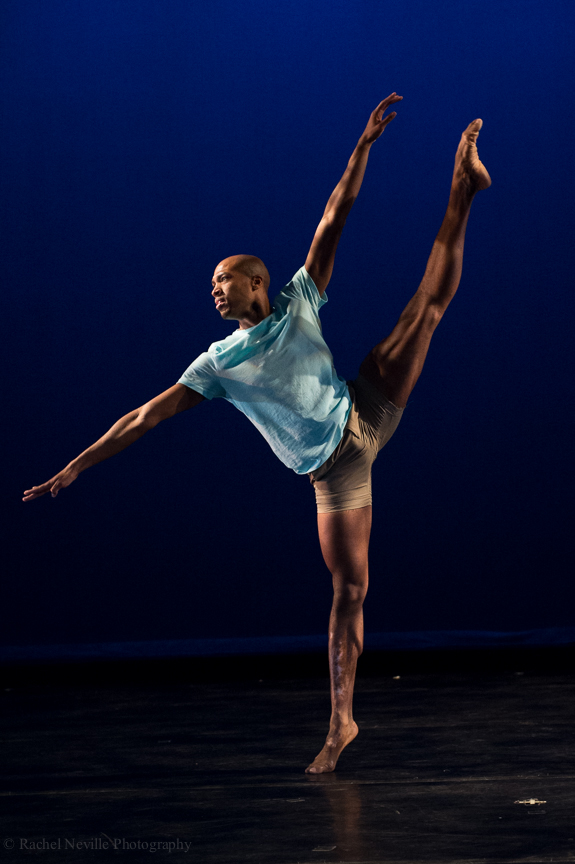
    In the Wylliams/Morales setting, the ballet opens with a stylized triple pas de deux; the three women and then the three men dance separate trios and then there are three brief, intermingling pas de deux. It’s a piece that makes big use of the space and it was very well-danced, and especially well-lit (as was the entire production) by Mike Riggs.

    DSC_8737

    Cassandra Lewis and Antonio Fini in QUIET CITY, photo by Rachel Neville

    DSC_8857

    Jessica Black and Christopher Rudd in QUIET CITY, photo by Rachel Neville

    Three familiar works from Tony Morales’ repertory followed:

    DSC_9124

    PLEASED 2 MEET U is a duet, sometimes danced by two men and sometimes by two women, set to a folkish score by Bohuslav Martinů. Tonight this sporting, light-hearted piece was performed by Jessica Black and Karina Lesko, as seen in Rachel Neville’s photo above.

    DSC_9484

    Above: Jerome Stigler in ABLUTION, photo by Rachel Neville

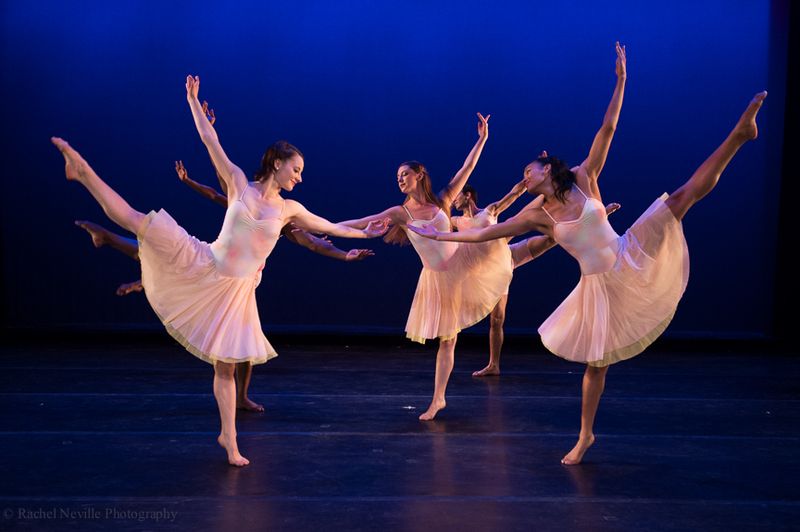
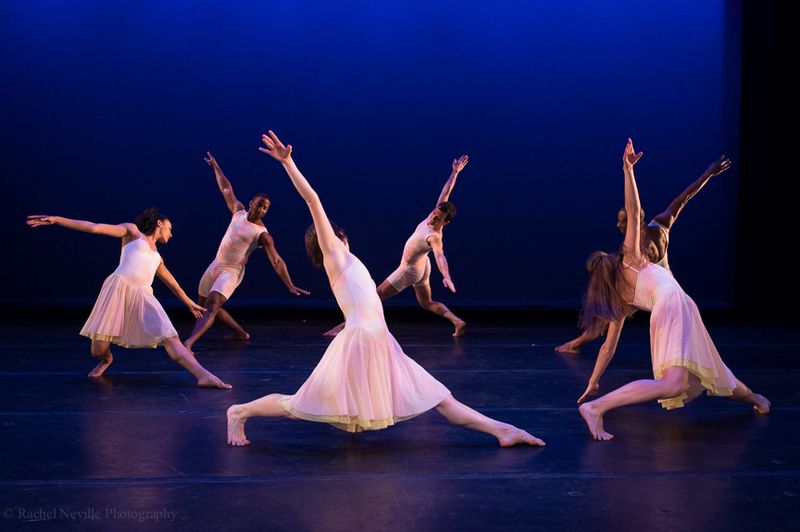
    ABLUTION, which for me is Tony Morales’ most potent work, is a solo danced to music of Bach; it was chroeographed in 1992 and retains its full power to this day. Danced tonight by Jerome Stigler, the solo is ritualistic and athletic by turns with the dancer covering the space in agile leaps or bowed down in supplication on the floor. Jerome’s performance was intense and moving.
    DSC_9582

    Above: Jerome Stigler in ABLUTION, photo by Rachel Neville

    DSC_9619

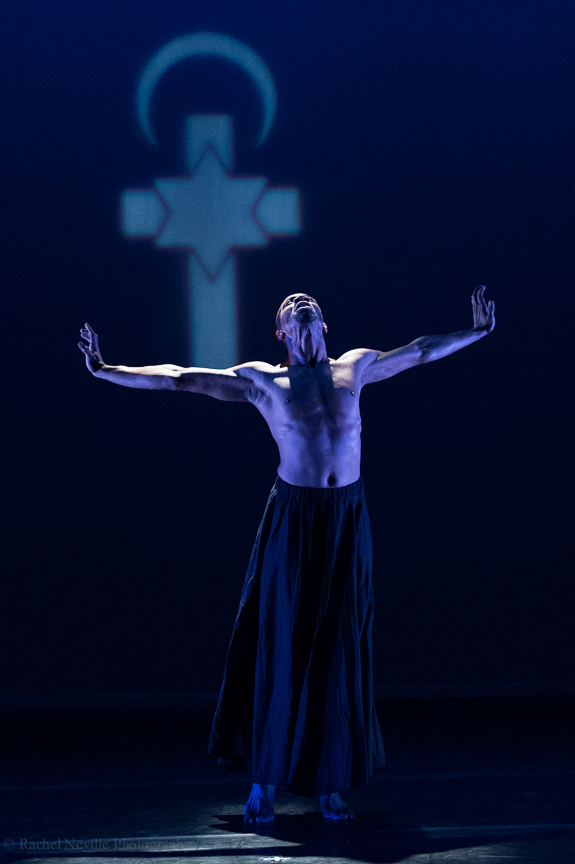
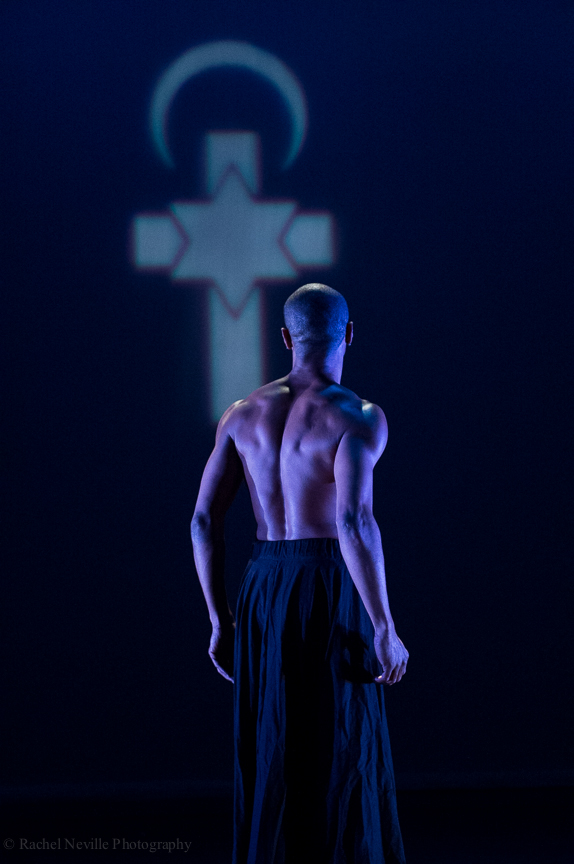
    By the way, I love the symbol of the three religions which is projected during this solo: Islam, Judaism and Christianity are united in this image – and how lovely the world would be if that image became reality. 

    _DSC6972

    Above: Christopher Rudd and Karina Lesko in TRANSITIONS, photo by Rachel Neville

    Lyricism, passion and tenderness were drawn forth in TRANSITIONS, a 1998 duet to music of Maurice Ravel. Here the Costa Rican beauty Karina Lesko was at her most ravishing, dancing with Christopher Rudd. In the second part of this sensuous – but also sometimes wary duet – each dancer moves in an individual pool of light.

    DSC_9647

    Above: Rachel Neville’s photo of Karina Lesko and Christopher Rudd in TRANSITIONS

    DSC_9664

    Above: Karina Lesko in TRANSITIONS, photo by Rachel Neville

    After a pause, Tony Morales’ domestic dance drama AMOR BRUTAL was performed to a mix of songs by Manuel de Falla and the title song, performed by Tony’s father Isaac ‘Casito’ Morales on an old recording.

    _DSC7038

    Above: Karina lesko and Antonio Fini in AMOR BRUTAL, photo by Rachel Neville

    In AMOR BRUTAL, a long-married couple – a devoted but controlling wife and a care-free husband – find themselves in a love-hate tangle as each seek to align their three teen-aged daughters’ affections and loyalty. Although she looks far too young to be the mother of grown children, Ms. Lesko did a fine job expressing the emotional turmoil of the anxious woman while the handsome Mr. Fini danced with free-spirited energy as the errant but likeable husband. Jessica Black, Elaine Gutierrez and Cassandra Lewis were the lovely daughters.

    DSC_9880

    Above: Karina Lesko and Antonio Fini in AMOR BRUTAL, photo by Rachel Neville

    DSC_9934

    Above: mother and daughters…Karina Lesko with Mlles. Lewis, Black and Gutierrez in AMOR BRUTAL, photo by Rachel Neville

    DSC_0293

    Antonio Douthit-Boyd of the Alvin Ailey Company (above) made a guest appearance dancing a new solo by Tony Morales, FOR YOU, set to the Elton John pop classic. In this tailor-made dancework, Mr. Douthit-Boyd was able to show off his astonishing technique and his emotional generosity, to the audience’s delight. Antonio dances with his whole body and soul; what a pleasure it must be to create something on such a dancer.

    DSC_0299

    Above: a great leap by Antonio Douthit-Boyd, photo by Rachel Neville

    DSC_0391

    Above: the majestic extension of Ailey’s Antonio Douthit-Boyd, dancing Tony Morales’ FOR YOU in a Rachel Neville photo

    DSC_0570

    Six young women from Ballet Forte (above) put me in mind of Isadora Duncan in the opening phrases from SCENES, a 2012 Tony Morales work dedicated to the memory of Ruth Currier. Dancing at first in silence, the sextet of nymphs begin exploring the space to music of Benedetto Marcello. Their dance has a celebratory innocence about it.

    DSC_0619

    In the ballet’s second part, six dancers from Morales Dance (above) dance in varying combinations, both in silence and to music by Chopin.

    DSC_0750

    At the end, the twelve dancers unite in a communal circle: a grace-filled final image from this evening of dance.

    All photography by Rachel Neville; my gratitude to her for her timely delivery of these inspiring images.

  • YAGP GALA 2012

    State

    Friday April 27, 2012 – Winners from the 2012 Youth America Grand Prix competition joined a constellation of great dancers from the world’s top companies for this gala evening at Lincoln Center. New ballets by Jiri Bubenicek, Marcelo Gomes and Justin Peck were premiered. Unfortunately, what could/should have been a memorable dance experience was marred by jarring flaws in the presentation and an audience who seemed to think they were at a basketball game. 

    Not to dwell on the negatives, but a 7:00 PM start time means you’d better have the curtain up no later than 7:07. It was 7:20 and we were still sitting there, twiddling our thumbs as the fashionably-late crowd drifted down the aisles to their seats. Women teetering past us hilariously in way-too-high heels looked absurd. But despite not starting til 7:25, there were still large numbers of even-later latecomers and they were all allowed to stagger around in the dark trying to find their seats.

    Worse still were the idiotic couple -TV personalities (I use the term loosely) supposedly – who hosted the evening. Their lame jokes, inept reading of a prepared script, and complete lack of personal dignity or charm gave the evening an air of low-class entertainment that even the great dancers who appeared after the intermission could not thoroughly dispel. Ballet is one of the last bastions of beauty and civility; why reduce it to a crude reality show?

    Then there was the audience with its large percentage of screaming, whooping adolescents blended with adults who chatted throughout and came and went from their seats at whim. A disastrous second late-seating took place after the break as they darkened the house lights and started Justin Peck’s new ballet (the main reason I attended) long before the crowd were back in their seats. So, more distractions disrupted Justin’s work and the excellent dancing of Teresa Reichlen and Robert Fairchild. Inexcusable.

    With these distractions, the first half of the gala went for nought. Although the Competition winners who danced in Part I were announced, I mostly had no clue who I was watching. A couple of the boys made outstanding impressions, but the announcer referred to a solo from LA SYLPHIDE as being from LES SYLPHIDES. A beautiful ensemble piece by Choo San Goh marked the high point of Part I, along with a dazzling performance of the DON QUIXOTE variation by a Korean boy whose name I know not.

    Furiant, Justin Peck’s ballet to a beautiful Dvorak score (played live, and ravishingly) was rather lost in the shuffle of the post-intermission seating debacle, but I could tell it’s another nice addition to Justin’s catalog, and hopefully we can see it again under more favorable circumstances. Tess Reichlen and Rob Fairchild look wonderful together though I could have wished that Robbie had worn a fitted top rather than the billowy blouse. I continue to commend Justin Peck not only for his choreographic imagination but also for his inspired musical choices. So far, in my view, he hasn’t made a single false creative move.

    Tamara Rojo gave a luminous performance in the mysterious duet for woman and goldfish entitled Life Is A Dream (choreographed by Fei Bo). The ballerina begins seated in a pool of light; opposite her is a second light-pool with a fishbowl globe holding a single, swishing goldfish. Intrigued by the fish, the dancer moves about the space in a reverie. Really nice.

    Herman Cornejo’s marvelous dancing of his self-choreographed solo Tango Y Yo was a brilliant vignette, but Jose Manuel Carreno and his partner Karina Smirnoff couldn’t match Herman for sheer artistry; their tango was a more gaudy, reality-show version. And at one point Jose seemed about to lose control of Karina.

    Yolanda Correa Frias (Norwegian Ballet) and Yonah Acosta (English National Ballet) paired successfully in the CORSAIRE pas de deux, the bare-chested and handsome Jonah winning applause for every leap and pose; the ballerina has a lovely quality but what was with the rhythmic clapping during her solo? Disgusting.

    Marcelo Gomes (would that he had danced!) choreographed a movement-rich duet for his ABT colleagues Misty Copeland and Alexandre Hammoudi. Entitled Toccare, the pas de deux is set to a colorful contemporary score by Ian Ng, played live by the adorable-punk violinist Charles Yang and pianist Dmitri Dover. Misty and Alexandre make a radiant pair, and the ballet was further enhanced by huge black-and-white still images of the two dancers projected on the back wall. The images, by Jade Young, were so striking that they might have over-shadowed the dancing; but Marcelo, Misty and Alexandre made sure the whole performance was finely integrated. Bravi tutti!

    Alicia Amatriain and Friedermann Vogel from Stuttgart Ballet gave a spacious rendering of the Cranko Romeo and Juliet pas de deux. The dancers held the audience in the palms of their hands with their lovely lyricism, though I found myself thinking that Sean Lavery’s version of this duet surpassses Cranko’s as a distillation of an immortal love.

    Jiri Bubenicek’s Gentle Memories brought the great Mariinsky ballerina Ekaterina Kondaurova to the stage. This woman made such a stunning impression when she danced here in Gotham at the Mariinsky’s last visit (time for an encore, dear Russians!).  Looking splendid in a long deep-rose gown, La Kondaurova held the center of this ballet as three men (Islam Baimuradov, Otto Bubenicek, and Jon Vallejo) vied for her favor. Yet in the end it was the pianist Simon Mulligan who won her heart. Mr. Mulligan played Karen LeFrak’s melodious yet very au courant score impeccably. This ballet and these performers generated a unique atmosphere; I’d love to see this piece again – and Justin’s and Marcelo’s as well. A single viewing of a new ballet is never enough. 

    Tamara Rojo and Sergei Polunin were announced to be dancing Esmerelda but they certainly looked like Diana and Acteon to me. Ms. Rojo seemed a bit out of focus early on but by the time she reached her uncanny set of fouettes she was back on the gold standard. Mr. Polunin danced quite grandly and together they brought the gala to a rousing conclusion.

  • From Justin Peck

    BlockMag2-2

    While anticipating the premiere of a new Justin Peck pas de deux scheduled to be danced on Friday April 27th at the Youth American Grand Prix gala by New York City Ballet principal dancers Teresa Reichlen and Robert Fairchild, a new filmed miniature from Justin has come my way. Watch it here.

    The film is Justin’s second creation in collaboration with The Block magazine. The dancers are Janie Taylor, Emilie Gerrity, Robert Fairchild and Justin Peck. Above, a Tom Allen still from the film.

  • Checking In with John-Mark Owen

    P1220291

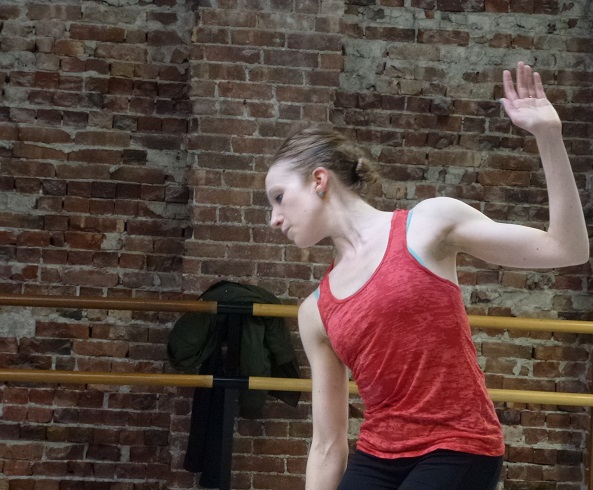
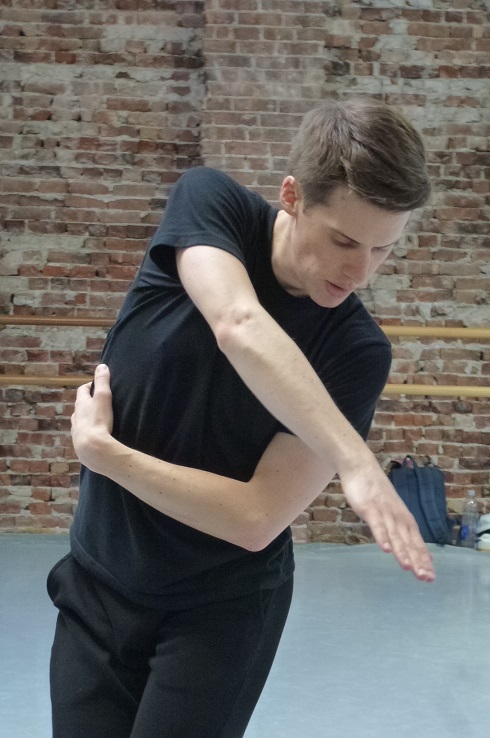
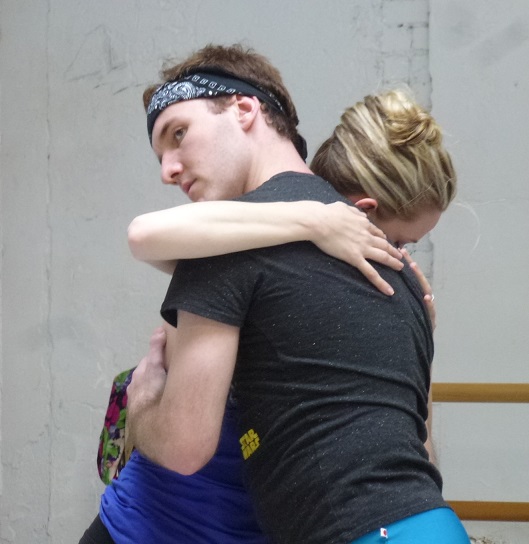
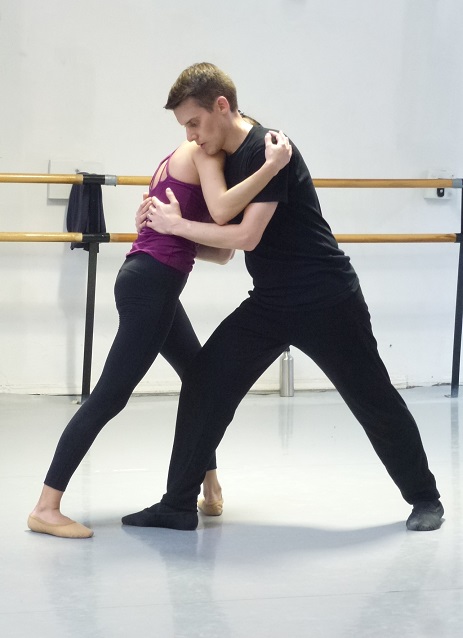
    Friday April 29, 2011 – Down to SoHo this morning to watch choreographer John-Mark Owen putting the finishing touches on a new solo performed by Jesse Marks, a soloist with Colorado Ballet. Kokyat and I met Jesse last year when he appeared with Lydia Johnson Dance here in New York City.

    P1220300

    The solo, entitled Sonatae, is set to music of Heinrich Ingaz Franz Biber. It begins with the dancer in a contemplative Narcissus-like pose and then flows into space-covering movement. John-Mark, a choreographer after my own heart for our shared love of Baroque music, shows Jesse off to beaufitul advantage. I really enjoyed seeing Jesse again.

    P1220359

    P1220362

    P1220319

    P1220297

    Sonatae will premiere at Manhattan Movement and Arts Center in performances on May 6th and 7th when John-Mark’s work shares a triple bill with Island Moving Co (from Newport, RI) and Cherylyn Lavagnino. Details here.

    Both Jesse Marks and John-Mark Owen will be appearing in Dances Patrelle‘s GILBERT & SULLIVAN: A Ballet! at Dicapo Opera Theatre May 12th – 15th. Information here. Read about it here.