Tag: Monday January

  • Ensemble Connect ~ Up Close

    CH11514851

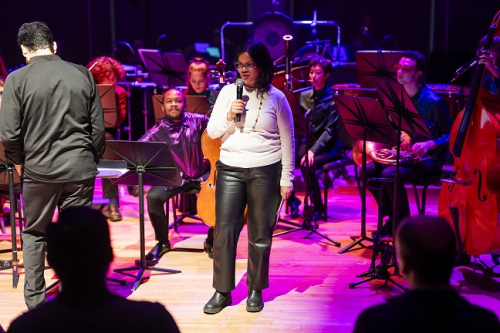
    Above, composer/curator Gabriela Ortiz welcomes the crowd; photo by Chris Lee

    ~ Author: Oberon

    Monday January 27th, 2025 – Ensemble Connect is a joint program of Carnegie Hall, The Juilliard School, and the Weill Music Institute in partnership with the New York City Department of Education. In tonight’s Up Close presentation, curated by composer Gabriela Ortiz, the young artists of the Ensemble performed at the Hall’s Resnick Education Wing, an intimate venue which I’d never been aware of until Carnegie’s Meg Boyle gently twisted my arm into giving it a try.

    CH11514901

    Above: Chelsea Wang and Ryan Dresen playing Ortiz; photo by Chris Lee

    The evening opened with the New York premiere by of Pigmentum by Ms. Ortiz, a four-movement work presented in collaboration with visual artist Martirene Alcántara that was performed by Ryan Dresen (horn) and Chelsea Wang (piano) whilst a film by Ms. Alcántara was shown on a hanging screen.

    Each of the work’s four movements is named for a shade of blue, the first being Indigo. This music veered from dreamy to jazzy; some of the piano’s tones had been ‘prepared’, giving a quirky, off-kilter sound. Mr. Dresen’s playing has beauty and power throughout the range, and passages played with a mute were intriguing. Chime-like piano notes introduce Lapislazuli, with horn calls leading to a duet in the instruments’ lower ranges. The music gets wild, and a sudden ending takes us by surprise. The rippling delicacy of Ms. Wang’s playing in Cobalto is joined by the dusky sound of the horn. The music gets grand, then pensive. In the concluding Ultramar, Mr. Dresen’s horn rambles and stutters. There is a false ending, and then the enigmatic sound of toneless air being blown thru the horn. 
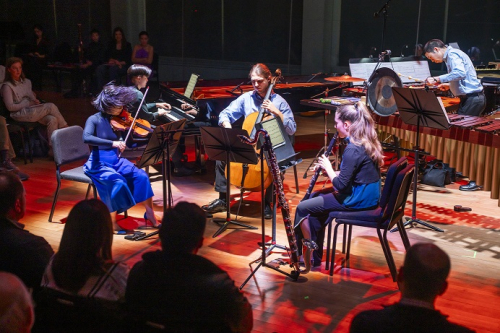
    CH11514949

    Mexico’s Carlos Carlos Sánchez-Gutiérrez presented Luciérnagas (photo above Chris Lee) for which three alumni of the Ensemble – Yasmina Spiegelberg (clarinet), Joanne Kang (piano), and Mari Lee (violin) – joined percussionist de luxe Oliver Xu and cellist Frankie Carr, who introduced the piece. A chord introduces the insectuous music of a swarm of fireflies, whilst the cello vibrates. The clarinet trills, the sneaky piano intones, cello and clarinet sound in unison. The xylophone heralds an explosion causing the violin to go crazy. A rhythmic passage turns spacey, thunder rolls, the bass clarinet rumbles deeply whilst awesome percussion motifs sound. An intriguing marimba solo is interrupted by an urgent one-note motif from the violin, and then the xylophone goes off like a fire alarm; the insistent piano sounds urgently. Silence falls. This seemed like a perfect place to end, but no…we go on, savouring some rhapsodic playing from Ms. Kang at the piano. But then the music turns dark and scary; a cymbal crash leads to a total wipe-out. Somehow, thru all of this, it was the cellist who seemed the central figure, both thru his noble playing and his poetic face.

    For “La Hamaca” from La Hamaca (NY Premiere) by the Venezuelan composer Ricardo Lorenz, the players were Chelsea Wang (piano), alumna Mari Lee, and cellist Thapelo Masita. The music opens softly with the piano joined by the violin; the cellist enters with a pinging motif before taking up a gorgeous theme wherein Mr. Masita’s tone was matched by the sweetness of the violin and magical sounds from the piano. The music turns passionate, then staccati introduce new themes, with rich playing from the cello. The staccati resume before Ms. Lee’s violin sings on high; dense harmonies emerge before an agitato outburst. A bouncy rhythm springs up…fabulous playing from the trio as the music wafts to heaven and then fades away.

    CH11514870

    Above, in a Chris Lee photo: Joanne Kang and Oliver Xu playing the Cuban composer Ileana Perez Velazquez’s Light echoes, having its New York premiere this evening. This piece gave us a virtuoso percussion display from Oliver Xu, who moved amidst his array of instruments with assured grace, as if in a choreographed solo. No less marvelous was Ms. Kang, who was back at the piano to make more magic. Bass drum rolls, bongo beats, and gong tones set off a jazzy piano theme. The swaying rhythm gets big as Mr. Xu moves swiftly from xylophone to ancient hanging bells to every type of drum. Ms. Kang  commences a keyboard interlude, laced with various percussive comments. Suddenly, there’s a kind of cabaletta, fast and florid, before things quieten and the mysterious gong sounds; a rhythmic coda ensues. Brilliant playing from start to finish!

    CH11514918

    The Costa Rican composer Alejandro Cardona’s Axolotl (a US premiere) brought three wind players to prominence: Ms. Spiegelberg (clarinet), Anjali Shinde (flute), and Joseph Jordan (oboe) with Joanne Kang at the piano, Mr. Carr with his cello, and the lovely violinist Isabelle Ai Durrenberger (photo above by Chris Lee).  

    CH11514915

    Above: Joseph Jordan and Anjali Shinde, photo by Chris Lee

    The piece develops gradually clarinet and oboe are heard in sync, and the piano music is jazzy. Stillness, and then a haunting flute passage is heard over delicately sustained string tones creating a wonderful air of mystery. The clarinet gets jazzy as a sexy beat rises; more jazz from the violin, whilst the cello is strummed like a guitar. Wailing clarinet and oboe slowly sputter out, and a thoughtful flute solo ensues, with piano and cello commenting. Bass clarinet and flute converse over the deep cello and piano; these voices then make an incredible fade-away.
    CH11514944

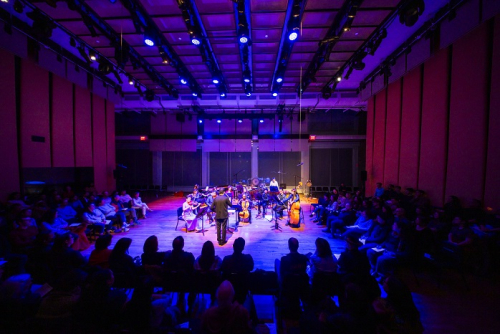
    The concert ended with the world premiere of Gritos de fuego, patrias de papel by the Colombian composer Carolina Noguera (above, photo by Chris Lee). This work brought together the largest ensemble of the evening, with Leonardo Pineda conducting. Joining Mlles. Shinde, Spiegelberg, Wang, Ai Durrenberger, and Mssrs. Jordan, Dresen, Xu, and Masita were flautist Catherine Boyack, bassoonist Marty Tung, violist Ramon Carrero-Martinez, and bass-player Marguerite Cox.

    CH11514858

    Photo: the ensemble playing the Noguera, photo by Chris Lee

    From an explosive start, announced by three massive strikes of the bass drum, eerie strings emerge; the flutes blow air as more thunder claps, wailing winds, and rumbling piano depict the storm, which gives way to the amazingly subtle and sustained violin supported by cello tremelos. A long flute trill sounds as the oboe blows air and a quiet sense of ecstasy settles overall. The piano and eerie shimmers from the violin bring on a repetitive 4-note rising motif from the violin. From a perpetual quietude, raindrop piano notes accompany a sweet and serene solo from Ms. Ai Durrenberger’s violin. The bassoon chimes in, the viola plays a repeated phrase. Big chords are repeated, and then the music vanishes into thin air as a sensationally sustained cello tone from Mr. Masita fades to silence.

    CH11514920

    Above: the composers take a bow; photo by Chris Lee

    Audience members lingered to greet the artists and the composers; except for congratulating Mr. Masita, I was too shy to speak to anyone. But I did have a chance to meet and thank photographer Chris Lee, whose remarkable gift for capturing the essence of Carnegie Hall concerts I have been lucky enough to share on my blog these past few years.
    CH11514895

    Above, the finale: this, and all the performance photos, are by Chris Lee, courtesy of Carnegie Hall

    ~ Oberon

  • At Amanda Selwyn’s Rehearsal

    0D9A2416

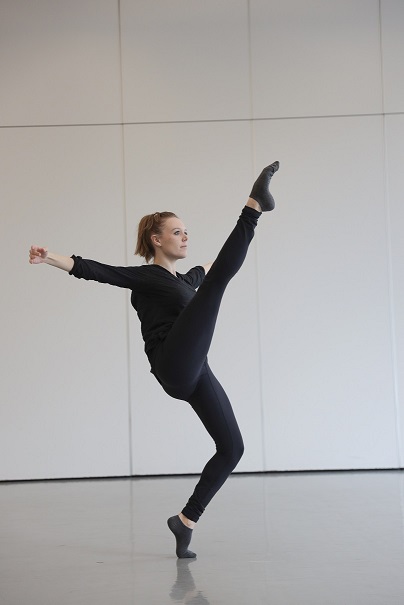
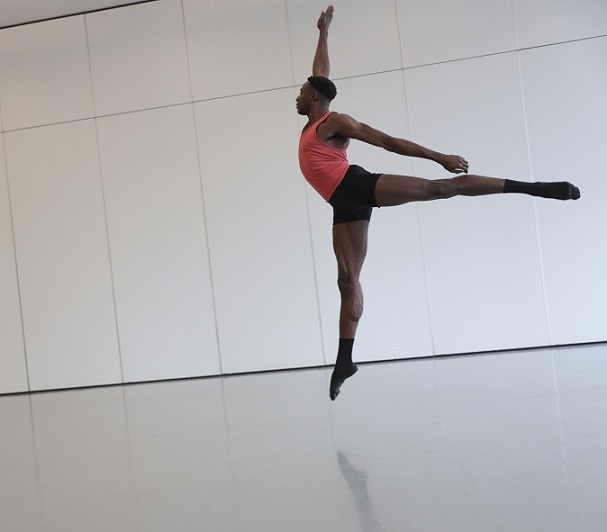
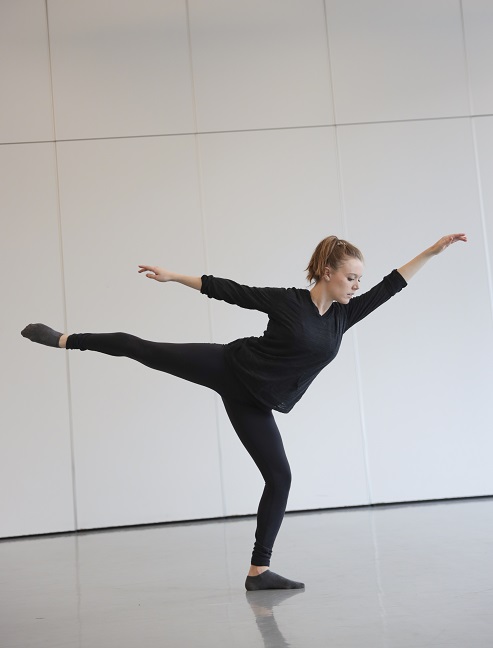
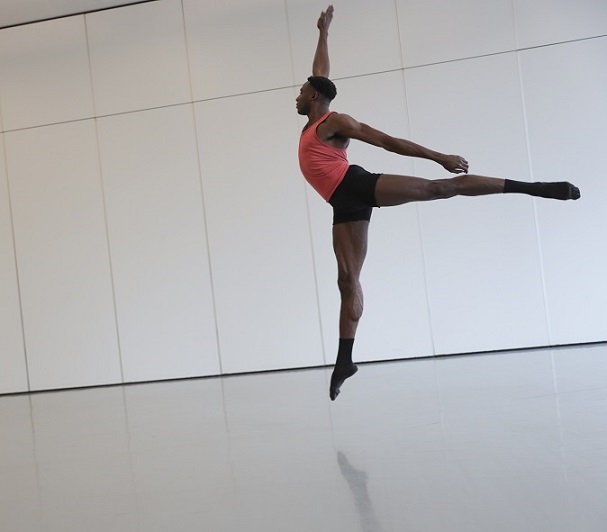
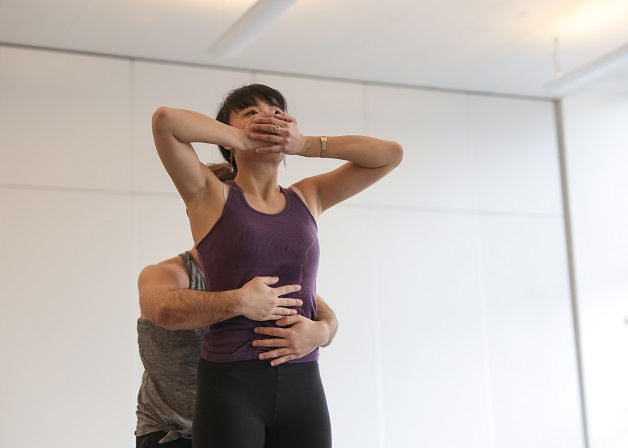
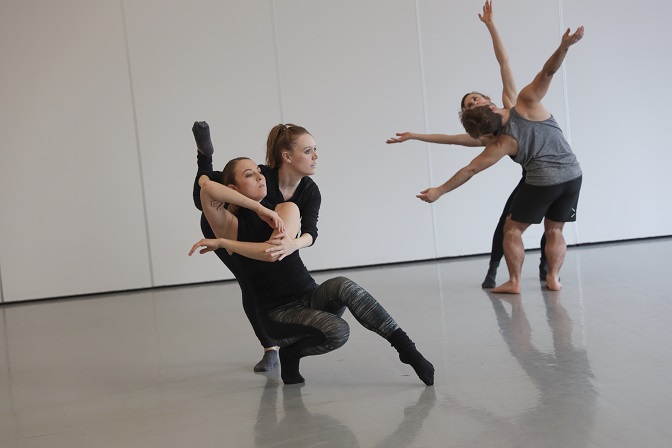
    Monday January 28th, 2019 – Photographer Travis Magee and I stopped in at the Ailey Studios today where Amanda Selwyn and her dancers were rehearsing their work-in-progress, CROSSROADS. Inspired by the art of Magritte and Escher, the premiere performances will be given June 20th thru 22nd, 2019, at New York Live Arts.

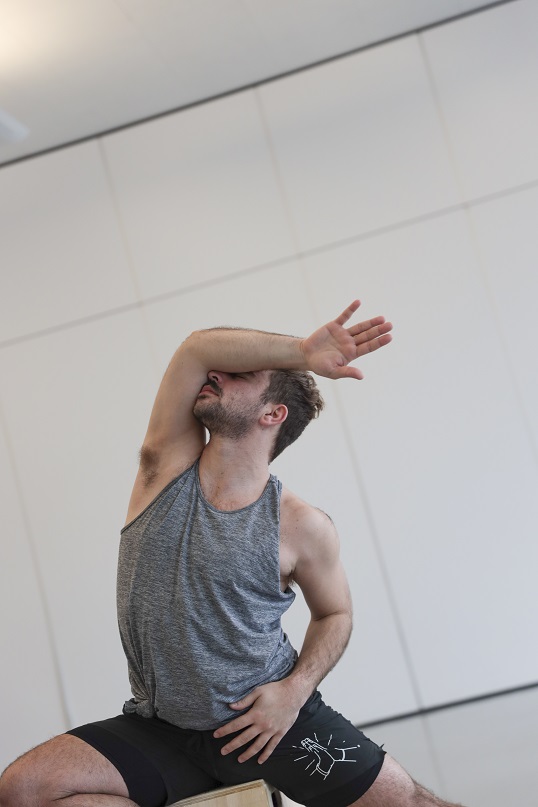
    In October, we had a first look at CROSSROADS when the Company held an open rehearsal. There, we watched the individual dancers creating movement phrases which are then taught to their colleagues, and later elaborated on or modified by the ensemble, to be finally woven into the overall fabric of the dancework. 

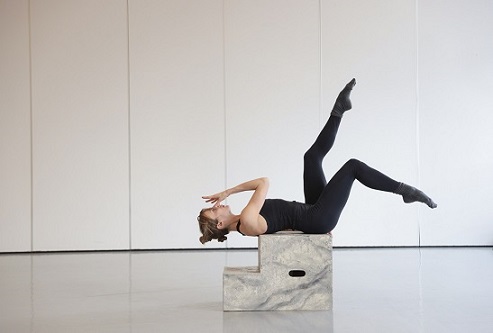
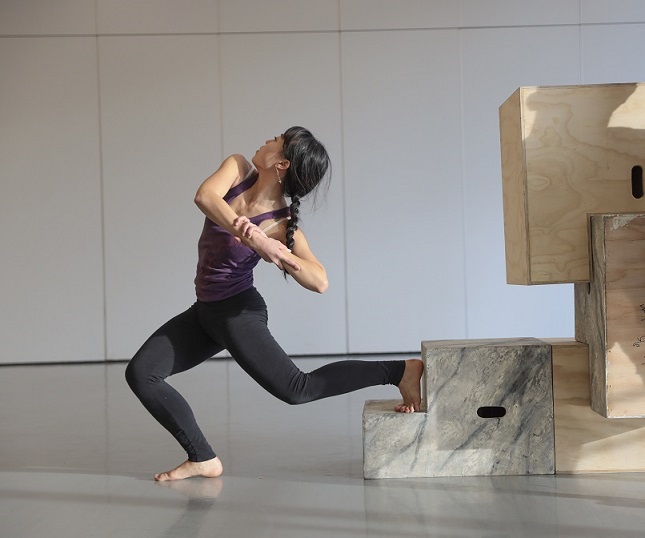
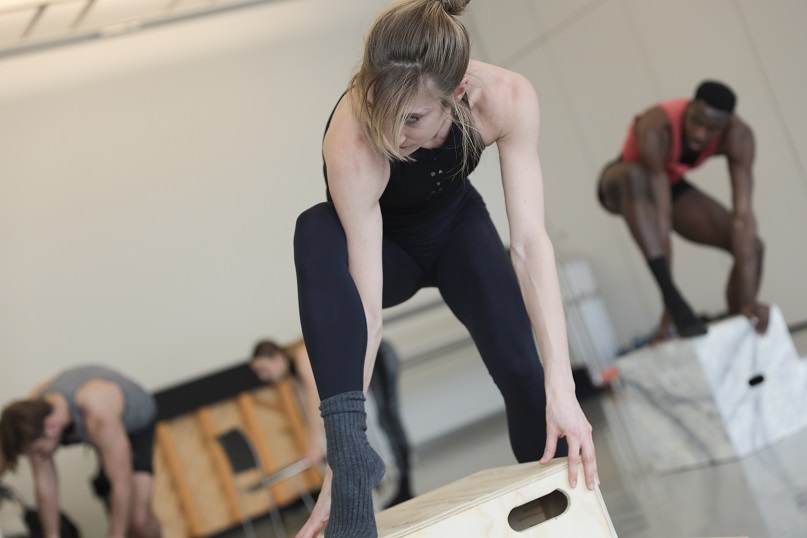
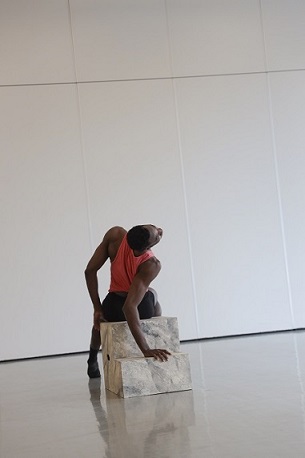
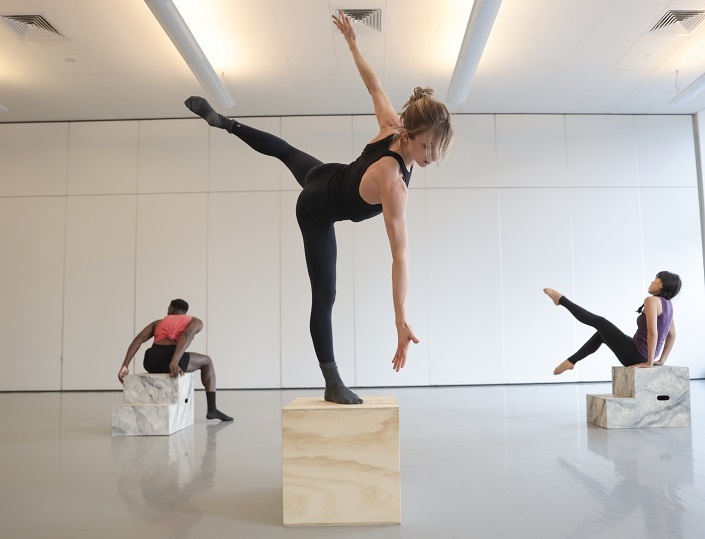
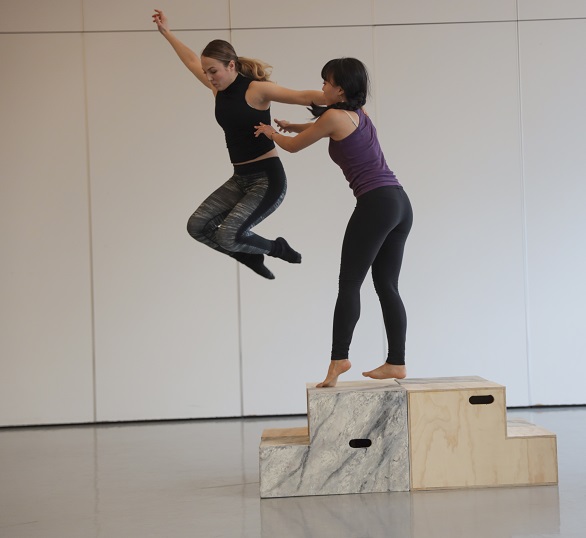
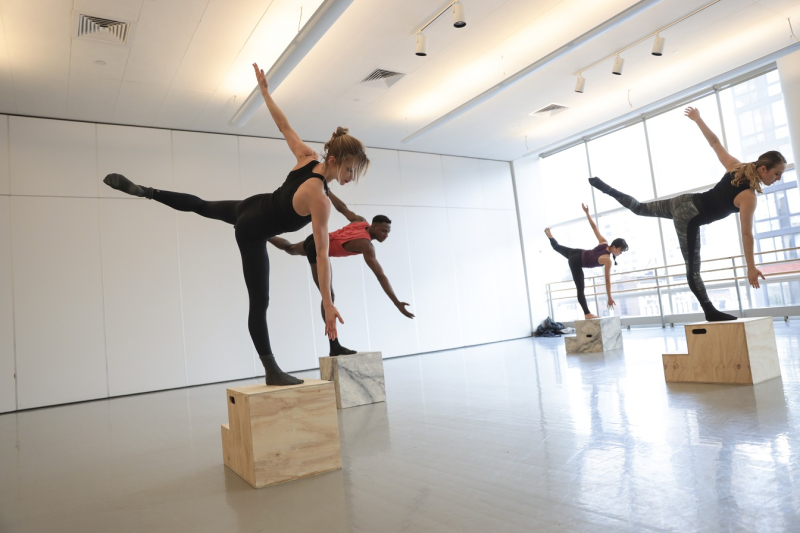
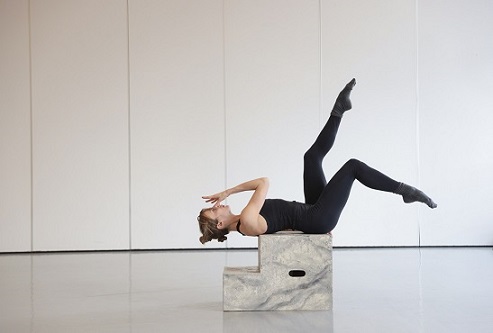
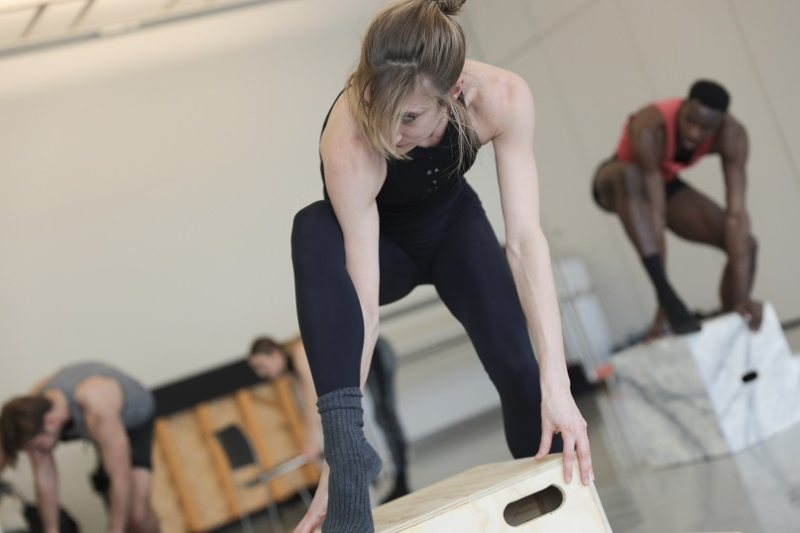
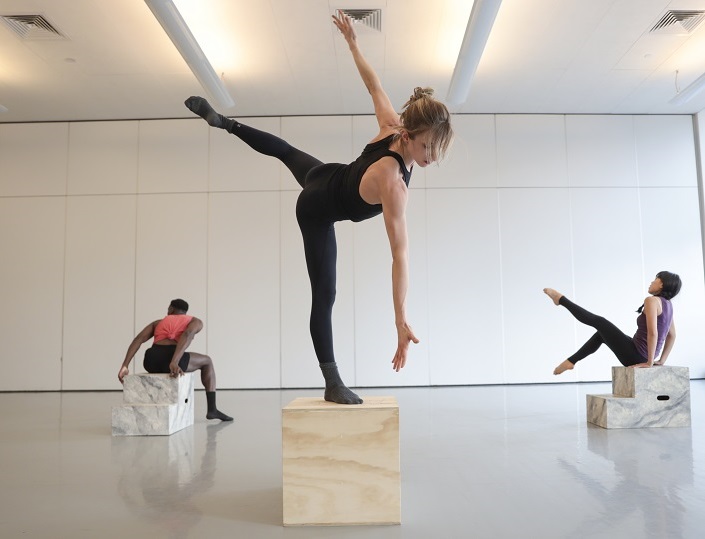
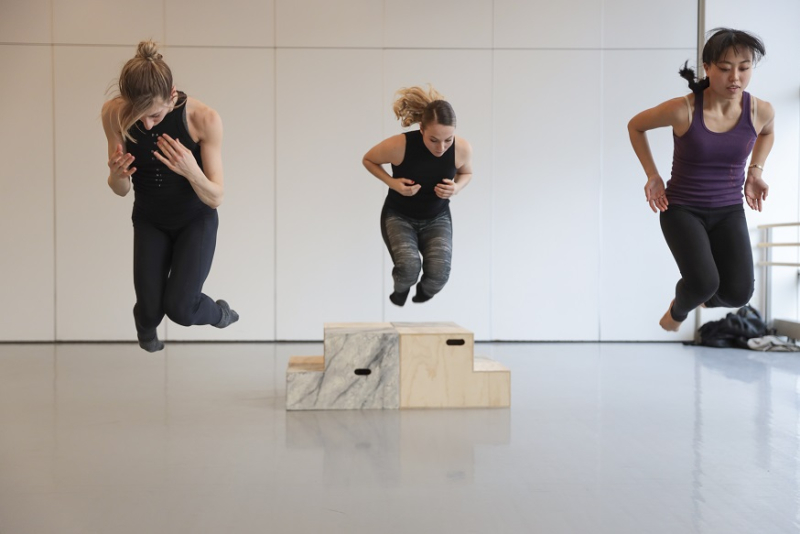
    This process continued today, and Amanda described to me the set pieces (doors, re-arrangeable boxes) that will become part of the staging. This afternoon, the stackable boxes were in play, with the dancers getting used to using them as seats, pedestals, and springboards for athletic feats. 

    The rehearsal atmosphere is relaxed, but with a strong focus on mastering the various movements that will become part of CROSSROADS.

    The dancers of Amanda Selwyn Dance Theatre are:

    0D9A2746

    Torrey McAnena…

    0D9A2476

    …Alex Cottone…

    0D9A2516

    …Sarah Starkweather…

    0D9A2477

    …Manon Hallay…

    0D9A2692

    …Fabricio Seraphin…

    0D9A2877

    …and Misaki Hayama. 

    And here are more of Travis Magee’s images from today’s rehearsal:

    0D9A2407

    0D9A2428

    Sarah Starkweather

    Fabricio

    Fabricio Seraphin

    0D9A2443

    Fabricio, Sarah, and Misaki

    0D9A2450

    Fabricio, Sarah, Misaki

    0D9A2537

    Fabricio

    0D9A2545

    Alex Cottone

    0D9A2658

    Alex and Misaki

    0D9A2709

    Alex and Misaki

    0D9A2736

    Torrey, with Alex and Sarah

    0D9A2751

    Torry McAnena

    0D9A2787

    Torrey, Manon, with Alex and Sarah

    0D9A2835

    Manon and Misaki

    0D9A2804

    Sarah, Manon, and Misaki

    All photos by Travis Magee

    ~ Oberon

  • At Amanda Selwyn’s Rehearsal

    0D9A2416

    Monday January 28th, 2019 – Photographer Travis Magee and I stopped in at the Ailey Studios today where Amanda Selwyn and her dancers were rehearsing their work-in-progress, CROSSROADS. Inspired by the art of Magritte and Escher, the premiere performances will be given June 20th thru 22nd, 2019, at New York Live Arts.

    In October, we had a first look at CROSSROADS when the Company held an open rehearsal. There, we watched the individual dancers creating movement phrases which are then taught to their colleagues, and later elaborated on or modified by the ensemble, to be finally woven into the overall fabric of the dancework. 

    This process continued today, and Amanda described to me the set pieces (doors, re-arrangeable boxes) that will become part of the staging. This afternoon, the stackable boxes were in play, with the dancers getting used to using them as seats, pedestals, and springboards for athletic feats. 

    The rehearsal atmosphere is relaxed, but with a strong focus on mastering the various movements that will become part of CROSSROADS.

    The dancers of Amanda Selwyn Dance Theatre are:

    0D9A2746

    Torrey McAnena…

    0D9A2476

    …Alex Cottone…

    0D9A2516

    …Sarah Starkweather…

    0D9A2477

    …Manon Hallay…

    0D9A2692

    …Fabricio Seraphin…

    0D9A2877

    …and Misaki Hayama. 

    And here are more of Travis Magee’s images from today’s rehearsal:

    0D9A2407

    0D9A2428

    Sarah Starkweather

    Fabricio

    Fabricio Seraphin

    0D9A2443

    Fabricio, Sarah, and Misaki

    0D9A2450

    Fabricio, Sarah, Misaki

    0D9A2537

    Fabricio

    0D9A2545

    Alex Cottone

    0D9A2658

    Alex and Misaki

    0D9A2709

    Alex and Misaki

    0D9A2736

    Torrey, with Alex and Sarah

    0D9A2751

    Torry McAnena

    0D9A2787

    Torrey, Manon, with Alex and Sarah

    0D9A2835

    Manon and Misaki

    0D9A2804

    Sarah, Manon, and Misaki

    All photos by Travis Magee

    ~ Oberon
  • BUTTERFLY @ The Met: First of Three

    Butterfly0607.12

    Above: dancer Hsin-Ping Chang in the Met’s production of MADAMA BUTTERFLY; photo by Ken Howard

    Monday January 20th, 2014 – Three sopranos are slated to sing Butterfly at The Met this season and I’ll be in the House for one performance by each; although I like the current BUTTERFLY production very much, as a matter of practicality I’ll be at a score desk for all three performances.

    Pierre Vallet, an assistant conductor at The Met, took over the baton tonight as the scheduled Philippe Auguin seems still to be indisposed. Vallet has worked at The Met for several seasons; tonight was only his second appearance on the podium (in 2011 he led a FAUST during which mezzo-soprano Wendy White suffered a serious onstage injury). He got BUTTERFLY off to a brisk start tonight with a nimble prelude, and although there were some moments when pit and singers were not precisely coordinated, overall he shaped a very appealing performance.

    Vocal honors tonight went to Bryan Hymel, the tenor who was a Met Auditions winner in 2000 and who returned to the House in triumph last season, replacing Marcelo Giordani in the arduous role of Aeneas in Berlioz LES TROYENS. Considering the difficulty, complexity and duration of many of the roles in Bryan’s current repertory, Pinkerton must seem like something of a ‘vacation role’ (that’s how Birgit Nilsson referred to Turandot). He sang with clear lyric thrust, with easy and sustained top notes zooming out into the House. The voice is fragrant and passionate; I had looked forward very much to hearing him in the aria and trio of the opera’s final act but in the event I didn’t end up staying that long.   

    Tonight’s Butterfly, the South African soprano Amanda Echalaz, revealed a vibrant and somewhat metallic timbre; her voice – which I would describe as ‘big lyric’ – projects well, but tonight much of the time she tended to sing sharp. This offset any pleasure I might have derived from her singing. By the end of the first act I’d decided that I’d heard enough, and I headed home after the love duet. The soprano’s bio indicates that BALLO and SALOME are in her rep; I’m wondering if she’ll wear herself out prematurely.

    Tony Stevenson was an outstanding Goro: clear and musical in his presentation, he sang the role more as a lyric than a ‘character’ tenor. The pleasing singing of Elizabeth DeShong as Suzuki was another possible reason to stay beyond the first intermission but there was no guarantee that Ms. Echalaz would overcome her sharpness, and the rest of the opera is a long haul if the Cio-Cio-San is off the mark. Scott Hendricks’  Sharpless was reasonable enough and Ryan Speedo Green was a strong Bonze.

    All the elements were here for a good BUTTERFLY except the essential one: a vocally inspiring heroine. In the coming weeks Kristine Opolais and Hui He will be taking on Butterfly at The Met and hopefully one or both of them will sustain my interest to the end of the opera. 

    Metropolitan Opera House
    January 20, 2014

    MADAMA BUTTERFLY
    Giacomo Puccini

    Cio-Cio-San.............Amanda Echalaz
    Pinkerton...............Bryan Hymel
    Suzuki..................Elizabeth DeShong
    Sharpless...............Scott Hendricks
    Goro....................Tony Stevenson
    Bonze...................Ryan Speedo Green
    Yamadori................Alexey Lavrov
    Kate Pinkerton..........Maya Lahyani
    Commissioner............Paul Corona
    Yakuside................Craig Montgomery
    Mother..................Belinda Oswald
    Aunt....................Jean Braham
    Cousin..................Patricia Steiner
    Registrar...............Juhwan Lee
    Dancer..................Hsin Ping Chang
    Dancer..................James Graber

    Conductor...............Pierre Vallet

  • In the Studio with Tom Gold & Willy Burmann

    BRI_0085-Edit-9-L

    Monday January 21, 2013 – Tom Gold is creating a new ballet to be premiered at the upcoming Dance From The Heart gala performances. This annual dance event, which benefits Dancers Responding to AIDS, will take place this year at the Cedar Lake Theater on January 28th and 29th. Details and ticket info here. Tom’s ballet will be performed on the 29th at both the 6:30 PM and 8:30 PM shows.

    The new ballet is entitled SOME KIND OF ROMANCE and will feature five dancers: Abigail Mentzer, Alexander Peters and Amir Yogev from Pennsylvania Ballet, and Zoe Zien and Ezra Hurwitz from Miami City Ballet. Earlier in the week, Tom invited me and photographer Brian Krontz to a studio rehearsal at DANY where the three Pennsylvania-based dancers were working on the piece.

    We arrived near the end of the rehearsal period and watched the dancers run the ballet twice: it is fast-paced, witty and physically demanding, and I was constantly wondering how it will look with the two additional dancers. 

    Bri_0056-1a

    Above: Willy Burmann with Amir Yogev.

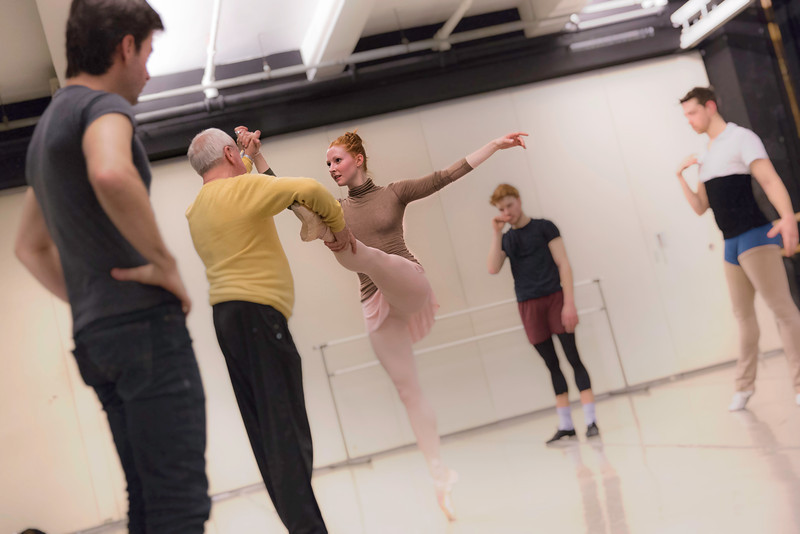
    Willy Burmann is Tom’s ballet master, and at the rehearsal he was giving a virtual master-class in technical refinement. His suggestions and his hands-on shaping of the dancers at various points in the rehearsal are a revelation to observe and a key element in preparing the ballet for the stage. Willy’s spot-on analysis of the steps and combinations and his wry sense of humour create a tension-free work environment; he treats the dancers like colleagues and his advice invariably turns something that already looks really good into something that looks great. There were plenty of laughs but also a sense of diligence as the dancers took Willy’s suggestions to heart. As the rehearsal progressed the ballet took on a very nice polish. It’ll be interesting to see it onstage next week, and Tom spoke of his plan to expand on it in the future.

    BRI_0081-2-L

    Abigail Mentzer

    Amir

    Amir Yogev

    BRI_0245-4-L

    Alexander Peters

    BRI_0148-Edit-Edit-Edit-11-L

    Abigail

    BRI_0649-6-L

    Stretch: Amir

    Bri_0155-edit-edit-edit-8a

    Abigail

    BRI_0367-Edit-7-L

    Tom Gold in a Bad Boy of the Ballet moment.

    BRI_0267-Edit-10-L

    One of the best things about going to Tom Gold’s rehearsals is watching him demonstrate!

    All photos by Brian Krontz. Click on each image to enlarge.

    Tom Gold Dance will have their second New York season March 12th and 13th, 2013 at the Gerald Lynch Theater at John Jay College. Details will be announced soon.

  • Unenchanted Evening

    EnchIsla1112.21

    Monday January 30, 2012 – The Met’s Baroque pastiche ENCHANTED ISLAND made for a dismal night at the opera. Placido Domingo as Neptune, in a Ken Howard production photo above, gave the performance one of its few perk-up moments. His voice, though aged, remains a distinctive instrument and he brought a real personality to his relatively brief appearance, something no other singer in the cast was able to do.

    The Playbill featured a two-page synopsis. Drawing on two complex and brilliant Shakespeare masterpieces, THE TEMPEST and MIDSUMMER NIGHT’S DREAM, the plot is a mishmash of characters and situations that do not engage us emotionally, and rarely even theatrically. The libretto is cheesy and stilted; avoiding Shakesperian style, it has a contemporary feel at odds with the setting and the music. Forced humour abounds, and the characters are made to sing uncomfortably-structured sentences. Unable to understand much of the diction, I flipped on my Met Titles and regretted it because reading the script added to a sense of deflation as the first act progressed.

    The opera is much too long. The 90-minute first act seemed to have reached a pleasant climax with the Neptune scene, but then there was another prolonged slow aria for Prospero. Oddly, the house lights suddenly came on at full brightness during the postlude of this aria, then were dimmed and turned off again.

    Slow arias in fact abound; but that proved as well since none of the singers had the needed vocal facility to astonish us with their coloratura. The annoying voice of Danielle DeNiese as Ariel went in one ear and out the other; she made no vocal impression at all. Anthony Roth Costanzo, replacing David Daniels as Prospero, seemed over-parted in the big house; pushing for volume, his sustained notes sometimes took on a steady beat. At other times the voice vanished behind the orchestra. Joyce Di Donato was announced as indisposed but she had “graciously consented…blah, blah, blah.” Please singers: if you are unwell enough to need an announcement, don’t sing. We don’t pay Met prices to hear sick singers. At any rate, Di Donato only had one bad low note, but her voice – even in full health – lacks a distinctive colour, the sort of personal timbre that made singers like Teresa Berganza, Dame Janet Baker and Frederica von Stade so instantly identifiable. Luca Pisaroni tended to be over-emphatic in his fiorature which verged on barking at times. Lisette Oropesa sang attractively as Miranda as did Paul Appleby as as Demetrius. The libretto did them no favors, but they – and in fact everyone onstage – went at the words gamely enough, even if they felt foolish doing so.

    The idea of doing a Baroque pastische is not a bad one but it seemed to me that between the tedious libretto, too many ‘laments’, and the too-busy plot, ENCHANTED ISLAND was going nowhere. Two 45-minute acts with a 20-minute intermission should have sufficed; instead there were expendable arias, unnecessary da capos, and overdrawn recits as the first act stretched onward. We left at half-time and so, it seems, did lots of other people.