Tag: New York City Ballet

  • Ballet Hispánico @ The Joyce ~ 2019

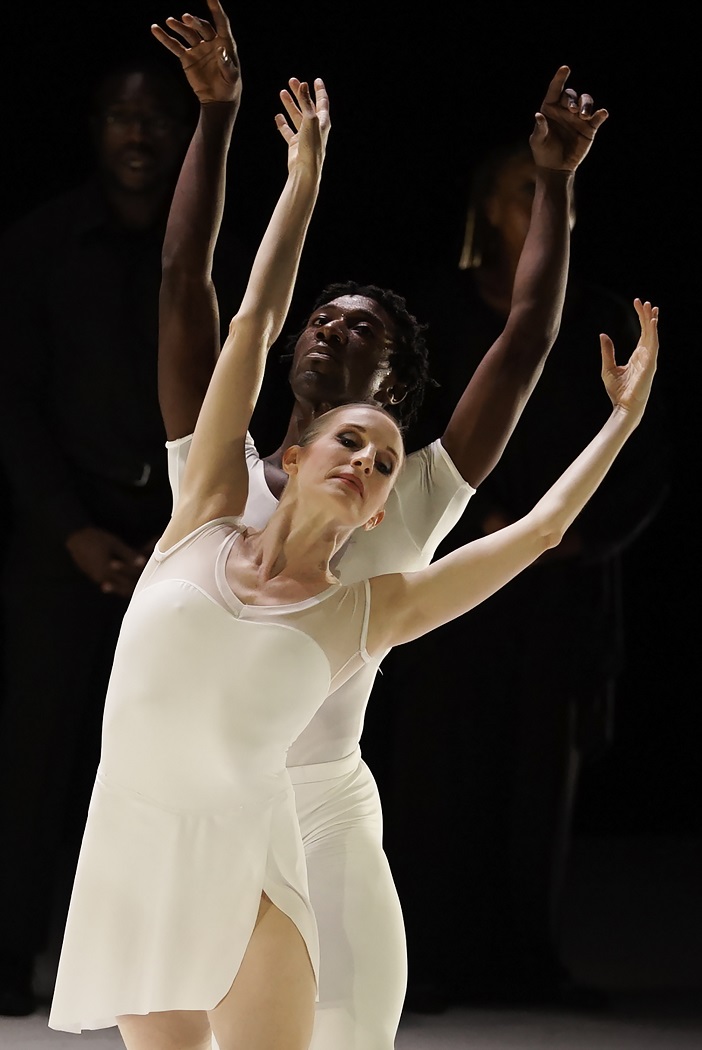
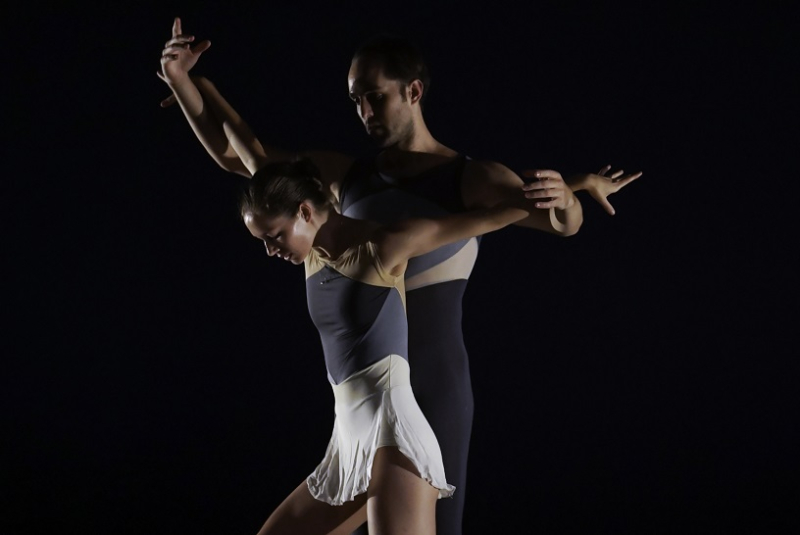
    Jared Bogart and Melissa Fernandez (c) Paula Lobo

    Above: Jared Bogart and Melissa Verdecia of Ballet Hispánico; photo by Paula Lobo

    ~ Author: Oberon

    Wednesday March 27th, 2019 – Ballet Hispánico’s season at The Joyce offered a very strong program: Annabelle Lopez Ochoa has re-set her brilliant masterpiece Sombrerísimo, originally danced by the Company’s men, for an all-female cast; and Asian influences came into the mix with world premieres by Edwaard Liang and Bennyroyce Royon, each of which was highly successful in its own way.

    I last saw perform Ballet Hispánico in 2016, and there have been major changes in their roster of dancers since then. Watching the Company tonight at The Joyce, I realized how bad my eyesight has become over time; it’s much more difficult for me now to single out individual dancers, and to put names to faces.

    Edwaard Liang, formerly a soloist at New York City Ballet and now the Artistic Director of BalletMet in Columbus, Ohio, has established himself among the front rank of international choreographers; his works have been danced by the Bolshoi Ballet, Houston Ballet, Joffrey Ballet, Kirov Ballet, New York City Ballet, Pacific Northwest Ballet, San Francisco Ballet, Shanghai Ballet, Singapore Dance Theatre and Washington Ballet. Tonight, Ballet Hispánico opened their program with Liang’s El Viaje (“The Voyage”).

    Set to the lushly lyrical Ralph Vaughan Williams score Variations on a Theme by Thomas Tallis, and gorgeously lit by Joshua Paul Weckesser, El Viaje resonates with themes of emigration and cultural re-location, particularly of Chinese peoples; it speaks to me personally as I married one such emigrant. 

    Liang

    Above: from El Viaje, photo by Paula Lobo

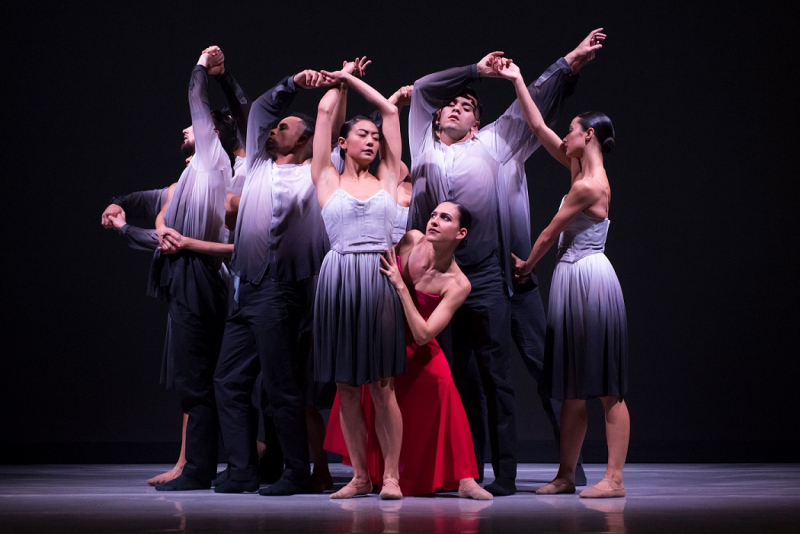
    Melissa Verdecia, striking in a red dress, is spotlit facing upstage as the curtain rises. Such rushes into a high lift as the ballet begins. The dance has a ritualistic feel, and a strong architectural framework. Partnering motifs, performed by the couples in unison, underscore the sense of community. Solo and duet opportunities abound, in which the Hispánico dancers revel in their power and beauty, buoyed by the marvelous music. At the end, the dancers stand together, facing the sunrise, uncertain but hopeful. 

    Dandara

    Above: Dandara Veiga in El Viaje, photo by Paula Lobo

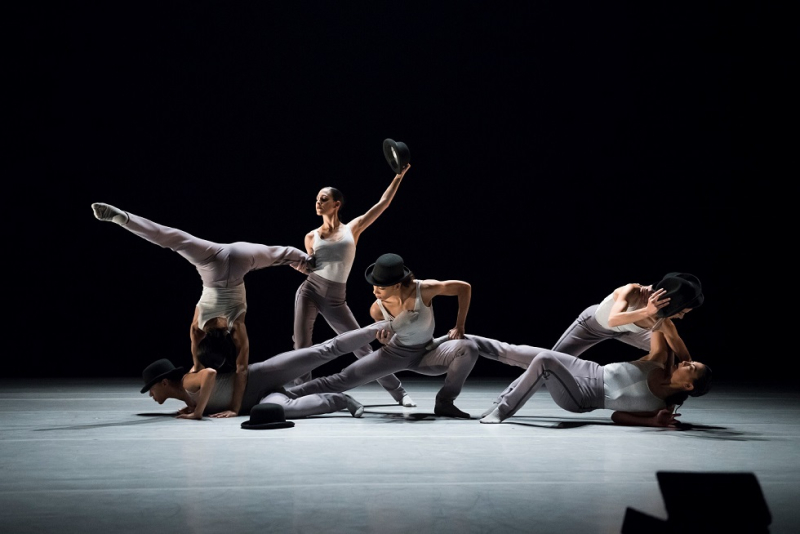
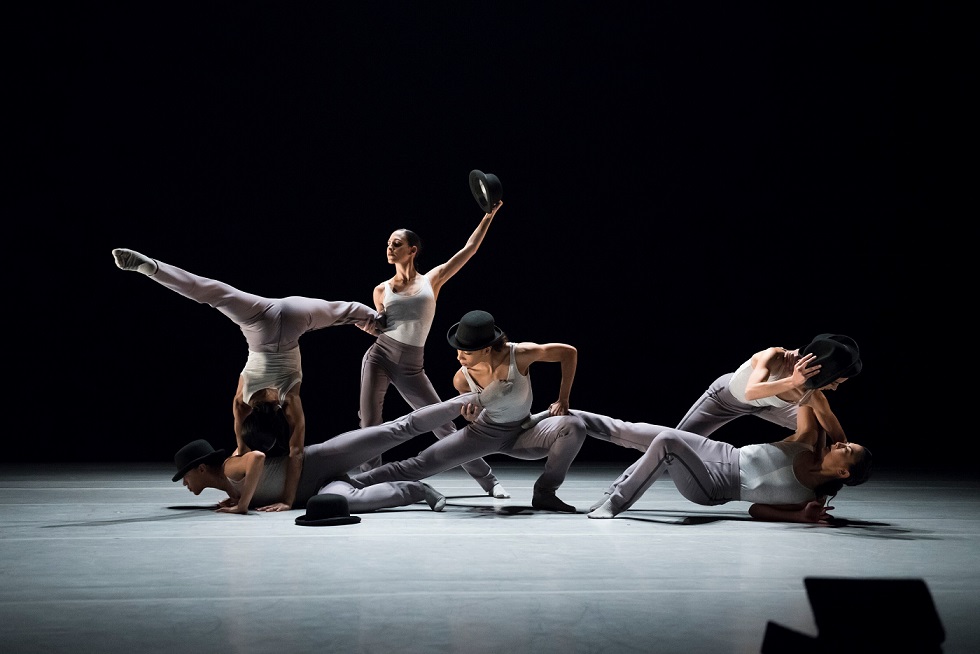
    Sombrerísimo was commissioned by New York’s City Center for Fall for Dance in 2013; I was present at the premiere, which was a huge hit with the audience. Choreographed for an all-male ensemble by Belgian-Colombian Annabelle Lopez Ochoa to a collage score by Banda Ionica, Macaco el Mono Loco, and Titi Robin, it of course now has a very different feel as danced by six women: Shelby Colona, Jenna Marie, Eila Valls, Gabrielle Sprauve, Dandara Veiga, and Melissa Verdecia. The movement ranges from swift and accented to cool and sexy, and there’s much by-play with the hats that inspired the ballet’s title. Joshua Preston’s lighting is atmospheric, and often produces a shadow-dancing effect. At the end, the girls toss their hats into the air while dozens of other hats fall from above.
    Sombrero

    Above: the Ballet Hispanico women in Sombrerísimo, photo by Paula Lobo

    Bennyroyce Royon’s Homebound/Alaala is a danced memory-book of his homeland in The Philippines. On the other side of the world, in Bato, Leyte, mi amor de loin keeps me in daily touch with that world – a unique on-line love affair that made Benny’s ballet especially meaningful to me.

    Chris B

    Above: Chris Bloom in Homebound/Alaala, photo by Paula Lobo

    Opening with a dazzling stars-scape, the stage is full of boxes which the dancers carry, push, construct, take down, open, and close throughout the ballet. Perhaps they are boxes full of memories: some are marked Fragile. To popular songs of the Tagalog, the people work, relax, joke, flirt, and dream. Unison dance passages emphasize the sense of community, which is so very strong in the Filipino culture.

    Central to Benny’s ballet is a gay ‘cruising’ duet, performed in silence. The two men warily circle one another, unsure of a response. In an overwhelmingly Catholic society, being gay in The Philippines faces barriers to acceptance; President Duterte tends to send mixed messages on the subject. My Brix thankfully has the support of his family, which many young people in the life there do not.

    But, back to Bennyroyce’s ballet: flip flops are lined up as the finale is reached. While I might have wished for more dancing in this piece, I loved the music, the spirit of commitment from the dancers, and feeling the connection to my Tico…a love from afar.

    ~ Oberon

  • Ballet Hispánico @ The Joyce ~ 2019

    Jared Bogart and Melissa Fernandez (c) Paula Lobo

    Above: Jared Bogart and Melissa Verdecia of Ballet Hispánico; photo by Paula Lobo

    ~ Author: Oberon

    Wednesday March 27th, 2019 – Ballet Hispánico’s season at The Joyce offered a very strong program: Annabelle Lopez Ochoa has re-set her brilliant masterpiece Sombrerísimo, originally danced by the Company’s men, for an all-female cast; and Asian influences came into the mix with world premieres by Edwaard Liang and Bennyroyce Royon, each of which was highly successful in its own way.

    I last saw perform Ballet Hispánico in 2016, and there have been major changes in their roster of dancers since then. Watching the Company tonight at The Joyce, I realized how bad my eyesight has become over time; it’s much more difficult for me now to single out individual dancers, and to put names to faces.

    Edwaard Liang, formerly a soloist at New York City Ballet and now the Artistic Director of BalletMet in Columbus, Ohio, has established himself among the front rank of international choreographers; his works have been danced by the Bolshoi Ballet, Houston Ballet, Joffrey Ballet, Kirov Ballet, New York City Ballet, Pacific Northwest Ballet, San Francisco Ballet, Shanghai Ballet, Singapore Dance Theatre and Washington Ballet. Tonight, Ballet Hispánico opened their program with Liang’s El Viaje (“The Voyage”).

    Set to the lushly lyrical Ralph Vaughan Williams score Variations on a Theme by Thomas Tallis, and gorgeously lit by Joshua Paul Weckesser, El Viaje resonates with themes of emigration and cultural re-location, particularly of Chinese peoples; it speaks to me personally as I married one such emigrant. 

    Liang

    Above: from El Viaje, photo by Paula Lobo

    Melissa Verdecia, striking in a red dress, is spotlit facing upstage as the curtain rises. Such rushes into a high lift as the ballet begins. The dance has a ritualistic feel, and a strong architectural framework. Partnering motifs, performed by the couples in unison, underscore the sense of community. Solo and duet opportunities abound, in which the Hispánico dancers revel in their power and beauty, buoyed by the marvelous music. At the end, the dancers stand together, facing the sunrise, uncertain but hopeful. 

    Dandara

    Above: Dandara Veiga in El Viaje, photo by Paula Lobo

    Sombrerísimo was commissioned by New York’s City Center for Fall for Dance in 2013; I was present at the premiere, which was a huge hit with the audience. Choreographed for an all-male ensemble by Belgian-Colombian Annabelle Lopez Ochoa to a collage score by Banda Ionica, Macaco el Mono Loco, and Titi Robin, it of course now has a very different feel as danced by six women: Shelby Colona, Jenna Marie, Eila Valls, Gabrielle Sprauve, Dandara Veiga, and Melissa Verdecia. The movement ranges from swift and accented to cool and sexy, and there’s much by-play with the hats that inspired the ballet’s title. Joshua Preston’s lighting is atmospheric, and often produces a shadow-dancing effect. At the end, the girls toss their hats into the air while dozens of other hats fall from above.

    Sombrero

    Above: the Ballet Hispanico women in Sombrerísimo, photo by Paula Lobo

    Bennyroyce Royon’s Homebound/Alaala is a danced memory-book of his homeland in The Philippines. On the other side of the world, in Bato, Leyte, mi amor de loin keeps me in daily touch with that world – a unique on-line love affair that made Benny’s ballet especially meaningful to me.

    Chris B

    Above: Chris Bloom in Homebound/Alaala, photo by Paula Lobo

    Opening with a dazzling stars-scape, the stage is full of boxes which the dancers carry, push, construct, take down, open, and close throughout the ballet. Perhaps they are boxes full of memories: some are marked Fragile. To popular songs of the Tagalog, the people work, relax, joke, flirt, and dream. Unison dance passages emphasize the sense of community, which is so very strong in the Filipino culture.

    Central to Benny’s ballet is a gay ‘cruising’ duet, performed in silence. The two men warily circle one another, unsure of a response. In an overwhelmingly Catholic society, being gay in The Philippines faces barriers to acceptance; President Duterte tends to send mixed messages on the subject. My Brix thankfully has the support of his family, which many young people in the life there do not.

    But, back to Bennyroyce’s ballet: flip flops are lined up as the finale is reached. While I might have wished for more dancing in this piece, I loved the music, the spirit of commitment from the dancers, and feeling the connection to my Tico…a love from afar.

    ~ Oberon
  • Great Performers: Russian National Orchestra

    Thumbnail_Screen Shot 2019-02-22 at 3.36.48 PM

    Above: conductor Kirill Karabits; photo by Konrad Kwik

    ~ Author: Ben Weaver

    Wednesday February 20th, 2019 – The Russian National Orchestra’s highly anticipated visit to Lincoln Center’s Great Performers series with an all-Rachmaninoff concert drew a big and appreciative crowd, filled with many Russian-speakers who were buzzing about Mikhail Pletnev’s performance. Mr. Pletnev, star pianist and new conductor, was the founding conductor of the orchestra in the early 1990s after the collapse of the Soviet Union found many Soviet orchestras starved for money. Pletnev, pulling in financial backing from the West, formed the RNO and hired many leading musicians from the now former USSR’s other orchestras, creating something of an all-Star ensemble. It remains to this day Russia’s only privately-backed orchestra. Maestro Pletnev has since stepped back from full-time conducting duties and on Wednesday, February 20th appeared as soloist in Rachmaninoff’s 2nd Piano Concerto. Kirill Karabits, who has gained much attention as chief conductor of Bournemouth Symphony Orchestra, was on the podium.

    Pletnev entered to a warm welcome from the audience, dressed all in black, looking very Russian dour. The playing was anything but, however. The brief solo introduction, a series of dramatic chords before the orchestra enters with its famous first theme, showcased Pletnev’s strong, muscled tone. The muscle, however, is not lacking in musicality and lyricism. The orchestra entered with a very slow Moderato. I wondered how the choice of tempo would be able to sustain the musical line without breaking.
     
    At first both Pletnev and Karabits (via RNO) managed fine. Pletnev’s beautiful control of the piano’s dynamics, the legato of the playing, never ceding control to the orchestra, but also never showcasing himself for the sake of showboating, he seemed to be playing a concerto with piano, not just for it. This beautiful integration of sound, the marriage between the instruments, was lovely to behold. But as the movement began to build to its climax and the drama began to build, the slow tempo caught up to the proceedings. Pletnev suddenly felt muzzled, needing to take extended breaks between chords that are usually played together so that the orchestra could catch up. Pletnev seemed to desperately want to move forward and felt restrained; it created an uncomfortable pull and push between orchestra and conductor as the movement ended. The concerto’s famous Adagio sostenuto was lovely – piano and orchestra finally breathing as one, and the thrilling final Allegro showcased Pletnev’s effortlessly perfect finger work. The audience exploded with satisfaction and Pletnev gave a fascinating performance of Scarlatti’s Sonata in D minor, K.9, making it sound like ringing bells.
     
    Thumbnail_mikhail-pletnevcalexey-molchanovsky

    A
    bove: pianist Mikhail Pletnev; photo by Alexey Molchanovsky
     
    All ears were now on Kirill Karabits for Rachmaninoff’s ever-fresh Symphonic Dances, Op. 45, his final composition and one he considered his best. Written in 1941 while Rachmaninoff lived on Long Island, NY, the piece was dedicated to The Philadelphia Orchestra and Eugene Ormandy (who gave the world premiere performance in 1941) and intended to be a ballet choreographed by Mikhail Fokine. Alas, Fokine died before the project could be brought to fruition. (It has been choreographed by several leading choreographers since, including Peter Martins for New York City Ballet.) 
     
    Maestro Karabits, handsome, trim and in a perfectly fitted suit, is a fun conductor to watch, his wide, dramatic and balletic gestures helping to propel the music. The opening dance, Non allegro, was very dramatic with its driving, sharp rhythms nicely articulated; the mournful saxophone solo – and the other wind instruments – shone in the mournful sections of the movement – before the dramatic, Stravinskian rhythms return – only to dissipate like Loge’s Fire Music from Wagner’s Die Walküre, the first time I’ve made the musical connection between those two sections. The boozy, mysterious waltz of the second movement (when the Symphonic Dances were still a ballet, this was called “Midnight”), a cousin to Ravel’s La valse, sashayed nicely with its weird combination of sexiness and creepiness. The dramatic final movement, with its extensive quotations of Rachmaninoff’s favorite leitmotif, the Dies irae, was a thrilling, thundering conclusion to a perfectly paced performance. This was perhaps the most exciting performance of the Symphonic Dances I’ve heard live, so kudos to the superb Russian National Orchestra and maestro Karabits.
     
    The audience shared my enthusiasm and received 3 encores: a ravishing Rachmaninoff Vocalise, The Russian Sailors’ Dance from Glière’s The Red Poppy, and Lysenko’s Overture to Taras Bul’ba.
     
    ~ Ben Weaver

  • Miro On A Monday

    Tom Schaefer photo

    Above: dancers from New Chamber Ballet and singers from Ekmeles in Miro Magloire’s SANCTUM; photo by Tom Schaefer

    Author: Oberon

    Monday February 18th, 2019 – Miro Magloire’s New Chamber Ballet normally give their performances on weekends, so I was surprised to be invited to see them on a Monday evening. Mondays are often quiet nights for me: neither the Philharmonic nor Chamber Music Society have Monday performances; nor – for that matter – does New York City Ballet. So it was nice to trek down to the City Center Studios on this clear, chilly evening to see Miro’s company, and to hear some incredible music, beautifully played…and sung. I must also say: the 7:30 PM start time was a big plus in my book.

    The program opened with MORNING SONG, a solo dancework to music by John Cage that Miro made on his uniquely marvelous dancer, Elizabeth Brown. Doori Na, a violinist who can master the trickiest score and make it mean something, played Cage’s ‘Cheap Imitation‘ (1st movement) to perfection whilst the dancer moved about the space with lyrical authority: a priestess evoking the dawn.

    With ecstatic gestures that recall the ground-breaking dances of Isadora Duncan, Elizabeth held the audience under a spell throughout the work’s duration. A very long pause, wherein she remains still, has a power if its own. Elizabeth’s slow circling of the space in calm, weighted/weightless stepping turns, was hypnotic. As dancer and violinist bowed to one another at the close of MORNING SONG, the return to reality was like awakening from a wonderful dream. All that is beautiful in music and dance seems to be distilled into this incredible work.

    After only the briefest pause, New Chamber Ballet’s bevy of ballerinas – Sarah Atkins, Kristy Butler, Amber Neff, Rachele Perla, and Madeleine Williams – joined three singers from the Ekmeles vocal ensemble – Charlotte Mundy, Mary Elizabeth Mackenzie, and Elisa Sutherland – and pianist Melody Fader and violinist Doori Na, for the premiere of Miro’s SANCTUM.  Vocal music by Kaja Saariaho (Changing Lights and From The Grammar Of Dreams) and Karin Rehnqvist (Davids Nimm) invites the singers to be part of the dance. Melody and Doori perform – luminously – Saariaho’s Nocturne, Calices, Prelude, Tocar, and Ballade, as well as Rehnqvist’s Dans.

    SANCTUM has been in-progress for some time, in various guises, and I have seen parts of it in rehearsal or in performance over the past several months. Tonight, with the dancers and singers in Sarah Thea’s bone-white costumes, Miro wove all the elements into a 70-minute ballet.

    SANCTUM opens with seated couples (dancers and singers) dreamily dependent on each other, rocking gently. The strikingly clear voice of Charlotte Mundy fills the space: this high, iridescent sound might be the voice we’ve been looking for for Berg’s Lulu. The dancing commences with a duet for two tall women: Kristy Butler and Madeleine Williams. Amber Neff and Rachele Perla, having donned toe shoes, join.

    The music is spectacularly beautiful – Saariaho (along with Penderecki) is for me the most fascinating of contemporary composers – and Melody and Doori play it thrillingly: being seated immediately next to these two musicians, every nuance and demi-tint of the scores become tantalizing.

    The dance continues to unfold, including Madeleine Williams in a solo that creates a stylistic link to the earlier-seen MORNING SONG. Amber Neff and Ms. Williams dance a duet in Miro’s trademark intense/entangled partnering mode; the music here features vertiginous piano scales which Ms. Fader played with intrinsic flair. Sarah Atkins, Rachele Perla, and Kristy Butler engage in a prancing trio, and Sarah also has a demanding, floor-oriented solo. The singers return, each pairing up with a dancer in a stop-and-start circular promenade. The ending of the ballet is not as powerful as one might hope: the women simply walk away, perhaps to carry on their antique rites in another part of the forest.

    Meanwhile, the two musicians have found a path into our subconscious with this other-worldly music. Over the course of the ballet, their playing has created a separate, almost alien, world. And at some point along the way, I realized that this particular work of Miro’s is not best-experienced in a fully-lit, in-the-round studio setting.

    As we observe the grace and power of the dancing, we must also face our mere-mortal counterparts seated across from us: fidgeting, reading their programs, even nodding off. The music continuously draws us away from the everyday to a mythic place of feminine mystique and magic; but the ordinariness of the studio setting keeps jarringly pulling us back to reality.

    I feel that, in a darkened theater with imaginative lighting, SANCTUM could be as compelling visually as it is musically.

    ~ Oberon
  • Shaham|Sokhiev @ The New York Philharmonic

    43631700_10158224011972293_9087441948343533568_n

    Above: violinist Gil Shaham and conductor Tugan Sokhiev, photo by Chris Lee/NY Philharmonic

    ~ Author: Oberon

    Thursday October 25th, 2018 – An all-Russian evening at The New York Philharmonic. Tugan Sokhiev, Music Director of Orchestre National du Capitole de Toulouse, was making his Philharmonic debut on the podium, with Gil Shaham as violin soloist.

    Alexander Borodin composed In the Steppes of Central Asia to honor Tsar Alexander II on the 25th anniversary of his coronation. The eight-minute work has an ethereal start, from which emerges a plaintive clarinet solo played by Pascual Martínez-Forteza; this artist’s sumptuous tone was a joy to hear throughout the evening. Maestro Sokhiev held sway over the music, which was gorgeously played – especially by the celli. Solos for English Horn and flute, a rich passage for the horns, and the violins in a tutti of cinematic sweep kept the ear constantly allured. The music becomes majestic, worthy of a venerable Tsar.

    As the work progressed, I was very much put in mind of the composer’s opera Prince Igor, and found myself wondering where Peter Gelb’s expensive poppy field might be languishing.

    Mr. Shaham then joined the orchestra for Prokofiev’s Violin Concerto No. 1. This work was choreographed by Jerome Robbins in 1979; the ballet, Opus 19/The Dreamer, is by far my favorite from the Robbins catalog, and is frequently performed by the New York City Ballet.  It’s always wonderful to experience music I’ve come to know at the ballet in its original concert setting, and it goes without saying that the choreography danced in my mind during Mr. Shaham’s marvelous performance.

    Prokofiev’s knack for blending lyricism and irony was a continual source of pleasure in tonight’s performance by Mssrs. Shaham and Sokhiev. The concerto’s haunting opening, with the shining, silver – almost astringent – sound of Mr. Shaham’s violin draws us into a dreamlike state. Everything is magical, with the violas pulsing as the soloist engages in shimmering fiorature. The music becomes driven, only to meld into a slow cadenza. Then a chill sets in, with the flute shimmering. Mr. Shaham, returning to the original melody, lets the sound vanish into thin air.

    In the ensuing Scherzo, the music abounds in sarcasm; Mr. Shaham met all the technical demands with impetuous energy, including some really gritty playing. This is such amazing music to experience, right up to its sudden end.

    The the work’s final movement commences with a moderate-tempo, march-like theme, first played by the bassoon, and later by the brass.  Mr. Shaham’s playing of the songful melodies Prokofiev gifts him was luxuriantly modulated. His tone taking on a nocturnal iridescence, the violinist made the concerto’s final moments pure heaven.

    Mr. Shaham played a 30-second delight of an encore his announcement of which I could not hear. It was witty little treat, but a cellphone interjection at the start was not welcome.

    Sokhiev-8-crdit-Patrice-Nin-1024x680

    Above: Maestro Tugan Sokhiev, photo by Patrice Nin

    I last heard Tchaikovsky’s Symphony No. 4 played by the Philharmonic in 2016 in at performance that impressed and even thrilled me sonically, without reaching me on a spiritual level. Tonight, Maestro Sokhiev achieved that last distinction in a performance of soaring lyricism and searing passion, played splendidly by the orchestra. Perhaps it is true that it takes a conductor with a Russian soul to find the deepest resonances of Russian music.

    Tchaikovsky’s fourth symphony grew out of a highly emotional period of the composer’s life. After a disastrous attempt at marriage, he suffered from writer’s block whilst also struggling with depression and pondering his sexuality. He finished the symphony in 1877 and it was premiered in 1888.  The the opening bars of music stand as a metaphor for Fate; in Tchaikovsky’s own words: “…the fatal power which prevents one from attaining the goal of happiness”.

    This evening’s performance was thrilling in every way. From the splendid opening and straight thru to the end, the orchestra were on peak form. The depth of sound from the ensemble – and the numerous solo passages that frequently sing forth – constantly impressed, and the Maestro had everything under fingertip control. From the grandest imperial passages to the uncanny delicacy of the more restrained moments, his mastery of colour and balance seemed ideal. My companion for the evening, Ben Weaver, who knows this music inside out, was very taken with Sokhiev’s pacing ,which made the symphony seem fresh to him.

    The Philharmonic’s soloists produced an endless flow of enchanting playing: Mr. Forteza and his colleagues – Robert Langevin (flute), Sherry Sylar (oboe), and Judith LeClair (bassoon) – seized upon the generous melodic gifts which Tchaikovsky lavished upon them. The horns were plush, the trumpets and trombones commanding in their fanfares. The timpanist was a marvel of velvet touch is the waltzy passage of the first movement, and in the ‘interlude’ of the otherwise Allegro finale, the triangle sounded with a pristine glimmer.

    There seemed to be a particular sheen on the string playing tonight, and they made the pizzicati of the Scherzo dazzlingly alive. Watching Maestro Sokhiev cue them and entice their keen manipulation of the dynamic range during this captivating movement was a treat in itself.

    In recent days, the feeling that we are poised now of the edge of an abyss makes music, poetry, art, and Nature seem more vivid and essential than ever. A beautiful face among the crowd tonight captured my imagination, but filled me with apprehension that such innocence may soon be swept away in a tide of hatred.

    ~ Oberon

  • Nobuyuki Tsujii|ORPHEUS @ Carnegie Hall

    Photo by Giorgia Bertazzi a

    Above: pianist Nobuyuki Tsujii, photographed by Georgia Bertazzi

    ~ Author: Oberon

    Thursday September 20th, 2018 – Pianist Nobuyuki Tsujii joining the Orpheus Chamber Orchestra for their season-opening concert at Carnegie Hall.

    Arvo Pärt’s Frates opened the evening. Undoubtedly the composer’s best-known work, it was used by choreographer Christopher Wheeldon for his 2003 ballet LITURGY, created on New York City Ballet’s Wendy Whelan and Jock Soto.  In that context, I’ve heard the music performed live many times; but tonight was my first experience of hearing it in a concert setting.

    From its ethereal start, Fratres develops slowly as its theme is repeated in varying registers and instrumentations, punctuated by percussion accents. In this evening’s concert, the 2007 arrangement was performed, which includes winds. String and wind ensembles alternate ‘verses’ as the bass and deep celli sustain a low, grounding note of spiritual resonance. The depth of tone summoned up by the Orpheus players gave Fratres a feel of Russian bassos engaged in ritual chant.

    Mr. Tsujii then joined the orchestra for a performance of Chopin’s Piano Concerto No. 2 in F-Minor, Op. 21, in an arrangement by Shuying Li. The pianist, who is blind, was escorted to the piano where he sat, rocking gently as he awaited his entrance; he seemed to take the measure of the keyboard before launching his impressive and marvel-filled performance.
     
    Nobu (as he is known) gives this music a gorgeous sense of flow. In his first solo passage, his sensitivity and attention to detail were in abundant evidence. He summons up a cushiony sound, and has a keen sense of the mixture of passion and reserve by which the opening Maestoso profits. Blending with the bassoon and then with the horn, Nobu regaled us with sumptuous tone and shining dexterity.
     
    In the central Larghetto, the pianist imbued the music with a sense of quiet rapture, building to a state of transportive romance. Over tremolo strings, a feeling of mystery envelops us; silence falls before a delicate cadenza is introduced. The main melody recurs, leading to a quiet end. Throughout this movement, an atmosphere of hushed anticipation in the hall was a tribute to Nobu’s artistry.
     
    The closing Allegro vivace is styled as a Polish folk dance. Nobu took barely a moment to spring from the Larghetto into this virtuoso revelry, spinning out florid passages with flair.  His buoyant, dazzling playing danced on to the end, when the house erupted in massive applause and shouts of enthusiasm. A full standing ovation greeted Nobu’s bows, and he favored us with a jazzy encore: a concert étude by the Russian composer Nikolai Kapustin. A second encore seemed in the offing, but the musicians walked offstage, leaving the crowd wanting more. I’ll certainly be seeking out Nobu in future; there’s so much music I want to hear him play.
     
    Following the interval, Tchaikovsky’s String Quartet No. 1 in D-Major, Op. 11, was offered in an arrangement for chamber orchestra by Christopher Theofanidis. The Playbill refers to the piece now as a “Chamber Symphony”, which is all well and good, though as my companion Ben Weaver commented, it’s almost unrecognizable to admirers of the original quartet setting.
     
    Mr. Theofanidis’s arrangement – a veritable font of melody – is well-crafted and makes for a pleasing half-hour of listening, being lovingly played by the Orpheus musicians. Unfortunately, maintaining our focus was nearly impossible thanks to a series of distractions. A couple seated nearby spent several minutes intently watching something on their cellphone. Then suddenly the phone began playing Fratres; it took several seconds for the woman to shut it down, whereupon she dropped the phone with a thud. Meanwhile, during the Andante cantabile, a baby fussed loudly. Then the coup de grace: another cellphone played a blithe tune. Amid such shenanigans, concentration on the music we’d come to hear becomes an unnecessary chore.
     
    UPDATE: I’ve just been watching TOUCHING THE SOUND, an extremely moving documentary about Nobuyuki Tsujii’s childhood, the discovery of his remarkable gift, his winning of the Cliburn in 2009, and his outreach to school children whose lives were shattered by the 2011 tsunami in Japan. Watch a trailer for the film here.
     
    A quote from Nobuyuki: “I can see everything…with my heart.”
     
    ~ Oberon

  • Ehnes/Denève: All-Prokofiev @ The NY Phil

    James ehnes

    Above: violinist James Ehnes

    ~ Author: Oberon
    Thursday January 25th, 2018 – A composer we love, an orchestra we love, a violinist we love, a conductor we love: my friend Dmitry and I had a great time at The New York Philharmonic tonight.

    For this all-Prokofiev concert, The Love for Three Oranges Suite proved an imaginative opener. I’ve seen this opera only once, in Maurice Sendak’s clever 1985 production for New York City Opera, and enjoyed it immensely. It was wonderful to encounter this music again, especially in Stéphane Denève’s witty and wonder-filled interpretation.

    The suite is in six movements, starting with Ridiculous Fellows which opens big and then gets subtle; the music is filled with a sense of irony, as is the entire opera. The Infernal Scene –  a card-game played by Tchelio and Fata Morgana – sounds ominous and develops a churning feeling. Fanfares herald the famous March, which begins softly and soon struts boldly. The xylophone and muted trumpets add a toy-like sound, and the winds play over pulsing violins; this March is droll, almost tipsy. Limpid fluting from Yoobin Son delights in the Scherzo, and there’s a really lovely viola passage for Cynthia Phelps. The violins and horns play in unison. The suite ends with Flight, an allegro with an agitated air. Maestro Denève was perfectly in his element for this coloristic music, and he gallantly drew Ms. Phelps to her feet for a solo bow, graciously kissing her hand.

    James Ehnes’s playing of the Prokofiev Violin Concerto No. 1 was truly ravishing. This concerto has become very familiar to me over time in Jerome Robbins’s balletic setting, Opus 19/The Dreamer, for New York City Ballet; it’s my favorite of all Robbins ballets.

    The music commences with a soft shivering tingle, and the violinist takes up a plaintive melody. Mr. Ehnes plays with an innate sense of rhythmic surety and delicious subtlety of dynamics. The music is dreamlike (hence the title of the Robbins ballet) with the soloist playing over soft tremolos from the violas. From this shimmering atmosphere, the flute sings while the violinist plays in his highest range. Really luminous.

    The Scherzo was taken at super speed, giving the music a wild quality. Mr. Ehnes’s superbly scrappy attacks propel things forward; the music buzzes and the violin slithers. The last movement commences with Judith LeClair’s bassoon theme, into which the solo violin insinuates itself in a melodic rise. Liang Wang’s oboe enchants, and the music grows ethereal, with an atmosphere of swooning beauty. Prokofiev brings in the high harp, and the violinst plays gliding scales. A series of delicate, jewel-like trills in the stratosphere display Mr. Ehnes’s clarity and control; the concerto ends in an iridescent glow.

    Mr. Ehnes’s sustaining of the intriguingly glistening atmosphere of the final movement held the audience under his spell; a warm ovation ensued, and Maestro Denève seated himself among the players as the violinist offered a heartfelt Bach encore. Called back for yet another bow, Mr. Ehnes was hailed by all the Philharmonic string players tapping their bows in unison: a lovely gesture of musical congeniality.

    Deneve_Stephane_PC_GenevieveCaron_e_300_preview

    Above: Stéphane Denève, in a Genevieve Caron portrait

    Selections from Romeo and Juliet completed the program. Myself, I think Cinderella is the more interesting of Prokofiev’s two full-length ballet scores. But audiences never seem to tire of the familiar tunes of the composer’s setting of the Shakespeare classic, and there was much brilliant playing in this evening’s presentation; it’s music Maestro Maestro Denève clearly savours.

    This cinematic score impresses from the start, where a violent opening gives way to tender delicacy. Prokofiev’s orchestration provides one delight after another; the solo clarinet, saxophone, and harp each summon up unique emotions, while a passage for flute and celeste and another for unison basses and celli are particularly ear-catching. The tender dawn music as the ‘balcony scene’ ends puts a lump in the throat every time. Although I could not glimpse all the solo players, special kudos to Liang Wang, Robert Langevin (flute), and Pascual Martinez Fortenza (clarinet). Artists of this calibre add so much to every New York Philharmonic concert.

    We had greatly enjoyed our first encounter with Stéphane Denève’s conducting in 2015, when he made his Philharmonic debut in a program we still talk about. I hope he will return often in future seasons.

    This evening, the orchestra welcomed the Zarin Mehta Fellows: ten young musicians from the Music Academy of the West who have spent a week in New York City participating in an immersive program covering all aspects of the life of an orchestral player. One can only imagine their excitement at being onstage and playing with the wonderful artists of the Philharmonic.

    ~ Oberon
  • Franck & Ravel @ The NY Philharmonic

    Thibaudet

    Above: pianist Jean-Yves Thibaudet

    Author: Oberon

    Saturday January 20th, 2018 matinee – This afternoon’s program at The New York Philharmonic might have been subtitled Music for Dancing: we heard a chamber score that’s been transformed into a ballet, and – after the interval – a succession of works inspired by dance forms: a sarabande, a set of waltzes, and finally a boléro that has become one of the most famous musical works ever created.

    From time to time, The Philharmonic programs a chamber work; this not only adds a new dimension to a given performance, but affords fans of the orchestra an opportunity to enjoy hearing some of the esteemed artists of The Philharmonic in a front-and-center setting.

    This afternoon, a sterling performance of César Franck’s Piano Quintet brought guest pianist Jean-Yves Thibaudet together with a quartet of extraordinary string players to play this gorgeous score – music used by choreographer Justin Peck for his lush and exquisite 2014 ballet Belles-Lettres at New York City Ballet.

    César Franck had fallen in love with one of his pupils, Augusta Holmès, who he met in 1875. The Piano Quintet was written under the influence of Franck’s romantic obsession, and thus was detested by Madame Franck to the end of her days. Composer Camille Saint-Saëns (no less) played the piano for the Quintet’s premiere performance, but he seems to have been offended by the music’s sensuality; Saint-Saëns rejected Franck’s proposal of dedicating the quintet to him.

    The players for the Franck quintet this afternoon were Sheryl Staples and Michelle Kim (violins), Cynthia Phelps (viola), and Eileen Moon-Myers (cello) with Mr. Thibaudet at the Steinway. The opening movement, Molto moderato quasi lento, commences with a violin theme played by Sheryl Staples; Ms. Staples throughout the Quintet played with ravishing lyricism. Mr. Thibaudet enters with a somewhat hesitant phrase, and then Ms. Moon-Myers’ dusky cello joins. The piano turns dreamy before a sudden eruption. Ms. Staples and Cynthia Phelps’ richly shaded viola savour every opportunity, and the Quintet has an especially nice role for the second violin which Ms. Kim set forth with lovely tone.

    The strings play in unison over a turbulent piano motif; a change to a more pensive mood finds piano and strings alternating. There’s a spacious, impassioned passage before the movement’s enigmatic end. 

    Late seating at this point was a serious distraction; the players waited patiently as latecomers stumbled to their seats. Ms. Staples was then thankfully able to re-establish the mood quickly with her silken playing of the soft, longing theme over hushed keyboard that opens the Lento con molto sentimento. A heart-wrenching descending motif for piano and cello announces a hauntingly beautiful passage with a poignant mix of voices. Then Mr. Thibaudet takes up another set of descending notes, like raindrops – or heartbeats. Ms. Staples plays with overwhelming beauty; the hesitancy of the piano recurs, and the cellist sustains a remarkable deep note. Mr. Thibaudet in the high register and Ms. Staples’s sweetest tones bring this romantic reverie to an end.

    The concluding Allegro non troppo ma con fuoco opens with Ms. Kim’s agitato figuration which Ms. Staples joins; the piano sounds almost ominous. Unison strings play over an active keyboard, evoking a sense of mystery and restlessness. A big, waltz-like buildup suddenly evaporates into an ethereal violin passage: Ms. Staples again at her finest. The music then grows unsettled in its rush to an abrupt finish.

    Warm enthusiasm greeted the quintet of players as they came out for a bow; I had hopes of an encore, but the stage was now to be re-set for the full orchestra.

    Jw

    Joshua Weilerstein (above) took the podium for the second half of this afternoon’s program, which opened with Ravel’s orchestration of Claude Debussy’s Sarabande et Danse. The sarabande originated in Central America as a dance for women, accompanied by castanets; it had an Arabian lilt. But the sarabande was regarded as too provocative, and was banned. Later the French took it on as a much more staid dance, at a slower tempo.

    Ravel’s setting of this piece, which Debussy wrote for solo piano, opens with a wind chorale; a full string section, with lovely basses, take over. Solo moments crop up – for clarinet (Anthony McGill), bassoon (Judith LeClair) and a trumpeter who I couldn’t see. The work ends with the sound of a gong which fades to nothingness. By contrast, the Danse was upbeat, showing Ravel’s orchestrational gifts to vivid effect. The harp and horn had their moments, and overall this coloristic, rhythmic little gem glowed.

    The Valses nobles et sentimentales is a suite of waltzes published in 1911 by Maurice Ravel as piano solos; an orchestral version was published in 1912. The title was chosen in homage to Franz Schubert, who had published a set of waltzes in 1823 entitled Valses nobles and Valses sentimentales. The Ravel orchestrated setting has a strong balletic association: Balanchine used them for his eerie La Valse, wherein a young girl is stalked by Death in a haunted ballroom.

    Mr. Weilerstein gave a vibrant interpretation, played fantastically by the huge orchestra. Mr. McGill (and a flautist I could not see from my location) made particularly fine impressions.

    Ravel’s Boléro was the closing work on the program, and it’s always great fun to hear it played live. Ravel composed this best-known of his works in 1928 for a ballet choreographed by Bronislava Nijinsky for Ida Rubinstein. Consisting only of repetitions of the same C-major theme over the same insistent rhythm, Boléro hypnotizes with its constant shifts in instrumentation as the music unfolds in one long, slow crescendo.

    The thrill of today’s performance for a devotee of the NY Phil such as myself was in hearing the various solo voices of the orchestra take up the tune: flute, clarinet, bassoon, saxophone (wow, this guy was really wailing!), and on and on in various combinations. And all the while, the relentlessly diligent strings pluck and the snare drums maintain the pace, starting softly and turning militant as the Boléro sways onward with mesmerizing inevitability.

    The crowd went absolutely wild as Boléro ended: everyone stood up and yelled.

    ~ Oberon

  • Franck & Ravel @ The NY Philharmonic

    Thibaudet

    Above: pianist Jean-Yves Thibaudet

    Author: Oberon

    Saturday January 20th, 2018 matinee – This afternoon’s program at The New York Philharmonic might have been subtitled Music for Dancing: we heard a chamber score that’s been transformed into a ballet, and – after the interval – a succession of works inspired by dance forms: a sarabande, a set of waltzes, and finally a boléro that has become one of the most famous musical works ever created.

    From time to time, The Philharmonic programs a chamber work; this not only adds a new dimension to a given performance, but affords fans of the orchestra an opportunity to enjoy hearing some of the esteemed artists of The Philharmonic in a front-and-center setting.

    This afternoon, a sterling performance of César Franck’s Piano Quintet brought guest pianist Jean-Yves Thibaudet together with a quartet of extraordinary string players to play this gorgeous score – music used by choreographer Justin Peck for his lush and exquisite 2014 ballet Belles-Lettres at New York City Ballet.

    César Franck had fallen in love with one of his pupils, Augusta Holmès, who he met in 1875. The Piano Quintet was written under the influence of Franck’s romantic obsession, and thus was detested by Madame Franck to the end of her days. Composer Camille Saint-Saëns (no less) played the piano for the Quintet’s premiere performance, but he seems to have been offended by the music’s sensuality; Saint-Saëns rejected Franck’s proposal of dedicating the quintet to him.

    The players for the Franck quintet this afternoon were Sheryl Staples and Michelle Kim (violins), Cynthia Phelps (viola), and Eileen Moon-Myers (cello) with Mr. Thibaudet at the Steinway. The opening movement, Molto moderato quasi lento, commences with a violin theme played by Sheryl Staples; Ms. Staples throughout the Quintet played with ravishing lyricism. Mr. Thibaudet enters with a somewhat hesitant phrase, and then Ms. Moon-Myers’ dusky cello joins. The piano turns dreamy before a sudden eruption. Ms. Staples and Cynthia Phelps’ richly shaded viola savour every opportunity, and the Quintet has an especially nice role for the second violin which Ms. Kim set forth with lovely tone.

    The strings play in unison over a turbulent piano motif; a change to a more pensive mood finds piano and strings alternating. There’s a spacious, impassioned passage before the movement’s enigmatic end. 

    Late seating at this point was a serious distraction; the players waited patiently as latecomers stumbled to their seats. Ms. Staples was then thankfully able to re-establish the mood quickly with her silken playing of the soft, longing theme over hushed keyboard that opens the Lento con molto sentimento. A heart-wrenching descending motif for piano and cello announces a hauntingly beautiful passage with a poignant mix of voices. Then Mr. Thibaudet takes up another set of descending notes, like raindrops – or heartbeats. Ms. Staples plays with overwhelming beauty; the hesitancy of the piano recurs, and the cellist sustains a remarkable deep note. Mr. Thibaudet in the high register and Ms. Staples’s sweetest tones bring this romantic reverie to an end.

    The concluding Allegro non troppo ma con fuoco opens with Ms. Kim’s agitato figuration which Ms. Staples joins; the piano sounds almost ominous. Unison strings play over an active keyboard, evoking a sense of mystery and restlessness. A big, waltz-like buildup suddenly evaporates into an ethereal violin passage: Ms. Staples again at her finest. The music then grows unsettled in its rush to an abrupt finish.

    Warm enthusiasm greeted the quintet of players as they came out for a bow; I had hopes of an encore, but the stage was now to be re-set for the full orchestra.

    Jw

    Joshua Weilerstein (above) took the podium for the second half of this afternoon’s program, which opened with Ravel’s orchestration of Claude Debussy’s Sarabande et Danse. The sarabande originated in Central America as a dance for women, accompanied by castanets; it had an Arabian lilt. But the sarabande was regarded as too provocative, and was banned. Later the French took it on as a much more staid dance, at a slower tempo.

    Ravel’s setting of this piece, which Debussy wrote for solo piano, opens with a wind chorale; a full string section, with lovely basses, take over. Solo moments crop up – for clarinet (Anthony McGill), bassoon (Judith LeClair) and a trumpeter who I couldn’t see. The work ends with the sound of a gong which fades to nothingness. By contrast, the Danse was upbeat, showing Ravel’s orchestrational gifts to vivid effect. The harp and horn had their moments, and overall this coloristic, rhythmic little gem glowed.

    The Valses nobles et sentimentales is a suite of waltzes published in 1911 by Maurice Ravel as piano solos; an orchestral version was published in 1912. The title was chosen in homage to Franz Schubert, who had published a set of waltzes in 1823 entitled Valses nobles and Valses sentimentales. The Ravel orchestrated setting has a strong balletic association: Balanchine used them for his eerie La Valse, wherein a young girl is stalked by Death in a haunted ballroom.

    Mr. Weilerstein gave a vibrant interpretation, played fantastically by the huge orchestra. Mr. McGill (and a flautist I could not see from my location) made particularly fine impressions.

    Ravel’s Boléro was the closing work on the program, and it’s always great fun to hear it played live. Ravel composed this best-known of his works in 1928 for a ballet choreographed by Bronislava Nijinsky for Ida Rubinstein. Consisting only of repetitions of the same C-major theme over the same insistent rhythm, Boléro hypnotizes with its constant shifts in instrumentation as the music unfolds in one long, slow crescendo.

    The thrill of today’s performance for a devotee of the NY Phil such as myself was in hearing the various solo voices of the orchestra take up the tune: flute, clarinet, bassoon, saxophone (wow, this guy was really wailing!), and on and on in various combinations. And all the while, the relentlessly diligent strings pluck and the snare drums maintain the pace, starting softly and turning militant as the Boléro sways onward with mesmerizing inevitability.

    The crowd went absolutely wild as Boléro ended: everyone stood up and yelled.

    ~ Oberon

  • Claudia Schreier & Company: Gallery

    AniCollier_DSC04839

    Above: Wendy Whelan and Da’Von Doane in Claudia Schreier’s VIGIL; photo by Ani Collier. VIGIL is danced to a cappella choral music, performed onstage by Tapestry

    Here are some images from photographer Ani Collier of Claudia Schreier & Company‘s recent program at The Joyce. Read about the performance here.

    AniCollier_DSC04761

    Wendy Whelan with Da’Von Doane (of Dance Theatre of Harlem) in VIGIL

    AniCollier_DSC04954

    Wendy and Da’Von: VIGIL

    AniCollier_DSC04987

    New York City Ballet’s Cameron Dieck and Jared Angle, with Da’Von Doane and NYCB soloist Unity Phelan in SOLITAIRE

    AniCollier_DSC05017

    Unity Phelan and Da’Von Doane: SOLITAIRE

    AniCollier_DSC05055

    New York City Ballet stars Unity Phelan and Jared Angle: SOLITAIRE

    AniCollier_DSC05060

    Unity & Jared in SOLITAIRE

    AniCollier_DSC05062

    Unity & Jared in SOLITAIRE

    AniCollier_DSC05243

    Elizabeth Claire Walker (soloist, Los Angeles Ballet) and Jared Angle in TRANQUIL NIGHT, BRIGHT AND INFINITE

    AniCollier_DSC05329

    Elizabeth Claire Walker and Jared Angle in TRANQUIL NIGHT, BRIGHT AND INFINITE

    AniCollier-DSC05825

    Elizabeth Claire Walker in CHARGE; Ms. Walker was recently (and aptly) described by the L.A. Times as “impossibly glamorous” when she danced the Siren in Balanchine’s PRODIGAL SON at Los Angeles Ballet.

    AniCollier-DSC05868

    Tiffany Mangulabnan with Elizabeth Claire Walker in CHARGE.

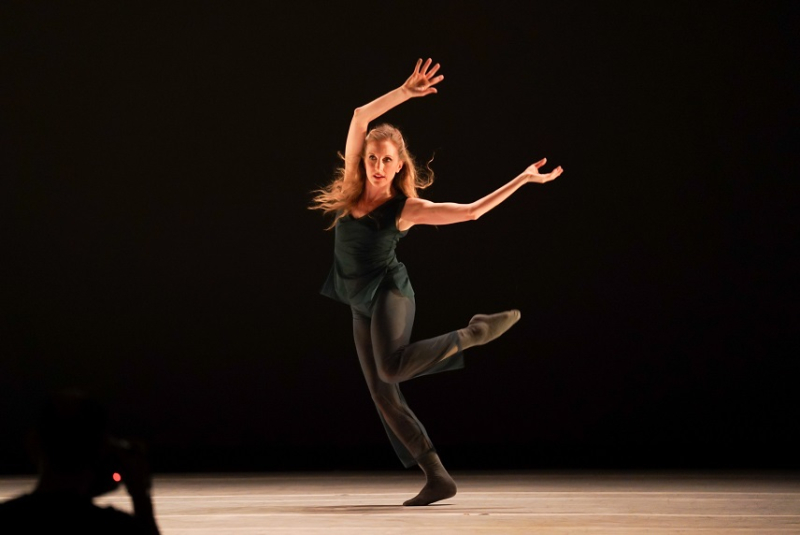
    And finally, a series of Ani Collier’s images of Wendy Whelan in the mysterious and marvel-filled solo created on her by Claudia Schreier, and danced to music by Marc Mellits: THE TRILLING WIRE.

    AniCollier_DSC05508

    AniCollier_DSC05525

    AniCollier_DSC05560

    AniCollier_DSC05587

    AniCollier-DSC05593

    AniCollier_DSC05650

    All choreography by Claudia Schreier; all photography by Ani Collier.