Tag: New York City Ballet

  • Prelude: Claudia Schreier & Co

    6Q5A0113

    Claudia Schreier & Co will be at The Joyce on July 21st and 22nd, 2017, as part of the theatre’s two-week ballet festival. The performances are sold out.

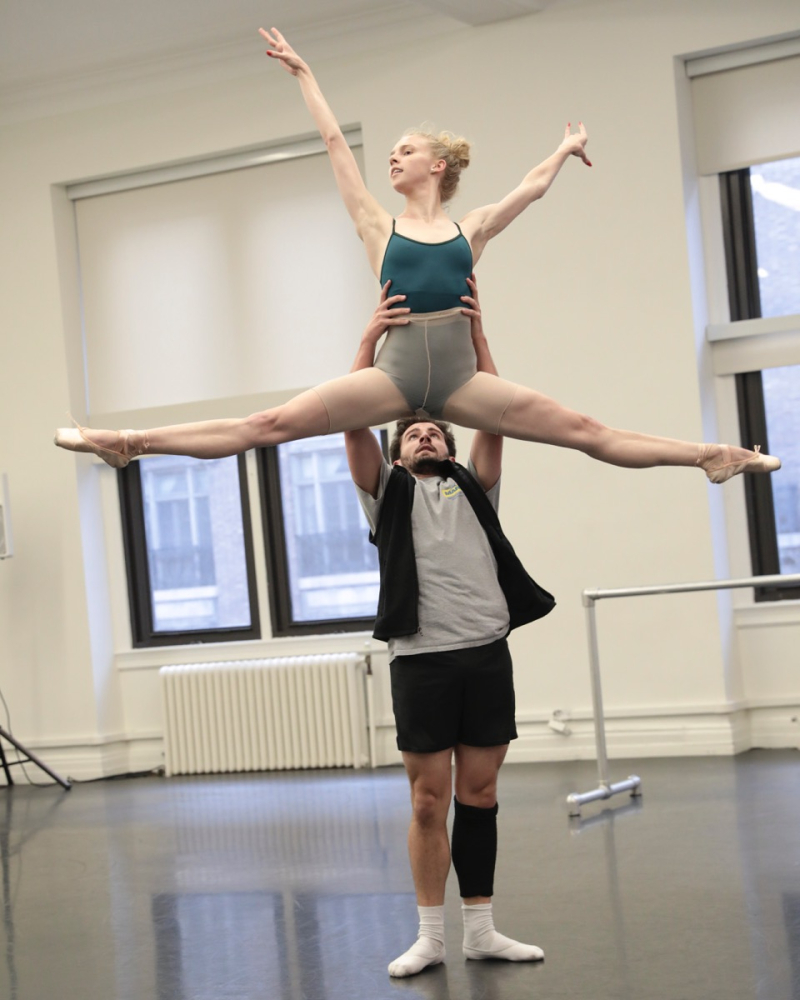
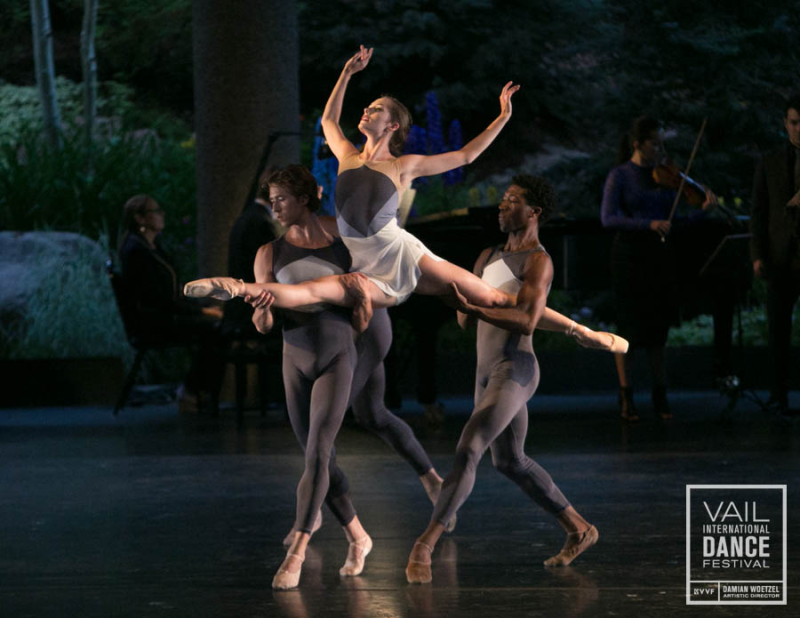
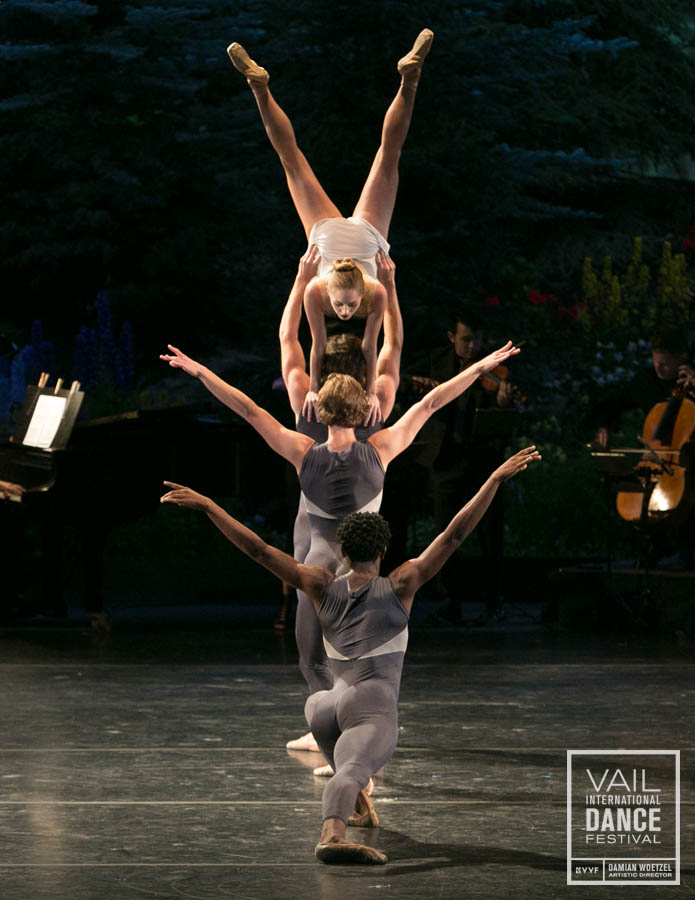
    On Wednesday evening, July 19th, photographer Travis Magee and I stopped in at the Barnard College studios where rehearsals have been taking place. The dancers were running thru CHARGE, Claudia’s large-scale ballet set to a vibrant score by the Dutch composer Douwe Eisenga. For this ensemble work, Claudia has gathered together an outstanding group of dancers; although it’s an ad hoc ensemble, they’ve already developed the feeling of a Company.

    Here are more of Travis’s images from CHARGE:

    6Q5A0203

    Elinor Hitt and Craig Wasserman

    6Q5A0319

    Elizabeth Claire Walker

    6Q5A0396

    Claudia & Company

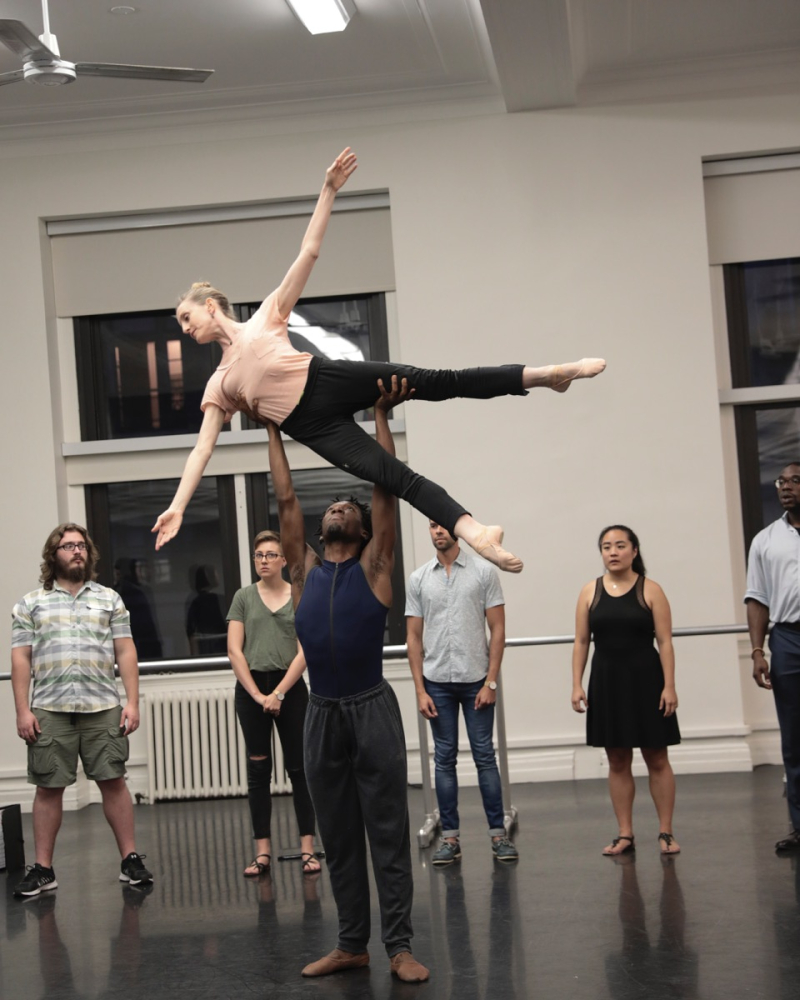
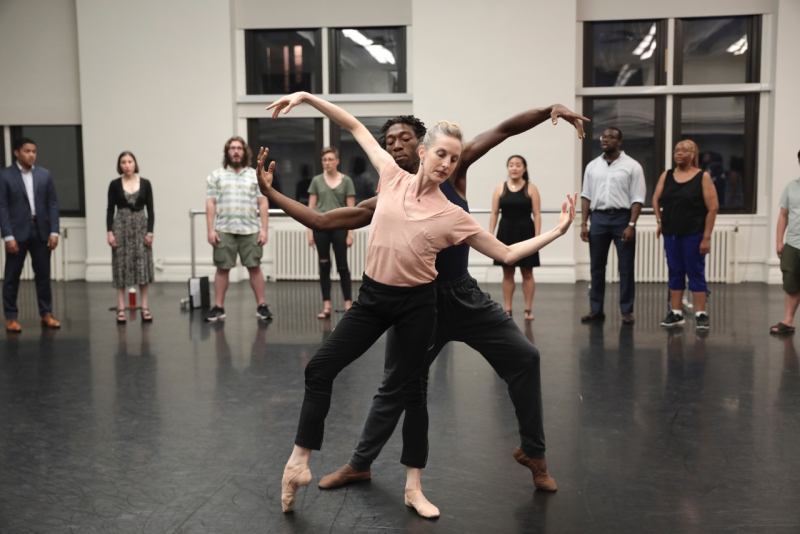
    While the dancers caught their breath after two runs of CHARGE, members of the choral group Tapestry filed into the studio and arranged themselves in a semi-circle to sing the music of Tomás Luis de Victoria and Sergei Rachmaninoff which comprise the setting of Claudia’s breathtaking pas de deux, VIGIL.

    6Q5A0482

    VIGIL is danced by guest artist Wendy Whelan and Dance Theater of Harlem’s Da’Von Doane. Working together for the first time, Wendy and Da’Von have formed a partnership based on resonant technique and spiritual affinity. Their dancing is borne up by the heartfelt, resplendent harmonies of Tapestry, making this is a dance experience sans pareil.

    More of Travis Magee’s photos from VIGIL

    6Q5A0506

    6Q5A0523

    6Q5A0558

    The Joyce performances by Claudia Schreier & Co will further feature ballets set to music of Leonard Bernstein, Marc Mellits, Dmitri Shostakovich, Alfred Schnittke, and Ellen Taafe Zwilich. Unity Phelan, Jared Angle, and Cameron Dieck – all from New York City Ballet – will appear in prominent roles.

    All photos by Travis Magee.

  • Restless Creature: The Film

    P13844553_p_v8_aa

    RESTLESS CREATURE, the documentary about Wendy Whelan that dance lovers everywhere have been waiting for, is now playing (thru June 6th) at Film Forum down on Houston Street in New York City. Since, as most of my readers know by now, I’ve been on the disabled list for several weeks, I had the good fortune of receiving a link to watch the film at home.

    Very soon after I moved to New York City and started working at Tower Records, Wendy Whelan came in to shop one afternoon. She had been my dream dancer since I first took note of her as an outstanding, unique ballerina in my favorite dance company: New York City Ballet. Feeling overwhelmingly shy in the presence of my idol, I managed to croak out an uncertain “Hello, Wendy!” Incredibly, she seemed equally shy. We talked about the weather.

    From that day on, I ran into her frequently – both at the store and around Lincoln Center, where I loved hanging out for hours in hopes of seeing my beloved dancers coming and going from rehearsals and performances. Whenever Wendy passed by, she always stopped to chat; she has an incredible sense of humor, and a knack for making whoever she’s talking to feel…blessed. 

    I have a million Wendy Whelan stories, and I’ll put some links to some of my favorites at the end of this article. But right now, it’s showtime! Roll RESTLESS CREATURE… 

    ~~~~~~~~~~~~~~~~~~~~~~~~~~~~~~~~~~~~~~~~~~~~~~~~~~~~~~~~~~~~~~~~~~~~~~~~~~~~~~~~~~~~~~~~~~~~
    Restless-Creature-WP-Christopher-Duggan-Photographer-hr_20130415_057-e1432316688150

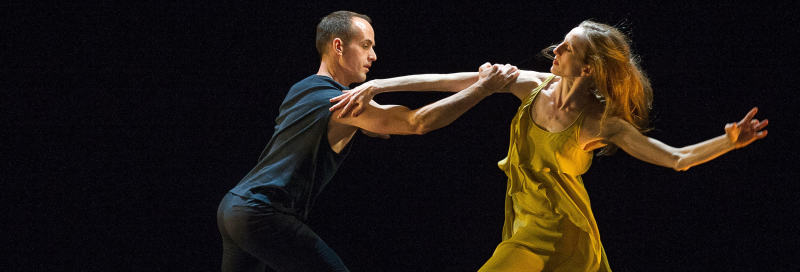
    Above: Brian Brooks and Wendy Whelan, photo by Christopher Duggan

    When I think of Wendy Whelan, the word that always comes to mind is: gratitude. Gratitude, not simply for her sublime artistry as a dancer, or her wit and warmth as a friend, but a true feeling of being thankful that our dance careers – hers performing, mine observing – have dovetailed so perfectly. From the first memories of singling her out on a stageful of magnificent dancers in her early days at New York City Ballet down to this very afternoon – watching her in the strikingly candid and deeply moving documentary RESTLESS CREATURE – Wendy has been one of those people who – quite simply – makes life worth living.

    The film opens with some footage from Jerome Robbins’ GLASS PIECES, with Wendy and Adrian Danchig-Waring in the pas de deux. Within seconds, the pristine beauty and ineffable mystique of Wendy Whelan have already moved me to tears. And that’s how I spent the entire 90-minute span of watching this film: on a roller-coaster of emotion as Wendy’s transition from prima ballerina to contemporary dancer de luxe is observed at close range in scene after scene which reveal both a deep vulnerability and a powerful strength of will in this complex and supremely human woman.

    “If I don’t dance, I’d rather die!” says Wendy early in the film; we then follow her on her journey beyond classical ballet and into another realm of dance: a journey marked by a surgical intervention with all its attendant hope and despair.

    Courageously, Wendy even lets us eavesdrop in the operating room, and we can only marvel at the technological advances that make what once would have been an unthinkable procedure go forward smoothly. From thence, with her handsome husband David Michalek ever a quiet pillar of strength, the ups and downs of recovery are chronicled. “It’s depressing to think of what I can’t do anymore,” Wendy broods, as she works thru physical therapy. Yet all the time, the future beckons.

    She speaks of roles having been taken away from her at New York City Ballet and of a conversation with Peter Martins that devastated her when he said, “I don’t want people to see you in decline.” With raw honesty, Wendy admits this episode caused her debilitating pain.

    But she carries on; her first gentle barre is an obstacle to be overcome: she is anxious to get back to work. With a focus on what she can do, her RESTLESS CREATURE program has taken shape: she will dance duets – not on pointe –  with each of four choreographers. But the recovery process stalls as pain begins to creep back in. When a hawk appears outside her window, Wendy takes it as an omen and postpones the RESTLESS CREATURE tour. The toll this decision takes on her is potent.

    But, resilience is in her nature. She works thru the pain and finds her strength again. Wendy plans her farewell program at New York City Ballet, determined to take leave of the House of Mr B during her 30th year with the Company. One last surprise comes her way: Alexei Ratmansky asks her to dance in his new creation PICTURES AT AN EXHIBITION. She is thrilled by the invitation, and seems to be having a blast doing it. {Wendy is currently staging PICTURES AT AN EXHIBITION for Pacific Northwest Ballet.}

    The night of the farewell is beautifully documented: Wendy dances with her next-generation partners Tyler Angle and Craig Hall, finishing the evening in a pas de trois specially crafted by Christopher Wheeldon and Akexei Ratmansky which ends with Wendy aloft, leaving the past behind and reaching for the future.

    Throughout the film there are delightful glimpses of people I love: Lynne Goldberg, Emily Coates, Sean Stewart, Maria Kowroski and Martin Harvey, Gonzalo Garcia, Edward Watson, Ask LaCour, Chris Bloom, Reid Bartelme, Abi Stafford, Tiler Peck, Sean Suozzi, Joshua Thew, Allegra Kent, Jacques D’Amboise, Wendy Perron, Gillian Murphy, Ethan Stiefel, Gwyneth Muller, Chuck Askegard, and oh-so-many more. Three of Wendy’s most marvelous cavaliers are seen: Jock Soto, Philip Neal, and Peter Boal. Mr. Boal pays Wendy an incredible – and honest – compliment when he says, “You changed how people behave in this profession.”

    Watching the film made me think yet again of Wendy as a very special kind of star, for while it is wonderful to be admired, applauded, honored, and revered as an artist, it is even more rewarding to be loved, not only for what you do but for who you are.
    Wendywhelanagon1_kolnik

    At the very end of RESTLESS CREATURE, there is one final tugging of the heartstrings: the film is dedicated to the memory of Albert Evans.

    ~~~~~~~~~~~~~~~~~~~~~~~~~~~~~~~~~~~~~~~~~~~~~~~~~~~~~~~~~~~~~~~~~~~~~~~~~~~~~~~~~~~~~~~~~~~~

    Here are some past articles from my blog about Wendy Whelan that you might enjoy reading:

    Wendy & Pauline

    RITE OF SPRING 

    LABYRINTH WITHIN

    Wendy Teaching

    Celebrating Wendy Whelan

    NYCB Farewell

    RESTLESS CREATURE @ The Joyce

    Hostess With The Mostess

  • Barnatan|Honeck @ The NY Philharmonic

    Barnatan_16-500x500

    Thursday February 16th, 2017 –  Beethoven’s 1st piano concerto, with soloist Inon Barnatan (above), and Mahler’s 1st symphony were paired in tonight’s New York Philharmonic performance under the baton of Manfred Honeck.

    Beethoven’s 1st piano concerto was used by choreographer Helgi Tomasson in 2000 for his gorgeous ballet PRISM, originally danced by Maria (‘Legs’) Kowroski and Charles Askegard at New York City Ballet: that’s how I fell in love with this particular concerto. Throughout the third movement tonight, I was recalling Benjamin Millepied’s virtuoso performance of Tomasson’s demanding choreography.

    Israeli pianist Inon Barnatan, currently the first Artist-in-Association of the New York Philharmonic, has thrilled me in the past with his playing both with the Philharmonic and in frequent appearances with Chamber Music Society of Lincoln Center. And I don’t use the word ‘thrilled’ lightly. 

    Mr. Barnatan’s playing of the Beethoven this evening was remarkable as much for its subtlety as for its brio. Maintaining a sense of elegance even in the most whirlwind passages, the pianist had ideal support from Maestro Honeck and the artists of the Philharmonic. The cascading fiorature which sound soon after the soloist’s entrance were crystal-clear; with Mr. Barnatan relishing some delicious nuances of phrase along the way, we reached the elaborate cadenza where the pianist demonstrated peerless dexterity, suffusing his technique with a sense of magic.

    From the pianissimo opening of the Largo, Mr. Barnatan’s control and expressiveness created a lovely sense of reverie. He found an ideal colleague in Pascual Martinez Forteza, whose serenely singing clarinet sustained the atmosphere ideally. Maestro Honeck and the orchestra framed the soloist with playing of refined tenderness; the Largo left us with a warm after-glow.  

    The concluding Rondo: Allegro is one of the most purely enjoyable finales in all the piano concerto literature. Good humor abounds, the music is expansive, and a jaunty – almost jazzy – minor key foray adds a dash of the unexpected. Mr. Barnatan was at full-sail here, carrying the audience along on an exuberant ride and winning himself a tumult of applause and cheers. He favored us with a brisk and immaculately-played Beethoven encore, and had to bow yet again before the audience would let him go. 

    Inon Barnatan has, in the past two or three years, become a ‘red-letter’ artist for me – meaning that his appearances here in New York City will always be key dates in my concert-planning. His Gaspard de la Nuit at CMS last season was a true revelation, and tonight’s Beethoven served to re-affirm him as a major force among today’s music-makers. 

    Manfred-honeck-header

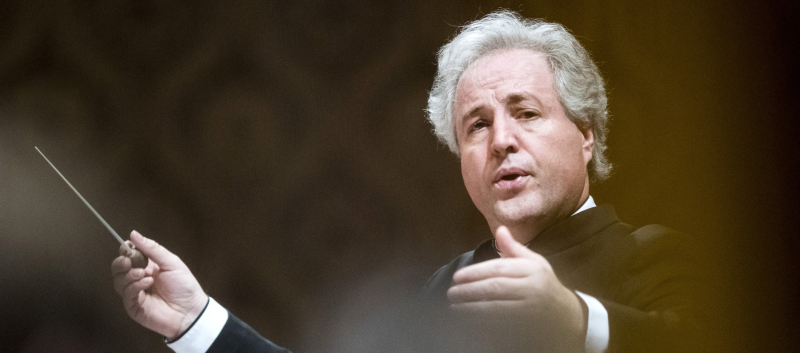
    Maestro Honeck (above) returned to the podium following the interval for the Mahler 1st. In the course of the symphony’s 50-minute span, the Maestro showed himself to be a marvelous Mahler conductor. The huge orchestra played splendidly for him, and the evening ended with yet another resounding ovation.

    From the ultra-soft opening moments of the first symphony, which Mahler described as sounds of nature, not music!”, this evening’s performance drew us in. The offstage trumpet calls seem to issue from a fairy-tale castle deep in a mysterious forest. The Philharmonic’s wind soloists – Robert Langevin, Philip Myers, and Liang Wang among them – seized upon prominent moments: Mr. Wang in fact was a key element in our pure enjoyment of the entire symphony. The pace picks up, and a melody from the composer’s Wayfarer songs shines forth; the music gets quite grand, the horns opulent, the trumpets ringing out, and so on to a triumphant climax.

    The symphony’s second movement, a folkish dance, also finds the horns and trumpets adding to the exuberance. After a false ending, a brief horn transition sends us into a waltzy phase, with winds and strings lilting us along. Then the movement’s initial dance theme returns, accelerates, and rushes to a joyful finish.

    The solemn timpani signals the ‘funeral music’ of the third movement; a doleful round on the tune of “Frère Jacques” ensues, but perhaps this is tongue-in-cheek Mahler. Mr. Wang’s oboe again lures the ear, and a Wayfarer song is heard before a return to the movement’s gloomy opening atmosphere. The unusual intrusion of a brief gypsy-dance motif melts away, and the funeral cortege slowly vanishes into the mist.

    Maestro Honeck took only the briefest of pauses before signaling the dramatic start of the finale. A march, a lyrical theme, a romance that grows passionate: Mahler sends everything our way. After several shifts of mood, it begins to feel like the composer is not quite sure how he wants his symphony to end. Various motifs are heard again, and at last Mahler finds his finish with a celebratory hymn, the horn players rising to blaze forth resoundingly.

  • Bronfman|Bychkov ~ Tchaikovsky @ The NY Phil

    Bronfman_TchaikovskyFestival_2520x936

    Above: pianist Yefim Bronfman

    Friday January 27th, 2017 – With Semyon Bychkov on the podium and Yefim Bronfman at the Steinway, we were assured of an exciting evening at The New York Philharmonic. Music by Glinka and Tchaikovsky was played in the grand style under Maestro Bychkov’s magical baton, and Mr. Bronfman brought down the house with his splendid account of Tchaikovsky’s 2nd piano concerto. Throughout this à la Russe program, visions of the splendours of the Tsarist courts filled the imagination.

    The first half of the evening was given over to two scores which inspired George Balanchine to create two choreographic masterworks:  Mikhail Glinka’s brief Valse-Fantaisie, and the Tchaikovsky concerto. The two ballets unfolded clearly in my mind as the music, so familiar to me from innumerable performances at New York City Ballet, filled Geffen Hall in all its romantic glory.

    The infectious, lilting rhythm of the waltz propels the Glinka score; originally written for piano in 1839 and later orchestrated, it is rich in melody and intriguing shifts between major and minor passages, evoking the glamour, chivalry, and mystery of a glittering ball at the Winter Palace. Needless to say, it was sumptuously played under Maestro Bychkov’s masterful leadership.

    Tchaikovsky’s 2nd piano concerto has been a favorite of mine for years, thanks to my great affection for the ballet Balanchine created to it. Written in 1879–1880, the concerto was dedicated to Nikolai Rubinstein; but Rubinstein was never destined to play it, as he died in March 1881. The premiere performance took place in New York City, in November of 1881 with Madeline Schiller as soloist and Theodore Thomas conducted The New York Philharmonic orchestra. The first Russian performance was in Moscow in May 1882, conducted by Anton Rubinstein with Tchaikovsky’s pupil, Sergei Taneyev, at the piano.

    Tonight, Yefim Bronfman’s power and virtuosity enthralled his listeners, who erupted in enthusiastic applause after the concerto’s first movement. The eminent pianist could produce thunderous sounds one moment and soft, murmuring phrases the next; this full dynamic spectrum was explored in the monster cadenza, to mesmerizing effect. A word of mention here of some lovely phrases from flautist Robert Langevin and clarinetist Pascual Martinez Fortenza early in the concerto; in fact, all of the wind soloists were very much on their game tonight.

    In the Andante, a sense of gentle tenderness filled Bronfman’s playing, and his rapport with concertmaster Frank Huang and cellist Carter Brey in the extended passages where they play off one another made me crave an evening of chamber music with these three masters. The concerto sailed on thru the concluding Allegro con fuoco, with its gypsy-dance theme brilliantly set forth by both pianist and orchestra. Maestro Bychkov, who had set all the big, sweeping themes sailing forth grandly into the hall throughout, was particularly delightful in this lively finale. At the end, the audience erupted in a gale of applause and cheers, Mr. Bronfman cordially bringing Mssrs. Huang and Brey forward to share in the ovation. 

    Throughout this awe-inspiring performance, the choreography of Balanchine danced in my head, and visions of Viktoria Tereshkina, Teresa Reichlen, Faye Arthurs, and Jonathan Stafford sprang up, the music inspiring the memory of their sublime dancing in Mr. B’s remarkable setting of this concerto.

    Semyon_bychkov

    After the interval, Maestro Bychkov (above) led an epic performance of Tchaikovsky’s 5th symphony. From the burnished beauty of the horn solo near the start, thru the palpable fervor of the Andante cantabile (with its evocation of the SLEEPING BEAUTY Vision Scene), and on thru the Valse, which moves from sway to elegant ebullience, Maestro Bychckov and the artists of the Philharmonic gloried in one Tchaikovskyian treasure after another.

    The symphony’s finale, right from it’s soulful ‘Russian’ opening theme, seemed to sum up all that had gone before: vivid dancing rhythms from Russian folk music, a march-like tread, a brief interlude. Then the brass call forth, and a tremendous timpani roll heralds a mighty processional. One final pause before a stately repeat of the main theme and a swift, four-chord finish. The audience rightly responded to the Maestro and the musicians with a full-scale standing ovation.

  • Back at the Ballet

    6a00d8341c4e3853ef015435034561970c-800wi

    Wednesday January 25th, 2017 – I haven’t been to a New York City Ballet performance since Jennie Somogyi’s farewell in 2015, but I keep running into the dancers and am constantly reminded of how much I miss watching them dance. A few weeks ago, on a whim, I ordered a ticket for tonight’s all-Balanchine program, before casting was announced. A domestic surprise – a nice one – called me home early: I missed FOUR TEMPERAMENTS tonight. But I greatly enjoyed seeing ALLEGRO BRILLANTE and the Balanchine SWAN LAKE again. 

    On entering the theater lobby, I was very happy to see that The Lyre has been restored to a place of honor. Once seated, I watched the musicians warming up while the theater filled slowly. I was not feeling the old sense of anticipation, and I was not sure if my idea of re-connecting with NYCB was making sense: perhaps it’s a chapter best left closed? 

    But then the house lights went down; pianist Susan Walters and conductor Andrew Litton entered the pit for ALLEGRO BRILLANTE and suddenly it felt right to be there. This was my first experience of having Andrew Litton on the podium; the orchestra – apart from a random note or two going astray in SWAN LAKE – played the big Tchaikovsky themes sumptuously. Ms. Walters did a beautiful job with ALLEGRO BRILLANTE; and later in the evening, concertmaster Arturo Delmoni played a ravishing White Swan solo. 

    Tiler Peck was originally listed for ALLEGRO BRILLANTE, but a pre-curtain announcement informed us that Megan Fairchild would be dancing instead. I was pleased with this announcement, as I’d become quite an admirer of Ms. Fairchild over time; I was curious to see how the Fairchild/Veyette partnership would work under the circumstances, but they are both professionals and carried it off in fine style. Megan’s dancing had a lovely lyrical feeling, and I began to realize how very much I have missed her dancing over the past several months.

    When the swans made their entry in the Balanchine SWAN LAKE, it really sank in just how long I’d been away: hardly a familiar ballerina in sight. There was a time when I knew every single person in the Company and could scan a large group of corps dancers with my opera glasses and see one friendly face after another. Tonight the girls seemed beautifully anonymous; I wonder who among them might captivate me as Rebecca Krohn and Ashley Laracey had once done, right from their first performances with the Company?

    The soloists, Megan LeCrone and Lauren King, both danced very well. Teresa Reichlen and Russell Janzen created a true sense of poetry and ill-fated romance in their partnership. Russell looks the epitome of a romantic hero: his sense of wonder at finding this fragile creature by the lake, and his desire to protect and cherish her were beautifully expressed. Tess was an elegant Swan Queen, terrified at first and only slowly surrendering to the calming effects of Russell’s care. The two long-limbed dancers make a striking couple, and their ardent tenderness mirrored the music ideally. They were rapturously applauded, and called out for an extra bow.

    In ALLEGRO BRILLANTE, I was particularly impressed by the dancing of the supporting ensemble of eight dancers; Balanchine gives them plenty to do, and they all looked superb. These are dancers I followed closely back in my days as an NYCB regular, and it was really good to see them all again, looking so attractive and dancing with such assurance and grace: Megan Johnson, Meagan Mann, Gretchen Smith, Lydia Wellington, Devin Alberda, Daniel Applebaum, Cameron Dieck, and Aaron Sanz. Watching them, I was keenly aware of what I’ve been missing.

  • Duo Gagnant: French Music for Two Pianos

    Maxresdefault

    Wednesday September 21st, 2016 – Dan K Kurland invited me to this concert of French music – from the familiar to the relatively obscure – for two pianos at Juilliard’s Paul Hall. The program looked very inviting, and since dance themes prevailed throughout the hour-long presentation, it was especially agreeable to have choreographer Claudia Schreier sitting next to me.

    We arrived just moments before the house lights dimmed; Paul Hall was nearly full, and we found seats in the front row, in the aisle. The balance of sound may have been slightly off, but it was a very interesting perspective visually.

    ~ POULENC L’embarquement pour Cynthère
    Pianists: Dan K Kurland and Jonathan Feldman

    Opening with this 1951 Poulenc gem – music that is so quintessentially French – the tone for the entire evening was set. Described as a Valse-Musette, this piece delights from its vivacious start to its ironic finish. Though Dan Kurland was not originally schedule to play tonight, he did…and wore red socks into the bargain, a subtle nod to a beloved French pianist. Joining Dan was Jonathan Feldman, chairman of Juilliard’s Collaborative Piano Department, making for a brilliant performance. 

    ~ DEBUSSY Prélude à l’après-midi d’une faune
    Pianists: Michał Biel and Brian Zeger

    Shifting moods, we are plunged into the erotic mystery of Claude Debussy’s Prélude à l’après-midi d’une faune in a splendid performance by Michal Biel and Brian Zeger. The composer completed his symphonic poem Afternoon of a Faun in 1894, and published a version for two pianos the following year. In a rapture-inducing performance of perfumed sonorities, the two pianists beautifully summoned up the music’s alternating currents of delicacy and turbulent passion. I so enjoyed seeing Brian Zeger again, here in the hall where I first heard him play many moons ago. 

    ~ FRANÇAIX Huit Dances Exotiques
    Pianists: Cherie Roe and Arthur Williford

    Dating from 1957, these eight miniatures represent the “newest” music on the program. Pianists Cherie Roe and Arthur Williford jumped right into the music hall swing-and-sway of the opening Pambiche. Sprightly syncopation and etched-in miniature glissandi delighted us in Baiao, and more syncopation followed in Nube gris; both here and in the lively Merengue that follows, sudden endings took us by surprise. The rolling rhythm of the Mambo was further enhanced by a mid-song change of key. Both the urbane, casually shrugging Samba and the bouncy swirl of the Malambeano caught us off-guard by ending in mid air. The final Rock ‘n’ Roll, wryly jazzy, would have caused my old friend Franky to exclaim, “This is so jive!” The two pianists seemed to be having a blast with this music.   

    ~ CHAMINADE Duo Symphonique
    Pianists: Dror Baitel and Nathan Raskin

    Cécile Chaminade, the sole female composer to be included on this evening’s program, wrote her Duo Symphonique in 1905. Of all the music heard this evening, this was the most traditionally “classical” in feeling. It opens operatically, runs on to swirls of notes and later to fanfare-like motifs. The highest and lowest registers of the piano are explored, the vast range adding to the truly symphonic quality of the piece: “…lyrical grandeur…” was one of my descriptive scrawls. A more delicate theme heralds a song-like interlude, followed by a build-up and an a grandiose finale. I loved every minute of it, and was very impressed by the expert playing of Dror Baitel and Nathan Raskin. 

    ~ SAINT-SAËNS Danse Macabre
    Pianists: Jinhee Park and Ho Jae Lee

    Saint-Saëns’ Danse Macabre is a musical setting of a poem by the French poet Henri Cazalis, based on the allegory of the ‘dance of death’. Pianists Ho Jae Lee and Jinhee Park maintained communication across the pianos, which in their sleek blackness took on a coffin-like aspect. The music rises from the depths to jangling heights, descending passages seem to point to the grave (or to hell), and at one point the very lowest notes of the keyboard resound. Becoming wildly dramatic, the music speeds up before turning more pensive and ending in sudden death. The audience took special delight in this piece, and in the two players. 

    ~ DEBUSSY Petite Suite
    Pianists: Katelan Terrell and Michał Biel

    Debussy’s Petite Suite was published in its original four-hands version in 1889; transcriptions for solo piano and for violin and piano followed in 1906. The work found great popularity in a 1907 adaptation for chamber orchestra by Henri Büsser. Tonight the four-hands version was played by Katelan Terrell and Michal Biel, seated together at a single keyboard. Commencing in dreamy softness, the suite continues with evocations of Spring, very slight tinges of gypsy allure, contrasts of rhythm and lull, and bursts of joyous rippling in the higher range which maintain brightness. The final movement seems very ‘Parisian’, and, after an interlude, we are carried back to the boulevards by our two sophisticated pianists.

    ~ RAVEL La Valse
    Pianists: Sora Jung and Adam Rothenberg

    Best known (especially to Balanchine admirers) in its orchestral version, Ravel’s La Valse was transcribed by the composer twice, once for solo piano and again for two pianos. The first performance of the piano duo version was given at the home of Misia Sert, with Ravel himself one of the pianists. Misia, one of my favorite characters in the history of music and dance, was the work’s dedicatee. Among those present at Misia’s salon for the premiere performance were Serge Diaghilev, Igor Stravinsky, Francis Poulenc, and Léonide Massine: how I wish I could have been there! 

    The mystery of the opening of La Valse loomed up from the depths as pianists Sora Jung and Adam Rothenberg launched their intense and remarkable performance. At last the waltz struggles to the surface, and the two pianists delight in flinging myriad colours onto the sonic canvas. Thunderous intrusions alternate with madly ironic swirls of dance. This is music on the verge of madness. 

    Throughout the Ravel, images of two beloved dancers – Janie Taylor and Sébastien Marcovici – overtook my imagination: they danced this Balanchine masterwork at their New York City Ballet farewell performance in 2014.

    Tonight, as all the pianists appeared for a bow on the stage of Paul Hall at the end of the concert, an exuberant standing ovation greeted them. A really wonderful evening!

  • Claudia Schreier’s SOLITAIRE @ Vail

    Unity Phelan, Zachary Catazaro and the Catalyst Quartet in Claudia Schreier's Solitaire. Photo by Erin Baiano (3)

    Above: New York City Ballet’s Unity Phelan and Zachary Catazaro in the pas de deux from Claudia Schreier’s SOLITAIRE; photo by Erin Baiano for the Vail International Dance Festival

    SOLITAIRE, the newest ballet from choreographer Claudia Schreier, premiered at the Vail International Dance Festival on August 8th, 2016. The ballet was danced by Unity Phelan, Zachary Catazaro, Joseph Gordon (all of New York City Ballet) and Da’Von Doane (of Dance Theater of Harlem). The music, by Dmitri Shostakovich and Alfred Schnittke, was performed live by New York City Ballet‘s pianist deluxe Cameron Grant, and the Catalyst Quartet.

    I’m so pleased to share this video recording by Nel Shelby Productions of this new ballet’s world premiere performance: LINK

    Erin Baiano photographed the premiere of SOLITAIRE, and here are some of her wonderful images:

    Unity Phelan, Joseph Gordon, Da'Von Doane, pianist Cameron Grant and the Catalyst Quartet in Claudia Schreier's Solitaire. Photo by Erin Baiano

    Above: Unity Phelan, with Joseph Gordon and Da’Von Doane

    Unity Phelan, Zachary Catazaro, Joseph Gordon and Da'Von Doane in Claudia Schreier's Solitaire. Photo by Erin Baiano

    Above: a pose from SOLITAIRE‘s first section

    Unity Phelan, Zachary Catazaro and the Catalyst Quartet. Photo by Erin Baiano

    Above: Unity Phelan and Zachary Catazaro in the pas de deux

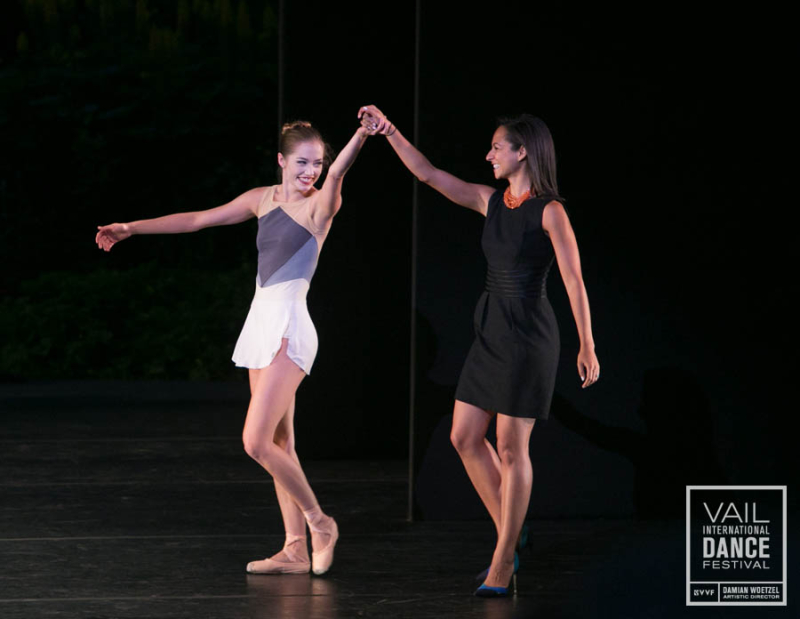
    Unity Phelan and Claudia Schreier bowing at the Vail International Dance Festival

    Above: ballerina Unity Phelan and choreographer Claudia Schreier take a bow following the premiere of SOLITAIRE, which drew a standing ovation from the Vail audience.

    All production photos by Erin Baiano.

  • New Ravel @ New Chamber Ballet

    L1680670

    Saturday February 27th, 2016 – Miro Magloire’s New Chamber Ballet presenting five Magloire ballets, including a premiere, at City Center Studios. Exceptional music, played live, is always on offer at NCB; then there’s the bevy of ballerinas: five distinctive dancers who bring Miro’s classically-based but sometimes quirky – and always demanding – choreography to life.

    Tonight, the house was packed; extra chairs had to be set out, and some people were standing. The program was one of Miro’s finest to date – and he’s had an awful lot of fine evenings. Two classic French violin sonatas – Debussy’s and (part of) Ravel’s – were in the mix, along with some Schoenberg (the more Schoenberg I hear, the more I like), and works by Beat Furrer and Friedrich Cerha (who just celebrated his 90th birthday). 

    The opening (premiere) work, RAVEL’D, is still “in-progress”; tonight we saw the first movement, with Miro promising the rest of it for his April performances. Doori Na and Melody Fader played beautifully, and Sarah Thea’s fringed tunics added an unusual flair to the movement. Stylized motifs – eating, praying, biting – are woven into the dance. One girl’s toe-shoed foot rests upon another girl’s head: this is one of several unexpected balancing devices. A space-filling unison trio stands out, and the closing section finds Sarah Atkins in a reverential pose as Amber Neff and Shoshana Rosenfield ‘converse’ in a series of mutually dependent balances. 

    The space was again well-utilized in GRAVITY; we were seeing the finished version of this work that Miro had started on last year. Doori Na’s expert playing of the Cerha score was something to marvel at: great subtlety and control are called for, and Doori delivered. The three dancers – Elizabeth Brown, Traci Finch, and Amber Neff – are engaged in extended paragraphs of the partnering vocabulary Miro has been exploring of late. Extremely challenging and movingly intimate, the intense physicality of these passages push the boundaries of what we expect from women dancing together. Miro’s dancers have taken to these new demands with great commitment: watching some of their improbable feats of balance and elastic strength gives us a fresh awareness of possibility. Adding yet another dimension to the work: when not actively dancing, each ballerina curls up on the floor to sleep. 

    Pianist Melody Fader evoked an air of mystery with her superb playing of Arnold Schoenberg’s Six Little Piano Pieces for the ballet QUARTET. Here Mlles. Atkins, Brown, Finch, and Neff appear in elegant, backless black gowns. They take seats at the four corners of the playing area, facing outward. With her hair down, a waif-like Shoshana Rosenfield dances in the center with a feeling of halting insecurity; her character seems dazed, perhaps drugged. Periodically, the four seated women move their chairs towards the center, slowing encroaching on Shoshana’s space. The four become aware of the lone ballerina as a potential victim: they turn and observe her intently. In the end, the four women have Shoshana trapped; as she sinks down in surrender, they caress her and run their fingers thru her hair. Eerie, and leaving us full of questions, QUARTET is as intriguing to watch as to hear.

    In VOICELESSNESS, Beat Furrer’s mystical score was performed by Melody Fader; her playing had a fine air of somber quietude. Dancers Amber Neff and Shoshana Rosenfield, in Sarah Thea’s sleek body tights, become fervently entwined and mutually dependent in a duet that develops further elements of Miro’s intense and engrossing partnering technique.

    For a revival of TWO FRIENDS, Doori Na and Melody Fader had the lovely experience of playing Claude Debussy’s violin sonata, the composer’s last completed work. Wearing black gauzy tunics and black toe shoes, Elizabeth Brown and Sarah Atkins are the eponymous duo; they partner lyrically, and all seems right with the world. Then Traci Finch appears out of nowhere and the ballet’s dynamic shifts and splinters, with fleeting pair-ups as alliances form and vanish in a trice. The subtexts of attraction and jealousy are very subtly threaded into the movement; an in-sync duet for Elizabeth and Traci is one outstanding moment, and the sonata’s final movement calls for large-scale virtuosic dancing from all three. But then Sarah impetuously rushes off. 

    True to life, TWO FRIENDS often finds multiple narratives developing at the same time, and over-lapping. There is so much to watch and to savor: I especially relished a brief passage where Elizabeth Brown, suddenly finding herself standing alone, quietly runs her hands up and down her arms in a caressive gesture. Elizabeth, a dancer who always lures the eye with her confident technique and personal mystique, turned this fleeting moment into something of deeper resonance.  

    Having followed Miro’s New Chamber Ballet for several seasons now, what I’ve come to appreciate most about him is his musical integrity. His tastes are eclectic, but always sophisticated, and he’s able to win us over to some very unusual and not always ‘easy’ music thru his own personal enthusiasm for the works he presents. The benefits of having the music played live are numerous, and greatly enhance the atmosphere at NCB‘s performances. And Miro’s excellent dancers take up each new musical and choreographic challenge that he sets for them with a wonderful mixture of strength, musicality, willingness, and grace.

    The dancers tonight were Sarah Atkins, Elizabeth Brown, Traci Finch, Amber Neff, and Shoshana Rosenfield, with the music played by Doori Na (violin) and Melody Fader (piano) and costuming by Sarah Thea. Kudos to all, and to Miro for yet another fascinating evening of dance.

    During the intermission, I really enjoyed re-connecting with Melissa Barak, the former New York City Ballet ballerina who now runs her own Los Angeles-based company Barak Ballet. Melissa is currently here in New York City as the inaugural Virginia B. Toulmin Fellow for Women Choreographers at the Center for Ballet and the Arts at NYU. We shared an awful lots of news and ideas in our 15-minute chat. I love her energy!  

  • Ballet Academy East @ Ailey Citigroup

    12729135_10102663014065261_1219830271059168853_n

    Above: from Claudia Schreier’s ballet “Charge“, a Rosalie O’Connor photo

    Saturday February 20th, 2016 – Young dancers from Ballet Academy East appeared tonight in performance at Ailey Citgroup Theatre. Ballets choreographed by Ashley Bouder, Jenna Lavin, and Claudia Schreier were on offer, as well as George Balanchine’s classic “Raymonda Variations”, staged by Darla Hoover, BAE’s artistic director and a répétiteur for the Balanchine Trust.

    Though billed as a ‘studio showing’, the presentation was fully staged, with lighting and costumes. The house was packed, with some dance-world luminaries who teach at BAE among the crowd.

    Jenna Lavin’s “Barcarolle” opened the evening; set to the beloved music of the same title from Offenbach’s CONTES D’HOFFMANN, Lavin’s charmer of a ballet was danced by the youngest group of dancers on tonight’s programme: ages 10 to 12 years. The ballet’s three boys were showing early development of the courtly style which is an essential component to classical ballet, whilst the girls – in pretty pink tutus – danced with amiable grace.

    Ashley Bouder, principal ballerina with New York City Ballet, has choreographed “Mozart’s Little Nothings“, a ballet to the great composer’s “Les petits riens” for a cast of 13 BAE dancers ranging in age from 12 to 15. The choreography is elegant and well-structured – as perfectly befits the music. The girls wear white with violet ribbon trim, and the ballet has a classic hierarchy of principal couple, pas de trois, and corps de ballet. The dancing was accomplished, the young dancers successfully imparting a sense of both balletic decorum and the joy of performing, and celebrating in a wonderful ‘big circle’ moment. Ms. Bouder, with a beautiful baby bump, was greeted warmly when she took a bow at the end of her ballet. 

    Boldly and thrillingly choreographed for 22 of the school’s most technically advanced dancers, Claudia Schreier’s premiere, “Charge” calls upon her youthful cast for both strong traditional ballet technique and an unusually supple fluency of the upper body, with correspondingly fluid port de bras. “Charge” is set to the third movement of the contemporary Dutch composer Douwe Eisenga‘s piano concerto.

    Ms. Schreier showed a clear mastery of structure in deploying her large cast with consummate skill from start to finish in this exciting ballet. Opening with a single girl onstage, the choreographer commences to build her ballet with a duo, a trio, and a quartet of dancers arriving in succession, eager to dance. By the time the full cast are onstage, the choreography and Mr. Eisenga’s sparkling, dramatic score are whisking us along on an exhilarating ride.

    Charge” unfolds with a dynamic sense of the inevitable: the music propels Ms. Schreier’s choreography at every moment, and the dancers give it their all. So many highlights along the way: a passage for six boys is echoed by six girls; a stylized pacing motif; a grand circle that rushes to form and then vanishes just as quickly; an off-kilter pas de deux; four quartets in canon; fleeting solos; unusual lifts. Ms. Schreier miraculously managed her large cast – in a limited space – so compellingly that things never seemed over-crowded or chaotic.

    In sum, “Charge” writes another vivid page in Ms. Schreier’s dance diary: a perfect follow-up to the memorable works she presented on this very stage in August 2015. Kudos to the young dancers who illuminated “Charge” with their flair and commitment.

    After the interval, Ms. Lavin turned to Schubert’s piano trio # 2 in E- flat major, Opus 100, for the premiere of “(S)EVEN”. Three girls in blue and four is pale rose comprise the cast. Ensemble moments give way to a series of short solos performed on pointe, each tailored to the specific technical gifts and personality of the seven teen-aged dancers.

    Raymonda Variations”, one of George Balanchine’s signature ballets, offers the BAE dancers a showcase for their diverse lyrical and virtuosic gifts. Darla Hoover cast the Academy’s advanced students with a keen sense of showing them off to best advantage. The level of dancing was high, and was matched by the musicality and Romantic-era sensibilities of the performers.

    Alexander Glazunov’s music, exuding the perfumed elegance of a bygone era, is captivating – and surely inspired the young BAE dancers to put forth their charming and scintillating best. It must have been a thrill to dance Balanchine at a young age, and for a very receptive audience.

    Several individual dancers in tonight’s performance could be singled out for special praise, but I don’t feel it’s really beneficial to do so at a student performance. Everyone gave of his or her best, and these young talents seem to be in very good hands at Ballet Academy East.

  • Rachmaninoff Finale @ The NY Phil

    Trifonov

    Above: pianist Daniil Trifonov

    Tuesday November 24th, 2015 – The third and final programme of The New York Philharmonic‘s Rachmaninoff Festival brought us Daniil Trifonov’s triumphant performance of the composer’s 3rd piano concerto as well as the ever-popular Symphonic Dances.

    Mr. Trifonov had the audience in the palm of his hand from the moment he walked onstage. He gave a magnificent performance, with terrific support from the orchestra. The 3rd piano concerto is everything the 1st isn’t: both in terms of structure and as a display of the soloist’s technique and artistry, the 3rd readily eclipses the composer’s earlier effort.

    Mr. Trifonov’s fluent – indeed astonishing – command of the keyboard held the audience under a spell. Particularly marvelous was the cadenza (the longer of the two provided by the composer) where the young pianist spun out the music to scintillating effect. With cunning inventiveness, Rachmaninoff has the flute suddenly speak up in the midst of the piano’s long paragraph: this wind theme passes on to the oboe, clarinet, and horn before the focus returns to the piano, which ends on a lovely fade-out.

    The composer paints on a big orchestral canvas in this concerto: a deep ‘Russian’ theme in the first movement impresses, and later there’s a big dance theme. The Philharmonic’s horns were ablaze tonight, the cellos plush, and the various wind voices piped up expressively.

    As the concerto raced to its conclusion, Mr. Trifonov carried the audience along on his dazzling ride. A full-house standing ovation ensued as the young master bowed graciously both to the house and his fellow musicians. I didn’t recognize his encore – and neither did my pianist/friend Ta-Wei – but it was deliciously played.

    Morlot

    Above: conductor Ludovic Morlot

    The piano had hidden Maestro Morlot during the concerto, but after the interval we had sight of him as he led the orchestra in a colourful performance of Symphonic Dances. New York City Ballet-lovers will be familiar with this score from Peter Martins’ 1994 setting of it. It’s a grand piece, with slashing rhythms in the first movement and a wonderful waltz in the second. Rachmaninoff uses the alto saxophone – a sound I always love to hear – to evocative effect, though I could not find a credit for the soloist in the Playbill. The harp also makes some rhapsodic interjections. Overall the orchestra, with Sheryl Staples as concertmaster, sounded superb and they seemed to truly enjoy playing this piece.

    After their rapt attentiveness during the concerto, the audience seemed to lose a bit of focus during the second half of the program. One couple down the row from us feasted on chocolates and Pellegrino whilst texting literally throughout the Symphonic Dances, and the woman on Ta-Wei’s right decided to conduct her own version of the score.

    At the end of the concert I asked Ta-Wei if he thought Rachmaninoff was a great composer or just a very good one. He replied: “Well, he knew what he was doing.” True, amply true.