Tag: The New York Philharmonic

  • Matthias Goerne ~ Adams: The Wound-Dresser

    Goerne

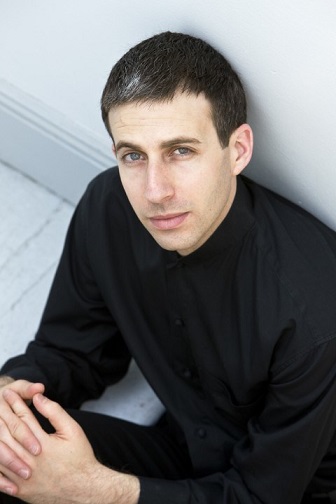
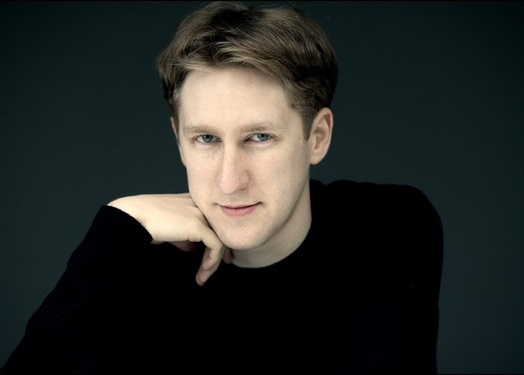
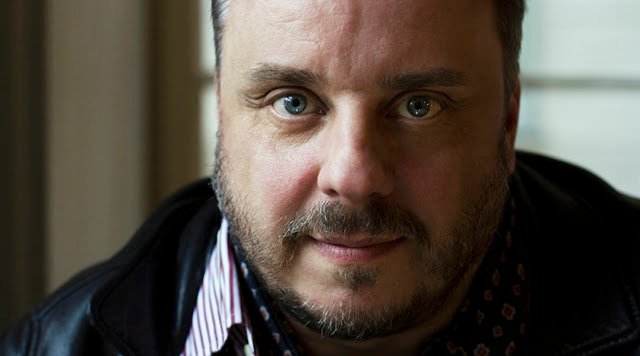
    Above: baritone Matthias Goerne

    ~ Author: Oberon

    Thursday March 21st, 2019 – This long-awaited concert featured The New York Philharmonic‘s Artist-in-Residence Matthias Goerne singing one of my favorite 20th-century vocal works: John Adams’ The Wound-Dresser. Music by Charles Ives and Johannes Brahms was also on the bill, with the orchestra’s Music Director, Jaap van Zweden, on the podium.

    Charles Ives’ mysterious Central Park in the Dark made for a strangely fascinating program-opener. If you’ve ever walked across The Park at night, this atmospheric and slightly creepy music – which at first drifts by like a cool nocturnal mist – perfectly summons up the surreal feeling of being alone in the huge City.

    The sound of Pascual Martínez-Forteza’s clarinet introduces a human element; the trumpet and a pair of pianos come into play, and there is a boisterous, off-kilter rendering of “My Ragtime Gal” and a noisy battering of percussion that makes you want to call 311. Then, slowly, the music fades into a dream. 

    Mr. Goerne then appeared for John Adams’ The Wound-Dresser. This work was composed for and premiered by the late, great American baritone Sanford Sylvan in 1989. The texts are from Walt Whitman’s poem of the same title. The poet took on the task of visiting the sick and dying soldiers in hospitals during the time of the Civil War.

    Composer John Adams said of this poem: “…(it) is the most intimate, most graphic, and most profoundly affecting evocation of the act of nursing the sick and dying that I know of. It is also astonishingly free of any kind of hyperbole or amplified emotion, yet the detail of the imagery is of a precision that could only be attained by one who had been there.”

    Mr. Goerne’s interpretation of this poignant work had an almost operatic feeling. One could say that his English diction had a ‘British accent’; for the most part, his enunciation was admirable, whilst overhead titles filled in any blanks. The sound of a dropped item in the audience at the very outset of the piece was the worst kind of intrusion, but Maestro van Zweden would not be deterred.

    The music at first evokes the tread of the nurse, walking the wards. Mr. Goerne’s voice at the start was deep and dark; the baritone’s great gift of a vast dynamic range meant that he could bring a haunting, unexpected pianissimo into the turning of a phrase, At some moments, feelings of anger rose in the voice: a righteous anger over the death and despair of war.

    The poignant descent of the basses before “I onward go“, the sheer lyric beauty of Goerne’s “One turns to me…”, and the unbearable tenderness of “…to die for you, if that would save you!“: these were but a few of the memorable moments in this moving performance. The singer’s powers of expression as he describes horrific afflictions, his passionate distress – leading to the haunting “Come, sweet death...” – and the miraculous sustained piano at “…in mercy…” draw us deeper and deeper into the poet’s thoughts.

    The lamenting violins, the deep-purple basses, the celesta-like intimations of angel wings, the plaintive high trumpet as the wounds are described – from these the music builds to a flood of anguish, to be overtaken by the high violins and their vision of heavenly rest. Surrounded by suffering, the nurseman sings: “I am faithful. I do not give out.” 

    The music grows huge, the voice now with an almost demented quality. Mindy Kaufman’s flute sounds forth, and the woodwinds take on the aspect of a choir. Mr. Goerne’s singing, so perfectly modulated, is heartbreaking. The gleaming trumpet sounds, the music rises on high.

    In the watches of the night, the poet/nurse sits by the dying men: “Some are so young. Some suffer so much.” And at the end, his story becomes personal: “Many a soldier’s loving arms about this neck have cross’d and rested. Many a soldier’s kiss dwells on these bearded lips.”

    A long silence followed this most moving performance. The composer joined Mr. Goerne and Maestro van Zweden onstage, with Mr. Adams summoning the orchestra’s principal trumpet, Christopher Martin, to rise for a bow. As so often after a memorable musical experience, part of me wanted to leave and hold onto the memory of it.

    But, following the interval, we heard a lustrous performance of Brahms’ Symphony No.1. It took Brahms nearly fifteen years to compose this, his his first symphony. He continually made revisions throughout this time-span, discarding pages, editing, and starting over from scratch. At the time of the premiere, Brahms worried whether anyone would like the finished work. But Hans von Bülow – a composer, conductor and pianist, just like Brahms – referred to the symphony as ‘Beethoven’s Tenth’. High praise indeed: and Brahms, now feeling confident after a positive public reception, wrote a second symphony the following year.

    Another “dropped item” made an unwanted dent in the score as the symphony began; I notice that people are now allowed to bring water bottles into the hall, and possibly these are contributing to what seems to be an increasing annoyance of extraneous sounds spoiling the music we’ve all come to hear.

    The first movement of the Brahms 1st was especially wonderful to experience tonight. Flautist Robert Langevin and clarinetist Anthony McGill were in for the concert’s second half, making beautiful music. The blended sound of the orchestra was so finely integrated, the horns sounded opulent, and the sense of longing in the music as the movement progressed was palpable.

    The Andante sostenuto, with Sherry Sylar’s lovely oboe solo, the satiny sound of the rising violin theme,  Mr. McGill’s pliant phrasing of the clarinet line, and Richard Deane’s velvety horn all highlighted the Autumnal beauty of the music. The ensuing Poco allegretto feels merely pleasant at first, but soon turns livelier. Again, Mr. McGill – and the Philharmonic’s grand bass players – gave much for us to enjoy.

    Sneaky plucking made a delightful impression in the concluding movement, wherein the horn, flute, and a brass choir each have their say before the familiar tune commences, carrying us on to the work’s vibrant finish.

    Under Maestro van Zweden’s leadership, The Philharmonic tonight played the Brahms as magnificently as I have ever heard them play anything – and that is saying a great deal. The sound was rich, profound, and heartfelt. The symphony unfolded naturally, unhurried but always alive, leading to a celebratory ovation at the end.

    ~ Oberon

  • Philharmonic Ensembles: Bach/Debussy/Fauré

    Kuanchengluwn

    Above: violinist Kuan Cheng Lu of The New York Philharmonic

    ~ Author: Oberon

    Sunday February 17th, 2019 – Artists of The New York Philharmonic performing works by Bach, Debussy, and Fauré at Merkin Hall. This was originally going to be an all-French program, but somewhere along the way, Arthur Honegger’s Sonatine for Violin and Cello – which I was very curious to hear – turned into Bach’s Trio Sonata in C-major, BWV 529.

    The switch soon became irrelevant, as the Bach was vividly performed by Kuan Cheng Lu (violin), Robert Rhinehart (viola), and David J. Grossman (bass). The opening Allegro was dynamically played, with some sustained bass notes giving the music an anchor. To the rather forlorn Largo, Kuan Cheng Lu brought lovely subtleties of phrase; this movement – without a formal ending – leads immediately into the lively concluding Allegro.

    M_srcset.php

    Claude Debussy’s Piano Trio followed, with guest artist Hélène Jeanney (above) at the Steinway; violinist Kuan Cheng Lu (the only artist to appear twice this afternoon) and cellist Qiang Tu joined her for this work, which was composed during the Summer of 1880 in Fiesole, Italy, when Debussy was 18 years old. At the time, he was the musical traveling companion and maître de musique of Nadezhda von Meck, Tchaikovsky’s generous patroness. Most of the autograph material for this trio was thought to have been lost, and was only discovered a century later, in 1982, among the papers of Debussy’s pupil Maurice Dumesnil.

    If we were to hear this music without knowing who wrote it, we’d never guess it’s by Debussy; the young composer had yet to find his own voice. This trio is entertaining salon music, which might be mistaken for Bizet or Delibes. For all that, just hearing it gives a lot of pleasure – especially when played as beautifully as it was today.

    Ms. Jeanney’s playing gives the music a Springtime freshness; the opening Andantino con molto allegro will later turn moody, even passionate. But overall, loveliness prevails. A song-like melody from Mr. Tu’s cello is taken up in turn by Mr. Lu’s violin: both these artists display smooth, savourable tone. Things turn rhapsodic, and the pianist’s expressive playing carries us along.

    The ensuing Scherzo opens with pizzicati from the strings and the piano playing a dancing tune that evoked fanciful marionettes with its wit and sense of irony. Charm is abundant here. Then on to the Andante espressivo, where the cellist again inaugurates a theme that is passed on to the violin. Ms. Jeanney’s playing is so delightful here, full of grace and colour. The blend of the three players becomes quite intense as the music builds, only to recede into another violin passage. The movement ends in a blissful state.

    The final Appassionato commences in a minor-key, agitated state. Things calm to a passage of melodious strings and rippling piano. An interlude of cello pizzicati followed by a jaunty passage lead on to fair finish; the musicians were robustly applauded by the packed house.

    Press-6878

    Following the interval, Gabriel Fauré’s Piano Quartet in G-minor brought forth another excellent pianist: Banjamin Hochman (above). He was joined by Quan Ge (violin), Dorian Rence (viola), and Ru-Pei Yeh (cello).
     
    The first movement, Allegro molto moderato, has a sense of urgency. It begins passionately, almost grandly; a unison melody for the strings is offset by the turbulent piano. Ms. Rence’s autumn-hued viola takes up a sustained melody that is passed on to Ms. Ge’s violin; the piano continues to provide restless undercurrents. Ru-Pei Yeh’s beauteous cello sound blends with Ms. Rence’s viola, then Ms. Ge’s violin sings a silken theme over the shimmering piano. The music turns rapturous. 
     
    The Scherzo features animated passages for the piano; the strings are plucked before moving on to a unison passage. The pianist alternates strong accents with flowing scales. For the Adagio non troppo, Fauré found inspiration in his memory of hearing distant church bells during his childhood. The music has the feel of a luxuriant daydream, the viola playing a pensive melody. The blending of the four instruments here was deeply affecting. 
     
    The closing Allegro molto again finds the piano in a rather agitated state as the strings play a deep, swaying theme. Various flickers of melody gleam and swirl about from player to player, the viola and cello in a darkish mood.
     
    At the end, the audience saluted the players with well-deserved cheers. We met Ms. Jeanney briefly, and are keen now to hear her in recital.
     
    ~ Oberon

  • van Zweden’s Bruckner 8th @ The NY Phil

    JaapVanZweden

    Above: Jaap van Zweden, Musical Director of The New York Philharmonic

    ~ Author: Oberon

    Friday September 28th, 2018 – This evening was our first opportunity to hear Jaap van Zweden lead The New York Philharmonic since he officially took up the position of Musical Director. My friend Ben Weaver and I splurged and bought tickets to this concert because Bruckner is always on our must-hear list. In 2014, I had my first live encounter with the composer’s 8th in this very hall, under Alan Gilbert’s baton. It was a revelation.

    Tonight, Jaap van Zweden offered Conrad Tao’s Everything Must Go as a prelude to the Bruckner 8th. Does this massive symphony need a prelude? No. As with many ‘new’ works we’ve encountered over the past few seasons, Everything Must Go is expertly crafted but it sounds like so much else: by turns spare and noisy, with frequent percussive bangs and pops, this eleven-minute piece (it felt longer) passed by without providing any sense of the composer’s individual voice. Perhaps hearing more of Mr. Tao’s work – music not yoked to an existing masterpiece that employs the same orchestral forces – will lead us to discover who he is.

    Since there was no pause between the Tao and the Bruckner, the audience’s response to Everything Must Go could not be gauged. I wonder if the young composer took a bow at the end; we had headed out as the applause commenced.

    For the first two movements of the Bruckner, I was enthralled. The orchestra sounded truly superb, and Maestro van Zweden held sway with a perfect sense of the music’s architecture. It was a tremendous relief and balm to emerge from the day’s madness (the Kavanaugh hearings) into Bruckner’s vibrant world.

    The Philharmonic musicians offered rich tone and marvelous colours, the brass sounding grand and the violins singing lyrically in their big theme. The music has a Wagnerian sense of the monumental, and a ceaseless melodic flow. Among the solo moments, Sherry Sylar’s oboe stood out. At one point there’s an almost direct quote from Tchaikovsky’s SLEEPING BEAUTY. During a respite/interlude, softer themes mingle before a splendid onslaught from the brass turns grandiose. The movement ends on a murmur.

    The Scherzo has as its main and oft-repeated theme a churning 5-note figure that has worked its way into the soundtrack for GAME OF THRONES. As the movement progresses, the harp makes a lovely effect, as do the entwining voices of solo woodwinds. Textures modify seamlessly, sustaining our pleasure.

    A deep sense of longing suffuses the opening of the Adagio, with its rising passion. Again the harp glimmers magically. The rise and fall of great waves of sound bring passages of almost unbearable beauty; there’s a spectacular build-up to music of searing passion which evaporates into soft halo of solo winds. As the music re-builds, a Tchaikovskian glory permeates. It seems, though, that Bruckner cannot quite decide how to end this epic movement.

    Pulsing, march-like, and majestic, the Finale leads us onward. A big swaying rhythm from the timpani leads into a huge tsunami of sound. The work began to feel like a series of climaxes, though, and traces of brass fatigue started to crop up. The Maestro and the musicians were engulfed by gales of applause and cheers at the end. 

    I’m probably in a minority in feeling that Alan Gilbert’s 2014 rendering of the Bruckner 8th with the Philharmonic reached me on a deeper level, as well as being more exhilarating. “Well, it was faster!”, Ben Weaver would say. À chacun son goût…

    ~ Oberon

  • van Zweden’s Bruckner 8th @ The NY Phil

    JaapVanZweden

    Above: Jaap van Zweden, Musical Director of The New York Philharmonic

    ~ Author: Oberon

    Friday September 28th, 2018 – This evening was our first opportunity to hear Jaap van Zweden lead The New York Philharmonic since he officially took up the position of Musical Director. My friend Ben Weaver and I splurged and bought tickets to this concert because Bruckner is always on our must-hear list. In 2014, I had my first live encounter with the composer’s 8th in this very hall, under Alan Gilbert’s baton. It was a revelation.

    Tonight, Jaap van Zweden offered Conrad Tao’s Everything Must Go as a prelude to the Bruckner 8th. Does this massive symphony need a prelude? No. As with many ‘new’ works we’ve encountered over the past few seasons, Everything Must Go is expertly crafted but it sounds like so much else: by turns spare and noisy, with frequent percussive bangs and pops, this eleven-minute piece (it felt longer) passed by without providing any sense of the composer’s individual voice. Perhaps hearing more of Mr. Tao’s work – music not yoked to an existing masterpiece that employs the same orchestral forces – will lead us to discover who he is.

    Since there was no pause between the Tao and the Bruckner, the audience’s response to Everything Must Go could not be gauged. I wonder if the young composer took a bow at the end; we had headed out as the applause commenced.

    For the first two movements of the Bruckner, I was enthralled. The orchestra sounded truly superb, and Maestro van Zweden held sway with a perfect sense of the music’s architecture. It was a tremendous relief and balm to emerge from the day’s madness (the Kavanaugh hearings) into Bruckner’s vibrant world.

    The Philharmonic musicians offered rich tone and marvelous colours, the brass sounding grand and the violins singing lyrically in their big theme. The music has a Wagnerian sense of the monumental, and a ceaseless melodic flow. Among the solo moments, Sherry Sylar’s oboe stood out. At one point there’s an almost direct quote from Tchaikovsky’s SLEEPING BEAUTY. During a respite/interlude, softer themes mingle before a splendid onslaught from the brass turns grandiose. The movement ends on a murmur.

    The Scherzo has as its main and oft-repeated theme a churning 5-note figure that has worked its way into the soundtrack for GAME OF THRONES. As the movement progresses, the harp makes a lovely effect, as do the entwining voices of solo woodwinds. Textures modify seamlessly, sustaining our pleasure.

    A deep sense of longing suffuses the opening of the Adagio, with its rising passion. Again the harp glimmers magically. The rise and fall of great waves of sound bring passages of almost unbearable beauty; there’s a spectacular build-up to music of searing passion which evaporates into soft halo of solo winds. As the music re-builds, a Tchaikovskian glory permeates. It seems, though, that Bruckner cannot quite decide how to end this epic movement.

    Pulsing, march-like, and majestic, the Finale leads us onward. A big swaying rhythm from the timpani leads into a huge tsunami of sound. The work began to feel like a series of climaxes, though, and traces of brass fatigue started to crop up. The Maestro and the musicians were engulfed by gales of applause and cheers at the end. 

    I’m probably in a minority in feeling that Alan Gilbert’s 2014 rendering of the Bruckner 8th with the Philharmonic reached me on a deeper level, as well as being more exhilarating. “Well, it was faster!”, Ben Weaver would say. À chacun son goût…

    ~ Oberon

  • WALKURE: Act I @ The New York Philharmonic

    Simon _oneill

    Above: tenor Simon O’Neill

    ~ Author: Oberon

    Thursday February 15th, 2018 – We’ve been starved for Wagner of late, but now – in the course of a single week – we’ve had Dorothea Röschmann singing the Wesendonck Lieder, The New York Philharmonic offering Act I of DIE WALKURE (tonight), and, coming up: a matinee of PARSIFAL at The Met.

    This evening’s Philharmonic program opened with Pulitzer Prize-winner John Luther Adams’s Dark Waves, music which readily brings to mind the opening of Wagner’s DAS RHEINGOLD. Long, deep notes are the sustaining quality throughout the piece’s twelve-minute span. Beyond that, horn calls on fifths and the brief tweeting of the piccolo emerge thru the murky, at times almost mechanical, layers of sound. The volume ebbs and flows, at times becoming massive. This is music that surely casts a spell, though one patron was apparently not pleased and expressed himself with high, hooting boos that became comical after a bit.

    The Philharmonic’s new music director, Jaap van Zweden, yet again proved himself a Wagnerian of great skill and commitment. His presentation of the WALKURE Act I tonight was so alive – right from the rather fast tempo he chose for the score’s opening pages depicting Siegmund being tracked by his enemies – and the orchestra played superbly.

    Six harps are onstage, and, as the Act progressed, we had marvelous solo moments from Carter Brey (cello), Anthony McGill (clarinet), Amy Zoloto (bass clarinet), and Liang Wang (oboe) as well as some noble calls from the horns.

    As Hunding, John Relyea’s dark, menacing tone poured forth, full of irony and vitriol: this courteous host will likely stick a knife in your ribs given the opportunity. As with his magnificent Bartok Bluebeard at Carnegie Hall a year ago, Mr. Relyea proved himself yet again to be a singer of great vocal and physical command. One moment summarized the brilliance of Mr. Relyea’s portrayal: after Siegmund has told his history to Sieglinde, ending tenderly with “Nun weißt du, fragende Frau,warum ich Friedmund nicht heiße!” (‘Now you know, gentle wife, why I can never be called Peaceful.’), Hunding/Relyea interrupts the twins’ mutual attraction, singing venomously: “Ich weiß ein wildes Geschlecht!” (‘I know of your riotous race!’). Hunding’s denunciation of his guest, and his promise to slay him at dawn, drew black-toned vocalism from the basso.

    Ten years have passed since I first heard Simon O’Neill’s Siegmund at a matinee performance at The Met. Both in voice and interpretation, Simon has kept things fresh in this arduous role: his singing – by turns helden or lyrical – is wonderfully present, and his diction and colourings are impressively utilized in the long narrative passages. For Siegmund’s story is a sad tale indeed, and although on this night – when he’s stumbled into Hunding’s hut as a hunted man – he will experience happiness ever so briefly, within hours  he will be betrayed to his death by his own father.

    Mr. O’Neill makes these stories of loneliness and woe truly poignant; both here and in those passages when heroic tones are called for, he shows himself the equal of any Siegmund of my experience. His cries of “Wälse! Wälse!” in the Sword monolog were excitingly sustained. The cresting, poetic beauty of Simon’s “Winterstürme” and his powerful summoning of Nothung from the tree were highlights of the evening. And then, with van Zweden’s orchestra pulsing away with relentless vitality towards the finish line, Simon latched onto a clarion, hall-filling top-A at “Wälsungen blut!…” to cap the evening.

    In 2012, Heidi Melton’s singing of the 3rd Norn in GOTTERDAMMERUNG at The Met gave me reason to believe she could be the next great Wagnerian soprano. But since then, in subsequent encounters, I have found her disappointing. This evening, her physical presence and the voice’s limitations in the upper range drew a blank with me.

    So tonight, it was the excellence of the male singers, the thrilling playing of the orchestra, and Maestro van Zweden’s feel for this music that gave Wagner his due.  

    ~ Oberon

  • Pappano & Andsnes @ NY Philharmonic

    Antonio-Pappano-conde-nast-traveller-28nov16-pr
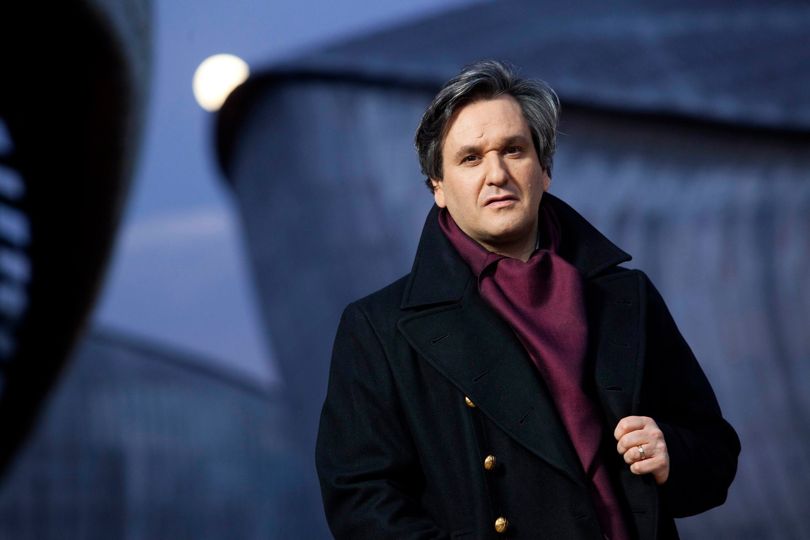
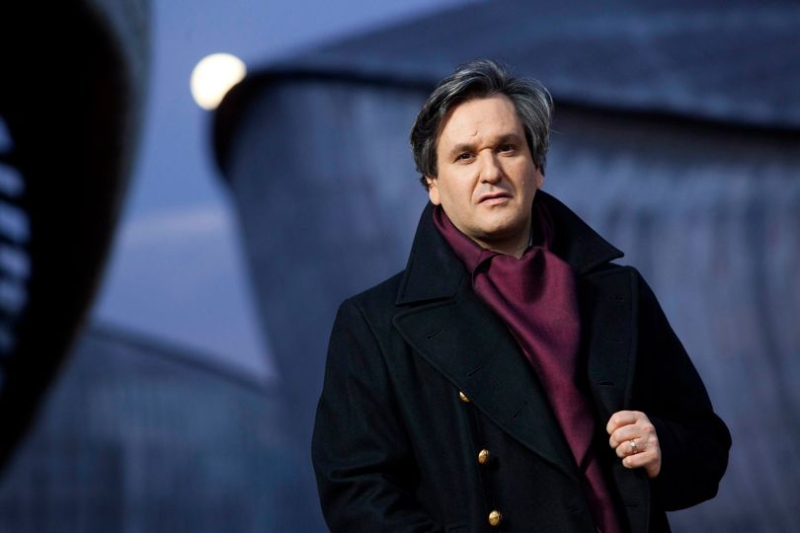
    Above: Conductor Antonio Pappano; Photo Credit: Musacchio & Ianniello

    ~Author: Scoresby

    Thursday February 8th,  2018 – The New York Philharmonic seemed in good form at David Geffen Hall. They were led by the wonderful Antonio Pappano, who I had never had the opportunity to hear before. I also hadn’t heard any of the works on the program live, though I have heard them all via recording. Pianist Leif Ove Andsnes and resident NY Philharmonic organist Kent Tritle rounded out the program. It is interesting to have heard the Philharmonic after a long break, as both this time and last time I heard the playing seemed higher quality than I recalled. It will be interesting to see how the sound changes again next year when Jaap Van Zweden assumes his full music directorship.

    Ralph Vaughan Williams’s Fantasia on a Theme by Thomas Tallis opened the program. I was surprised to learn in the program notes that the last time this famous piece was performed was 20 years before – it seems unusual for a piece that is perhaps Vaughan Williams’s most well-known. The all string orchestra is divided into three distinct groups during this work, the normal string orchestra, a separate orchestra that acts as the melody center, and a string quartet consisting of the principal players. Here, Mr. Pappano put the melodic orchestra in a row behind the strings that played the background counterpoint.

    I’ve never been particularly fond of this work, while stunningly beautiful I don’t feel the music goes anywhere. Mr. Pappano convinced me of its beauty though – the slow moving textures almost sounded like a minimalist organ work. The basses and cellos truly sounded like the pedals of an organ while the other strings managed to capture the full nuances of the Phrygian scale that the Tallis themed is based on. All the strings sounded quite clean. Perhaps the most convincing moment was when Cynthia Phelps entered with her melancholic viola melody (6:05 in the video above) – she managed to make the entire room sing. The other quartet members did a good job blending with her, but that lonely call after the richness of what precedes it will remain with me for a long time.

    The second work on the program was the Britten Piano Concerto, Op. 13. It is a bit of an odd piece, structured in four movements and lasting about thirty-five minutes. While interesting to hear, it didn’t sound to me nearly as original as other Britten works. Sort of like a medley of Stravinsky, Shostakovich, and Prokofiev with some of Britten’s classic colorful instrumentation. Nonetheless, it is a fun virtuosic piece of music that really shows off an orchestra – even if not the most worthwhile music.

    Capture

    Above: Pianist Leif Ove Andsnes; Photo credit: Gregor Hohenberg

    Mr. Andsnes milked the virtuosic first movement for all that it had, ripping through opening lines and making it sound gritty. Mr. Pappano’s accompaniment was spot on with the percussion cued perfectly for the piano’s percussive chords. Nonetheless, the movement is almost clown-esque and this interpretation seemed a little subdued for the material. Mr. Andsnes did seem to revel in the Rite of Spring-like chords (or perhaps I am thinking that because I’ve been listening to his new recording with Marc-André Hamelin).

    The second movement is a little less chaotic than the first, the first few lines make it sound like one is in a jazz bar with people who are smoking. The bass is plucking away, while someone is lightly tapping on tambourine. The viola and clarinet exchange jazzy sounding lines. Ms. Phelps again did a fabulous job, here embracing that smoky texture as did Mr. Andsnes when the piano finally comes in to some music that sounds straight out of Prokofiev.

    Eventually this setting yields to another virtuosic theme that recapitulates parts of the first movement. The third movement is a theme and variations that grows progressively denser – while interesting, it doesn’t quite feel like it belongs. Britten wrote many years later to replace a different version and it is easy to tell. The finale is exciting and showy, both Mr. Pappano and Andsnes making the most of it.

    The second half of the concert was devoted to Saint-Saëns Symphony No. 3 in C minor, Op. 78 with Kent Tritle performing the organ. While a popular piece, it hasn’t been done at the NY Phil in 8 years and so I haven’t gotten the chance to hear it live before. In some ways though, I feel like I still haven’t heard the piece properly. Because Mr. Tritle was playing an electronic organ, some of the grandness of the work didn’t seem to be present – indeed my friend and I chuckled a bit when the electronic organ entered as it just didn’t sound right for such a delicately composed piece. That is no fault of the organist, however, it would be lovely if Lincoln Center built an organ in David Geffen Hall.

    Mr. Pappano programmed the Vaughan Williams well, it mirrors both the sound of the organ and structure of the Saint-Saëns making for a satisfying second half. Mr. Pappano brought an incisive and almost frenzied energy to the Allegro moderato in the first movement. The famous theme sounded buzzing with energy. Most impressive though were the clear textures in the massive fugue in the second movement, not a note was out of place, being both transparent and energetic. One effect that I had never noticed was Saint-Saëns dazzling use of pianos in the second movement’s presto. They are light and just a tinkle above the orchestra, but give it this glistening sonority that sounded to me like stained glass in sunlight. It was delightful to hear and I look forward to hearing Mr. Pappano again. He manages to choral the orchestra into action and get the best of its players.

    ~ Scoresby

  • Pappano & Andsnes @ NY Philharmonic

    Antonio-Pappano-conde-nast-traveller-28nov16-pr
    Above: Conductor Antonio Pappano; Photo Credit: Musacchio & Ianniello

    ~Author: Scoresby

    Thursday February 8th,  2018 – The New York Philharmonic seemed in good form at David Geffen Hall. They were led by the wonderful Antonio Pappano, who I had never had the opportunity to hear before. I also hadn’t heard any of the works on the program live, though I have heard them all via recording. Pianist Leif Ove Andsnes and resident NY Philharmonic organist Kent Tritle rounded out the program. It is interesting to have heard the Philharmonic after a long break, as both this time and last time I heard the playing seemed higher quality than I recalled. It will be interesting to see how the sound changes again next year when Jaap Van Zweden assumes his full music directorship.

    Ralph Vaughan Williams’s Fantasia on a Theme by Thomas Tallis opened the program. I was surprised to learn in the program notes that the last time this famous piece was performed was 20 years before – it seems unusual for a piece that is perhaps Vaughan Williams’s most well-known. The all string orchestra is divided into three distinct groups during this work, the normal string orchestra, a separate orchestra that acts as the melody center, and a string quartet consisting of the principal players. Here, Mr. Pappano put the melodic orchestra in a row behind the strings that played the background counterpoint.

    I’ve never been particularly fond of this work, while stunningly beautiful I don’t feel the music goes anywhere. Mr. Pappano convinced me of its beauty though – the slow moving textures almost sounded like a minimalist organ work. The basses and cellos truly sounded like the pedals of an organ while the other strings managed to capture the full nuances of the Phrygian scale that the Tallis themed is based on. All the strings sounded quite clean. Perhaps the most convincing moment was when Cynthia Phelps entered with her melancholic viola melody (6:05 in the video above) – she managed to make the entire room sing. The other quartet members did a good job blending with her, but that lonely call after the richness of what precedes it will remain with me for a long time.

    The second work on the program was the Britten Piano Concerto, Op. 13. It is a bit of an odd piece, structured in four movements and lasting about thirty-five minutes. While interesting to hear, it didn’t sound to me nearly as original as other Britten works. Sort of like a medley of Stravinsky, Shostakovich, and Prokofiev with some of Britten’s classic colorful instrumentation. Nonetheless, it is a fun virtuosic piece of music that really shows off an orchestra – even if not the most worthwhile music.

    Capture

    Above: Pianist Leif Ove Andsnes; Photo credit: Gregor Hohenberg

    Mr. Andsnes milked the virtuosic first movement for all that it had, ripping through opening lines and making it sound gritty. Mr. Pappano’s accompaniment was spot on with the percussion cued perfectly for the piano’s percussive chords. Nonetheless, the movement is almost clown-esque and this interpretation seemed a little subdued for the material. Mr. Andsnes did seem to revel in the Rite of Spring-like chords (or perhaps I am thinking that because I’ve been listening to his new recording with Marc-André Hamelin).

    The second movement is a little less chaotic than the first, the first few lines make it sound like one is in a jazz bar with people who are smoking. The bass is plucking away, while someone is lightly tapping on tambourine. The viola and clarinet exchange jazzy sounding lines. Ms. Phelps again did a fabulous job, here embracing that smoky texture as did Mr. Andsnes when the piano finally comes in to some music that sounds straight out of Prokofiev.

    Eventually this setting yields to another virtuosic theme that recapitulates parts of the first movement. The third movement is a theme and variations that grows progressively denser – while interesting, it doesn’t quite feel like it belongs. Britten wrote many years later to replace a different version and it is easy to tell. The finale is exciting and showy, both Mr. Pappano and Andsnes making the most of it.

    The second half of the concert was devoted to Saint-Saëns Symphony No. 3 in C minor, Op. 78 with Kent Tritle performing the organ. While a popular piece, it hasn’t been done at the NY Phil in 8 years and so I haven’t gotten the chance to hear it live before. In some ways though, I feel like I still haven’t heard the piece properly. Because Mr. Tritle was playing an electronic organ, some of the grandness of the work didn’t seem to be present – indeed my friend and I chuckled a bit when the electronic organ entered as it just didn’t sound right for such a delicately composed piece. That is no fault of the organist, however, it would be lovely if Lincoln Center built an organ in David Geffen Hall.

    Mr. Pappano programmed the Vaughan Williams well, it mirrors both the sound of the organ and structure of the Saint-Saëns making for a satisfying second half. Mr. Pappano brought an incisive and almost frenzied energy to the Allegro moderato in the first movement. The famous theme sounded buzzing with energy. Most impressive though were the clear textures in the massive fugue in the second movement, not a note was out of place, being both transparent and energetic. One effect that I had never noticed was Saint-Saëns dazzling use of pianos in the second movement’s presto. They are light and just a tinkle above the orchestra, but give it this glistening sonority that sounded to me like stained glass in sunlight. It was delightful to hear and I look forward to hearing Mr. Pappano again. He manages to choral the orchestra into action and get the best of its players.

    ~ Scoresby

  • Ehnes/Denève: All-Prokofiev @ The NY Phil

    James ehnes

    Above: violinist James Ehnes

    ~ Author: Oberon

    Thursday January 25th, 2018 – A composer we love, an orchestra we love, a violinist we love, a conductor we love: my friend Dmitry and I had a great time at The New York Philharmonic tonight.

    For this all-Prokofiev concert, The Love for Three Oranges Suite proved an imaginative opener. I’ve seen this opera only once, in Maurice Sendak’s clever 1985 production for New York City Opera, and enjoyed it immensely. It was wonderful to encounter this music again, especially in Stéphane Denève’s witty and wonder-filled interpretation.

    The suite is in six movements, starting with Ridiculous Fellows which opens big and then gets subtle; the music is filled with a sense of irony, as is the entire opera. The Infernal Scene –  a card-game played by Tchelio and Fata Morgana – sounds ominous and develops a churning feeling. Fanfares herald the famous March, which begins softly and soon struts boldly. The xylophone and muted trumpets add a toy-like sound, and the winds play over pulsing violins; this March is droll, almost tipsy. Limpid fluting from Yoobin Son delights in the Scherzo, and there’s a really lovely viola passage for Cynthia Phelps. The violins and horns play in unison. The suite ends with Flight, an allegro with an agitated air. Maestro Denève was perfectly in his element for this coloristic music, and he gallantly drew Ms. Phelps to her feet for a solo bow, graciously kissing her hand.

    James Ehnes’s playing of the Prokofiev Violin Concerto No. 1 was truly ravishing. This concerto has become very familiar to me over time in Jerome Robbins’s balletic setting, Opus 19/The Dreamer, for New York City Ballet; it’s my favorite of all Robbins ballets.

    The music commences with a soft shivering tingle, and the violinist takes up a plaintive melody. Mr. Ehnes plays with an innate sense of rhythmic surety and delicious subtlety of dynamics. The music is dreamlike (hence the title of the Robbins ballet) with the soloist playing over soft tremolos from the violas. From this shimmering atmosphere, the flute sings while the violinist plays in his highest range. Really luminous.

    The Scherzo was taken at super speed, giving the music a wild quality. Mr. Ehnes’s superbly scrappy attacks propel things forward; the music buzzes and the violin slithers. The last movement commences with Judith LeClair’s bassoon theme, into which the solo violin insinuates itself in a melodic rise. Liang Wang’s oboe enchants, and the music grows ethereal, with an atmosphere of swooning beauty. Prokofiev brings in the high harp, and the violinst plays gliding scales. A series of delicate, jewel-like trills in the stratosphere display Mr. Ehnes’s clarity and control; the concerto ends in an iridescent glow.

    Mr. Ehnes’s sustaining of the intriguingly glistening atmosphere of the final movement held the audience under his spell; a warm ovation ensued, and Maestro Denève seated himself among the players as the violinist offered a heartfelt Bach encore. Called back for yet another bow, Mr. Ehnes was hailed by all the Philharmonic string players tapping their bows in unison: a lovely gesture of musical congeniality.

    Deneve_Stephane_PC_GenevieveCaron_e_300_preview

    Above: Stéphane Denève, in a Genevieve Caron portrait

    Selections from Romeo and Juliet completed the program. Myself, I think Cinderella is the more interesting of Prokofiev’s two full-length ballet scores. But audiences never seem to tire of the familiar tunes of the composer’s setting of the Shakespeare classic, and there was much brilliant playing in this evening’s presentation; it’s music Maestro Maestro Denève clearly savours.

    This cinematic score impresses from the start, where a violent opening gives way to tender delicacy. Prokofiev’s orchestration provides one delight after another; the solo clarinet, saxophone, and harp each summon up unique emotions, while a passage for flute and celeste and another for unison basses and celli are particularly ear-catching. The tender dawn music as the ‘balcony scene’ ends puts a lump in the throat every time. Although I could not glimpse all the solo players, special kudos to Liang Wang, Robert Langevin (flute), and Pascual Martinez Fortenza (clarinet). Artists of this calibre add so much to every New York Philharmonic concert.

    We had greatly enjoyed our first encounter with Stéphane Denève’s conducting in 2015, when he made his Philharmonic debut in a program we still talk about. I hope he will return often in future seasons.

    This evening, the orchestra welcomed the Zarin Mehta Fellows: ten young musicians from the Music Academy of the West who have spent a week in New York City participating in an immersive program covering all aspects of the life of an orchestral player. One can only imagine their excitement at being onstage and playing with the wonderful artists of the Philharmonic.

    ~ Oberon

  • Franck & Ravel @ The NY Philharmonic

    Thibaudet

    Above: pianist Jean-Yves Thibaudet

    Author: Oberon

    Saturday January 20th, 2018 matinee – This afternoon’s program at The New York Philharmonic might have been subtitled Music for Dancing: we heard a chamber score that’s been transformed into a ballet, and – after the interval – a succession of works inspired by dance forms: a sarabande, a set of waltzes, and finally a boléro that has become one of the most famous musical works ever created.

    From time to time, The Philharmonic programs a chamber work; this not only adds a new dimension to a given performance, but affords fans of the orchestra an opportunity to enjoy hearing some of the esteemed artists of The Philharmonic in a front-and-center setting.

    This afternoon, a sterling performance of César Franck’s Piano Quintet brought guest pianist Jean-Yves Thibaudet together with a quartet of extraordinary string players to play this gorgeous score – music used by choreographer Justin Peck for his lush and exquisite 2014 ballet Belles-Lettres at New York City Ballet.

    César Franck had fallen in love with one of his pupils, Augusta Holmès, who he met in 1875. The Piano Quintet was written under the influence of Franck’s romantic obsession, and thus was detested by Madame Franck to the end of her days. Composer Camille Saint-Saëns (no less) played the piano for the Quintet’s premiere performance, but he seems to have been offended by the music’s sensuality; Saint-Saëns rejected Franck’s proposal of dedicating the quintet to him.

    The players for the Franck quintet this afternoon were Sheryl Staples and Michelle Kim (violins), Cynthia Phelps (viola), and Eileen Moon-Myers (cello) with Mr. Thibaudet at the Steinway. The opening movement, Molto moderato quasi lento, commences with a violin theme played by Sheryl Staples; Ms. Staples throughout the Quintet played with ravishing lyricism. Mr. Thibaudet enters with a somewhat hesitant phrase, and then Ms. Moon-Myers’ dusky cello joins. The piano turns dreamy before a sudden eruption. Ms. Staples and Cynthia Phelps’ richly shaded viola savour every opportunity, and the Quintet has an especially nice role for the second violin which Ms. Kim set forth with lovely tone.

    The strings play in unison over a turbulent piano motif; a change to a more pensive mood finds piano and strings alternating. There’s a spacious, impassioned passage before the movement’s enigmatic end. 

    Late seating at this point was a serious distraction; the players waited patiently as latecomers stumbled to their seats. Ms. Staples was then thankfully able to re-establish the mood quickly with her silken playing of the soft, longing theme over hushed keyboard that opens the Lento con molto sentimento. A heart-wrenching descending motif for piano and cello announces a hauntingly beautiful passage with a poignant mix of voices. Then Mr. Thibaudet takes up another set of descending notes, like raindrops – or heartbeats. Ms. Staples plays with overwhelming beauty; the hesitancy of the piano recurs, and the cellist sustains a remarkable deep note. Mr. Thibaudet in the high register and Ms. Staples’s sweetest tones bring this romantic reverie to an end.

    The concluding Allegro non troppo ma con fuoco opens with Ms. Kim’s agitato figuration which Ms. Staples joins; the piano sounds almost ominous. Unison strings play over an active keyboard, evoking a sense of mystery and restlessness. A big, waltz-like buildup suddenly evaporates into an ethereal violin passage: Ms. Staples again at her finest. The music then grows unsettled in its rush to an abrupt finish.

    Warm enthusiasm greeted the quintet of players as they came out for a bow; I had hopes of an encore, but the stage was now to be re-set for the full orchestra.

    Jw

    Joshua Weilerstein (above) took the podium for the second half of this afternoon’s program, which opened with Ravel’s orchestration of Claude Debussy’s Sarabande et Danse. The sarabande originated in Central America as a dance for women, accompanied by castanets; it had an Arabian lilt. But the sarabande was regarded as too provocative, and was banned. Later the French took it on as a much more staid dance, at a slower tempo.

    Ravel’s setting of this piece, which Debussy wrote for solo piano, opens with a wind chorale; a full string section, with lovely basses, take over. Solo moments crop up – for clarinet (Anthony McGill), bassoon (Judith LeClair) and a trumpeter who I couldn’t see. The work ends with the sound of a gong which fades to nothingness. By contrast, the Danse was upbeat, showing Ravel’s orchestrational gifts to vivid effect. The harp and horn had their moments, and overall this coloristic, rhythmic little gem glowed.

    The Valses nobles et sentimentales is a suite of waltzes published in 1911 by Maurice Ravel as piano solos; an orchestral version was published in 1912. The title was chosen in homage to Franz Schubert, who had published a set of waltzes in 1823 entitled Valses nobles and Valses sentimentales. The Ravel orchestrated setting has a strong balletic association: Balanchine used them for his eerie La Valse, wherein a young girl is stalked by Death in a haunted ballroom.

    Mr. Weilerstein gave a vibrant interpretation, played fantastically by the huge orchestra. Mr. McGill (and a flautist I could not see from my location) made particularly fine impressions.

    Ravel’s Boléro was the closing work on the program, and it’s always great fun to hear it played live. Ravel composed this best-known of his works in 1928 for a ballet choreographed by Bronislava Nijinsky for Ida Rubinstein. Consisting only of repetitions of the same C-major theme over the same insistent rhythm, Boléro hypnotizes with its constant shifts in instrumentation as the music unfolds in one long, slow crescendo.

    The thrill of today’s performance for a devotee of the NY Phil such as myself was in hearing the various solo voices of the orchestra take up the tune: flute, clarinet, bassoon, saxophone (wow, this guy was really wailing!), and on and on in various combinations. And all the while, the relentlessly diligent strings pluck and the snare drums maintain the pace, starting softly and turning militant as the Boléro sways onward with mesmerizing inevitability.

    The crowd went absolutely wild as Boléro ended: everyone stood up and yelled.

    ~ Oberon

  • Franck & Ravel @ The NY Philharmonic

    Thibaudet

    Above: pianist Jean-Yves Thibaudet

    Author: Oberon

    Saturday January 20th, 2018 matinee – This afternoon’s program at The New York Philharmonic might have been subtitled Music for Dancing: we heard a chamber score that’s been transformed into a ballet, and – after the interval – a succession of works inspired by dance forms: a sarabande, a set of waltzes, and finally a boléro that has become one of the most famous musical works ever created.

    From time to time, The Philharmonic programs a chamber work; this not only adds a new dimension to a given performance, but affords fans of the orchestra an opportunity to enjoy hearing some of the esteemed artists of The Philharmonic in a front-and-center setting.

    This afternoon, a sterling performance of César Franck’s Piano Quintet brought guest pianist Jean-Yves Thibaudet together with a quartet of extraordinary string players to play this gorgeous score – music used by choreographer Justin Peck for his lush and exquisite 2014 ballet Belles-Lettres at New York City Ballet.

    César Franck had fallen in love with one of his pupils, Augusta Holmès, who he met in 1875. The Piano Quintet was written under the influence of Franck’s romantic obsession, and thus was detested by Madame Franck to the end of her days. Composer Camille Saint-Saëns (no less) played the piano for the Quintet’s premiere performance, but he seems to have been offended by the music’s sensuality; Saint-Saëns rejected Franck’s proposal of dedicating the quintet to him.

    The players for the Franck quintet this afternoon were Sheryl Staples and Michelle Kim (violins), Cynthia Phelps (viola), and Eileen Moon-Myers (cello) with Mr. Thibaudet at the Steinway. The opening movement, Molto moderato quasi lento, commences with a violin theme played by Sheryl Staples; Ms. Staples throughout the Quintet played with ravishing lyricism. Mr. Thibaudet enters with a somewhat hesitant phrase, and then Ms. Moon-Myers’ dusky cello joins. The piano turns dreamy before a sudden eruption. Ms. Staples and Cynthia Phelps’ richly shaded viola savour every opportunity, and the Quintet has an especially nice role for the second violin which Ms. Kim set forth with lovely tone.

    The strings play in unison over a turbulent piano motif; a change to a more pensive mood finds piano and strings alternating. There’s a spacious, impassioned passage before the movement’s enigmatic end. 

    Late seating at this point was a serious distraction; the players waited patiently as latecomers stumbled to their seats. Ms. Staples was then thankfully able to re-establish the mood quickly with her silken playing of the soft, longing theme over hushed keyboard that opens the Lento con molto sentimento. A heart-wrenching descending motif for piano and cello announces a hauntingly beautiful passage with a poignant mix of voices. Then Mr. Thibaudet takes up another set of descending notes, like raindrops – or heartbeats. Ms. Staples plays with overwhelming beauty; the hesitancy of the piano recurs, and the cellist sustains a remarkable deep note. Mr. Thibaudet in the high register and Ms. Staples’s sweetest tones bring this romantic reverie to an end.

    The concluding Allegro non troppo ma con fuoco opens with Ms. Kim’s agitato figuration which Ms. Staples joins; the piano sounds almost ominous. Unison strings play over an active keyboard, evoking a sense of mystery and restlessness. A big, waltz-like buildup suddenly evaporates into an ethereal violin passage: Ms. Staples again at her finest. The music then grows unsettled in its rush to an abrupt finish.

    Warm enthusiasm greeted the quintet of players as they came out for a bow; I had hopes of an encore, but the stage was now to be re-set for the full orchestra.

    Jw

    Joshua Weilerstein (above) took the podium for the second half of this afternoon’s program, which opened with Ravel’s orchestration of Claude Debussy’s Sarabande et Danse. The sarabande originated in Central America as a dance for women, accompanied by castanets; it had an Arabian lilt. But the sarabande was regarded as too provocative, and was banned. Later the French took it on as a much more staid dance, at a slower tempo.

    Ravel’s setting of this piece, which Debussy wrote for solo piano, opens with a wind chorale; a full string section, with lovely basses, take over. Solo moments crop up – for clarinet (Anthony McGill), bassoon (Judith LeClair) and a trumpeter who I couldn’t see. The work ends with the sound of a gong which fades to nothingness. By contrast, the Danse was upbeat, showing Ravel’s orchestrational gifts to vivid effect. The harp and horn had their moments, and overall this coloristic, rhythmic little gem glowed.

    The Valses nobles et sentimentales is a suite of waltzes published in 1911 by Maurice Ravel as piano solos; an orchestral version was published in 1912. The title was chosen in homage to Franz Schubert, who had published a set of waltzes in 1823 entitled Valses nobles and Valses sentimentales. The Ravel orchestrated setting has a strong balletic association: Balanchine used them for his eerie La Valse, wherein a young girl is stalked by Death in a haunted ballroom.

    Mr. Weilerstein gave a vibrant interpretation, played fantastically by the huge orchestra. Mr. McGill (and a flautist I could not see from my location) made particularly fine impressions.

    Ravel’s Boléro was the closing work on the program, and it’s always great fun to hear it played live. Ravel composed this best-known of his works in 1928 for a ballet choreographed by Bronislava Nijinsky for Ida Rubinstein. Consisting only of repetitions of the same C-major theme over the same insistent rhythm, Boléro hypnotizes with its constant shifts in instrumentation as the music unfolds in one long, slow crescendo.

    The thrill of today’s performance for a devotee of the NY Phil such as myself was in hearing the various solo voices of the orchestra take up the tune: flute, clarinet, bassoon, saxophone (wow, this guy was really wailing!), and on and on in various combinations. And all the while, the relentlessly diligent strings pluck and the snare drums maintain the pace, starting softly and turning militant as the Boléro sways onward with mesmerizing inevitability.

    The crowd went absolutely wild as Boléro ended: everyone stood up and yelled.

    ~ Oberon