Tag: The New York Philharmonic

  • Philharmonic Ensembles: In A Fishbowl

    Martinu
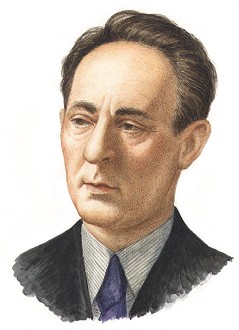
    Above: composer Bohuslav Martinů

    Sunday January 17th, 2016 matinee – Yet another highly enjoyable concert in the Philharmonic Ensembles series at Merkin Hall: artists from The New York Philharmonic performing chamber music in an intimate setting.

    These days, more than ever, I am looking to music to lift my spirits and help alleviate the symptoms of weltschmerz that threaten to overwhelm me. Feeling particularly low this morning, part of me wanted simply to stay home; but I headed down to Merkin and just a few moments into the opening Martinů, the dark pall began to lift. By the end of the concert, I felt fortified and ready to face another week. 

    MARTINŮ  –  Duo No. 1 for Violin and Cello, H.157
    Joo Young Oh, violin; Alexei Yupanqui Gonzales, cello

    The afternoon’s opening work was composed by Bohuslav Martinů in 1927 while he was living in Paris, studying with composer Albert Roussel. It’s a delightful two-movement piece – the first soulful, the second a lively dance. Superbly performed by violinist Joo Young Oh and cellist Alexei Yupanqui Gonzales, the slow movement impelled my rejuvenation process after just a few bars with its heartfelt melodies and lovely meshing of the two voices. In the second movement, a long cello solo was really a joy to hear; I thought the violin might have an equal opportunity, but instead the piece danced on to its ending. The two players had a fine rapport, the violinist reaching over to shift the cellist’s score as the cello ‘cadenza’ was launched. 

    John SICHEL  –  Fishbowl Diaries No. 3
    Vladimir Tsypin, violin; Blake Hinson, bass; John A. Sichel, narrator

    In something of a departure, John Sichel’s Fishbowl Diaries #3 featured a spoken narrative, delivered by the composer himself. The three short vignettes were accompanied by the Philharmonic’s Vladimir Tsypin, violin, and  Blake Hinson, bass. The first tale, entitled Heather From Card Member Services, was truly droll and had the audience laughing aloud. Juliet of The Rats, a story of thwarted infatuation in a laboratory setting, had Shakesperian allusions. The third and final setting, Dolphin Man: Mwa-ha-ha-ha-ha, struck close to home: it tells of that moment in childhood when those of us who are ‘different’ realize that people are laughing at us, either gently or cruelly. Mine happened when I was nine or ten years old, and it put a damper on my self-confidence that has stayed with me to this day. It’s kind of amazing that Mr. Sichel has hit this nail so perfectly on the head.

    DVOŘÁK  –  Piano Trio in E minor, Op. 90, Dumky
    Anna Rabinova, violin; Patrick Jee, cello; Wei-Yi Yang, piano 

    Totally engrossing, uplifting, and thought-provoking was the experience of hearing today’s playing of the Dvořák Dumky trio. “Dumka” literally means “thought”, and the word also refers to a type of Slavic folk-song that veers in mood from mournful to euphoric. Each of the six dumka that Dvořák has strung together for us in this imaginative and marvelous work is a feast in and of itself: poignant melodies abound, only to swirl unexpectedly into vigorous dance passages. 

    The music calls for both deeply emotional colours and exuberant virtuosity. Anna Rabinova’s passionately expressive playing of the violin line found a complimentary spirit in the rich piano textures of Wei-Yi Yang, whilst heart-stoppingly gorgeous tone from cellist Patrick Jee gave the music its soulful core. The three musicians moved me deeply in this fantastic performance. Bravi, bravi, bravi
         
    BEETHOVEN  –  Quintet for Piano and Winds
    Sherry Sylar, oboe; Pascual Martínez Forteza, clarinet; Kim Laskowski, bassoon; R. Allen Spanjer, horn; Yi-Fang Huang, piano

    Still more delights followed the interval with a performance of the Beethoven Quintet for Piano and Winds. Here, Yi-Fang Huang was the lyrically deft pianist, and the wind voices gave us an especially mellow blend in the Andante cantabile. R. Allen Spanger, who I met and enjoyed chatting with often while I was working at Tower (he’s an avid opera fan) produced that autumnally luminous sound that I always strove for in my horn-playing years but never achieved. The three reed players were congenially matched: Sherry Sylar (oboe), Pascual Martinez Fortenza (clarinet), and Kim Laskowski (bassoon) traded melodies and mingled their timbres in a performance rich in sonic rewards.

    We emerged from the hall into a gentle snowfall. The music had worked its magic. My sincere gratitude to all the participating artists.  

  • Joshua Bell’s Mendelssohn @ The NY Phil

    Josh-bell-violin

    Wednesday December 30th, 2015 – Joshua Bell (above) played Mendelssohn’s violin concerto with The New York Philharmonic tonight on a program that was otherwise an all-Sibelius affair, in celebration of the Finnish composer’s 150th birthday.

    Sibelius’s The Swan of Tuonela, which opened the evening, was originally to have been included in an opera the composer was working on. It later became one of the Four Legendsthe best-known of the four and often played as a stand-alone work.  Tuonela, the realm of the dead in Finnish mythology, is surrounded by a dark-water moat on which the swan of Tuonela floats majestically, singing.

    This is music of somber gorgeousness. Sibelius structures the work on a cushioning of strings; Carter Brey’s mournful cello theme sets the tone. An evocative English horn passage (played, I believe, by Robert Botti – though we didn’t catch sight of him) leads to a brief brightening of mood. But the swan glides back into the gloom and her voice fades away to a mysterious heartbeat. At the composer’s wish, The Swan of Tuonela was performed at his own funeral.

    Alan Gilbert spoke to us before commencing the Sibelius Symphony No. 4. He seemed to veer from personal enthusiasm for the piece to apologizing for its depressing qualities. The symphony was written while the composer was dealing with problems stemming from alcoholism. This probably accounts for the work’s disjointed qualities.

    Forward-looking harmonically, the 4th does not sound like most of the other music that has given Sibelius lasting popularity over the years. Carter Brey again had a leading theme – played with striking lyricism – in the first movement. Later, as the ensuing movements unfold, the oboe, clarinet, and flute will all have their moments to shine forth. Maestro Gilbert referred to the second movement as a Scherzo, but if it’s a joke it stems from a very dark sense of humour; oddly, it includes a brief gavotte motif for flute duo…charming, but it goes un-developed. The big, deep theme of the Adagio comes closest to what we could think of as Sibelian. The agitated opening of the final Allegro – which includes the unexpected introduction of the glockenspiel – does not resolve in a positive way.

    Overall, the Sibelius 4th seemed an odd inclusion on a holiday-season program. Interestingly, it had not been played by the Philharmonic for nearly 30 years. Tonight’s audience reacted with a mixture of admiration for the playing and uncertainty as to whether they really liked the piece or not.

    Following the interval, Joshua Bell appeared for the Mendelssohn violin concerto. This was the composer’s last completed orchestral work: within three years of its premiere in 1845, he had died at the age of 38 following a series of strokes.

    Mendelssohn’s violin concerto is innovative in that its three movements are played without pause, preventing mood-breaking applause. Eschewing gratuitous technical flourishes, the composer instead goes in for heartfelt melody. There are brilliant and demanding passages to be sure, but they are more conscientiously woven into the musical fabric than tacked on to display the violinist’s deftness. 

    The concerto in fact seemed like a conversation between soloist and orchestra and, in the course of playing it, Mr. Bell often turned towards the musicians to keep the dialogue flowing in both directions. It goes without saying that the orchestra played superbly, and that Maestro Gilbert was in his particular element here – especially in the Adagio, where he and Mr. Bell communed in an almost balletic pas de deux.

    Throughout, in fact, the black-clad violinist wove, bent, and swayed in a dance that had just a trace of the satanic about it as he drew the music from his 1713 Stradivarius. Right from the start – in that lovely and rather restless opening theme – Mr. Bell assured us we were in the presence of a musician of matchless technique, inspired artistry, and deep commitment. His capacity for subtle nuance was spine-tingling, and the satiny lustre of his sustained playing in the Adagio was – in a word – magical.

    Among the many felicities in this performance, I particularly liked Maestro Gilbert’s up-sweep of tempo as the first movement neared its conclusion, and some dashing attacks from Mr. Bell in the finale. It was a performance to treasure, and the audience could not suppress their enthusiasm: the applause erupted a split second before the final note could fade away. Mr. Bell was called out three times, and could easily have served up an encore or two: I liked instead that he let the concerto stand as his year-end gift to us. Bravo! 

    Returning to Sibelius to end the evening, Maestro Gilbert and the Philharmonic gave us a soul-stirring rendering of the composer’s Finlandia: a sure-fire crowd-pleaser, performed with resonant grandeur.

  • Rachmaninoff Finale @ The NY Phil

    Trifonov

    Above: pianist Daniil Trifonov

    Tuesday November 24th, 2015 – The third and final programme of The New York Philharmonic‘s Rachmaninoff Festival brought us Daniil Trifonov’s triumphant performance of the composer’s 3rd piano concerto as well as the ever-popular Symphonic Dances.

    Mr. Trifonov had the audience in the palm of his hand from the moment he walked onstage. He gave a magnificent performance, with terrific support from the orchestra. The 3rd piano concerto is everything the 1st isn’t: both in terms of structure and as a display of the soloist’s technique and artistry, the 3rd readily eclipses the composer’s earlier effort.

    Mr. Trifonov’s fluent – indeed astonishing – command of the keyboard held the audience under a spell. Particularly marvelous was the cadenza (the longer of the two provided by the composer) where the young pianist spun out the music to scintillating effect. With cunning inventiveness, Rachmaninoff has the flute suddenly speak up in the midst of the piano’s long paragraph: this wind theme passes on to the oboe, clarinet, and horn before the focus returns to the piano, which ends on a lovely fade-out.

    The composer paints on a big orchestral canvas in this concerto: a deep ‘Russian’ theme in the first movement impresses, and later there’s a big dance theme. The Philharmonic’s horns were ablaze tonight, the cellos plush, and the various wind voices piped up expressively.

    As the concerto raced to its conclusion, Mr. Trifonov carried the audience along on his dazzling ride. A full-house standing ovation ensued as the young master bowed graciously both to the house and his fellow musicians. I didn’t recognize his encore – and neither did my pianist/friend Ta-Wei – but it was deliciously played.

    Morlot

    Above: conductor Ludovic Morlot

    The piano had hidden Maestro Morlot during the concerto, but after the interval we had sight of him as he led the orchestra in a colourful performance of Symphonic Dances. New York City Ballet-lovers will be familiar with this score from Peter Martins’ 1994 setting of it. It’s a grand piece, with slashing rhythms in the first movement and a wonderful waltz in the second. Rachmaninoff uses the alto saxophone – a sound I always love to hear – to evocative effect, though I could not find a credit for the soloist in the Playbill. The harp also makes some rhapsodic interjections. Overall the orchestra, with Sheryl Staples as concertmaster, sounded superb and they seemed to truly enjoy playing this piece.

    After their rapt attentiveness during the concerto, the audience seemed to lose a bit of focus during the second half of the program. One couple down the row from us feasted on chocolates and Pellegrino whilst texting literally throughout the Symphonic Dances, and the woman on Ta-Wei’s right decided to conduct her own version of the score.

    At the end of the concert I asked Ta-Wei if he thought Rachmaninoff was a great composer or just a very good one. He replied: “Well, he knew what he was doing.” True, amply true.

  • NY Philharmonic Welcomes A New Concertmaster

    Frank-huang

    Above: Frank Huang

    Friday September 25th, 2015 – The New York Philharmonic‘s opening concert of the subscription season introduced us to the orchestra’s new concertmaster, Frank Huang. We’d actually seen Mr. Huang playing – unannounced – at a couple of concerts last season; but now it’s official, and the Philharmonic faithful gave the violinist a warm welcome. 

    The program opened with LA Variations, a 1996 work by the Philharmonic’s new Marie-Josée Kravis composer-in-residence, Esa-Pekka Salonen. Salonen’s violin concerto, to which Peter Martins set his 2010 ballet MIRAGE and which the Philharmonic performed in 2013 – is to me one of the outstanding musical works of the 21st century to date. And so I was very curious to hear the composer’s much earlier work this evening.

    Mr. Salonen appeared onstage prior to the playing of the Variations and made an overly-long, rambling speech about how the work was a turning point in his musical thinking. As he talked on and on, audience members around us seemed increasingly restless, and a few dozed off. At last he ambled offstage and Masetro Gilbert took the podium and – as it should – the music spoke for itself.

    LA Variations is a work of consummate craftsmanship and has many very appealing passages; early on, some of the textures reminded me – oddly enough – of the Sea Interludes from Britten’s Peter Grimes. Later there are some big tutti passages that evoke a restless, rocking feeling. At the very end, there was a tantalizing ‘calling card’ from Frank Huang in an entrancing solo passage that whetted the appetite for the Strauss to come.

    LA Variations seemed to show – as he indicated in his speech – the composer’s turning away from the rather sterile musical language in which he had been ingrained (he frequently mentioned Pierre Boulez in this regard), and the planting of the first seeds in his own musical garden; works like the Violin Concerto show us how that garden has bloomed and thrived in the years since Salonen’s 1996 self-discovery.

    Following the interval, we experienced an incandescent performance of Richard Strauss’s Ein Heldenleben (A Hero’s Life), which dates from 1898.

    In December 2013, my friend Dmitry and I experienced a superb rendering of this work played by the Philhamonic under the baton of a conductor me greatly admired: Rafael Frühbeck de Burgos; alas, just six months after that vibrant evening, the venerable Maestro passed away.

    Tonight’s performance found Maestro Gilbert and the Philharmonic artists at their luminous best. It was an uplifting and wonderfully satisfying traversal of this impressive, melodically rich score. Maestro Gilbert favored a forward impetus to the music – very exhilarating – yet also provided the necessary passages of reverie.

    The musical themes continually sound like previews of Strauss’s operas to come – most especially of Rosenkavalier and Frau ohne Schatten, both of which lay many years in the future. The Philharmonic musicians seemed to relish every moment of the score, whether in the big ensemble moments or the many solo opportunities which the composer provides. Philip Myers and his fellow hornsmen were having a grand night of it, as were the trumpeters in their offstage calls. The principal wind players  shone with evocative lustre in their solos. 

    Ein Heldenleben provided an ideal showcase for Frank Huang as he embarked on his Philharmonic journey: in this Strauss work with its marvelous passages for violin solo, Mr Huang’s tone was ravishing and his style so cordial and elegant, always imparting an emotional resonance. I cannot wait for his concerto debut with the orchestra, which I hope will come soon.

    And so, the Summer of my discontent has passed: the season has begun and I look forward to many nights of music and dance to elevate the spirit.

  • Gerstein/Mälkki @ The NY Philharmonic

    Gerstein-slide-2015

    Above: pianist Kirill Gerstein, photographed by Marco Borggreve

    Saturday May 21st, 2015 – Pianist Kirill Gerstein returned to The New York Philharmonic for a series of concerts featuring his playing of the Brahms Piano Concerto No. 1. Conducted by Susanna Mälkki, the other programmed works were Brahms’s Variations on a Theme by Haydn and Jonathan Harvey’s Tranquil Abiding.

    The title Variations on a Theme by Haydn has stuck, even after modern scholarship has established that the theme was actually not by Haydn; instead it may have been drawn from an old pilgrim hymn known as “Chorale Sti. Antonii.”

    Brahms’s eight variations are well-contrasted in tempo and character; the music is perfectly pleasing and was of course beautifully played by The Philharmonic tonight. There is, however, little of emotional value here; Ms. Mälkki’s rather formal, almost military style of conducting suited the music well.

    Susanna_malkki

    Above: conductor Susanna Mälkki

    The conductor seemed far more distinctive in Tranquil Abiding, composed by Jonathan Harvey in 1998. In this imaginative, transcendent work which begins almost imperceptibly, the composer evokes the act of breathing with a continuous inhale/exhale motif developed thru sustained crescendos and decrescendos. The deep reverberations of the gong have a spiritual resonance, whilst fragmented warblings from the wind players refer to the natural world. After a turbulent passage, with the winds jabbering, the music settles back into calm; the high violins soar in ethereal radiance before fading to nothingness. This mystical work held the audience enthralled, and the conductor and players seemed deeply invested in its austere beauty.

    After the interval, Kirill Gerstein, Ms. Mälkki, and the Philharmonic gave a grand performance of the Brahms Piano Concerto #1. Right from the start, the conductor’s vividly dramatic view of the work evinced itself in glorious swirls of sound. The pianist, passionate and musically authoritative, wove the keyboard themes gleamingly into the orchestral tapestry; in the last of the first movement’s cadenzas, Mr. Gerstein’s playing had a particularly resonant appeal. The calm of the Adagio found the pianist at his most poetic; the movement ends with a feeling of deep serenity. But then immediately we are plunged into the boisterous finale with its gypsy colourings, the pianist tossing off brilliant passages with flair. The Philharmonic horns were having a fine night and added much to the enjoyment of the concerto.

  • NY Philharmonic Ensembles: Concert @ Merkin Hall

    Penderecki

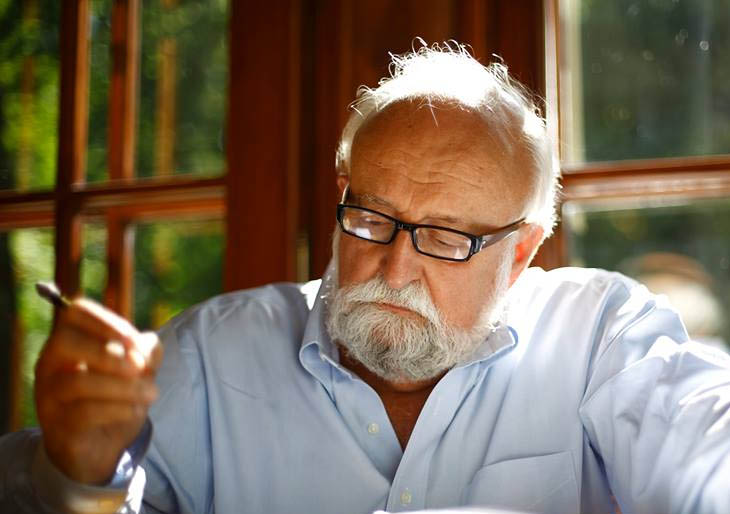
    Above: the composer Krzysztof Penderecki

    Sunday February 15th, 2015 matinee – This series of chamber music concerts by musicians from The New York Philharmonic looked so appealing when I saw the initial announcement. Due to my crowded calendar, this was my first opportunity to attend one of the concerts this season, and I’m most grateful to Lanore Carr of the Philharmonic for arranging it for me. Aside from the very interesting repertoire, the concert gave us an opportunity to ‘meet’ many of the Philharmonic’s artists in a more intimate setting. 

    Merkin Hall is a fine venue for chamber music – with a very clear acoustic – and the audience, who braved frigid temperatures to attend, were held in a sustained state of attentive delight by both the music and the playing.

    The outstanding contemporary Polish composer Krzysztof Penderecki’s String Trio was premiered in 1990 at Krakow. Today, cellist Nathan Vickery introduced the piece, citing the fact that Penderecki set out early in his career to write music that would antagonize his listeners, but that, over time, his approach mellowed.

    The String Trio is a vivid and very pleasing miniature – about 12 minutes long – and was played to perfection by Mr. Vickery with Quan Ge (violin) and Dawn Hannay (viola). After a slashing, jagged introductory phrase, the viola, then the cello, and then the violin make opening statements. The work takes on a conversational feel, as the instruments seem to murmur or chatter to one another with buzzing intimacy. The second movement is dance-like. All three players excelled in both tonal appeal and rhythmic surety. It was a bracing, lively performance, with intriguing touches of wit subtly expressed..

    Jean Sibelius’s String Quartet in D minor, Voces intimae, Op. 56 was the only familiar work on the programme. This is music rich in expressions of melancholy and tenderness – even the more animated passages have a rather forlorn undercurrent – and in introducing it, violist Irene Breslaw quoted Sibelius as saying it was “…music that brings a smile to your lips at the time of death.”

    The musicians – Anna Rabinova and Hyunju Lee (violins), Ms. Breslaw, and cellist Qiang Tu (superb depth of tone!) – vied with one another in poignancy of expression and beauty of line. Combined, their voices mingled in heartfelt harmonies, most especially in the quartet’s autumnal Adagio where their evocations of longing and regret spoke so deeply to me. In the scurrying finale, the players’ technical deftness was truly impressive.

    The chance to hear music by Vittorio Giannini was an important factor in wanting to attend this concert. This now-nearly-forgotten composer was so prolific, writing operas, symphonies, sacred works, chamber music, and songs. His sister, Dusolina Giannini, was an operatic soprano who sang two dozen performances at The Met from 1938-1941. Vittorio Giannini was well-regarded in his lifetime – he taught at Juilliard, The Manhattan School of Music, and the Curtis Institute, and he founded the North Carolina School of the Arts – and his music won favor with audiences. Yet he and his music seem to have lapsed into obscurity following his premature death in 1966 at age 63.

    Today we heard Vittorio Giannini’s Piano Quintet, and a gorgeous work it is! Melodically rich in the spirit of Puccini and Rachmaninoff, this quintet presents a rhapsodic blend of piano and strings in which theme follows theme in a steady flow of passionate lyricism. Giannini is so adept in his art that the music is able to speak directly to the heart without ever becoming cloying. Violinist Yulia Ziskel, commenting on the composer and his forgotten works, spoke of the ‘silver screen’ quality of certain passages of the quintet, and how right she was. But the music does more than just bathe the senses in a sea of opulent melodies, for the composer also shows a keen talent for rhythmic nuance. 

    Guest artist Keun A Lee – who I had heard previously playing for an Alek Shrader recital – was simply a luminous central force for the quintet. Her playing is elegant and generous, and she is also a delight to watch. Ms. Ziskel was joined by Shanshan Yao (violin), Rémi Pelletier (viola) and Mr. Vickery (cello). They played with warm resonance, most especially in the second movement where the cello takes the melodic lead (with the piano) which is then picked up by the viola. This adagio featured some of the evening’s most passionate playing. The third movement gets dance-y, developing a swaying effect at one point before swirling onwards to the fast and furious finale.

    Chamber music must be so rewarding to play; and imagine how delightful it must have been for these musicians to discover the Giannini anew. The caliber of playing was stellar, and this was a really engaging programme.

  • Hilary Hahn/Jaap van Zweden @ The NY Phil

    E0022344_23154243

    Above: violinist Hilary Hahn

    Wednesday November 26th, 2014 – After experiencing conductor Jaap van Zweden’s performance of the Shostakovich 8th with The New York Philharmonic last week, I was very glad of the chance to attend a second concert under his baton. In addition, the evening provided my first opportunity to hear Hilary Hahn live.

    The evening opened with a genuine rarity: Johan Wagenaar’s Cyrano de Bergerac Overture which was inspired by Edmund Rostand’s play of the same name. The play premiered in 1897, the concert overture dates from 1905. The overture commences with a bold statement, then waxes poetical, romantic or swashbuckling by turns. It’s a melody-rich piece; though sometimes compared to the works of Richard Strauss, there’s no hint in the Wagenaar of the absonance that tends to crop up in some of Strauss’s works.

    Ms. Hahn then appeared for the Korngold violin concerto. Most widely known as a composer of film scores, Erich Wolfgang Korngold arrived in Hollywood in the 1930s, already an established classical composer. Themes from his movie scores found their way into his concert works; for the violin concerto, Korngold drew upon his music for the films Another Dawn, Juárez, Anthony Adverse, and The Prince and the Pauper. Jascha Heifetz premiered the concerto in 1947.

    Ms. Hahn looked fetching in a silvery-steely strapless gown; slender and elegant, she is as lovely to watch as to hear. In the concerto’s opening movement, much of it set in the violin’s high register, Ms. Hahn displayed a truly shimmering quality of timbre. In the second movement, Romance, she caught the quality of sehnsucht that the rapturous themes evoke; and in the quirky, devilish technical demands of the final Allegro assia vivace, she really went to town, dazzling us with her virtuosity.

    Ms. Hahn and Maestro van Zweden were greeted with sustained applause after the concerto; coming out for a second solo bow, the comely violinist took up her bow for a Bach encore. Tonight’s Playbill states that Hilary Hahn has not appeared with the NY Phil for a decade; she should immediately be signed for future appearances: she’s a treasurable player and we should have every possible opportunity to experience her artistry.

    Following the interval, Jaap van Zweden unfurled the Beethoven 7th for us. This symphony is just about perfect: neither too short nor too long, and especially appealing in its rhythmic variety. The symphony’s first movement opens slowly (marked ‘sostenuto‘…’sustained’) and then turns animated. The famiiar allegretto that follows – one of Beethoven’s most widely-appreciated passages – has a stately sway to it. The lively dance of the ensuing Presto propels us irresistibly to the finale with its exhilarating feeling of joyous abandon. The music sailed on with Maestro van Zweden, the  musicians, and Beethoven carrying the audience along on buoyant waves of sound. Richard Wagner called this symphony “the apotheosis of the dance itself…” and the audience responded with vigorous enthusiasm to the almost breathless pace which the conductor imposed in this uninhibited finale.

  • Joshua Bell & The NY Philharmonic

    Joshua-bell_s345x230

    Thursday November 13, 2014 – Violinist Joshua Bell (above) plays the Glazunov violin concerto in a series of five concerts with The New York Philharmonic. Case Scaglione takes the podium for these performances, which also features Debussy’s Afternnoon of a Faun and Prokofiev’s symphony #5.

    My friend Monica and I attended the second evening of the programme; since we are both passionate ballet enthusiasts, we very much enjoyed experiencing the Debussy in a concert setting; we have often seen the Jerome Robbins setting of the work at New York City Ballet, and recently Boston Ballet brought their ‘original’ version to Lincoln Center.

    One of the composer’s most famous works, Claude Debussy’s Prélude à l’après-midi d’un faune referred to in this evening’s Playbill by its English title – premiered in 1894. The work is considered a turning point in the history of music: Pierre Boulez once said he considers the score to be ‘the beginning of modern music’. Tonight the Philharmonic gave a beautifully shaped rendering of this sensuous piece, which commences with the languid flute theme. Individual voices emerged dreamily from the overall soundscape and Debussy’s alluring colour scheme was indeed seductive. Neither Monica nor I could recall having previously heard the gentle chime of a triangle near the end of the piece; it seemed very prominent tonight. Case Scaglione rightly summoned the Philharmonic’s principal flautist, Robert Langevin, for a solo bow during the warm applause that greeted this opening work.

    Composer Alexander Glazunov (1865-1936) managed to endure ten years in Russia following the Bolshevik Revolution; he fled to Paris in 1928. His compositions from that point on are considered less impressive than his earlier works which include the richly melodic score for the ballet RAYMONDA, a suite from which was recently featured in ABT’s Autumn season at Lincoln Center.

    The violin concerto, Glazunov’s most frequently-performed work, was composed it in 1904. It is dedicated to, and was premiered by, the great Hungarian violinist Leopold Auer, the teacher of Heifetz, Milstein, and Elman, among others. Glazunov casts this concerto in an unbroken arc, with the three vari-paced movements subtly linked. A virtuosic cadenza carries us to the exuberant finale in which the soloist dazzles against a tapestry of orchestrated fireworks.

    Joshua Bell, taller than I had imagined and retaining a youthful energy of demeanor in his mid-40s, displayed the warmth of tone and the clear shimmer of upper-range diminuendo that are hallmarks of his playing. I was a bit surprised to note that he was using a score, but he handled it with casual assurance. Creating a fine rapport with conductor and musicians, Joshua drew the succession of themes in the opening movement into long, impeccably turned phrases; in the almost frantic pacing of the final allegro, he seized upon the sparkling coloratura passagework with thrilling dexterity. The crowd called him out for a well-deserved solo bow.

    After the interval, the Prokofiev: he wrote his fifth symphony during the summer of 1944, while staying at a dacha in the countryside outside Moscow. Having stored up his musical ideas over time, he wrote with speed and surety. The symphony was first performed in Moscow in January 1945 with the composer conducting.

    The first movement is dense of texture and thick with themes: there are five distinct tunes to be discerned, and the composer integrates them with skill. The movement closes on a grandiose note; I must say I wasn’t totally enamoured of this opening andante; it seemed a bit turgid and over-extended. But thereafter, the Prokofiev I have come to love was very much in evidence. The second movement in particular is a great delight with its relentless forward motion decorated by interjections of wit and melodic irony. The tempo gradually accelerates, almost to the point of veering out of control.

    The adagio conjures up the blend of unhappy romance and wistful tenderness we associate with the composer’s ROMEO AND JULIET, with a turbulent central passage. Then on to the final Allegro giocoso, where we again find Prokofiev at his most inventive, opening with an echo of the first theme of the first movement, and then a passage for the clarinet – Prokofiev at his most magical – superbly voiced by principal Anthony McGill. The symphony plunges forward to its conclusion, re-affirming the composer’s fixed positon in my constellation of favorite composers.

  • Vivier & Bruckner @ The NY Philharmonic

    L1016697_(2)

    Above: conductor Manfred Honeck, photographed by Felix Broede

    Saturday March 29, 2014 – Tonight at The New York Philharmonic, Claude Vivier‘s ORION and Anton Bruckner’s Symphony #9 were played without intermission.  Manfred Honeck, music director of the Pittsburgh Symphony Orchestra, was on the podium; Maestro Honeck was replacing the originally-announced Gustavo Dudamel, who withdrew from these concerts due to illness.

    Claude Vivier, the Canadian composer of ORION, was murdered in 1983, having had a macabre premonition of his own death. This from the program notes:

    “When Claude Vivier was fatally stabbed in his apartment on the night of March 8, 1983, an unfinished manuscript for a choral work lay on his worktable: Crois-tu en l’immortalité de l’âme? (Do You Believe in the Immortality of the Soul?), which, according to The Guardian, is a dramatized monologue in which the composer describes a journey on the Metro during which he becomes attracted to a young man. The music breaks off abruptly after the line: ‘Then he removed a dagger from his jacket and stabbed me through the heart.’ “

    ORION, dating from 1979, drew inspiration from the composer’s journey from Asia to the Middle East in 1976, where he absorbed the sounds of the cultures thru which he passed. This dense and fantastical work, so sumptuously played by the Philharmonic, ranges from thunderous proclamations to arching melodic forays; gongs evoke distant temples and – truly unique – there are two vocal interjections (performed by a percussionist) which might be the cries of a muezzin or the calls of the starry hunter for whom the piece was named. As Vivier concluded his original program note for ORION: “Go and find out for yourself!”

    Vivier’s untimely and violent death finds a link – and a counter-poise – in the Bruckner 9th, the unfinished symphony on which Bruckner was at work on the day he died. He is said to have spent the morning at his Bösendorfer, going over sketches for the symphony’s finale. After taking a walk, he had a cup of tea and then took a nap from which he never awoke. What a nice, peaceful way to take leave…the very opposite of Vivier’s violent fate.

    “It will be my last symphony,” Bruckner had told a guest earlier in the creative process. At the time of his death, three movements were complete, and Bruckner had been working on the finale for months, leaving a large accumulation of sketches and thematic fragments. It’s a grand and glorious work, even without a ‘proper’ ending.

    The fervor of Bruckner’s religiosity is apparent from the start of the 9th symphony: both solemn and uplifting, the music ranges from broad statements to intimate vignettes – especially from the wind instruments; a passage of pizzicato strings one moment will give way to burnished, expansive themes the next. Climaxes build and evaporate, and chorale-like passages take on a spiritual glow.

    Over the course of the three movements, we will sometimes be reminded of such disparate composers as Wagner and Mendelssohn. The symphony as it stands ends on a note of serenity, leaving us to wonder what might have been if Bruckner had lived to complete a fourth movement.

    It goes without saying that the Philharmonic artists gave a performance of remarkably mellow beauty and rhythmic clarity; Maestro Honeck – tall and somewhat formal in demeanor – became wonderfully involved in the music; his conducting style is both passionate and animated, and devoid of melodrama. The audience saluted him with great warmth as he was called out for extra bows to a standing ovation. Let’s hope he’ll be back on the Avery Fisher podium soon.

  • Haydn, Rouse & Gilbert’s Wagner

    Ax

    Above: pianist Emanuel Ax, soloist with the New York Philharmonic this evening

    Friday June 21st, 2013 – The New York Philharmonic‘s current Artist-in-Residence, Emanuel Ax, and Composer-in-Residence, Christopher Rouse, were both featured in the first half of this evening’s programme at Avery Fisher Hall.  After the intermission, the orchestra’s Music Director Alan Gilbert led a performance of his own RING JOURNEY: music drawn from Richard Wagner’s epic RING Cycle. 

    In the Playbill, Maestro Gilbert answers the “…terrible question: who is you favorite composer?” with the name ‘Haydn’. His admiration was evident in the joyous clarity of his shaping of the composer’s Piano Concerto No. 11 in D Major. Emanuel Ax’s playing had a youthful gleam, turning the melodic lines with elegance and the cadenzas with polished perfection, his trills lovingly defined. Pianist, players and conductor meshed their artistry in pure music-making that was deeply satisfying to experience.

    I first heard the music of Christopher Rouse from a Yo-Yo Ma recording of the composer’s Cello Concerto. At the New York City Ballet, Peter Martins has created two ballets to Rouse works: the 2002 INFERNAL MACHINE (seen earlier this year) and the 2006 FRIANDISES.

    In its New York première performances,
    Rouse’s Symphony No. 3 is a tribute to the Prokofiev 2nd symphony, the “symphony of iron and steel” (Prokofiev’s words). The orchestral forces are huge and the opening statements are a cacophonous but lucid fanfare, thunderous and epic. Later, in the more lyrical passages of the work, the composer finds unusual veins of beauty: a passage involving oboe and harp made me think of FIREBIRD. Throughout, the dense sound textures were vividly expressed by the orchestra’s super-human players, and Maestro Gilbert shaped the whole into a persuasive, and gigantic, statement.

    Alan Gilbert’s RING JOURNEY takes its inspiration from Erich Leinsdorf’s earlier arrangement of the Cycle’s immortal themes. RING fanatics (Mr. Gilbert is one, by his own description) draw their life blood from this music, and the standing ovation that greeted the conductor at the end of the evening seemed to me to indicate that people want to hear more of Gilbert’s Wagner.

    Alan Gilbert’s RING JOURNEY, which he rightly describes as a ‘suite’ rather than a ‘fantasy’, commences with the ‘Ride of the Valkyries’ and continues chronologically thru excerpts from WALKURE, SIEGFRIED and GOTTERDAMMERUNG. Gilbert shows a sure and steady hand at maintaining the flow of the music; some of the passages he chose to include are ‘transitional’ in the operatic sense, but they are gorgeous transitions and by exploring them here Gilbert steers clear of a ‘greatest hits’ feeling.

    The overall span of the piece was quite glorious, and the playing was simply superb: a special ‘bravo‘ to Philip Myers who stepped offstage to play Siegfried’s horn call with splendid warmth and amplitude.

    In view of such grandeur and musicality it seems selfish to ask for more; but I’d hoped to hear the Rhinemaidens’ trios, the Entry of the Gods into Valhalla, the Winterstürme theme, the Sword motif, and most especially Brunnhilde’s poignant “Ewig war ich”  – the core melody of the SIEGFRIED Idyll. The answer, dear Maestro Gilbert, is that you must program more of the RING in the next few seasons, especially in view of the fact that The Met can’t deliver it anytime soon.

    Hearing this music so spectacularly played and watching Mr. Gilbert’s loving sculpting of it from the podium, I couldn’t help but wish for voices. As the conductor built the introducton to the GOTTERDAMMERUNG prologue duet with breath-taking clarity and passion, I desperately wanted Christine Goerke or Lise Lindstrom to burst thru the door and launch into Zu neuen Taten!