Tag: Wagner

  • Uta-Maria Flake ~ Träume

    Wesendonck

    German soprano Uta-Maria Flake (1951-1995) sings “Träume” from Richard Wagner’s Wesendonck-Lieder; her interpretation is rather unusual, but I like it.

    Listen here.

    “Ms. Flake studied at the Hamburg University of Music and, as a scholarship holder of the Hamburg State Opera, at Indiana University in Bloomington (USA). Further training by Tito Gobbi in Florence and by Mario del Monaco in Lancenigo. As early as 1971 she took part in a television recording of Offenbach’s ORPHEUS IN THE UNDERWORLD from the Hamburg Opera. In 1973 she won first prize in the national singing competition, and in 1974 she was a prizewinner at a concours in Montepulciano. She began her actual stage career in 1975 at the Stadttheater in Ulm, where she made her debut as Leonora in Verdi’s FORZA DEL DESTINO. From 1976-80 she was a member of the Dortmund Opera House. Here in 1979 she sang Eve in the German premiere of the opera PARADISE LOST by Penderecki; this was followed by guest appearances in this role at the Munich State Opera, at the Warsaw Opera and (in concert version) at the Salzburg Festival. From 1980-83 she was engaged at the Staatsoper Stuttgart, where she sang her great roles: Beethoven’s Leonore and Weber’s Agathe, Wagner’s Elsa and Eva, and Offenbach’s Giulietta.

    She made successful guest performances at the State Theater in Hanover, at the Deutsche Oper am Rhein Düsseldorf-Duisburg, at the State Opera (as Lisa in PIQUE DAME) and at the Deutsche Oper Berlin (as Leonore), at the Covent Garden Opera London (as Elsa and as Freia), at the Teatro San Carlos Lisbon (Freia, Sieglinde, Gutrune and 3rd Norn), at the Cologne Opera House (Tchaikovsky’s Lisa), and at the Teatro Verdi in Trieste and at the Stadttheater in Basel as Sieglinde in WALKURE. Ms. Flake was also a concert soloist and lieder recitalist.”

  • Larissa Diadkova as Fricka

    Diadkova

    Larissa Diadkova (above) is Fricka and Mikhail Kit is Wotan in the Act Ii confrontation scene from Wagner’s  DIE WALKURE.

    Larissa Diadkova & Mikhail Kit – WALKURE Act II scene – w Sergeeva – Met-bcast 2005

  • Second Twilight

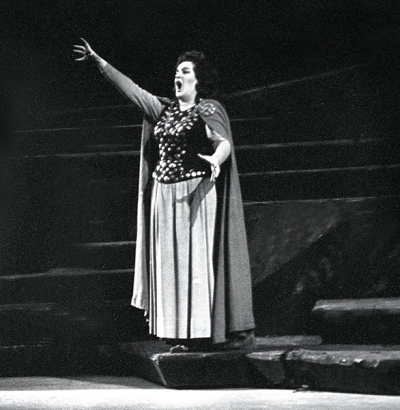
    Nilsson brunnhilde

    Above: Birgit Nilsson as Brunnhilde

    On December 14th, 1963, I heard Wagner’s GOTTERDAMMERUNG (Twilight of the Gods) for the second time. I had been an ardent opera fan for almost 5 years, but delving into the Wagner repertoire was still somewhat daunting. I had first heard GOTTERDAMMERUNG 1962, finding parts of it thrilling and other sections less so. The 1963 broadcast felt more accessible musically, and details of the plot seemed clearer to me.

    I recently discovered that the 1963 GOTTERDAMMERUNG broadcast has been posted on YouTube. Listen here.

    Brünnhilde: Birgit Nilsson; Siegfried: Hans Hopf; Hagen: Ernst Wiemann; Alberich: Gerhard Pechner; Gunther: Norman Mittlemann; Gutrune: Mary Curtis-Verna; Waltraute: Mignon Dunn; Woglinde: Mary Ellen Pracht; Wellgunde: Rosalind Elias; Flossilde: Gladys Kriese; First Norn: Lili Chookasian; Second Norn: Mignon Dunn; Third Norn: Mary Curtis-Verna; Conductor: Joseph Rosenstock

    Actually seeing a RING opera was still i my future, but once I had attended the matinee of Karajan’s magnificent RHEINGOLD in 1969 (part of an unforgettable weekend), the Cycle became an obsession for me. Echoing Wotan: “Den Ring muss ich haben!”

  • Erda & The Wanderer

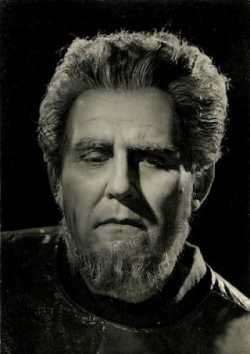
    Rolf_Kuhne

    Rolf Kühne (above) is the Wanderer and Ortrun Wenkel is Erda in the opening scene of Act III of Wagner’s SIEGFRIED.

    Listen here.

  • Treptow/Konetzni/von Rohr ~ WALKURE Act I

    Von rohr

    Above: basso Otto von Rohr

    From 1952 comes this performance of Act I of Wagner’s DIE WALKURE with Gunther Treptow, Hilde Konetzni, and Otto von Rohr, with the RAI-Rome Orchestra conducted by Wilhelm Furtwängler.

    Listen here.

  • PARSIFAL @ Bayreuth ~ 1981

    Snapshot kundry randova

    Above: Eva Randová as Kundry

    Horst Stein conducts Wagner’s PARSIFAL at the Bayreuth Festival 1981. Watch and listen here.

    Cast:

    Amfortas: Bernd Weikl ~ Titurel: Matti Salminen ~ Gurnemanz: Hans Sotin ~ Parsifal: Siegfried Jerusalem ~ Klingsor: Leif Roar ~ Kundry: Eva Randová ~ 1st Knight of the Grail: Toni Krämer ~ 2nd Knight of the Grail: Heinz Klaus Ecker ~ 1st Squire: Marga Schiml ~ 2nd Squire: Hanna Schwarz ~ 3rd Squire: Helmut Pampuch ~ 4th Squire: Martin Egel ~ Flower Maidens: Norma Sharp, Carol Richardson, Hanna Schwarz, Mari-Anne Häggender, Marga Schiml, and Margit Neubauer ~ Alto Solo: Hanna Schwarz

  • Alma Mahler: Muse or Monster?

    Alma-Mahler jpg

    Above: Alma Maria Mahler Gropius Werfel

    Wednesday, May 18th, 2022 – Aspect Chamber Music Series presenting works by Alma and Gustav Mahler, Korngold, and Zemlinsky at the Italian Academy. In the days leading up to this concert, I watched again the remarkable film Bride of the Wind; read about it here.

    I had not realized that this evening would include a lecture; I generally avoid such events, though tonight’s commentary was not overly long. However, it was not until the lights went down and an announcement was made that wearing masks during the performance was “optional” that I realized how many people around us did not have masks on. Had I known this in advance, I would never have attended. But the lights were down and it would have been impossible to exit without disturbing people. So we stayed for the first half, feeling quite uncomfortable.

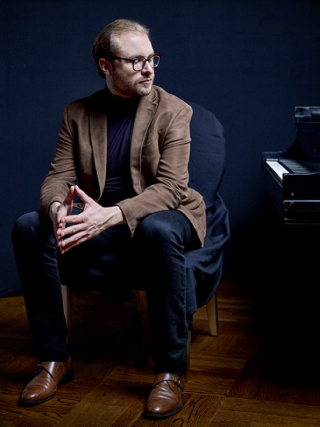
    Golka

    As a sort of unannounced prelude to the evening, pianist Adam Golka (above) played a Chopin nocturne with ravishing finesse. This established a beautiful musical atmosphere which was sustained throughout the performance.

    A screen was then lowered and musicologist Nicholas Chong spoke of Alma’s famed beauty and of the many men in her life, while photos of the lady and her suitors were shown. What a life she led! Of course, many of her adventures are spoken of in the film Bride of the Wind. It might have been illuminating to hear more about her musical education and of her small catalog of surviving works, though.

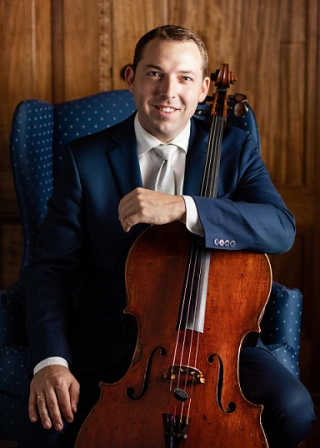
    Brook-Speltz - anna kariel

    Alexander Zemlinsky was Alma’s music teacher…and her lover. Tonight, Zemlinsky’s Three Pieces for Cello and Piano were performed for us by the Escher Quartet’s marvelous cellist Brook Speltz (photo above, by Anna Kariel), with Mr. Golka at the keyboard. The first of these, Humoreske, is a folkish piece that turns lyrical. Then comes Lied, a song of poignant beauty which expresses a sense of longing. The third piece, Tarantella, is a lively dance. To each of the three, Mr. Speltz brought his trademark warmth and expressiveness, well-matched by Mr. Golka’s sensitive and rhythmically deft playing.

    Ringle-Rebecca-10

    Two sets of songs, four by Gustav Mahler and five by Alma Mahler, brought forth mezzo-soprano Rebecca Ringle Kamarei (above) and the Canadian pianist Brian Wagorn. Ms. Kamarei, a comely woman with a unique voice and a sure sense of feminine power, looked striking in a black gown trimmed with golden vine-like appliqué.

    From Gustav Mahler’s vast song repertoire, Ms. Kamarei opened her set with the dramatic “Wenn mein Schatz Hochzeit macht“; her voice instantly captivated me with its distinctive colour-palette, size, a compelling command of dynamics, and a thoughtful way with words.  Continuing with the familiar “Rheinlegendchen“, the singer was sailing along beautifully when she had a momentary memory lapse and needed a re-set…this was charmingly handled, and she and the pianist resumed their music-making. In two of my most beloved songs from the Rückert-Lieder, “Ich atmet’ einen linden Duftand “Liebst du um Schönheit”, Ms. Kamarei and Mr. Wagorn wove their spell thru the dreamy passages of the first song to the wryly romantic sensibilities of the second.

    Wagorn  jpg

    Above: pianist Bruce Wagorn

    The five Alma Mahler songs drew my companion and me into even higher regard for Ms. Karamei and Mr. Wagorn. In “Die stille stadt“, the singer gave the signature descending phrases a nice sense of quiet drama; an unfortunate cellphone intrusion did not deter her from her poetic path: she displayed the great power of her voice, then reined it in to an impressive piano with complete control The pianist’s lovely postlude gave the song a perfectly polished end.

    During “Laue Sommernacht“, the singer’s expressive hands were captivating to watch. Again, her assurance of dynamic ‘rightness’ found her skillfully pulling back from forte to piano, making an exciting effect. This songs ends quietly; throughout, Mr. Wagorn was the ideal collaborator. In “Bei dir ist es traut“, lyrical expressiveness and finely-shaded vocal colours kept us riveted to the music; and the gentle sway of the song’s central section had its own allure. 

    Mr. Wagorn’s gently restless piano figurations created the right summertime mood for “Ich wandle unter Blumenen“;  but the singer cannot suppress a sudden burst of drama when she feels the desperate need for her lover’s embrace: her ardour creates a touch of witty irony. 

    Finally came “Lobgesang”, a song of praise. Introspective at the start, the music becomes quite grand. By now we are under Ms. Kamarei’s spell, and wanting to hear her in…some Wagner: Fricka and Waltraute came immediately to mind, as did – of course – the Wesendonck Lieder.

    Meanwhile, our desire to escape became more urgent as the unmasked couple in front of us began coughing the moment the music ended. We left hastily, regretting that we were missing the concert’s Korngold finale.

    ~ Oberon

  • Paul Taylor Dance Company/City Center/2022

    ROSESHarnage Ho by Steven Pisano

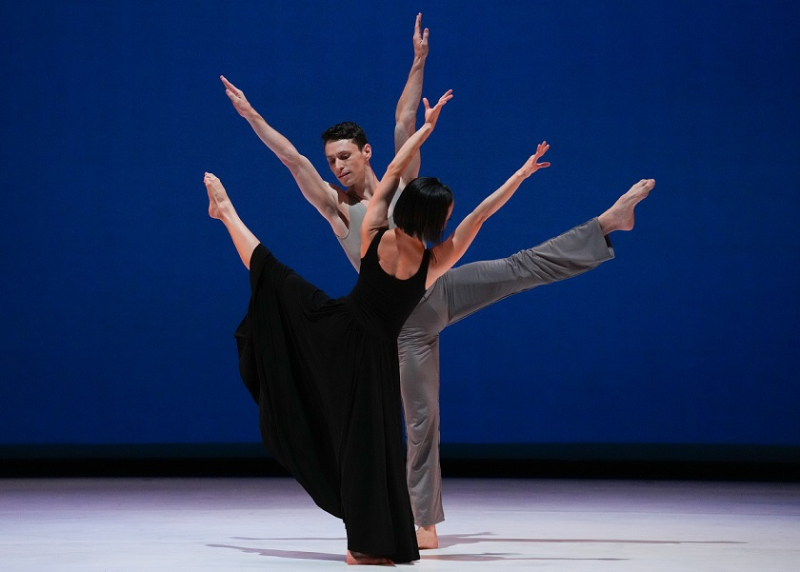
    Above: John Harnage and Madelyn Ho in Paul Taylor’s Roses; photo by Steven Pisano 

    ~ Author: Oberon

    (Click on each image to enlarge…)

    Wednesday March 24th, 2022 – Opening night of the Paul Taylor Dance Company‘s 2022 season at City Center. Two Taylor masterworks book-ended the program, with a premiere by the Company’s recently-designated Resident Choreographer, former New York City Ballet principal ballerina Lauren Lovette, in between.

    This was my first time seeing the Company since several popular Taylor stars left, starting with Michael Trusnovec and followed by Laura Halzack, Parisa Khobdeh, Michelle Fleet, Jamie Rae Walker, Heather McGinley, James Samson, Robert Kleinendorst, and Sean Mahoney. Incoming new dancers were just getting their feet wet two years ago when the pandemic caused a prolonged pause in their progress. So, for me, tonight was a reunion and a re-discovery.

    As an ardent admirer of the music of Richard Wagner, Paul Taylor’s Roses is one of my favorites among his numerous masterworks. It moves me so deeply each time I see it…and hear it. The story of the first performance of Wagner’s Siegfried Idyll, played on the staircase at Villa Tribschen on the morning of December 25, 1870, by a small chamber orchestra, is one of my favorite tales out of musical history. It was the composer’s birthday and Christmas gift to his beloved Cosima, and marked one of the happiest days of their life together. You can read about it here.

    Roses - Jessica Ferretti  Shawn Lesniak and Company_photo by Steven Pisano

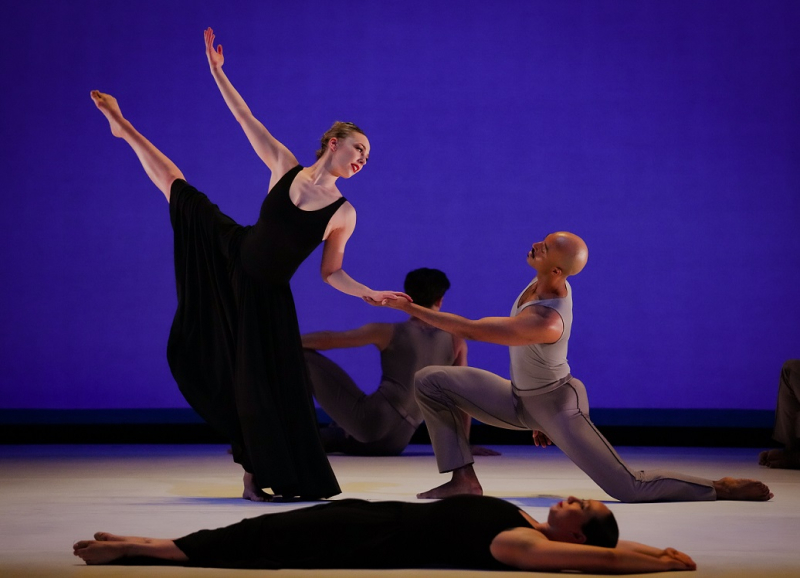
    Above: Jessica Ferretti and Shawn Lesniak in Roses; photo by Steven Pisano

    Roses opens with five couples onstage, the women in long black gowns. The pairings tonight were: Jessica Ferretti with Shawn Lesniak, Christina Lynch Markham with Jake Vincent, Raechelle Manalo with Alex Clayton, Madelyn Ho with John Harnage, and Kristin Draucker with Michael Apuzzo. Watching these beautiful creatures in a series of duets summoned many emotions in me – all of them warm and reassuring – for they are the future of the Paul Taylor Dance Company, and that future is in good hands. All these dancers radiated confidence, and their performances were suffused with poetry and light. The audience took a special liking to Ms. Ho and Mr. Harnage…understandably: they were superb. 

    As the Siegfried Idyll reaches its end, we have found a place of tranquility in an ever-darkening world; the music and dancing have nourished the spirit, and one cannot imagine that anything more beautiful and poignant could possibly follow it. But then Jada Pearman and Lee Duveneck, clad in pristine white, appear to dance one of the most entrancing of Paul Taylor’s duets. Set to a score by Heinrich Baermann which features a clarinet solo played sublimely by the Orchestra of St. Luke’s inimitable Jon Manasse, this pas de deux had a particularly hypnotic effect tonight. Mr. Duveneck towers over the petite and radiant Ms. Pearman, his partnering so protective and tender, and her dancing a vision of grace. The five couples remain seated on the floor at the rear of the stage during this duet, keeping echoes of the Siegfried Idyll in our consciousness. A genuine “Taylor ovation” greeted the dancers during their bows.

    Anticipating Ms. Lovette’s new work, I was pleased to read of her choice of music, and intrigued by the piece’s title: Pentimento. I first discovered the music of the Argentine composer Alberto Ginastera many years ago when a pianist I was dating played some of it for me on his baby grand, which took up most of the space in his little studio apartment. “Pentimento” is an Italian word meaning repentance; in the art world, it refers to a painter’s regret when a piece he is working on does not come out quite as he wanted it to; he paints over and re-uses the canvas, but with the passing of time, the original picture may bleed thru, causing a ghostly image.

    Pentimento (Lovette) - Lee Duveneck and Company_photo by Whitney Browne

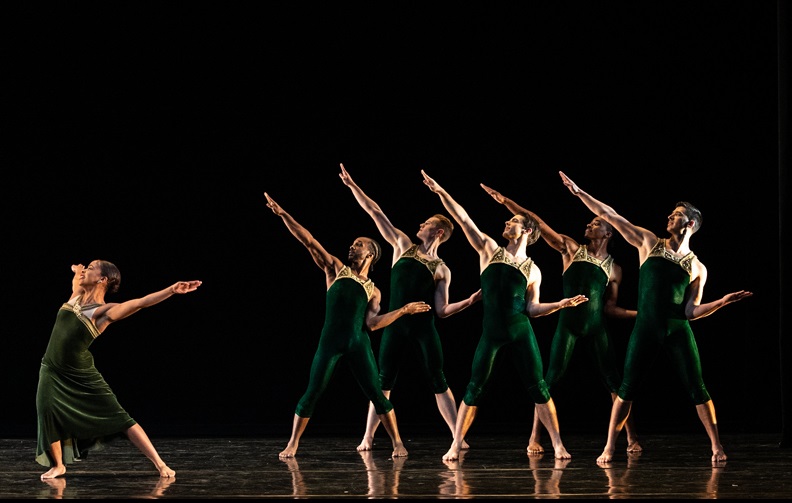
    Above: Lee Duveneck and the ensemble in Lauren Lovette’s Pentimento; photo by Whitney Brown

    My expectations for the Lovette work were high, and the opening moments, with the dancers in silhouette against a glowing backdrop, boded well. Christina Lynch Markham, her hair down, has a dramatic solo passage which finds her in a state of worry and agitation; she clutches a red scarf as she dances…and finally collapses. Now the scarf will be passed from dancer to dancer, each one having a featured solo amidst the ensemble. Thus we watched the lively Lisa Borres, a tormented Jada Pearman (who emits a scream at one point), the willowly and wonderful Maria Ambrose, the pale and somewhat mysterious Lee Duveneck, and the bold and beautiful Devon Louis being put thru their paces.

    Clad in dreary costumes that might have come off the racks at Old Navy, the community perform athletic combinations, with Tayloresque gestures; they roll about on the floor, form brief alliances, strike quirky poses, and gather – with expressions of care and concern – to watch their colleagues go thru the motions. Meanwhile, the Ginastera music, not his best by far, has become sort of an after-thought. My mind started to wander; the audience, so engrossed by Roses, began to get restive.

    Pentimento was well-received, but during the intermission I could not sense the sort of buzz that usually follows a premiere. I suppose having your new work debuted between two classics by one of the great choreographers of all time would be somewhat daunting. We shall see where this collaboration goes in the future.     

    Brandenburgs - Jada Peaman and Company - photo by Ron Thiele

    Above: Jada Pearman and the Taylor men in Brandenburgs; photo by Ron Thiele

    Paul Taylor’s festive Brandenburgs, to the immortal music of Johann Sebastian Bach, made for a perfect end to the evening. Tonight, the ballet looked as fresh and vibrant as it ever has…and that music!  The magnificent Taylor dancers soar on the wings of Bach’s score; they inspire and uplift us at a time when hope and joy are in short supply.

    Brandenburgs - Madelyn Ho  John Harnage  Maria Ambrose  Jada Pearman - photo by Ron Thiele

    Above: John Harnage and Maria Ambrose in Brandenburgs with Madelyn Ho and Jada Pearman kneeling; photo by Ron Thiele

    The male ensemble – Lee Duveneck, Alex Clayton, Devon Louis, Adam Dickerson, and Jake Vincent – race about the stage in trademark Taylor patterns. Blindingly handsome and charismatic, John Harnage held the audience in the palm of his hand simply by being there. His dancing is so clear and so poetic. And later – standing stock still as he watches his three muses  (Maria Ambrose, Jada Pearman, and Madelyn Ho) dance solos to dazzle him – he looked like a young god. Mr. Harnage’s adagio pas seul, was a portrait of masculine beauty. Then Brandenburgs sweeps onward to its final pose: an uplifting celebration of music and dance, and of the human spirit.

    Danceworld luminaries among the audience included Justin Peck, Troy Schumacher, Damian Woetzel, and Edward Villella.

    All photos by the credited photographers, courtesy of Paul Taylor Dance Company. Many thanks to the Company’s wonderful press liaison de luxe, Lisa Labrado. 

    ~ Oberon

  • Narrative and Curse

    Traubel as Isolde

    Helen Traubel sings – magnificently – Isolde’s Narrative and Curse from the first act of Wagner’s TRISTAN UND ISOLDE.

    Helen Traubel – Isolde’s Narrative and Curse – Rodzinski cond

    “With the gleaming sword,
    I stood over him,
    Ready to avenge Morold’s death.

    He looked up – not at the sword,
    not at my hand –
    he looked into my eyes.
    His anguish
    touched my heart.
    The sword…I let it fall!

    His wound I healed so that he could travel homeward…and no longer trouble me with his gaze.”

  • CMS ~ Music From Four Countries

    Nick yura

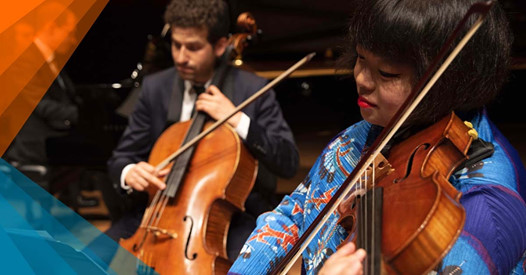
    Above: cellist Nicholas Canellakis and violist Yura Lee

    Sunday November 21st, 2021 – This evening at Alice Tully Hall, Chamber Music Society of Lincoln Center gave us a wonderfully satisfying program of music by composers from Russia, Germany, Hungary, and France. The works were all composed between 1849 and 1890.

    A very high level of playing is maintained by the Society, making it almost impossible to single out certain concerts as being of particular merit; but tonight was surely one of the most impressive and enjoyable programs have experienced since I started going to CMS concerts regularly a few seasons back.

    The program opened with the Andante Cantabile from Tchaikovsky’s String Quartet No. 1, performed in a 1888 arrangement for solo cello and strings. “Cantabile” is an Italian word meaning “singable” or “song-like”, and that’s exactly how cellist Nick Canellakis performed it: as if singing an operatic cavatina.

    From the work’s tranquil start, Nick gave us impeccable playing: warm of tone and alive with dynamic subtlety. Seated next to him, the Society’s co-Artistic Director David Finckel threaded a lovely line to compliment his cellist-colleague. Mr. Finckel and violist Misha Amory offered a gentle plucking accompaniment as Nick’s cello continued to sing a melody with a vaguely Asian feeling. Violinists Cho-liang Lin and Alexi Kenney gave silken textures to the music. The work ends on a sweetly blended pianissimo.  Mr. Finckel urged Nick Canellakis to stand first; then the other players refused to rise, leaving Nick with a solo bow, much to the delight of the crowd.

    Lin

    Above: Cho-liang Lin

    Johannes Brahms’ Quintet in G-major for Two Violins, Two Violas, and Cello, Op. 111, was written in 1890, at the start of the last decade of the composer’s life. It provides a veritable feast for the ear to listeners who – like me – love the sound of stringed instruments. Mssrs. Lin, Kenney, Amory, and Canellakis were joined by that delectable violist, Yura Lee.  Ms. Lee, who always delights with her choice of footwear, tonight wore white pumps; her one-shoulder black frock showed off some beautiful tattoos.

    The opening movement, marked Allegro non troppo, ma con brio (“…fast, but not too fast, but with a lively feeling…”) gets off to a joyous start, the violas begin duetting in a passage taken up by the violins. The music is so melodious and congenial, with Cho-liang Lin’s poignant violin theme standing out. The music turns mysterious; then Yura Lee’s passionate playing leads back to a reprise of the earlier pairings of violins and violas. Meanwhile, Mr. Canellakis’s cello is giving everything a velvety cushion. The entire movement kept me entranced: simply fantastic playing from everyone. 

    The ensuing Adagio, in D-minor, has a feeling of melancholy as Yura Lee leads off with a familiar melody. Soon the music had me so engrossed that the rest of the world seemed to vanish: they were playing this music sublimely, and playing it just for me. Yura’s ‘cadenza’ near the end was hypnotically beautiful. 

    Mr. Lin’s violin sets the third movement, Allegretto, in motion. This is essentially a scherzo, and the melodies flow merrily on. Inspired by Hungarian folk dances, the quintet’s finale is marked  Vivace ma non troppo presto (“…lively, but not too fast…”). Yura Lee’s viola is aglow, and Mr. Lin relishes his opportunities to spin more silk with his subtle playing. Suddenly the pace doubles, and the players break into an exultant dance. The crowd went wild: the only possible reaction to this kind of playing.     

    Inon

    Pianist Inon Barnatan (above) kept the audience under a spell with his magical playing of Franz Liszt’s “Funérailles” from the Harmonies poétiques et religieuses, written in 1849. The pianist, who in 2016 gave us a mesmerizing performance of Ravel’s Gaspard de la Nuit in this very hall, was spell-binding again this evening.

    This piece, which my companion Monica Wellington soon recognized as the music to which the late Liam Scarlett’s 2014 ballet for New York City Ballet, Funérailles, is set. I did not see that pas de deux, costumed by Alexander McQueen, but hearing the music tonight, it’s hard to image a dancework set to it: the music seems to wander thru many mood swings, but Mr. Barnatan’s playing made it cohesive.

    The piece opens with gloomy funeral chimes in the slow register. A plodding rhythm reminds us of mourners in a cortège; this stops, and a somber fanfare-like passage is heard. The sense of doom lessens, and then a nostalgic melody is heard, which gets rhapsodic. Animated figurations for the left hand give rise to militaristic passages, followed by a great rise in passion, Full stop. A soft, sad tune is played, whilst low-register rumblings are heard. The music ends suddenly. All this was splendidly played by Mr. Barnatan.
    Alexi-Kenney

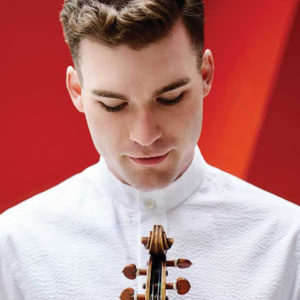
    Above: Alexi Kenney

    The concert concluded with Gabriel Fauré’s Quartet No. 2 in G-minor for Piano, Violin, Viola, and Cello, Op. 45. The piece premiered on January 22nd, 1887, at the Société Nationale de Musique; it is dedicated to Hans von Bülow, the pianist and conductor who was the first husband of Cosima Liszt who later married Richard Wagner.
    Amory

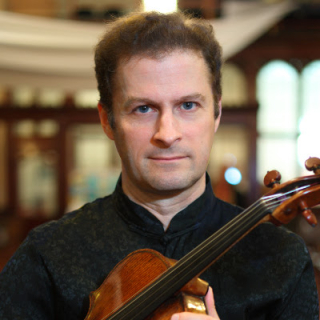
    Above: Misha Amory

    Inon Barnatan returned to the Steinway for this evening’s de luxe rendering of the Fauré; he was joined by violinist Alexi Kenney and violist Misha Amory, both displaying exceptional beauty of tone, whilst Nick Canellakis rounded off his stellar evening with still more phenomenal playing.

    The opening Allegro molto moderato commences dramatically, and with passion. The restless piano supports unison strings; the violin, and then the viola, have solo melodies, exquisitely played. Mr. Barnatan continues to work his magic with the music, whilst the strings bring us gorgeous blends, with Mr. Kenney’s upper register truly affecting. Nick Canellakis keeps the cello line prominent without being over-bearing.   The opening restive piano and unison strings return, moving to a sublime finish.

    The Scherzo: Allegro molto contains lively string pizzicati heard over the piano’s dazzling agitato; though the music is tinged with a strange sense of worry, there is a forward impetus. Marvelous flourishes from the keyboard lead to a sudden stop.

    In the Adagio non troppo, in which the composer drew on childhood memories of the sound of church bells, provides lyrical passages for each instrument. There is much subtlety and also much passion in their playing. A curious little interlude develops into a feeling of yearning. This quietens, as piano and viola converse; then the violin takes over. Cello and piano, soon joined by the higher strings, bring us a dreamy ending.

    The Finale : Allegro molto has a vibrant start; again Mr. Kenney’s heavenly high-range lures the ear. The music gets bouncy, and then quite grand, as the quartet sails on thru shifting moods. The audience expressed their delight in the music – and with the the playing of it – with a joyous ovation, calling the artists back for a second bow. I felt elated as I headed out into the chilly evening air. 

    ~ Oberon