Tag: Wagner

  • CMS ~ Music From Four Countries

    Nick yura

    Above: cellist Nicholas Canellakis and violist Yura Lee

    Sunday November 21st, 2021 – This evening at Alice Tully Hall, Chamber Music Society of Lincoln Center gave us a wonderfully satisfying program of music by composers from Russia, Germany, Hungary, and France. The works were all composed between 1849 and 1890.

    A very high level of playing is maintained by the Society, making it almost impossible to single out certain concerts as being of particular merit; but tonight was surely one of the most impressive and enjoyable programs have experienced since I started going to CMS concerts regularly a few seasons back.

    The program opened with the Andante Cantabile from Tchaikovsky’s String Quartet No. 1, performed in a 1888 arrangement for solo cello and strings. “Cantabile” is an Italian word meaning “singable” or “song-like”, and that’s exactly how cellist Nick Canellakis performed it: as if singing an operatic cavatina.

    From the work’s tranquil start, Nick gave us impeccable playing: warm of tone and alive with dynamic subtlety. Seated next to him, the Society’s co-Artistic Director David Finckel threaded a lovely line to compliment his cellist-colleague. Mr. Finckel and violist Misha Amory offered a gentle plucking accompaniment as Nick’s cello continued to sing a melody with a vaguely Asian feeling. Violinists Cho-liang Lin and Alexi Kenney gave silken textures to the music. The work ends on a sweetly blended pianissimo.  Mr. Finckel urged Nick Canellakis to stand first; then the other players refused to rise, leaving Nick with a solo bow, much to the delight of the crowd.

    Lin

    Above: Cho-liang Lin

    Johannes Brahms’ Quintet in G-major for Two Violins, Two Violas, and Cello, Op. 111, was written in 1890, at the start of the last decade of the composer’s life. It provides a veritable feast for the ear to listeners who – like me – love the sound of stringed instruments. Mssrs. Lin, Kenney, Amory, and Canellakis were joined by that delectable violist, Yura Lee.  Ms. Lee, who always delights with her choice of footwear, tonight wore white pumps; her one-shoulder black frock showed off some beautiful tattoos.

    The opening movement, marked Allegro non troppo, ma con brio (“…fast, but not too fast, but with a lively feeling…”) gets off to a joyous start, the violas begin duetting in a passage taken up by the violins. The music is so melodious and congenial, with Cho-liang Lin’s poignant violin theme standing out. The music turns mysterious; then Yura Lee’s passionate playing leads back to a reprise of the earlier pairings of violins and violas. Meanwhile, Mr. Canellakis’s cello is giving everything a velvety cushion. The entire movement kept me entranced: simply fantastic playing from everyone. 

    The ensuing Adagio, in D-minor, has a feeling of melancholy as Yura Lee leads off with a familiar melody. Soon the music had me so engrossed that the rest of the world seemed to vanish: they were playing this music sublimely, and playing it just for me. Yura’s ‘cadenza’ near the end was hypnotically beautiful. 

    Mr. Lin’s violin sets the third movement, Allegretto, in motion. This is essentially a scherzo, and the melodies flow merrily on. Inspired by Hungarian folk dances, the quintet’s finale is marked  Vivace ma non troppo presto (“…lively, but not too fast…”). Yura Lee’s viola is aglow, and Mr. Lin relishes his opportunities to spin more silk with his subtle playing. Suddenly the pace doubles, and the players break into an exultant dance. The crowd went wild: the only possible reaction to this kind of playing.     

    Inon

    Pianist Inon Barnatan (above) kept the audience under a spell with his magical playing of Franz Liszt’s “Funérailles” from the Harmonies poétiques et religieuses, written in 1849. The pianist, who in 2016 gave us a mesmerizing performance of Ravel’s Gaspard de la Nuit in this very hall, was spell-binding again this evening.

    This piece, which my companion Monica Wellington soon recognized as the music to which the late Liam Scarlett’s 2014 ballet for New York City Ballet, Funérailles, is set. I did not see that pas de deux, costumed by Alexander McQueen, but hearing the music tonight, it’s hard to image a dancework set to it: the music seems to wander thru many mood swings, but Mr. Barnatan’s playing made it cohesive.

    The piece opens with gloomy funeral chimes in the slow register. A plodding rhythm reminds us of mourners in a cortège; this stops, and a somber fanfare-like passage is heard. The sense of doom lessens, and then a nostalgic melody is heard, which gets rhapsodic. Animated figurations for the left hand give rise to militaristic passages, followed by a great rise in passion, Full stop. A soft, sad tune is played, whilst low-register rumblings are heard. The music ends suddenly. All this was splendidly played by Mr. Barnatan.

    Alexi-Kenney

    Above: Alexi Kenney

    The concert concluded with Gabriel Fauré’s Quartet No. 2 in G-minor for Piano, Violin, Viola, and Cello, Op. 45. The piece premiered on January 22nd, 1887, at the Société Nationale de Musique; it is dedicated to Hans von Bülow, the pianist and conductor who was the first husband of Cosima Liszt who later married Richard Wagner.

    Amory

    Above: Misha Amory

    Inon Barnatan returned to the Steinway for this evening’s de luxe rendering of the Fauré; he was joined by violinist Alexi Kenney and violist Misha Amory, both displaying exceptional beauty of tone, whilst Nick Canellakis rounded off his stellar evening with still more phenomenal playing.

    The opening Allegro molto moderato commences dramatically, and with passion. The restless piano supports unison strings; the violin, and then the viola, have solo melodies, exquisitely played. Mr. Barnatan continues to work his magic with the music, whilst the strings bring us gorgeous blends, with Mr. Kenney’s upper register truly affecting. Nick Canellakis keeps the cello line prominent without being over-bearing.   The opening restive piano and unison strings return, moving to a sublime finish.

    The Scherzo: Allegro molto contains lively string pizzicati heard over the piano’s dazzling agitato; though the music is tinged with a strange sense of worry, there is a forward impetus. Marvelous flourishes from the keyboard lead to a sudden stop.

    In the Adagio non troppo, in which the composer drew on childhood memories of the sound of church bells, provides lyrical passages for each instrument. There is much subtlety and also much passion in their playing. A curious little interlude develops into a feeling of yearning. This quietens, as piano and viola converse; then the violin takes over. Cello and piano, soon joined by the higher strings, bring us a dreamy ending.

    The Finale : Allegro molto has a vibrant start; again Mr. Kenney’s heavenly high-range lures the ear. The music gets bouncy, and then quite grand, as the quartet sails on thru shifting moods. The audience expressed their delight in the music – and with the the playing of it – with a joyous ovation, calling the artists back for a second bow. I felt elated as I headed out into the chilly evening air. 

    ~ Oberon

  • DIE WALKURE @ Bayreuth ~ 2016

    Lundgren

    Above: bass-baritone John Lundgren

    Wagner’s DIE WALKURE from the 2016 Bayreuth Festival, conducted by Marek Janowski with the following cast:

    Siegmund – Christopher Ventris
    Hunding – Georg Zeppenfeld
    Wotan – John Lundgren
    Sieglinde – Heidi Melton
    Brünnhilde – Catherine Foster
    Fricka – Sarah Connolly
    Gerhilde – Caroline Wenborne
    Ortlinde – Dara Hobbs
    Waltraute – Stephanie Houtzeel
    Schwertleite – Nadine Weissmann
    Helmwige – Christiane Kohl
    Siegrune – Mareike Morr
    Grimgerde – Wiebke Lehmkuhl
    Rossweisse – Alexandra Petersamer

    Watch and listen here.

  • Johanna Meier Sings Strauss & Mahler

    Johanna meier

    I love finding any recordings by Johanna Meier. Despite the missing part of the first Strauss song, her vocalism is so pleasing in this 1982 recording from a concert by the Milwaukee Symphony conducted by Lukas Foss.

    Listen here.

    One of my all-time favorite sopranos, I saw Ms. Meier frequently at The Met and New York City Opera. She made a memorable impression in so many roles: as Puccini’s Musetta and Tosca, as Strauss’s Countess Madeleine, Marschallin, Ariadne, Kaiserin, Chrysothemis (both at The Met and at Tanglewood), as Rosalinda, Marguerite in FAUST, as Mozart’s Donna Anna, and Countess Almaviva, and as Wagner’s Elisabeth, WALKURE Brunnhilde, and – most especially – as Sieglinde.

  • PARSIFAL ~ Act II

    Zweden

    A concert performance of Act II of Wagner’s PARSIFAL given in 2010 by the Netherlands Radio Philharmonic Orchestra conducted by Jaap van Zweden (photo). Klaus Florian Vogt is Parsifal, Katarina Dalayman is Kundry, and Krister St.Hill is Klingsor.

    Watch and listen here.

  • Ponte Singers ~ Pilgrims’ Chorus

    Snapshot -ponte

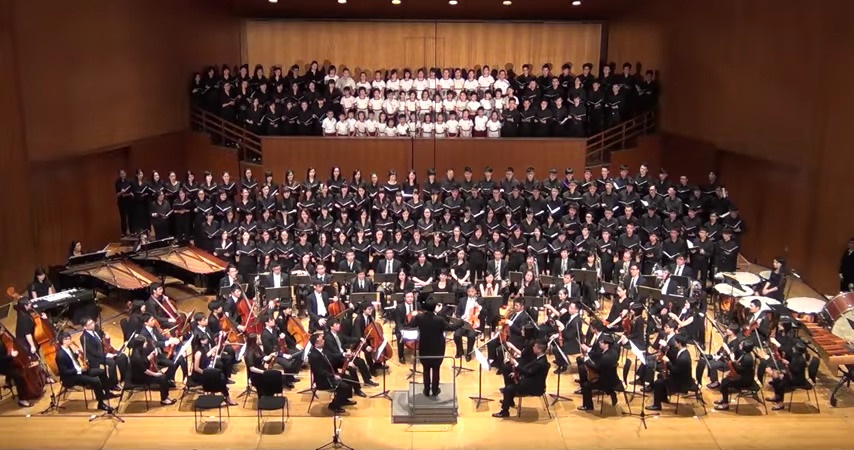
    The Ponte Singers and Orchestra perform the Pilgrims’ Chorus from Wagner’s TANNHAUSER at a 2013 concert given in Hong Kong. Stephen Lam Lik Hin is the conductor.

    Watch and listen here.

  • Ponte Singers ~ Pilgrims’ Chorus

    Snapshot -ponte

    The Ponte Singers and Orchestra perform the Pilgrims’ Chorus from Wagner’s TANNHAUSER at a 2013 concert given in Hong Kong. Stephen Lam Lik Hin is the conductor.

    Watch and listen here.

  • Edward Pierson

    Pierson

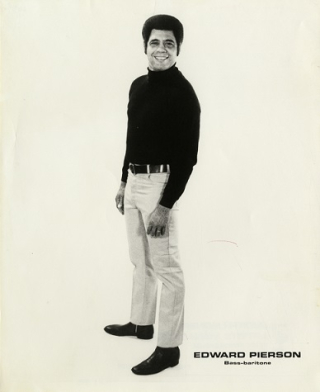
    Bass-baritone Edward Pierson, a stalwart of the New York City Opera for twelve years, was born in Chicago. A scholarship basketball player, he worked for a while as a public school music teacher before pursuing his operatic career.

    His performance of “Ol’ Man River” in several civic productions of SHOWBOAT in the mid-West put Mr. Pierson on the map. By chance, he stepped into a small role in PORGY AND BESS, and soon after made the jump to the role of Porgy himself. 

    At the New York City Opera, his roles included Scarpia, Jochanaan, and Wagner’s Dutchman. I’ll never forget hearing him in the title-role of the Company’s English-language production of Borodin’s PRINCE IGOR:

    Edward Pierson as Prince Igor – NYCO 1969

    Snapshot makropolous

    He also made a memorable impression as Dr. Kolenaty in Frank Corsaro’s multi-media setting of Janacek’s MAKROPOULOS AFFAIR. In the above photo are Maralin Niska (Emilia Marty), Chester Ludgin (Baron Prus), Harry Theyard (Albert Gregor), and Mr. Pierson.

    In concert repertoire, Edward Pierson was a frequent interpreter of Mendelssohn’s Elijah. And he appears on the Deutsche Grammophon recording of Scott Joplin’s TREEMONISHA:

    Edward Pierson – Good Advice ~ TREEMONISHA

    Watch a lovely interview with Mr. Pierson here.

  • Christa Ludwig Has Passed Away

    C l

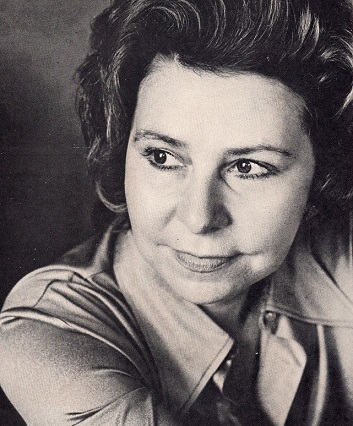
    April 25th, 2021 – Throughout the sixty years that I have been obsessed with opera, I have loved and admired many wonderful singers. But when people ask me, “Who was the greatest singer you ever heard?”, I must answer: “Christa Ludwig.” Today, news has come of her death at the age of 93.

    Christa Ludwig made her Vienna State Opera debut as Cherubino in Mozart’s NOZZE DI FIGARO in 1955. She went on to give 769 performances of 42 roles in Vienna. At the Metropolitan Opera, her 1959 debut (also as Cherubino) marked the start of a 38-year association with The Met, where she sang 119 performances of 15 roles.

    Christa Ludwig was my first Octavian, and also my first Dyer’s Wife in FRAU OHNE SCHATTEN (in a stellar cast with Leonie Rysanek, Irene Dalis, James King, and Christa’s then-husband, Walter Berry, with Dr. Böhm conducting), my first Dido in TROYENS, and my first Klytemnestra. Her other Met roles were Amneris, Brangaene, Ortrud, Fricka, Kundry, Charlotte in WERTHER, and Waltraute; and she gave a single performance as Leonore in FIDELIO.

    My first experience of seeing Christa Ludwig onstage was as the Dyer’s Wife; my first FRAU was part of a thrilling weekend in February 1969 that also included my very first RHEINGOLD (with Herbert von Karajan conducting) and the now legendary Nilsson/Caballe TURANDOT. Christa’s Dyer’s Wife was a blazing creation, her voice spanning the wide range with complete command, the highest notes sailing into the Big House with stunning clarity and power.

    From a commercial recording of the great Act III duet for Barak and his wife:

    FRAU OHNE SCHATTEN ~ scene from Act III – Christa Ludwig – Walter Berry – Sieglinde Wagner – Hollreiser cond
    C l octavian

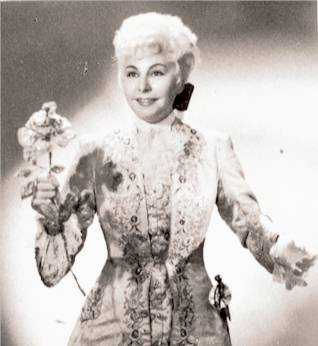
    I next saw Ms. Ludwig onstage on Valentine’s Day, 1970, as Octavian in DER ROSENKAVALIER. Karl Böhm was again on the podium, and the cast further featured Marion Lippert, Reri Grist, and Mr. Berry. The sight of Ms. Ludwig as Octavian entering the hall of the Faninal mansion, bearing the silver rose, left an indelible impression on my romantic heart. Over time, it became for me the iconic image of everything I love about opera.

    TroyensVickers-Ludwig2

    Above: Nuit d’ivresse with Jon Vickers and Christa Ludwig; a Louis Melançon photo

    On October 27th, 1973 – a red-letter day in my personal life – I saw LES TROYENS for the first time. Shirley Verrett and Louis Quilico as Cassandra and Chorebus had given glorious performances in PRISE DE TROIE. Then, as the scene shifts to Carthage, Christa Ludwig and Jon Vickers sang so poetically the quietly rapturous love duet, Nuit d’ivresse.  Inspired by their ecstasy, I spent the night with Z – and I have ever since felt that life really began for me with that encounter.

    More than a decade was to pass before I saw Christa Ludwig on the Met stage again: in 1984, she was a fascinating Klytemnestra in my first-ever ELEKTRA. Ute Vinzing, Johanna Meier, and Simon Estes were her co-stars, with Maestro Levine presiding. Ms. Ludwig’s singing, with an undercurrent of creeping madness, bore the stamp of a great lieder singer; her characterization sometimes veered endearingly to the melodramatic.
    Gotterdammerung

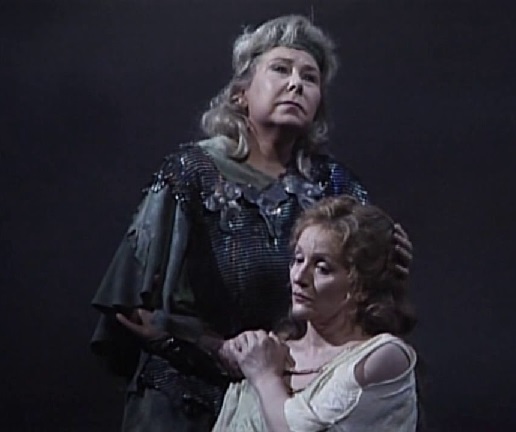
    Above: Ludwig and Behrens in GOTTERDAMMERUNG

    A four-year interval then passed before I saw Christa in opera again: the 1988 opening night of the Schenk/Levine GOTTERDAMMERUNG. This was a spectacular performance in every regard: Levine and his orchestra were on peak form, and Hildegard Behrens and Matti Salminen thrilled me to the core as Brunnhilde and Hagen. Christa, as Waltraute, looked spiffy in her Valkyrie gear – with black trousers and high black boots – and she moved about, restless as a caged panther, as she told her sister of their father’s frightening state of mind. Having failed in her mission, Waltraute rushes away. The curtain calls that night were fantastic: I think Ms. Ludwig truly didn’t expect the massive wave of applause and bravas that greeted her as she stepped out for a solo bow. It was so moving to watch her accept the audience’s loving appreciation.

    I saw Christa Ludwig on the Met stage for the last time in April 1989 as Fricka in WALKURE. It was a cast of titans: Hildegard Behrens, Jessye Norman, Gary Lakes, James Morris, and Kurt Moll were Christa’s colleagues, and again Levine and the Met orchestra were beyond the beyond. The tension in the great argument between Fricka and Wotan was palpable; then Christa – having won – gathered her dignity and took her final parting shot at Brunnhilde with barely disguised contempt.

    Christa Ludwig made her farewell appearance at The Met as Fricka in a Saturday matinee broadcast of WALKURE on April 3, 1993. Here is her scene from that performance, with Dame Gwyneth Jones as Brunnhilde, James Morris as Wotan, and James Levine conducting. I was listening at home, and as Ms. Ludwig exited the stage, I had a sense that the audience wanted desperately to burst into applause. 

    Christa Ludwig as Fricka ~ Met farewell performance with G Jones +J Morris – Levine cond – 4~3~93

    While Vienna and The Met loomed large in the Ludwig career, she also appeared at La Scala, Covent Garden, Chicago Lyric Opera, and at the festivals at Bayreuth and Salzburg. In addition, she sang the great concert works of Bach and Mahler.

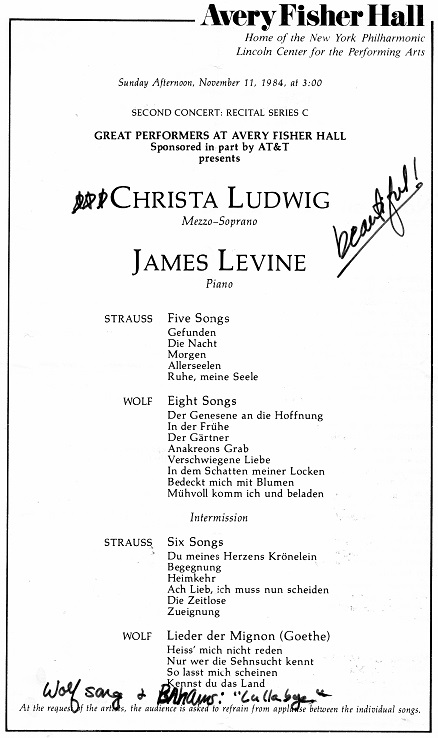
    Christa Ludwig was a beloved recitalist; in 1984, I had the great pleasure of hearing her at Avery Fisher Hall with James Levine at the piano. The program of Strauss and Wolf lieder ended with a marvelous encore: the Brahms “Wiegenlied”.
    Ludwig recital-1 jpg

    Ms. Ludwig left us with a large and lovely catalog of recordings; among my favorites are Bartok’s BLUEBEARD’S CASTLE, the Kempe LOHENGRIN, the Solti TANNHAUSER, the Böhm TRISTAN from Bayreuth with Nilsson and Windgassen, scenes from Strauss operas with Walter Berry…and her SAMSON ET DALILA with James King holds a special appeal for me. She created a stir in 1986 by recording Schubert’s Winterreise with James Levine; they had performed the great Schubert cycle together on the Met stage in 1983.
    Norma

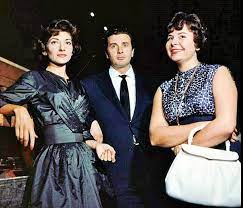
    Above: Christa in the recording studio with Maria Callas and Franco Corelli for the EMI NORMA

    Christa Ludwig sings Strauss’s “Morgen” with Charles Spencer at the piano. Watch and listen here.

    Listen to more from Christa Ludwig:

    Christa Ludwig – Es gibt ein reich – ARADNE AUF NAXOS

    Christa Ludwig – MACBETH – Act I scena – Vienna 1970

    Christa Ludwig – Liebestod ~ TRISTAN UND ISOLDE

    Christa Ludwig – Mahler ~ Ich bin der welt abhanden gekommen

    Christa Ludwig – Der Engel from Wagner’s Wesendonck Lieder

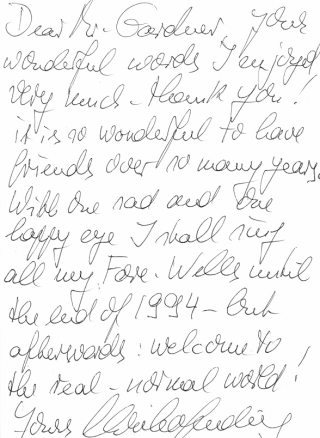
    A lovely note I received from Christa Ludwig after I wrote to her on the occasion of her Met farewell in 1993:
    C l note-1 jpg

    Christa Ludwig ~ An die Musik

    ~ Oberon

  • Cheryl Studer ~ “Dich, teure Halle”

    Studer

    Soprano Cheryl Studer sings “Dich, teure Halle” from Wagner’s TANNHÄUSER in a televised concert from Munich in 1988. Leopold Hager conducts.

    Watch and listen here.

  • Julius Huehn

    Huehn-Julius-03

    Born at Revere, Massachusetts in 1904, bass-baritone Julius Huehn’s career centered at the Metropolitan Opera, where he sang over 225 performances with the Company in New York City and on tour. He also appeared with the opera companies of San Francisco, Chicago, and Philadelphia.

    His Met debut took place in 1935, as the Herald in LOHENGRIN. His Met roles included Wagner’s Wotan/The Wanderer, Donner, Gunther, Wolfram, Amfortas, Kothner, Kurvenal, and Telramund; Strauss’s Orestes, Jochanaan, and Faninal; Pizarro in FIDELIO, Escamillo, Sharpless, and the High Priest in SAMSON ET DALILA.

    Huehn left the Met in 1944 to serve in the Marine Corps during the final year of World War II. He returned in 1946 for a single performance as Wolfram. He subsequently taught at the Eastman School for many years, and passed away at Rochester, New York, in 1971.

    Julius Huehn as Kurvenal, with Lauritz Melchior:

    Julius Huehn & Lauritz Melchior – TRISTAN UND ISOLDE ~ scene from Act III

    Listen to Julius Huehn sing Wotan’s Farewell from WALKURE here, and the duet of Telramund and Ortrud (with Kerstin Thorborg) from the opening of Act II of LOHENGRIN here.