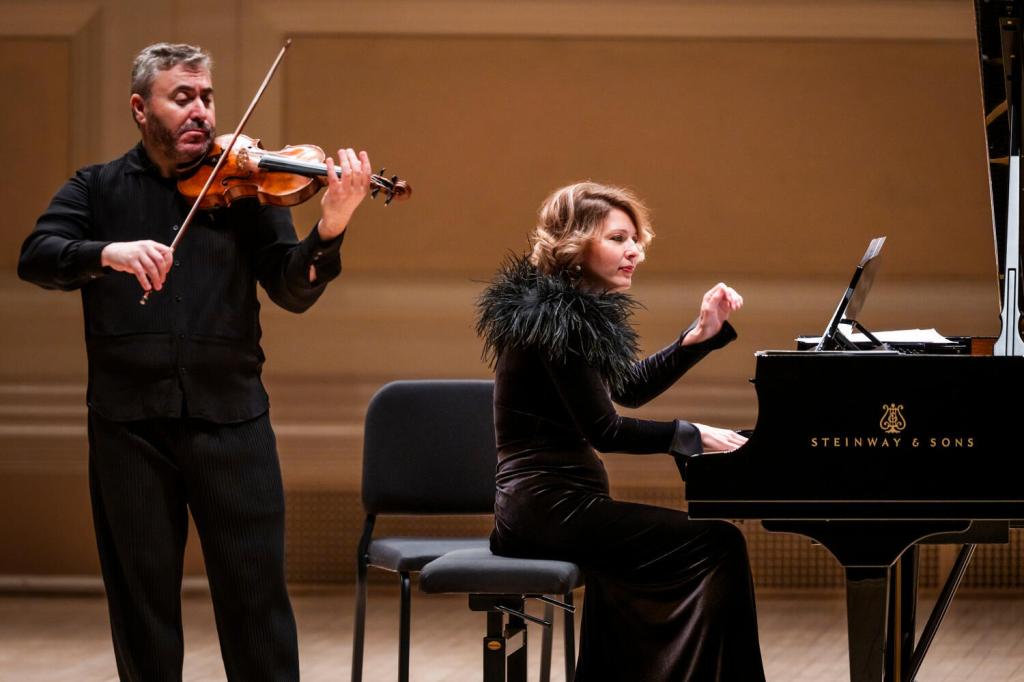
Above: Maxim Vengerov and Polina Osetinskaya onstage at Carnegie Hall; photo by Chris Lee
~ Author: Oberon
Wednesday May 27th, 2026 – So wonderful to be at Maxim Vengerov’s recital tonight, and so glad for the opportunity to hear pianist Polina Osetinskaya once again. The program was straight-forward and – as expected – superbly played. The artists took the stage to a very warm welcome, Ms. Osetinskaya looking stunning in an elegant black gown with a fluffy collar embellishment.
Schubert’s Violin Sonata in G-Minor dates from 1816-1817. The opening Allegro giusto commences with a unison passage, the piano in a pensive mood. Mr. Vengerov immediately has some brisk and buoyant phrases from which a sweet melody emerges. There is a da capo wherein we can enjoy these melodious moments for a second time. Then on to a passage in a minor mode, insistent repeated notes from the keyboard supporting virtuoso playing from the violin. The movement’s themes are repeated with subtle alterations.
The Andante has a melancholy feel. Here the congenial partnership between the two players can be savoured as the music unfolds. Cellphone intrusions nearly ruined the mood; the players carried on, but one could sense their irritation. The Menuetto, marked allegro vivace, has a wry start; the music is at once regal and charming. The concluding Allegro moderato flows onward with alternating major and minor modes; a sad theme is heard in which Ms. Osetinskaya’s subtle playing is an intriguing element. The sonata reaches a sudden end.
Next up is the Shostakovich Violin Sonata, composed in 1968 especially for the virtuoso violinist David Oistrakh. For this amazing, monumental work, Mr. Vengerov brought forth a score, and his reading glasses. Eerie music from the Steinway is soon matched with a sense of foreboding from the violin. Fabulous dynamics from both players create a somber, disquieting atmosphere, but then a dance breaks out: awkward, but endearing. A soulful lament from Mr. Vengerov is heard whilst Ms. Osetinskaya’s playing goes high and haunting. The violin phrases sound like they are coming from outer space. The pianist bangs on the keyboard while the violinist’s strings shiver. The movement comes to a deep, somber finish.
The ensuing Allegretto is darkish, with a sense of madness. There is a rush of notes, intensely played at a brisk pace. Amazing playing here from both artists. A glorious assault from Ms. Osetinskaya carries her up to some glittering notes in the highest range. The music gets grand, then suddenly stops.
The concluding Largo opens with an 11-measure passage wherein the violin plays alone; about to continue, Mr. Vengerov is paused by a round of applause! The piano then takes up the theme, triggering an extended conversation between the two instruments. Their playing is spell-binding, with an intense, virtuosic cadenza for both the piano and the violin. Rather than ending in triumph, the music fades away into an ethereal, haunting whisper of resignation. The ensuing ovation rocked the Hall.
Following the interval, the Vengerov/Osetinskaya duo gave us Johannes Brahms’s Violin Sonata No. 3. One might have thought that nothing could follow the unique spell cast by their playing of the Shostakovich, but the great Vengerov/Osetinskaya partnership turned the Brahms into a truly magical half-hour of music-making that totally captivated the pack Hall.
In the opening Allegro, a sense of drama develops with an irresistible piano theme under-pinning soaring violin phrases. There is a passage of quiet intensity leading to a sublime ending. The familiar melody of the Adagio has a hymn-like quality. What music! So poignant in its rich lyricism laced with enchanting subtleties, and so moving in the gorgeous, reassuring tranquility of its ending.
The third movement is restless, and sometimes wild. There are lovely, lulling passages, and minor-key, fairy-like music that evokes Mendelssohn, whilst the middle section is lyrically expressive. The sonata ends with a Presto agitato in which a galloping rhythm is periodically interrupted with more contemplative passages. Such entrancing music-making from these illustrious musicians.
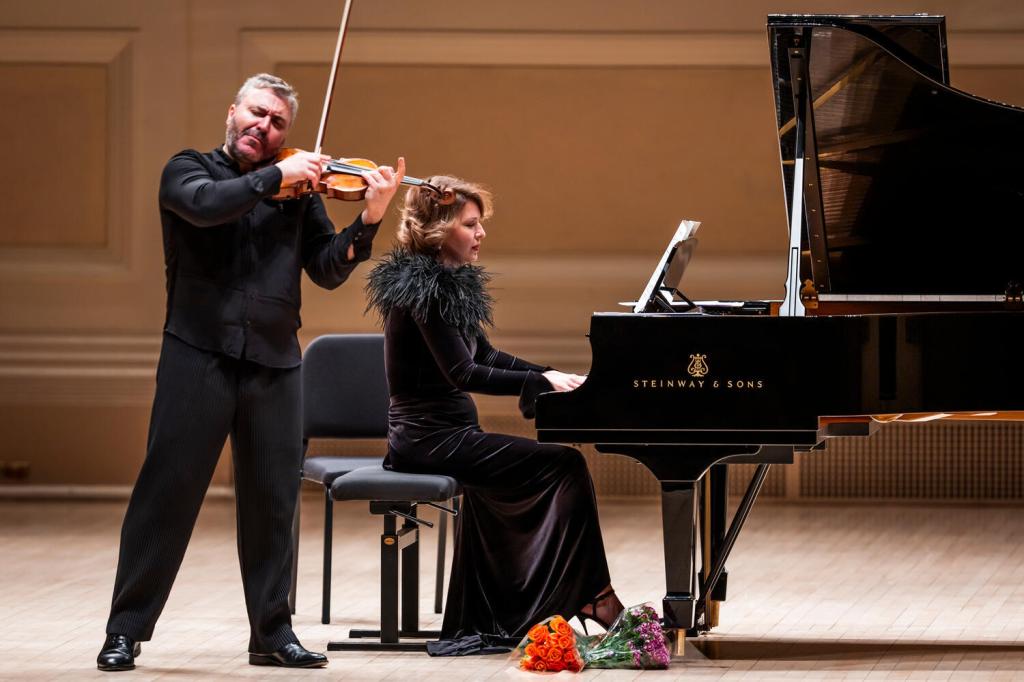
Above: the first encore; photo by Chris Lee
The soulful Hungarian Dance #7 by Brahms was the first encore, after which we ducked out so my companion could catch his train. I’m sure more encores followed. What a treat to hear Vengerov again, and on such fantastic form…and to hear (and see!) the marvelous Ms. Osetinskaya.
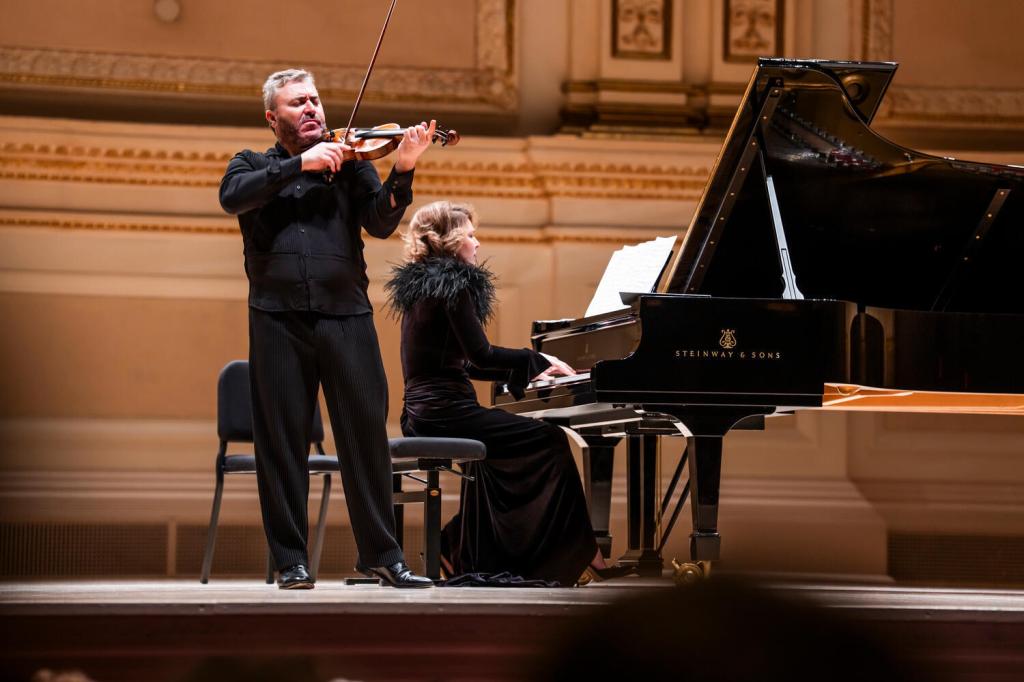
Performance photos by Chris Lee, courtesy of Carnegie Hall.
~ Oberon

