Author: Philip Gardner

  • Enemy of the Fatherland

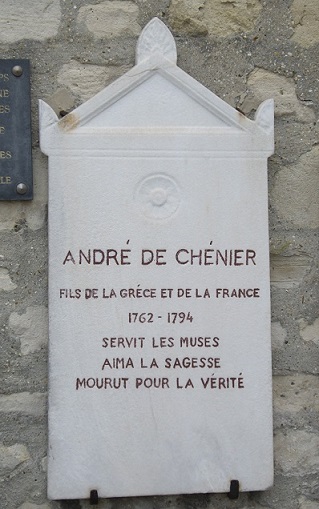
    Plaque_André_Chénier _Cimetière_de_Picpus _Paris_12

    In Umberto Giordano’s opera, ANDREA CHENIER, there is a powerful aria that could easily be sung in an opera about our current world state. The opera’s story is built on the real-life character of the poet André Chénier, who died on the scaffold in the final days of the Reign of Terror.

    During the years of the French revolution, Carlo Gérard, a former servant in an aristocratic household, has risen to a powerful position in the Reign of Terror. As a prosecutor for the Revolutionary Tribunal, he arranges “evidence” against those charged with treason.

    Now he must present the case against the poet André Chénier, a man he knows full well is innocent of the charges against him. At this moment, Gérard finds his true heart and soul again. At the trial, he defends Chénier, saying that his accusing document is a fabrication.

    Nevertheless, Chénier is condemned to death. He was guillotined on July 25, 1794. Three days later came Robespierre’s fall from power and subsequent execution, ending the Reign of Terror.

    The great baritone Giuseppe Taddei sings the aria, “Nemico della patriahere.

    Follow the words below; it could be happening today:

    “An enemy of the State?!

    It’s an old fable

    That people are still blissfully swallowing.

    Born in Constantinople? A Foreigner!

    Studied at Saint-Cyr? A Soldier!                          

    Traitor! Accomplice to Dumouriez!

    And a poet? Corrupter of hearts

    And morals!

    (a pause)

    I once lived joyfully,

    Without hatred or vengeance

    Pure, innocent, and strong;

    I thought myself a giant!

    But I’m still only a servant…

    One who’s changed masters.           

    An obedient servant to violent passions!

    Ah, worse yet: they’ve made me a killer!

    And while I kill, I weep!

    Me, a son of the Revolution,                             

    One of the first to hear its cry!

    For the world, I united that cry to my own.

    Have I now lost faith

    In that dream of destiny?

    Oh, how my path

    Shone with glory!

    The heart’s conscience,

    A reawakening of the people,

    Gathering up the tears

    Of the vanquished and suffering,

    Making the world a Pantheon,

    Changing men into gods;

    And in one kiss –

    In one kiss and one embrace –

    To love all mankind!”
  • Gertraud Eckert Sings Klytemnestra

    Clytemnestra1

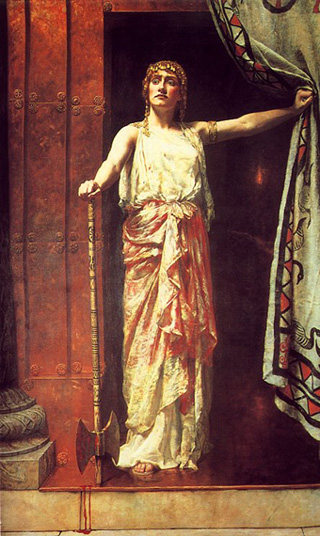
    Above: Clytemnestra by English artist John Collier (1850-1931)

    There’s very little information to be found regarding mezzo-soprano Gertraud Eckert; not even a photo could I find of this singer, who was born in Vienna in 1941.

    Ms. Eckert made her operatic debut in 1964 at Bonn, later appearing at Bregenz, Brussels, Innsbruck, and Graz. It was in the last-named city that she was based thru most of her career. Beyond that, I can find nothing more.

    But I do like her Klytemnestra on this live recording of ELEKTRA from Graz 1973; Ludmila Dvořáková was singing the title-role for what seems to be the only time in her career.

    Gertraud Eckert as Klytemnestra – ELEKTRA – with Ludmila Dvořáková – Graz 1973

    Gertraud Eckert’s singing is both voicy and characterful. I wish I could find out more about her.

    ~ Oberon

  • Olivia Stapp ~ Griffes Songs

    Stapp

    Olivia Stapp sings two songs by Charles Tomlinson Griffes: Le Jardin and La Mer. Diane Richardson is the pianist.

    These are settings of poems by Oscar Wilde:

    Olivia Stapp – Griffes ~ Le Jardin

    “The lily’s withered chalice falls
    Around its rod of dusty gold,
    And from the beech-trees on the wold
    The last wood-pigeon coos and calls.

    The gaudy leonine sunflower
    Hangs black and barren on its stalk,
    And down the windy garden walk
    The dead leaves scatter, – hour by hour.

    Pale privet-petals white as milk
    Are blown into a snowy mass:
    The roses lie upon the grass
    Like little shreds of crimson silk.”

    Olivia Stapp – Griffes ~ La Mer

    “A white mist drifts across the shrouds,
    A wild moon in this wintry sky
    Gleams like an angry lion’s eye
    Out of a mane of tawny clouds.

    The muffled steersman at the wheel
    Is but a shadow in the gloom; –
    And in the throbbing engine-room
    Leap the long rods of polished steel.

    The shattered storm has left its trace
    Upon this huge and heaving dome,
    For the thin threads of yellow foam
    Float on the waves like ravelled lace.”

  • Table of Silence ~ 2019

    L2010773

    Wednesday September 11th, 2019 – Today marked the annual Lincoln Center performance of Jacqulyn Buglisi’s Table of Silence, a danced ritual commemorating the 9/11 terrorist attacks on New York City and Washington DC. This year, it took on an even deeper resonance as a plea for reason and compassion in our dark and dangerous world.

    As each day seems to bring ever more unsettling headlines, I am constantly put in mind of the words sung by the desperate wife and mother Magda Sorel in Gian-Carlo Menotti’s opera The Consul:

    “To this we’ve come:
    that men withhold the world from men.
    No ship nor shore for him who drowns at sea.
    No home nor grave for him who dies on land.
    To this we’ve come:
    that man be born a stranger upon God’s earth,
    that he be chosen without a chance for choice,
    that he be hunted without the hope of refuge.
    To this we’ve come. And you, you too, shall weep.”

    Table of Silence shines like a beacon of hope; each year, it seems more beautiful…and more meaningful. 

    ~ Oberon

    Note: some photos here.

  • Leonie Rysanek as Lady Macbeth

    Scanned Section 13-1

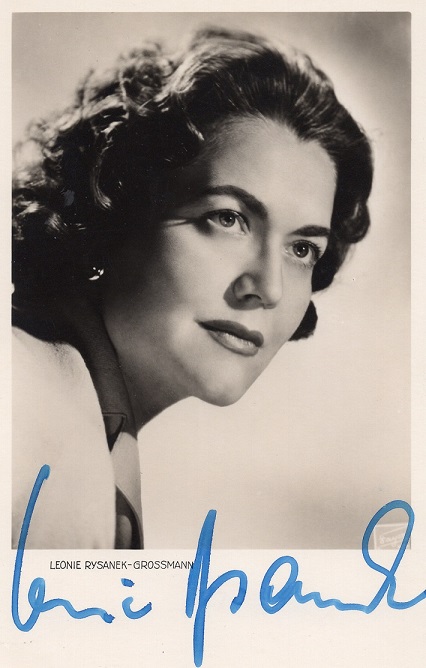
    A year before her Met debut in the same role, Leonie Rysanek made her New York debut as Verdi’s Lady Macbeth in a concert performance with The Little Orchestra Society. Overall, she gave an exciting (if somewhat uneven) performance; she galvanized the audience with her thrilling singing of “La luce langue“.

    Leonie Rysanek – La luce langue ~ MACBETH – Little Orchestra Society 1958

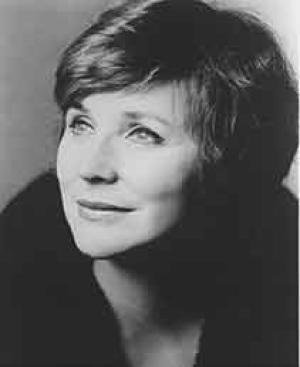
    After hearing Leonie Rysanek’s voice for the first time on a Texaco/Metropolitan Opera broadcast of BALLO IN MASCHERA, I wrote to her and received the photo (at the top of this article) a few days later. She became one of the most potent forces in my enduring obsession with opera. I saw her many times at The Met, including her unforgettable 25th anniversary gala. She was my first Senta, Ariadne, Kaiserin, and Salome; her Met 25th anniversary gala in 1984 was one of the greatest thrills of my opera-going career.

    ~ Oberon

  • New Bayreuth

    Scanned Section 4-1

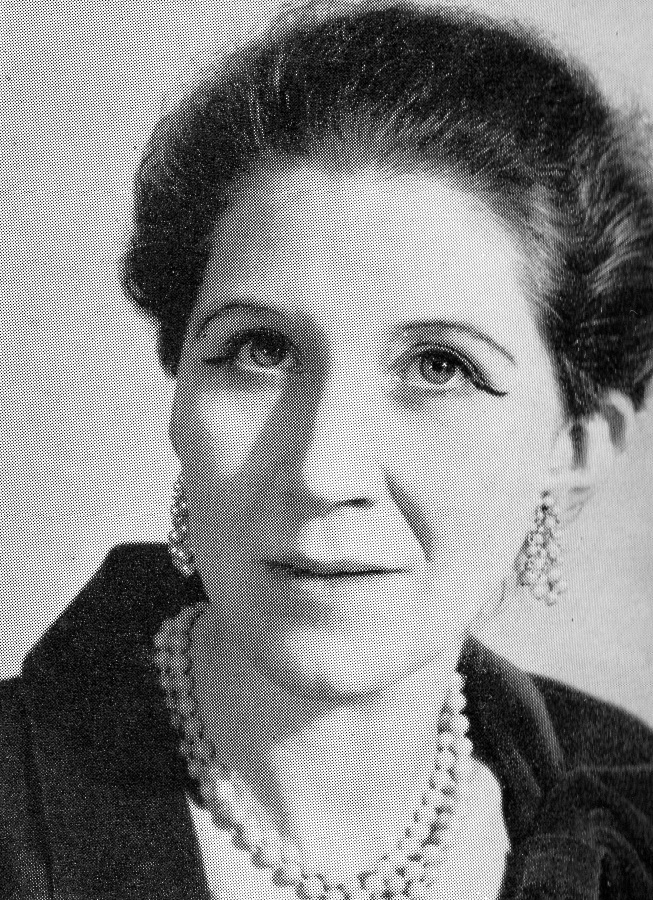
    Penelope Turing (above) was an Englishwoman who attended the second post-war Bayreuth Festival in 1952, returning to the Green Hill for many seasons thereafter. She continued to attend performances thru the Summer of 2009, and she passed away in 2010.

    Turing’s book, New Bayreuth, was first published in 1969. It is full of detailed writing about both the scenic and the musical aspects of the productions she saw there over her first seventeen years of attending the Festival, commencing – in 1952 – with DAS RHEINGOLD, in Wieland Wagner’s ground-breaking production which had premiered the Summer before.

    Turing’s writing about the voices and characterizations of the eminent singers who appeared in those first post-war festivals is fascinating to read.  

    Her descriptions are so evocative. Of curtain-rise for the Wieland Wagner PARSIFAL, which had been introduced in 1951, Turing writes: “According to the score, the scene is a glade in a solemn, shady forest in the domain of the Grail. In what we saw, however, there was no forest definable, nor even a tree. We felt the forest rather than saw it: a legendary forest that was of no time and no place, and one, moreover, over which mystery and sorrow and pain seemed to have brooded long.”

    After reading that, on page 6, I was hooked on Turing’s book, and have been barely able to put it down. Turing’s writing is free of ‘intellectual’ blather, theories, and nit-picking. She writes about what she saw and what she heard, and how she felt about it all. 

    Md30327760771

    The book contains many black-and-white photos from those years: of the iconic productions, and of the fabled singers who appeared in them; of the Festspielhaus, and of the town of Bayreuth. These produce a feeling of nostalgia for a place I’ve – unfortunately – never been.

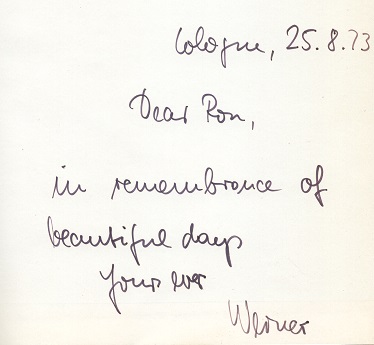
    But there’s another reason I’m so captivated by the book. As I so often do, I bought New Bayreuth in a used, hardcover edition via Alibris. Used books invariably have a life of their own, and, opening it for the first time, I found this inscription:

    Scanned Section 2-1

    Who were Ron and Werner? Were they lovers? Had they gone to Bayreuth together, or did they perhaps meet one another there? Are they still alive? My guess would be: probably not.

    But now their book has come down to me, and it is intriguing in so many ways.

    ~ Oberon

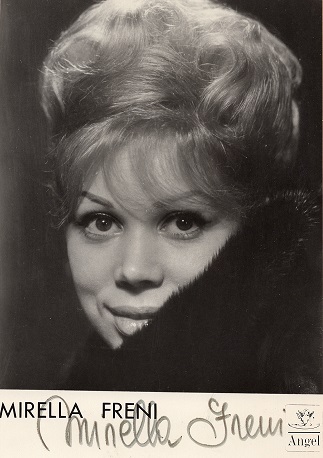
  • Mirella Freni ~ Depuis le jour

    Scanned Section 7-1

    Mirella Freni ~ Depuis le jour – LOUISE

    “Since the day that
    I gave myself,
    my destiny has blossomed.
    I seem to be dreaming
    beneath a fairy sky,
    my soul still enraptured
    by that first kiss!

    What a beautful life!
    My dream was not a dream!
    Oh, I am so happy…
    Love spreads its wings above me!
    In the garden of my heart,
    a new joy sings!
    Everything vibrates,
    everything rejoices in my triumph!

    About me, all is smiles,
    light and happiness!
    And I tremble at the memory
    of the first day of love!

    What a glorious life!
    Oh, how happy I am…too happy!

    And I tremble deliciously
    at the charming memory
    of that first day of love!”

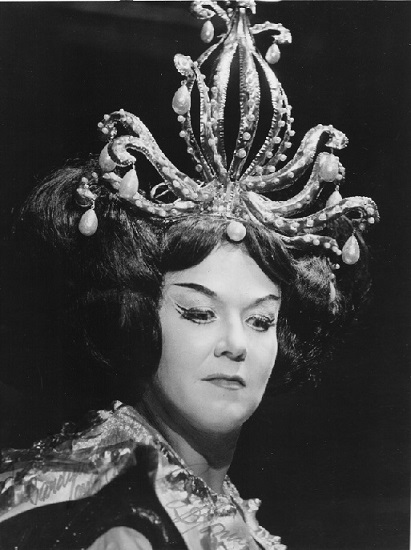
  • Ingrid Bjoner as Turandot

    Scanned Section 3-1

    Ingrid Bjoner sent me the above photo of herself as Turandot after I sent her a letter of praise letter after seeing her in this role at The Met in 1974.

    On the back of the photo, Ms. Bjoner wrote:

    Scanned Section 11-1

    Turandot is a fascinating role, and I have seen many sopranos undertake it over the years since Mary Curtis-Verna was my first icy princess at The Old Met in 1965.

    Birgit Nilsson was, of course, the Turandot of her day. But Ingrid Bjoner made a striking impression with her powerful, silvery sound, and – in truth – her characterization was more complex and interesting than Nilsson’s. I wrote about my impressions of the Bjoner Turandot here.

    And here she is, in a German-language performance:

    Ingrid Bjoner – TURANDOT ~ In questa reggia (in German) with Ludovic Spiess

    ~ Oberon

  • The Young Troyanos

    Troyanos

    Tatiana Troyanos made her Met debut as Octavian in DER ROSENKAVALIER in 1977. But I had had the incredible opportunity to see her on the Met stage ten years earlier, when she sang Baba the Turk in a remarkable performance of Stravinsky’s THE RAKE’S PROGRESS given by the visiting Hamburg State Opera for the Lincoln Center Festival in 1967. I was 19 years old and obsessed with opera.

    RAKE

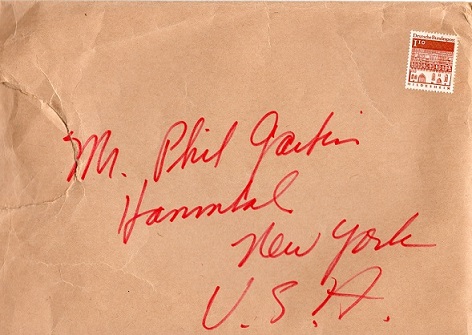
    A few days after the performance, I sent Tatiana Troyanos a fan letter in care of the Hamburg State Opera. Soon after, an envelope arrived in our family mailbox in Hannibal, New York:

    Troyanos envelope

    This was in the pre-zip code era; there was no return address, but the German postage stamp (with no cancellation) provided a clue. Inside was the signed photo from Troyanos that appears at the top of this article. Scanning these beautiful souvenirs was genuinely moving to me: these were things Tatiana held in her hands, and undoubtedly she signed, sealed, and delivered this to the post office herself. (So cute that she ran out of space when signing her name!)

    Troyanos had sung in the chorus of nuns in THE SOUND OF MUSIC on Broadway before spending two seasons with New York City Opera.  Then, in 1965, she traveled to Europe, auditioned successfully for three companies, and chose to join the Hamburg State Opera, where she remained (first as an ensemble member, later as a guest artist) for ten years, singing a variety of roles and honing her stagecraft.

    Then came the debut at The Met, where she was to become a beloved star, giving over 275 performances there and making an indelible mark on such roles as Octavian, the Composer in ARIADNE AUF NAXOS, Mozart’s Tito, Princess Eboli, and Wagner’s Venus and Kundry. I saw Troyanos many times, in these roles and others, and she always thrilled me as few other singers consistently did. Yet whenever her name comes up, it’s that first experience of her Baba that immediately springs to mind.

    Tatiana Troyanos passed away after a long battle with cancer. She continued to sing to the end of her life, including – reportedly – for fellow patients at Lenox Hill Hospital on the day she died: August 21, 1993.

    Here, from her Hamburg years, is Troyanos singing the Composer’s great aria in praise of music from a 1968 performance:

    Tatiana Troyanos – ARIADNE AUF NAXOS ~ finale of the Prologue – Hamburg 1968

    ~ Oberon

  • Liane Synek as Brünnhilde

    Synek

    Liane Synek (above) was an Austrian dramatic operatic soprano. She based her career in Germany, at such opera centers as Wiesbaden, Cologne, and the Staatsoper Berlin and the Cologne Opera, She appeared at international major opera houses and festivals, including Covent Garden, La Scala, and as the Bayreuth Festival.

    A somewhat erratic singer, Synek took on opera’s most demanding roles – including Turandot, Elektra, Isolde, and the Brünnhildes – and threw herself into the music with abandon: her top notes could thrill.

    Over time, collectors have taken an interest in Synek’s “live” recordings; quite a few have surfaced, and can be found at Opera Depot.

    Here is Liane Synek in the great scene from Act III of DIE WALKURE wherein Brünnhilde attempts to explain to her father Wotan why she disobeyed his expressed command that Hunding should prevail in his fight against Siegmund. The performance, in surprisingly good sound, is from Montevideo 1959; Wilhelm Schirp sings Wotan.

    Liane Synek – War es so schmählich ~ WALKURE – with Wilhelm Schirp – Montevideo 1959