Author: Philip Gardner

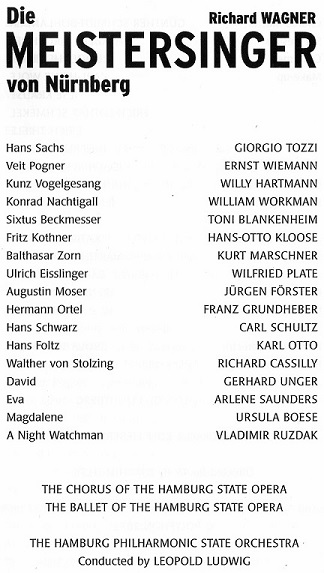
  • Die Meistersinger von Hamburg ~ 1970

    Scanned Section 6-1

    Above: Giorgio Tozzi as Hans Sachs and Richard Cassilly as Walther von Stoltzing

    Author: Oberon

    I plucked a DVD of Wagner’s Die Meistersinger off the shelf at the Library of the Performing Arts; it was described as a “studio production from the Hamburg State Opera, 1970”. I had no idea what to expect, but I ended up really loving it.

    Purists will kvetch over the fact that about 25 minutes of music has been cut, including parts of David’s long monolog in Act I and the Apprentices Dance in Act III. The cuts were apparently made so as to conform to the four hours allotted for a television presentation. Since the David is very fine, and since the overall performance is excellent, it’s too bad that the cuts had to be made. They did not, however, affect my great enjoyment of the performance.

    Sets are ‘suggested’ rather than built. The opera is fully staged, in appropriate costumes; the singers appear to be lip-syncing to a pre-made recording, and they all do a splendid job of it…so good, in fact, that you can’t really tell

    Leopold Ludwig leads a stylish reading of the overture; throughout the performance, he sets perfect tempi and ideally balances the comedy and chaos against the intimacy, passion, and humanity that pervade this marvelous opera.

    The filming makes us part of the action. In Act I, the lively apprentices tease David whilst setting up for the meeting of the Masters: we are part of their work and their play. The apprentices, by the way, are a handsome bunch of boys, each with his own personality. In live performances, petite women from the chorus are sometimes pressed into service in this ensemble group, so as to sing the higher-lying phrases. Here, the boys seem to tackle those lines in falsetto.

    Once the masters have convened, we are right in the thick of their debates: the camera sweeps and zooms in as opinions are expressed and reactions are caught on film. An expert bunch of singing-actors, we get a vivid feeling of each Master as an individual. And later, we even go inside the Marker’s curtained booth as Walther von Stoltzing sings his heart out in his trial song…to no avail.

    The conversations, comings and goings, furtive lovers’ meetings, and Beckmesser’s silly serenade (mistaking ‘Lene for Eva) in Act II lead up to a convincingly bumptious “riot”. In Act III, the intimate scene of Sachs urging Stolzing onward in the composing of the “Prize Song”, and of Beckmesser’s pilfering of said song, and of the blessèd joy of the great quintet, gives way to the meadow on St. John’s Day – a vast space with only a gallery for the Masters, a chair for Eva, and the platform from which the “Prize Song” becomes an immortal melody. The triumph of true love is celebrated by all.
    Scanned Section 7-1 (3)

    The cast is superb in every regard. Each singer has the measure of his or her role, both vocally and in characterization. There’s little in terms of theatricality to come between us and these folks as real townspeople, and the story unfolds with complete naturalness.

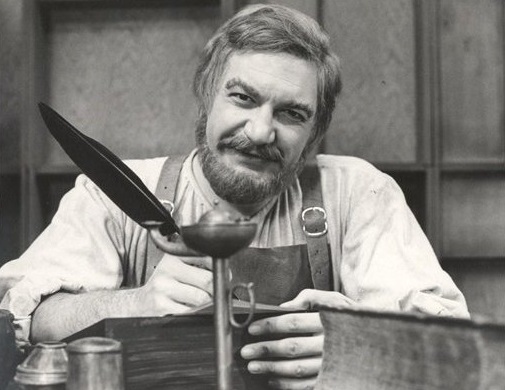
    Giorgio Tozzi is for me simply a perfect Hans Sachs; he was, in fact, the very first singer I saw in this role at The Met in 1968. More than that, Tozzi played a huge part in my developing passion for opera: the first basso voice I came to love, his arias from NABUCCO and SIMON BOCCANEGRA were on the first operatic LP set I every acquired; he was Don Giovanni in the first opera I attended at the (Old) Met, and later he was my first Daland and Jacopo Fiesco. I saw Tozzi onstage for the last time as Oroveso in NORMA at Hartford, CT, in 1978; he was so vivid as the almost deranged high priest of the Druids.
    Tozzi6

    Here in this MEISTERSINGER film, Tozzi (above) is everything I want in a Sachs: vocally at ease in every aspect of the wide-ranging music, his singing warm, his portrayal so human and so rich in detail. His two monologs (Flieder– and Wahn-) are beautifully sung and deeply felt, and his impassioned final address to the citizens of Nuremberg – a warning against the intrusion of foreign powers on their daily lives – rings true today. It is so pleasing to have Tozzi’s magnificent Sachs preserved for the ages.

    Saunders Eva

    Arlene Saunders (above, as Eva) is another singer to whom I feel a strong attachment, as well as a sense of gratitude: over a span of time, I saw Ms. Saunders singing four vastly different roles, making a memorable impression in each. First was her Anne Trulove when the Hamburg Opera brought THE RAKE’S PROGRESS came to The Met in 1967; Ms. Saunders’ pealing lyricism in her aria and ‘cabaletta‘ left such a lovely impression. Later, she was a surprisingly thrilling Minnie in FANCIULLA DEL WEST at New York City Opera, a movingly vulnerable and hopeful Elsa in LOHENGRIN at Hartford’s Bushnell Auditorium, and strikingly beautiful, touching, and wonderfully-sung Marschallin at Boston. 

    In this Hamburg MEISTERSINGER, we first see Saunders’ adorable face looking up from her prayer-book in church, secretly thrilled by the attention of the tall knight who is captivated by her. From there to the end, Ms. Saunders endears and charms us in every moment of the role of Eva.

    66852356_10216720847467589_5296722770879578112_n

    Richard Cassilly (above, with Ms. Saunders as Eva) is an imposing and big-voiced Stolzing; he towers over his beloved Ev’chen, and indeed over most everyone in the film.  Often seeming stiff and dour, the tenor blossoms into smiles whenever Eva is near. The knight’s pride, insecurity, and hopefulness are all expressed in Mr. Cassilly’s acting; as to his singing, it is big, warm, and winning. The scene of the ‘birth’ of the “Prize Song” – and of Eva’s hearing it for the first time – is very moving to an old romantic like myself.

    Snapshot

    Toni Blankenheim (above, with Giorgio Tozzi as Sachs at the end of Act I) scores in one of his greatest roles, Beckmesser. In the hands of such an imaginative singing-actor, this annoyingly vain character finally moves us in Blankenheim’s portrayal of his defeat. The baritone also convinces us that he is actually playing the lute. (There is apparently a similar filmed production from Hamburg of Berg’s WOZZECK with Blankenheim in the title-role and Sena Jurinac as Marie; I want to see it!)

    Unger Boese

    Above: Gerhard Unger and Ursula Boese as David and Magdalene

    Petite of build, tenor Gerhard Unger with his boyish face does not seem out of place among the apprentices. Unger is a first-rate, “voicey” character singer and an impetuous actor. As his slightly older betrothed, Magdalene, Ursula Boese is wise and warm-hearted whilst also being a sly conspirator in getting everything to go well for Eva and Stolzing. Both Unger and Boese sing very well indeed.
    Snapshot 2

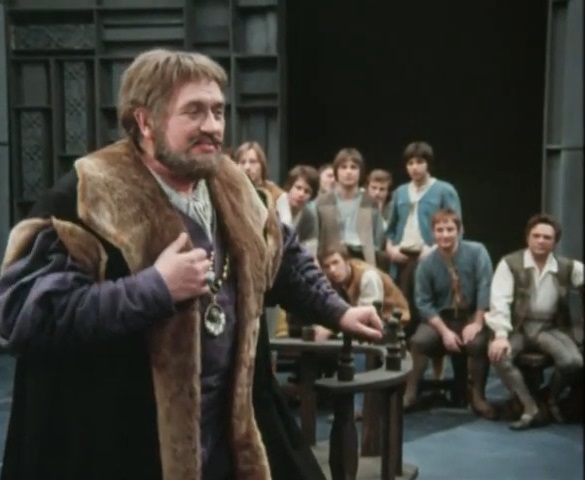
    Basso Ernst Wiemann (above) sang nearly 75 performances at The Met from 1961 to 1969, including the roles of Fafner, Hunding, Hagen, the Commendatore, Rocco, King Henry, and Daland in broadcasts of these operas that I was hearing for the very first time. As Pogner in this film of MEISTERSINGER, Wiemann displays his ample, seasoned basso tones in a warmly paternal portrayal.

    Hans-Otto Kloose

    The one singer in a major role with whom I was totally unfamiliar is Hans-Otto Kloose (above), who plays an upbeat, gregarious Kothner. In both his portrayal and his singing, Mr. Kloose excels. He was a beloved member of the Hamburg State Opera ensemble for thirty years, starting in 1960, giving more than 1,800 performances with the Company. For all that, I cannot seem to find other samples of his singing.

    The Meistersingers include both veterans and jünglings: among the latter, Franz Grundheber is an extremely handsome Hermann Ortel. As a final link among the singers in this film to some of my earliest operatic memories, Vladimir Ruzdak, who sang Valentin in my first FAUST at the Old Met, appears here as a baritonal Nightwatchman.

    Snapshot 4

    “All’s well as ends better,” as they say in The Shire. Sachs is crowned with a laurel wreath by Eva at the feast of St. John’s Day in Olde Nürnberg.  

    ~ Oberon

  • Cardiff Singer of the World ~ 2019

    Andrei-Kymach-c.Alexander-Andryushchenko-8

    Ukranian baritone Andrei Kymach (above, photo by Alexander Andryuschenko) is the 2019 Cardiff Singer of The World. En route to winning the title, Mr. Kymach gave this vibrant performance of Count Tomsky’s narrative from Tchaikovsky’s PIQUE DAME.

    Mr. Kymach joins a list of illustrious singers who have claimed the Cardiff prize since the competition was founded in 1983 – among them: Karita Mattila, Dmitri Hvorostovsky, Katarina Karnéus, Anja Harteros, and Shenyang.

    Mingjie-Lei-wins-Song-Prize-at-BBC-Cardiff-Singer-of-the-World-2019-©-Kirsten-Mcternan

    This year’s winner of the Song Prize is Chinese tenor Mingjie Lei (hoisting his trophy, above, in a Kirstin McTernan photo). It was Sir Bryn Terfel who won the first Cardiff Song Prize, in 1989. Watch the 2019 Song Prize final round here.

    Mingjie Lei was also a finalist in the main prize competition. 

  • Amanda Selwyn’s CROSSROADS @ NY Live Arts

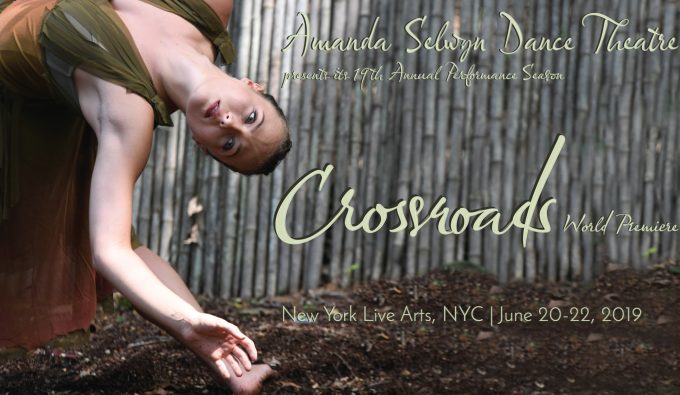
    680w_x395h_c-AmandaSelwynDanceTheatre_SeasonPostcard_Draft1-1

    ~ Author: Oberon

    Thursday June 20th, 2019 – Having seen three rehearsals of Amanda Selwyn’s CROSSROADS at various stages of its development, tonight I experienced the finished work in its premiere performance at New York Live Arts.

    The process began during wintertime rehearsals: brief movement motifs were introduced by each of the individual dancers. Over time, these were developed and woven into the choreographic tapestry. The dancing is set on a musical soundscape that veers from driven to meditative; the sets, costumes, and props give the piece an eye-opening visual framework, and expert lighting by Dan Ozminkowski is the crowning touch.

    In the months between concept and performance, there were some changes in the roster of performers; but Amanda ended up with a cast of brilliant and distinctive dancers whose commitment and flair kept the audience thoroughly engaged throughout the work’s 90-minute span.

    The art of René Magritte and M C Escher were initial inspirations for CROSSROADS. A row of fanciful doors provide a backdrop, and columns – illuminated from within – are moved about as the work’s opening movement progresses. Later, the dancers will continually re-arrange a set of boxes to be used as podiums…or obstacles. By the end, everything is stripped down to essentials, the boxes piled in a heap, the dancers liberated.

    But lets rewind to the start: Part I of CROSSROADS is entitled Sight. It begins with Ashley McQueen entering the shadowy space; she is a dancer with the grace of a ballerina, the groundedness of an Isadora acolyte, and the impetuous musicality of someone who dances because she must. All evening, my gaze kept returning to this woman and multi-hued dancing. Topping it all off, Ms. McQueen is also a comedienne to be reckoned with: her solo, stuck in an inflatable plastic chair, made me laugh out loud. 

    The other dancers now enter thru the upstage doors; they pair off – Ms. McQueen with Alex Cottone, Misaki Hayama with Isaac Kerr, and  Manon Hallay with Michael Bishop – whilst the distinctive and enigmatic Sarah Starkweather weaves among them, a dancer on her own path. The couples creates a flow of beautiful moves and poses, and then the tall and lithe Mr. Kerr comes forward in silence and takes a bite out of Magritte’s apple.

    The music now takes on a deep beat, and we are ready for some spacious dancing; fleeting solos and duets are part of the mix. As CROSSROADS progresses, each dancer will have multiple opportunities to show off his or her individuality and flair, seizing our focus in movement that veers from high-energy to expressive. The boys show off their partnering skills, the women each compelling in her own way. 

    With the columns on a diagonal, Ashley McQueen covers the space to dense, pensive music; her arms and hands speak to us poetically, and then her solo gets more animated. Misaki Hayama emerges thru one of the doors to dance a thoughtful, moving solo of loneliness and hope; Alex Cottone opens another door to dance with Misaki.

    A tom-tom beat sets off a bouncy, propulsive ensemble dance: these people are super-movers. Alex Cottone’s solo here is just one of innumerable passages in which this dancer of boundless energy and passion seized the stage. He dances with Ms. McQueen, and then with Ms. Hallay. Michael Bishop and Ashley McQueen, in a duet to languid, deep, and soulful cello music, execute beautiful lifts.

    After a blackout, Part II commences. Entitled Faith, it does indeed take on the feeling of a sacred rite when Alex Cottone is seen in a pool of blinding light on a low altar; his solo is simply spell-binding. As the light over Alex fades, another altar is illuminated and here the gorgeous Manon Hallay displays her beauteous line and floated arabesque in a solo at once alluring and pure. Both dancers here wear raspberry-hued costumes that accentuate their physical appeal.

    Each dancer now has his/her own box on which to dance or pose, at first in unison. Sarah Starkweather’s plastique solo inaugurates a fresh cycle of movement motifs. To a bigger beat, the boxes are rearranged, and fleeting pas de deux replace the solos briefly. In a spirited trio, Misaki, Manon, and Sarah dance in sync. 

    Faith now becomes a journey: boxes are arranged along the front of the stage and the dancers walk in procession over these obstacles, pausing to pose or perform gestural solos along the way. A back-beat develops, and the parade breaks up.

    A rather purgatorial “red quintet” springs up to a fresh tempo: Alex and the four women dance in sync, with breakouts and swift duets. Misaki’s fancy footwork here captured my eye. Sarah and Alex duet, then the quintet resumes. The beat is all. 

    Following a blessedly brief interval, Part III – Ascent – commences. In a foggy setting, Sarah Starkweather has a stormy solo to the sound of rushing water. Misaki and Ashley join her, the music (with big piano chords) has a throbbing depth; then Sarah – she of the unique presence – resumes her solo. 

    Alex Cottone, Michael Bishop, and the four women now have a quartet wherein the darkly lyrical cello gives a feeling of Russian passion; posing and moving, so attentive to one another, the dancers pair off. The woman in a row gesture in sync as the men provide visual counterpoint. This for me was the best part of CROSSROADS; it ends on a long cello tone.   

    Now comes the comic interlude: to spaced-out music, Ashley McQueen becomes helplessly trapped in an inflatable plastic chair. Her gestures and facial expressions are priceless. The other dancers come and go, unwilling – or too self-absorbed – to help her. Manon Hallay’s lovely arabesques again come into play; she seems intent on perfecting them whilst Ms. McQueen struggles valiantly to stand. Suddenly, Isaac Kerr rushes on and – in a flying leap – sails over the woman stranded in the chair. Meanwhile, Sarah Starkweather and Alex Cottone have carried on with their own duet throughout.

    The mood now shifts, aided by sounds of shifting sea tides: Manon Hallay and Michael Bishop have a tender duet, with lyrical partnering phrases. Misaki Hayama and Isaac Kerr dance a spacious duet, with airy lifts and a trace of romance, which the cello accentuates. Sarah Starkweather and Alex Cottone walkabout, connect, and have an agile, gently amusing duet.

    While Alex wanders alone, all the others advance from stage right, striking poses and gesturing – a very nice look here – before leaving Alex on his own again. A duet of passion for Ashley McQueen and Isaac Kerr is not without hints of danger. Following a solo passage for Sarah, Manon and Michael have a side-by-side duet with subtle dips and lifts. When Manon leaves him, Michael continues to dance with his memory of her.

    The three men dance as the women ‘Vogue’ behind them; then the four women take the floor. Following a brief, compulsive solo, Alex Cottone is left alone as the lights fade.

    CROSSROADS had flashed by: never a dull moment in this feast of movement. Thanks to the vibrant commitment of her seven dancers, Amanda Selwyn can chalk up yet another winning entry in her ongoing catalog of successes. How did I feel when CROSSROADS ended? I felt like dancing!

    ~ Oberon

  • Amanda Selwyn’s CROSSROADS @ NY Live Arts

    680w_x395h_c-AmandaSelwynDanceTheatre_SeasonPostcard_Draft1-1

    ~ Author: Oberon

    Thursday June 20th, 2019 – Having seen three rehearsals of Amanda Selwyn’s CROSSROADS at various stages of its development, tonight I experienced the finished work in its premiere performance at New York Live Arts.

    The process began during wintertime rehearsals: brief movement motifs were introduced by each of the individual dancers. Over time, these were developed and woven into the choreographic tapestry. The dancing is set on a musical soundscape that veers from driven to meditative; the sets, costumes, and props give the piece an eye-opening visual framework, and expert lighting by Dan Ozminkowski is the crowning touch.

    In the months between concept and performance, there were some changes in the roster of performers; but Amanda ended up with a cast of brilliant and distinctive dancers whose commitment and flair kept the audience thoroughly engaged throughout the work’s 90-minute span.

    The art of René Magritte and M C Escher were initial inspirations for CROSSROADS. A row of fanciful doors provide a backdrop, and columns – illuminated from within – are moved about as the work’s opening movement progresses. Later, the dancers will continually re-arrange a set of boxes to be used as podiums…or obstacles. By the end, everything is stripped down to essentials, the boxes piled in a heap, the dancers liberated.

    But lets rewind to the start: Part I of CROSSROADS is entitled Sight. It begins with Ashley McQueen entering the shadowy space; she is a dancer with the grace of a ballerina, the groundedness of an Isadora acolyte, and the impetuous musicality of someone who dances because she must. All evening, my gaze kept returning to this woman and multi-hued dancing. Topping it all off, Ms. McQueen is also a comedienne to be reckoned with: her solo, stuck in an inflatable plastic chair, made me laugh out loud. 

    The other dancers now enter thru the upstage doors; they pair off – Ms. McQueen with Alex Cottone, Misaki Hayama with Isaac Kerr, and  Manon Hallay with Michael Bishop – whilst the distinctive and enigmatic Sarah Starkweather weaves among them, a dancer on her own path. The couples creates a flow of beautiful moves and poses, and then the tall and lithe Mr. Kerr comes forward in silence and takes a bite out of Magritte’s apple.

    The music now takes on a deep beat, and we are ready for some spacious dancing; fleeting solos and duets are part of the mix. As CROSSROADS progresses, each dancer will have multiple opportunities to show off his or her individuality and flair, seizing our focus in movement that veers from high-energy to expressive. The boys show off their partnering skills, the women each compelling in her own way. 

    With the columns on a diagonal, Ashley McQueen covers the space to dense, pensive music; her arms and hands speak to us poetically, and then her solo gets more animated. Misaki Hayama emerges thru one of the doors to dance a thoughtful, moving solo of loneliness and hope; Alex Cottone opens another door to dance with Misaki.

    A tom-tom beat sets off a bouncy, propulsive ensemble dance: these people are super-movers. Alex Cottone’s solo here is just one of innumerable passages in which this dancer of boundless energy and passion seized the stage. He dances with Ms. McQueen, and then with Ms. Hallay. Michael Bishop and Ashley McQueen, in a duet to languid, deep, and soulful cello music, execute beautiful lifts.

    After a blackout, Part II commences. Entitled Faith, it does indeed take on the feeling of a sacred rite when Alex Cottone is seen in a pool of blinding light on a low altar; his solo is simply spell-binding. As the light over Alex fades, another altar is illuminated and here the gorgeous Manon Hallay displays her beauteous line and floated arabesque in a solo at once alluring and pure. Both dancers here wear raspberry-hued costumes that accentuate their physical appeal.

    Each dancer now has his/her own box on which to dance or pose, at first in unison. Sarah Starkweather’s plastique solo inaugurates a fresh cycle of movement motifs. To a bigger beat, the boxes are rearranged, and fleeting pas de deux replace the solos briefly. In a spirited trio, Misaki, Manon, and Sarah dance in sync. 

    Faith now becomes a journey: boxes are arranged along the front of the stage and the dancers walk in procession over these obstacles, pausing to pose or perform gestural solos along the way. A back-beat develops, and the parade breaks up.

    A rather purgatorial “red quintet” springs up to a fresh tempo: Alex and the four women dance in sync, with breakouts and swift duets. Misaki’s fancy footwork here captured my eye. Sarah and Alex duet, then the quintet resumes. The beat is all. 

    Following a blessedly brief interval, Part III – Ascent – commences. In a foggy setting, Sarah Starkweather has a stormy solo to the sound of rushing water. Misaki and Ashley join her, the music (with big piano chords) has a throbbing depth; then Sarah – she of the unique presence – resumes her solo. 

    Alex Cottone, Michael Bishop, and the four women now have a quartet wherein the darkly lyrical cello gives a feeling of Russian passion; posing and moving, so attentive to one another, the dancers pair off. The woman in a row gesture in sync as the men provide visual counterpoint. This for me was the best part of CROSSROADS; it ends on a long cello tone.   

    Now comes the comic interlude: to spaced-out music, Ashley McQueen becomes helplessly trapped in an inflatable plastic chair. Her gestures and facial expressions are priceless. The other dancers come and go, unwilling – or too self-absorbed – to help her. Manon Hallay’s lovely arabesques again come into play; she seems intent on perfecting them whilst Ms. McQueen struggles valiantly to stand. Suddenly, Isaac Kerr rushes on and – in a flying leap – sails over the woman stranded in the chair. Meanwhile, Sarah Starkweather and Alex Cottone have carried on with their own duet throughout.

    The mood now shifts, aided by sounds of shifting sea tides: Manon Hallay and Michael Bishop have a tender duet, with lyrical partnering phrases. Misaki Hayama and Isaac Kerr dance a spacious duet, with airy lifts and a trace of romance, which the cello accentuates. Sarah Starkweather and Alex Cottone walkabout, connect, and have an agile, gently amusing duet.

    While Alex wanders alone, all the others advance from stage right, striking poses and gesturing – a very nice look here – before leaving Alex on his own again. A duet of passion for Ashley McQueen and Isaac Kerr is not without hints of danger. Following a solo passage for Sarah, Manon and Michael have a side-by-side duet with subtle dips and lifts. When Manon leaves him, Michael continues to dance with his memory of her.

    The three men dance as the women ‘Vogue’ behind them; then the four women take the floor. Following a brief, compulsive solo, Alex Cottone is left alone as the lights fade.

    CROSSROADS had flashed by: never a dull moment in this feast of movement. Thanks to the vibrant commitment of her seven dancers, Amanda Selwyn can chalk up yet another winning entry in her ongoing catalog of successes. How did I feel when CROSSROADS ended? I felt like dancing!

    ~ Oberon

  • Beatrice Rana|Philadelphia Orchestra @ Carnegie Hall

    Thumbnail_rana_beatrice_1920

    Above: pianist Beatrice Rana

    ~ Author: Ben Weaver

    Friday June 7th, 2019 – Yannick Nézet-Séguin – music director of the Metropolitan Opera – led his other ensemble, The Philadelphia Orchestra – in an exciting Carnegie Hall concert tonight. The all-Russian program opened with a recently discovered curiosity: Stravinsky’s Funeral Song, Op. 5, written for the memorial of his teacher, Nikolai Rimsky-Korsakov, in 1908. The 12 minute work, in which Stravinsky has different sections of the orchestra take turns “laying down its own melody as its wreath against a deep background of tremolo murmurings,” was lost until 2015 when a St. Petersburg Conservatory’s librarian discovered the complete orchestral parts in the mess of the Conservatory’s renovations. Musicologists long lamented the lost manuscript as the link between Stravinsky’s early works and The Firebird. Its discovery revealed not only the links in Stravinsky’s own development, but his links to Rimsky-Korsakov’s late compositional style, which Stravinsky, late in life, tried to downplay.

    Sergei Prokofiev’s popular Piano Concerto No. 3 came next on the program with the exciting pianist Beatrice Rana at the piano. This was my first time hearing Ms. Rana in a live performance, but I have admired several of her recordings for some time. What struck me about her recorded performances – and what was confirmed live – is her deeply felt, yet honest and unaffected musicality. Prokofiev’s “devilishly difficult” (Prokofiev’s own words) writing presented no technical challenge to Rana’s nimble finger work. The often spiky writing can easily become a “pound on the keyboard” type of evening. That is not Rana: her light – but never weak – touch made the pounding Prokofiev requires sound effortless and graceful. Both of those words were also true about the encore: Chopin’s Etude in A-flat major, Op. 25, No. 1 showed off the more lyrical side of Rana’s artistry.

    Thumbnail_young_rachmaninoff2

    Above: the young Sergei Rachmaninoff

    The premiere of Sergei Rachmaninoff’s Symphony No. 1, Op. 13 in 1897 is one of the most famous musical disasters in Western art music. Composer and conductor Alexander Glazunov appears to have been drunk on the podium and unprepared to conduct the difficult score. The reaction from the public and the critics was savage: composer and critic César Cui wrote that the symphony “would have delighted the inhabitants of Hell” and that the “music leaves an evil impression.” The young composer was so devastated by the reception that he quit composing and needed a therapist (and hypnosis) to recover from the trauma. When he fled Russia during the 1917 Revolution, the score of the symphony was lost in the chaos. Interestingly, although the symphony caused him a lot of pain, it appears to have been on Rachmaninoff’s mind for the rest of his life: he quoted its dark opening theme in the first movement of his last work, the Symphonic Dances, in 1940. Since the score of the symphony was lost and no one had heard it in more than 40 years, Rachmaninoff knew the quote would be unknown to anyone but himself. He died in 1943 and two years later orchestral parts of the symphony were discovered after all, in the St. Petersburg Conservatory (again), presumably as everyone returned home after the War. A performance was quickly arranged in Moscow (US premiere was given by The Philadelphia Orchestra and Eugene Ormandy) and finally the public was able to judge this extraordinary composition. We can safely say that César Cui’s deranged opinion was garbage; indeed, history itself has given its verdict on Cui vs. Rachmaninoff’s Symphony No. 1. Cui is nothing but footnote.

    One thing that may have confused so many listeners in 1897 was the dark and violent tone of the work; Rachmaninoff’s vivid quotations of the Dies irae may have upset some sensitive constitutions. But the Dies irae would become a common motif in all of Rachmaninoff’s major orchestral works. In the 1st Symphony, even the haunting slow movement is more sinister than calming. Cui may have been correct that the work “would have delighted the inhabitants of Hell,” except any person of taste would have seen that as a positive. Rachmaninoff’s most famous works, Piano Concerto No. 2 and Symphony No. 2, are steeped in romanticism, their flowing, endless melodies unrolling with shameless abandon. The very different tone of the 1st Symphony, however, reveals fascinating depths.

    There are few orchestras with a stronger personal and professional connection to a major composer than Philadelphia Orchestra’s is to Rachmaninoff. For a few decades Rachmaninoff played with and conducted them regularly, and he chose them when he recorded his own orchestral works. His last composition, the Symphonic Dances, were dedicated to the Philadelphia Orchestra and Eugene Ormandy led the world premiere performance. This is music they have in their blood the way Bayreuth Orchestra has Wagner and the NY Philharmonic has Mahler. With Maestro Nézet-Séguin on the podium, this Carnegie Hall performance of Rachmaninoff’s 1st Symphony was perhaps the most thrilling and hair-raising I’ve ever heard. Nézet-Séguin’s unflagging energy perhaps a taste for the macabre was the perfect approach to this dark and sprawling work. The Philadelphians responded with a fearlessness that shook the concert hall to the rafters. Is César Cui heard this performance, he might have had a heart-attack. 

    Thumbnail_yannick-hans-van-der-woerd

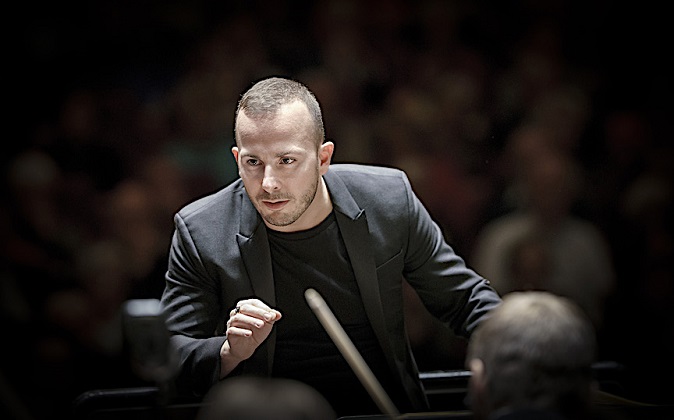
    Maestro Nézet-Séguin (above, in a Hans Van Der Woerd photo) is currently recording Rachmaninoff’s complete piano concertos with Daniil Trifonov and the Philadelphia Orchestra. Based on this coruscating performance of the 1st Symphony, it may be time for this group to record Rachmaninoff’s complete orchestral works. The Concertgebouw seems to do a complete Mahler traversal every few years (though the last one, with Daniele Gatti, was abandoned part-way for stupid reasons). Surely the Philadelphians and Rachmaninoff have earned a similar right? Deutsche Grammophon, are you paying attention?

    ~ Ben Weaver

  • Elīna Garanča ~ MET Orchestra @ Carnegie Hall

    Elina-Garanca

    Above: mezzo-soprano Elīna Garanča

    ~ Author: Oberon

    Friday June 14th, 2019 – This evening, The MET Orchestra paired Mahler’s marvelous Rückert Lieder with Anton Bruckner’s sprawling 7th symphony. Yannick Nézet-Séguin was on the podium, and the soloist for the Mahler was Elīna Garanča.

    As Ms. Garanča, in a strikingly Spring-like white gown, and the conductor made their way center-stage, the mezzo towered over the maestro. M. Nézet-Séguin wore a clingy white shirt that seemed calculated to show off his physique; it looked kind of silly.

    The German Romantic poet Friedrich Rückert (1788-1866) was one of Gustav Mahler’s favorite poets, and he set a number of his poems to music, including the Kindertotenlieder (“Songs on the Death of Children”).

    Mahler composed four of the five Rückert Lieder in 1901, initially to be sung with piano accompaniment;  very soon after, he orchestrated them. The fifth of the Rückert Lieder, “Liebst du um Schönheit?” (‘If you love for beauty…’) was composed a bit later, and orchestrated by Mahler’s publisher. The songs do not constitute a formal song-cycle, nor is there any prescribed order of performing them.

    Ms. Garanča began with “Blicke mir nicht in die Lieder” (“Do not look at my songs…”), in which poet and composer seem to be warning the listener not to be too inquisitive about the song-writing process: it’s the finished product that matters. This light and almost playful song was deliciously voiced by Ms. Garanča, whilst the woodwind players of The MET Orchestra buzzed charmingly about, like busy bees.

    In “Ich atmet’ einen linden Duft” (“I breathed a gentle fragrance…”) the mezzo-soprano brought an intriguing mix of calm and intensity. Her use of dynamics and her lovely sustaining of the vocal line were beautifully supported by the oboe, horn, and flute. The singer’s lower range has a special warmth and glow: rich without seeming over-burdened.

    A change of mood comes with “Um Mitternacht” (“At midnight”) which tells of the poet’s battle with darkness (both in the literal and and the poetic sense) until he finally leaves it all in God’s hands. Ms. Garanča brought profound beauty of tone to the song, giving it an almost operatic dimension. Her use of straight tone at times was beguiling, whilst throughout her expressive, passionate colouring of the words kept us engrossed. It seemed that the conductor allowed a passing trace of vulgarity in some of the wind playing, and he allowed the orchestra to cover the voice in the closing passages of the song.

    Liebst du um Schönheit” (“If you love for beauty…”) was the first Mahler song I ever heard, sung at a 1972 recital by the delectable Frederica von Stade. A few years later, the unique voice of Patricia Brooks gave the song a different feeling. And it’s a song I very much associate with my late friend, the Japanese contralto Makiko Narumi. The words, in translation, could have been the theme song of my long career as a promiscuous romantIc:

    “If you love for beauty,
    Do not love me!
    Love the sun,
    with her golden hair.
    If you love for youth,
    Do not love not me!
    Love the spring,
    Which is young each year.
    If you love for riches,
    Do not love not me!
    Love the mermaid,
    she has many lustrous pearls.
    But If you love for love,
    Then…yes! Love me!
    Love me,
    And I shall always love you.”
     
    Every note and word of Ms. Garanča’s singing of this jewel of a song was simply exquisite; she seemed to savour the joy of having such a fascinating voice with which to allure us. Though once again the orchestra infringed on the voice at times, her perfect rendering of the charming “…o, ja!…” as the song neared its end gave me a shiver of delight.
     
    I’ve never understood why a singer would end this group of songs with anything but “Ich bin der Welt abhanden gekommen” (“I have been lost to the world…”), probably the single most profound lied ever written. The poem tells of the peace achieved by the poet’s withdrawal from the turmoil of the daily life. The MET’s wind players were simply gorgeous here, infusing the music with a tender sense of longing and resignation. Ms. Garanča’s singing was haunting in its range of colour and gradations of vibrato; she drew us into that place of refuge that Rückert and Mahler have created for the soul in search of hermitage: what more can we ask of a singer?
     
    The poem ends: “I live alone in my Heaven…in my love…in my song.” The touching opening theme is heard again from the English horn, fading to a whisper.
     
    CH1605499
     
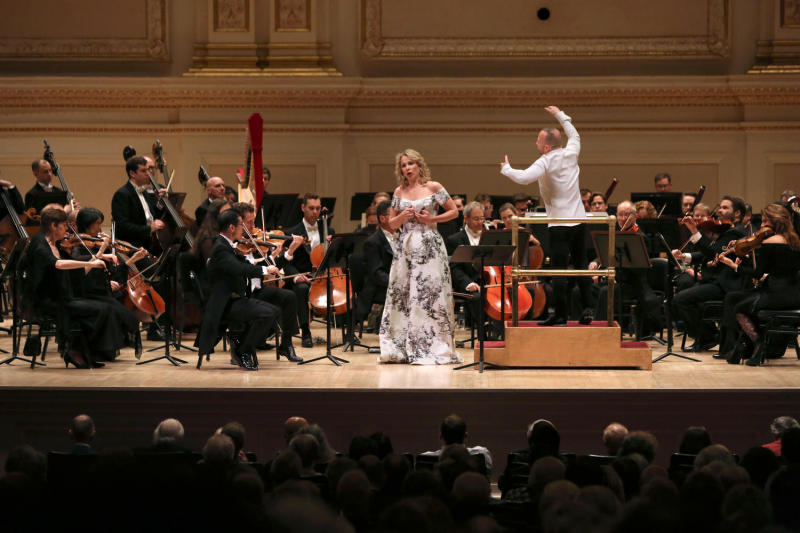
    Above: Ms. Garanča and Maestro Nézet-Séguin performing the Rückert Lieder; photo by Steve Sherman
     
    An over-eager fan rather spoilt the end of the mezzo-soprano’s performance with a very loud “Brava!” before the music had completely faded away. A wave of applause and cheers then filled the august Hall, where so much glorious music has been heard thru the passing decades. Ms. Garanča basked in the glow of a prolonged standing ovation, which her luminous singing so fully deserved.

    Following the interval, Maestro Nézet-Séguin returned for the Bruckner 7th. This was my first live experience of this work, which begins so magically with a string tremolo from which the glorious main theme arises. Throughout most of the first movement, I felt as engaged – and even exalted – as I had expected to feel, since I like Bruckner’s music in general.

    But in the ensuing Adagio, I found the performance drifting away from me. There were some iffy moments from the horns, the music seemed periodically to lose its shape, and the movement began to feel endless. The Scherzo which follows was singularly lacking in wit and sparkle, and while its tranquil – almost wistful – trio section is pleasant enough to hear, pleasant music tends to get boring after a while.

    At last, the Finale is reached; I hoped that Bruckner would take the driver’s seat and careen madly to the finish line. Instead, the music came in fits and starts, seeming to fold in on itself and retreat periodically into modestly attractive wind interludes. At last: a big statement. But this was soon replaced by more dawdling. Frankly, it couldn’t end soon enough. I found myself craving Bizet’s Symphony in C.

    Afterwards, I asked myself why the Bruckner 7th had seemed like such a disappointment this evening. My friend Ben Weaver suggested that perhaps it was the performance, rather than the music, that had let me down. But it’s something deeper.

    In search of answers, I read some on-line articles by music-lovers who stated that Bruckner’s music often eluded them. One common theme in many of these writings was Bruckner’s seeming lack of a sex life: simplistic perhaps, but on the other hand we know that Mozart, Liszt, Wagner, Debussy, Puccini, and Mahler were men of passion, and it comes thru in their music. Bruckner’s passion seems to have been for God, and some writers went so far as to say that Bruckner probably lived and died a virgin. This may account for a feeling of sterility in some of his music, and why it doesn’t reach me. Oddly, reading about Bruckner and looking at some pictures of the man, I began thinking of Mike Pence.

    Speaking of people’s sex lives, in tonight’s Playbill note about The MET Orchestra, the name of James Levine – the man universally credited with turning the opera house’s orchestra into a world-class concert ensemble – is conspicuously absent. This gloss seems so childish, but I suppose in an age when slavery in America and the Holocaust in Europe are being written out of text books, anything is possible.

    ~ Oberon
  • Beth Jucovy/Dance Visions NY: Isadora’s Russian Repertory

    DSCF7652

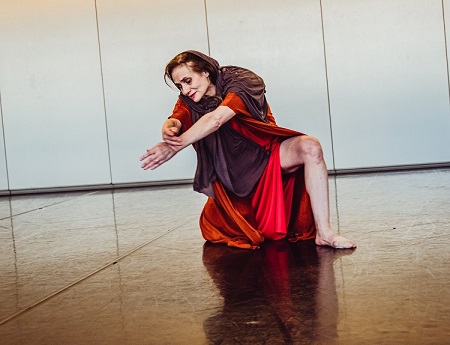
    Above: I-Nam Jiemvitayanukoon and Beth Jucovy in Isadora Duncan’s Varshavianka; photo by Dmitry Beryozkin

    ~ Author: Oberon

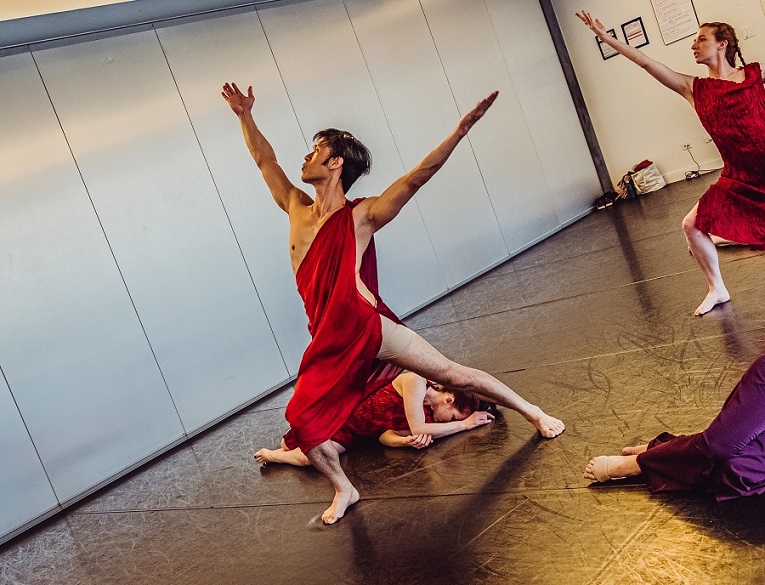
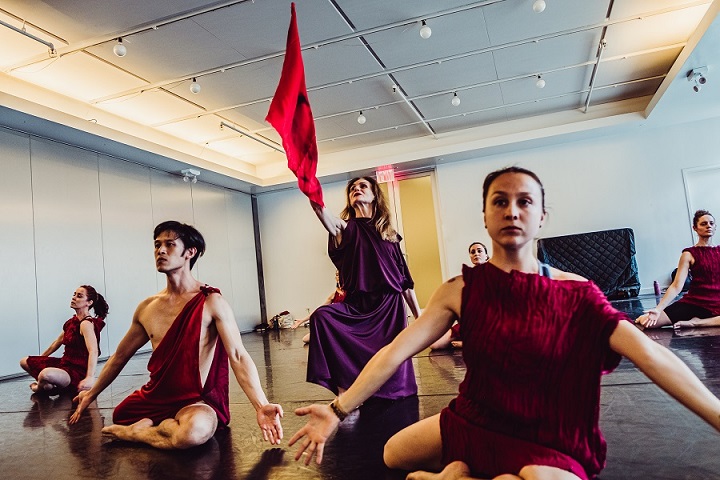
    Monday May 27th, 2019 – Since I had a prior commitment on the evening of their appearance at Sans Limites Movement 2019, Beth Jucovy very kindly arranged for me and photographer Dmitry Beryozkin to watch a rehearsal of her Company, Dance Visions NY, who are presenting the Company’s staging of Isadora Duncan’s Russian Workers Songs and Scriabin Etudes at the festival.

    These works were transmitted to Ms. Jucovy directly by 2nd generation Duncan exponent, Julia Levien, with the exception of The Crossing, which was passed on to Ms. Jucovy by Adrienne Ramm. Isadora Duncan’s Scriabin Etudes consist of Mother, The Crossing, and Revolutionary. The Russian Workers Songs are entitled Dubinushka and Varshavianka.

    These danceworks were created by Isadora Duncan circa 1923; they were all revived by Irma Duncan and re-staged by Julia Levien, who had danced with Irma’s company. The dances reflect Isadora’s experiences while she lived in Revolutionary Russia; among their themes are struggle, awakening, protest, revolution, and – ultimately – victory.

    Dance Visions NY dancers who perform in the Russian Workers Songs are Beth Jucovy, Anastasia Benedetti, Louisa Cathcart, Cathleen Deutscher, Ligia Gaissionok, I-Nam Jiemvitayanukoon, Shannon McMullan, and Rebekah Mulkey. The Scriabin Etudes – three solos – are danced by Ms. Jucovy.
     
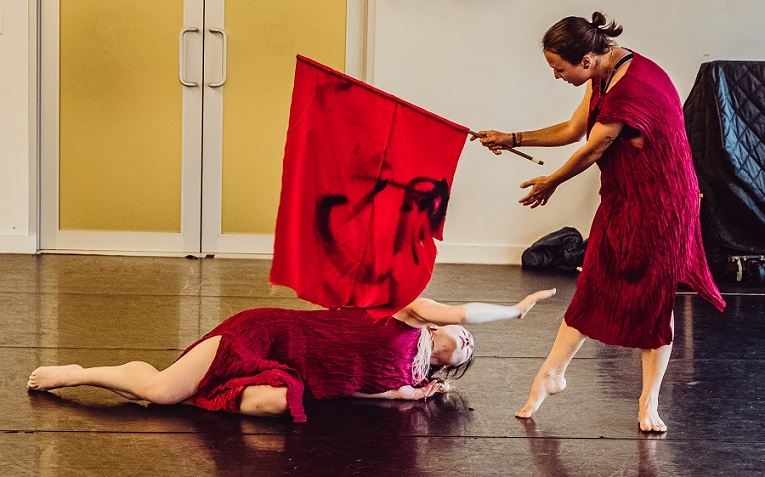
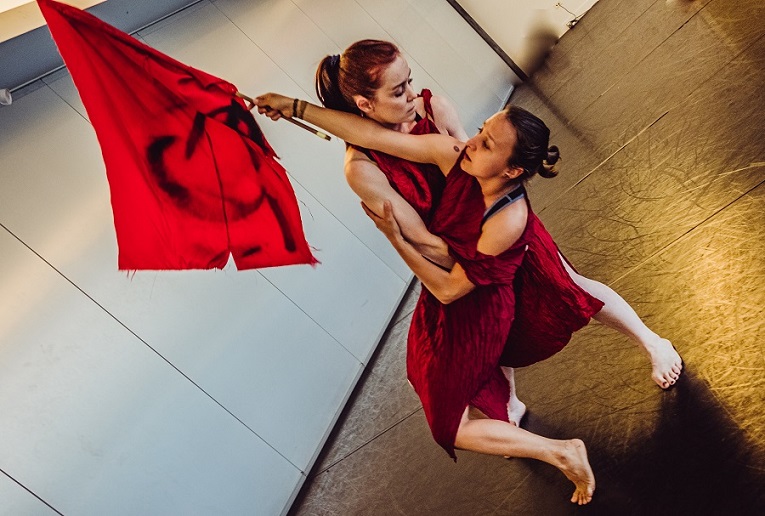
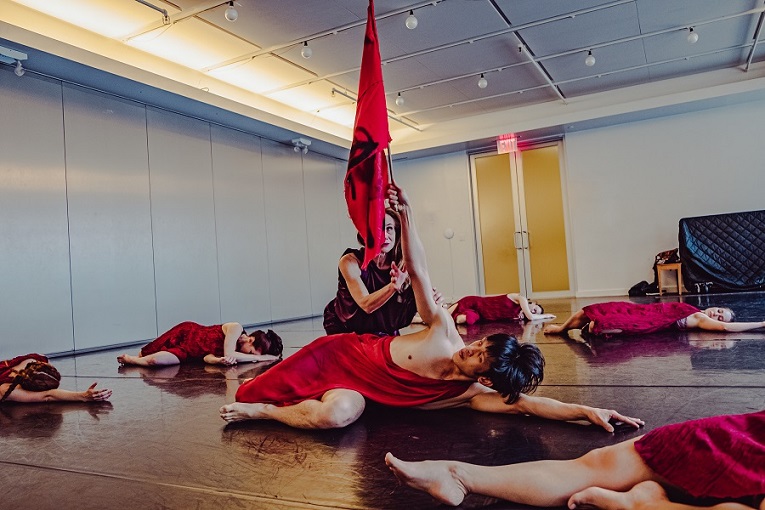
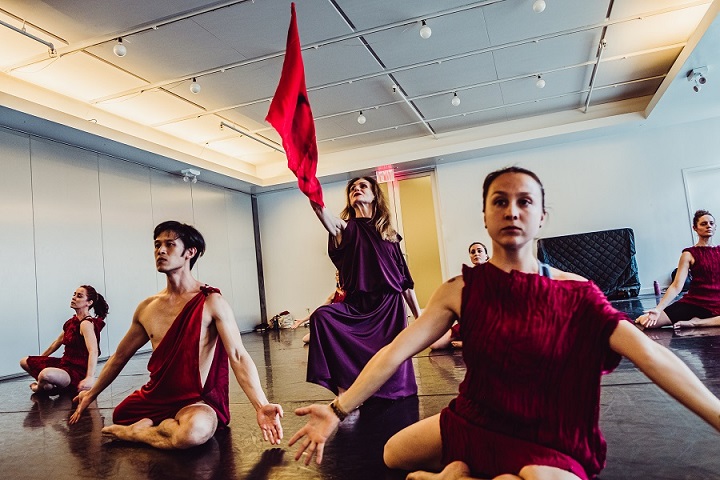
    After running thru the Russian Workers Songs a couple of times in practice clothes, the dancers donned the red-hued costumes and danced both pieces full-out.
     
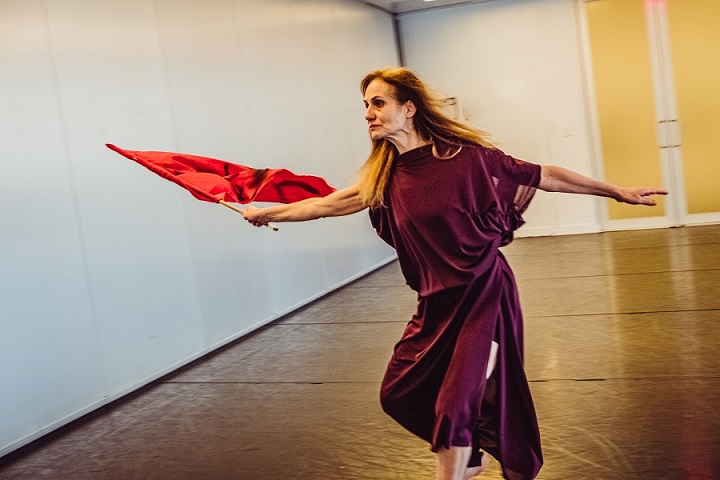
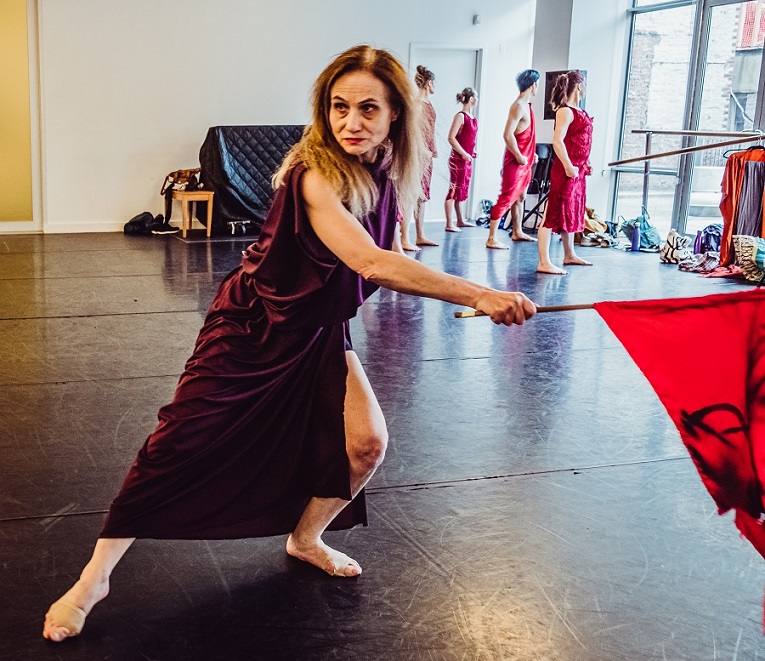
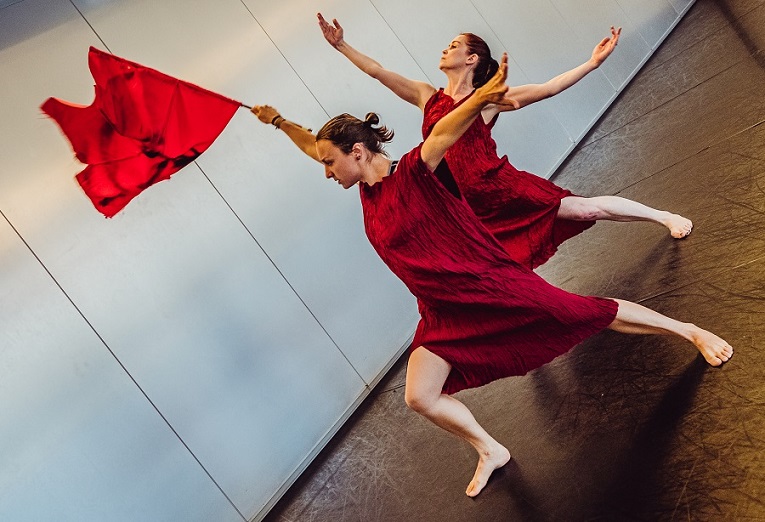
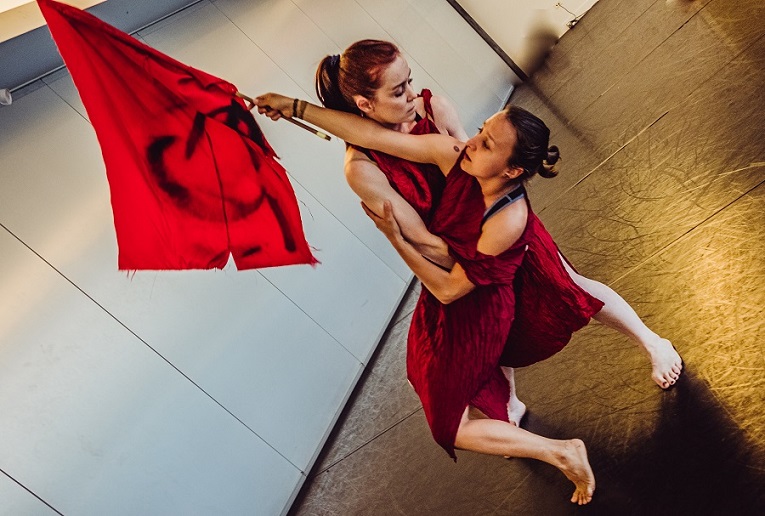
    The Varshavianka sings of the struggle of the workers to throw off the yoke of oppression. Marching under the red flag of Liberty, one by one the valiant fighters are shot down; but with each casualty, another brave worker takes up the banner. In the end, the fallen are transfigured; they rise again to carry on the struggle.
     
    Photos from Varshavianka:
     
    DSCF7575
     
    Beth Jucovy
     
    DSCF7577
     
    DSCF7603
     
    Louisa Cathcart and Ligia Gaissionok
     
    DSCF7606
    Ligia Gaissionok and Cathleen Deutscher
     
    DSCF7609
     
    Cathleen Deutscher and Ligia Gaissionbok
     
    DSCF7627
     
    I-Nam Jiemvitayanukoon and Shannon McMullan
    DSCF7637
     
    I-Nam Jiemvitayanukoon, Shannon McMullan
     
    DSCF7650
     
    DSCF7656
     
    DSCF7660
     
    DSCF7667
     
    DSCF7670
     
    Above: the finale of the Varshavianka
     
    The Dubinushka was sung by dock workers, hauling the heavy ropes in the shipyard; they sang this song to maintain the rhythm of their work.
     
    Photos from Dubinushka:
     
    DSCF7515
     
    Beth Jucovy
     
    DSCF7522
     
    DSCF7535
     
    DSCF7543
     
    DSCF7556
     
    DSCF7565
     
    Above: in the foreground are Shannon McMullan and Rebekah Mulkey
     
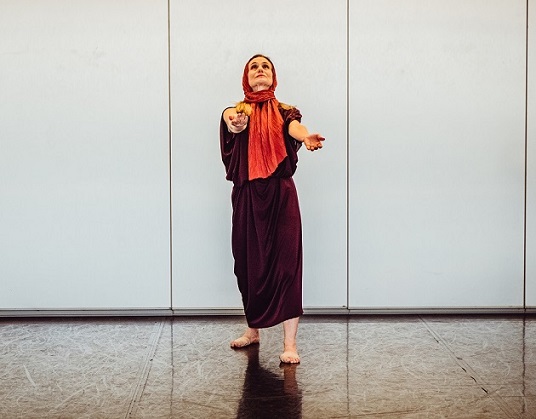
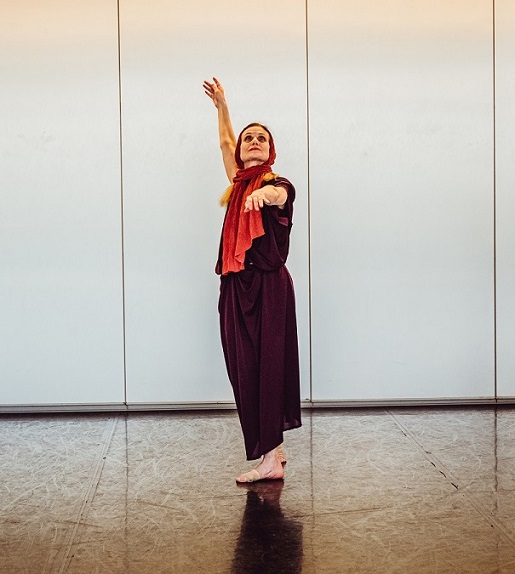
    After dancing the Workers Songs, the dancers began packing up to leave. We talked with them briefly: some have been dancing with Ms. Jucovy for many years, so the Company definitely has the feel of family. Beth began tidying up the studio, and I asked her a question about the Scriabin Etudes. “Shall I dance them for you?”, she asked. And in the twinkling of an eye, she donned the Isadorian scarves and began to dance the three solos.
     
    Mother:
     
    DSCF7698
     
    DSCF7730
     
    DSCF7752
     
    DSCF7765
     
    DSCF7795
     
    The Crossing:
     
    DSCF7808
     
    DSCF7828
     
    DSCF7848
     
    DSCF7863
     
    Revolutionary:
     
    DSCF7928
     
    DSCF7945
     
    DSCF7971
     
    DSCF8009
     
    Beth danced these solos in full performance mode, deeply involved and vibrantly expressive; it was so generous of her to share these unique works with us.
     
    ~ Oberon
     
    Photos: Dmitry Beryozkin  
  • Beth Jucovy/Dance Visions NY: Isadora’s Russian Repertory

    DSCF7652

    Above: I-Nam Jiemvitayanukoon and Beth Jucovy in Isadora Duncan’s Varshavianka; photo by Dmitry Beryozkin

    ~ Author: Oberon

    Monday May 27th, 2019 – Since I had a prior commitment on the evening of their appearance at Sans Limites Movement 2019, Beth Jucovy very kindly arranged for me and photographer Dmitry Beryozkin to watch a rehearsal of her Company, Dance Visions NY, who are presenting the Company’s staging of Isadora Duncan’s Russian Workers Songs and Scriabin Etudes at the festival.

    These works were transmitted to Ms. Jucovy directly by 2nd generation Duncan exponent, Julia Levien, with the exception of The Crossing, which was passed on to Ms. Jucovy by Adrienne Ramm. Isadora Duncan’s Scriabin Etudes consist of Mother, The Crossing, and Revolutionary. The Russian Workers Songs are entitled Dubinushka and Varshavianka.

    These danceworks were created by Isadora Duncan circa 1923; they were all revived by Irma Duncan and re-staged by Julia Levien, who had danced with Irma’s company. The dances reflect Isadora’s experiences while she lived in Revolutionary Russia; among their themes are struggle, awakening, protest, revolution, and – ultimately – victory.

    Dance Visions NY dancers who perform in the Russian Workers Songs are Beth Jucovy, Anastasia Benedetti, Louisa Cathcart, Cathleen Deutscher, Ligia Gaissionok, I-Nam Jiemvitayanukoon, Shannon McMullan, and Rebekah Mulkey. The Scriabin Etudes – three solos – are danced by Ms. Jucovy.
     
    After running thru the Russian Workers Songs a couple of times in practice clothes, the dancers donned the red-hued costumes and danced both pieces full-out.
     
    The Varshavianka sings of the struggle of the workers to throw off the yoke of oppression. Marching under the red flag of Liberty, one by one the valiant fighters are shot down; but with each casualty, another brave worker takes up the banner. In the end, the fallen are transfigured; they rise again to carry on the struggle.
     
    Photos from Varshavianka:
     
    DSCF7575
     
    Beth Jucovy
     
    DSCF7577
     
    DSCF7603
     
    Louisa Cathcart and Ligia Gaissionok
     
    DSCF7606
    Ligia Gaissionok and Cathleen Deutscher
     
    DSCF7609
     
    Cathleen Deutscher and Ligia Gaissionbok
     
    DSCF7627
     
    I-Nam Jiemvitayanukoon and Shannon McMullan
    DSCF7637
     
    I-Nam Jiemvitayanukoon, Shannon McMullan
     
    DSCF7650
     
    DSCF7656
     
    DSCF7660
     
    DSCF7667
     
    DSCF7670
     
    Above: the finale of the Varshavianka
     
    The Dubinushka was sung by dock workers, hauling the heavy ropes in the shipyard; they sang this song to maintain the rhythm of their work.
     
    Photos from Dubinushka:
     
    DSCF7515
     
    Beth Jucovy
     
    DSCF7522
     
    DSCF7535
     
    DSCF7543
     
    DSCF7556
     
    DSCF7565
     
    Above: in the foreground are Shannon McMullan and Rebekah Mulkey
     
    After dancing the Workers Songs, the dancers began packing up to leave. We talked with them briefly: some have been dancing with Ms. Jucovy for many years, so the Company definitely has the feel of family. Beth began tidying up the studio, and I asked her a question about the Scriabin Etudes. “Shall I dance them for you?”, she asked. And in the twinkling of an eye, she donned the Isadorian scarves and began to dance the three solos.
     
    Mother:
     
    DSCF7698
     
    DSCF7730
     
    DSCF7752
     
    DSCF7765
     
    DSCF7795
     
    The Crossing:
     
    DSCF7808
     
    DSCF7828
     
    DSCF7848
     
    DSCF7863
     
    Revolutionary:
     
    DSCF7928
     
    DSCF7945
     
    DSCF7971
     
    DSCF8009
     
    Beth danced these solos in full performance mode, deeply involved and vibrantly expressive; it was so generous of her to share these unique works with us.
     
    ~ Oberon
     
    Photos: Dmitry Beryozkin  

  • Limón Dance Company @ The Joyce

    Jose_limon

    Above: José Limón

    ~ Author: Oberon

    Wednesday May 29th, 2019 – The Limón Dance Company‘s program at The Joyce this evening brought us José Limón’s classic masterwork The Moor’s Pavane and his fascinating ensemble piece Psalm, along with Colin Connor’s The Weather in the Room, danced by guest artists Stephen Pier and Miki Orihara, and Radical Beasts in the Forest of Possibilities from choreographer Francesca Harper, in collaboration with composer/performer Nona Hendryx.

    Thumbnail_limonEt2DYiXo

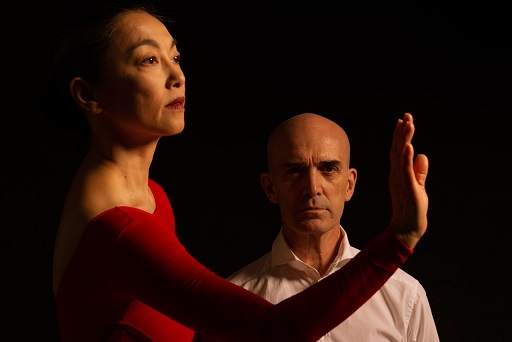
    How wonderful to see dance icons Miki Orihara and Stephen Pier (above) onstage together tonight; the husband-and-wife duo gave a vivid, touching performance in the New York premiere of Colin Connor’s The Weather In The Room, an intimate narrative work which tells us of a long-lasting domestic relationship and shows us what it takes to keep it alive thru the years.

    A couple return home from a formal party; a chair, a stool, and a rug comprise the setting. Shoes come off, and his jacket; they get comfy as what sounds like a scratchy old ’78 record begins to play. Sarah Shugarman’s score is so evocative, and soon memories are in play. Miki’s gestural language is poetry made visible, whilst Stephen looms over his petite soulmate, alternately solicitous and slightly impatient.

    As their danced conversation unfolds, six dancers in white appear, moving restlessly in the background, and running about. A chime sounds, and to a pulsing motif, an argument between the husband and wife springs up. Eventually they withdraw to opposing corners and the space becomes a small theatre where, in a series of duets, the six dancers present dances of memory: chapters from the biography of a marriage. Impetuous youthful gladness, tender moments, and passing anxiousness are depicted to expressive music.

    Thumbnail_limon2019frances  samson&terrencediableinweatherphotobychristopherjones

    Above: Terrence D.M. Diable and Frances Samson in The Weather in the Room; photo by Christopher Jones.

    Gradually, Miki and Stephen have moved closer to one another from their distant corners, and in the end, they are reconciled. But…it’s not quite the end. For the piece has a happy-music coda; the setting reverts to the quiet living room. As the music fades, Miki laughs softly. 

    There are times in an enduring relationship when you will question whether you are in the right place with the right person; it’s happened to me from time to time in recent years. At such moments, drawing from the well of memory reminds us of what we loved about our mate at the start, and makes us ask: what would life be like without him?  Mr. Connor’s thoughtful, sobering dancework resonates with meaning for me and – I am sure – for many who will watch this work. The depth of Miki and Stephen’s performance was so gratifying to experience, and the ensemble of dancers – Terence D.M. Diable, Mariah Gravelin, Gregory Hamilton, Eric Parra, Frances Samson, and Lauren Twomley – sustained the atmosphere with their articulate, committed dancing.

    José Limón’s best-known work, The Moor’s Pavane, is always as meaningful to hear as to see; the choreographer’s choice of Henry Purcell’s music underscores what I have long believed: this music is made to be danced to. Drawing on Shakespeare’s story of The Moor whose love for his faithful wife Desdemona is destroyed thru jealousy sparked by innuendo, the choreographer creates a ballet at once elegant and brutal. This evening it was splendidly danced by Mark Willis (The Moor), Savannah Spratt (His Wife), Jess Obremski (His Friend), and Jacqueline Bulnés (The Friend’s Wife), their dancing alive with nuance and musicality. 

    Over tiime, I have seen many danceworks similar to Francesca Harper’s Radical Beasts in the Forest of Possibilities wherein the dancers dwell in a desolate landscape, with drifting fog. Nora Hendryx has created a collage of electronic sounds ranging from static to sonic pulsars. Among the eight dancers, who move with vivid athleticism in choreography that has an improvisational quality, there seem to be alternating currents of connection or isolation.

    Jacqueline Bulnés (who emerges first from the darkness, as if lighting the way), Terrence Diable, Mariah Gravelin, David Glista, Jesse Obremski, Frances Samson, Lauren Twomley, and Mark Willis all showed the strength and suppleness of their dancing. The work might have ended on a rather desolate note, but then Ms. Hendryx turned from her laptop to the piano keyboard and began to play a lyrical theme. Dancers Lauren Twomley and Jesse Obremski joined in a duet that brought a sense of humanity to the proceedings; both dancers are beautiful movers. The piece ends on a question mark, as Ms. Bulnés returns with her flashlight as if seeking the couple out. Have they done something wrong? 

    Thumbnail_limonPsalmphoto_by_Douglas_Cody

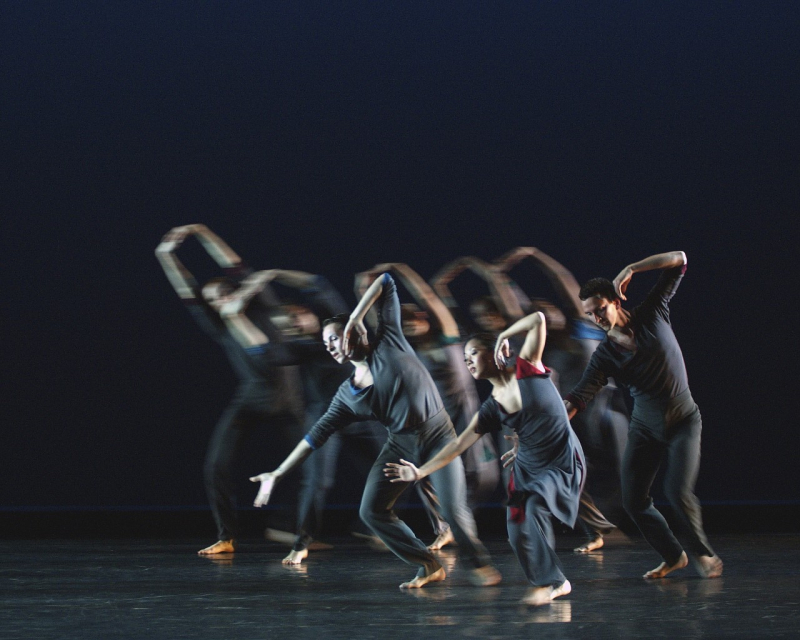
    Above: from Psalm; photo by Douglas Cody

    The evening ended with a re-staging of José Limón’s 1967 ritualistic work, Psalm. Carla Maxwell had commissioned a new score for this large-scale dramatic work from composer Jon Magnussen in 2002. I had the opportunity of watching a studio rehearsal of Psalm a week prior to the Joyce performances, and was thrilled and moved by it.

    Without the program note explaining the traditional Jewish belief that all the sorrows of the world rest in thirty-six Just Men, we might have thought of the ballet’s protagonist as an Outcast, a Penitent, or a Christ Figure. In this role, dancer David Glista gave a striking performance, abounding in physical energy and passion, living out the torment of the character with unswerving commitment. Two women, Savannah Spratt and Frances Samson, had prominent roles, and the entire Company filled the space with leaps, turns, and ecstatic gestures as the music ranged from harp and chant to pounding drums, solos for male voice, syncopated Alleluias, and summoning tambourines. Throughout the work, thoughts of Martha Graham’s epic ceremonials continually came to mind.

    Psalm is perhaps a bit over-long, and parts of it are repetitive. But it is as impressive to behold as to hear, and it provides a portal to an ancient world where such rites were an essential element in the life of the community.

    ~ Oberon