Category: Ballet

  • NY Phil: THE PLANETS + Williams’ Tuba Concerto

    PJ-BW140_FIXBAG_DV_20140723162140

    Above: Alan Baer of The New York Philharmonic in a Chris Lee photo

    Saturday May 28th, 2016 – Aside from Mars, I am not really a fan of the famous Gustav Holst work The Planets (composed in 1914-1916). I remember many years ago tuning in to a radio broadcast of the piece and finding my interest diminishing steadily once the spaceship left Mars for Venus; I never made it back to Earth.

    Tonight, a chance to hear The Planets in concert at Geffen Hall provided an opportunity to test my earlier reaction. Under the baton of David Robertson, The New York Philharmonic‘s performance of this sprawling epic was nothing short of marvelous. But the music itself just doesn’t reach me, beyond a surface appeal – and despite the composer’s obvious skill in orchestration. And so – yet again – upon departing Mars, I felt lost in space. 

    The remaining six movements do have their very appealing passages, of course, but also their longueurs. The only time I truly connected with any of the music was when the theme of the hymn ‘I Vow To Thee My Country strikes up as Jupiter looms in the sonic heaven. The stay on Uranus seemed endless: not much going on there. I simply couldn’t wait for this trip thru the solar system to end. Maestro Robertson had the huge forces doing his bidding to fine effect, and making a splendid sound; featured violin solos from Sheryl Staples were saving graces on this journey to nowhere. 

    But enough grumbling, lest I be mistaken for Bernie Sanders; the first half of the program was indeed thoroughly enjoyable.  

    Edward Elgar’s Introduction and Allegro (composed in 1905) opened the evening; it’s a beautiful piece and would make a great ballet score (maybe it’s been done?). The composer gives a prominent role to a string quartet, setting them before the full string contingent of the orchestra. As this quartet consisted of Sheryl Staples, Lisa Kim, Cynthia Phelps, and Carter Brey, the playing was remarkable – I especially was entranced by a solo from the viola of Ms. Phelps. When the Philharmonic strings played en masse, the richness of sound was truly savorable.

    The tall and slender Alan Baer then appeared with his silver tuba for John Williams’ Tuba Concerto. This rather brief work (just over 15 minutes in length) was very pleasing from start to finish, for Mr. Baer’s sound has a warm glow and a toothsome dark-chocolate richness in the lower range.

    The opening passages made me think of a sea shanty: good-natured, a bit brusque, with fog-horn low notes along the way. Later the tuba converses with the French horn, and in the concerto’s second movement, the tuba sounds deep phrases over a horn chorale before embarking on a polished cadenza.

    The violins strike up. The oboe has a theme that is passed to the flute, and then the flute and tuba talk to one another. After another – briefer – tuba cadenza, fanfares sound and there is a cabaletta of sorts, with trumpets giving propulsion and the tuba singing some skittish coloratura. Harp and timpani have a part to play: another inventive mix on the composer’s part. Swift-rising scales for the tuba herald a jovial conclusion.

    Philharmonic audiences love it when artists from the orchestra step forward in featured roles; there was lovely enthusiasm for the string quartet after the Elgar, and Mr. Baer received hearty cheers from the crowd, as well as the admiring applause of his colleagues.

  • Joffrey Ballet Concert Group @ NYLA

    2016 St. Saens 4th mvmt. fouette jump Lindsey Felix, Daniel White, Genaro Freire JBS_CONCERT GROUP_5-25-2016_by Lucas Chilczuk-1277

    Above: Lindsey Felix, Daniel White, and Genaro Friere of the Joffrey Ballet Concert Group in Gerald Arpino’s Suite St. Saens; photo by Lucas Chilczuk

    Friday May 27th, 2016 – The JOFFREY BALLET CONCERT GROUP, under the Artistic Direction of Davis Robertson, performing a mixed program of classics (Gerald Arpino’s Suite St. Saens, and Balanchine’s Valse Fantaisie) along with newly-created pieces by Gabrielle Lamb, Robert Jeffrey, and Dwight Rhoden plus an Asaf Messerer pas de deux à la Russe to music by Rachmaninoff which brought down the house. A very attractive company of dancers held the audience in an attentive, appreciative state; excellent lighting (David Moodey) enhanced each ballet as this highly enjoyable program of dance unfolded before us. 

    Valse Fantaisie - Shaina Wire & Sergio Arranz saute de chat

    Above: Shaina Wire and Sergio Arranz in Valse Fantasie; photo by Lucas Chilczuk

    To start a ballet evening with Balanchine is always a good thing, and Valse Fantaisie – to the intoxicating Glinka score – engaged us immediately. Stacey Caddell has staged the ballet on the young Joffrey dancers, and they did very nicely by it. Four lovely ballerinas sailed thru the lyrical (and sometimes tricky) Balanchine choreography with a sense of joy; in the principal roles, Shaina Wire and Sergio Arranz were appealing in both appearance and technique, displaying a fine mixture of nobility and charm.

    Mr. Arranz was back onstage moments later, in silhouette, for the opening of Robert Jeffrey’s Confianza. This intimate, moody pas de deux is set to a collage of music by Benjamin Brown, Steven Stern, Eric Satie, and Max Richter. The choreographer gives the dancers – Victoria Santaguida and Mr. Arranz – complex and demanding partnering motifs which the couple handled with persuasive aplomb, bringing tenderness tinged with sensuousness to their dancing.

    And So It Goes - Sierra French & Genaro Freire in ecarte pull

    Above: Sierra French and Genaro Friere in And So It Was…photo by Lucas Chilczuk

    Dwight Rhoden’s And So It Was… is danced to Bach’s Partita #2 in D-minor. As smoke wafts across the dramatically-lit stage, a sexy atmosphere is developed with the seven boys in silky briefs and the girls sleekly costumed. The choreographer’s sense of musicality serves up a succession of duets – sometimes with all seven couples duetting at the same time – with an endless flow of dancers coming and going. As is so often the case in using Bach’s music, the ballet eventually began to feel repetitive; the dancers were able to sustain this longish work thru their personal attractiveness and commitment.

    Tessellations - Shayla Hutton & Sergio Arranz arabesque

    Above: Shayla Hutton and Sergio Arranz in Tesselations; photo by Lucas Chilczuk

    Gabrielle Lamb’s Tessellations provided a wonderful change of pace; using a brilliant mix of music by The Amestoy Trio and Cat Power, Gabrielle’s ballet at first seems to be just another ‘loner vs community” narrative, but it is far more quirky – ironic, moving, and witty by turns – and was expressively danced by the Joffrey troupe. 

    The dancers wear dark clothing and socks. The Amestoy Trio’s fresh meshing of gypsy, Parisian, and Latino influences is a kick to hear, and Cat Power’s vocals for a pas de deux has its own slightly gritty appeal. Periods of silence allow us a bit of reverie before the dancing moves on. The dancers alternately dance and observe, forming fleeting cliques and chains, standing in ordered designs, communicating in gestures, and creating a world in which alternating currents of sentiment and low-key street savvy hold us under a spell. It’s been a while since I’ve seen any of Gabrielle’s work, and this was really refreshing to experience.

    Spring Waters - Mariana Perez and Jon-Paul Hills ecarteJBS_CONCERT GROUP_5-25-2016_by Lucas Chilczuk-813

    Above: Mariana Perez and Jon-Paul Hills in Spring Waters; photo by Lucas Chilczuk

    Asaf Messerer’s Spring Waters, the boyish and muscular Jon-Paul Hills wowed the audience with the fearless strength of his partnering, placing his ballerina – Mariana Perez – in improbable lifts with the assurance of an Olympic athlete, catching her as she rushes to his arms and sweeping her overhead. The duet ends with a spectacularly high lift as Mr. Hills rushes across the stage and into the wings, bearing Ms. Perez aloft like an exulted icon: the audience simply went nuts as they sped away.  

    Gerald Arpino’s Suite Saint-Saëns was the closing number this evening, a large-scale work filled with movement and alert to the music’s many fragrances. The dancers enter one by one, with brisk jetés and meeting up in fleeting partnerings. Lindsey Felix, a featured soloist in the first two movements (Caprice Valse and Serenade) was agile and lovely to watch.

    The Serenade has a dreamier quality; four couples to start, with other dancers joining. The simple act of walking takes on its own resonance. An intimate pas de trois for Ms. Felix, Maria Sol Maratin, and William Hall evolves beautifully as other dancers come and go.

    A march-like theme jolts us, but soon settles in to a Minuet with a ‘classic’ pas de deux – and another big lift – before hastening on to the concluding Pas Redoublé which features leaping boys and even a set of fouetté turns. The music is bouncy, the dancing exuberant.

    Amid all the bustle and swirl of this wonderful ballet, a dancer who had not appeared earlier in the evening – Haojun Xie – made a very fine impression with his lithe jump and sincere presence.

  • Ballet Academy East ~ Spring Performance 2016

    Facebook_logo1

    Friday May 20th, 2016 – Students from Ballet Academy East’s Pre-Professional Division took the stage at the Gerald W. Lynch Theater tonight to dance a mixed program marking the end of term.

    Alan Hineline’s ravvishing ballet Sans Nuages opened the evening, and as soon as it ended my companion Claudia Schreier and I agreed that we wanted to see it again…right away. It’s that wonderful. The ballet is set to the Serenade for Strings in E, Opus 22 by Antonín Dvořák and is danced by an ensemble of fifteen, including a principal couple and female soloist; we had seen a preview of it in March.

    With the girls in sumptuous creamy tutus, the ballet has a romantic swirl to it. The structure and musicality of Mr. Hineline’s choreography – and the way it showed the dancers always to best advantage – make it a ballet that companies everywhere should want to acquire. Excellent dancing from Petra Love in the soloist role and Yuki Takahashi and Alejandro Andrade in the central pas de deux; the entire cast in fact danced beautifully, clearly inspired by the lovely Dvořák score.

    Darla Hoover created two brief ballets for the youngest dancers from BAE; in setting the works to Salieri (Une Petite Introduction) and Bach (Un Petit Menuet), Darla wisely sets a standard of musical choices that will hopefully inspire these youngsters both in their dancing and in their lives. (The Bach melody, incidentally, was borrowed for a 1960s pop hit, Lover’s Concerto, by The Toys; it was later taken up by The Supremes.)

    Slightly older dancers took the stage for Jenna Lavin’s Gossec’s Gavotte, to music composed by François-Joseph Gossec. Central to this piece was a a solo turn for the petit danseur Tristan Massa; his charming performance won the hearts of the audience. 

    Following an intermission, TO BE CONTINUED…, Jenna Lavin’s second work on the program, found five of the advanced dancers backed by a younger corps de ballet. Ms. Lavin gets an extra  bouquet of roses for choosing music of Henry Purcell, a composer whose work simply cries: “Dance!”

    In this “blue” ballet, Alejandro Andrade gave a truly impressive display of male bravura dancing; he also partnered each of the four main girls in well-constructed duet passages. Mr. Andrade’s performance brought down the house.

    Alan Hineline’s de l’innocence brought forth pianist Steven Mitchell to perform Franz Schubert’s 16 German Dances. This very pretty ballet featured spacious dancing from Tallison Costa, four soloists, and a corps de ballet of ten. Mr. Hineline’s choreography flows nicely on the music here, as dancers in varying combinations sweep on and rush away in a succession of finely-shaped vignettes. Once again, the choice of music contributed greatly to the overall enjoyment of the program.

    To close this evening, the third act of Coppélia, choreographed ‘after Petipa’ by Roger Van Fleteren (Alabama Ballet’s Associate Artistic Director) was performed by the BAE dancers with handsome sets and costumes on loan from Alabama Ballet.

    Every time I hear music from Coppélia, I recall my own very brief ballet career. Watching this evening’s re-creation was actually quite a nostalgic experience for me: I found myself wondering where my dancing mates from so long ago are now, especially TJ.

    The large cast, skillfully deployed by Mr. Van Feteren in the limited stage space, all entered into the spirit of this naive, musically brilliant ballet. Mary Watters built a real character as Swanhilda, her bridal bouquet trembling in her hands until Franz said “I do.” The ballerina showed lovely musicality in her solo, with its musical hesitations mirrored by subtle pauses in her dancing. Mr. Andrade, in addition to his commanding virtuosity, showed himself to be a real stage creature with his easy, affable stage demeanor. Petra Love’s lyrical dancing as Dawn and the poetic reverie of Yuki Takahashi’s Prayer both reflected lovingly on the music, and Joseph Marlborough was the authoritative Burgermeister.

    As the unstoppable joy of the Delibes finale propelled the dancers on to the finish line, Ms. Watters reeled off an attractive set of fouettés whilst Mr. Andrade leapt and swirled about the stage with unabashed vitality.

  • Carter Brey: Schumann @ The NY Phil

    Tumblr_m2ozpelCxd1qa028to1_1280

    Above: NY Philharmonic principal cellist Carter Brey, with his colleague Eileen Moon

    Thursday April 28th, 2016 – Performances of Robert Schumann’s cello concerto seem to be something of a rarity, so I was glad of an opportunity to hear it at The New York Philharmonic tonight. I always love to see the orchestra’s principal players stepping out for a soloist turn. Carter Brey’s playing was most enjoyable, as was watching him play; his colleagues swamped him with affectionate applause as he took his bows.

    A new work by Franck Krawczyk opened the concert. I’m fairly open to new music; when new works are programmed, I am always hoping for two things: that the composer might go beyond good craftsmanship and somehow touch the soul, and that there would be something to remember in the music. I found both tonight in Mr. Krawczyk’s Après, having its world premiere in these performances.

    Both my companion and I felt a sense of narrative in Après: she envisioned a scene in nature with large trees and roaming beasts while I imagined the final days of a war and its immediate aftermath. The program notes imply no story of any kind, but the composer does pay homage to Beethoven, Kurtag, and Dutilleux. 

    Après commences with a poignant, intense theme, the lower voices glowering. A big passage for strings, with the violins soaring upward and the violas then exuding calm follows; a single sustained note from the clarinet introduces somber winds, and things turn ominous. For a few seconds the music ambles restlessly, with percussive effects introduced quietly: chimes, cymbals, snare drum. 

    Suddenly, a clattering arises: all the musicians begin to drum on their stands or tap their instruments. The horns herald an odd dance. An unsettled feeling – almost of being trapped – develops and there’s a huge build-up which evaporates to a single note from the piano.

    The crack of a whip sparks a march-like section, with loud chimes. The lower winds darken, only to give way to the work’s most fantastical passage: the mingling of solo harp and piano creates an eerie tranquility. So atmospheric! The winds re-enter, the violins lament, the harp and piano sound together again. Brass and percussion swell to a great loudness, the violas are plucked, and then, in a wisp, the harp gives us a mysterious ending.

    The youthful-looking composer appeared for a bow; having heard Après – with that bewitching harp and piano motif – and having read of Mssr. Krawczyk’s musical roots (he was an accordionist), I’ll be finding more of his music to explore in the less hectic days of Summer. Of the new works presented in recent months by the Philharmonic, I rate Après very highly indeed.

    Mr. Brey then appeared for the Schumann concerto. Both the work and his playing of it were thoroughly pleasing, as was the feeling he conveyed of truly enjoying the music and of listening to his colleagues attentively in those moments when the soloist is silent. 

    Three movements are listed for this concerto, but they are played without pauses in between so that it becomes an arc, a sort of cello tone-poem. It opens with a heartfelt, rather sad theme. Even when things become more animated, there is a sense of longing. Mr. Brey’s playing is subtle and refined in the more sustained passages: there’s a constant stream of melody for the cello over commenting strings. Rising scales recur, and the French horn has some lovely moments.

    There’s an ironic waltz, with the pensive cello playing deep and lulling as the violins and violas are gently plucked. A tender cello theme leads to what ‘should be’ a cadenza, but the orchestra continues to play a part.

    Suddenly a dance erupts, and Mr. Brey’s animated fiorature cover a wide range at high speed. The virtuosity continues, with the orchestra stately or turbulent by turns, to the end; the audience couldn’t restrain their applause, breaking in before the final note had faded away. The tall cellist was warmly hailed, embraced by the conductor, and lionized by his colleagues.
    The program concluded with the Brahms 2nd symphony; it was (needless to say) gorgeously played, and Alan Gilbert’s vision of it is most congenial. I very much enjoyed watching the Maestro’s podium choreography tonight.

    In a letter on his second symphony, written around the time of its premiere, Brahms apparently referred to the state of melancholy as a signature of this work. There is, to be sure, a tinge of sad regret that runs thru the music, but also passages of hope, romance, affirmation. Overall, it is a warmly wonderful infusion for the spirit.

    The Brahms Second is rather front-loaded; the first two movements together last about 30 minutes while the final two together take less that half that time. The third and fourth movements – for all their  appeal and zest – seem somewhat light-weight after the riches of the first two. Of course, everyone is listening for the famous “lullaby” – which my grandmother actually sang to us when we were small: “Go to sleep, go to sleep, it is night-time for baby.” I also remember Christa Ludwig singing the ‘Brahms Lullaby’ as an encore at a recital she gave in this very hall many moons ago. The theme recurs in various guises throughout the opening movement of the 2nd symphony.

    Horns and winds welcome us, and a unison violin theme develops grandly and spreads thru the orchestra; the playing is resplendent. A horn solo lingers in the memory. The cellos play a lovely theme at the start of the second movement; horns and winds again mingle voices and the adagio moves opulently forward. Winds play over plucked celli, dancing thru the third movement towards a presto finish, and in the fourth movement a gentle start soon goes grand…and oddly Russian. The broad flow of melodies is simply delightful to bask in as the symphony sails to a spirited finale. Maestro Gilbert and his players were at their very finest here (all evening, actually) and the applause was still echoing as I walked up the aisle. 

    Tonight’s concert honored The Philharmonic’s retirees – four who are currently playing their final season, and several former members who were in the audience tonight and who stood for a bow. Retiring violist Irene Breslaw and violinist Carol Webb each made heartfelt speeches, recalling the high points of their years with the orchestra and speaking fondly of their colleagues. Their words were very moving.
    Flautist Sandra Church and violinist Newton Mansfield (a 55-year Philharmonic veteran!) are also in their final season; and violist Katherine Greene was honored tonight as she is celebrating her 25th anniversary with the orchestra.

  • Paul Taylor @ Lincoln Center 2016 – Part II

    ImageProxy.mvc

    Above, one of the best of the best: Robert Kleinendorst of PTAMD

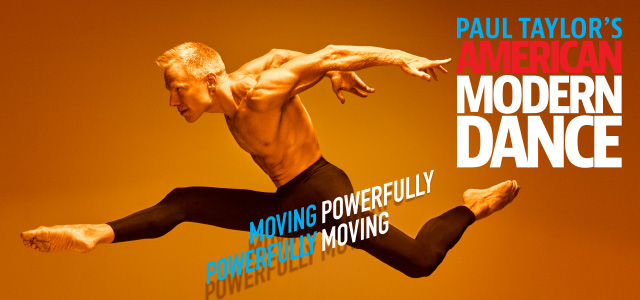
    Tuesday March 29th, 2016 – This evening’s performance by Paul Taylor’s American Modern Dance in the final week of their Lincoln Center season opened with a classic Taylor ‘white’ ballet, Equinox, set to music of Johannes Brahms which was performed (lovingly) live by a string quintet.

    Two principal couples – Laura Halzack with Robert Kleinendorst and Paris Khobdeh with Michael Apuzzo – perform some of Paul Taylor’s most inventive and pleasing partnering passages with a feeling of lyrical athleticism. A long solo by Ms. Halzack was enchanting to behold. A quartet of dancers – too stellar to be deemed “supporting” – moved with captivating urgency and grace: Michelle Fleet, Eran Bugge, Sean Mahoney, and James Samson. The white costumes evoke Summer, but the Brahms themes hint at the approach of Autumn. Heartfelt dancing and playing from everyone involved.

    The Weight of Smoke (a new Doug Elkins work) was a hot mess. The choreography is loaded with gimmicks and clichés while the fusion of Baroque (here, Handel) with contemporary club beats and noisy effects has been done before and has lost its cleverness. The dancers may have enjoyed the opportunity to cut loose, not having to think too much about technique or precision, but to me (and my choreographer-companion) the work seemed endlessly aimless and mildly embarrassing. Laced with gender-bending elements, with two women in a sustained kiss, and sashaying gay-boy stereotypes, the work ambled on with lots of energy being expended on retro-provocations. In the end, I was thinking: “You have sixteen of the best dancers on the planet to work with, and this is what you came up with?” 

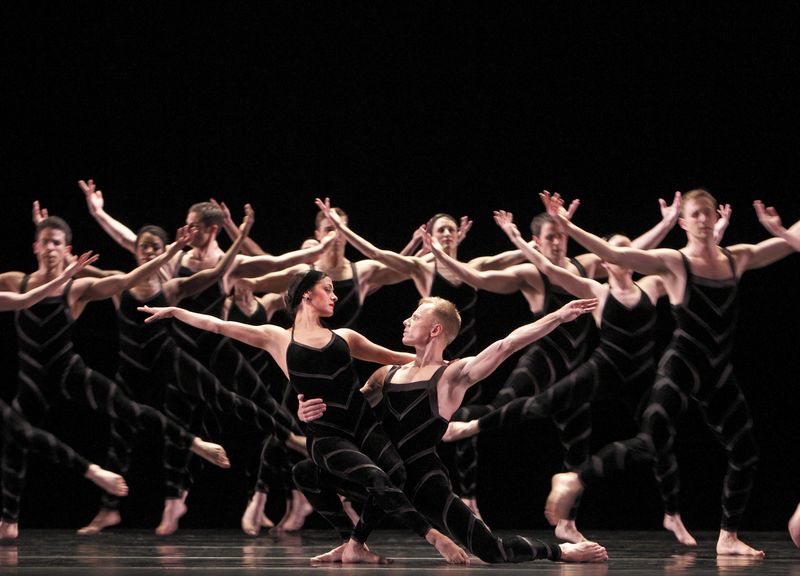
    The evening ended on the highest of possible high notes with Paul Taylor’s Promethean Fire; the same sixteen dancers who slogged their way thru the tedious Elkins now appeared in Santo Loquasto’s incredible black costumes and treated us to a feast of impeccable dancing in this darkly dazzling ballet.

    Paul Taylor’s choreography here gives Mr B a run for his money in terms of musicality and structure…and it looks gorgeous on Mr. B’s own stage. The Leopold Stokowski orchestrations of music by J. S. Bach seem jarring at first but Mr. Taylor was right to choose them as they mesh well with the opulent energy of the dancing.

    The live music (Orchestra of Saint Luke’s under Donald York’s baton) was a wonderful enhancement to the onstage splendour; it’s a great piece for zeroing in on individual dancers as they move with such assurance and beauty of spirit thru choreography that must be a sheer delight to dance.

    Promethean_8456_retouch

    The central passage of Promethean Fire is a pas de deux which was danced tonight by Parisa Khobdeh and Michael Trusnovec (above). Their physical allure and their sense of the importance of the steps and port de bras made this such a richly rewarding experience, both visually and spiritually.

    Production photo © 2015 Paul Taylor’s American Modern Dance

  • Paul Taylor @ Lincoln Center 2016 – Part II

    ImageProxy.mvc

    Above, one of the best of the best: Robert Kleinendorst of PTAMD

    Tuesday March 29th, 2016 – This evening’s performance by Paul Taylor’s American Modern Dance in the final week of their Lincoln Center season opened with a classic Taylor ‘white’ ballet, Equinox, set to music of Johannes Brahms which was performed (lovingly) live by a string quintet.

    Two principal couples – Laura Halzack with Robert Kleinendorst and Paris Khobdeh with Michael Apuzzo – perform some of Paul Taylor’s most inventive and pleasing partnering passages with a feeling of lyrical athleticism. A long solo by Ms. Halzack was enchanting to behold. A quartet of dancers – too stellar to be deemed “supporting” – moved with captivating urgency and grace: Michelle Fleet, Eran Bugge, Sean Mahoney, and James Samson. The white costumes evoke Summer, but the Brahms themes hint at the approach of Autumn. Heartfelt dancing and playing from everyone involved.

    The Weight of Smoke (a new Doug Elkins work) was a hot mess. The choreography is loaded with gimmicks and clichés while the fusion of Baroque (here, Handel) with contemporary club beats and noisy effects has been done before and has lost its cleverness. The dancers may have enjoyed the opportunity to cut loose, not having to think too much about technique or precision, but to me (and my choreographer-companion) the work seemed endlessly aimless and mildly embarrassing. Laced with gender-bending elements, with two women in a sustained kiss, and sashaying gay-boy stereotypes, the work ambled on with lots of energy being expended on retro-provocations. In the end, I was thinking: “You have sixteen of the best dancers on the planet to work with, and this is what you came up with?” 

    The evening ended on the highest of possible high notes with Paul Taylor’s Promethean Fire; the same sixteen dancers who slogged their way thru the tedious Elkins now appeared in Santo Loquasto’s incredible black costumes and treated us to a feast of impeccable dancing in this darkly dazzling ballet.

    Paul Taylor’s choreography here gives Mr B a run for his money in terms of musicality and structure…and it looks gorgeous on Mr. B’s own stage. The Leopold Stokowski orchestrations of music by J. S. Bach seem jarring at first but Mr. Taylor was right to choose them as they mesh well with the opulent energy of the dancing.

    The live music (Orchestra of Saint Luke’s under Donald York’s baton) was a wonderful enhancement to the onstage splendour; it’s a great piece for zeroing in on individual dancers as they move with such assurance and beauty of spirit thru choreography that must be a sheer delight to dance.

    Promethean_8456_retouch

    The central passage of Promethean Fire is a pas de deux which was danced tonight by Parisa Khobdeh and Michael Trusnovec (above). Their physical allure and their sense of the importance of the steps and port de bras made this such a richly rewarding experience, both visually and spiritually.

    Production photo © 2015 Paul Taylor’s American Modern Dance

  • Ballet Hispanico in Rehearsal

    Unspecified martina

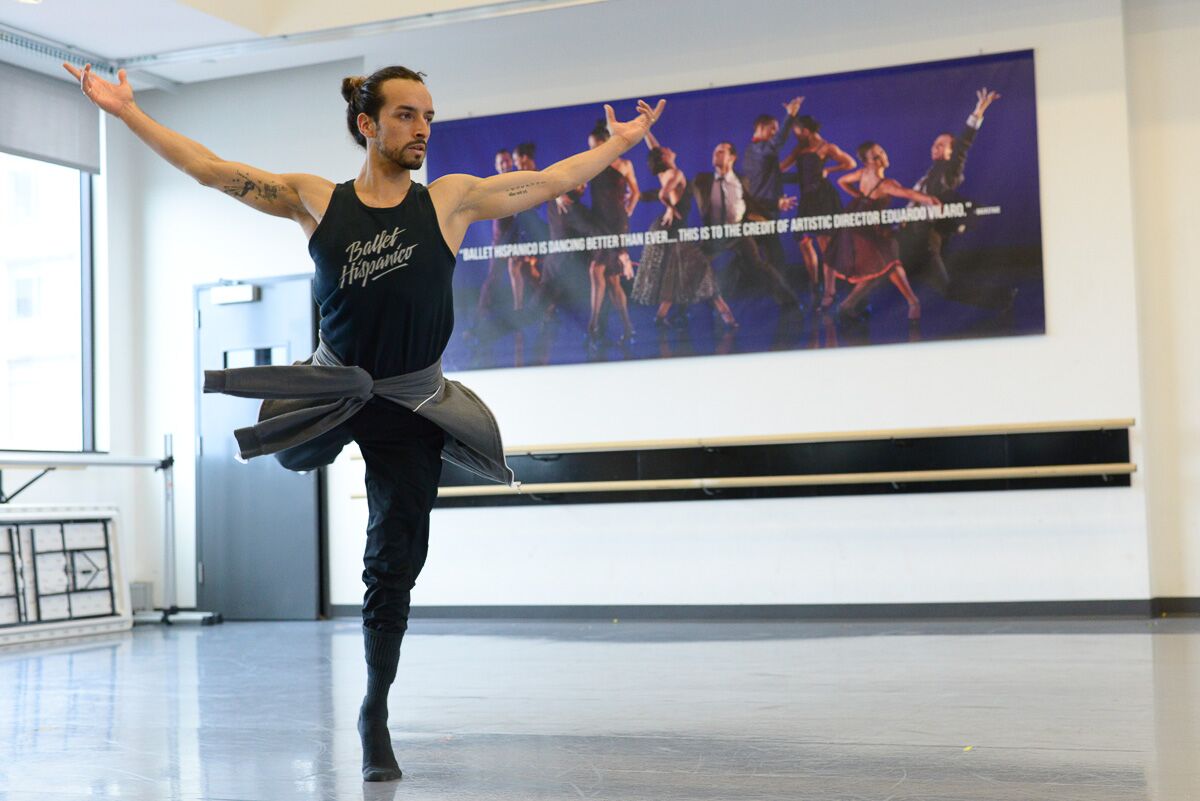
    Above: Martina Calcagno rehearsing at Ballet Hispanico today; photo by Nir Arieli

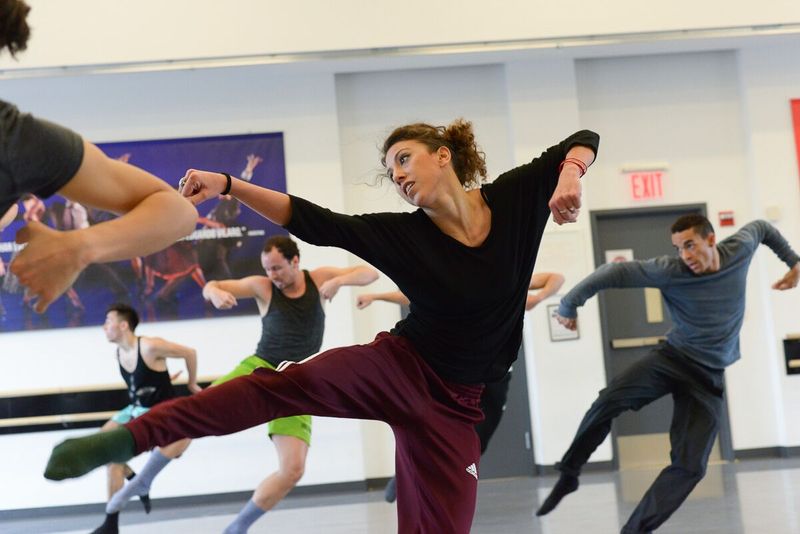
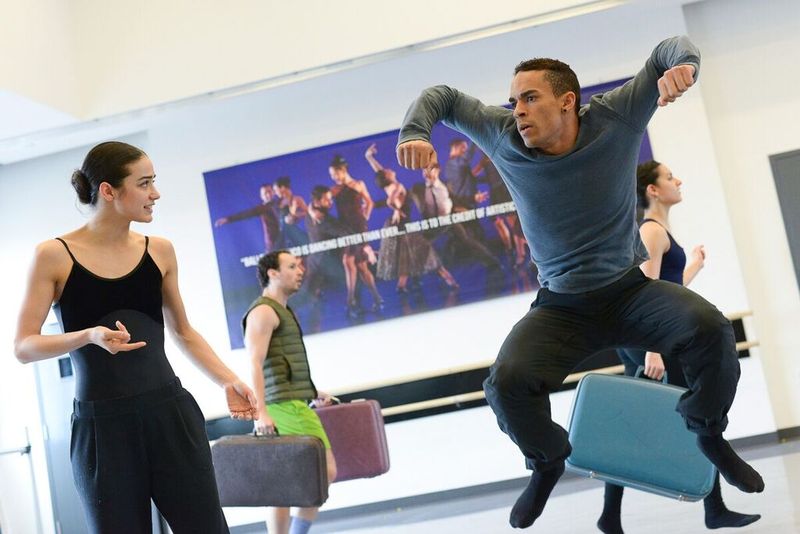
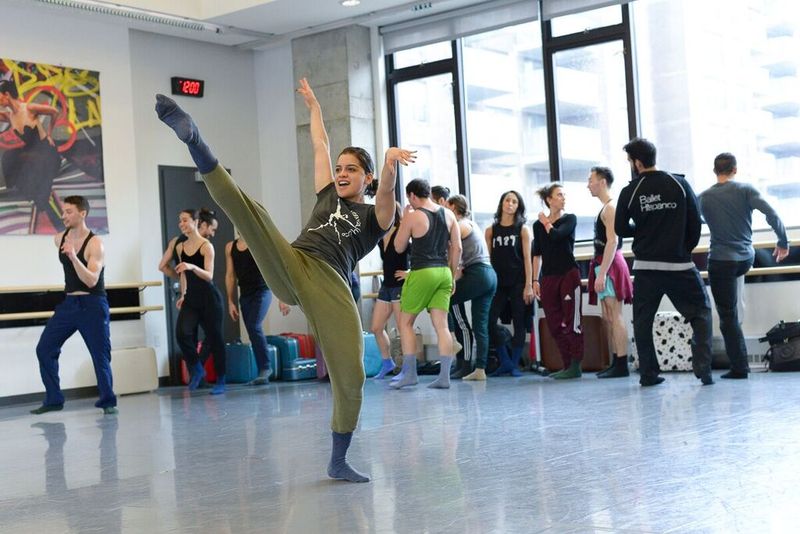
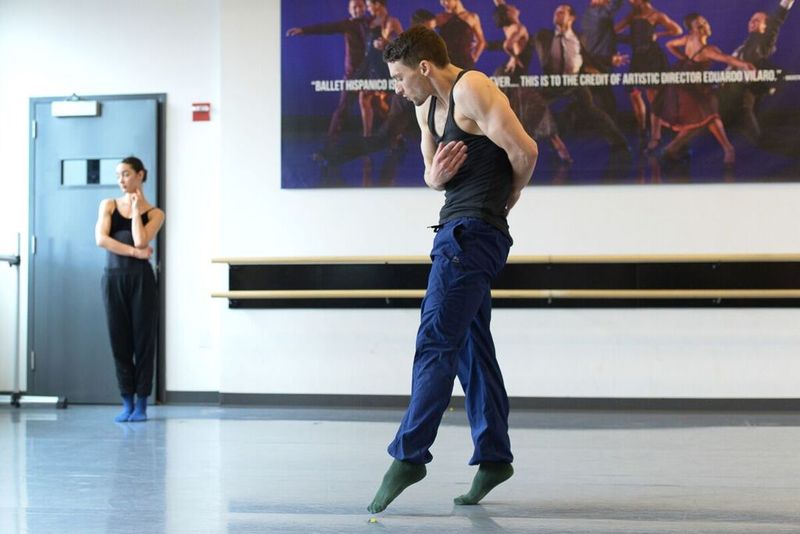
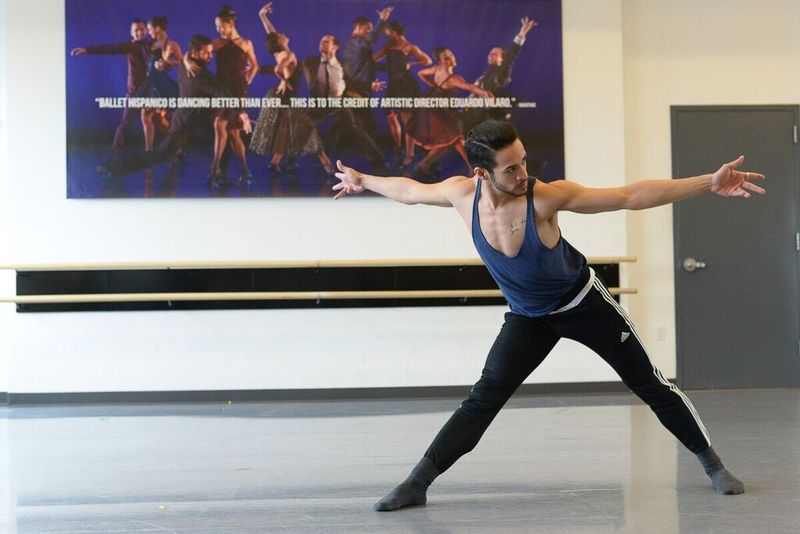
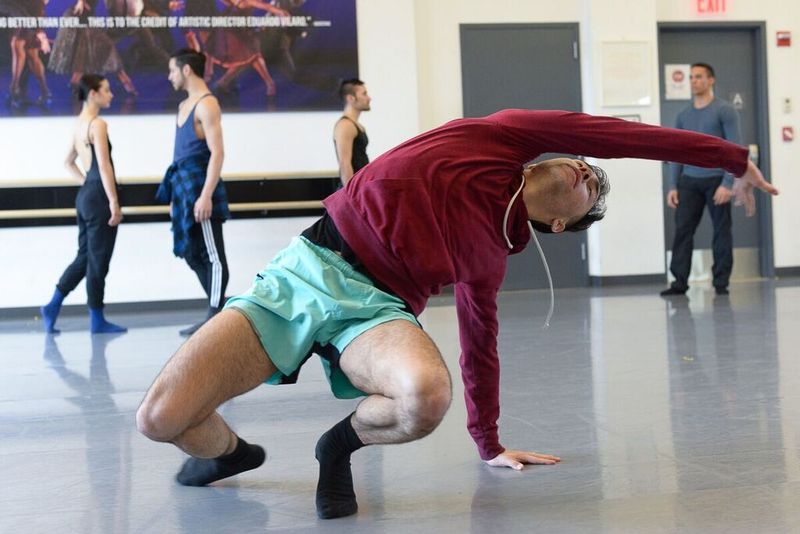
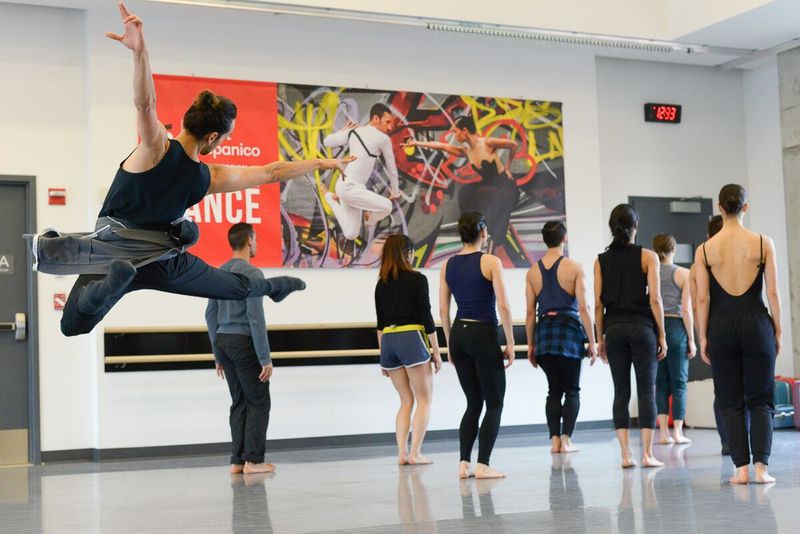
    Monday March 28th, 2016 – In anticipation of Ballet Hispanico‘s upcoming season at The Joyce, photographer Nir Arieli and I stopped by the Company’s home space on West 89th Street to watch a rehearsal.

    The Hispanico dancers are among the most vivid in New York City’s vibrant community of dance. Watching them in the up-close-and-personal studio setting, their power, unstinting energy, and sheer sexiness are a testament to their generosity and commitment.

    For their impending Joyce performances, Ballet Hispanico will offer the New York premiere of Gustavo Ramírez Sansano’s Flabbergast. The Company have previously performed Mr. Sansano’s dramatic narrative ballet CARMEN.maquia and his charming El Beso.

    Flabbergast is a complete joy to experience: lively, sexy, and playful, the choreography calls for non-stop action. And the dancers are even called upon to sing, which they do enthusiastically. Here are some of Nir’s images from today’s run-thru of this exciting dancework:

    Unspecified e

    Eila Valls and Lyvan Verdecia

    Unspecified ii

    Kassandra Cruz

    Unspecified g

    Chris Bloom

    Unspecified

    Melissa Fernandez

    Unspecified h

    Mark Gieringer

    Unspecified c

    Mark (foreground) & Company

    Unspecified k

    Kassandra Cruz

    Unspecified b

    Cole Vernon

    Unspecified l

    Mark Gieringer

    NIR_5470

    The Flabbergast ensemble

    As an ideal contrast to the extroverted Flabbergast, choreographer’s Ramón Oller’s darkly ritualistic Bury Me Standing will also be on the Joyce program. A section of this ballet, in which a cortege of mourners move slowly across the space while a male soloist performs an expressive dance of lamentation, was being rehearsed today with Hispanico’s charismatic Mario Ismael Espinoza in the featured role.

    Unspecified m

    Unspecified mario

    Above, and in the following images: Mario Ismael Espinoza

    Unspecified mario2

    Unspecified n

    Unspecified mario3

    During this run-thru from Bury Me Standing, I had one of those unusual experiences that you can only get at a rehearsal: while Mario was performing the solo and Nir was capturing it, I was at the other end of the studio where Mario’s alternate, Christopher Hernandez, was also dancing the solo directly in front of me. Mario and Christopher have very different physiques and stage personalities; shifting my gaze between the two, I was able to experience their interpretations simultaneously; an exciting finale to our studio visit.

    I want to thank publicist Michelle Tabnick for arranging everything, Mr. Sansano for his cordial greeting and very appealing choreography, Hispanico’s Michelle Manzanales – ever the gracious hostess – and every single one of the Company’s incredible dancers.

    And I’m particularly grateful – as always – to photographer Nir Arieli.

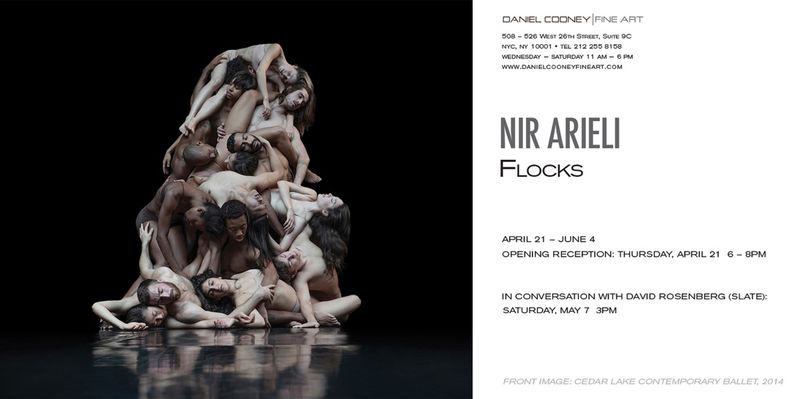
    I want to draw your attention to Nir’s upcoming gallery show of Flocks at Daniel Cooney|Fine Art on West 26th Street, which will run from April 21st thru June 4th, 2016. Ballet Hispanico is among the companies featured in this series. More information below:

    FlocksInvite

  • Paul Taylor @ Lincoln Center 2016

    ImageProxy.mvc

    Wednesday March 23rd, 2016 – “Taylor Does Graham” was my alternate headline for this article. Martha Graham’s Diversion of Angels has triumphantly entered the repertory of Paul Taylor’s American Modern Dance Company. I’ve always loved seeing the Graham dancers in this work, and now I also love seeing the Taylors: between these two companies, some of the greatest movers and shapers of our day are to be found. In the photo at top: Michael Trusnovec.

    Graham paragons Blakeley White-McGuire and Tadej Brdnik set Diversion on the Taylor company. The casting of the work’s three main couples seemed spot-on, with the elegant, patrician Laura Halzack in White paired with Michael Trusnovec; restless, passionate Parisa Khobdeh (in Red) dancing with Sean Mahoney; and the sun-filled joy of Eran Bugge’s Woman in Yellow handsomely partnered by Michael Novak. A women’s quartet consisting of Michelle Fleet, Jamie Rae Walker, Heather McGinley, and Christina Lynch Markham comprised a marvelously high-end “supporting” cast, and George Smallwood’s strong performance as the odd-man-in all made for a great deal of spacious, eye-catching dance.

    Several passages linger in the memory: the long frozen, stylized pose sustained by Ms. Halczak and Mr. Trusnovec early in the piece, and the lovely floated quality of Laura’s series of slow turns; Ms. Khobdeh’s agitated solo amidst the four women, her great sense of urgency as she rushes across the stage on some unknown quest, and Mr. Mahoney’s wonderful “catch” of her as she rushed to him; Ms. Bugge, who captivated me all evening, has a most congenial role; she brought Springtime freshness to her solo passages, and to her lyrically animated duet with Mr. Novak.

    A sustained deep note in the Norman Dello Joio score signals the “White” pas de deux; it almost goes without saying that the Halzack/Trusnovec duo were truly inspired and inspiring here.  

    Paul Taylor’s Three Dubious Memories is a gem of a ballet. When I first saw it a couple of years ago, it was mainly the witty elements that persuaded me of its stage-worthiness. Tonight somehow it seemed much deeper and more of a story-telling ritual than a mere series of relationship-vignettes. 

    In Three Dubious Memories, an incident from the evolving story of a romantic triangle is remembered differently by each of the three people involved. The competition between two men (Robert Kleinendorst and Sean Mahoney) for the affections of Eran Bugge brings the men to blows. But then, in a volte-face, the men are seen as a cozy pair and Ms. Bugge as the interloper. We’ll never know the real story, but Mr. Taylor has left us to ponder the way in which we each remember things.

    In addition to brilliant dancing and acting from the principal trio, Three Dubious Memories provides an intriguing role for James Samson: a silent narrator, a sort of master-of-ceremonies. James summons up each telling of the tale by the three protagonists; he also leads an ensemble of ‘choristers’ in stylized rituals. James did a beautiful job in this role which calls for both expressiveness and athleticism. In one memorable moment, Heather McGinley perches on James’s shoulders like a looming icon. The ballet was beautifully lit by Jennifer Tipton.

    In the evening’s concluding work, Spindrift, dates from 1993 and is set to Arnold Schoenberg’s String Quartet Concerto (after Handel), played live by the Orchestra of St Luke’s. To the sound of wind and waves, Michael Trusnovec emerges from the midst of a communal group moving in stylized slowness. Michael’s character displays the shifting nature of a romantic spirit with an affinity for the natural world; he’s an outsider, cast upon a mystic shore among a rather suspicious tribe.

    Certain movement motifs recall Nijinsky’s Faun, and in fact the costuming also makes us think of the Debussy ballet. The Handel/Schoenberg music seems at once old and new as Mr. Trusnovec pursues Mr. Halzack and is occasionally distracted by the quirky presence of Ms. Bugge.

    In the ballet’s second movement, an adagio solo for Mr. Trusnovec is the heart of Spindrift; in subtle twists of his torso, the power and beauty of this magnificent dancer’s physique given full rein, as is his indelible artistry: so compelling to behold. The movement becomes livelier and more off-kilter for a spell, then slows and – as Mr. Trusnovec melts into a reverential kneeling back-bend, the ballet seems about to end. But there’s another movement, laced with solos and duets for all the participants.

    As is all the great Taylor works, there are moments of seeming simplicity that make an unexpected impact; one such in Spindrift was a passage where four woman crossed on a diagonal, walking slowly. Other impressive passages were a duet for Ms. Bugge and Mr. Trusnovec and another one in which Michael was paired with Robert Kleinendost; Robert was on peak form all evening.

    In fact, the entire Taylor company’s looking pretty extraordinary these days. I was hoping to see more of Michelle Fleet (she only danced in the opening work, with Ms. Bugge replacing her in Spindrift); Francisco Graciano and Michael Apuzzo also appeared all-too-briefly, yet – as always – they each made their mark. Madelyn Ho, the newest dancer on the roster, appeared in the ensemble in Spindrift.

    I had great seats (thank you, Lisa Labrado!) and was delighted to spend the evening with my ballet-loving friend Susan, who I rarely see these days. And it’s always so nice to run into Janet Eilber, Blakeley White-McGuire, Take Ueyama and his wife Ana, and Richard Chen-See.

    Onward now to more Taylor…and then, in April, Graham!

  • Ian Spencer Bell: Poet and Dancer

    12799298_10206186818733498_6040095322399417585_n

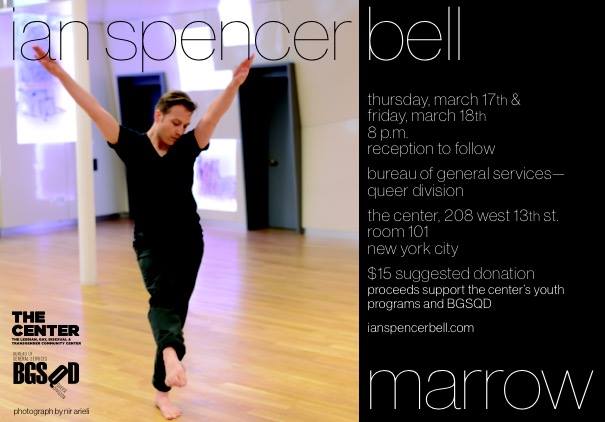
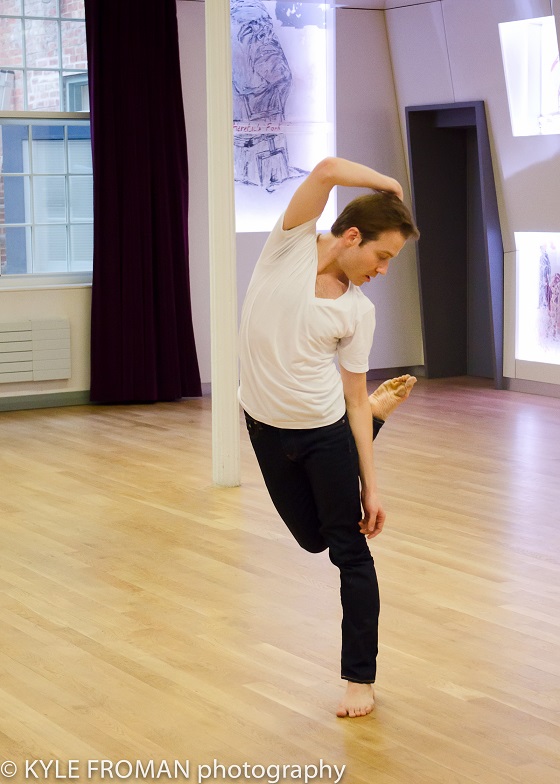
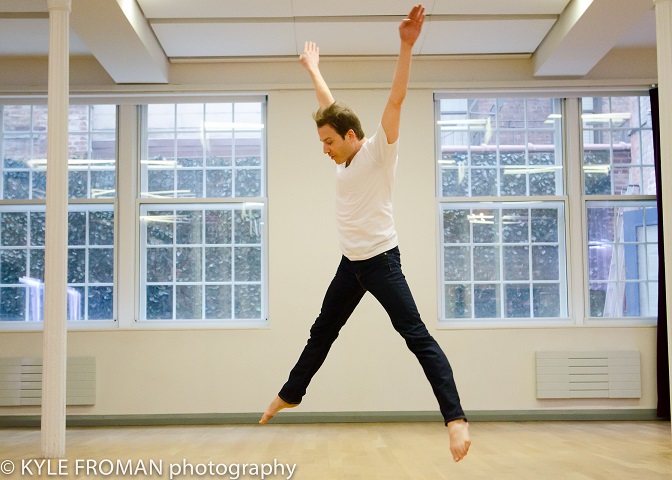
    Friday March 18th, 2016 – There are only a handful of true originals on the Gotham dance scene these days, and Ian Spencer Bell is one of them. In the past, his very sophisticated choreography of small ensemble pieces has always intrigued me; more recently, Ian has been exploring his two passions – dance and poetry – simultaneously in unique solo presentations. 

    Tonight at the Lesbian, Gay, Bisexual & Transgender Community Center on 13th Street, Ian performed his newest work, MARROW, in the intimate yet airy space of the recently-renovated Room 210. It was in the same setting, last June, that Ian’s double bill of GEOGRAPHY SOLOS and HOLLER made such a distinctive impression.

    An attentive and wonderfully silent audience seemed mesmerized this evening by Ian’s every word and move. Lithe and beautiful to behold, Ian dances with a rather gentle physicality; but the choreography can also take on a sharper aspect when the narrative gets more intense. 

    _KCF9145-2

    His poem tonight drew on his experiences as a Southern boy, a youth who was different from everyone else. How many times has this story been told??…and yet, rarely with the same poignancy as in Ian’s words and dancing.

    Waiting for the performance to start, we were listening to Ode to Billie Joe; thus was the setting for what we were about to witness already evoked. Beginning with a story about swarms of bees which attacked his home (“I’m allergic, and alone.”), Ian went on to describe a dream of men climbing out of manholes. (Yes, physical laborers have always created fantasies for gay boys…) As Ian spoke, his body spoke also – in rapid turns, or simple walking, with expansive port de bras; the sweeping motion of a foot; plunges to the floor where he cowered or lazed.

    Confidences and local gossip become part of the story, as does an incident of Ian’s mother falling into a hole on their property while tending horses. This left her with a permanent injury. Meanwhile, his siblings and step-father play out their expected roles: “Boys don’t act like that!” his step-dad yelled, uncomprehendingly. “I wanted my step-father to die,” was young Ian’s thought in response.

    _KCF9035-2

    From repose to restlessness, the dancing moves on: a harrowing episode where his step-father attempts to strangle him is the work’s most dramatic moment; but even the more mundane aspects of daily life – as of waiting in the checkout line at a local store to buy supplies for “making a funeral wreath” – take on an unusual resonance in Ian’s words.

    _KCF8670-2

    In the end, our stories of growing up gay are mostly all the same – a theme-and-variations setting of what it’s like to be different. What’s sad is that, apparently, so little progress was made in the years separating my experience from Ian’s.

    Waiting in the Center’s lobby for the performance to begin, I watched the hordes of young people coming and going. They have found a community and a haven here: such lovely kids, unbounded diversity. And while I am certain they are dealing with many of the same problems that have beset us all, they have resources now that we did not have…and they have each other.

    I had no one to turn to, and nothing to reassure me; I was alone, thinking – as I so often did in those first harrowing years of self-discovery – that I was the only one.

    Thus it is deeply moving to have Ian telling our story, and in such an imaginative and compelling way. 

    (Note: this article is now updated with new photos by Kyle Froman)

  • New Ravel @ New Chamber Ballet

    L1680670

    Saturday February 27th, 2016 – Miro Magloire’s New Chamber Ballet presenting five Magloire ballets, including a premiere, at City Center Studios. Exceptional music, played live, is always on offer at NCB; then there’s the bevy of ballerinas: five distinctive dancers who bring Miro’s classically-based but sometimes quirky – and always demanding – choreography to life.

    Tonight, the house was packed; extra chairs had to be set out, and some people were standing. The program was one of Miro’s finest to date – and he’s had an awful lot of fine evenings. Two classic French violin sonatas – Debussy’s and (part of) Ravel’s – were in the mix, along with some Schoenberg (the more Schoenberg I hear, the more I like), and works by Beat Furrer and Friedrich Cerha (who just celebrated his 90th birthday). 

    The opening (premiere) work, RAVEL’D, is still “in-progress”; tonight we saw the first movement, with Miro promising the rest of it for his April performances. Doori Na and Melody Fader played beautifully, and Sarah Thea’s fringed tunics added an unusual flair to the movement. Stylized motifs – eating, praying, biting – are woven into the dance. One girl’s toe-shoed foot rests upon another girl’s head: this is one of several unexpected balancing devices. A space-filling unison trio stands out, and the closing section finds Sarah Atkins in a reverential pose as Amber Neff and Shoshana Rosenfield ‘converse’ in a series of mutually dependent balances. 

    The space was again well-utilized in GRAVITY; we were seeing the finished version of this work that Miro had started on last year. Doori Na’s expert playing of the Cerha score was something to marvel at: great subtlety and control are called for, and Doori delivered. The three dancers – Elizabeth Brown, Traci Finch, and Amber Neff – are engaged in extended paragraphs of the partnering vocabulary Miro has been exploring of late. Extremely challenging and movingly intimate, the intense physicality of these passages push the boundaries of what we expect from women dancing together. Miro’s dancers have taken to these new demands with great commitment: watching some of their improbable feats of balance and elastic strength gives us a fresh awareness of possibility. Adding yet another dimension to the work: when not actively dancing, each ballerina curls up on the floor to sleep. 

    Pianist Melody Fader evoked an air of mystery with her superb playing of Arnold Schoenberg’s Six Little Piano Pieces for the ballet QUARTET. Here Mlles. Atkins, Brown, Finch, and Neff appear in elegant, backless black gowns. They take seats at the four corners of the playing area, facing outward. With her hair down, a waif-like Shoshana Rosenfield dances in the center with a feeling of halting insecurity; her character seems dazed, perhaps drugged. Periodically, the four seated women move their chairs towards the center, slowing encroaching on Shoshana’s space. The four become aware of the lone ballerina as a potential victim: they turn and observe her intently. In the end, the four women have Shoshana trapped; as she sinks down in surrender, they caress her and run their fingers thru her hair. Eerie, and leaving us full of questions, QUARTET is as intriguing to watch as to hear.

    In VOICELESSNESS, Beat Furrer’s mystical score was performed by Melody Fader; her playing had a fine air of somber quietude. Dancers Amber Neff and Shoshana Rosenfield, in Sarah Thea’s sleek body tights, become fervently entwined and mutually dependent in a duet that develops further elements of Miro’s intense and engrossing partnering technique.

    For a revival of TWO FRIENDS, Doori Na and Melody Fader had the lovely experience of playing Claude Debussy’s violin sonata, the composer’s last completed work. Wearing black gauzy tunics and black toe shoes, Elizabeth Brown and Sarah Atkins are the eponymous duo; they partner lyrically, and all seems right with the world. Then Traci Finch appears out of nowhere and the ballet’s dynamic shifts and splinters, with fleeting pair-ups as alliances form and vanish in a trice. The subtexts of attraction and jealousy are very subtly threaded into the movement; an in-sync duet for Elizabeth and Traci is one outstanding moment, and the sonata’s final movement calls for large-scale virtuosic dancing from all three. But then Sarah impetuously rushes off. 

    True to life, TWO FRIENDS often finds multiple narratives developing at the same time, and over-lapping. There is so much to watch and to savor: I especially relished a brief passage where Elizabeth Brown, suddenly finding herself standing alone, quietly runs her hands up and down her arms in a caressive gesture. Elizabeth, a dancer who always lures the eye with her confident technique and personal mystique, turned this fleeting moment into something of deeper resonance.  

    Having followed Miro’s New Chamber Ballet for several seasons now, what I’ve come to appreciate most about him is his musical integrity. His tastes are eclectic, but always sophisticated, and he’s able to win us over to some very unusual and not always ‘easy’ music thru his own personal enthusiasm for the works he presents. The benefits of having the music played live are numerous, and greatly enhance the atmosphere at NCB‘s performances. And Miro’s excellent dancers take up each new musical and choreographic challenge that he sets for them with a wonderful mixture of strength, musicality, willingness, and grace.

    The dancers tonight were Sarah Atkins, Elizabeth Brown, Traci Finch, Amber Neff, and Shoshana Rosenfield, with the music played by Doori Na (violin) and Melody Fader (piano) and costuming by Sarah Thea. Kudos to all, and to Miro for yet another fascinating evening of dance.

    During the intermission, I really enjoyed re-connecting with Melissa Barak, the former New York City Ballet ballerina who now runs her own Los Angeles-based company Barak Ballet. Melissa is currently here in New York City as the inaugural Virginia B. Toulmin Fellow for Women Choreographers at the Center for Ballet and the Arts at NYU. We shared an awful lots of news and ideas in our 15-minute chat. I love her energy!