Category: Ballet

  • TURANDOT at The Met – 2nd of 4

    385682_332777790113678_298965728_n

    Above: Lise Lindstrom in the Metropolitan Opera’s production of TURANDOT

    Monday October 26th, 2015 – It’s always fun to bring someone to the opera who hasn’t been in a while or who is unfamiliar with a particular work. When my choreographer/friend Lydia Johnson and I decided to spend an evening at The Met, I quickly settled on Franco Zeffirelli’s classic production of TURANDOT. In an age where less is supposedly more when it comes to opera stagings, this TURANDOT clings to the forbidden notion that grand opera should still be grand. Is this the sort of thing the public really wants to see? A virtually full house, including tons of young people, seemed to be saying “Yes!”

    It was a good performance, but in the end it was the opera itself that was the star of the evening. Beyond the Chinoiserie which decorates the score, we have Puccini – the master-orchestrator – creating harmonies and textures that are so atmospheric. Lydia was fascinated by what she was hearing; I told her she must try FANCIULLA DEL WEST next.

    The Met Orchestra were on optimum form – and the chorus, too. Both forces were capable of lusty vigor one moment and subtle delicacy the next. Conductor Paolo Carignani paced the opera superbly and brought forth much detail from the musicians; a tendency to cover the singers at times should have been resolved by this point in the run, but instead the conductor went blithely on, seemingly unable to comprehend that a forte for Marcelo Alvarez is not the same as a forte for Mario del Monaco.

    For all that, the singing for the most part was pleasing and well-tuned to the drama of the work. David Crawford was an excellent Mandarin, ample-toned and investing the words with proper authority. Ronald Naldi as the Emperor Altoum projected successfully from his throne on Amsterdam Avenue, and Eduardo Valdes, Tony Stevenson, and – especially – Dwayne Croft made the most of the Ping-Pang-Pong scene.

    James Morris’ aged timbre made a touching effect in the music of the blind king Timur. Leah Crocetto’s soprano sounded a bit fluttery at the start, but she moved the audience with her lovingly-shaped “Signore ascolta” and was excellent in her third act scene, winning the evening’s loudest cheers at curtain call. While Marcelo Alvarez is clearly over-parted by Calaf’s music, a more thoughtful conductor could have aided the tenor in turning his lyrical approach to the role into something perfectly viable. But that didn’t happen, and while there were many handsome moments in Alvarez’s singing, at the climax of “Nessun dorma” the conductor was of no help. There was no applause after this beloved aria, even though it was actually quite beautifully sung.

    Lise Lindstrom is undoubtedly the most physically appealing Turandot I have ever beheld, and she also manages to make the character something more than a cardboard ice queen. Lindstrom’s lithe, attractive figure and her natural grace of movement were great assets in her portrayal; she looked particularly fetching in those scenes where she’s divested of the heavy robes and headpieces and seems like a young princess, almost vulnerable in her sky-blue gown and long black hair.

    After a couple of warm-up phrases in which there was a trace of cloudiness in her upper-middle voice, Lindstrom’s singing took on its characteristic high-flying power as she pulled the treacherous high notes out of thin air with assured attacks. The narrative “In questa reggia” was presented as both a vocal and verbal auto-biography, her upper range zinging over the orchestra. Lindstrom’s Riddle Scene was vividly dramatic; having experienced defeat, her plea to Altoum was urgent and moving, and the she advanced downstage to deliver the two shining top-Cs over the massed chorus. Her acting as Calaf offered her a way out was detailed and thoughtful. 

    In Act III Lindstrom was totally assured vocally, with a persuasive melting at Calaf’s kiss and a nuanced rendering of “Del primo pianto”; in the high phrases following the prince’s revelation of his name, the soprano was very much at home. She ended the opera on a high B-flat attacked softly and then expanded to a glistening brilliance.

    Lydia was very moved by the opera – and especially taken with the gestural language of Chiang Ching’s choreography – and we stayed to cheer the singers. She agreed with me, though, that dramatically the “happy ending” is incomprehensible. That Calaf should want to marry a woman who has sent dozens of men to their deaths, threatened to torture his own father, and caused the suicide of the faithful Liu just doesn’t make sense. But then, fairy tales seldom do.

    Metropolitan Opera House
    October 26th, 2015

    TURANDOT

    Giacomo Puccini

    Turandot................Lise Lindstrom
    Calàf...................Marcelo Álvarez
    Liù.....................Leah Crocetto
    Timur...................James Morris
    Ping....................Dwayne Croft
    Pang....................Tony Stevenson
    Pong....................Eduardo Valdes
    Emperor Altoum..........Ronald Naldi
    Mandarin................David Crawford
    Maid....................Anne Nonnemacher
    Maid....................Mary Hughes
    Prince of Persia........Sasha Semin
    Executioner.............Arthur Lazalde
    Three Masks: Elliott Reiland, Andrew Robinson, Amir Levy
    Temptresses: Jennifer Cadden, Oriada Islami Prifti, Rachel Schuette, Sarah Weber-Gallo

    Conductor...............Paolo Carignani

  • TURANDOT at The Met – 2nd of 4

    385682_332777790113678_298965728_n

    Above: Lise Lindstrom in the Metropolitan Opera’s production of TURANDOT

    Monday October 26th, 2015 – It’s always fun to bring someone to the opera who hasn’t been in a while or who is unfamiliar with a particular work. When my choreographer/friend Lydia Johnson and I decided to spend an evening at The Met, I quickly settled on Franco Zeffirelli’s classic production of TURANDOT. In an age where less is supposedly more when it comes to opera stagings, this TURANDOT clings to the forbidden notion that grand opera should still be grand. Is this the sort of thing the public really wants to see? A virtually full house, including tons of young people, seemed to be saying “Yes!”

    It was a good performance, but in the end it was the opera itself that was the star of the evening. Beyond the Chinoiserie which decorates the score, we have Puccini – the master-orchestrator – creating harmonies and textures that are so atmospheric. Lydia was fascinated by what she was hearing; I told her she must try FANCIULLA DEL WEST next.

    The Met Orchestra were on optimum form – and the chorus, too. Both forces were capable of lusty vigor one moment and subtle delicacy the next. Conductor Paolo Carignani paced the opera superbly and brought forth much detail from the musicians; a tendency to cover the singers at times should have been resolved by this point in the run, but instead the conductor went blithely on, seemingly unable to comprehend that a forte for Marcelo Alvarez is not the same as a forte for Mario del Monaco.

    For all that, the singing for the most part was pleasing and well-tuned to the drama of the work. David Crawford was an excellent Mandarin, ample-toned and investing the words with proper authority. Ronald Naldi as the Emperor Altoum projected successfully from his throne on Amsterdam Avenue, and Eduardo Valdes, Tony Stevenson, and – especially – Dwayne Croft made the most of the Ping-Pang-Pong scene.

    James Morris’ aged timbre made a touching effect in the music of the blind king Timur. Leah Crocetto’s soprano sounded a bit fluttery at the start, but she moved the audience with her lovingly-shaped “Signore ascolta” and was excellent in her third act scene, winning the evening’s loudest cheers at curtain call. While Marcelo Alvarez is clearly over-parted by Calaf’s music, a more thoughtful conductor could have aided the tenor in turning his lyrical approach to the role into something perfectly viable. But that didn’t happen, and while there were many handsome moments in Alvarez’s singing, at the climax of “Nessun dorma” the conductor was of no help. There was no applause after this beloved aria, even though it was actually quite beautifully sung.

    Lise Lindstrom is undoubtedly the most physically appealing Turandot I have ever beheld, and she also manages to make the character something more than a cardboard ice queen. Lindstrom’s lithe, attractive figure and her natural grace of movement were great assets in her portrayal; she looked particularly fetching in those scenes where she’s divested of the heavy robes and headpieces and seems like a young princess, almost vulnerable in her sky-blue gown and long black hair.

    After a couple of warm-up phrases in which there was a trace of cloudiness in her upper-middle voice, Lindstrom’s singing took on its characteristic high-flying power as she pulled the treacherous high notes out of thin air with assured attacks. The narrative “In questa reggia” was presented as both a vocal and verbal auto-biography, her upper range zinging over the orchestra. Lindstrom’s Riddle Scene was vividly dramatic; having experienced defeat, her plea to Altoum was urgent and moving, and the she advanced downstage to deliver the two shining top-Cs over the massed chorus. Her acting as Calaf offered her a way out was detailed and thoughtful. 

    In Act III Lindstrom was totally assured vocally, with a persuasive melting at Calaf’s kiss and a nuanced rendering of “Del primo pianto”; in the high phrases following the prince’s revelation of his name, the soprano was very much at home. She ended the opera on a high B-flat attacked softly and then expanded to a glistening brilliance.

    Lydia was very moved by the opera – and especially taken with the gestural language of Chiang Ching’s choreography – and we stayed to cheer the singers. She agreed with me, though, that dramatically the “happy ending” is incomprehensible. That Calaf should want to marry a woman who has sent dozens of men to their deaths, threatened to torture his own father, and caused the suicide of the faithful Liu just doesn’t make sense. But then, fairy tales seldom do.

    Metropolitan Opera House
    October 26th, 2015

    TURANDOT

    Giacomo Puccini

    Turandot................Lise Lindstrom
    Calàf...................Marcelo Álvarez
    Liù.....................Leah Crocetto
    Timur...................James Morris
    Ping....................Dwayne Croft
    Pang....................Tony Stevenson
    Pong....................Eduardo Valdes
    Emperor Altoum..........Ronald Naldi
    Mandarin................David Crawford
    Maid....................Anne Nonnemacher
    Maid....................Mary Hughes
    Prince of Persia........Sasha Semin
    Executioner.............Arthur Lazalde
    Three Masks: Elliott Reiland, Andrew Robinson, Amir Levy
    Temptresses: Jennifer Cadden, Oriada Islami Prifti, Rachel Schuette, Sarah Weber-Gallo

    Conductor...............Paolo Carignani
  • Young Concert Artists: Seiya Ueno/Wendy Chen

    Ueno

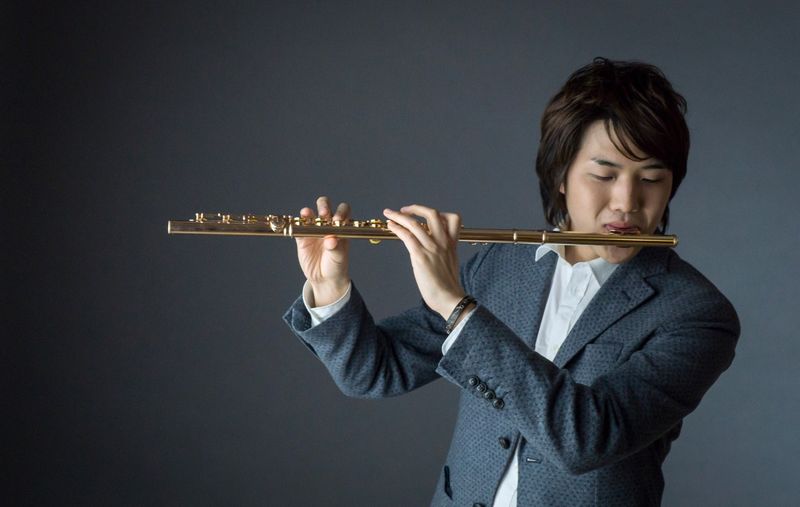
    Tuesday October 20th, 2015 – The Japanese flautist Seiya Ueno (above, in a Matt Dine photo) with guest artist Wendy Chen at the keyboard for the opening event of the Young Concert Artists season. Tonight at Zankel Hall, these two exceptional artists presented a programme that spanned the centuries from Bach to Boulez.

    Susan Wadsworth, the founder and director of Young Concert Artists, greeted us at this inaugural concert of her 55th season concert series; what this woman has done for music and for young musicians deserves our deepest gratitude.

    The artists then appeared, Mr. Ueno elegant in tail-coat tuxedo, and Ms. Chen simply luminous in a soft sea-green frock. They commenced at once on the Bach Sonata in B minor, BWV 1030, and immediately established a lyrical rapport both with one another and with the audience. Mr. Ueno’s playing is stylish and deft, and his assured technique makes him capable of anything, including some captivating soft attacks. Watching Ms. Chen’s extraordinarily graceful hands move up and down the keyboard became a prime visual aspect of the evening. 

    Sinking into the dreamy world of Debussy’s Prélude à l’aprés-midi d’un faune, the two artists painted in sensuous Monet hues. Mr. Ueno’s soft attacks and hushed taperings of line were ideally seconded from Ms. Chen’s piano, evoking images from the ballet which caused such a scandal at its premiere.

    Wendy_chen_01_category

    Above: pianist Wendy Chen

    The duo scored a huge success with Pierre Boulez’s Sonatine, a work filled with challenges for both players. Mr. Ueno is called upon to create rasping, burbling effects; the music whirrs and shrills and pauses on long trills; Ms. Chen meanwhile is weaving her own spell from the Steinway, maintaining an attentive connection to the sounds of the flute. Their superb playing of this complex and demanding work drew enthusiastic bravos from the crowd.

    Much as I love the operas of Richard Strauss, his Sonata in E-flat major, Op. 18 for flute and piano was actually new to me. Ms. Chen’s somber opening phrases soon give way to a burst of energy and the duo are off in an infectious allegro. The score is chock full of lovely themes, many of them whispering of ROSENKAVALIER and ARIADNE AUF NAXOS. Mr. Ueno seized on these melodies and lavished them with plush, full-toned ‘singing’, and in the final movement he warbled deliciously as Ms. Chen maintained the varying rhythmic patterns with élan.

    There have been many fantasies created on themes from Bizet’s opera CARMEN; tonight Mr. Ueno brought forth François Borne’s Carmen Fantasie whichde rigueurincludes such chestnuts as the ‘fate’ motif, the Habanera, the Toreador Song and the Chanson Boheme but also seeks out less obvious passages from the opera, such as Micaela’s tune from her Act I duet with Don Jose, and the latter’s pleading “Ne me quittez pas” which was deliciously embroidered upon by the flautist. As the fantasy progresses, the demands for bravura embellishments increase: cascading scales at break-neck speed and whirlwind flourishes of notes were delivered with remarkable clarity and vivacity by Mr. Ueno, with Ms. Chen yet again a flawless partner.

    Responding to the audience’s warm applause, Mr. Ueno appeared alone and in a charming, rather halting speech thanked us for sharing the evening with him and ended with the heartfelt declaration: “I love music..and I love you!” He then offered a ravishing Debussy encore, Syrinx.

    I realized as the evening drew to its close that this was – incredibly – my first-ever flute recital So, even in our senior years, there are still new experiences to be enjoyed in classical music!

  • Preview: Mats Ek’s AXE @ Martha Graham

    AXE

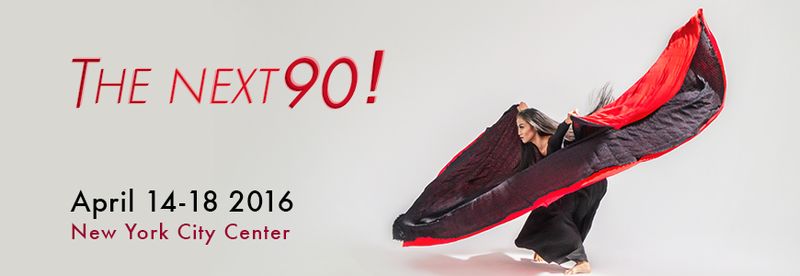
    Wednesday October 14th, 2015 – The Martha Graham Dance Company premiered Mats Ek’s AXE at the Jacob’s Pillow Dance Festival in August 2015, and will give the work’s New York premiere at NY City Center in April 2016 as part of the Company’s 90th Anniversary celebration. This evening, friends and fans of the Graham Company gathered for a studio preview of the Ek duet, which was danced by Company principals Ben Schultz (above) and PeiJu Chien-Pott (below).

    6a00d8341c4e3853ef01b7c716ffe8970b

    These studio events at the Graham homespace at Westbeth on Bethune Street are a great bonus for the Company’s many avid followers: whether introducing us to a new work or delving into explorations of the established classics of the Graham repertoire, we are given an opportunity to experience the works in an intimate setting and have an insider’s look at the creative or re-creative process. And of course there is also the genuine thrill of encountering the phenomenal  Graham dancers at close range.

    The staged version of AXE is based on a work Ek originally created on film. It is an intense domestic-drama duet which revolves around a man splitting wood, observed by his long-time mate. Layered in subtle sheets of emotion, the work takes on a profound quality that transcends the physical action. In a stroke of genius, Ek sets the duet to music of Tomaso Albinoni, giving it a timeless quality.

    Janet Eilber, the Graham Company’s artistic director, spoke of her long-held desire to have an Ek work in the Company’s repertoire, and of how it came to pass, thru chance and persistence. In brief, four Graham dancers – PeiJu Chien-Pott, Anne O’Donnell, Ben Schultz, and Lloyd Knight – traveled to Sweden where the choreographer worked with them to transform his film into a live dancework. The result is nothing less than extraordinary.

    Prior to showing us a full run-thru of the work, Ms. Eilber queried the four dancers about their experience of working with the choreographer who, it seems, was both detail-oriented and enigmatic. PeiJu and Ben then demonstrated key phrases from the ballet before presenting an absolutely stunning ‘performance’ of AXE that literally gave me goosebumps.

    AXE will be a must-see ballet when the Company celebrate their 90th anniversary at City Center in April 2016. It fits superbly into the Graham repertoire, and dance-lovers owe a debt of gratitude to Ms. Eilber for having secured it for us.

    Season-Announce-header

    PeiJu Chien-Pott (above) heralds the coming season…I cannot wait!    

  • NY Philharmonic Welcomes A New Concertmaster

    Frank-huang

    Above: Frank Huang

    Friday September 25th, 2015 – The New York Philharmonic‘s opening concert of the subscription season introduced us to the orchestra’s new concertmaster, Frank Huang. We’d actually seen Mr. Huang playing – unannounced – at a couple of concerts last season; but now it’s official, and the Philharmonic faithful gave the violinist a warm welcome. 

    The program opened with LA Variations, a 1996 work by the Philharmonic’s new Marie-Josée Kravis composer-in-residence, Esa-Pekka Salonen. Salonen’s violin concerto, to which Peter Martins set his 2010 ballet MIRAGE and which the Philharmonic performed in 2013 – is to me one of the outstanding musical works of the 21st century to date. And so I was very curious to hear the composer’s much earlier work this evening.

    Mr. Salonen appeared onstage prior to the playing of the Variations and made an overly-long, rambling speech about how the work was a turning point in his musical thinking. As he talked on and on, audience members around us seemed increasingly restless, and a few dozed off. At last he ambled offstage and Masetro Gilbert took the podium and – as it should – the music spoke for itself.

    LA Variations is a work of consummate craftsmanship and has many very appealing passages; early on, some of the textures reminded me – oddly enough – of the Sea Interludes from Britten’s Peter Grimes. Later there are some big tutti passages that evoke a restless, rocking feeling. At the very end, there was a tantalizing ‘calling card’ from Frank Huang in an entrancing solo passage that whetted the appetite for the Strauss to come.

    LA Variations seemed to show – as he indicated in his speech – the composer’s turning away from the rather sterile musical language in which he had been ingrained (he frequently mentioned Pierre Boulez in this regard), and the planting of the first seeds in his own musical garden; works like the Violin Concerto show us how that garden has bloomed and thrived in the years since Salonen’s 1996 self-discovery.

    Following the interval, we experienced an incandescent performance of Richard Strauss’s Ein Heldenleben (A Hero’s Life), which dates from 1898.

    In December 2013, my friend Dmitry and I experienced a superb rendering of this work played by the Philhamonic under the baton of a conductor me greatly admired: Rafael Frühbeck de Burgos; alas, just six months after that vibrant evening, the venerable Maestro passed away.

    Tonight’s performance found Maestro Gilbert and the Philharmonic artists at their luminous best. It was an uplifting and wonderfully satisfying traversal of this impressive, melodically rich score. Maestro Gilbert favored a forward impetus to the music – very exhilarating – yet also provided the necessary passages of reverie.

    The musical themes continually sound like previews of Strauss’s operas to come – most especially of Rosenkavalier and Frau ohne Schatten, both of which lay many years in the future. The Philharmonic musicians seemed to relish every moment of the score, whether in the big ensemble moments or the many solo opportunities which the composer provides. Philip Myers and his fellow hornsmen were having a grand night of it, as were the trumpeters in their offstage calls. The principal wind players  shone with evocative lustre in their solos. 

    Ein Heldenleben provided an ideal showcase for Frank Huang as he embarked on his Philharmonic journey: in this Strauss work with its marvelous passages for violin solo, Mr Huang’s tone was ravishing and his style so cordial and elegant, always imparting an emotional resonance. I cannot wait for his concerto debut with the orchestra, which I hope will come soon.

    And so, the Summer of my discontent has passed: the season has begun and I look forward to many nights of music and dance to elevate the spirit.

  • Open House @ Jennifer Muller/The Works

    L1620675

    Thursday September 24th, 2015 – Jennifer Muller/The Works kicked off their 2015-2016 season with an open house/studio event attended by friends and supporters of the Company. Ms. Muller, ever the cordial hostess, spoke of the Company’s work (both in terms of performing and outreach) before turning the floor over to her vibrant dancers who performed excerpts from the Muller repertory, dancing full-out in a compact space yet never brushing against the viewers – nor the ceiling, despite some high lifts.

    L1620578

    Jennifer Muller welcoming her guests

    The works presented this evening dated from as far back as 1991 (Gen Hashimoto in a solo from REGARDS set to a Tracy Chapman song) to a glimpse of the Company’s current work-in-progress, INTERVIEW: THE WARHOL PROJECT with music by Steve Reich. Also in the mix were excerpts from FLOWERS (2004), ALCHEMY (last season’s brilliant multi-media dancework), and WHEW! (a light-hearted, full-company work that premiered in 2014).

    Jennifer’s dancers are hard to capture in still photos: they are always on the move. I took a few photos during the showing, more as souvenirs for myself:

    L1620611

    Michael Tomlinson, Seiko Fujita

    L1620665

    Caroline Kehoe

    L1620709

    L1620723

    L1620692

    Sonja Chung

    L1620674

    Michael Tomlinson eyeing the female ensemble

    L1620725

    Jennifer Muller/The Works have always been a mullti-national, multi-cultural dance troupe. This season the young Frenchman, Alexandre Balmain (above) has joined the Company.

  • New Season @ New Chamber Ballet

    11951394_10153559309753571_5653016928534843419_n

    Saturday September 12th, 2015 – After celebrating their tenth anniversary season in 2014-2015, Miro Magloire’s New Chamber Ballet have commenced their second decade of presenting intimate, on-pointe evenings of dance with live music: a formula which maintains NCB‘s unique place in the Gotham dance-sphere and keeps Miro’s loyal followers coming back for more.

    This evening’s programme was all-Magloire in terms of choreography, and mostly ‘modern’ in terms of music: aside from the Mozart setting of the opening ballet, the oldest work played tonight dates from 1952 (Morton Feldman’s Extensions 3), and anything that’s younger than me counts as ‘modern’.

    It is, in fact, Miro’s musical integrity that accounts for my unflagging interest in his work: I can go to his performances knowing I can depend on him to serve up music – whether olde or written last year – that will fascinate. His musicians – Melody Fader (piano) and Doori Na (violin) – seem capable of leaping over whatever technical obstacles might be set in their path – a virtue in itself, since contemporary composers often seem intent on pushing the boundaries of an instrument’s capabilities.

    Likewise, Miro continues to expand the choreographic possibilities of what an all-female troupe of dancers can do. His most recent works – three of them seen tonight – take same-sex ballet partnering into uncharted territory.

    Miro is comfortable with both narrative and abstract works. The evening’s opener – IN THE PARLOUR – is set to Mozart’s violin sonata in E-minor K. 304, which was handsomely played by Melody Fader and Doori Na. In this domestic drama, three women express shifts in friendships and matters of trust. A beautiful solo for Elizabeth Brown begins haltingly, in silence; soon she is wafting serenely about the space. She pauses to write upon the wall; in this she is thwarted by a destructive Sarah Atkins. Meanwhile, a third woman – Holly Curran – seems unsure of whose side she’s on. Holly’s crisis is resolved as she allies with sneaky Sarah. The three girls danced flawlessly and sustained the mysterious atmosphere of the ballet.

    Tristan Murail’s score for LA MANDRAGORE veers from turbulence to high, shining motifs, and then to a misterioso atmosphere; Melody Fader at the piano showed a sure feel for the moods of the piece. The two lithe and wonderfully supple dancers – Traci Finch and Amber Neff – moved thru the enmeshed, intimate partnering passages with physical strength and a sense of mutual assurance that was truly impressive. 

    6a00d8341c4e3853ef0177428f3d23970d-800wi

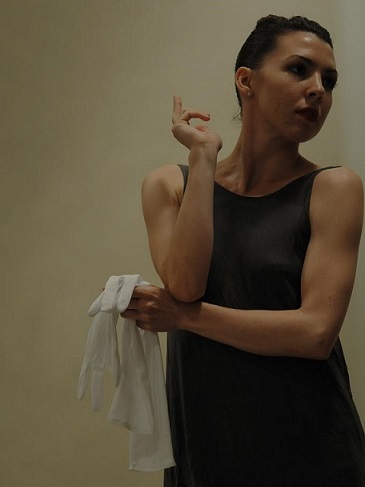
    As Sarah Atkins (above, photo by Kokyat) strolls onto the stage wearing long white evening gloves and smoking a cigarette, a vision of Nijinska’s LES BICHES pops into mind; but Miro’s ballet GLOVE is in fact more intriguing than Nijinsk’a old Poulenc ballet. Melody Fader’s expert playing of Feldman’s Extensions 3 sets the scene for this small jewel of a work in which Holly Curran and Elizabeth Brown become increasingly desirous of obtaining Sarah’s gloves. There are comings and goings – the dancers periodically hide behind the piano, concocting their future moves – and the ballet ends with a mysterious seizure.

    I had seen a rehearsal of parts of Miro’s newest creation GRAVITY; both at the rehearsal and at this evening’s performance, I was captivated by Doori Na’s masterful playing of the score for this ballet: numbers 3 and 5 from Friedrich Cerha’s Six Pieces for Solo Violin. In introducing this premiere tonight, Miro’s enthusiasm for Cerha’s music makes me quite certain we will see the remaining movements of the score being danced to in the near future.

    Tonight’s enticing presentation of the work as it currently stands was delicious both musically and in the dancing: Elizabeth Brown, Traci Finch, and New Chamber Ballet debutante Cassidy Hall formed a strong sisterhood and smoothly wove their way thru the many demanding elements of Miro’s choreography. The work is sculptural, with partnering motifs that can be fluid one moment and angular the next. Among the many felicitous moments were…

    L1610535

    …a rhapsodic wingspan gesture from Elizabeth Brown, supported by Traci…

    L1610643

    …and a lovely slow attitude promenade by Traci and Cassidy, as seen in these rehearsal images.

    GRAVITY has the feel of an impending Magloire masterpiece; let’s see where the Cerha takes the choreographer next.

    L1570060

    Above: rehearsing FRICTION: Amber Neff and Holly Curran

    Doori Na and his violin propelled the evening to a fine finish in Richard Carrick’s In Flow, as set by Miro for his ballet FRICTION. Doori took the music from its hesitant opening thru a rather boozy passage of seasick pitch and on to some skittering and stuttering motifs to a big, passionate rhythm. For the dancers, again the intimacy is palpable; Amber and Holly are in full flourish for the demanding partnering and the dance well-captures the textures of the music. Holly’s black tights and toe shoes were an added visual enticement.

    After ten years of reporting on the Manhattan dance scene, there are times when I think I’ve seen all there is to see. Yet a handful of choreographers and companies continue to hold my attention, and Miro and his New Chamber Ballet are among their small number…as much for the music as for the dancing. And that’s exactly how it should be.

  • Table of Silence 2015

    L1620137

    Above: Christina Ilisije

    Friday September 11th, 2015 – Table of Silence, choreographer Jacqulyn Buglisi’s commemoration of the events of September 11th, 2001 – and her gift of peace to the world – was performed this morning at Lincoln Center.

    This year the Table of Silence seemed particularly moving for some reason; I cannot quite put my finger on it. Perhaps is is simply that, as time goes by, life becomes more and more precious to us. It was a morning to think of great friendships, including some that have been cast asunder. It was also a day to celebrate those we hold most dear, among them the one I almost lost; his recovery was nothing less than a miracle.

    So despite the memories of that awful event fourteen years ago, on this day what I was feeling was mostly gratitude: for the people, the music, the dance, the beauty of the natural world, and the simple pleasures that fill my life…all of which – I have come to realize – we cannot take for granted.

    “Let us live each day to the fullest, and never miss a chance to let those dearest to us know of our love for them.”

    The sky was overcast for today’s Table of Silence, but I took lots of photos. Here are a few, despite a lack of clarity:

    L1610916

    L1610924

    L1610950

    L1610958

    L1610997

    L1610959

    L1620105

    Kenny Corrigan

    L1620074

    Lloyd Knight

    L1620110

    Abdiel Cedric Jacobsen

    There’s a Facebook album of images from today’s performance here.

  • Paul Taylor – Creative Domain

    Copy

    Above: Paul Taylor takes a bow with dancers Amy Young and Eran Bugge after a 2011 performance of CLOVEN KINGDOM; photo by Kokyat

    Paul Taylor – Creative Domain, a documentary film about the great American choreographer, will open at Film Society of Lincoln Center on September 11th, 2015, with showings thru September 17th. Thereafter, the film – which centers on the creation of Taylor’s 133rd dancework, Three Dubious Memories (2010) – will be seen in cities across the USA.

    The Lincoln Center showtimes may be viewed here.

  • The Current Sessions Volume V, Issue II

    Photo-original

    Sunday August 23rd, 2015 – I like everything about the CURRENT SESSIONS: I like the idea, I like the venue, I like like the relaxed yet attentive audience…and I’ve liked just about every work and dancer I’ve ever seen there. Alexis Convento and Allison Jones continue to put together strong programs and to offer their audience a chance to experience the work of new and mid-career choreographers in an intimate setting, with first-class lighting and sound.

    In their presentations, the CURRENT SESSIONS particularly like to welcome mixed-media danceworks, and he first half of tonight’s program featured three such pieces, if one includes the lighting effects of the Niall Jones work. After the interval, pure dance took over. It was an evening of contrasting moods, with some very impressive individual performances.

    In the opening work, Ashley Robicheaux & Artists offered Spaces Part II: “We, two”. My fascination with this piece began even before the dancing started, as Kane Mathis appeared and began to play his 21-string Mandinka harp. Mr. Mathis was within arm’s reach of me as he played, producing other-worldly sounds. A film commences, showing closeups of the hands and eyes of the two dancers – Ashley Robicheaux and Holly Sass. The two women emerge from the shadows, wary and seeking. They perform a mirror-image duet which evolves into intense partnering. One lifts and twirls the other; an emotional spasm is quietened. They rush about; an eventual embrace leads to the renewal of intense struggle. Passions ebb and flow, and in the end one girl pulls the other offstage as the music fades. 

    Joe Monteleone//Monteleone Dance‘s MK Ultra Sound derives its inspiration from Project MK Ultra, a covert CIA project involving mind control using psychotropic drugs which ran from 1953 til 1973. In the dancework, Mr. Monteleone and Shelley White dance a stylized duet against visual projections, including a woman’s face upside down. The soundscape ranges from static with a heavy beat, thru spoken ‘instructions’, fragments of song, the story of the IIlluminati. Complacency settles on the dancers: in a trance, they seem lulled into security. The movement then becomes more agile and expressive, finally calming to the sound of breathing. At last the woman seems to break down. In flickering light and shadows, the couple watch the ultrasound images of a fetus. Fleeting tenderness, then a fade to black. 

    Dancer Noel Genet sets the stage for his solo Solitude and Excess Features, choreographed by guest artist Niall Jones. Wearing trousers and a lace shirt, Mr. Genet first performs a spastic solo in place to the sound of silence. In a mélange of movement, the dancer reclines, rises, collapses, is weighted down, dances in the dark, writhes on the floor, jogs in place, crawls and shimmies, dances with his shadow, and concludes with an oddly graceful solo. Mr. Genet, utterly self-absorbed, gave a compelling performance; his sense of deadly earnest was soon evoking laughter from the audience. This quirky piece seemed at times like improv, but clearly it had all been thoroughly mapped out. The low-key levity of Mr. Genet’s performance sent the audience forth for intermission drinks in a congenial mood.

    A deep throbbing hum heralds the arrival of Jeff Docimo//Isodoc Dance Group for an excerpt from Mr. Docimo’s Cut Crawlers. Clad in black, the five dancers crawl furtively into the space, which they explore with wary curiosity. The piece seems wrapped in shadow, with ominous thunder underscoring the mystery of this lost tribe. Amara Barner’s solo is outstanding, as is Mr. Docimo’s – which has breakdance elements impressively woven in. These two later have a duet, showing off the choreographer’s athleticism. Throughout this work, a sense of structure was amply evident: both in movement and emotional resonance, Cut Crawlers was impressive.

    For her solo Bonjour Tristesse, Marissa Brown//Lone King turns with compelling rightness to the poignant music of Frédéric Chopin. Ms. Brown is seated in a folding chair, her eyes gazing intently at an unoccupied antique armchair across the diagonal from her. As the comely Ms. Brown rises from her reverie, her dancing is contemplatively physical, making excellent use of the space as movement and stillness alternate. At last, overcome by the music, she returns to her seat and to her obsession with the armchair: who had sat there? Where has that person gone? What has the dancer lost in losing that person? A beautiful and resonant work, expressively danced.  

    LoudHoundMovement (guest artist) closed the program with Brendan Duggan’s trio A Rib Where Her Voice Had Been, performed by Matthew Ortner, Holly Sass, and Shelby Terrell. First one woman and then the other vocalize softly. One woman dances a solo whilst the second dances a slow, almost imperceptible waltz with the man. The stage brightens, and to the sound of a big heartbeat motif, the dancers engage in a brisk trio, grasping and eluding one another and sometime lapsing into stand-still plastique. There’s a passage of 2-female partnering, with lifts and carryings; then they speak to each other in sign language as the man reclines. After he awakens, with a breakish solo, the women revert to their soft singing and then all evaporates into silence.