Category: Ballet

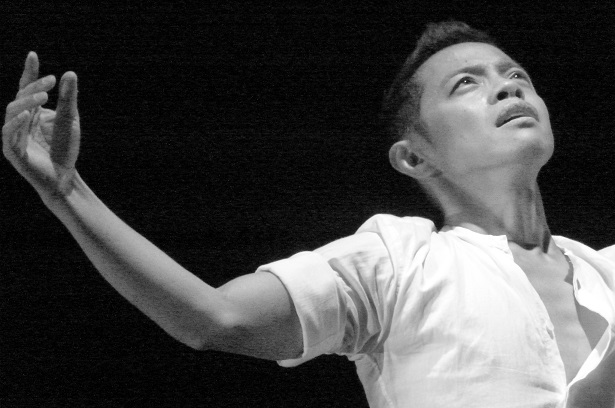
  • Graham Deconstructed: EMBATTLED GARDEN

    6a00d8341c4e3853ef015432a5d60c970c-800wi

    Above: Isamu Noguchi at Versailles in the 1950s

    Wednesday August 19th, 2015 – Martha Graham’s Embattled Garden (1958) is the choreographer’s re-telling of events in the Garden of Eden. The ballet is performed to a score by Carlos Surinach, with a set designed by Isamu Noguchi and costumes by Ms. Graham herself.

    This evening, as part of the Martha Graham Dance Company‘s series Graham Deconstructed, a full performance of the work was given in the intimate setting of the Graham Studios at Westbeth on Bethune Street. The heat in the theatre-space seemed stifling at first, but once the dancing started such earthly concerns were forgotten.

    As audience members arrived, a film of the original cast of EMBATTLED GARDEN was being shown. In her opening remarks, Janet Eilber, ever the gracious danceworld-hostess, told us that the film had been shot between a matinee and an evening performance: a time when the dancers are normally resting, eating, and gathering their strength for the second show. Thus some of the dancing is sketched in rather than full-out. Still, it’s quite a document.

    Ms. Eilber spoke of the exotic characteristics of this ballet: the tropical colours of the Noguchi set, the subtle ‘Spanish’ effects of the Carlos Surinach score (to which Graham’s choreography at one point responds with a flamenco motif), and the costuming details which evoke Iberia: the two men wear toreador-style trousers and Lilith’s tortoise-shell comb looks like a peineta (the supportive part of a classic mantilla). Although Biblical references to Eden are avoided in EMBATTLED GARDEN, Lilith’s rich-red fan has always symbolized The Apple for me. 

    Once the capacity audience had settled in, Ms. Eilber asked the four dancers to demonstrate some of the signature passages that define their respective roles. There was then a brief pause, and the ballet was shown in its full, sensual glory.

    Of the cast, only Mariya Dashkina Maddux as Eve had previously danced her role. Masha, as she is affectionately known, has recently become a mother and she returns to performing with that indefinable added glow which new-motherhood often imparts. One of the Company’s most lyrical movers, Masha as Eve found a perfect balance of pride and vulnerability. 

    The three dancers debuting in this ballet are Lloyd Mayor (Adam), Lauren Newman (Lilith), and Lorenzo Pagano (The Stranger); each made a vivid individual impression, and they are already putting their personal stamps on these iconic Graham roles

    Lauren Newman and Lorenzo Pagano make a wonderfully conspiratorial couple: it’s all in the eyes – they seemed to be in constant visual contact no matter where they were on the stage at a given moment. Ms. Newman was seductive and self-assured, whilst Mr. Pagano looked dazzling in the athletic choreography; his Renaissance handsomeness could shift from angelic to demonic in the twinkling of an eye. 

    Lloyd Mayor is probably getting tired of being referred to as ‘boyishly handsome’ but…there it is. As he takes on new Graham roles, his expressiveness finds new depths. His performance as Adam was passionate, physically alluring, and lushly resonant.

    This international cast – American, Italian, Ukrainian, and Swiss – were given a most enthusiastic salute of applause and cheers at the close of their performance. They had danced under sultry conditions which – as Ms. Eilber pointed out – were very suitable to the ballet’s steamy content.

    I felt that many in the crowd were seeing EMBATTLED GARDEN for the first time. And some may even have been having their first-ever Graham experience: I have no doubt they will be back for more.

  • Claudia Schreier & Company @ Ailey Citigroup

    Y9sFFU7MHcPVPSPHekpAuI0a2psEiYGmG3xQfZxEJVw

    Above: Amber Neff and Drew Grant dancing with Claudia Schreier & Company at Ailey Citigroup Theatre; photo by Nir Arieli

    Saturday August 8th, 2015 – Exactly one year ago tonight, Claudia Schreier won the Breaking Glass Project’s competition for female choreographers with her brilliant ballet, HARMONIC. Her prize was to present a full evening of her own work at Ailey Citigroup Theatre, and that prize was claimed tonight as five of Claudia’s works were performed by an array dancers drawn together specially for the occasion.

    The evening was an unalloyed triumph for all concerned, including two contemporary composers whose works were choreographed by Claudia (Jeff Beal and Douwe Eisenga – both of them were present and took a bow at the end); the choral group Tapestry who performed live for the ballet VIGIL; a chamber quartet playing Jeff Beal’s score for ALMOST MORNING live, and – of course – the superb ensemble of dancers.

    K5E9rMw6UqO0VVtyJciW6UK4NPyQplBgLO9YtZmNWic

    Above: the chamber musicians, with dancers Amber Neff and Drew Grant, in ALMOST MORNING

    When we first started watching House of Cards, my partner and I were very much taken with Jeff Beal’s score: “…this music would make a great ballet!” And now it’s come to pass: ALMOST MORNING is set to an original score composed for Ms. Schreier by the multi-Emmy Award-winning Mr.Beal. Six dancers appear in a series of overlapping duets interspersed among ensemble passages. The music pulses and percolates, but can also turn moody or melodious along the way. The musicians – Kieran Ledwidge (violin), Tia Allen (viola), Kirin McElwain (cello) and Ta-Wei Yu (piano) – delivered the score with propulsive assurance.

    The choreographer responds to this music with movement that has a broad overall sweep but also features countless felicitous and original touches. Amber Neff is thrice tossed into the air, spiraling before being caught by her partner Drew Grant; the blondes – Kaitlyn Gilliland and Elizabeth Claire Walker – dance in tandem; and a sustained duo for Ms. Walker and Mr. Grant is particularly striking. A pas de trois for Ms. Neff, Francis Lawrence, and Da’Von Doane progresses to a pensive solo danced by the incomparable Kaitlyn Gilliland. There are stretches of visual polyphony; the dancers form a circle before sweeping into a triple pas de deux set to the score’s most lyrical theme. Then the dancers rush off in the end, leaving the stage to the musicians.

    The conclusion of the ballet triggered the first of the evening’s enthusiastic ovations: having observed ALMOST MORNING in a keen state of silence, the audience demonstrated their approval for both the music and the dancing in no uncertain terms. And this was only the beginning.

    The evening continued on its soaring trajectory with HARMONIC, the ballet to Douwe Eisenga’s stimulating score which clinched the prize for Claudia Schreier at last year’s Breaking Glass competition. HARMONIC was originally created by Ms. Schreier in 2013 for the Columbia Ballet Collaborative, and was subsequently re-staged for Craig Salstein’s Intermezzo Dance Company, who performed it at Vassar College in March 2014. Inspired by Mr. Eisenga’s magical score, HARMONIC is a contemporary ballet that seems built to last.

    Tonight HARMONIC received a mesmerizing performance, with ABT’s entrancing Stephanie Williams displaying marvelous technique and a particularly attractive presence. Earlier this month, Stephanie danced – splendidly – for Joshua Beamish at The Joyce. The principal male role here was taken by Dance Theatre of Harlem’s intrepid Da’Von Doane; Da’Von danced in four ballets tonight and, after a long day of tech/dress/performance, he seemed totally fresh at the end of the evening and looked ready to repeat the whole programme. Strength and stamina are essential, but when you add Da’Von’s stunning physique, impeccable partnering, generosity of spirit, and his intangible gift for making everything seem right with the world, you have a paragon.

    VrNHJfYYogm9siRJvr8UW4yNJwsOXitV7P3HNzXAtv8

    Da’Von’s dancing with Ms. Williams (above) was electrifying to behold, for they are well-matched in terms of both daring and allure.

    One could say there are no supporting roles in Claudia Schreier’s ballets: she puts demands on everyone involved in a given work and then rewards them with opportunities to shine. Thus tonight in HARMONIC, Amber Neff and Elinor Hitt were utterly essential; they danced their hearts out, and basked beautifully in those passages of being partnered by Da’Von. Again, the audience response was thunderous.

    More images from HARMONIC:

    1O0yCW6DIWcuNbi1kgkPvPGcePxqUPemQqgrPxdPvz4

    1KVDMItwF91iXMsAH0RJgcUAIUCf9rcaCuNakLLIelU

    Elinor Hitt

    DJGLT5k-HOM4CJA1j2KxvMdRDzTWJ5ORhvToe5qMktY

    P6ARkgQ5VYLSGcmYLnuZH8l1PchvvsZI0BMCKKlz7Co

    Stephanie Williams

    A new production of Ms. Schreier’s 2009 ballet ANOMIE is imbued with a striking atmosphere of lyricism and poetry. Set to the heartfelt beauty of César Franck’s Prelude, Fugue and Variation

    YhV7QelfH4upXWT4oiaD-78zKzAtRftqDr9iTDjJF9A

    ANOMIE opens (above) with New York City Ballet’s distinctive Lydia Wellington posed in Daniel Applebaum’s arms in a pool of light; Lydia slowly unfolds and the ballet begins its beautiful flight. In addition to the abounding artistry of this wonderfully simpatico City Ballet duo, we could also savor the ever-vivid clarity of Amber Neff’s dancing, the aristocratic face and silken line of Elizabeth Claire Walker, and the handsomely assured presence of Drew Grant.

    MTvRlLhuisXRhclACmQpP0zgIyStKb4ZHLIJVPn9NeA

    Elizabeth Claire Walker (above) with Drew Grant…

    Km16R_5Ghax9vRLyntasKf3rdlEOq9zhuVWZ9d66jJE

    Elizabeth Claire Walker and Daniel Applebaum

    All five dancers appear in a diagonal, with a canonic dramatic port de bras motif, before Lydia Wellington and Daniel Applebaum meet again to end the ballet as in a fading dream.

    I can’t resist sharing more of Nir Arieli’s images from ANOMIE:

    0SI--26VGCSLSQ1gDOxIEQ4xgNID-k3mdpnnDljo19Q

    Daniel Applebaum and Elizabeth Claire Walker
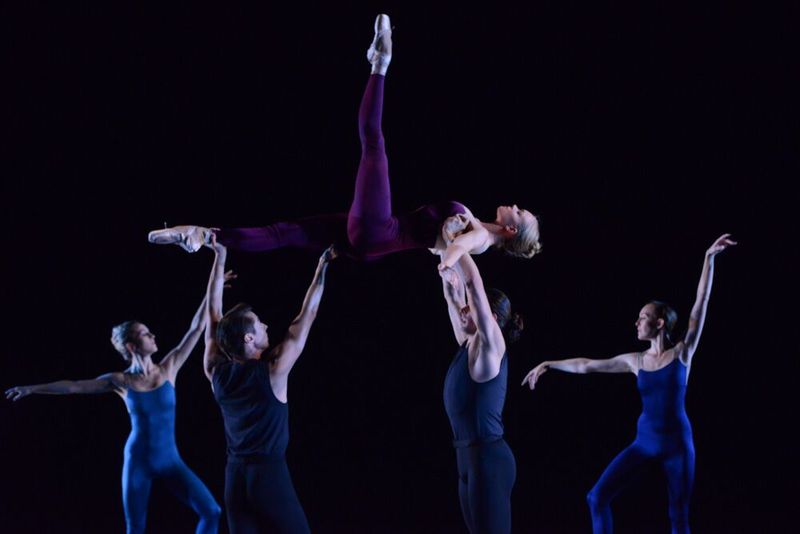
    FvlGBVqpyOqaUaW8zjRLkEJd-fZiidefP2BCSIXMC-c

    Lydia Wellington, aloft

    WCtSTfFoPykM9C5iNf8-kojGyykv_vH4UVLRPgi0TO8

    Daniel Appebaum and Elizabeth Claire Walker: a most congenial partnership

    IA3Qcvp60nkoGJv_l9Cis0n4Ozy8gJ17Ln84d96OPnc

    Daniel Applebaum and Lydia Wellington

    RijS3j2j-Jpi87ApxZlCx2AGm4t0sNxnw_usIr_eYSU

    Lydia Wellington and Daniel Applebaum

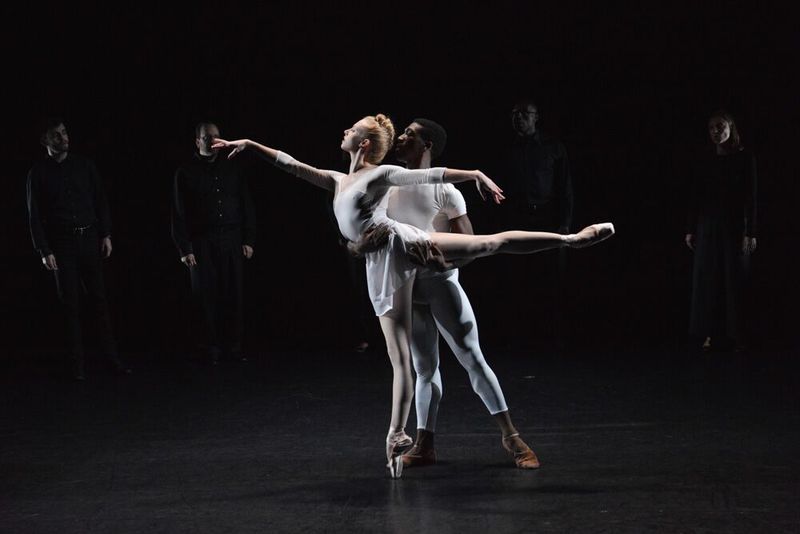
    Following the interval, the atmosphere became spiritual as Vigil, a pas de deux danced by Elinor Hitt and Da’Von Doane to sacred choral music by Tomás Luis de Victoria and Sergei Rachmaninoff which was performed live onstage by the 20-member choir Tapestry. The singers, clad in black, arranged themselves in a semi-circle around the dance-space; they are a wonderful, physically diverse group of musicians and they harmonized with a kind of gentle intensity that created an atmosphere of both reverence and hope. 

    OMWIE-Czaw11xYyV6-Yp5ksiWQKagBj7OsbBC5lXRfk

    Above from VIGIL, danced by Elinor Hitt and Da’Von Doane

    Ms. Hitt was one of the revelations of the evening; her jazzy dancing in HARMONIC made us think of her as an extroverted allegro dancer, yet in VIGIL she displayed a poignantly expressive adagio style that put me in mind of Sara Mearns’ elegiac luminosity. It almost goes without saying that Da’Von Doane achieved another miracle of control, strength, and grace here; the partnership had a gorgeous flow and resonance, so finely attuned to the music. The dancers seemed angel-like in their white costumes, and their shaping of Ms. Schreier’s port de bras and the heavenly quality of the duet’s numerous lifts really cast a spell. The performance moved me to tears.

    More of Nir Arieli’s images from VIGIL: 

    49n005VJzsvCb1DSx1izV2GEyvS5GRJT2BntjAFD4Ws

    Q-zW7cFvJZoHyaykkqrjcfXBZ4hGjKNHsIcpnF_IquE

    VaQpT_k1TO1GAKh6316DP5wLFNXQoymriluYoN8f5K8

    VFHA0EntR26McD6nDkHZSs9sK94ep3yhkUTShl5V6O0

    PULSE, a driving full-company work, is set to Dutch composer Douwe Eisenga‘s marvelous Piano Concerto: I. With her customary flair for visualizing the music, Claudia Schreier molded the Eisenga score into another fascinating dancework: as exciting as HARMONIC, but bigger and splashier. In its dynamic thrust, PULSE reminded me at times of Robbins’s GLASS PIECES.

    CWHSP3A2JsVyFKX16Pv3HMRcTOaL9rzfcNk8A-Hg9EU

    Claudia’s full contingent of dancers took the stage for this impressively-structured ballet, and there were some dancers in the cast we hadn’t seen earlier in the evening, including New York City Ballet soloist Lauren King (above); always a welcome sight onstage, Lauren danced with her trademark mixture of lyricism and edge: a combination that always makes her so exciting to watch. Also appearing in PULSE were Nayara Lopes and Craig Wasserman, vivid dancers who I wish we could have seen more of over the course of the evening.

    Da’Von Doane’s opening solo in PULSE showed yet another facet of this dancer…a dancer to whom the word “amazing” can most truly be applied. The solo becomes an echo-duet for Da’Von and Craig Wasserman…
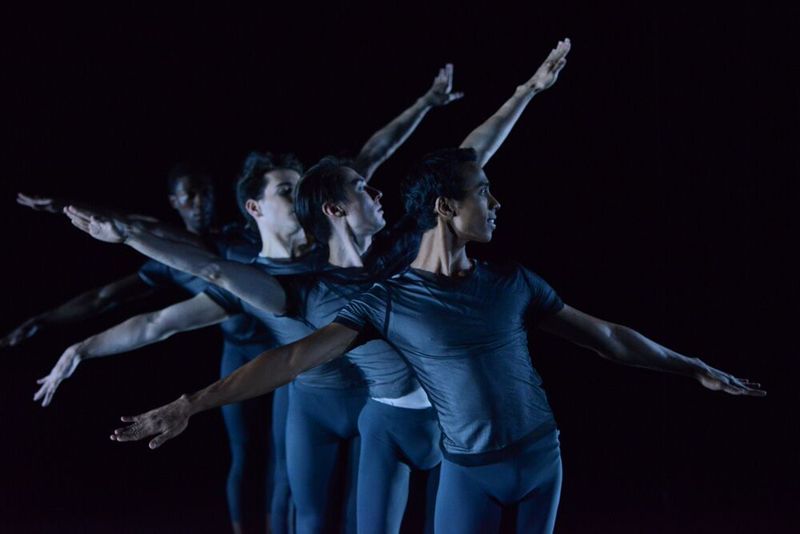
    TAfmoe5NcoVFqwZVPvC-J9V_zkqt3i68a-U0OkWrjHw

    …with motifs later taken up by the male ensemble (above): Da’Von, Craig, Daniel,and Francis.

    PULSE plunges forward, Claudia Schreier’s choreography ever-attentive to the nuances of the Eisenga score. At one moment, an air of mystery pervades only to surrender to the inevitable forward impetus of the music. There’s a buildup as waves of dancers enter…

    2ziWPMmcUodSe3Dt9DDlQiswd_cOeVh2NzDFOOW3RLo

    …and then suddenly we are lured into a solo passage for Kaitlyn Gilliland (above), dancing with goddess-like authority. Lines of dancers along a right-angle converge…

    UxOjxlMBczwmXTal7Fng6a1-szas2tTIKUoKcPRjIWo

    …and then Lauren King and Da’Von Doane (above) meet up for a duet, followed by other fleeting episodes. The women dance as a group, and then the men, and then everyone, as PULSE sprints to the finish line: a perfect finale for a grand evening of dance.    

    WZl3qKdcPsLlQ_y6I-HnVzT934N7DdbHhdc8fM-zGas

    Amber Neff and Da’Von Doane in PULSE: “We could have danced all night…in fact, we did!” To the dancers, one and all, heaps of roses and buckets of iced champagne.

    The performance ended with a colossal standing ovation and a din of cheers; the enthusiasm poured out into the lobby where the audience seemed reluctant to take leave after such an extraordinary evening. Although I have been following Claudia Schreier’s work for a few seasons, I must say that experiencing a full programme of her choreography surpassed my expectations, which were very high indeed. In addition to her enviable ability to choose just the right music and fill it with meaningful movement, her work is blessedly free of gimmicks or self-indulgence. Claudia knows the value of not over-extending her ideas, so that after each piece we are left wanting more.

    All photo by Nir Arieli, with my sincere thanks for his patience and his artistry.

  • Upcoming: Joshua Beamish/MOVE: the company

    JoshBeamish1

    Above: Joshua Beamish, photo by David Cooper

    Joshua Beamish/Move: the company will be at The Joyce August 4th and 5th, 2015; the performances are part of The Joyce’s Ballet Festival 2015.

    Joshua, who recently appeared as one of Wendy Whelan’s choreographer/partners for her RESTLESS CREATURE project, brings a diverse program to The Joyce. Featured works are the U.S. premiere of burrow, a duet for Royal Ballet dancers Matthew Ball and Nicol Edmonds, and the world premiere of Surface Properties, an ensemble work performed by ten dancers from American Ballet Theatre to a score by Mark Mellits and Michael Gordon. Also on the program are excerpts from Pierced, Beamish’s 2013 piece exploring the darker side of love.

    On July 30th, Joshua invited me down to the Martha Graham studios on Bethune Street where he showed me a run-thru of Surface Properties. This was only the second time that the dancers went thru the entire piece; it’s a big-scale and very active ballet, and the Mellits/Gordon score is propulsive and wonderfully danceable. Alternating full-ensemble passages with a series of fleeting solos and pas de deux, trois, et quatre, the work sustains our interest in its complex and sometimes whimsical partnering, unexpected match-ups of dancers, stylized port de bras elements, and unabashed physicality.

    The dancers, who rarely have a chance to do anything like this at ABT, leapt enthusiastically into this fresh experience, embracing the non-stop movement with technical brilliance and affording an opportunity to savor both their dancing and their personalities at close range. They are a super bunch: Zhongjing Fang, Isadora Loyola, Luciana Paris, Lauren Post, Cassandra Trenary, Stephanie Williams, Sterling Baca, Grayson Davis, Jose Sebastian, and Roman Zhurbin.

    I look forward to seeing Surface Properties, costumed and lit, on The Joyce stage.

  • Lydia Johnson’s WHAT COUNTS on Vimeo

    10433842_10203005424350583_5996794059085397772_n

    Above: Blake Hennessy-York and Sarah Pon of Lydia Johnson Dance rehearsing WHAT COUNTS

    A hit at its New York City premiere performances in June, 2015, choreographer Lydia Johnson’s WHAT COUNTS is now available for watching on Vimeo. Tune in here.

    The jazzy score comes to us from The Bad Plus, and the ballet is performed by a quintet of Lydia Johnson Dance’s distinctive dancers: Sarah Pon, Blake Hennessy-York, Laura DiOrio, Katie Martin-Lohiya, and Chazz Fenner-McBride.  

  • Lydia Johnson’s WHAT COUNTS on Vimeo

    10433842_10203005424350583_5996794059085397772_n

    Above: Blake Hennessy-York and Sarah Pon of Lydia Johnson Dance rehearsing WHAT COUNTS

    A hit at its New York City premiere performances in June, 2015, choreographer Lydia Johnson’s WHAT COUNTS is now available for watching on Vimeo. Tune in here.

    The jazzy score comes to us from The Bad Plus, and the ballet is performed by a quintet of Lydia Johnson Dance’s distinctive dancers: Sarah Pon, Blake Hennessy-York, Laura DiOrio, Katie Martin-Lohiya, and Chazz Fenner-McBride.  

  • CMS: Summer Evenings III

    Sitkovesky WuQian

    Above: violinist Alexander Sitkovetsky and pianist Wu Qian, featured performers at tonight’s Chamber Music Society of Lincoln Center concert

    Wednesday July 22nd, 2015 – Chamber Music Society of Lincoln Center‘s inaugural Summer Series wrapped up this evening with a most impressive and enjoyable programme. The formula for these Summer concerts (as for all of the Society’s concerts, really) was a simple one: great music played in a wonderful space by first-rate musicians. That the series was a genuine success came as no surprise to me; and the best news is, planning for a Summer Series 2016 at CMS seems already to be in the works as I write this.

    The Society draws from an A-list roster of musical artists, sometimes featuring established ensembles – such as the Amphion String Quartet who headlined the second concert in the Summer Series – and sometimes gathering together players from diverse musical backgrounds to illuminate a particular convergence of works. For tonight’s programme, pianist Wu Qian and violinist Alexander Sitkovetsky were the central figures; this husband-and-wife team (who make up two-thirds of The Sitkovetsky Trio) played in all three works. Joining them were the delightful young violinist Danbi Um, viola paragon Richard O’Neill, and the distinguished veteran cellist Laurence Lesser.

    Antonín Dvořák’s Bagatelles for Two Violins, Cello, and Keyboard, Op. 47, opened the evening; this series of miniatures alternates spirited dance rhythms with soulful slower movements, all drawing upon the folk music which so often inspired the composer. Plucking cello, rhapsodic violins, and flowing piano motifs are among the attractions of these five small wonders. Wu Qian was at the keyboard, with the two violinists and Mr. Lesser’s amiable cello assuring a most appealing exploration of the unfolding thematic material which abounds in these charming, deftly scored bagatelles. 

    Robert Schumann’s Sonata in D minor for Violin and Piano, Op. 121 was given a remarkable performance by Mr. Sitkovetsky and Wu Qian. Although stationed in a way that seemed to preclude eye contact, the two developed an extraordinary telepathic rapport. Mr. Sitkovetsky had removed his white dinner jacket and, all in black, he proved as fascinating to watch as to hear, with expressive body English and moving in an almost choreographic response to the music.

    Following a passionate, slashing start, Mr. Sitkovetsky intoned a heartfelt solo passage before the eruption of energy that propels the sonata’s first movement. The violinist’s playing is wonderfully rich, plumbing the depths of feeling with his resonant tone. For the energetic opening of the second movement, the violin/piano collaboration was rhythmically driven, though lapsing at one point into a melodious interlude.

    A mandolin-like plucking motif opens the third movement, which evolves into a haunting theme: here Mr. Sitkovetsky’s Olde World sound and his ability to transform melody into poetry was at its most moving. In the final movement’s expansive variety of themes and energies, violinist and pianist were simply thrilling, causing the audience to celebrate their joint artistry with prolonged applause and calling the duo out for a second bow. 

    Danbi Um, in a glamorous deep emerald gown with a diamond clasp, looks as elegant as she plays. She took the first chair for the evening’s concluding Brahms (the Quintet in F minor for Piano, Two Violins, Viola, and Cello, Op. 34) and, with her ravishing ascents to the upper range, graced the music at every moment. The big singing themes of this work were delivered with striking lushness by the players – Mr. Sitkovetsky and Wu Qian, violist Richard O’Neill, and cellist Laurence Lesser joining Ms. Um; they sometimes created the sonic illusion of a much larger ensemble with their plush tone. 

    The performance was brimming with marvelous moments, including (in the first movement) a lovely violin/viola ‘conversation’ and a luminous moment when Ms. Um, with her refined tone, passed the melody to Mr. Lesser who took it up with achingly beautiful expressiveness.

    The somewhat hesitant opening of the second movement – with Mr. Lesser’s subtle plucking motif – took a few moments to bloom into melody. Mr. O’Neill, a player we can admire as much for his artistry as for his humanitarian and charitable work, had a deeply moving theme with which to entice; then Mr. Lesser’s cello took a series of ever-deepening plunges. At the piano Wu Qian’s gently lilting playing underscored the ensuing rise of the string voices. In a moment of sheer perfection, Ms. Um and Mr. O’Neill jointly tapered the movement’s final note til it vanished into the air. 

    After some treading in a minor key, the third movement bursts forth; the pianist continually sounds a heraldry of march-like calls to action. Later, Wu Qian’s piano segues into a more lyrical passage where she is met by the Mr. Lesser’s genial cello…but their encounter is fleeting before another onrush of almost military vigor. Things calm down again momentarily, only to surge forward again with a triumphant feeling.

    A pensive – almost eerie – feeling pervades the opening of the quintet’s finale. In music that is passionate and harmonically rich, we experience a mixture of vivid dance themes and passages of almost tragic-sounding lyricism. 

    As our estimable ensemble of players drew the evening to its close, the audience hailed them with sincere appreciation and affection. The evening was perhaps best summarized by a remark the man seated behind me made to his wife just as the house lights went down for the Brahms: “This is the place to be!”

    The Repertory: 

    The Participating Artists: 


  • CMS: Summer Evenings II

    Amphion+String+Quartet+classical+concerts+online

    Above: the musicians of the Amphion String Quartet; left to right: David Southorn, Mihai Marcia, Katie Hyun, and Wei-Yang Andy Lin

    Sunday July 19th, 2015 – The second in Chamber Music Society of Lincoln Center‘s 3-concert summer series took place on a sweltering day. Outdoors, people were wilting from the intense heat and humidity, but in the cool, classical cavern of Alice Tully Hall, another capacity audience drew both physical comfort and spiritual sustenance from a well-devised and admirably played programme.

    Putting Haydn and Mozart on the same bill of fare can sometimes result in Papa Haydn’s music being somewhat overshadowed by the younger composer’s. But that was not the case today, thanks to the Amphion String Quartet’s lovingly crafted rendering of Haydn’s penultimate completed string quartet: in G major, Op. 77, No. 1.

    In the opening Allegro moderato, the Amphions brought both crisp clarity of articulation and a silky blend of timbres. The Adagio – which to me draws upon a depth of feeling that Haydn’s music does not always attain – produced some striking modulations and resonant pauses as the players, so sure of one another, seemed to breathe and phrase as one. Special mention must be made of the enticing sheen of cellist Mihai Marica’s playing. In the scurrying third movement of the Haydn, and also in its propulsive finale, the Amphion’s virtuosity and sense of fun were amply evident.

    6966796790_9e54190321_n

    Above: pianist Gilles Vonsattel

    Felix Mendelssohn is sometimes referred to as “the romantic classicist,” and this concert’s back-to-back programming of the Haydn (dating from 1799) and Mendelssohn’s Piano Quartet No. 3 in B minor, Opus 3, written a quarter-century later, showed most vividly the leap from Classicism to Romanticism that marked the arrival of the 19th century.
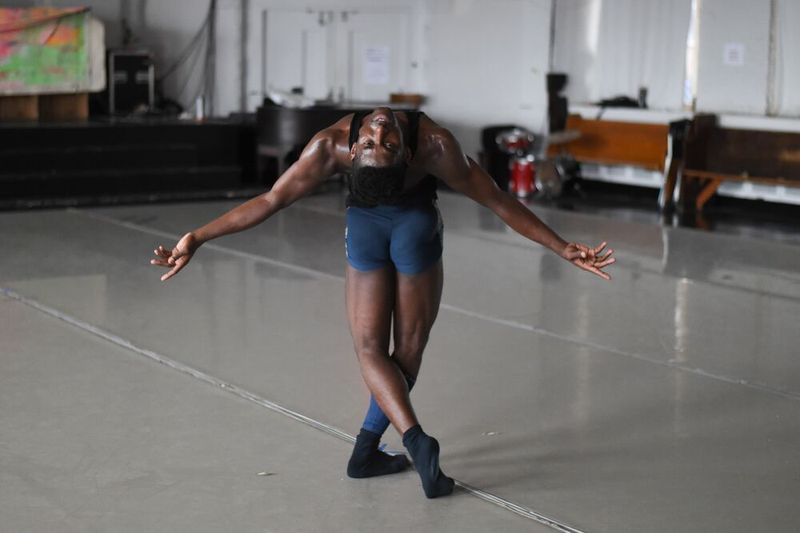
    Mendelssohn’s music is really unlike anyone else’s; it has a wonderful freshness and vitality, and the composer’s enchanting trademark sound, affectionately referred to as ‘faerie music,’ has a charm all its own. It was a chance hearing of a Mendelssohn piano trio on the radio many, many years ago that opened my mind to the pleasures of chamber music; it was only after decades of devoting myself to opera that I got to the point where I had both the time and the energy to explore the chamber music repertoire, a genre of mind-boggling variety and endless reward.

    Curiously, I’m finding these days that it’s instrumental soloists and chamber artists who have taken the place of great singers in my affection and admiration. I’ve always had a strong streak of unabashed ‘fanhood’; if I like a singer/dancer/musician, I really become an admirer and they become an idol. That happened for me today as Gilles Vonsattel played his way into my echelon of favorites in the Mendelssohn. In 2014, the Swiss-born American pianist participated in a memorable CMS performance of Messiaen’s ‘Quartet for the End of Time’. Playing my beloved Mendelssohn this evening, Mr. Vonsattel’s quicksilver technique and masterful turns of phrase kept me constantly drawn to the keyboard. 

    This Mendelssohn quartet is a veritable font of melody and shows a sophistication of musical imagination that seems extraordinary in a composer still in his teens. The second movement (Andante) is vastly pleasing to hear, opening with a lovely piano statement which gives way to lulling rhythms, with gently developing themes of longing from the violin (Ms. Hyun) and of pensive soulfulness from the cello (Mr. Marica). The third movement (Allegro molto) opens with an injection of Midsummer Night’s magic, proceeds to swelling melodies and becomes a big dance. In the finale, Mr. Vonsattel’s mercurial playing was simply irresistible. 

    400x300.fitandcrop

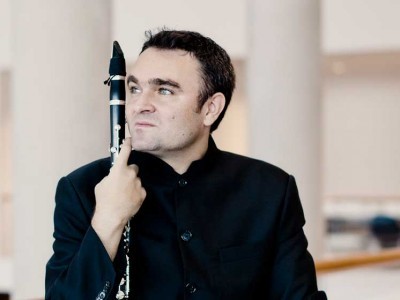
    Above: clarinetist Jörg Widmann

    For the evening’s concluding Mozart, the ‘Clarinet Quartet’, Jörg Widmann (who also took part – splendidly – in that ‘Quartet for the End of Time‘ mentioned above) displayed an engagingly natural feel for legato, his tone having a mellow glow. In both featured clarinet passages and in his sharing of ensemble moments, Mr. Widmann’s clarity and his impressive affinity for dynamic colourings drew the audience’s deep and concentrated attention.

    David Southorn took up the violin 1 position in the Mozart, especially appealing in the first movement’s solo theme set against Mr. Marica’s plucked cello pacing. In the Quintet’s heart-filling Adagio, Messrs. Southorn and Widmann traded melodic phrases to beautiful effect, whilst in the variations that are part of the work’s finale, Wei-Yang Andy Lin drew forth a weeping quality from his viola.

    Throughout the Quintet, Mr. Widmann and his colleagues conveyed the enormous richness of Mozart’s writing, providing a musical experience in which virtuosity and emotion seemed ideally blended.

    The Repertory:

    The Participating Artists:

    Gilles Vonsattel, piano; Jörg Widmann, clarinet; Amphion String Quartet, ensemble

  • BalaSole Presents SALMAGUNDI

    BalaSole_Dance_-_Salmagundi

    Above: Alexandra Jacob, a guest soloist in tonight’s performance by BalaSole Dance Company

    Friday July 17th, 2015 – The word “salmagundi” refers to a type of salad, but also to any kind of assortment, medley, or montage. Celebrating their fifth anniversary season tonight at Ailey Citigroup, Roberto Villanueva’s Balasole Dance Company offered a smorgasbord of dance, with a tasty array of solos – everything from tap to toe shoes – in a skillfully arranged and nicely lit production.

    As is the custom at BalaSole performances, the evening opened and closed with ensemble works which are prepared and danced by all the participating soloists and emerging artists in the week leading up to the show. Roberto often uses baroque music for these group dances, but this time around he chose contemporary music with a seductive throb; the dancers seemed very much at home in this milieu.

    LAURA ASSANTE was the first soloist; her piece entitled “Cancelled Stamp” was danced to the voice of the inimitable Nina Simone singing her classic “Love me or leave me”. Ms. Assante, a lively blonde with a great range of facial expressions, filled the song – which has a long piano riff midway thru – with energy and charm. 

    ANNA CUFFARI performed a pensive, searching solo entitled “Maktub“. She awakens in a pool of light to the sound of a harp. As the music expands into a passionate romantic theme, the dancer made excellent use of the space with her questing movement and expressive face and hands.

    FREDRICK DAVIS (from Dance Theatre of Harlem, making a guest appearance tonight) displayed his striking classic technique in an excerpt from  “Undisputed Love“. Set to the celestial sounds of Arvo Part’s “Fratres”, the danseur, in tights and a white shirt, seemed like a contemporary Albrecht lamenting his lost Giselle. Fredrick’s dancing had a fine sense of nobility and quiet ecstasy. 

    The comely ANDREA SAMONILOVA appeared next, reciting poetry for her solo entitled “Možná Jednou” (translation: ‘Maybe One Day’). Meshed with the spoken words is the sound of water flowing. The sad poetess seems like a lost soul as she stares into the audience, in search of someone. A winsome melody evokes memories of another time and place to which she cannot return. This solo, and Ms. Samonilova’s dancing of it, was both moving and mysterious.

    XAVIER TOWNSEND made remarkable moves in his solo “Return”, including some risky B-boy passages that had the audience gasping. Running in place and enmeshed in a struggle for self-expression, the lithe and handsome dancer was able to combine his explosive energy with more lyrical moments to make his solo a big hit with the crowd. 

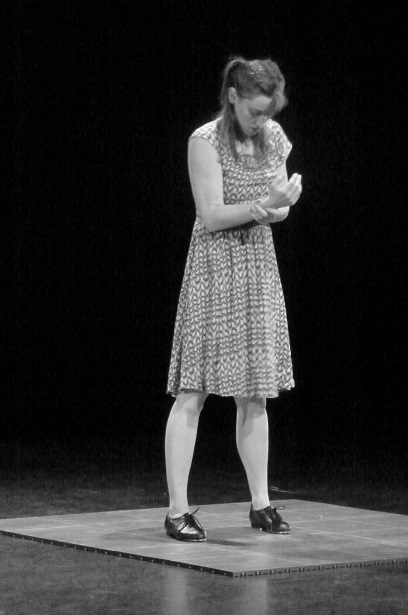
    CAMILLE SCHMOEKER performed a tap solo “Gilgal“, to an arrangement of the old gospel song “Joshua Fit The Battle of Jericho”. Using subtle shifts in the speed and volume of her tapping, the dancer, in a simple country frock, sometimes evoked line dancing in this solo which had a taste of Americana as well as a feeling of personal narrative.

    The powerful physique of ELIJAH LAURANT made a commanding impression in “Delimited Connection“; music from Kangding Ray underscored the dancing with a pounding beat, but the dancer steered clear of literalism and held our interest with his unfolding, expressive moves and the strength of his technique. 

    ALEXANDRA JACOB, a guest soloist, was for a decade a star of Dance Theatre of Harlem. Tonight, she performed “Anástasis” (translation: ‘Resurrection’), choreographed on her by Roberto Villanueva. Clad in midnight blue and with her hair flowing free, Ms. Jacob’s on-pointe dancing showed a luminous quality as she moved among pools of light. Music by Olafur Arnalds, rather ominous of mood, set the dancer on her path: a restless feeling imbued with lyricism, and a gorgeous ability to communicate directly with the audience thru the poetry of movement.

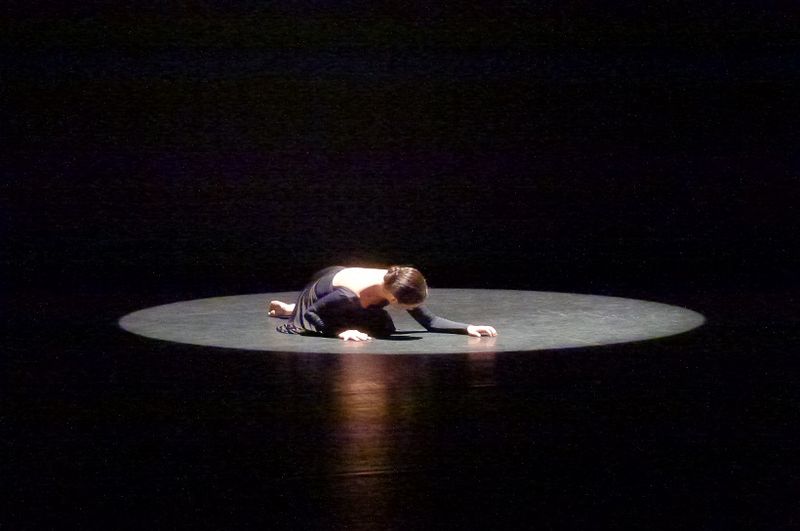
    BRIANA BUTLER enters in silence; on the ground, she pulls herself into a circle of light. Her solo,  “Unstoppable“, is danced to music that is alternately mystical and thunderous. Ms. Butler’s strength and control developed the solo with propulsive energy, and she added some impressive gymnastic elements along the way before things settled again into silence.

    ROBERTO VILLANUEVA always dances the closing solo at all BalaSole performances, and invariably his solos are highlights of the show. Today, his ‘awakening’ solo, “Air”, was danced to music by Max Richter. Roberto’s solos have an improvisational air but they are always carried off with the polished artistry and committed musicality of a born mover. 

    Prior to the show I watched the dress rehearsal, hoping to get some useful photos of all the participants; but that did not go so well for me and my camera today. I include a few here, but it’s totally random and I’m sorry to say not all the dancers are represented in their solos.

    L1580631

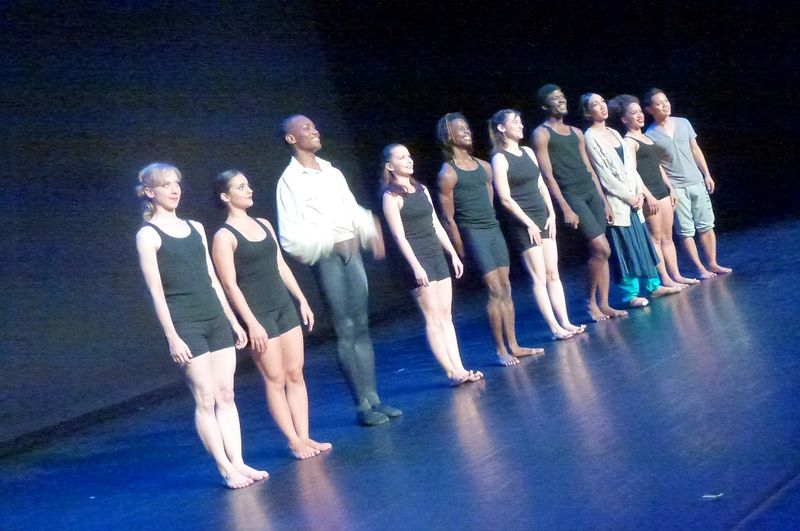
    Above: the soloists, lined up in performance order – Assante, Cuffari, Davis, Samonilova, Townsend, Schmoeker, Laurent, Jacob,  Butler, Villanueva

    L1580630

    Above: the emerging/re-emerging artists – these dancers appeared in the ensemble works at the start and end of the performance. They are (left to right) Gabriella Perez, Sasha Smith, Laurel Higa, and Ezra Goh.

    L1580683

    Above: Laura Assante

    L1580692

    Above: Anna Cuffari

    L1580778

    Above: Camille Schmoeker

    L1580801

    Above: Elijah Laurant

    L1580835

    Above: Briana Butler

    L1580888

    Above: Roberto Villanueva

    L1580901

    Above: the guest artists, Alexandra Jacob and Fredrick Davis, taking a bow

  • Pillow Prep: MADBOOTS

    GetInline.aspxh

    Above: studio showing of (SAD BOYS), the newest work from MADBOOTS; photo by Travis Magee

    Thursday July 9th, 2015 – MADBOOTS, the daring and unique all-male dance company founded by Austin Diaz and Jonathan Campbell, will be presenting their newest work (SAD BOYS) from August 26th – 30th, 2015, at the Doris Duke Theatre at the Jacob’s Pillow Dance Festival. Tickets and more performance information here. Support this production by donating here.

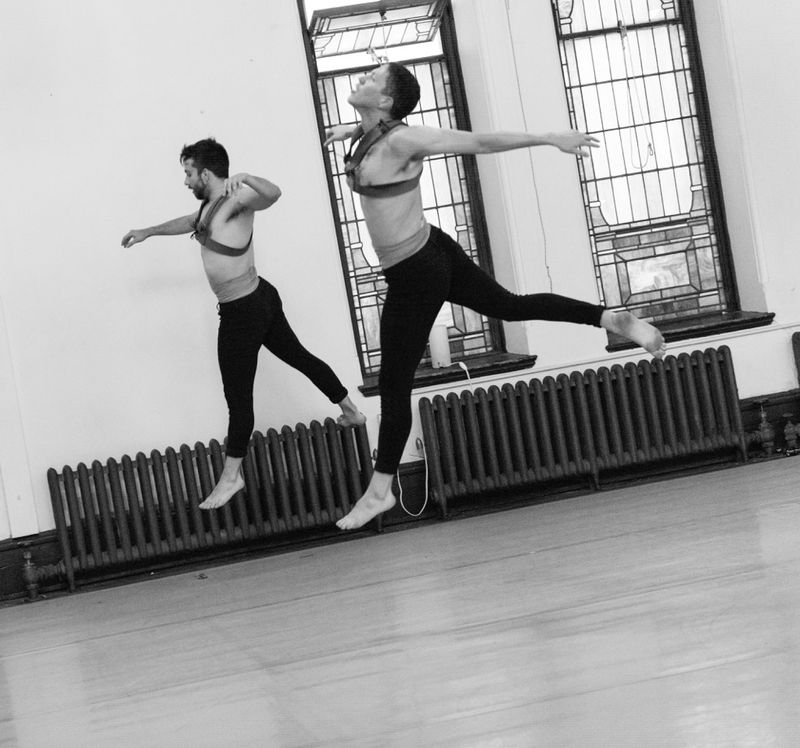
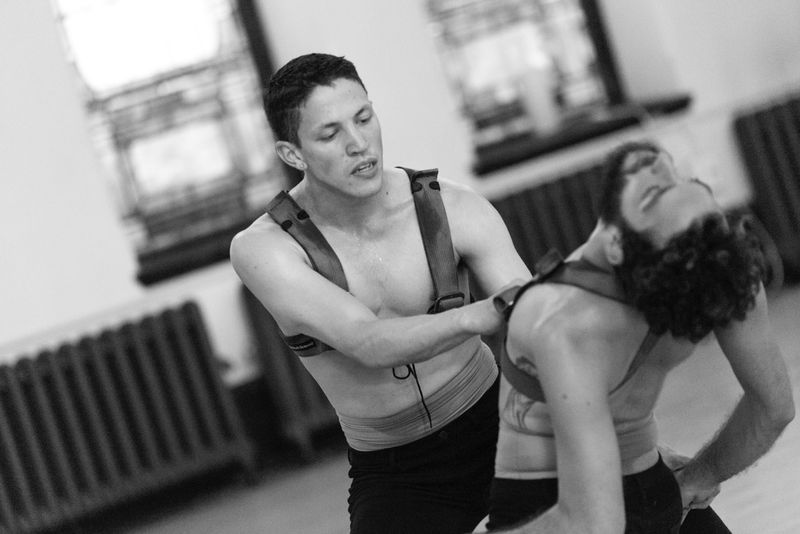
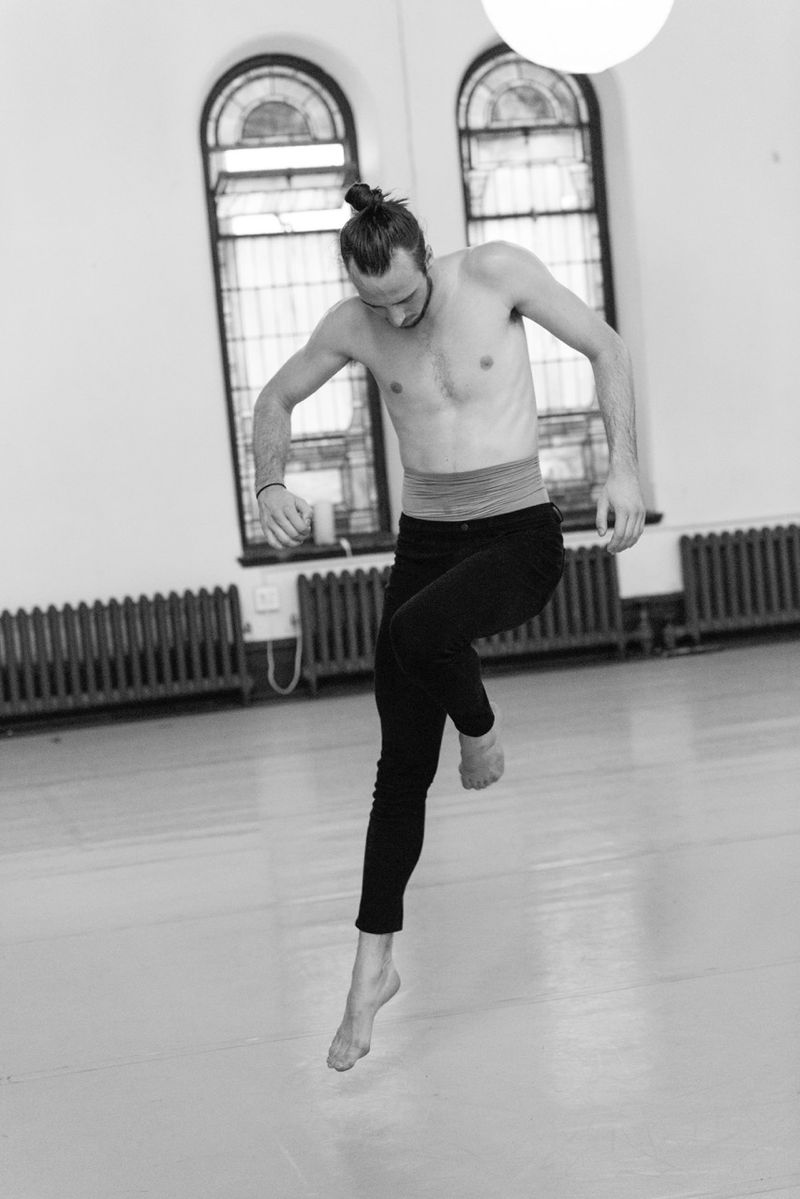
    Today MADBOOTS hosted a studio showing of (SAD BOYS) for friends of the Company; my photographer/friend Travis Magee met me there to document the event. Joining Austin and Jonathan for (SAD BOYS) are dancers Robbie Moore, Dan Walczak, and Chuck Wilt.

    Performed to a deftly assembled musical suite, (SAD BOYS) runs nearly an hour and unfolds in sequences of madly passionate movement laced with interludes of reflective stillness. It explores so many facets of the transition from youth to manhood: the desire for companionship, the hesitant awakening of sexual awareness, and the harsh lessons of mistaken affection. Tenderness, amiable horseplay fraught with desire, betrayal, brutality, and soul-rending despair are all elements of this journey which so many of us have made over the years. (SAD BOYS) resonates with both the wary pleasures and the terror of self-discovery.

    The choreography is space-filling, alternating raw physicality with unexpected passages of lyricism. The five dancers are unabashed in the athleticism of their dancing and in the intimacy of their interaction. As the dance progresses, the boys gradually shed their clothing, leaving themselves in a state of touching vulnerability by the end.

    Without giving away anything more about (SAD BOYS), here are some of Travis Magee’s images from the studio showing:

    GetInline.aspxd

    Jonathan Campbell and Austin Diaz

    GetInline.aspxe

    Austin Diaz and Dan Walczak

    GetInline.aspxf

    Dan Walczak

    GetInline.aspxi

    Chuck Wilt

    GetInline.aspxj

    Robbie Moore, Jonathan Campbell, Austin Diaz

    GetInline.aspxl

    Dan Walczak, Austin Diaz

    GetInline.aspxn

    Dan Walczak, Jonathan Campbell

    GetInline.aspxo

    Dan Walczak

    GetInline.aspxp

    Jonathan, Chuck, Dan, and Robbie

    GetInline.aspxq

    Jonathan Campbell, Chuck Wilt

  • Rehearsal: Knight/Beamish DANCE FOR NEPAL

    RQkHE0rinYhBWzy3nyyINzvkyHZx9FaaA39gtXrj1P0

    Above: Lloyd Knight rehearsing a new Joshua Beamish solo, ‘Adoration‘, for the upcoming gala benefit DANCE FOR NEPAL; photo by Nir Arieli

    Saturday June 27th, 2015 – On Tuesday June 30th, 2015, DANCE FOR NEPAL will be presented at the Union Square Theatre. The program, conceived by Simona Ferrera, is under the artistic direction of Lloyd Knight, principal dancer of The Martha Graham Dance Company.  All proceeds from this gala performance will benefit the survivors of the devastating earthquake that struck Nepal on April 25th, 2015. A stellar group of dancers will perform; tickets and more information here.

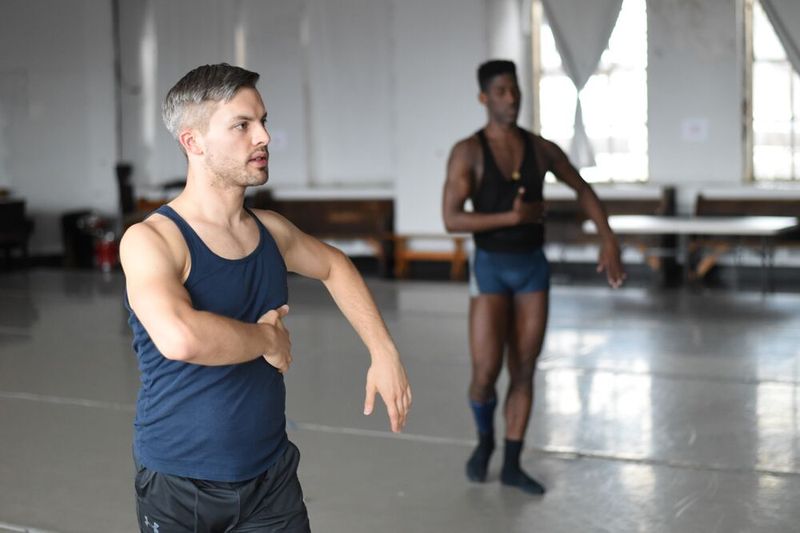
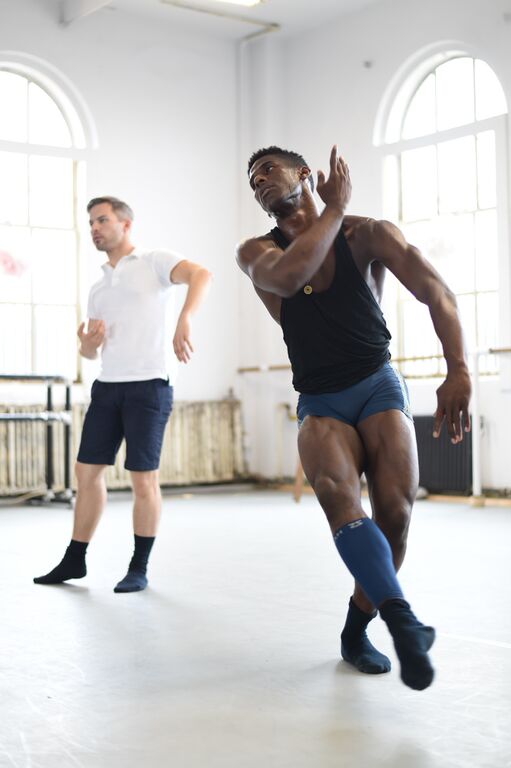
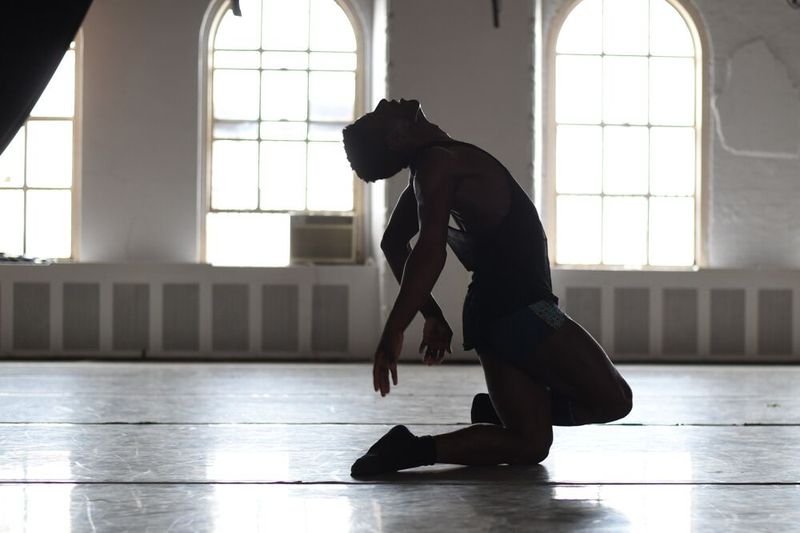
    On an overcast afternoon, photographer Nir Arieli and I dropped in at the Martha Graham studios for a rehearsal/preview of the new Beamish solo work. The choreographer has chosen the adagio from Haydn’s concerto in C-Major for cello and orchestra: a perfect setting for his fluent and expressive choreography and for Lloyd Knight’s powerful, emotive dancing. Demanding in its physicality, the solo has a deeply spiritual quality which gives Lloyd a perfect impetus for his interpretation: a striking mixture of muscularity and grace. 

    TCR4KqNouwnDvDmxEFTFrhjmF-FbmRKr7P20ePSuMqI

    Joshua Beamish (above, with Lloyd), the Canadian dancer/choreographer and founder of MOVE: the company, was recently seen here in New York City as one of Wendy Whelan’s choreographer-cavaliers in her RESTLESS CREATURE presentation at The Joyce. In August 2015, Josh will be presenting MOVE: the company for two performances at The Joyce. Details here.

    The studio atmosphere today was paradoxically calm and intense; I could have gone on watching endlessly since the combination of the music, Josh’s mapping of the movement, and Lloyd’s inspiring dancing were a welcome balm to the spirit.

    Here’s a gallery of Nir Arieli’s images from this rehearsal; I have chosen quite a few since they really capture the atmosphere:

    8GZwnZiFpnA8OML-Pn8HNZhHGPDqmTZuchV4pMfnz3s

    0H2SF4HwRQwA0R7DnkafO-z7iuCoGVFsJJ92iICWsA8

    A85gt2XQQUUmZnzGgRt25eyTiKQhCQlUcwUChXyvOkM

    DCy8A44bjllEbSPubFFO4aKrulekbGxt0OdY8ibIKlQ

    J7BWpa-lUIn3Pu3As2Fw_lc2uPivLK2eNPxY9YwdgSY

    YWKMLoVR-hRpAeO7E7BBFN5HrSk0Idjm6H9Zj2eX0xU

    FzS_IKv-9glcZ6gZEOhlITmE-V65aEekhGWN_jdDydI

    Ud_M-qKWg4ZTdgq7zJzzZRbYHMcLOR7zEa0Msyr7zm4

    MxEmtICm8SL2ikzFKnKwl0A59IyBV5Wgcr_TovHheSw

    NcBQ_rJxbrPZLlO4vcgkhncqjmQpIkt2aqdruFMR9LE

    Click on each image to enlarge.