Category: Ballet

  • New Chamber Ballet ~ Gallery

    IMG_9128_edited

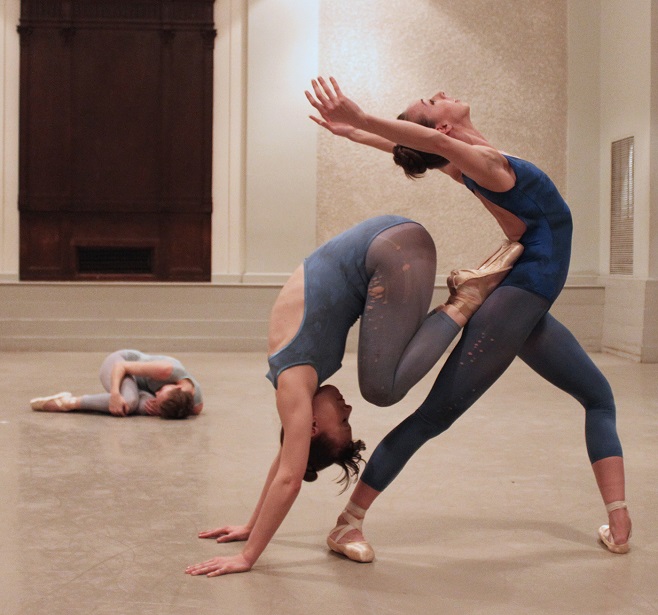
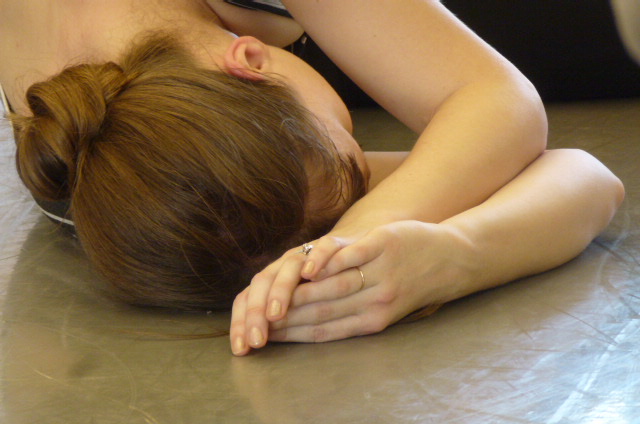
    Above: dancers Sarah Atkins and Amber Neff in Miro Magloire’s RAVEL’D

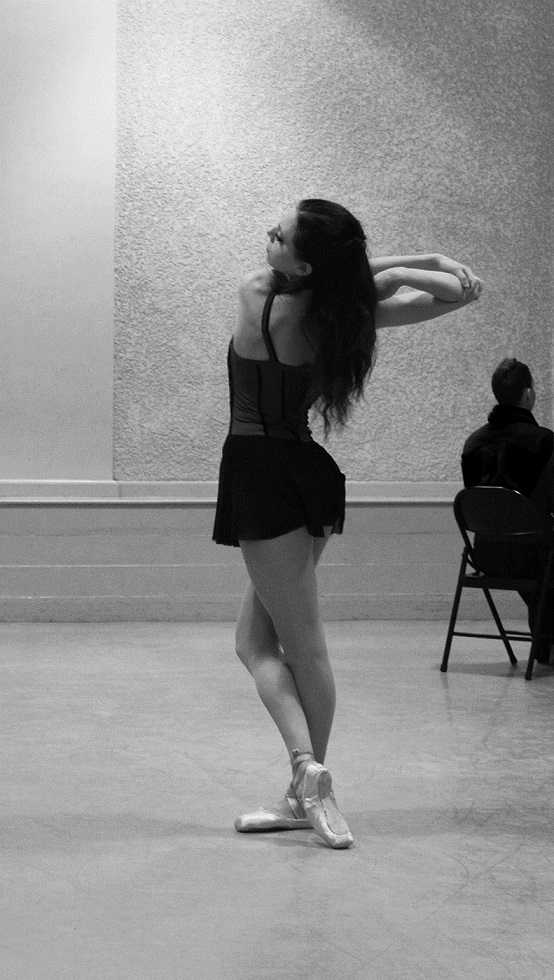
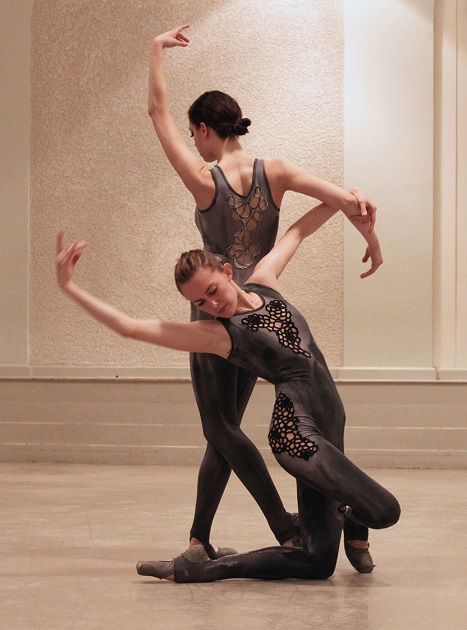
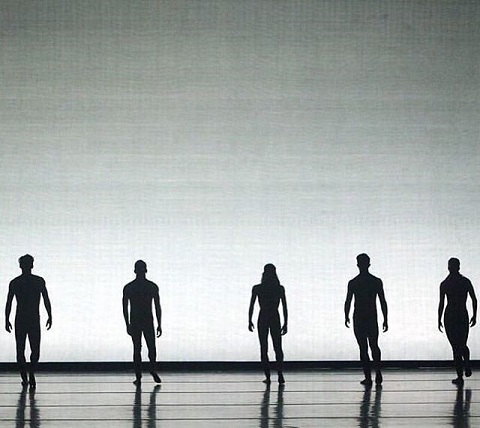
    Photographs from New Chamber Ballet‘s February 2016 performances at New York City Center Studios. Read about the program here, and about a rehearsal I attended here.

    All the choreography depicted is by Miro Magloire, and all the images are courtesy of New Chamber Ballet:

    IMG_9225_edited

    Amber Neff and Traci Finch in GRAVITY

    IMG_9239_edited

    Amber Neff, Elizabeth Brown, and Traci Finch in GRAVITY

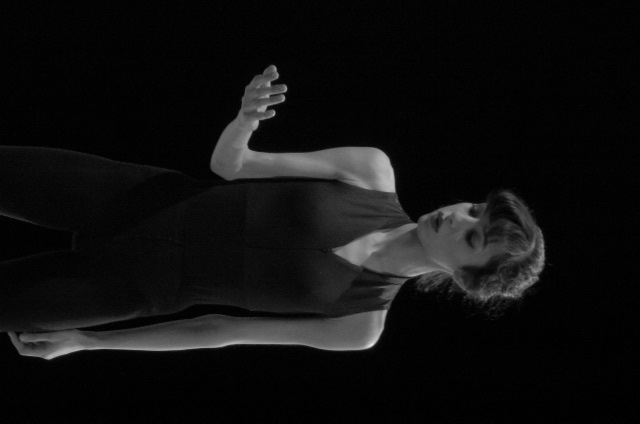
    IMG_9359_edited-bw

    Shoshana Rosenfield in QUARTET

    IMG_9363_edited-bw

    Shoshana Rosenfield in QUARTET

    IMG_9369_edited-bw

    Shoshana Rosenfield with Sarah Atkins and Traci Finch in QUARTET

    IMG_9389_edited-bw

    Elizabeth Brown, Amber Neff, Traci Finch and Sarah Atkins surround Shoshana Rosenfield in QUARTET

    IMG_9406_edited

    Amber Neff and Shoshana Rosenfield in VOICELESSNESS

    IMG_9431_edited

    Shoshana Rosenfield and Amber Neff in VOICELESSNESS

    IMG_9443_edited

    Shoshana Rosenfield and Amber Neff in VOICELESSNESS

  • Rehearsal: New Chamber Ballet

    L1680606

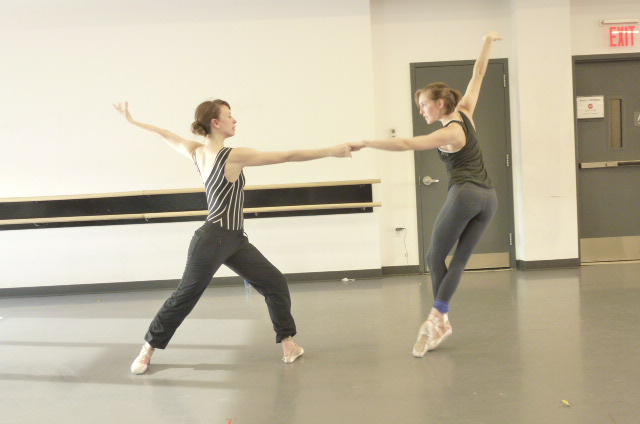
    Above: New Chamber Ballet dancers Amber Neff and Sarah Atkins

    Monday February 22nd, 2016 – I dropped in at Ballet Hispanico’s studios today where Miro Magloire, just back from choreographing the ballet sequences for Sarasota Opera’s production of Verdi’s AIDA, is preparing his New Chamber Ballet dancers for their upcoming performances: February 26th and 27th, 2016, at City Center Studios. Ticket information here.

    Marina Harss wrote a wonderful article for DanceTabs about Miro’s Sarasota experience: read it here.

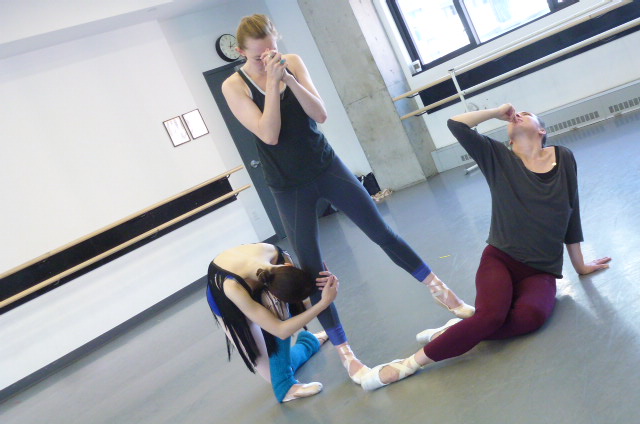
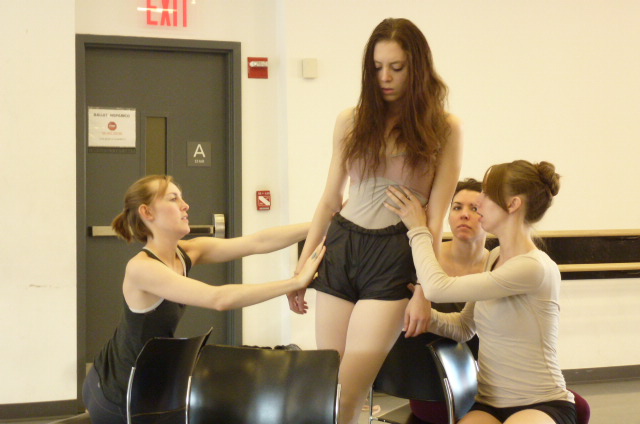
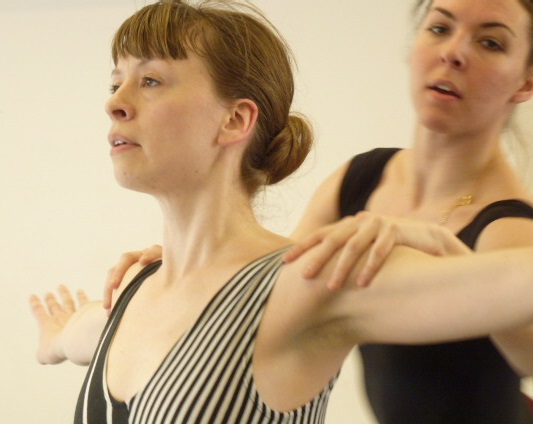
    At today’s rehearsal, Miro was fine-tuning the ballets we’ll be seeing on the coming weekend at City Center Studios. Here are some photos of the dancers I took at the studio today:

    L1680617

    Amber Neff

    L1680655

    Shoshana Rosenfield, Amber Neff, Sarah Atkins

    L1680682

    Shoshana Rosenfield, Sarah Atkins

    L1680707

    Sarah Atkins, Amber Neff

    L1680826

    Shoshana Rosenfield

    L1680830

    L1680889

    Traci Finch

    L1690027

    Elizabeth Brown, Sarah Atkins

    L1690050

    Traci Finch, Elizabeth Brown

    L1690066

    Elizabeth Brown, Traci Finch

    L1690142

    Elizabeth Brown, Amber Neff

    L1690150

    Elizabeth Brown, Amber Neff

    L1690140

    Elizabeth Brown

    The works to be presented at the upcoming City Center Studio performances are: the premiere of the full version of Gravity to music by Austrian composer Friedrich Cerha, who turns 90 this month; the premiere of a new ballet to Maurice Ravel’s 2nd violin sonata; a revival of Quartet, a dramatic solo set to Arnold Schoenberg’s Six Little Piano Pieces; a revival of Two Friends, a trio danced to Claude Debussy’s violin sonata; and Miro’s recent success Voicelessness, a duet set to music by Beat Furrer.

    The dancers are Sarah Atkins, Elizabeth Brown, Traci Finch, Amber Neff, and Shoshana Rosenfield, and the music will be played live by Doori Na (violin) and Melody Fader (piano).

  • Ballet Academy East @ Ailey Citigroup

    12729135_10102663014065261_1219830271059168853_n

    Above: from Claudia Schreier’s ballet “Charge“, a Rosalie O’Connor photo

    Saturday February 20th, 2016 – Young dancers from Ballet Academy East appeared tonight in performance at Ailey Citgroup Theatre. Ballets choreographed by Ashley Bouder, Jenna Lavin, and Claudia Schreier were on offer, as well as George Balanchine’s classic “Raymonda Variations”, staged by Darla Hoover, BAE’s artistic director and a répétiteur for the Balanchine Trust.

    Though billed as a ‘studio showing’, the presentation was fully staged, with lighting and costumes. The house was packed, with some dance-world luminaries who teach at BAE among the crowd.

    Jenna Lavin’s “Barcarolle” opened the evening; set to the beloved music of the same title from Offenbach’s CONTES D’HOFFMANN, Lavin’s charmer of a ballet was danced by the youngest group of dancers on tonight’s programme: ages 10 to 12 years. The ballet’s three boys were showing early development of the courtly style which is an essential component to classical ballet, whilst the girls – in pretty pink tutus – danced with amiable grace.

    Ashley Bouder, principal ballerina with New York City Ballet, has choreographed “Mozart’s Little Nothings“, a ballet to the great composer’s “Les petits riens” for a cast of 13 BAE dancers ranging in age from 12 to 15. The choreography is elegant and well-structured – as perfectly befits the music. The girls wear white with violet ribbon trim, and the ballet has a classic hierarchy of principal couple, pas de trois, and corps de ballet. The dancing was accomplished, the young dancers successfully imparting a sense of both balletic decorum and the joy of performing, and celebrating in a wonderful ‘big circle’ moment. Ms. Bouder, with a beautiful baby bump, was greeted warmly when she took a bow at the end of her ballet. 

    Boldly and thrillingly choreographed for 22 of the school’s most technically advanced dancers, Claudia Schreier’s premiere, “Charge” calls upon her youthful cast for both strong traditional ballet technique and an unusually supple fluency of the upper body, with correspondingly fluid port de bras. “Charge” is set to the third movement of the contemporary Dutch composer Douwe Eisenga‘s piano concerto.

    Ms. Schreier showed a clear mastery of structure in deploying her large cast with consummate skill from start to finish in this exciting ballet. Opening with a single girl onstage, the choreographer commences to build her ballet with a duo, a trio, and a quartet of dancers arriving in succession, eager to dance. By the time the full cast are onstage, the choreography and Mr. Eisenga’s sparkling, dramatic score are whisking us along on an exhilarating ride.

    Charge” unfolds with a dynamic sense of the inevitable: the music propels Ms. Schreier’s choreography at every moment, and the dancers give it their all. So many highlights along the way: a passage for six boys is echoed by six girls; a stylized pacing motif; a grand circle that rushes to form and then vanishes just as quickly; an off-kilter pas de deux; four quartets in canon; fleeting solos; unusual lifts. Ms. Schreier miraculously managed her large cast – in a limited space – so compellingly that things never seemed over-crowded or chaotic.

    In sum, “Charge” writes another vivid page in Ms. Schreier’s dance diary: a perfect follow-up to the memorable works she presented on this very stage in August 2015. Kudos to the young dancers who illuminated “Charge” with their flair and commitment.

    After the interval, Ms. Lavin turned to Schubert’s piano trio # 2 in E- flat major, Opus 100, for the premiere of “(S)EVEN”. Three girls in blue and four is pale rose comprise the cast. Ensemble moments give way to a series of short solos performed on pointe, each tailored to the specific technical gifts and personality of the seven teen-aged dancers.

    Raymonda Variations”, one of George Balanchine’s signature ballets, offers the BAE dancers a showcase for their diverse lyrical and virtuosic gifts. Darla Hoover cast the Academy’s advanced students with a keen sense of showing them off to best advantage. The level of dancing was high, and was matched by the musicality and Romantic-era sensibilities of the performers.

    Alexander Glazunov’s music, exuding the perfumed elegance of a bygone era, is captivating – and surely inspired the young BAE dancers to put forth their charming and scintillating best. It must have been a thrill to dance Balanchine at a young age, and for a very receptive audience.

    Several individual dancers in tonight’s performance could be singled out for special praise, but I don’t feel it’s really beneficial to do so at a student performance. Everyone gave of his or her best, and these young talents seem to be in very good hands at Ballet Academy East.

  • New Works By Parsons and Skarpetowska

    10666241_1219331334748018_437366971_n

    Wednesday January 20th, 2016 – The opening night of the Parsons Dance 2016 season at The Joyce. New works by David Parsons and Katarzyna Skarpetowska were on offer, as well as Robert Battle’s TRAIN, a revival of David Parsons’ UNION, and two of David’s signature classics: NASCIMENTO and CAUGHT.

    It was a grand night for dancing; each of the six works presented offered ample opportunity for the vibrant Parsons Dancers to dazzle us with their strength, passion, and fearlessness. If it’s true that there’s no rest for the wicked, then these dancers must be very naughty indeed. They danced full-out, with nary a hint of pacing themselves, all evening. The vociferous screams (yes, screams) of delight from the packed house at the end of each piece said it all.

    David Parsons and I go way back, to his dancing days with Paul Taylor’s company and his earliest explorings of the choreographic terrain at Jacob’s Pillow. Read a bit about this history here.

    ParsonsDanceSarahBravermanElenadAmarioEoghanDillonOmarRomandeJesusandGeenaPacare-1

    Above: dancers of Parsons Dance in a © Lois Greenfield photo. (Check out Ms. Greenfield’s latest book, Moving Still, here). These six dancers – Ian Spring, Omar Roman de Jesus, Geena Pacareu (back row), Sarah Braverman, Eoghan Dillon, and Elena D’Amario (foreground trio) comprised the cast of tonight’s opening work: David’s newest creation, FINDING CENTER. Having its New York premiere this evening, the piece is inspired by a series of paintings created in the 1980s by artist Rita Blitt.

    FINDING CENTER is danced to a laid-back score by Thomas Newman. Throughout the work, Ms. Blitt’s oval-shaped images – in vivid, ever-changing colours – are projected behind the dancers. Howell Binkley, David Parsons’ long-time lighting collaborator, again proved his essential value to the on-going success of the Parsons repertory: his lighting is always perfect. 

    Among the many arresting choreographic elements in this new work are unusual lifts of the women in seated positions. An adagio for Elena D’Amario and Ian Spring finds Mr. Parsons’ gift for inventive partnering at full-flourish: not only are there some gorgeous lifts, but twice Ian suspends Elena in a floating plank position, her body parallel to the floor and only inches away from it. Mlles. Braverman and Pacareu, squired by Eoghan Dillon and Omar Roman de Jesus, turned what might otherwise be considered ensemble roles into beautifully expressive moments.

    Photographer Travis Magee and I watched a rehearsal of David Parsons’ UNION a couple of weeks ago. This dancework premiered at the New York State Theatre in 1993 as part of an AIDS benefit gala. It marked a collaboration between the choreographer, composer John Corigliano, and fashion designer Donna Karan. 

    The elegy from Mr. Corigliano’s Concerto for Clarinet and Orchestra creates an atmosphere of luminously pensive mystery…even before the dancing begins. The eight dancers, clad in Ms. Karan’s provocatively ‘nude’ costumes, enter in slow-motion from upstage left; they cross the diagonal and pause center-stage where they become entwined and entangled. Individual dancers rise out of the dense human hive only to inexplicably vanish again. Suddenly they begin to move faster, though the music maintains is eerie adagio tempo. As the music fades, the tribe gather their energy to continue their diagonal trajectory, moving toward some unknown fate.

    4Q5A7166

    Among the individual dancers in this work, Sarah Braverman stood out – as she had at the rehearsal (above, with Ian and Omar in Travis Magee’s photo) – for her ability to maintain a deeply feminine lyricism every moment she is onstage. Whether she’s dancing fast or slow, or being suspended upside down, Sarah is always hypnotic to watch. 

    It was also in UNION tonight that we met the two newest members of Parsons Dance

    Contemporary-Headshot

    …blonde and luscious Zoey Anderson…

    1bcb59_c1eea316b06946928d630cc7dc11189a

    …and Ahmad Simmons, a pillar of strength and a born mover.

    The evening continued: 
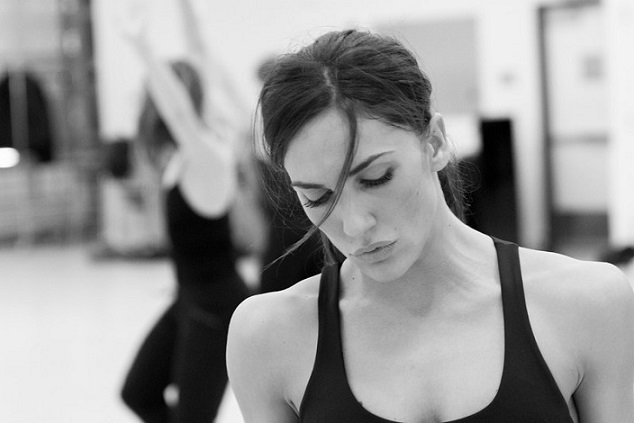
    IMG_7845-L

    Above: Elena D’Amario, in a Travis Magee portrait. Elena’s solo in Robert Battle’s TRAIN was simply thrilling.

    TRAIN is set to a blazing percussion score performed by Les Tambours du Bronx. It’s not about trains as a mode of transportation, but rather about training the body for rigorous sports activity. Here the dancers, whether in marching mode or sailing about the space in free-flowing passages, took on an almost animal intensity. Elena D’Amario’s solo, in which Mr. Battle makes uncanny demands on the dancer, was performed with Ellie’s trademark daring and all-out commitment, winning this beauteous dancer a forte round of cheers when she took her bows.

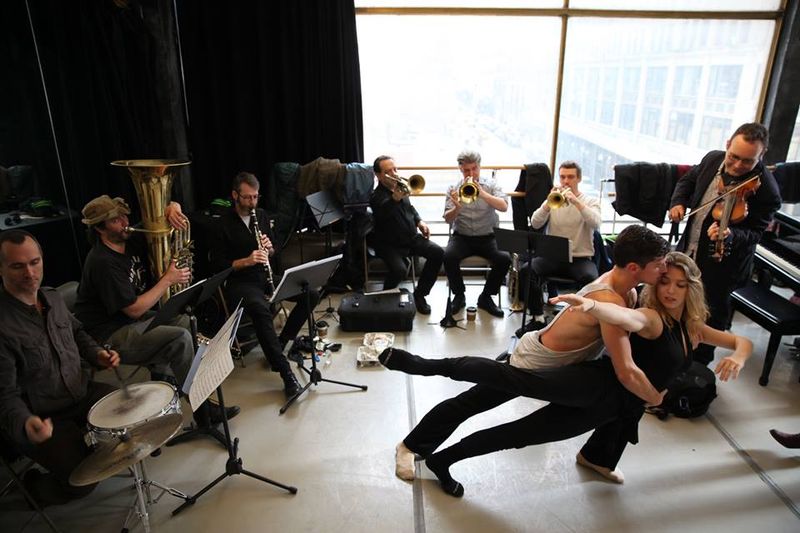
    Katarzyna Skarpetowska, a particular favorite of mine among choreographers currently on the scene, offered her latest creation, ALMAH, and added yet another feather to her cap with this finely-conceived and musically inspired work. Performing live, the musicians of Ljova dazzled us with their colourful playing. A felicitous soundscape – combining fadolin (an acoustic 6-string violin/viola/cello hybrid made by Eric Aceto), tuba, trumpet, bass clarinet, and drums – evoked beer gardens, country weddings à la LES NOCES, and visions of Russian villages and the people who live there. 

    Ms. Skarpetowska had wonderful dancers to work with – Elena D’Amario, Zoey Anderson, Eoghan Dillon, and Omar Ramon de Jesus – and she used the music as an inspiration for their rich and detailed movement, with some intriguing partnering motifs in the mix.
    12439263_10153886470290816_8879204900077223722_n

    Two pas de deux for Geena Pacareu and Ian Spring (above, rehearsing with the musicians of Ljova in a David Parsons photo) are high points in this excellent work; in the longer of the two, the voice of Inna Barmash cast a spell over the theatre with her one-word vocalise – talk about creating an atmosphere! – to which Ian and Geena responded with dancing that was truly heartfelt. 

    Ms. Skarpetowska took a bow to warmly affectionate applause at the close of this premiere of her newest piece, her silver shoes a charming touch. How I would love to see Kate working with oh-so-many dancers/dance companies…and most especially with the Martha Graham troupe. Let’s make it happen!
         Sarah1

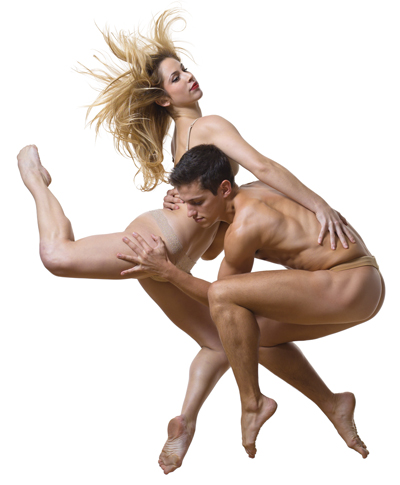
    Above: beloved dancers Sarah Braverman and Ian Spring, in a Lois Greenfield photo 

    No Parsons Dance evening is complete without CAUGHT, the unique strobe-light solo that includes 100 jumps and leaves audiences in a stupefied state of “how-the-hell-did-he-do-that?” wonderment. I have seen it dozens of times and tonight, as always, I was thinking: “Oh…Caught…again!” and then moments later I was whooping and hollering along with the rest of the crowd.

    Ian Spring gave an astonishing performance; at first he moves slowly from one pool of light to another as Ljova intoned the opening phrases of the Robert Fripp score live. And then Ian takes off, flashing in and out of our vision in a series of perfectly timed snapshots. Like a dreamworld spirit, he pops up uncannily in various parts of the stage, seems to suspend himself above the floor, walks on air. Periodically the ‘real’ Ian materializes, as if he’d been standing still the whole time. Dazzled by the visual magic and by the dancer’s mouth-watering physique, the crowd went absolutely wild at the end while the sweat-drenched Ian – who, during his seasons with Parsons Dance, has developed into one of Gotham’s modern dance icons – basked in a standing ovation, casting a benevolent smile on the adoring throng.

    David Parsons’ sunny and seductive NASCIMENTO (1990) is always a perfect closing work. Here the dancers fill the music of Milton Nascimento – and David Parsons’ casually sexy combinations – with the effortless charisma that seems to be de rigueur for joining this elite dance family. Everyone has ample opportunity to shine – or glow, really – as they leap and sway to the tantalizing music, which includes some spine-tingly vocal passages. Meanwhile, the Binkley lighting scheme with its warm, rich colours, is an ideal setting.

    So many moments give NACSIMENTO its visual appeal: there’s a great passage when the girls race upstage and fly into Ahmad Simmons’ arms. And a simple but savorable section where Sarah Braverman wanders wonderingly among her colleagues who are hailing us from the shore with stylized arm gestures. Overall, it’s an irresistible piece performed by irresistible dancers.

    A few more images:

    Parsons-Dance-EoghanDillonCropped

    Eoghan Dillon, a young Irishman who is carving out his own niche in the Company…

    12301508_10208469285838489_3355607464700896826_n

    …and Geena Pacareu, the Spanish beauty, with Omar Ramon de Jesus, a sweetly sexy guy, and a suave mover; I borrowed this picture of them – on vacation – from Geena’s Instagram.

    4Q5A7096

    And finally…The Boss, getting everything perfect. Photo: Travis Magee.

    Parsons Dance continue their Joyce season thru January 31st. You’d better go see them!
  • Graham Winter Intensive Showcase

    L1670767

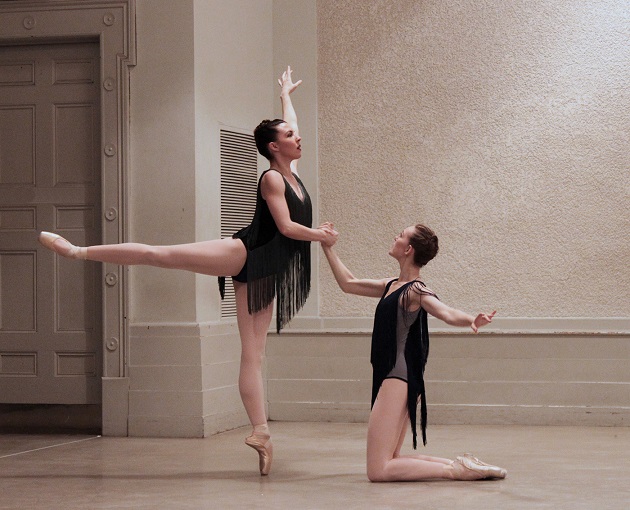
    Friday January 15th, 2016 – Tadej Brdnik invited me to a showcase performance today at the Martha Graham Dance Company‘s home space on Bethune Street where participants in the Graham 2016 Winter Intensive showed a standing-room-only crowd what they’d been working on for the past three weeks.

    Following some solo composition studies and repertory excerpts, presented by the Graham school’s Yung Yung Tsui and Lone Larsen, choreographer Joshua Beamish had a group of male and female students demonstrate how dance can be developed from a single phrase. Maxine Sherman then presented several women in an excerpt from CAVE OF THE HEART; this solo was danced by the girls in unison and in canon. 

    The male contingent from the Intensive then appeared for CELEBRATION, a 1934 work which Graham set to music by Louis Horst. Graham originally created CELEBRATION with an all-female cast; Tadej has now been tasked with re-working it for a male ensemble. Fifteen men danced it today; it’s a very dynamic piece, showing Graham’s customary skill in structuring movement to achieve the maximum effect. Tadej mentioned that the choreography includes approximately 400 jumps, putting it into a special category alongside David Parsons’ CAUGHT.

    Among the dancers today, both male and female, some showed great promise.

    I always love being at Graham events, and was so happy to see – in addition to Tadej and Joshua – Denise Vale, Blakeley White-McGuire, Ying Xin, future maman Carrie Ellmore-Tallitsch, Abdiel Cedric Jacobsen, and Lloyd Knight. 

    I had planned to take lots of photos, but latecomers arrived and took seats to my immediate right, and I didn’t want to disturb them with my camera. So I have only the one image (at the top) of a dancer in her composition study at the start of the presentation.

  • Joshua Bell’s Mendelssohn @ The NY Phil

    Josh-bell-violin

    Wednesday December 30th, 2015 – Joshua Bell (above) played Mendelssohn’s violin concerto with The New York Philharmonic tonight on a program that was otherwise an all-Sibelius affair, in celebration of the Finnish composer’s 150th birthday.

    Sibelius’s The Swan of Tuonela, which opened the evening, was originally to have been included in an opera the composer was working on. It later became one of the Four Legendsthe best-known of the four and often played as a stand-alone work.  Tuonela, the realm of the dead in Finnish mythology, is surrounded by a dark-water moat on which the swan of Tuonela floats majestically, singing.

    This is music of somber gorgeousness. Sibelius structures the work on a cushioning of strings; Carter Brey’s mournful cello theme sets the tone. An evocative English horn passage (played, I believe, by Robert Botti – though we didn’t catch sight of him) leads to a brief brightening of mood. But the swan glides back into the gloom and her voice fades away to a mysterious heartbeat. At the composer’s wish, The Swan of Tuonela was performed at his own funeral.

    Alan Gilbert spoke to us before commencing the Sibelius Symphony No. 4. He seemed to veer from personal enthusiasm for the piece to apologizing for its depressing qualities. The symphony was written while the composer was dealing with problems stemming from alcoholism. This probably accounts for the work’s disjointed qualities.

    Forward-looking harmonically, the 4th does not sound like most of the other music that has given Sibelius lasting popularity over the years. Carter Brey again had a leading theme – played with striking lyricism – in the first movement. Later, as the ensuing movements unfold, the oboe, clarinet, and flute will all have their moments to shine forth. Maestro Gilbert referred to the second movement as a Scherzo, but if it’s a joke it stems from a very dark sense of humour; oddly, it includes a brief gavotte motif for flute duo…charming, but it goes un-developed. The big, deep theme of the Adagio comes closest to what we could think of as Sibelian. The agitated opening of the final Allegro – which includes the unexpected introduction of the glockenspiel – does not resolve in a positive way.

    Overall, the Sibelius 4th seemed an odd inclusion on a holiday-season program. Interestingly, it had not been played by the Philharmonic for nearly 30 years. Tonight’s audience reacted with a mixture of admiration for the playing and uncertainty as to whether they really liked the piece or not.

    Following the interval, Joshua Bell appeared for the Mendelssohn violin concerto. This was the composer’s last completed orchestral work: within three years of its premiere in 1845, he had died at the age of 38 following a series of strokes.

    Mendelssohn’s violin concerto is innovative in that its three movements are played without pause, preventing mood-breaking applause. Eschewing gratuitous technical flourishes, the composer instead goes in for heartfelt melody. There are brilliant and demanding passages to be sure, but they are more conscientiously woven into the musical fabric than tacked on to display the violinist’s deftness. 

    The concerto in fact seemed like a conversation between soloist and orchestra and, in the course of playing it, Mr. Bell often turned towards the musicians to keep the dialogue flowing in both directions. It goes without saying that the orchestra played superbly, and that Maestro Gilbert was in his particular element here – especially in the Adagio, where he and Mr. Bell communed in an almost balletic pas de deux.

    Throughout, in fact, the black-clad violinist wove, bent, and swayed in a dance that had just a trace of the satanic about it as he drew the music from his 1713 Stradivarius. Right from the start – in that lovely and rather restless opening theme – Mr. Bell assured us we were in the presence of a musician of matchless technique, inspired artistry, and deep commitment. His capacity for subtle nuance was spine-tingling, and the satiny lustre of his sustained playing in the Adagio was – in a word – magical.

    Among the many felicities in this performance, I particularly liked Maestro Gilbert’s up-sweep of tempo as the first movement neared its conclusion, and some dashing attacks from Mr. Bell in the finale. It was a performance to treasure, and the audience could not suppress their enthusiasm: the applause erupted a split second before the final note could fade away. Mr. Bell was called out three times, and could easily have served up an encore or two: I liked instead that he let the concerto stand as his year-end gift to us. Bravo! 

    Returning to Sibelius to end the evening, Maestro Gilbert and the Philharmonic gave us a soul-stirring rendering of the composer’s Finlandia: a sure-fire crowd-pleaser, performed with resonant grandeur.

  • At Year’s End

    6a00d8341c4e3853ef00e54f201b938834-800wi

    Above: Me and my friend Richard outside the Perry Street condo, shortly after I moved to New York City in 1998.

    Odd-numbered years are often unpleasant ones for me. Just after Thanksgiving, one of my oldest friends – Richard – was found dead in his apartment in Southington, CT. The news did not shock me, since he had been in declining health for months, and he had seemed unwilling to pursue medical treatment.

    Our friendship stretched back to 1976 when we were both working at the old Covenant Insurance Company in Hartford CT. We shared many adventures over the years, and we had a few fallings-out, though never anything that lasted more than a day or two.

    Up until the time of his death, we spoke twice a week by phone (he had never shown an interest in owning a computer) and when he failed to call me on the Saturday after Thanksgiving I knew something was wrong. I tried to call him but his voicemail was full. Then Suzanne contacted me with the news of his death.

    The fact that he’s no longer with us and that we’ll never again meet in New Haven for lunch or spend a day together here in the City has sunk in slowly. I continue to miss his slightly raspy voice on the phone, and the other day when the phone rang (it seldom does) I momentarily thought: “Ah…Richard’s calling… finally…” and then I remembered.

    During 2015, three people I am very close to lost people dear to them, all in sudden and unexpected circumstances. To Dmitry, Brix, and Ta-Wei go my sympathies…life will never be quite the same for us now, even though the deep initial sorrow will fade over the years to come.

    ~~~~~~~~~~~~~~~~~~~~~~~~~~~~~~~~~~~~~~~~~~~~~~~~~~~~~~~~~~~~~~~~~~~~~~~~~~~~~~~~~~~~~~~~~~~~~~~

    2015 also saw a major change in my blog which – as a retired person – occupies a great deal of my time. During their Winter season, I finally gave up on New York City Ballet. They had become increasingly random with their press tickets and since my calendar is so full and events planned weeks in advance, it became very frustrating to be told on a Monday that they couldn’t accommodate you that week, after you’d set aside the date just for them. 

    I withdrew from their press list and have only been back once since: for Jennie Somogyi’s farewell. I miss the dancers and the Balanchine rep terribly, but it became clear to me that the powers that be didn’t care if I came and wrote about their Company or not.  

    My plan now is to go to NYCB from time to time; I don’t mind in the least buying tickets though by the time casting is announced, affordable seats in parts of the house where I like to sit are usually unavailable.

    Of course, New York City Ballet was one of the main attractions for me in making the move to New York City. That I will now see them rarely is sad in a way, yet – like the Countess Olenska in THE AGE OF INNOCENCE – I must go where I’m invited. 

    Curiously, losing NYCB started to make me think about my blog’s dance coverage in general. I realized my interest had been flagging, in part because I simply saw too much dance and in a way a lot of it was starting to look (and sound) the same. Meanwhile I was finding The New York Philharmonic, Chamber Music Society of Lincoln Center, Young Concert Artists, and the American Symphony Orchestra were all offering truly exciting concerts, and were wonderfully welcoming and very appreciative of having their performances written about.

    Since these major classical music organizations – along with The Met (yes, I still go…often…but that’s a whole ‘nother story) – announce their programming months in advance, it makes it easy to fill up my calendar for the entire season…but leaves far less time for dance. 

    So…voilà…my dance blog has become a classical music blog. Dance will certainly not be written off entirely though: a handful of Companies whose work I have enjoyed over the last several seasons will continue to have their rehearsals and performances covered here.

    There is so much more I could say about this transition, but in fact I am simply following the natural flow of things and am finding myself deriving enormous pleasure and meaning in the eternal realm of great music.

    I cannot wait to flip my calendar to 2016, and I wish everyone a year full of music, hope, and love.   

  • At Year’s End

    6a00d8341c4e3853ef00e54f201b938834-800wi

    Above: Me and my friend Richard outside the Perry Street condo, shortly after I moved to New York City in 1998.

    Odd-numbered years are often unpleasant ones for me. Just after Thanksgiving, one of my oldest friends – Richard – was found dead in his apartment in Southington, CT. The news did not shock me, since he had been in declining health for months, and he had seemed unwilling to pursue medical treatment.

    Our friendship stretched back to 1976 when we were both working at the old Covenant Insurance Company in Hartford CT. We shared many adventures over the years, and we had a few fallings-out, though never anything that lasted more than a day or two.

    Up until the time of his death, we spoke twice a week by phone (he had never shown an interest in owning a computer) and when he failed to call me on the Saturday after Thanksgiving I knew something was wrong. I tried to call him but his voicemail was full. Then Suzanne contacted me with the news of his death.

    The fact that he’s no longer with us and that we’ll never again meet in New Haven for lunch or spend a day together here in the City has sunk in slowly. I continue to miss his slightly raspy voice on the phone, and the other day when the phone rang (it seldom does) I momentarily thought: “Ah…Richard’s calling… finally…” and then I remembered.

    During 2015, three people I am very close to lost people dear to them, all in sudden and unexpected circumstances. To Dmitry, Brix, and Ta-Wei go my sympathies…life will never be quite the same for us now, even though the deep initial sorrow will fade over the years to come.

    ~~~~~~~~~~~~~~~~~~~~~~~~~~~~~~~~~~~~~~~~~~~~~~~~~~~~~~~~~~~~~~~~~~~~~~~~~~~~~~~~~~~~~~~~~~~~~~~

    2015 also saw a major change in my blog which – as a retired person – occupies a great deal of my time. During their Winter season, I finally gave up on New York City Ballet. They had become increasingly random with their press tickets and since my calendar is so full and events planned weeks in advance, it became very frustrating to be told on a Monday that they couldn’t accommodate you that week, after you’d set aside the date just for them. 

    I withdrew from their press list and have only been back once since: for Jennie Somogyi’s farewell. I miss the dancers and the Balanchine rep terribly, but it became clear to me that the powers that be didn’t care if I came and wrote about their Company or not.  

    My plan now is to go to NYCB from time to time; I don’t mind in the least buying tickets though by the time casting is announced, affordable seats in parts of the house where I like to sit are usually unavailable.

    Of course, New York City Ballet was one of the main attractions for me in making the move to New York City. That I will now see them rarely is sad in a way, yet – like the Countess Olenska in THE AGE OF INNOCENCE – I must go where I’m invited. 

    Curiously, losing NYCB started to make me think about my blog’s dance coverage in general. I realized my interest had been flagging, in part because I simply saw too much dance and in a way a lot of it was starting to look (and sound) the same. Meanwhile I was finding The New York Philharmonic, Chamber Music Society of Lincoln Center, Young Concert Artists, and the American Symphony Orchestra were all offering truly exciting concerts, and were wonderfully welcoming and very appreciative of having their performances written about.

    Since these major classical music organizations – along with The Met (yes, I still go…often…but that’s a whole ‘nother story) – announce their programming months in advance, it makes it easy to fill up my calendar for the entire season…but leaves far less time for dance. 

    So…voilà…my dance blog has become a classical music blog. Dance will certainly not be written off entirely though: a handful of Companies whose work I have enjoyed over the last several seasons will continue to have their rehearsals and performances covered here.

    There is so much more I could say about this transition, but in fact I am simply following the natural flow of things and am finding myself deriving enormous pleasure and meaning in the eternal realm of great music.

    I cannot wait to flip my calendar to 2016, and I wish everyone a year full of music, hope, and love.   

  • Chausson & Debussy

    9b0488c8

    Above: Ernest Chausson turning pages for Claude Debussy, at Luzancy in 1893

    The composers Ernest Chausson and Claude Debussy were great friends, and their admiration for one another’s music continued even after Chausson took Debussy to task for his debauched lifestyle.

    In the Summer of 1893, Chausson has rented a house in Luzancy and invited Debussy to come for a long stay. Knowing of Debussy’s keen interest on the music of Modest Moussorgsky, Chausson had sent off for a score of the Russian composer’s BORIS GODUNOV and Debussy spent many hours at the piano, playing thru the opera, with Chausson seated to his left, turning the pages. 

    Chausson’s catalog of compositions is relatively brief, for his life was cut short by a bicycling accident in 1899. he was killed instantly, at the age of 44.

    Chausson left us one great symphony, one opera (LE ROI ARTHUS), the gorgeous Poème de l’amour et de la Mer; the haunting Poème for violin and orchestra (used by Anthony Tudor for his ballet JARDIN AUX LILAS); chamber works, and songs.

    Here is one of Chausson’s best-known works:

    Chausson~Chanson perpetuelle – Sandra Porter – BBC 1996


  • Chausson & Debussy

    9b0488c8

    Above: Ernest Chausson turning pages for Claude Debussy, at Luzancy in 1893

    The composers Ernest Chausson and Claude Debussy were great friends, and their admiration for one another’s music continued even after Chausson took Debussy to task for his debauched lifestyle.

    In the Summer of 1893, Chausson has rented a house in Luzancy and invited Debussy to come for a long stay. Knowing of Debussy’s keen interest on the music of Modest Moussorgsky, Chausson had sent off for a score of the Russian composer’s BORIS GODUNOV and Debussy spent many hours at the piano, playing thru the opera, with Chausson seated to his left, turning the pages. 

    Chausson’s catalog of compositions is relatively brief, for his life was cut short by a bicycling accident in 1899. he was killed instantly, at the age of 44.

    Chausson left us one great symphony, one opera (LE ROI ARTHUS), the gorgeous Poème de l’amour et de la Mer; the haunting Poème for violin and orchestra (used by Anthony Tudor for his ballet JARDIN AUX LILAS); chamber works, and songs.

    Here is one of Chausson’s best-known works:

    Chausson~Chanson perpetuelle – Sandra Porter – BBC 1996