Category: Ballet

  • Rachmaninoff Finale @ The NY Phil

    Trifonov

    Above: pianist Daniil Trifonov

    Tuesday November 24th, 2015 – The third and final programme of The New York Philharmonic‘s Rachmaninoff Festival brought us Daniil Trifonov’s triumphant performance of the composer’s 3rd piano concerto as well as the ever-popular Symphonic Dances.

    Mr. Trifonov had the audience in the palm of his hand from the moment he walked onstage. He gave a magnificent performance, with terrific support from the orchestra. The 3rd piano concerto is everything the 1st isn’t: both in terms of structure and as a display of the soloist’s technique and artistry, the 3rd readily eclipses the composer’s earlier effort.

    Mr. Trifonov’s fluent – indeed astonishing – command of the keyboard held the audience under a spell. Particularly marvelous was the cadenza (the longer of the two provided by the composer) where the young pianist spun out the music to scintillating effect. With cunning inventiveness, Rachmaninoff has the flute suddenly speak up in the midst of the piano’s long paragraph: this wind theme passes on to the oboe, clarinet, and horn before the focus returns to the piano, which ends on a lovely fade-out.

    The composer paints on a big orchestral canvas in this concerto: a deep ‘Russian’ theme in the first movement impresses, and later there’s a big dance theme. The Philharmonic’s horns were ablaze tonight, the cellos plush, and the various wind voices piped up expressively.

    As the concerto raced to its conclusion, Mr. Trifonov carried the audience along on his dazzling ride. A full-house standing ovation ensued as the young master bowed graciously both to the house and his fellow musicians. I didn’t recognize his encore – and neither did my pianist/friend Ta-Wei – but it was deliciously played.

    Morlot

    Above: conductor Ludovic Morlot

    The piano had hidden Maestro Morlot during the concerto, but after the interval we had sight of him as he led the orchestra in a colourful performance of Symphonic Dances. New York City Ballet-lovers will be familiar with this score from Peter Martins’ 1994 setting of it. It’s a grand piece, with slashing rhythms in the first movement and a wonderful waltz in the second. Rachmaninoff uses the alto saxophone – a sound I always love to hear – to evocative effect, though I could not find a credit for the soloist in the Playbill. The harp also makes some rhapsodic interjections. Overall the orchestra, with Sheryl Staples as concertmaster, sounded superb and they seemed to truly enjoy playing this piece.

    After their rapt attentiveness during the concerto, the audience seemed to lose a bit of focus during the second half of the program. One couple down the row from us feasted on chocolates and Pellegrino whilst texting literally throughout the Symphonic Dances, and the woman on Ta-Wei’s right decided to conduct her own version of the score.

    At the end of the concert I asked Ta-Wei if he thought Rachmaninoff was a great composer or just a very good one. He replied: “Well, he knew what he was doing.” True, amply true.

  • An Evening @ New Chamber Ballet

    11229387_10153700794988571_1643682530134201836_o

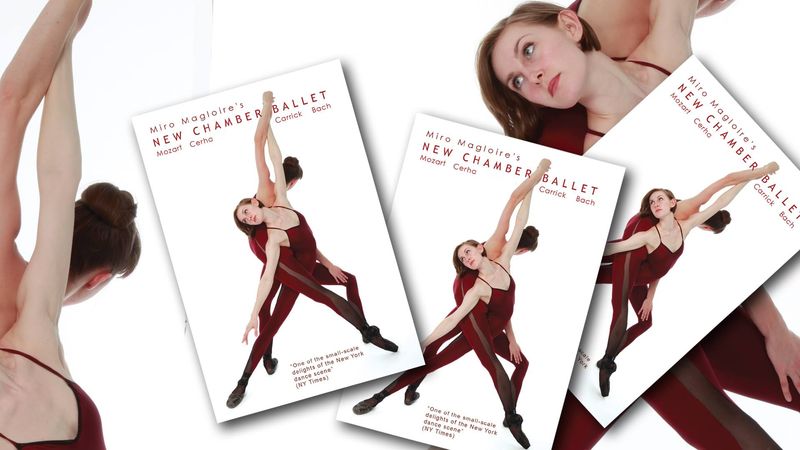
    Friday November 20th, 2015 – Miro Magloire’s New Chamber Ballet presenting works by Miro and resident choreographer Constantine Baecher in a nicely-mixed programme of new and olde music – expertly played – and danced by Miro’s uniquely talented band of ballerinas. In the intimate setting of the City Center Studios, there’s a sense of immediacy – both of the music and the dancing – that no other dance company in Gotham can quite match.

    In his most recent works, Miro’s choreography has been daring in its exploration of female partnering. Tonight’s concert opened with the premiere of a full version of Gravity, excerpted earlier this season and which I’d seen in a formative rehearsal.

    First off, a salute to violinist Doori Na for his impressive rendering of “Six Pieces for Violin” by Friedrich Cerha. The venerable Austrian composer, soon to celebrate his 90th birthday, is currently in the news locally as The Met is offering a new production of Alban Berg’s LULU which Mr. Cerha completed upon Berg’s death.

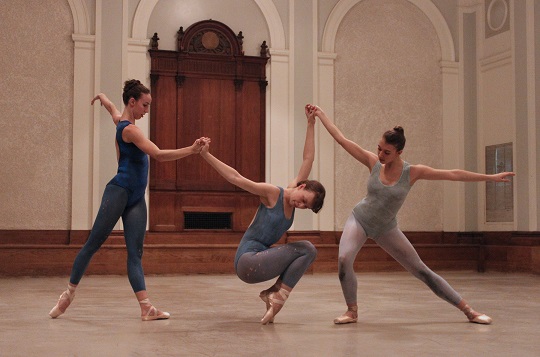
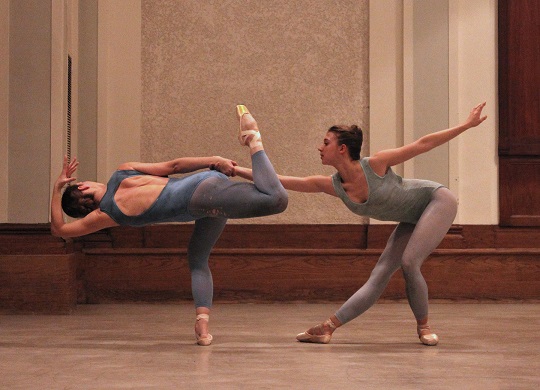
    Gravity was danced tonight by Elisabeth Brown, Traci Finch, and NCB’s newest member Cassidy Hall. The dancers alternate between posing and partnering: a duet for Elizabeth and Traci is observed by Cassidy, who then inserts herself into the dance. Elizabeth’s solo comes as the music falls silent; she then dances with Cassidy in a duet where Elizabeth, at full stretch, is nearly parallel to the floor in displaying a superb line.

    IMG_8922-edited-sm

    The dancers then polish off the ballet with a trio (Traci, Elizabeth and Cassidy, above). 

    More images from Gravity, photographed by Amber Neff:

    IMG_8883-edited-sm

    Cassidy Hall and Traci Finch

    IMG_8906-edited-sm

    Elizabeth Brown and Cassidy Hall

    Someone once wrote of Aristotle Onassis: “He was not the first man to want both his wife and his mistress.”  That very notion was the starting point of The Other Woman, Miro’s ‘classic triangle’ ballet set to a classic score: Bach’s B-minor violin sonata. 

    An en travesti Sarah Atkins, wearing a jaunty fedora, faces the age-old dilemma of the married man as he vacillates between his wife and his lover. Elizabeth Brown and Holly Curran offer contrasting attractions of face, form, and personality; in this very theatrical piece, their dancing is urgent and nuanced. The rival women confront one another while Sarah dances a space-filling solo. In the end it seems no real decision has been reached, and it feels like more chapters are yet to come before this story ends.

    Doori Na and pianist Taka Kigawa played the Bach so attractively, and moments later Taka returned play Beat Furrer’s ‘Voicelessness. The snow has no voice’ for Miro’s second premiere of the evening: Voicelessness. Taka’s playing was marvelous right from the murmuring start of the piece; he was able to sustain a pianissimo misterioso atmosphere throughout with great control. This was punctuated with the occasional emphatic high staccato.

    IMG_8328-edited-sm

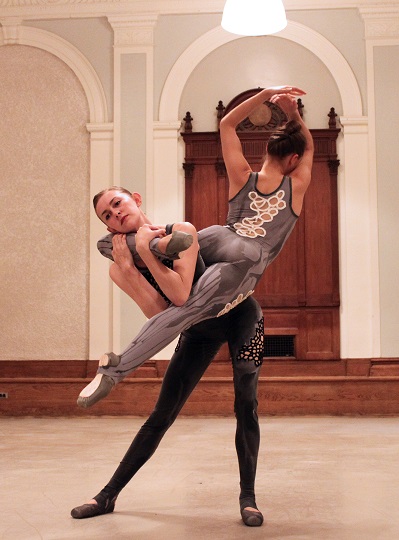
    In this duet the two dancers – Amber Neff and Cassidy Hall, (above) – perform extremely demanding and intensely intimate feats of partnering. The two girls, abetted by Taka Kigawa’s keyboard, sustained the tension of the work most impressively.

    IMG_8354-edited-sm

    Above: Amber Neff and Cassidy Hall in Voicelessness

     
    More images from Voicelessness; these photos are by Sarah Thea who also designed the costumes for four of the five works seen tonight:
     
    IMG_8170-edited-sm
     
    Amber Neff, Cassidy Hall
     
    IMG_8201-edited-sm

    Amber Neff and Cassidy Hall
     
    Following the interval, Richard Carrick’s score ‘In flow’ for solo violin provided another showcase for Doori Na as Miro’s Friction unfolded. The ballet opens in silence before Doori’s violin sounds hesitantly; the angular, sinuous music includes an alarming forte ‘scrunch’ at one point. Dancers Holly Curran and Amber Neff moved thru the intricate partnering motifs with total assurance and dealt with the technical demands Miro makes on them with cool confidence.
     
    The evening closed with Constantine Baecher’s lively and very original ballet, Mozart Trio, set to excerpts from the composer’s piano sonatas played with genial clarity by Taka Kigawa.
     
    In this ballet about beginnings and endings, the dancers speak: they speak not only of where they are and what they are doing at the moment, but also – more cosmically – of where they are in their lives.
     
    Traci Finch narrates solos by Elizabeth Brown and Sarah Atkins in turn, describing their dancing and giving us bytes of biography. In the second movement, Sarah’s solo takes an autobiographical approach (“I’m in the middle!” she calls out – of her dance, of her career, of her life?). The third movement is an abstracted trio for all three dancers, full of energy and wit, until they reach the self-declared “end of the end!”
     
    New Chamber Ballet‘s next performances are set for February 26th and 27th, 2016. More details will be forthcoming as the dates draw nigh.

  • Jennifer Muller’s Stages of Creation

    L1640936

    Striking a pose: the new Warhol piece by Jennifer Muller at a studio preview

    Tuesday November 17th, 2015 – Choreographer Jennifer Muller has been commissioned to create a new dancework for Introdans, the Netherlands-based contemporary dance company. The piece will premiere in February, 2016 on a program entitled Absolutely Amerika. This evening, at her studio on West 24th Street, Ms. Muller presented a sampling of this latest work, along with excerpts from some of the more recent additions to her Company’s repertoire.

    The room was packed with Muller friends and fans, and her lively and distinctive troupe of dancers seemed to ignore the fact that this was a studio showing, instead dancing at performance level. The dance-space is limited but the choreography is spacious and often fast-paced; yet the dancers moved with abandon, often coming within centimeters of the viewers – or of the ceiling, during the many lifts that the Muller repertory calls for.

    L1640814

    Two excerpts from FLOWERS were offered before dancer Michael Tomlinson (above, warming up) demonstrated a signature motif from the new work, which is inspired by quotes from the late Andy Warhol and is danced to a collage of music associated with the Warhol era.

    L1640965

    Above: the opening of MISERERE NOBIS

    I was particularly glad of another opportunity to see some passages from Jennifer’s 2014 masterpiece, MISERERE NOBIS, a compelling piece that has lingered in my mind since first encountering it. Originally danced by an all-female cast, Jennifer has now incorporated the Company’s men into this ritualistic work which is danced to Samuel Barber’s Adagio for Strings, which was inspired by Allegri’s immortal Miserere. The choreographer’s addition of men to the cast changed the flavor of the work slightly but didn’t diminish its power and beauty in the least.

    The evening closed with excerpts from ALCHEMY, an exciting multi-media piece which Ms. Muller premiered at New York Live Arts earlier this year. 

    The dancers were moving too fast most of the time for my camera to catch them, however here are a few images I was able to capture:

    L1640837

    Brittney Bembry, Michelle Tara Lynch

    L1640900

    Brittney Bembry

    L1640950

    Shiho Tanaka

    L1640970

    From MISERERE NOBIS

    L1640977
    Seiko Fujita

    L1640985

    Alexandre Balmain, Elise King

    L1650025

    Sonja Chung

    L1640989

    MISERERE NOBIS

    L1640915

    Jennifer Muller, ever the perfect hostess

    Jennifer Muller/The Works will be at New York Live Arts June 13th – 18th, 2016.

  • Jennifer Muller’s Stages of Creation

    L1640936

    Striking a pose: the new Warhol piece by Jennifer Muller at a studio preview

    Tuesday November 17th, 2015 – Choreographer Jennifer Muller has been commissioned to create a new dancework for Introdans, the Netherlands-based contemporary dance company. The piece will premiere in February, 2016 on a program entitled Absolutely Amerika. This evening, at her studio on West 24th Street, Ms. Muller presented a sampling of this latest work, along with excerpts from some of the more recent additions to her Company’s repertoire.

    The room was packed with Muller friends and fans, and her lively and distinctive troupe of dancers seemed to ignore the fact that this was a studio showing, instead dancing at performance level. The dance-space is limited but the choreography is spacious and often fast-paced; yet the dancers moved with abandon, often coming within centimeters of the viewers – or of the ceiling, during the many lifts that the Muller repertory calls for.

    L1640814

    Two excerpts from FLOWERS were offered before dancer Michael Tomlinson (above, warming up) demonstrated a signature motif from the new work, which is inspired by quotes from the late Andy Warhol and is danced to a collage of music associated with the Warhol era.

    L1640965

    Above: the opening of MISERERE NOBIS

    I was particularly glad of another opportunity to see some passages from Jennifer’s 2014 masterpiece, MISERERE NOBIS, a compelling piece that has lingered in my mind since first encountering it. Originally danced by an all-female cast, Jennifer has now incorporated the Company’s men into this ritualistic work which is danced to Samuel Barber’s Adagio for Strings, which was inspired by Allegri’s immortal Miserere. The choreographer’s addition of men to the cast changed the flavor of the work slightly but didn’t diminish its power and beauty in the least.

    The evening closed with excerpts from ALCHEMY, an exciting multi-media piece which Ms. Muller premiered at New York Live Arts earlier this year. 

    The dancers were moving too fast most of the time for my camera to catch them, however here are a few images I was able to capture:

    L1640837

    Brittney Bembry, Michelle Tara Lynch

    L1640900

    Brittney Bembry

    L1640950

    Shiho Tanaka

    L1640970

    From MISERERE NOBIS

    L1640977
    Seiko Fujita

    L1640985

    Alexandre Balmain, Elise King

    L1650025

    Sonja Chung

    L1640989

    MISERERE NOBIS

    L1640915

    Jennifer Muller, ever the perfect hostess

    Jennifer Muller/The Works will be at New York Live Arts June 13th – 18th, 2016.

  • Golden Age of the Violin @ CMS

    Violin

    Following the senseless horror of the terrorist attacks in Paris this past Friday, we turn yet again to music as a source of consolation. These words from Leonard Bernstein have echoed thru my mind over this weekend since the appalling news from France reached us: “This will be our reply to violence: to make music more intensely, more beautifully, more devotedly than ever before.”

    Sunday November 15, 2015 – A trio of superb young violinists were featured at this evening’s concert given by at Chamber Music Society of Lincoln Center at Alice Tully Hall. Paul Neubauer and David Finckel – masters of the viola and cello respectively – joined their young colleagues in celebrating the expressive violin style epitomized by the legendary Fritz Kreisler.

    Kreisler was in fact the first violinist I ever heard; my parents had some of his recordings and by the age or eight or nine I was already preferring these – and Horowitz, Flagstad, and Toscanini – to my mom’s favorites: Lawrence Welk and the McGuire Sisters.

    The first music we heard this evening was also oldest music on the programme: a sonata for two violins by Jean-Marie Leclair. Leclair may be the only violinist/composer in history to have had a highly successful career as a ballet dancer prior to turning to composing full-time around 1723. Today’s sonata dates from 1730 and was played with lively charm by Danbi Um and Sean Lee. Passing the melodies back and forth, the duo were well-matched, nuance for nuance. The tender sadness of the sonata’s Andante graziosa maintained a forward momentum, and then our two violinists sailed confidently thru the swirls of notes than make up the concluding Presto.

    Mr. Lee returned to the stage immediately with Benjamin Beilman and Paul Neubauer for Anton Dvorak’s C-major terzetto, composed in 1887. It opens with a tranquil theme, becomes more animated, then gently shifts between moods. After a passage of hesitations, as if unsure where to go next, the composer gives us a warm lullabye-like melody with a genial ending. A feeling of propulsive dance – and a touch of Mendelssohnian sparkle – fills the Scherzo; a central song with the flavour of a country waltz is most attractive, followed by a da capo which sweeps forward in alternating currents of lyrical breadth and teasing delicacy. In the final movement, Mr. Neubauer’s viola had a shivering motif, followed by an impassioned theme from Mr. Beilman; then there’s a brisk rush to the finish. 

    David Finckel’s name in my Playbill is now triple-underlined and festooned with exclamations marks for his marvelous playing in the Alexander Borodin 1881 D-major quartet. The cello sets the pace for the opening Allegro moderato and is given some heartfelt melodies in the later movements; these were relished by Mr. Finckel whose tone has an intimate, romantic glow.

    A Spring-like feeling pervades the opening of the Scherzo: Allegro, and then a familiar tune is heard: my mother would have recognized it as the melody of the 1950s pop song Baubles, Bangles & Beads(from the musical KISMET) which was recorded – seemingly – by everyone, including Marlene Dietrich and Frank Sinatra. For all the tune’s appeal, it still sounds best in its original Borodin setting. The second movement then rushes ahead, only to withdraw to a pizzicato fadeout at the end.

    Borodin sets the third movement as a Nocturne and Mr. Finckel sets the mood to perfection. Danbi Um, in the first violin chair, then takes up a sweet, high theme. Mssrs. Lee and Neubauer make the middle voices sing, the latter in a lovely melodic exchange with Mr. Finckel’s cello (“Gorgeous blends!” I scrawled in my Playbill.) Ms. Um takes up a shining theme, passing it to Mr. Finckel who descends with it into the cello’s depths. This Nocturne, with all four players deeply immersed in the music, made a particularly satisfying impression. In the concluding movement, the quartet summarized the work in recurrent themes, playing with such conviction that the audience were swept along and responded with especially warm applause, summoning the musicians out for a second bow. 

    After the interval, Ben Beilman stood alone on the stage and delivered a stunning performance of Eugene Ysaÿe’s E-minor sonata (1924). The work is a virtuosic test piece for which Mr. Beilman gets top marks. This young artist displays thorough technical assurance as well as a masterful control of dynamics. He took the strenuous demands Ysaÿe places on the player in stride, and an appealing aspect of modesty in his delivery endeared him to the crowd. This is a serious musician with something to say to us. The applause that enveloped Mr. Beilman at the end of his dazzling performance was amply deserved, bringing him out for a double curtain call. 

    No one could blame Fritz Kreisler for featuring the violin in his A-minor quartet: it was, after all, his instrument. Mr. Beilman, fresh from the demands of the Ysaÿe, was at his most lyrically persuasive here, regaling us with the melodic treats Kreisler has laid out for him. Danbi Um seconded Ben’s beautiful playing with many graceful turns of phrase, while Mssrs. Neubauer and Finckel brought Olde World warmth and expressiveness to their playing.

    Though rife with melodic felicities, including a waltz tune “mit schlag” and a gorgeously-sustained Ben Beilman high fade-away at the conclusion of the Romanze, the Kreisler quartet is one of those perfectly pleasant works that falls short of being truly memorable. But I can’t imagine it being better-played than it was this evening.

    In her welcoming remarks tonight, Chamber Music Society co-artistic director Wu Han had spoken of the distress we have all been feeling after the horrible events in Paris. She said that from Friday night til Sunday morning she had been so consumed with sadness that she couldn’t play the piano, but that at last she sat down to practice and found solace at the keyboard. She promised us that the evening’s programme would be uplifting, and she was right. 

    The Repertory:

     The Participating Artists:

  • TURANDOT at The Met – 2nd of 4

    385682_332777790113678_298965728_n

    Above: Lise Lindstrom in the Metropolitan Opera’s production of TURANDOT

    Monday October 26th, 2015 – It’s always fun to bring someone to the opera who hasn’t been in a while or who is unfamiliar with a particular work. When my choreographer/friend Lydia Johnson and I decided to spend an evening at The Met, I quickly settled on Franco Zeffirelli’s classic production of TURANDOT. In an age where less is supposedly more when it comes to opera stagings, this TURANDOT clings to the forbidden notion that grand opera should still be grand. Is this the sort of thing the public really wants to see? A virtually full house, including tons of young people, seemed to be saying “Yes!”

    It was a good performance, but in the end it was the opera itself that was the star of the evening. Beyond the Chinoiserie which decorates the score, we have Puccini – the master-orchestrator – creating harmonies and textures that are so atmospheric. Lydia was fascinated by what she was hearing; I told her she must try FANCIULLA DEL WEST next.

    The Met Orchestra were on optimum form – and the chorus, too. Both forces were capable of lusty vigor one moment and subtle delicacy the next. Conductor Paolo Carignani paced the opera superbly and brought forth much detail from the musicians; a tendency to cover the singers at times should have been resolved by this point in the run, but instead the conductor went blithely on, seemingly unable to comprehend that a forte for Marcelo Alvarez is not the same as a forte for Mario del Monaco.

    For all that, the singing for the most part was pleasing and well-tuned to the drama of the work. David Crawford was an excellent Mandarin, ample-toned and investing the words with proper authority. Ronald Naldi as the Emperor Altoum projected successfully from his throne on Amsterdam Avenue, and Eduardo Valdes, Tony Stevenson, and – especially – Dwayne Croft made the most of the Ping-Pang-Pong scene.

    James Morris’ aged timbre made a touching effect in the music of the blind king Timur. Leah Crocetto’s soprano sounded a bit fluttery at the start, but she moved the audience with her lovingly-shaped “Signore ascolta” and was excellent in her third act scene, winning the evening’s loudest cheers at curtain call. While Marcelo Alvarez is clearly over-parted by Calaf’s music, a more thoughtful conductor could have aided the tenor in turning his lyrical approach to the role into something perfectly viable. But that didn’t happen, and while there were many handsome moments in Alvarez’s singing, at the climax of “Nessun dorma” the conductor was of no help. There was no applause after this beloved aria, even though it was actually quite beautifully sung.

    Lise Lindstrom is undoubtedly the most physically appealing Turandot I have ever beheld, and she also manages to make the character something more than a cardboard ice queen. Lindstrom’s lithe, attractive figure and her natural grace of movement were great assets in her portrayal; she looked particularly fetching in those scenes where she’s divested of the heavy robes and headpieces and seems like a young princess, almost vulnerable in her sky-blue gown and long black hair.

    After a couple of warm-up phrases in which there was a trace of cloudiness in her upper-middle voice, Lindstrom’s singing took on its characteristic high-flying power as she pulled the treacherous high notes out of thin air with assured attacks. The narrative “In questa reggia” was presented as both a vocal and verbal auto-biography, her upper range zinging over the orchestra. Lindstrom’s Riddle Scene was vividly dramatic; having experienced defeat, her plea to Altoum was urgent and moving, and the she advanced downstage to deliver the two shining top-Cs over the massed chorus. Her acting as Calaf offered her a way out was detailed and thoughtful. 

    In Act III Lindstrom was totally assured vocally, with a persuasive melting at Calaf’s kiss and a nuanced rendering of “Del primo pianto”; in the high phrases following the prince’s revelation of his name, the soprano was very much at home. She ended the opera on a high B-flat attacked softly and then expanded to a glistening brilliance.

    Lydia was very moved by the opera – and especially taken with the gestural language of Chiang Ching’s choreography – and we stayed to cheer the singers. She agreed with me, though, that dramatically the “happy ending” is incomprehensible. That Calaf should want to marry a woman who has sent dozens of men to their deaths, threatened to torture his own father, and caused the suicide of the faithful Liu just doesn’t make sense. But then, fairy tales seldom do.

    Metropolitan Opera House
    October 26th, 2015

    TURANDOT

    Giacomo Puccini

    Turandot................Lise Lindstrom
    Calàf...................Marcelo Álvarez
    Liù.....................Leah Crocetto
    Timur...................James Morris
    Ping....................Dwayne Croft
    Pang....................Tony Stevenson
    Pong....................Eduardo Valdes
    Emperor Altoum..........Ronald Naldi
    Mandarin................David Crawford
    Maid....................Anne Nonnemacher
    Maid....................Mary Hughes
    Prince of Persia........Sasha Semin
    Executioner.............Arthur Lazalde
    Three Masks: Elliott Reiland, Andrew Robinson, Amir Levy
    Temptresses: Jennifer Cadden, Oriada Islami Prifti, Rachel Schuette, Sarah Weber-Gallo

    Conductor...............Paolo Carignani

  • TURANDOT at The Met – 2nd of 4

    385682_332777790113678_298965728_n

    Above: Lise Lindstrom in the Metropolitan Opera’s production of TURANDOT

    Monday October 26th, 2015 – It’s always fun to bring someone to the opera who hasn’t been in a while or who is unfamiliar with a particular work. When my choreographer/friend Lydia Johnson and I decided to spend an evening at The Met, I quickly settled on Franco Zeffirelli’s classic production of TURANDOT. In an age where less is supposedly more when it comes to opera stagings, this TURANDOT clings to the forbidden notion that grand opera should still be grand. Is this the sort of thing the public really wants to see? A virtually full house, including tons of young people, seemed to be saying “Yes!”

    It was a good performance, but in the end it was the opera itself that was the star of the evening. Beyond the Chinoiserie which decorates the score, we have Puccini – the master-orchestrator – creating harmonies and textures that are so atmospheric. Lydia was fascinated by what she was hearing; I told her she must try FANCIULLA DEL WEST next.

    The Met Orchestra were on optimum form – and the chorus, too. Both forces were capable of lusty vigor one moment and subtle delicacy the next. Conductor Paolo Carignani paced the opera superbly and brought forth much detail from the musicians; a tendency to cover the singers at times should have been resolved by this point in the run, but instead the conductor went blithely on, seemingly unable to comprehend that a forte for Marcelo Alvarez is not the same as a forte for Mario del Monaco.

    For all that, the singing for the most part was pleasing and well-tuned to the drama of the work. David Crawford was an excellent Mandarin, ample-toned and investing the words with proper authority. Ronald Naldi as the Emperor Altoum projected successfully from his throne on Amsterdam Avenue, and Eduardo Valdes, Tony Stevenson, and – especially – Dwayne Croft made the most of the Ping-Pang-Pong scene.

    James Morris’ aged timbre made a touching effect in the music of the blind king Timur. Leah Crocetto’s soprano sounded a bit fluttery at the start, but she moved the audience with her lovingly-shaped “Signore ascolta” and was excellent in her third act scene, winning the evening’s loudest cheers at curtain call. While Marcelo Alvarez is clearly over-parted by Calaf’s music, a more thoughtful conductor could have aided the tenor in turning his lyrical approach to the role into something perfectly viable. But that didn’t happen, and while there were many handsome moments in Alvarez’s singing, at the climax of “Nessun dorma” the conductor was of no help. There was no applause after this beloved aria, even though it was actually quite beautifully sung.

    Lise Lindstrom is undoubtedly the most physically appealing Turandot I have ever beheld, and she also manages to make the character something more than a cardboard ice queen. Lindstrom’s lithe, attractive figure and her natural grace of movement were great assets in her portrayal; she looked particularly fetching in those scenes where she’s divested of the heavy robes and headpieces and seems like a young princess, almost vulnerable in her sky-blue gown and long black hair.

    After a couple of warm-up phrases in which there was a trace of cloudiness in her upper-middle voice, Lindstrom’s singing took on its characteristic high-flying power as she pulled the treacherous high notes out of thin air with assured attacks. The narrative “In questa reggia” was presented as both a vocal and verbal auto-biography, her upper range zinging over the orchestra. Lindstrom’s Riddle Scene was vividly dramatic; having experienced defeat, her plea to Altoum was urgent and moving, and the she advanced downstage to deliver the two shining top-Cs over the massed chorus. Her acting as Calaf offered her a way out was detailed and thoughtful. 

    In Act III Lindstrom was totally assured vocally, with a persuasive melting at Calaf’s kiss and a nuanced rendering of “Del primo pianto”; in the high phrases following the prince’s revelation of his name, the soprano was very much at home. She ended the opera on a high B-flat attacked softly and then expanded to a glistening brilliance.

    Lydia was very moved by the opera – and especially taken with the gestural language of Chiang Ching’s choreography – and we stayed to cheer the singers. She agreed with me, though, that dramatically the “happy ending” is incomprehensible. That Calaf should want to marry a woman who has sent dozens of men to their deaths, threatened to torture his own father, and caused the suicide of the faithful Liu just doesn’t make sense. But then, fairy tales seldom do.

    Metropolitan Opera House
    October 26th, 2015

    TURANDOT

    Giacomo Puccini

    Turandot................Lise Lindstrom
    Calàf...................Marcelo Álvarez
    Liù.....................Leah Crocetto
    Timur...................James Morris
    Ping....................Dwayne Croft
    Pang....................Tony Stevenson
    Pong....................Eduardo Valdes
    Emperor Altoum..........Ronald Naldi
    Mandarin................David Crawford
    Maid....................Anne Nonnemacher
    Maid....................Mary Hughes
    Prince of Persia........Sasha Semin
    Executioner.............Arthur Lazalde
    Three Masks: Elliott Reiland, Andrew Robinson, Amir Levy
    Temptresses: Jennifer Cadden, Oriada Islami Prifti, Rachel Schuette, Sarah Weber-Gallo

    Conductor...............Paolo Carignani

  • Young Concert Artists: Seiya Ueno/Wendy Chen
    Ueno

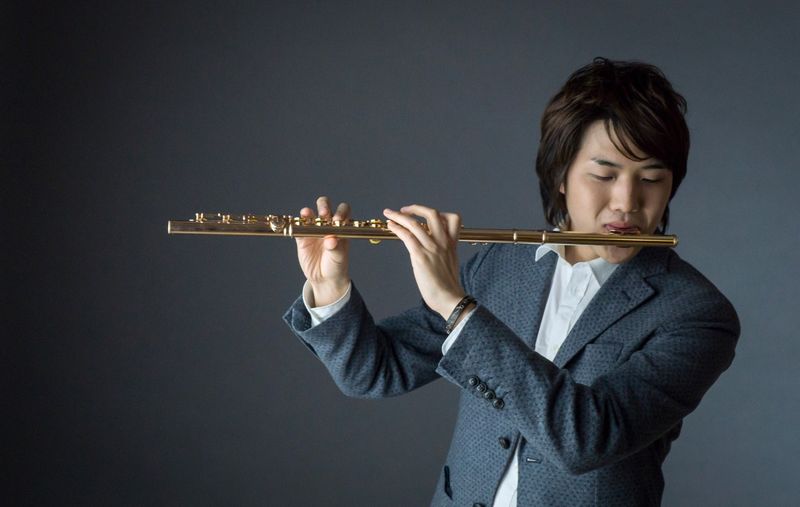
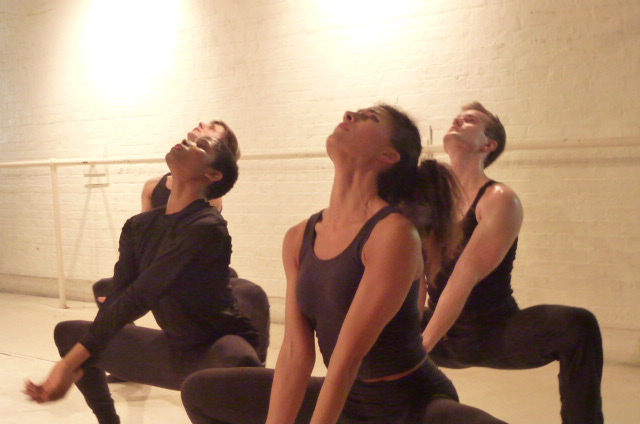
    Tuesday October 20th, 2015 – The Japanese flautist Seiya Ueno (above, in a Matt Dine photo) with guest artist Wendy Chen at the keyboard for the opening event of the Young Concert Artists season. Tonight at Zankel Hall, these two exceptional artists presented a programme that spanned the centuries from Bach to Boulez.

    Susan Wadsworth, the founder and director of Young Concert Artists, greeted us at this inaugural concert of her 55th season concert series; what this woman has done for music and for young musicians deserves our deepest gratitude.

    The artists then appeared, Mr. Ueno elegant in tail-coat tuxedo, and Ms. Chen simply luminous in a soft sea-green frock. They commenced at once on the Bach Sonata in B minor, BWV 1030, and immediately established a lyrical rapport both with one another and with the audience. Mr. Ueno’s playing is stylish and deft, and his assured technique makes him capable of anything, including some captivating soft attacks. Watching Ms. Chen’s extraordinarily graceful hands move up and down the keyboard became a prime visual aspect of the evening. 

    Sinking into the dreamy world of Debussy’s Prélude à l’aprés-midi d’un faune, the two artists painted in sensuous Monet hues. Mr. Ueno’s soft attacks and hushed taperings of line were ideally seconded from Ms. Chen’s piano, evoking images from the ballet which caused such a scandal at its premiere.

    Wendy_chen_01_category

    Above: pianist Wendy Chen

    The duo scored a huge success with Pierre Boulez’s Sonatine, a work filled with challenges for both players. Mr. Ueno is called upon to create rasping, burbling effects; the music whirrs and shrills and pauses on long trills; Ms. Chen meanwhile is weaving her own spell from the Steinway, maintaining an attentive connection to the sounds of the flute. Their superb playing of this complex and demanding work drew enthusiastic bravos from the crowd.

    Much as I love the operas of Richard Strauss, his Sonata in E-flat major, Op. 18 for flute and piano was actually new to me. Ms. Chen’s somber opening phrases soon give way to a burst of energy and the duo are off in an infectious allegro. The score is chock full of lovely themes, many of them whispering of ROSENKAVALIER and ARIADNE AUF NAXOS. Mr. Ueno seized on these melodies and lavished them with plush, full-toned ‘singing’, and in the final movement he warbled deliciously as Ms. Chen maintained the varying rhythmic patterns with élan.

    There have been many fantasies created on themes from Bizet’s opera CARMEN; tonight Mr. Ueno brought forth François Borne’s Carmen Fantasie whichde rigueurincludes such chestnuts as the ‘fate’ motif, the Habanera, the Toreador Song and the Chanson Boheme but also seeks out less obvious passages from the opera, such as Micaela’s tune from her Act I duet with Don Jose, and the latter’s pleading “Ne me quittez pas” which was deliciously embroidered upon by the flautist. As the fantasy progresses, the demands for bravura embellishments increase: cascading scales at break-neck speed and whirlwind flourishes of notes were delivered with remarkable clarity and vivacity by Mr. Ueno, with Ms. Chen yet again a flawless partner.

    Responding to the audience’s warm applause, Mr. Ueno appeared alone and in a charming, rather halting speech thanked us for sharing the evening with him and ended with the heartfelt declaration: “I love music..and I love you!” He then offered a ravishing Debussy encore, Syrinx.

    I realized as the evening drew to its close that this was – incredibly – my first-ever flute recital So, even in our senior years, there are still new experiences to be enjoyed in classical music!

  • Preview: Mats Ek’s AXE @ Martha Graham

    AXE

    Wednesday October 14th, 2015 – The Martha Graham Dance Company premiered Mats Ek’s AXE at the Jacob’s Pillow Dance Festival in August 2015, and will give the work’s New York premiere at NY City Center in April 2016 as part of the Company’s 90th Anniversary celebration. This evening, friends and fans of the Graham Company gathered for a studio preview of the Ek duet, which was danced by Company principals Ben Schultz (above) and PeiJu Chien-Pott (below).

    6a00d8341c4e3853ef01b7c716ffe8970b

    These studio events at the Graham homespace at Westbeth on Bethune Street are a great bonus for the Company’s many avid followers: whether introducing us to a new work or delving into explorations of the established classics of the Graham repertoire, we are given an opportunity to experience the works in an intimate setting and have an insider’s look at the creative or re-creative process. And of course there is also the genuine thrill of encountering the phenomenal  Graham dancers at close range.

    The staged version of AXE is based on a work Ek originally created on film. It is an intense domestic-drama duet which revolves around a man splitting wood, observed by his long-time mate. Layered in subtle sheets of emotion, the work takes on a profound quality that transcends the physical action. In a stroke of genius, Ek sets the duet to music of Tomaso Albinoni, giving it a timeless quality.

    Janet Eilber, the Graham Company’s artistic director, spoke of her long-held desire to have an Ek work in the Company’s repertoire, and of how it came to pass, thru chance and persistence. In brief, four Graham dancers – PeiJu Chien-Pott, Anne O’Donnell, Ben Schultz, and Lloyd Knight – traveled to Sweden where the choreographer worked with them to transform his film into a live dancework. The result is nothing less than extraordinary.

    Prior to showing us a full run-thru of the work, Ms. Eilber queried the four dancers about their experience of working with the choreographer who, it seems, was both detail-oriented and enigmatic. PeiJu and Ben then demonstrated key phrases from the ballet before presenting an absolutely stunning ‘performance’ of AXE that literally gave me goosebumps.

    AXE will be a must-see ballet when the Company celebrate their 90th anniversary at City Center in April 2016. It fits superbly into the Graham repertoire, and dance-lovers owe a debt of gratitude to Ms. Eilber for having secured it for us.

    Season-Announce-header

    PeiJu Chien-Pott (above) heralds the coming season…I cannot wait!    

  • NY Philharmonic Welcomes A New Concertmaster

    Frank-huang

    Above: Frank Huang
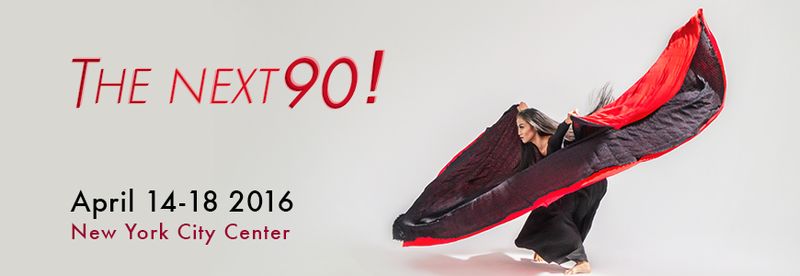
    Friday September 25th, 2015 – The New York Philharmonic‘s opening concert of the subscription season introduced us to the orchestra’s new concertmaster, Frank Huang. We’d actually seen Mr. Huang playing – unannounced – at a couple of concerts last season; but now it’s official, and the Philharmonic faithful gave the violinist a warm welcome. 

    The program opened with LA Variations, a 1996 work by the Philharmonic’s new Marie-Josée Kravis composer-in-residence, Esa-Pekka Salonen. Salonen’s violin concerto, to which Peter Martins set his 2010 ballet MIRAGE and which the Philharmonic performed in 2013 – is to me one of the outstanding musical works of the 21st century to date. And so I was very curious to hear the composer’s much earlier work this evening.

    Mr. Salonen appeared onstage prior to the playing of the Variations and made an overly-long, rambling speech about how the work was a turning point in his musical thinking. As he talked on and on, audience members around us seemed increasingly restless, and a few dozed off. At last he ambled offstage and Masetro Gilbert took the podium and – as it should – the music spoke for itself.

    LA Variations is a work of consummate craftsmanship and has many very appealing passages; early on, some of the textures reminded me – oddly enough – of the Sea Interludes from Britten’s Peter Grimes. Later there are some big tutti passages that evoke a restless, rocking feeling. At the very end, there was a tantalizing ‘calling card’ from Frank Huang in an entrancing solo passage that whetted the appetite for the Strauss to come.

    LA Variations seemed to show – as he indicated in his speech – the composer’s turning away from the rather sterile musical language in which he had been ingrained (he frequently mentioned Pierre Boulez in this regard), and the planting of the first seeds in his own musical garden; works like the Violin Concerto show us how that garden has bloomed and thrived in the years since Salonen’s 1996 self-discovery.

    Following the interval, we experienced an incandescent performance of Richard Strauss’s Ein Heldenleben (A Hero’s Life), which dates from 1898.

    In December 2013, my friend Dmitry and I experienced a superb rendering of this work played by the Philhamonic under the baton of a conductor me greatly admired: Rafael Frühbeck de Burgos; alas, just six months after that vibrant evening, the venerable Maestro passed away.

    Tonight’s performance found Maestro Gilbert and the Philharmonic artists at their luminous best. It was an uplifting and wonderfully satisfying traversal of this impressive, melodically rich score. Maestro Gilbert favored a forward impetus to the music – very exhilarating – yet also provided the necessary passages of reverie.

    The musical themes continually sound like previews of Strauss’s operas to come – most especially of Rosenkavalier and Frau ohne Schatten, both of which lay many years in the future. The Philharmonic musicians seemed to relish every moment of the score, whether in the big ensemble moments or the many solo opportunities which the composer provides. Philip Myers and his fellow hornsmen were having a grand night of it, as were the trumpeters in their offstage calls. The principal wind players  shone with evocative lustre in their solos. 

    Ein Heldenleben provided an ideal showcase for Frank Huang as he embarked on his Philharmonic journey: in this Strauss work with its marvelous passages for violin solo, Mr Huang’s tone was ravishing and his style so cordial and elegant, always imparting an emotional resonance. I cannot wait for his concerto debut with the orchestra, which I hope will come soon.

    And so, the Summer of my discontent has passed: the season has begun and I look forward to many nights of music and dance to elevate the spirit.