Category: Ballet

  • Off to Edinburgh

    L1450239

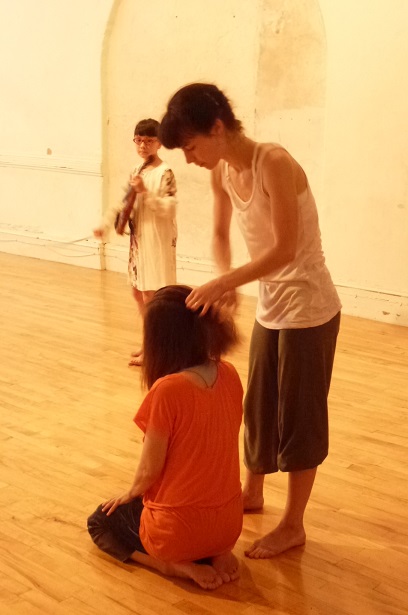
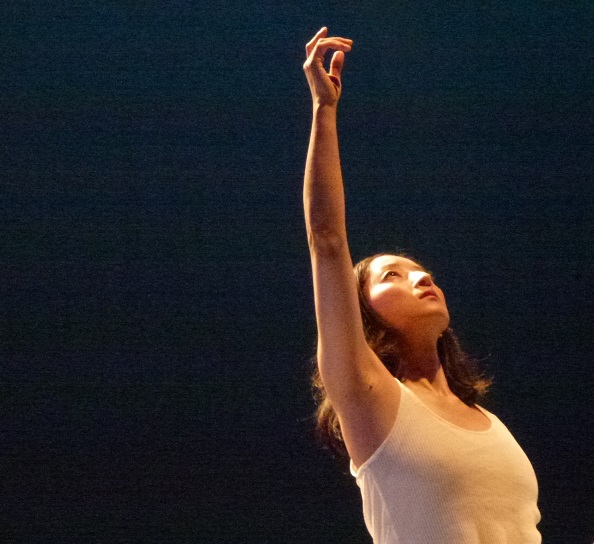
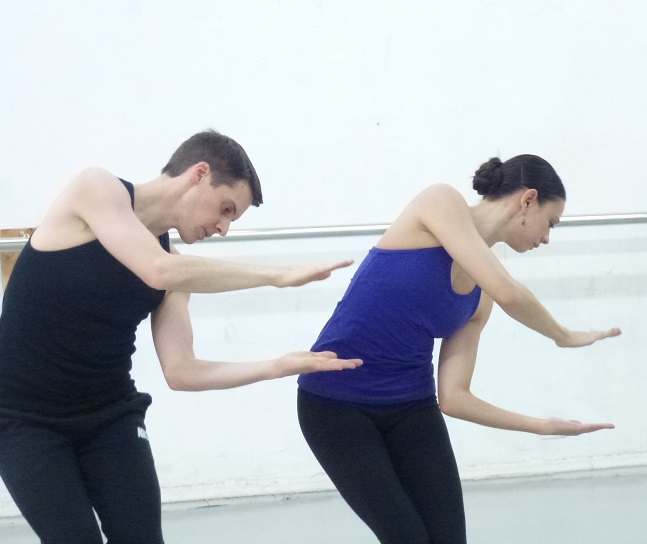
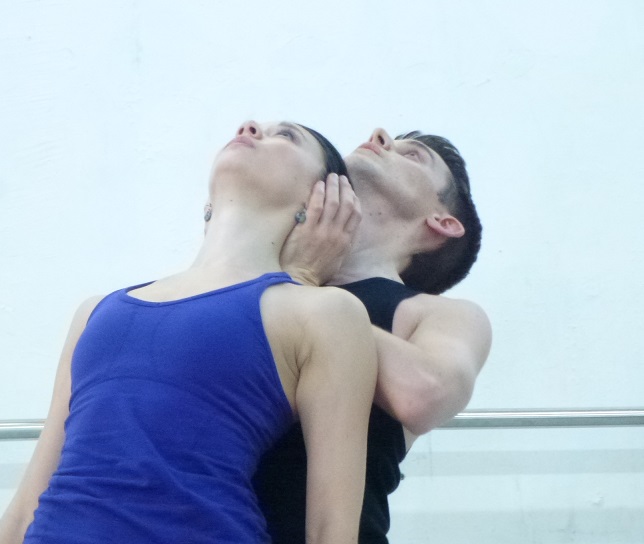
    Above, dancer Marie Vestermark at today’s open rehearsal 

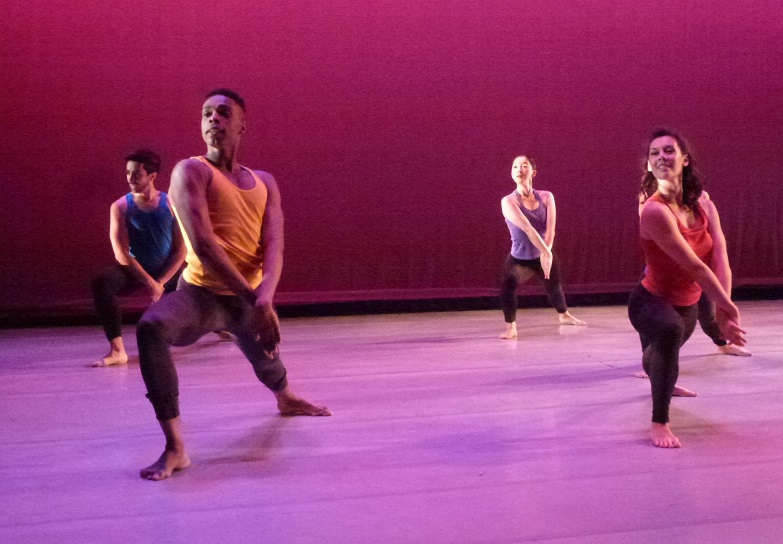
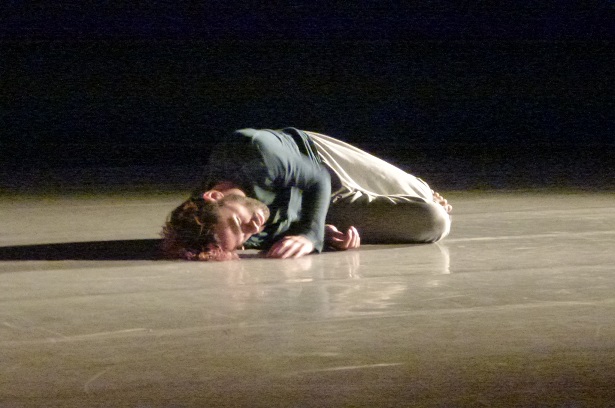
    Sunhwa Chung/Ko-Ryo Dance Company have been invited to participate in Danceforms’ 67th International Choreographers Showcase at the Edinburgh Festival Fringe 2014 in Edinburgh, Scotland, from August 5th through August 9th, 2014.

    The Company will perform a trio entitled It Doesn’t Matter, It Already Happened: Life is Every Day III choreographed by Sunhwa; she will also dance in the piece along with Dorothy Chen and Marie Vestermark. Sarang West will perform the solo violin part, and the music will be drawn from works of   Evelyn Glennie, Doug-Chang Lim, and Fazil Say.

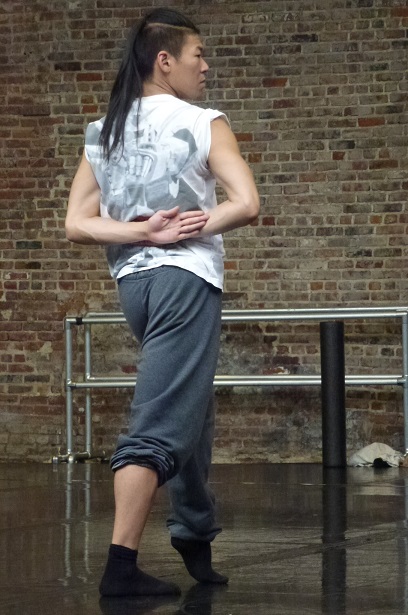
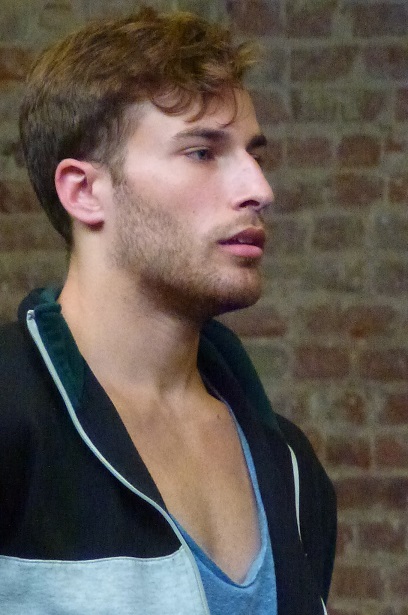
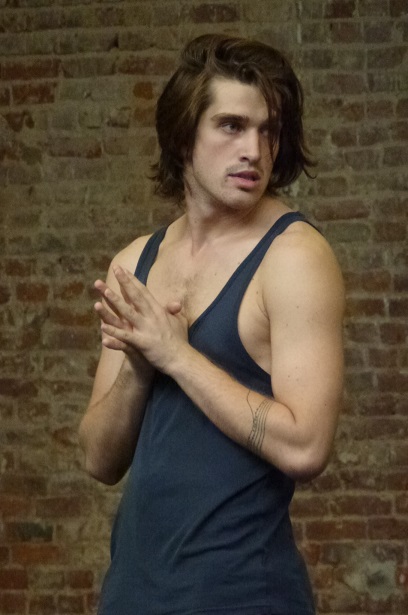
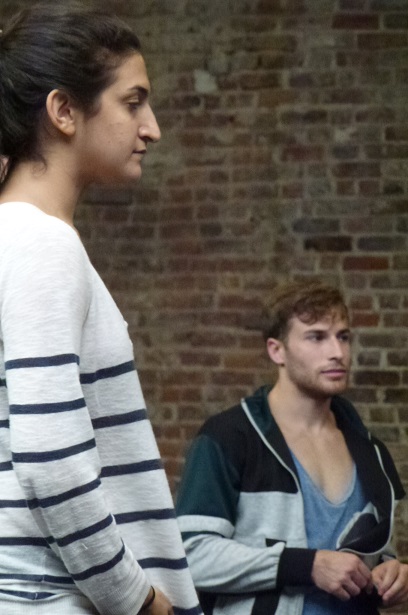
    Today I went down to SoHo to watch an open rehearsal of the piece at a very interesting studio space on Wooster Street. Unfortunately it was a bit too dark to make successful use of my camera, but Sunhwa, Dorothy and Marie ran thru the piece twice, with Sunhwa giving us some background between the two runnings.

    L1450173

    Dorothy Chen

    L1450133

    Sarang, Sunhwa and Marie

    L1450131

    Sunhwa’s young daughter Sarang West (above) performs a violin solo, and later the dancers begin to sing.

    L1450198

    A group of visitors commented on the work during the break as Sunhwa (above) explained that the piece was originally created as three inter-connected solos for one dancer and now she’s set in for a trio.

    This will be Sunhwa and her colleagues’ first trip to Scotland, so we wish them “Bon Voyage” and hopefully they will send back some photos from Edinburgh.

  • My First RING Cycle: RHEINGOLD

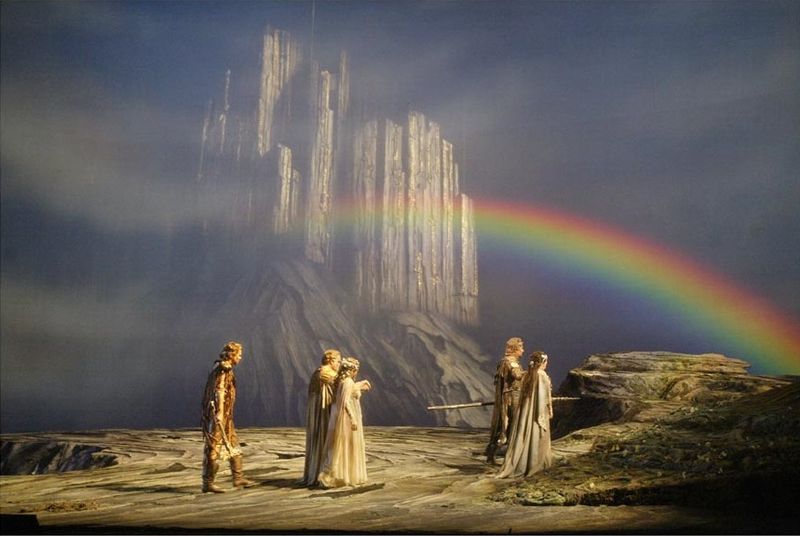
    Rheingold0304.08

    Above: A scene from DAS RHEINGOLD, in the Met’s classic Otto Schenk production; photo by Ken Howard

    A quarter-century has passed since I first experienced a complete performance of Wagner’s RING DES NIBELUNGEN as the composer intended it to be seen: over the course of a single week. In fact, though I had seen all the RING operas previously and would see them many times again since, this 1989 Cycle has been the only time to date that I attended a “RING Week”.

    I was living in Hartford, Connecticut at that point in time, frequently spending long weekends in NYC to attend opera and ballet performances. My friend Paul Reid and I had decided to attended a Met RING Cycle at the end of the 1988-1989 season. There would be a Saturday matinee Cycle plus two week-long Cycles; we were determined to do a RING Week. So when the casting came out, we quickly decided on the ‘second cast’: we had seen the Hildegard Behrens/James Morris combination in previous performances of the individual operas and they were slated for the first weekly Cycle (as well as the Saturday matinee broadcast Cycle). The second weekly Cycle boasted not only a different Brunnhilde (Eva Marton) and Wotan (Hans Sotin) but ‘new’ and different casting of several prominent roles: William Johns (Siegfried), Franz Mazura (Alberich), Helga Dernesch (Fricka/Waltraute), Mechthild Gessendorf (Sieglinde), and Gweneth Bean (Erda). James Levine of course was conducting every Cycle.

    We ordered our tickets, and then a cast change was announced: Eva Marton had withdrawn and would be replaced by Deborah Polaski. This gave us pause, since at the time neither of us were admirers of Ms. Polaski. We fretted a bit, but it was too late to switch to another Cycle (they had all sold out very quickly). Then came another announcement: Ms. Polaski had withdrawn and the Brunnhilde would now be Dame Gwyneth Jones. We were not thrilled with this announcement either, since Dame Gwyneth had at that time something of a reputation for wobbling vocally. It wasn’t until she appeared onstage for Act II of WALKURE that our concerns were allayed: she was magnificent in every regard.

    In the days leading up to our Cycle, anticipation built and built. Concerns about leaving my young lover Kenny on his own for a week were swept aside as the idea of seeing the RING in toto was about to become reality. Paul and I had booked (separate) rooms at the Colonial House on West 22nd. I had stayed there several times in recent seasons: a very comfortable and affordable gay guest house. I was leading a promiscuous life then (despite being in a relationship) and the wonderful thing about the Colonial House was: it was hook-up heaven. There was no need to go to a bar or club: there were always men who were ready, willing and able staying at the House. The roof deck, which offered nude sun-bathing, was especially conducive to socializing.

    May 1st finally arrived; Paul and I checked in at the Colonial and geared up for our big operatic adventure.

    Here’s what I wrote about the RHEINGOLD in my diary:

    “I am finally seeing the complete RING Cycle in the course of a single week which fulfills a long-held operatic desire. The opening RHEINGOLD was a wonderful evening and set forth high expectations for the evenings to come. Levine’s skillful conducting and the excellent playing of the Met orchestra were a major factor in this magnificent Wagnerian evening. The production is visually engrossing, especially the opening scene in the murky depths of the Rhine. Casting was strong all down the line, with a very fine trio of Rhinemaidens (Diane Kesling stood out, and Kaaren Erickson and Meredith Parsons were both very good…though I did feel they gave a bit too much vibrato at times).
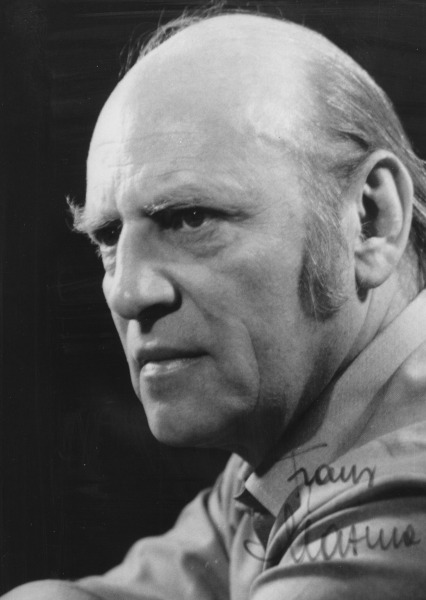
    Franz_Mazura

    Franz Mazura (above) as Alberich arrived on the scene and seized our imagination with his huge, thrustingly creepy voice, full of darkest intent. He was a fabulous Alberich, tireless in his vocal and dramatic commitment. Could this bizarre creature be more powerfully portrayed? Mazura’s generous artistry assured his huge success in the role: he made the character seem so real.

    Sotin_hans200x304

    Above: the Lord of This RING: Hans Sotin. He was in top form for a really impressive Wotan, immediately showing his vocal authority in his opening conversation with Fricka. His voice – large and steady and even from top notes down to the depths – created a real sense of majesty. [Sotin, as it turns out, sang his final Met Wotans in these performances].

    Dernesch_Isolde1Sa72PG

    Helga Dernesch (above): her fascinating voice and truly intense emotional involvement brought Fricka to life – incredibly powerful, with her deep lower voice and somewhat insecure top which curiously adds to her appeal.

    Her siblings were Gary Bachlund as Froh, revealing an embryonic heldentenor of some warmth; James Courtney as a sturdy Donner; and Mari-Anne Häggander, who made a great deal out of Freia’s brief role with her vulnerable appearance and full, clear lyric soprano.

    The giants were especially good: John Macurdy’s voice (Fasolt) sounded huge, and Matti Salminen (Fafner) let his oily tones roll out with great dramatic force – super!  Horst Hiestermann was a vivid Mime, but I found Graham Clark’s Loge did a bit too much prancing physically; and I guess I prefer more heldentenorish sound in the role, though Clark surely did sing musically and with clarity and good carrying power. Gweneth Bean’s large, rich voice created a really glorious impression as Erda – she just poured the tone out!

    At the end, a very enthusiastic reception for everyone – especially Bean, Dernesch, and Levine. Very exciting inaugural night of my RING! There were many moments when chills passed thru me: a sensation that is not often experienced at the opera these days. Mazura in particular thrilled me in this way with his theft of the gold and again as he placed his curse on the Ring. So exciting!”

    Metropolitan Opera House
    May 1, 1989

    DAS RHEINGOLD

    Wotan...................Hans Sotin
    Fricka..................Helga Dernesch
    Alberich................Franz Mazura
    Loge....................Graham Clark
    Erda....................Gweneth Bean
    Fasolt..................John Macurdy
    Fafner..................Matti Salminen
    Freia...................Mari-Anne Häggander
    Froh....................Gary Bachlund
    Donner..................James Courtney
    Mime....................Horst Hiestermann
    Woglinde................Kaaren Erickson
    Wellgunde...............Diane Kesling
    Flosshilde..............Meredith Parsons

    Conductor...............James Levine

  • Fadi J Khoury Dance @ NYLA

    Back-company

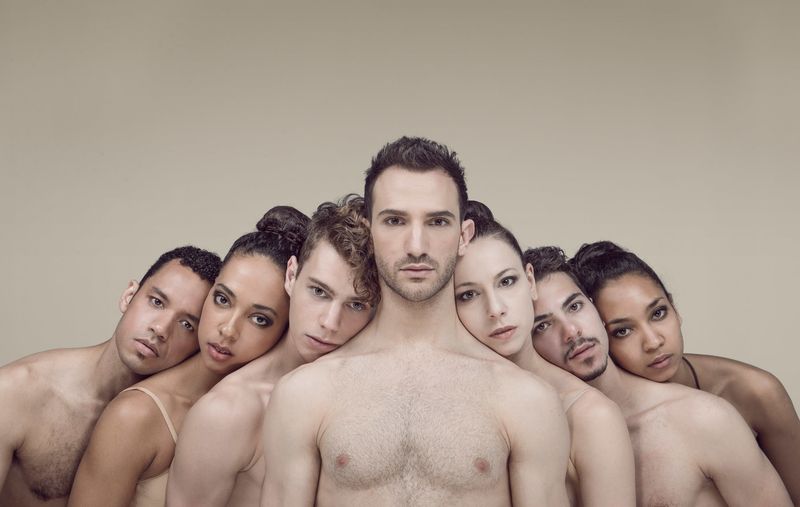
    Above: the artists of Fadi J Khoury Dance, photo by Nir Arieli

    Wednesday July 23rd, 2014 – Fadi J Khoury Dance enjoyed a highly successful opening night at New York Live Arts, the first of two sold-out evenings. Founded by Fadi Khoury, a native of Iraq, the Company boasts an international roster: dancers from Turkey, Spain, Italy, France, Costa Rica, and Colombia join together to present danceworks in a style in which Fadi, as choreographer, has skillfully merged elements of ballet and ballroom, with a dash of distinctively Middle Eastern spice thrown into the mix. 

    I met Fadi and his partner, Sevin Ceviker, when they were dancing with Nejla Yatkin’s troupe; another of tonight’s dancers, the lovely Karina Lesko, has also danced for Nejla and for Morales Dance.

    The opening work tonight, TANGO UNFRAMED, was danced to a collage of tango-oriented music by Ron Jackson, Emilio Solla, and Rosa Antonelli. Judith Daitsman’s lighting designs were an intrisic element in the evening’s visual appeal. 

    Blending the sultry sophistication of the tango with a fusion of ballet and contemporary movement, TANGO UNFRAMED opens with a striking vision of the lithe and charismatic Fadi Khoury standing in a pool of light. His solo dancing is marked by expansive port de bras and an elegance of phrasing which is underscored by a subtle sensuality. Sevin Ceviker, in high heels and a pretty frock, appears in her own spotlight and establishes a connection with Fadi.

    The three other couples come and go from the dance; there is a female ensemble segment and then a finely-wrought duet for Sevin and Fadi, danced to a piano solo. They display a mystic affinity both for the music and for one another.

    Fadi has been onstage all the time up to this point, but now the space clears and the stage remains empty for a piano interlude. Then there is an amusing quartet where two girls set their sights on two boys only to find that the boys have their sights set on one another.

    Sevin and Fadi commence another duet which blossoms into the work’s closing ensemble for the entire Company.  The audience responded with genuine enthusiasm to this evocative, passionate work. 

    The intermission stretched a bit long and though I usually dislike hearing music played during intermissions at dance performances – it tends to detract from the music the choreographer has chosen to set his dances to – some Middle Eastern melodies here would have been welcome. 

    ARABESQUE opens with Sevin Ceviker seated upstage in a lighted space as fog swirls about. The music is ominous, with an outer-space feeling. She remains on the floor for a while, then rises to dance on pointe. The other women join her, dancing to a big beat, then suddenly Fadi explodes onto the scene with a spacious jeté.
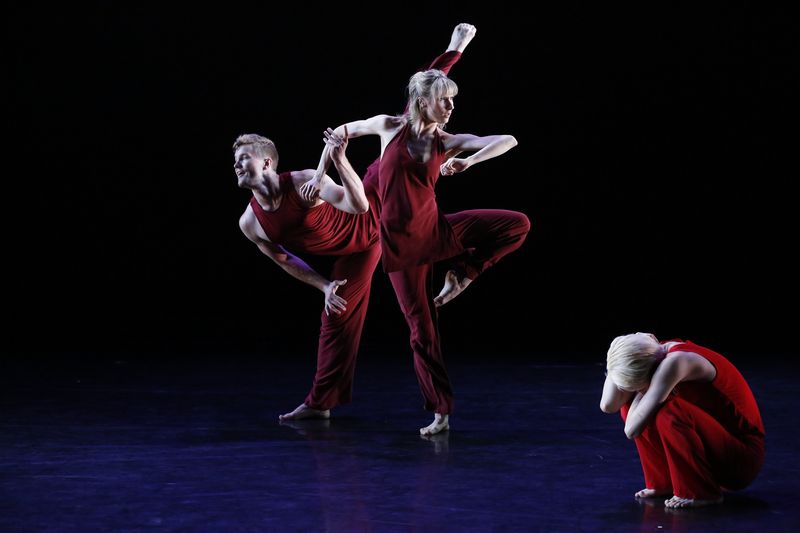
    The bleak sound of the desert wind signals the start of a ritualistic duet for Sevin and Fadi; they are kneeling, facing upstage, and they remain on the floor for a long time but luckily Fadi is a choreographer who knows what to do with floor time and so the duet sustained our interest, especially when Fadi sank back in a pair of voluptuous backbends.
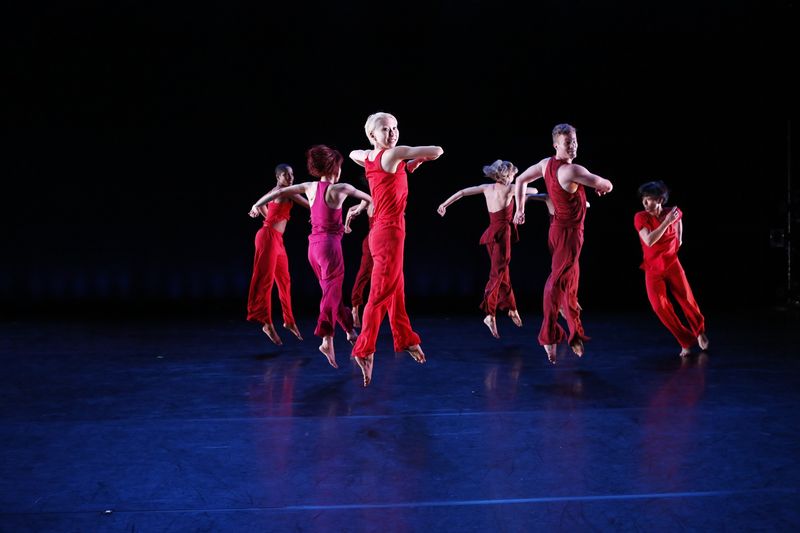
    The ensemble intrudes, the boys bare chested in satiny midnight blue tights. Then Sevin and Fadi resume their duet, the music driving to a pounding beat: things get sexy, yet the movement remains balletic. The girls dance to a swirl of Arabic music, then the boys come leaping on one by one. Sevin and Fadi continue to dance in their own private realm.

    In a new section, two couples appear, followed by a boy’s trio and a trio for the girls which melds into a dance for all six. Sevin and Fadi ignite another duet passage, which leads into the concluding ensemble for the whole Company.

    The composers drawn upon for ARABESQUE are Mercan Dede, Samer Ali and Said Mrad: a very effective mixture, and again Ms. Daitsman’s lighting was excellent.

    The evening ended with a rousing standing ovation and the Company dancers were all greeted with cheers, marking an auspicious start for Fadi J Khoury Dance. Let’s see where this success leads them!

  • Dancers Choreographing @ Cedar Lake

    L1440934

    Above: Cedar Lake dancers prepare for Cedar Lab (above: from Vânia Doutel Vaz’s new work)

    Monday July 21st, 2014 – Today I visited Cedar Lake Contemporary Ballet at their home on West 26th Street. The Company are preparing for Cedar Lab, a new venture in which Company dancers create new choreography on their colleagues. The works will be presented at four showings on July 29th and 30th, 2014. Details here. It’s a free event!

    Jon Bond, Navarra Novy-Williams, Matthew Rich, Joaquim de Santana and Vânia Doutel Vaz are the choreographers, and today I watched rehearsals of the works being created by Navarra and Vânia. I had met these two young women in 2012 when Kokyat photographed them rehearsing Angelin Preljocaj’s magnificent dancework L’ANNONCIATION.

    L1440727

    I love watching danceworks under construction! Navarra is create a piece with three of the Company’s women: Madeline Wong and Acacia Schachte (above)…

    L1440835

    …and Rachelle Scott (above). Each dancer has a solo, and Navarra was working with them today on the detailing process. I heard some of the music, which is quite lyrical, and Rachelle dances to a beautiful rendition of ‘Moon River‘.

    L1440718

    Navarra (above, with Rachelle); I love observing the creative process and seeing the dancers at close range.

    L1440905

    We moved from the theater space to the studio where Vânia Doutel Vaz (above) was working on her ensemble piece. She conducted her rehearsal in silence, so I am not sure what the musical setting will be. Or maybe it’s a silent dancework…which could be very interesting.

    L1440880

    The dancers were mastering a complicated set of freeze-frame poses to which they had applied a numeric encoding. There was a light-hearted atmosphere as they worked to get the sequence right.

    L1440965

    Later the work expands dynamically into the space. Now that I’ve had a sampling from these new works, I look forward to seeing them – and the other new creations – in a performance setting next week.

    Here are a few more images of the individual dancers rehearsing today:

    L1440789

    Acacia Schachte

    L1440861

    Rachelle Scott

    L1440916

    Matthew Rich

    L1440900

    Joseph Kudra

    L1440939

    Guillaume Quéau

    L1440921

    Jin Young Won

    L1440918

    Ida Saki with Joseph Kudra

  • MÉLANGE @ BalaSole Dance Company

    L1440328

    Friday July 18th, 2014 – Roberto Villanueva’s BalaSole Dance Company presenting MÉLANGE at the Ailey Citigroup Theatre. BalaSole’s evenings of concert dance afford a rare opportunity for dancers in all genres to present solo works in a professional setting, with expert lighting and sound, before a large audience. Roberto Villanueva has made a niche for his Company in the New York City dance world: I don’t know of anyone else who organizes this kind of programme, a boon for both emerging and established dance artists who need to have their work seen. 

    This evening’s program was one of BalaSole‘s strongest to date. Roberto likes to stress variety in his presentations, and this evening there was something for everyone. The audience – a packed house – watched in attentive silence and warmly applauded all the participating dancers. I had watched the dress rehearsal (a couple hours before curtain time) and I tried to take some pictures, but I wasn’t having much luck this time around.

    BalaSole‘s programming follows a set blueprint: eight or ten artists are chosen by audition to present their solo works. They are mentored by Roberto, getting their dances stage-worthy. In the week prior to the show, ensemble pieces are created which will open and close the evening. This time around, Roberto chose wonderfully ‘danceable’ music by Franz Joseph Haydn for these group numbers, and the dancers – in vividly coloured leotards – evoked the joy of the sharing the stage with colleagues. Following a welcoming speech by Roberto, the solos began. 

    To an Al Kooper blues tune, Sara Braun strolls coolly onto the stage, wearing sunglasses. Removing her shades seems also to remove her self-confidence. The dance takes on a restless quality, though her poise is restored when she dons the glasses again. The dancework, entitled Amy W 27, clearly carries some meaning in the dancer’s life; the fact that we don’t know what inspired her to create the piece adds to the mystique of the character.

    Tall and commanding, Steven Jeudy performs a balletic solo to the Callas recording of “O mio babbino caro” from Puccini’s GIANNI SCHICCHI. Moving with supple grace, the bare-chested dancer shows off a fine line and an impressive extension. He continues to dance after the aria ends. The title of the solo is Resplendent – a title that well-describes Mr. Jeudy himself.

    In the solo Steady Tread (choreographed by Monica Hogan), Courtney Liu danced on pointe to music by the Carolina Chocolate Drops –  music which somehow has a Mid-Eastern sway to it. Pausing in balanced arabesques or bringing a jogging motif into play, the pretty dancer covered the space with lively charm.

    L1440461

    Alvaro Gonzalez danced a solo (choreographed by Tatiana Martinez) entitled En La Ausencia (In The Absence) in which the dancer, to a poignant Yann Tiersen score, is filled with loneliness. An empty embrace evokes the sense of loss; even Mr. Gonzalez’s hair seems to be expressive. The dance evolves to an agitated coda, until the dancer finally curls up on the floor in despair.

    In a daffodil-yellow frock, Kendra Ross takes the stage with a striking command of sensuous musicality for Manifest Divine, danced to an Everett Saunders song. A natural mover, Ms. Ross explores her own private world for our delectation, at the end dissolving into marvelous laughter as she rushes away.

    L1440517

    Exquisite artistry marked Misei Daimaru’s performance of her solo Stars in The Dark. Having seen Misei performing with Sunhwa Chung/KoRyo Dance Company and with Janusphere, I was very pleased to see her in a solo work. To music by Pierre and Gaspard Genard, Misei’s solo begins in a pool of light. Many dancers have used a chair in their solo works over the years, but few have made such compelling use of it as Misei; it became her virtual partner in the scheme of things. Misei’s dancing has a lovely internalized feeling, and a deeply expressive movement quality.

    Roberto Lara’s personal magnetism underscored his spell-binding performance of Via Crucis (The Way of the Cross), a poignant rendering of Camille Saint-Saens’ classic Dying Swan. Dancing in toe shoes, Roberto’s black tutu contrasted with his creamy alabaster torso. This justaposition of male and female characteristics was played out without any hint of Trockadero-style camp from the muscular dancer with his dark eyes and scruffy beard. The audience responsed to this tantalizing solo with genuine enthusiasm.

    In The First Ten, Katie Kilbourn appears in childish innocence. She evokes a nursery-like atmosphere while the music, by CoCo Rosie, makes us think of a music box. Sometimes sucking her thumb, the dancer moves with a doll-like feeling of naïveté. In the end, she slowly winds down while standing in a pool of light, her girlish white dress enveloping her in the virgnial purity of youth.

    Schubert’s Ave Maria served as the basis for Journey, a solo by Chloe Cappo. Using her flexible physique, the dancer wove elements of pure ballet technique into her solo which used the space well and responded clearly to the music in its sense of phrasing.

    L1440289

    In a slow progress along a lighted path across the stage, Roberto Villanueva displayed his physical control in the opening passage of Caught Up; the sound of clapping hands is later swept into ecstatic phrases for violin in a musical mixture of Steve Reich and Max Richter. Roberto pauses in a lighted circle to dance an animated section, seemingly wishing to escape. Then he continues on his way until the light fades to darkness.

    BalaSole have announced their next audition for August 1st, 2014 with performances in October.

  • Lydia Johnson Dance: Returning to Newport

    L1430931

    Above: Sarah Pon and Blake Hennessy-York of Lydia Johnson Dance

    Sunday July 13th, 2014 – Lydia Johnson Dance will have a return engagement at the Great Friends Dance Festival in Newport, RI performing on July 18th, 19th, and 20th, 2014. Details of the festival here.

    For these performances, Lydia has created a new work entitled WHAT COUNTS set to two songs by The Bad Plus: ‘Seven Minute Mind‘ (danced by a trio of women) and ‘For My Eyes Only‘ (a pas de deux). Today I stopped in at Lydia’s studio where she was putting the finishing touches on what is still a work-in-progress; in fact, she is considering adding a third section…but for now, it’s a two-movement dancework that will travel to Newport.

    The music is jazz-oriented and really appealing, and Lydia has set it in her unique balletic style with a particularly pleasing stylized quality. More than anything, the ballet reminded me of Balanchine’s classic APOLLO, in part because it features a single man and three women and also because the music has a Stravinskyian tinge to it.

    L1440215

    Sarah Pon, Laura DiOrio and Katie Martin Lohiya

    L1440224

    Trio

    L1430945

    Blake and Sarah: duet

    L1430992

    L1440074

    Final pose

  • Tom Gold Dance: Images from Sofia

    10366055_10152566065832755_6100055162900197831_n

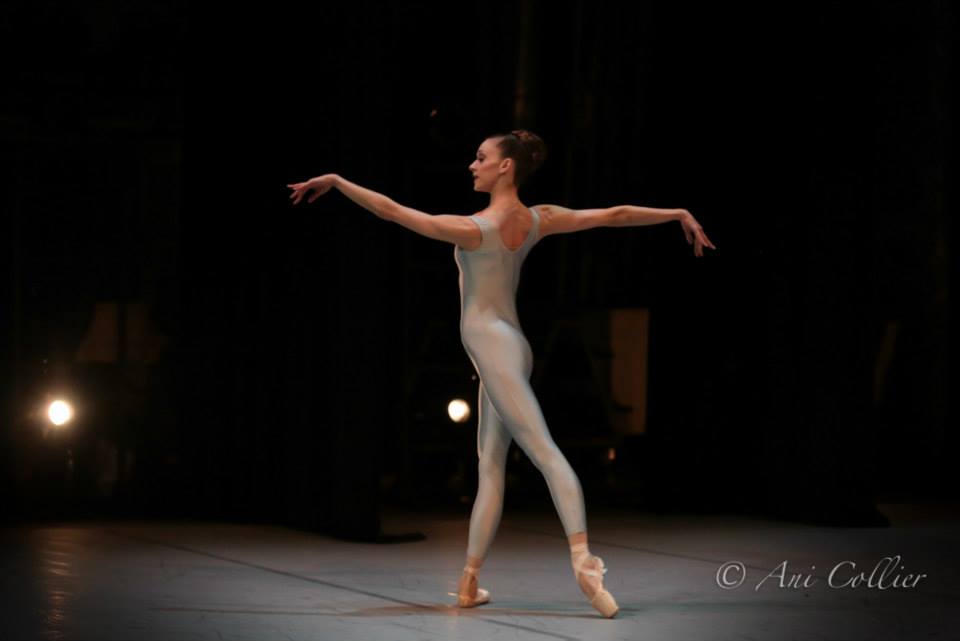
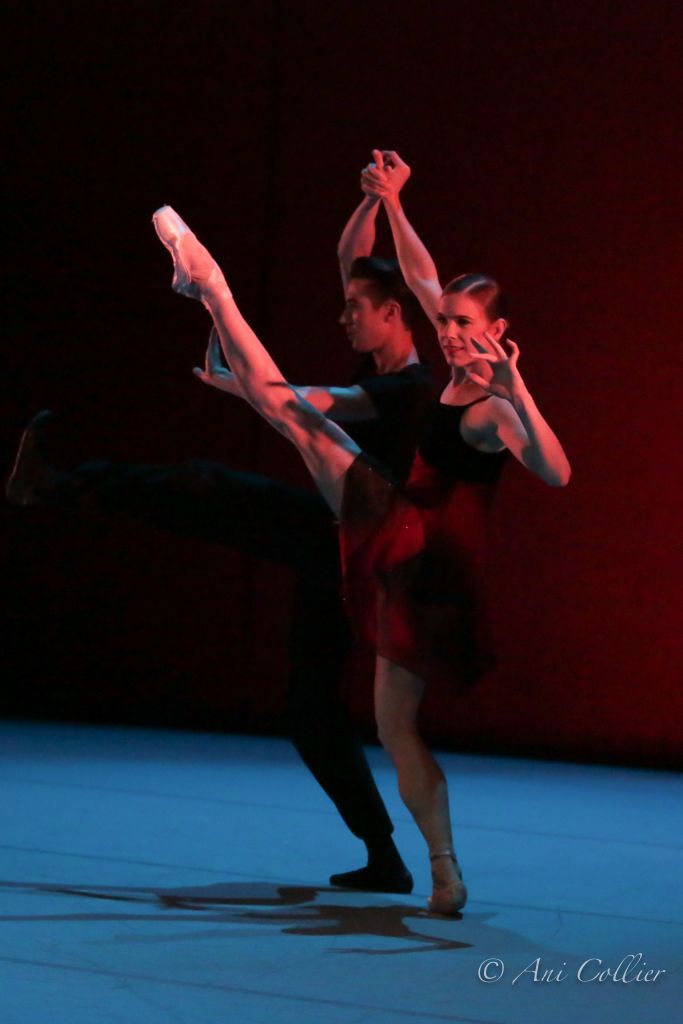
    Above: Pacific Northwest Ballet principal Seth Orza and New York City Ballet principal ballerina Maria Kowroski performing Balanchine’s APOLLO with Tom Gold Dance on their June 2014 tour to Bulgaria; photo by Ani Collier. 

    Tom Gold has sent me some of Ani Collier’s photos from his Company’s recent performances at Sofia, Bulgaria: 

    10304429_10152562878547755_3474847024320160015_n

    Seth Orza in APOLLO

    10475933_10152556875692755_6276963205773144048_n

    Maria Kowroski in Robbins’ CONCERTINO

    PZNOv3fQLxZUJB2weXRxx6extnvCOCoiSI7Q1x-mOlI

    New York City Ballet‘s Daniel Applebaum and Savannah Lowery in Twyla Tharp’s JUNK DUET

    SbNJYkN8ZcPM9aPbYP3dKjNN16Rgo_eA_H3DO9ImQBE

    The ensemble in Tom Gold’s LA PLAGE

    10449964_10152566965962755_2817086933432883500_n

    Pacific Northwest Ballet principal ballerina Carla Korbes with New York City Ballet‘s Andrew Scordato and Devin Alberda in LA PLAGE

    10430868_10152566930407755_6802768218685379841_n

    Carla Kotrbes and Seth Orza in Tom Gold’s GERSHWIN PRELUDES 

    While in Sofia with Tom’s troupe, our beloved Maria Kowroski was the subject of a photoshoot.

    In the week leading up to the tour, photographer Nir Arieli and I had stopped in at one of Tom’s rehearsals: read about it here.

  • Images from Jennifer Muller’s WHEW!

    2014Muller0498

    Above: Michael Tomlinson, Caroline Kehoe, and Shiho Tanaka of Jennifer Muller/The Works in a Carol Rosegg photo from Jennifer Muller’s jazzy dancework WHEW!

    Click on each image to enlarge.

    WHEW! had its world premiere performances recently at New York Live Arts on a programme shared by three choreographers: Jennifer Muller, Jacqulyn Buglisi, and Elisa Monte. Read about the performance here.

    2014Muller0482

    The ensemble

    2014Muller0408

    Seiko Fujita (foreground), Michael Tomlinson (background)

    2014Muller0485

    Michael Tomlinson

  • Boston Ballet @ Lincoln Center

    10492224_10152189404857607_7335500118768821092_n

    Friday June 27th, 2014 – Boston Ballet have been celebrating their 50th season with performances at Lincoln Center this week. Tonight’s programme looked so tantalizing on paper, and it turned out to be a magnificent evening overall: Vaslav Nijinsky’s Afternoon of a Faun, George Balanchine’s Symphony in Three Movements, Jorma Elo’s Plan to B and Jiří Kylián’s Bella Figura were all superbly danced by the Boston troupe.

    When visiting companies bring Balanchine to New York, I sometimes wonder if it’s a good idea. Can’t you bring us something we don’t see all the time? But understandably, other companies are proud of their Balanchine and want to show off their abilities. Boston Ballet did a great job with The Master’s Symphony in Three Movements, even bringing their own orchestra to play the score. And Boston Ballet has strong Balanchine ties: he became Artistic Advisor to the Company in 1963, gifting them with more than seventeen of his ballets as a gesture of support.

    Curtain up, and I immediately found Shelby Elsbree in the diagonal. The ballet surges forward, with delightful performances by Misa Kuranaga and Jeffrey Curio – the high-bouncing couple – and Rie Ichikawa and Bradley Schlagheck. In the ballet’s central pas de deux, Lia Curio and Lasha Khozashvili excelled. The audience, fortified by a contigent of Bostonians, gave liberal and much-deserved applause to the dancers.

    Boston Ballet had brought their production of Vaslav Nijinsky’s Afternoon of a Faun to Fall for Dance in 2009 and I was mesmerized by it. Seeing the Leon Bakst backdrop and costumes again this evening provided a tangible link to the history of ballet and to that scandalous night over a century ago when Faun set Paris on its collective ear. Tonight, Altan Dugaraa embodied the exotic beauty of the Faun, his mystique and his longings, and Erica Cornejo was the Nymph, miming with stylized perfection. So grateful to have had another opportunity to see this production.

    In 2006, I experienced Jorma Elo’s work for the first time at the New York City Ballet’s premiere of Slice to Sharp. Slice received the longest ovation of any new work I’ve encountered at the ballet over the years: endless curtain calls and a state of euphoria among the crowd. Boston Ballet‘s performance of Mr. Elo’s Plan to B had something of the same a dynamic pungency about it. Illuminated by a large glowing screen stage right, six dancers reveled in fantastical choreographic patterns, flinging themselves into off-kilter leaps and flying across the stage, arms whirling like windmills in a tornado. Dusty Button, Whitney Jensen, Bo Busby, Jeffrey Cirio, John Law, and Sabi Varga danced thrillingly and were deservedly cheered for their jaw-dropping virtuosity.

    Alas, I am afraid Jiří Kylián’s Bella Figura was not really to my liking. Returning from the intermission, we find the dancers already onstage…warming up? Or is it a choreographed passage to start the ballet? Either way, it’s pretentious. Purgatorial and several minutes too long, the Bella Figura seemed to be more about the staging than anything else: black curtains endlessly re-arranged, a complex lighting scheme, flaming braziers bringing a taste of Hell to the stage, dancers coming and going almost randomly. The dancing was of course remarkable, and there are some very attractive passages, most especially when the topless dancers in long red skirts dance in unison. But it seemed to go on and on.

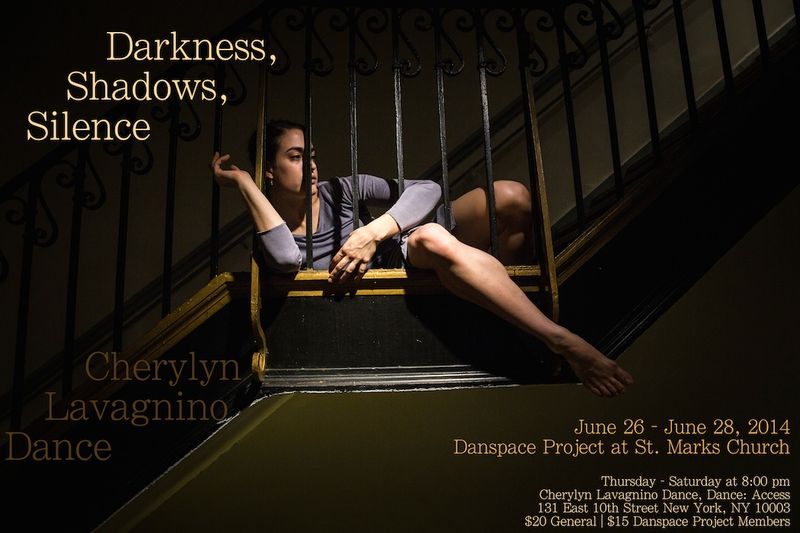
  • Cherylyn Lavagnino Dance @ St. Mark’s

    5941803_orig

    Thursday June 26th, 2014 – Cherylyn Lavagnino Dance presenting a programme entitled Darkness, Shadows, Silence as part of the Danspace Project at St. Mark’s Church. It was rather stuffy inside the church on this summer evening, but the music and the dancing soon took my mind off any such concerns.

    Tonight’s first ballet is perhaps my favorite of Cherylyn’s works that I have experienced to date: TRYPTYCH is set to music by Francois Couperin and danced in bare feet. It opens with Claire Westby, invoking the dance from the mezzanine above. The four couples enter and commence a series of ensemble dances meshed with fleeting solo, duet or trio passages, the women wearing soft grey frocks and the men clad in simple dark costumes. Some of the phrases for the four women draw to mind the sisterly ensembles of Isadora Duncan. TRYPTYCH is spiritual though not heavy-handed: ritualistic yet human.

    I very much enjoyed the expressive interaction between Cherylyn’s beautiful dancers in this work: Giorgia Bovo, Selina Chau, Giovanna Gamna and Christine Luciano seemed deeply immersed in the music, and their partners – Michael D Gonzalez, Elliot Hammans, Travis Magee and Adrian Silver – came and went with a sense of quiet urgency. The ballet seems to draw to a lovely closing, but there is a pendant still to come.

    Scott Killian’s score for the final movement of TRYPTYCH alludes to Couperin yet is distinctly contemporary. An excellent duet for two men – Travis Magee and Elliot Hammans – gives way to another duet danced by Selina Chau (now on pointe) and Adrian Silver. The work ends with Ms. Westby in a benedictive phrase. This appended final movement at first seems somewhat unrelated to what’s gone on before, but Ms. Lavagnino and her dancers draw it convincingly full-circle in the end.

    Two movements of Cherylyn Lavagnino’s Schubert ballet TREIZE EN JEU were presented: this is a ballet for large ensemble wherein the dancers from TRYPTYCH are joined by Kristen Stevens, Eliza Sherlock-Lewis, Lila Simmons, and Justin Faircloth. Set to Schubert’s E-flat major trio, opus 929, the work displays the choreographer’s sense of structure, with a particularly memorable ‘pacing’ motif at the opening of the second movement as two phalanxes of dancers approach from opposite sides of the stage. Once again the individual personalities of the dancers played a vital element in the success of the piece. My only reservation was that the women’s costumes seemed too sporty and contemporary for the musical atmosphere: I would have addded long, gossamer black skirts. 

    Back in April, I visited Cherylyn’s studio where the works presented this evening were in rehearsal. And in the ensuing weeks I have read Kim Thúy’s novel, RU, from which Cherylyn’s newest work draws its inspiration. RU is a contemporary-style ballet set to a commissioned score by Scott Killian.

    The novel by Kim Thúy, which describes a young woman’s life as a post-Vietnam War political refugee, revolves around cultural dislocation and the struggle for identity. T’ai Chi’s passive resistance serves as gestural influence for the choreographer, and Christopher Metzger’s costumes for the women are reminiscent of the traditional Vietnamese áo dài dress: they are clad in white, with red accents indicating the bloodshed of war.

    Ms. Thúy’s novel is more like a book of poetry: each page contains only a few sentences (or, at most, a few paragraphs) describing in no specific order the details of escape from Asia to Canada, the cultural shock of this transplantation, and the writer’s emeging personality as a wife and mother. The choreography moves the female ensemble across a darkening landscape, suggesting their furtive escape from war and the formation of new bonds as their former lives are left behind. The men, bare-chested, can seem threatening or protective by turns. 

    In RU, Cherylyn Lavagnino and Scott Killian have summoned up the atmosphere of the novelist’s poetic vignettes yet the ballet also takes a wider view of displaced peoples, their exposure to abuse and treachery, and their assimilation into new cultures. I look forward to seeing this piece again in the future.